U.K. woman conceives breast cancer gene-free baby

The word guarantee is used a little bit loose here, as the baby is not immune to breast disease but the embryos did not contain the cancerous gene, so if nothing else with the history of breast cancer in the woman’s family, what did she have to lose to give this a try.  BD 

U.K. woman conceives breast cancer gene-free baby Updated Mon. Jun. 30 2008 4:19 PM ET CTV.ca News Staff A British woman is 14 weeks pregnant after conceiving the country's first baby guaranteed to be free of a hereditary breast cancer, doctors have revealed. The unidentified woman and her husband underwent in vitro fertilization to screen 11 embryos for the presence of one gene, BRCA-1. The woman is now 14 weeks pregnant with her first child.

CTV.ca | U.K. woman conceives breast cancer gene-free baby

New electrostatic-based DNA microarray technique could revolutionize medical diagnostics – personalized medicine

The “Gene Chips”, aka DNA microarray asssays and RNA counterparts are the tools for the process.  What is surprising is that the technique is based on a 100 year old experiment.  The next step along the line is to find someone to manufacture and create products that can be used in the market place.  It may not be too long of a wait until products are in use, not only in the US, but other countries as well.  BD  

image One of the most amazing things about our electrostatic detection method is that it requires nothing more than the naked eye to read out results that currently require chemical labeling and confocal laser scanners," said Jay Groves, a chemist with joint appointments at Berkeley Lab's Physical Biosciences Division and the Chemistry Department of the University of California (UC) at Berkeley, who led this research. "We believe this technique could revolutionize the use of DNA microarrays for both research and diagnostics.

Your susceptibility to a given disease and how your body will respond to drugs or other interventions is unique to your genetic makeup. Under a personalized medicine plan, treatment effectiveness is maximized and risks are minimized by tailoring disease treatments specifically to you. This requires the precise diagnostic tests and targeted therapies that can stem from assays using a DNA microarray a thumbnail-sized substrate containing thousands of microscopic spots of oligonucleotides (stretches of DNA about 20 base pairs in length) laid out in a grid.

News: New electrostatic-based DNA microarray technique could revolutionize medical diagnostics. Genetic Engineering & Biotechnology News - Biotechnology from Bench to Business

Generic Risperdal Hits the Market

No time wasted here, patent expired yesterday, orders shipping today.  Also J and J will release their own generic as well, (can’t beat them – join them) so 2 generic versions ready to go.  Teva has an exclusive for a few months before others can join in to manufacture and sell.  BD 

Patients looking to save on antipsychotics have a new option. The patent protecting image Johnson & Johnson’s blockbuster Risperdal expired yesterday, and today the FDA said it granted approval to Teva Pharmaceuticals to market the first generic version.  The end of J&J’s own monopoly could pack a punch. Risperdal brought more than $2 billion in U.S. sales last year. Meanwhile, Invega, another J&J antipsychotic that many doctors believe is simply a me-too drug, so far hasn’t been a big seller.

http://blogs.wsj.com/health/2008/06/30/generic-risperdal-hits-the-market/

Watermelon may have Viagra-effect

 It relaxes blood vessels without any drug side effects!  BD 

A cold slice of watermelon has long been a Fourth of July holiday staple. But according to recent studies, the juicy fruit may be better suited for image Valentine's Day. That's because scientists say watermelon has ingredients that deliver Viagra-like effects to the body's blood vessels and may even increase libido. "The more we study watermelons, the more we realize just how amazing a fruit it is in providing natural enhancers to the human body," said Dr. Bhimu Patil, director of Texas A&M's Fruit and Vegetable Improvement Center in College Station. "We've always known that watermelon is good for you, but the list of its very important healthful benefits grows longer with each study."

Watermelon may have Viagra-effect

Flaws in medical coding can kill – Medical Devices

This article specifically relates to the “code” that is used by devices.  As a coder myself I can tell you this is an area that is worked, reworked and then once more.  It used to be you had a device that did one thing, and it went through the process over and over without change, however that is not the case today.  I have had conversations with engineers who develop outside of health care and have tried my best to explain the complicated issues that are in health care, but almost every industry these days is going outside the standard code box as well with devices now connecting to the Internet, networks and so on, something that didn’t exist a few years ago.  image

I just started reading another book on “Writing Secure Code”, even though I am not currently still writing to create commercial products, it’s always a good idea to stay on top.  We used to pretty much be a Windows world, but now many devices have a Linux operating system or combination there of, so it gets to be a bit more complicated.  This article states the FDA trouble shooting system from 2004 was out of date, well yes…just the year says that much! Now there’s a new team with new systems performing the work.  It’s always going to be a process of elimination too between software and hardware to drill down to find the culprit.  I’ve had my days of this with just general computer networking issues and devices are no different.  The hardware/software relationship is the key to any medical device today and getting the code to work correctly, sometimes this involves additional code to monitor and trouble shoot the actual working code, in other words more data trails and queries to double, triple and quadruple check and correct problems in less than a split second.  It has to count when human lives are at risk!  BD 

WASHINGTON - After a routine piece of medical equipment started mysteriously killing hospital patients a few years ago, the federal government turned to a small team of its software experts in suburban Maryland for help. The team's discovery - a flaw in a computer code that caused a drug pump to administer heavy overdoses - led to a recall, warnings and rewriting of the equipment's software. The discovery also illustrated a new threat behind some lifesaving medical devices.

"The world of technology is allowing us to do things we never thought possible, and it's largely a great advance," said Larry G. Kessler, who directs the Food and Drug Administration Office of Science and Engineering Laboratories, which oversees the team of software sleuths at White Oak in Montgomery County. "Where it gets to be scary is, we used to have more human intervention. With software doing more now, we need to have a lower tolerance for mistakes."

“More often, though, clues are scarce and answers far from immediate. The team must pore over the entire code, looking for tiny flaws in the logic that, on the rare occasions it is summoned into action, could have disastrous consequences. No human has the brain power - or patience - to perform that work. Indeed, powerful computers must, in effect, crunch all the moves that a piece of software might take.”

Flaws in medical coding can kill -- baltimoresun.com

Kmart expands generic drug program

The news here is more generic drug availability, and $1.00 more than competitors but what’s a dollar these days as there’s still a tremendous savings versus not having the plan and the 3 month plan is also right up there at $10.00 in being competitive.  BD 

image ATLANTA (Reuters) - Retailer Kmart said on Monday it has cut prices and expanded its generic prescription drug program to include more than 500 common medications as of June 22. 

Kmart, a unit of Sears Holdings Corp, said it is offering more than 100 generic treatments for $5 a prescription and lowered the cost of a three-month supply of common drugs to $10 at its pharmacies.

Kmart expands generic drug program - Yahoo! News

Bill Gates – “I’m still pretty hardcore”

Nice interview from the Nightly News with Bill Gates, reflecting on where he’s going, how Microsoft was started, and how innovation began.  This takes about 25 minutes to watch in total as he talks about future plans and The Foundation. 

Among the items discussed include speech recognition, Tablet PCs, and much   image more.  He talks about taking chances and about the ideas that have also failed.  He mentions that Pharma, Big Banking as being 2 big industries that have capitalized on the use of technology.  He discusses his daughter’s use of a Tablet PC at school imageand the balance of technology of the youth today with technology, being careful about being overdone.  Also interesting is how he discussed a few of his odd habits, like putting a blanket over his head years ago when flying to get some quiet. 

He also talked about the online courses he takes, including those from MIT, imageas being one of the most famous Harvard drop outs.  Funny, he talks about playing bridge, prefers to be there in person, but also takes advantage of playing over the web.  He still gets a newspaper, but rarely finds the time as he’s online for most of his news and talks about the move to being online.  No digital jigsaw puzzles yet!  BD 

http://bink.nu/news/bill-gates-quot-i-m-still-pretty-hardcore-quot.aspx

Electronic citations speed up ticketing process for police

Take a look at this photo, what makes this possible, using a Tablet PC in the car.  Now if we could just get health care to embrace the use of Tablet PCs a bit more for the paperless solution. BD 

image Police agencies and troopers in several states are tossing out handwritten tickets in favor of electronic citations as a way to improve accuracy and save time. With the quick swipe or scan of a driver's license, officers are able to enter the location, type of violation and print the ticket all from a handheld device, said Chief Deputy Derrick Cunningham of the Montgomery County (Ala.) Sheriff's Office.

Electronic citations speed up ticketing process for police - USATODAY.com

Technorati Tags:

Harvard Medical School Deploys Third Brigade For PCI Security

Hard Hat Area:  Health ITOne of the best benefits, protection from SQL Injection attacks from web applications and of course explicit logging.  With technology and the exploits growing at such a rapid pace today outsourcing to the specialty companies who make this their #1 priority and focus is the way to go, to handle in house for any image organization of any substantial size is a huge job and will take more resources and not be as good at running this in front of the servers from a web application.  A while back I did a post on security enhancements and Channel 9 from Microsoft has a very entertaining video about a SQL Injection attack done in Las Vegas, fictional, but done in a way to help anyone understand network security.  Well worth the watch and it will open your eyes.  BD

Third Brigade, a security software company specializing in host intrusion defense systems announced that Harvard Medical School has deployed the Third Brigade Deep Security host intrusion detection and prevention systems (IDS/IPS) to help protect its web applications and servers from targeted attacks against cardholder data. The protection will help Harvard Medical School to meet the data security standards set out by the Payment Card Industry (PCI).

Harvard Medical School Deploys Third Brigade For PCI Security

Diagnosis Without Physician Input.. Not recommended…

Good article about how the human touch cannot be removed!  Myself as a tech person I probably research more information than most, but again when it comes to professional help, Dr. Google or any others are not going to replace the doctor.  Again, I come back around to one of my favorite subjects, called hearing, touching and seeing.  With text on a computer, you are not getting the same as a face to face visit.  Sometimes technology for simple follow up and monitoring can be beneficial, but not for the entire visit and treatment plans at all times.  There’s one thing text can’t do – it’s called listening!  This tidbit comes from someone here who writes code and there is no way any developer can create something that is 100% ready to replace any professional in healthcare.   Web cams can certainly be helpful for sight and sound to help resolve some issues, but as a patient we do not have the education and experience by any shape or form of a physician.  It’s good to be informed, and the doctor patient relationship is teamwork.  BD

I realize how incredibly tempting it is to reduce medicine to a series of algorithms. Wouldn't it be nice if we didn't need to see a doctor to diagnose our ills? Wouldn't it be great if our computer could tell us what's wrong, and prescribe next steps for us? Wouldn't it save money if we could triage peoples' medical needs without human intervention?

Diagnosis Without Physi... - Blogs - Revolution Health

Hat Tip:  Kevin, MD

Serious patient errors at California hospitals disclosed in state filings

California may be the next state to join the ranks, but again as many have questioned, what are the “never” events and how will this be interpreted will be the real key on some issues.  Granted, removing the wrong organ on the wrong patient is pretty much a given, but there are some real areas where this will get very gray.  If the physicians image and hospitals are not paid, and there is nothing to stop legal action as well, will this type of action play a role in the potential of putting some hospitals out of business (as so many are cash strapped as I write today) and the same applies with doctors.  This may lead in to a whole new area of legal battles without some real clarification and could end up being more counter effective instead of an effective role.  Insurers are doing the same.  When the money’s gone and nobody is around to take care of us, what does it all mean?  BD 

SACRAMENTO -- Last October, a technician at the children's hospital at Stanford University improperly connected a ventilator hose, accidentally pumping too little oxygen into a 9-day-old infant's lungs.
A month later, technicians at Dominican Hospital in Santa Cruz unintentionally placed a CT scan of one patient into the electronic file of another, leading physicians to remove the wrong person’s appendix.

http://www.latimes.com/features/health/la-me-hospitals30-2008jun30,0,7197674,full.story

Placebo Television #13: Reader's Digest Response

This has to be one of the best Dr. Doug has put out.  This is good watching for both imagehealth care staff and patients, with a delicious bit of humor, but he makes his points.  This is a rebuttal of the recent Readers Digest article, whereby he was the poster boy. 

imageOne of the items he discusses is the time allowed for patients with physicians today and how this has evolved and how to deal with it today.  A couple screenshots from the video below.  He asks for no full bags of stool samples, etc.  Very well done and it will make you laugh as well as making his point.  “If HMOs had their way we would have drive through pap smears…..”…funny quote, but hey it could be not too far off base some day…BD 

http://youtube.com/watch?v=kJ5jl6Bg6vY

Merck, Schering-Plough end respiratory collaboration

Joint drug therapies, are they worth the research funding?  In this case it appears not to be the case.  With more stringent policies coming in to place at the FDA, there’s a imagebigger magnifying glass in place with approvals, why, because there’s more information to evaluate today, where as in the past clinical trials were the guiding  light, bimage ut all of this is about to change shortly.  There’s many elements yet that need to come together in each area of treatment, including medical devices and combinations there of.   I guess at this point we won’t be seeing any combination research for a potential Viagra and Cialis combination at any time soon, so I’ll reserve any additional comments on this somewhat humorous last statement for now, but who knows what might appear in the news next week, but combination drugs have not been the favored choice thus far.  BD 

Merck and Schering-Plough have withdrawn their NDA for a pill combining Claritin and Singulair and are breaking up their respiratory collaboration, which has been in place since 2000. The goal of the joint venture was to develop and market a product made from the two blockbusters. Merck and Schering-Plough stressed, however, that this action has no impact on the their cholesterol collaboration, which has been put under stress due to the Vytorin brouhaha. As a result of the termination of the respiratory joint venture, Schering-Plough expects to receive payments totaling $105 million from Merck.

Merck, Schering-Plough end respiratory collaboration - FierceBiotech

Technorati Tags: ,

eCardio Diagnostics Introduces Exclusive Extended Monitoring Device

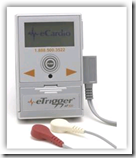
The device has real time continuous monitoring and could be useful after surgery procedures for follow up reports.  More information can be found at the website.  imageBD 

eCardio Diagnostics' eTrigger™ AF920 is a cardiac event monitor equipped with an embedded algorithm that automatically detects and records asymptomatic events such as Atrial Fibrillation (Afib), bradycardia, tachycardia and cardiac pause without patient activation. This feature is especially valuable in diagnosing Afib as often times patients remain asymptomatic during an Afib episode.”

eCardio Diagnostics launches an extended monitoring device, the eTriggerPLUS, in conjunction with an extended monitoring service (EMS). Extended monitoring devices provide real-time data analysis allowing physicians to capture daily ECG information through pre-defined and programmable intervals.

eCardio Diagnostics Introduces Exclusive Extended Monitoring Device

Choices for Migraines – Medical Device, Drug or both?

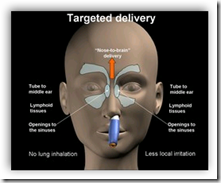
Last week I posted about a new potential migraine zapper, a medical device in research that could use electronic shocks to kill a migraine.  New research here shows a new method of a nasal injection is proving to be effective as the combination offered is faster according to the study reports than what is on the market currently.

Both items are good news for those who suffer from migraine headaches, and as OptiNose states, they have a focus on working with both devices and the drug delivery process.  More and more there will be choices on whether the device or a drug therapy will be the correct answer.  Personalized medicine is also going to set the stage soon to help with DNA analysis to select the drug therapy that would be best suited, and one other short item worth mentioning, if all drugs were determined not to be a solution for a particular patient, then the device just could come to the rescue in some instances, more choices for physicians and patients on the horizon soon.  BD 

imageOptiNose has announced that it presented important new data  demonstrating the superior performance of its novel nasal drug delivery device with sumatriptan for the treatment of migraines. The Phase II results indicate that the drug-device combination achieves migraine relief as quickly and efficiently as injections without the discomfort, inconvenience and risk of needle-stick injuries. OptiNose presented the data at the Annual Scientific Meeting of the American Headache Society in Boston.

Data On Highly Effective Migraine Treatment Presented By OptiNose

Follow-On Biologics Legislation Could Save Billions Of Dollars

 Personalized Medicine and Genomics are getting some serious attention, why, because it will save money and hopefully better healthcare in the process.  The days when your DNA will determine what drug your physician will prescribe may not be too far off.  Developers and researchers are working quickly to bring this to market with affordable solutions, such as this recent article about the Polonator being developed and soon sold from Harvard University, but this is only one of the issues covered by pending legislation in reference to genomics.  BD 

Legislation (S 1695) that would create an FDA approval pathway for follow-on biologics would reduce federal health care spending by $5.9 billion and national spending on imagebiotechnology drugs by $25 billion over the next 10 years, according to a Congressional Budget Office analysis released this week, CQ HealthBeat reports. CBO's estimates are similar to the findings of a study conducted last year by Avalere Health, which found that the legislation could save federal health care programs $3.6 billion over 10 years. Previous estimates had predicted that follow-on biologics could save the health care system up to $71 billion over 10 years, with $3.5 billion in savings during the first year.

Follow-On Biologics Legislation Could Save Billions Of Dollars, According To CBO

Technorati Tags: ,,,

Device proves blessing to chronic pain sufferers

 Implantables helping with pain.  This one focuses on the spinal cord and the therapy and surgery was able to get one man up and around out of the wheelchair.  It is fairly expensive and thus insurance may or may not cover any or a portion.  He also hopes to completely dump his morphine intake which is already down to 30 mg…he uses an implantable pulse generator, which is powered by a battery implanted under his skin and it has a remote control.   image

This is great news for those in chronic pain.  More and more devices are coming of age whereby the use of medications could eventually be on a down swing.  One thing to keep in mind though is that a pill is a visitor and a medical devices lives with you, so be sure.  In the case of this device there was a trial unit that was available before surgery, in other words it was not implanted but more or less a test unit to see if it would work before going through surgery.  For those with potential back surgery pressing, this could serve to either be a substitute or an aid…BD 

He ruptured two discs 13 years ago lifting boxes while doing volunteer work for a homeless program. "A couple of months later, I was bedridden and rushed to the hospital in pain," said the priest, a missionary serving colonias on the far East Side. What followed was a litany of more ruptured discs (three in his neck), surgeries on his back, knees,  elbows and left hand; a pharmacy's worth of medications for everything from pain to depression; and a loss of feeling in his legs that often has restricted the 35-year-old priest to a wheelchair.

It's known as spinal cord stimulation therapy and it essentially fools the body into thinking that it is not feeling any pain.

"This actually works by not letting your brain realize the pain you're in," Sida said. "The electricity counteracts the neurons coming up into your brain, so you don't feel that pain."

Device proves blessing to chronic pain sufferers - El Paso Times

Cancer 'Cure' In Mice To Be Tested In Humans – from Mice to Men or Women

The study was announced on June 28th in Los Angeles.  The FDA has approved the study.  500 local potential donors who are 50 years old or younger and in good health will be recruited. “100 volunteers with high cancer-killing activity will be asked to donate image white blood cells for the study.  Cell recipients will include 22 cancer patients who have  solid tumors that either didn't respond originally, or no longer respond, to conventional therapies.”..The cost is $100,000 per patient.  It states insurance may cover, but I wouldn’t bet on it.  The treatment is done on an outpatient basis for 3-4 days.  It may take up to 3 donors for each study participant.  The key element here is that the donors are being selected based on the cancer killing ability of their white blood cells.  image

Visit the website for additional information.  You can also contribute money to the foundation on the site as well.  BD

ScienceDaily (June 30, 2008) — Scientists at Wake Forest University Baptist Medical Center are about to embark on a human trial to test whether a new cancer treatment will be as effective at eradicating cancer in humans as it has proven to be in mice.

The treatment will involve transfusing specific white blood cells, called granulocytes, from select donors, into patients with advanced forms of cancer. A similar treatment using white blood cells from cancer-resistant mice has previously been highly successful, curing 100 percent of lab mice afflicted with advanced malignancies.

The team has tested human cancer-fighting cells from healthy donors against human cervical, prostate and breast cancer cells in the laboratory -- with surprisingly good results. The scientists say the anti-tumor response primarily involves granulocytes of the innate immune system, a system known for fighting off infections.

http://www.sciencedaily.com/releases/2008/06/080628155300.htm

The deals to entice medical students

Want to go to medical school on the government, well a military scholarship could be the answer, but you need to serve 4 years as an army physician when finished. 

On another matter I was in a round table discussion this weekend and one of the participants from South Africa, who lives here and travels extensively was talking about the opportunities now in China for young US citizens.  He told me he almost started World War 3 when he suggested this to a friend and his son who had just completed medical image school here with this suggestion.  Long and short of the story, the friend’s son visited China and is now ready to pack up and go.  He’s not alone though I was told as there are many who are doing the same, so this is another area where we might stand to lose young physicians just starting out in the US.  According to what  was said, the ones who have jumped at the deal are thus far happy and satisfied with their living conditions as well.  I had no idea this type of movement was going on and I guess you do learn something every day.  BD 

Katie Doyle could have borrowed $200,000 to get through medical school. Instead, when she enters Nova Southeastern University College of Osteopathic Medicine in Fort Lauderdale, Fla., this fall, she won't borrow a dime. Doyle accepted a military scholarship that will pay her tuition, books and other school fees. A monthly stipend will cover living expenses. The scholarship, called the Health Professions Scholarship Program, or HPSP, also comes with a new $20,000 signing bonus.

AMNews: July 7, 2008. Military sweetens the deal to entice medical students ... American Medical News

Retail Clinics were first, now we have Retail labs…

First we had retail clinics, now retail labs and no prescription required, so pop in for a quick LDL or glucose test before you start your grocery shopping.  Lab results could soon be connected to a PHR I would think to complete the entire process instead of mailing.  BD 

An Atlanta company wants to make taking medical tests as easy as  shopping at a grocery store or picking up dry cleaning. Any Lab Test Now has opened its first Arizona franchise at a Fry's-anchored strip center at 8902 E. Via Linda in Scottsdale,image and the company is scouting out locations in the West Valley and near Arizona State University's Tempe campus. Customers don't need an appointment or a prescription to take any of dozens of medical tests such as cholesterol, glucose, liver, prostate cancer and other screens. Costs range from $49 to several hundred dollars depending on the test, a spokeswoman said. While the company administers the test on site, specimens are sent to certified labs such as Sonora Quest for processing. Consumers decide whether they want to pick up results at the retail store or have them mailed home. No doctors are at the retail site, but phlebotomists and medical assistants help explain test results.

Medical test site opens in strip mall

Medicare audit overreach?

There have been issues with how the auditing contractors have handled the scenario and Florida and California were able to make some change in tactics with the contractors as they were becoming more of bounty hunters.  One physician was billed thousands in overcharges and anticipates winning all except $250.00.  But how complicated does the appeals process get?  This is another issue where it is less expensive to pay $100.00 or so than to appeal.  It sounds like pay for performance for the auditors and they have no regulation.  This along with the looming pay cuts is enough to push more over the edge and potentially close up shop.  The administrative time involved in researching patient records and sending them, along with the billing records is a monster, when small practices are already under the gun.  Instead of auditing after the fact, I would suggest that some of the accuracy should fall back on Medicare to pay claims correctly from the start and not even worry about those under $200.00.  This takes time away from time spent with patients to research and resolve.  BD   

In another payment issue the AMA also discussed payment of on call coverage, whereby 75% of the hospitals stated there is inadequate numbers of physicians, why, the questions and amounts of payment don’t add up to the number of sleepless nights.  BD 

Aggressive tactics, vague charges, interrupted patient care, drained staff resources and administrative headaches. These are some of the problems doctors say they encountered during their experiences with Medicare's newest breed of auditor. The Centers for Medicare & Medicaid Services this spring wrapped up a three-year pilot program in which "recovery audit contractors," or RACs, scoured physician and hospital claims in three states to find overpayments and to recoup those dollars for Medicare. Thrilled by the project's financial success, lawmakers ordered CMS to expand the program to all 50 states by 2010. The agency plans to choose four national contractors to administer the program this summer. A new round of audits could start right away.

Although Dr. Kaufman didn't end up paying a nickel, his fight took countless hours of unpaid work. "This was controlling my life for about three to four months." Over the three-year pilot, the RACs collected less than $13 million from physicians out of the $980 million in total overpayments they found, with the average overpayment per physician being about $100 to $200.

AMNews: July 7, 2008. Medicare audit overreach? Doctors think so, but audits aren't going away ... American Medical News

How Do You Outsource Health Care – You Don’t

Every industry has what is called a “business model’ and different industries can all learn from each other on marketing techniques, practices, etc. to create a proof of concept, but the one industry that is different is healthcare.

I guess if you wanted to call clinical trials a “proof of concept” I guess that might be the closest area to relate, but the entire crux of the matter with health care is that there are certain “fixed” expenditures, after all this is the “people” business.  We are not stacked and shrink wrapped on a pallet to be moved from place to place as are commodities, although today as a human with some current practices one may in fact begin feeling a like a commodity

There have been attempts to outsource surgeries, medical care, etc. but the growing oil prices today are also taking their tolls in those areas a well.  As a country we have imageworked hard to exhaust every avenue of outsourcing that we can find in the pursuit of providing products and services at a lesser cost.  Much of this has been done in health care as well and there is nothing wrong with better efficiencies and use of funds by any means, but where does this cross the line with providing health care.  That line is somewhat of a moving target today, with nobody in control. 

With all the budget talks and cuts occurring today, it’s time to realize that there are certain fixed expenses that are not going away, and thus it makes me wonder have we in fact crossed that line in the pursuit of economy.  I’m a great believer in technology and what it can do to provide a better quality of life, but am also aware that it can indeed have the opposite effect if not managed properly.

So when it comes to budget talks, government, healthcare, etc. it’s time to rally up to the fact that perhaps much of the “fat” has already been trimmed and now we are faced with the reality to pull within our own resources and take care of our own.  There will always be a way to save a penny here and there, but we need research, we need the providers to carry out trials and lifesaving treatments as well as the people who support them. 

When it comes to outsourcing health care, we seem to have come to one big stumbling block, it just can’t be done to the extent of many other businesses, and there are fixed and rising costs associated, and some day if that can become a reality process and a system created to fund, we might all be a lot happier and better off. Healthcare needs money and funding to survive, people need health care to survive and live.

Health care is not only a money issue, it’s a moral issue and of late the morality seems to tragically taking a back seat to the dollar issue (just read the news) and if methodology concepts don’t change somewhere down the line soon, it’s not going to get any better.  This is one industry that can’t be sold and outsourced to the lowest bidder. BD 

Technorati Tags: ,,

Medi-Cal providers bracing for pay cut - California

There’s a lot of focus this week on the Medicare reductions, but in California there’s also the Medi-Cal cuts.  Already it is very difficult to find physicians who will still take Medi-Cal today, that battle through attrition has already be done, but the biggest potential losers in California are the hospitals, many of which have already taken out loans.  One other footnote, today I heard the Good Neighbor Pharmacies advertising and asking consumers on the radio to show their support for stopping the pay cut as well, stating they may not be able to continue to handle Medi-Cal prescriptions too. 

image In the business world there is this thing called “cash flow” and hospitals are no different.  They need cash flow too and reimbursement for taking care of everyone who shows up at the ER.  Every hospital has their share as by law they cannot turn people away.  The Medi-Cal cuts have also created a day in court to challenge, which is due sometime soon in the courts in Los Angeles.  The state has delayed for a month the writing of checks, so again it all comes around to cash flow or the lack of.  Pharmacies are also dropping out of the loop.  So where do we win, how does everyone get health care?  It is time for a new plan all the way around to generate revenue to cover. The old proverbial “sales pad” is gone with padded projections that protected us for years as technology gets it down to the last penny to allocate.  In the past budgets were always padded to cover incidentals, but that has vanished by today’s standards of the information era.  BD 

We have all but camped out in (the governor's) bedroom to convince him to reverse these cuts, and nobody is doing anything to undo them," said Scott Seamons, regional vice president for the Hospital Council of Northern and Central California, an association representing hospitals in the region. The California Hospital Association and California Medical Association were among the groups that filed suit to try to block the cuts. They are waiting for a court date in Los Angeles County Superior Court. Along with the lower reimbursement rates, the state delayed for a month the Medi-Cal payments that were due to hospitals June 19. Another check- writing delay is set for August.

The Modesto Bee | Medi-Cal providers bracing for pay cut

Where the money isn't – The Family Practice

From Maryland, the physician states 15 years ago he was a wealthy doctor and today he is struggling and now thinking about quitting.  Hopefully Congress will try once more to abate the pay cuts, or there may be many more who quit.  Most of the MDs I know practice as it is their passion, not just a job.  Another cut of 5% is on the table for January.  For those physicians see a high number of Medicare patients this is critical not only to their income, but also patient access.  Where will the Medicare folks go once the number gets smaller? 

This physician states the rates are among the worst and that is also felt in California where there could be a rally for who has some of the worst contracts between the 2 states, as neither is up at the top of the ladder. What is happening is the demise of the small family practice as we have known for years.  Many have taken on salaried position at Kaiser, or Government entities. 

imageWith many of the pay for performance incentives, compensation is not always on quality but more so on quantity.  I was in sales for many years and pay for performance has been around for years and that’s what it was in sales too, the numbers.  We continue to read about the billion dollar profits here in California as well and the fact that insurance is becoming unaffordable for many, so that brings one more question to mind, how do you pass a law to require insurance that people can’t afford…big question and are profits here going to fund start up offices in China?  BD 

Dr. Ronald Sroka has been a family care physician in the same Crofton location for 30 years, just six miles from where he grew up. He's the president-elect of the Maryland State Medical Society, he was voted favorite physician last year in the local Suburban Scene publication, and he counts his high school principal among his many longtime patients. Simply put, Sroka loves what he does. But this is the last year he may be able to afford to do it.

Where the money isn't -- baltimoresun.com

Dangerous drug, do-nothing FDA

Propoxyphene is the active ingredient found in Darvocet and also in Darvon.  Experts suggest that ibuprofen is far more effective for treating pain, and yet it remains among the top 25 drugs prescribed and it is highly addictive.  Consumer groups are suing the FDA over the product being allowed to stay on the market.  In the UK, the drug began  phasing out in 2005.  As of now the FDA can’t comment due to the pending litigation.

So will the product stay on the market?  It has been many years ago, but I was once prescribed the medication for pain after surgery and I found I couldn’t take it as well, and imageI did experience the dizzy feelings described here and after 2 pills, it went to the trash can, but everyone is different.   It was something that was definitely not for me, but time will tell and there are many alternatives available on the market for prescription, some of the others can be addictive as well too.  We read the stories about Vicodin and the addiction potential with that drug as well, but it doesn’t appear to have the heavy sedation effects that seem to be associated with Darvon.  BD 

After surgery and a hospital stay, Mrs. Cream, 77, was sent home with a prescription for a pain reliever called Darvocet. Not only did the medicine not control her pain, she found it also made her confused and sleepy.

Research has shown that Darvocet (and its first cousin Darvon) is no more effective than acetaminophen (Tylenol) or aspirin, and perhaps it is no more effective than even a sugar pill. Experts suggest that to treat serious pain, ibuprofen is far more effective than Darvocet.

http://www.sacbee.com/107/story/1043039.html

Technorati Tags:

Senate Democrats Attack Republicans on Medicare - “There will be blood” (HR3661)

One senator wonders at this point why he is a Republican…and the Democrats were quick to have the names of those who voted against the bill, and it was published image immediately on the web.  Mr. Leavitt has stated he would hold new claims for 10 business days so doctors would not see the lower payments, which is good after the last incident posted a short while back where a federal judge had to step in and slap down the sneaky attempt to push the Medicaid cuts through at the end of May as they attempted a “type ridden final rule” filing in the Federal Resister before Congress could act, so hopefully with the 10 day agreement, this won’t happen again.  So until the matter is cleared, no payments for 10 days.  BD 

Democrats moved swiftly on Friday to assail Republican senators for voting against a major Medicare bill and said the Republicans should be held responsible for a 10 percent cut in payments to doctors that takes effect next week.

And doctors, pharmacists and advocates for Medicare beneficiaries said they would step up pressure on members of Congress when they return home for the Fourth of July recess.  In nearly identical terms, Democrats attacked seven other Republican senators: Lamar Alexander of Tennessee, John Barrasso of Wyoming, Saxby Chambliss of Georgia, John Cornyn of Texas, James M. Inhofe of Oklahoma, Mitch McConnell of Kentucky and Roger Wicker of Mississippi.

Michael O. Leavitt, secretary of health and human services, said he hoped to “minimize the impact” of the cut. Medicare said it would hold new claims for 10 business days, so doctors would not see the lower payments “until July 15, at the earliest.”

Joseph P. Lech, who owns five drugstores in northeastern Pennsylvania, said he was surprised and disappointed to see that Senator Arlen Specter, Republican of Pennsylvania, had voted against a motion to take up the bill, which would speed payments to pharmacies. “I’ve been a registered Republican for almost 30 years, but I am beginning to wonder why,” Mr. Lech said.

http://www.nytimes.com/2008/06/28/washington/28medicare.html?partner=rssyahoo&emc=rss

Technorati Tags: ,

Robert Scoble Visits Washington – How and Who is Using Technology…

Anyone who has been on the Internet for any amount of time knows who he is.  Recently I have talked about how far behind health care is in the government, but Robert was able to find some real technology is every day use, but as mentioned below things are a bit slow in Washington in some areas and he didn’t make it to the FDA (grin).  Some of the areas of concerns that kept coming up are below, but these are just a couple as they relate to technology and education/healthcare. 

Now for the really neat part of some of these interviews, he was capturing some of this with he cell phone and streaming live to the Qik network.  Earlier this year I wanted to explore this at a convention, but simply was not able to get everything together before attending.  Robert of course is a long time Tablet PC Fan and I have followed many of the articles and posts.  When I see where we are today, it’s amazing and I still go back to the video done at Overlake Hospital a few years ago on Channel 9 with Dr. Crounse and where we have come today.  If you haven’t seen it, take a look as it still has a lot of value today.  Continue on for a couple more videos below from Washington. 


“Technology usage has a long way to go in government. I had several conversations with both congressmen and everyday government workers who told me that entire departments were still storing all their data on paper, at great waste. John Culberson told me one of his goals is to get all parts of government data onto computers so that people can watch better where their dollars are being spent.

Several of our interviews mentioned that our education system needs to be rebuilt to make sure our workers are competitive with those from India and China. More scientists and technologists are needed, they told me, and we’re just falling behind other countries here.

Blackberries are used everywhere, though. Many Congressmen showed me that they carried two Blackberries: one for their campaigns and one for government business. Alec Ross told me that Barack Obama has very fast thumbs and is legendary for being able to whip out notes on his Blackberry. (I had to laugh a bit here as Robert made reference to the same video I had on the Medical Quack about McCain not being able to use a computer. BD)”

Now this video done via the Cell phone is great with Representative John Cullberson,  who also uses Qik and it humorous in the fact that he catches a cameraman with his cell phone.  Watch the video and see how the Congressman does it.  Some folks in Congress get it.  The congressman also Twitters too. 

One more video that was of interest was the FCC.  This was extremely informative and imagehas to do with communication, broadband, etc. which affects everything we do.  Great stuff as always and visit his blog and Qik to see more.  BD 

http://scobleizer.com/2008/06/28/debriefing-of-our-dc-trip/

Analyst Says Bristol-Myers A Buyout Target

Is the big pharma business the next industry to face the melt down and consolidation process?  BioTech investments are growing, and personalized medicine will also have an impact as activity continues to grow.  Sequencing machines and technology are also bringing that portion of the industry down to an affordable level. BD 

The pharma industry, like many other industries in the down U.S. economy, is due to consolidate. Big Pharma is facing a slew of patent expirations from some of the most profitable drugs in history in 2011 and 2012, leaving many large pharmaceuticals companies looking for acquisitions that will strengthen their pipeline and boost shares.

Analyst Says Bristol-Myers A Buyout Target - Forbes.com

Medicare to Test PHRs in S. Carolina

If this project proves to be successful, then watch out for Google Health and the Microsoft Vault who will want to integrate, which would be a good thing and added availability to share.  The project will last for 12 months.  CMS is activity encouraging the use of PHRs to hopefully get more involved in their own healthcare.  

The Centers for Medicare and Medicaid Services is seeking Medicare beneficiaries in South Carolina to participate in a pilot program to assess the benefits of using personal health records. Medicare will populate the PHRs with claims data, such as medical conditions, hospitalizations and doctor visits.

Medicare also will input medications histories in the PHRs following publication on May 28 of a final rule authorizing the collection of claims data under the Medicare Part D drug benefit program.

“We note that because this final rule applies to all Part D sponsors, it applies to any entity offering a Part D plan, including both prescription drug plan sponsors and Medicare Advantage organizations offering prescription drug coverage,” according to the rule. Beneficiaries will be encouraged to enter additional information and share the data with providers.

Training The Next Generation – EHR Training at the University Level

What a novel idea!  I say this tongue and cheek as it has been something needed for a long time.  After having been in this industry for a while, this has been one of the most difficult areas and to have some general training at the university level before walking in to an office using an EHR, this is great, and good news that someone is image taking the first step.  Shoot when medical assistants train, there has been donated billing software in existence in the schools for quite some time, so it’s about time for the next level of EHR to move in.  Even when a new installation goes in, this is still the hardest point sometimes to get a across, you do need training, but so many relate back to years ago when they picked up their old AOL free disc, and hey they were online, well things are just not that simple any more, there’s no picking up an EHR disc and going to town, it’s a bit more complicated.  BD 

Last fall, University of South Florida Health in Tampa added a new class to its medical school curriculum. But instead of focusing on an emerging disease or care regimen, the class provides instruction on how to use electronic health records.

The two-hour, single-session class covers various EHR topics, including security and specific uses. And now all USF medical students must take it at the beginning of each school year

USF Health created the EHR class at the suggestion of a new administrator who wanted the school to help prepare its students to work at clinics that use the technology. While the inaugural class didn’t require students to be tested on the material, the school plans to add tests next year, says Michael P. Williams, technical trainer at USF Physicians group, a 450-physician, multi-specialty group practice affiliated with the school.

http://www.healthdatamanagement.com/issues/2008_54/26553-1.html?CMP=OTC-RSS&page=1

Technorati Tags: ,

Temporary Halt To Medicare Reimbursement Cuts – HR 6331 Update stalled until July 15th – The shot heard round the country…Loud and Clear in Texas…

Somebody had to step up the plate here, so the deadline is extended to July 15th now.  In a related story:  from the Center for Medicare Advocacy

“One day after the Government Accountability Office reported that private Medicare Advantage plans made $1.14 billion more in profits than they had projected, Senate Republicans used the excuse of protecting these plans to defeat Medicare legislation that would prevent a pay cut for doctors from going into effect and that would add more assistance for low-income older people and people with disabilities.”

More here from the American College of Physicians….

GruntDoc states both Texas Senators chose to screw the docs…

The Texas Medical Association Backs off support for Cornyn

By the end of the day, the association's political committee, image TEXPAC, had withdrawn its backing of Cornyn, saying its board was "outraged."….But the Senator states here that Democrats chose political games over protecting Medicare…

Kevin, MD has a You Tube Video on Big Bad John….

Earlier the AMA spoke out….Congressional confidence at an all time low….

Read some reactions of how some physicians feel about this…and they are not happy…from EMR Update….”We plan to pull the plug on our Medicare participation”…”Many may join me in closing the office to new patients”…and so on, it’s about patient access as well…BD 

The House of Representatives clearly did their part….

U.S. Congressman Phil Gingrey, MD (R-GA) is pleased to announce that despite the Senate's failure to pass House-approved legislation to prevent a 10.6% cut to physicians' Medicare reimbursement, the Centers for Medicare and Medicaid Services (CMS) will effectively delay the scheduled cuts until at least July 15th - giving Congress time to address these cuts after the July 4th recess.

Earlier this week, Congressman Gingrey voted for a bill to prevent the automatic 10.6% cut to physician reimbursement which passed the House. Though the legislation failed in the Senate, the Democratic leadership chose to adjourn the House of Representatives for the Fourth of July recess with no announced plans to reconvene. In response to inaction by Congress, CMS announced it will instruct contractors to not process any physician and non-physician practitioner claims for the first 10 business days of July, in accordance with existing law. This delay should give Congress additional time to enact legislation to prevent these cuts on a more permanent basis.

Congressman Phil Gingrey Announces Temporary Halt To Medicare Reimbursement Cuts

GlaxoSmithKline Donates Cancer Genomics Data set to Public

If others follow in the same path this stands to set some new priorities on how studies are conducted and the development of personalized medicine.  BD 

In a move likely to up the ante in the emerging Open Source Drug Discovery movement, GlaxoSmithKline have announced the donation of image genomic profiling data for over 300 cancer cell lines to the National Cancer Institute's cancer Bioinformatics Grid (caBIG). According to NCI's FAQ, caBIG is "an open-source, open-access information network enabling cancer researchers to share tools, data, applications, and technologies according to agreed-upon standards and identified needs." caBIG is comprised of publicly-available datasets and open source software tools designed to interact with them.

GlaxoSmithKline Donates Cancer Genomics Dataset to Public Information Network

Battered Woman Imagery in Pfizer's New Fibromyalgia Ad

John Mack makes some good points about advertising here…how low do we have to go in essence to drive attention to the ads to sell Lyica, the approved drug for treatment of fibromyalgia

Pfizer has recently upped the stakes in its campaign to depict fibromyalgia as a "real" medical condition. In an non-branded "disease awareness" TV ad that I saw last night, this point was hammered home by images of a woman showing black and blue bruises over her body. She says something like "Maybe if people saw me this way, they will believe that fibromyalgia is a real medical condition." What I saw were disturbing images reminiscent of battered woman syndrome. The whole thing smacked of desperation on Pfizer's part to sell more drugs and represents DTC advertising sinking to a new low in exploiting women's fears!

Pharma Marketing Blog: Battered Woman Imagery in Pfizer's New Fibromyalgia Ad

Hat Tip:  Kevin, MD

Are Medical Meetings Environmentally Unfriendly

As in most industries, virtual meetings and web meetings are starting to make a large showing on the Internet.  When you stop and think about the price of fuel alone, this makes sense. Granted, I have done both and there really is no replacement for actually imagebeing there in real life to fulfill the full learning experience, but as things get tighter and fuel and other accommodations continue to rise, what’s the alternative?  We all know we are exposed to recycles diseases on board aircraft every time we fly as well.  Forbes

also addressed the same in a related article.  Products such as Microsoft Live Meeting are now becoming more popular.  And there are products such as Microsoft Round Table that make the experience even more life like. BD 

FRIDAY, June 27 (HealthDay News) -- Anyone who has arrived at Chicago O'Hare, Orlando or Dallas airports during one of the dozens of huge medical meetings held every year will no doubt encounter tens of thousands of specialists from all over world

thronging the hallways, the Starbucks, the luggage claim area.

Of course, the attendees use jet fuel to get to the meeting and gas to get from the airport to the hotel where, once they're checked in, they'll have the option or reusing or not reusing their towels.

Are Medical Meetings Environmentally Unfriendly? - washingtonpost.com

Training Surgeons From The Video Game Generation

New concept in training younger medical students with video simulation.  When you stop and think about it, this generation has grown with video games, etc and now this study is taking it to the next level to see if simulation is a technique that should be added to the study curriculum.  Ohio state is also jumping out front with taking the lead on personalized medicine.   The video training is slated to begin at hospitals around the country to see who does better, simulation or conventional.  BD 

The first generation of kids who grew up playing video games aren't kids anymore. Today, they're the backbone of the American workforce, and all that time playing games as kids, may be helping them now as adults. In fact, researchers hope to imageuse computer animation to not only help train the next generation of surgeons, but to see how good they can really be.

In order to give young doctors a feel for what it's like, Doctor Weit is training surgeons with a state of the art program developed with Ohio Super Computer Center that can do everything from mimic the movement of the drill to the density of the bone. Virtual patients can even bleed. It can give students life-like demonstrations before even turning over the knife.

Training Surgeons From The Video Game Generation - Study To See If Using Computer Animation Can Make Young Surgeons Better

Progressive MyRate drive-monitoring device goes national

The insurance business is getting more creative all the time.  This story has to do with car insurance and having a monitor study your driving habits, this is a way to offer incentives to those who’s device comes back with favorable results, but I wonder what happens at the other end of the spectrum, do their rates go up? 

If this is happening with car insurance and the technology is out there, will health insurers be looking at something along this line down the road?  In other image words hopefully we are not tied down to some device that monitors are level of exercise, etc. like the example with the car.  As insurance gets more complicated by the day, it does make one ponder if some technology like this will try to rare it’s ugly face on the human side of the insurance business.  Technology is already out there whereby a PC can read facial expressions, etc. and the logic behind this is to alert others to an up and coming heart attack, but again how far does this go, and let’s step up HIPAA in this area while we are at it.  Sure smart devices can be of great assistance, but again it’s always one step over the line where information used to grade individuals can go one step too far. BD 

Progressive insurance has been testing out the MyRate driving monitoring system for a few years now (it used to be called TripSense), but it's finally taking the system national, bringing pay-as-you-drive insurance into the mainstream. The little blue box plugs into your car's ODB II diagnostic port (all cars made after 1996 have one), and studiously records your driving habits, wirelessly sending the data back to Progressive HQ (it's not clear exactly how). Every six months, Progressive will crunch the numbers and issue a new rate for you based on how you drive -- savings of up to 40 percent are possible. That's pretty tempting, depending on your current rates and driving habits, but we're not so sure we're willing to share that much data for an unspecified discount -- especially since we're confident the MyRate box will get cracked almost immediately.

Progressive MyRate drive-monitoring device goes national - Engadget

Technorati Tags:

10,000$ worth of free care

Nice story from the ER doctor and nice to know charity and human soles are still alive and well out there.  We hear so much negativity today and nice to hear from dedicated and generous health care workers, as the patient had no insurance but needed care.  BD 

“Well, probably mostly free.  The guy may be able to pay some of his bill (but I doubt very much).  Last night I had a young man, recently graduated from college with no insurance and only a part time poorly-paying job who came in after a stupid motorcycle accident. He was fooling around with no helmet in a parking lot at 15 mph and crashed image into a metal wire fence.  He broke his forearm and severely lacerated his face (just under his one nostril), and two fingers on his dominant hand (almost cutting his extensor tendons) , bruising his knee and shin,and  got road rash on his other hand and leg.  All told, I put in about 50 sutures, including deep ones.  Splinted both fingers, reduced his broken radius as best I could and then splinted it, and  cleansed off all his abrasions.   It took me about 2 1/2 hours of work.  A plastic surgeon or orthopod or other surgical specialist would have easily charged 10K for all of that work (who knows, maybe more!). I did it for free (well, as I said before, he may try to pay some of our bill but I don’t think we’ll get much).  He was a good, nice kid (just did something stupid - and was not drinking) who was very thankful so I did not really mind.  While I did this, the ER massively backed up even though there was another doc and a PA working.  I would have LOVED to call someone in to help but I knew they would refuse since he had no insurance.  The best I was able to do was to get the on call orthopod to see him in his office next week - where he will hopefully arrange for him to have his radius surgically fixed through the clinic system.  I would love to tell them about cases like this that I don’t ask them to come in for when they balk about coming in for minor cases with insurance!”

http://erstories.net/?p=429