Cook's Medical still growing

The company is a long time veteran in the stent business and not too long ago I had an interview posted here on the blog.  The interview related to stents, coated with antibiotics.   As the business for stents continues to grow, it seems so does Cook. 

A new products on the horizon is a flexible metal stent called a Zilver PTX Drug Eluting Peripheral Stent for individuals with peripheral image arterial disease, a result of hardening of the arteries.  Clinical Trials are in place and it has not yet been approved by the FDA. 

Peripheral arterial disease affects more than 30 million people worldwide, and while it can strike anyone, it's most common in people over age 65. 

PAD develops most often as a result of the hardening of arteries (atherosclerosis), which occurs when cholesterol levels and/or scar tissue build up, causing the arteries to narrow and restrict blood flow.

The Zilver® PTX™ stent uses the drug paclitaxel.   It is intended to reduce the amount of tissue build-up inside the stent after being put in place.  There is potential here to relieve and reduce suffering for many who have restricted and hardened arteries.  BD 

BLOOMINGTON, Ind. -- Perched on a stool in front of a high- powered microscope, Jenifer Priddy picked up a flexible mesh tube, placed it under the lens and took a long look. "You don't want to see any flaws or foreign matter," said Priddy, an inspector at Cook Group in Bloomington. "That means there's a problem."  Cook, which makes medical devices used by doctors and hospitals around the world, hasn't seen many problems lately, either in its microscopes or its business results.image

"I don't want to use the term 'recession-proof,' but we're doing quite well," spokesman Dave McCarty said. "The medical device sector as a whole is a good place to be."

Some medical device companies, however, aren't as fortunate as Cook, and are feeling a few bumps.

One of its newest products, a flexible metal stent called a Zilver PTX Drug Eluting Peripheral Stent, could give Cook a big boost if it passes muster with federal regulators.

The stent is designed to treat people who have peripheral arterial disease, a condition that affects about 10 million Americans a year.

Cook's growth is still sizzling | IndyStar.com | The Indianapolis Star

Engage with Grace – The One Slide Project

We make choices throughout our lives - where we want to live, what types of activities will fill our days, with whom we spend our time. These choices are often a balance between our desires and our means, but at the end of the day, they are decisions made with intent. But when it comes to how we want to be treated at the end our lives, often we don't express our intent or tell our loved ones about it.

This has real consequences. 73% of Americans would prefer to die at home, but up to 50% die in hospital. More than 80% of Californians say their loved ones “know exactly” or have a “good idea” of what their wishes would be if they were in a persistent coma, but only 50% say they've talked to them about their preferences.

image

But our end of life experiences are about a lot more than statistics. They’re about all of us. So the first thing we need to do is start talking.

Engage With Grace: The One Slide Project was designed with one simple goal: to help get the conversation about end of life experience started. The idea is simple: Create a tool to help get people talking. One Slide, with just five questions on it. Five questions designed to help get us talking with each other, with our loved ones, about our preferences. And we’re asking people to share this One Slide – wherever and whenever they can…at a presentation, at dinner, at their book club. Just One Slide, just five questions.

Lets start a global discussion that, until now, most of us haven’t had.

Here is what we are asking you: Download The One Slide and share it at any opportunity – with colleagues, family, friends. Think of the slide as currency and donate just two minutes whenever you can. Commit to being able to answer these five questions about end of life experience for yourself, and for your loved ones. Then commit to helping others do the same. Get this conversation started.

Let's start a viral movement driven by the change we as individuals can effect...and the incredibly positive impact we could have collectively. Help ensure that all of us - and the people we care for - can end our lives in the same purposeful way we live them.

Just One Slide, just one goal. Think of the enormous difference we can make together.

(To learn more please go to www.engagewithgrace.org. This post was written by Alexandra Drane and the Engage With Grace team)

Testing Children for “Sports” Gene?

This is pretty controversial in essence, if you have ever watched parent already getting pretty steamed up at baseball and soccer games, so next we could easily have some heated discussions on how long each child can play with parents feuding over who’s child has the best gene in the bunch and who would have more playing time, based on the $149.00 test that is available. 

Loving parents might work every angle, including genes in the future.  BD

BOULDER, Colo. — When Donna Campiglia learned recently that a genetic test might be able to determine which sports suit the talents of her 2 ½-year-old son, Noah, she instantly said, Where can I get it and how much does it cost?

In this era of genetic testing, DNA is being analyzed to determine predispositions to disease, but experts raise serious questions about marketing it as a first step in finding a child’s sports niche, which some parents consider the road to a college scholarship or a career as a professional athlete.

Atlas executives acknowledge that their test has limitations but say that it could provide guidelines for placing youngsters in sports. The company is focused on testing children from infancy to about 8 years old because physical tests to gauge future sports performance at that age are, at best, unreliable.

http://www.nytimes.com/2008/11/30/sports/30genetics.html?pagewanted=1&hp

Technorati Tags: ,,,

The War on Obesity - Natural Orifice Surgery an Option for the Future with no incisions

The Mayo Clinic has been removing gall bladders with this type of surgery, no incision and done through the mouth or other natural body orifices instead of an incision. 

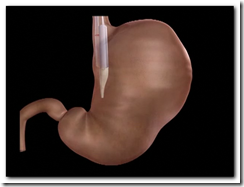
This type of surgery could stand to make biopsies easier as well as perhaps removing tumors in the future.  What is being done in Californiaimage is to use a device that is high-tech stapler that's thin enough to slide down the esophagus into the stomach and is stomach stapling with no incisions.  You almost have to think with all the hospital acquired infections around today, this might stand to help with less exposure there as well.

More information can be found here on the stomach stapling here through the mouth.   

More information on the gall bladder procedure can be found here. 

Women also have another option to remove a gallbladder removed genitally and that procedures is being done in California.  BD 

Dr. Christopher Gostout remembers the first time he heard anyone suggest such a thing. He was in a roomful of doctors at a seaside resort, brainstorming about the future. Perform surgery without piercing the skin? Take out someone's appendix through the mouth?

"We all fell off our seats, laughing," he recalled.

But today Gostout is one of a handful of doctors about to start testing a new way of operating that could make the surgical scar a thing of the past.
It's called natural orifice surgery. And yes, it means using the body's natural openings - wherever they may be - as a way to reach internal organs that need a doctor's care.

The field, though, remains in its infancy. Only a few hundred people worldwide have had incision-free surgery, said Gostout, of the Mayo Clinic. So far, the most popular procedure is removing the gallbladder - a 3- to 4-inch, pear-shaped organ tucked beneath the liver.

http://www.physorg.com/news147274428.html

Computer technology can cut into personalized patient care with complexity and complicated user interfaces

This article offers some very good insight here and I’ll add my 2 cents worth as well.  We all know that documentation, no matter what kinds it is, paper or electronic is mandatory to good healthcare, but technology creates it own set of new issues too, so it’s not a matter of get electronic records and the documentation issues are solved by any means.

With the current fragmentation of how we record information and the various software programs used, it is a big mess.  If a doctor works at more than one hospital with different systems at each one, well they have 2 learning curves now instead of one, and it takes time and training for both, same with nurses and other clinical staff.  Thus we have the complaints about healthcare being impersonal due to the interference of computers and other technologies, well it is true.  When the complexity overwhelms the purpose of the entire system, we have clinicians more focused on the “how” instead of the “why” we document.  Never mind there’s a patient laying there in agonizing pain, let’s make sure we are doing our data input correctly and making sure we have that new update in place and know how to use it, even though it was just rolled out yesterday and perhaps very few on staff have had time to review and see any new revisions on either entering data or more available information, and if you don’t get it right, it could your job. 

Both patient care and documentation need to live harmoniously in the same world, no 2 ways about it and both are important, but so is simplicity and balance.  I mention this a lot, but having a common user interface that is the same or similar at every hospital and physician’s office is key to survival, otherwise the algorithms keep growing and the new processes appear on the User interface as they are introduced.  

How much training in software is required for clinicians?  Quite a bit by today’s standards.  I like software and just by consulting, how confusing it is for me to keep track of about 10 electronic records systems, well it is not easy at this end either, I have to keep up with all the latest updates and features added, so guess what, the clinicians and IT folks here can finally certainly agree on something when it comes to technology, the need for simplicity and standards. 

It’s to the point where even companies like GE want to start over from scratch. 

So until such time that vendors group together instead of marketing to the “islands” of healthcare with medical records and documentation we will have “islands” of hospitals and systems, all different at each location and all required some learning curves for all.  Health IT with user interfaces and input needs some simplicity enabled soon, otherwise as the continued growth rate of new algorithms being created and frequently added, we may end up with systems that are too complicated for anyone to use.  BD 

It seems that in this pell-mell rush to incorporate computer technology into patient care, something has been lost. It is the human touch. It is why most of us went into medicine and nursing in the first place. Medicine is the most humane of vocations. We must find a balance to keep it that way.

Gone are the days of business on a handshake. Discussing computers and documentation in a medical column may be a bit odd, but bear with me. It is highly relevant.

A nurse can no longer give a patient in pain a shot without first going down a checklist of questions -- the answers for which must be entered on a computer. Ditto for every other patient interaction. Nurses now spend an inordinate amount of time that should be spent on patient care entering data on a computer.
I think nurses are judged more on the quality of their documentation than on the quality of their patient care. Is it any wonder that burnout is a common occupational hazard of nursing?

Computer technology can cut into personalized patient care -- OrlandoSentinel.com

Related Reading:

Desmond Tutu Presents e-Health Call to Action – Learn from the mistakes of the US

EHRs need Standard Templates – So Let’s Look at the Common User Interface Project, a lot of the work is already in progress and partially completed
Health care has managed to avoid the information-technology revolution, but it won't for much longer
How electronic records reach your doctor – Integrated through the Hospitals
EHR Adoption Remains Off in the Distance – Getting way to complicated
Microsoft Technology Centers – Software Solutions with Assistance and Guidance
Common User Interface – Update and walk through video

Heartbeat of a new industry – Stem Cell Storage Banks

One of the founds is no other than James Thomson, an early stem cell pioneer, and the company just raised a few million more with investors, so all biomed is not in the same situation, I think it depends largely on what area of biomed is the focus.  So in the future, maybe donate some DNA, grown some stem cells, put them away in the bank and off you go to live life until you need them.  image

The stem cells could be turned into heart cells, liver cells and so on.  Interesting new concept with research and development and treatment plans of the future from Cellular Dynamics.  BD

From the website:

Cellular Dynamics is working with scientists worldwide to develop and deploy a wide range of screening assays and services to aid pharmaceutical development. CDI provide cardiac toxicity drug testing services, including GLP and non-GLP hERG electrophysiological assays as well as action potential and cytotoxicity screens using hES-cell derived cardiomycytes. The company is developing additional hematopoietic lineage cell types from iPS cells, including mast and CD34+ cells, megakaryocytes, and red blood cells for drug screening and toxicity testing.

Scientists engineered the tissue cells to be pluripotent, which means they could turn into the beating heart cells under the microscope, or liver cells or any other cells in the human body. These cells, the scientists said, are just the beginning of the coming revolution in medicine. In the future, people might well be able to store personalized stem cells engineered from their own DNA. The cells would be banked so doctors could use them as part of therapies or to test drug reactions as the need arises. The key to that future is the ability to produce stem cells in big quantities with complete reliability.

image

The robot was built through a partnership with a Swiss company called Tecan. It feeds and grows stem cells and reprograms them into specific cell types. From CDI's view, the robot removes the variability of individual lab workers to create better cells in bigger quantities.

Heartbeat of a new industry - JSOnline

Mapping brain cancer to find best treatment – Personalized Medicine

A piano player gives up his job, goes to medical school and now has and R and D project with clinical trials for brain cancer.  He also works with Microsoft co-founder Paul Allen's Allen Brain Institute who has healthy brain statistical information compiled for comparison.

The research involves sorting out genetic and molecular blueprints of individual tumors.  For the study he working with Accium's 15-ton particle accelerator to analyze tumor tissue and does it free for all his patients.  By profiling the tumors, treatment plans have the potential of hitting their marks with medications, better than guessing at perhaps which one would be best suited.  Another area of focus is try and find out why tumors grow back as well. 

“Foltz's average day starts with predawn piano practice, then moves on to several surgeries, hours in the lab and phone conversations with patients - all of whom get his cell number.

Nice that he keeps in touch personally too with each patient having a cell phone number to contact him as well, definitely keeping the personal touch a live and well, which we all complain today is missing so much. 

At present they are mining data from over 300 frozen tumors.  11 years after diagnosis, many patients are still very much alive and well and healthy.  With the genomic information on a patient’s tumor they can somewhat predict or watch to see how aggressive the cancer will be and what line of chemotherapy would be the best.  BD 

Long neglected by researchers and drug companies, brain cancer now is being targeted in clinical trials of nearly 15 new medications. Genetic technology is enabling personalized treatment on a level never before possible. And though the disease remains the most malignant form of cancer, some doctors say it's time to stop treating it like a death sentence. Seattle, which has no nationally recognized brain-cancer program, seems an unlikely place for those trends to converge. But a pianist-turned-neurosurgeon at Swedish Medical Center is on a mission to boost the city's standing by tapping into the science for which Seattle is renowned.

Foltz was playing piano for the St. Louis opera and headed for The Juilliard School 14 years ago when a friend's daughter died of brain cancer. Stunned to learn how little could be done for patients at that time, he gave up music for medical school.

Foltz and his colleagues genetically map each tumor they remove or biopsy, examining 30,000 genes to determine which are switched off or on. The pattern can reveal genetic glitches responsible for a specific cancer's runaway growth. Such mapping is done at major brain-cancer centers for select patients such as Sen. Edward Kennedy, D-Mass., recently diagnosed with brain cancer.

Mapping brain cancer to find best treatment

What is Cyberchondria and Who Has it?

If you are one of many, well like all of us in the search for information relative to healthcare today, the self diagnosing trends are alive and well.  With the wealth of information we have available, it is easy to do a little reading and self diagnose yourself with an entire multitude of diseases, problems, etc. based on information found such as symptoms, but symptoms are only part of the story and many issues share the same symptoms, so in essence before you decide it is time to visit the ER room, you could have yourself mentally lying on your death bed and this is what cyberchondria is all about. 

Let’s say only looking at symptoms and not including perhaps some medications being taken, well that leaves out some side effects that may need to be ruled out too.  When arriving at the ER room without any type of documentation, especially when one is not feeling at their imagebest may relate to something like “I take the blue pill twice a day, the white one in the morning, and the red one when I need it, but it gives me a headache too”. 

So now that we have “colored pills” added to the solution, well you get the idea here, so if perhaps information was referenced by searching for at least one or two medications, add on symptoms, and perhaps a little additional reading elsewhere, you just know you are going to die, (grin), and of course that is not the case most of the time.  

The study from Microsoft is pretty detailed and discusses how this entire phenomenon gets started and the levels of distractions created both personally and professionally, and where did you get that information too.  I always suggest to read up on health conditions and keep yourself aware but like everything else, it is the interpretation that is key.  As information technology continues to grow, so do the references we have on the web, some very good, and some otherwise.  Your regular primary care physician is going to be more in tune with your health as whether they are paper or electronic, they are going to have some history in place, which versus a first visit to the ER, well there is no comparison with information available, but the primary doctors get this too with patients over diagnosing and patients bringing in a book of printed pages they read from the internet. 

So when does self diagnosing and knowledge meet actual conditions and diseases, different for everyone and distracting at different levels too and not going away anytime soon as more information is posted to the web.  Web rankings too about who has the best information available on healthcare tend to add a bit more confusion to the pot as well. 

This comes back around to one of my favorite subjects again and that is the personal health record, or PHR.  Both Microsoft and Google are attempting to add related material, mined and specifically oriented toward what is in the chart, and that is not 100%, but what is, however if information is mined relative to your medications, conditions, and past medical history is a good start to hopefully getting much closer and not just a random search across the web for information, based on who has the best ratings for information.  The entire idea of having educational information presented that is relative to what is listed in my record could sure stand up to not only keep my perhaps directed in the right area, but shoot look at the time it might save too.

We are never going to see the end of information overload in the world today, and methodologies to seek and find the relativity will always be in big demand, and that will continue to change as healthcare continues to evolve too, it may work today, but could be outdated tomorrow, thus now you are seeing the one key item of “preferences” coming in to play as well.  Nobody wants to keep learning a new system and programmers don’t want to keep writing them as well, so flexibility with being able to personalized how software and searches work for you is the key. 

Take the time and personalize as much information as you can and it will get rid of much of the other junk you may not need and get closer to the items at hand, as misdiagnosis takes additional time away from the consultation process as well. I think the HealthVault PHR will be narrowing down these functions as the PHR continues to grow as well, so hopefully some assistance in drilling down and filtering what we may really need and want to know and maybe keep some of the distractions down to a minimum.  BD

The full study can be read here. 

If that headache plaguing you this morning led you first to a Web search and then to the conclusion that you must have a brain tumor, you may instead be suffering from cyberchondria.

The study suggests that self-diagnosis by search engine frequently leads Web searchers to conclude the worst about what ails them.

The researchers said they had undertaken the study as part of an effort to add features to Microsoft’s search service that could make it more of an adviser and less of a blind information retrieval tool.

http://www.nytimes.com/2008/11/25/technology/internet/25symptoms.html?_r=2&emc=tnt&tntemail1=y

How To Send Email Text Messages To Any Cell Phone (for Free) from your computer

Why am I blogging about SMS on a healthcare blog?   Many don’t realize they can send a text message from your computer to a cell phone, and it can be very helpful at times.  When you are on your computer, why stop and and pick up the cell phone to send a quick text message?  I see this happen all the time, as many doctor’s offices are relying more on text messaging, I will see the office person working on the PC, then drop everything, stop and pick up a cell phone to text.  Sometimes this is ok, but it can be inconvenient too at times. 

I used Outlook here as a simple example and you will also have a copy of your message in your “sent” folder too.  Also, for those who are not text messaging from cell phones, any PC user can do this.  All you need to know is who the wireless carrier is and the cell phone number and off you go.  BD 

image

Here are a few examples as to how you can accomplish this quick and easy. 

Alltel
[10-digit phone number]@message.alltel.com
Example: 1234567890@message.alltel.com

AT&T (formerly Cingular)
[10-digit phone number]@txt.att.net
[10-digit phone number]@mms.att.net (MMS)
[10-digit phone number]@cingularme.com
Example: 1234567890@txt.att.net

Nextel (now Sprint Nextel)
[10-digit telephone number]@messaging.nextel.com
Example: 1234567890@messaging.nextel.com

Sprint PCS (now Sprint Nextel)
[10-digit phone number]@messaging.sprintpcs.com
[10-digit phone number]@pm.sprint.com (MMS)
Example: 1234567890@messaging.sprintpcs.com

T-Mobile
[10-digit phone number]@tmomail.net
Example: 1234567890@tmomail.net

US Cellular
[10-digit phone number]email.uscc.net (SMS)
[10-digit phone number]@mms.uscc.net (MMS)
Example: 1234567890@email.uscc.net

Verizon
[10-digit phone number]@vtext.com
[10-digit phone number]@vzwpix.com (MMS)
Example: 1234567890@vtext.com

Virgin Mobile USA
[10-digit phone number]@vmobl.com
Example: 1234567890@vmobl.com

How To Send Email To Any Cell Phone (for Free) | MakeUseOf.com

Hat Tip:  Solsie.com

ZietGeist – a movie that discusses the future

This is a bit off the wall, and when you have about 2 hours it’s worth giving a watch. I didn’t agree with everything stated here and anyone watching may not either, but you might come away with some knowledge about technology and some thoughts about the future of where the world is going. There are some political messages here and some pretty strong, but some of the technology they discuss here and some past history events might prove interesting to view and hear about. 

 image

The movie gives the history of money and how it got started in the US.  About half way through after the history, things shift gears and some interesting technologies are presented and some history, healthcare very much included.  

After watching this you may want to read up on this recent article called “The End”, which is a very good accounting of some of how the entire Wall Street Collapse began and how it evolved to the final days.  Michael Lewis, who wrote Liar’s Poker starts with his beginnings and how his book made him and brought down C.E.O. John Gutfreund and the last lunch the 2 had together and their discussions. 

image

“The era that defined Wall Street is finally, officially over. Michael Lewis, who chronicled its excess in Liar’s Poker, returns to his old haunt to figure out what went wrong.”

http://www.zeitgeistmovie.com/

Thanks to the Happy Hospitalist for posting this on his blog for the rest of us to read.

Prescriptions risk score used to deny health insurance

Lawmakers are going to have a difficult time with this one as they are not technically up to date enough as a whole to comprehend how all of this works in my estimation. with understanding the algorithms of finance and the economy, Wall Street showed us that.   Sad, but it is true and this is not the only area of privacy where nobody is minding the shop.  If you don’t understand it or are not aware of it’s existence, how do you regulate and protect citizens?  I’ve been asking this question for a long time as in some instances I can see some of this coming before it gets here, but for heaven sake, let’s worry about the PHRs out there, when risk management is much more of an invasion and is going on now at present.
What is funny is that I get marketing information wanting my participation from some of those exact same marketing groups (not EMR vendors) that feel they have all the answers on electronic medical records and their use, well maybe they do have part of it going here as it would appear to me that it has to benefit their interest, so in that area I’m not interested.  

Insurance companies also exchange a ton of information on all of us through the MIB as well, the medical insurance bureau.  Now all these organizations of course will offer you a copy of what they have on file, but is this doing anything to protect privacy, I think not.  So now we have 2 sources to really nail down a ton of information, drugs and the MIB.

I find it extremely bizarre that we want better and affordable healthcare for all, but yet risk management stands up right in the way of progress here to head off any big human risk that might apply for coverage.   The related reading below has additional information on this topic and several items on the MIB.  Again, our Congress makes the laws and rules, and yet in so many areas they are not technically up to date enough and so risk management goes on behind the scenes to basically sell and market any part of our information with few or very little restrictions.  The business is so profitable for Blue Cross that they have taken millions of dollars to build a Venture Capital company whereby they can invest money in other additional risk management ventures to keep the wheels rolling. 

The companies get assessed fines, they pay them and just keep on going as there’s probably a few trillion sitting in the reserve funds if you were to put it all in one pot and yet folks wanting health care can’t get what they need and are scrutinized for eligibility and claim payment, when they need it the most.  Somewhat sad when all those trillions of dollars in reserve just sit there, untouchable.  BD 

BlueCross BlueShield Create New Venture Capital Organization

Did you know there's a market for your prescription data?  Insurance companies are buying prescription data collected from companies like Milliman Intelliscript and Ingenix to help them make insurance coverage determinations.

Right now lawmakers are trying to figure out how to oversee a health-industry shift to computerized records and insurers have started testing systems that tap into prescription drug information.

Milliman Intelliscript, part of the Milliman Company, collects data from Pharmacy Benefit Managers (PBMs) that are not covered by the Health Insurance Portability and Accountability Act of 1996. Then insurance companies pay a small fee to obtain the data, which they use to deny or approve claim requests.

http://www.myfoxorlando.com/myfox/pages/News/Detail?contentId=7948495&version=2&locale=EN-US&layoutCode=TSTY&pageId=3.5.1

Related Reading:

Nearly 1 in 6 Online Health Insurance Shoppers Are Uninsurable
Allstate testing “brain fitness” software on older drivers
When Pay for Performance and $4.00 Generic Prescriptions Hit the Wall
Discrimination and Health Insurance: Big Brother in the Workplace and Beyond
Sorry, folks, but it’s true: You are for sale

Nearly 1 in 6 Online Health Insurance Shoppers Are Uninsurable

What is the MIB - Medical Insurance Bureau - and how does it affect qualifying for insurance?

Governor blasts Blue Cross over confidentiality : California

Health Insurers Show 14 Percent Increase in Use of MIB Data

Blue Cross/Blue Shield of Massachusetts reports $57.6 million profit for the 3rd quarter

German court rules big boobs are not a medical problem

This is a procedure women here in the US undergo all the time for a reduction, but in Germany the court decided no, but again we may not have all the details here as well, but she had been told my doctors to have them reduced as she was suffering from orthopedic and physical problems.  What may have been a monkey wrench though was a prior case with the opposite situation brought to court of needing an enlargement, and I might guess that case was pushing the limits. 

Also, the insurance company stated her problem was due to being overweight, but with no picture here it’s hard to tell on this one whether or not she was obese or really needing the reduction, but still with being obese and if she was still having issues it makes you wonder.  BD

A COURT has ruled that insurance companies do not need to cover the cost of breast reduction surgery. The court ruled ruled that having a large bust is not a medical problem and as such insurers will only have to pay to correct breasts which are deformed. The case was brought by a 38-year-old woman who suffered orthopedic and physical problems due to the weight of her boobs, bild.com reports. She had been advised by doctors to have breast reduction surgery.

German court rules big boobs are not a medical problem | Herald Sun

Doctor tries to blame hand wash for drunk-driving arrest – the hands didn’t have it

Nobody wants a DUI for being under the influence, and especially during the holiday season coming up, but this physician went the limit as imagefar as trying to explain how all that alcohol just happened to get in his system!  He said it was the handwash!  Good try but no dice here.

There have been stories of people ingesting handwash and getting intoxicated in prison facilities, etc. and some of the product has had to be removed, but good grief, do you also maybe value your stomach?  Obliviously this physician had not been ingesting the handwash, but rather felt the over use it it was trying to do him in, perhaps if he feels this is a real issue maybe some good old soap and water might help, anyway, somewhat amusing article on the lengths some folks might go to when exceeding their own limitations.   BD  

A New Zealand doctor has been convicted of drink-driving, despite blaming an alcohol handwash he used at work. Ian Denholm, 53, had pleaded not guilty to the charge, saying the surgical handwash put him over the legal limit. The orthopedic surgeon has been fined $275 (£180) and had his license suspended for six months by a Wellington court.

The doctor claimed his eczema provided an extraordinary ability to absorb alcohol in the hand wash gel he used to scrub up after operations.

The judge agreed to postpone his license suspension until 23 January as Denholm is the on-call surgeon over the Christmas holiday season.

BBC NEWS | Asia-Pacific | Handwash blamed for drink-driving

Technorati Tags: ,,,

Safety and Effectiveness of Using CyberKnife on Prostate Cancer

When it comes to cancer today there are many different options to look at and discuss with your physician as to which option, depending on your diagnosis and condition would be the best plan, but as this article states, we really won’t know how effective some of the new technology really is until enough time passes to gather such.  Under related reading I listed a few other posts that relate to other prostate cancer treatments that are available or being used perhaps in a clinical trial surrounding.

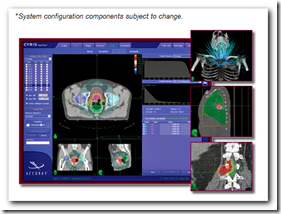
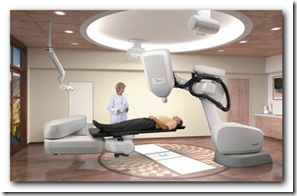
imageIn looking at the CyberKnife page, there are several additional add on options that can be included, as well as the software required to analyze and create images and reports.  It is also used for treatment of other types of cancers.  As the article states, the Medicare reimbursement for a physician is $1200 for each patient that undergoes the treatment process and it involves 4 to 5 visits with radiation intensified in the cancerous areas, hopefully leaving otherwise healthy tissue and organs untouched.  The treatment time certainly is something that any patient would think about compared to some other alternative treatment plans just simply due to the lesser amount of time needed.

Again, one of the biggest concerns here is the lack of time an information, are patients being cured and time is about the only method that will allow to gain the statistical information needed for studies to be compiled.  On the other side of the coin, there’s the questions of whether or not the treatment is being oversold, with advertising on radio, billboards, etc. as mentioned here with billboards flooding the highways in Florida as an example.  Just like many procedures out today, there’s always the question of insurance and Medicare coverage, some will cover, others will not as it does run a bit more than other treatments.  Just recently in the news the offices at CMS were rallying to try and do some cost management to be able to make decisions on what they would or would not cover, in essence removing this decision process from the advice of the physician treating the patient and only covering the cheapest option, which in turn would be disastrous at it would serve the purpose of putting such technology out of the reach of many patients diagnosed with cancer and needed treatments as such.  image

Court Blocks White House Push on Medicare Expenses

Similar types of treatment therapy are also being used in the treatment of breast cancer such as the MammoSite , and again the same question arises, is it a cure and the need for more time to pass to gather the needed data.  On the other hand not to approve and get some of the new technology out there, would a shame as well.  So much of this is still a science in essence and until there is enough time to substantiate the clinical documentation, it will somewhat still be an opinion or guessing game to a degree.  In the meantime, who knows what might appear on the horizon tomorrow?  BD 

When Georgetown University Hospital bought a new high-tech system in 2001 to treat patients with radiation, doctors at first used the computerized, robotic device only for brain and spinal tumors that would be difficult if not impossible to fight any other way. But Georgetown, along with Virginia Hospital Center and others around the country, is now aggressively marketing the $4 million machine, known as the CyberKnife, for early prostate cancer, one of the most common cancers. That trend has sparked an intense debate about whether it represents an important advancement or the latest example of an expensive and potentially profitable new technology proliferating too soon.

The CyberKnife enables men to complete treatment in just four or five sessions by much more accurately delivering about quadruple the usual dose of radiation each time. Doctors inject four tiny gold cylinders into the prostate to create a precise target. The patient lies on his back for each one-hour session as a robotic arm swivels around to shoot dozens of beams from multiple angles.

Safety and Effectiveness of Using CyberKnife on Prostate Cancer Patients Debated

Related Reading:

New Online Calculator for Prostate Cancer Patients and Doctors Developed

Despite Doubts, Cancer Therapy Draws Patients - HIFU Prostate Cancer Procedure

Surgery By Numbers - Glowing Cancer Cells

FDA Approves HIFU Clinical Trial For Recurrent Prostate Cancer

New Generation Of Radiation Therapy More Precise - TomoTherapy for Treatment of Prostate Cancer

Doctor and robot a life-saving team - Orange County, CA

Bloodless Prostate Cancer Surgery Performed

Court Blocks White House Push on Medicare Expenses

A new source of generic Wellbutrin available soon

Teva Pharma has a generic version, but earlier this year there were some consumer complaints, now the FDA has cleared another manufacturer to produce a generic version, Watson Pharmaceuticals.  This is for the 150 mg dose.    No word yet as to the availability from the article.  BD   image

CORONA, Calif., Nov. 26 /PRNewswire-FirstCall/ -- Watson Pharmaceuticals, Inc. (NYSE: WPI), a leading specialty pharmaceutical company, today announced that its subsidiary, Watson Laboratories, Inc., has received final approval today from the United States Food and Drug Administration on its Abbreviated New Drug Application (ANDA) for Bupropion Hydrochloride Extended-Release Tablets (XL) in the 150 mg strength. Bupropion Hydrochloride Extended-Release Tablets is the generic equivalent to GlaxoSmithKline's Wellbutrin XL(R) product, which is indicated for the treatment of major depressive disorder. Watson intends to launch the product immediately.

Watson Pharmaceuticals, Inc. | Investor Relations | News Release

With bloggers Is anything Off The Record?

Good post here about bloggers, you never know where we lurk, but more importantly, what are they going to blog about?  Well for the most part good bloggers use common sense, but as in anything out there, there’s always exception to the rule.  Personally from this picture, I think photographers represent more of a threat as the old saying goes a picture is worth 1000 words.

There was no way this government official knew the bartender was a blogger, but then again, she lost her job too, so what was accomplished here, a whole of nothing in my opinion.  One thing today we are all still getting used to is that the minute we step outside our front door, there’s the potential of someone watching, and that business is getting busier a some of the monetary gains from some of this when published is growing too, so guess the old rule of thumb is to be sure and project the image you want seen as soon as you step outside your front door. 

imageAlso, from the blogger’s perspective an old saying of mine is “what goes on the internet, stays on the internet”, so if you blog about something, make sure it’s what you want to be read and seen out there too as it is a reflection of yourself too, as it just takes a couple seconds for someone to “cache” or save the page and republish, even if you remove the original, if someone wants it bad enough, it will happen, especially if there’s an ax to grind or money to be made.  BD 

There’s a lot of buzz here in the Belgian blogosphere and mainstream media about an incident involving a New York-based blogger, who was fired from her job as a bartender after publishing a post on the bar visit of a Belgian politician. I’m generally hesitant to share ‘local’ stories here because I want to keep it relevant. In this particular case, I think it is.

Worst part, she wrote, was the fact that one of the politician’s advisors admitted to her that the meetings they were there for on taxpayer’s money were in fact cancelled because the UN was meeting in Geneva (which is about 330 miles from Brussels). He reportedly told her they had decided to come to NY anyway despite being aware of the cancellation because the political situation here was ‘calm’ and that he’d ‘never visited the city anyway’.

http://www.techcrunch.com/2008/11/28/when-everyone-is-a-blogger-nothing-you-say-is-off-the-record/

High Definition Surgery from Sony with four new products

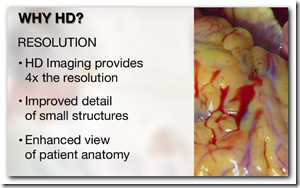
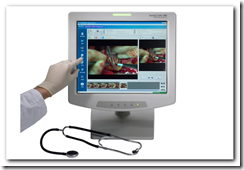
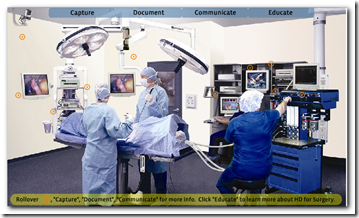
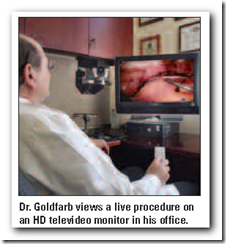
New products from cameras, printers and monitors can now make surgery room high definition from Sony.  There’s a short video at the site with a couple examples and the inside of the body certainly looks a lot different.  Monmouth Medical Center in New Jersey was the site of a case study.  The system has been used to credential new surgeons.  The pathology connection allows the surgeon to have a pathologist present. 

If a pathologist is not available, televideo can do the connection remotely for one to participate over the web.  Many surgeons already take pictures and this now can be expanded easily to video.  Won’t be long before everything we do is on video for that matter.

image

One HD camera is mounted high so that the entire surgery room can be seen and it can be controlled either within the surgery room or remotely.  The televideo capabilities also bring in the option of an immediate 2nd opinion.  All at the case study agreed that specimen management and information exchange is certainly an expedited process with the system. 

Universal Connectivity and Compatibiity
Multiple video input formats enable compatibility to all surgical systems manufacturers: HD-SDI, DVI-D, SDI, YPbPr, RGB, S-Video, or composite Connects to DICOM or non-DICOM networks (interfaces directly with DICOM Worklist server) Captures still and video images in either high definition or standard definition Compatible with any printer and includes built-in drivers for Sony digital color printers

Superb Usability
Three open USB ports for ancillary devices. Portable media for both SD and HD for immediate playback; SD: Burn CD/DVDs or save to USB storage device HD: Burn Blu-ray discs or save to USB storage device HD: Save to CompactFlash for instant playback on Sony PlayStation 3 or PC equipped with CF card reader and Windows® media player

The HD capture system also converts dicom images etc. to Power Point Presentations.  We have HD at home, so why not in the surgery room where it really counts.  BD 

image

Heading up its new range is the company’s first ever medical HD camera, the MPW-10MD HD, which offers unparalleled image quality for high-precision surgical applications. It is the first model of its kind to use full HD 1/2 CMOS sensors rather than the industry standard 1/3 CCD models.

 image

The company has also unveiled the smallest A4 dye sublimation printer on the market with its UP-DR80MD model, designed specifically for medical applications and particularly suited to endoscopy.

 image

Also launched was the UP-DF750 FilmStation, a versatile multi-format imager for radiography and mammography applications and the LMD-3250MD, a full 32” medical grade LCD monitor designed for endoscopic, surgical reference and educational applications.

http://www.hesmagazine.com/story.asp?sectionCode=196&storyCode=2048799

ProstateCradle.com Launches external Prostate Therapy Device by Enviromax

This is a real product and the price is $49.00 and simple to use, just sit on it. The film is good for a few chuckles as wellimage.  The product also boasts some additional benefits, but you can use the links to explore for more information.

There are products somewhat similar for women with breast massage and therapy products.  The page from Forbes stated if I did a preview I could possibly get a product for a full review – pass, but thought I would mention this for any other bloggers who read the post.  There are all kinds of medical products that come out all the time and I try to do my best here on keeping everyone advised.  BD 

Most men are expected to have some kind of prostate issue, and the longer they live, the more they are at risk. But that's just part of the story. Doctors recommend prostate massage as preventative and therapeutic. According to Enviromax and  prostatecradle.com, prostate massage is one of the oldest and most beneficial therapies, and has been prescribed by medical doctors for centuries.

From the website:

The Prostate Cradle is easy to use: just sit on it!
gentle pressure for a stimulating massage! The
Cradle reaches underneath the pelvic arch to
stimulate the prostate & perineum areas. It works
'hands free' using a normal chair while doing
normal things like reading or using a computer.
The Cradle is discreet, no one can tell when you
are using it, and it even works over clothing.
 

ProstateCradle.com Launches the First "External Prostate Massager" by Enviromax, a Sensational... - Forbes.com

Hat Tip:

Medlaunches

Taiwan Firms Companies with hospitals in China – New Paradigms?

Part of the incentive here is that the average cost per day in a hospital in Taiwan is $90, compared to $110 in China, so a bit of room for negotiation and pricing strategies.  Also what was extremely different here is the fact that the new hospitals are being created by imagecompanies known for their manufactured products, consumer electronics and plastics, in other words not long term healthcare companies by comparison.  Does this mean that basically anyone could come out of a manufacturing background and create a healthy hospital system, it sounds like there’s some of this going on at present. The physicians from Taiwan too are anxious to work in the new state of the art hospitals too. 

The Chinese government sure seems to be open to granting licenses as well as it is pretty well known that the state run hospitals have not been ranked well at all by comparison with other countries, almost near the bottom of the listings.  Due to geographic location, Taiwan is able to fly doctors to China if needed.  In short, the US is not the only country investing in healthcare in China, but again the most notable fact here is that the companies creating hospitals are not long established healthcare companies but rather manufacturing companies.  Is there something they are bringing to the table that has perhaps been missed or overlooked by others?  I always say there is something to be learned from everyone out there and this might be a good example here on using some new paradigms rather than the old died in the wool methodologies we have all relied on.  

imageWe have some of this going on here in the US, as an example with Sony creating a high definition operating room, but it’s only a portion of the entire solution and not the entire hospital structure.  If nothing else it certainly points to the fact that technology is certainly coming out ahead in molding and moving healthcare in a new direction, the technology that we all need and will depend on, no matter where it’s roots are.  BD  

For years, foreign health-care providers have moved cautiously in China, mainly offering Western-style medicine to expatriates and rich Chinese. But now some Taiwan companies are taking a radically different tack: selling low-cost quality health care to China's masses.

The move is risky. China's health-care market is fragmented and largely insulated from criticism because the state runs most of it. But the companies have an interesting edge: All are Taiwan manufacturing giants that have been running low-cost factories in China for years.

Taiwan Firms Head for China To Make Money on Hospitals - WSJ.com

Related Reading:

High Definition Surgery from Sony with four new products

Oncology Services Europe enters opens clinical trials in India

Other countries outside the US are also expressing and formulating their clinical trial business in India.  Of late there have been a multitude of these reportings, it doesn’t appear India will be lacking in the R and D trial business any time soon.  BD 

The operation will be run by the newly formed Oncology Services India (OSI) and gives the company access to a large number of therapy-naive patients.

OSE hopes the move will establish it as a new international “Oncology Specialist” within the global CRO industry.

http://www.outsourcing-pharma.com/Clinical-Development/Oncology-CRO-enters-India

Technorati Tags: ,,

Teva Pharmaceutical raided in European Union antitrust probe

The entire focus is to see whether or not patent laws have been violated and if less expensive generics were in any way stalled from getting to the market place.  It all boils down to intellectual-property rights and patient disputes.  Interesting that Teva is settling lawsuits and will be supplying medications before the patents expire.  It appears if you pay enough in a court case or fine, the door opens to begin selling the generic versions.  Allegra has been one such drug in the news of late with a settlement of this type.  BD 

Teva Pharmaceutical Industries Ltd., the world's biggest generic-drug maker, France's Les Laboratoires Servier and Slovenia's Krka Group d.d. have been raided by European Union regulators as part of an antitrust investigation. The raids of the three drugmakers on Monday came as the European Commission is scheduled to release a report this Friday in Brussels on possible antitrust abuses in the pharmaceutical industry. The commission began that probe in January after raiding offices of GlaxoSmithKline Plc, AstraZeneca Plc, Sanofi- Aventis SA and several competitors. The EU's review of the pharmaceutical industry is focused on whether research-based companies misuse patent rules and lawsuit settlements to keep less-expensive generics off the market.

Spokesmen for Glaxo, Europe's largest drugmaker, Novartis AG, Sanofi, Merck KGaA, Novo Nordisk A/S, Boehringer Ingelheim, and AstraZeneca said they weren't aware of this week's raids.

Teva raided in EU antitrust probe | Business News | Jerusalem Post

Hat Tip:  Pharmagossip

Siemens Introduces New Standard Of Care For Breast Ultrasound

The software, Virtual Touch Tissue Quantification,  is the first and only application to provide a numerical value related to tissue stiffness at a precise anatomical location.  It is not yet available or approved by the FDA for use in the US, but is pending a 501 (k) approval.  The unit has been used in a hospital in the UK now for a year.  The evaluation of the stiffness of tissue adds one more dimension to the process, so more algorithms available for a better and more accurate diagnosis.  BD  image

From the website:

The ACUSON S2000 ABVS is ideal for virtually any clinical environment — from dedicated breast centers to radiology departments, women’s health clinics to private practices.

The ACUSON S2000 ABVS features:

  • A dedicated breast scanner that provides full-field volume imaging for streamlined workflow
  • Views of the anatomical coronal plane and others, not available with conventional ultrasound
  • ABVS Workplace supports intuitive volume image analysis, manipulation, and comprehensive BI-RADS® reporting capabilities
Siemens Healthcare (http://www.siemens.com/healthcare) highlights the ACUSON S2000(TM) Automated Breast Volume Scanner (ABVS)(1),the world's first multi-use, automated volume breast ultrasound system, at the 94th Scientific Assembly and Annual Meeting of the Radiological Society of North America (RSNA) from November 30 to December 5 at McCormick Place (Booth #922, East Building/Lakeside Center, Hall D) in Chicago. Siemens also demonstrates how Tissue Strain Analytics(2), a new dimension of diagnostic information, and intelligent knowledge-based workflow solutions, empower physicians to leverage ever-increasing imaging information density to achieve greater diagnostic confidence and decreased study time.

Siemens Introduces New Standard Of Care For Breast Ultrasound

2 Biotech Companies Face Potential Delisting on Nasdaq

Current economic conditions are taking their toll on the biotech industry.  Both companies are involved in research and development for cancer drugs and treatments.  BD 

Exact Sciences Corp., a Marlborough company trying to use genomics to develop cancer-screening technology, said today that its common stock will be transferred from the Nasdaq Global Market to the Nasdaq Capital Market, effective Friday.

The company said that the Nasdaq Listing Qualifications Panel is analyzing the company's plans for demonstrating compliance with the stock exchange's listing requirements and that "the panel may still determine to delist the company at any point in time."

http://www.boston.com/business/ticker/2008/11/exact_sciences_11.html

Avalon Pharmaceuticals, Inc. (Nasdaq:AVRX), today announced that on November 20, 2008 it received a Deficiency Notice from The NASDAQ Stock Market, LLC notifying the Company that it is not in compliance with NASDAQ Marketplace Rule 4450(a)(3) because the Company's stockholders' equity, as reported in the Company's Quarterly Report on Form 10-Q for the period ended September 30, 2008, did not meet the minimum of $10 million required for continued listing on The NASDAQ Global Market. This notification has no immediate effect on the NASDAQ listing or trading of the Company's common stock.

http://www.medicalnewstoday.com/articles/130973.php

Technorati Tags: ,,

Doro Launches HandleEasy 330 & 326i GSM Wireless Handsets in the U.S.

This looks like a real winner here, big screen, big keys!  The phones will be available at Centennial Wireless stores in the US, but they are imagenot all over the country, pretty much in the Midwest and Southeast.  Store locations here.  The phone is already available in several other countries outside the US. 

It also can do text messaging too, so maybe some more baby boomers and seniors may enter in the world of text messaging!  It also has an ear hook to help those with hearing aids to hear more.   This is a simplified phone for those who may not want or need the whistles and bells of a more complicated phone.  BD 

Doro, the IDEA award-winning phone design company from Sweden, announces the availability in the U.S. of mobile phones designed by experts in ergonomics and in communications technology to meet the needs of consumers seeking design simplicity and functionality in mobile handsets. Two Doro HandleEasy models available in the U.S., the HandleEasy 330gsm and the HandleEasy 326i gsm, are GSM-compatible, include large easy-to-view display screens and keypads, features that baby boomers and active seniors use most, and none of the complicated features that often go unused.

Doro Launches HandleEasy 330 & 326i GSM Handsets in the U.S. - Cell Phone Digest

FDA Delays Johnson and Johnson Antibiotic Over Clinical Trial Data

This one is very interesting so say the least, and it sounds like a software issue of sorts, not enough audit tables or was the data corrupted?  Being a geek those are the questions that come to my mind when I hear the word “integrity” , but it may not be the issue at all.   Who does the audits since it appears to be contracted?   How data rich are they with business intelligence as relates to trials?  Clinical trial data is a pretty complex and complicated reporting system these days.  BD  

The agency sent Johnson & Johnson and its partner, Basilea, a so-called complete response letter that mentions a bunch of problems, or what Basilea calls “specific deficiencies of study conduct.” In other words, the FDA wants additional audits of clinical trial sites for Ceftobiprole, a broad-based spectrum antibiotic to treat the deadly MRSA superbug.

What went wrong? There was a failure to ensure proper monitoring of the studies. And so the FDA wants info on clinical quality assurance programs and also asked for a new audit plan that addresses failures in monitoring by unnamed contract research organizations. In a statement, Basilea says the FDA is unable to review the clinical data until “issues of data integrity have been resolved.”

http://www.pharmalot.com/2008/11/fda-delays-jj-antibiotic-over-clinical-trial-data/

WebHealthCentre Telemedicine– Free Consults and Radiology interpretations from India

The portal is by patients in 16 countries, including India, the U.S., Canada, and the U.K.  The services are free.  There is imageadvertising on the site but not more than any normal website contains these days.  

Their services are for both patients and physicians and you need to register to begin to use any services other than the normal health care education items.

Telemedicine and teleradiology are both free, but there’s one big long page of all the disclaimers.  So, I looked at the page and yes you can set up a health record account and upload images for a free interpretation.  That item surprised me. 

image

You are given a consultation number and don’t even need an email address, although they suggest one and state that they will respond to email questions as well, but it might take a bit longer to get back with you.

Again, the free radiology interpretations were a bit of a surprise to me to see this offered free to a patient, as this was the profile I created and don’t know exactly how the physician and student services are provided.  I would guess the imaging would also be free for a physician too.  All you do is upload the image.

They may also add electronic medical records (EMR) facilities through the site and are planning to offer to set up similar healthcare portals for pharmaceutical and healthcare companies worldwide.

The site is averaging over 3 million hits a month.  BD

From the website:

About Teleradiology Solutions Ltd.

Teleradiology Solutions was founded in 2002 by two Yale trained physicians, Dr. Arjun Kalyanpur and Dr. Sunita Maheshwari. It was initially set up to provide hospitals in the United States with night shift radiology solutions. However it grew rapidly and now provides teleradiology to hospitals in Singapore and India with other countries on the anvil.
Teleradiology Solutions (US) is accredited by the US Joint Commission of Accreditation of Healthcare Organizations (JCAHO). It is also the first organization outside Singapore to be accredited by the Ministry of Health, Singapore.
The company provides teleradiology services to hospitals around the globe, which includes interpretation of all non-invasive imaging studies, namely CT, MRI, ultrasound, nuclear medicine studies and digitized Xrays. The company provides subspecialty consultations in cardiovascular and oncologic imaging to hospitals in India as well, and has joint research partnerships with major technology vendors such as GE, to explore new techniques in 3D imaging analysis.

WebHealthCentre.com brings to you Online Consultation facilities from some of the region’s leading medical institutions and consultants. Here you can send in your detailed medical queries pertaining to various aspects of your health and these questions will be answered by the Consultants in the various specialities. This service is provided FREE of charge and can be utilized by Doctors and patients alike.

There are at present over 20 major medical specialities for which Consultation is available at WebHealthCentre.com. Each speciality has a specially prepared detailed form encouraging you to provide as many details as possible. This is to ensure a more accurate reply.
Newer specialities, institutions and consultants from different regions are constantly being added.

You may also send in your investigation reports like X-ray films or E.C.G. strips as attachments to admin@webhealthcenter.com mentioning your consultation number.

Indian IT services company, Tata Consultancy Services (TCS), plans to commercialize its WebHealthCentre, an online portal for medical consultations, healthcare information, and telemedicine. The WebHealthCentre site (http://www.webhealthcentre.com/) was set up by TCS in 2000, as part of fulfilling its corporate social responsibility. The site was started to offer patients in rural areas access to specialist doctors. "We realized that there was a gap for this kind of service even abroad, as we got more queries from abroad than from India," said Debashis Ghosh, vice president and head of TCS' life sciences and healthcare practice, in a telephone interview on Tuesday.

Tata Plans to Commercialize Healthcare Portal (PC World) by PC World: Yahoo! Tech