92648

Desperate Hospitals: Hospitals in Hands of Voters - Arkansas

This story fits in with the series I have been posting about hospitals in need of financial assistance.  Lucky thus far for this community, the issues passed and the hospitals will stay open, but for how long and hope there is enough in the till to keep them open.  Read the full story at the links provided from this surgeon in Arkansas.  Rural hospitals are not the only ones with financial issues, there have been many in urban areas, facing the same challenges.  Other countries are having some similar issues as in Australia earlier this year, an airport was sold to build a new hospital.  image

Access and availability to healthcare is certainly being stressed to the point of having enough money all over the US and in other global locations.  Affiliations with larger medical institutions are providing answers in some areas, and there's money going overseas with Venture Capitalists wanting a return on their investments as well.  BD

This is one of the headlines on the front of my local news. The article can't be read there without a  subscription, but can be read here in full as it was reprinted on the AARP website. Statewide, at least 11 small community hospitals receive some community support, typically in the form of sales taxes or millages, said Paul Cunningham, senior vice president for the Arkansas Hospital Association. Most of them have had local taxes approved within the last five or six years.

Nationwide, community hospitals are struggling under the weight of low reimbursement rates, high levels of charity care, increasing demand from an aging population, and difficulties recruiting doctors and other medical personnel to rural areas, said Rick Wade, senior vice president with the American Hospital Association.

Janet Boyles, emergency room nurse manager at Hot Spring County Medical Center, said the community would lose a lot of professional medical personnel if the hospital closes.

“The loss of health care to the community would be devastating,” she said. “I think a lot of people in the town would move. I would leave. I would move out of Malvern.”

Suture for a Living: Hospitals in Hands of Voters

When genetics gets personal - The Harvard Education Process

From Harvard, the goals to help educate both the public and physicians on personal genetics.  You can also reference some prior posts with relative information hereFurther reading here will help distinguish the difference as to what is on the market today and what you can expect from various services providing genetic information. 

Harvard is reaching out to help educate all on how this will impact our lives, our healthcare, before we are hit with it like a Mack truck, in other words information ahead of time.  How we handle the information is up to us and of course there are always the fears of those using the information against us, GINA has helped but as time moves on like anything else, I can guess we will need more laws to protect our privacy.  The school has also been active in supplying educational material to U.S. Senate office of Democratic Party nominee Barack Obama, so he's interested too.  BD

A new project out of a Harvard Medical School genetics lab is trying to make sure were prepared to deal with the potential benefits and pitfalls arising from these issues.

Today’s high school and college students are important audiences, said Wu and Waring, because the personal genetics revolution will be maturing as they do, and as they take the reins of society,  they’ll be the ones making the ethical, moral, and legal decisions about the technology’s use.

Among their plans is outreach to physicians, a substantial number of whom received their M.D.s before the personal genetics revolution hit. Wu said they’d like to put together an easy-to-read booklet with the basics of what’s going on, so doctors understand what’s happening when a patient walks in with a genome scan and asks for advice. As prices come down, Wu said, it may become standard medical practice for patients to get their genome scanned and kept as part of their medical records.

When genetics gets personal | HarvardScience

Kodak retirees begin weighing their health care options and costs

With announced cut backs with health insurance and retirement benefits the employees at Kodak are getting restless as the details have not been formally announced.  The high cost of insurance is starting to roll up to the larger companies and is no longer just an issue for small businesses.  BD 

The 60-year-old Greece man and thousands of other Eastman Kodak Co. retirees received the same letter in imageearly August informing them the company will quit paying for their dental and life insurance next year and make sizable cuts in what it pays for medical insurance. Now he and other retirees face the daunting task of deciding what to do about their future insurance needs something they generally havent had to do in the past. And it wont be easy, as they face numerous options and some sizable bills.

Next year the monthly cost of family coverage for Kodak retirees on its group plan through Preferred Care will cost anywhere from free for the CDHP coverage to $2,040 a month for the PPO Max coverage.

Kodak retirees begin weighing their health care options | democratandchronicle.com | Democrat and Chronicle

Health Net to pay fines, medical bills for dropped health insurance policyholders

They are paying $14.2 million in outstanding medical bills, 7.2 million worth of premium charges to be waived, and over 3 million for the fine.  Why does it have to get to this point?  Over 900 people were dropped from coverage, dating back to 2004, perhaps a small settlement, but I'm sure the folks would have much rather had their claims paid and keep on the insurance rolls.  Why do we not trust insurance companies?  Blue Cross had recently settled a number of cases with a fairly large dollar amount as well. 

In the news recently there have been a number of articles written talking about insurance not being enough as the premiums continue to go up and the affordable coverage deductibles go up as the money is just not there.  BD 

LOS ANGELES (AP) - 1 of California's largest health care insurers has reached a $25 million agreement with regulators over dropping coverage for nearly a thousand patients when they tried to make use of their policies.

KMPH Fox 26 Central San Joaquin Valley News

Who's going to pay for the Warfarin Test - Personalized Medicine

Everyone is waiting to see what CMS decides to do.  Recently in the UK in London there are plans to open clinics just for this purpose and after the initial clinic more are to follow, so how we handle it in the US, everyone is waiting to see.  BD

September 9, 2008 | Payers, physicians, and the pharmaceutical industry are closely watching CMS imagedeliberations over whether or not to pay for a genetic-based test that provides guidance on Warfarin dosing. The FDA, which approved the test, says its an important tool, but the CMS isn't so sure and opened a National Coverage Analysis (NCA) on the subject in August. 

This is an important first test for personalized medicine (PM). Achieving the right dosing for the anticoagulant Warfarin is notoriously tricky. Something like half a million patients begin taking Warfarin each year and adverse affects (bleeding) are not uncommon. The test in question determines a patients haplotype for CYP2C, a key protein in Warfarin metabolism.

Digital HealthCare

Who Gets Medical Care at the Grocery Store?

This article brings up some interesting statistics on the retail clinics, 2/3 do not have a relationship with a primary MD, which was initially one of the big fears when the stores began popping up, and they are becoming an affordable place for those who do not have insurance versus clogging up the ER rooms for cases of runny noses, sore throats, etc.  As the article states, if folks were not taking up the time of the primary MD, would there be more time to treat those with chronic diseases?  That I think remains to be seen as those with a primary care relationship will continue I would think as there is a level of trust and communication already established, and that's what I feel that I would do myself given a choice, but the retail clinics are finding their place in healthcare and thus far it has not been an issue and offers quick assistance for those without a primary MD to receive care.  BD 

Retail clinic patients are more likely to be female, on the young side (between 18 and 44), and uninsured than patients who visit either primary care physicians' offices or emergency departments, the study found. It's interesting that a third of retail clinic patients apparently don't have health insurance, compared with a quarter of ER patients and 10 percent of those who visit a primary care physician. With roughly 45 million uninsured, retail clinics may be attracting people who otherwise would end up clogging emergency rooms with non-emergency problems.

Who Gets Medical Care at the Grocery Store? - On Health and Money (usnews.com)

Health Care Issue - The Valley of the Unknown

Not enough Greeks in Congress by any means!  We do have figure heads that rely on what others tell them, from what other have told them and so the daisy chain goes.  As in any industry, there is nothing that replaces "hands on" experience, so until such time we have she told me, that he told me, and they told me, and now that I have heard all of this, I am confused.  We need analysts to try and figure this out too, as to who is going to believe who.

Yes is a unique group of individuals, rare, but that can wear 2 hats, in other words have communication skills and also be able to knock out a little code as needed.  If we haven't figured this out yet, it's all in the code, those who have all the information and know how to query and work with it, well they have the power.  Now that there's more information available, well guess what, those folks gain a bit more power as they can handle overload and get down the the bottom of things with statistics, so why not have some of these folks in positions of authority to begin with. 

We also have gray areas too where the ones outside of the code think that science should be able to offer better projections on what is happening around these, just look at Wall Street trying to figure this one out, not going to happen as it is not a perfect science and thus one day we rush in this direction, tomorrow over to the other side.  We have an R and D feeding frenzy going on and a very confused society. 

Dollars can be analyzed in data bases, but R and D doesn't work that way, thus we see what we have today, everyone at the craps table rolling the dice to a degree and hoping for the best, but the scary part is all of those sitting on the pass line who never get the chance to step up to roll.  So those that just know dollars continue to cut budgets as that is all they know how to do and have no clue how the data shuffles out once the decisions have been made and need to wait for someone to advise them, and hopefully someone without an agenda of their own that will give an honest answer, that is if they still exist.    That is my Friday rant for the day.  BD 

Advocacy groups, meanwhile, are spending tens of millions of dollars on advertising to keep the issue at the forefront of the 2009 Congressional agenda. And working groups, both inside and outside Congress, are meeting to search for points of bipartisan agreement that might produce at least incremental change.

Polls show not that concern about health care has faded significantly, only that the foreboding about energy and the economy has blitzed past it. Some analysts of health care politics argue that because Democrats are more associated with the issue, any de-emphasis may help Republicans. They warn, however, that candidates ignore health care at their own peril.

Health Care Issue, Not Quite Hot, Remains Strong - NYTimes.com

Personalized Medicine - New clinic glimpse of future - UK

This clinic is going to begin using the genomic testing for Warfarin and I might guess as more testing becomes available the plans to expand testing will continue.  The link above will offer some additional information as to how personalized medicine is working it's way into healthcare today and more information regarding a past webcast can be found here.  BD 

London has taken a pioneering step into the world of personalized medicine, opening a hospital clinic that will decipher an individual's genetic code to determine their dose of a blood-thinning drug. More such clinics using a person's genetic makeup to decide specific treatments will be opened in the city in the coming months, including possibly one for cancer. "This will be one of many. This is the future of therapeutics for London health sciences and for Canada," said Dr. David Hollomby, chief of medicine and senior medical director at London Health Sciences Centre. The clinic at University Hospital will serve patients, referred by their family doctors, who have irregular heart beats and would be candidates for the blood thinner Warfarin.

London Free Press - Local News- New clinic glimpse of future

New Medical Clinic Opens In South L.A.

After the closure of the Martin Luther King facility, help has been a bit hard to find and this looks like a real effort to provide a facility to those who need urgent care, but not hospitalization.  BD 

LOS ANGELES A medical clinic will open in South Los Angeles Friday, offering another option for the poor and uninsured who relied on the county-run hospital in Willowbrook that was closed last year after losing federal funding. The Charles Drew University Urgent Care Clinic is meant for people who need short emergency room treatment, according to a statement from the university. "This type of clinic is a true safety net for communities suffering from abysmal health inequities and few care options -- and sadly, South Los Angeles fits that description," said Dr. Susan Kelly, president and CEO of Charles Drew University.

cbs2.com - New Medical Clinic Opens In South L.A.

Pork Invaders - McCain on Facebook

Someone did a nice job in putting this together for him, as we all know the tech skills are still work in progress.  I found this on the site, what's up with this?  Obviously a rendition of the game Space Invaders, that let me see how many years ago was this the rage, a bit in the past compared to games on the web today. 

image

When you get going you can sit there and shoot up little vetoes..

Is this a good thing?  Not sure of the message being relayed here

and hope healthcare is not on this list. 

but tis the season for a little political input.  BD 

image

Medical schools, journals fight industry influence

Too much guerilla marketing perhaps?    You do have to almost admit it is the most "in your face" industry today, TV, computer, magazines, it's there.  I could stand for a little less advertising and perhaps more charity donations for those who can't afford the medications instead.  BD 

The influence that the pharmaceutical companies, the for-profits, are having on every aspect of medicine ... is so blatant now you'd have to be deaf, blind and dumb not to see it," said Journal of the American Medical Association editor Dr. Catherine DeAngelis, a longtime industry critic. "We have just allowed them to take over, and it's our fault, the whole medical community.

Still, no one is suggesting anything as drastic as cutting off industry funding for academic research on new drugs. Those billions help pay lab and other expenses at virtually all U.S. teaching hospitals, medical schools and affiliated practices, while giving the drugs' developers the cachet of having big-name academic researchers running their studies.

Medical schools, journals fight industry influence - Yahoo! News

Charity, Cindy McCain and Drugs...

Ok it's once again politics time, so here's the latest and this is good one.  DEA investigation and all, with falsifying 4 part prescriptions, but he had no idea.  Drugs were used from the charity organization, what a nice charity and nobody ever saw the safe where the drugs were stored?  Ok tis the season for medically related political posts.  BD 

In describing her struggle with drugs, McCain has said that she became addicted to Vicodin and Percocet in early 1989 after rupturing two disks and having back surgery. She has said she hid her addiction from her husband, Sen. John McCain, and stopped taking the painkillers in 1992 after her parents confronted her. She has not discussed what kind of treatment she received for her addiction, but she has made clear that she believes she has put her problems behind her.

McCain's addiction also embroiled her with one of her charity's former employees, Tom Gosinski, who reported her drug use to the DEA and provided prosecutors with a contemporaneous journal that detailed the effects of her drug problems. He was later accused by a lawyer for McCain of trying to extort money from the McCain family.  Cindy and John McCain declined repeated requests to be interviewed for this article. The McCain campaign also declined to comment.  McCain started taking narcotics for herself, the report shows. To get them, she asked the charity's medical director, John Max Johnson, to make out prescriptions for the charity in the names of three AVMT employees.

And now a word from our sponsor...

A Tangled Story of Addiction - washingtonpost.com

The Next Bill and Jerry Show - Microsoft

Fun to see Bill Gates with some real humor!  BD 

Cherry Hospital loses federal funds for patients - Patient left in chair for over 22 hours

Decertification and no federal funds for this hospital as a result of not taking care of the patient.  The action was all recorded on surveillance video showing hospital staff watching television and playing cards just a few feet away as mentioned in an earlier post and he died as a result of lack of care.  Two other staff members were accused of beating another patient as well.  Budget reforms have not left much money for the hospital system.  BD 

GOLDSBORO (AP) - The state mental hospital where a patient died after caretakers left him sitting in a chair for 22 hours can no longer receive federal funds, state regulators announced Thursday. The decision by the federal Centers for Medicare & Medicaid Services to decertify Cherry Hospital in Goldsboro means the state won't receive $800,000 a month in Medicaid and Medicare treatment dollars. The decision had been expected. The state Department of Health and Human Services said 10 days ago that inspectors who examined Cherry late last month would recommend decertification.

Cherry Hospital loses federal funds for patients : News-Record.com : Greensboro, North Carolina

Feds to unplug medical subsidy - Minnesota

One more result of the recent budget cuts, we have felt them in California as well with nursing homes and other agencies facing closures, nobody to pay the bill.  BD 

WASHINGTON - The Bush administration plans to drop Medicaid coverage for 18,000 low-income parents in Minnesota, a move that has stunned state officials who say they didn't see it coming. The decision, buried in a 29-page document outlining federal changes affecting the state's subsidized health program, known as MinnesotaCare, has prompted written protests from all 10 members of Minnesota's congressional delegation, along with two emergency bills to head off the cuts, which could total $135 million over three years.

Minnesota officials say they have long relied on federal Medicaid dollars to expand the reach of MinnesotaCare, which has about 117,000 enrollees across the state, about 30,000 of them the adult parents of children who get subsidized health care.

Feds to unplug medical subsidy

John Deer Machinery -failure of employer-based health insurance

We hear of small companies struggling with insurance, well here's the story of a large company struggling and a class action lawsuit filed by employees for the cut backs resulting in loss of insurance for those promised lifetime health benefits to vested employees.  BD  image

The makers of John Deere machinery have provided the latest example of this travesty. In response, some 5,000 former employees of Deere & Co. filed a class action lawsuit this week demanding that company officials reset the clock to 2007 and restore health benefits that court papers say were drastically cut back this year. The lawsuit, filed in federal court in Des Moines, alleges Moline, Ill.-based Deere broke longtime promises to its employees when the company on Jan. 1 "eliminated, reduced and dramatically altered" benefits pledged under retiree health plans.  Court papers say the company for more than 15 years promised lifetime health benefits to employees who vested in Deere & Co. pension plans, and Deere can't now back out of that deal.

Bleeding Heartland:: Yet another failure of employer-based health insurance

Horizon Blue Cross- Blue Shield drops 2 Philadelphia hospitals

Is this a potential balance billing situation in the making.  We know that situation well in California.  BD 

NEWARK, N.J. - New Jersey's biggest health insurance company has told two Philadelphia hospitals that it will not renew their contracts. Horizon Blue Cross-Blue Shield says its subscribers will be charged out-of-network fees for using Children's Hospital of Philadelphia or the Hospital of the University of Pennsylvania starting next spring.

The insurer, which is trying to become for-profit, says the payments to the Philadelphia hospitals are too high. Some 28,000 people insured by Horizon use the two facilities.

NJ's largest insurer drops 2 Philly hospitals -- Newsday.com

Kennedy Revives Obama's Personalized Medicine Bill for Next Congress

Genomics is back on the list for Congress, with creating an additional new agency and a focus on collecting the necessary information to allow research and development.  Also included would be guidelines and rules related to  genetic and pharmacogenomic tests to bring both Pharma and medical device manufacturers closer together and unite on future development.  BD 

First, the act would create a Genomics and Personalized Medicine Interagency Working Group that would include the National Institutes of Health, the Food and Drug Administration, the Centers for Disease Control and Prevention, and other groups outside of the Department of Health and Human Services. It also would start a National Biobanking Initiative that would create a database for collecting and integrating genomics data with environmental and clinical health information. It also would use funding to improve training for diagnosis of genetic diseases and disorders, and for treatment and counseling.

GenomeWeb News: Rep. Kennedy Revives Obama's Personalized Medicine Bill for Next Congress; Adds Incentives

FDA hires 1,300 new doctors and scientists

The drug evaluation department has the largest increase, and oncologists were difficult to find as most make more money on the outside.  I wonder if they can find enough for the drug side of the business, as it is changing every day with new applications and with more information to review, it's a much more complicated process these days.  BD 

WASHINGTON - The Food and Drug Administration said Thursday it has hired more than 1,300 professional staffers in a move that officials hope will help the beleaguered agency better protect the public health amid rapid technological and scientific change. "Every pay period, we have had more than 100 people walking through our doors," said Kimberly Holden, the senior manager directing the special recruitment initiative. "We have had some people who left to go into industry and ended up wanting to come back. The revolving door swings this way every once in a while."

FDA officials said about 1,000 of the new hires have already started, with another 158 due to report later this month. An additional 160 have accepted offers and are going through background checks. Of those already on the job, more than 850 are professionals, including chemists, biologists, pharmacologists, statisticians, medical officers, microbiologists and field inspectors.

FDA hires 1,300 new doctors and scientists - Yahoo! News

Technorati Tags: ,,,

Allergan - Headache relief

Just last week there was another clinical trial announced with botox being used for incontinence with clinical trials taking place in the UK and now more news about the use for headaches, a decrease in the number of days a headache lasts.  BD   

Results from the first clinical trial indicated no significant difference in the reduction of headache episodes between patients receiving Botox and the placebo. However, the study showed a decrease in "headache days," which the company says is the FDA's preferred efficacy measure; it was significantly greater in patients receiving Botox. Allergan said it hopes to file a license application with the U.S. Food and Drug Administration by the middle of next year to approve Botox for chronic migraine treatment. Allergan said full results from its trials would be published next year.

Botox Boosts Allergan - Forbes.com

Illegal Drugs Finding their way into research and development

Interesting article with some good background information about drugs that are close to or are related to the "street drugs" as we know them.  There are definitely a number of researchers who want to delve into this further, but with bad raps and being illegal in their "street drug" format, there have been delays in seeing what is underneath the rock.  FDA approved the one process for research, delayed by the DEA.  FDA and DEA, can we work together?  image

Also, is there money to be made, of course that is the next question as nobody wants to touch it if there's no money.  If the R and D is denied here in the US, well I guess it's over to China and India for a possible educated guess.  If there are properties of certain substances that can benefit healthcare, and in the one instance where the FDA gave immediate approval, perhaps some of this is worth looking at.  Liquid cocaine has seemed to find itself useful in the ER room these days so perhaps other "street drugs" can be reformed if they have properties that contribute a positive in healthcare.  BD 

They have tried other therapies before but here, under the watchful eye of Mithoefer and his staff, they're trying something new -- MDMA, better known as ecstasy, a drug that if bought on a street corner would land these patients in jail. The results of the Mithoefer study -- the first Food and Drug Administration-approved Phase 2 trial of MDMA to treat post-traumatic stress -- will not be known until it concludes later this month. But the treatment already shows promise, the doctor says.

Many illegal drugs such as MDMA and marijuana could have pharmacological futures. Others such morphine and cocaine were initially developed for medicinal purposes, and some can be found in your medicine cabinet masquerading under assumed names. But scientists looking to do new research say it is difficult to get funding or approval for studies on drugs with rap sheets.

"The DEA really slowed us down," Mithoefer said of the U.S. Drug Enforcement Administration. "We submitted a 550-page application to the FDA and we were approved pretty quickly."  Those delays, say the FDA and DEA, are necessary to ensuring the most dangerous drugs do not get into the wrong hands or are misused.

The popular and legal drug Adderall, which is given to children with attention-deficit disorder, is just one carbon molecule away from being the popular illegal drug methamphetamine.

Cocaine, a local anesthetic like Novocain, has the added benefit of restricting blood vessels to stop bleeding. It is regularly used in its liquid form in emergency rooms and in facial surgery.

The "date-rape" drug GHB is classified as a Schedule 1 drug and is illegal if possessed with the intention of drugging someone in a bar, but is classified as a Schedule 2 drug when prescribed as Xyrem for use in the treatment of narcolepsy.

ABC News: Hurdles Keep Street Drugs Out of Medicine Chest

FDA: Infant formula from China tainted by chemical

The same ingredient that was found in the contaminated pet food, although this appears to be somewhat limited to ethnic grocery stores.   What I would call "useless suppliers" in China sometimes mix it in to make foodstuffs appear to be high in protein; that is scary to add this to food to create a fake nutrition value, what some people won't stop at to make a dollar, talk about a false vision of health that could stand to either kill you or make one very sick!  BD

(AP) -- Federal officials warned Thursday that tainted infant formula from China may be on sale at ethnic groceries in this country, even though it is not legally approved for importation. The Food and Drug Administration urged U.S. consumers to avoid all infant formula from China, after several brands sold in that country came under suspicion of being contaminated with melamine, a chemical used in plastics. Officials said there have been reports from China of babies developing serious kidney problems as a result.

"We're concerned that there may be some infant formula that may have gotten into the United States illegally and may be on the ethnic market," said Janice Oliver, deputy director of the FDA's food safety program. "No infant formula from China should be entering the United States, but in the past we have found it on at least one occasion.

FDA: Infant formula from China tainted by chemical

California Real Estate Bust Meets Amgen Layoffs

Helpful news for the former employees of Amgen, they get an extension on paying off a 2nd mortgage, but some feel this will help, but still not perhaps save the boat.   image

Pharma layoffs in recent years have primarily been in the area of sales and marketing; however now with mergers, acquisitions, and outsourcing of R and D efforts, the science and research departments are going through much of the same.  The face of R and D Development in Pharma is becoming more global and changing rapidly.  BD 

In the past year, plenty of people in Southern California have been pinched by the real estate crunch. During the same time period, about two thousand people have lost their jobs at Amgen, which is based in Thousand Oaks, north of LA.

As this morning’s Ventura County Star reports, Amgen’s giving a little extra breathing room to some unlucky folks who have been hit by a double whammy — losing their jobs and finding themselves on the wrong end of the housing bust.

http://blogs.wsj.com/health/2008/09/11/double-whammy-california-real-estate-bust-meets-amgen-layoffs/

Genetic Counseling Foundation - References and information for Genomics in Healthcare

If you want to do some reading up on the topic, this site may offer some help, along with the upcoming conference to be imageheld here in the Los Angeles area in October.  As posted recently there are plans for many of the service companies, such as 23andMe, Navigenics, DeCode, LabCorp, and perhaps some others who anticipate starting up their sales and marketing campaigns to bring some of this information to the physician's office and patient level.  Genetic counseling can also play a vital role in figuring out how this new service comes in to play with healthcare.  It almost reminds of of the marketing and sales efforts of the CT scans when they came in to play several years ago, and everyone including Oprah was racing out to have it done.  The consumer side of CT scanning had since died down quite a bit, but the technology lives on in healthcare with CT scans being a part of the normal diagnostic processes. 

This is a bit more complicated in the process as different companies have different items they identify markers for, as an example Navigenics is pretty much tied to the healthcare side, while other companies offer more in the way of family history items.  Read each one and see which might fit your need before jumping in.  These are not a full human genome study as which is now priced around $350.000.00 and takes 5-6 weeks to complete, although you can sign up and see if you are accepted for the volunteer process, but to do so, you need to make your genomic, not personal, information available for study.  So far there have been 10 complete studies done that are published.

 You can read more here about the complete process.

 There are also the companies that manufacture the machines that do the software work and processing used by the service companies, such as Helicos, Illumina, Affymetrix and the Polonator, and there might be a few more.  These are the companies who create the machines that do the work.  Not too long ago I had a nice chat and interview with Dr. Milos from Helicos who gave some great insight as to how their process works and the overall progression of how genomics is going and where the future lies.  The service companies are licensed from one of the manufacturers, so they all work hand in hand. 

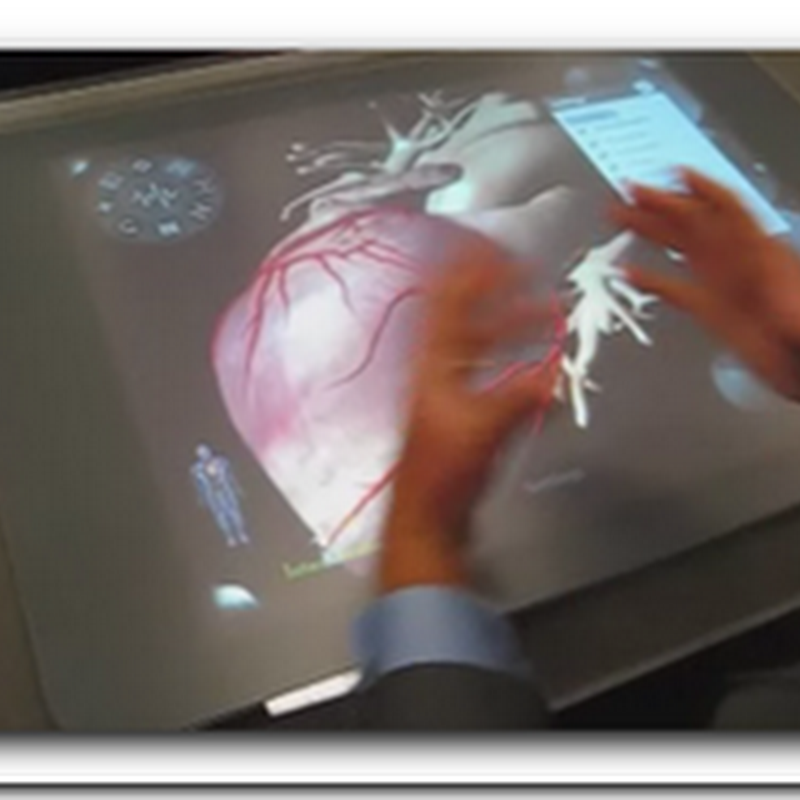
One more item to add here just for technology sake is the ability of the software to run on some Microsoft Surface Technology, allowing for a real hands on experience to work live.  

Below is a bit more information from the Foundation that might be immediate areas of interest and more can be found at imagethe site. 

For anyone desiring to become a genomic counselor, there's also the American Board of Genetic Counseling that gives additional information on how to become certified and further involved in the process.   

The GCF was founded by the National Society of Genetic  Counselors in 2005 with the mission to serve as the catalyst for the integration of genomic information and genetic counseling services into healthcare through philanthropic support of education, research, and public policy.

My Practice

Information for My Patients

NSGC: Genetic Counseling Foundation

Knee Surgery No Help for Arthritis

Good information and now that the report is out, be sure to ask questions, and then ask more questions!  There could be imagemore than one reason to have knee surgery too.  BD 

Surgeons take it as an article of faith that a chance to cut is a chance to cure. So it’s a pretty big deal when a study clearly shows that a common surgery doesn’t actually help certain patients. Even more so if the study is confirming similar results from a previous study. 

That’s what happened this week, when the New England Journal of Medicine published a study that showed arthroscopic surgery doesn’t provide any benefit for moderate to severe arthritis of the knee.

http://blogs.wsj.com/health/2008/09/11/knee-surgery-no-help-for-arthritis/

Microsoft Speech Recognition Presentation - Computer Friends at the Oasis - Newport Beach, CA

The double click question and yes, I get that question quite frequently myself.  I just happened to speak yesterday at a Computer Friends Users group in Newport Beach and it is always a joy to revisit the Oasis Computer Friends group.  I left the selection of the topic open to the group for what area they might want to hear about, and the topic they chose and wanted more information about was "Speech Recognition".  When you stop and think about it, this makes perfect sense!  Why type when there are other ways to interact with a computer these days?  I use it all the time, lengthy emails, etc.

Granted this is a healthcare blog, but I also like to include other relative area that involve helping people all the way around with computers.  I had my Tablet PC with me, which I connected to the web and the overhead projector and went to town.  I had a few curious individuals too that were in total fascination with how the Tablet PC functions, and mentioned that they could watch CSI-NY every week to see this particular unit in action from TabletKiosk. I did take a few moments out to show the blog as it contains a lot of useful information for seniors as well, with a few of my recent posts being featured in the retirement section of the Wall Street Journal, especially where to find the links for the $4.00 generic prescriptions from the retailers all in one place. 

The focus was using Microsoft Vista speech recognition.  Of the group of around 40 or so at the meeting, I saw hands of around 10-12 individuals in the group that were running Vista, and perhaps this will encourage others who have not made the leap yet, to give it some thought.  The best way to get Vista, especially for those who have some aging computers I suggested was to look at getting a new computer.  The tablet I use from TabletKiosk has 2 dual array microphones, so in my demonstration with the room being quiet, I was able to show hands free dictation with speech recognition in a simple Word document, and the looks of surprise were amazing.  I also imagewent over the fact that a microphone is needed with some desktops and even some notebooks. 

Part by accident, I touched on the "Narrator" feature in Windows.   This was not on the agenda, but due to a question posed, I also demonstrated how your computer can "read" out loud as well.  We had a little fun on the settings with slowing the voice down to where it sounded like the computer was intoxicated, but all in good fun and to make the experience a little more interesting.  The narrator feature was something that held the interest of all, again making access easier for those who may have issue with reading everything in print. 

All in all, speech recognition in Vista is fairly simple in nature to train and use, and it works well.  While the Tablet was connected to the overhead projector I also demonstrated a little inking, and inking to text and pass around a smaller UMPC tablet for everyone to check out and touch.  Inking was definitely a hot topic and some of the individuals who already have Vista were amazed to find out that inking is already there with Vista and we discussed briefly on how a Wacom tablet device can be connected to a desktop, great for those who write but are not speed demons at the keyboard! 

On this same note with dictation I did a quick video with EMR Update earlier this year in a very noisy convention hall where the unit was being shown to healthcare individuals.  Bad hair day, but the tablet looked great. 

I think in time I'll will want to revisit the group and see how everyone is doing!  Nice to see seniors with questions and wanting to do more with their computers and wanting to know how to get beyond the keyboard and explore other ways to interact with their computers and many thanks for allowing me to be their guest!  So in addition to larger targets, these are other options that can be used as well!  BD 

"Using a computer mouse is fundamental to interacting with current computer interfaces", says Dr Faustina Hwang, who led the research. "The introduction of expanding targets could lead to substantial benefits because older people would feel more confident in their ability to control a mouse and cursor. A computer can be a real lifeline for an older person, particularly if they're living alone, and expanding targets could help them harness that potential."

One of Dr Hwang's PhD students is now investigating the specific difficulties older people experience when trying to double-click a computer mouse – an essential function in opening applications and other key computing functions.

Easier-to-hit 'targets' could help older people make the most of computers

Hospitals to Adopt Kiosks in Indianapolis

More hospitals embracing new technology with the self check in kiosks, expect to see more of these in place as time goes on.  We are all familiar with swiping our credit or debit cards, so this makes perfect sense.  BD 

Five-hospital Community Health Network in Indianapolis will implement patient self-service kiosks used with a magnetic stripe membership card. The technology will enable patients--particularly those with regular appointments--to bypass the check-in desk. These patients will swipe their card at the kiosk and electronically notify registration staff and clinicians that they have arrived for their appointment. Patients also can update health, insurance and personal information using the touch-screen kiosk.

Indy Hospitals to Adopt Kiosks

Myriad Genetics Board Explores Prospect of Separating Diagnostic and Pharmaceutical Businesses

Confused today, well so are a lot of other folks.  As the fields of new and supplemental information become available, it does reach a point to where you are almost forced to choose an area of focus for R and D in particular and this press release pretty much tells the story, something others could be pondering down the road.  What will generate money is the primary focus to stay in business and will affiliations with others benefit?  I think everyone questions the same thing today as the fields of gray continue to grow.  BD  image

MYGN 65.46, +0.58, +0.9%) today announced that its Board of Directors is reviewing management's analysis of several strategic alternatives for the Company and is carefully considering these alternatives.

"The Board is committed to growing both of our business opportunities in a way that seeks to maximize shareholder value," said John Henderson, Chairman of the Board. "We are continuing our deliberations and intend to announce a decision before the end of the year."

Among the alternatives under consideration, the Board is exploring whether to spin-off the pharmaceutical subsidiary from Myriad's molecular diagnostic business in a transaction that would result in two independent and highly focused businesses.

Myriad Genetics Board Explores Prospect of Separating Diagnostic and Pharmaceutical Businesses - MarketWatch

Phase I Clinical Trials outsourcing to India by 2010?

I am guessing this stands to be topic for all in the Pharma business to keep an eye on.  There are those in the Indian government too with reservations.  The whole idea here is to save money over what the same might cost in the US, as reported earlier, 1/5 is the cost for R and D, thus this is part of the process and China is also another frontier.  

On the other side of the coin, our global citizens may need to hold on to their hats as the R and D roller coaster begins, as mentioned above there will be room for 4 additional failures for the same cost, and with shorter times to collect and evaluate clinical information before releasing to clinical trials, there could be some real issues in time evolve, again reflective on what class of drug and what diseases are being treated.  BD  image

The news comes just weeks after the Indian media and members of its congress expressed their dismay at the state of India’s clinical trials, following the revelation that 49 infants died at the All India Institute of Medical Scientists (AIIMS).

Congress spokesman Manish Tiwari responded to the news by saying that multinational pharmaceutical companies were treating Indian infants like “guinea pigs”.

The news comes just weeks after the Indian media and members of its congress expressed their dismay at the state of India’s clinical trials, following the revelation that 49 infants died at the All India Institute of Medical Scientists (AIIMS).

Congress spokesman Manish Tiwari responded to the news by saying that multinational pharmaceutical companies were treating Indian infants like “guinea pigs”.

The outsourcing of Phase I trials to India may be allowed by 2009-10 after the Central Drugs Standard Control Organisation (CDSCO) said it is considering changing its stance.

Currently Phase I trials are only allowed if the compound was discovered in India or if data from other markets is submitted, which has restricted the outsourcing of early stage research to India.

The CDSCO’s proposals would overturn this and also allow foreign companies to conduct Phase 0 trials in India.

A reversal of the government’s stance would offer another cost-cutting route for pharmaceutical companies and further swell India’s blossoming clinical trials industry.

Phase I outsourcing to India by 2010?

Al Franken wins Senate nod amid 7 state primaries

We like Al Franken around here, one of his best videos. Good luck to Al, now "Like A Senator". That was my original comment and I messed up and have my Al's confused, but everyone keeps searching this video so will leave it posted here with the other Al, Wierd Al, but Al Franken played so many characters too, so I got confused. BD

ST. PAUL, Minn. (AP) Comedian Al Franken grabbed the Democratic nomination Tuesday for U.S. Senate in Minnesota, setting up a showdown with Republican Sen. Norm Coleman. Franken, who gained fame as a "Saturday Night Live" cast member, easily beat six other candidates chasing the Democratic nod. Coleman trounced his only opponent, an expatriate living in Italy.


Technorati Tags: ,,,,

Nonprofit Hospital Battles to Protect Tax Exemption

This is becoming a hot topic these days, especially in other areas with not for profit hospitals.  The new CEO of Grady just put out a request for other hospitals to stop sending their charity cases to their facility when they can provide the services.

Also, there's the Desperate Hospitals series on the blog, and are some of the non profits strapped to the limits due to charity services?    A kind deed by the part of Kaiser for Grady Hospital in recent days.  More here on the status of many of the hospitals in the US today in general.  

Perhaps a national audit could be in order to check and verify the status of all hospitals in the US to see what percentage of charity care is being provided by all at every level.  As the line between big and small in the hospital business continues to grow, some of the smaller and budget tight hospitals are struggling for their very existence today, and then there are some, like the Century City Hospital on the outskirts of Beverly Hills that nobody wanted to help.  BD 

Front and center is Provena Covenant Medical Center in Illinois, which has been battling with the state to preserve its tax exemption at risk over the amount of charity care the hospital provides.

The Chicago Tribune reports the hospital in Urbana will appeal to the Illinois Supreme Court to overturn a ruling last month by a state appeals court that put the hospital’s tax exemption in jeopardy. That ruling reversed a lower court’s decision that let the hospital keep its tax-exempt status.

Health Blog : Illinois Nonprofit Hospital Battles to Protect Tax Exemption

Electronic Prescriptions for Controlled Substances - Are we getting any closer?

The hospital has a pilot program ongoing, so this is a good resource to check and see how things are evolving.  This has been a real tough spot with providers "that like e-prescribing" and dislike the idea of pulling out the paper pad for these types of prescriptions, which you can't blame them.  It is a hassle and goes back the old paper record methodologies.  image

Read the entire article, and if you are a physician, see what you think, is this more complicated than paper?  There are a couple good points, like no printing and logs, which from a security stand point is not bad, but smart cards, tokens, something you have to carry around with you instead of authenticated log ons and certificates?  It appears the DEA doesn't think certificates as used by the rest of the world are enough, like Microsoft for a simple example with a Live ID.  In a year's time though we might think about what technology advances will be out there too that do not exist today, so it just makes me ponder a bit if when approved, will some of it be outdated before the ball gets rolling and will the 2% incentive from Medicare be enough to make any difference to furthering e-prescribing? 

Well I guess the jury will be out for a while on this topic, and in the meantime, keeps those 4 part paper pads handy.  BD 

In order for a prescriber to access the system and write electronic prescriptions, the practitioner must authenticate using a two-factor authentication process, which means using something that you have (a smart card, token or thumb drive containing a digital certificate) plus something that you know (a strong password). This process will have to be used each time the practitioner wants to sign a controlled substance prescription.

Life as a Healthcare CIO: Electronic Prescriptions for Controlled Substances

Current Intellectual Property System Stifles Biotech Innovation

I think many might agree here, as Intellectual Property is getting pretty gray these days.  Software companies seem to have a better handle on this, but they even face challenges too.  Once you share intellectual property, the cat's out of the bag per se.  Add on some economic constraints and profitability studies and things get very gray. 

Biotech technology though is software development, as that is what allows progress, so perhaps it might come back around to ethics some day, that is if there are any left out there.  I make that comment just relative to the information I post every day on this blog.  BD  image

NEW YORK (GenomeWeb News) - The worlds intellectual property system is broken, stifling innovation and stopping life-saving technologies from reaching the people who need them most in developed and developing countries, according to a report released this week by an international coalition of experts. The report, entitled Toward a New Era of Intellectual Property: From Confrontation to Negotiation, was funded by the Social Sciences and Humanities Research Council of Canada, and is the result of seven years of work by McGill University professor Richard Gold and a group of experts in law, ethics, and economics called the International Expert Group on Biotechnology, Innovation, and IP.

Instead, the authors assert that biotech players need to adopt a “new IP” strategy that focuses on cooperation and collaboration at all levels; and make several recommendations to government, industry, and university officials to help implement such a strategy.

GenomeWeb News: Report: Current IP System Stifles Biotech Innovation, Impedes Rx Access in Developing World

Medical Tourism Starts at Home - Contracts and Brokering

There are even road shows to promote tourism.  Insurance companies and hospitals alike are meeting on the topic.  Countries like New Zealand and Israel have entered the market.   Mexico is building hospitals for medical tourism.  Tourism creates shortages in Thailand for regular citizens.  In Texas, many are going to Mexico. 

There was a website a while back that is no longer in existence, but the site basically was a bidding site for the patient, put your surgery up for bid and see what came back, and perhaps it was a little too early for it's time and we might see something along these lines emerge again.  Here's an example of someone "brokering" surgeries online today between the US and Canada. 

Also from the Wall Street Journal: 

"After the announcement, I got calls from several [U.S.] hospitals offering to match Singapore on pricing," says Peter Hayes, Hannaford's director of associate health and wellness.

Hannaford, which is self-insured and therefore pays the medical claims of its 9,000 covered employees out of its own funds, tapped Aetna Inc., which manages its health benefits, to vet the U.S. hospitals."

Will surgical procedures end up being commodities?  It sure appears to be off to a running start here.  Will we someday need a broker for a procedure?  Contracts for some, and for those without contracts, go to a broker?  The healthcare system gets more complicated by the minute, and it all revolved around money here in the US, and we seem to have lost our focus somewhere along the line with better healthcare, folks are still getting fatter, diabetes is still on the rise, and we still are looking at pay for performance for physicians?  What's up with this broken system?  Is there no end to complicating the issues even further?  As long as cost drives the issues instead of a true commitment for better healthcare, it looks like we are passing the point of no return.  BD 

Now some employers are finally taking advantage of the price discrepancies by sending their workers across the country to get care that costs less and has comparable or better quality than at hospitals close to home, the WSJ reports. Its another wrinkle in the phenomenon of medical tourism, usually an overseas affair. Employers just threatening to send employees overseas for care has prompted some domestic hospitals to step up with offers to match the foreign prices. Supermarket chain Hannaford Bros, based in Maine, offered employees the option of getting hip and knee replacements at a hospital in Singapore. A hip replacement there costs about $43,000 in the U.S. compared with $9,000 in Singapore, WSJ writes

Health Blog : Medical Tourism Starts at Home

Medical miscalculation creates doctor shortage?

I think the comments below might be impacted on where and who you practice with.  Talk with some family practice  physicians in California with some very low contract rates and see what you get, private practices.  Now talk with physicians who work for a large health care network, let's say like Kaiser for example, and yes you will probably get 2 different stories. 

It's the small practices feeling the pinch and the larger institutions continue to grow, same thing with hospitals to a degree too.  Small is threatened, big flourishes.  On the topic of students not seeing a shortage, perhaps this might be a good time to think about incorporating more business classes into the process so medical students are prepared; however, if the projection is for the large institutions to continue to grow and employ physicians out of medical school that are image predominantly going to work for an established salary, then that could in part explain why the perception of a shortage was viewed in such a manner by medical students as more of them may be looking towards a large institution for employment for their future. 

It is a fact and nobody is disputing that specialists make more than family practice MDs and that is simply a fact, so whether it be private practice, working for large institutions, that issue will continue, just based on simple economics.  So perhaps the shortage we are speaking of comes back around to the private family practice as we have all known and depended on for years and will the large institutions face this shortage as well?  Ask some seniors about their access to physicians and you may get get another twist, see how far they travel, how difficult it is to get referrals to those accepting their plans, I don't think we have the full story here.  BD 

"It didn't happen," says Harvard University medical professor David Blumenthal, author of a New England Journal of Medicinearticle on the doctor supply. "Physicians aren't driving taxis. In fact, we're all gainfully employed, earning good incomes, and new physicians are getting two, three or four job offers." The nation now has about 800,000 active physicians, up from 500,000 20 years ago. They've been kept busy by a growing population and new procedures ranging from heart stents to liposuction."

"We have more and more physicians taking care of fewer and fewer patients," says Kevin Grumbach, chairman of family and community medicine at San Francisco General Hospital.

He says doctors gravitate to high-paying practices — such as sports medicine and total body scans — that serve the wealthy and well-insured at the expense of Medicare patients and others.

USATODAY.com - Medical miscalculation creates doctor shortage

Humana Prices Itself Out Of 300,000 Customers

If you are on Part D, be sure to check prices before renewing to see what will work for you, and there could be others with increases come along.  BD 

Investors reacted quickly after-hours on Tuesday to news that Humana, the medical benefits company, would be losing more than 300,000 members due to pricing changes in its Medicare prescription drug plan. Shares of Humana (nyse: HUM - news - people ) dropped 3.4%, or $1.50, to $42.52, after the end of regular trading hours on Tuesday. The company's stock finished the regular session up 57 cents, at $45.43.

Humana Prices Itself Out Of 300,000 Customers - Forbes.com

Diabetes Information drug battles

How much information is enough?  It appears today that there's never enough to go around.  Hopefully as the field of personalized medicine grows we will have more answers in the ability to predict and understand more about how different drugs work and what the projected outcomes will be with all.  BD 

The differences between the drugs aren't just in the mode of administration. Primary care physicians are the main prescribers of Januvia and they tend to prescribe it early in the course of the disease, whereas Byetta is typically more of a specialist-prescribed medication used in more advanced diabetes cases. For its part, Merck responded quickly with some of its own study critiques. Dr. Barry Goldstein, vice president of clinical research at Merck told Forbes.com that the study neglected to note that Januvia has less severe side effects than Byetta and works steadily over a 24-hour period. "The study is really looking at the peak of when Byetta is in the body after it is injected," he said.

Amylin: Byetta outperforms Januvia - FiercePharma

Making medicine getting tougher

I don't think anyone can debate the fact that medicine is getting tougher from every angle.  New business models along with the daily research and genome updates have a tendency to make things a little shaky and unpredictable.  The fact that he is from Pfizer, doesn't make much difference here with the opinions as I think all would concur, just read about the new policies at the FDA and all the new uncovered information we see every day in the news. 

"The more we dig into these diseases, the more difficult it gets and the more money we need to spend. It's frustrating for everybody. But nothing in science happens overnight."

There is news every day about markers being identified and properties associated.  This is one of the reasons you really need leadership with some "hands on" experience with technology and this starts from the top and shuffles down.  The world is a changing place today and old style leadership needs to change as well.  The fact that Mr. Hammang is a neuroscientist and is speaking out about the process and not a political leader certainly sheds some light here and people like this at the top in their area that work with science and technology just tend to tell it like it is.  BD 

Joseph Hammang, who oversees science policy for pharmaceutical giant Pfizer, is in North Carolina this week to visit researchers at Duke University and the University of North Carolina at Chapel Hill. He is also talking to state legislators and business executives at health-care forums in Raleigh and Charlotte. Hammang, 51, is a neuroscientist who helps shape research and development at Pfizer, which, with almost $50 billion in annual revenue, is the world's largest drugmaker.

newsobserver.com | Making medicine getting tougher

Waking Up is hard to do...

Hey these guys can really sing!  The Laryngospasms.....BD 

Classic Posts revisited. 

http://youtube.com/watch?v=WOrjcLJ2IE0

and one more......Breathe...

http://youtube.com/watch?v=kP2OuZ_vI_s

Simple Test To Detect Fake Medicines

Wow, imagine this getting out in circulation.  Clinical studies could never be the same if participants were now able to identify the placebos!  Perhaps we would have better placebos!  (grin).  BD 

image The fight against fake medicines could soon be aided by a small, portable device that quickly measures the hardness of a tablet, revealing whether it is counterfeit, according to research presented at the British Pharmaceutical Conference (BPC) in Manchester. The study tested a series of dummy paracetamol tablets made with varying degrees of real medicine, versus lactose (an ingredient used by counterfeiters to replace the active drug). Tests showed that the fake tablets were harder than the tablet with the correct amount of paracetamol, and were more difficult to crush. Counterfeit medicines often look identical to the genuine product, but can contain substances like flour or cement and very little active ingredient - which can have a devastating impact on the people who take them.

Simple Test To Detect Fake Medicines

Technorati Tags: ,,