92648

Hopes and Expectations for the Next Year from a Healthcare CIO

Dr. Halamka does a pretty good job on spelling out the “wish” list here, as he serves on the committees and has “first hand” knowledge.  I would like to go one step further here and hope that the new secretary of HHS knows what all of this is about, in other words, knows what SNOMED is and represents and how crucial this is to healthcare, understands what CCHIT certification means and accomplishes as any stimulus money allocated has to meet the software standards, and has full awareness of what “standards” are in healthcare, since about 70% of the HHS Secretary position will involve making many decisions based on knowledge of the entire process and how it all flows together.  95% of our decision making processes today rely on some type of code or software and healthcare is no different by any means. 

The healthcare system and the science it involves today can’t function without the accelerated “hands on” expertise, in other words it takes more than just a spokesperson relying on all information relayed from others, otherwise we end up with “magpie” healthcare, standards and procedures, without perhaps the full benefits of full transparency, what we are looking for today. 

Science and healthcare are merging and that is a fact and something others may or may not be aware of, and leadership for HHS requires a little bit of Science and Biotech knowledge too, look at all the causes, such as Stand Up For Cancer, the Howard Hughes Center, and so many more with philanthropy trying to bring better medical care to all of us, this is Science and this is Healthcare together.

So my wishes here are to have someone in a position that has some “hands on” experience and knowledge in many of the areas that now encompass leading the HHS department and not just the same old risk management policies that have prevailed the last 8 years and have somewhat stymied the progress of finding cures for disease and better serving the needs of the citizens of the US.  Once more I’ll ask that the administration go shopping in the “smart” store and not the “political” store so we can all enjoy progress and putting our healthcare system back on track.  Harry Markopolos recently taught us a lot about “smart” people and what they can accomplish, given the opportunity and the benefit that others will listen and learn to appreciate technology, and hopefully stop ignoring and criticizing technology and algorithms they are not familiar with.  BD 

“After many discussions with the leadership of NeHC, CCHIT and HITSP, my hope is that NeHC becomes the Standards Committee referred to in the bill and that the great folks already chosen to serve on NeHC continue their service. The NeHC as configured is multi-disciplinary and not dominated by any one group. The new Standards Committee should continue to provide Value Case, as described in the NeHC charter, to prioritize standards harmonization, architecture and best practices needed to ensure interoperability.

NeHC will become the standards committee and will create value cases that contain standards and architecture for HITSP to harmonize and CCHIT to certify……implementing the content standards (such as CCD with RxNorm and SNOMED-CT vocabularies), the transport standards (HTTPS with SOAP or REST), and the routing (query/response or publish subscribe framework such as XDS or XDR).”

Life as a Healthcare CIO: My Hopes and Expectations for the Next Year

Related Reading:

What’s in store for NeHC after transitioning from AHIC – Health IT

Interoperability Advice for the New Administration – AHIC
Obama's Healthcare Economic Plan – Leaders with “Hands On” Technology Experience and Algorithms Needed
Daschle Out of the Race – Now Let’s Shop for a New Candidate at the “Smart” Store

Kathleen Sebelius, Kansas Governor for HHS – Please not! Put the “Smart” People in these key positions

The Madoff Whistleblower - Lack of motivation, interest, education and use of modern technology failed a whole bunch of people, including many in healthcare
Stimulus Bill To Compare Effectiveness of Medical Treatments – But Let’s not Forget Science in the Process
The 2 New Hot Words in Healthcare: Algorithms and Whistleblowers

Deep Brain Stimulation for Dystonia and Parkinson’s Disease and More?

This is an amazing new area and there are real success stories.  We all do wonder though where will the future lie with this technology.  After watching what DBS does for Parkinson's and Dystonia, it’s a miracle.  There are also more videos on You Tube that show individuals turning off the device and they immediately revert back to where they were before the device was implanted too, so with Parkinson's and Dystonia cases where more than just a small portion of the body is affected, these devices have truly given many a new quality of life. 

For an in depth look at what Deep Brain Stimulation can do, use this link to watch a study case from UCLA, amazing stuff as she couldn’t even walk.

Just this week though it seems Deep Brain Stimulation has now crossed into a new area, in other words the implant is being used to treat a “mental disorder” only and not something that has any physical issues connected, Obsessive Compulsive Disorder.    This type of therapy I think is where most, and myself included question where is neurology headed with the technology to a degree.  There have also been clinical trials with using the technology to with depression as well.  Again, most though are not suggesting this as a first treatment, but rather one that can be used when other treatment plans, such as drugs are not working.  Do we all have a little Obsessive Compulsive disorder in all of I might ask? 

FDA OKs deep brain stimulation for Obsessive Compulsive Disorder - Medtronic

Here are a few related links involving implants and their treatment plans, an implant could help one lose weight or deal with depression so how close are we getting with relying on chips to help us through difficult situations? 

Trick brain and turn appetite off – Implanted Device could be an alternative to bariatric surgery in time…

Pacemakers for the Brain - Depression Treatment...

In addition to permanent implants though, there is another line of brain science and technology that can be used as an alternative.  This treatment plan states you can be treated on your lunch hour, no implant required for depression, transcranial magnetic stimulation, so you can be zapped with a 30-35 minute treatment too with no invasive surgery.

FDA Clears Neurostar® TMS Therapy For The Treatment Of Depression

Brainsway gets FDA nod for device trial – Another Device for Transcranial Magnetic Stimulation

image 


Neurosurgery and brain stimulation, definitely a subject to read up on today and keep on top of what’s happening for sure.  BD 

Related Medtronic Posts:

FDA OKs deep brain stimulation for Obsessive Compulsive Disorder - Medtronic

Implanted Heart Monitor Inserted with Minor Outpatient procedure – Medtronic Reveal DX

Medtronic Announces Launch Of X-Stop® Peek IPD® System For U.S. Patients Suffering From Symptoms Of Lumbar Spinal Stenosis
Medtronic Announces First Clinical Data on Occipital Nerve Stimulation for Chronic Migraine to Be Presented at American Headache Society Meeting

Brain Implants For Parkinson's Show Benefits as well as risks

Medtronic acquires medical device company for $387 million

Tapping the Brain for Profit - Medical Devices for the Brain, they do exist

Sources confirm Microsoft is buying 3DV Systems – Hand Gestures to Control your Computer

From Venture Beat, and this looks to also have some nice healthcare use too with 3DV Systems.  The technology will allow you to control your computer with hand gestures, in other words no mouse or keyboard.  I have had some software around for a while that somewhat is similar, it uses a selected area of the screen and the camera moves with my hand gestures, i.e. I can play volleyball, basketball, etc. but this appears to be technology that has been expanded way past what I have seen thus far.  The software I have came with a web cam I purchased a while back.  This system too appears to require their webcam to work. 

image

You can watch a video of a guy throwing a ball at his computer and it coming back.  This is actually kind of fun. 

Better yet for a more realistic video, watch how hand controls open and close screens with Windows Vista.  There are more at the site, but what comes to mind for me is no longer having the remote to control presentations, all can be done with your hands.  BD 

image

From the website:

Robotics and Medical Devices

  • 3D vision for robots
  • 3D vision for the blind and in-body operations
  • Medical diagnostics


“Humans see the real world in three dimensions, or in other words as a set of objects with depth using various 'depth cues' which include shadows, shading, movement, size; and most significantly different and separate images for image
the right and left eyes (stereoscopic vision).
While robots need to have a three dimensional vision of the world too to perform many of their tasks, using the same 'depth cues' in robotics is difficult and ineffective.

Real-time depth capturing using 3DV's technology will make a radical change in the tasks that can be accomplished by intelligent and cost effective robots. Activities such as Material Handling; Assembly & Pick-and-Place; Collision Warning & Obstacle Detection; and Navigation, would be executed much more efficiently and robustly.
Some of the robotics applications could play a role in medical devices (e.g. obstacle detection and navigation for the blind providing a 3D view during an operation inside the body). Additionally, the imaging technology developed by 3DV could be employed in other medical applications, primarily in diagnostics (e.g. ophthalmic diagnostics,
IR mammography).”

A report surfaced last week that Microsoft was buying 3DV Systems for $35 million. My sources confirm that this is true.

3DV’s cameras could also be used to control a computer or serve as a remote control for a TV. 3DV is just one of a bunch of companies in this space. Other 3-D depth camera makers include Canesta and PrimeSense. Softkinetic is making software to make the technology more usable, and GestureTek has a bunch of non-gaming gesture-based technologies on the market. Sixense is making another kind of gesture-control interface using magnetic fields.

Sources confirm Microsoft is buying 3DV Systems » VentureBeat

WellCare in trouble once more – No more new Medicare Beneficiaries

WellCare, a publicly traded company that manages health coverage for Medicare and Medicaid beneficiaries, is in trouble again.  It seems to be the same scenario all over again, confused and mislead beneficiaries.   Yup, the algorithms of health insurance are a confusing mixed bag today and they are not getting any easier to interpret.  The company was raided back in 2007.  WellCare has company though.

WellPoint Gets Message from Medicare to suspend 2 Part D programs

Algorithms, Formulas and Investigations leads to AARP suspending sales of some health plans

Again, I come back to an old post of a short while back, “The 2 New Hottest Words in Healthcare: Algorithms and Whistleblowers”.  In this case there appears to be no whistle blowers so we have the complicated formulas (aka algorithms) that lead the company down the road to trouble again.  BD

In a letter dated yesterday, the feds ordered the company to stop enrolling new Medicare beneficiaries, effective March 7. The sanction will be in effect until the Centers for Medicare and Medicaid Services, the government’s agency overseeing the programs, is satisfied that the company has corrected the alleged deficiencies. Click here to read the letter.

Health Blog : Feds: WellCare 'Misled and Confused Medicare Beneficiaries'

Related Reading: 

Congress to industry: 'We need your help'
The 2 New Hot Words in Healthcare: Algorithms and Whistleblowers
Bringing Providers, Health Care Executives and Administrators into the 21st Century
Will Greed lead to Meltdown of the Health System?
Lawmakers Consider Adding Health IT to Stimulus Package – We Need some Congressional Algorithms
Health Care Insurers Suggest Algorithms and Business Intelligence solutions to provide health insurance solution
Health insurer accused of overcharging millions – United Health Care/Oxford Insurance 50 Million Fine
Connecticut Attorney General also investigating UnitedHealthcare and Ingenix

Healthcare Workers Sharing Music and they could also be sharing Medical Records and Files

This is a good article about Peer to Peer sharing.  Pretty much, most of us are aware of what P2P sharing is on the web, music and videos being the driving force here, and it was how the original Napster (not in it’s current form) got started.

With Peer to Peer software, you are in fact allowing another computer to access files on your hard drive of your computer, knocking down all firewalls for access.  Most of the software companies do include preferences to allow one to decide which folders and areas can be shared, but unfortunately a misconfiguration by someone who is not computer savvy enough can lead to security leaks.  Be default most have the user select a folder to share, but again configurations can be changed and if a document is placed in that folder, well it too is fair game.   image

Most larger institutes subscribe to services that go out and monitor the peer to peer services to check and see if anything of a personal nature or medical files have ended up there, which is not a bad thing to do so you are in the know.  As stated here if one were logged on to a remote server and saved a document to their own PC from the server, it is now outside the realm of what can be protected on the server and if it ends up in that “shared” area of a personal PC, everyone on the network can access it. 

This comes down to security measures of not allowing downloads of Word documents, Excel spreadsheets, etc. that are used for business from the remotely connected server.  I agree with this as medical records when a remote connection is available has no reason to be on a personal PC, but people keep doing it, along with putting documents on USB sticks that are not encrypted.  On a home network, it pretty likely that the network used at home is what is called a “peer to peer” network, thus there is not a server to configure permissions unless something like Windows Home Server is used.  

I have walked into that situation, not recently, but a while back with a physicians office using peer to peer connections to download music. Not only do you have the security issues, but also the disruption of folks focusing on their music and video downloads instead of taking care of patients!  The drive on one of the computers was completely full with video downloads that it could not function and use the electronic medical records files, much less even open the internet. Yes this is real life and what you find out there.  Best rule of thumb of course it to lock it up and allow no access to the peer to peer network sites, as some are getting to be web based too.  If you do not have a server, most modern day routers on a small office network can do the trick, but again, you need to configure the firewall on the router. 

Most every day users have not a clue as to how these services operate and just know they want a “free” download of a song or video.  Again though when using your computer to connect to a business network at home, and you subscribe to any of these services, you might want to think about either discontinuing or making sure the service is in fact turned off when working.  There are options to turn the service off too, and again preferences and reading will tell you how to do it.  Nobody can legally tell you how to use your home computer, but once a security breach is created over such a matter, everyone will want to know exactly what you are doing, so again, give this some real serious thought if you use your home computers to connect to a server for remote connections.  If you take on remotely connecting to work on a home computer, use some common sense about the responsibility that goes along with it.   BD 

Using software written specifically for scanning Internet-based peer-to-peer (P2P) file sharing networks, Eric Johnson, an operations management professor at Dartmouth College's Tuck School of Business in Hanover, N.H., and colleagues recently found confidential medical files, involving thousands of people, including patient billing records and insurance claims containing Social Security numbers, birth dates, medical diagnoses and psychiatric evaluations. (The same type of information could have been found without the special search software, although not as quickly because the researchers would have had to search individual computers on each of the P2P networks they visited.)
Johnson's team found the data by trolling P2P networks such as Gnutella, FastTrack, Aries and e-donkey. (A visit to the eDonkey2000 Network indicates it is no longer available.) The leaked information came from the heath care organizations themselves, their employees working remotely, and from businesses that perform billing and other services for these organizations. "Our goal was to see the kinds of information that was leaking out, and P2P was simply a window into those organizations," says Johnson, who will present his findings on Monday at the Financial Cryptography and Data Security '09 conference in Barbados.

In one case, Johnson and his team found two databases with detailed information on more than 20,000 hospital patients from the computer of a collection agency working for the hospital. Another search turned up a 1,718-page report with nearly 9,000 patient names, Social Security numbers, birth dates, insurers, group numbers and identification numbers. The researchers also found a pdf form for writing prescriptions that was blank, except for a doctor's signature at the bottom. "This document could be used for medical fraud by prescription drug dealers and abusers," Johnson noted in his report.

Hospital Workers Sharing Music? They May Also Be Sharing Your Medical Records: Scientific American

Enrollment in Navigenics-Scripps study at 40%

The enrollment is to end in around a week or so, perhaps it can be extended, but still even at 4000 participants, that appears to be a large enough number to create the study.  For a little background on the project, I have a prior post here from October of last year. 

Affymetrix will scan each participant’s genome and Navigenics™ will interpret the scan results and offer personalized guidance on steps to lessen the chances of negative health impact. This information will be available to participants on Navigenics’ secure Web site. Each participant will be able to enter and store clinical and lifestyle information in an individual Microsoft HealthVault account, allowing the participant to manage his or her personal health information in one location and share it, as desired, with health care providers or others they trust to help make more informed health care decisions.

Cost and fear of employers and insurance companies finding out personal information is cited as one of the concerns, even though security and the information contained is secure, individuals are still worried about potentially jeopardizing insurance claims and coverage information.  Also, the present day economy may not be of too much help here as well, and perhaps if participation were free, maybe the numbers might have hit goal by now, still a need for a lot more education out there with personalized medicine and genomics.  BD   

The bad news: despite the dramatic price reduction, the project has only succeeded in recruiting 4,000 participants - just 40% of the original goal. Recruitment ends in a week, so it's unlikely that the project will be able to fill many of the remaining places before the study commences.
Why the lower-than-expected interest? Eric Topol, the program director, has his own theories:

Topol said the cost of enrolling, close to $500, deterred some. Moreover, people are worried about what they ---- or their insurance companies or employers ---- might find out.
"People are afraid of the data, afraid they might have some genes they don't want to know about," Topol said.

Genetic Future : Enrollment in Navigenics-Scripps study disappointing

California Man Convicted of Selling Non FDA Approved Medical Devices

I posted this as a word to the wise, make sure any devices are first of all coordinated with a physician, and two, FDA approved, so you don’t fall victim to devices that are not effective and not approved.  Some of the names listed below may resemble authentic companies, so don’t confuse the two and do some research on the web if in question.  The devices he sold, and made over 8 million doing so, were never submitted nor approved by the FDA.  BD 

A San Diego man has been found guilty of illegally selling medical devices he claimed could treat a wide range of conditions and diseases using electrical currents.

A federal prosecutor said it was the largest case involving the sale of such unapproved medical devices in decades.

James Folsom, 68, could be sent to prison for more than 140 years and fined $500,000 after being found guilty by a federal court jury on 26 felony counts. He remains jailed awaiting sentencing, set for May 11, 2009.

From 1997 to 2008, Folsom sold more than 9,000 of his devices through wholesalers and retail clients, prosecutors said. The devices, with names like NatureTronics, AstroPulse, BioSolutions, Energy Wellness, and Global Wellness, were said to use electrical currents to destroy diseased cells in the body.

California Man Convicted of Selling Unapproved Medical Devices — Attorney At Law

Skin Cancer and Sun Screens – The Dilemma

A discussion on how Vitamin D helps with prevention of disease from the University of California.  The video discusses the possibilities of whether or not Vitamin D has an impact on type 1 diabetes, cardiovascular disease, and certain autoimmune and chronic diseases.  This is a 45 minute presentation discussing UVA and UVB. 

image

Are people who are using sunscreen more susceptible to melanoma?  With the studies presented here is appears and the question is posed, are the people using sunscreen part of those who should not be using sunscreen?  The presentation discusses how sunscreens are much stronger today than they used to be, like back in the 50s. 

image

Interesting how the effect of the Ozone layer affects the rates of Melanoma in different countries with Australia and New Zealand being off the map.

http://www.youtube.com/watch?v=eeXtGHSt-5o&sdig=1

Chimp attack victim flown to Cleveland Clinic to see a reconstructive surgery specialist

I think by now everyone has read the horrible story and it appears now she could be a potential candidate for a transplant, or at minimum some type of complete facial restructure.  Back in December the Cleveland Clinic did the first US Facial transplant.

Face Transplant a First for the USimage

The woman was a friend of the owner of the chimp who was in the wrong place at the wrong time when the chip went crazy and attacked her.  The chip was shot by police, but not before it did such an extensive amount of damage.  BD 

Charla Nash, the woman who was badly disfigured when she was attacked by her friend’s pet chimp earlier this week, has been transferred to the Cleveland Clinic, which specializes in reconstructive surgery.
Nash, 55, was flown there yesterday after four teams of surgeons at Stamford Hospital in Connecticut stabilized her following Monday’s attack, the Associated Press reports. Officials at the Cleveland Clinic aren’t saying what the next step is in her care, other than that she’s being evaluated by a head and neck surgeon.

Chimp attack victim flown to Cleveland Clinic, reconstructive surgery specialist: Scientific American Blog

Related Reading:

Two More Face Transplants Show Promising Results - in Surgery
World's First Full Face Transplant Hailed

Genetic Testing Improves Some Warfarin Dosing

This is great now that we have a an official Journal report, but the next problem is, who’s going to pay for the test?  Clinical Trials will certainly stand to help out here.  We recently had this report that said it is not cost effective all the time.

Genetic warfarin test not cost-effective in guiding initial dosing of common blood thinner

So it appears we are back to risk management here once again governing science R and D and clinical use in this area, but hopefully the trials will prove successful so time will determine the winner, tests or risk management saying no.  BD 

NEW YORK (GenomeWeb News) – Combining genetic and clinical information can significantly improve warfarin dose predictions for individuals who need high or low doses of the drug, according to a paper appearing in today's issue of the New England Journal of Medicine.

Coming on the heels of these results, the National Institutes of Health in the US and universities in the UK announced that they are planning clinical trials to determine whether incorporating genetics into warfarin dosing will improve patient outcome.

To address this issue, the NIH, which helped support the latest study, is planning to launch a large prospective, multi-center, randomized clinical trial in the US next month. The "Clarification of Optimal Anticoagulation through Genetics" will enroll 1,200 participants at a dozen clinical sites.

Genetics Improves Some Warfarin Dosing; Clinical Trials Next | GenomeWeb Daily News | DxPGx | GenomeWeb

Related Reading:

Plavix – What’s the next step for doctors and patients – possible genetic testing in the near future?
Who's going to pay for the Warfarin Test - Personalized Medicine
FDA Warns of Dangers of Mexican Vanilla – Tonka Beans, Not Vanilla Beans

Helicos BioSciences and Personalized Medicine - Featured Interview with Dr. Patrice Milos

An Introduction to Genomics – Humans have Bugs just like Windows does and It’s all about the Code

Los Angeles County patient Medical Records going electronic

The funds of $50 million charitable investment came from PacifiCare Health Systems, which was required by the state to set aside the money after it merged with UnitedHealth Group in 2005.  At least one positive result came out of the merge.  This will cover around 100 private-public clinics where county patients are seen.  BD 

Patients who receive health care in the Los Angeles County system will soon have their medical records digitized as part of a sweeping technology upgrade that outpaces the progress of even some private hospitals. 

The project, paid for with a $1.3 million grant, will streamline and link medical records among two dozen public-private clinics and hospitals within the Department of Health Services, including Harbor-UCLA Medical Center near Torrance.

Getting these records in an electronic format is crucial for county patients because of the prevalence of chronic illness among the low-income population, said Cindy Ehnes, director of the California Department of Managed Care.

"This is going to give doctors a much better picture of what they're dealing with," she said.

"Before we had no idea where the patient had been, what medications they were taking, where else they had gone or anything else about them."  The grant funding, distributed through a coalition of health partners called Health-e-LA, will also help speed up the time it takes to get the information in electronic format.

L.A. County patients' records going digital - The Daily Breeze

Related Reading:

Robot Vendors Get More Funding – Robotics playing a major role in hospitals today
LAC+USC Hospital – New Facility to Open Soon - Los Angeles

FDA OKs deep brain stimulation for Obsessive Compulsive Disorder - Medtronic

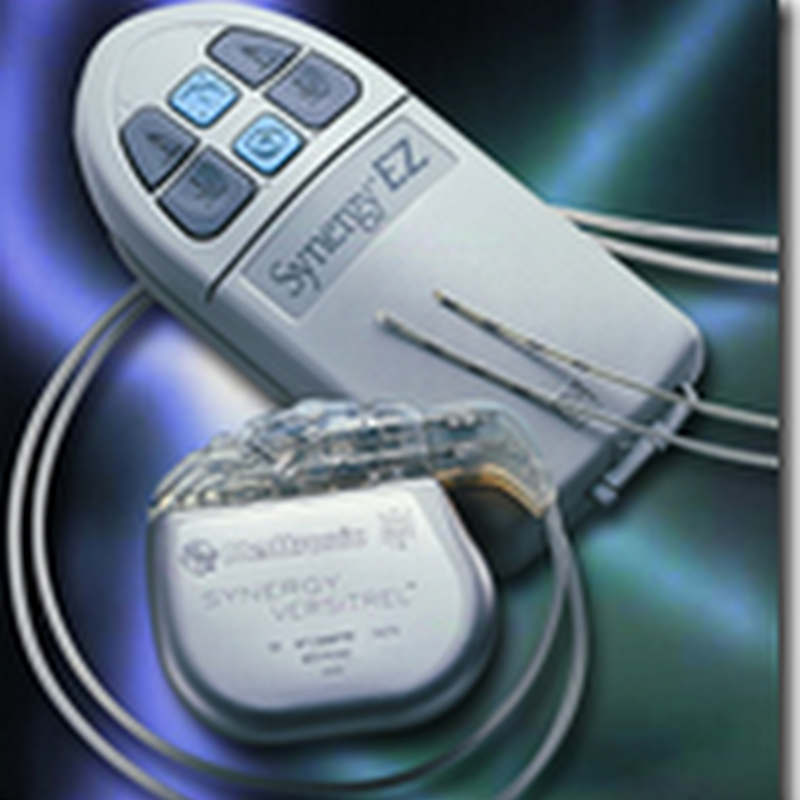
Medtronic is really making some moves into the “brain” department with devices of late.  This is the latest device and more information at the Medtronic website will tell when the product will actually become available.  Below are a couple links to recent posts along the same subject line.  BD

Medtronic Announces First Clinical Data on Occipital Nerve Stimulation for Chronic Migraine to Be Presented at American Headache Society Meeting

Tapping the Brain for Profit - Medical Devices for the Brain, they do exist

Many illnesses may be in for a shock - The Brain Defibrillators

Legendary Banjo Player's Brain Helped with Deep Brain Stimulation - The Brain Defibrillators are here

The U.S. Food and Drug Administration has approved a humanitarian exemption for the first implantable device to treat severe obsessive-compulsive disorder. 

The FDA said the Reclaim DBS Therapy device, manufactured by Medtronic Inc., delivers intermittent electrical therapy deep within the brain to suppress the symptoms associated with severe OCD. The device is intended to treat patients for whom more conservative therapies, such as medication and psychotherapy, aren't working.

The Reclaim system uses a small electrical generator to create electrical stimulation that blocks abnormal nerve signals in the brain, the FDA said. The battery-powered device is implanted near the abdomen or the collar bone and connected to four electrodes implanted in the brain. Two device systems may be implanted to stimulate both sides of the brain or one device may be implanted with two lead outputs.

FDA OKs deep brain stimulation for OCD - Science - redOrbit

Woman arrested in breast cancer Farce – She Lied to everyone

Local Cancer groups were not very excited about this as well, supposedly the woman is receiving counseling too.  She carried on the hoax since 2003.  She had 194 days of paid leave donated by co-workers as well as money donated from co-workers too.  With people really in need of help, stories like this are just disgusting.  If she needed financial aid for other purposes, it’s best to be honest and the co-workers who donated I can bet are not very happy either.  BD 

CHATTANOOGA, Tenn. - A woman who collected donations of sick leave and money from co-workers while lying for five years about having breast cancer was arrested Thursday on theft and forgery charges.

Keele Maynor, 38, also received support from local cancer groups, who were surprised to learn she wasn't receiving treatment.

Maynor was arrested in Union City, Ga., said Bill Cox, the district attorney for Hamilton County, Tenn., where a grand jury indicted her this week. She had been staying just outside Atlanta since leaving Chattanooga after her ruse came to light.

Woman arrested in breast cancer hoax - Cancer- msnbc.com

Technorati Tags: ,,

The Middle Aged Woman…

Watch out for us!  This cute and funny and the music is great. 

http://www.youtube.com/watch?v=g1TVOXdNkFo

What’s in store for NeHC after transitioning from AHIC – Health IT

This is one of the reasons I keep talking about putting the “smart” people in key positions, as mentioned from this article from Modern Healthcare, the world is changing and so is Health IT, we need someone at the helm who understands and has some “hands on” experience and education in this area, otherwise, very little gets done.  There’s much more added for responsibilities and control of the entire stimulus project than what AHIC had. 

We now have an Office of the National Coordinator at HHS and who ever is at the helm there really needs some “on hands” Health IT expertise.  The AHIC group did establish “standards” which seemed to take forever, but it was done.  image

With the funding now available for the stimulus bill, we really need people who know and understand where the money is best spent, people with Health IT “hands on” experience, and not just a figurehead to oversee.  You don’t have to be a genius to see that EHRs and electronic medical records software are much more complicated and requires expertise way beyond what was required 6-7 years ago, thus having key figures who are in fact up to date and active in this area is imperative. 

With HL7 and Continuity of Care standards alone, there’s much that can be done and most software companies are working to make sure at least these 2 general standards are available in one form or another so that all Health IT systems can communicate and exchange information.  We have the technology out there to do all of this, but again, without some real “smart” people at the helm of each area, we go into slow motion and stagnate.  If you have around 3 hours to spare, you can watch the video of the last AHIC meeting, and see what went on and listen to the membership.  With the exception of about 1 hour I almost fell asleep, but I did make the effort to watch and wanted to be informed. 

Only one person spoke with plans and ideas while the rest seemed to be off in a world of reading reports and figures which didn’t do a whole lot for me, but listen in and see what the “jet” has to say, and I found it somewhat interesting that everyone else was in awe of Dr. Halamka, one of whom I consider to be one of “smart” people we have on the committee or could certainly use in another key position, hands on and smart planning.  Folks without the Health IT hands on knowledge and experience just can’t do this as without the overall concept of data architecture it’s impossible by today’s standards to completely dissect what needs to be done and the functionality required,  but watch the video and make your own opinion, you have mine here.  We are operating at a very high level of data integrity and integration today, we need those at the helm who get this and have some hands on experience to fall back on and carry a high level of transparency.  BD

There will be some major changes in the way the federal government oversees its healthcare information technology program apart from the whopping increase in funding for IT system acquisition, according to the 300-plus pages of HIT-related language in the $787 billion, 785-page American Recovery and Reinvestment Act of 2009.
The massive stimulus bill, signed into law Tuesday by President Barack Obama, extends congressional authorization to the Office of the National Coordinator at HHS. The law also gives the office broader authority to oversee federal IT promotion work than did the Bush administration, where HHS Secretary Mike Leavitt dominated the health IT policymaking apparatus.

Under the new law, the national coordinator is to “take a leading position” in setting up and running the new HIT Policy Committee as well as a new HIT Standards Committee, although it doesn’t appear the ONC head will control the membership of either committee.

Rod Piechowski, senior associate director for policy at the American Hospital Association, said he has “a pretty positive sense there is a door left open for the NeHC to become the standards committee. I think that was deliberatively done to allow that, which is a good thing. We can’t afford to lose momentum.”
Which is just fine with HITSP Chairman John Halamka, who concurred in an e-mail, noting, “We do not expect the structure/role of HITSP to change,” under the new law, but that NeHC might become the Standards Committee under the new configuration.

Will AHIC successor NeHC survive stimulus reqs? - Modern Healthcare

Related Reading:

Interoperability Advice for the New Administration – AHIC
Obama's Healthcare Economic Plan – Leaders with “Hands On” Technology Experience and Algorithms Needed
Daschle Out of the Race – Now Let’s Shop for a New Candidate at the “Smart” Store

Kathleen Sebelius, Kansas Governor for HHS – Please not! Put the “Smart” People in these key positions

Harvard director to lead ASU bioscience lab – Shopping for leaders at the “smart” store
The Madoff Whistleblower - Lack of motivation, interest, education and use of modern technology failed a whole bunch of people, including many in healthcare
Stimulus Bill To Compare Effectiveness of Medical Treatments – But Let’s not Forget Science in the Process
The 2 New Hot Words in Healthcare: Algorithms and Whistleblowers

MAeHC (Massachusetts EHealth Collaborative) launches subsidiary – MAeHC-PSC

In addition to the press release and information at the blog, there’s additional information at the Boston Globe.  MAeHC and MAeHC-PSC are vendor- and platform-agnostic and the organizations have expertise in both web based and  client-server software applications. 

The non profit division will continue to operate and function as it has and the new subsidiary is set to offer services at a pay for services rendered level.  The for profit division may be able to operate within some additional areas of expertise as relates to EHRs and electronic medical records and perhaps even have additional expertise with additional types of deployments and  the ability to establish new partnerships with companies that have not been established yet. 

Beth Israel Deaconess of Boston is mentioned as a client and has a pretty well established health IT department, already involved in pilot programs such as exchanging information with the Social Security Office relative to disability claims.  As a side note, the CEO of Beth Israel Deaconess , Paul Levy this week has an online interview that captures and gives a bit of history as to what has occurred over the last few years and how the hospital has turned what was a challenging and perhaps somewhat negative scenario years ago into what they have today, a hospital on the move with some very positive things going on.  BD 

Today we're announcing the launching of MAeHC-PSC (professional services corporation), a for-profit, wholly owned subsidiary of the Massachusetts eHealth Collaborative. PSC will provide a broad range of fee-based consulting services related to EHR deployment, health information exchange, and quality data warehousing. PSC will provide these services—including strategic planning, project management, and project execution services—to both nonprofit and for-profit clients throughout the United States who are involved in a variety of health IT activities.

image

Press Release:

Boston – On January 1, 2009, the Massachusetts eHealth Collaborative (MAeHC) launched MAeHC Professional Services Corporation (PSC), a wholly-owned, for-profit subsidiary that will provide consulting services to private clients.

Drawing on expertise gained during MAeHC’s groundbreaking electronic health record/health information exchange pilot program in three Massachusetts communities, PSC (www.maehc-psc.com) will provide a broad range of fee-based consulting services related to EHR deployment, health information exchange, and quality data warehousing. PSC will provide these services—including strategic planning, project management, and project execution services—to both nonprofit and for-profit clients throughout the United States who are involved in a variety of health IT activities.

“We are eager to play an increasingly active role in the expanded use of electronic health records in Massachusetts and beyond,” states Micky Tripathi, president and CEO of MAeHC and president of PSC. “The creation of a for-profit subsidiary will allow us to bring our expertise to a broader array of organizations and clinicians.”

As PSC begins its work in these new areas, MAeHC will remain dedicated to its founding mission. “In keeping with our charitable mission to improve the quality, safety, and efficiency of care through the adoption of EHRs and health information exchange,” explains Alan Macdonald, chairman of the MAeHC board of directors, “we will continue to focus on evaluating and completing the Massachusetts pilot program. MAeHC is also eagerly anticipating the release of state and federal funding for publicly oriented health IT efforts.” Macdonald, the executive director of the Massachusetts Business Roundtable, assumed the role of secretary of the PSC board on January 1, 2009.

One early PSC customer is Beth Israel Deaconess Physician Organization/Beth Israel Deaconess Medical Center. “PSC is providing key project management and practice consulting services to the BIDPO-BIDMC EHR initiative,” reports John Halamka, MD, chief information officer of the CareGroup Health System. “PSC is contributing to the success of a very ambitious project by providing everything from strategic guidance to end-to-end project management at the practice level.”

The New York eHealth Collaborative (NYeC) is another early customer.  “PSC brings a unique set of skills to the table,” notes Rachel Block, executive director of NYeC. “We value their ability to provide high-level strategic advice and project planning founded on practical, on-the-ground experience in EHR and HIE deployment.”

image

Joining Alan Macdonald on the board of directors for the new subsidiary are four other prominent Massachusetts business leaders. They include John Glaser, vice president and chief information officer at Partners HealthCare; Paula Griswold, executive director of the Massachusetts Coalition for the Prevention of Medical Errors; Richard C. Lord, president and chief executive officer of Associated Industries of Massachusetts; and Marc Spooner, vice president of provider contracting at Tufts Health Plan.

The Massachusetts eHealth Collaborative was formed in 2004 to bring together the state’s major health care stakeholders for the purpose of establishing an electronic health record system that would enhance the quality, efficiency, and safety of care in Massachusetts. MAeHC endeavors to transform the delivery of health care using EHRs and health information exchange. Working with the Massachusetts health care community, MAeHC is fostering rapid widespread adoption of these systems. To learn more about the Massachusetts eHealth Collaborative, please visit www.maehc.org.

The MAeHC Blog: MAeHC launches subsidiary

Related Reading:

Interoperability Advice for the New Administration – AHIC

Obama's Healthcare Economic Plan – Leaders with “Hands On” Technology Experience and Algorithms Needed

The Massachusetts eHealth Collaborative announces the rollout of WellportSM, the greater-Newburyport health information exchange
The MAeHC Blog: Blog Update and Press Release...
Massachusetts eHealth Collaborative - Press Release

Kathleen Sebelius, Kansas Governor for HHS – Please not! Put the “Smart” People in these key positions

No offense and she’s probably a great lady and person, but gee will someone wake up and figure out the new HHS Secretary’s job is going to be about 70% Health IT focused!
Daschle Out of the Race – Now Let’s Shop for a New Candidate at the “Smart” Store image
Can’t we get some smart people in key positions? The days are gone when you can interchange leaders from one department to another and the same goes for government as issues are much more complicated and specific and require specific experience in those areas. Now if she has some IT background in addition to experience in the insurance area, then I can take all of this back, but when are we going to quit focusing on the “political” folks and put the “smart” folks in these crucial positions. Other positions may not require the same levels of “hands on” experience, i.e. the Secretary of State where that is a highly diplomatic position, but HHS, come on, this all about Health IT, so we are getting the very short end of the deal if we shop at the “political” store.
Has Harry Markopolos not taught us something about “smart” people or have we forgotten already what the people with technology in their background are capable of doing? Again the HHS Secretary position is going to revolve around 70% with Health IT, and not about being political, we want transparency in this area and need it more than ever, hint, start shopping at Harvard. BD
WASHINGTON — Gov. Kathleen Sebelius of Kansas, an early Obama ally with a record of working across party lines, is emerging as the president’s top choice for secretary of health and human services, advisers said Wednesday.
Kathleen Sebelius, Kansas Governor, Seen as Top Choice in Health and Human Services Post - NYTimes.com
Related Reading:

Harvard director to lead ASU bioscience lab – Shopping for leaders at the “smart” store

The Madoff Whistleblower - Lack of motivation, interest, education and use of modern technology failed a whole bunch of people, including many in healthcare
Stimulus Bill To Compare Effectiveness of Medical Treatments – But Let’s not Forget Science in the Process
The 2 New Hot Words in Healthcare: Algorithms and Whistleblowers
Daschle Out of the Race – Now Let’s Shop for a New Candidate at the “Smart” Store
Interoperability Advice for the New Administration – AHIC

BlueCross BlueShield Venture Capital Firm invests in Phreesia

The BlueCross BlueShield 116 million dollar Venture Capital firm makes an investment in the “free” tablets that are provided to the physician at no charge, supported by advertising that runs on the units.  They run on a Windows CE operating system and use the continuity of care platform to send information to an electronic medical records system if one is in place.  If not, the units can print a paper copy. 

Some are not supportive of using one due to the ads that run.  The units also have a card swipe device on the end.  One thing also to consider is the imagehand off from patient to patient though and keeping the units clean.  I have seen the units and they are ok, and depending on the demographics of the patients in the practice, the success of the units being of use might be an issue.  The office I visited did not have the connection set up to use an electronic medical records system and the information was being printed out.  As mentioned in the statement about the venture, the Fund is dedicated to provide consumer options that will lower cost and create savings through efficiency in the US, same old risk management mission and where some of the premium money spent by consumers could be going.  BD 

Phreesia, maker of electronic tablets to replace those pesky intake clipboards at doctors’ offices, announced today that it brought in $11.6 million in a round led by BlueCross BlueShield Venture Partners and Sandbox Industries. This brings the New York company’s total capital raised to $25 million — which it plans to use to enlist more doctors to use the product in the U.S. According to Phreesia, thousands already do.

Paul Brown, Managing Director of BlueCross BlueShield Ventures, Inc., said, "BlueCross BlueShield Venture Partners is committed to ensuring that providers are able to deliver the best care possible to patients. In Phreesia we are investing in a healthcare company that is demonstrating enhanced clinical outcomes for patients and more accurate, hassle-free information for physicians. Our providers and members will benefit from improved monitoring of treatment response and overall support of measurement-guided care."

image 

The following Plans are part of the Venture Capital Organization:


• BlueCross BlueShield of Delaware (DE)
• BlueCross BlueShield of Hawaii (HI)
• Blue Cross of Idaho (ID)
• BlueCross BlueShield of Massachusetts (MA)
• BlueCross BlueShield of Michigan (MI)
• Blue Cross of Northeastern Pennsylvania (PA)

• Capital Blue Cross (PA)
• CareFirst (MD, VA, DC)
• Health Care Service Corporation
(IL, TX, OK, NM)
• HealthNow (NY)
• Independence Blue Cross (PA)

Phreesia raises $11.6M to make waiting-room clipboards obsolete » VentureBeat

Related Reading:

Health Care Insurers Suggest Algorithms and Business Intelligence solutions to provide health insurance solution

Health Insurance feeling the pinch, well a little pinch
Blue Cross/Blue Shield of Massachusetts reports $57.6 million profit for the 3rd quarter
BlueCross BlueShield Create New Venture Capital Organization
Health insurers reinvent themselves as money managers – Banks
Blue Cross Blue Shield starts new bank for customers

Outsourcing of Drug Trials Report states we are losing ground in the US

Of course we all know that cost is one issue that sends companies overseas and it is getting more expensive to bring a new drug to market.  Under the related reading I have a few past articles, one with a couple VC firms fighting over a Chinese clinical trial company and another with a company in San Diego with their affiliation in China.  In addition to being less expensive, the trials are in many instances conducted with individuals who have no other current medications as well. 

One of the big focuses of the report too is to make sure we are not using under developed countries as a testing ground for the development of the drugs before they are used here.  Cancer drugs may not fit into that category completely as the demand here in the US is high, but perhaps other types of treatments might be more in question overall.  Mayo Clinic has even halted any new clinical services at their facilities as well.  BD 

Whatever the interpretations, the use of offshore clinical trials is growing. In the last 10 years, the proportion of United States-based researchers who direct clinical trials registered with the federal Food and Drug Administration has declined significantly, while the percentage of F.D.A.-registered researchers outside the United States has significantly increased, according to a report in January by the Tufts Center for the Study of Drug Development in Boston.

In 1997, about 86 percent of F.D.A.-registered principal investigators were based in the United States, the Tufts study said. By 2007, only about 54 percent of about 26,000 F.D.A.-regulated chief scientists who conducted clinical trials that year were based in the United States.

Kenneth A. Getz, a senior research fellow at the Tufts center, said drug companies were looking abroad because it was often less expensive to conduct clinical trials outside the United States, and it was easier to find a large group of study subjects who had never been treated with medications.

Outsourcing of Drug Trials Is Faulted - NYTimes.com

Related Reading:

Indian Pharma offshoring to be US $2.5bn opportunity by 2012
The Changing Face of Research and Development with big Pharma
Two Venture Capital Firms Set to Duke it out in Court over Chinese Clinical Trial Company
Mayo Clinic Says Goodbye to clinical services in the US
Chinese Pharma and US Clinical Trials Partnership– HUYA, San Diego and Chipscreen, China
Clinical Trials: The Features And Promises Of The Brazilian Market
Phase I Clinical Trials outsourcing to India by 2010?
Drugmakers Seek to Cut Red Tape to Speed Cancer Trials

Medical records turn up online – MRecord transcription services

What was interesting was where they were, on a site called visvabpo.com, which appeared to be a defunct company in India called Visva BPO.  The imagetranscription/speech company does have an “outsourced” module advertised with 24/7 services so perhaps the breach was in this area, again just a guess with the name of the site where the records were. 

Again too as the article mentions, in a case like this, contact search engines like Google to have them removed from cache as well, although most drop pretty quickly anymore as the cache updates on what is shown online.  BD  

Alice Fisk searched Google hoping to find condolence messages written on memorial sites for her daughter, who died in September from complications of diabetes.

Instead of condolences, Fisk found a medical report about her daughter's visit to a bone doctor.

"I was astonished," said Fisk, who lives in Schaghticoke. "What a violation of a right of privacy to have someone's medical report online."

Records of more than 1,000 patient visits to Northeast Orthopaedics, a large Albany surgical practice on Everett Road, have been posted on the Internet, a violation of patient privacy laws.  Alan Okun, practice administrator, said the North Carolina company that transcribes dictation for the doctors had a security lapse. The problem was discovered earlier this week and the company, MRecord, removed the records, he said.  At least 300 records are detailed narratives of the patient visits. Records of about 1,000 patients are revealed through daily schedules for the practice from March through August 2008. The schedules include patient names, dates of birth and the reason for the visit, like "follow up knee," "injection," and "emergency ankle."

Detailed medical records turn up online -- Page 1 -- Times Union - Albany NY

“Walk Me” – A New Microsoft HealthVault Application that connects via USB to your Computer

imageimage The folks over at the Microsoft HealthVault have been busy and have created what is called the "Sandbox for HealthVault".   The Sandbox is called such as the applications are created by Microsoft employees.  What is even better is you can now find a pedometer that will connect to the HealthVault.  That’s right, no manually having to type in data.

Omron 720 ITC pedometer

Track days, weeks, months and years of exercise with the Omron 720 ITC pedometer. It measures steps, aerobic steps (10 minutes or more of continuous movement), calories and distance.


You can click on the picture to locate and purchase one at Amazon.  Now there’s a simple and easy way to collect data on how much walking you are really doing. 

You will need to download the HealthVault Connection Center software, which works for all connectable devices.

image 

To view all connectable devices you can go here for additional information. 

You will find Weight Scales, Blood Glucose monitors, Blood Pressure Monitors, Peak flow meters, Pulse Oximeters, and Heart Rate Monitors that all connect via the USB ports on your computer, and that means no typing and manual input.

image 

If you do not have a pedometer that is HealthVault compatible, you can always enter the data manually, but in my opinion, for the small purchase amount I would much rather “auto pilot” the solution.  Looks like a neat feature and an easy way to monitor and see how exercise and walking you have going on, and again, with using the USB port, easily done.  BD 

First --- a few days ago we launched a great new HealthVault application. It's called "Walk Me" and the idea is simple. Just start counting your steps - a little thing that research says can add up to a lot of positive change.  You can use a fancy HealthVault-connected pedometer, but it's certainly not required. I use an old one I had hanging around - passable units are available for just a few dollars.

The real hook behind Walk Me is the connections it makes with other people. You're automatically placed into groups organized by location, age and BMI, and can see how your progress stacks up (still first in my BMI group, folks!). Even better, you can create Walk Me "widgets" to place on your own blog (look over on the right side of this page), Facebook or MySpace page, even in your email signature. And of course, the steps you track with Walk Me are available in any HealthVault application.

Family Health Guy : Walk This Way