92648

Guided Therapy Systems Gets FDA Approval With Ultra Sound Therapies – Interventional Dermatology?

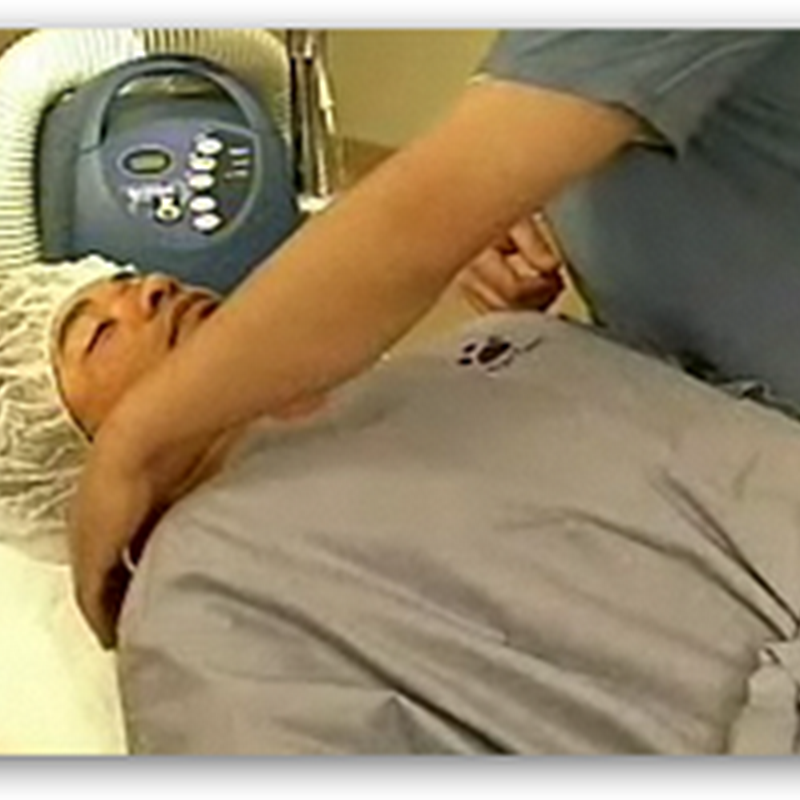
This is pretty interesting technology from what I am reading here as it appears we may have a new classification of Dermatology on the horizon, an imageinterventional dermatologist.  The reason I make this comment is due to the fact that while treating the skin it is also visible via the ultra sound at the time treatment is given, in other words the physician can see the layers of skin.

Guided Technology worked with Ethicon Endo-Surgery, a subsidiary of Johnson and Johnson to develop the technology, who invested millions into the project. 

The product is delivering acoustic energy to the tissue and with imaging included the physician can see into and below the skin.  Along with the FDA approval, the company lists several first time events as cleared by the FDA and with the approval it has created a new technology category at the FDA. 

“In the case of the products produced for the professional aesthetic market, there are several “firsts” as cleared by the United States Food and Drug Administration (FDA) on September 11, 2009:image

1.) First ultrasound therapy device for use in aesthetic applications
2.) First ultrasound treatment device containing ultrasound imaging
3.) First energy based aesthetic device with “lifting” as its designated indication for use
4.) First compact, broad use of ultrasound treatment not specifically designed or limited to hospital use. (No MRI machine needed or general/local anesthesia.
5.) First device in its class, which has resulted in a new technology category for the FDA”

The device does cost a few dollars though, around 89k I believe it was stated.  You can also watch a video here.  It is not slated to take the place of plastic surgery, but for those who do not need extensive reconstructive work, 30 minutes with the device might be an alterative to a surgical procedure.  BD 

A Mesa startup company has developed a medical device that uses ultrasound technology to treat everything from sagging eyebrows to imageliver cancer. 

Guided Therapy Systems of Mesa said the device allows doctors to see and treat tissue without using traditional surgery.

The device will be used initially for cosmetic purposes, but backers say the technology has the potential to treat tumors without invasive surgery.

Ulthera Inc., a Mesa-based spinoff of Guided Therapy, gained Food and Drug Administration approval in September to market the device for cosmetic facial treatment. The company now is building its sales staff to market the device to cosmetic dermatologists and plastic surgeons.

image

Ulthera has started to sell the device to plastic surgeons and dermatologists for procedures such as eyebrow lifts and facial tightening. The company has raised about $30 million, hired more than 20 employees and plans to double in size next year. image

Guided Therapy has a second spinoff company, Xthetix, which is developing a handheld device for consumers that can be used to treat acne and rejuvenate skin.

Company representatives are encouraged by the FDA clearance, which they believe gives the firm an advantage over other firms developing ultrasound-based treatments.

Mesa firm gets FDA approval on ultrasound device

Medicare Eliminates Consultation Codes in 2010 – Adds Modifier to Distinguish Providers

This is going to be fun to say the least to figure this one out unless commercial insurers adapt and follow Medicare.  This is especially tricky if Medicare is the second payer.  If you are a specialist, this could be a bit of a hit on the pocketbook.  Medicare is to provide a modifier to help out.  The consultation codes will be recognized but the payment codes will now be marked as not valid for Medicare.   The modifier to be provided will help determine the difference between an admitting provider and the one overseeing the patient’s care, who could be a specialist.  image

99241-99245 (outpatient/office) and 99251-99255 (inpatient) are gone for 2010 for Medicare claims. 

Office visits may stand to be further expanded possibly.  Anyway, you can read the advice below from this article in Medscape and some additional advice from a related article.  BD  

The announcement that Medicare will no longer pay for consultation codes shocked the medical industry, leaving doctors worried about their income and perplexed about how to handle the new situation.

The change will certainly affect specialists who rely on the payment differentials -- 20%-30% -- between visit and consult codes. To offset the elimination of office consult payments, the Centers for Medicare & Medicaid Services (CMS) will increase the work relative value units (RVUs) for new and established office visits by about 6% and the work RVUs for initial hospital and facility visits by approximately 0.3% to reflect the elimination of the facility consultation codes.

In 2010, if you perform a consult in the office, choose an office visit code -- new (99201-99205) or established (99211-99215). In the hospital, the code selection process gets a bit more interesting. Consider that opinions are sought for many hospital patients, and those services have long been coded as consultations. This will change in 2010 for Medicare patients. CMS states that "physicians will bill an initial hospital care or initial nursing facility care code for their first visit during a patient's admission to the hospital or nursing facility in lieu of the consultation codes these physicians may have previously reported." This will be the case even if someone else admitted the patient.

From a coding perspective, admitting a patient could get tricky. CMS will create a new modifier for admitting physicians to append to the Current Procedural Terminology (CPT®) code: The modifier will be used to identify the admitting physician of record for hospital inpatient and nursing facility admissions. "This modifier will distinguish the admitting physician of record who oversees the patient's care from other physicians who may be furnishing specialty care."

To explain the controversial move, CMS pointed to physicians' problems in complying with Medicare's consult code guidelines. http://edocket.access.gpo.gov/2009/pdf/E9-26502.pdf

 A related article offered these suggestions:

1. Consultation codes 99241-99245 (outpatient/office) and 99251-99255 (inpatient) have been eliminated. Tele-health consultation G-codes (G0425-G0427) will not be eliminated.

2. Use codes for new (99201-99205) or established (99211-99215) patients to replace consultations in the office/outpatient setting.

3. Codes in the inpatient hospital setting (99221-99223) should be used to replace inpatient consultation codes (99251-99255), and for nursing facility consultations use codes (99304-99306).

4. To distinguish the difference between the admitting physician of record from the consultants for initial hospital inpatient and nursing facility admissions, Medicare will develop a modifier. Check with your local carrier for more information.

5. Payments for all Evaluation and Management codes have been increased in an attempt to offset the fees lost from the elimination of consultation codes.

http://www.medscape.com/viewarticle/713597

FDA Says No to Pfizer’s Pain Medication Lyrica for Generalized Anxiety Disorder

Treatments for anxiety and depression certainly seem to be headliners quite frequently in the news today.  In just writing this blog it seems to be that I tend to see more about those 2 types of drugs than most others.  The FDA said no on this account for Pfizer as the information submitted was not sufficient.   Lyrica is a pain relieving drug as it is approved for use today.  image I certainly hope more psych drug applications and medications themselves are not the answers to living through the current economy.  It does make one wonder when you see headlines like this:

Night club drug could ease depression – Ketamine

Back on topic here with anxiety though Pfizer goes back to the drawing board.  Recently I read about some of the fattest cash rich public companies out there and Pfizer was at the top of the list, and the article went on to say they had pockets of around 52 billion cash sitting around.  BD 

Pfizer Inc.’s earlier-rejected, resubmitted application for the use of its Lyrica capsules CV as a mono-therapy for generalized anxiety disorder has met with yet another rejection by the US Food and Drug Administration (FDA).

The FDA, which had issued a Lyrica stand-alone treatment related “non-approvable” letter to Pfizer in August 2004, has concluded again that the data contained in the drugmaker’s New Drug Application for Lyrica is not sufficient enough to receive approval.

Pfizer’s resubmitted Lyrica for anxiety application rejected by FDA | TopNews United States

Nestle Is the Latest Food Company Questioned By the FDA – What Happened to Prunes?

It seems any more every package of food you see says something to the effect that “this is good for you” in some fashion or another.  You know I’m getting confused here as perhaps some others may be as well, if all the food is so good for all of us, where’s the bad stuff?  When you stop and think of it we have “diet” chocolate and more out there, and “lite” versions of many types of food.  Anymore I’m just going to assume it is all good and eat what I think tastes the best within reason and follow the old guidelines that have been around for years about eating a balanced diet, a bit of meat, vegetables, fruits, milk, bread and so on. 

image

The one item here the FDA is disputing is that the fruit drinks help support “brain development”?  Well in essence when we eat doesn’t all food somehow contribute to this in the long run?    When you visit the website the first thing you see is “good food” so they want you to know they are producing good food, versus those who may not advertise this fact, but also produce good food. 

Is this really helpful information or just marketing?

Not too long ago due to advertising on the boxes of cereal, the FDA called Cheerios a drug.   Bayer food supplements claim it helps prevent prostate cancer. 

I think we have just about lost our marbles here when it comes to marketing and trying to truthfully promote the fact that certain foods are better for us than others.  Again, we know the obvious bad foods, sweets, etc. and that’s no secret, but to get specific and make claims that a food item can help our brains develop when there are hundreds of other food products that do the same?  image

Are we waging war against the “Prune” that can save New York City (grin)?  I remember for years being told that they are some of the healthiest items available to eat and for some reason they don’t get much mention anymore.  BD   

The Food and Drug Administration came down on Nestle earlier this month for marketing its children's’ juice boxes as “medical” foods.
In a Dec. 3 letter, the FDA said the company mislabeled its Boost drink, which comes in flavors like chocolate, vanilla and strawberry, “as a medical food for the medical condition of ‘failure to thrive’ and also for ‘pre/post surgery, injury or trauma, chronic illnesses.’” According to federal guidelines, the letter explains, “medical foods must be for the dietary management of a specific disorder, disease, or condition for which there are distinctive nutritional requirements and must be intended to be used under medical supervision.”

Nestle rebuked by the FDA for misleading nutritional labeling | Booster Shots | Los Angeles Times

Sepracor's Lunesta Patent Gets Extension Until 2014

The butterfly lives on until February 2014 and could get an additional 6 months down the road, pending pediatric study results.  A while back I posted a spoof on the product from Saturday Night Live and you can view here, no wonder they don’t need to spend much on advertising.    BDimage

Sepracor Inc. today announced that the United States Patent and Trademark Office has determined that U.S. Patent No. 6,444,673,  which is a composition of matter patent that covers the human drug product LUNESTA® (eszopiclone), received a patent term extension under 35 U.S.C. § 156. The period of extension was determined to be 760 days, and the new expiration date of the patent is February 14, 2014. LUNESTA is marketed by Sepracor for the treatment of insomnia. In addition, the exclusivity period could potentially be extended for an additional six months if Sepracor successfully obtains a pediatric exclusivity extension by submitting data developed in accordance with the pediatric Written Request.

Sepracor's LUNESTA receives patent term extension from USPTO

Merry Christmas from Donald Duck – Distant Relative of the Medical Quack?

I couldn’t think of anyone more appropriate today to wish everyone a Merry Christmas.  This is an original Disney cartoon and I think I remember this one when it came out, or perhaps not too long afterwards.  BD

I’m still looking to see if I’m here:)

YouTube - Donald Duck's Christmas

Spiriva HandiHaler Gets FDA Approval for COPD Treatment

It’s official now, COPD is on the list with the other chronic conditions, so no worries about COPD off label prescriptions any longer with this one.  Actually though the other conditions it has been approved for are many times combined with COPD as well.  BD 

 image

RIDGEFIELD, Conn. & NEW YORK--(BUSINESS WIRE)--Dec 17, 2009 - Boehringer Ingelheim Pharmaceuticals, Inc. and Pfizer Inc. announced today that the U.S. Food and Drug Administration (FDA) has approved Spiriva HandiHaler (tiotropium bromide inhalation powder) for the reduction of exacerbations in patients with chronic obstructive pulmonary disease (COPD).

Spiriva HandiHaler is already FDA-approved as a once-daily maintenance treatment for breathing problems associated with COPD, which includes chronic bronchitis, emphysema, or both.

FDA Approves Spiriva HandiHaler for the Reduction of COPD Exacerbations

Microsoft Word Will Be A Little Different After January 11th – Students Check out the Ultimate Steal Deal

You may have read about this in the news and wondered if Word was going away, nope.  Word will undergo some changes to abide by the ruling from imagethe patent violation of the lawsuit filed, so if you have purchased a copy of Office 2007 or Word 2007 on it’s own, you are fine.  You won’t be able to basically save your Word documents in the newer XML format, so DECX or DOCM are out of the question now.  Most folks that I have run across  though were still using the old “doc” format for compatibility reasons, so in essence I don’t think this is going to have a huge effect on many.  BD

Also, while I am on the subject of Office, if you are a student you can purchase the full on professional versions of Office for $59.95 with an “edu” email address or be enrolled on the list of education institutions listed with a minimum of .05 course credit.  Also, this is a good page to reference as you can also get a copy of Windows 7 Professional for $29.95, again for students who meet the criteria. 

This is called the Ultimate Steal Deal.  BD 

image

Microsoft has issued a patch for its Office 2007 product that brings the desktop suite into compliance with a court edict.

The 2007 Microsoft Office OPK Master Kit Download, available on Microsoft's OEM Partner Center, strips Word and other Office programs of custom XML editing capabilities.

The ruling means Microsoft can't sell versions of Word that can open documents saved in the .XML, .DOCX, or .DOCM formats that contain custom XML. Those formats were at the heart of the patent dispute. DOCX is the default format for the most current version of Word, which is included in Microsoft Office 2007. Custom XML is used by businesses to link their corporate data to Word documents.

The patent, No. 5,787,449, describes how programs go about "manipulating a document's content and architecture separately."

The court left an out for Microsoft. The company can continue to sell Word 2007 after Jan. 11 if it removes the offending technology from the product. The patch appears to signal Microsoft's willingness to comply with the order.

Microsoft Word Gets Facelift -- InformationWeek

TwittZure - Twitter on Windows Cloud – The Azure Platform

This is interesting to check out.  You can use either the web based version of the page or download a simple desktop.  I like the animation and it has a ways to go yet before becoming a full on client, but the format is nice and responds quickly. 

image

This is what you see when you get to the website.  Overall interesting and neat stuff and I wonder if being hosted on the cloud will help with available resources on Twitter.  BD   

 image

From the Silverlight Blog:

“Features currently available include the ability to run TwittZure inside or outside the browser and to run the application on all Silverlight-supported browsers. TwittZure runs in exactly the same way on a Mac or PC. It provides the user with the ability to search for specific terms across all public Twitter posts, even without logging in; it also allows user authentication, retrieving the user’s basic information and timeline. TwittZure functionality also includes the ability to switch between Search and Timeline views, which are retrieved and displayed in a paginated way to reduce response sizes when retrieving data from Twitter servers.”

http://twittzure.cloudapp.net/

OptumHealth Launching Online NowClinic – Video Consultations for Patients and Physicians

I have added a bit of text from my post back in June of 2009 below about this service which was a pretty complete go through with what was posted imageat that time.  You can enroll as either a patient or a doctor to participate.  If enrolling as a physician there will be some stipulations and processes to go through to get set up.  OptumHealth also have their own PHR (personal health records) program and I am guessing this is where the information will eventually be stored. 

OptumHealth (Subsidiary of UnitedHealthCare) Teams Up With American Well for 24/7 Physician Consults

The service has worked well for patients in Hawaii from what I have read but this is a little different with software with United, as Blue Cross is the system in Hawaii.  What this does do is bring the doctor to the patients and not every visit can be a web cam visit by all means.  The article mentions that in Texas the patient has to already be established with an MD before using this type of service, which is not a bad idea when you think about it.

“I was not familiar with what eSync was so I watched the video and the presentation. There’s a lot there and it takes a while to watch, but if you have the time it will discuss and focus on how physicians can save money and learn about using the “business intelligence” they have to offer, how you can analyze community statistics and be a better doctor for your community.  We see this happening everywhere, hospitals, etc. all pushing business intelligence down to the already over burdened doctor to analyze and help become cost effective, so this is nothing new here.  Through having all this information to analyze the hopes are to save money and create better decision making processes, if it doesn’t end up muddying the water too much in the process, as a physician may be members of more than one health plan, so to keep up with 4 or 5 of these, which is not uncommon here in California, it could end up being overkill, unless you put all your eggs in one basket, but nobody does that. 

They are also getting the health coach consultants in the act, aka Utilization Managers to some extent here to help doctors make their decisions, so are 2 head better than one?  If one is a clinician and the other is risk management focused?  One more way to keep “cost” and not imagebetter healthcare in focus.  

OptumHealth and American Well plan to leverage two proprietary technologies: OptumHealth’s eSync PlatformSM, which synchronizes health information to deliver prioritized, clinically appropriate and personalized health care information; and American Well’s Online Care platform, which enables real-time conversations between individuals and physicians. Together, the technologies will allow consumers on a state-by-state basis to talk with a local health care professional in a secure environment any time, anywhere; and physicians to expand their practices and care for their patients beyond a traditional office setting. The service will be available to employers, their employees and individual consumers.”

It is getting interesting to see what other services are being offered as well, OptumHealth also gives out discounts for members who want to have their DNA tested. 

Health Insurance Company Offering 20% Discount for Members Who Want DNA Testing

Also as mentioned before you can take your records from OptumHealth and send them to a HealthVault account too.  It appears that Google Health and HealthVault are becoming the online non-insurance associated companies that seem to be the safe islands as far as privacy is concerned.  BD 

OptumHealth, a division of UnitedHealth Group, plans to offer an online physician consultation service nationwide next year, the New York Times reports.

OptumHealth is offering the service, called NowClinic, state-by-state, beginning with Texas. According to the Times, the OptumHealth initiative will for the first time offer online medical care nationwide, regardless of insurance coverage.

Proponents of the service say it will help address a primary care physician shortage and increase patients' access to health care.

How It Works

American Well developed the NowClinic system, which connects patients and physicians using video chat.

For $45, patients, regardless of whether they have insurance coverage, can have a 10-minute online physician appointment. Following the appointment, physicians can file prescriptions, except for controlled substances, if it is necessary.

In addition, physicians eventually will have access to patients' medical histories.

OptumHealth Launching Online Physician Consultation Service – iHealthBeat

Related Reading:

Cisco and Healthcare Technology – Hospitalist Avatar And Other Technologies On Display

UnitedHealthcare Creates an Application for the iPhone – Find Doctors and Hospitals And Stay In Our Network

UnitedHealth To Spend Tens of Million of Dollars with Cisco to Build Nationwide Telehealth Network

41% of Canadian Clinical Trials Use Devices That Report Data

Is this to say pretty soon you will be recognized by the apparel you wear that you are in a clinical trial?  I say this in jest due to some information from a prior post below, the Life Shirt and now one with Bluetooth and Wireless too.  The device are coming faster than what we think.  I have built up somewhat of a library on devices that report data on the blog so search them out if you like, and there’s some strange ones on here too.  BD

Wearable Sensors and Other Healthcare Innovations Set to Flourish

LifeShirt Has Upgrade Coming Out With Bluetooth and Zigbee Wireless – A Shirt that Transmits Health Data

I have talked about devices, well now let’s enter the wearables.  If you like your LifeShirt enough you can even sleep with it.  Actually the shirt records data while you sleep so there is a purpose other than maybe just liking the fit.   Actually the data collected can render information related to diagnosing and treating sleep apnea.  Pharmaceutical companies are also using the shirt to help collect data during clinical trials.  Does this mean I’ll have a garment to reboot? (grin)

I have reported on some interesting devices, there’s a bra that will check your heart rate too, good for the gals, but maybe not of interest for the men.

Of course there is the exotic Blue Tooth Inhaler that I reference quite a bit here as well.  Why a Bluetooth inhaler you might ask, the answer is compliance as it talks to a phone and records and send data.  Watch the video from Cambridge Consultants and you can see the software and the whole thing set up ready to go, even to report to insurance companies which of course we are not supposed to do here in the US.  Keep in mind the video was made in the UK.  This is also an area where we need clarity too on perhaps in the future claims not being paid due to negligible non compliance with data trails to show a few mistakes, as we know how insurers use their algorithms to calculate and “score” our existence.  Remember United makes more money today from technology than they do from policies via their Ingenix data division. 

Forty-one percent of Canadian clinical trials conducted from 2006 to 2007 used electronic records, according to a study published in the Journal of Medical Internet Research, United Press International reports.

Roughly half of the 950 registered Canadian trials from 2006-2007 were funded by the pharmaceutical industry, and those trials were more likely to utilize electronic data capture tools, researchers found.

41% of Canadian Clinical Trials Use Electronic Systems, Study Finds - iHealthBeat

Miller Children’s Hospital Long Beach – Brand New Pavilion Carries Focus on Patients and “Green”

Recently I had the opportunity to take a tour of Miller’s Children’s Hospital of Memorial Hospital in Long Beach California.  This is the clip_image002brand new facility that has taken a few years to complete and is now accepting patients.  This brand new state of the art medical center is connected to Long Beach Memorial Hospital and my tour was done before the official opening. 

For my tour guide I had the pleasure of being escorted by Richard DeCarlo, chief operating officer, Miller Children’s Hospital. 

The Children’s Hospital opened its new inpatient pavilion, the building consists of four stories and 124,000 square feet on December 8th, 2009.  Miller Children’s Hospital is the only non-profit to receive Brownsfield Grants from the Environmental Protection Agency (EPA) for their greening efforts.  All throughout the tour mentions were made about all the “green” efforts that were incorporated into the new building.  For a little history, the facility once was an old oil field area and there was a lot of clean up of the soil before ground was broken.  The cleaning went way deep and there was an old parking structure that was torn down before the soil efforts began, and some of the old concrete and steel was recycled for the new facility. 

clip_image004

All throughout the facility the architecture was designed to “let the light in”, in other words you never really have the feeling of being in the “dark” as natural sunlight emits throughout.  All throughout “green” and “recycle” were two words I heard quite frequently.  Being that this is a children’s facility special care was taken to make sure the building had a bright and open appearance for children with decorating themes to match those which are relative to children’s environment. 

The current hospital facility used was much smaller and is adjacent to the new building.  You barely know you are leaving one building and walking through to the other.  This is the new lobby pictured and there’s even a special baby sitting area for parents to leave children while they are visiting the one in the hospital. It’s almost hard to believe that so much of the decor consists of recycled material as it looks great. 

Over 1400 pieces of art that has been created by pediatric patients will be used to decorate the new Pavilion and the day of my tour the artwork was not present yet, but nice that the children who receive care here could contribute.   The linoleum floors from all natural products are also built to last and are pretty much indestructible.  Each area is created with at theme of light and airy and to create a healing area for children. 

clip_image006

One item that I noticed was the fact that almost everything is on wheels and is up off the floor.  In the imaging center I saw a 320 bit CT scanner, which was selected as it delivers a lower dose of radiation, again something that went into the planning efforts to expose children to the smallest amounts of radiation possible.   Richard stated the staff in imaging was totally in awe of all the space they will have to function.  All imaging goes direct the PACs system, so there are less moving parts for technicians to move around and handle physically to work with. 

One unique item that was built in was the ability to move expensive and high value medical diagnostic equipment into the building.  As things are changing rapidly, new equipment arrives as well as moving old equipment out.  The facility has a dome whereby the roof opens and a new MRI, CT Scanner, etc. can be moved in and out of the building.  If you have never seen the the installation and bringing a new unit into place, this is a major project and with the opening with the dome, the job is much easier and efficient to accomplish. 

clip_image008clip_image010

The gurneys were made for children too as you can see by the pictures above and of course all the sides come down, but this way it is safer for children being moved around the hospital.  The area below shows the waiting area after and before surgery.  Again if you can see the floors and the bright colors in the area.  Colors and designs are important, some patients end up spending quite a bit of time at the facility.

clip_image012

There’s a special room for children who need the extra care.  Outside of this area are doors whereby parents can take a step outside to get a breath of fresh air and the area is not finished yet, but will have a nice calming effect with producing a real garden area, and this also lends itself to the “green concept” throughout the building.  If one needs to make a phone call for example, it’s a nice area to be able to step out and have some privacy as well. 

clip_image014

The hospital actually has 7 surgery rooms.  In designing the rooms, lighting was a major concern and the rooms have controls that turn the rooms to give a green cast and then returns to normal daylight.  Extra planning was made to have 2 doors, one for children coming in and the other for children who are leaving the surgery rooms so they don’t see each other before and after surgery.  This may not seem like a big deal, but in essence it is for one child not seeing another coming directly out of surgery with all the tubes, devices, etc. connected after surgery, and I must say even as an adult it could be scary too. 

clip_image016

Notice all the computer screens around the operating table, and there’s more behind.  On a separate floor the old operating auditorium concept has been eliminated and replaced with a teaching room whereby video live streaming is used for teaching and education.  The facility is also a teaching facility for UCI. 

clip_image018

Some of the surgery rooms are quite large.  Again as in other pictures you see all the new technology that is throughout the hospital.  Electronic medical records from Epic are used and connected to Long Beach Memorial.  All throughout the tour, there are computers available to staff everywhere. 

Earlier this year I had the opportunity to discuss the transition with Dr. Leo From Long Beach Memorial hospital and you can read more here.

The patient bed areas, are made to allow parents and family to visit and designed for comfort.  At each bedside is a computer, mounted on a moveable arm so the entire unit can be moved when needed.  Doctors and staff do not need to go looking for a computer to input data.  In addition, the facility also has “WOWs”, workstation computers on wheels that are wireless that can be used.  The lighting in this area pretty much looks like natural daylight and again can be adjusted. 

clip_image020

Richard said the lighting was an important factor to healing better and research and study went into the design as well.  To me, this makes real sense too as when you think about how productive you might be on a sunny day versus a rainy day.  Also you can see that everything possible seems to be built into the walls, a nice clean look and less equipment for staff to have to move around as most of what could be anticipated to be required is here.

All across the US hospitals are changing the way they operate with facilities for children and Miller’s Hospital is a shining example of all the innovation and thought processes that come into play for creating a true healing environment.  Gone are all the white walls and traditional views we have all known in the past. 

As technology continues to grow, so does its use in the hospital.  In this post I captured some of the highlights, but there’s much more behind the scenes that contributed not only to create a successful healing environment, but one that embraces all the “green” environmental processes that go into creating a new hospital today, it’s complicated but can be done. 

I want to thank Richard DeCarlo for taking a few minutes from his busy day to give me the opportunity to see what is happening with children’s hospitals today and a view of where healthcare facilities are aligned for future care.  Miller’s Hospital in Long Beach is one of the largest healthcare facilities in the US, dedicated to safe and critical care for children, as we have found out over the last number of years, they have special needs and are not “small adults” just needing smaller doses or smaller treatments.  Pediatric care has evolved through research and development the last few years to lead us into new and more successful methodologies for better patient care by addressing their special needs and this facility certainly speaks of making use of what is available. 

Important note:

Richard also mentioned the challenges technology posed with the planning and building.  They are using technologies that even as late as last year, didn’t exist, so the point made here is that during the planning and building stages, there were immediate modifications made to incorporate many of these new technologies into the blue prints as it was viewed to be technology that couldn’t wait and needed to be included in the budget and plans.

Senator Coburn Speaks Out About Healthcare Bill – We Need Algorithmic Centric Laws Says Me

This bill is too big and complicated, no kidding.  He states we are doing this for a political reason to pass this bill.  He wants to fix what is wrong with the insurance industry.  He says he has more problems with Medicare and Medicaid, but you know I do some billing and those go through very easily, imagebut they don’t pay as much as the commercial insurers of course. 

From a post I made back in August:

Are We Ever Going to Get Some Algorithm Centric Laws Passed for Healthcare!

“This is a bit of a rant on my part, but I keep looking at the laws that are being discussed and passed and darn they leave huge big black holes for folks to poke around in, and because laws are not specific enough, they get away with it because it’s not illegal.  I call it the “under tow” as it’s an entire “smart” community that feeds on the ignorance of others.  The “under tow” is growing every day too, and they like algorithms as it allows the use of software to carve out profits with formulas and base their compensation on helping show savings.  Those “savings” come at a price.

Now, we have Lieberman wanting to take a break, but you know what, this is not the 70s when we had a lot of “time” to make crucial decisions, it’s a whole new world today and I sure wish we had a Congress that would think in those terms.  Healthcare needs to be fixed and the longer we wait, the worse it gets.  Insurance companies love it as they can continue to do business any way they feel fit, and even so, when laws are passed, they want the “open ends” left that way.  

I think it is almost time to start thinking about what types of algorithms we will allow as a county to function, especially when it comes to healthcare and what we pay for it.  There’s big profit in providing those algorithms when we have the capabilities of our new CIO Office to create our own, and with some open source software thrown in to mix with commercial software.

Do We Need a Department of Algorithms? 

I think we might just be forced soon into producing “digital laws” so folks can read and interpret them.  I have written many times on this topic.  BD

Breitbart.tv » Sen. Coburn: ‘I Despise Half the Insurance Companies My Patients Have’

New England Journal of Medicine Discusses Algorithms Relative to Healthcare Insurance Costs

If you read here often enough you see the word algorithms all the time, as this is what everyone is using to make their decisions today, the formulas or math that is used for projections.  This articles makes sense out of what we are all debating:  when benefits are more generous, fewer people are covered, but when you restrict benefits, more receive limited healthcare.  image

Cost of Healthcare – Nobody Will Get This Right as Technology Throws you a New Left Curve Every Day

Here’s an excerpt from the link above:

“You want to run algorithms and cut and deny care, well that can cut costs in one area, but it creates problems in other areas and pits everyone against each other with meaningless judgment and creates bad will.  Why do you think we all hate the insurance companies, because the pendulum has swung too far with ethics going in the toilet for profit.  There’s a lot of room for improvement and cost savings with technology but there’s no big hatchet that fixes this. 

I have watched this process evolve for years and 2 years ago I said within 1-2 years we would be close to having riots in the US over healthcare, and I think we are pretty much right there.  When you deal with data, coding, aggregation and have some hands on with all of this, it’s not that hard to see and project where things are going and I’m not alone here by any means, there’s others who see this too, but maybe they are not as vocal.

All of this talk tires and bores me at times as we have people making decisions that don’t have the knowledge I quoted above at the helm and thus we have a mess.  Between the 2, one being tech savvy and the other being the folks living in the 70s, the cultures collide.”

Nice to see the New England Journal recognize and publish similar information here, as it is true, the algorithms are creating the rules we live with or live by, and they need to be correctly done, and that includes more than just math, morally correct an perhaps that will happen when we have members of Congress who participate and get a hold of the entire process instead of the belief all of healthcare reform “is for those guys over there”.   BD

“Uncomfortable Arithmetic — Whom to Cover versus What to Cover | Health Care Reform 2009”

Much of the current debate about expanding health insurance coverage avoids addressing an uncomfortable trade-off: with a limited budget, making benefits more generous means being able to cover fewer people. Moreover, designing insurance benefits that are limited to coverage of higher-value care but are extended to more people will generate greater improvements in health than providing unlimited care for fewer people. Policymakers and patient advocates are reluctant to acknowledge that in a world of scarce resources it will not be enough to eliminate waste: we will have to make active choices in our public insurance programs between increasing the number of people covered and increasing the generosity of that coverage.

Unfortunately, the mere recognition of the existence of trade-offs does not tell us how best to make them. There are no easy solutions in which all people receive all care that might potentially benefit their health. There is only 100% of Gross Domestic Product to go around, whereas we could theoretically spend a virtually unlimited amount of money on health care. As medical technology advances, there will continue to be new treatments that will offer incremental improvements in health at increasingly high costs, and we will have to decide how to allocate scarce resources among treatments and among people. To date, there has been little debate in Congress about the generosity of public benefit packages, except for whether such benefits should cover abortion. But eventually, we will have to engage in the difficult discussions required to choose whom and what our public insurance programs should cover. Some might call this rationing, but the reality is that millions of Americans now have no access to lifesaving medical technologies at the same time that public resources are being devoted to covering less-effective therapies for less-serious conditions. We find that sort of rationing hard to justify.

Uncomfortable Arithmetic — Whom to Cover versus What to Cover | Health Care Reform 2009

Microsoft Patent Filed – Using Health Records to Generate Your Avatar

To me this sounds like a HealthVault type of application that would show and reflect what your avatar looks like based on your current health imageconditions.  When you read through the entire patent it mentions quite a bit of biometric devices gathering this information as well.

So, if you are a bit overweight and looking for a slim avatar, at least in this area, you might be out of luck and I guess the same could work in reverse.  If you have a heart reading for example, your avatar would reflect that, along with such other examples such as a your mood, etc.  Overall it’ a very interesting patent applications.  BD 

For many people, half the fun of avatars is aspirational -- the ability to make them look like you wish you did in real life. But apparently  that's not the case for some Microsoft researchers, who have applied for a patent on a system that would use health records to generate avatars that more closely resemble a person's actual physical characteristics -- part of a scheme to get them to actually exercise.

It's getting lots of attention online today after Slashdot posted a summary. Read the full patent application here. Keeping in mind that these patent applications don't necessarily reflect the company's actual product plans, here's the abstract, explaining the general concept.

Microsoft patent: Sorry, fatso, no more hiding behind that avatar

Bach To Health – Kaiser Permanente ER Physician Plays Cello for Charity - Listen and Click to Donate

I know it’s been pretty quiet around the blog the last few days, but the duck had the flu and is recovering, bird flu I guess in my case.image

I stumbled upon this website that talks about the doctor playing his cello to raise money for charity when catching up.   Dr. Eric Roter is an ER Physician for Kaiser in the Cleveland area and played the cello in New York, working on street corners while pursuing his education and had the idea to use his talent to generate money for charities. 

This is the page to visit as you can listen to each suite of music and then click on the link to the foundation to contribute.  He covers quite a few and you even see the Michael J. Fox and the Epilepsy Foundation among the charities listed. 

The music is so nice to listen to.  I like his slogan, “tell them you were sent to the site from the ER” as mentioned below.  Each video focuses on one area of medical conditions he encounters in the ER room as well as the charity where you can donate relative to the condition shown in the video, pretty neat idea.  The news story below talks about how it all was started and the YouTube video below is a sample of what you can find on the website.  BD   

Here’s one example on YouTube below.  He has an entire page at YouTube. 

The Bach to Health initiative was created by Eric Roter, M.D. (“E.R.”), a Board-Certified emergency room physician and Juilliard trained cellist to help raise money for top-rated health-care charities.

While a music student in NYC, Dr. Roter occasionally performed as a “street musician.”  He never forgot the generosity of the thousands of passers-by who threw donations into an open instrument case.

After becoming a physician, Dr. Roter realized he could help far more people by combining his unique talents in medicine and music.  He recreated his street-playing experiences by merging his recently recorded videos of J.S. Bach’s masterpiece “Cello Suites” with his own videos of Manhattan.  Each of the 36 videos focuses on specific medical conditions he personally encounters in the emergency room and each is dedicated to a top-rated health-care charity to be used as a 24/7 “benefit concert” on the internet.

Music is the universal language and giving to charity is the noblest deed in the universe.  Please visit each charity’s website and donate a dollar or two (or more if you can) to help them help others.  Tell them you were sent from the “E.R.”

Bach To Health Home