
Interviews Personal Health Records How to Search Bar Code Campaign Ducknet.net

Will the “Stent Wars” Ever End – We Want to Be Able to Afford them Boston Scientific Files Cross Appeal

We are back to the same 3 companies again, Johnson and Johnson, Boston Scientific and Abbott, same questions over “patents” and more legal expenses to pass imagealong to consumers in the price of a stent.  If these 3 could settle their differences and make some donations for charity instead of all these legal battles, that would really be nice. 

Where’s Some of the Focus for Johnson and Johnson Revenue Cycles – “Legally Patented Stent Wars”?

These “legally patented” stents are so expensive for hospitals to stock and have available, that many hospitals stock them on “consignment” in other words they are on the shelf and the hospital does not pay until it is implanted.  Take a clue here folks and think about how the ridiculous court battles continue to run this expense right up the flagpole.  

Anyway I read about billions of dollars at stake and millions spent, and yet an idea to save lives and check for recalls goes nowhere, so is the interest in making money or is there any interest with involving patient safety here too?   BD

Tags for Use in Healthcare – Medical Stents, Medications - One Scan Away From Safety Information in Real Time

Johnson & Johnson isn't the only party appealing a Delaware judge's ruling that four of its patents are invalid, as Boston Scientific Corp. cross-appeals despite winning the case's last round.

Boston Scientific Corp. (NYSE:BSX) may have won the most recent round in its stent patents war with Johnson & Johnson (NYSE:JNJ), but that didn't stop the Natick, Mass.-based devices giant from cross-appealing a Delaware judge's ruling.

The patents in question are at the heart of complicated legal wrangling involving Boston Scientific, its New Brunswick, N.J.-based rival and competitor/partner Abbott (NYSE:ABT). The dispute centers around Boston Scientific's Promus stent, a private-label version of Abbott's Xience V stent, and the JNJ subsidiary Cordis Corp.'s Cypher.

Boston Scientific files cross-appeal in stent patents suit against Johnson & Johnson | MassDevice - Medical Device Industry News

Hip Replacement Study Released - Metal on Metal Devices Are Beginning to Fail Sooner than Expected

Many individuals that have had hip replacements that are metal to metal and perhaps not a combination of metal and/or other material needing to be replaced.  The imagearticle mentions the Mayo Clinic has reduced their number used by 80%.  With the metal in the body, surrounding tissue is dying and becoming inflamed, which can mean a lot of pain.  You could also get one that talks or “squeaks” with some of the devices using ceramics.   See how this sounds in the video. 

How Long is my Knee or Hip Replacement Going to Last?

British researchers report that one in about 75 people required repeat hip and knee replacements in the three years following the original procedure. The study was published in the journal PLoS Medicine.  Some hips have only lasted a little over a year before replacement has been necessary. 

Check out this link which will give you an animated description and explanation of how hip surgery works with a virtual tour.  BD

Milan, IL: A new issue emerging around artificial hip replacements is of interest to any patient who has received a metal-on-metal device. A recent editorial in the Journal of Arthroplasty, a noted medical journal for orthopedic surgeons, has urged doctors to use metal-on-metal devices only with "great caution, if at all."

The metal-on-metal devices are used in about one third of all hip replacement surgeries in the US each year, totaling a quarter million annually. The New York Times reported yesterday that some of the nation's leading orthopedic surgeons have stopped or significantly reduced their use of the devices to reports of severe tissue and bone damage in some patients.

What’s more, metal-on-metal devices are beginning to fail far sooner than expected. Despite an expected life span of 15 years or more, some have required replacement surgery within a year or two.  However, studies have found that when the devices break down prematurely, they sometimes generate metallic debris that absorbs into the body. The resulting inflammation can trigger pain, death of tissue in the hip joint and the loss of surrounding bone.

A similar number of patients have had metal-on-metal hips removed at the Mayo Clinic, according to Dr. Daniel Berry, Mayo’s head of orthopedic surgery. Dr. Berry added that surgeons at the Mayo Clinic reduced by 80 percent their use of metal-on-metal implants over the last year in favor of those fashioned from combinations of metal and plastic or other materials.

Hip & Knee Replacement Implant Failure - Hip Replacement Lawsuit |LawyersandSettlements.com

Australia Announces Government Will Take Over 60% of the Funding for Country Hospital System For a Price

This is how one country is doing it, with the Government jumping in for relief.  Granted Australia is not quite as bad in the economic hurt area as the US is right now so they have some additional positives going in their direction.  What is being emphasized here too is standards and better healthcare IT integration.  image

As stated below if the territories do not sign up, it will go to the polls at the elections due later this year and yes there are some pretty steep taxes here for the support and services.   They too have had issues with paying physicians as reported a year ago.

Hospitals across Australia Dealing with Crisis Situation

I had this story where the hospitals were having to get supplies from the “local vet” back in 2008.

Hospital 'gets supplies from local vet' – Australia

What happened when their health insurance premiums went up, 750,000 ditched coverage, so it was not working well and the increases here were from 4 to 10 percent to be passed on, not as high as what we are looking at from 10-39%. 

Premiums up as 750,000 ditch cover – Australia

But even as they ditched their insurance carriers, Australia still has the “Dole” to take care of those who need care to fall back on and it appears from this article the “Dole” is up for some significant upgrades and improvements through taxes. 

Health insurance to rise in Australia – Same Issues, Different Country but they do have the “Dole”

They have designated a fund for the additional revenue in the National Hospital Fund.  With our healthcare being debated and the “soap opera” type of show we have going on in Washington, I thought as a comparison this was interesting to see what other countries are doing to tackle the challenge of reform.  We do have folks in positions that are “non participants” with their own use of Health IT, so thus the understanding and comprehension needed to create laws for citizens is getting real sticky and difficult, with emotional outcries on items that seem to make no sense to the big picture in Washington regarding reform. 

At the World Tourism Health Conference this year I spoke with an Australian business development manager from a hospital in Brisbane who was also there exploring opportunities.  He stated that internally they somewhat are already doing an internal tourism effort within the country, I would guess similar to what we do here in the US with different states, but he felt that the business model they used is not that entirely different from a world tourism concept.

This will be interesting to follow and see how their journey into healthcare reform shapes up with these monumental changes.  BD 

In what he called the most significant reform since the introduction of Medicare, Australia’s Prime Minister, Kevin Rudd, announced that the government would take over 60% of the funding of the country's hospital system in exchange for about one-third of the Australian states’ goods and services tax (GST) revenue.

The government, he said, would “build a new national health and hospital network to deliver better health and better hospitals by establishing a national network that is funded nationally, and run locally.” The eight state-run systems will become part of one national network. There will be one set of national standards to drive and deliver better hospital services.

Whereas all revenues currently raised by the GST are re-distributed to the states, the government would take around one-third of those revenues, he disclosed, and “place it in a new National Hospital Fund to be spent only on health and hospitals.”

“We will fund 60% of recurrent expenditure on research and training functions undertaken in public hospitals,” he reiterated. “We will fund 60% of capital expenditure - both operating and planned new capital investment - to maintain and improve public hospital infrastructure. Over time, we will also pay up to 100% of the efficient price of ‘primary care equivalent’ outpatient services provided to public hospital patients.”

In exchange for relieving pressures on state budgets from hospital funding, the government will require system-wide reforms to “create a better integrated, unified national health and hospitals network, with national standards, national transparency and national accountability.”

He will put the health reform package the states on April 11 at the next meeting of the Council of Australian Governments. If the states and territories do not sign up to the reforms, the government will take the package to the next election due later this year.

Australia Announces Healthcare Shake-up

Pacific BioSciences Announces a 15 Minute Genome Mapping for Less Than $1000 by 2013

The race to getting a full and affordable entire gene sequence just became a little more competitive.  As I have posted before, Intel sees promise here as an investor and you can view the list of current customers below, some big names to include the US Department of Energy Joint Genome Institute.  What hasn’t changed much yet is the coverage by insurance companies and the technology being used by physicians on the whole yet, although some are.  BD  

Intel invests in genome-sequencing outfit - California

Last week, Pacific BioSciences, which claims it will map a genome in 15 minutes for less than $1000 by 2013, announced several new partnerships which imagethey say will help customers “rapidly and easily adopt” their sequencing technology.

That’s big news, because Pacific BioSciences’s customers are ten research institutions, including major players in genetics like The Broad Institute at Harvard University, Cold Spring Harbor Laboratory, The US Department of Energy Joint Genome Institute, and eleven partner companies.

This announcement puts PacBio out front in the race for the Holy Grail $1000 genome. Among scientists, there’s a consensus that full genome mapping is the killer app for the entire field of genomics. First generation recreational genetics companies like 23andMe and deCode — imagethe latter recently relaunched to much skepticism after going bankrupt last year — map only partial genomes. While these companies help raise consumer awareness about genetics, mapping full genomes, scientists argue, is the key to individualized genetic information — and the essential ingredient to the industry’s success.

Pacific BioScience Has A $1000 Genome Test That Could Save Your Life -- and the Industry. | BNET Health Care Blog | BNET

Healthcare Reform Efforts and Methodologies in the US Mirrored by Our Losing Pace With Innovation Capacity

This initiative from Intel is an effort to create and re-create innovation in the US once again.  With our new administration we are working hard to play catch up imageafter 8 years of an administration that was asleep at the wheel, mainly due to the fact that our former President was a “non participant” and thus that was the role model we had for years.  Right now we have an Executive branch working over time to catch up with not only badly needed infrastructure, but education and participation of US citizens.  I try to just suggest myself to individuals, take 10-15 minutes a day to learn something new with technology that will improve and give some improved quality of life.  It’s hard I find to draw those away from television and gaming as that’s where the focus seems to be.  

Promising new startup of 2009 - Executive branch of the US federal Government

We have 34 members of Congress who are retiring and it’s becoming more evident that it is getting very difficult to figure out how to write laws for the country that involve technology when they themselves have little or no participation levels themselves personally, they can’t relate, and thus we have enabled big businesses in the US who have learned and invested in technology to use it to take from the ignorant.  When you listen to the videos there’s some pretty shocking numbers and discussions here, but it is what it is, so we need to be part of the solution or as the old saying goes, otherwise we are part of the problem. I can’t remember how many times I have read about Craig Barrett from Intel trying and repeatedly having to “give up” as the brick walls to enable learning could not be penetrated, many due to hanging on to old methodologies from the past that don’t work today.  His wife by the way almost died due to medical errors in the hospital when she was given drugs meant for the patient in the other bed. 

One other factor here is just flat laziness and the attitude of “its for those guys over there” meaning I’ll tell you what is good for you, but gee, don’t expect me to participate and learn any of this.  Here’s one innovative product that was shown at the HIMMS convention this week, pretty innovative and has use. 

Intel Introduces a Reader – Capture Text and Pictures and Have It Read Back to You

Skip down and read the names of the companies in this initiative and you will see they are all technology related.  If you need more proof, look at Wall Street who rebuilt, and perhaps not 100% honestly, but used technology to rebuild and look how fast it went.  We can’t fight a battle with swords when the other side is running around with machines guns. 

_________________________________________________________

Hopefully soon, perhaps the light bulb will go on in the rest of our government as it has in the Executive Branch.  In California we have a very forward looking governor who embraces technology and on his own he uses Twitter and Tweetcasts to communicate.  He doesn’t have to, but he participates and this shows where he’s thinking.  He knows we badly need infrastructure updating in California and pushed for the budget to get it.  

Gov.Schwarzenegger Discussed the Importance of Infrastructure investment To Create Jobs Here and Nationally

the Governor also went out to attend new healthcare technology announcements in person, and did a tweet cast.  Shoot the Congressman in my district can’t even do a decent internet town hall meeting and does random phone calls with no prior notice, and we pretty much just hear about surfing.   Nothing personal, but just one more non participant in Congress that may have difficulty understanding how laws need to embrace and include technology to protect citizens and provide laws that make imagesense. 

Cisco Systems and Molina Healthcare HMO Announce Telemedicine Pilot Program – Long Beach, California

Again, look at how slow the stimulus efforts are being rolled out and the states don’t even have the infrastructure or technology to do the reporting back to the US Government.  We need leaders that read up and help us once again catch up in the global world. Intel technology even just about has cars ready that drive themselves, so before boohooing, keep that thought and perhaps think about participation and learning for everyone at every level.  BD 

WASHINGTON, D.C., Feb. 23, 2010 – Intel President and CEO Paul Otellini today announced a $3.5 billion initiative to support investment in U.S.-based growth-oriented industries and detailed a commitment to significantly increase jobs available this year for recent college graduates.

Otellini announced these initiatives in a speech titled "Rebuilding the Foundations of American Growth," delivered at The Brookings Institution in Washington, D.C.

The Invest in America Alliance, led by Intel and supported by many leading venture capital firms and corporations, aims to further anchor the nation's competitiveness on the global stage. It serves as the private sector's complement to existing state and federal job creation programs through long-term investment in industries and talent poised to produce the next breakthroughs in technology innovation.

The Alliance is a two-pronged effort. The first includes a commitment from Intel Capital, Intel Corporation's global investment organization, and 24 leading venture capital firms to invest $3.5 billion in U.S.-based technology companies over the next 2 years. These investments, which include a new, $200 million Intel Capital Invest in America Technology Fund, will target key innovation and growth segments such as clean technology, information technology and biotechnology. Joining Intel in this effort is Advanced Technology Ventures, Braemar Energy Ventures, Bridgescale Partners, Canaan Partners, DCM, Draper Fisher Jurvetson, Flywheel Ventures, Good Energies, Institutional Venture Partners, Investcorp Technology Partners, Khosla Ventures, Kleiner Perkins Caufield & Byers, Menlo Ventures, Mohr Davidow Ventures, New Enterprise Associates, North Bridge Venture Partners, QuestMark Partners, Sevin Rosen Funds, Storm Ventures, Telesoft Partners, Updata Partners, U.S. Venture Partners, Venrock and Walden International.

Second, the Invest in America Alliance also includes commitments from 17 technology and other corporate leaders to increase their hiring of college graduates, some by as much as two times, to create the products and provide the services of tomorrow.

Companies joining Intel in this pledge are Accenture, Adobe Systems Incorporated, Autodesk, Broadcom Corporation, CDW LLC., Cisco, Dell, eBay, Inc., EMC Corporation, GE, Google, Inc., HP, Liberty Mutual Group, Marvell Semiconductor Inc., Microsoft Corporation, and Yahoo!.

Invest in America Alliance to Fund American Technology Companies, Create Jobs for College Grads

Myriad Unveils Prolaris Genetic Test To Predict Prostate Cancer Recurrence

Myriad may somewhat be a familiar name and if you don’t know who the company is think about the HER breast cancer gene test, that’s the company and now they have come out with a genetics based test to help determine the risk of recurrence with prostate cancer.  The company plans on educating physicians and urologists imagein the coming weeks.  There’s no word yet on whether or not it may or may not be covered by insurance.  Recently patients have been scrutinized quite thoroughly for the HER test for breast cancer with additional stipulations required for women to under go the test which is around $3000.00.  No word on what the Prolaris test would cost.

The Genomic Test for BRACAnalysis (Breast Cancer) To Be Scrutinized by United Health Care

Also this week there have been many announcements about the early detection of prostate cancer and screenings.  The American Cancer Society has put out a pretty long web page with their recommendations and all kinds of additional information to read up.  The American Cancer Society supports legislation assuring that men will receive insurance coverage for prostate screening exams.  BD 

Myriad's Prolaris is a molecular diagnostic assay that offers urologists a more accurate way of determining a prostate cancer patient's risk of recurrence. The new molecular diagnostic test is based on cell growth and tumor biology and provides rigorous, quantitative measures of the expression levels of multiple genes related to progression of the cell cycle.

Myriad Genetics has launched a 46-gene prognostic test Prolaris which quantitatively determines the risk of recurrence in patients who have undergone prostatectomy surgery.

The test identifies patients at low risk of disease recurrence with 95% certainty giving these men confidence that additional treatment with the accompanying toxicity and adverse events is likely unwarranted. Conversely, men with high Prolaris scores would be considered for more intensive screening and adjuvant therapy to address their more aggressive disease.

Myriad Genetics has been performing additional clinical validation studies to expand the utility of Prolaris. In one such recently completed study of 365 prostate cancer patients, 98.5% of prostate cancer patients with a low (favorable) Prolaris score survived their disease after 10 years, compared to 57.6% of the patients receiving a high (unfavorable) score who died of prostate cancer within 10 years.

Myriad said that it would introduce Prolaris to urologists and oncologists through its oncology sales force and new urology sales team in the coming weeks.

Myriad Genetics Unveils Prolaris To Predict Prostate Cancer Recurrence - Medical Devices Business Review

Virginia The First State to Pass Legislation to Protect Citizens From Being Forced to Purchase Health Insurance – If the Insurance Companies Were Non Profit It Might Make A World of Difference

This is not lining up against Obama Care in my eyes, it’s rather saying that it is almost non Constitutional to force citizens to purchase insurance from companies that imageare actively traded on the stock market and have a responsibility to shareholders first, rather than the insured.  I have made mention of this many times in the last few months and in a way it does make sense.  If the health insurers we have today were in fact non profit and focused more on healthcare rather than dividend payments we may not be seeing this type of activity. 

Health Fraud Scores Could Be a Contributing Factor to Medical Claims Being Denied

Why should individuals be forced to purchase insurance in this fashion?  In some states there are choices and there are some good non profits like Kaiser Permanente, and hospitals that are non profits that are used frequently as role models, such as the Mayo Clinic and Cleveland Clinic.  If these are the models being non profit that are working better for healthcare, why should consumers have to invest in the others.  In some area where acquisitions and mergers have occurred, consumers may not have a choice.  This is also one more big issue in many states with lack of competition, so if the ones traded on the stock market are the only game in town, well, you are kind of stuck.  

Little Progress on Fighting Healthcare Fraud – Look At Who’s Getting the Anti-Fraud Contracts

Nobody will ever trust this type of business and openly share information for the betterment of healthcare as long as the potential of being dropped or having inadequate coverage hangs over their heads.  It’s just plain and simple not a good business model today.  It may have worked in years past but we have come to a crossroads today that needs to be changed.  After the big bail outs of the banks and other firms on Wall Street, do you think there’s any incentive to have “for profit” carriers who serve the interest of investors to have any real success? 

Goldman Stolen Code – Has Algorithmic Fraud Become A Business Model in HealthCare Too?

They are part of the environment and with current business models with algorithmic formulas used to “score” and “cherry pick” human lives for profit, there will never be any sort of peace.  Times are changing.   BD 

WASHINGTON, March 4 /PRNewswire-USNewswire/ -- Today Virginia became the first state in the nation to enact legislation to protect their citizens from being forced to purchase health insurance or participate in any health care system against their will. The American Legislative Exchange Council (ALEC) has identified 37 other states that have similar bills pending or have announced that they will introduce this legislation. Already, at least one house of the legislatures in Idaho, Missouri, and Tennessee have also passed such legislation.

(Logo: http://www.newscom.com/cgi-bin/prnh/20091014/ALECLOGO)

These legislative initiatives are based on ALEC's model Freedom of Choice in Health Care Act. Under the legislation, any state attempt to require an individual to purchase health insurance—or forbid an individual from purchasing services outside of the required health care system—would be rendered unconstitutional. The measure may also cause a federalism clash if Congress passes a law with either of these provisions.

The Freedom of Choice in Health Care Act has already been filed or prefiled in 33 states—Alabama, Alaska, Arizona, Arkansas, Florida, Georgia, Idaho, Indiana, Iowa, Kansas, Kentucky, Louisiana, Maryland, Michigan, Minnesota, Mississippi, Missouri, Nebraska, New Hampshire, New Jersey, New Mexico, North Dakota, Ohio, Oklahoma, Pennsylvania, South Carolina, South Dakota, Tennessee, Virginia, Washington, West Virginia, Wisconsin, and Wyoming. Lawmakers in an additional four states—Montana, North Carolina, Rhode Island, and Utah—have publicly announced their intentions to file the legislation. A citizen-led initiative has also been announced in Colorado.

Virginia First State to Pass Health Care Freedom Act: 38 States Lining Up Against ObamaCare -- WASHINGTON, March 4 /PRNewswire-USNewswire/ --

Neurologists on Capitol Hill to Push for Health Care Reform Next Week

The first matter supported by the group in healthcare reform is a permanent fix for the Medicare physician reimbursement issue and replacing with one based on the Medical economic Index.  They also want neurologists to be be recognized at the principal providers for patients with very complex neurologic conditions.   image

What: More than 100 neurologists from 40 states will be in Washington, DC, March 8-9, 2010, for “Neurology on the Hill,” an event hosted by the American Academy of Neurology to educate lawmakers about the need for health care reform changes that consider neurologists and the patients they treat, including people with Alzheimer’s disease, stroke, epilepsy, multiple sclerosis, migraine, concussion and autism.

Where: Congressional offices, Washington, DC

When: March 8-9, 2010

Key Issues: The goal of “Neurology on the Hill” is to inform key lawmakers on priority issues that affect neurologists and the patients they treat. The Academy’s priorities for 2010 are health care reform and Medicare reimbursement.

Neurologists on Capitol Hill to Push for Health Care Reform

One Quarter of Germans Would Embrace an Implantable Microchip – 72% Said Absolutely Not

This was a survey taken before the big consumer electronics show in Hanover, Germany started.  I guess this could mean some potential sales for the folks at PositiveID who manufacture the chip and the software that now allows reporting to personal health records.  I’m not ready for a chip yet myself.  BD 

PositiveID Corporation's Health Link Personal Health Record – First PHR to Communicate Real-Time Blood Sugar Readings for Diabetics and Their Caregivers/Physicians

Privacy-loving Americans have roundly rejected the idea of implanting microchips within their bodies, but one in four Germans is enthusiastic about the idea of having a chip implanted as long as there are tangible benefits involved. Those benefits don’t even have to be of the life-and-death nature; some said they would implant a chip simply to make a shopping experience more enjoyable.

A poll released Monday in anticipation of Europe’s CeBIT trade show indicated that 23 percent of Germans are open to the idea of implantable microchips. The largest contingent (16 percent) said they would do it to help emergency services respond to them more quickly and effectively in case of an accident.

One Quarter of Germans Would Embrace an Implantable Microchip | Popular Science

Primary Doctor Talks About What He Makes and How Devastating Medicare Cuts Would Be

This tells the story pretty well and there’s stories just like it all over the US.  Fixed costs have gone up over the years an d basically family practice doctors have not had any increase since 2001.

In my travels, I have run into physicians who see HMO patients with many IPAs (independent physician associations) and Medicare that are not even making 100k a year.  When you stop and think of the school time and expense, that is not a lot.  I have even seen some in some area of southern California that make half that amount.  What it comes down to is what is left after the bills are paid, that is what they make.  This week we had a good taste on seeing one of the “Me, Myself and I” members of Congress show the absolute cold shoulder of not only being less than human, but just plain out stupid when it comes to compassion and caring for your fellow man/woman, but let him need care and he would scream bloody murder and continue to exhibit more childlike antics which we all are so tired of, most of them coming from “tech denial” and being at a loss of understanding the world we live in today and how technology is making changes rapidly.

Watch Senator Jim Bunning Block Medicare Fix for Doctors And COBRA Extension

Malpractice doesn’t usually go down either.  On top of everything else, add on the complicated medical billing and claims situation.  As a patient you probably have never seen this nightmare.  I have a simple comparison here, think of it as doing your taxes, but with taxes you do them once a year.  Think of every medical claim as a 1040 short form, and then there are those who cannot use the short form and itemization is needed.  Ok so the doctor sees 30 patients a day, you have 30 tax forms (the equivalent of forms and time) to do for the day, and then like the IRS in the form of audits and itemization, the practice has to dig out additional chart information and submit as well as spending time on the phone for those claims in question, you know, like the IRS wanting additional information.  The idea of the comparison here is the “red tape” and time to get paid. 

Now for the insurance side of this, they have algorithms that generate the additional documentation for the practice.  It’s all in the algorithms on automated claim processing. 

“In God we trust; all others must bring data” – Blue Cross Blue Shield Invests in more Business Intelligence Software

When it comes to claims it all the doctor’s time, staff time and sometimes yours.  These folks all use data and algorithms to calculate and score you for payment purposes, something that obviously can’t be done with caring for a patient as that involves us, humans who are sick and need care. 

How to Fight Algorithmically “Scored” Health Care Claim Denials – Line Up and Deliver Your Own Data

But they seem to want to think at the “bean counter” end that visits to the doctor can be handled like algorithm and it’s not.  They see numbers and I’ll say this there’s a lot of room to save money and doctors can be more efficient, but not by cutting Medicare.  It’s always easier to be the Monday morning quarterback and judge; however the insurance company algorithms were not present at the point of care, the problem with how we do some of healthcare today in forgetting the human element of giving care at the reimbursement end of the line.  BD   


NEW YORK (CNNMoney.com) -- When you think of low-paying jobs, doctor doesn't usually come to mind.

But with a 21% cut in Medicare payments slated to take effect later this month, physicians who say they are making an OK living may be reduced to income levels that no longer make their profession viable. That's especially true for those still paying medical school costs and other training.

Schreiber sees 120 patients a week. About 30% of them are enrolled directly in Medicare, while another 65% have private insurance plans that peg their payments on Medicare's rates. Only 5% pay on their own.

As a result, Schreiber expects the cuts to take away $3 out of every $5 he currently earns. And, as a primary care physician, he already wasn't earning anything near the salary of a specialist.

He spends about $60,000 a month on "fixed costs" to run his practice. "That's more or less my breakeven point," he said. "If I spend more, I'm in the red for the month."

The first code represents a simple visit, which might include blood pressure and cholesterol checks. Schreiber gets about $44 from Medicare for the $70 fee he charges.

The second and third codes correspond to a sick visit, when he spends 15 to 20 minutes evaluating a patient for symptoms such as coughing or shortness of breath. Schreiber charges $92 for a sick visit, of which Medicare pays about $58.

The last billing code is a complex visit. "This is where a patient comes in with many problems like heart disease, hypertension, diabetes," he said. Such a visit requires about 30 minutes of his time.

Schreiber charges $120 for these visits, and Medicare pays $88 of that.

Medicare backlash: A primary care doctor lays out his costs - Mar. 4, 2010

Quest Diagnostics and Surescripts To Integrate Lab and Prescription Algorithms To Improve Safety and Outcomes

This is a smart move to create additional algorithmic formulas to analyze labs along with medications being taken.  For a simple example I am estimating based on a particular lab result, certain drugs would not be advisable treatment and on the other side of the coin labs may be needed to combine the information to determine of the treatment is being successful for the patient.  We are getting smarter in healthcare and outcomes are better predicted with more information up front.  At the link below you can read an interview from last year I did with Rohit Nayak at Med Plus.

Quest Diagnostics and Health IT – Interview with Rohit Nayak, Vice President of Sales, Clinical Information Solutions Group, MedPlus

There are not a lot of details here and I’m sure we will hear more as time moves forward with the aggregation, but I also want to think that this information will create better aligned information for personal health records too, since you can get an online account with Quest Diagnostics as a patient and with the required pin code from your doctor, lab results can be imported directly to your PHR.  BD 

Care 360 from MedPlus (Quest Diagnostics) Now Has Ambulatory Web Based EHR – Integrated with Labs and E-Prescribing

ATLANTA, March 4, 2010 -- Two of the nation's largest healthcare information networks, Quest Diagnostics (NYSE: DGX), the world's leading provider of diagnostic testing, information and services, and Surescripts(R), The Nation's E-Prescription Network(TM), today announced an agreement to pioneer the formation of an integrated service to make laboratory and prescription information broadly and easily accessible to physicians. The collaboration is designed to improve patient safety and clinical outcomes.

Quest Diagnostics tests approximately 150 million patients each year and has 150,000 physicians connected to its Care360(TM) platform. Surescripts processed nearly 600 million e-prescription messages in 2009. The company supports approximately 170,000 active prescribers.

"In recent years, Surescripts and Quest Diagnostics have each committed to pioneering advancements in healthcare technology solutions," said Richard A. Mahoney, Quest Diagnostics' Vice President, Healthcare Information Solutions. "Now, we are working together to support our nation's goal to achieve a National Health Information Network (NHIN), with an aim to make it possible and realistic for physicians to use technology meaningfully toward optimal and efficient patient care."

According to Harry Totonis, Surescripts' president and CEO, "Surescripts built the nation's e-prescribing network and the ecosystem to support it, based on the foundations of neutrality, efficiency and quality. This strategic alliance will leverage the strengths and experience behind our laboratory and prescription networks with an intent to form an information-rich, interoperable service that helps to lower costs and transform patient care throughout the healthcare system."

About Quest Diagnostics

Quest Diagnostics is the world's leading provider of diagnostic testing, information and services that patients and doctors need to make better healthcare decisions. The company offers the broadest access to diagnostic testing services through its network of laboratories and patient service centers, and provides interpretive consultation through its extensive medical and scientific staff. Quest Diagnostics is a pioneer in developing innovative diagnostic tests and advanced healthcare information technology solutions that help improve patient care. Additional company information is available at www.QuestDiagnostics.com.

About Surescripts

Surescripts operates the nation's largest e-prescription network and supports a rapidly expanding ecosystem of health care organizations nationwide. Surescripts was founded on the principles of neutrality, transparency, interoperability, efficiency, collaboration and quality. Surescripts connects prescribers in all 50 states through their choice of e-prescribing software to the nation's leading payers, chain pharmacies and independent pharmacies. Available during emergencies or routine care, The Nation's E-Prescription Network gives health care providers secure, low-cost, electronic access to prescription and health information that can save their patients' lives, improve efficiency and reduce the cost of health care for all. For more information, go to www.surescripts.com.

The statements in this press release which are not historical facts may be forward-looking statements. Readers are cautioned not to place undue reliance on forward-looking statements, which speak only as of the date that they are made and which reflect management's current estimates, projections, expectations or beliefs and which involve risks and uncertainties that could cause actual results and outcomes to be materially different. Risks and uncertainties that may affect the future results of the company include, but are not limited to, adverse results from pending or future government investigations, lawsuits or private actions, the competitive environment, changes in government regulations, changing relationships with customers, payers, suppliers and strategic partners and other factors discussed in "Business," in "Risk Factors," "Cautionary Factors that May Affect Future Results," "Legal Proceedings," "Management's Discussion and Analysis of Financial Condition and Results of Operations" and "Quantitative and Qualitative Disclosures About Market Risk" in the company's 2009 Annual Report on Form 10-K and other items throughout the Form 10-K and the company's Current Reports on Form 8-K

Chemistry Add-in for Word 2007 From Microsoft Research

Hard Hat area:

For those using Word and adding chemistry information, here’s an add on for Word 2007.  There are a few samples with the online templates, about 6.  You can also import from your own library and I am guessing anyone in research is going to have their own files.

image

For this post I simply used the “testosterone” template from the gallery.  This can certainly make it much easier and convenient that searching and doing a copy and paste.  The best add in for Word 2007 can be downloaded here.  BD

The Chemistry Add-in for Word 2007 is a tool for the authoring and rendering of semantically rich chemistry information in Word 2007 documents. This project is a partnership with Peter Murray-Rust at the University of Cambridge.

Chemistry Add-in for Word 2007 - Microsoft Research

Connecting HealthVault/Google Health and More to RazCode Encrypted Microsoft Tags – Automate Data Input

If you are a regular reader here, then you know I am a Tags Fan.  This is the next phase of Microsoft Tags in working with RazCode to upload information to your Personal Health Record.  I started this post a while back and Dossia has now been added so you will not see the name in a couple screenshots.

What I have done is to connect my HealthVault account to RazCode.  Watch the video and some of this will become a bit clearer to understand.  First you need to create you account which I did, a sample for this post.  You will be prompted so it’s not that hard. 

I don’t have a scale yet, but as you can see in reading here, you can connect the Withings Body Scale.  Once connected your weight can automatically go to your personal health record, so in other words you won’t have to manually enter your weight. 

image

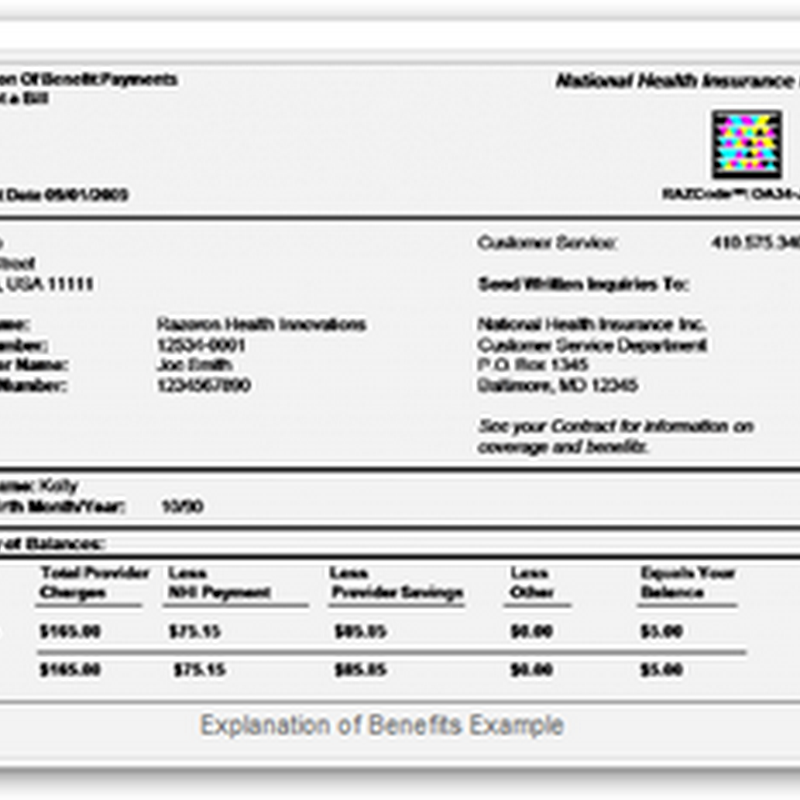
Again with no scale, I am still able to import and connect some basic information to HealthVault or Google Health.  Eventually as you can see from the images and information below, and EOB from an insurer will have a code whereby you use your phone with a camera and add it to your PHR. 

The screenshot below shows blank as again I did an example for this post on what is imported into your PHR.  With using a RazCode account it is not public information and you need to set up your pass codes, again for security and privacy here to distinguish between a public available Microsoft Tag and an encrypted code for personal information. 

This is providing a simple way to update your PHR simply by using bar codes and the phone, software and camera on your cell phone.  BD 


 imageFrom the website:

The RAZCODE eHealth Gateway™ enables health care software and medical device vendors to easily integrate their products with all popular online health management services such as personal health records, fitness websites, and electronic medical records. It can help you meet the growing demand for easy and portable access to consumer health information, without the need to tether your software, system, or device to any specific health service provider. It makes integrating your Health IT solution to consumer selected online health services as easy as integrating an eCommerce application to the payment card networks.

The Gateway provides a RAZCODE™ ID or image (shown to the right), via a web service, that a vendor solution applies to health documents produced by the application including: receipts, labels, discharge instructions, health encounter summaries, explanation of benefits statements, account statements, etc.

When a consumer receives a health document containing a RAZCODE, he or she can upload the data to the online health management service that is best for him or her, using just the camera and data connection on a mobile phone, or via any web browser.

image

A consumer can also export his or her health information. This allows a consumer to provide a health care provider with a RAZCODE, that the provider can use to preview health information (at the RAZCODE Health Care Enterprise website or on a supported mobile phone), and to manually upload the health information into an electronic medical record that is capable of importing Continuity of Care records from a file (if the provider's EMR software is not yet integrated to the RAZCODE Gateway)

image

image

image 

image 

image 

image 

image


FDA could keep a copy of all the tags on reference in a data base, as a double check.  You can read more at the link below.

Related Reading:

Tracking Medical Device Recalls – Sounds Like A Good Place for a Microsoft Tag Data Base at the FDA

Tags for Use in Healthcare – Medical Stents, Medications - One Scan Away From Safety Information in Real Time

RazCode/Windows Tags – Bar Coding to Add Information to PHRs, EHRs, and More…

Tracking Medical Device Recalls – Sounds Like A Good Place for a Microsoft Tag Data Base at the FDA

Microsoft Tag and Surface Working Together (Video) – The Frog is the Future of Your EOB Getting to Your PHR

Tags for Use in Healthcare – Medical Stents, Medications - One Scan Away From Safety Information in Real Time

Health Insurance Companies Summoned To Washington on March 23rd To Testify in the House

This week we have a 30 day extension on the Medicare/Tri-Care cuts and this meeting occurs about one week before the next deadline hits again.  The pay cut imagesituation has gone on for way too many years without a permanent solution.

The testimonies are requesting detailed information so get those algorithmic formulas read to do some auditing as they will have theirs.  In addition the bill allowing HHS to negotiate drug rates is also picking up steam.   In addition, the insurers are meeting with HHS this week.  

Humana Inc. president and CEO Michael B. McCallister likely will head to Washington, D.C., soon to address concerns from Congressional leaders about claims denials and company policies related to coverage in individual plans.

U.S. Rep. Henry A. Waxman, D-Calif., chairman of the U.S. House Committee on Energy and Commerce, and U.S. Rep. Bart Stupak, D-Mich., chairman of the House Subcommittee on Oversight and Investigations, have summoned McCallister and the leaders of three other major U.S. insurers.

Letters also were sent to Angela Braly, president and CEO of Indianapolis-based Wellpoint Inc. (NYSE: WLP); Stephen Hemsley, CEO of Minneapolis-based of UnitedHealth Group (NYSE: UNH) and Ronald Williams, chairman and CEO of Hartford, Conn.-based Aetna Inc. (NYSE: AET).

The executives were asked in letters dated March 2 to appear and testify before the Congressional committee on March 23 and bring detailed information on coverage and denials in the individual market, dating back to 2005.

To view the Humana letter, click here.

For links to the other letter, click here.

Humana, Wellpoint leaders summoned by Congress - Business First of Louisville:

Uroplasty Urgent PC Medical Device Using Neurostimulation Treatment for Incontinence - Study Released

This is an interesting medical device from Uroplasty called the “Urgent PC” and requires a few treatments and they do a demonstration on the video below.  imagePatients with pacemakers or implanted defibrillators though are out of the picture for obvious reasons of potential interference. 

I addition the site has a page on how to code for reimbursement.  It is broken down by areas in each state.  The American Urological Association (AUA) and the American Medical Association (AMA) have recently suggested that PTNS should be reported with CPT code 64999. 

This really looks like a great idea and has been approved by the FDA since 2006.  The only other device that treats incontinence is made by Medtronic and is implanted where this one is not.  The initial treatment is a 30 minute session for 12 weeks, and afterwards one treatment every 21 days. 

From the Website:

“The Urgent PC Neuromodulation System is a combination of a stimulator and a lead set. The stimulator generates a specific kind of electrical impulse that is delivered to the patient through the lead set. Using a needle electrode placed near the ankle as an entry point, the stimulator’s impulses travel along the tibial imagenerve to the nerves in the spine that control pelvic floor function.

How does neuromodulation work?
Bladder function is regulated by a group of nerves at the base of the spine called the sacral nerve plexus. By stimulating these nerves through gentle electrical impulses (neuromodulation), your bladder activity can be changed. 

The Urgent PC System provides neuromodulation in a low-risk, office procedure by indirectly stimulating the nerves responsible for bladder function using a nerve in your lower leg.  “

The company is hoping to get more insurers to cover the procedure as well as Medicare.  It certainly looks simple enough and you can just sit down and read while undergoing the therapy.  BD

Earlier this week, the Minnetonka company published positive results of a study that treated 220 patients suffering from incontinence — specifically those who were dealing with frequent urges — with electrical nerve stimulation, or neurostimulation. The procedure was pegged against a sham procedure, much as an experimental drug is tested against a placebo. Results showed that 58.3 percent of patients who used Uroplasty’s neurostimulation treatment reported improvements in symptoms, compared with 21.9 percent of the patients who were given the sham procedure.

The results of the study will be published in the April edition of the Journal of Urology. This latest study follows two other studies also published in the same journal. One study showed the efficacy of the company’s Urgent PC system compared to the most often prescribed drug for incontinence, Detrol. Through Urgent PC, a needle electrode is inserted into the ankle of a patient and a pad electrode is placed on the foot hooked to the stimulator. When the stimulator is turned on, an electric current passes through the tibial nerve to the sacral plexus, which controls bladder and pelvic floor function.

Local company hopes to challenge Medtronic incontinence product - Finance and Commerce

Microsoft and Microsoft Health Users Group Announce 2010 Winners

At HIMMS today the winners were announced in the individual categories that were listed here.   The software vendors were Eclipsys, CADI Scientific, ASTER, NextGen and and facilities using their software.  BD

Press Release:

Awards recognize customers and partners improving health through Microsoft technology.

ATLANTA — March 2, 2010 — The Microsoft Health Users Group (Microsoft HUG) and Microsoft Corp. today announced the winners of the 13th annual Microsoft imageHealth Users Group Innovation Awards. For more than a decade, the honors have been awarded to organizations that demonstrate success using Microsoft technology to enhance and transform the quality of patient care, reduce costs, drive interoperability, improve productivity, streamline clinical and business processes, and enable informed decisions.

Microsoft HUG is made up of more than 5,000 members and 23 corporate supporters, and is the leading health industry forum for exchanging ideas, promoting learning and sharing solutions using Microsoft technologies. Each year, Microsoft HUG and Microsoft collaborate to produce the Microsoft Health Users Group Innovation Awards, which recognize healthcare organizations and individuals who exhibit the best use of Microsoft-based products, as well as independent software vendors and systems integrators that use Microsoft technologies to develop solutions for the healthcare industry.

A panel of industry experts evaluated contestants on criteria including advancements and innovation, as well as the extent to which they provide significant business benefits to healthcare organizations and improve patient care. Winners and finalists were recognized at the 2010 Annual Healthcare Information and Management Systems Society (HIMSS) Conference & Exhibition in Atlanta, on March 2 in the Microsoft booth. The following are the 2010 winners for the Microsoft HUG 2010 Innovation Awards:

Winner for Best Use of Clinical Records — Inpatient

· Singapore General Hospital/Integrated Health Information Systems (SingHealth) selected Eclipsys Sunrise Patient Flow and CADI Scientific to couple its workflow‐based patient flow platform with radio frequency identification and real-time location system, optimizing and automating patient flow from the point of admission to the point of discharge. After completing the installation in only five months, SingHealth has seen improved clinical workflow, enhanced clinician and staff utilization, and an increase in patient safety.

Winner for Best Use of Clinical Records — Ambulatory

· Partners HealthCare, Brigham and Women’s Hospital, and it’s technology solution partner Claricode leveraged Windows Server, Microsoft SQL Server and the Microsoft .NET Framework to develop ASTER, the adverse drug event (ADE) Spontaneous Triggered Reporting System that submits ADE reports directly from electronic health records to the U.S. Food and Drug Administration. Benefits include secondary use of data collected as part of clinical care, the integration of ADE reporting into clinicians’ workflow, the promptness and speed with which ADEs are reported, and the ability to know the denominator of drug prescriptions from which ADEs emerge.

Winner for Best Use of Health Information Exchange (HIE) and Interoperability

· In its quest toward genuine interoperability, Doylestown Hospital used the NextGen® Health Information Exchange, formerly NextGen Community Health Solution platform from NextGen Healthcare to launch the Doylestown Clinical Network. NextGen Health Information Exchange uses Microsoft’s Web Services, ASP.NET and other Microsoft technologies to enable the free flow of information among completely independent practices with disparate IT configurations, allowing for security-enhanced data exchange, efficient and error-free communication, streamlined workflow, better medication management, and more.

Winner for Best Use of Microsoft HealthVault Applications

· Premera Blue Cross partnered with Get Real Consulting to develop and implement a solution that enables Premera members to store their claims histories in their personal HealthVault accounts. Being able to store and view this information in one location enables members to make better decisions about their healthcare spending. Premera also created the Web application Vivacity Spending Scout™ to enable HealthVault users to view, organize and analyze their claims data stored in their account, helping them better understand their spending, plan for future expenses and track reimbursements.

“With millions of dollars allocated toward health information technology, such as incentives for meaningful use or facilitating a state-level HIE, the emphasis on health IT has never been greater than it is today,” said Steve Aylward, general manager of U.S. Health & Life Sciences at Microsoft. “The Microsoft 2010 HUG Innovation Awards winners represent some of the most innovative companies using technology to transform healthcare through improved quality and reduced costs, and Microsoft is proud to honor them today.”

Special thanks are due to the Microsoft 2010 HUG judges: Josh Fisher, founder and managing partner, PresPoint Capital; Ahmad Hashem, M.D., PhD, chairman and CEO, Rawasi Investing Group LLC; Matthew Holt, founder and author, The Healthcare Blog; Scott Lundstrom, research vice president, Health Industry Insights; Charlene Marietti, director, corporate editorial initiatives, The Vendome Group LLC; Bob Mitchell, managing editor, ADVANCE for Health Information Executives and Merion Publications Inc.; Doris Nessim, B.Sc.Phm., R.Ph., M.A., healthcare informatics consultant and director of pharmacy services, New York General Hospital; Charles Potter, CPHMIS, president, Seapotter Corp.; Benjamin Rooks, principal, ST Advisors LLC; Jay Srini, chief innovation officer, UPMC Health Plan; and Andrew Ury, M.D., chief medical officer, Aucolla.

About Microsoft HUG

Microsoft Healthcare Users Group is a membership community within the HIMSS Users Group Alliance Program, providing technology leadership and knowledge for improving healthcare delivery and efficiency. The alliance provides HIMSS with targeted industry expertise to help broaden its professional and industry contributions, and provides Microsoft HUG members with the opportunity to reach new markets with educational and professional development programs.

Microsoft HUG is the leading healthcare industry forum for exchanging ideas, promoting learning and sharing solutions for information systems using Microsoft technologies. Microsoft HUG works to provide industry leadership, drive appropriate standards and develop associated requirements in support of healthcare solutions. The diverse membership of Microsoft HUG is united by a shared interest in implementing vendor- and user-developed software based on Microsoft technology to improve quality and efficiency in healthcare. More information can be found on Microsoft HUG’s Web site at http://www.mshug.org.

About Microsoft in Health

Microsoft is committed to improving health around the world through software innovation. Over the past 13 years, Microsoft has steadily increased its investments in health, with a focus on addressing the challenges of health providers, health and social services organizations, payers, consumers and life sciences companies worldwide. Microsoft closely collaborates with a broad ecosystem of partners and develops its own powerful health solutions, such as Amalga and HealthVault. Together, Microsoft and its industry partners are working to advance a vision of unifying health information and making it more readily available, ensuring the best quality of life and affordable care for everyone.

About Microsoft

Founded in 1975, Microsoft (Nasdaq “MSFT”) is the worldwide leader in software, services and solutions that help people and businesses realize their full potential.

http://www.mshug.org/awards/awards.aspx