92648

Pharmacies File Suit Against Texas Human and Health Services Commission - Managed Care Contracts Begin Delegating Reimbursements Too Soon – Attack of the Killer Algorithms Chapter 18

Here we go again with contracts being changed and according to this story there’s not enough time for the patients on Medicaid to react and adjust.  This is all brought about by using an HMO contract which many in the US today are controlled by insurers, but not sure on this one. At any rate we now have a middle man who will be running analytics for “least cost routing” and how that will impact their reimbursements, the pharmacies do not know with the Pharmacy Benefit Manager. 

One example of contract changes we have seen recently in the news is that Blue Cross patients can no longer get their prescriptions filled at Walgreens, again a pharmacy benefit manager contract dispute lead to all of this.  Currently the pharmacies bill the state directly and when the analytics come into play the patients could see a major shift here with perhaps some being transferred to mail order.

Anthem Blue Cross Members Will No Longer Be Able to Fill Prescriptions at Walgreens After January 1, 2012

Pharmacies File Lawsuit in Texas

The mail order might save money but the pharmacies could stand to lose quite a bit of business and what dollar amounts will be left for reimbursement for those that are filled at their locations is the question and will there be enough business left for them so they don’t have to go out of business if enough patients are changed? 

This is the big question and where today’s data analytics algorithms come through and make big changes with one swoop not allowing the “human” side of the business to either plan or catch up so this story is Chapter 18 in the series of the “Attack of the Killer Algorithms” at the Medical Quack.  You can view a digest of the previous chapters at the link below, same or similar actions taking place with algorithms running on servers 24/7 making life impacting decisions about all of us.  In some cases with a multitude of “flawed data” on the web where companies are mining data, it is really becoming a nightmare with consumers chasing flawed data to correct so accurate information is given and in some cases we really do have “discrimination by the algorithms” taking place.  BD

Attack of the Killer Algorithms–Digest & Links for All Chapters–See How the Math and Crafty Formulas Today Running on Servers 24/7 Make Life Impacting Decisions About You

Lopez Pharmacy has been open for business in Brownsville for the past eight years.  A team of three pharmacists and eight technicians help service about 5,000 patients.

Most clients depend on Medicaid according to owner and lead pharmacist Jose Luis Lopez. "Per day, we roughly expedite about 300 to 450 prescriptions," Lopez said

However Lopez said all that could change when legislature goes into effect on March 1. He said currently, when Medicaid patients fill their prescriptions, pharmacies bill the state directly.

They also bill the state for costs of any other services they offer the community, such as home delivery. In an attempt to save money in healthcare costs, the state will now have HMO's and managed care managers bill the pharmacies.

http://www.valleycentral.com/news/story.aspx?id=721131#.T0AOxFHfKSo

Aneesh Chopra Former US Chief Technology Officer Returns to “The Advisory Board Company” Publicly Traded on NASDAQ That Sells Software Consulting & Analytics

Well what  can you say, one more goes the corporate route and how many shares did he get?  Actually he returned to where he came from as Managing Director before working for the White House.  It looks like he’s back to selling and promoting software and analytics algorithms.  Revenue cycling is right in there if you look at the website as well as Surgical profitability analytics.  Originally it was thought that he would go into politics. 

Aneesh Chopra US Chief Technology Officer Resigns to Possibly Pursue A Political Career

“Our work: The Advisory Board Company is a global research, consulting, and technology firm helping hospital and university executives to better serve patients and students. We provide strategic guidance, actionable insights, web-based software solutions, and comprehensive implementation and management services.”

image

If you need a web based tool to diagnose Meaningful Use they have it for hospitals.

image

One thing I do have to say though with doing this blog, all the analytics sites sure look the same anymore, same targets, same goals and the language is almost cookie cutter.  I can understand the frustrations with government work and at the time of his appointment he had all the right stuff going for momentum but now maybe someone else will take the reins and be able to execute as that’s what we really need.  BD   

Aneesh Chopra will join The Advisory Board Company as a Senior Advisor for Health Care Technology Strategy, the company announced Friday.

Chopra, the nation’s first Federal Chief Technology Officer who left the White House earlier this month after spending more than two and a half years in the position, worked at The Advisory Board Company, a publicly-traded company on the NASDAQ stock exchange, from April of 1997 to January of 2006 when he was the company’s Managing Director.

The Advisory Board Company is a global research, technology, and consulting firm partnering with 125,000 leaders in 3,200 organizations across health care and higher education, according to the firm.

http://fedscoop.com/chopra-to-join-the-advisory-board-company/

Congress Has a Panel on Women’s Health and No Women Were Invited At the House Hearing – ”Default Topics” of Abortions and Birth Control Returned to the Floor

What were they discussing…birth control.  Imagine a women’s panel with no women to add content.  Nancy Pelosi was quick to jump on that one as well.  The second panel had women.  What’s wrong with these GOP folks, we know they are among the most digital illiterates out there so due to lack of keeping up is this their favorite battle ground trying to control women?   This is how digitally illiterate folks in Congress function on the GOP side it appears all the time anymore. 

Digital Illiteracy Still Plagues Law Makers–Severe Focus on Abortion Rights Proves It–Is This Where Our Lawmaking Knowledge Leaves Off or Even Begins? Scary…

The second panel went like this: 

“The Democratic women on the panel walked out of a hearing on the contraception policy after Issa refused to allow testimony from Sandra Flake, a Georgetown University law student who supports the administration’s policy.”

Listen to the video below “where’s the women?” 

video platformvideo managementvideo solutionsvideo player

Sad to say but the “whack job” Issa is from California where I live.  BD 

Republicans are taking hits in Congress and on the campaign trail as the birth-control mandate issue continues to dominate the health policy conversation.

While the GOP had the upper hand politically as late as last week, there are clear signs that Democrats' strategy of constantly portraying Republican efforts as a "war on women" is paying dividends. House Oversight Chairman Darrell Issa (R-Calif.) walked squarely into the line of fire Thursday by failing to invite a single woman to sit on the first panel of his hearing on whether the healthcare law mandate violates religious freedoms.

http://thehill.com/blogs/healthwatch/politics-elections/211303-overnight-health-war-on-women-label-starts-to-stick-to-gop

Johnson and Johnson Recalls Infants Tylenol As Bottle Design Created A Few Issues

Well at least this time it was not the product which is an improvement from the past imagerecalls but we have the same end result.  There were 17 problems logged with the bottle so I think at this point J and J is just saying return them all.  The recalls that get me are for the pills that stink and we haven’t heard that one in a while but those are generated by coatings on the pallets when they treat them indoors, saw enough of that with 25 years in logistics. 

Had Enough Tylenol Recalls Yet? Here’s One More Voluntary Recall

So it appears this product will once again disappear from drug store shelves until the bottles are fixed and you don’t have to return these as a consumer, just careful with the bottle.  BD  

Johnson & Johnson, the health care giant, said on Friday that it was recalling its entire United States supply of Infants’ Tylenol after parents complained about problems with a new dosing system. It was the latest in a string of recalls for the company.

The recall involves about 574,000 bottles of grape-flavored liquid Tylenol for children younger than 2. After earlier recalls, Johnson & Johnson had just returned to the market with the Infants’ Tylenol in November, but now will be out of the market for an indefinite time.

The problems involve a new bottle design, which was intended to prevent accidental ingestion and ensure accurate doses. But when parents inserted a syringe into the bottle, some accidentally pushed a protective cover inside. To date, Johnson & Johnson has received 17 complaints, a company spokeswoman, Bonnie Jacobs, said.

No serious side effects from the Infants’ Tylenol have been reported, and the risk of such problems are remote, Johnson & Johnson said.

http://www.nytimes.com/2012/02/18/health/johnson-johnson-recalls-infants-tylenol.html?_r=1&smid=tw-nytimeshealth&seid=auto

Goldman Sachs Programmer Who Went to Jail for Stealing Code Has His Conviction Overturned–You Can’t Get A Jury of Peers Off the Street for Crimes With High Tech Algos

The formal opinion has not yet been released but is one that I will be somewhat anxious to read.  I wondered about the entire case from following it in the news and from what was stated as really how do you get a jury of peers with citizens chosen at random and expect them to understand and comprehend the complexities of such a case.   Actually after the case verdict was in the news I made a few statements of doubt about the entire case, not saying he was innocent but rather about how such cases are handled. 

Sergey Aleynikov Found Guilty of Stealing Goldman Sachs Code

What I said back then…

“When I read the part about only transferring less than 32 megabytes, just common sense would tell me this is indeed only a portion of what would be required, however it could be a module that could be used elsewhere, as I used modules written by others in some of my projects, which by itself was pretty useless as it only did one or two things, and of course a full program like an EMR needs lots of modules and SQL (structured query language) statements.  On the other hand too, I could see a programmer accidentally scooping up some code accidentally if multi-tasking with other items on the computer he’s working on.” 

I continued on to still question here as again the file size was so small which would indicate just a code module.

Goldman Code-Theft Trial Begins–Did The Stolen Code Have The Potential to Create Algorithms for High Frequency Trading

How does a layman jury know the difference between open source and proprietary code?  They don’t.  Heck even programmers can have issues here and the comment where he said it was an accident, well I’ve done that when writing and granted I was not working on high frequency trading algorithms but when you have a screen of code open working on different portions, that can be done unless you are using SVN capabilities to where you have to knowingly “check it out” and all who are party know you have checked it out, but a swift copy and paste of a small module is very possible. 

This seems like a good spot for a little humor with this satire on Goldman Sachs the documentary (like the Civil Ware film) that came out not too long ago. How much code does CEO Lloyd know?  We all have heard that Mayor Bloomberg said he’s going to learn <grin>.  BD 

Goldman Sachs the Movie (Satire)

NEW YORK, Feb 17 - A federal appeals court has thrown out the conviction of Sergey Aleynikov, a former Goldman Sachs Group Inc computer programmer who had been convicted of stealing part of the Wall Street bank's high-frequency trading code.

The 2nd U.S. Circuit Court of Appeals overturned the conviction on Thursday night, and said an opinion explaining its reasoning would follow "in due course."

The appeals court also directed the trial court to enter a judgment of acquittal. Generally, this means the defendant cannot be retried.

http://www.wallstreetandtech.com/electronic-trading/232601061?cid=twt_WST

Start Licensing and Taxing the Data Sellers of the Internet Making Billions of Profit Dollars Mining “Free Taxpayer Data”–Attack of the Killer Algorithms Chapter 17 - “Occupy Algorithms”– Help Stop Inequality in the US

I posted this before under a different title but it actually belongs with the Attack of the Killer Algorithms Chapters as it is nothing more than “algorithms” that do this imagefunction.  I am not talking about taxing companies who use information internally to make browsers better and so forth at all.  This would only apply when a “for sale” shingle goes up.  The original post is below and this is a compilation of a lot of the information carried in that post. 

The Alternative Millionaire’s Tax–License and Tax Big Corporations Who Mine and Sell Taxpayer Data They Get for Free From the Internet-Phase One to Restore Middle Class With Transparency, Disclosure and Money

Why is it that when I go to buy a tire I have to pay a Federal Excise tax on something I need to drive a car but yet the big corporate companies in the US go scot free when it comes to mining and scraping our data off the web for huge profits? 

I don’t like additional government regulation like the rest of us out there, but this is out of hand today and leads to some steroid marketing that is also out of hand, especially in healthcare, so why not register and start taxing it.   Again having the availability for the consumer to look up and see who is registered and who they sell to would be a start in the right direction with transparency efforts today.image 

The Opt Out bill is also not out of the question but it all depends on how the bill gets worded and if there are any enforcements available which I have seen none. 

Some big companies may not have a problem with this as they have publicly said they would pay higher taxes and this seems to be a potential model here as it’s not working with income tax so why not structure this more like a “sales tax”.

In addition it would give law enforcement cyber cops a leg to stand on to squash some of this if they sell without a license or fail to make a public disclosure on a government website which would need to be updated so we all can really what’s going on.

They just write a few algorithms and go town making millions, again while we pay that excise tax on our tires we need and the treads are wearing thin.  In the area of public information made available by states, they already do license the mining bots and it is a ridiculously low amount of money only to have to come back and put software in place to keep the bots out as servers slow down to a crawl as the bots keep multiplying like rabbits

In North Carolina recently they kicked out the mining license of CoreLogic as they too had slow servers and some of the mining companies don’t pay up for quarterly updates, which means even a bigger mess for you and I as the flawed data keeps going around and around and around.  I think this was the case with CoreLogic if I remember correctly, they didn’t update so the state yanked the license so licenses to mine are not a new thing, just need to be federal, publicly disclosed and last of all, taxed. 

CoreLogic has formed a partnership with FICO who is already in the process of selling algorithms with mismatched data which connects public information about you and combines it with your credit score to tell if you as a medical patient will take your prescriptions.  Somebody needs to start calling some of these folks on “mis matched data” the discriminates as now we have “Discrimination by the Algorithm” and it’s showing in more places all the time.  Last time I wrote about the FICO mismatched data it all ended up over at the Daily Kos via another publisher as an awareness. 

FICO Analytics Press Release Marketing Credit Scoring Algorithms to Predict Medication Adherence–Update (Opinion)

We all know by now that math is no longer the 100% methodology for determining accuracy in all cases when it is spun with algorithms and marketing today and that’s a fact.  In addition we have a lot of “flawed” data spun into some of the algorithms and this leads us to a point of insanity sometimes when we look and say “where did they get those numbers”.  You hear it all the time. If you don’t get this on how algorithms spin and flaw data use the link below and get educated from an NYU professor/journalist/mathematician. 

“Numbers Don’t Lie, But People Do”–Radio Interview from Charles Siefe–Journalists Take Note, He Addresses How Marketing And Bogus Statistics Are Sources of Problems That Mislead the Public & Government

Second of all a listing of all sources of companies, etc that a registered company sells to would be helpful as well so at least Jane Doe knows where the data goes.  This would be up to the “reseller”, like that word as that is what it is, to maintain an update.  Again with transparency the public should know who’s collecting data and where it goes and a user’s fee for each entity they sell too would be required.  This is just like having a server with “CAL” licenses and that concept has been around for a long time, just a little different and all of this would be public record.

There would also need to be a “non profit” area to where they would pay for a non profit license and then still be required to list their sources to where they share data, such as a University sharing for research and development as the Science folks are sharing data to find cures mostly and not to market, but again have the license displayed and the disclosure of who they share with as well as what kind of information is shared, anonymous data or data to where actual information is used with HIPAA compliant information.  image

We all know about Facebook and the millions they make by selling data and insurers do the same thing with prescription data, and Walgreens said their data selling business is valued just under $800 million which makes one wonder if filling prescriptions is becoming a side business to collect the data?  Their SEC statement showed for 2010 over $700 million worth of income from data sales.   Pharmacies need to fill scripts to collect data and some of this probably gets internally profiled with whatever else you buy there, a six pack of sodas, candy bars, hair color and so on.  This is just one company so how much money is laying on those “profit” tables?  A lot. 

Another good reason to give this some serious thought is that now High Frequency Traders and Hedge Funds are also selling our data at a pace that was said to outpace Facebook.  These are those folks that have free access to all our taxpayer data floating around out there and they will continue to profit even bigger, so again why not give something back to the taxpayers. 

You can’t write laws around this stuff to govern who can write what type of code or algorithms, but you can sure follow a data trail and return some money back to the 99%.  Our digitally illiterate Congress is still stumbling around with this and they don’t get it at all as so many are what I call the “non participants” when it comes to consumer IT. 

“The amount of market data high frequency traders are using as trading indicators continues to grow more rapidly than Facebook can add users or change its privacy policies, and vendors are scrambling to offer new technology that can help firms - and algos - find the data, sort it and leverage it.

I'm not saying stop the selling but put a healthy license requirement out there and some stealth taxes to start shifting the money back around as otherwise nothing will happen to redistribute the wealth in the US.  Congress can’t seem to get past income taxes for this model and I say we need a new on to make this work. If you don’t understand this concept and data mining, watch this video from Stanford at the link below and see what’s being scraped and sold, it’s all you and I and again we still have to pay that excise tax for tires so doesn’t look very equal out there does it?

You Are the Product–Privacy Anonymity and Net Neutrality On the Internet - Excellent Stanford University Lecture (Video)

You know now we have the Corzine testimonies going on and how little math did he know?  What can machine learning do for a hedge fund, ask John Corzine with his ignorance and bliss as someone has to direct the programmers on how to make everything function, it’s those algorithms.  If you watch the market a company called Nanex babysits the exchanges every day and tell us about rogue algorithms and quote stuffing. 

Machine Learning Software Working Behind the Scenes Should Move With Caution in Healthcare-Writing the Unreadable With Rogue Algorithms With No Human Intervention

Here’s what has been circulating around the web when it comes to digital literacy with lawmakers, picture is worth a 1000 words.

image

Digital Illiteracy Still Plagues Law Makers–Severe Focus on Abortion Rights Proves It–Is This Where Our Lawmaking Knowledge Leaves Off or Even Begins? Scary…

So the next time you are out there buying that tire to keep your car rolling, give this some thought on the millions and billions being made by corporate US today from the “free taxpayer data” they mind and scrape for free and all the money they make off the backs of taxpayers, and this should be a way of corporations giving some of it back and would add some real transparency as we don’t know what all they are selling and to who? 

Those Algorithms have big teeth!

This truly is the Attack of the Killer Algorithms taking place all around us.  Back in August of 2009 I pondered the question of whether or not we might need an official US government branch to help us out and so far, nothing has been done and much of that again comes back to a digital illiterate Congress who can’t get their heads around how technology works today. 

“Department of Algorithms – Do We Need One of These to Regulate Upcoming Laws?

For you folks addicted to gaming on the web, well you just keep making corporate America richer,and this is a fact so the greater your addiction and time them more money corporations make off your back.   Chapter 6 has some additional details on some other Killer Algorithms.

Gamification–You Have Won and Now We Know All About You - It Didn’t Cost One Cent-Insurance Companies Have Games To Find Out More About You Too– “Attack of Killer Algorithms” Chapter 11


Attack of the Killer Algorithms Part 6–Discrimination With Consumer Credit-Same As Health Insurance Wanting Consumers to Reconstruct Records From Many Years Past As Middle Class Turns Into Data Chasers-Days of Taking Risks to Get Ahead Will Be Limited For Most…Occupy Algorithms

Algorithms Have Teeth

Johns Hopkins Medical and IT Researchers Teaming With Harris Corporation to Create Mega Medical Imaging Cloud System

The race for the cloud is on with medical records as if you read here the last couple of days we had stories on Untied, Blue Cross and Aetna with their cloud services.  I like the sound of this design so far as we have “scientists” involved here and they work with the IT folks so it doesn’t get any better than that and this move is beyond just “revenue cycling” talk that we have all had up to our ears.  image

Also in on the project are VMware and Intel.  A few months back I sat next to an enterprise VMware rep on a flight and about talked his ear off as I asked a ton of questions since he was here in California working with hospitals.  The project will be called the Peake Secure Medical Cloud. Peake cloud stores three copies of each medical image in a cluster, which is right along the line of what Hadoop does for data sets

They have chosen an open source clinical image and object manager.  They are also creating their own MPI (master person index).  The entire design is to keep the imageimages secure on the back end with virtualization and will support all flavors of clients to of course include desk tops and can be pushed to a phone or tablet as well so no more expensive work stations in the future here.  Two of the Johns Hopkins hospitals will be testing out the code for the private cloud.  A public cloud will come later this year. 

Peake, VMWare and Intel

3 data centers is all that Peake says is necessary to service the entire east coast and there will be algorithms that will do the “least cost routing” to select the closest server to link up to.  Peake will sell storage space just as cloud servicers do and the pricing for all of this has not been set so looks like United and their cloud already have some competition, and I kind of like imagehaving the IT services NOT owned by an insurance company and do like the involvement here of the scientists as any one in genomics knows those are also huge data sets.  Here’s the Intel part of the solution with focus on what the processors add with intelligence on the the Xeon Chips with Scale Out Storage

Software can reduce the size of dicom images and the the intelligence in the imageprocessor with software can reduce redundancies and cut the bandwidth time.  The tiering of records via scheduling to is interesting, good algorithms there to accomplish that feat to automatically move a record for quick access based on patient scheduling. 

I remember back when I was doing some training work for Intel with just introducing Quad cores just a few years ago and the chip technology has grown phenomenally since then. 

Intel Health IT Storage Landscape

One of my sponsors for the Medical Quack did a nice interview at AdvaMed this year with Johns Hopkins and they talk about not only health IT partnerships but clinical as well and their door is open to talk as Helen Montag states in the video below.  The site , StockNewsNow also has a grouping of many biotech and Health IT companies they interview at conventions and in just doing the site I get educated about healthcare technologies that I have not hear of before too.  BD  

video platformvideo managementvideo solutionsvideo player

Medical and IT researchers at Johns Hopkins University, healthcare application software supplier Harris Corp, and virtualization juggernaut VMware have teamed up to create a medical imaging cloud that they hope will become the central, secure repository for US citizens and the doctors who care for them.

The desire to provide doctors in America with electronic access to medical records is as old as computing itself and sits right alongside the holy grails of the paperless office and fifth-generation programming languages. But Jim Philbin, who is co-director for the Center for Biomedical and Imaging Informatics at Johns Hopkins, tells El Reg that the combination of broadband networks, virtual desktop infrastructure, and cloudy infrastructure is making a medical imaging cloud a technical and economic possibility. Philbin is also CTO at Peake Healthcare Innovations – a partnership between the university hospital system and Harris Corp that was formed two years ago to tackle the medical imaging issue – and he says that Peake intends to build and operate just such a cloud

Harris Corporation is a $5bn company with 16,000 employees – 7,000 of them are scientists and engineers – and is no slouch when it comes to either high tech or medical systems. The company builds radio, broadcast, and satellite communications systems for militaries and public agencies; has a healthcare application and systems software business that has been around forever; and also provides IT services. But rather than take on the medical imaging cloud all by its lonesome, Harris decided to partner with Johns Hopkins and use the university hospital system, which operates six hospitals around Baltimore, Maryland, as a testbed for the cloud before rolling it out nationally. Harris has the tech and Hopkins has the clinical and medical research expertise.

The Peake medical records cloud, called PeakeSecure, is back-ended by x86 servers, as you might imagine, which are running VMware's ESXi hypervisor and vSphere server virtualization management stack.

http://www.theregister.co.uk/2012/02/16/hopkins_vmware_medical_cloud/

Medicity (Wholly Owned Subsidiary of Aetna) To Provide HIE Services In Hawaii To Integrate Medical Records–Subsidiary Watch

A little over a year ago Aetna bought Medicity for around $500 million so here we go with even more health insurance IT contracts.  The health information exchange is a non profit but apparently contracting to get the job done so health insurers are moving in to the IT as pretty quickly. Medicity just received another US patent recently for their algorithms used to connect medical records so that’s worked in the price as well. 

Aetna to Acquire Medicity-Health IT Connectivity Vendor-Former CEO Takes Position on Board at Boeing

The downside is that there are 2 less hospitals in Hawaii to connect as two closed down at Christmas time when they went broke and had to close and as a result Hawaii doesn’t have a hospital left that can do organ transplants. 

Seems we have an imbalance here with hospitals closing, cutting back, laying off employees, and insurers are still making record profits. 

Hawaii Medical Center Closes Emergency Rooms As New Buyer for the Facility Fell Through And Facilities Will Be Closed When All Patients Have Been Transferred

In related news this week Blue Cross bought up a a company that provides HIE and Cloud services which Aetna happens to use as well. 

Blue Cross/Blue Shield Insurers and Highmark Acquire NaviNet Transactional Portal And Medical Records Vendor–Subsidiary Watchimage

Then we also had the United “cloud” announcement to where they were going to begin offering hospitals cloud storage services for medical records and if that ends up being a model then where does the HIE work go?  There will be room for both and Untied has the HIE realm covered with subsidiaries who do that too.   

UnitedHealthCare Launching Cloud Platform Via Optum Subsidiary Will Sell Apps Like the Apple Store But They Won’t Be As Much Fun And Solicit Hospitals for Record Storage

Insurance companies are not the same business models we have known in the past as the massive amounts of mergers and acquisitions, especially in the Health IT area has changed all of that. 

When does this bubble burst as hospitals keep scraping for money to buy all of IT services they need?  I guess big investors should hope they don’t get sick with counting their shares and dividends.  BD 

Hawaii officials have selected Utah-based Medicity to develop the infrastructure for what will ultimately be a statewide electronic medical record system as Hawaii moves ahead with a key mandate of federal health-care reform.

Gov. Neil Abercrombie and the nonprofit Hawaii Health Information Exchange on Monday signed a memorandum of understanding outlining the plan for implementing a statewide network that allows health providers in the Islands to share patient medical records electronically.

It marks a major step forward in integrating the various electronic medical record systems already being used by hospitals, clinics, physicians and other health-care providers statewide.

http://www.bizjournals.com/pacific/news/2012/02/13/hawaii-selects-medicity-for-medical.html

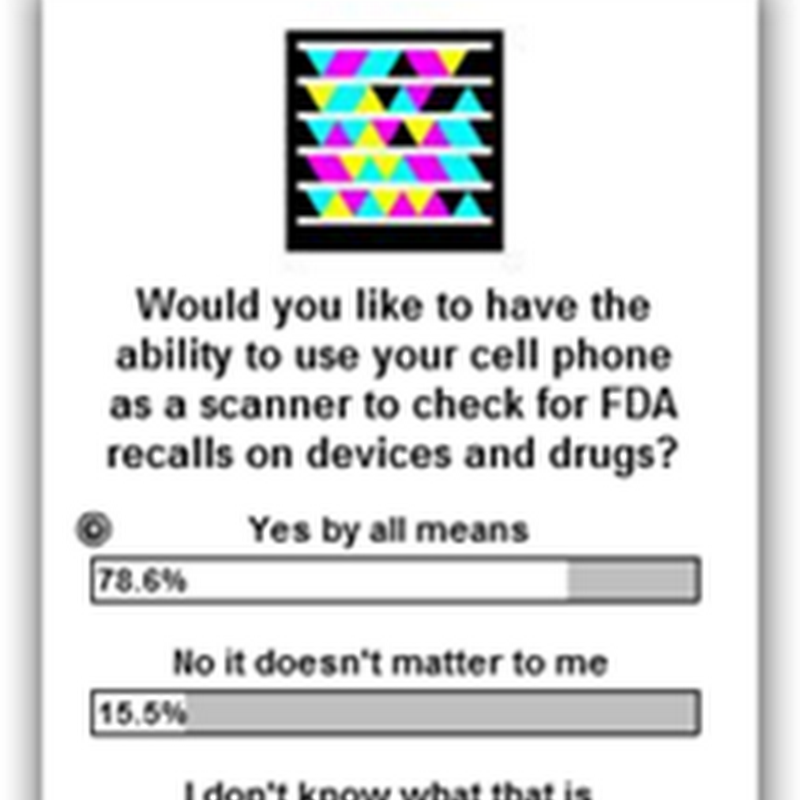
Counterfeit Avastin Cancer Drugs Found in the US–Where’s the Bar Codes to Help Identify Authenticity–We Need This!

Most of the doctors who bought it were in California too, where Avastin comes from.  There’s no active ingredient in the counterfeit drugs to harm you but no drug imageto help cancer patients either. Pharmacists, consumers, hospitals and doctors would like a way to scan and check an in this case from what I am reading the packaging was a bit sketchy here so it would lead one to wan to check.

We have some patent here that create tamper proof labels too…..so in addition to recalls the bar codes would identify authenticity too. 

Microsoft Receives Patent-Techniques to Create Counterfeit and Tamper Resistant Labels Using Fiber Optic Strands-Bar Codes Getting Closer for Drug/Device Recalls?

Now if you want a refill where you are going to put some money out they have some bar codes for that but nothing for safety.  Remember Walgreens too is the same company that makes almost $800 million selling data though so that must pay for it and a lot more. 

We just had recalls of birth control pills too and the beauty of the bar codes is that they can be changed to give product knowledge and authenticity and if a recall is issued they get changed.  Consumers are really getting a bad deal when it comes to identifying drugs today. 

Pfizer Recalls 1 Million Birth Control Packs–Where’s the Bar Codes to Help Consumers Identify? Yet One More Big Example of the “Shitty Deal” American Consumers Get

You can find stolen drugs this way too and in the case of a fake if it doesn’t scan, then don’t use it as encrypted gateways can be used as well.  BD 

Microsoft Tag Bar Codes–Who’s Been Scanning the Medical Quack–The Bing Heat Map Tells All And Could Help Find Stolen or Expired Drugs and Devices With This Methodology

Feb. 15 (Bloomberg) -- Roche Holding AG is working with U.S. authorities to determine the source of counterfeit Avastin, purchased by at least 19 medical practices in the U.S.

Roche and the Food and Drug Administration are seeking to prevent the fake cancer drug, which doesn’t include the active ingredient bevacizumab, from being distributed further, the company’s Genentech unit said in an e-mail late yesterday. The FDA notified the company about the issue in December, said Edward Lang, a spokesman for Roche’s South San Francisco, California-based unit.

“We’re working with the FDA, as well as with law enforcement authorities to aid in their investigation,” Lang said today in an interview. “We’ve analyzed some of the vials, we found no therapeutic protein there. So there’s no Avastin, there’s no generic form of Avastin.”

The labels on the counterfeit medicines aren’t all in English, and list Basel, Switzerland-based Roche as the manufacturer, unlike the real version of Avastin sold in the U.S. which lists Genentech, the FDA said in a statement.

http://www.businessweek.com/news/2012-02-15/roche-says-fda-is-probing-counterfeit-cancer-drug-avastin.html

Mental Health Hospitals Continue to Feel the Brunt of Budget Cuts in Massachusetts and in Alabama With Closures

There were two articles today with 4 state facilities being closed in Alabama leaving only two and one major facility south of Boston in Massachusetts.  Along with closures go the jobs too.  Over 400 work at the Massachusetts facility and about 700 jobs with the closures in Alabama.  image

In Alabama the move is to push patients towards community based care to save money and still qualify for federal funds.  Mental Health seems to be the top of the cutting order all over the US as even in Los Angeles, Cedars Sinai cut out their mental health services.  BD 

Cedars-Sinai Hospital Closing In-Patient and Out-Patient Psychiatry Services–Will Give Grants To Nearby Clinics

Patient advocates and officials in communities south of Boston are lobbying to block the state Department of Mental Health’s plan to close Taunton State Hospital, saying it would leave Southeastern Massachusetts without a single bed for the mentally ill.

Taunton State Hospital, which opened its doors in 1854, has 169 beds and 410 employees. The state’s plan, aimed at trimming the budget, would shift 124 of the beds to the new Worcester Recovery Center and Hospital and 45 to Tewksbury State Hospital by Dec. 31. The Taunton facility’s employees would be offered positions at the Worcester facility.

http://www.boston.com/news/local/massachusetts/articles/2012/02/16/area_officials_patient_advocates_oppose_plan_to_close_taunton_state_hospital/

MONTGOMERY — Mental Health Commissioner Zelia Baugh on Wednesday announced plans to close four of the state's six mental health hospitals, leaving two in Tuscaloosa, and moving all remaining non-court committed mental patients to community facilities.

Baugh said the potential for a 25 percent General Fund budget cut mandates the closures and consolidations that will result in the loss of 948 of 1,555 state jobs and the transfers of as many as 473 hospital patients to community facilities by the target date of Sept. 30.

“We have looked at every other viable alternative,” Baugh said. “Obviously, the state is facing a dire fiscal situation.”

http://www.gadsdentimes.com/article/20120215/NEWS/120219860?tc=ar

FDA Approves BioSante/Teva Testosterone Gel to Treat “Hypogonadism”

I learned a new word today…didn’t know that hypogonadism was the official diagnosis, but we all know what it’s for.  There were trials for a similar product for women done by the same company but it failed to work.  BD 

U.S. drug regulators approved a new testosterone gel from BioSante imagePharmaceutical Inc and Teva Pharmaceuticals, a Food and Drug Administration spokeswoman said.

Bio-T-Gel is a topical, once-a-day gel absorbed by the skin to treat low testosterone levels in men, a condition known as hypogonadism.

Shares of the specialty drugmaker BioSante spiked almost 37 percent in after-market trading on Nasdaq to $1.04. Teva shares rose 1.3 percent to $44.10.

http://www.foxnews.com/health/2012/02/15/fda-approves-biosantetevas-testosterone-gel/

Blue Cross/Blue Shield Insurers and Highmark Acquire NaviNet Transactional Portal And Medical Records Vendor–Subsidiary Watch

This is all about sharing patient medical records and claim information and as you can read from the quote below, NaviNet has been in this business a long time.  If you read the news about United today with their up and coming cloud operation it’s race to the finish line for the money.  image

NaviNet HealthCare Communication Network – Transactional Portal Information Exchange

Big health insurers like Blue Cross Blue Shield, Aetna, and UnitedHealthcare are attracted to and use NaviNet’s services because they save money by accessing sharing information via the company’s Web portal rather than through costlier call centers, Waugh says. NaviNet makes the bulk of its money, he says, on transaction fees that insurers pay the firm to connect with doctors.”

The overall process here is to use aggregated data, which we hope is accurate to give doctors a faster response with the claim and transactional side of the business for payments, etc.  When presented with both clinical and claims information the desire here is to give MDs more information in which to base their decision making processes with patient care.  The sale amount was not disclosed but you can bet these were some high valued algorithms for healthcare imagetransactions. 

Guess what, they also have and EHR medical records system they sell so again like the United announcement, who has 3 EHR system they can sell, health insurers are now getting into both the transactions and the medical record business, which I said about a year ago would be the next frontier with mergers and acquisitions.  So with this part of the Blues system now has an EHR to sell as well that is software as a service.  image

Aetna is one company who uses Navinet and with this acquisition it will be interesting to see how this works as now we are seeing more and more health insurers with their technology investments paying each other for IT services so it appears the “best dealt hand” at Health IT will move towards the top.  There are other partners here such as McKesson Relay Health and CVS Caremark for e-prescribing.  The race is definitely on for health insurers to scoop up all the technology companies they can to keep those big profits coming in via analytics and the best crafted algorithms on the market.  BD 

BOSTON – In a deal that aims to create a technology company focused on providing real-time data to doctors from both medical records and private payers, Lumeris and payers Highmark Inc., Horizon Blue Cross Blue Shield of New Jersey and Independence Blue Cross announced they will acquire NaviNet for an undisclosed price.

According to the companies involved in the acquisition, joining the strength of NaviNet’s healthcare communication network, used by more than 75 percent of the country’s physicians, with Lumeris’ suite of services, which provide real-time health and claims data, will allow the combined company to deliver critical information and applications to drive accountable, value-based healthcare.

“With Lumeris, they have spent the past five years building this capability for accountable delivery,” Waugh noted. “If we were to build this out ourselves, given the amount of time it would take, we would miss the market opportunity.”

At the heart of the combination, the companies see the ability for doctors to have for the first time real-time data that combines both medical information in the doctor’s office with claims data – all the information needed to provide for effective care coordination of the individual patients as well as broader population health management.

http://www.healthcareitnews.com/news/navinet-be-acquired-lumeris-blues?utm_source=twitterfeed&utm_medium=twitter

UnitedHealthCare Launching Cloud Platform Via Optum Subsidiary Will Sell Apps Like the Apple Store But They Won’t Be As Much Fun And Solicit Hospitals for Record Storage

If you are not familiar with the many faces and subsidiaries of United, the link below provides some information as again they are not just insurance and when you read through the entire article at the link, the Optum (the formula and algorithm division) had revenues last year of over $28 billion last year so that’s a ton load of just software and algorithms that pretty much are intangibles in the fact that they are just code.  When you read the quarterly reports this is where the revenue growth is and how they adjust business analytics for all the subsidiaries to put money to their bottom line profits.  They have their data scraping and selling too. 

United Healthcare Preparing to Roll Out New Contracts To Pay Doctors& Hospitals For Meeting Goals and Keeping Costs Down– Plenty of Subsidiaries to Provide Some of the Technology And/Or Products & Generate Income–Subsidiary Watch

I am guessing where this new subsidiary will rest that was a collaborated effort with Epic Medical Records and most of the big hospital systems have an Epic system so United created a clearinghouse business so they could knock a few of the smaller players out of the field here. 

OptumInsight (A Wholly Owned Subsidiary of United HealthCare Optum Division) Creates Medical Clearinghouse Integrated With Epic Practice Management Software-Subsidiary Watch

It will be interesting to see how man developers jump on the bandwagon to write for their cloud platform as we are so overloaded with Health IT software as it is now so it appears that even more will be retailed out there to you.  They will have to approve the apps before they are published and they are ready to charge developers fees for putting their apps up.  United partnered with Cisco back in 2009 for a telehealth network. 

UnitedHealth To Spend Tens of Million of Dollars with Cisco to Build Nationwide Telehealth Network

Sometimes this may make you wonder….

Are You Insured by a Technology or Insurance Company – UnitedHealthCare

Part of the sell will be to get hospitals to use the cloud to store medical records for sharing of medical records so watch out hospital CIOs, the might be the making of a Foxconn prototype of the health insurance business with being in almost every entity of healthcare today.  If their cloud doesn’t do it, they have a ton of HIE subsidiaries that will do the job for connectivity. 

If you have not seen the van/bus that tours around here’s a video that talks about it and I posted this in July of 2010.

United Telehealth Van

Medical record systems are certainly a sell and they have a couple subsidiaries that sell electronic records, so again they have a subsidiary for almost everything in healthcare.  How do smaller businesses compete is the question I ask?  Here’s 3 medical records systems below as Axolotl had an EHR when they were bought by United.  They have a bank to finance items as such too. 

Axolotl (A Subsidiary of Ingenix) Creates Reporting and Analytics Solution for Health Information Exchanges–Algorithms for HIE–Business Intelligence -Subsidiary Watch
ClickFreeMD Selling Software EHR, Practice Management Bundled Records Solution–Emphasis on AMA Endorsement And Software “Powered” by Ingenix–Tethered or Untethered
Ingenix (Subsidiary of United Health Group) Marketing Care Tracker EHR To Community Health Centers–Subsidiary Watch

So you have to think that when reimbursements get cut to the doctors, is there another subsidiary that rushes in for a sale if they need medical records, HIE connections or perhaps the company may just buy up your IPA as they have purchased several of those to include Memorial Services and Monarch in the southern California area.

Small physician practices that may not have $80,000 to purchase and maintain a system of electronic medical records would have an opportunity to purchase the technology through Optum's cloud, which would be responsible for maintaining the servers that contain the data.”image

Subsidiary Watch-Corporate Conglomerate Insurers Reduce Compensation Contracts Using One Subsidiary Then Market Same MDs With Another Subsidiary in Health IT

The big announcement is due tomorrow and they will have 700 products in the cloud and I am guessing they will be using HP  or EMC Cloud centers unless they have quietly built their own that we have not hear of as both companies above are partners.  One other small note is this below is the investment in low income housing apartments so is this where we will end up some day once they have taken over just about everything in healthcare?  Just speaking out loud here and pondering where all the subsidiary business will go and how it will connect to other businesses and would I guess that the residents living here will be connected to the cloud services as patients…..BD 

United Healthcare Gets in The Low Income Housing Business With Partnership to Finance Housing Projects in New Mexico

UnitedHealth Group Inc. plans to launch a new cloud-computing platform aimed at health-care providers and insurers, one of a growing number of efforts to allow more sharing of medical data among industry players.

The offering from UnitedHealth's Optum health-services unit is part of the broad trend of moving data storage and functions into an online environment so they can be retrieved from multiple devices and locations. Many health-care companies selling products such as electronic medical records already offer them in a cloud-based style.

But Optum plans to take another page from technology firms' books by opening up its cloud environment to outside developers, which will be able to offer "apps" in much the same way they can through Apple Inc.'s well-known app store.

Among the initial apps will be one developed with the help of the Cleveland Clinic that helps health providers structure payments for "bundles" of care, meaning for all services tied to a particular procedure or condition, Optum said. Another, from a company called HealthLoop Inc., helps doctors oversee patients' follow-up care.

The new Optum service will draw initial users by migrating the company's existing tools for functions like claims processing into the new cloud environment, Mr. Slavitt said. In addition, Optum itself will launch several new services designed to help integrate and track care.

The new cloud environment could "allow you to connect across different entities and players," said David Brailer, chairman of Health Evolution Partners, a private-equity firm, who oversaw health-information policy for the George W. Bush administration. Today's electronic medical records don't always integrate data from other sources easily or mesh information with versions provided by rival companies, he said.

http://online.wsj.com/article/SB10001424052970204062704577221551500296744.html

Medicare Low Safety Rankings At Harvard Teaching Hospitals Disputed and Flawed–Attack of the Killer Algorithms Chapter 16

Yes it seems I am on a tear here and again we come back to business intelligence algorithms being at the heart of the issue.  Personally I think the rankings of doctors and hospitals in it’s current fashion is somewhat just there and not something I would put a whole lot of faith in if I were a consumer going down column by column to make a decision.  If I were having surgery, the overall is what makes sense and these are Harvard teaching hospitals in question here.

We had the same thing when they tried to rate doctors out here in California as when their patient mortality rates came out, those doctors who saw some of the most destitute patients with extraordinary needs and not doing well at all came out looking like they had a good chance with killing you, when in fact they were taking care of some of most ill patients around, so demographics messed that one up.  I do wonder how they calculate all of this and anyone can crunch numbers but are they relative?  Sure there are a lot of areas for measurement but not all are equal.  The mark for the expenses for ICD10 was way off and it is costing millions more than the government estimated. 

ICD-10 One of the Largest, Most Expensive and Riskiest Health IT Translations–Other Countries Use ICD Codes, But US Is the Only Country Using Codes For Reimbursement

I do kind of wonder in the Health IT areas what goes on when I see HHS and their Facebook contest so all could communicate during a disaster, and I would riots would not be in the picture there. 

HHS Seems To Be Confused on Social Networks–Facebook for Disaster Support Contest, Give Me a Break Use Twitter Like Everyone Else Does

As a side note don’t look for HealthGrades to do any better here either, just different algorithms crunched in a different set of formulas and besides a couple years ago I found my former doctor who had been dead for 8 years still alive and well and seeing new patients and honoring Healthnet. 

I dug around in the data and actually that experience is what set me off on talking about “flawed data” as it was right in front of me.  I talked with doctors who were listed on staff at facilities where they had set foot, found one guy listed as a doctor who wasn’t one and so on.  A few months ago they were working on their algorithms too just before getting purchased by a PR firm so now they will be marketed better and I hope their data gets better and not just spun marketing from their end of the field.

HealthGrades 'Best Hospital' List Algorithm Needs Work Again - Flawed Data

The problem here is that payment is based off of these numbers and we do have folks that think an algorithm is everything and it kind of reminds me of when I went to school and I was so mad when they tried “grading on the curve” as I wanted my real grades and this seems to be what we have here in essence.  Listen to the radio broadcast below and let Professor Siefe from NYU educate you on how naïve we are and gullible with stats and numbers, and sadly it looks like the government here is sucked in here big time.  There are places where analytics do work but with current economic conditions folks are spinning those algos and create even more algos to substantiate the first ones they wrote. 

“Numbers Don’t Lie, But People Do”–Radio Interview from Charles Siefe–Journalists Take Note, He Addresses How Marketing And Bogus Statistics Are Sources of Problems That Mislead the Public & Government

We just don’t have enough trained people around that know how to work with analytics and mostly of all “flawed data” so this is the Attack of the Killer Algorithms” Chapter 16.   Below are a couple other Killer Algorithm posts and a summary of earlier chapters can be read here…Killer Algorithms Chapters 1 –12


Story of Duke University - The Sad Case of Flawed Data Published in Medical Journals That Was Declared Inaccurate 60 Minutes –Attack of the Killer Algorithms Chapter 15

Insurers to Provide User Friendly Summaries of What’s Covered–Good Luck As Constant Revisions Will Be Required as Business Intelligence Algorithms For Profit Change–Attack of the Killer Algorithms Chapter 14
Attack of the Killer Algorithms Part 13–Bank of America Style - Flawed Data With Credit Scoring Agencies–Dead Man Banking And Currently A Consumer Under Attack

Medicare’s first public effort to identify hospitals with patient safety problems has pinpointed many prestigious teaching hospitals in Boston and around the nation, raising concerns about quality at these places but also bolstering objections that the government’s measurements are skewed.

Massachusetts General Hospital and Beth Israel Deaconess Medical Center, both affiliated with Harvard Medical School; and Boston Medical Center, affiliated with Boston University, were among those having substantially more complications than the average hospital, according to data evaluated by the Medicare program.

But leaders of a number of the nation’s major teaching hospitals are questioning the accuracy and fairness of the data, saying they do not properly account for how severely ill their patients are. The numbers were compiled as part of a series of efforts by the government to judge - and ultimately pay - hospitals on the quality of their care.

The data show high rates of serious complications for elderly patients at about three out of 10 major teaching hospitals, including some of the biggest institutions in Boston, Philadelphia, Los Angeles, Cleveland, and Chicago. Overall, teaching hospitals were about 10 times as likely as other hospitals to have high complication rates, according to a Kaiser Health News analysis.

Dr. Evan Benjamin,cq Baystate’s senior vice president for quality, said “the use of the data to compare one institution to another is flawed.”

http://www.boston.com/lifestyle/health/articles/2012/02/13/teaching_hospitals_challenge_low_safety_ranking_by_medicare/?page=full