92648

FDA Approves New Clinical Trial for Cancer Treatment By Supercharging Immune Systems For A Cure –”Zap Cancer” Bone Marrow/Stem Cell Institute in Florida

The clinical trial is looking for contributions for this process.  It is being called a “potential cure” but the results of the trial will further define that.  imageThis process involves boosting the immune system, and there are several biotech drugs in development that work the same process.  The trial is based on a study done at Wake Forest and we all know what they also do there, they grow human organs and several folks are walking around with bladders grown in petri dishes.

Scientists At Wake Forest Grow a Mini Liver From Human Cells–Regenerative Medicine


Urethras Grown at Wake Forest–6 Years Later Five Young Men Are Doing Fine


The institute has requested funds and grants from the NIH and they are also looking for private contributions to get the trial moving.  By boosting the white cell immune system they were able to “cure” mice who had cancer.  The FDA approved this process for human trials.  Based upon seeing mice cured, this looks to be very promising.  They are looking for donors as well and have not had a problem finding healthy people who can give blood. 

The home page for the clinical trials can be found here.  When a qualified patient is identified, granulocytes are collected from image“matched donors”.  The institute also offers other cancer treatments to include leukemia, multiple myeloma and more.  The patients participating in the trial will be those who have already tried conventional therapies and have not had a response.  The trial page goes into detail as well about being a donor, the procedure and the two drugs administered during the process. 

This is the first ever approved trial using this study protocol to sold tumor cancers.  The video below is very good on explaining how cancer comes back and the ultimate goal here is to stop the process by giving the body enough power in their own system to fight back.  The process sounds like it would make sense and if it works, well this could be a cure.  BD 

Zap Cancer

From the website:

“Our clinical protocol is based on a 1999 study conducted at Wake Forest University by Dr. Zheng Cui. Dr. Cui discovered a cancer resistant mouse. No matter how Dr. Cui attempted to infect this mouse with cancer, he couldn’t do it, the mouse’s immune system was just too strong. Forty percent of this mouse’s descendantsimage inherited the same significant cancer resistance. The white blood cells of these mice were able to seek out and destroy cancer cells not only in cell cultures, but also in living mice. Dr. Cui designed a test to measure this Cancer-Killing Activity, called CKA, and used those cells from cancer resistant mice to cure other mice with cancer. Further investigation showed that high levels of CKA granulocytes were also found in the white blood cells of some healthy people, specifically in the immune systems of young healthy humans around the age of eighteen to twenty-five.

White cell infusion therapy essentially translates the basis of Dr. Cui’s discovery into humans.
Instead of using white cells from mice whose immune system prevented them from developing cancer, we’re using the white cells taken from the immune systems of twenty year olds. If you take a twenty year old and you look at the incidence of cancer versus a seventy year old, a seventy year old has a one-hundred times greater risk of cancer. That’s because the immune system of young healthy donors are so much stronger. In theory, this study treatment may have the ability to supercharge the immune system using carefully cross-matched cancer-killing granulocytes donated by healthy young donors.”


Press Release:
Boynton Beach, FL, June 8, 2012
- Chances are, you know someone who has been diagnosed with cancer. One out of every three women will contract the disease in their lifetime; for men the odds are even greater. Now, an exciting new protocol has received approval from the FDA and WIRB (Western Institutional Review Board) to conduct a Phase I/II clinical trial on humans for treatment of solid tumor (metastic) cancers using a treatment designed to “supercharge the patient’s immune system and “zap” the cancer cells, destroying them.”  

Leading the investigation is Dr. Dipnarine Maharaj, Director of the South Florida Bone Marrow and Stem Cell Transplant Institute in Boynton Beach, Florida. A hematologist and oncologist, Dr.  Maharaj has been successfully treating patients with blood cancers for years using stem cell treatments. The clinical trials now underway target solid tumor cancers such as breast, cervical, stomach, pancreatic, lung, and melanoma.

As Dr. Maharaj explains, “A characteristic of a metastic cancer cell is the way it divides into twins. One of the twins will actually begin to form imagetissues while the other twin lies dormant. The standard therapy for treating metastatic tumors is chemotherapy. Chemotherapy will kill a certain number of tumor cells and those cells may shrink, so it will look as though you’re making progress, but with the immune system weak, the dormant twin can begin to form new tumors, which is why these cancers often return. 
“Our protocol is based on a 1999 study conducted at Wake Forest University by my colleague, Dr. Zheng Cui. Dr. Cui discovered a cancer resistant mouse. No matter how many times Dr. Cui attempted to infect this mouse with cancer, he couldn’t do it; the mouse’s immune system was simply too strong. Further investigation showed that the mouse’s white cells possessed granulocytes – specialty cells that sought out cancer cells and eradicated them. These same granulocytes were also found in the white blood cells of humans, specifically in the immune systems of young, healthy people around the ages of nineteen through twenty-five. Our protocol is to treat metastic cancer patients with cancer killing granulocytes donated by young healthy cross-matched donors in order to repair or supercharge the patient’s immune system." 

As promising as the new protocol sounds, there remains a funding hurdle to overcome. In recent years grant money from the National Institute of Health has been more difficult to obtain, and insurance companies do not pay for treatments during clinical trials. 

To meet the financial challenge, the Institute has just launched a new website: www.ZapCancer.org which explains the protocol, provides vital answers for cancer patients, collects tax-deductible donations to fund the clinical trial, and contains a video presentation produced by N.Y. Times best-selling author, Steve Alten, whose father died from melanoma two weeks before he was to receive the protocol. Says Alten, “Cancer is a horrible disease that affects all of us. And yet, if a million people simply donated $10, the Institute could complete the first phases of this vitally important investigation, a necessary step to one day treating patients worldwide. For the simple cost of a movie ticket or paperback book, we could help fund a potential cure for solid tumor cancers. I pray that everyone will take a look at the ZapCancer.org website, make a small donation, and spread the link around.”

FDA Approves New Drug from Genentech to Treat Advanced Breast Cancer–Perjeta To Be Used With Herceptin

The price tag is not cheap though at a wholesale price of $5,900 a month and add on Herceptin at $4500 a month to it, so we are now up to $10k a month for both drugs.  If insurance will not cover or if patients do not have insurance Genentech said they have programs to help people obtain them. image The bad news here though is there may not be enough to go around for a while as there has been issues with production so it’s approved and hopefully this will be remedied shortly.  Usually it’s been the generic cancer drugs that have been short for patients and not an expensive name brand.  The FDA is also requesting that future lots also be approved as some of the cells used to produce the drug were growing too slow.  Genentech is also working on a 3rd drug for HER2 breast cancer and recently reported some positive clinical trial results.  BD 


Genentech
won federal approval Friday for a new drug to treat advanced breast cancer. But the company said it was experiencing manufacturing problems that could lead to a shortage of the drug.

The drug, called Perjeta, is meant to be used with Genentech’s existing drug Herceptin to treat breast cancers characterized by high levels of a protein called Her2, which amount to about 20 percent of total breast cancers.

Perjeta will have a wholesale cost of $5,900 a month for the typical woman, Genentech said. When used with Herceptin, which costs $4,500 a month, a typical 18-month course of treatment would be more than $187,000.

http://www.nytimes.com/2012/06/09/business/genentech-wins-approval-for-new-breast-cancer-drug.html?smid=tw-nytimesbusiness&seid=auto

Largest Private Sector Diabetes Registry Formed Including Kaiser Permanente, Geisinger and Others

The registry is using de-identified data to form the registry.  There are other smaller registries but this large data depository will allow for additional research to work on prevention and see results of some clinical trials.

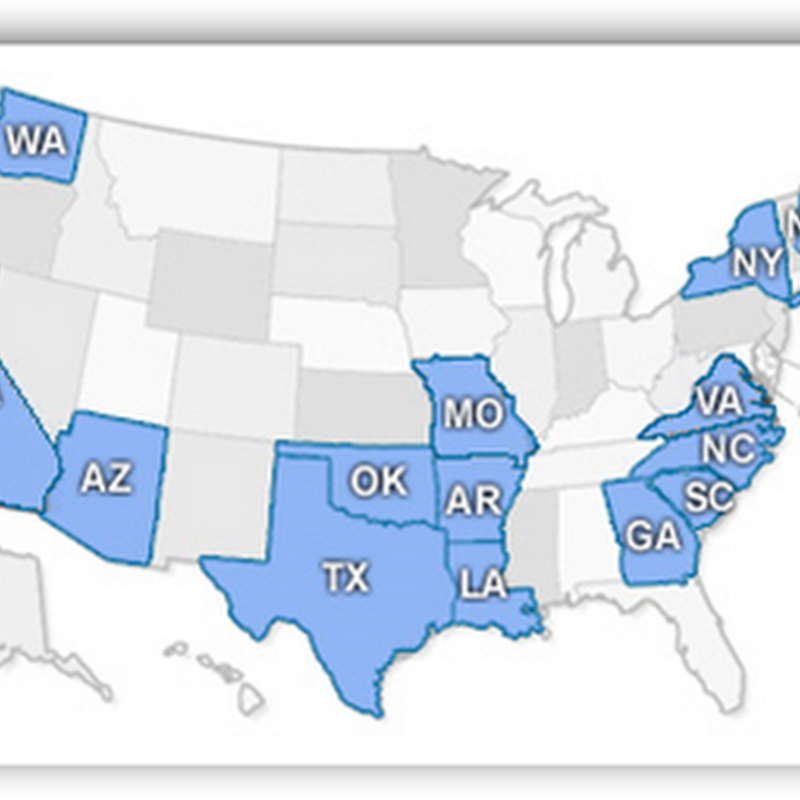
1.1 million patients will be tracked with diabetes in 10 states and will include pharmacy records, inpatient and outpatient records alongimage with standard glucose readings and test results.  It appears to be a pretty good cross section of patients who met the criteria and it is part of a larger data sharing project called the Virtual Data Warehouse.  The HMO  Research Network is a group of 19 healthcare organizations who agree to standardize data sets from EHRs to collaborate and who is behind the Data Warehouse.  BD 


PORTLAND, Ore., June 7, 2012 /PRNewswire via COMTEX/ -- Eleven integrated health systems, with more than 16 million members, have combined de-identified data from their electronic health records to form one of the largest, most comprehensive and most geographically diverse diabetes registries in the nation.

The SUPREME-DM (SUrveillance, PREvention, and ManageEment of Diabetes Mellitus) DataLink includes de-identified health information from nearly 1.1 million people with diabetes in 10 states: California, Colorado, Georgia, Hawaii, Michigan, Minnesota, Oregon, Pennsylvania, Washington and Wisconsin. Participating health plans include six regions of Kaiser Permanente, Geisinger Health System, Group Health Cooperative, Health Partners, Henry Ford Health System and Marshfield Clinic.

The DataLink contains test results, prescription records, hospital and clinic visit information, and vital statistics of more than 1 million people with diabetes. The project also brings together 33 diabetes researchers with diverse backgrounds, expertise and interests.

http://www.marketwatch.com/story/eleven-integrated-health-systems-form-largest-private-sector-diabetes-registry-in-united-states-2012-06-07

Two 3D Printing Companies Merging Stratasys and Objet–A Growing Area of Technology For Healthcare

Is 3D printing used in healthcare, you bet and here’s a couple past posts on that topic in the links below.  I attended the Israel Conference last imageweek and had a great conversation with the folks from Objet.  Both companies have no debt.  I like the ability of 3D printers to make teeth myself having been one of those unlucky folks in life who has had to invest a lot of money in teeth.  Objet already does digital dentistry with implants. 

Digital Dentistry


Woman Receives Jaw Transplant-Created by a 3D Printer–She Can Swallow Again at 83 Years of Age-Regenerative Printed Medicine

The link below has a video using 3D printing and who knows this may be the way organs for transplant are created in the near future.  A demonstration was done live on stage at a TED event not too long ago.


Scientists At Wake Forest Grow a Mini Liver From Human Cells–Regenerative Medicine


Last week at the conference there was no mention of the mergerimage but I did get to see an actual machine and received quite a bit of information on how they work with speaking to Gaylynn Wood, the west coast regional channel manager for Objet.  In reference to what is available the link below on a prosthetic leg is probably right in the picture as being possible today and contains more information on the orthopedic MD who is designing the prosthetics. 

Need a Prosthetic Leg–3D Printing Will be Able to Generate One for You Soon for Around $5000


Fused Deposition Modeling is the name of the process that is used for producing medical products.  Below are a couple videos, one from each company that explains some of what they do.  I saw the Object pipe wrench at the convention and actually that was the first question I had, where’ the pipe wrench <grin>. 

In time with healthcare I think we can expect to a lot more use and innovation in the area of 3-D printing.  The printing of a human organ in itself is amazing with use of a printer on a scaffold prepared to hold the content.  BD 

FMD Modeling

Object 3D Printer


Stratasys (SSYS), the 3D printer maker, is firing on all cylinders this year. The Eden Prairie, Minn.-based company is merging with Objet, a privately held Israeli firm that specializes in high-end 3D printers.

Stratasys also has introduced its lowest-priced printer, called Mojo, while experiencing strong sales growth in its high-end Fortus printer.
Stratasys has clients in the aerospace, automotive, consumer, educational, medical and military industries.
Objet is the third-largest player in the industry, and its 3D printers provide very high-surface finish and feature detail, but lower durability, that can be used for visual verification of concept models and prototypes.

http://news.investors.com/article/614238/201206081627/stratasys-3d-printer-mojo-fortus.htm?ven=rss&utm_source=dlvr.it&utm_medium=twitter

End of Life Care Robot–Not In My Book But Someone Created One of These - Video

It’s called the “The Last Moment Robot” and even if it’s aimage person I don’t know that would certainly beat this as  I really don’t think robots are a replacement at this place in time.  It’s very creepy to watch the robotic arm move around to comfort the patient.  The video shows the patient laying on a mattress on the floor of all things.  You  can read the entire story on this at the link but once the doctor leaves the room, the robot takes over. 
I’m sorry I love technology but this is just a bit over the top and I don’t’ want to see this in palliative care any time soon or a CPT code to cover it.  BD 

End of Life Robot


“I am the Last Moment Robot. I am here to help you and guide you through your last moment on Earth. I am sorry that your family and friends can't be with you right now, but don't be afraid. I am here to comfort you. You are not alone, you are with me. Your family and friends love you very much, they will remember you after you are gone.”

Once the patient lies down and the device is activated, LEDs display the words "Detecting end of life." At this point, the "doctor" exits the room, leaving the patient alone. Within moments, the LEDs read "End of life detected," and the robotic arm begins its back-and-forth caressing action in what is supposed to be a comforting gesture that Chen says tends to cause visitors a "paradoxical sensation of comfort and discomfort."

"The device is meant to raise questions," he says. "The process of dying is probably the most vulnerable moment of a human life, where one seeks the assurance of human connection. In this installation, human presence is replaced with a robot, questioning the quality of intimacy without humanity."

http://news.cnet.com/8301-17938_105-57447109-1/last-moment-robot-end-of-life-detected/

HHS Secretary Sebelius Still Looking for Tech Breakthroughs To Save the Day


We can certainly say that we have had a lot “tech” going on in healthcare for sure and a lot of stimulus money has been given to imagedoctors and hospitals who have invested in electronic medical records, which is a very good thing; however when I see articles as such that tend to “hang” on technology for more immediate gratification than they can give at one time, I still question the mind set of some of our leaders and what their expectations are and if they are all attainable.  I still keep looking around the web and can’t find a picture with a search that so much shows the secretary with so much as a cell phone in hand or her using some form of technology, why is this I ask? 

Role models are important and we should have them from the top all the way down and we have plenty with the President, that’s for sure and why don’t other executives do the same?  It makes me wonder what levels of IT education some leaders have.  Granted we have our new CTO Todd Parks who has a lot of that and a record to prove it and that are has done some wonderful things from making public information available to keeping the band playing for medical record adaptation. Last year I wrote about this same topic and now there’s a huge interest with drawing patients into the scenario and we still “got no role models” at the top and it’s still kind of carrying the tone of “its for those guys over there”. 

ONC Working On Another Consumer Health IT Awareness Program–Magpie Healthcare Again With No Role Models in Sight?


Is it really that hard to be a role model in government?  We could sure use some instead of the “expert paradigm” that still gets used but rarely exists anymore due to the changing nature of the world we live in.  You can talk about break throughs all the time, but getting them used is the real trick.   Technology does save money but I just get this feeling that some folks think with some of the reports and news items we see today that it’s more instant that it really is.  We are doing good with medical records but that took a few years to develop and granted things are moving faster today by comparison, but please let’s have some role models out there.  The Surgeon General could kick in here too from time to time.  If you want to promote technology and it’s use, there’s nothing that does the job better than some visuals.  BD

Relying on Experts When They May Not Exist–Many Intelligent and Smart People But Do We Have Misconceived Paradigms-TED

Let’s see some visuals with our leaders using technology, you think?  After all this is for everyone.  The developer forums and contests are great, but let’s see one of our leaders use one of them:)  BD   


The federal government's healthcare leader touted the Obama administration's initiatives to help spur health IT innovation and urged more technological breakthroughs at a gathering of technology professionals in Washington.

Among the signs of progress toward widespread use of electronic health data that Sebelius cited was an increase from 25 applications submitted at the first federal health data initiative to nearly 250 applications submitted in the latest one. “Most importantly, we have begun to see some of those innovations make a real difference in the lives of millions of Americans across the country,” Sebelius said. Her department has been touting such developments in recent weeks.
Sebelius expects further rapid expansion in EHR use by providers, as well as more health applications tailored for use on smartphones and other emerging platforms. “We're committed to giving entrepreneurs even more fuel by making more data available, while maintaining absolute protections on patient privacy,” Sebelius said.

http://www.modernhealthcare.com/article/20120606/NEWS/306069986?AllowView=VW8xUmo5Q21TcWJOb1gzb0tNN3RLZ0h0MWg5SVgra3NZRzROR3l0WWRMVGJVdjBIRWxiNUtpQzMyWmV0NTNvWUpiU24=&utm_source=link-20120606-NEWS-306069986&utm_medium=email&utm_campaign=hits

LabCorp To Acquire MEDTOX Forensic and Clinical Laboratory

Just as other healthcare companies are growing by acquisition, imagesame seems to hold true for labs.  Last year LabCorp purchased a large southern California Lab company, Westcliff which had some hiccups with the FTC. 

FTC Challenges Acquisition of Westcliff Labs by LabCorp In Southern California-Why?


MEDTOX works with many hospitals for lab tests and also has a division that works with clinical trials.  Products are FDA approved imageand some of the products come in a “kit” making it easy to use.  Urine samples as well as “cassettes” that yield results in 5 minutes are options with many of their tests.  In addition to lab testing, LabCorp also has another subsidiary in Los Angeles for genomic testing.  BD 

National Genetics Institute Testing Services - Subsidiary of LabCorp....


From the website:
“MEDTOX operates a SAMHSA-certified drug testing laboratory, a CAP and CLIA-certified clinical laboratory and a diagnostic division which is an FDA registered establishment. Our comprehensive laboratory and diagnostic testing services coupled with our commitment to excellent customer service ensures that our clients' testing programs operate as efficiently and effectively as possible. We are committed to building strong relationships with our clients; being responsive to their questions and adaptable to their needs.”

image


BURLINGTON, N.C., Jun 04, 2012 (BUSINESS WIRE) -- Laboratory Corporation of America(R) Holdings LH +1.10% and MEDTOX Scientific, Inc. MTOX +0.19% , a provider of high quality specialized laboratory testing services and on-site/point-of-collection testing (POCT) devices, today announced that they had entered into a definitive merger agreement under which LabCorp would acquire MEDTOX for a purchase price of $27.00 per share in cash, representing a total enterprise value of approximately $241,000,000. The board of directors of MEDTOX unanimously approved the agreement and recommended approval of the transaction by MEDTOX's shareholders.

http://www.marketwatch.com/story/labcorp-announces-agreement-to-acquire-medtox-scientific-2012-06-04

Johnson and Johnson Diabetes Drug Canagliflozin Manages Blood Sugar Levels in a New Way

This is a new drug said to give Merck some competition imagebut there needs to be a little more data on side effects the article states.  Sugar is sent from the body through urination which doesn’t’ normally happen until high glucose levels are reached.  J and J has filed for regulatory clearance to sell the drug in the US. 

Some MDs are cautious with the results and use so far as the drug is basically using a “side effect” as a treatment.  In other words when glucose levels become high the body will send out via urination, but from what I read here this somewhat puts the body on a schedule to release sugar whether the levels are extremely high or just relatively high or maybe not at all? 
Patients with kidney disease still need more studies as it is not known if the drug will represent any issues for them.  So far the biggest side effect is bacterial or fungal infections from having a urinary tract flooded with glucose all the time.

Frequent trips to the bathroom could also be a side effect so we don’t want to add to this and get another drug that is sold to stop incontinence since this drug is designed to do that as part of the treatment, so anyone with over active bladder might not be a good candidate for this drug.  BD


Johnson & Johnson (JNJ)
has turned one of diabetes’ most worrisome warning signs into a treatment that lowers dangerously high levels of blood-sugar before the disease can cause blindness, kidney damage and heart disease.

The demand for novel diabetes drugs is soaring as rising imageobesity rates push the condition to epidemic levels, affecting nearly 347 million people worldwide. While 10 different types of drugs are sold to treat diabetes, physicians still struggle to control their patients’ blood-sugar levels.

The novel strategy developed by J&J sheds sugar through the urine, after it’s filtered from the blood by the kidneys and before it can be reabsorbed into the body.

“Using a side effect of uncontrolled diabetes as a primary mode of treatment is unconventional, to say the least,” said Adrian Vella, an endocrinologist at the Mayo Clinic in Rochester, Minnesota, by telephone. “We still need to understand how severe and how frequent the potential side effects associated with these medications are.”

http://www.bloomberg.com/news/2012-06-08/j-j-diabetes-drug-seen-challenging-merck-s-market-leader-health.html

Two of New York’s Biggest Hospital Systems In Talks to Pursue a Merger for a Super Sized Medical Care System

Both groups are non-profits and it would bring a imagenetwork of community hospitals into the group.  Both boards of each side still need to approve and it would also need regulatory approval as well.  The downside of this is potential higher prices for consumers and limited options with contract negotiations.  Reduced reimbursements and staying in business of course is what is behind such discussions and if such a merger were to take place, then comes buying up MD practices in the immediate area to again get a higher reimbursement fee with services provided at Medical System owned facilities.  BD 


Two of New York City’s biggest hospital systems reached agreement on Wednesday to pursue a merger that would shake up the way medical care is delivered, especially in Manhattan, where hospitals compete to serve some of the wealthiest neighborhoods in the world.

The proposed merger would bring together NYU Langoneimage Medical Center, a highly specialized academic medical center, and Continuum Health Partners, a network of several community-oriented hospitals, including Beth Israel and the two St. Luke’s-Roosevelt campuses.
It would create one of the largest health care systems in the city, one that would have immense market power under the new federal health care system, and put pressure on independent medical practices, insurance companies and even rival medical schools, which may have to find other places to train their students

The memorandum of understanding is essentially an agreement to share proprietary information, including financial, technology and personnel data, that would be needed to make a final decision to merge, most likely within six months. It is not binding, but it is a signal, as one hospital official said, that the proposal has gone beyond courtship to the engagement stage.

http://www.nytimes.com/2012/06/07/nyregion/nyu-langone-and-continuum-agree-to-pursue-merger.html?pagewanted=1&_r=1

Facebook Portal “RegisterPatient” Allows for Secure Patient-Physician Communications–Would You Use It?

I don’t know how I missed this one but it came in during the time that I was moving.  According to the press release it is HIPAA imagecompliant  and allows for private conversations between patients and doctors.  So many physicians already are set up via their EHR and just web services that already provide this so is there a market for this on a Facebook portal? 

It certainly stands for a way for Facebook to gain more members with the offering.  It doesn’t cost anything for patients but is any of the information being mined, even with de-identified parameters?  The appointment part of the program is probably the least of any one’s worries but when you get into text email type communications and prescription refills I would have a keen eye open here with the integration.  

It doesn’t appear to be free for the doctors unless there’s some incentive via using it from Facebook, otherwise the site states that it is $69.95 a month.  When you visit their free standing website the RegisterPatient has all the whistles and bells that can integrate with a medical record system, etc. so why do you need Facebook in the portal?  BD 


RegisterPatient.com launched its new, first-of-its-kind, secure patient portal Facebook app on Monday. RegisterPatient's partner physicians can use the new app to quickly and easily add a secure patient portal to their Facebook page. Patients using Facebook can visit the medical practice's fan page, access the secure, HIPAA-compliant registration portal and request appointments, complete their registration forms in advance, request prescription refills and send secure messages to their doctor, all without ever leaving the provider's Facebook page.

”With more and more patients using Facebook to find and research doctors, a secure Facebook app that allows them to interact with doctors seemed like a natural fit,” said 20-year veteran nurse and founder of RegisterPatient.com, David Williams. Williams believes the app is simply the next logical step in RegisterPatient’s quest to reduce practice costs and simplify patient registration.

Details on the Register Patient Facebook App for Physicians

Cost: Free feature included as part of RegisterPatient system
Functionality Specifics:
Application can be installed on provider’s Facebook page creating a HIPAA compliant secure patient portal with the following functions:
●    Secure online patient registration
●    Appointment Requests with real time appointment availability
●    Prescription refill requests
●    Secure patient to provider messaging

http://www.prweb.com/releases/2012/5/prweb9552171.htm

Cloud Based Research for Doctors–ClinicalKey A “Google” Type Search for Physicians

The site is constantly being updated and can pull from imagemany sources and includes a large number of journals.  The video below tells more about how it works and it appears that it can definitely save some “search” time for doctors and it’s reliable information. 

It understands “clinical” terms and brings in other relevant information.  Information found is structured and aligns with MD workflows.  It does an auto-search with each letter entered.  Surgical and medical videos are also included.  It has a nice preview pane and has a nice content reader.  It does an easy export to PowerPoint if needed and a save for reading materials you want to book mark.  Right now it appears that it is only available for institutions and a personal subscription will be available in a few months.  BD 

ClinicalKey


The largest publisher of original medical reference content has created a new, comprehensive tool for medical research to make its content – and select third-party content – easily searchable.

ClinicalKey is the recently launched reference database from Elsevier that’s being deemed the Google for docs. It contains full-text content from more than 500 journals and 800 books published by Elsevier (including Neuroscience, Cell and The Lancet), plus Medline abstracts, select third-party journal articles (but it’s missing some important ones), a library of medical images and videos, and clinical trials information. Users can filter, save, export and share this content.

ClinicalKey’s secret sauce is its smart content technology based on a proprietary taxonomy called EMMeT (Elsevier Merged imageMedical Taxonomy), which comprises algorithms and about 2 million terms that are tagged to content. (Donohue called it an “Elsevier-agnostic” search engine, pointing out that it digs up the most relevant information without favoring the publisher’s content over others’). Typing Addison’s disease into the search bar, for example, generates a drop-down menu of suggested topics containing the term Addison’s disease and also a list of drugs and procedures associated with that condition.

In April, Elsevier launched an institutional model of the program that’s being sold on a subscription basis. A product that’s tailored to clinical specialties, allowing for subscription to a certain collections of the content, will roll out in July. After that, ClinicalKey will go mobile, with two apps set to launch in August.

http://medcitynews.com/2012/06/google-for-docs-brings-a-new-kind-of-smart-searching-to-medical-research/#.T9EPUMIipcI.twitter


Facebook IPO – The Ultimate “Attack of the Killer Algorithms” Chapter 32 - Nobody is Immune In the World of Complicated Computer Code and Formulas Today

Ok, so let’s get down to basics here, what do we have here, a bunch of investors sinking money into “algorithms” and a case of “algorithms” that had issues and didn’t perform as they were supposed to.  I don’t know how much longer it will take until someone wakes up to see that we can’t base an entire economy on “algorithms” which is seems is the forefront of what we have going on today.  Sure algorithms have value but we seem to be thinking there’s some “magic carpet ride” here with making money.  The carpet will ride for a while but it will need to come in for a landing here and there. 

It just makes one wonder if the US is ever going to clean up the math and code in so many areas of the financial markets.  We have the same thing in healthcare with “flawed” data with queries and reports created to sell more software.  Software, in the words of Bill Gates is nothing more than a bunch algorithms that work together and thus I focus on the algos. 

We can go back to the BATS IPO and what happened there in March and I think they did the right thing, they pulled the plug before the real time algorithms that touch all the other exchanges did a lot of damage.  Sure they took some criticism but I think it’s a whole lot better than what happened with NASDAQ and their algorithms.  If you have something “rogue” running around in there, best to stop and take a look.  You can create “software suicide” and I occasionally talk about that as you never get a second chance.  People will understand issues and problems but when you see a problem and give the call to keep it running, well you saw what happened. 


BATS Stock Exchange IPO Rogue Algos–Attack of the Killer Algorithms Chapter 25–See How Other Killer Algorithms Occur in Every Day Life With Healthcare & Credit

We have algorithms all around us all the time with formulas making life impacting decisions about all of us and some of this stuff is “flawed”.  I watched the CEO interview with NASDAQ and I wouldn’t want to be him or the IT folks who made this call for sure.  On the other side of the coin, you have some very savvy folks at Facebook and I can’t help but wonder what they think as they write the stuff day in and day out too.  Facebook has had their issues with privacy and applications and maybe their engineers should have a sit down with the engineers at NASDAQ.  Here’s a bunch of links that describe how “algorithms” that you can’t see, touch, feel etc. affect consumers every day.  When they are flawed, consumers become “data chasers” to go and fix whatever became flawed with information that most of the time they had nothing to do with the creation and much of it contains a “risk” factor of some sort built in that denies or creates some kind of access. 

Attack of the Killer Algorithms–Digest & Links for All Chapters–How Math and Crafty Formulas Today Running on Servers 24/7 Make Life Impacting Decisions About You–Updated 3-11-2012

This seems like a good place to repeat the TED video from Kevin Slavin on how algorithms shape our lives.  You can find it as a static video on any page of the Medical Quack and I found it to be one of the best videos ever done explaining how some of this works and who’s involved.  I saw some of the major news outlets run it as well but they didn’t really seem to get the real meaning and drift of all of this.  It’s all about computer code. 

How Algorithms Affect and Shape the World


We do have some pretty sharp folks out there that should really get a lot more recognition for what they do with their efforts to educate all of us and those are the folks over at Nanex, who if you watch the video above are mentioned as the ones who dig in and get the bottom of this “mysterious” algorithm question all the time, and yet they don’t get enough recognition for all their “honest” analytic work that would help folks out in the long run.  If you would like to see some of what they had to say, use this link and read up. 

This is not the first instance with NASDAQ with software as they had issues to where the FBI came in to investigate a big security leak with their “Director’s Desk” software.  This goes back to February of 2011.  Companies like SonoSite, a healthcare company use Director’s Desk.  Why?  Well when you are about ready to announce a new FDA approved product, you don’t want any top secret information out in the world until it’s time, insider trading potential again.

“It is a technological arms race in financial markets and the regulators are a bit caught unaware of how quickly the technology has evolved”

Another Item I wonder about too is how the financial folks market and sell “over clocked” processing too?  I did some training a while back for Intel and used to see the gamers come back with “melted silicon” all the time from pushing the limits and over clocking and going beyond “best practices” with their computers, all in the need for speed.  It’s a gamble like anything else.  More about this topic at the link below.  We do need some accountability somewhere along the line and some folks to step out of denial to address this. 

Gamers Are Not the Only Ones to Over Clock Processors-Turns Out It’s Done on Wall Street To Run Those Algorithms at Rocket Speed


Back about 3 years years ago I made an “opinion” post asking if “we need a Department of Algorithms”…maybe we are there as there are those algos created for “desired” results and those that generate “accurate” results and the two should be the same, but they are not always.  Read this book on how some of this works from Twitter bud Professor Siefe at NYU, as he nails it pretty well. 

“Proofiness–The Dark Side of Mathematical Deception”–Created by Those Algorithms

Even the SEC in their current state finds folks with “bad math” out there and I assumed this quant was pretty obvious for the SEC to find him, but for two years he knew he had “flawed algorithms” and kept running it. What’s that tell you?  I see a couple things here, one a littler closer regulation on algorithms should be in the picture and two the fact that nobody really cares much or has the “engineer” knowledge to go after such issues.  By the way I was glad to see the Goldman software engineer get out of jail and I’m not saying he was guilty or innocent, but I was appalled at how the case was handled as the man could not get a jury of peers with his trial and Goldman attorneys did a bit of a bum’s rush on this fact with the case. 

SEC Sues Quant–Undisclosed Error in Trading Algorithm- Miscalculating “Risk”-Healthcare Software Evaluates This Factor Too

High Frequency Trading Firm Fined $850k for Losing Control of an Algorithm in Rapid Succession Buying–Bad Math and Some Killer Algos At Work- Keep Occupying…

Lesson here for all of us is to ask questions when the data and formulas appear to be faulting as it does happen and it’s something here we have to live with and granted there’s more that goes “right” than “wrong” but that side is out there.  I have addressed the issue of taxing the folks to making billions with algorithms and it seems to be what drives the investor frenzy here with folks thinking they are getting ownership to a “piece of code” but not as they are just using other algorithms to valuate the algorithms that make billions mining data and at times hurting consumers with the ever growing “flawed” data issue we have out there.  I thought I was the only one talking about this but recently was contacted by the National Institute of Statistical Sciences that told me to keep blowing the horn and that someone will eventually listen.  It’s all about the math, algorithms, data, and “flawed data” that creates markets sometimes where they don’t belong. 

imageSo as an investor, what do you have here?  Stock in algorithms that may or may not work as sold?  It’s just something to think about here when you look at how the US and the banking industry is out of balance with tangibles and intangibles and why companies won’t build factories so we can create products again when they can hire a few geeks, mine the web, create queries and sell the results in a format to again be used to query and qualify with risk assessment. Again don’t get me wrong in the fact that we need some of this for sure and there are reputable software companies like Microsoft, Apple, Oracle, IBM  and so on that create such for us but they are not responsible for how everyone decides to use the tools and thus comes the rub with those systems created for “desired” results while perhaps overlooking the word “accurate” at the same time. 

Again to maybe restore balance we need to begin licensing and taxing some of these folks making billions selling data that is obtained for free in so many cases.  It would sure help shore up the imbalance between tangibles and intangibles that we have.  As a consumer I get stuck with Federal excise taxes when I buy a tire to run my car, but do the billionaires running algorithms with little overhead chip in, nope.  What’s good for the “duck” is good for the “gander” in this case and corporate America should chip in here otherwise those banks and financial folks are going to keep blowing out of proportion the value of algorithms.  Leave the medical device folks alone and if they sell data they would be included like everyone else in taxing the data selling elements created with those algorithms. 

We Pay Gasoline Tax to Keep Up the US Highway Infrastructure–Why Not Tax the Data Selling Companies and Banks to Keep Up the US Government IT Infrastructure? A “Buffett Tax” Alternative


They have value and I like technology and used to write software, but we crossing some dangerous territory here with forgetting that I can’t eat an algorithm for dinner, can’t use an algorithm to get well if I am sick (need a pill or shot) and I can’t talk to most of them either.  The documentary “Inside Job” was very educational and barely touched on the “algorithm” side of all of this though but still very much worth watching. 

“Inside Job”–A Learning Experience and Documentary About Financial Algorithms-And Some of Same Exists in Healthcare


Let’s give some thought along the line here to “de-valuating” some of these algorithms that are out there, especially the ones with “flawed” data as well all know in life anything that has a “dent” in it is not worth anywhere near a product without a dent and we seem to be shopping the “outlet store” of algorithms today.  This radio show also stands to enlighten as well. 

“Numbers Don’t Lie, But People Do”–Radio Interview from Charles Siefe–Journalists Take Note, He Addresses How Marketing And Bogus Statistics Are Sources of Problems That Mislead the Public & Government

DEVALUATE THE ALGORITHM AND BRING SOME BALANCE BACK TO THE WORLD OF THE TANGIBLES BECAUSE THAT’S WHAT WE EAT AND LIVE IN (HOUSES).

“Devaluate the Algorithm” And “Tax the Data Sellers”–A Cure for Both Healthcare and an Economy Based Heavily on Intangibles–We’ve Lost Our Balance

I read where the other exchanges are not happy with the decision NASDAQ has reached and they have good reason as the fix is only partial and folks at NASDAQ may seem to forget how integrated we are today and the impact the failure had on other transactions. Why in the world can we not have heavily accredited IT and computer code folks running the show instead of CEO figureheads that have never written a stick of code?  Even the Madoff IT folks had it dialed in with computer coding, they said so too and were paid well for “flawed code” that hid certain items and kept the false store front going. 

A Case of “Dirty” Algorithms – 2 Madoff Computer Administrators are Indicted – Illegal Coding and Networking for Big Profits


I don’t care what line of business you are in today, but so many of those folks are proving to be more useless as time moves forward as they are just “magpies” that reiterate what the the “real” folks (engineers) are doing.  It will be interesting to see the CEO of NASDAQ continue to “worm” as this is not going away anytime soon as the “Attacks of the Killer Algorithms” are amongst us everywhere you go and we need a higher level of intelligence than “greedy magpies” to lead us in the right direction.  BD  

UnitedHealth Board Approves Quarterly Dividend Hike Of Over 30% And Stock Buyback Of Over 100 Million Shares

Actually the company made the announcement back in May of 2010 that they were going to hand out dividends on a more frequent basis, and as you can see from the headline, no caps on executive earnings.  So it appears the shareholder dividend is again about ready to grow.  With all the “owned” subsidiaries the company owns today, there’s almost not a portion of healthcare they don’t touch in some way to include owning physicians groups, owning a company in China to promote Chinese drugs and devices in the US and worldwide to recently setting up another subsidiary to distribute “cheap” hearing aids.  You can see some of that action with a no cost hearing aid for seniors in some areas who sign up for some of their Medicare Part D plans.  Last but not least we can’t forget their extensive analytics and code folks who have been at this for years with Optum, formerly known as Ingenix who make a lot of money with software and selling data.  BD 


UnitedHealth To Pay Out Higher and More Frequent Dividends to Share Holders, No Caps on Earnings for Executives or What Is Spent on Lobbying Says the Board

UnitedHealthCare Found a New Way to Market Health Insurance – “High Performance Networks”


Health insurer UnitedHealth Group will raise the quarterly dividend it pays shareholders by more than 30%, due in part to strong growth across its businesses. It also authorized a stock buyback.

Health insurance is the Minnetonka, Minn., company's main business, but its Optum segment also provides services, such as wellness programs, technology outsourcing and pharmacy benefits management.

UnitedHealth said Wednesday its board authorized the repurchase of 110 million shares. That replaces an authorization from last year to buy back 110 million shares. About 33 million shares remained under that authorization.
UnitedHealth reported net income of $1.39 billion, or $1.31 per share, on $27.28 billion in revenue in the first quarter. The performance trumped analyst expectations, something UnitedHealth routinely does.


http://www.usatoday.com/money/industries/health/story/2012-06-06/UnitedHealth-dividend-hike/55418992/1?csp=34money&utm_source=dlvr.it&utm_medium=twitter&dlvrit=110940

Medicare to Cover Rosetta Genomics Diagnostic Test To Find Cancer of the Unknown Primary

It’s about time for this test to be covered as it is important.  Way back in January of 2009 I interviewed the CCO of Rosetta and he imageexplained what this test is.  You may have cancer in your lung for example, but it may not have originated there and this test will be able to identify if it by chance came from somewhere else in your body, which makes a huge difference with treatments as one medication that treats lung cancer may be quite different from one that treats let’s say kidney cancer for an example.  Lab results can be done in 10 days or less.  You can read my original interview below for more information. 

Rosetta Genomics Interview – microRNA for Diagnosing Lung Cancer Tumors

Also, what is also unique is the fact that Rosetta’s tests use Formalin Fixed Paraffin Embedded (FFPE) tissue samples, whereby the tissue is saved in a container that does not require any type of special care other than room temperature and the lab can use the 3-10 slices to extract the microRNA without any additional issues for a physician to deal with
.
By knowing quickly and accurately the origin of the metastases, doctors can come up with a guided treatment plan and remove much of the trial and error with drugs and choose therapies that are specifically targeted for the type of cancer to be treated.


Rosetta works with MicroRNA and has a data base that goes back to the year 2000.    MicroRNAs are now being considered “The Master Switch of the Body”, Mr. Tamir stated, and by determining the level of expression of specific MicroRNAs, we can make diagnostic decisions.  BD  

Rosetta Genomics Ltd. (NASDAQ: ROSG)announced that Novitas, the designated Medicare Administrative Contractor for the Company’s miRview(R) mets^2 assay, has informed Rosetta that it plans to cover this assay for all Medicare beneficiaries. MiRview(R) mets^2 accurately identifies the primary tumor of origin in primary and metastatic cancer including Cancer of Unknown or Uncertain Primary (“CUP”).

The policy will cover the 45 million Medicare beneficiaries and will enable Rosetta to provide the miRview(R) mets2 assay for Medicare beneficiaries throughout the U.S. at no cost to the patient, thereby eliminating an adoption barrier for the physician ordering the test and for the patient. miRview(R)

Products are a series of microRNA-based diagnostic products offered by Rosetta Genomics. miRview(R) mets and miRview(R) mets^2 accurately identify the primary tumor type in primary and metastatic cancer including Cancer of Unknown Primary (CUP). miRview(R) squamous accurately identifies the squamous subtype of non-small cell lung cancer, which carries an increased risk of severe or fatal internal bleeding and poor response to treatment for certain therapies. miRview(R) meso diagnoses mesothelioma, a cancer connected to asbestos exposure. miRview(R) lung accurately identifies the four main subtypes of lung cancer using small amounts of tumor cells.

miRview(R) kidney accurately classifies the four most common kidney tumors: Clear Cell Renal Cell Carcinoma (RCC), Papillary RCC, Chromophobe RCC and Oncocytoma. miRview(R) tests are designed to provide objective diagnostic data; it is the treating physician’s responsibility to diagnose and administer the appropriate treatment. In the U.S. alone, Rosetta Genomics estimates that 200,000 patients a year may benefit from the miRview(R) mets and miRview(R) mets^2 test, 60,000 from miRview(R) squamous, 60,000 from miRview(R) meso, 54,000 from miRview(R) kidney and more than 1 million patients worldwide from miRview(R) lung.


http://www.bioisrael.com/medicare-to-cover-rosetta-genomics-cancer-diagnostic

Complete Genomics To Lay Off 20 Percent of It’s Workforce And Could Sell the Company

Back in 2008 Complete Genomics was the leader in bringing down the cost of sequencing with their “wholesale” approach and with today’s standards there’s a whole lot of competition out there.  BD 

Complete Genomics Inc. said Tuesday that it's laying off about 20 percent of its workforce in order to cut costs and has hired a financial adviser to help it explore "strategic options," including a possible sale of the company.

The company, based in Mountain View, Calif., sells technology that can sequence human DNA for research purposes. It said it plans to focus on developing clinical applications for its whole human genome sequencing service, while continuing to provide genomes to research customers.

Most of Complete Genomics' job cuts are expected to take place during the current quarter, which ends on June 30. The company estimated its restructuring and related costs at about $1.5 million, which includes severance pay for the workers whose jobs are being eliminated.

http://www.businessweek.com/ap/2012-06/D9V6VDI80.htm

Novartis Recalls Birth Control Pills–Packaging Error With the Peach and White Pills–Where’s Those Bar Codes to Make This Process Easier?

Here we go again and it’s been over 2 years since I started my little campaign and still no bar codes for FDA recalls?  What’s it going to take?  Folks on Twitter liked the idea and it’s good for prescriptions, over the counter and medical devices too.  Not all hospitals and small surgical centers have a sophisticated system and consumers would like to have this option, it was a winner hands down on the poll I did. 

YOU CAN STILL VOTE FOR BAR CODES TO USE WITH RECALLS AND IF YOU RAD A LITTLE FURTHER HERE, IT SOVLES A LOT OF OTHER ISSUES LIKE FINDING STOLEN DRUGS TOO.  ONE TECHNOLOGY CAN SOLVE A LOT OF EVILS!   Read the article below on how a man died being implanted with a device that had been recalled but was missed being pulled from inventory.
image image


Micro-Cap FDA Recalls Never End


The recall involves a birth-control pill called Introvale that is marketed by Sandoz. The product contains 84 active pills that are peach colored and seven inactive pills in week 13 that are white.

FDA said the recall, which affects 10 lots distributed between January and May 2012, was prompted by a consumer report of the inactive pills being located in the row labeled week nine.

"While the white placebo tablets can be clearly distinguished from the peach-colored active tablets, the risk of an unintended pregnancy for a patient taking the wrong tablet over several days cannot be excluded," FDA said.image

The lot numbers involved in the recall are as follows: LF00478C, LF00479C, LF00551C, LF00552C, LF00687C, LF00688C, LF00763C, LF00764C, LF00765C and LF01261C. It is not clear how many packages were impacted by the error. A Sandoz spokesman didn't immediately return a request for comment left late Wednesday.


http://www.foxbusiness.com/news/2012/06/06/fda-novartis-unit-recalling-introvale-birth-control-pills/

Juan Enriquez–Will Our Kids Be a Different Species–In Other Words Are We Evolving in Real Time


Juan Enriquez is a fascinating person to listen to as he has gone the gambit with Craig Venter, who you may or may not be aware of,image but his creation of synthetic cells is all over the news from time to time.  Juan states and emphasizes how “fast” this is all moving and it really is.  Actually back in December of 2010, this was the big announcement made by Venter and he too is a guest on several of the TED conventions.  The group also includes current NIH Director, Francis Collins when it comes to “cracking the code”. 

Synthetic Life Announced by Craig Venter–All About the Code and Sequencing the Genome

He tackles some interesting topics here and a lot of it comes back to the massive amounts of information we handle today and quips a bit about a brain upgrade, listen and see what that is all about.


Juan Enriquez–Will our Kids be the same species


Throughout human evolution, multiple versions of humans co-existed. Could we be mid-upgrade now? At TEDxSummit, Juan Enriquez sweeps across time and space to bring us to the present moment -- and shows how technology is revealing evidence that suggests rapid evolution may be under way.


Here’s yet one more TED video from Juan, more specific on synthetic genetics.  We are generating “life” code much faster than we can build computers to store it.  Software makes it’s own hardware.  How and where we make stuff is changing and it’s all in Life Sciences in everything from farming to creating a drug or vaccine.  The chart below shows how drugs were being discovered in the 50s to where we are now with dollars spent.  As you can see the number is way down as the cost and research and development is so high.  He asks that maybe we are killing more people with regulation than saving and where is the “cross over” point.  He advocates the cost of measuring versus not measuring.  BD 

image

Harnessing Synthetic Genetics–Solve for X–Digital Code and Life Code


http://www.youtube.com/watch?v=Syi9bqfFIdY

http://www.youtube.com/watch?v=PzSXTWhBUD0

QuantiaMD Appoints John Halamka, MD to its Board of Directors

We all know who Dr. Halamka is at Harvard Medical and most follow his blog, Life as a Healthcare CIO. image I had not heard of this site and anyone can join so I did and those who are not physicians are able to read most of the content on the site for information and incentives areas for CMS of course are limited to the physicians.  Again being the first time I have seen the site it looks to have “credible” information and there’s already a good size membership online too.  If you don’t know who Dr. Halamka is, here’s an interview from HealthSystemCIO in 2011 that will tell you more.  BD

Dr. Halamka Speaks About Health IT–“CIOs are on Overload” and It Would be A Blessing to Stall Off ICD-10 to 2016 - The Straw Breaking the Camel’s Back


WALTHAM, Mass., Jun 05, 2012 (BUSINESS WIRE) -- QuantiaMD announces the appointment of John D. Halamka, MD, MS, to its Board of Directors. A national leader in the area of electronic medical records and the secure sharing of healthcare data for care coordination, population health, and quality improvement, Dr. Halamka is a Professor of Medicine at Harvard Medical School, Chief Information Officer of Beth Israel Deaconess Medical Center, Chairman of the New England Healthcare Exchange Network (NEHEN), co-Chair of the national HIT Standards Committee, co-Chair of the Massachusetts HIT Advisory Committee, and a practicing Emergency Physician

QuantiaMD is a community of physicians who share practical medical knowledge with colleagues they know and trust. The largest and fastest-growing network of its kind, QuantiaMD brings physicians together on a mass scale to reshape medicine. By joining, physicians can better manage their practices, support their patients and take care of themselves. Members access QuantiaMD for free through any Smartphone, tablet or computer. To learn more, visit www.quantiamd.com .

http://www.marketwatch.com/story/quantiamd-appoints-john-halamka-md-to-its-board-of-directors-2012-06-05

Man Dies While Having Sex in a Three-Some, Cardiologist Gets Sued for Failing to Tell The Man To Avoid Exerting Himself Before Stress Test is Done–Doctor Loses and Estate Gets $3 Million Dollars

This was from today over at the Happy Hospitalist blog and yes it’s a good one and also see where Dr. Wes, a well known blogging cardiologist “tweeted” the story.  Both Happy and Dr. Wes are excellent blogs to read and I follow both.  Back on track, where’s the responsibility here? I guess some folks don’t give any thought to their medical conditions and this guy even went an extra mile. 

I think maybe he should have considered one of those FDA approved male vibrators?  Maybe if his doctor would have prescribed on of those vibrators  he might have been off the hook?  Well if that would stand to be the case then the company might stand to see a huge increase in sales. 
You can read the full article at the link at the Happy blog for the rest of his comments.  Gee, why do we have a hard time getting folks to be doctors today?  Anyway, any cardiologists reading here, listen up and maybe think about prescribing one of  those vibrators if it might help keep yourself documented and in the clear, after all it is FDA approved:)

FDA Approves First Male Vibrator for Use for Men Suffering From ED–Available By Prescription Only


Now on a serious note, here’s what it’s like when a doctor gets sued and yes Dr. Wes was here too for the screening of this documentary and it’s worth watching this trailer.  There’s no pay for all the legal time and court time as you will hear in this trailer.  I agree with Happy on this one, ridiculous as we all have to have a little common sense and responsibility.  BD

“The Vanishing Oath” Documentary – One MD Talks About the Process of Being Sued - The Diminishing Doctor-Patient Relationship


Vanishing Oath–When a doctor gets sued


Yes folks, it really happened.   William Martinez died  in 2009 while having sex in a threesome (no wife involved).  Unfortunately for cardiologist Dr Sreeni Gangasani, the jury awarded the man's estate a three million dollar judgement against the cardiologist for failing to tell the man not the exert himself before a scheduled stress test was performed.  Mr Martinez had  seen the cardiologist the week before with arm pain.

This was reported at the American College of Cardiology in Atlanta in 2010 as a  live Tweeting  event by Dr Wes for Sex, The Heart and Erectile Dysfunction.

I am waiting for the day that a jury provides monetary judgment against an internist or cardiologist for  sudden death for a patient who was just thinking about a threesome.  I'm waiting for the day that a hospital patient dies while having sex in the hospital and the hospitalist gets sued and loses for failing to tell the patient on admission not to have sex in the hospital.  Or perhaps the next biggest wave of lawsuits should be against orthopedic surgeons who's post operative hip and knee patients get complications when they  aren't consulted on the correct way to have sex after joint replacement surgery

http://thehappyhospitalist.blogspot.com/2012/06/man-dies-during-threesome-cardiologist.html

National Kidney Registry Migrated to Microsoft Azure Cloud–Significantly Boosting Speed With Multiple Matching Capabilities For Paired Transplantation Candidates

When you visit the website it shows 464 transplants facilitated to date.  With the new Azure cloud service the matching capacity has increased 400% which is a deeper and heavier search that can end up finding kidneys faster for those in need of the life saving transplant.  This is great and shows how the cloud can serve to improve and create solutions in healthcare.  BD 

Press Release:

The National Kidney Registry’s new SMELAC matching system has been successfully migrated to Microsoft’s Windows Azure cloud computing platform, significantly boostingimage paired exchange match processing speeds. The announcement was made at the American Transplant Congress in Boston last night at the 4th Annual National Kidney Registry Awards Event by Garet Hil, CEO of the National Kidney Registry and Wes Anderson, Microsoft’s Vice President of Public Sector Services.image

The Windows Azure cloud computing platform has increased National Kidney Registry’s matching capacity by 400% allowing multiple match runs to execute simultaneously. Already the world leader in paired exchange transplantation, the ability to execute multiple match runs simultaneously will enhance the National Kidney Registry’s ability to facilitate even more paired exchange transplants.


In describing the significance of this breakthrough, Mr. Wes Anderson, Vice President for U.S. Public Sector Services at Microsoft said, “The National Kidney Registry team realized early-on that scaling their success in kidney matching requires variable computing capability that may grow exponentially at very short notice, presenting important imageconditions for moving back-end processes to a cloud-based solution. By fully leveraging Windows Azure, the National Kidney Registry is continuing its amazing work of helping to provide a long and normal life for the ultimate benefactors of this endeavor – those among us who need the help of the community to overcome end-stage renal disease”.


Mr. Hil added, “Microsoft imagecontinues to provide valuable technical support as we continue to grow our program. The migration to Azure is the latest advance that is allowing our computing capacity to scale up as our pool of incompatible pairs expands”.


Expanding on the importance of this latest technology advance, Dr. Marc Melcher, transplant surgeon at Stanford University andimage Research Director for National Kidney Registry said, “More and more transplant centers are using kidney paired exchange transplantation to help their patients in kidney failure, and the computational power required to support the sophisticated matching algorithms that sift through and evaluate all the potential matches has been growing exponentially”.

About the National Kidney Registry

The National Kidney Registry www.kidneyregistry.org is the leader in paired exchange transplantation and has facilitated more paired exchange transplants than any other organization in the world. The National Kidney Registry is a nonprofit organization with the mission to save and improve the lives of people facing kidney failure by increasing the quality, speed, and number of living donor transplants.