This is a lengthy PBS video report on the state of dentistry in the US. I have had my share of dental work and when it hurts, you can’t get away from yourself as it’s in your head. Medicare doesn’t cover dental care. Right at the very beginning you see RAM USA (Remote Area Medical) headed up by Stan Brock and the free clinics they sponsor all over the US. I have done quite a few posts that promote their events for reader awareness and at almost every free clinic they put on, they are begging for more dentists as they can never get enough. People looking for dental care at the free clinics usually have jobs too but can’t afford the dental work. The free clinics were in Oakland in March of this year and they had plenty of empty dental chairs, due to a lack of dental volunteers. When RAM had their clinics in the Los Angeles area the USC dentistry school kicked in big time.
1200 children a year get their dental care under general anesthesia in Florida every year and it is due to one of the lowest compensation rates in the US. Only around 10% of the dentists in Florida will accept Medicaid. Doctors look into getting enrolled in the system but reimbursement is 20% of what the dentist would normally get. Half the kids in the US rely on Medicaid for dental care. Corporate dental chains are offering some relief in some areas that take children that are on Medicaid only. Kool Smiles is one that is backed by private equity. One office manager said she enjoyed working there at the start but then it turned into a dollar system and the company computer system tracks production to the absolute minute detail. The company survives on Medicaid reimbursements. Some dentists said the chain encourages the use of crowns as they pay better, whether or not the child needs it or not. Part One
With children under 9 the chain used 50% more crowns than normal when compared to other dental providers. Critics say the Kool Smiles business model is at the root of some of the care problems. It’s better than the alternative which would be zero but it’s cattle mill dentistry as dentists get bonuses based on how much revenue they bring in. Part Two
Small Smiles was another chain that was also backed by private equity and in Connecticut they were threatened with “malpractice” and things cleaned up a bit. There’s an interview in the video with Grassley looking into the care. When you listen to one of the folks interviewed about quality it sounds rehearsed about “how we care about quality”. Watch and make your own opinion.
There’s a non profit group in Alabama that has 15 clinics who are trying to help out and there’s no bonus system and dentists get paid a salary on whether or not they see zero patients or a number of the every day and they rely on Medicaid. The bonus here is that children get preventive care here. They hope to move the model to other states. Alabama Medicaid seems to be enough for this group with their model as they don’t have to make a profit.
Similar to nurse practitioners the dental business in Minnesota is trying the same thing, they do fewer procedures than a full on dentist. They go through training as does a dentist for the most part. People are getting treated that would normally not get treatment and this is the only state with dental therapists. Part Three
Adults are having to go to the ER room to get prescriptions for infected teeth. Over a million patients a year end up in the emergency room. Aspen dental is another corporate dental chain for adults. They specialize in dentures and make them in the office and the office managers sell healthcare credit cards. GE backs the credit cards and the dentist gets paid right away for the entire care once the patient signs the contract.
The credit cards are very high interest and it begins even before the dental work begins. We are back to the parameters of the “algorithms” on how this kicks in.
29.9% is the interest rate if a payment was missed and they paid a 175k settlement and Andrew Cuomo was in the picture on this one as well. Aspen has “pay for performance” on how much they convince patients to do with work and bonuses are paid monthly. The question is are they doing the right things for care with big carrots hanging there? Doctor’s get a percentage of the profit but the office manager bonuses are the ones doing the sales job and set up with credit cards. Some offices have “quotas” and this sound like some hospitals who tried this with admitting quotas of sorts. Part Four
There’s really no regulation of corporate dental practices so this makes it difficult. Other than charity there are many with no solutions. BD
I have just a couple clips of his entire blog post but you really should read his entire post on this topic. I did and as always I learn from everyone and the question he answers relates to the question of whether or not a hospital can force a patient to go to a nursing home and Medicare covering the visit. I think this is especially good information for seniors to be aware of and what a palliative care consult is. He advises all to get a power of attorney as there are some avenues to go through to get one if a doctor or hospital needs one but a power of attorney will trump it, but almost any doctor can make a decision to send you to one if it is determined you lack the capacity to make that decision. Read the last comment regarding the time of death at the bottom of his clip, interesting and provokes a few thoughts for sure. With the abbreviated jargon of SNF as he stated is pronounced sniff, this kind of gives a new meaning to sniffing one out if there’s a bit of slang chatter involved:)
He also clarifies that nursing homes are not prisons either and that you can leave if you want if you have the capacity to make that decision and the power of attorney or court appointed guardian can also release you without penalty of Medicare paying. Good stuff and well written. I would say even if one is not a senior, the power of attorney is a good idea as you never know what could happen, especially when having any surgical procedure. BD
Many elderly patients get admitted to the hospital with profound weakness due to their acute and chronic medical conditions. Many of them will leave the hospital with profound weakness from their acute and chronic medical conditions (and unfortunately without a palliative care consult). In many situations, these patients will be too weak to take care of themselves. They will need extra help with their activities of daily living either from family or from trained home health care representatives. Patients who cannot safely return to the community often need to transition through a nursing home (with skilled nurses) before returning home. These are called skilled nursing facilities, or SNF for short (pronounced sniff).
Can a hospital force a patient to go to a long term nursing facility or short term skilled nursing facility (SNF)? The answer is no. No doctor, no nurse, no physical, occupational or speech therapist anywhere in America can force you or your loved one to go anywhere they don't want to go. If a patient wants to go home, they have every right to go home, with one caveat. They have to have the capacity to make their own medical decisions.
I implore everyone to get a POA. If you're in the hospital, you can get these from from the hospital. You can also find free POA forms off the internet. Discuss your wishes with your POA so they will always make decisions for you that are consistent with your wishes should the time come someday that you can not. Otherwise some family member may force your doctors to resuscitate your decomposing body over and over again just to document your time of death past the midnight hour so they could collect one last VA disability check from your cold dead body. Yes, that really happened to me.
The drug is designed to be given in coordination with another drug Aromasin which is made by Pfizer. This sounds like a good bit of research here to find the drug effective for breast cancer. There are quite a few side effects listed on the website. The drug is also used to treat pancreas cancer. The good news too is that it is a pill so there’s no trip for the treatment to the doctor’s office. The drug is to treat tumors in patients who cannot have surgery. BD
The drug is the first in a class known as mTOR inhibitors to be approved for post-menopausal women with advanced hormone-receptor positive, HER2-negative breast cancer. The European Medicines Agency in June also endorsed Afinitor as a breast cancer treatment.
Afinitor, also known as everolimus, is designed to be given in combination with another drug, Aromasin, to treat women whose cancer has recurred or progressed after treatment with two other therapies. Aromasin is made by Pfizer Inc.
"Afinitor is another example of the value of continuing to study drugs in additional types of cancer after their initial approval," said Dr. Richard Pazdur, head of the FDA's cancer drugs office.
Kyprolis is the name of the drug under which it will be marketed. Melanoma is getting some real attention with both drugs and diagnosis devices as well. At ASCO this year melanoma drugs were a big focus as well. BD
From the website: Carfilzomib is a next-generation proteasome inhibitor that is being developed as a potential treatment for patients with multiple myeloma and solid tumors. To date, the agent has generated a positive efficacy signal in multiple clinical studies with an encouraging safety profile, including low rates of neuropathy.
Onyx Pharmaceuticals just went from being a one-drug company, to a two-drug company.
The South San Francisco-based cancer drug developer (NASDAQ: ONXX) won clearance from the FDA to start selling carfilzomib (Kyprolis) as a new treatment for patients with multiple myeloma, who have gotten at least two prior treatments.
“The approval of Kyprolis provides a treatment option to patients with multiple myeloma whose disease has progressed despite use of available therapies,” said Richard Pazdur, the director of the Office of Hematology and Oncology Products in FDA’s Center for Drug Evaluation and Research, in a statement. “We are encouraged by the continued progress in the development of drugs for multiple myeloma over the past decade, offering improved treatment of this disease.”
You see the items mentioned in the title in the news every day and granted there’s a lot of good stuff out there for sure that makes us smarter, but as you see in the news every day we are getting down to the core of how some of the business world, especially in the financial world has operated and profited from “flawed” data. I called flawed data the information used by algorithms that were created for “desired” results versus “accurate” results. The two should be the same but they are not always.
What has been big news of late is the Libor scandal with the many flaws listed in how the rates were set. How many consumers, businesses were affected by this? We really don’t know but in the pursuit of the truth we are certainly finding out how some benefited with millions or billions in profit. It is so “flawed” that banks don’t even loan to each other or trust each other and who knows better than those creating the formulas. There are some very intelligent individuals in the US and those are the ones with the money and this took a lot of time to build as one scheme was never challenged, so others jump in with their own and again as we read today, nobody gets held accountable most of the time.
Big data can really be a good thing but again we come back to the old saying of “garbage in and garbage out”. You can take credible data and really get some great information and knowledge if queried properly with information that has not been spun for marketing. Does that data exist today, sure it does but the problem of figuring out what is “accurate” versus “desired” is a chore and a bit of work. Programming is just like anything else in life on which path anyone chooses, you can work to create solutions and use credible data or you can choose the alternative route for those “desired” results and probably pocket billions of dollars. The average consumer has no clue on how this has evolved over the last few years but algorithms move and make money. You can’t see the algorithms, talk to them, etc. and some go rouge here and there.
We have government agencies that have been spoofed as well with some of the flawed data that results from the “intelligence” that emerges from business intelligence that is working for the “desired” results that may not be totally accurate. Again it’s hard to tell the difference at times and when you spin some of the information multiple times and use the old methodology of repetition, we start believing that some of the flawed data is the truth until someone proves otherwise and thus we continue with the world of insanity to where it starts getting out of control as the claims are way beyond what is commonly known to be true. Getting to the bottom of what really is the truth is becoming a big challenge.
It really gets interesting when a source of “flawed” data is challenged and we want answers. What happens? When the data and media spin it to the point of being out of belief, those folks go back and create more formulas and reports to substantiate the past and some of it does get down the the truth and some of it is just a further “spinning” of information to substantiate the original questions and of course this is the hot topic when formulas and algorithms have either denied consumers or made big profits on conclusions of data queried that are not accurate. I think we all know too that journalists have to meet certain ratings to keep their jobs so again not to fault some of the reporting out there as they need their jobs too but does this impact what we get out there, sure it does and if I had to make sure I kept my job I would probably be doing the same thing.
We are seeing more and more of the second methodology being used as people and companies of course want save face and substantiate their actions. If you look at the entire financial mortgage business, none of it would have been possible without the use of technology and the pursuit of “desired’ results, which in that case made billions for banks and other businesses. Predictive queries are of course all the rage and some of it is pretty good but some of it is garbage too, You can read the post below on how data mined on the web that is perhaps not verified as credible from social networks and other areas hurts people as items get connected to create more “flawed data” and people are judged by this and don’t get jobs for one example and those very same folks have to spend hours, days, etc. cleaning up “flawed data” that they did not create.
We all want transparency but do we want “flawed” transparency? It certainly makes for big news headlines all the time when money is involved and yet it’s just one more case of “desired” results battling against “accurate” results out there.
Here’s one of the most notable examples of “flawed data” created to make a buck as well and even most consumers understood this process as not being in the pursuit of “accurate” results but rather “desired” to make money. CoreLogic has formed a partnership with FICO who is already in the process of selling algorithms with mismatched data which connects public information about you and combines it with your credit score to tell if you as a medical patient will take your prescriptions. Somebody needs to start calling some of these folks on “mis matched data” the discriminates as now we have “Discrimination by the Algorithm” and it’s showing in more places all the time. As far as I am concerned the FICO Medication Adherence Scoring is nothing but mismatched data analytics created to sell software and is the work of some “underground” think tanks on how to generate more money and profits. It makes one wonder how gullible the pharma and insurance business if if they buy into this and pay money for such analytics?
”Hey dude let’s crunch some numbers and see if we can come up with some analytics to sell”
Reports and analytics for profit versus accuracy is something that is out there digging around in more ways than one. Sure sometimes you can be crunching numbers and run across something has does have some real outstanding value when looking at groups of people but the weird part of some of this now is that folks are taking crunched numbers that offer some intelligence and bringing it down to the individual level to “score” and rate people and this is the problem as there’s data in there used for predictive forecasting that is not credible.
I became fascinated with all the “flawed data” out there a couple years back when I found my former doctor who had been dead for 8 years still listed on many of the doctor/hospital “compare” sites…yes how does a dead doctor stack up compared to peers…is this valuable? I don't think so unless I would feel that my doctor could still function as a physician from the grave. The AMA even chatted with me about this area of “flawed data”.
We see all the reports on ranking hospitals too. Long and short of all of this is that it creates jobs for people to do this and a lot of it is still human generated and I see it as opinions as you are comparing apples to oranges. While it is certainly acceptable for any hospital to blow their own horn on procedures, research etc. that they are doing, and they really should, but do we need the statisticians that create these opinions? In my opinion it makes for clutter confusion for the consumer on the web as it all depends on who’s opinion you want to buy in to. Combining data for comparison is certainly ok but can leave out the rankings? I had to laugh yesterday at all the articles out there about Johns Hopkins slipping to number 2 with all the additional opinion pieces this created. A couple weeks ago I said the rating game is getting to be old news and somewhat useless as more “flawed data” enters the picture and it depends again on who’s opinion you want to buy in to.
Did this report do anything..not really..just created a lot of chatter and took the focus off of the good and great things that hospitals really do. What would happen if all the “rating games” went away? Probably not much other than the fact that those who create the numbers would have to look for something else to do:) When it comes to the business side of what Johns Hopkins does, stories like this link below are certainly contain a bit more of what I liked to read as it shows business and the healthcare world working together.
Now with big data making big moves, one has to wonder are there any levels of control here so we can keep some of the flaws out and get some real intelligence without the algorithms for “desired” results conflicting with the ones for “accurate” information? It’s making people crazy and we have heard the stories about brokers committing suicide, etc. when they are questioned as most of them don’t really understand the processes they used but they become millionaires doing it. We had the man who did the drama queen case and took a poison pill on national TV and then yesterday I ran across this USB broker who used sling shots to deal with his stress. What are we doing out there and what are we creating?
I think the truth of the matter relative to what we are reading is making us crazy as via repetition folks are in some areas trying to sell us on what we know is not true as they created statistics, reports, etc. in order to sell some of this for money. Remember when Colbert and Stewart had their big show about bringing back sanity? Guess what that’s what their show was all about in the roots of what they were trying to say. Shoot they did this show back in 2010.
Read this book for some hints on what stats and numbers are all about and ask yourself where you might have been sucked in, happens to all of us and it substantiates a lot of what I have said here as it does exist. The Dark Arts of Mathematical Deception are alive and well so try and figure out if or where you have been duped with formulas for profit that cross the line of ethics.
Three years ago myself I said this, again seeing some of the insanity that has been created to make and take money. I wrote this up during the Madoff discovery when the SEC has not appeared to appreciate math and computer formulas yet and the teeth that they have.
So in summary do I like technology? Yes I love it and the good things it creates but I’m really tired of the “Algo Duping” that is taking place and that is somehow how I got on the case of writing my posts on the “Attack of the Killer Algorithms” to hopefully bring an awareness around. Do all the rich folks and politicians understand this themselves? Probably not but they have enough money to hire some “Algo Dupers” to keep their riches in place. What happens when formulas go rogue and get out of control, look at the Facebook IPO for one example and items as such are not going away any time soon.
I thought I was the only one talking about this but recently was contacted by the National Institute of Statistical Sciences that told me to keep blowing the horn and that someone will eventually listen. It’s all about the math, algorithms, data, and “flawed data” that creates markets sometimes where they don’t belong, so this is what I am doing. It’s really looking like “the world does belong to the geeks” as nobody else wants it in the words of Robert Scoble, the king of social networks. BD
As one more side note here’s one more post you might find of interest on how criminals are also using technology that will also make you think and the same thing is said here, those who control the code control the world. So again give this some thought as you live your life today and be aware of the “Algo Dupers” that live among us and they sometimes blend in too well with those who are trying to create good solutions for all of us. When big profits and billions of dollars are up for grabs with creating “desired” versus “accurate” results, well you kind of see what we have out there today. BD
This is interesting as it is bringing the investigations down to a shorter time but learning the patterns and so forth with analytics kind of comes with experience to look for and identify patterns. Granted there are some folks out there committing fraud but again each case is it’s own and there are some obvious ones that analytics can point out quickly and then there are those that due to patterns may give off some false positives. Insurers have been doing this for years. HHS Medicare Investigators are also using analytics to find potential fraud cases as well.
Acting quickly though is imperative so providers and patients are not left hanging in the wings until a case of fraud is determined and that is the rub with some of the investigations currently, as has been noted in Texas. There can be tons of billing errors as we all know. I have said myself, knowing that it’s all automated revenue cycling in many places on some of the fines, was it intentionally coded fraudulently or was the algorithm? It’s a good question to ask as all the software people as part of their sales pitches do somewhat promise a return on investment with using their “expert” software systems and too there’s also the preferences as to how it is set up to run that enters in here.
Sure we all like to catch fraud and for good reason but again with all the data out there today, and some of it becoming “flawed” relative to the financial ends of some areas of healthcare, getting to the root quickly to make a yes or no decision is important so patients don’t suffer and doctors don’t end up closing up shop or filing bankruptcy while the funds are cut off and decisions are made if they are practices that still take Medicaid. One doctor had to cut staff and wages while waiting for the decision and this too tends to discourage even more doctors from not taking Medicaid patients so a balance is needed so the doctors are not assumed guilty pending the investigation and funds or at least part of the money flows.
In California many have already been through this routine with insurers and are familiar with what happens. There was one big case in San Diego with United/Ingenix that had a huge impact and put doctors out of business and they are now suing United/Ingenix so again it’s fine line and if fraud is there, then it should be determined quickly and be almost 100% sure that it is not a false positive due to billing errors. The dermatologists here had all the insurers quit paying them with little notice. BD
But O.I.G.’s dollar-recovery strategy — which includes an increased reliance on a rule that allows investigators to freeze financing for any health care provider accused of overbilling — has enraged doctors, dentists and other providers who treat Medicaid patients. They say an anonymous call to a fraud hot line or a computer-generated analysis of a handful of billing codes is enough to halt their financing without even a hearing, jeopardizing their practices and employees and leaving thousands of needy patients in a lurch while the state works to prove — or rule out — abuse.
Together, Mr. Wilson and Mr. Stick have redirected the office’s resources to put a greater focus on investigations with the biggest potential monetary returns and on Medicaid providers, not recipients. They have cut the time it takes to work a case to eight weeks from three or four years with just a slight increase in budget. In the last fiscal year, the amount of money identified for possible recovery has increased by more than 1,200 percent.
They have also increasingly used “payment holds.” In fiscal 2011, O.I.G. added 12 providers to the list of those whose financing was frozen; so far this year, they have imposed payment holds on an additional 88 providers.
Rocky Wilcox, vice president and general counsel for the Texas Medical Association, said the only stunning thing is how little due process doctors targeted by Medicaid fraud investigations have. Right now, he said, the office can look at a handful of charts, turn thousands of dollars in questionable billing into millions of dollars in estimated fines and penalties, and pursue a lengthy investigation, all while the doctor’s financing and needy patients hang in the balance.
This might stand to make some Blue Cross members a little happier as this dispute affected their ability to use Walgreens that went into effect on January 2, 2012. There was even talk about Walgreens selling health insurance one day so that’s a wait and see and I wonder if so, which insurer will be first:)
If you read the news today about United’s quarterly performance here’s an example of one of their subsidiaries which is now Optima that Express Scripts uses for their analytics to predict who may not be taking their medications, as through subsidiaries they get a little cut of the action everywhere you turn today.
Walgreens may have a bit of a battle to get some customers back as this article states that many moved on to CVS stores. If that doesn’t work, there’ alcohol to sell too.
A few weeks ago we had the story in the UK with Walgreens becoming an international drug store with the partial purchase of Boots and an option to buy in later for the entire chain.
Walgreen also spent $438 million to buy a 144-store chain focused in the mid-South from the privately held Stephen L. LaFrance Holdings Inc. BD
CHICAGO — Walgreen, the nation’s largest drugstore chain, agreed on Thursday to renew its relationship with the prescription benefit manager Express Scripts, opening the door for hundreds of thousands of customers to return in September for discounts and related benefits from their Express Scripts drug cards.
The dispute cost Walgreens more than $4 billion in annual revenue, analysts estimate, and set off a steep decline in Walgreen’s share price.
Terms of the new agreement were not disclosed.
The dispute over payments began in June 2011 and led to a parting of the ways at the beginning of the year. Customers had to switch to another pharmacy, or pay more for drugs if they continued to use Walgreen.
Since the two parted ways, analysts say Express Scripts gained more leverage this year when it bought a rival drug benefit manager, Medco Health Solutions, bringing tens of millions more Walgreen prescriptions under Express Scripts drug management.
So far on the websites there’s not a lot of information other than the fact that if you want to stay in touch you can enter your information and you will be advised when the full website is launched. The company has in the past received FDA approval for the Finesse Insulin Patch-Pen product when combined with insulin pumps in 2010. Earlier this year J and J subsidiary, Animas received some negative attention for selling some faulty insulin pumps with a warning letter from the FDA as some related events required patients to be hospitalized. The company began manufacturing and shipping from other manufacturing locations to correct the issues.
In view of the fact that it seems the patch is made to work with insulin pumps I don’t know if the two are related or not, but just pulling up a bit of recent history. BD
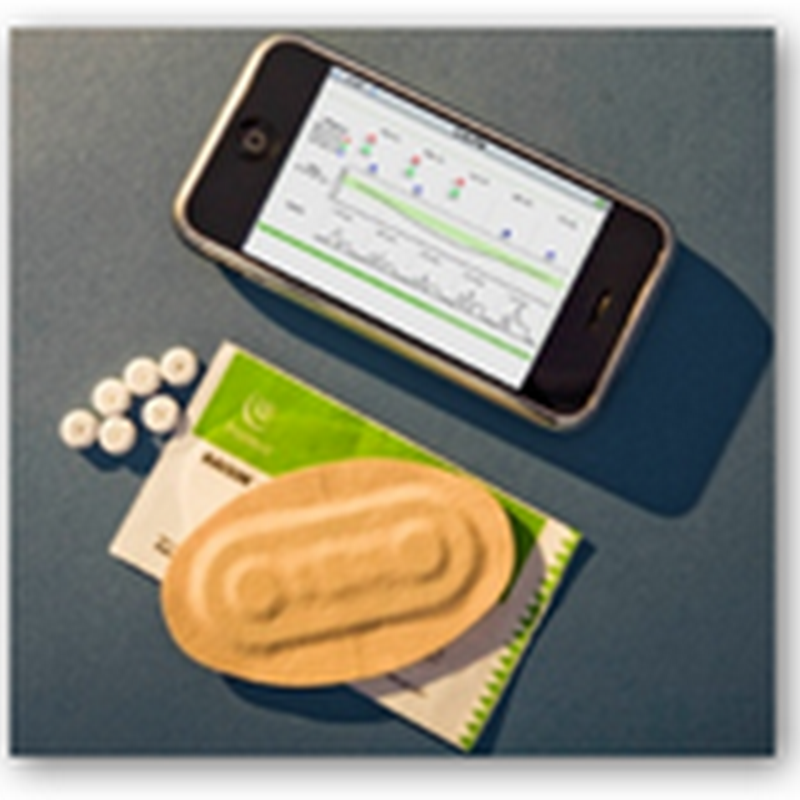
From the website: Finesse is a small, flat, disposable, mealtime insulin delivery patch that is only about a ¼” thick and just a little longer than a mid sized paper clip. Entirely mechanical with no batteries, no electronics, no separate infusion sets. Stays comfortably adhered to your body for up to 3 days through showering, exercising, sleeping, intimacy. To dose insulin during mealtimes, snack times, or for correction boluses, simply squeeze the 2 buttons together on the patch right through your clothing. Anytime. Anywhere. And unlike syringes or insulin pens, no prep is ever needed, it takes only a few seconds to dose, and no one will ever see. It is truly that simple!
Johnson & Johnson's (JNJ) LifeScan unit has acquired a closely held developer of a wearable insulin patch for people with diabetes.
LifeScan acquired Calibra Medical Inc., of Redwood City, Calif., on July 13, said LifeScan spokesman Dave Detmers.
Financial terms aren't being disclosed. The insulin patch isn't available yet, and LifeScan isn't saying when it expects it to become available. The product must meet "a number of milestones" before it reaches market.
Yup when you need investment advice next time, just make sure your broker is not sneaking around with a sling shot in his back pocket:) So far with surveillance cameras and a witness it looks like they are pretty much sure the police may have their man. They say there have been more than 50 incidents that he could possibly connected to.
Evidently there’s no rhyme or reason for where he strikes as it could be a coffee shop, an autism treatment center, (very bad taste on that choice) or a salon. He’s been arrested after a Beverly Hills cop spotted a “slingshot” in his car during a traffic stop and he also had some brass knuckles in the car along with knives, and slingshot projectiles. They went to his home and found even more slingshots so this sounds like it’s more than just a passing phase with a love for a single sling shot. We talk about mental illness and stress today and an article asked yesterday if we are all mentally ill, and you know there’s probably a tiny bit of depression and bipolar in all of us but it does not develop into a mental issue with most of us. This might possibly be a case of “Asymptomatic Depression” and perhaps that was maybe the untapped market this broker was pursuing <grin>. This sounds like an adult “Dennis the Menace” story.
I wonder what other brokers are doing to deal with stress today while counting their money? Stories like this is what got me started on my series called “The Attack of the Killer Algorithms” because in truth that’s a lot of it from the consumer naïve side with mahcines making decisions that we can’t see or get a customer service person to help us with half the time, and in this case, the algos from the other side bit this broker back. BD
Poret was first arrested on June 3, when a search of his vehicle revealed brass knuckles, knives and slingshot projectiles. He was arrested again last week in an early morning raid on his Encino home, where police discovered firearms, bb guns, slingshots and marbles similar to those used in the window-breakings. Authorities believe that Poret could be connected to more than 20 vandalism incidents in Beverly Hills and more than 50 in Encino, as well as several other reports of vandalism that authorities have received in Van Nuys and Topanga Canyon
Now you can have wireless communication from the pump to the monitor. The combo system has already been approved and is in use in Europe. At the website you can view a training presentation that shows how to use it. I had to sneak over to the UK portion of the site as the US side didn’t have all the information updated yet.
The nice portion of the system is that it works undercover and is discreet. The monitor can also be connected to a computer as well. This takes diabetes management to a paperless level with a nice color display. BD
INDIANAPOLIS, July 18, 2012 /PRNewswire via COMTEX/ -- Roche (six:RO)(six:ROG)(otcqx:RHHBY) announced today that it has received clearance from the U.S. Food and Drug Administration (FDA) for the Accu-Chek Combo system for insulin pump therapy. The Accu-Chek Combo system seamlessly combines a blood glucose meter with an insulin pump, which are able to exchange data in both directions via Bluetooth wireless technology. The meter not only enables the user to quickly test blood glucose levels: It allows for operating the insulin pump remotely and by means of an easy-to-handle bolus advisor it provides support in defining the right amount of insulin. With this the Accu-Chek Combo system not only supports a more targeted therapy management, but it also allows for a discreet insulin administration without the need to touch the pump.
About the Accu-Chek Combo system:In addition to being discreet and easy-to-use, the Accu-Chek Combo system also features:
Bluetooth technology for two-way wireless communication between the smart meter and the insulin pump;
A full-color display that brings to life blood glucose data, insulin dose information and pump settings;
A bolus advice function on the meter to allow users to easily calculate and deliver a bolus without touching the pump;
Flexibility to adjust the basal rate to as low as 0.05 units per hour - in increments as precise as 0.01 units; and
An insulin cartridge that holds up to 315 units of insulin, the largest capacity among pumps sold in the U.S.
UCI has been very involved with stem cell research and it’s kind of sad that they went through battles to get the approval to start the stem cell trial for spinal cord damage. In that situation it was maybe a little too late as Geron the company who had been backing and pushing the program announced they were withdrawing from Stem Cell research and would work more with oncology research.
But the good new today has to do with the Alzheimer's study that restored memory in mice and will lead to human trials. I hope we don’t have issues here as this study is using stem cells from human fetuses and we all know what that could bring about. The next move now is for the California Institute of Regenerative Medicine to approve a grant to lead to human trials to continue the research. BD
Human neural stem cells restored memory in mice with brain symptoms similar to Alzheimer's disease, UC Irvine scientists reported Tuesday, opening the door to eventual treatment for human sufferers.
The announcement, made at an Alzheimer's science conference in Vancouver, involves versatile though still largely mysterious neural stem cells grown in the lab by StemCells Inc., of Newark, Calif.
The cells, researchers at UCI and elsewhere have shown, can become many types of cells once injected into the body – restoring limb movement in mice with crushed spines, halting blindness in rats and, now, improving memory and brain function in mice bred to exhibit the kinds of impairment seen in Alzheimer's.
The cells are derived from the donated brain tissue of surgically aborted fetuses, McGlynn said, and can grow readily in the laboratory for use in a variety of scientific settings.
"You can grow up billions of cells in a cell bank and keep them in cryopreserved form," he said.
Once in a while it’s time to take a humorous break and it’s that time. My little canine assistant has some interesting behaviors and does this all on his own so one of those moments that hopefully makes you smile:) I haven’t figured out why he crawls or what fancy the hard drives have but he’s here for support:) He’s perfectly healthy and is not handicapped, this is just what he likes to do and had surfed and and crawled since he was a puppy and sometimes he carries a toy in his mouth when cruising. BD
This is a topic that people don’t like to talk about a lot, self included and there are abuses. You can watch the video and see how the business operates with “for profit” companies. Many years ago in another life I worked with a guy who was in sales as was I for his day job and at night he was a courier for this business. He would pick up and deliver bones and tissues and it was almost to the point to where he could give up his “day job” of sales at any time.
He worked weekends and after hours for the “night” job. Other than that I didn’t know a whole lot more about the business and when I ran across this in the news today it brought it all back for me to think about. This is a business that saves lives for sure with cornea transplants for eyes and other body items, but like anything else in life sometimes it gets abused and you can hear the one story to where they didn’t sew the man’s foot back on. This business has been going on for years. Also there are now some recorded diseases that have been transferred via the processes and CDC makes the statement that they would like to know “where” the parts go. Sometimes it may be ground up parts or other times it’s an entire bone.
PVC pipes as one man states are inserted in the cadaver where bones are removed and sometimes again bodies are not restored to where they are presentable at a funeral. Sometimes patients are not even aware that they are receiving tissue or body parts from cadavers and that should be explained by all means. If we used bar codes, the tracking would be a lot easier for sure. Body parts coming to the US from Europe are not always traceable and there’s no questions asked. It’s amazing when you read through here though how everyone profits except the family of the person who has died and that seems a little unfair to a degree when you think that $80 to 200k can be made from one body in parts.
Public hospitals get paid for use of tissue recovery rooms. When you listen to the man who was convicted for falsifying records he talks about the perks that came along with the job. Burn victims certainly benefit as well as breast reconstruction patients. It almost seems like the work should be in the category of non profit though all the way through as the non profits do the work with collecting tissue but then other companies involved pay the non profits to compensate them. Now that we have diseases such as HIV out there it’s getting to be important to know where the tissues and bones go. Blood and organs have bar codes but nothing for skin and other tissues. Occasionally tissues get recalled as well, again bar codes would help.
There have been death certificates that contained lies about what the person died from and thus so if it were an infectious disease nobody knows. That’s the under ground side of the business to where they operate under the table. Over 300 foreign tissue companies are registered with the US and the FDA has never closed one down and about 1/3 have never had an FDA inspection. The company profiled in the article is RTI and questions were asked about their procedures. Again when you look at the dollars and the fact that some people can’t afford to bury relatives due to economic conditions, should maybe a little bit be passed on to at least cover burial or cremation expenses one might ask? Big corporations even win at the end of life. BD
Human Tissue Banks & How they Operate–Need Bar Codes
RTI is one of a growing industry of companies that make profits by turning mortal remains into everything from dental implants to bladder slings to wrinkle cures.
The industry has flourished even as its practices have roused concerns about how tissues are obtained and how well grieving families and transplant patients are informed about the realities and risks of the business.
It is an industry that promotes treatments and products that literally allow the blind to see (through cornea transplants) and the lame to walk (by recycling tendons and ligaments for use in knee repairs). It's also an industry fueled by powerful appetites for bottom-line profits and fresh human bodies.
An eight-month, 11-country investigation by the International Consortium of Investigative Journalists (ICIJ) has found, however, that the tissue industry’s good intentions sometimes are in conflict with the rush to make money from the dead.
“We have barcodes for our cereals" at breakfast, "but we don’t have barcodes for our human tissues," Kuehnert said. "Every patient who has tissue implanted should know. It’s so obvious. It should be a basic patient right. It is not. That’s ridiculous.”
Distributors of manufactured products can be found in the European Union, China, Canada, Thailand, India, South Africa, Brazil, Australia and New Zealand. Some are subsidiaries of multinational medical corporations.
Le Do-han, the official in charge of human tissue for the South Korean FDA, said the country imports 90 percent of its human-tissue needs.
Raw tissue is shipped in from the U.S. and Germany. This tissue, once processed, is often re-exported to Mexico as manufactured goods.
In 2010 and 2011, FDA inspectors asked RTI to change how it labeled its imports. The company was obtaining Ukrainian tissue, shipping it to Tutogen in Germany, then exporting it to the U.S. as a product of Germany.
While the company agreed to change its policies, there is some indication that it may have continued labeling some Ukrainian tissue as German.
I remember when Coke tried this in Washington with dropping healthcare benefits and used an algorithm in their business intelligence to justify doing so with contract stipulations. That took place a couple years ago. You know I can’t be too upset over the folks not wanting a 401k today based on current market conditions as it is kind of throwing them into the world of the unknown. In addition with 401ks for retirement you are pretty much in a “long” category and now for retirement benefits employees have to compete with the “shorters” out there.
You want the folks to do their job and now you add on trying to stay up with those who short markets, again depending on where the investments are with 401ks. With the extreme weather this year it is maybe not a positive thing to do. The article says the big stumbling point was over a 7 day strike notice and I don’t have the particulars on what all it entails. Well at any rate it appears that cutting off health benefits for striking employees does not look to be an effective bargaining component. BD
GOING INTO a third week of a labor standoff, Con Edison reinstated health insurance for 8,500 locked-out utility workers on Sunday.
Union spokesman John Melia says the company “bowed to public pressure” to restore benefits.
The utility said workers and their families will be covered for all of July, retroactively. Con Ed did not reveal why health coverage was restored.
Local 1-2 filed a petition last week asking the New York Public Service Commission to end the lockout.
The standoff is largely over the future of pensions, which the utility would like to convert to 401(k)s for new hires.
Mergers and acquisitions continue and the latest involves Navigenics which has a genomic company who focused most of their translational work with physicians. Life Technologies is a large public traded company and probably one of their best known announcements in the area of sequencing came a while back with the Ion Torrent Machine which is a desktop sequencing machine.
Scripps also works with Navigenics and there’s an ongoing study that began back in 2009 where each participants genomic information was stored on Microsoft HealthVault. Patients were also encouraged to enter their own information as well. This will be interesting to follow this merger as there are a few competitors out there that also sequence so I seems one by one the partnerships and alliances for sequencing and interpretation seem to be lining up.
Yesterday we had Glaxo purchase Human Genome to add to their research and development of new drugs.
Drugs are getting harder to make and especially with targeting markers as they are varied any many and petabytes of data offer a lot of help but it takes time and then of course the testing and trials are the final move. BD
Life Technologies Corporation (NASDAQ: LIFE) today announced the acquisition of Navigenics, Inc. This acquisition represents Life Technologies' first step in executing against a strategy to build out its molecular diagnostics business through internal development, partnerships and select acquisitions.
"Genetic analysis is becoming increasingly accessible, cost-effective and a critical part of patient clinical management," said David Agus, M.D. co-founder of Navigenics, professor of Medicine and Engineering at the University of Southern California, and author of The End of Illness. "As a result, physicians have more complete and accurate information about the patient than ever before, which is translating into more effective, individualized care programs for patients."
Navigenics' extensive clinical program provides Life Technologies with a leadership position in clinician and patient education and support, which will be leveraged by Life Technologies in building its diagnostics business. The platform includes a network of oncologists, pathologists, and genetic counselors, who will be available to support community-based physicians in the adoption of genetic medicine and assist them in understanding these innovative types of medical information
In addition, the FDA also stipulated a study that those who do acquire HIV while taking the drug be performed to determine if anyone could develop a resistance to it. Data also needs to be collected for pregnant women who are on the drug, for safety reasons to the unborn child. In addition Gilead, the company who makes the drug will be providing follow up tests every 3 months. A patient first has to be tested to make sure they are HIV negative to begin a prescription. There is a concern over whether healthy people should be taking the pill of course or if condom use would drop.
The drug is a combination of two other drugs and has been around since 2004 but the cost may put it out of reach and time will tell the story there as $900 a month is not cheap so we have the usual price concerns there. Some Canadian pharmacies sell it a bit cheaper but still a good size cost at $750 but we all know the warnings of online pharmacies. We still have to hear from insurers as well as Medicare and Medicaid as far as what coverage they will offer.
We all heard about the home HIV test approved by the FDA and I do some consulting work for a company that can make HIV tests even easier to do, 2 second swipe and 2 minutes for results. You can read more at the link below and the test is inexpensive enough, like around $13 and no liquids or complicated procedures involved. So if a lot more folks are going on the drug an easy and affordable test is right in line too so this seemed to be a good place for further mention. More information can be found here at the website.
The link above has addition details on how it works. I also have flipping book below that compares the current tests approved by the FDA and the LifeSaver format.
It makes sense to me if there’s going to be more testing going on, let’s make it simple and convenient for sure for here in the US and worldwide. BD
When taken daily, Truvada (emtricitabine/tenofovir disoproxil fumarate) reduced the risk of HIV infection by 42 percent compared with a placebo.
That was in a clinical trial where HIV-negative individuals had unprotected sex with multiple partners, including some HIV carriers, according to the FDA. Another trial involving heterosexual couples where one partner was infected -- and condoms were used routinely -- found that Truvada reduced the risk of infections by 75 percent.
Truvada is already approved to be used in combination with other antiretroviral drugs for the treatment of HIV.
Most of the hospitals operating without insurance of course are those that are financially strapped. If you read the entire article though there are some interesting points made that lawyers follow the money trail for cases so if one were taking on a case, part of the research of course would to find out what’s available in the till. One hospital in the article set money aside for this but it was only 50k. Depending on the case, it might not even be enough to cover one lawsuit.
Other states do not require hospitals to have insurance and I have even heard cases to where doctors work without it, mostly in Florida it seems. One hospital, Interfaith, exhausted their reserves and has some big dollar amounts sitting out there that are not funded. Other states, like California, have limits set by the law on malpractice cases. I read further in the article and if the hospital is not insured, the next step is to see if the doctor has malpractice insurance and attach as case with that methodology. Hospitals are not even required to tell you they don’t carry malpractice insurance and malpractice for the ER doctors is usually separate and sometimes the hospital will subsidize those policies, thank goodness.
On the partial coverage some had policies to cover smaller and ordinary claims and not for big ticket cases and some had just the opposite. Again as hospitals struggle with money, here’s yet one more area that gets hit. Premiums have also gone up so not good news at all for hospitals that are barely financially hanging on as one case could force a hospital to file for bankruptcy protection. BD
Several of the city’s most troubled hospitals are partially or completely uninsured for malpractice, state records show, forgoing what is considered a standard safeguard across the country.
Some have saved money to cover their liabilities, but others have used up their malpractice reserves, meaning that any future awards or settlements could come at the expense of patients’ care, and one hospital has closed its obstetric practice, in part out of fear of lawsuits.
Executives of these hospitals, most of which are in poor neighborhoods, say their dire financial circumstances and high premiums make it impractical to pay millions of dollars a year for insurance.
Many states do not require malpractice insurance, and New York is not the only city where hospitals go without coverage. Generally the uninsured hospitals are in areas where juries award big judgments, insurance executives say. Some hospital executives say, however, it is better to be effectively uninsured, because lawyers follow the money.
HOTFLASHHAVOC is enlightening, entertaining, humorous, profound, and is a crash-course in what you need to know about menopause. It has the power to be a life-changing experience for every woman.
This film not only sheds insightful light on the confusion stemming from a decade of misguided facts, but conveys poignant stories shared by real women and in-depth interviews with the world’s most noted experts. HOTFLASHHAVOC provides compelling information about menopause that will empower women for the “Second Act” of their lives.