92648

Smith and Nephew To Lay Off 100 Employees To Absorb New Medical Device Tax

When it comes to hip and knee replacements Smith and Nephew seems to have one of the best names out there.  A couple years ago the company claimed it created a 30 year knee and of course we won’t know until someone has one for 30 years but stress tests and other simulations processes they did substantiates the claim.

 
FDA Gives 510K Clearance for a 30-year Knee Replacement From Smith and Nephew

The layoff will affect two facilities with one for the joint replacements and the other for their wound care division which  just received FDA approval for their PICO device about a year ago.  When the healthcare law was created things were different then, but now when we need more tangible product companies more than ever for jobs, the tax is not going to work as was planned.  In other Smith and Nephew news a $2.2 million dollar lawsuit has been filed against the company by the San Diego Chargers related to a Hip surgery methodology that resulted in a malpractice suit.  BD

FDA Clears PICO* Single Use Negative Pressure Wound Therapy System–Instructions for Application Use Provided by a MS Tag (barcode) On Packaging

I have said this many times, give up on the device tax and license and tax the data sellers who make billions and billions in profit and most do not produce a tangible product which is what we need right now. 

One More Good Reason to Tax the Data Sellers– Create Additional Funding for the NIH and FDA From Sources That Otherwise Are Too Greedy to Share & Contribute

Start Licensing and Taxing the Data Sellers of the Internet Making Billions of Profit Dollars Mining “Free Taxpayer Data”–Attack of the Killer Algorithms Chapter 17 - “Occupy Algorithms”– Help Stop Inequality in the US


Feb 01, 2013 (Menafn - The Commercial Appeal - McClatchy-Tribune Information Services via COMTEX) --Smith & Nephew has laid off nearly 100 employees across its units in Tennessee and Massachusetts, the company said Thursday.


The company's Orthopaedic Reconstruction unit is based in Memphis, where it employs about 1,800. Its Advanced Wound Management, Sports Medicine and Trauma unit is based in Andover, Mass. The two divisions were merged last year and operate together as the Advanced Surgical Devices unit.

Smith & Nephew said the layoffs were necessary to absorb the cost of a new U.S. medical device tax.

"The nearly 30 billion tax on medical devices that took effect Jan. 1, 2013 has impacted a number of companies across the U.S.," company spokesman Joe Metzger said in a statement. "Smith & Nephew is not immune from this added expense burden."


http://www.menafn.com/menafn/4e112777-7cb2-4e35-8145-a2c671e21187/Smith-and-Nephew-lays-off-nearly-100-employees-blames-new-medical-device-tax?src=main

FDA Commissioner Margaret Hamburg Interview at Forbes Healthcare Summit

She has one of the toughest jobs to keep everyone happy for sure.  First off she is asked if the FDA has all the data they need and this leads on to a number of comments and answers. She mentions the Sentinel Data Base created by the FDA and and it has about 159 million patients in the data base to query and look for correlations.  This helps identify safety issues.  No matter how good the pre-market it, it doesn’t reflect the “real” world and different behaviors will emerge.  Electronic Medical Record information in the Sentinel data base is a big help.  In 2008 the Sentinel project was started and they did a pretty quick job in putting it all together. 

FDA's Sentinel Initiative Will Need to Embrace Mobility Sooner or Later–Better Sooner Than Later–Data Beyond the Desktop


There are 3 parts to the interview and part two continues below.  She talks about compounding companies and said the FDA needs to make sure there are systems in place to look for oversight.  She states this is a new “gray” area as healthcare has changed. 


She says she would like to see a Deputy director for devices to make sure all gets coordinated and they are making progress but things are getting a little more confusing as products are not fitting into the old framework all the time.


She addresses a question on Health IT and she feels it’s an area where the FDA can work with developers on some of the new devices as well as the users to better understand.  Some apps need regulatory overview and the area is emerging and new thoughts about regulation are needed and it’s an ongoing process and she talks models.  Matthew Herper did a very nice job.  Budgets were also discussed and the negative impact that would take place and to that I say tax those data sellers to help fund the FDA and the NIH and then some. 

So want more money for research, go where the money’s at to where the data sellers get their data for nothing and profits for free…billions in profit and companies, banks, etc. should not object as the employees of all the entities may need some of this research for treatment or a cure someday. 

BD

One More Good Reason to Tax the Data Sellers– Create Additional Funding for the NIH and FDA From Sources That Otherwise Are Too Greedy to Share & Contribute


Panel: A conversation with FDA Commissioner Margaret Hamburg
The Food and Drug Administration regulates a quarter of the U.S. economy, playing a key role in the creation of new drugs and medical devices. How do we balance innovation and safety?

http://www.forbes.com/sites/matthewherper/2013/02/05/fda-commissioner-margaret-hamburg-the-forbes-interview/

Prime Healthcare Defies NLRB Rulings After 3 of the President’s Recess Appointments Were Invalidated by the Court System–We’re Busy Buying Hospitals Now

Oh any loophole goes today and this is what appears to be going on here with the 3 individuals no longer there and this challenge says their decisions were not good in short.  Meanwhile Prime is buying up more hospitals and we all know Prime rushes in and buys when the money’s gone.  St. Michael’s Medical Center in Newark has entered a letter of intent with Prime and is part of Catholic Healthcare East. 

Prime Healthcare Services has reached an agreement to buy Providence Medical Center in Kansas City, Kan., and Saint John Hospital in Leavenworth and both of these hospitals were in financial trouble.  Prime has been doing something a little different in providing some financial relief during the processes.  As a matter of fact the motto now for Prime is “Saving Hospitals” and keeps getting bigger. 

Back to New Jersey again, St. Mary's Hospital of Passaic, N.J., announced it has signed a binding asset purchase agreement with Prime Healthcare Services.  This brings Prime up to 22 hospital now I think plus or minus one.  In addition Prime has has their billing issues too here in California.  This is getting to be an interesting world as people and companies more than ever seem to be making their own rules today.  BD 


Prime Healthcare Services, which owns 21 hospitals in California and three other states, told Reuters on Wednesday that it had informed one of its employee unions that it would not follow an NLRB ruling mandating the collection of union dues even after a collective bargaining agreement has expired, or a ruling compelling employers to provide unions with certain materials during internal investigations.

Prime Healthcare's decision is not unprecedented, lawyers said. In some cases, when a business disagrees with a board ruling, it has chosen to not comply and to fight any resulting unfair labor practice charge brought by a union. 

Such challenges, however, usually target specific rulings. Prime Healthcare is taking the sweeping position that at least two and perhaps all the cases decided in the past year by the NLRB's recess appointees are invalid.

For Prime Healthcare, the main downside in not complying with the NLRB decisions is that it must now fight an unfair labor practice charge that SEIU filed in early January. Disputing such charges can be costly, requiring up to hundreds of lawyer hours. The union has said it intends to file a second unfair labor practice charge over the witness statements in the coming days.

http://www.reuters.com/article/2013/02/01/us-nlrb-hospital-idUSBRE91001320130201

There’s Algorithms In My Orange Juice-Good Example on How Corporate USA Models Work, They Have Many Available to Slip In to Place When New Laws are Created, Planned Out Ahead of Time to Use, Coca-Cola Uses This Planning to Create Nice “Tangible” Products

This is a fascinating story and a great example to educate all on how big corporations work today with Coca-cola and their oranges. juice copy I worked for a few years ago and let me tell you if you have never that experience you won’t understand how the big machines roll but they do.  It’s been going on for years and now it’s even more sophisticated to where corporate America is  ahead of government laws, etc. instead of being reactive. If you are so worried about the government having data on you, think twice as corporate America outdoes data by a long shot and that’s who you need to be concerned about.  If you follow along with this story, you might see this a little clearer.

Our government by contract is “reactive” and doesn’t use a lot modeling from what I see outside of the DOD with warfare imagewhich way out there but all other agencies are more on the reactive side as most don’t know how to do it.  Congress was just entertained by IBM Watson and from what I have read nobody sees it as a tool to help make laws as it could do some tremendous modeling.  
By contrast banks like Citigroup are using the technology and algorithms to move more money into their tills.  You don’t see it as a consumer but it’s done one algorithm at a time.  You can’t talk to those algorithms or see them and thus most of world population remains bliss and frustrated at the same time, what’s moving all the money..those algos!   In view of this having an attorney run the SEC with where technology is today is crazy as a person with a legal background is pretty much going to rely on old methodologies to fight fraud and it’s not that world out there. 

IBM Watson Going to Work At Citigroup on Wall Street–Congress Didn’t See Big Data As A Tool (Hadoop Framework) When They Had Their Chance…For Consumers The Attack of the Killer Algorithms–Chapter 22

I read where the prosecuting attorney in the Frontline special on prosecuting bank fraud is retiring and he made the comment that the DOJ has changed and is not the same place it used to be, well the criminals have changed and so it should not be the same place and better technologists to prosecute such crimes are needed at the top. Watch the 5 videos on the left hand side of this blog and they will bring you up to date with the “real” world of fighting fraud.  How much into Technology is Holder one may ask?


Back on topic here it is interesting coke copytoo how the Minute Maid concentrated Orange Juice model came from medical technology with a pharma engineer  used the same/similar processes as what is done with concentrating blood serum.  What also makes this a nice story as far as examining the technology is here we have a company that produces a tangible (big kudos these days for those companies in the US as they produce jobs) using technology to utilize every part of the orange with using “intelligent algorithms” and as long as it’s healthy that’s a good thing.  Quote from the article below..see where this could help model laws yet? 

“Black Book isn’t really a secret formula. It’s an algorithm. Revenue Analytics consultant Bob Cross, architect of Coke’s juice model, also built the model Delta Air Lines (DAL) uses to maximize its revenue per mile flown. Orange juice, says Cross, “is definitely one of the most complex applications of business analytics. It requires analyzing up to 1 quintillion decision variables to consistently deliver the optimal blend, despite the whims of Mother Nature.”

Further, we have an huge imbalance in the US with the valuation of some of the algorithms floating around out there and that has been market generated and if you don’t have some tangible product attached, then all you have is match and all those formulas are not accurate either, especially those designed to make money. I watched last year at some of this craziness with putting huge valuations on Facebook for one example and there are more like it out there too, but what the heck is a formula worth?  What the Street pumps it up to be I guess as you can do anything with software.  It has value but not to the extent of the financial markets Algo Duping” everyone in sight for goodness sakes.  Refer to the left side of this blog and watch the documentary “Quants, the Alchemists of Wall Street” for a further understanding and the link below for another video with companies such as NASA, Ford, T-Mobile and others discussing how to find value with their data and using their quants and looking for the Data Scientists (Oxymoron terminology ) out there to help them find value.

Big Data/Analytics If Used Out of Context and Without True Values Stand To Be A Huge Discriminatory Practice Against Consumers–More Honest Data Scientists Needed to Formulate Accuracy/Value To Keep Algo Duping For Profit Out of the Game


So are you not convinced yet how math and formulas can be useful and others attack you?  There’s both out there.  The “snake in the grass algorithms” want to take your money and give you nothing in return, but here with Coke and Minute Maid, you get a beverage..am I making sense yet on tangible versus intangibles?  Coke is using predictive analytics in a positive way, not to shame you into the fact that the fact that you may be a little over weight or a little too sedentary is dragging down the US economy.  Algorithms for profit and the companies that do that market it as an art will distract you and it create a lot of ill will and pit people against others in battles that should not exist with a report that uses formulas and math to substantiate their point of view, but is is real?   Refer to the left and watch the video “Its all about Context” for more.  It’s good and you will also find out there’s no algorithm for the perfect butt either:)  It is about context and how not to get duped with the marketing out there.


So in summary as long as Coca-Cola is using algorithms to make a tangible good product, hats off and our lawmakers should wake up to this fact and see what companies do and how they make their money and find value.  Boy we could use some real value in Washington today with less focus on stuff that doesn’t take our money instead of the rhetoric about women's’ health and all the other stuff that rumbles around there that does nothing except create more soap operas for the papers.  Sorry journalists I’m not trying to put you out of business but want to get more quality information to report about:)

Time to tax the data sellers in the US making Billions and Billions in profit that and so many offer nothing tangible other than to do risk analytics that are flawed and hurt consumers.  Again the Presidential Job Commission shut down I read and it goes to prove one point, you can’t fight the good and bad math out there with old methodologies as it doesn’t work when corporations are such miles ahead with plan A, B, C, D, E, F, G, H, I, J, K..you get the picture to slide in.  Specifics are needed too as without it you could have millions of models that could be used and are not accurate. 

One More Good Reason to Tax the Data Sellers– Create Additional Funding for the NIH and FDA From Sources That Otherwise Are Too Greedy to Share & Contribute


We can fund a lot of healthcare like the NIH and FDA this way and get rid of the tax on medical devices, they create jobs, remember that and hopefully along the way we will get more folks in key spots that embrace technology and a few that can walk and chew a little code…Coke did it so what’s wrong with emulating something with intelligence that works and get started on getting rid of some of the inequality in the US?  A little satire to end this and I laughed about this study to a degree but now I’m not laughing much anymore as the fear of math that Wall Street doesn’t exist and the majority of the rest of us seem to be afflicted with this fear of math…seems to be a bottom line here to the fear of not facing the world of technology head on…it just is what it is.  What do you think, should be start shoving those in DC that make laws into MRIs and see if they are afflicted since they are at the top of the heap:)

“Algo Duping” – PLOS One Journal Publication Explains Why The Fear of Math Plays a Big Role As One Underlying Reason We All Get Duped And Those Who Don’t Fear Math Take All the Money, Gradually, Using “Mathematical Formulas & Algorithms”


The longer we are bliss and hold out, the more money Wall Street makes from all of us not addressing math and fictional formulas so hopefully maybe this words of this scientific study and the fact that the money is all in the 1% with the people using math or paying or people to create it for them continues to create inequality and it might be a time for all to rise up here as it’s not going to change or go away.  BD


The Black Book model includes detailed data about the myriad flavors—more than 600 in all—that make up an orange, and consumer preferences. Those data are matched to a profile detailing acidity, sweetness, and other attributes of each batch of raw juice. The algorithm then tells Coke how to blend batches to replicate a certain taste and consistency, right down to pulp content. Another part of Black Book incorporates external factors such as weather patterns, expected crop yields, and cost pressures. This helps Coke plan so that supplies will be on hand as far ahead as 15 months. “If we have a hurricane or a freeze,” Bippert says, “we can quickly replan the business in 5 or 10 minutes just because we’ve mathematically modeled it.”

Coca-Cola bought Minute Maid in 1960. The juice company had been founded during World War II by pharmaceutical engineer Jack Fox, an expert at concentrating blood serum, to make OJ concentrate for a military contract. Today frozen orange juice from concentrate makes up less than 4 percent of the entire U.S. orange juice market, according to Coke, and is a tiny piece of Minute Maid sales. Instead the beverage giant has thrown its efforts into fresh juice, doubling global volume sales from 2004 to 2011. Of Coke’s 15 brands that each generate at least $1 billion in revenue annually, four are juice-based drinks: Minute Maid globally, Simply Orange in the U.S., Minute Maid Pulpy in Asia, and Del Valle in Latin America.

Cutrale’s experts use satellite imaging to monitor crops in Brazil, so they can order growers to pick their fruit at the optimal time dictated by Black Book. The companies constructed a 1.2-mile underground pipeline from Cutrale’s Orlando-area processing operation to Coke’s packaging plant to transport juice that previously required 70 tanker-truck trips daily.

In peak season—roughly April to June—oranges can go from grove to glass in less than 24 hours. Fiber-optic cables keep computers at Cutrale and Coke’s juice bottling plant in constant contact so juice is piped more efficiently. Inside the bottling plant, “blend technicians” at a traffic control center carry out Black Book instructions prior to bottling. The weekly recipe is tweaked constantly. Natural flavors and fragrances captured during squeezing are added back into the juice to restore flavor lost in processing.

http://www.businessweek.com/articles/2013-01-31/coke-engineers-its-orange-juice-with-an-algorithm#p1

Chinese Man Builds Homemade Dialysis Machine To Keep Himself Alive for 13 Years As He Could Not Afford Treatment

He couldn’t afford going to the hospital either according to this imagearticle as they did find out about him and it was still off limits with insurance even as the basic insurance only covers about half the cost and then other insurance or the patient has to pay the other half..sound like the same expense issues we have here.  In addition the nearest hospital is too far away and over crowded for him to be cared for there.  His  money ran out after 6 years to be cared for at the hospital   The poorest in China struggle for pay medical bills for serious conditions.  At the link at the bottom you can read the entire article and see more pictures as it appears his entire set up is in his bathroom.  He makes his own solutions and the cost for him with his homemade machine is only 12 percent of what he would pay at the hospital.  I sure hope things don’t get to this point here with healthcare.  BD


Three times a week, Hu Songwen sits on a small toilet in his home in a rural east China town and fires up his homemade dialysis machine.

Hu, who suffers from kidney disease, made it from kitchen utensils and old medical instruments after he could no long afford hospital fees.

He was a college student when he was diagnosed in 1993 with kidney disease, which means waste  products cannot be removed from his blood.

He underwent dialysis treatment in hospital but ran out of savings after six years. His solution was to create his own machine to slash his costs.

'The cost for each home treatment is only 60 yuan (£6), which is 12 per cent of the hospital charge for dialysis,' Hu said.


Hu makes the dialysis fluid by mixing potassium chloride, sodium chloride and sodium hydrogen carbonate (bicarbonate) into purified water.

For the treatment, he inserts two tubes into his arm, which are connected to his dialysis machine. The blood is pumped out of his arm through one of the tubes, is filtered and then returned to his body via the other tube

Hu's kidney disease means he has dangerously high levels of the minerals potassium and sodium in his blood. So he created a dialysis solution that has similar levels of potassium and sodium to healthy human blood.

When the blood and dialysis fluid go through the machine, these excess minerals are encouraged to go from his blood and through the membrane to the fluid. This removes the waste products from his blood - and the fluid is later thrown away.

This spontaneous movement of particles from a high to a low concentration through a membrane is known as diffusion.

The 'clean' blood is then pumped back into his body.

Although a Communist country, China does not have a cradle-to-grave free-at-the-point of use healthcare system. 

Instead around half of the population buy basic medical insurance which covers for half the costs of their healthcare. The remainder is paid either by patients or their health insurer

However, this leaves the poorest in China struggling to meet medical bills for serious conditions.

http://www.dailymail.co.uk/health/article-2266412/Chinese-man-kept-alive-13-years-HOMEMADE-dialysis-machine.html


Aetna Payment of $120 Million To Settle 15 Year Ingenix/United HealthCare Out of Network Erroneous Payment Algorithms Cuts Income for 4th Quarter

Here’s one more settlement and it’s affect on profits and I must say that for their time and what Ingenix was doing with their algorithms they had money from both sides, first from the short payments and secondly from other companies like Aetna and Health Net for another licensing the use of the customary fees and charge software.  This is the AMA class action lawsuit that finally settled as United settled their own first and there’s most lawsuits out there floating around over this as well with tentacles everywhere as surgical centers and more filed their own cases.  Here’s the back link on the Aetna settlement and it certainly says one thing today, get to know and see your algorithms.  You have to admit the Ingenix algorithms had some profit making algos that ran for many years but of course it hurt the doctors, hospitals and consumers with flawed data. 


One More Court Case Settles for $120 Million With Aetna For Around To 13 to 15 Years of Short Paying Doctors Using Defunct United Healthcare (Ingenix) Data Base for Out of Network Reimbursements


Ingenix Data Base Has Some Long Reaching Legal Tentacles with Aetna, Blue Cross, Blue Shield, Humana


As a matter of fact, one state, New Jersey and their legislature has become smarter in that area too with asking to see the “algorithms” and not the song and dance that substantiates rate increases.  Here’s a clip of the wording use and they want the algos that create the development of the software, and this is the same type of stuff the SEC needs to after for that matter if we can every get past the old paradigm that an attorney is the best occupational area to select an individual from to run the place.

New Jersey Legislature Getting Smart– Bill to Modify Claim Procedures to Include Asking For Insurance Company Algorithms-Bill A3334


Some of the new areas in addition to buying up health payer technology companies include become a partner with Costco to sell their insurance in California and a few other states and you can find their software they are selling to consumers in Best Buy, mostly tracking and financial offerings there.  In addition they also bought Coventry Healthcare last year for $5.7 billion.  Doctors in California also have an active lawsuit in progress that goes back again to out of network payments and some of these doctors had patients receive letters telling them their doctors were no longer in network and that was an error to be corrected and in Texas (video at link) about 130 doctors were told they were no longer going to be on contract with Aetna.  These are just a few examples and complexities are there with all insurers and is is any wonder the states are telling the Feds, '”go ahead and negotiate with the insurers and set up the exchange”….nobody wants to do the complex contract negotiations and have their head on the block if and when paying claims or some other function creates discrepancies with the algorithms that run the working formats of the IT infrastructure laid out in the contracts. 

Costco Selling Aetna Health Insurance Plan to Members–A Few Days Ago Costco Became a Pharmacy Benefit Manager

California Doctors Sue Aetna For Routinely Denying Out of Network Patient Access–Grading on the Curve Algorithms Versus Individual Patient Assessments?


Things also get interesting here with intellectual properties with a former software partner now suing them for patent violations, HealthTrio filed a suit that has to do with their personal health record offering technologies. 

HealthTrio Files Suit Against Aetna Over PHR and HIT Technology Patent Violations


Down where I am at the in the OC they are pretty involved with Health IT in the medical records business with their purchase of Medicity which was already being implemented at Hoag Hospital at the time of purchase.  With United Healthcare buying up the big physician associations here in the OC and up in Long Beach, this gets interesting with putting all the IT infrastructures together. 

In case of something going really out of whack they do have a reinsurance plan in the Cayman Islands in place and I think it is still there to cover any Medical Loss Ratios that hit 104% or more.  In addition to keep up with the competition we have yet another purchase PayFlex which is a health savings plan software platform.  They may have a ways to go their to compete with United/Optum Bank  as they have their own bank with over a billion on deposit from Health Savings Accounts. 

So again today if you just look at health insurers being only that, look again as many have Health IT tentacles all over the place and they all have dueling algorithms for profit.  Doctors don’t care much for this as those algorithms always hit them in the pockets and the provisions of contract change so much some have a hard time figuring out exactly what they do want as more roll out pay for performance efforts substantiating the myth that this will save huge amount of money, small amounts possibly but not huge and of course insurers with their Health IT interests want to make sure their software for hospitals and doctors meets the current certification standards too through the government ONC office division of HHS. .  Again I think Aetna is playing catch up here to United as well as they have 3 that I can think of, EHR systems they sell.  BD


HARTFORD, CT – Aetna reported fourth quarter 2012 earnings today that were 49 percent lower than 2011, as the nation’s third largest insurer took one-time charges related to the settlement of a $120 million reimbursement settlement announced last month.

Fourth-quarter operating earnings were $317.0 million, or $0.94 per share, while full-year earnings totaled $1.77 billion, or $5.13 per share. Net income for the fourth quarter of 2012 was $190.1 million, or $0.56 per share, and includes $0.44 per share of charges for other items, primarily a litigation-related settlement, offset by $0.06 per share of net realized capital gains. Full-year net income was $1.66 billion, or $4.81 per share.

Rohan will continue to lead Aetna’s integration efforts for its proposed acquisition of Coventry, which is expected to close in mid-2013.

“The management changes we are making ensure that we have Aetna’s strongest leaders focused on driving our growth strategy across our core and emerging businesses,” said Bertolini. “We have a unique opportunity to drive positive change in the healthcare marketplace by fundamentally changing the relationship between health plans, providers and patients to one focused on improving the quality of care as a way to reduce costs.”

http://www.healthcarefinancenews.com/news/aetna-4q-earnings-drop-due-lawsuit-settlement-charges?topic=03

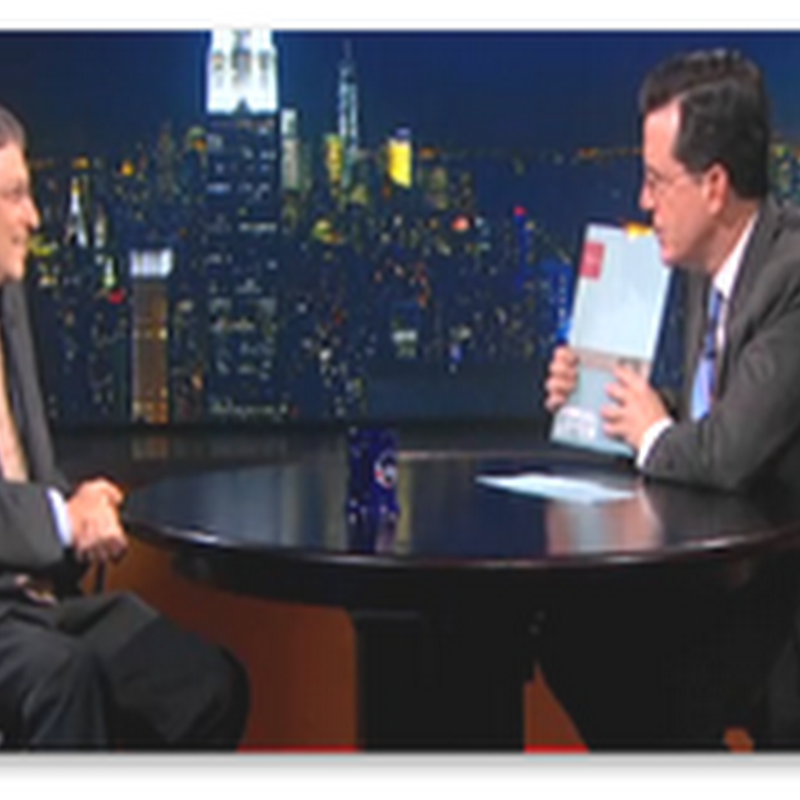
Bill Gates Visits The Colbert Report–Talks About Data and Tracking Money To See Results With the Gates Foundation–Only 250 Cases World Wide of Polio

This was a first for Bill Gates and Melinda Gates has been imageon the Colbert Report a couple times.  All the Gates Foundation discussions revolve mostly around healthcare and education.  Bill Gates talks about polio and the results seen on eradicating the disease.  Colbert asks why are you helping other countries instead of the US and Gates explains the focus in the US is education.  Polio was down to 250 cases in the world last year and the next report will say zero. Bill Gates says passion is ahead of data but it is part of the passion. 

Colbert asks if other countries know if Bill Gates is an American.  He asks Bill Gates if he misses the intensity and coding at Microsoft.  Bill Gates says his approach to technology is a lot geekier than Steve Jobs was.  BD

Melinda Gates Talks About Family Planning– Steven & Melinda Foundation” Returns (Video)


http://www.colbertnation.com/the-colbert-report-videos/423362/january-30-2013/bill-gates

Preventive Medicine Saving Money, Not Quite Says New Study So Your Body Is Not Sinking A Big Hole in the Economy But A Huge Increase of Additional Stats, Reports With Media Stir Sets the Stage For Corporations To Acquire More Data to Sell For Profit

I’m glad this report came out and it’s common sense.  Sure there are routine items we have checked when we visit the doctor and education and awareness are key for sure and endeavoring to live healthier life styles.  This should make many feel good and I have said for quite a while that the messages sent even to making people feel like evil twins has been horrible.  I am not saying disregard your health at all here either as we do need to listen to our bodies as well as follow some basic common sense with seeing a doctor when we should.   With the onset of big data there’s this big rush to get all the data we can get our hands on as we might be missing something.

Sure some of it is good when analyzed in clinical areas to help find which drugs work better and genomics is helping that a lot with sequencing and defining specific targeted genes.  We will always have studies but take a look around you and use common sense and with so many devices, apps, etc. they all want your data, and some is de-identified.  The real reasons insurers put so much of this out is that they want the data to determine risk and that’s the bottom line. Some of us have more risk than others, yes, but the mass media we have had with stories over and over and over about consumers being fat or sedentary or owning cats that kill birds, etc. have been way out there.

Some of this I call Algo Duping and our economy didn’t get this way because you are 30 pounds overweight, it was created on Wall Street, but that doesn’t mean not thinking about and finding a method to lose it.  Some how the folks that want to make a buck come out with these reports that say we can save trillions and billions and it’s a farce.  There are savings with technology too that can be realized but nobody including me knows what new disruption will appear in healthcare tomorrow, but there will be one, that I know:)  As I have always said education is the key and this crazy merry go round with insurers wanting immediate behavior change or the US financial ship is going to sink is crazy.  As the one comment says below if you start giving extensive preventive care to more who do not need it, it will become very expensive; however it does create a lot data to sell and some insurers are into that hot and heavy as big profits in the millions and billions exist. 

Media and Press Releases In Healthcare That Go Nowhere–Marketing to Sell You Analytics With Using Fear and Misplaced Guilt Overtones As a Theme

Getting into a wellness program is good as long as your data doesn’t have to be sold for profit when you participate but you don’t know as privacy laws are too ignorant to protect or advise you through any kind of regulation.  Big data can be helpful and especially with genomics as that’s all you have with working with huge data bases. A lot of the risk with predictive scoring can be absolutely wrong too and with money making algorithms today, that is yet another area we have to watch out for. 

Hiding, Falsifying, And Accelerating Risk Has Become the Achilles Heel of the US Economy As the “Real” World” Clashes With the Values Created From a World of “Fictional Values” Of Formulas and Math

Senior care requires more follow up as we get older and that’s a fact that won’t change and again according to this report 75% of healthcare spending is not going towards preventable chronic disease, again they want the data for predictive analytics to combine and score you with all kinds of other data that may or may not be credible, but it will sell the analytics software like hotcakes.  We do need to excise tax the data sellers as when nobody regulates we get all kinds of additional analytics coming our way, accurate and designed for profit. 

”Hey dude let’s crunch some numbers and see if we can come up with some analytics to sell and make millions”


A few years ago, and ahead of my time I did an interview with Proto magazine from UMass and the woman interviewing me was a very bright young journalist and pushed me a bit about rogue algorithms and this was when nobody knew what an algorithm was in the general public.  At that time about 4 years ago I said “there algorithms and formulas created for accuracy and algorithms and formulas created just to to make money and they should be the same in outcome, but they don’t” and this was before the crash of the stock market too. 

One last thought here on the data selling here since it makes billions in profit as that we should license and excise tax the data sellers.
  Consumers would win here as finally there would be a federal website to look up who sells data and what kind of data and who do they sell it too…transparency at last if we can break a little digital literacy into some lawmakers.  There’s so much profit in selling data and the web site could become quite large in content since so many are making money this way but that’s ok, I can deal with that:) 

Look at what else we can do here with taxing the data sellers, fund the NIH and the FDA.  The money it sitting out there to give the agencies huge relief if someone opens their eyes and we can all win and the greedy data sellers can contribute back.   Taxing data sellers would mean everyone, banks, companies, social networks, device companies you name it and it would be modeled just similar to a sales tax so no big model to create just a few modifications to make it work.   So hopefully we will be seeing less of these absolute “exaggerated reports” on the trillions and billions that companies promise to save as it just won’t happen in those amounts at all.  Watch the top vide on the left hand side of my blog and see how these reports suck you in and how they can play games and market formulas, a good education.  BD


One More Good Reason to Tax the Data Sellers– Create Additional Funding for the NIH and FDA From Sources That Otherwise Are Too Greedy to Share & Contribute


Since about 75 percent of healthcare spending in the United States is for largely preventable chronic illnesses such as Type 2 diabetes and heart disease, providing more preventive care should cut costs.

.

In a report released on Tuesday, the non-profit Trust for America's Health outlined a plan "to move from sick care to health care" by putting more resources into preventing chronic disease rather than treating it, as the current system does. There is a strong humanitarian justification for prevention, argued Trust Executive Director Jeffrey Levi in an interview, since it reduces human suffering.

"Preventive care is more about the right thing to do" because it spares people the misery of illness, said economist Austin Frakt of Boston University. "But it's not plausible to think you can cut healthcare spending through preventive care. This is widely misunderstood."

One big reason why preventive care does not save money, say health economists, is that some of the best-known forms don't actually improve someone's health.

For instance, 217 high-risk smokers would have to undergo a CT lung scan for one to be spared death from lung cancer, according to a database of studies maintained by Dr. David Newman, an emergency physician at Mount Sinai School of Medicine in New York City. One hundred post-menopausal women who have had a bone fracture would have to take drugs called bisphosphonates in order for one to avoid a hip fracture. 

By comparison, only 50 people with heart disease must be treated with aspirin for one to avoid a heart attack or stroke, making this a good buy.

"If you start giving preventive care to more people, many of whom won't benefit from it, it's going to be very, very expensive," said Tufts' Neumann.

http://www.reuters.com/article/2013/01/29/us-preventive-economics-idUSBRE90S05M20130129

Woman Wakes Up at Hospital in Brooklyn With Man Groping Her in the ER

How about finding out you have a level 2 sex offender in theimage bed next to you, not what I would want.  He crawled into her bed in the ER room.  He just got out of prison a couple weeks ago.  The hospital has security and she got a hold of them immediately and the police came out and took him away.  She screamed and nurses came running.  She had been medicated and was sleeping.  We hear occasionally of staff at hospitals getting out of line but this is the first I had heard of one like this.  The security staff  says though that more security is needed at hospitals.  BD 


http://abclocal.go.com/wabc/story?section=news/local/new_york&id=8972647

MMRGlobal (MyMedicalRecords.Com) Files Complaint In California Against Walgreen For Technology Patent Violations

Walgreen has also been on a pretty expansive acquisition route with their European investment/purchase of Boots Drugs Stores in the UK so I am not sure if they fall into this filing or not butimage domestically they have made some large drug store purchases in the last few years such as Longs, Duane Reade and more.  Walgreen also operates their own branded retail clinics and recently satisfied their differences with Express Scripts in addition to doing a business swap with Omnicare a couple years ago to acquire Apothercary RX pharmacies. 

Walgreens is Making Another Purchase From LaFrance Holdings To Include USA Drug, Super D Drug and May’s Drug Stores Located in the US Southeast

Being the patent violations involve medical records, Walgreens does have their chain of Take Care Retail Clinics which I guess could be involved somewhere along the line as they use a medical records system from Greenway to enter patient information and connect to a PHR.  I wrote about this a short while back as anyone in the store pharmacies would have access as well as in the actual clinics to medical records, so there could be a lot of activity with sending/receiving information that violates current filings without licenses. 

Walgreens Expands Take Care EHR Medical Records to be Available at All Drug Store Locations for Reference–Not For Me I’d Rather Use My PHR And Choose What I Want To Share…

I had included a document on another post that lists all the patents so I’m sure this one is on the list to reference for additional IP information on the filing and you can use the link below to find it.  BD


MMRGlobal Provides Listing of Health IT Patents As They Pertain to Personal Health Record Technologies


Sources now tell us that, MyMedicalRecords, Inc. has just filed a complaint for patent infringement against Walgreen Company (NYSE:WAG),  in the United States District Court for the Central District of California. 

The complaint, case number CV 13-00631, should be available on the court’s website http://www.pacer.gov/ starting Wednesday. 

As detailed in the complaint, MMR alleges that Walgreens infringes on MMR’s personal health records patent, specifically its US Patent No. 8,301,466.  The complaint seeks damages as well as a permanent injunction.

In an earlier press release, MMR announced that it has been investigating potential infringements by various groups including, but not limited to, retail pharmacies and laboratory systems as well as hospitals, physicians and other healthcare professionals, using email, facsimile, file upload and voice. It appears that MMR is making good on its statements that it will protect its patent portfolio and any other IP it holds.

http://www.biomedreports.com/20130130120928/mmr-alleges-that-drug-store-giant-walgreens-infringes-on-health-records-patent.html

Readmission Analytics Not Much Better Than Flipping A Coin, Large and Poorest Hospitals At Risk Of Facing Larger Fines, CMS Needs Some New Math Models and Algorithms

Well this appears to have been a straight linear calculation that went south and even it if were to be done in a linear basis, oh my gosh, trying to find relationships with such varied data would require some real stretching of a formulas for sure.  Everyone was looking for that “magical algorithm” to allow this predictive analytics calculating to take place and it has a fail.  You can’t relate everything in data.  We have folks still chomping over at the Heritage Group sponsoring that $3 million carrot and it looks more like a “gaming site” and I though the project was nuts to begin with but former HHS director Leavitt got sucked in to this one too thinking the magical algorithms would some how just nail all this information.  I wrote back in August of 2011 about it really not going anywhere other than a few code modules that might be produced of some use. 

So What’s Going on Over at the Heritage Health Prize Competition to Predict Who Ends Up Being Re-Admitted to the Hospital–A Lot of Mathematical Algorithms For One…

There have been others like the WellPoint publicity stunt for the $10 million dollar prize for solving healthcare and here we are still not solved at anyone who works with data knew that was a farce, even back then.  With the way the formula is set up and in a research letter published by the Journal of the AMA, the teaching hospitals and safety nets are the ones at big risk who need the money are the ones to be hit, so what are we doing here? It was also quite entertaining to see HHS put on that Facebook contest which went nowhere but when you have the markets on Wall Street putting out press on the value of the stock to drive it up, it rolls over into other places with inflated value which we all know after the IPO, showed its face along with rogue algorithms that cost investors some money.  Folks that are not into the mechanics of data just kind of grab on to this stuff in the media not knowing if is matters or not. 

To quote Charlie Siefe in one of his lectures you get something along this line, “well the formula has a square root in it, and the story has been all over the news in the last few weeks, so it must be good”…yup seen that a lot and it still happens out there.  You can watch that video on the left hand side of my blog in the education area and he will tell you about real math and formulas and how it’s marketed and skewed.  My favorite one he mentions is the clinical study about the fish and neurological abstract with measuring the brain in the fish with responses…the fish was dead (grin). 


Hospital leaders have called for a redo of this and I don’t blame them and I wonder myself if they will even be able to come up with one unless they do one that is personalized for each hospital with goals as that’s the only way it would come close.  I spent many years in sales and I didn’t have the same quotas as my co-workers, shoot mine were always very high but I was a bit of an over achiever too.  Here of late too I have also called the ratings sites bunk on giving grades to hospitals, same reason applies with not comparing apples to oranges. 

How can UCLA that does procedures that maybe only 2-3 hospitals do in the country and see some of the sickest patients get a “C” and frankly I don’t blame the Harvard hospitals for disputing those ratings either as some of them are in the same boat.  As things in technology change some things don’t work and go by the way side and those are one that nobody would miss.  Sure keeping a listing like a Yellow Pages is fine and allow comments but cut out the high school grading and get more accurate information out there with fewer dead doctors for one. 

Physician Rating Sites Are Seeing Fewer Reviews These Days–Flawed Data Catching Up Along With Loss of Value As Consumers and Doctors Lose Interest?

Well time will tell on what happens here with this flawed system as it’s not going to make any friends and when anyone gets judged on flawed analytics that are not accurate, nobody will be happy.  We just need some hybrids in running some executive departments today, some with a little computer science or IT backgrounds as attorneys running everything is going to sink us and you can see where we are today as they duped, and see that same square root there making it look good:)  We really need executives who can walk and chew a little code or IT as to have to rely on staff for everything and not be able to make sense out of data mechanics is like working with one hand tied behind your back. 

On the same topic, I have had analysts ask me questions about code.  They are the experts on doing their spreadsheets, not me,  and drill down and use the software that developers and code makers create.  When I wrote my medical records system, the doctor knew it better than me as far as using it and that’s the way it goes as I was writing code and not seeing patients:)  Point made here is that having some kind of hybrid in these executive jobs would really be nice and save time and offer a new look at leadership with not ignoring technology’s impact and that means more than just having an executive who can use an IPad.  The people who use the software are better at using it than most developers by a long shot. 


If you feel you have been duped or want to learn more about it, watch the 5 videos on the left and it will give you a new point of view here on how this really works, it’s all code and IT infrastructure running on servers 24/7 handling the the results, and humans put in the parameters.  Here’s the same videos as featured on my Algo Duped page.   One more comment here and a link is to a post and video about the value of data.  This is a good video on how companies represented like Ford, NASA are all in a forum talking about big data and how to work with it and their hopes to find the “miracle data scientist) which is an Oxymoron as this is not splitting atoms, to help them find the answer.  

When people guess and the need for greed with flat out creating analytics one can pitch and sell, it gets out of context and this is the biggest issue facing consumers today.  The gal from T-Mobile in the video is not proud in when she comments on their analytic and says some of what we are doing is “silly”.  So her issue is getting rid of silly and you will hear them talk about company quants the folks who create the mathematical business models) and about half way through it gets rolling. We can’t use nonsense queries and models created to make money (we learned this from the banks) only  that will end up hurting consumers and too much is already happening and we come back to the formula with the square root that dupes everyone to think it has value when it does not.  

CMS is not trying to make money but they get duped too on what works and what does not with math and formulas.   All formulas are not created equal and if you watch the Quant video documentary at the left some former quants explain it to you and how you get sucked in.

Big Data/Analytics If Used Out of Context and Without True Values Stand To Be A Huge Discriminatory Practice Against Consumers–More Honest Data Scientists Needed to Formulate Accuracy/Value To Keep Algo Duping For Profit Out of the Game


In April, doctors Karen Joynt and Ashish Jha wrote in the New England Journal of Medicine that the federal policy of penalizing hospitals where patients are more often rehospitalized within 30 days was misguided, unfairly targeting those in poor areas with large minority populations.

In a research letter published Tuesday by the Journal of the American Medical Association, the researchers, who are from the Harvard School of Public Health, added some heft to their argument.

They looked at penalties assessed against 2,189 hospitals and found that the largest hospitals and those that are teaching hospitals or safety net hospitals, meaning they care for the highest portion of poor patients, were most likely to have their payments docked.

The likelihood of a person returning to the hospital after a heart attack depends a lot on housing, financial stability, and other socioeconomic factors, she said.

http://www.bostonglobe.com/business/2013/01/28/imperfect-measure-harvard-researchers-weigh-problems-with-hospital-readmission-rates/WMUxuJp0r9yKPDwX6CTefL/story.html

New York-Presbyterian Hospital To Take Over Debt of New York Downtown Hospital Located Near the Financial District

We are still seeing hospitals without enough money andimage here’s yet one more that has already been affiliated with NY Presbyterian and this cements it.  The state has not been interested in bailing out hospitals for the most part and due to it’s location it responds to many emergencies, like the 911 attacks and a few more.  This is hospital with a high percentage of Medicaid patients as well as uninsured.  This is right in the Wall Street district but you don’t see any banks helping out here at all.  Greed is still alive.  BD


Manhattan’s only remaining hospital south of 14th Street, New York Downtown, has found a white knight willing to take over its debt and return it to good health, hospital officials said Monday.

NewYork-Presbyterian Hospital, one of New York City’s largest academic medical centers, has proposed to take over New York Downtown in a “certificate of need” filed with the State Health Department. The three-page proposal argues that though New York Downtown is projected to have a significant operating loss in 2013, it is vital to Lower Manhattan, including Wall Street, Chinatown and the Lower East Side, especially since the closing of St. Vincent’s Hospital after it declared bankruptcy in 2010.

http://www.nytimes.com/2013/01/29/nyregion/rescuer-appears-for-new-york-downtown-hospital.html?_r=0

Johns Hopkins Performs Double Arm Transplant Little Over A Month Ago and Has Movement in One Arm So Far

This is great as he lost all four limbs and served the country and was hurt in Iraq.  It was just done a little over a month ago and he already has some movement with the one arm.  Poor guy doesn’t have legs either so this is big for him.  BD 


Twenty-six-year-old Brendan Marrocco was the first soldier to survive losing all four limbs in the Iraq War, and doctors revealed Monday that he received a double-arm transplant on Dec. 18 at Johns Hopkins Hospital in Baltimore.

http://www.washingtonpost.com/national/double-arm-transplant-recipient-waiting-for-this-for-a-long-time/2013/01/29/dc2ba791-5c21-432b-b861-679d4ddb8afc_video.html

Patrick Soon-Shiong, LA’s Wealthiest Resident Forms A New Company NantOmics For Cancer Research With A Social Twist to Compare Data

This is about a more targeted treatment for cancer with imageNantOmics the sister company of NantWorks which you can read more about at the link below.  You can read some of his history in the original article on the cancer drug company he sold to amass his wealth.  He sent software out to 8,000 oncologists and now is talking about the “social network” and they are collecting around 2000 samples a week.  He is talking about going right to the molecular level to treat patients now. 

Los Angeles's Wealthiest Man. Dr. Patrick Soon-Shiong, Announced ACO to Partner With Blue Shield and St. Johns Health Center Using Technology and Genomic Research - Gene Screens

Cancer care for life is also part of what he is proposing and this is just one of his investments and endeavors.  He also speaks of using big data to handle all of the data obtained and this is good, a focus on clinical and something away from insurance.  St. Johns Hospital, are you listening?  BD 


St. Johns Hospital Fires CEO And Several Board Members Fired By Email - Chan Soon-Shiong Puts Some of His Projects for the Hospital on Hold


Jan. 28 (Bloomberg) -- Patrick Soon-Shiong, the physician who founded and sold two drug companies to become Los Angeles’s wealthiest resident, is starting a new company with the goal of changing the way cancer is attacked.

Called NantOmics, the company will build on the knowledge Soon-Shiong, 60, said he gained from Abraxane, the cancer treatment he developed and sold to Celgene Corp. in 2010 for $2.9 billion. The medicine wraps a chemotherapy in a human protein called albumin that aims to more efficiently ferry cancer-killing agents to their target.

Since selling his company, Abraxis BioScience, to Summit, New Jersey-based Celgene in 2010, Soon-Shiong has branched into other endeavors. He bought a stake in the National Basketball Association’s Los Angeles Lakers from star player Earvin “Magic” Johnson, and is pursuing the purchase of Anschutz Entertainment Group, owner of the Staples Center in Los Angeles.

NantOmics will join another of Soon-Shiong’s companies, called NantHealth, under the umbrella of a larger organization called NantWorks that brings together supercomputing, semiconductor technology, and advancements in voice and object recognition. The “Nant” name has its roots in Native American culture, in which “Nantan” means “he who speaks for the people,” Soon-Shiong said.

http://www.sfgate.com/business/bloomberg/article/Cancer-Researcher-Turned-Billionaire-Forms-New-4229847.php

Doctor in Newport Beach, California Gunned Down and Killed in Examining Room by 75 Year Old Patient

This is not too far from me, next beach city south.  The man imagedoing the shooting was a senior at 75 years old.  The doctor was a urologist.  The patient did the shooting right in the exam room.  He lived in Lake Elsinore so he had a bit of a drive to Newport Beach to see the doctor.  Police have no motive yet and are searching his home.  From what I see here in the video this appears to be the new Hoag facility outpatient area on Superior.   
Other news accounts said the patient who shot the doctor may not have had a long time to live and again that has not been verified.  You know we keep hearing today about people being dissatisfied with medical care and even the AMA reminding doctors just a month ago  that the patient comes first and I truly hope none of that was the case here at all.  I know in Newport hearing from MDs I know that their turmoil with all the insurance interests owning doctors groups and management companies has made it difficult to administratively function at times with their practices, with not knowing what is coming next and from where with complex contracts, billing and so forth as the algorithms come and rip payments away when someone does an audit, etc. 

I guess we will hear more as the story develops as far as what the motive could have been and with the patient age I would guess he was either Medicare or Medicare Part D and hopefully it’s not a case of frustration with not being able to get care he may have needed due to money.  BD 

AMA Reaches Out to Doctors To Remind Them Patient Welfare Must Come First As Rising Pressures From Insurers and Hospitals Can Surmount At Times


January 29, 2013 |  8:56 am

A 75-year-old Lake Elsinore man was named Tuesday as the suspect in the fatal shooting of a Newport Beach imagedoctor in his exam room. 

Stanwood Fred Elkus was arrested Monday on suspicion of homicide after authorities were called to the doctor's office on a shooting report, Newport Beach Police Department officials said in a statement.

The victim, Ronald Franklin Gilbert, 52, of Huntington Beach was shot multiple times in the upper body and was pronounced dead at the scene. No one else was injured.

Elkus was arrested at the scene. Residents in his Lake Elsinore neighborhood were shocked by the news.

http://latimesblogs.latimes.com/lanow/2013/01/newport-beach-police-identify-suspect-in-shooting-of-doctor.html

Beth Israel Deaconess Medical System To Buy Jordon Hospital, Severing Ties With Tufts

Jordan hospital in Plymouth dropped to turning a lossimage in July and that just could have something to do with being owned by Beth Israel.  Beth Israel Deaconess Hospital-Milton and Beth Israel Deaconess Hospital-Needham are two other hospitals already under the system.  Looks like Dr. Halamka has one more community hospital under his CIO IT to look after. BD


In a deal that insiders say is a game-changer for the Massachusetts hospital landscape, Jordan Hospital in Plymouth is set to become part of the Beth Israel Deaconess Medical Center system.

The BBJ broke the news this morning. BIDMC and Jordan later issued a joint news release on the merger. Under the deal Jordan will join Beth Israel Deaconess Hospital-Milton and Beth Israel Deaconess Hospital-Needham as part of the system’s march further and further outside of Boston.

The move is a hit to Tufts Medical Center, which has had a longstanding affiliation with Jordan, including placing specialists in Plymouth, and receiving patients too complex to be cared for at the community hospital. Tufts Medical had also bid to acquire or merge with Jordan.

http://www.bizjournals.com/boston/news/2013/01/24/jordan-hospital-to-become-part-of-beth.html?page=all

Dragon Medical With NoteSwift Software Needs No Mouse At all With an EHR-Amazing Charts & Other Systems

This was just too cool not to mention.  If you have used speech recognition from Dragon with an EHR/EMR thenimage you will probably find this of interest.  Sure this is the founder of the product and he’s got it down to a science here and in the video he’s using it with Amazing Charts.  There’s also a version for AllScripts and one coming for Practice Fusion.  When having to stop and do check marks and other small data fields this seems to move it right along.  BD


What does NoteSwift do for you?  Have you ever wanted to enter all your data using speech recognition without having to stop and capture a check mark or other areas of your medical record? 

http://www.speechrecognition.com/speech-recognition-software/dragon-medical-with-noteswift-can-maximize-ehr-productivitytotal-freedom-from-the-mouse

Time to Take HIPAA Out of the Healthcare Silo–Needs to Be Integrated In Overall Privacy Laws Healthcare Information Is All Over The Place And Privacy Efforts Will Fail Without Real Algorithmic Levels of Regulation

How do we know who’s marketing us and who sells data?  Consumer need a place on the web to look this up and so far all we get imageare the privacy statements that are written by attorneys that hardly anyone can understand and they done that way on purpose.  We can reference all kind of other information on the web but can we find a nice drill down query to see what company, bank or other entity sells data and what kind..nope.  Keep the the consumer in the dark here as transparency here would make patients more aware of what’s going on.  You want patients to be involved, give them the information and especially as relates to privacy. 


I know this is not an easy project the HIPAA rules are better than what we had but still a lot lacking as the rules seem to still be living in their own silo and just take a look around you, you see healthcare everywhere, in places it’s never been before, same applies for healthcare data, it is in places where it has not existed before and some of those were not around until the last couple of years.  If HIPAA is going to ensure any ability to be honored then it needs a path of regulation and consumers need to be able to look up some of the basic simple information, like who is selling data and are they profiting. 

There’s tons of profits out there when you look at Walgreen in 2020 making short of $800 million selling data only, so did that perk any ears on how much money data selling makes, billions, HIPAA data and financial.  There’s a good video at the link below about a former quant who worked for a Hedge Fund and she’ll tell you how “intelligence” is used against the “dumb” investors and thus so the same happens with “dumb” patients.  Let me clarify “dumb” as this is not an attack of any means but “dumb” traders are those who have a 401k who are not actively trading in the market but own some stock and the same thing with patients, they are not actively tracking their own health data but have some of it and like stock it gets sold for profit.

Privacy Relative to Tracking Apps and Data Mining Legislation Will Fail If There is No Regulation Path Created–License and Excise Tax Data Miners & Sellers Otherwise It’s “Laws With No Balls”


Some companies get away with not even letting you know they sell data and this example is in the financial area.  How does that work?  It goes by loopholes in the law on how they describe their business and so thus if the description is stretched a little or just false, then they do not fall under any laws that require them to even tell the people who’s data they have and sell that they have it to begin with. Read the link below about the guy making millions selling you and I, we have no access have no clue and he get by doing this due to how he classifies his business with not claiming his business as a credit bureau. 

E-Scoring Credit Algorithms Invisible To Consumers Used to Market and Evaluate, Does Not Fall Under Federal Law And Such Are Used by Insurance Companies - How Will This Work With Exchanges –Attack of the Killer Algorithms Chapter 42


Medical bills, one more area to where items cross and let’s take a look back to Accretive..they didn’t care about HIPAA until they lost a notebook with patient records on them that they were sharing with a Wall Street investor, see what I mean about having an overall conclusive privacy law.  I had some Congressional assistant ask me my opinion about that and he thought they did it on purpose to get out of some current contracts with insurers and what could be farther from the truth. 

We also have GINA in the privacy laws, one more good reason to bring HIPAA and full on privacy laws together as it relates to someone not being able to discriminate against you, like insurance companies who use the MIB to create studies already about your mortality and when you will die, to use anything genetic as a way to not pay claims or underwrite you. They tell you they are out to market you so anyone spending any money on your care knows how long they have projected you will live.  Nothing like feeling like an old used car when they get done with you.  These folks now are collecting other insurance data too as I had my case when I sold my home and my car insurer made a bad data match and out of the blue put the new owners on my car insurance policy on there as secondary drivers, and I had been moved and out the house for 6 months, so how flawed this gets.  Someone though I didn’t give complete enough information and added the flawed data.  Read what the MIB pitches as that’s one of their areas where the sell, to find information omitted, but they screw up with their flawed data on a simple address match.

MIB Solutions and Hooper Holmes Working Together to Assess Morality Risk – Analytics and Consumer Files Used for Underwriting And To Estimate How Long You May Live And What Your Body Will Cost Over Time


Are these new HIPAA laws in place for them and is anyone going to check, probably not as nobody looks at business models and we don’t have anywhere to look to see who sells data and what kind…CONSUMERS NEED THIS ON A FEDERAL WEBSITE AND EVERY ENTITIY SHOULD HAVE TO PAY FOR A LICENSE TO SELL. 

I understand data going for research to non profits and that’s what this is not about but they still should be required to have a license to distribute data, again so we know who they are.  Insurance companies make huge profits selling data and I think United almost invented it, they sell tons of data with Optima, which used to be the old Ingenix prescription profiling under a new name.  I hear about the NIH and FDA going to lose fund, excise those billions being made on selling data and fund them.  We don’t want to lose science by all means. 

Again if you really only understood this invisible world of data selling your mouth would hit the floor on the billions companies and banks make.  Read this link below as it makes sense and I sent the idea of to Francis Collins so I do try.  Device companies with such a huge tax revenue pool this would create could get out from under their excise tax too as they are just passing it along to us or the hospital, or yet selling their data.  The Wall Street Journal asked Medtronic if they were going to start selling data with the tax and they were not sure, yet. 

One More Good Reason to Tax the Data Sellers– Create Additional Funding for the NIH and FDA From Sources That Otherwise Are Too Greedy to Share & Contribute

What happens to when the cloud goes down, read this one about a home monitoring service and yes everyone learned from this event including Amazon.  Clouds have to be secure under HIPAA and again we have privacy crossing here as you have genomic information (under GINA) on clouds too

What Happens When The Cloud Server Goes Down When Monitoring Patient ECGs At Home With No Fail Over - Disturbing Thread From Amazon Web Services Forum


The practice of no transparency with consumers not knowing who has and sells their data contributes to the big inequality problem we have.  The video below end with a great key point, who’s in control of the data and gets to create the algorithms that make life impacting decisions about all of us, and will there be any privacy or any chance to stop inequality from growing.  If you don’t license, what leg does a consumer or law enforcement agency of any kind have to help you…answer….none.  Please watch “Are Algorithms Taking Over the World” and we better get some good ones to help with privacy issues.   He says exactly what I have been writing about for a few years not, algorithms are not only able to do harm on Wall Street, they are all over and are dangerous when used out of proper context. 

When you think about all of this it comes back to “Laws With No Balls”…it’s all math folks you need algorithms to protect your privacy and thus so HIPAA should be able to move outside of it’s silo where it is stuck and work to protect in all areas, new and old, where healthcare information is concerned.  If HIPAA does not protect all the health data then the other data should be protected under an over all umbrella privacy law.  BD 


New Rule Highlights

Over the coming weeks, CDT will be publishing in-depth analyses of selected topics in the regulations, but here are highlights of the more noteworthy changes:

  • Under the old rules, if your medical records were lost or stolen or somehow compromised, those responsible for the security of your records didn't have to notify you unless there was a “significant risk” you would be “harmed” by the incident. Under the new rule, individuals will have the right to be notified of security breaches of unencrypted health information unless there is a low probability that the information was “compromised.” Subjective judgments are no longer part of the calculation when deciding whether or not to notify patients.
  • Under existing HIPAA regulations, health data can be used without patient consent for marketing communications urging them to use a particular product or service. Under the new regulations, patients must first approve the use of their data for marketing communications if the maker of the product or service pays for that sales pitch. This is an important privacy protection, aimed specifically at addressing patient concerns about their personal health information being used for marketing without their consent.1 However, information gleaned from health records about any medication a patient is using can be used for subsidized marketing purposes as long as the payment for the communication is reasonable and does not generate a profit for the sender. In addition, face-to-face communications to patients about products and services are not considered marketing under long-standing HIPAA provisions.
  • HIPAA doesn’t protect all health data, but its scope of coverage was expanded by HITECH – and the final rules put that expansion into effect. Individuals or persons who handle patient health information in order to perform services for an entity covered by HIPAA (doctors, hospitals, health plans) are also now accountable for complying with the HIPAA Privacy and Security Rules – and this accountability extends to any subcontractors that access data to help perform those services.
  • The final rule clarified patients’ rights to receive an electronic copy of their health data, and to have that copy sent, at their request, somewhere else, for example, to a doctor, a caregiver, or a personal health record or mobile health app. The rule also clarified that patients have the right to receive electronic copies by insecure e-mail. Unfortunately, the final rule still allows entities covered by HIPAA to take up to 60 days to provide patients with requested records; however, the rule does encourage faster response when feasible.

The final rules are effective March 26, 2013; entities covered by the rule have another 180 days to comply with most provisions.

This final rule implements most of the HITECH provisions related to privacy and security; however, there are further rulemakings on the horizon. The final rule to implement changes to rules giving patients greater transparency about disclosures from electronic medical records is still in process.

In addition, HHS has yet to propose rules to implement the HITECH requirement that patients have the ability to receive a percentage of penalties or monetary settlements due to violations of HIPAA rules.

HHS has two other important privacy reports in the pipeline.

One looks at the privacy protections for personal health records not covered by HIPAA. The second report mandates guidance on how medical record holders can ensure they are collecting, using, and disclosing only the minimum necessary amount of health data appropriate to the task at hand.

https://www.cdt.org/blogs/deven-mcgraw/2501feds-boost-privacy-protections-medical-records