We all know that transitioning to the new coding system will come at some point in time and the date for compliance has been pushed back a year as there’s just so much on the plate of hospital CIOs today that priorities needed to be established to allow the processes to build and take place. Just yesterday I made this post about HHS and DOJ stating they had sent letters out to several healthcare organizations about “gaming” the billing system with Medicare.
The next day another article came out and said the government share in the blame here too…well gosh someone realized that the old witch hunt days are gone when it comes to technology. 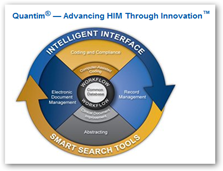 The company Nuance is purchasing is one of “those” companies that help with better coding and revenue cycling, so cased closed on that one as I stated in my post, with consultants and software, hospitals and others are on the whole getting smarter about revenue that may have been left on the table in the past and sure costs go up when additional dollars are recovered. At any rate the government side may want to look at the number of 3rd party HIT companies out there and see if maybe this is the case with smarter billings as that’s what everyone wanted and the additional costs may just be the result of some of this activity. Just again one more reason why executives figureheads need some IT experience in their background as it could have saved this somewhat embarrassing situation with not having all the facts together to see why and shooting out blanks about “gaming” the billing system.
Of course there are the absolute blatant abusers and that’s a different story as those folks should be investigated and prosecuted as needed. For the most part though most are just recovering additional funds they didn’t used to bill for now that documentation for the higher dollar codes is available and easier to use with medical records. Here’s a list of the QuadraMed Quantim product from the website.
Quantim Products:
Quantim® Coding
Quantim® Compliance
Quantim® Computer-Assisted Coding
Quantim® Abstracting
Quantim® Clinical Documentation Integrity
Quantim® Record Management
Quantim® Electronic Document Management
Quantim® Workflow
Quantim® File Manager
Quantim Service Utilization and Optimization Review
Press Release:
BURLINGTON, Mass., – September 27, 2012 – Nuance Communications, Inc. (NASDAQ: NUAN) announced today that it has signed a definitive agreement to acquire Quantim®, the Health Information Management (HIM) business of QuadraMed, a provider of leading information technology solutions for the healthcare industry. Working closely with industry partners, including electronic healthcare record (EHR) providers, Nuance and Quantim will ease healthcare providers’ transition to ICD-10, while preserving clinician productivity and document workflows and, most importantly, ensuring the quality of patient care.
Quantim provides hospitals and healthcare organizations with software and services that maximize HIM professionals’ productivity while ensuring appropriate financial  reimbursement to the institution. With the government-mandated transition from ICD-9 to ICD-10 codes, healthcare providers face unprecedented complexity in their clinical documentation and coding strategies. ICD codes, which serve as the foundation for financial reimbursement, are set to increase from 17,000 diagnostic and procedural codes today to more than 155,000 codes over the next two years. Every healthcare provider in the U.S. is affected by this change, and Nuance, together with Quantim, will assist customers through this critical transition and through future clinical documentation and coding challenges.
The integration of Nuance’s clinical language understanding (CLU) technology with Quantim’s computer-assisted coding (CAC) solution will fuel a more efficient coding workflow and speed related reimbursement. An automated, integrated coding solution will support clinician productivity during the transition to ICD-10 for providers and preserve document workflows and the quality of care.
“Nuance has a track record of delivering  disruptive innovations in healthcare, particularly when it comes to helping providers overcome major challenges like ICD-10,” said Janet Dillione, executive vice president and general manager, Nuance Healthcare. “We are excited to welcome the Quantim customers and staff to the Nuance team, and look forward to working together to create an innovative solution to help providers address critical productivity and reimbursement challenges associated with clinical documentation and coding.”
Nuance plans to deliver CLU-powered CAC solutions quickly into the market within Quantim's integrated, web-based platform to support a more efficient transition to ICD-10 and deliver better financial results for customers. These solutions will:
- Bridge the capture of clinical information with natural language processing (NLP)-driven coding and compliance, ultimately shortening the time between patient care and appropriate reimbursement – driving to the industry goal of concurrent coding.
- Streamline clinical documentation improvement (CDI) and support CDI and coding specialists within a single platform to decrease the time spent on physician follow-up when additional specific patient details are needed to properly code the care provided; and
- Integrate Nuance’s CLU technology to aid coders directly by providing them with automated prompts that will assist them in ensuring compliance and adjusting to the increased ICD-10 code base.
“The acquisition of QuadraMed’s HIM business is a natural extension of Nuance’s strategy to transform the clinical documentation and revenue cycle processes,” said Duncan James, chief executive officer, QuadraMed. “We are enthusiastic about the opportunity this acquisition provides for our Quantim clients and employees who will benefit from the value of Nuance’s vision and innovative technology.”
For more information about this announcement and the benefits it will bring to healthcare provider organizations, please visit: http://www.nuance.com/for-healthcare/healthcare-announcement-quantim/index.htm
Nuance Healthcare
Nuance Healthcare, a division of Nuance Communications, is the market leader in providing clinical understanding solutions that accurately capture and transform the patient story into meaningful, actionable information. Thousands of hospitals, providers and payers worldwide trust Nuance voice-enabled clinical documentation and analytics solutions to facilitate smarter, more efficient decisions across the healthcare enterprise. For more information please visit http://www.nuance.com/for-healthcare/index.htm.
QuadraMed Corporation
QuadraMed, a Francisco Partners portfolio company, is a leading provider of award-winning healthcare technologies and services that improve the safety, quality and efficiency of patient care. Founded in 1993, QuadraMed provides proven, flexible solutions that help make our clients successful by streamlining processes, increasing productivity, improving patient satisfaction and driving positive clinical outcomes. For more information please visit http://www.quadramed.com.
About Nuance Communications, Inc
Nuance Communications, Inc. (NASDAQ: NUAN) is a leading provider of voice and language solutions for businesses and consumers around the world. Its technologies, applications and services make the user experience more compelling by transforming the way people interact with devices and systems. Every day, millions of users and thousands of businesses experience Nuance’s proven applications. For more information, please visit www.nuance.com.
http://www.nuance.com/company/news-room/press-releases/Nuance-to-Acquire-Quantim_FINAL1_web.doc
 was introduced in 2008 and sold for $150,000. This one is $25,000 less and probably does a whole lot more. The knoSys100 is both a hardware and software system that transforms sequence data produced by various platforms into a standard richly annotated and easy comparable data set. Now here’s a little technical information as it runs over 1.2 teraFLOPS, it includes four 2.4GHz 8-core/16 thread Intel® Xeon® E5-2665 processors (32 cores), and 18TB to 54TB of useable disk storage and Gigabit Ethernet. It comes in one enclosure and can be used in a laboratory environment.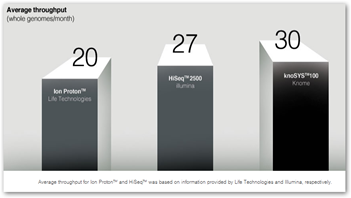
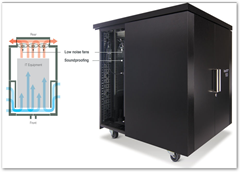 to help researchers in medical and academic institutions interpret human whole genomes. The knoSYS™100 was developed to help geneticists discover relevant genetic variation, investigate diseases of unknown cause, and create next generation in silico gene tests. Units will begin shipping in Q4, 2012.
  news about wires needing to be replaced. Here’s a couple of articles from the last 2 years and it has not been limited to one manufacturer at all. I think be now we have all read the many news articles that have been out there and the risk involved with going back in to have the wires replaced as it takes a special doctor with experience in doing this as over time the wires become covered with our human tissue that grows.
  The company also provides a Patient ID card to carry with you and to show to airport security as the device could trigger alarms. One thing to note here, look at the cost of getting the device approved…Boston Scientific is paying an additional $150 million for the FDA approval…no wonder devices can be slow to be approved when you look at the cost. In addition it was mentioned that Boston Scientific will be making payments back to Cameron Health, based on the sales as they only paid $150 million for the company so this appears to be a purchase of Cameron with contingency stipulations, again the cost and the small San Clemente company probably was nowhere near being able to afford the FDA submission and cost. BD
  the first and only commercially available subcutaneous implantable defibrillator or S-ICD for the treatment of patients at risk for sudden cardiac arrest or SCA.
 This is a PBS presentation and here’s the trailer. Below I have embedded the entire video which may or may not be available permanently. This is interesting as they are comparing Intermountain Healthcare with UCLA Medical Center here in Los Angeles. With a C-section Intermountain charges are around 20% while at UCLA it is around 45%. The video keeps going back and forth between the 2 facilities and talks about time spent, charges and so on. You hear the doctors talk about the end of life with families and how difficult it can be.
  Both of these companies are self insured so what a way to kick a lot of the administration out of human resources and save money. Companies have used similar plans for years to where a dollar amount is give and employees choose from a number of plans with their budget allowed and if more is desired it is available but it comes out of the employee’s pocket to make up the difference with health insurance plans. Sears and Darden restaurants are trying this out to become effective the first of the year.
  versus how it has been run in the past and the companies will still have their contracted insurers listed as choices. Back to the self insured side these are “group” plans so again it is a bit confusing here, but that’s what insurance plans do these days, confuse us. UnitedHealthcare, Cigna and Health Care Service Corp., which operates Blue Cross and Blue Shield plans will be the choices and a couple others to bring this up to 5. Interesting to see a subsidiary of Blue Cross in here instead of a direct contract.
  of the Hadoop platform for a while now and sells it as well as server space so with all their data capabilities and what they have in resources they have to be cashing in at least making $1 billion a year on selling data as I compare them to Walgreens making just short of $800 million selling data in 2010. Selling data too is one big reason corporate profits are up for a lot of companies.
  Association negotiations on rates. Maryland is the only state that sets hospital prices for all payers to include Medicare. Medicare rates though have to stay in balance with the the percentage in the rest of the country though to enable this practice to continue; however the state is nearing the breaking point and is looking for private insurers to help keep this balance with higher rates.
  ind of out of touch too as we had this story earlier this week with accusing hospitals of “gaming” the system, which I said is kind of a witch hunt as we are dealing with raw hard numbers now and it kind looked silly and then later another news announcement came out where the government said they are partially at fault..again folks who don’t know math and code and still look for a head to hang some of this on. Outside of the obvious abuse cases which are criminal and should be investigated and prosecuted we have hospitals that have paid a lot of money on how to code properly and use consultants to help them do so and HHS doesn’t sound like they were ready for it.
  Clean out the litter box for your cat and get exposed and go out and have a good time:) It has to do with increasing dopamine in the brain and hormones and it does the same for the cat too. Sounds like this is an interesting parasite and what are the downsides here? If the host is a rat then it loses is sense of fear from cats and thus gets eaten. As I understand it the parasite needs to have a cat or a mouse around to host it so it sounds like as a human you need to be re-exposed as in cleaning out the litter boxes? Watch the video and see what you think, I just think it is a bit strange. BD
  of months for colorectal cancer. Patients in the trail also showed a delay in tumor growth. It does carry a black box warning that it can cause toxic liver problems and other common side effects include weakness or fatigue, loss of appetite, hand-foot syndrome (also called palmar-plantar erythrodysesthesia), diarrhea, mouth sores (mucositis), weight loss, infection, high blood pressure, and changes in voice volume or quality (dysphonia). The drug works by blocking enzymes that promote cancer growth. BD
 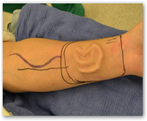 years the mouse that had the human ear growing on it, so it looks as though this has progressed in a very short amount of time to have a human patient who needed her ear to have this surgery. The doctor used cartilage from her rib to create an ear so while it was growing she looked at the ear on her arm. There were several surgical procedures to attach the ear, so out of the arm it came once grown on to where her ear is.
  cancer in her ear in 2008 required the removal of part of her ear, part of her skull and her left ear canal. But now, in a groundbreaking and complicated set of surgeries, Johns Hopkins doctors have attached a new ear made from Walters’ own tissue.
  at some point in time and the date for compliance has been pushed back a year as there’s just so much on the plate of hospital CIOs today that priorities needed to be established to allow the processes to build and take place. Just yesterday I made this post about HHS and DOJ stating they had sent letters out to several healthcare organizations about “gaming” the billing system with Medicare.
  The company Nuance is purchasing is one of “those” companies that help with better coding and revenue cycling, so cased closed on that one as I stated in my post, with consultants and software, hospitals and others are on the whole getting smarter about revenue that may have been left on the table in the past and sure costs go up when additional dollars are recovered. At any rate the government side may want to look at the number of 3rd party HIT companies out there and see if maybe this is the case with smarter billings as that’s what everyone wanted and the additional costs may just be the result of some of this activity. Just again one more reason why executives figureheads need some IT experience in their background as it could have saved this somewhat embarrassing situation with not having all the facts together to see why and shooting out blanks about “gaming” the billing system.
  reimbursement to the institution. With the government-mandated transition from ICD-9 to ICD-10 codes, healthcare providers face unprecedented complexity in their clinical documentation and coding strategies. ICD codes, which serve as the foundation for financial reimbursement, are set to increase from 17,000 diagnostic and procedural codes today to more than 155,000 codes over the next two years. Every healthcare provider in the U.S. is affected by this change, and Nuance, together with Quantim, will assist customers through this critical transition and through future clinical documentation and coding challenges.
  disruptive innovations in healthcare, particularly when it comes to helping providers overcome major challenges like ICD-10,” said Janet Dillione, executive vice president and general manager, Nuance Healthcare. “We are excited to welcome the Quantim customers and staff to the Nuance team, and look forward to working together to create an innovative solution to help providers address critical productivity and reimbursement challenges associated with clinical documentation and coding.”
 the place and some of these consultants hired by hospitals, guess what, are owned by insurance companies. Is this the pot calling the kettle black? Certainly there are the exceptions which are out and out fraud and those folks should be investigated but to take the fact that Medicare grew in reimbursements from 2006 to 2010 and say folks are gaming the system? Copy and paste, not going away as doctors have their standard templates they use for certain conditions so try being a doctor seeing a very heavy load of patients for the day and not allowing and copy of paste..forget it…most of it is very legal and well used.
  with how data works thinking there’s a magical algorithm that will solve this issue. I think of this naïve issue every time I look at the Heritage $ 3 million dollar carrot out there to find the answer, supported by former HHS director Leavitt, he got Algo Duped but again those who don’t understand data, what it can do, the amount of time and effort and intelligence needed, we get this where they think an algorithm is a cure all…sad. Just my opinion only I thought HHS lost it with their Facebook contest…give me a break as we certainly don’t have a shortage of consumer Health IT apps and even Best Buy today hawks software from Aetna in their stores.
  and time, time and more time needed, so if you realize that all the systems out there need some standards and universal code to work with, some of this might make more sense. Time and code are the issues everyone is facing today. I have covered quite a bit about the Blue Button campaign and it certainly is a good thing by all means and the idea and the creation of the Blue Button taking a simple ASCII text format and making it available for sure is a winner and I tell everyone, VA and Medicare users to go get it.
  disappointing that all the features they want now are not there yet. Time and code and time and code..keep that in mind:) I know it’s hard to understand all of this when a new game pop out there on the web and can basically cook breakfast for you and you wonder, why does this take so long. Just remember too that software for games is not life critical either so they have lot more leeway and if they have software issues, they fix it and nobody dies and everyone gets entertained and jumps all over some new little feature added. We sure would like to see that too with the Blue Button and maybe we will but it’s time and code issue and getting the privacy and formats done right out of the gate.
 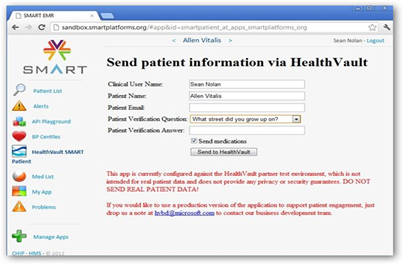 In summary case in point here is yet one more way to get information from an EHR to a PHR. So let’s not get confused here though and think that everything can be written on a plane trip from the east to west coasts, as there were years of coding and research and development that made this effort possible as software and code builds on itself and it keeps getting better when innovative minds get their heads around what can be done. I hope this maybe explains a little bit of the time elements though and the hard work by many to make all of this a reality, a simple format for consumers to get their data. For now, take what you can and make sure you have a record in whatever format you want and can understand how to use, as any PHR and Blue Button information is better than “NO” information. BD
  900 jobs would be cut so now the number gets a little higher. We still seem to have this big focus on games and entertainment when it comes to money and the healthcare system loses. In addition the hospital labs are up for sale and we have seen this with other hospitals. Part of the decrease in income is due to insurers sending patients to other facilities where the cost is less for a number of outpatient procedures. U-Mass is also categorized as a “safety’net” hospital, in other words the last place to go for many who have no insurance.
  a video screen built in there too. This is funny in reading the customizations too, temperature control, frequency, speed and height. The hospital says it needs the machine to attract more donors? It’s for those who can’t do it the old fashioned way and you need to wear a condom too. Surround sound is kind of funny too. It can handle infertility too and grab a sample for that as well..cheers on this one and the cost is around $2800.00. BD
  to help answer your questions, although this is not slated as a diagnosis service so an opinion I guess is the better choice of words here? Also I would think this communication is right inline with the government “Direct” program. Doctor’s have up to 72 hours to answer messages in their queue. It says here doctors get paid for their time and said the potential is up to $100.00 an hour so I guess this means selling de-identified data somewhere along the line as the small subscription fee doesn’t seem like it’s going to cover the doctor’s time. I could be wrong but from what I read that’s probably a good indication here that data will be sold.
  Highland Hospital is a public hospital and the last resort for care for many. Again this week I heard that Romney stated this is the answer for the uninsured but as you know there are fewer public hospitals than we used to have. They have an average of 250 patients every day and sometimes the waiting time is up to 14 hours. With the current state budget cuts the CEO works every day to keep everything going and alive. We certainly don’t want to see fewer public hospitals but if the money doesn’t flow, we know what happens.
  increases if there is an influx of trauma patients, who are given priority. If the system seems heartless, it is the best that can be done with limited resources by a caring staff that does an impressive job of holding chaos at bay.
 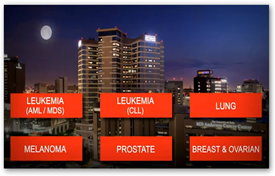 on research and the additional funds are on top of this. Myelodysplastic syndrome, breast and ovarian cancer, along with lung, prostate, melanoma and two types of leukemia are the targets. MD Anderson is the nation’s largest cancer center. In view of the fact that the center is looking for gifts and donations as are many hospitals and medial centers, one more time to make the pitch to tax data sellers and get the money moving where it is really needed, cancer cures to me seem more important than 20 more new games.
  the money’s at to where the data sellers get their data for nothing and profits for free…billions in profit and they should not object as the employees of all the entities may need some of this research for treatment or a cure someday, so no reason for anyone to balk at the idea when we have billionaires doing their share by all means.