Inspire Sleep Apnea Implant Gets FDA Approval To Begin Pivotal Clinical Trial

The trial will be carried out at several locations and Inspire is a spinoff of Medtronic.  imageThe constant interruption of sleep can lead to cardiac issues.  On each breath the nerve in your neck restores muscle tone to the tongue and it does not collapse.  I have seen some of the sleep at home units where you put on a headset at night and this does look a little better than that, but there’s the object inside your body with an implant to think about.  I first wrote about this device about a year or so ago. 

Implant to Treat Obstructive Sleep Apnea – Inspire Medical Systems

Here’s another link on a sleep at home system for comparison.image

Sleep Apnea Testing Done at Home – Less Expensive Than Sleep Clinics Solution

Germany, Belgium and The Netherlands have already begin with the Star trial program and you can find more information here on contacting the company regarding the trial or the implant.  BD

Inspire Medical Systems, a leading developer of neuro-stimulation therapies for the treatment of obstructive sleep apnea (OSA), announced today that the company has received approval from the U.S. Food and Drug Administration (FDA) to begin its STAR pivotal clinical trial. The STAR trial (Stimulation Therapy for Apnea Reduction), is a multi-center study that will evaluate both the safety and effectiveness of Inspire™ Upper Airway Stimulation (UAS) therapy in patients with moderate to severe obstructive sleep apnea (OSA). The STAR trial will be conducted at leading medical centers across the United States and Europe. The results of this study will be the basis for a Pre-market approval (PMA) application to the FDA.

image

Leading medical centers in Germany, Belgium and The Netherlands are currently approved to implant patients into the STAR trial. Professor Paul Van de Heyning, Director of Otolaryngology and Head and Neck Surgery at the University of Antwerp in Antwerp Belgium recently implanted the first patient in the STAR trial

Inspire Medical Systems Announces FDA approval for Pivotal Clinical Trial | Benzinga.com

Malpractice Insurers Getting Nervous as Better Documented Records from Providers and Empowered Patients Emerge

This is a bit of a switch but it is the market that is being created with better documentation and there are fears now that lawsuits could grow and if you read further down one of the items listed as a fear factor is the easier access to electronic medical records from the patient.  Wait a minute, is this not the plan so we can cut down on errors and get better care?image

Well this side of the business is nervous as profit levels might deteriorate with more patients in a position to sue with better documentation in hand.  This is what the industry is pushing for and yet this side worries that lawyers too with better documentation could be filing and winning more suits.  Guess what, lawyers like electronic data too when they do their jobs, no matter which side they are on.  Liability carriers don’t have the same luxury of simply denying a claim as they are either out of court settlements or a full on trial. 

Perhaps some of these folks on the liability side should be talking to the health insurers who want all of this documentation to score and determine who gets care so they understand how this is all supposed to work. I just thought this was interesting in the fact that we don’t hear a lot about this side of the business and now they too are concerned about their profits too.  Be the empowered patient and get your data as the goal is to not make errors but to better work with doctors and hospitals so this side of the business doesn’t have to come into play.  BD 

Hospitals and medical practices that implement electronic medical records could end up paying more for liability insurance, at least in the short term, an insurance industry research group has concluded.

Underwriters are concerned that errors will initially increase as EMRs are implemented, driving up claims and the cost of defending against them, according to the executive summary of a new report by Hartford, Conn.-based Conning Research and Consulting.

More than 90 percent of hospitals and medical practices have yet to implement EMRs that meet federal meaningful use standards, according to the report, "Medical Professional Liability in a Changing Health Care Environment - The New Story Unfolds." Use of electronic records will increase, in all likelihood dramatically, as health care providers move to capture federal financial incentives for adopting the technology.

Claims also could increase as patients gain easier access to their electronic medical records, which include more data than paper files, the report said. Providers who don't follow treatment protocols embedded in EMRs face higher risks of being sued. Specialists will be particularly vulnerable, Conning said. In addition, the cost of defending against claims will likely increase as more lawyers use electronic legal discovery and metadata, according to the report.

e-Records Make Insurers Jittery - Health IT Update

Wolters Kluwer Subsidiary to Acquire Pharmacy OneSource–Hospital Software as a Service

This is a good sign with some consolidation.  We have more software available for sale and if we could cut down on all the systems available out there today and get some better collaboration it would certainly help.  We need this type of software but we sure have way too much of it in US healthcare and it eats up a lot of money.  BD

Philadelphia – Wolters Kluwer Health today announced that one of its wholly- owned subsidiaries has entered into an agreement to acquire Pharmacy OneSource, a leading healthcare Software-as-a-Service (SaaS) provider that helps hospitals manage the complex challenges of patient safety, compliance and efficiency. image

The transaction will allow Wolters Kluwer Health to extend its Clinical Decision Support (CDS) solutions into the hospital pharmacy market and will further strengthen the company's leadership position in the growing point-of-care market.
"Our acquisition of Pharmacy OneSource is part of Wolters Kluwer Health's business strategy to drive growth in the point-of-care market, which includes the critical area of the hospital pharmacy, where there is a strong need for resources and tools to drive compliance, greater patient safety and cost reductions," said Arvind Subramanian, President & CEO, Wolters Kluwer Health Clinical Solutions. "The combined product offerings of Wolters Kluwer Health and Pharmacy OneSource give us a strong, comprehensive portfolio of healthcare information and clinical decision tools for the pharmacy and accelerate our expansion in the point-of-care market." image

Pharmacy OneSource, headquartered in Bellevue, Washington with approximately 100 employees, has developed a strong footprint in the hospital pharmacy market, currently working with more than 1,200 hospitals globally. Wolters Kluwer Health has built a strong business in the retail pharmacy sector with solutions that offer healthcare professionals fast access to evidence-based medical information that helps prevent costly drug errors and detect life-threatening drug-drug, drug-food and drug-allergy interactions.  The acquisition of Pharmacy OneSource will enhance Wolters Kluwer Health's ability to deliver a robust, comprehensive point-of-care offering to help pharmacies improve patient safety and compliance while increasing efficiencies across the hospital

Pharmacy OneSource: News

Thomson Reuters Buys GeneGo Biology Solutions

GeneGo’s customers are Pharmaceutical and Biotech companies as well as academic and government institutions such as FDA, NIH and EPA.  The company imagesells software and their data solutions as well as offering outsourced services on a contracted basis for various types of genetic reports.  The Meta Core pathway analysis and data mining for gene information , pathways, maps and diseases I am guessing is probably the most used software application and names such as Harvard and the NIH are among a few they list. 

Thomson Reuters Healthcare in addition to news has their own diversified area whereby they research and present both very scientific and investor type information.  They also have some software available in the support areas for purchase ranging from payer solutions, provider software and clinical trials and perhaps this is where GeneGo may have a link as well in time.  BD 

From the website:

“GeneGo is a leading provider of data mining & analysis solutions in systems biology. Our data mining tools and databases help to capture and define the imageunderlying biology behind different types of high-throughput experimental data and understand the effects of small molecule drug compounds in human tissues. We provide systems biology solutions for a full range of applications in life science research and drug development, from pre-clinical discovery and NCE applications to clinical trials, covering all aspects of biology and chemistry.”

NEW YORK (GenomeWeb News) – Business information firm Thomson imageReuters has bought GeneGo for an undisclosed sum in order to expand its healthcare and life sciences portfolio.

GeneGo, which provides bioinformatics tools for use in drug target selection and validation, biomarker identification, and patient profiling, has become part of Thomson Reuters' Healthcare & Science business segment.

"There is an increasing need for biology content, detailed disease insights, and analytics to support R&D productivity and to enable a more personalized approach to medicine," Jon Brett-Harris, executive vice president at Thomson Reuters, said in a statement Monday.

Thomson Reuters Buys GeneGo | GenomeWeb Daily News | Informatics | GenomeWeb

Healthcare Reform Survey Finds That 74% of Physicians Will Retire, Work Part-time, Or Seek Other Alternatives

Only a little over a quarter of the doctors surveyed (2400) said they would run business as usual.  Cash only practices could be established and of course the very good reasons for that move would be to get rid of the awful insurance and imageMedicare billing, they hate it and for good reason.  The only way to stop this from happening would be to reform health insurance, not healthcare, specifically the insurance and billing end of itself. 

The insurance companies have all the data and run the systems via contract for Medicare anyway, so perhaps a “Roosevelt” move will be in order one day to actually get to a true single source pay?  If not, you really don’t get it.  I don’t know how with all the recent acquisitions they are not somehow forced to separate some of the interests they have today.  Dr. Berwick, head of CMS said the payer area was one of the first he wanted to dig in to.

CMS Introduces The Innovation Center for Medicare & Medicaid–A Place for Collaboration

Many I have spoken to are looking to become employed either directly by the hospital or work for a group contracted to the hospital and then, let’s not forget the constant flow of software and the learning curve needed to absorb each new addition to where they need to be cost effective.  Patients are not liking much of what is being dished out either, no problems with the doctors, but again the algorithms and not knowing what will and will not be paid for.  It sucks!   Businesses that are run like this are the problem.

UnitedHealth To Pay Out Higher and More Frequent Dividends to Share Holders, No Caps on Earnings for Executives or What Is Spent on Lobbying Says the Board

The study further says some will only work part time, well you need the rest of that time to keep up with all the administrative nightmares so how can one work full time and keep up with that mess.  When full time a clerk in the office handles and by going part time, they don’t have as big of a mess and can do some of it themselves. 

Healthcare reform is not at fault for this as it was occurring anyway, but reform with insurers and all their algorithmic formulas for profit may have kicked it into  high gear so it’s moving a bit faster than before.  The Private Practice today is in fact an endangered species all the way around.  Sadly while we are preoccupied with IPhones and other electronic devices, these folks are slowly fading away.  This makes for a good time to make mention too of the Vanishing Oath, which many doctors state that every student thinking about being a doctor should see.  BD

“The Vanishing Oath” – Documentary About the Diminishing Doctor-Patient Relationships When the Environment Does Not Allow Doctors To Care - Exhaustion As Well As Struggles to Take Care of Themselves Sets In

The Vanishing Oath (excerpt) from Lisa Molomot on Vimeo.

Healthcare reform will usher in a new era of medicine in which physicians will largely cease to operate as full-time, independent, private practitioners accepting third party payments. Instead, they will work as employees, as part-timers, as administrators, in cash-only “concierge” practices, or they will walk away from medicine altogether.

These are some of the findings of a new report commissioned by The Physicians Foundation entitled "Health Reform and the Decline of Physician Private Practice". The report outlines provisions in the Patient Protection and Affordable Care Act and examines economic, demographic and other forces impacting the way doctors structure their practices and deliver care.

"The private practice physician is rapidly disappearing," Goodman notes. "Both market forces and the health care reform law are forcing physicians to find new ways of running a practice. We are extremely concerned about how this will affect patient care."

Drawing on the perspective of a panel of healthcare experts and executives, the report projects physicians will follow one of four courses:

• Work as employees of increasingly larger medical groups or hospital systems
• Establish cash-only practices that eliminate third party payers
• Reduce their clinical roles by working part-time
• Opt out of medicine altogether by accepting non-clinical positions or by retiring.

As Healthcare Reform Takes Hold, 74% of Physicians Will Retire, Work Part-time, Or Seek Other Alternatives - - ModernMedicine

X-spine Announces New FDA Product Approval for Spinal Fusion–Minimally Invasive

Everybody knows someone with back problems and/or injuries and now technology has so many different solutions from implants to devices that also reduce pain.  With imagesome of the systems with X-Spine the procedure is done with a very small incision of an inch and can re-attach. 

In addition the company also has two biological products that are grafts and help grow bone material back when surgery is performed.  BD 

Press Release:

MIAMISBURG, Ohio--(BUSINESS WIRE)--X-spine, a global manufacturer of implants and instruments for spinal surgery, announced FDA clearance of its new AXLE™ Interspinous Fusion System. The system is designed to provide spinal stability for lumbar fusion procedures, including the treatment of degenerative disk disease, spinal tumors and trauma.

“The AXLE™ Interspinous Fusion System can be used to treat a number of prevalent spinal conditions with far less tissue disruption than traditional spinal fixation systems”

The AXLE™ system incorporates a novel modular design to allow for implant customization to conform to individual patient anatomy. The implant can be placed through a one inch incision in the back with minimal disruption of tissue. The device works by rigidly attaching to the rearmost portion of adjacent vertebrae, termed the spinous process, of the lower or middle spine.

image

“The AXLE™ Interspinous Fusion System can be used to treat a number of prevalent spinal conditions with far less tissue disruption than traditional spinal fixation systems,” states X-spine founder and chief medical officer Dr. David Kirschman. “Today, patients and surgeons are demanding procedures that bridge the gap between non-invasive spine treatment and major procedures such as multiple level spinal fusion. The AXLE™ device addresses that demand in a manner that allows for the implanting surgeon to specifically tailor device components to achieve optimal function.” Dr. Kirschman further states, “An additional benefit of AXLE™ is that by being located on the spinous process, it is situated away from the spinal cord, spinal nerves and large blood vessels. This reduces the possibility of complications related to violation of these structures compared to traditional systems.”

image

The AXLE™ system is X-spine’s 10th FDA-cleared spinal implant product since 2004. It joins X-spine’s growing portfolio of spinal implant products, including the, Spider Cervical™ Plating System, the X90™ Pedicle Screw System, the Fortex™ Pedicle Screw System, the Calix™ Interbody Fixation System, the Calix ATP™ Vertebral Body Replacement System, the Fixcet™ Spinal Facet Screw System, the Butrex™ Buttress Plating System and the X-PORT™ Minimally Invasive Access System.

image

About X-spine:

X-spine Systems, Inc. (www.x-spine.com) is an Ohio, USA-based global developer and manufacturer of novel technologies for the surgical treatment of spinal disease. With distribution on five continents, privately-held X-spine brings advanced spinal implants and surgical instruments to surgeons and patients worldwide.

X-spine Announces New FDA Product Clearance | Business Wire

China Slashes Roche, Bristol-Myers, Pfizer, Lilly, Novartis, Takeda and More Pharma Companies to Save Money

What novel idea and wonder why we haven’t tried something like that here in the US <grin>.  China is set to be the second largest world consumer of pharmaceuticals in the upcoming years.  The reductions in pricing are stated to be between 19 and 25 percent.  40% of healthcare in China is currently spent on drugs.  BD  image

Nov. 30 (Bloomberg) -- China is slashing the price of drugs made by Roche Holdings AG and Bristol-Myers Squibb Co. by about a third, part of government efforts to rein in health-care costs and cool the fastest inflation in two years.

The National Development and Reform Commission highlighted Roche’s antibiotic Rocephin and Bristol-Myers’ heart pill Capoten in announcing new maximum retail prices for 174 medications from more than 60 companies. Prices will be cut by an average of 19 percent on Dec. 12. Health-care stocks in China fell after the announcement, dragging down the CSI 300 Index.

The cuts also apply to medicines made by Pfizer Inc., Merck & Co., Eli Lilly & Co., Novartis AG, Takeda Pharmaceutical Co., Astellas Pharma Inc. and Daiichi Sankyo Co. The reductions will result in savings for the public of almost 2 billion yuan ($300 million) a year, the agency said. It has ordered reductions on prices of selected medications more than 20 times in a decade, based on a 2007 statement from an official at the commission.

To access the broadest market in China, foreign drugmakers must list their products on the country’s National Reimbursement Drug List, which subjects them to price reductions, the research company said. The drug list proposes to cap the sales margin on brand-name drugs at 23 percent, Datamonitor said.

China Slashes Roche, Bristol-Myers Drugs to Pare Medical Costs - BusinessWeek

Goldman Code-Theft Trial Begins–Did The Stolen Code Have The Potential to Create Algorithms for High Frequency Trading

If you read here at the Medical Quack often enough you have to see that word, “algorithms” stare you in the face every time you visit here and it is there for good reason.  My efforts here are to simply acquaint the layman with a bit of what happens behind the scenes on servers on Wall Street and with health insurers as those algorithms giveth and taketh away, depending of course on how they are written and who’s using them and how.  Being I used to write this case is of interest to me as much if not more than anyone else.  When you look at what is in the news, the accused states he was downloading “open source” software, so if it is open source was it available somewhere on the web?  That’s usually where you go to find it as it is free for anyone to work with and develop in it’s native form.

Somebody Stole Goldman’s Algorithms – Code that Makes Their Money Just Like Health Insurers Use

Health insurers live and die by their algorithms too, after all you can make all the public statements and promises you want, but until the order is given to the technologists to change and/or alter the code or queries – nothing happens.  This is the part where the layman gets caught up as they may or may not understand that everything in motion today has an IT infrastructure and if those changes (and sometimes they are very expensive too) are not made, well we just end up with one more blow horn out there with a ton of empty promises brought around usually by IT illiteracy and the lack of a good non partisan Algo Man who, if consulted before the mouth comes open, could save a ton of disappointments and embarrassments. 

We have have not seen much of that, but rather a whole ton load though of those who are a bit illiterate and basically go back to the 70s for their stands and conversations as they somewhat lost and before the elections, we had a ton of those to either laugh at or poke at.  The code runs with health insurers too to stuff your health information into a data base and at times figure out which algorithm could be applied to save a payout, and it may not be done for you intentionally, but then again it could be if pay for performance is hanging out there as folks inside these companies can be on pay for performance for all the money they save, so a lovely status of affairs at times.  image

Goldman Stolen Code – Has Algorithmic Fraud Become A Business Model in HealthCare Too?

Goldman has the latest version of the Inslaw/PTECH/PROMS software and front run the market including their own clients, that's how they get their money through software with accelerated business intelligence algorithm and aggregation capabilities and whether or not this included any of their high frequency code, I don’t know. 

One thing for certain is I hope they have a jury of geeks, otherwise the layman jury people will be totally lost.  The question of the code can get really sticky as I have used code modules as a basis to write a program and they are just modules, in other words some code that saves me from having to write from the ground up and nobody does that any more today anyway as it takes too much time, so everyone is using someone else’s code somewhere along the line.

Code modules that I used would perform one function usually and were combined with several I had written or other free and open source material but it was a long way from running the way I needed it to perform and still required a ton of modifications and input from me and was basically a “skeleton” to build upon.  This is what this case needs to find out, whether this was truly open and free source modules to build upon or was it code that had been modified and built upon, based on some open source and free code?  Again, keep in mind that it takes all the code to run the algorithms and create a complete process for a transaction to take place too and that snippets won’t get it but can be shortcuts again in having to start from scratch.  From what I read here, he had some big snippets though in question. image

Now on the other side if he was downloading code that was open source and accidentally took an extra module or so, that does happen with code as it starts all looking the same at some point and perhaps he didn’t go through and separate what was proprietary and what was truly open code.  I just don’t seem to believe that untouched open code without modification was sitting around just as an outsider but who really knows.  I have a bunch of that stuff in mothballs and it has no value to anyone besides myself if I decide to use it again as it is all stored as components or separate modules for me to build upon.  It is at various stages too with the basic code as it downloaded as well as modified by me at perhaps several stages too being a working file, so again, hope that jury has some geeks so decipher exactly what code was taken.  If he had the code on his computer, certainly he was ready to sit down and work with it to modify so it would have a purpose, that’s what developers do. 

We just had the big case with Oracle whereby they were able to prove that someone took their code and copyrights and if you work with both sets and do some comparisons as well as debugging and watching it run, it becomes pretty clear, and again we are talking the code, not the screens the end user sees, it’s the stuff behind the scenes. 

On a closing note, it scares the daylights out of me seeing folks make laws who do not have the basic consumer digital literacy skills and this is why we have this:image

Do Some Think That Health IT Costs and Systems Grow On Trees-Certainly Starting To Give That Impression of Late

The banks get it but Congress doesn’t and this is why code and algorithmic formulas have over the last years shifted the money in the US as they have machine gun technology as we are still struggling with swords and daggers. 

More Congressional Testimonies About Health IT–Members of Congress Could Entertain Getting an “Algo Man” on Staff As Wall Street and Health Insurers Have Them–Don’t Leave Home Without One

If you don’t have the technology to audit, how in the world can the government regulate?  This case is going to be interesting and I hope to see some true intelligence here and lessons learned too from all involved and hopefully those who are in denial about how technology is changing our lives every day will see the light and wake up, as if WikiLeaks has not already given them enough reason to get of the their duffs.  BD 

A former Goldman Sachs Group Inc. computer programmer plotted for two months before leaving the investment bank for a rival about how to steal the confidential source code for Goldman's high-frequency trading platform, a federal prosecutor said.

In his opening statement Tuesday, Assistant U.S. Attorney Joseph Facciponti said Sergey Aleynikov located a computer server in Germany that wasn't blocked by Goldman's firewalls and secretly uploaded portions of the code in the days before he left the investment bank. Mr. Aleynikov wanted to use the code to build a similar trading platform at Teza Technologies LLC, Mr. Facciponti said.

Goldman Code-Theft Trial Opens - WSJ.com

SEEDIE Begins Process of Certifying EHR Vendor Salespeople (Humor)

I like these folks and their satire is getting closer to the truth all the time!  I do agree with a lot of this though with the complicated and unfriendly systems we have built and I can say that as I created an EMR years ago, code from the ground up so you get some different perspectives here at the Medical Quack from a former coder that talks!  A few weeks ago they introduced their Medicare Fraud Module and who can’t use one of those <grin>. 

Extormity EHR Launches Medicare Fraud Module (Humor) Up Coding Made Simple

EHR reps can now hand out those pens, the things the pharma reps can’t do anymore!  The college graduates mentioned below, are these the new university students being trained via the government grant program to send out to train clinicians? <grin>.  Maybe?  Seedie says the “reps are smoking hot”.  BD


Recognizing an opportunity to expand its EHR certification business, SEEDIE (the Society for Exorbitantly Expensive and Difficult to Implement EHR’s), is now certifying EHR sales professionals.

“Numerous organizations review and rank EHR solutions based on tired and traditional criteria such as usability, functionality, and ability to satisfy meaningful use criteria,” said Sal Obfuscato, SEEDIE executive director. “Our new certification program pays lip service to those stale dimensions while focusing on a simple fact - people buy from people.”

The new SEEDIE HEAT program rates vendor salespeople on a variety of attributes using a Likert scale, generating a report that gives an overall score in the following major categories:

  • Hotness — High scorers possess characteristics such as washboard abs, chiseled features, alpine white teeth, sparkling eyes or the ability to walk in knee-high boots.
  • Expenses — Those who score well in this category tend to carry a no-limit corporate card, never hesitate to pick up dinner tabs or rounds of golf, and are fully stocked with the top-shelf premium items pharmaceutical reps can no longer give out.
  • Affability — Salespeople with high affability are friendly, outgoing and enthusiastic, and tend to be fresh-faced college graduates who were social chairs at their sororities or fraternities.
  • Talent — While a lack of talent can be overcome by high scores in the hotness, expenses and affability categories, some capacity to provide at least minimal levels of service and support is factored into a weighted average HEAT score.

“Let’s face it, the best-known companies in the EHR vendor space tend to be expensive, inflexible and tied to antiquated business models that do not scale well,” added Obfuscato. “These SEEDIE certified organizations may be difficult to do business with, but at least their sales reps are smoking hot.”

About Seedie

SEEDIE, the Society for Exorbitantly Expensive and Difficult to Implement EHR’s, is a healthcare IT standards organization that is completely funded and operated by a select group of proprietary electronic health record vendors.

Unlike independent, objective, professional organizations created to help medical professionals select and implement interoperable EHR solutions, SEEDIE promotes healthcare IT systems that play well in the sandbox if, and only if, it is in the best interests of a particular vendor.

Learn more visit www.seedie.org. Or follow us on Twitter.

SoCal Hospital Workers Plan to Stage a 24 Hour Walk Out Later This Week–Breakdown of Negotiations With HCA For Profit Owner- Its Not Money But Rather Working Conditions

As I am reading the content here, this breakdown and potential strike issue is about “working conditions” and not benefits and money.  Hospital Corporation of America is the one of the largest “for profit” hospital chains in the US.  This has imagebeen an interesting year in the for profit business as companies and hospitals have learned to run mean and lean and maybe not necessarily in that order. There have been several articles on the web about this fact and not only in healthcare and analysts are wondering what’s next when the “bare bone” level has been reached, what is the next area of attack for efficiencies to continue the profit making mode.  In June, HCA purchased Miami-Dade hospital which now is in the ranks of the for profit facilities. 

Miami-Dade Mercy Hospital Bought by For Profit HCA – One More “Non Profit” Joins “For Profit” Ranks

This is just one example as everyone is speculating how the “for profit” sector will impact healthcare and how lean can they go?  The next area of course too is software and the efficiencies to be gained there and we seem to have a clash here too with clinicians and administrative sectors having to learn all the applications and procedures quickly to put dollars on the bottom line imageimmediately.  Investors get frustrated when this doesn’t happen overnight and my suggestion at this point would be to have the investors “walk a mile” in the shoes of a clinician to see how all this comes about, the time and training it takes instead of just hollering for dividends as if you don’t understand it and keep pushing, you get this, a strike over working conditions.  We are not doing a very good job I think today in listening to the people who are doing the job so I think anyone who wants to invest a substantial dollar amount in “for profit” hospitals and other ventures would do themselves a favor in visiting as a patient to see what the processes really are.  It’s 2 different worlds with proof of concept and actual performing employees, ask me about that having written a medical records system and then training clinicians how to use it, eat your own dog food as it is called. 

As you can further read, offers have been made to give small increases and no changes to the fully paid health insurance plans, it’s about working conditions and patient care here.  This is not the first strike to bring this to the lime light either as there have been others trying to get the attention of the algorithm hungry administrative management to look at how they play out in the hospital.  They are not looking at this side for the most part, only money. The only time this comes to surface it seems is when a big CEO or manager ends up being a patient themselves and they get exposed to current working conditions so if the strike doesn’t do it, I guess we can hope for more administrators to become patients as I always say there’s nothing like first hand experience with data or being a patient, it’s about participation, whether you want to be there or not. 

In addition to Riverside, there are 4 other hospitals owned by HCA getting ready for the same type of strike or activity in California.  BD   

RIVERSIDE (CBS) — Caregivers, custodians, radiologists and other personnel at Riverside Community Hospital plan to stage a 24-hour walkout later this week in response to a stalemate in negotiations over a new contract, union officials announced Monday.

Hundreds of workers represented by the Service Employees International Union-United Healthcare Workers West are expected to protest outside RCH between 6 a.m. Friday and 6 a.m. Saturday.

Workers are at odds with the Hospital Corporation of America, which owns RCH, over what their union alleges are unfair labor practices.

Additional stoppages are planned Friday at several other HCA-owned hospitals in California — West Hills Medical Center and Hospital in West Hills; Los Robles Hospital and Medical Center in Thousand Oaks; and Good Samaritan Hospital and Regional Medical Center in San Jose.

SoCal Hospital Workers Brace For Walkouts Over Labor Talks « CBS Los Angeles- News, Sports, Weather, Traffic and the Best of LA

Lenovo Touch Screen M90Z Computer Give-A-Way-Enter At the Medical Quack On December 5th-9th

This will be your chance to to win a brand new Lenovo Touch Screen M90Z touch screen computer. 
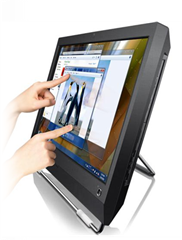
The contest comes in 2 parts, one for an individual to win and secondly a nomination for a charity or non profit company to win a set of 5 Lenovo touch screen computers.  I have been working with one to evaluate how it can be used with healthcare and what possible applications can be used.  I have been using various applications and wrote up my initial evaluation back in September.  Since that time I have also worked with other software applications like Skype and a few others to test the camera and speech recognition applications.  It is running Windows 7 so it runs lean and mean. 

Lenovo ThinkCentre M90z All In One Desktop Discussion

During the week of December 5th to December 9ths is my time frame for the give-a-way and below you will be able to see list of other participating sites.  Here’s how it works and how to enter.  December 5th is on a Sunday and the last day to enter is Thursday December 9th.

Don’t start until the 5th of December as your entries won’t count until the start date.  One of the other sites has begun their contest this week so check the links below to enter this week as there is one that started.

Your chances should be pretty good her as it’s only the readers of the Medical imageQuack so why not try. First of all in the right hand top side of the Medical Quack I have a poll running on whether or not you would like to be able to use your cell phone as a scanner to find FDA recalls via Microsoft Bar Codes.  I’m not going to ask that you say yes, just vote however your feel but a yes is ok.  If you want to read up on this topic, use the BAR CODE CAMPAIGN link at the top of the Medical Quack to read up, it’s neat and we all could use it to find recalled products in the stores!  Everyone is coming up with all kinds of mobile applications and this one is universal with all the FDA recalls coming out and everyone with a smart phone could use it, plus clinics and hospitals could scan their stents and other devices before using them as well to ensure it has not been recalled! 
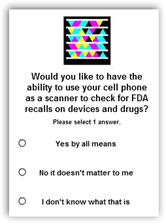
After you have voted the poll with update and show you the results.  At the bottom is a link that says “comment” – click on it and go to the website where you can see some additional details. 

The home site of where the poll is located on Vizu will open up.  If it does not already open to the middle tab, click on “poll results” and you will see a Google Map.  The next step is to find you and your vote pin. If you are back east this might be a little more difficult but you can use the zoom in and out to make it larger so the pins are easier to see. 
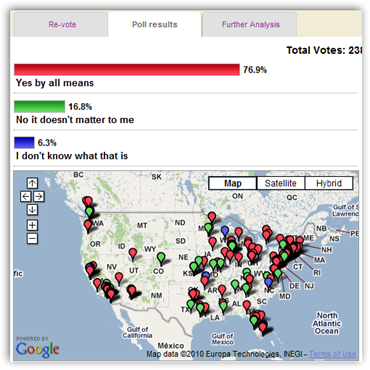
image

Use the plus and minus buttons on the left to zoom in and out and find yourself as each flag will be date stamped with a location. 
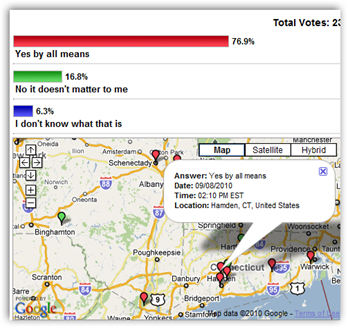
image

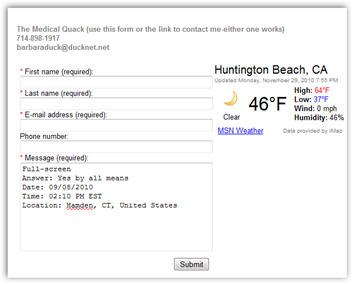
I was going to use Facebook but everyone is not on Facebook so I am resorting to email so everyone can have a chance to win.  At the top of my blog there is a link to imageemail me, so click on it and a form will open for you to fill in.  You can copy and paste the information from the Google Map poll right on the comment section.  When you click on the pin, the window appears with the information.  Remember the dates of December 5th through the 9th are the only ones valid to use for the contest. 

If you can’t find the email link at the top of the blog here’s the link here as well.
image

In addition there is a special offer to get a free wireless keyboard and mouse if you are not the winner and order one using the special promotion code at the post below and also located on the right hand side of the Medical Quack, just scroll down until you find it. 
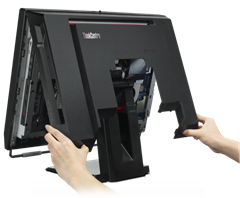
Lenovo M90Z Promotion–Receive a Free Wireless Keyboard and Mouse With Purchase

Personally I really like having the all in one unit too without a tower which means I can move it around easily enough and have done a little bit of that and used it as a secondary VGA screen, you can do that. 


NOW IF YOU DO NOT WIN,CHECK OUT THESE OTHER HEALTHCARE BLOGS LISTED BELOW, AS THEY ARE ALSO GIVING AWAY A LENOVO TOUCH SCREEN COMPUTER AND LOOK FOR THE DATES TO ENTER.  THEIR CONTESTS WILL BE DIFFERENT THAN MINE SO READ THE RULES AS TO HOW TO ENTER FROM THEIR BLOGS.


I am thinking once word gets out and since I am one of the first few going here the competition might get heavier toward the ending dates. 

  • Dec 1 - Dec 5: Medicine and Technology
  • Dec 2 - Dec 6: Geeks Room
  • Dec 3 - Dec 7: Neowin
  • Dec 4 - Dec 8: Gear Diary
  • Dec 5 - Dec 9: The Medical Quack
  • Dec 6 - Dec 10: Digital Home Thoughts
  • Dec 7 - Dec 11: Chip Chick
  • Dec 8 - Dec 12: Teach 42
  • Dec 9 - Dec 13: Slash Gear
  • Dec 10 - Dec 14: Medgadget
  • Dec 11 - Dec 15: Absolutely Windows
  • Dec 12 - Dec 16: Small Business Trends
  • Dec 13 - Dec 17: Cool Cat Teacher
  • Dec 14 - Dec 18: Web 2.0 Classroom
  • Dec 15 - Dec 19: The Healthcare IT Guy
  • Dec 16 - Dec 20: Gear Live
  • Dec 17 - Dec 21: Healthcare IT Strategy
  • Dec 18 - Dec 22: Active Win
  • Dec 19 - Dec 23: The Healthcare Blog
  • Dec 20 - Dec 24: Practical Theory

    CONTEST #2 – A SET OF 5 LENOVO M90Z COMPUTERS FOR A CHARITY OR NON PROFIT HEALTHCARE ORGANIZATION

  • DO YOU KNOW OF A NON PROFIT OR OTHER ORGANIZATION PROVIDING CHARITY OR OTHER SOCIAL SERVICES THAT COULD USE A SET OF 5 M90Z COMPUTERS?  IF SO, READ ON!
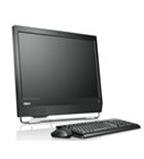


    Lenovo is also giving away three packages of 5 M90z units each, destined for worthy social/non-profit causes such hospitals, clinics, schools, community centers

    , and the like, a process in which all participating site owners will be invited to assist soliciting entries for consideration.
  • In addition 3 packages of five (5) M90z units will be awarded to a worthy medical or educational institution such as a clinic, hospital, school, community center, adult education facility, etc located in US/CA will be given away.  If you are an institution yourself or know of one who could use a set of five M90z imagetouch screen computers, write me an email explaining why and how the healthcare organization would benefit, in other words how would having touchscreen computers work into their organization. As an example, this could be a clinic providing free care and who are perhaps short on resources, or a need to provide patients an easy way to check in and doctors to enter healthcare data. 

  • The healthcare facility must be located in the US or in Canada

  • Preference will be given to non-profits and those who provide services that promote healthcare services to all. 

  • The organization will need to have a software application in mind where the use of the M90Z would help.  This could be an electronic medical records system, an imaging center working with patient x-rays or other images, or again a software system that helps patients check in for a few examples.   image
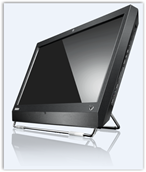
    Each week a winner will be announced, and the schedule goes as follows:

    December 1st through the 6th – first submittal period

    December 7th  through 13th – second submittal period

    December 14 through 20th third submittal period

    If you miss the first time frame, don’t worry as you can submit an email to me anytime during the 3 time frames.  Common sense though will tell you to not wait though until the last couple days to be considered. 

  • Cardinal Health Acquires Zuellig Pharma in China–Their Largest Pharmaceutical Importer

    This is a major acquisition and just less than a couple weeks ago Cardinal purchased Kinray in New York for 1.3 billion who is a leading pharmaceutical distributor that services over 2000 independent drug stores.  The press release continues to state that by 2015 that China will be the second largest pharmaceutical industry in the world.  BD

    From the website:

    “Our distribution network covers all provinces, over 400 cities, 3,200 wholesalers, 17,000 hospitals, and 85,000 retail pharmacies. We directly distribute to hospitals and retail pharmacies in several major markets, including Beijing, Shanghai, Shenyang, Wuhan, and Chongqing.image

    Over the past several years, we have completed additional acquisitions of direct distribution companies in Shanghai, Shenyang, Wuhan, and Chongqing, allowing Zuellig Pharma China to reach hospital and retail pharmacy customers in one distribution step, from manufacturer to Zuellig Pharma China to customer. We have developed additional distribution channels, including retail pharmacy, medical device, and vaccines, and extended our logistics services to become a noted and reputable cold chain and clinical trial management logistics partner.”

    DUBLIN, Ohio and SHANGHAI, Nov. 29, 2010 /PRNewswire-FirstCall/ -- imageCardinal Health today announced the completion of a $470 million acquisition of privately held Zuellig Pharma China, a leading health care distribution business in China, known locally as Yong Yu, and the largest pharmaceutical importer in the country. The transaction extends Cardinal Health's distribution and services presence into one of the world's fastest growing health care markets and provides a platform to drive long-term growth.

    With today's closing, Cardinal Health is well positioned in the pharmaceutical distribution market in China, which is expected to grow at a compound annual growth rate of 20 percent through 2014 and become the second largest pharmaceutical market in the world after the United States.

    Cardinal Health Acquires Leading Pharmaceutical Distributor in China - AlphaTrade Finance

    Along With the Clouds Comes Water Cooled Servers- They are Green and Coming Back

    This is a little off the normal topics here but I found it interesting that the example here, Citibank is “bringing the plumber back” as the title states with moving back to water cooled servers instead of air.  Virtualization and use of internal clouds is somewhat driving this as now the servers are operating much faster and at higher capacities.  All that computing power runs up a lot of heat.image

    CIOs can think about adding some water to their clouds in the future as we operate more efficiently and demand more from our servers.  The processors just from a couple years ago in some areas have doubled their speed and Moore’s law is alive and well there.  Water of course it wet, but it does make for quieter server rooms and it is the '”green” of today and tomorrow.  BD 

    Corporations heaved a collective sigh of relief two decades ago when they began replacing water-cooled servers with racks of air-cooled machines. Now they’re re-thinking that decision.

    With increased heat and density inside of server racks, caused by the combination of Moore’s Law in semiconductors and higher utilization through virtualization, getting enough cool air through tightly packed server racks is becoming increasingly difficult. Some companies—most notably Google, Yahoo and Microsoft—have built open-air server farms in places like Oregon’s Columbia River Gorge. But others are opting for a more time-tested approach.

    It’s partly that. There’s also the cost of delivering a water-cooled solution as opposed to one that is air-cooled. Water is much more efficient. It’s much more efficient than pushing air around a machine.

    When you put water cooling on top of the new machines it adds 12% more efficiency.

    Capacity is definitely going up. As we deploy new features and functions that requires more compute power. And that requires more cooling. We’ve been doing many things over the past five years to address that. Virtualization is one piece of that. In a non-virtualized environment servers are running at 10% or 15%. We’re doing whatever we can to deploy new equipment and capacities.

    There are a lot of aspects of clouds that can help with power and cooling and making the environment more efficient. We also can provision things more quickly and take advantage of excess capacity within that cloud, which is another way of improving efficiency.

    Plumbers Return To Citigroup - Ed Sperling - Tech Talk - Forbes

    California Fines Health Insurance Carriers for Underpayment and Delay of Claims-Should Fine Congress for the Medicare Delay In June-Having to Resubmit Claims There Too

    Pay and continue to pass go certainly seems to be the rules of the game today.  All the major health insurers in California took at hit it seems and it all comes back to getting the data system aligned.  They get stuck in cyber space when they do not fall in accordance with the algorithmic formulas that sort and approve claims based on parameters and when those are being changed, well there’s one more issue. 

    As I stated in the title here I’m working on claims that were submitted to Medicare that failed due to an Unrecognized technical error, in other words it was too much to work on from the end of the Medicare contractor, Palmetto in this case who is a wholly owned subsidiary of Blue Cross, and have folks resubmit.  This time in June when Congress let the10 day buffer flow through, data systems needed to be reset to cut the checks t at the lower rate as they failed to act in in time.

    Do Some Think That Health IT Costs and Systems Grow On Trees-Certainly Starting To Give That Impression of Late

    How about that time and money those folks in Congress cost everyone and I was not alone, had several tweets telling me that tons of claims too, so again data illiteracy and the rules of  cause and effect, especially with the GOP causes everyone a lot of extra work and frankly to have folks without general consumer digital literacy making laws, scares me to death as they think they could do the same for healthcare repeal?  Give me a break and get some smart people to help those folks who don’t realize the need some Algo men to explain that everything has a system and that IT infrastructure costs money. 

    Medicare Payment For Doctors Extended Until November – A Permanent Fix Before Turkey Day Would be Grand

    On the same hand here, insurers need to get their algorithms together too as if they do not complete a process they sit in cyberspace or if a denial needs extra attention, get it done and don’t just let it sit there as that happens.  Unless someone runs a process to check out all the non completed claims, etc. then they just kind of sit there.   Every carrier and Medicare are very complicated and frustrating to deal with when it comes to billing as that is the nature of the beast they built.t.  BD 

    The health plans also must provide restitution to hospitals and doctors for delayed and underpaid claims going back two to three years, which could reach tens of millions of dollars, according to the California Department of Managed Health Care, which oversees HMOs and issued the fines. Insurers must also change their claims paying practices.

    Anthem Blue Cross, a WellPoint subsidiary, and Blue Shield of California, a not-for-profit independent insurer, each were fined $900,000; UnitedHealth Group/PacifiCare was fined $800,000; Health Net and Kaiser Foundation Health Plan each were fined $750,000; Cigna was fined $450,000; and Aetna was fined $300,000, for a total of $4.85 million.

    Calif. fines seven health plans - Healthcare business news from Modern Healthcare

    Spray On Stem Cells for Treating Burns and Open Wounds–Regenerative Medicine

    This is a neat story and technology.  According to the video the mixture looks like imageJello and is sprayed on.  The woman patient is a diabetic with a foot wound that will not heal and with using her own stem cells, it’s fix and and win.

    The patient’s first skin graft failed and the patient also had stem cells during her heart surgery 6 weeks ago too so between the heart and her foot wound it looks like she’s on her way.  They are hoping for large scale clinical trials soon and the potential of use in the military of course is right up there too.  In the video, the patient asks if they are going to inject the “Jello” and they said no, we are going to “spray” it on.  BD 

    Video Courtesy of KSL.com


    SALT LAKE CITY -- A spray solution of a patient's own stem cells is healing their severe burns. So far, early experiments under a University of Utah pilot project are showing some remarkable results.

    What was once a serious burn on Kaye Adkins foot is healing nicely now because of a topical spray. With diabetes as a complication, the small but open wound had not healed after weeks of failed treatments.

    Dr. Amalia Cochran with the university's Burn Care Center says, "With a wound that is open for several months, as this patient suffered prior to seeing us in our burn clinic, we worry about a pretty heavy bacterial load there."

    But enter the evolutionary world of regenerative medicine, using almost a bedside stem cell technique that takes only about 15 minutes. With red cells removed, a concentrate of platelets and progenitor cells is combined with calcium and thrombin. The final mixture looks almost like Jello.

    The military is keeping a close eye on the Utah project. The future for treating burns on soldiers could stagger the imagination even more. Patel says "regrowing your own skin in a bioreactor is very realistic and that's not five years away even. We start with a biological band aid and hope to end up with basically synthetic skin that's still derived from your own cells."

    ksl.com - Stem cell spray heals burns

    UnitedHealthcare Begins Pharmacy Saver for Medicare Plan Members January 1st-Better Record Tracking for Compliance at $2.00 For Generic Drugs or Existing Co-Pay

    Here we go again, half off of the $4.00 prescriptions already offered by Kroger, Walmart and others.  This may not sound like a big deal if you are already paying $4.00 but your data and prescription refill information is like gold and part of the reason for new programs emerging all the time to entice those to enroll so the process can begin.  This service for Medicare Part D starts after the first of the year.  Earlier this year, United started offering pharmacists pay for performance money for signing individuals up for specific programs so they could analyze who is “at risk” of developing diabetes and part of the process and numbers could have medication data in there.  Certainly imagethere’s nothing wrong with trying to live a healthier life and eat correctly but when you know someone is out there motivated by money and goals with pay for performance, it kind of takes the wind out of the sales with one wondering “am I really at risk or is it an over zealous person looking to make a few more dollars”? 

    UnitedHealthCare To Use Data Mining Algorithms On Claim Data To Look For Those At “Risk” of Developing Diabetes – Walgreens and the YMCA Benefit With Pay for Performance Dollars to Promote and Supply The Tools

    The data end of United, Ingenix can’t get enough data these days to analyze and recently started a new consulting and marketing arm too. 

    You can read more about Ingenix MedPoint here.There’s also a flash presentation where you can view the process here.

    image

    “By increasing understanding of potential disease conditions and relative risk, MedPoint enables underwriters to more accurately project future claims costs on a case-by-case basis.”

    I’m not at the age level yet, but if I were, I’s stay with my Target or WalMart $4.00 prescriptions if they are available there as I kind of like my privacy.  My mother who has been on a Medicare Part D plant for a while has already received the brunt of all of this with compliance phone calls asking questions and the health plan and the drug store duking it out over whether she reads her glucose twice or 3 times a day and at twice a day, this cuts into profits if enough people are 2 times a day versus 3 but her doctor says twice a day is fine and she’s be at this for 15 years, so she knows the ropes.  You can read more about some of the compliance and marketing efforts she has been exposed to below. This is the real world with everyone in your face and everyone thinking they are the “Shell Answer man” even before they have had a minute to listen as that usually doesn’t occur too much today as they have “their data” so they can come off a bit lie the Gestapos at times.  The one call that really got me was the random calling by some diabetes association asking “is there a diabetic in the house”.  They have their data created by those algorithms that profess to make them right, right? <grin>. 

    Compliance Police Out In Force for Seniors–Health Plans and Drug Stores Making Phone Calls-Business Models & Caller Behavior Sucks -A Result of Pay for Performance Efforts?

    In other related United Healthcare news, the CEO of UnitedHealthcare's West Region has taken a seat on the board of a biopharmaceutical company, NeurogesX whichimage produces pain patches and the main ingredient is made in Taiwan for the patches which kind of brings me around to this division of United Healthcare with their acquisition of a China company that is working to get more Chinese drugs and devices into the US and globally.  No word on where the Twain location of the patch company gets their raw material.  I don’t think it’s being made in the US, unless I missed something? 

    UnitedHealth subsidiary (Ingenix Subsidiary I3) Acquires ChinaGate – Working to Sell Chinese Products Globally

    United of course has no cap on what their management can earn or what is spent on lobbying and as we all know with all subsidiaries reporting income, they are having one more banner year of profits. 

    UnitedHealth To Pay Out Higher and More Frequent Dividends to Share Holders, No Caps on Earnings for Executives or What Is Spent on Lobbying Says the Board

    Anyway, back on track through these new contracts, the lowest price could be the co-pay amount or the $2.00 as advertised and their “robust” formularies (who writes this stuff anyway, robust”) will list all the drugs in the plan.  You can review and take a look at the website here and I am guessing they will be after more pharmacies to come on line with more contracts soon, just a guess on my part but kind of the way healthcare is operating today and healthcare data is almost like gold today as every carrier sees any claim paid out as a loss, the words of Wendell Potter who spent many years on the other side.  BD 

    MINNETONKA, Minn., Nov 23, 2010 (BUSINESS WIRE) -- UnitedHealthcare, a UnitedHealth Group company, announced a new program that will enable enrollees in the company's market-leading Medicare plans to save money on hundreds of prescription medications in 2011. This new program applies to the company's Medicare Part D members in 2011, including most of those who receive their prescription drug benefits in conjunction with a Medicare Advantage plan from UnitedHealthcare, such as AARP(R) MedicareComplete.

    Through collaboration with The Kroger Co., Safeway Inc. and Prescription Solutions, UnitedHealthcare has created Pharmacy Saver, a unique program that reduces members' out-of-pocket costs on prescriptions purchased at pharmacies participating in the program to prices even lower than their co-payments, sometimes as low as $2 for a 30- or even 90-day supply. Pharmacy Saver applies to hundreds of prescription drugs, including eight of the top 10 generic drugs most commonly used by UnitedHealthcare's Medicare plan members.

    image

    Pharmacy Saver will provide UnitedHealthcare's Medicare plan members valuable cost savings plus the flexibility and convenience of accessing their prescriptions at many of America's most popular pharmacies. Beginning Jan. 1, 2011, members can take advantage of Pharmacy Saver at more than 3,000 pharmacy locations nationwide.

    image

    The Kroger Co. and its wholly owned affiliates that have in-store pharmacies: Kroger; Ralphs; King Soopers; City Market; Dillons; Smith's; Fry's; QFC; Baker's; Owen's; JayC; Hilander; Gerbes; Pay Less; Scott's; Fred Meyer Safeway Inc. and its wholly owned affiliates: Safeway; Vons; Randalls; Genuardi's; Carrs; Dominick's; Pavilions; Tom Thumb Prescription Solutions mail order pharmacy, a UnitedHealth Group company

    UnitedHealthcare Introduces Pharmacy Saver for Medicare Plan Members - MarketWatch