Moses Cone Health System invests $2M to subsidize electronic records in its clinics

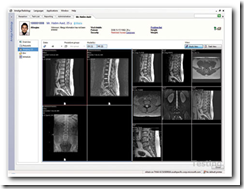
Moses Cone Health System, is a five hospital system based in North Carolina and is subsidizing the cost of electronic medical imagerecords for their physicians, with GE Centricity,  8 offices are already online.  BD

Moses Cone Health System expects to have an electronic medical record system in place for all 29 clinics and physicians offices by the end of next year.

Jenkins said the health system is implementing a program from GE Healthcare known as Centricity, used by more than 30,000 doctors nationwide. It syncs with other GE products that Moses Cone uses to track patient records and billing information.

Clinical activities, medications and results can be entered into a central system, allowing doctors to see a patient’s history immediately rather than waiting for paper copies.

Moses Cone Health System expects to have an electronic medical record system in place for all 29 clinics and physicians offices by the end of next year.

Waging Health Battles by Fax Bots

This is a very good article here that talks about what goes on in the back side of a medical practice.   When working with an HMO or PPO contract it can be a very time consuming process. 

Because of all the faxing and paper work that some IPAs require who are not set up on the web, this is one big nightmare, and even then if the initial request is denied, they want additional information faxed!  The physician is unhappy as his medical assistant spends half the time on administrative functions and can’t get in the examining room for enough time when they need to be present with the physician. 

Pharmacies send faxes to remind the physicians on renewals for prescriptions, and shoot that thing runs all day long with faxes from the pharmacies, so between referrals and pharmacy fax bots, the fax machine is the equivalent of the old “water cooler” and there is a worn path back and forth to the machine. From the pharmacy side of this it makes a real good case for e-prescribing and tell the pharmacies to put a stop on the faxes!

Back to the other items at hand, you also have other physicians sending information from one to another, again a case for technology to kick in here too, but the big mess is the referrals and approvals as mentioned here.  I see physicians just pick up the phone and yell at the IPA to get things approved, and that one seems to work pretty well.

If there is anything outside the parameters set forth, be ready for some paperwork and time to accumulate for handling the needs of the patient.  Now let’s add on one other factor here, the physicians get pay for performance on using generic drugs so if a large number patients use the $4.00 prescriptions where it is not tracked by the insurance company, the physician gets dinged for not prescribing enough generic drugs. I did a whole write up on that subject and you can read more here and it was recently featured on Reuters as well.  I’m going to skip EOBs as that is even another lengthy matter that should be discussed on it’s own. 

Does all of this interfere with the quality of healthcare you receive, you bet it does.  BD 

The local pharmacy couldn't get approval from his insurance company to fill my prescription for the painkiller Celebrex. They faxed me a form on which to make my case for the drug.

Completing the detailed form is my penance for trying to give a $120-per-month Celebrex prescription instead of a $4 generic. I support treating patients according to the best scientific evidence, including using standardized protocols that can improve quality and often reduce costs. But I've been this man's doctor for 11 years, and I know his medical needs. Over-the-counter acetaminophen and other arthritis products haven't helped him.

The Doctor's Office - WSJ.com

GlaxoSmithKline to axe 850 jobs in R & D

Other Pharma businesses have done or will be doing the same, much of R and D is moving other areas where the cost is 1/5 of that here in the US, so 5 times the number of projects ongoing for the same amount of money, which also means in the same terms there can be 4 failures of drugs in the same cost range.  More from a previous post can be read here. 

Phase 1 Clinical Trials could be possible in India by the year 2010 as well and China is also another emerging area.  BD

Moving forward with its restructuring plan, GlaxoSmithKline announced to employees via email today that it would be laying off as many as 850 (6%) employees in its research and development units in the U.K. and in the U.S. Although the company has yet to determine exactly how many employees will be laid off, the cuts will be concentrated in its preclinical and early-stage drug development teams, and will include scientists as well as administrative staff.

"We have started consultation on proposals which could impact 850 roles within research and development in the U.K. and the U.S.," spokeswoman Claire Brough told the International Herald Tribune. "These changes are necessary as part of GlaxoSmithKline's longer-term strategy to ensure that we can invest in key areas of future growth and evolve our business to compete effectively in what is a rapidly changing and challenging environment for pharmaceutical companies."

GlaxoSmithKline to axe 850 jobs in R&D - FiercePharma

Medicare's No-Pay Rule Is Small Potatoes for Hospitals' Bottom Line

Small potatoes maybe in the overall picture, but where I go for health care as far as a hospital may be one of the 50% in this country that are bordering on insolvency, so add on a legal suit to one of the “never-never” rules and then what happens?  I am not speaking of wrong side surgeries, but more so the gray areas, blood clots and hospital acquired infections to be more specific. 

imageMany insurance companies are following in the footsteps of Medicare and already I have heard complaints recently in southern California about how difficult the contractors have become with billing as well as the insurance companies so how this affects the gray areas remains to be seen.  I have a series on “Desperate Hospitals” on the blog and was also featured on Reuters where you can read further about the status of affairs of many as relates to bankruptcy and stability.  

This article too also mentions the financial crisis of Medicare to be continued too, so watch for the WSJ article that will make the recent economy picture and lack of funds look rather mini scale when you see what the unfunded status affairs of Medicare are.  BD

Starting tomorrow, Medicare won’t pay hospitals for costs associated with a handful of complications the feds say are preventable. Some of the complications — such as bedsores, patient falls and blood clots in the veins after certain surgeries — are fairly common.

But as it turns out, the program’s effect on the bottom line looks to be minimal. Medicare estimates the no-pay rules will cut off about $21 million in payments during the fiscal year that starts Oct. 1. That’s a vanishingly small sum when you consider that Medicare’s total payments to hospitals for the year will be more than $100 billion.

Medicare won’t pay hospitals for costs associated with a handful of complications the feds say are preventable.

Cookies With Melamine Found in Netherlands

One more tainted milk product.  BD

Officials in the Netherlands say two types of Chinese-made cookies have been found with elevated levels of the industrial chemical melamine. The Dutch Food Safety Authority said Tuesday the chestnut and chocolate flavored cookies from the "Koala" brand are now off the market because of their melamine concentration. New melamine-tainted products are being announced on an almost daily basis. In South Korea, officials say the chemical was found in Nabisco Ritz cracker cheese sandwiches and in rice crackers made by the Chinese company, Danyang Day.

VOA News - Cookies With Melamine Found in Netherlands

Lipton recalls milk-tea – One more tainted milk manufacturer

More products recalled, and this appears to not affect the US, but who knows for sure anymore.  Again, I go back to having every product that is consumable, drugs included to be labeled for the city, state, and country of origin.  This is a perfect example here where the only thing we have to go on is the expiration date of the product, we need a world wide consortium to have everyone agree to label the origins of all food and drug products worldwide.  Hit and miss labeling is not getting the job done.  BD

I am going to repeat the above request on every post like this that I do until someone takes it to heart and it has been suggested on the Google list of items that would have an outstanding and positive effect for the entire world.  BD

Global consumer goods group Unilever Plc/NV said it was recalling four batches of its Lipton-brand milk tea powder in Hong Kong and Macau after they were found to contain melamine.

The products are:

* Lipton Milk Tea Powder Original 17g x 20 sachets, best before date 17112009;

* Lipton Milk Tea Powder Gold 18.5g x 10 sachets, best before date 17112009;

* Lipton Milk Tea Powder Gold 18.5g x 20 sachets, best before date 18112009; and,

* Lipton Milk Tea Powder Gold 18.5g x 20 sachets, best before date 19112009.

The Centre for Food Safety urged people not to drink the products. The centre has asked the trade to stop selling them and will collect samples for testing.

China vows safe food action; Lipton recalls milk-tea - Yahoo! News

Silent Cell Phones at School or in Selected areas of Medical Facilities?

This is something this is addressed in hospitals too, the answer is a no audible cell phone zone.  You post a sign that this is a no wireless zone and all are warned, so classes, certain areas in hospitals, by just being in the zone deadens the phone, but as soon as you leave the selected area, you have service once more and texting would continue to work though, in silence.  BD 

This can have all kinds of potential, like even movie theatres as there’s even more you can do, like disable taking pictures and videos too and an emergency type of text message could still get through, just no noise. BD 

From a post back in June…Device Manners Policy from Microsoft

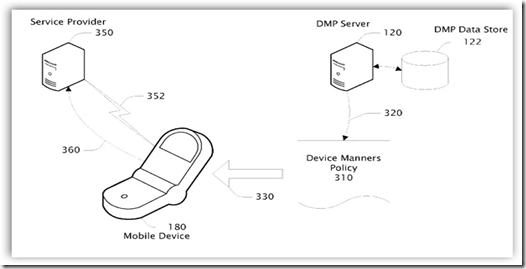
This is either the best or worst idea ever, depending on your point of view. Microsoft has patented what it calls a "device manners policy" (DMP), a wireless zone-enforced device protocol that allows local operators to turn certain features off (or on) based on local manner and safety policy.
Similar to how wireless service on planes can lock out voice but allow data, Microsoft's DMP concept would allow local czars to enforce, for example, "no talking out loud" or "no photography" rules. Audio recording could be disabled at concerts, video recording killed at theaters, and ringers turned off at funerals. Of course, this all requires manufacturers to comply with the DMP protocol in their devices. In the end, we'd be looking at a pre-movie PSA that says "your phone is now being put on silent" rather than "please turn off your cell phone.

http://blogs.wsj.com/juggle/2008/09/30/do-cell-phones-have-a-place-in-school/?mod=googlenews_wsj

Two More Hospitals Sign for Amalga from Microsoft

Amalga from Microsoft with a focus on business intelligence.  Recently I posted relative to El Camino hospital in the silicon valley area also selecting Amalga for their new facility.

As well all know, integration services through out healthcare is moving quickly, as recently posted Kaiser, the VA, and DOD all doing trial and experimental runs on the exchange of patient chart information.

In addition to the exchange of records, the reporting processes of Business Intelligence enters the picture for hospitals to be able to see at any time of the day in real time, the current status of affairs, and some of this information, as an example when it comes to clinical trials, as many smaller non profit hospitals are now participants, is vital not only for patient treatment plans, but also offers additional potential revenue for the facility.  The patient charts can be analyzed to see if in fact there are any potential candidates that could benefit and at least bring an awareness of the availability. 

Clinical trial information is something this becoming an important function in healthcare today and access is needs at all levels, hospital, physician and patient, as well as bringing the investigator or firm running the trial into play too.  For the entities running clinical trials on the other side of the coin, this serves to reduce the number of applicants that need to be filtered who may not possess all the attributes the particular trial is seeking. 

That is just one example of how Business Intelligence is working in healthcare today and many hospitals are jumping on the bandwagon so they too can quickly obtain the information they require without time costing human time working with spreadsheets for days to obtain the same results.  Here’s a related story on healthcare/biotech making use of Microsoft technologies as well.  BD 

The University of Washington's Institute of Translational Health Sciences and Seattle Children's Hospital will use the Amalga integration and data aggregation software of Microsoft Corp., Redmond, Wash.

The hospital will use the technology to give real-time consolidated views of patient information from multiple databases. The hospital hopes to identify trends and relevant patients for clinical trials, and better manage hospital operations such as estimating a patient's length of stay.

The university expects to significantly expedite delivery of data sets to researchers. The software will pull appropriate data from university electronic health records, research laboratory and study data management systems. Researchers, for instance, will be able to determine if the university's patient population is sufficient to support a study testing a particular hypothesis.

Two More Sign for Amalga

CCHIT Certifies 10 Ambulatory EHRs

The number gets a bit smaller each year as integration steps in as a priority.  What I found interesting though is that 2 are pending an installation at a physician’s office?  Usually a developer works with a Beta application first to ensure that it is in fact working and has feedback from the physicians actually using the software, something I learned a long time ago as a programmer might think they have the best application going, but it needs to be in the hands of the end use to really be assessed, so the pre-certification I would say would really not mean a whole lot until a system is installed.  BD

he Certification Commission for Healthcare Information Technology, Chicago, has certified 10 ambulatory care electronic health record products based on its new 2008 criteria. Some vendors received optional extra certification for child health and cardiovascular medicine.

The new 2008 criteria for EHRs used in physician practices added 19 requirements to the 200 included in the 2007 standards. The new criteria focused on the ability to exchange patient information with other systems.

Eight products that received full accreditation are:
* Community Computer Service Inc., MEDENT, version 18, additionally certified for child health;
* eClinicalWorks for its version 8, additionally certified for child health;
* Epic Systems Corp., EpicCare Ambulatory EMR, version spring 2008, additionally certified for child health;
* Greenway Medical Technologies Inc., PrimeSuite, Version 2008, additionally certified for child health and cardiovascular medicine;
* McKesson Provider Technologies, Practice Partner version 9.3, additionally certified for child health;
* MedLink International Inc., MedLink TotalOffice, version 3.1;
* MedPlexus Inc., MedPlexus EHR version 9.2, additionally certified for child health; and
* NextGen Healthcare Information Systems Inc., NextGen EMR, version 5.5.27, additionally certified for child health and cardiovascular medicine.

Two products received pre-market conditional certification and will be fully certified once they are in use at a physician office. They are:
* Pulse Systems, Pulse Patient Relationship Management, version 4.1
* VIP Medicine LLC, SmartClinic, version 16

CCHIT Certifies 10 Ambulatory EHRs

Add some style to your boring crutches

Why not, designer crutches!  They look good and appear to add a bit more padding too.  BD 

Crutches area generally used by patients who have injury below the waist. They hurt the arms, hands and imagecertainly offend your style. So Laurie Johnson, who is the founder of LemonAid Crutches and also a victim of the crutches decided to do something with her 'ugly' crutches. She had them painted professionally, and covered the pads with designer fabrics and LemonAid Crutches was born. They are available in some beautiful, rich colors and gorgeous, expressive fabrics. The company also manufactures coordinated bags and pouches to go with the crutches.

LemonAid Crutches to add some style to your boring crutches - Medlaunches.com

Microsoft calls on Congress to reconsider bailout

Congress was “outcoded” by Wall Street it appears and now can’t make a decision to save our necks 

Nice work here, but we don’t seem to have enough smart brains working in Washington these days, so at this point I would imagenot have any objections to even a bit more nudging from their part. 

At least they could come in and show them how to crunch some numbers. I just go back such a lack of real knowledge of technology today and resistance to change, those that fear do nothing.   Here’s a video commentary as well from Dr. Crounse on the issue. 

The web has been full today of comments and disbelief, self included.  Send in Bill Gates, although he testified in front of Congress not too long ago, but obviously technology went over their heads, and this is a matter of not only money but also the technology that created it.  We need leaders that can understand this and come to terms and go forward without all the juvenile finger pointing that is occurring.  BD

Today Microsoft sent an e-mail to members of Washington state's congressional delegation urging them to reconsider legislation restoring stability to the U.S. economy.

"In the over 35-year history of Microsoft, we've never taken a position on a piece of banking legislation, but unusual times call for unusual steps," said Brad Smith, general counsel to the world's largest software maker, in a phone interview with the Seattle P-I shortly after sending the e-mail.

The email reads:

Microsoft strongly urges members of the U.S. House of Representatives to reconsider and to support legislation that will re-instill confidence and stability in the financial markets. This legislation is vitally important to the health and preservation of jobs in all sectors of the economy of Washington State and the nation, and we urge Congress to act swiftly.

Smith said the e-mail was sent to the four members of Washington's delegation who voted against the proposal: Republicans Doc Hastings, Dave Reichert and Cathy Morris Rodgers, and Democrat Jay Inslee. It was also sent to some local reporters and to a "broad group of businesses in the Seattle area," encouraging those businesses to speak out, said Microsoft spokesman Lou Gallops.

Microsoft calls on Congress to reconsider bailout

Medical Quack on Reuters, Wall Street Journal, and other Online Publications

A reader was asking me the other day to post some samples on what goes beyond the blog, so here goes a few samples from imagethis week.  If you are a regular reader of Reuters, you may have run across one or two and there are some from a few others, Wall Street Journal, Chicago Sun Times, Palm Beach Post and more.  Here are a few recent posts, and of course all the posts are here in their original format. 

Thanks again to everyone who tunes in here to read, it is appreciated!  

The first link below from Reuters is a post I did referencing all the new technology in health care found on the blog, do a search or look through the technology sections and there’s a lot here….BD 

image

A Glimpse Into Health Care of the Future

When Pay for Performance and $4.00 Generic Prescriptions Hit the Wall

Britain will make foreigners carry RFID identity cards to include health information

Divorce for Medicaid and Marry for Insurance – The American Healthcare System

Microsoft outlines the future of computing – MIT Emerging Technology

Intel launches first medical device

Which way, FDA? – Effient Blood Thinner

Hong Kong cake found with Melamine

You Own Junk Bonds, Like it or Not - Opinion

image

California Already Ranks Near The Bottom In Education And By 2014 It Will Be Worse

image

When Pay for Performance and $4.00 Generic Prescriptions Hit the Wall

Monogamy gene found in people - are you RS3 334 Positive?

LA hospital answers suit by Ed McMahon

image

A Glimpse Into Health Care of the Future

image

How Long is my Knee or Hip Replacement Going to Last?

image

Medicare overpays for new generics - Find Drug Information on this site

image 

Microsoft Office Accounting Express 2008 - Free Software to work with Microsoft Office

Ohio Sales Rep's Information Launched Massive Government Investigation of Cephalon

Whistle blower case where Pharma Sales representative created an investigation and settlement.  Whistle blowers can and do receive portions of settlements, and in this case there was  $46 million.  The uses marketed by Cephalon were not approved by the FDA.  Doctors can prescribe for off label use, but Pharma cannot market and promote for treatments other than approved 

The decision to report Cephalon to the FDA cost Boise his job and future employment in the pharmaceutical industry. But his information helped end Cephalon's illegal marketing practices that put patients at risk and led to today's settlement.  After he lost his job, others came forward with the same information and thus the settlement was distributed to 4 whistle blowers and I assume all are not worried over the loss of their jobs.  The entire investigation started in 2004.  BD

The government's investigation into Cephalon Inc.'s illegal marketing practices that culminated in today's $425,000,000 settlement and guilty plea by the pharmaceutical company began in January 2003 with a Cephalon sales representative in Ohio.

The sales representative, Bruce Boise, refused to follow company-ordered sales strategies to convince doctors to prescribe Cephalon's Actiq, Gabitril and Provigil drugs for unapproved ("off-label') uses because he was worried the sales practices were illegal and the "off-label" uses were dangerous for patients.

Ohio Sales Rep's Information Launched Massive Government Investigation of Cephalon - MarketWatch

Emdeon Acquires Patient Statement Business From GE Healthcare

GE Centricity(TM) customers will now be served via Emdeon, who is already established as a GE Healthcare partner, but will be handling more of the administrative areas.  BD 

NASHVILLE, Tenn., Sept 29, 2008 /PRNewswire via COMTEX/ -- Emdeon, a leading provider of revenue and payment cycle management solutions for the healthcare industry, announced today that it has acquired GE Healthcare Information image Technology's patient statement business, a bulk printing and mailing services provider. Terms of the agreement were not disclosed.

The acquired business currently serves more than 400 hospitals and physician groups, providing timely delivery of correspondence such as statements, invoices, claims and appointment reminders for patients. The acquisition also strengthens Emdeon's position as a preferred vendor partner for GE Healthcare's IT business. GE Healthcare IT's customers will have access to Emdeon's leading suite of integrated print and electronic patient billing services, return mail management, eCashiering, lockbox services and other patient communications.

Emdeon Acquires Patient Statement Business From GE Healthcare - MarketWatch

Misys Gets Funds for Allscripts Deal

This appears to be a second life here for financing after the Lehman bankruptcy put the brakes on the existing investments that were to move the merger.  

Also in the news of late:

Misys Healthcare Systems and iMedica Corp. have settled a dispute over a year-old contract under which Misys licensed and markets iMedica's integrated practice management and electronic health records software for smaller physician practices. Now, Misys will pay millions of dollars more to keep selling the technology. Raleigh, N.C.-based Misys in August 2007 paid $5 million to license the software, which it rebranded as Misys MyWay. Misys also invested $8 million in iMedica.”

Allscripts has also sold their marketing division.  In another press release the vendor/integrator below announced their image selection with El Camino Hospital, and when looking a the ITelagen site, it appears that Misys is their EHR partner.  The press release stated that  more than 100 physicians would be offered the opportunity to connect and work with the hospital. 

Mountain View, Calif. (PRWEB) September 10, 2008 -- ITelagen, the innovative provider of flat-rate IT services, today announced that it was selected to provide healthcare IT and Electronic Medical Records (EMR) support services for independent physicians affiliated with El Camino Hospital as they implement EMR systems and solutions designed for smaller medical practices. ITelagen, which was selected for its expertise in EMR implementations, is providing professional help desk services and support for the project and will support the approximately 110 physicians that are expected to sign up for the program.

In another related press release, El Camino Hospital announced their selection of Microsoft Amalga to aggregate all of its information, which currently resides in disparate, transaction-based systems, and integrate it into a single system.

“El Camino Hospital also will use the Microsoft Amalga software to improve operations and throughput when it moves into aimage new acute care facility in July 2009. Within the larger facility, Microsoft Corp. and El Camino Hospital will build on Amalga to collect and display real-time data on patients moving through the hospital, giving everyone — including administrators, bed placement supervisors, emergency medicine staff, critical care staff and operating room staff — the ability to improve the quality, speed and efficiency of their operations. Using Microsoft Amalga, El Camino Hospital will be able to identify patients’ physical locations in the facility in real time while simultaneously looking at staffing levels and preventing potential bottlenecks.”

That was a lot to read, but it might appear that Misys, ITelagen and Microsoft Amalga might be working towards integrating the hospital side of he business with the 100 physicians that will have the opportunity to connect for interoperability between the hospital system and the physicians in the area and will be using the new provisions of the Stark law to create some subsidiaries for the physicians affiliated with the hospital.  BD     

_____________________________

London-based Misys plc has obtained commitments for $325 million in funding to close the merger of Raleigh, N.C.-based Misys Healthcare Systems and Allscripts LLC, Chicago.

The financing will replace funds Misys expected to receive from Lehman Brothers before it filed for bankruptcy protection. Misys will pay the money to Allscripts, which will disburse it to shareholders as a special dividend.

Under the new financing arrangement, Misys will receive a $150 million revolving credit facility for a term of 18 months from HSBC Bank plc, the Governor and Company of the Bank of Ireland, and the Royal Bank of Scotland plc. Misys further will receive a subordinated credit facility of $175 million with a term of 20 months from ValueAct Capital, which is its largest shareholder.

Misys may prepay the loans at any time without penalty. The company already has initiated a process to refinance these debts. Misys and Allscripts shareholders are expected on Oct. 6 to vote on the merger.

Misys Gets Funds for Allscripts Deal

Violations Reported at 94% of Nursing Homes

94 percent of for-profit nursing homes were cited compared to 88% of non profit.  163 nursing facilites will receive an extra effort in the monitoring end of things, this is scary.

For profit numbers somewhat indicate there’s more interest in a dollar than healthcare, but all together, look at these numbers, they are huge with 20% of the complaints involving neglect of patients, like one video recently shown on the web where a person died while the workers played cards on the video tape.  BD 

WASHINGTON — More than 90 percent of nursing homes were cited for violations of federal health and safety standards last year, and for-profit homes were more likely to have problems than other types of nursing homes, federal investigators say in a report issued on Monday.

Problems included infected bedsores, medication mix-ups, poor nutrition and abuse and neglect of patients.

Inspectors received 37,150 complaints about conditions in nursing homes last year, and they substantiated 39 percent of them, the report said. About one-fifth of the complaints verified by federal and state authorities involved the abuse or neglect of patients.

http://www.nytimes.com/2008/09/30/us/30nursing.html?_r=1&adxnnl=1&oref=slogin&partner=rssnyt&adxnnlx=1222714730-J65m0jEWoIy32JyQbnVfzg

Mayo & Johns Hopkins CEOs Want Buffer Between Congress & Medicare

Is this any indication on how the big healthcare institutions think of Congress, much less Medicare?  We have lived through the Medicare nightmares for the last number of years and all we hear is cut, cut and cut again, as there’s such an over lack of knowledge in healthcare that really is not understood by the masses with our existing complicated system. 

Let us not forget HR 3661 and this story on the administration rushing to publish a law to cut money before Congress could act from Mr. Leavitt where a federal judge had to come in and slap hands.  BD 

After this summer’s mess over how much Medicare pays doctors, is it any wonder that leaders at Mayo Clinic and Johns Hopkins want Congress to have less control over the big government program?

Mayo CEO Denis Cortese and Johns Hopkins Medicine CEO Edward Miller argue on the op-ed page of today’s Chicago Tribune that instead of Congress, some sort of board should make big decisions about Medicare’s payment policies.

http://blogs.wsj.com/health/2008/09/29/mayo-johns-hopkins-ceos-want-buffer-between-congress-and-medicare/

Talcum powder considered an ovarian cancer risk – similar to Asbestos

The risks are greater if you the glutathione S-transferase M1, or GSTM1 genes, so it appears we need to find out if we have that gene as females to see how risky talcum powder would be.  image I guess sooner or late we are all going to want to know more about our genes so we can figure out not only what drugs create risk, but other products as well. 

One expert said it had  chemical similarities to asbestos, so I guess we have been powdering up with the likes of asbestos for years.  BD 

Scientists have issued a warning to women about using talcum powder - they say it increases their risk of developing ovarian cancer.

According to researchers from Harvard Medical School, particles in the powder when applied to the genitals can travel to the ovaries and trigger a process of inflammation that allows cancer cells to flourish.

Other research has previously raised concerns over the use of talcum powder but this new study suggests women who use it are 40% more likely to develop ovarian cancer - a much greater risk than first thought.

According to Dr. Maggie Gates, who led the study, until more research is done women should avoid using talcum powder in the genital area.

The study also revealed that the risks were greater still for those with a certain genetic profile - women carrying a gene called glutathione S-transferase M1, or GSTM1, but lacking a gene called glutathione S-transferase T1 ( GSTT1), were nearly three times as likely to develop tumors.

Around one in ten Caucasian women are thought to have this genetic profile, putting them at sharply increased

Women warned about talcum powder ovarian cancer risk

HIMSS Objects to Provisions in Stark's Health IT Legislation

I can understand this as we do not have a shortage of electronic medical records software out there, so why create one more system, the doctors and hospitals are up to their ears in learning curves these days. 

Besides, if they don’t use all the funding, the entire project might just get their budget cut, like Congress did to Darpa.  You can read more here on that story, which I feel is ridiculous as DARPA contributes heavily to healthcare and is able to work with outside firms on projects jointly with some of their funding as well.  Cutting budgets and creating additional overheard are not a good thing right now as there are other pressing issues at hand and I sure wish we had membership that was more in touch with technology instead to use our money more wisely, other than just cutting funds where we need them.  BD 

The Healthcare Information and Management Systems Society opposes parts of a broad health IT bill (HR 6898) introduced earlier this month by House Ways and Means Health Subcommittee Chair Pete Stark (D-Calif.),

HIMSS Objects to Provisions in Stark's Health IT Legislation - iHealthBeat

Technorati Tags: ,,

Cadbury pulls melamine-laced chocolate from China

More chocolate woes, you know I think I’m going to give up chocolate all together.  Between all the recalls on the melamine laced products and the fact that even here in the US, you don’t get real cocoa butter anymore in some of the products from Hersheys, but yet we get these reports that chocolate can be good for us, I’m guessing it’s the real thing that has health imagebenefits? 

Every consumable product and drug made in the world should show labels of where the product was made.  I suggested this to Google in their contest on things that can make a difference and hopefully this will be one of them as we need cooperation world wide for this to take place, and those that do not, well they can be embargoed, that simple, so no labels, no sale and this way we don’t have to wait until the manufacturer let’s us know where the product came from, as a few more may die or get sick in the waiting process.  BD 

A Cadbury spokesman said it was too early to say how much of the chemical was in the chocolates made at its Beijing plant, and another company official said the factory was responsible for only 0.5 percent of global sales and supplies Australia, Taiwan, Nauru, Hong Kong and Christmas Island.

Another Cadbury spokesman, reached through the company's London office, said there was no the contaminated chocolate could find its way into other countries because the factory only supplies Australia, Taiwan, Nauru, Hong Kong and Christmas Island.
"That factory in Beijing only exports to those markets. It's only a small factory," a Cadbury spokesman said. He refused to give his name and refused to explain why he would not give his name for publication.

Cadbury pulls melamine-laced chocolate from China

Clinical Data Online begins to market genomic testing to physicians and consumers through Website

This is just the start here and it seems to appear the marketing of genomic testing and labs is beginning to resemble the CT scanner rage of a few years ago, except this process is a bit more complicated and still needs more education from the medical side of the business before successful marketing will reach an effective consumer level.  BD 

PGxPredict tests are a new kind of pharmacogenetic test that uses genetic markers to help doctors make more targeted imagetreatment choices. They can predict a patient’s response to a specific drug, or detect genetic alterations before they lead to disease. And they’re bringing about healthier patients, better utilization, and a more efficient healthcare system.

Two PGxPredict Tests are already available:

PGxPredict™:RITUXIMAB determines whether a patient with follicular non-Hodgkin’s lymphoma is more likely to respond to rituximab.

PGxPredict™:WARFARIN is indicated for patients who are prescribed the anticoagulant warfarin. It detects genetic variants in two genes that are associated with metabolism of warfarin and with sensitivity to warfarin’s effect.

Other Genetic Tests from PGxHealth:

FAMILION® tests detect genetic variants that can cause cardiac channelopathies, rare conditions that can cause irregular heart rhythms and associated heart disorders, including Familial Long QT Syndrome, Brugada Syndrome, Catecholaminergic Polymorphic Ventricular Tachycardia and others. The FAMILION HCM test detects mutations that can cause Hypertrophic Cardiomyopathy which is a potentially lethal heart condition.

http://www.pgxhealth.com/genetictests/index.cfm

Fujitsu-Siemens quietly introduces tablet PC

 Siemens has been expanding the number of products it is now marketing and there have been a few I have listed here in the recent past such as a single sign on process, kiosks, and back in July they announced laying off over 16,000 employees.  There was also the resignation of their healthcare CEO.  Also noted has been some unrest in Germany, so it leaves one to perhaps guess as to what the next direction could be here and where the final focus might rest in healthcare, but according to this post there is no word out yet on any further details with tablet pcs and it might appear to be more directed at the European market since the page is in German?  BD 

Now that we think about it, it's been a hot minute since we've seen a new Stylistic tablet flow from the doors of Fujitsu-Siemens, but it has finally hit back with a new unit to keep the family alive. The Centrino 2-based ST6012 has been revealed on the firm's website without much fanfare, though the specs are decent enough. We're talking a Core 2 Duo SU9400 ULV processor, 12.1-inch WXGA (1,280 x 800) non-glare display, up to 4GB of RAM, optional WiFi / WWAN / Bluetooth modules, your choice of a 64GB SSD / 120GB to 320GB HDD, a built-in multicard reader, biometric scanner and a rather industrial motif. Mum's the word on a price and release, and quite honestly, we can't imagine those details ever being blasted from the rooftops.

Fujitsu-Siemens quietly intros Stylistic ST6012 tablet PC - Engadget

Philips Signs Global Licensing Deal With Microsoft – Speech Magic

Dictation services for Radiology with the integration of the two services.  More about the hospital integration services can beimage found here.  Recently I have posted about Philips and their investments with the manufacturing of MRI machines in China as well, so they have a pretty large portfolio of products in place or on the rise so the completion of the software end of the project with adding speech recognition to the PACS imaging portion of the business makes sense. 

For electronic medical record connectivity, there is also the Common User Interface designed by Microsoft and open to developers and all interested parties to develop an interface with the latest technology from Microsoft and create a connection to the Amalga HIS.   

More information can be found here from Dr. Crounse at his MSDN blog with some updated information added last week along with all the developer tool kits and other additional information to work with some of the latest dot net technologies including Silverlight.  If you watched any of the Olympics online, then you are familiar with the robust format Silverlight can bring to the user interface.  BD  

Monday, September 29, 2008: Royal Philips Electronics has signed a global licensing agreement with Microsoft to bring speech recognition to Microsoft's Amalga family of enterprise healthcare solutions. Microsoft will offer Philips SpeechMagic to customers using Microsoft Amalga Hospital Information System (Amalga HIS) and Amalga RIS/PACS, with the goal of helping healthcare providers generate accurate information and turn it into actionable information that is sharable, searchable and contributes to making clinical improvements.


image


Amalga HIS is built around an electronic health record (EHR) and includes complete patient and bed management as well as an integrated radiology information system (RIS) and a picture archiving and communication system (PACS).

Microsoft Health Solutions Group and Philips Speech Recognition Systems will immediately start the process of integrating their technologies

Microsoft Amalga RIS/PACS is an integrated Radiology Information System (RIS) and Picture Archiving and Communication System (PACS), Amalga RIS/PACS can operate as a stand-alone imaging system or a seamlessly integrated component of the Microsoft Amalga Hospital Information System (HIS).

Philips Signs Global Licencing Deal With Microsoft

http://www.speechrecognition.philips.com/index.asp?id=505&artid=2977

A Glimpse Into Health Care of the Future

What this article says is true, we have this technology already.  You can look around this blog and find much of it posted over the last couple years in the technology or medically related sections.

Take a look around this blog and you’ll find the smart clothing, brain defibrillators, home monitors, new products for back surgery, a mouse that takes your blood pressure, phones that measure your blood pressure and send back to your physician, carbon filtered underwear, chip implants, wireless technology, technology that reads your brain, telemedicine,  USB microscopes, and many types of software that talks to devices to name just a few.  BD

Perhaps it was the purple starry night backdrop or the strange silver poles lined up on stage, but G. Steven Burrill seemed to have arrived from the future. Addressing AdvaMed 2008, a medical technology industry conference in Washington last week, he spoke about the upcoming era of personalized medicine. 

Soon all health care will be Wal-Mart-ized, said Burrill, chief executive of Burrill & Co., a San Francisco life sciences merchant bank.

When you walk into a superstore, you would drop a sample of blood or saliva on a BlackBerry-type device. When you're done shopping for groceries, the store would present you with a printout of your ailments and a bag of personalized medication. That medication would also contain digestible computer chips, which would relay real-time reports on your body's fluctuations.

Imagine, said Burrill, wearing "smart" clothing, filled with probes and sensors that would monitor our health.

"And I'm not in la-la land” he said. "It's going to happen sooner than later.

We already have most of this technology."

A Glimpse Into Personalized Medicine of the Future - washingtonpost.com

Schwarzenegger grapples with new medical insurance laws

If the governor is having a hard time, what about us?  Read the article and you may be more confused on what can be covered and what is not.  It keeps getting more confusing all the time with little or no relief in site.  Who can keep track of the provisions from the insurance companies, the government, etc.?  Time for a new plan with a few less rules and laws maybe?  BD

As insurers try to limit their payouts and new treatments become available, patients are finding more gaps in what their medical policies will cover. As he considers 10 bills passed by the Legislature that would expand what insurers are required to pay for, Gov. Arnold Schwarzenegger must balance improved medical coverage -- for those who have it -- with the risk of driving costs so high that people can't afford it.

Schwarzenegger grapples with new medical insurance laws - Los Angeles Times

How Wall Street Lied to Its Computers – Software and Programming

I posted about this already before finding this article, which in fact is about one of the best I have seen that helps explain the technical side of things 

imageIn healthcare software there’s risk management too, so can you imagine the programming to be set up to create an entire practice of sick patients to produce more money?    There is a certification process with healthcare software, and without standards and someone auditing the entire process it would be possible.  The overall business intelligence would create the results on a dashboard based on the prerequisites programmed as well as reports.  

Were there any standards or audit trails here?   In software there’s always an area to change settings to customize a software application to where it works best for the user and those features are built in, but the over all calculation queries are run at the server level, beyond what the user can do from their PC computer, and the comments from the IT folks here explain a bit more of the process, with many throwing their arms up with what they were presented with to create the ultimate outcome for the brokers and staff to use.

Programmers by nature want everything to work properly and know what accuracy is, otherwise as coders, they are the ultimate providing source, so here there were IT departments being presented with code they did not write, but contained the algorithms written by those higher up to program into the calculation processes, some IT folks were put in a pretty touchy spot to say the least here, program or no job, and as some mention below some of it was pretty sloppy, which being a coder myself, when I get in a hurry, I can certainly turn out some pretty sloppy stuff too.  I know exactly how they feel though as far as being put in situations where I could not create the desired result, right or wrong in nature some stuff just won’t fly.  BD  

Below are some of the comments made from the IT side of the coin, and what is presented to the programmers and folks running the networks and I am glad many commented and spoke up here.

1.  “Been in rooms where as an IT guy, where we had some portfolio manager explain their process, so we could automate it. After he left the room, there was dead silence, we looked at each other in shock and bewilderment, and not a word was said. Needless to say, we are no longer working there. I agree to the willful simplicity of the models, many knew that the assumptions were crazy. There is a mathematical measure that can be used to determine the health of a mortgage borrower, it is called the FICO score, for many portfolios there was no way of incorporating that into the model. The FICO score measures the health of a borrower, and the goodness of the score it is updated frequently to account for the borrower’s financial health.

2.   Like some of the other people commenting here, I was one of the IT people that tried to model the work the quants were doing. On more than one occasion we were given computer code that the quants had already written to model the risk. The quants were already using the code, we were just supposed to put it in a production environment. Most of the time the code didn’t really do what the quants thought it was doing. As smart as they were supposed to be, they wrote some of the worst computer code that I have ever seen. One one occasion, I pointed out an error to a quant that has a Ph.D in physics. It turned out that he was underestimating risk by over 10%.

imagePart of the problem is that these quants think that they are the smartest people in the world and don’t have any patience. That attitude would put people like us (IT people) under extraordinary pressure to try and do things that were impossible. We were never given the proper time to vet the work that they had done or to try to understand the nuances of what their models and trading strategies were.

3.  The long and short of it is that complicated mathematics do not necessarily equate to accuracy. We will always need seasoned veterans to way in with a qualitative analysis, something that seems to have been ignored this time around.

4.  It’s just GIGO all over again. Computers just make it worse. I know; I spent my career in I.T. No amount of fancy formulas substitutes for judgment and experience. It appears neither were applied here and we are all paying the result.

5.  The fact that firms could sell these securities only fueled the most liberal of lending terms. Most of the commenters are dead on. As a former regulator I do wonder where the IT auditors were?   Well maybe investment banking firms didn’t bother with them

6. Maybe the SEC should set standards for these systems that assure that the software systems can warn the firms of extremely risky positions, instead of leaving it up to the firms’ management to set the standards.”

______________________________

Before I started covering the Internet in 1997, I spent 13 years covering trading and finance. I covered my share of trading disasters from junk bonds, mortgage securities and the financial blank canvas known as derivatives. And I got to know bunch of quantitative analysts (”quants”): mathematicians, computer scientists and economists who were working on Wall Street to develop the art and science of risk management.

In other words, the computer is supposed to monitor the temperature of the party and drain the punch bowl as things get hot. And just as drunken revelers may want to put the thermostat in the freezer, Wall Street executives had lots of incentives to make sure their risk systems didn’t see much risk.

Lying to your risk-management computer is like lying to your doctor. You just aren’t going to get the help you really need.

http://bits.blogs.nytimes.com/2008/09/18/how-wall-streets-quants-lied-to-their-computers/?ref=technology

Palin and Couric Interview from Saturday Night Live

And she has a tanning bed in the governor’s mansion.

And CNN shows us some of the words were the exact same lines used from the real interview when discussing healthcare and jobs.  BD

Visa Plans To Let Phones Charge Your Purchases

More new ways to use a cell phone in the works, and easier to run up the tab.  This won’t be out for a while but Visa is working on the project to include multiple cell phone systems with the Google platform being the first.  BD

In the not-too-distant future, Visa credit cards may merge with cell phones. The card giant announced Friday that it is developing applications for Google's Android operating system and upcoming Nokia smart phones. Visa's Android application will allow the holders of Chase Visa cards to make mobile payments and receive real-time financial information.

In Japan and Europe have been using their phones to buy goods and services for some time. Similar uses in the United States have been slower to catch on, he said, because consumers are not enthusiastic about processing such payments through their telecommunication carriers.

Visa Plans To Let Phones Charge Your Purchases - Yahoo! News

Divorce for Medicaid and Marry for Insurance – The American Healthcare System

“ There's nothing in the rules that says you can't get divorced for Medicaid”…first it was getting married for insurance benefits and now it’s getting divorced for Medicaid.  image

Healthcare is starting to erode a lot of ethics here, and all due to money.  If this doesn’t point out that we have one messed up system today, I don’t know what does, and this is not related to just seniors, it revolves around getting the medications and care one needs, and with a dual or large enough income, even though at poverty levels, it’s too much income to have any care provided under Medicaid.  This one story is sad about a couple married for 50 years to get a dissolution over being able to have her cancer drugs and therapy and due to the circumstances the judge approved the petition. 

Just think of the other implications this has too, some it may not bother if married for many years and there is a good solid marriage, but it can other non positive effects too and create additional issues, what if there are young children involved too, is this what we are teaching our kids today that marriage and divorce is not predicated on love and commitment but rather on insurance and being able to afford healthcare instead?  BD 

imageNearly 50 years later, following two children, seven grandchildren and two great-grandchildren, the couple divorced, for no other reason than that they couldn't afford the costs of Emily's weekly $2,800 chemotherapy treatments for terminal bone cancer. After learning from a friend that by dissolving their marriage Emily could qualify for Medicaid, the couple walked into a drugstore, picked up a guidebook on dissolutions and then marched into an Ohio courthouse in February 2005, their $75 divorce petition in hand.

Divorce, if only on paper, was always a last resort, said Friece, a 72-year-old retired truck driver who moved to Silver Springs following his wife's death two years ago. "She would cry about it. She didn't want to do it but I told her, she had no choice. She was getting worse and worse, and finally she agreed to it," he said. "After it was done, it was done. I took care of her up until the very end."

The Frieces are part of a small but growing number of elderly or low-income couples who have felt the need to dissolve their marriage in order to qualify for government-funded health coverage for a sick spouse.

"When we got divorced, she got food stamps and medical assistance," Rowley, 55, said. "All medications were free and she got to go to Gainesville for MRIs."

Medical costs force couples to divorce | Ocala.com | Star-Banner | Ocala, FL

Scan Man’s Notes – A look at Radiology

Just wanted to put a short note here about Scan man’s notes.  Lately he has been including some great Radiology informationimage and scans on the blog too. 

It’s also nice to hear from someone outside of the US to compare notes on healthcare too.  We all learn from each other.  Scan Man has been gracious enough to include the Medical Quack under Medical News on his site as well.  You can find the link at any time on this site under the Blog Roll Section under Scan Man.  Many thanks for including this blog and I hope to keep things interesting enough in India as well for your readers!  BD 

I am Vijay Sadasivam, a radiologist practicing in Salem, a city in the southern Indian state of Tamil Nadu. scan man is the pseudonym that I used when I started this blog.

I may occasionally write something related to radiology or medicine in general. These again are my personal opinions, supported by references where available. Nothing in my blog is intended as medical advice.

http://www.catscanman.net/blog/

Congress Cut DARPA Budget by $130 Million – Why?

This does not make sense, why don’t we find other ways to spend the funds, like perhaps some additional limbs for soldiers that come home from war, bionic arms and hands which DARPA has funded and helped create?  What’s up with this? 

DARPA is also involved in biotech research as well.  Flu vaccine funded below. 

“The unique benefits of the iBioPharma plant-based technologies have attracted competitive funding from the Defense Advanced Research Project Agency (DARPA) of the U.S. Department of Defense. DARPA's support significantly advanced the practical utility of the platform for production of influenza and other vaccines.”

Research for a method for replacing tissue lost to injury, growing new organs, and curing degenerative diseases like diabetes and Parkinson's.

“The WPI research is an outgrowth of a two-year project funded by the Defense Advanced Research Projects Agency (DARPA), the first phase of a major effort aimed at finding ways to enable mammals—including humans—to regenerate tissue in digits and limbs lost to traumatic injury. This ability has been observed in amphibians, but not in higher animals.”

Here’s a link to a search of all the DARPA projects related to healthcare and a bit about the Urban Challenge, cars that drive themselves, anticipated in 5 years or so. 

So why are we cutting DARPA Funds?  Why is Congress bent on cutting technology and much of this is medically related and helps soldiers when they return?  This one does not make sense at all and just indicates we still can’t look beyond the dollar bill, even with life saving and other beneficial technology is at work.  BD  

Congress just cut $130 million from Darpa's budget for next year, citing "poor execution" of previous funded projects. Some in charge of the purse strings say the Pentagon's premiere research agency wasn't spending the cash it was given. The agency's chief figures Darpa is being punished for holding its contractors accountable for their work.

Earlier in the week, House and Senate negotiators agreed to a defense budget for the upcoming fiscal year, which begins on October 1st. As usual, they agreed to the vast majority of spending proposed by the Defense Department. And the programs they tweaked, cut or increase funding for were altered without much comment. For the most part.

But in the case of Darpa -- the Defense Department's cutting-edge science and technology division -- Congress proclaimed "poor execution" a half-dozen times, as it trimmed more than $130 million from Darpa's approximately $3 billion budget.

These latest cuts -- from space programs, biotech, "advanced war fighting technology" and other accounts -- are seen as a continuation of that argument

Darpa Budget Cut $130 Million for 'Poor Execution' | Danger Room from Wired.com