Radiation Over Exposure Investigation Efforts Continue–Patients With Strokes Over Exposed

Finding the solution still continues and more patient stories are coming out with the effects of what happened to them when over exposed, with hair failing out, rashes, etc.  One man was even judged by his co-workers as they thought he had some imagecontagious disease based on the rash that was covering his body and loss of hair.  The link below somewhat amazed me as our members of Congress have limited intelligence in some of these areas and the word “surprise” I guess fits as they are pretty much non participants in basic consumer IT knowledge and use.

Congress Surprised With Radiation Oversights and Treatments – Software and Algorithms Are the Key to Safety Here

Over the last couple years there have been other areas neglected such as the FDA requiring a 90 day notice before a Windows update could be performed.  Once again this goes back to the word change and keeping up to date with technologies as they update and new ones become available. 

Hospital MRI and Other Medical Devices Infected with Conficker Virus – FDA Required 90 Day Notice before Windows Update Patch Could be Applied

This is a software issue and the NIH is now getting involved to begin collecting data as well.  CT scans are supposed to help with a cure and not make a patient’s condition worse or add a new disease.  The article here speaks about many imagespecific incidents at Cedar Sinai where the information was first gathered and repotted.  At least they reported the information so others could be aware and check their machines.  GE and Toshiba were the 2 machines in question with the CT over exposure cases.  When you read through, the staff and doctors point out that the over ride capabilities of the software had not been adequately explained and nor was it mentioned in the manual for use. 
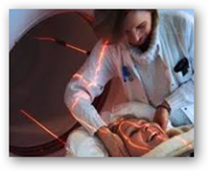
NIH Getting Involved in Radiation Overdoses – Planned Requirement for a Audit Trail to Track Patient Radiation Doses and Eventually Add to EHRs as well as PHRs, Google Health and HealthVault

Certainly there were screens that may have lead someone to investigate and one doctor finally did after many cases were coming up with rashes and hair loss, but one thing to remember too is that healthcare people are also working with patients when working with software and devices, so their time is split as far as attention spans bouncing back and forth.  This is not unusual with any job, but more critical by all means with radiation scanning equipment.

Radiation Procedures Gone Sour – Software and Other Related Failures Lead to Death and Lifetime Illnesses

What I also want to point out from the article are the 2 paragraphs below that to date nobody can take ownership on the programming of the software and the automated “algorithm” from the GE machine is left unexplained in the fact that there are now disputes over the fine lines of this case.  GE basically states that feature should not have been used for this type of scan, but no warning is there about this.  The technicians also state due to this fact and a few others that they did not receive enough training on the safety side. 

“To this day, no one at Cedars-Sinai knows who programmed the scanners that delivered the overdoses, officials there say. But in written statements to The Times, hospital officials said they had figured out how they might have occurred.”

“To do that, GE offers a feature on its CT scanner that can automatically adjust the dose according to a patient’s size and body part. It is, a GE manual says, “a technical innovation that significantly reduces radiation dose.”

I learned too from a tour I did with a brand new hospital too that newer CT scanners offer less radiation exposure all the way around so the higher the bit, the lower the exposure, with newer machines only.  64 bit is still pretty much the standard found at most facilities today. 

320 Bit CT Scanners Offer Less Radiation Exposure Than 64 Bit – New Technology Making the Difference With One Rotation

CT scanners are expensive and safety needs to be foremost for sure and the learning that took place here is sad for all the patients and hopefully through all the efforts being put forth, safety can re-enter the picture here with patients not being over exposed and having that fear present.

My final thoughts here, get some programmers and physicists  to work at the FDA in house with expertise in this area and don’t rely on 3rd parties for approval in this area and don’t even begin to think at this point that they have the capability to run Health IT as Senator Grassley thought at one time.  BDimage

When Alain Reyes’s hair suddenly fell out in a freakish band circling his head, he was not the only one worried about his health. His co-workers at a shipping company avoided him, and his boss sent him home, fearing he had a contagious disease.

Only later would Mr. Reyes learn what had caused him so much physical and emotional grief: he had received a radiation overdose during a test for a stroke at a hospital in Glendale, Calif.

Other patients getting the procedure, called a CT brain perfusion scan, were being overdosed, too — 37 of them just up the freeway at Providence Saint Joseph Medical Center in Burbank, 269 more at the renowned Cedars-Sinai Medical Center in Los Angeles and dozens more at a hospital in Huntsville, Ala.

The overdoses, which began to emerge late last summer, set off an investigation by the Food and Drug Administration into why patients tested with this complex yet lightly regulated technology were bombarded with excessive radiation. After 10 months, the agency has yet to provide a final report on what it found.

But an examination by The New York Times has found that radiation overdoses were larger and more widespread than previously known, that patients have reported symptoms considerably more serious than losing their hair, and that experts say they may face long-term risks of cancer and brain damage.

The F.D.A. was unaware of the magnitude of those overdoses until The Times brought them to the agency’s attention. Now, the agency is considering extending its investigation, according to Dr. Alberto Gutierrez, an F.D.A. official who oversees diagnostic devices.

Patients said doctors speculated that their temporary hair loss might stem from a variety of causes — stress or a ponytail tied too tight — and that redness and rashes were caused by detergent used to wash bed sheets.

The overdoses did not discriminate. Among the victims: a member of Cedars-Sinai’s own board of governors, Ruthe Feldman. Mrs. Feldman says she left the board after learning about the mistake.

One day last August, the radiation safety officer at Cedars-Sinai, Donna Early, decided she had to act.

It was a low moment for such an esteemed institution. Patients were being overradiated during CT brain perfusion scans, hospital officials concluded, and it was Ms. Early’s job to tell county health officials.

Mr. Heuser did have a stroke, from which he would recover. But other parts of his body inexplicably began to break down.

“I had a full body rash — my whole body, legs, armpits, bottom, my back — with these red welts,” Mr. Heuser said.

The Radiation Boom - After Stroke Scans, Patients Face Serious Health Risks - NYTimes.com

Georgia Hospital Contract with United HealthGroup Confusion–Letter Said Yes and CEO Said No–Negotiation Continues

There seems to be a number of these contract negotiation stories hitting the news today as contract become more cumbersome with making sure all the costs are covered.  In Florida there are ongoing issues as well.  image

Florida Hospital System Threatening to Drop United HealthGroup Over Rates – Last Contract Was in 2001

In Orange County it gets a bit stickier as perhaps the hospitals have contracts but the employer contracts for insurer benefits are not honored at the hospital.  I am guessing the rates would be less than the over all contract with the hospital.

Employers in Orange County Looking for New HMO Contracts as St. Josephs and Some Others Begin Cancelling Agreements with Pacificare (UnitedHeatlhCare) – Employer Capitation Contracts

According to the article doctors were sent letters in error stating that an agreement had been reached, but the hospital CEO said no, not yet.  Some of the algorithmic formulas used today by insurers are so complex too that even peer groups and boards are trying to figure out how they apply too. The link below from a hospitalists talking about his experience is a good example. 

Hospitalists, Peer Committees and Utilization Struggle to Comprehend United HealthCare Algorithms

As the costing algorithms ran by health insurance companies continue to grow more complex in wording and nature, so grows the inability to communicate and collaborate as shown here.  How do healthcare institutions continue to work within the realms when they become so complex to understand?  I said a couple years ago that we need to certify some of their formulas just like we do with medical records so all can be assured of what financial transactions will occur when a patient needs care.

“Department of Algorithms – Do We Need One of These to Regulate Upcoming Laws?

Wendell Potter, a former CIGNA employee turned patient advocate has some words of wisdom and who should know better than one who worked on that side of the business for years.  BD

And Now A Word From Wendell Potter About Healthcare Reform and Medical Loss Ratios..

While contract negotiations between The Medical Center of Central imageGeorgia and United Healthcare are apparently not over, a memo was sent out to Macon area doctors this week saying an agreement had been reached.

A contract dispute between the hospital and the insurance provider developed earlier this year over reimbursement payments. The end result is that the Medical Center became an out-of-network provider for United Healthcare insurance, which would cost members more for treatment. United Healthcare is one of two providers offered to state employees.

Hospital officials say United Healthcare did not honor its contract, but the insurance company ran an ad in The Telegraph saying it is in compliance with the contract.

The insurance company offered members a PPO plan and an HMO plan, and Faulk said the hospital’s insurance office began noticing in January that all payments were coming in at the HMO rate, which was lower than the PPO rate.

Then in May, the hospital became aware United Healthcare was sending letters to doctors that they would be out of network if they used the Medical Center, Faulk said.

“United Healthcare wanted to wait until the end of the (calendar) year to fix it,” he said. “They said that their client is the state and they have budget issues.”

Memo points to deal between Medical Center, United Healthcare - Business - Macon.com

Aetna Issues Press Release Relative to Fire Victims in California–We Care But Try to Stay In Network And Update Your PHR If Evacuated

Overall the company is trying to get the information out to those who may have beenimage affected by the horrible fire near Palmdale that is still raging on, and the numbers of helpful by all means, but you can’t help not to miss the area where they are discussing “re-evaluating medical and dental policies” here.  We know everyone is keeping costs down to a minimum but somehow as I read this there seems to be a lack of sincerity and the between the lines read here says, we are watching our pocketbooks with as much emphasis.

If you mail in your prescriptions, they want to ensure that an alternative “in network” replacement is set up right away and by using their “intelligence algorithms” they are able to provide this information to members, algorithms for emergency care.  In addition if members have been evacuated and are at a shelter, they advise to take advantage of this time and get your personal health record setup.  All of this is perhaps not a bad idea but when you read the press release some of this all combined together takes away from the “caring” side of humans and the underlying message comes across relating to costs.  You can read the press release and form your own opinion.  In the news this week it was announced that Aetna had a big increase in profits and signed a new contract with CVS for pharmacy benefit imagemanagement on prescriptions. 

Aetna Commits to CVS With 12 Year Contract for Pharmacy Benefit Management Services To Serve Almost 10 Million Members

In other Aetna news the announcement was made stating they will stop offering small group insurance in the state of Michigan after February 1st of next year, and the article said this was in the best interest of their customers.  The article continues on to say the membership in this area is not large enough and thus in case of a catastrophe like maybe a fire, they could not cover. 

I am also a big advocate of PHRs and have an entire section here on the blog with over 300 posts, but again I like to recommend one that is not maintained by an insurance company. You could sign up, take what claim and other information they may have and then transfer to another PHR not connected with an insurance company to ensure your privacy and you can do that with HealthVault. 

Aetna CEO Calls Microsoft, Google Health 'Vaporware

Back in October of 2007 the CEO of Aetna called HealthVault and Google Health “vaporware and today they work and connect data for those patients who prefer privacy with their own choices. 

Back to the situation at hand, below is the press release that contains emergency contact information and phone numbers and again it appears cost on the wording of this press release seems to take a big bite out of the “caring” side, which is what is wrong with health insurance companies today in the way announcements are conveyed to the public, as even investors are premium holders, right?  BD 

Press Release:

HARTFORD, Conn., Jul 30, 2010 (BUSINESS WIRE) -- (AET 27.85, +0.36, +1.31%) is making it easier for members impacted by the wildfires burning in Kern County and Northern Los Angeles County to refill prescriptions and access employee assistance and behavioral health programs. The company is monitoring the situation carefully, and will re-evaluate its medical and dental policies for members as necessary to help them access care in the fire-impacted areas in Southern California where many people face evacuations from their homes.

Aetna members who need help in finding care or have lost or left their ID cards behind in an evacuation can reach Aetna at the following toll-free numbers:

-- Aetna Member Services: 1-800-443-AETNA (1-800-443-2386)

-- Aetna Specialty Pharmacy Customer Service: 1-866-782-ASRX (1-866-782-2779)

-- Aetna Pharmacy Home Delivery Customer Service: 1-866-612-3862 or 1-800-227-5720

-- Aetna Employee Assistance Program: 1-888-AETNA-EAP (1-888-238-6232)

-- Aetna Dental: 1-877-238-6200

-- For physicians who have questions: 1-800-MDAETNA (1-800-632-3862)

* Replacement ID cards and access to a Personal Health Record (PHR) can be accessed on Aetna Navigator(TM) found here: http://www.aetna.com/index.htm

"Our deepest concern and sympathies go out to those people in Southern California who have been impacted by the wildfires," said Aetna Chairman and CEO Ronald A. Williams. "Our focus is on helping our members get the care they need, knowing that they may not be able to use their usual pharmacies, physicians and hospitals due to evacuations."

Aetna members in areas affected by the wildfires may refill their prescriptions early, if needed, and those who use Aetna's mail-order pharmacy can receive a prescription at an alternate delivery location or refill a prescription that may have been lost, damaged or destroyed by fire.

Aetna Behavioral Health is offering its Employee Assistance Program resources to all Aetna plan sponsors, regardless of whether or not they are Aetna EAP customers, during this time of need. Aetna members can contact Aetna EAP 24/7 for telephonic consultation, referrals or general information such as areas affected by the wildfires, shelters and government resources.

Aetna's EAP professionals have experience dealing with traumatic events and are available to help. Consultation and other support are available for plan sponsors as they welcome employees back to work.

Impacted Aetna members can seek urgent or emergency care anywhere, as needed. Aetna is monitoring the impact of the wildfires on its network providers and working closely with its participating network providers, and will make further modifications to its policies as necessary to ensure members have access to care. Aetna will also adjust its policies to comply with any local, state or federal disaster executive orders or regulations issued related to these catastrophic events.

Aetna urges its members that have been evacuated to set up or update their health information in a Personal Health Record (PHR) for themselves and their family members. The information in the PHR is available 24-hours-a-day, seven-days-a-week, anywhere an Internet connection is available -- making it an important resource for those people who have had to evacuate during an emergency, like wildfires. Aetna members who have access to the PHR can print it out or share it with their physician online. A Personal Health Record (PHR) can be accessed on Aetna Navigator(TM) http://www.aetna.com/index.htm.

Aetna Reminds Members in Southern California Affected by Wildfires Where to Call for Help - MarketWatch

Dr. Berwick, Director of CMS Talks About Medicare On The 45th Anniversary

This was a live broadcast today from Healthcare.gov with Dr. Don Berwick on the anniversary of Medicare today.  Dr. Berwick goes over some of the benefits and changes coming to CMS.  Harry and Bess Truman were the first recipients of Medicare and received the first cards. 
image
There will be new web casts added every week so if you tune here again in a week or so the video presentation may change..  It was interesting to see Andy Griffith and that made me feel oldSmile 

http://www.healthcare.gov/live

Geron Gets FDA Approval To Resume Stem-Cell Study - Spinal Cord Injuries - Go UC Irvine!

The video speaks of where stem cell research is currently in the US and revisits the big breakthrough from a couple years ago when skin cells could be used instead of the actual embryo for research.  That discovery rapidly set things on fire for research in so many areas. 

Mentioned in the video is the project at UCI and you can hear a patient speak about how during the trial stage she has made an almost complete recovery from her spinal cord damage. 

Also mentioned here is all the millions of dollars that are invested in stem cell research across the country.  Eight to 10 recent paraplegics will receive injections injection of neurons to the site of the damage, with a short treatment of anti-rejection drugs afterwards.  Federal regulations under the Bush administration have hampered Stem Cell R and D for years.  Geron is working anti-cancer drugs and a cancer vaccine as well. BD


Watch CBS News Videos Online

NEW YORK (Dow Jones)--Geron Corp. (GERN) can move forward with its early-stage trial of an embryonic stem cell treatment after the Food and Drug Administration lifted a clinical hold after almost a year.

Shares of the company rose 11% to $5.31 on the news.

The Menlo Park, Calif., company initially launched the study of GRNOPC1, imagewhich could potentially fix spinal cord injuries, in early 2009 but it was halted seven months later after safety concerns were raised by an animal study. No patients were enrolled in the study.

Late Thursday, Geron reported a second-quarter loss of $17 million on revenue of $1 million, reflecting collaboration agreements, and royalty and license fees. Aside from stem cell derived drugs, the company is also developing several cancer treatments.

CORRECT: UPDATE:Geron Gets FDA Approval To Resume Stem-Cell Study - WSJ.com

And Now A Word From Wendell Potter About Healthcare Reform and Medical Loss Ratios..

First of all it’s nice to see Mr. Potter over at the Huffington Post and this is where the source of this article comes from.  If you are not up to date on who Wendell Potter, here’s a couple links on past articles.  He worked for CIGNA for years and was an insurance executive prior to retirement and becoming a consumer advocate.  He knows what goes on from the inside having spent many years in the business.image

Wendell states he recognizes the language of “the lobbyists” in the bill even and I guess he would know with his number of years with Cigna in public relations and that some of these provisions should have been made illegal a long time ago.  Wendell stands by the public option and states without it we would be forced to buy products we can’t afford.

Bill Maher Talks to Wendell Potter About HealthCare Reform this Week

Wendell Potter Speaks on PBS with Bill Moyer on Health Insurance Reform – The Industry Did Not Keep Their Word (Video Previews)

I still feel we truly need a “Department of Algorithms” in order to monitor and audit how health insurance is run. 

“Department of Algorithms – Do We Need One of These to Regulate Upcoming Laws?

I have included some of the highlights here and it falls right into place with what I say about the use of algorithms as the carriers live and die from them.  I mention all the time about investors and the claim and processing end of the business that continues to feed itself and he elaborates on pretty much the same principles and adds more information that we would normally not hear. 

Two Private Equity Firms to Buy Medical Care Provider Multiplan – ValuePoint Plan Connects to UnitedHeatlhGroup

When you stop and look around at who is buying who it keeps coming around to companies that either process claims or do anti fraud audits with software as that is flat out where a huge amount of money is spent in healthcare with not enough return, but tons of profits for those who sell it.  I’ll keep posting links here to prior articles that tell the same story over and over so take a look and see what I mean.  

Venture Capital Investments Continue in Over Crowded Healthcare Transaction Software Companies – the Ones you Don’t See That Drive Up the Cost of What We Pay – Those Algorithms

Wendell Potter also gives us some inside scoop here on how the lobbying takes place and again he was with CIGNA and was part of this for years and we are lucky to have his insight as a patient advocate now.  Here’s a quote with his warning and you would have to living under a rock today if you are in healthcare not to see some of this materializing right in front of your eyes, that is unless you choose to zone out completely and be a non participant but that just makes the game easier for the insurers to gain control for profits.  BD 

I”f they do, the real winners in this fight will be insurance company executives and their Wall Street masters. If they win this, that cartel of profit-driven corporations will be more firmly in control of our health care system than ever before.”

The nation's biggest insurers -- not happy with provisions of the four-month-old health care reform law that would force many of them to spend more of the money they collect in premiums for their policyholders' medical care -- are pressuring regulators to disregard what members of Congress intended when they wrote the law, so that they can keep raking in huge profits for their Wall Street owners. If they are successful, many policyholders will soon be shelling out even more than they do today to enrich insurance company shareholders and CEOs. Billions of dollars are at stake, which is why the insurers and their symbiotic allies are pulling out all the stops to gut a key part of the law that would require them to spend at least 80 cents of every premium dollar they take in for medical care.

To be able to meet the minimum MLRs without breaking a sweat, insurers, as you might expect, are trying to persuade the commissioners to let them reclassify just about all of their administrative costs as medical expenses. And they are not just lobbying the commissioners. They are also trying to get friendly governors and members of Congress to lean on the commissioners. One large insurer, using a tactic the industry often uses, provided one friendly freshman Democratic senator with a set of talking points that they encouraged him to use in drafting a letter to the NAIC leadership supporting the industry's wish list. The insurer also asked him to persuade several of his colleagues to co-sign the letter.

As Senator Jay Rockefeller (D.-West Virginia), chair of the Senate Commerce, Science and Transportation Committee, wrote in a letter of his own last week to his state's insurance commissioner, Jane L. Cline, the current NAIC president:

It is clear that health insurance companies are sparing no expense to weaken the new law and the protections it promises to America's consumers... Health insurance companies and their allies have been furiously lobbying the NAIC to write the medical loss ratio definitions in a way that will allow them to continue doing business as they did before the passage of health care reform. The resources health insurance companies are throwing into their effort to weaken the medical loss ratio law appears almost limitless.

Rockefeller is right. The resources they are spending are, for all practical purposes, limitless: the pot of money they use for such things is replenished every month when policyholders send in their premiums.

As Rockefeller pointed out, the administrative expenses insurers are claiming really and truly are quality improvement expenses include money they spend to:
-- Process and pay claims;
-- Create and maintain their provider networks;
-- Update their information technology systems to code medical conditions and process claims payments;
-- Protect them against fraud and other threats to the integrity of their payments systems; and
-- Conduct "utilization review" of paid claims to detect payments the insurers deem inappropriate and retroactively deny them.

As a former insurance company insider, I know that insurers will not offer a disease management program in the first place unless executives have been persuaded that it will either generate additional revenue or reduce costs -- or do both.

Wendell Potter: Health Insurers Leaning on State Insurance Commissioners to "Reform" Reform

Charles River Purchase of Chinese WuXI Company Not Going to Happen

The shareholders basically said stay here and fix the business in the US rather than risk deals overseas.  This is a nice turn about from what we have been hearing in the news of late.  The debt ratio here was way out of hand too with being extended farther than what the board felt comfortable with. 

Charles River Announces Plans to Acquire WuXi AppTec in Shanghai China

Perhaps we may be seeing the start of investing in American companies just starting to make a tiny impact when we need it the most.  Below is a paragraph from my original post when the acquisition  was announced.  BD

imageThe entire deal is slated to finish by the 4th Quarter.  Charles River is located in Massachusetts and WuXi in Shanghai, China.  WuXi acquired App Tec in St. Paul in 2008, so that helps explain the names.  The company already has several other international locations in the world.  This is a big move for additional research and development to be done in China, outsourcing. 

In the face of insurmountable shareholder opposition, Charles River Laboratories International has agreed to terminate its $1.6 billion proposed takeover of WuXi PharmaTech, a Chinese drug research and development outsourcing company.

Charles River will pay WuXi a $30 million breakup for the privilege, $5 million more than was called for under the merger agreement if the American company’s shareholders voted down the transaction. Still, this expense is probably worth it, avoiding what would have been an uncomfortable shareholder meeting.

Charles River’s experience provides some lessons for buyers in this post-crisis market for mergers and acquisitions.

Lessons from End of the Charles River Deal - DealBook Blog - NYTimes.com

Nighthawk Tele-Radiology Services Gets a Major Upgrade with Cisco And Virtualization

I have covered Nighthawk before and if you have had imaging done after hours at a hospital your images could have been read with their service. One of the biggest imageoutsourced markets in the world.  They do more than just the US, it’s global and images consist of MRIs, X-Rays, CT Scans and more.  They service over 1600 hospitals in the U.S., and 10 hospitals in Singapore and more.  If it’s an emergency results can come back as quickly as 10 minutes, with normal being around 45-60 minutes.

Teleradiology paves way for remote medicine

The company has a brand new facility and I had to laugh a bit when I read the sentence about using a toaster in the sever area that could shut it down, as power is used by data centers and it sounds like they were at the limit.  You can get electrocuted in those centers too.  Many are the result of add ons and when you create a new facility you have none of the old issues to deal with, but rather engineered and designed controls operating at top speeds and efficiencies.

The entire move and new location was done in 30 days, almost landmark here!  They are saving power and resources too with using virtualization with VM Ware.  The new facility and servers will allow the company to pick up new accounts and expand with more room and power available. 

In addition with the new common architecture the company is better suited to handle imaging from all over the world, but they themselves stated when they originally set up shop, they moved a little too fast without a lot of planning but they have it now.  BD

World Wide Technology, a solution provider and early adopter of Cisco's UCS technology, put its experience to good use in a deployment to help a radiology services provider store and migrate about 10,000 radiological images a day.

Working with Cisco (NSDQ:CSCO), VMware, and NetApp, St. Louis-based World Wide Technology built a complete virtual data center infrastructure in only 30 days, making it possible for NightHawk Radiology Services to not only manage its existing customer base, but also prepare for an expansion of its services offerings to a completely new set of customers.

"We deployed technology as needed," he said. "Our customers are mainly domestic, but our radiologists follow the Sun, and include members in places like Sydney and Zurich. So we had a wide range of server rooms, different power requirements, and different ways of error handling. That lead to service problems. In a remote office, using a toaster might crash a server."

NightHawk had a colocation facility in Chicago which housed most of its old technology, but had no room to expand. As a result, many of its servers were deployed in remote locations, Brande said. So the company opened a new facility in Phoenix and decided to implement a virtualized environment for the flexibility and the ability to control costs, he said.

Cisco also introduced NightHawk to World Wide Technology, which took over the lead on the project to configure, sell, and deploy UCS in NightHawk's Phoenix facility.

Cisco has brought WWT in on several UCS deals in part because WWT was Cisco's first UCS-certified partner, said David Harrison, director of WWT's Cisco data center practice.

n addition to the Cisco equipment, WWT also deployed virtualization technology from VMware along with storage appliances from NetApp. Tying the virtual servers to each other, the physical servers, and storage were multiple Nexus 1000 virtual switches configured by WWT.

Cisco UCS Implementation In 30 Days? VAR Makes It Happen - IT Channel - IT Channel News by CRN

Grassley Sending More Letters–Zimmer Holdings on Knees/Hips–Why Not DePuy And A Couple Others Too–Same Issues & Get A Registry in Place


I am just curious as other have issues too?  Can we get Senator Grassley a data base that ties all of this together?  We need an overall data base to track all and it would be so much more efficient and a bit more transparent than this process.  image

Lawsuit Filed Against DePuy (Johnson & Johnson Subsidiary) Over Defective Hip That Had to Be Replaced

We would all like devices to be a perfect business but in fact they are not and the alternative to a replacement is a lot worse, but this is not to displace any areas of responsibility as we all know marketing and sales enter the picture at some point in time. 

DePuy (Johnson and Johnson) Warning Doctors of High Failure Rates – Hip Product Being Phased Out

Zimmer Holdings also had the whistle blower case filed this year.

Whistle Blower Suit Filed at Rush University – Orthopedic Surgery Safety and Medicare Violations

Again, using technology and having a data base tracking issues is the answer instead of following all the political issues which may need to be addressed anyway, but today it’s all about the data.  If flaws are found they could be documented as well as how the manufacturer handled in the same data base and information could be available for all.  BD

A top Senate Republican is asking the nation’s biggest maker of artificial hips and knees to disclose information about how it handles complaints about possible product flaws from its medical consultants.

In a letter sent Thursday, the lawmaker, Senator Charles E. Grassley of Iowa, also asked the company, Zimmer Holdings, to disclose how it tracked the long-term performance of its orthopedic devices.

Zimmer, which is based in Warsaw, Ind., said in a statement that it welcomed the opportunity to discuss its policies, including how it responded to surgeon complaints.

Senator Seeks Data on Complaints About Artificial Joints - NYTimes.com

India–Insurance Companies Planning Direct Connection With Suppliers Whereby Patients Will be Required to Use Drugs/Equipment Only Approved by Carriers

The overall fear here was over billing from hospitals so it looks like the choices of patients and hospitals is being reduced t what the carriers approve and the patients imagehave to get their drugs and medical devices “direct”, in other words no hospital billing.  This is relative to “private” hospitals and the patients under this program are in the “cashless” program where I assume there’s no out of pocket expenses for the part of the patient so there’s no expense, but it looks more like a change in billing to keep cost down so the hospital it looks like in helping the patients doesn’t have a say here either in their selection. 

Once in a while it’s of interest to take a look and see what is going on in other parts of the world relative to healthcare costs and you wonder with current business trends if this is what could be developing here.  We had one insurance carrier already invest in a company in China that has a line of communication with the US FDA already, to promote more Chinese drugs/devices for use in the US and globally. BD

UnitedHealth subsidiary (Ingenix Subsidiary I3) Acquires ChinaGate – Working to Sell Chinese Products Globally

Patients covered under cashless mediclaim policies of state-owned insurance firms may have to procure drugs and medical equipment directly from suppliers and pharmacies designated by the insurers.
The move comes in the backdrop of a row between four PSU insurers and major private hospitals over suspension of the cashless treatment facility earlier this month.
"We are taking a long term view on the possibility of buying (from the suppliers) medicine and medical equipment directly. We may use that in future," a chairman of one of the public sector insurance companies said here.
He said that the move would help them to reduce the amount to be refunded to claimants. These insurance companies are planning a direct tie-up with the suppliers to procure devices and drugs which will help them reduce the cashless claims.
Four insurance companies--New India Assurance, United India Insurance, National Insurance and Oriental Insurance - had stopped the cashless service because of alleged over-billing by some private hospitals.
The insurance firms had alleged that hospitals were over-charging from the patients under the mediclaim policies.
While the regulator IRDA had said that it had no role to resolve the impasse, industry body CII took the initiative to arrive at a solution. A meeting between the insurers and the representatives of the private hospitals took place in Mumbai on July 13.
The insurance firms had agreed to extend the cashless facility only on "case-to-case" basis for the benefit of lakhs of mediclaim policy holders.

Central Chronicle - Madhya Pradesh's News Portal

Newt Gingrich Gets Healthcare Value Bass Ackwards–It’s All About Those Algorithms

First of all let me clarify where I am coming from with a short bit of background as to where some of my viewpoints come from.  I spent 25 years in marketing and sales and then learned to code and wrote medical software, so I am a bit of hybrid here who first of all analyzes how software will be used, and then that hat off and look at aspect #2-the marketing and sales efforts.  To be truthful, it makes my brain hurt at times but further resolves the fact that we need and should value the advice of good healthcare CIOs today that can see the bottom line and get past the marketing phase of all of this. Unfortunately marketing and profits sometimes seem to trump these efforts as everyone is a marketer today.  image

If you are speaking to a marketer/sales individual, you are trying to evaluate the value of a software purchase and it is easy to get mislead in this area as the software sold today is good for the most part and will do exactly what it says it will do.  As  a consumer you can see some visuals and pretty much for the most part see that, yes, it’ will work and produce results, but the secondary question that comes to mind, is what is the value and cost of such services. Do you really need it and will investment show savings and ROI.  If you are not involved in healthcare IT today and are trying to make those decisions on your own, big mistake as you may be missing one big piece of the puzzle. 

The healthcare transaction business feeds upon itself to a large degree and yes we need those services but to what level and cost?  You may have one medical claim with several 3rd party vendors taking a chunk of the money, it has been designed in part to function this way as all those “chunks” add up to profits and shareholder dividends.  image

Anti-fraud efforts also with their algorithmic formulas actually deny good claims too as the queries run and “compartmentize” the results for an end result decision that you run to your computer screen to see.  Health insurance companies also create 3rd party subsidiaries to perform these functions too and they make money.  You can look at UnitedHealthGroup for one example and all the products from their data base management company Ingenix  for one example – subsidiary watch here.  Sometimes those algorithms have problem too as we are seeing with the AMA lawsuit with the efforts of NY Attorney General Andrew Cuomo finding them.  To further identify the investments here United has made 5 similar purchases so far this year. 

Ingenix (Subsidiary of UnitedHealthGroup) Buys Picis Hospital Software Analytics Company – Algorithms of Healthcare Continue To Grow

With mergers and acquisitions out there today on fire, it’s hard to keep up with who owns who and who’s data base is going to integrate with who’s.  The rules and laws of Medical Cost Ratios just had a big gray could emerge overhead.

HHS National Plan to Improve Health Literacy – Not Going To Happen Until We Focus on Using Technology (The Tool for Literacy) Which Includes Role Models at HHS And Other Places in Government

We do not certify these functions as we do with the creation of medical record software and thus we have this roller coaster of a ride taking place.  Maybe we should fully entertain this process? 

Venture Capital Investments Continue in Over Crowded Healthcare Transaction Software Companies – the Ones you Don’t See That Drive Up the Cost of What We Pay – Those Algorithms

This article mentions how critical these services are and I do agree we need a certain level of anti fraud software and services, but when do we cross the line with these algorithms for profit? I believe this is the area where Mr. Gingrich is confused as he’s like everyone else in looking at the face value of seeing the software producing results, but are we getting our money’s worth, and further more are we getting “accurate” or “desired” results, stop and give that some thought.  Profits are linked with the word desired.  Accurate is linked with transparency.  Our government is looking at the situation with our US CIO doing an extensive evaluation to ensure taxpayer money is not over spent in the same scenarios. 

VA Cans $500 Million Financial System Overhaul – Financial Transactions - The Business That Keeps Feeding Itself

Thus in his defense in here I would say we are perhaps lacking in the full on comprehension of how the system works.  We have a glut of competition in this area and they all want to “market” value to you and the hard part is determining where that value is and do you need it, and how much are you currently using.

It is already a proven fact that technology alone can’t enforce anti fraud efforts alone, you still need to have human interactions and investigations as they may look wonderful with data transactions, but when you pay a physical visit, you get a whole new picture.  Again we have no shortage of anti fraud software out there and it is a cost of doing business, other industries have it and it takes a chunk of the revenue from a claim and does add to profits of publicly traded companies, why do you think all the investors are jumping on this bandwagon

Ask TJ Maxx about anti fraud efforts for an example in another industry.  Technology is a cost of doing business anywhere today and to say this is part of providing medical care to me doesn’t fit.  It’s a profit machine to a degree with algorithms constructed to do so and it’s up to the end buyer to figure out which is effective and not producing over exaggerated profits, it’s a balance.

I question at time how much IT knowledge is being used from valuable CIOs who know what this is all about.  When I read articles about members of Congress not using a password to lock down their own personal networks at home, well, where do these statements have their base?  This is stuff that is all over the news today and I didn't have to go very far to find it as it’s on Twitter and in my RSS feeds every day.   image

So what gives here?  Is this article factual or political?  We all that same question a lot today as technology throws us a new left curve every day and those who are “participants” see it and to go further with that is stresses some of us out too.  If you don’t acknowledge the existence of Health IT, I don’t know, does one not have these same concerns? 

In my little tiny opinion, I think that perhaps the expertise of a Healthcare IT expert would be very beneficial to have as an ally before we see more articles of such talking about “value” today as again “it is all about those algorithms” and you can ask any broker on Wall Street too how they use “those algos” and they all have at least one “algo man” that sits on their boards too.  it’s part of every day business with investors and it’s part of healthcare today as Health IT is reshaping everything around us every day. 

Google wouldn’t exist today were it not for their algorithms and they build really good ones too that we all depend upon every day for valued information and some of their algorithms are healthcare related, so once we can get past the political arena here and see where the decision making processes are coming from rather than just an over all political statement, maybe we can get somewhere. 

One more small comment on my part here too, I would like to see the term “circuit breaker” on Wall Street renamed to possibly indicate that this is an algorithm of code that runs to as it would help for consumer education purposes as most think of a piece of hardware on their house that stops electricity and this is not the case as it’s an algorithm and mathematical process.  BD 

What would you think if bureaucrats confiscated your iPhone because they decided it didn't provide enough value? State regulators may help the federal government do just that to the health-care benefits of millions of Americans.

The most important element in implementing ObamaCare will be the requirement for health insurers to meet what is called a medical loss ratio. This requires health-insurance plans to split the dollars they receive from insurance premiums into two buckets.

Another example is fraud prevention. According to the National Health Care Anti-Fraud Association, up to 10% of all health-care spending is stolen by criminals preying on the system, from kickback payments and billing for services never provided, to medical identity theft and phantom medical equipment providers. Some crimes harm patient safety by exposing patients to drugs and treatments they don't need or, in the case of medical identity theft, creating inaccurate health records that could result in improper treatment during emergencies.

Newt Gingrich and David Merritt: Who Decides on Health Care Value? - WSJ.com

Private Equity Firm Water Street Healthcare Partners Acquires Medical Specialties Distributors–Subsidiary Watch

One more move with private equity investments in healthcare.  If you look at the MSD website you can see a multitude imageof devices/software listed that they distribute including home care products to include items that have been recalled too.  If you are a regular reader of this blog, you know the proposed campaign and solution for that end of the equation.  If not, use the link below and read up on how cell phones could become a one stop click to find FDA recalls. 

Microsoft Tags – Microsoft MSDN Posts Ideas from the Medical imageQuack About Use in Healthcare!

One of the focuses of MSD is to improve and grow the delivery of drugs and devices to the home.  They operate several “fulfillment” houses across the US, which is in essence a warehouse that fills the orders that come in. 

No current private equity investment in healthcare would be complete without an investment in the payer side too so you can see where one of the current holdings of WaterStreet includes “HealthPlan Holdings”, again an area that I consider overdone with way too many algorithms and competition to see who can build the best solution for transaction profits.  We certainly need such services but over the years that part of the industry has learned how to feed itself and grow with transactions that are for the most part hidden from what the average consumer reads and sees. 

Below is a clip from the website from a former J and J executive who has joined the company and how he likes their business approach and I’m sure some of this helps to create the salary he has today too, as the dollar never ceases to attract and gave him a place to go upon retirement and I mention this as it is not unusual to see former corporate executives at the helm of many private equity companies. 

image[23]

The lure of profits at private equity firms is so attractive that we even see executives like the former CEO of United who was caught backdating stocks a few years ago joining firms as such.  These folks tend to get recycled and they go where the money is and hopefully are better business men today. 

Former CEO of United HealthCare Joins Private Equity Firm as an Operating Partner With Focus on Healthcare

As a matter of fact the growing interest in private equity is so large that they have now created a non profit trade association to where they can all figure out how to make more dollars, kind of ambiguous you might say as at least they could get their association out of the non profit mode as this is not a hospital or healthcare type of business. 

How Big Are Private Equity Investments in Healthcare – Large Enough to Create a “Non-Profit” Trade Association To Talk About How to “Profit”

Even the lure of profits doesn’t escape former government directors too such as imageMike Leavitt, former HHS director for the US government.  Tony Blair, formerly of the UK has also left the country and is over here in the US involved with using his expertise and contract to help promote private equity firms, so this is like a virus all over with both corporate executives and former government officials working to promote profits, for the companies and themselves. 

Former HHS Secretary Mike Leavitt Joins Board of Healthcare Financial Services Company

In a related article you can see how private equity firms are realizing the profits from some insurance carriers too with using their algorithms for profit and growth.  Keep an eye open out there for subsidiary actions as this is what goes on a lot behind the scenes, not necessarily hidden, but somewhat resides below the line with lack of recognition and news. 

Two Private Equity Firms to Buy Medical Care Provider Multiplan – ValuePoint Plan Connects to UnitedHeatlhGroup

Back on track here, just keep your eyes open to keep on top of where all the investors in healthcare are coming from and what the bottom line intentions are for profitability as these firms will be combining companies with data connections in new ways that have not perhaps been done before and to create profits you are going to see some very different intelligence at work…in other words we are back once more to the algorithms.  BD 

CHICAGO, July 30 /PRNewswire/ -- Water Street Healthcare Partners, a imageleading private equity firm focused exclusively on health care, announced today that it has acquired Medical Specialties Distributors, LLC (MSD).  Headquartered in Stoughton, Massachusetts, MSD is the nation's leading provider of infusion products, supplies, biomedical services and technology solutions to the growing home infusion therapy market.  The acquisition expands Water Street's current group of health care companies to 12.

image

With U.S. demographics shifting toward an older population and an increasing number of people suffering from chronic conditions, the Centers for Medicare and Medicaid Services projects that home health care expenditures will reach more than $90 billion by 2014.  As demand for providing intravenous (IV) therapy to people in their homes continues to increase, MSD has grown to serve more than 4,000 customers.  The company supports a broad base of customers including specialty pharmacies and home infusion companies, such as Accredo Health Group, Inc., Coram Specialty Infusion Services and Walgreens Health Initiatives, Inc., as well as oncology clinics.

Water Street Healthcare Partners Announces New Investment in Medical Specialties Distributors, LLC -- CHICAGO, July 30 /PRNewswire/ --

FDA Advisory – Don’t Share Your Hormone Replacement Therapy With Your Kids and Dogs

This is an FDA approved bio identical drug, which means versus some of the other treatment out on the market, like Premarin, it is stated to be safer.  Actually we would like some numbers on this.  Dr. Erika Schwartz and I discussed the missing stats on this with the Women’s Health Initiativeimage a while back and you can read more here.

Bioidentical Hormone Replacement Therapy– Interview with Dr. Erika Schwartz

I don’t know about anyone else, but my HRT therapy is for me and there’s no sharing here by any means (grin).  Being this product is a spray though the FDA is advising to make sure nobody else touches the area sprayed.  The adverse affects are that kids under 5 especially and dog may start developing breasts so we don’t want that.  I would think it would take a lot of exposure to have that happen as the FDA states they had cases of 2 dogs with issues.  When you look at the applicator it’s pretty focused and the directions say it dries in 30 seconds and for 30 minutes don’t touch anything with your arm or wear a sleeve.  If you were holding a child constantly I could see perhaps a problem or if you carried you dog or cat all the time.  Use the product as directed and everyone should be fine.  BD

The U.S. Food and Drug Administration is warning that inadvertent exposure to Evamist through skin contact with patients using this imageproduct has the potential for adverse effects in children and pets.  

Evamist contains estradiol, an estrogen hormone, and is used in women to reduce hot flashes during menopause. The drug is sprayed on the skin between the elbow and wrist, on the inside of the forearm. The FDA currently is reviewing reports of adverse events in children and pets who were inadvertently exposed to this topical estrogen product.

“Women using Evamist need to be aware of the potential risks to children who come in contact with the area of skin where this drug is applied,” said Julie Beitz, M.D., director of the FDA’s Office of Drug Evaluation III. “It is important that people know to keep both children and pets away from the product to minimize exposure.”

Adverse events reported in unintentionally exposed children include premature puberty, nipple swelling and breast development in females, and breast enlargement in males

FDA Advisory: Avoid Unintentional Exposure of Children and Pets to Evamist

Dr. Berwick Gets a Letter Today From Senator Grassley – Healthcare and Health IT Literacy Out Shadowed Again with 8 Track Tapes?

By taking a look at this letter, I can see what nothing gets accomplished in Congress today requesting the Forms 990 from IHI to include all imageschedules.  Senator Grassley is also asking about his benefits and I assume this might be inquiring as to whether or not he’s going to be a Medicare participant and want to know where the money came from.  

I just remember sitting back and watching the Senate testimonies for the healthcare stimulus money back in January of 2009 and nobody on the receiving end (Senate and staff) even knew what a Personal Health Record was.  I read about members of Congress not even having enough consumer IT knowledge to put a password on their own wireless networks at home and then see more like this, a big disappointment as it appears to me there’s a lot of folks hanging on to 8 track tapes. 

We are still largely supporting an ecosystem that needs to be rewritten as formulas and transaction fees are a big cause of the big expenses we pay for healthcare today and one claim can pay several companies by the time they run it through their algorithms for accuracy and “fraud” prevention.  We need this technology but not to the level it is at today as it feeds itself with adding new software transactions all the time and we see the quarterly reports of many of these companies making millions and billions while hospitals, patients and doctors struggle. 

Healthcare Literacy Still a Big Problem with Treatments, Diagnosis and Insurance Coverage – Business Still Does Very Little to Help While Payment Transaction Fees Continue to Mount and Create Huge Profits

It’s amazing that we went years without a CMS director and see not much more than political battles while everything seems to be falling to shambles with the complicated algorithmic formulas and intelligence we are living with today and us as humans are having issues fitting into all the molds required to live as citizens to work with laws that should be simpler and digital for that matter. 

Unfortunately we still live under the auspice of “its for those guys over there” and non participants who don’t understand what Healthcare  Health IT and care is all about as technology is throwing us a new left curve every day, but you need to participate to see it and acknowledge the fact that it exists.   

Here’s a video with Dr. Berwick speaking on his commitments in healthcare if you need a little background.  BD

California Gov Creates Website for Consumer Alert Email Subscriptions for Health Insurance Rate Hike Increases and Other Relative Information

This is a help and you can pick and choose which alerts you want to receive by email and perhaps in time we could see some of the announcements on Twitter?  That’s on the “wish list” here and is my comment.  As we are all getting so much busier in life the data overload just keeps on rolling image and this is not to say that this site is not valuable because it is, but for goodness sakes can’t the insurers create some simpler algorithms for us as consumers to work with instead of having to live with “Forest Gump Insurance” in never really knowing what you are going to get! 

The algorithmic formulas change all the time and it’s a mess keeping up with every small tweak and analysis that occurs that costs consumers dollars and has a snowball effect on all other transaction system it affects.

Health Insurance Business Intelligence “Scoring” Algorithms Interfering with Human Morals

The link below is from 2 years ago talking about insurers wanting more algorithms then and they developed them and with transaction costs to get to the bottom line, the software process just keeps feeing itself. 

Health Care Insurers Suggest Algorithms and Business Intelligence solutions to provide health insurance solution

image

Even HHS had to give out a grant to keep on top of the Premium Rate Reviews, so see what I mean, here’s $51 million out of tax payers pockets to figure out the algorithms being used by insurance carriers. 

HHS Announces $51 Million in Grants For the Creation of Algorithms To Enhance Health Insurance Premium Rate Review Processes

Granted we need some auditing services I agree but this is out of hand and there will be more. Even our US CIO Vivek Kundra has become wise to this as well with really giving a good hard look at the technology expenses and what you get in return.  We pay for all this in premiums and get dollars deducted in claim payments.

US Federal CIO Vivek Kundra to Review 30 High Risk IT Projects – Federal IT Dashboard Used to Identify Rating Concerns

Health insurance consumers concerned about rate increases can now keep track of them online by visiting the California Department of Insurance’s website.

The department has launched a new electronic service to alert consumers when insurers file rates in the individual market, which serves people who do not receive health coverage through their employers.

To sign up for the e-mails, go to http://www.insurance.ca.gov/email-updates/. Once there, click on “Sign up for a free account” and select which updates to receive.

“We want as many people as possible scouring these rate filings to ensure they are mistake-free,” Insurance Commissioner Steve Poizner said in a statement. “The e-mail notification tool will expand access to these documents by informing the public of when there are new filings to peruse.”

Filings there are listed by company name, the date they were received and their file numbers. So far, that site contains rate filings from Anthem Blue Cross, Aetna Inc., Blue Shield of California, Health Net Inc. and Prudential. The documents come straight from the insurers, providing their detailed calculations and explanations for their rate increases.

New online tools allow consumers to track health insurance rate hikes | Money & Company | Los Angeles Times