Former Wall Street Banker Dies in Court Room After Jury Returns a Guilty Verdict for Setting His Mansion on Fire in Phoenix

He was no longer able to make the big payments on his houseimage in Phoenix and the jury found him guilty of setting his home on fire in order to cash in on the insurance.  This appears from what everyone is saying to be suicide in the courtroom and as others are saying this may end up being a book or a movie as he was quite the person with his extravagant lifestyle and even climbed Mount Everest. 

It is wild when you watch the video as it does appear that he did take something but toxicology reports when done will tell the story I think.  He went into convulsions and you watch the video below and see what you think.  It was in 2009 that he set his house on fire.  The video is a bit graphic.  BD 


"Burning Man" Michael Marin died after his "medical emergency" in the courtroom yesterday, which came after a jury handed down a guilty verdict in Marin's arson case.
Fox 10 had its camera on Marin's face as the verdict came in, and it sure looks like he put something in his mouth before he started having an apparent seizure and fell unconscious in the courtroom.
CPR was performed on Marin before he was transported to the hospital, where he was pronounced dead.

A court spokesman said Marin was transported to a hospital after he collapsed, and Judge Bruce Cohen ruled that "footage of [Marin's] medical treatment" could not be aired, but thanks to Fox 10, there's footage of what happened before that medical treatment was needed.

http://blogs.phoenixnewtimes.com/valleyfever/2012/06/michael_marin_burning_man_may.php

Cigna To Purchase Medicare Advantage Plans In Texas and Arkansas From Humana To Satisfy Purchase of Arcadian Medicare Advantage Business & More Plans Left To Sell –Subsidiary Watch

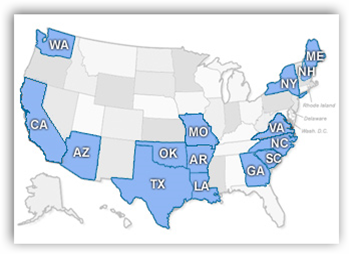
Corporate acquisitions certainly are not simple today.  Humana purchased Arcadian and in the interest of not having a monopoly they need to sell off and divest part of that business.  This is fine for the that sake, but the current policy holders get shuffled to Cigna.  In addition there are additional plans that need to be sold off and as you can read they are up for grabs to purchase and may end up with Blue Cross or United Healthcare.  The purchase was announced back in August of 2011, almost a year ago.  The blue states are where Arcadian operates, 15 states. 

Humana to Buy Arcadian Management Services HMO With 64,000 Members–Subsidiary Watch

So here we go again with the “insured shuffle” for healthcare.  BD


CIGNA Corp. (CI) announced its plans to purchase selected Medicare Advantage (“MA”) plans in the state of Texas and Arkansas. Cigna will buy the plans in three markets - Amarillo, Longview-Marshall and Texarkana - from Humana.

The transaction is subject to regulatory approvals and is expected to be complete by the end of 2012.

Humana got regulatory approval to buy Arcadian only on the condition that the former will divest Arcadian’s Medicare Advantage business in 51 counties in five states, namely, Arizona, Arkansas, Louisiana, Oklahoma and Texas. These divestitures were aimed at preventing monopoly in the states where the merging entities were the chief rivals before the acquisition, and hence, a union will virtually leave no competition.

While Cigna has bought Texas and Arkansas MA plans, other contenders for the remaining plans may be WellPoint Inc. (WLP) and UnitedHealth Group Inc. (UNH).

http://finance.yahoo.com/news/cigna-buy-ma-plans-210134288.html

Kinect Accelerator Day Where Developers Showcase What They Have Developed–Several Innovative Healthcare Applications Represented

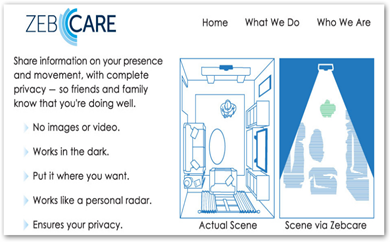
This is post worth taking a look at and I’ll just try to summarize what is covered here relative to healthcare from the “Next at Microsoft” blog.  This apparently was a big day for VCs to comeimage and take a look at what’s happening with Kinect and healthcare was represented well.  Dr. Crounse from Microsoft was present and introduced one new Kinect technology I had not seen yet but it looks like there’s some serious work going on here with using Kinect with privacy as a monitoring tool.  You can also read his blog for the latest Health IT information happening at Microsoft.    Dr. Crounse as well as myself and few others were the early users of Tablet PC “before they were cool” as they are now.  Years ago at one of the Microsoft User’s groups I attended I remember the night to where we all were given a first glimpse and presentation of this new technology that was to be announced in a couple days and look at where we are now.  Back on topic ZebCare was one of the innovative products shown. 

image
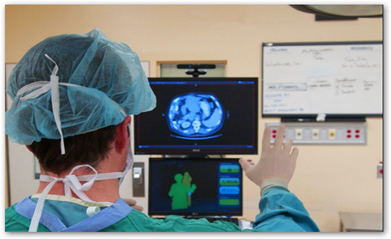
Perhaps one of the best known Kinect technologies is GestSure which you may have already seen as it has received a lot of publicity and is used at a hospital in Toronto to where it is used in the surgery room to view medical images and other information, giving the surgeons a “hands free” atmosphere to where they don’t need to “touch” anything. 

image
Jintronix was yet another application that works with Kinect to make physical rehabilitation easier and interesting.  I don’t know about you but rehab is something is needed but its always a bit of drudgery to get through it. 

It’s amazing as to what is being developed with Kinect.  I attended the Israel Conference a few weeks ago and found another interesting development with Kinvestix which is a vest you can wear that figures in resistance so you can do this instead of having to actually pack on a lot of weights and still get the same benefits with a work out. 

A New Way to Work Out with Kinect–Kinvestix Belt Provides Resistance–No Need to Wear Weights


There’s also an application that is pretty wild to where Kinect can scan a room and you can use a 3D printer to print what’s the in the room so if your best friend comes over to visit Kinect with a 3D printer can print him/or her out.  Also at the Israel Conference I did get to see one of those 3D printers and it’s amazing what they do.  Printing a pipe wrench has received a lot of attention and that was the first thing I asked, “where’s your pipe wrench” sample.  In 2011 I attended the same conference and spent a bit of time talking with Microsoft/XBOX Corporate VP Ilan Spillinger and got to hear the story about how Kinect came into being with it’s roots, interesting story on how the developer was able to connect with Microsoft and the rest is history.  You can use the link at the bottom here and see what else was featured.  Kinect has certainly earned its place in healthcare and I’m sure there lots more to come in the near future.  BD

Kinect Demo Day At Microsoft–Getting Prepared


From the blog post:

“I get to see lots of presentations in my role at Microsoft but few are as compelling as the one that opened the Microsoft Accelerator for Kinect Demo Day today. Jintronix kicked off the 11 presentations from the teams who have been participating in this program in Seattle for the last 13 weeks. They stood in front of a room of over 100 venture capitalists and drew spontaneous applause for their Kinect based solution that looks set to transform physical therapy and in home rehabilitation.”

Zebcare were introduced by Microsoft’s Dr Bill (Crounse), and Zeb Kimmel explained their employment of Kinect for helping elders. In a nutshell, they’re using Kinect as a “smart radar” in homes that can alert family or doctors about abnormal patterns of movement or lack of movement in a home. Zebcare can track the movement of individuals with total privacy and allay the major fear many of them have about losing their home”.

http://blogs.technet.com/b/next/archive/2012/06/29/microsoft-accelerator-for-kinect-demo-day-offers-lots-of-vc-options.aspx

US CIO Steven VanRoekel and CTO Todd Park Talk About What Is Happening With Government Innovation (Video)

This is nice to have the two of them together, policies, people and permission are the 3 “P”s that VanRoekel begins with and nice to hear “permission” included in there.  They discuss the Blue Button in healthcare in one area and the importance of exposing government to new technologies. 

Open data is being used in government where ever they can and we have seen this with new stats and reports such as weather data for one example.  I do have to say one thing, since these two have imagemoved into these key positions the content we hear from the technology areas has certainly improved and not that the former executives did a bad job by any means, but we are now hearing a “more focused” group with actual “hands on” backgrounds and it makes a difference.  Both are working on changing the “government culture” and we know what that has been in the past.  Parks speaks too about the “stifled” atmosphere that has existed and the talent that has not been either used or exposed in government and he is working to bring a lot of their ideas and methodologies to fruition, in other words let the folks with the talent and ideas function to a greater capacity to make a difference and the talent exists in all government agencies.  BD    


US CTO and CIO

U.S. Chief Information Officer Steven VanRoekel and Chief Technology Officer Todd Park discuss government innovation with FedScoopTV. Park and VanRoekel touch on the White House Presidential Fellows Program, open data, mobile, consumerization of technology and changing the culture of government.

http://fedscoop.com/park-vanroekel-on-unlocking-governments-innovation-mojo-video/?utm_source=twitterfeed&utm_medium=twitter

Melinda Gates Talks About Family Planning– Steven & Melinda Foundation” Returns (Video)

This a return visit and Melinda Gates gives an update on their work in the world and also discussed family planning here in the US and all over the world. 

A while back she spoke at one of the TED conferences and really gave a great talk about family planning.  Colbert talks about how controversial it is in the US and due to that it has come off the global agenda, that’s sad that all the mucky muck in our lawmaking sessions created that.  BD 

The Colbert Report Mon - Thurs 11:30pm / 10:30c
Melinda Gates
www.colbertnation.com
Colbert Report Full Episodes Political Humor & Satire Blog Video Archive

http://www.colbertnation.com/the-colbert-report-videos/415947/june-27-2012/melinda-gates

SEC May Have Nasdaq Fix Their Code and Upgrade–CEO Blames The Tech Department & CIO - IBM Might Land A Big New Project

What happens when you have a CEO that doesn’t know or have his hand in at least a little technology, this maybe.  IT Departments are an easy target for just about anything and sometimes they are at fault an sometimes not.  End users usually hate them as they can’t give them everything they want and some still think it’s Burger King where you can have it your way.

One thing though I wish these folks would all talk the same language so consumers can learn.  It drives me nuts to hear algorithms called “circuit breakers’, call it what it is.  This is not a big pull switch on the wall that someone goes to pull when things get bad, it’s another algorithm stopping the processing of another bunch of algorithms in motion.  One thing consumers do know about upgrades is that some things can be rocky afterwards and may not work exactly like they did before and that in itself gives the IT folks a bad time as they are trying to improve things.  Most of the time though they go off without a hitch.  Healthcare software has “glitches” too and these are systems that go through some rigid certification processes to work, so you never know when some code comes up that needs work.  When you upgrade though you have new code and it has to be tested as well so not knowing all the details it’s hard to say whether or not an upgrade is the answer but all do upgrade at some point.  BD 

GE Centricity EHRs Need To Fix Their Algorithms (Math)-Some Customers May Not Be Able to Attest Until The End of November After the Software Update


In addition the OMX Director’s Desk had their security breach last year and I don’t know where that stands as last we heard the FBI was in on it and nobody took any data and used it, and perhaps just used it as “inside information” possibly.  The machines make it possible for the hackers but it still takes a human to act on it.  All we can do is just be prepared for the rocky roads when they hit and do our best and get the software certified, in other words have other do some outside debugging too as they may find items missed by the original programmers.  BD 

Healthcare Industry Is Not Alone with Hackers, NASDAQ Has Intruders Using Algorithms to Break In-FBI Investigation


As part of the deepening inquiry, regulators are weighing demanding that Nasdaq agree to revamp its processes for developing, changing, testing and implementing the computer code used in initial public offerings and other exchange functions, according to people familiar with the investigation. The SEC hasn't decided yet whether to take any enforcement action against the company.

Nasdaq's board, which includes Mr. Greifeld, first discussed potential ways to restructure its operations and technology unit, including possibly replacing Ms. Ewing as the supervisor over both areas, more than four weeks ago, said one person with direct knowledge of the discussions.

Retaining IBM to review Nasdaq's practices and then beefing up its technology could double the exchange company's spending on system maintenance and upgrades over the next few quarters, according to Matthew Heinz, analyst for Stifel Nicolaus & Co. He estimated Nasdaq now spends about $10 million a quarter on technology upkeep.

http://online.wsj.com/article/SB10001424052702304830704577495111112700328.html

FDA Approves Mirabegron–New Drug for Over Active Bladders

The drug is taken once a day and there was a higher rate of tumors compared to placebos during trials.  BD 

U.S. drug regulators approved Astellas Pharma Inc's pill imagefor overactive bladder on Thursday, boosting the Japanese drugmaker's foothold in the market for the condition.  Mirabegron, the first drug in its class, works by activating a protein receptor in bladder muscles that relaxes them and helps the bladder fill and store urine. The pill is already approved in Japan.

http://www.msnbc.msn.com/id/48000533/ns/health-health_care/?ocid=twitter#.T-y3YJglTK4

Healthcare Reform Laws Stand–Time For More Work On Health IT Business Models/Software/Algorithms For Insurers And Time For Congress To Sift Out Their Differences and Explore Using Some Better Lawmaking Models For the Future

Ok this is not the same type of response you are seeing everywhere else but if you read here often enough you wouldn’t expect a “magpie” type of editorial either, so we continue on with the opinion of another bird, a duck:)image  I do have to say I found the ruling interesting and overall good as when you look at a repeal, gosh think of the mess of “unknowns” it would have created if repealed.  We live in the world of the unknown today and when you stop and think about this, why do you think predictive algorithms are so popular..inquiring minds want to know so they can adjust their business models, but some of these models are flawed too, but that’s a story for a different day as the science of predictions will probably never be perfected in my lifetime.  Insurers know the money involved in changing IT infrastructures to be law compliant and as in the example below, they can also use this to publish something that would be popular with the American pubic as United and others did.  Do you see this as a negative, of course not. 

United HealthCare States They Won’t Alter Plans They Offer If Healthcare Law Falls–Why Would They– As It Costs A Money to Re-Develop Business Plan Algorithms If Large Profit Gains Are Not Really on the Horizon

As a matter of fact United might be situated pretty well right now with all of this as they have been doing predictive algorithms and business models long before most others caught wind of it and the person credited with creating much of the healthcare reform laws at HHS is now sitting on their payroll.  In addition, don’t lose sight of the fact that insurers are bidding on the administration of both Medicare and Medicaid contracts, so they make money there if a state or other entity awards them a contract.

US Health Insurance Regulator Leaving to Take a Job at UnitedHealth Care As Vice President of the Optum Division – Moving to the “For Profit Side” With Business Intelligence Algorithm Dollars To Review

We ended up with the law in it’s current state as the “public option” was removed and thus it has lead us down a different path, as when it was removed, other options and provisions had to be included to compensate so now the task might be to again review this and see if that was truly a portion of the law that could have lead to a smoother transition and allow options for consumers who can’t afford commercial policies.

When you revisit the fact that insurers want the administrative contracts with Medicaid and Medicare, I would guess they would again be interested in participation here versus the government running a full on public option
, but if a public option were truly in fact initiated, it should be run by the government and not outsourced as we run into the same political battle again if we do.  Is there a better way to do this with upholding the requirement that consumers all by law pay for health insurance?  I don’t think so but others could have some different opinions.  Carriers are duking it out over these contracts all across the country.  If the money was not substantial and related to bottom life profits it kind of lends light as to why we things like this happening.

Update: UnitedHealthcare Sues Department of Defense Over Tri-Care Contracts–They Said They Would Do This – Is This A Case Of My Algorithms Are Better Than Yours?


Now with having a “tax” penalty of sorts, it may not be that bad as the penalty could be cheaper than acquiring insurance and again this is where the states come to task with this situation with folks just opting out.  Nobody likes taxes but again until more is written here and the IT business models put into place to run it, we don’t know yet.  It’s almost like a judgment of sorts as getting it is one thing, but collecting it is yet another issue.  This means new IT infrastructure to put the “algorithms” in place to handle this on a large scale as well, so more “algo men” are definitely needed to pursue this tax business model and structure it so it works and we have “accurate” results rather than “desired” results for profit only.  The carriers have already modeled accepting pre-existing conditions and looked for other areas to make up the difference in what is lost in one area to look for gains in other areas of business.

Hopefully we have maybe finally surpassed the use of algorithmic formulas to deny care and we all remember stories like this that were in the news before reform took place and we want these business models to run with “non flawed and biased” data and hope this does not become another battle like what is occurring with bank on Wall Street to where analysts are told “find loopholes” and there will be some of that activity anyway, but let’s hope it doesn’t float out there like it has in years past. 


WellPoint Ran a Breast Cancer Algorithm to Target Members for Cancellation of Policies - “Fraud Detection” is the Catch All that Justifies the Reporting

In the area of Health IT there are many challenges and software and algorithms that function accurately are getting much more difficult to produce and this is not to say that the companies doing the programming are inferior, its just the world we live in today and Health IT will continue to evolve and it will get better as we are now coming to the age of accepting the fact that “flawed data” is creating havoc in some circles as you read about clinical trial reports and so forth.  We to deal with that too. 

Here’s an example of something that happened last year, bad algorithms, and nobody at fault here, but the GE Centricity EHR system had to fix their software.  Software in the words of Bill Gates is nothing more than a bunch of algorithms working together so think of that when you see the word algorithms used so much here it’s the same stuff:)  The financial business has this issue coming out their ears and they have CEOs that have no clue on how formulas and algorithms work, check out Jamie Dimon for more on that topic.  Fact of the matter is that today it is a lot more difficult to develop software and algorithms as the integration processes sometimes take their tolls when running across many platforms and transactions take place. 

GE Centricity EHRs Need To Fix Their Algorithms (Math)-Some Customers May Not Be Able to Attest Until The End of November After the Software Update


I think if the Supreme Court had not ruled this way, they may have never been able to leave this ruling, in other words the Court could have had a full lifetime on reviewing and dissecting this law:)  Again this is over all a good thing but the IT Infrastructures of how we do business today need to be in the forefront as nothing is perfect but the importance of protecting “ethic values” big.  We will still have “algorithms for profit” to deal with and the need to check for accuracy of math and code and that battle will continue with the “Attack of the Killer Algorithms” to where the middle class will continue to have to battle back against the most profitable business times we have ever experienced as a nation and the formulas do it for them, not for us for the most part. 

You can see some every day examples of what we have and what’s ahead.  One item though that I found disappointing though is the tax on medical device companies being singled out and you can read more of my thoughts on that as the “Data Sellers” of the world should be taxed as they have the big profits, so just look at Walgreens making short of $800 million in 2010 doing this and imagine the profits they make and there’s a “Killer Algorithm” chapter dedicated to my thoughts on that one for sure. 

Attack of the Killer Algorithms–Digest & Links for 35 Chapters–on How Math and Crafty Formulas Today Running on Servers 24/7 Make Life Impacting Decisions About You–Updated 6-24-2012

In summary, I really don’t think there was any other way to go as the IT Infrastructure costs to change some of this is huge!  I have said this many times before and maybe those members of Congress who are not aware of this, as some are not real techie, time to include this and model it before rushing out with an “emotional” statement or press releaseActually I would like to see our lawmakers come up to speed and use some big data capabilities when making laws, it would help them.  Perhaps instead of generating laws in committees as it is done now, reverse it. Have a full open floor of both and have everyone query and get their information first, and the go off to committees as we would at least have everyone starting with the same figures and  information.  Anybody need a wake up call in this area..read the link below:

IBM Watson Going to Work At Citigroup on Wall Street–Congress Didn’t See Big Data As A Tool (Hadoop Framework) When They Had Their Chance…For Consumers The Attack of the Killer Algorithms–Chapter 22


More on that thought…please budget the SEC as this impacts the healthcare laws as eventually we will be needing to purchase insurance from those who are traded on the open market.  If investments are now being made on “emotions” certainly the “emotions and ethics” of healthcare need to be addressed as well and we are all still humans last I looked.  Somebody made a great statement yesterday on Twitter and said “why are we regulating humans when the machines are doing the trading” which in part is pretty much true and “the machines are also making more decision in healthcare as well, so think about that those similarities.  Overall all the Supreme Court kind of did what they had to do I think and not a bad deal, but the business of healthcare legislation is far from being over.  BD 
 

SEC Playing Catch Up With Technology–Working With Big Data Experts To Analyze Social Media Impact–It’s About Time As Reuters Is Already Way Ahead With Psychological Analytics Using Machine Learning To Foster Trading on Emotions


WASHINGTON — The Supreme Court on Thursday left standing the basic provisions of the health care overhaul, ruling that the government may use its taxation powers to push people to buy health insurance.

Chief Justice Roberts, the author of the majority opinion, surprised observers by joining the court's four more liberal members in the key finding and becoming the swing vote. Justices Anthony Kennedy, frequently the swing vote, joined three more conservative members in a dissent and read a statement in court that the minority viewed the law as “invalid in its entirety.”

The decision did significantly restrict one major portion of the law: the expansion of Medicaid, the government health-insurance program for low-income and sick people. The ruling gives states some flexibility not to expand their Medicaid programs, without paying the same financial penalties that the law called for.

http://www.nytimes.com/2012/06/29/us/supreme-court-lets-health-law-largely-stand.html?pagewanted=1&_r=1&hp

Advocate Health Care Conducted Drug Study Without Patients’ Consent In the ER Comparing Outcomes of 2 Drugs –FDA Sends Warning Letter

This was a study that basically turned into a clinical trialimage when the processes were changed.  Originally one drug was being studied but then the clinical investigator decided to compare 2 drugs and at that point patient consent was required, but they didn’t do it.  The FDA wants a plan submitted to correct this type of action from happening again and the first plan was not sufficient. 

Here we go with privacy and if you were a patient being treated in the ER room and given one of these drugs, would you not want the opportunity to say yes or no?  The two drugs were randomly chosen and the patient information in the “ER trial study” was gathered and “risk” with the drugs was not explained to the patients.  Two issues here with not knowing the facts, first was the clinical investigator and secondly the board of the hospital, maybe all should take a brush up course in privacy?  BD 


Oak Brook-based Advocate Health Care failed to obtain proper consent from emergency room patients before enrolling them in a clinical study, according to a warning letter from the U.S. Food and Drug Administration.
The letter to Advocate’s institutional review board is dated June 1 and was posted on the FDA’s website this week.

The research project involved emergency room patients undergoing intubation, an emergency procedure in which a tube is inserted down the throat to open the airway.
The study, conducted at Advocate Christ Medical Center in Oak Lawn, originally was designed to evaluate the outcomes for people whose doctors chose to administer a sedative called etomidate.


But in July 2007, the clinical investigator proposed that human subjects be randomly selected to receive one of two drugs, etomidate and midazolam.
The board approved the modification in September and allowed the clinical investigation to continue without lifting the waiver on obtaining informed consent.

http://www.chicagotribune.com/news/local/breaking/chi-fda-advocate-health-care-conducted-drug-study-without-patients-consent-20120615,0,2692656.story

FDA Approves New Diet Pill But DEA Has To Approve Dosage Levels First Before It Can Be Sold

Why does the DEA have to approve?  The drug is in a category for potential abuse.  Belviq works on activating a receptor in the brain, serotonin that helps you forget about wanting to eat.  Theimage concern here is the similarity with the drug fen-phen that was pulled from the market as it had potential heart issues and side effects.  It’s a gradual loss and in trials people lost about 6 percent of their body weight after a year.  I don’t know, that’s doesn’t sound like a lot and I think I could do better with teaching myself when to push away from the table or have my jaw wired shut if I were needing to lose weight.  I think the jury is still somewhat out on this one until it is actually prescribed and we get more information.  BD


The first new prescription diet pill in 13 years won approval from the Food and Drug Administration on Wednesday, providing a new option for the roughly one-third of American adults considered obese.

Before Belviq’s approval, there was only one prescription medicine — Roche’s Xenical — approved for long-term use in weight loss.

The history of diet pills has been marked by many safety problems, which has made the F.D.A. reluctant to approve new drugs. Belviq itself was turned down by the agency in 2010, but Arena came back with new data that assuaged some of the agency’s safety concerns.

Belviq works by activating a receptor in the brain, called serotonin 2C, in a way that helps suppress appetite.

The main safety concern about Belviq is that it works somewhat similarly to fenfluramine, a drug that was part of the popular fen-phen diet pill combination. It and a similar drug called dexfenfluramine were withdrawn from the market in 1997 after they were found to damage heart valves.

http://www.nytimes.com/2012/06/28/health/diet-drug-gains-fda-endorsement.html

Hospital and Cerner Split Ways Over Medical Records System Purchase–Hospital Appears to Have Lacked In House IT Expertise for Guidance and Implementation

After reading this article and having been in this business for a while it somewhat tells me that the expertise needed by the imagehospital was not there and they didn’t understand the complexities of how a hospital medical record system worked.  You can read where the hospital only has 2 IT people and I can tell a story from the past to where I had a hospital as an account where there was few more folks but nobody knew how to install a SQL server and thus I was contracted to do so.  SQL server install is pretty matter of fact in today’s world of business, so I can clearly say from reading this that they were not prepared. 

Now a new consultant has been brought inimage and maybe they will see some progress and get their system installed.  The hospital didn’t appear to understand that the systems are modular with features you can either add or not add and the price goes up with each addition as you build the systems as you need them.  The case is now in arbitration and I hope it has a happy ending somewhere along the line.  CIOs and IT departments face this all the time with unexpected dollars that are needed and it’s not always the medical record software as hardware upgrades and so forth creep in there too. 

As one more suggestion, maybe get someone on the board that knows a bit about health IT for the future as well as that’s what boards are for, members with knowledge to help guide situations and business decisions as such.  BD


Girard Medical Center, a rural hospital in Kansas which services mainly uninsured patients and the elderly, wanted an electronic medical record system to better share information with its clinic offshoots and to claim federal incentives.

But a year-and-a-half and more than a million dollars later, the hospital says it’s no closer to having electronic medical records, and is blaming its vendor for the failure of the project.

Whether the fault for the failed project should rest on the big corporate vendor or the small hospital is unclear. But Girard’s story illustrates the risks for organizations of all kinds when they attempt to innovate by bringing in new, and unfamiliar, technologies and vendors.

Girard’s tale illustrates the inherent risk as health-care providers of all sizes move towards implementing electronic medical records. While hospitals are eager to pick up some of the $19 billion in funds the Obama Administration made available in 2009 as part of the stimulus package, they often lack the in-house expertise to contract with and supervise vendors on the complex implementation of records systems.

“Health-care systems are putting in these systems with all due haste to try to get this money,” said Dave Garets, executive director of the Advisory Board Company, a health-care research firm. “But you’ve got to have the people in-house who really understand this process and these people don’t come cheap.”

http://blogs.wsj.com/cio/2012/06/26/kansas-hospitals-failed-emr-project-shows-peril-of-vendor-relations-gone-bad/

UPS Healthcare Fulfillment Centers Continue to Grow And What Effect Could This Have on the Future Further Changing the Pharmacy Benefit Business?

Before I got into healthcare I spent about 25 years in logistics and about the time I left the industry, this trend was already beginning and it used to be where the shipments were created on the platform or dock of the common carrier and now it has grown to where the common carriers and parcel carriers have built facilities to do it.  Last year UPS reported a number of these facilities and when you continue to read further with the article in the WSJ, it’s growing. 


UPS Expanding Healthcare Focus With Giant Warehouses for Temperature Sensitive Drugs and Vaccines

UPS to spend $100 million on 4 New Global Distribution Centers To Serve Biotech, Pharma and Medical Device Companies


Fedex has their biotech division to where you can track a shipment, even in the air and for the Life Sciences folks it tells the entire story of how it was handled, in other words did it take a hard bounce anywhere.  Do you want to track your shipments..you can do that too with Twitter…

TrackThis: Twitter on Drugs for Mail Order Prescriptions…Track Fedex, UPS, DHL Packages…

CryoPort and FedEx Solution for Shipping Temperature-sensitive Medicines and Biomaterials


What is interesting is that actual pharmacists are on board filling prescriptions too, so what’s next one might ask, is where the next pharmacy benefit managers might move and call home? Who knows but as they are integrating with various drug and device companies, about the only thing missing at this point would be the analytics.  They already have internal wellness coaches so that frame is there, so I guess time will tell.  BD

Health coaches nag employees to better care - UPS offers service to employees


At UPS's Louisville headquarters, company pharmacists fill 4,000 orders a day for insulin pumps and other supplies from customers of Medtronic Inc., MDT +1.61% the Minneapolis medical-device company.

UPS pharmacists in Louisville log into Medtronic's system, fill the orders with devices stocked on site, and ship them to patients, by UPS, of course.

It is one part of a growing reach by UPS—along with rivals FedEx Corp., FDX +0.40% and Deutsche Post AG's DPW.XE +1.23% shipping division DHL—into the business of running supply chains for pharmaceutical and medical-device companies.

The parcel-delivery companies are investing in mega warehouses that service multiple pharmaceutical companies at once, with freezers for medicines and high-security vaults for controlled substances. They're betting that the investments will be offset by clients willing to pay a premium for specialized handling of sensitive products.

http://online.wsj.com/article/SB10001424052702303379204577475513549926528.html

FDA Approves New Blood Test for Prostate Cancer For Men With PSA Levels Just Above Normal Range

Perhaps this will add some additional definitive information on the PSA testing which has been in the news frequently for discussion as to imagewhether it should be used for screening or not.  This test appears to add some additional decision making information if any actions or treatments are needed/discussed.  Last year at UCLA a new PSA testing format was developed called the A+PSA test so perhaps with both tests more decision making information can be obtained with fewer false positives.  BD


A+PSA New Test For Prostate Cancer Is More Specific and Reduces False-Positives-Study at UCLA


A blood test for prostate cancer billed by its manufacturer as "an answer to the current PSA [prostate-specific antigen] testing controversy" has won FDA approval, the company said.

Beckman Coulter said Monday that the agency had okayed its premarket approval application for the so-called Prostate Health Index test, which incorporates measurement of a PSA precursor protein called [-2] pro-PSA along with total and free PSA.

According to the co-discoverer of [-2] pro-PSA, Kevin Slawin, MD, of Memorial Hermann-Texas Medical Center in Houston, the marker is more closely associated with prostate cancer than total and free PSA. Combining the three markers makes the Prostate Health Index more specific than conventional PSA testing.

http://www.medpagetoday.com/HematologyOncology/ProstateCancer/33486

Obamacare – GOP Senate Candidate Richard Mourdock Accidentally Puts His Prepared Response on YouTube Saying Healthcare Was Defeated –Colbert Report (Hilarious Video)

This is funny and Colbert does a great job as usual.  I wonder how long this was up on YouTube:)  He pre-taped and posted his response, what a predictor and he says the Supreme Court ruled that Healthcare Reform was unconstitutional.  The GOP gets less smart all the time. 

Colbert said he didn’t prepare for all the possibilities.  BD

The Colbert Report Mon - Thurs 11:30pm / 10:30c
Colbert News Alert - Obamacare Supreme Court Ruling - Richard Mourdock's Responses
www.colbertnation.com
Colbert Report Full Episodes Political Humor & Satire Blog Video Archive


http://www.colbertnation.com/the-colbert-report-videos/415852/june-25-2012/colbert-news-alert---obamacare-supreme-court-ruling---richard-mourdock-s-responses

Roche To Cut 1000 US Jobs–Closing New Jersey Facility and Head of Pharma Research Leaving the Company

This is the location to where Valium was created and was the former headquarters for Roche prior to the purchase of Genentech and the corporate offices moved there.  This seems to be a slow shut down that they hope to have done by the end of 2013 and the facility is huge.  It somewhat reminds me of the big Pfizer facility in New England that was closed not too long ago.  A couple months ago to answer the call for affordable drugs in India they are reducing the cost of a couple cancer drugs to stay in the market and not be outsold by generics.  BD 


Roche Cutting the Price of 2 Cancer Drugs in India To Potentially Avoid Compulsory Law Provisions That Allows Generic Drugs When Cost Is Not Affordable


"The overall number of programs in clinical development has grown substantially," Roche Chief Executive Severin Schwan said in a statement on Tuesday.

"The planned consolidation of our research and early development organization and the refocusing of research and development activities in Switzerland and Germany will free up resources that we can invest in these promising clinical programs while also increasing our overall efficiency," he said.

http://www.reuters.com/article/2012/06/26/roche-jobs-idUSWEA518620120626?rpc=401&feedType=RSS&feedName=rbssHealthcareNews&rpc=401

SEC Playing Catch Up With Technology–Working With Big Data Experts To Analyze Social Media Impact–It’s About Time As Reuters Is Already Way Ahead With Psychological Analytics Using Machine Learning To Foster Trading on Emotions

I must say this is a “good” thing for the SEC and gladimage someone moved on it as there is no other federal agency that needs big data and intelligence analytics worse.  By contrast you can see what Reuters is offering with adding a new tweak so you can see when fat ladies think about singing, when they sing and worse yet when they become “drama queens”:)  The SEC does catch some folks with bad math and algorithms here and there and it does make the news, like this guy who for two years knew his calculations were off but still continued to run the…talk about flawed data and come to think of it, who did he sell this to? 

SEC Sues Quant–Undisclosed Error in Trading Algorithm- Miscalculating “Risk”-Healthcare Software Evaluates This Factor Too


With everybody selling data today and making billions you can bet he had some buyers of “flawed data” that had no clue as most consumers are naïve and believe all the formulas and algorithms created are “accurate”..not so when it comes to money as some take on a little different characteristic that is more like “desired” results and that’s been going on for a long time.  It has to get better than this:

”Hey dude let’s crunch some numbers and see if we can come up with some analytics to sell”


Here’s a good example I found a couple years ago and it made the rounds when I found my former doctor who had been dead for 8 years still listed in the after life on the web, in other words flawed data as she was not still alive and seeing new patients as the many sites that rank and put information out on doctors and hospitals said…see how far this goes back.  Believe it with flawed data as there’s more of it out there than you can shake a stick at. 

HealthGrades And Other MD Rating and Referral Sites List “Dead Doctors” on Their MD Information Pages And Even Include the Insurance Plans the “Dead Doctors” Honor

Recently too on the web there has been a few folks talking about the usefulness of all the “big data” and they make good points as some of it is not useful but folks take it and write queries and will sell anything they can create a data base with, and more and more of that is appearing.  I like good clean data and not the marketing rubbish out there as is does nothing for me and others and just clouds the waters.  Just because data exists and has value in one place doesn’t mean that it’s open game to query with any kind of other data to sell, but boy are the query folks all over it.  Sometimes they do find good uses and we get that too, but being able to tell the difference is a challenge for sure, look at clinical trial data for one area as lies and other types of substantiation are in the news all the time.    These folks at the MIB are marketing their asses off too and they are far cry from what they started out to be a number of years ago. 

The MIB – Health Insurance Bureau Business Intelligence Mining May Go Beyond Just Healthcare Information


Too bad our Congress can’t look at big data, duh?  Wall Street though is all over it.  We just end up getting another dose of abortion talk as they are not up to speed and that seems to be the “default” topic of distraction as it makes them look like they are taking a stand on something valuable, not. 

Use of IBMWatson Technology in Congress Would Allow For Smarter Laws and Decision Processes With Bonus Points For Lowering Over All Impact of Lobbyists


I wrote the short blog post almost 3 years ago and I’ll be darned if we don’t need a government department like this:

“Department of Algorithms – Do We Need One of These to Regulate Upcoming Laws?

Here’s the analytics Reuters is using for the “fear” and image“emotions” index and you could get a real education if you read up here on what’s going on with algorithms and queries.  Gee, what if we bought into this in healthcare?  Now that’s a scary thought indeed.  Reuters is not the only one into this by any means. 


MarketPsychData.com demonstrates our text-analysis based investment tools. Below, the MarketPsych 90-day average Fear index displays the amount of Fear expressed in financial social media (green line) over a candlestick chart of the S&P 500 index.”

Of course I write about this as with all of the data queries and sale of data that happens today, some of it encroaches on ethics in more ways than one.  It would be nice to have folks study their queries and algorithms a little longer before dumping them out to sell.  It’s getting harder today to create good software as in the news the last couple of weeks you can read articles as such talking about Goldman Sachs and others having issues with the platforms they are creating with code not being ready yet for prime time.  In healthcare we certify medical records and the software goes though some pretty rigid testing, but it happens there too with software updates being needed before some doctors could collect their stimulus money.  This was big old GE that had to create a fix. 


GE Centricity EHRs Need To Fix Their Algorithms (Math)-Some Customers May Not Be Able to Attest Until The End of November After the Software Update

So what in the heck is Congress going to do when it comes to a hearing on the Facebook IPO?  Will they understand it at all?  They are busy looking at the framework and not the algorithms for accuracy…duh?  I have a series I write called “The Attack of the Killer Algorithms” they chapter 32 and you can read more on that topic at the link below, because it’s true and I would not want to be in the IT Department of NASDAQ today and you could clearly see the CEO didn’t get it either, he’s a figurehead when it comes to complicated algorithms and only your programmers know for sure and they have to determine what to put out in the press that the layman “might” comprehend, much less Congress. 

Facebook IPO – The Ultimate “Attack of the Killer Algorithms” Chapter 32 - Nobody is Immune In the World of Complicated Computer Code and Formulas Today


Do you thing many would understand “over clocking of server processors, nope. 

Gamers Are Not the Only Ones to Over Clock Processors-Turns Out It’s Done on Wall Street To Run Those Algorithms at Rocket Speed

Well we don’t know what else to do with these folks so slap out a fine:)


High Frequency Trading Firm Fined $850k for Losing Control of an Algorithm in Rapid Succession Buying–Bad Math and Some Killer Algos At Work- Keep Occupying…


Now that I have covered a few topics is this enough to bring about fear?  It could be and if that’s the case then fear of the markets will continue to grow as flawed data and bad algos continue to infiltrate. 

But this is not the worst of all of this though as all this activity with flawed data and spun marketing makes billions for companies, banks and so on and keep inequality growing sadly so maybe the SEC can get handle on some of this at least.  Excise taxes for the data sellers are something that needs to e addressed today as when you look at corporate profits being at an all time high and wages at the lows we have today, this is what does it all the way around and until some folks come out of denial it won’t stop. 

I thought I was the only one talking about this but recently was contacted by the National Institute of Statistical Sciences that told me to keep blowing the horn and that someone will eventually listen.  It’s all about the math, algorithms, data, and “flawed data” that creates markets sometimes where they don’t belong. 
image


You know when I have to pay an excise tax on a tire that I need for my car as a consumer and then look at the billions corporations make selling and brokering data, it bothers me as the consumer is stuck with this dated excise tax and corporations have none in this area.  Sure it’s a new idea but technology has changed and we need those new ideas, be it mine or someone else's.  Like I keep mentioning that is Walgreens made just under $800 million in 2010 on selling data only, you can see how much is out there to tax and the billions made when group banks and corporate America together in this game. 

We Pay Gasoline Tax to Keep Up the US Highway Infrastructure–Why Not Tax the Data Selling Companies and Banks to Keep Up the US Government IT Infrastructure? A “Buffett Tax” Alternative

To quote Kevin Slavin on his video on Algorithms…future looks pretty good if you are an algorithm, not so if you are a human.  If you want to look at some everyday examples in the Attack Series, here’s the link below and it has a permanent spot on the Medical Quack at all times if you scroll a little.  Let’s hope the SEC can make some major moves in their analytics and with keeping things clean as they are about all we have anymore.  BD

  Attack of the Killer Algorithms–Digest & Links for 35 Chapters–on How Math and Crafty Formulas Today Running on Servers 24/7 Make Life Impacting Decisions About You–Updated 6-24-2012


Something has been quietly changing at the SEC, the agency whose reputation was savaged by the financial crisis when regulators were accused of being asleep at the switch, and also took a severe beating for failing to seize multiple opportunities to stop Bernie Madoff before he bilked investors out of $65 billion.

Over the last year, the SEC has ramped up its ability to ingest and analyze the data that floods the market on a daily basis – and thanks to its new analytics technology, it has been able to more effectively pinpoint market abuses, Bayer notes.

Bayer has also been working with two Big Data experts – Jeanne Ross from MIT and Barb Wixom from the University of Virginia, who are providing the SEC with insights into emerging and evolving best practices in technology, he says. “Their technology case studies cover a range of companies and it gives us a broader view of innovative practices across industries. From a big data perspective, they inform us of how social media companies are analyzing their data. Jeanne helped me to understand the positive impact of "gamification" on learning and business process.”

http://www.wallstreetandtech.com/it-infrastructure/240002647

Madonna On Tour Uses “DNA Sterilization Team” to Clean and Disinfect Her Dressing Rooms–Beware of the DNA Snatchers…

I wrote the post back in December of 2010 with the title to bewareimage of the DNA Snatchers of the future and now it looks like the future is here, or at least Madonna is not taking any chances.  Private investigators soon may take on a whole new identify.  As we have all read your DNA can easily be picked up off a glass where you drank some water, a beverage at a bar and so on.

Beware of the DNA Snatchers of the Future

What happens when your DNA gets stolen and used illegally?  We all know what a hassle it is with our personal information but what do you do about something like this?  As sequencing becomes cheaper and folks have time on their hands, who knows what could occur.  There’s black market everything out there today and she’s making sure that she or any part of her doesn’t get cloned in some fashion or another.  This kind of gives a new meaning to the words “material girl” when someone could be seeking DNA:)  BD 


The pop star apparently uses a "DNA Sterilization Team" on her current tour, according to Britain's Daily Mail. The team cleans and disinfects each dressing room Madonna uses on the tour, literally wiping away any trace of the singer.

"We have to take extreme care, like I have never seen for any other artist," said Álvaro Ramos, the promoter handling the Portugal dates on Madonna's tour.

"We cannot even look at the dressing room after it is ready, or even open the door," he says. "We can only enter after her sterilization team has left the room. There will not be any of Madonna's DNA, any hair, or anything. They will clean up everything. In the end it is all to protect her and make her feel comfortable. I do understand it, but it is taken to extremes."

http://www.mercurynews.com/entertainment/ci_20934876/hicks-madonna-using-dna-sterilization-team-tour

Technorati Tags: ,,,

One More Source of Healthcare Expenditures–Hiring “Experts” to Help Hospitals and Providers Document and Code As The System Complexities Grow for Reimbursement Leaving the Clinical Side Behind With Priority At Times With Patient Care

In reading this article, this is what is happening now as folks are calling in the “consultants” who they have to pay to teach the doctors,image nurses and others on staff how to document so claims are paid correctly and promptly.  Who pays for this, the hospitals, so one more expense coming on board for many hospitals that are already financially strapped.  This is kind of a catch 22 item as if they don’t invest they run the gambit of lower compensation and on the other hand they also look to make sure the hospital is not over charging. You wonder sometimes when you read about all these “fines” that hospitals pay for billing errors, is the hospitals no coding right or is it the software and lack of education rolled in there?  Sure there are the obvious cases but each case is it’s own.   You can even buy a shirt that says don’t bother me, I’m coding. 

Some insurance companies, like United Healthcare also created their own clearinghouse subsidiary to audit the bills before they are sent on.  Most providers today do use some type of clearinghouse to check their work for accuracy and with a clearinghouse subsidiary it’s a bigger piece of the pie for overall corporate revenues as this subsidiary servers to generate revenue by subscriptions whereby the hospitals pay for this service, so they could end up with 2 legs of the process here with medical billing with clearinghouse services subsidiaries that check for accuracy before it hits their claims processing.  United has so many subsidiaries anyway though and have recently hired former Minnesota Assistant Attorney General as general counsel as well as hiring the former HHS executive created most of the provisions of the healthcare law.


OptumInsight (A Wholly Owned Subsidiary of United HealthCare Optum Division) Creates Medical Clearinghouse Integrated With Epic Practice Management Software-Subsidiary Watch

US Health Insurance Regulator Leaving to Take a Job at UnitedHealth Care As Vice President of the Optum Division – Moving to the “For Profit Side” With Business Intelligence Algorithm Dollars To Review


Meanwhile back at the ranch, HHS Secretary Sebelius is counting on algorithms only while the powerful folks formerly imagein government leave and move over to the “for profit” side and they will have an advantage for sure at United as these folks bring with them knowledge as to how the government operates or doesn’t operate on the other side.  This kind of reminds me of the PBS 4 part documentary to where they spoke with former brokers who made a lot of money and they all admitted they were given the tasks to “find loopholes” so they could make even more money.  Watch this PBS 4 part video series on Wall Street


HHS Secretary Sebelius Still Looking for Tech Breakthroughs To Save the Day

So the long and short of this is more training of doctors and nurses with additional expenditures to create faster claim processing for the hospitals while the bottom line of insurers’ subsidiaries continues to grow.  No wonder medical records are taking on a new reputation as they are now being created for the benefits of compensation rather than clinical care. 

There was an article on the web this week that more doctors are using electronic medical records and liking it less, and this kind of tells the story why as now we have yet one more layer of expertise to use and pay for to make all of this happen, and the payers benefit, not so much the patients for the most part.  BD 


When it comes to patients getting an error-free medical bill, the name of the game for doctors and hospitals is documentation.

That's because if the care isn't recorded and well-documented while it's being provided, insurance companies and federal payers will ask for more information later. Payment for services slows down, and chances for mistakes skyrocket.

That can mean checking that seemingly obvious details are recorded. For instance, each time a nurse starts an IV, she must write it down because there is a charge for the equipment used, Bauschka explained.

That chart -- whether it is electronic or paper -- is also key for the coders, who translate the care documented on the chart into billable codes, said Kathy DeVault, director of professional practice at the national industry organization American Health Information Management Association.

Many health systems and doctors' offices struggle with documentation because of a lack of staff training, DeVault said, adding that "what seems very simple from the outside looking in, is very complex."

http://www.cleveland.com/healthfit/index.ssf/2012/06/many_providers_turn_paperwork.html

Accretive Health Fails to Adequately Respond to Congress And Loses Contract with Second Hospital–A Total of Nine Notebooks Were Stolen or Missing

This keeps getting uglier and when you look at it, it was the business intelligence algorithms that drove all of this as that is the way to profit and make money.  Now there’s nothing wrong with that if you are ethically doing business, but as you read in the news, we are all of sudden finding a entire slew of folks who are not, surprised?  You shouldn’t be as this has been going on a long time but as folks getter smarter about the methodologies that have been used for a number of years, it’s all coming out.  Sure someone can like their business algorithms but if ethics are compromised in the act then what do we have?  Maybe I should ask someone on Wall Street about that while I’m at it.   What started all of this..a stolen notebook that shows their lack of ethics and HIPAA violations. 

Accretive Health Debt Collector Employee Has Laptop Stolen With Non Encrypted Patient Data from 2 Hospitals And Had Access to All the Data Via Revenue Cycling - Patient Information Was Shared With Wall Street Investors – Algorithms For Profit Again?


I wrote a post about 2 years ago on this blog in jest but I think it’s true now that “data addiction and abuse is the up and coming next 12 step program on the horizon”.   We need somewhere to rehab the folks that have this issue and look at the big Oncologist in the OC who did it for years with fraud, he said he couldn’t help himself and he was addicted.  Accretive though goes beyond addiction though and this is all about some marginal pay for performance incentives too.  Nobody is going to collect in fashions they have unless someone is waiving a dollar under their nose.  Maple Grove hospital has now cut them off as well. 

We also have some new information herenot oneimage but nine notebooks were stolen so nine times the potential exposure possibly, depending on what they were carrying around.  The Vice President of the company left a non encrypted laptop with around 24k patients' information on the computer, gee and we wonder why executives are kind of useless today, but you could almost be he preaches to employees NOT to do this:)  This was also Chapter 28 of my Attack of the Killer Algorithm series. 

Accretive Medical Collections and Analytics Cited by Minnesota by Attorney General For Collecting from Patients At Bedside and Worse–Employees on Pay for Performance Too? Killer Algorithms Chapter 28

It looks like they are somewhat ignoring Congress too.  BD


In a letter sent to Accretive Chief Executive Mary Tolan, U.S. Rep. Henry Waxman and U.S. Rep. Diana DeGette said a public statement that the company had provided the U.S. House's Committee on Energy and Commerce was "not an appropriate response" to a request for internal documents.

The congressmen also said Accretive had ignored repeated efforts to reschedule a May 4 meeting between the two sides that the company had earlier canceled.

http://in.reuters.com/article/2012/06/21/idINL3E8HL5FL20120621

Cook Medical Sponsors Clinical Study–New Endovascular Technique With Potential to Reduce A Large Number of Leg Amputations For Patients Suffering from PAD

this is the first study to examine the a new, endovascular approach to treating critical limb ischemia (CLI) – a symptom of peripheral arterial imagedisease (PAD) and if you are not familiar with PAD (peripheral arterial disease) , here’s a couple back links and an interview I did with Cook Medical a while back with Rob Lyles with Cook Medical..  CLU occurs when PAD goes to the worst case and leads to amputation to where 25% of the patients die due to the procedures.  Let’s face it nobody wants to lose a leg.  Back in 2009 I first spoke with Rob Lyles from the peripheral intervention division. 

Cook Medical Interview Discussing PAD Leg Therapies– Rob Lyles, VP Peripheral Intervention Division
image

In addition you can also read up here with the interview I did with Dr. Peter Lawrence at the UCLA Gonda Vascular treatment center to see what they currently do with treating PAD. 


The UCLA Gonda Vascular Center Treats PAD (Peripheral Arterial Disease)-Interview with Dr. Peter Lawrence Chief of Vascular Surgery


Cook has a stent that can be utilized to bring the blood flow back and unlike a heart stent, they have to be rugged, in other words your heart stays in one place, but no so for the legs as they are in constant motion, thus the importance of the stent remaining in place and being secure.  12 locations will participate in the Tibiopedal Access for Crossing Infrainguinal Artery Occlusions study and the Zilver stent was last reported consistent outcomes with treating pad over a 24 month period.  BD


Cook Medical Zilver PTX Drug Eluding Stent Clinical Trial Shows Consistent Outcomes Over 24 Months in Treating PAD


Press Release:

Cook Medical Sponsors First Clinical Study to Examine New Endovascular Technique


Study designed to evaluate retrograde tibiopedal vascular access


Bloomington, Ind., June, 25, 2012 – Clinical investigators are for the first time examining the retrograde tibiopedal interventional approach, an endovascular technique that has the potential to reduce the rate of leg amputations by as much as 50 percent[1] in patients with critical limb ischemia (CLI), a manifestation of peripheral arterial disease (PAD). Cook Medical, a global pioneer in interventional medical device technologies, is sponsoring the Tibiopedal Access for Crossing Infrainguinal Artery Occlusions study. 


With the retrograde tibiopedal approach, a physician gains vascular access at the foot and advances wire guides and catheters up the leg to reach and cross arterial blockages. Individuals1 and single centers[2] have reported initial success with the technique, which is often tried after a traditional antegrade approach fails. This is the first prospective, multicenter study to collect data on this technique.


“This endovascular approach developed by leading physicians has the demonstrated potential to address life-limiting and lower-limb-threatening occlusions,” said Rob Lyles, vice president and global leader of Cook’s Peripheral Intervention business unit. “We are committed to enhancing the delivery of quality patient care and look forward to the initial study results in 2013.”


An estimated 27 million people in Europe and North America suffer from PAD,[3] which can lead to CLI, a severe obstruction of the arteries that decreases blood flow to the extremities, producing pain and skin ulcers or sores. CLI, which affects up to 300,000 people a year in the U.S.,[4] is the end stage of lower-extremity PAD and poses a significant risk for limb loss. Currently, 25 percent of CLI patients undergo amputation as a primary treatment.4 Within two years of treatment, 25 percent of these patients die and another 30 percent experience additional lower-limb amputation.4 The mortality rate at five years following amputation can be as high as 68 percent.[5]


Twelve sites in the United States and Europe will participate in the Tibiopedal Access for Crossing Infrainguinal Artery Occlusions study led by global principal investigator, Craig Walker, M.D., founder, president and medical director of the Cardiovascular Institute of the South in Louisiana. Up to 200 patients with a totally occluded lower-limb artery will be enrolled, and physicians will assess the technical success rates of the new procedure both for gaining vascular access via the foot and for crossing the lesion. Patient follow-up will consist of a telephone interview approximately 30 days after the procedure. J.A. Mustapha, M.D., director of endovascular intervention at Metro Health Hospital, has enrolled and treated the first patients in this study. Drs. Walker and Mustapha are compensated by Cook Medical for educational lectures they present to physicians on the tibiopedal access procedure.


_______________________________________

1  Kavteladze Z. Retrograde recanalization of tibial CTOs. Presented at: TCT 2010; September 21-25, 2010; Washington, DC.

2  Montero-Baker M, Schmidt A, Bräunlich S, et al. Retrograde approach for complex popliteal and tibioperoneal occlusions. J Endovasc Ther. 2008;15(5):594-604.

3 Belch JJ, Topol EJ, Agnelli G, et al. Critical issues in peripheral arterial disease detection and management: a call to action. Arch Intern Med. 2003;163(8):884-892.

4 Norgren L, Hiatt WR, Dormandy JA, et al. Inter-society consensus for the management of peripheral arterial disease (TASC II). Eur J Vasc Endovasc Surg. 2007;33(suppl 1):S1-S75.

5 Reiber GE, Boyko EJ, Smith DG. Lower extremity foot ulcers and amputations in diabetes. In: Harris MI, Cowie CC, Stern MP, et al., eds. Diabetes in America. 2nd ed. Washington, DC: National Institute of Diabetes and Digestive and Kidney Diseases, 1995:409-428.


ABOUT COOK MEDICAL

A global pioneer in medical breakthroughs, Cook Medical is committed to creating effective solutions that benefit millions of patients worldwide. Today, we combine medical devices, drugs, biologic grafts and cell therapies across more than 16,000 products serving more than 40 medical specialties. Founded in 1963 by a visionary who put patient needs and ethical business practices first, Cook is a family-owned company that has created more than 10,000 jobs worldwide. For more information, visit www.cookmedical.com.

[1]  Kavteladze Z. Retrograde recanalization of tibial CTOs. Presented at: TCT 2010; September 21-25, 2010; Washington, DC.

[2]  Montero-Baker M, Schmidt A, Bräunlich S, et al. Retrograde approach for complex popliteal and tibioperoneal occlusions. J Endovasc Ther. 2008;15(5):594-604.

[3] Belch JJ, Topol EJ, Agnelli G, et al. Critical issues in peripheral arterial disease detection and management: a call to action. Arch Intern Med. 2003;163(8):884-892.

[4] Norgren L, Hiatt WR, Dormandy JA, et al. Inter-society consensus for the management of peripheral arterial disease (TASC II). Eur J Vasc Endovasc Surg. 2007;33(suppl 1):S1-S75.

[5] Reiber GE, Boyko EJ, Smith DG. Lower extremity foot ulcers and amputations in diabetes. In: Harris MI, Cowie CC, Stern MP, et al., eds. Diabetes in America. 2nd ed. Washington, DC: National Institute of Diabetes and Digestive and Kidney Diseases, 1995:409-428.