Cathy O’Neil, Mathematician/Quant: Wall Street Quants The Culture, Big Data Mechanics, Algorithms, Data Mining, Lack of Privacy, Web Profiling, Health Insurance Profiles and Modeling Abuse…

imageThis is pretty good and I felt compelled to include this as she’s the one before the programmers, in other words, Quants build models and programmers design and build it.  In both videos you will find a lot of answers as she’s good and if you read here then you have probably heard a lot of this from a programming side.  She’s the first step ahead and created the model that programmers use to write software.  She has had  a very interesting background and she digs in to big data and that subject I think be renamed, the “data scientist”…same thoughts where in the world do you find these people.  You can find her blog here, MathBabe, like the name. 

“Data Scientists”– An Oxymoron? Is Finding the Value in Data Bases Queried Together in the Business World To Make Money Actually Science?


She gives her background about being a young nerd and she has been a professor and later was hired by a Wall Street Hedge Fund as a Quant.  She worked with Larry Summers who ended up going to work for the Obama Administration.  Her idea at the time was to “fix” the system.  Nobody including the SEC wanted to hire her and she says the same thing I have said many times, get the attorneys out and get the computer scientists folks in there.  She said nobody cared with the models and some of the CDO models were completely broken and gave random numbers.  Clients were never given fair warnings she said and she gave up and left and applied again to the Feds and and she signed forms to where she could not give away the private information on the models but she could talk about “techniques” of models and that’s what she does on her blog.  Her idea is to help people, not exploit them.  She says portfolios are “dummied” down into single numbers so those that think they understand can understand but they don’t really understand:)  My thoughts from a short while back on risk. 

Hiding, Falsifying, And Accelerating Risk Has Become the Achilles Heel of the US Economy As the “Real” World” Clashes With the Values Created From a World of “Fictional Values” Of Formulas and Math


Models are used increase obscurity and are not explained and are abused.  I made my comments on models used out of “context”.  imageAvoid doing harm she states.  She still models and knows the benefits when done correctly.  Nerds are never in charge.  I just talked with someone the other day where a study was done and the data was not supplied to substantiate the abstract and without the data, the recipient determined there were over 500 million available models, data counts and you just can’t take to the bank a report or study you see in the news without offering someone the opportunity to confirm the data origins, etc. 

Big Data/Analytics If Used Out of Context and Without True Values Stand To Be A Huge Discriminatory Practice Against Consumers–More Honest Data Scientists Needed to Formulate Accuracy/Value To Keep Algo Duping For Profit Out of the Game


A little later on she talks about how models get used “that was a really useful model to make a lot of money”…you’ve had heard something like that here before:)  People are trained to think of mathematics as a game you have to “win”, the culture in finance.  No Quants are ever expected to answer or account for the consequences on the effects of normal people.  Modeling has gone crazy and it has and it will. 

You can speed up to around 18 minutes where the healthcare portion comes in.  Think about 15 years from now she says, the information on the web about you never goes away.  De-Identified data, she says the same thing I said a few years ago, people are good at matching up De-Identified data, heck I did it years ago and not for the purpose of selling data or anything of the sort, it was some algorithms that I wrote for integrating software and to check and balance myself I created sample data that would rematch in the system for billing and an automated super bill system. 

Old hat been around a long time and a couple years ago the OMG stuff on the web about this being possible, that’s just when the public woke up. It’s not that we are really that smart it’s just that we have “been there done that” way before a consumer even hears the concept, why we are geeks:)  What is great about her videos is that she does for modeling about the same as I do for programming and there’s nothing like hands on as everyone else just reads other stuff and repeats it. She addresses both sides of healthcare data and says the clinical side is great and of course I agree, but then we have the health insurers who use segmentation in the opposite direction. 


She did some other jobs and a lot with credit risks.  Listen to her job offer about modeling in Hollywood and she’s see right through it with crazy modeling and how it keeps inequality alive.  If you want to hear her points on healthcare move forward to around 16 minutes.  Here’s a second video to where she talks at the Hadoop Strata Conference.  She says you can’t just rebrand people from the inside and turn them into data scientists. 

http://www.youtube.com/watch?v=3up4PezpthU


Here’s the series on the Attack of the Killer Algorithms that go right in line with what Cathy says and watch the videos and they are also on the left hand side of this blog on every page.  If you want a look into reality on how math and formulas rule the world, spend the time and get a tiny bit of education to understand how this works quietly behind the scenes and how the algorithms shift and take your money, a few SQL “strings” at a time.  BD


Attack of the Killer Algorithms–Digest & Links for All Chapters–on How Math and Crafty Formulas Today Running on Servers 24/7 Make Life Impacting Decisions About You

Quants: The Alchemists of Wall Street Video Documentary - Why It Needs to Matter What Companies Do and Not Focus Only On the Price of Stock With So Called Value - Attack of the Killer Algorithms Chapter 44


http://www.youtube.com/watch?v=hXdeRcvz_zE

FDA Approves New Drug for Multi-Drug Resistant Tuberculosis, Sirturo –First New Drug in 40 Years for TB

Amongst all the recalls Johnson and Johnson has had a good year with FDA approvals including this one as there has not bee anything new approved in years.  There is an inhaled TB vaccine in the works from a few years back.

Inhaled Tuberculosis Vaccine More Effective Than Traditional Shot


Probably more recent in the news was the “Occupy” location in Atlanta where homeless people were testing positive for TB.  The newimage drug is pretty hefty with warnings as well and is to be used after other medications have failed and carries the black box warning as it is considered a new class of drugs and there could be more deaths attributed to it’s use.    This type of TB is rare in the US but growing in other countries and TB is spread through the air.  BD

Atlanta Occupy Location Tests Positive for Tuberculosis and May Have to Relocate Again


The Food & Drug Administration today approved the first drug to treat multi-drug resistant tuberculosis, Johnson & Johnson’s (NYSE: JNJ) bedaquiline (Sirturo), an important breakthrough in the global fight against one of the world’s deadliest diseases.

Made by J&J’s Janssen Therapeutics division, based in Titusville, NJ, bedaquiline is meant for patients who have failed to respond to all other treatments.

It works by blocking an enzyme critical to the replication of M.tuberculosis bacteria, and the company said it is the first new drug in 40 years to attack TB via a new mechanism of action.

http://www.xconomy.com/new-york/2012/12/31/fda-approves-jj-drug-for-multi-drug-resistant-tuberculosis/

Hospital Facility Fees Up for Discussion Again as Out of Pocket Costs Rise for Patients When Hospitals Buy Physician Practices And Appear to be Growing

Facility fees are allowed by Medicare for hospitals to charge and these are tacked on, separate from medical services received.  More and imagemore of these types of charges are appearing on medical bills, especially ones set up for outpatient services.  Sometimes insurers do not pay the fees and thus some patients begin looking for doctors who do not have this charge.  Facility fees are amounting up to a billion dollars a year that Medicare pays, so you wonder what is accomplished here as practices can charge more that are owned by hospitals too so does Medicare get the double whammy when they are trying to save money? 

So as a patient, pay attention if you can to if your doctor’s practice was sold to a hospital as you may begin seeing those soon.  The story quotes one woman getting a facility or services fee for 8k, so of course that was negotiated down by the insurance company and and she ended up having to pay over a thousand of that fee.  Better disclosure is certainly needed as they are not always posted either.  They all do it and back in 2009 I wrote about the fee that Cleveland Clinics charge and the $55.00 fee looks rather small compared to what is being charged now with some of these fees.  BD

Cleveland Clinic “facility fee” or “hospital services fee” has Patients up in Arms


One family accustomed to paying about $120 in out-of-pocket costs for doctor visits and other medical services was outraged when their costs for similar visits soared to $1,000, Mullin said.

The reason for the increase: The physician practice had been bought by a local hospital, and “all of a sudden everything was charged differently,” said Mullin, a Republican.

The higher bills reflected “facility fees.” For years, hospitals that own physician practices and outpatient clinics have been allowed by Medicare to tack on these fees, separate from bills for doctors’ services, for the use of the facilities. As hospitals buy up medical practices and set up outpatient treatment centers, more of these fees are showing up on patients’ bills.

http://articles.washingtonpost.com/2012-12-23/national/36017221_1_facility-fees-hospitals-face-medicare-costs

As The Fiscal Cliff Approaches, Time To Reflect With A Little Music For Thought: “This Is Not America”

There was a move made a while back called “The Falcon and the Snowman” and it was about who selling America out and it was a good movie and the soundtrack alone was equally as good as the movie and one song that sticks in my brain today is this one as a “normal” environment we have known for years is changing and are we in a place that is no longer familiar to us in many ways…in watching our government with trying to agree and collaborate with solutions, which doesn’t seem to be going very well, this song keeps kicking around in my head (lyrics below) “this could be a miracle”?  How many snowmen are there out there?  Anyway the lyrics seem to somewhat say this is not the same as the country I grew up in as we watch current events and values get replaced  with new ones that seem to leave out some of the greatness of the past, inequality seems to be the big one that comes to mind. 


A little piece of you
The little peace in me
Will die
For this is not America
Blossom falls to bloom
This season
Promise not to stare
Too long
For this is not a miracle
There was a time
A storm that blew so pure
For this could be the biggest sky
And i could have
The faintest idea
Snowman melting
From the inside
Falcon spirals
To the ground
So bloody red
Tomorrows clouds
A little piece of you
The little piece in me
Will die
For this is not America
There was a time
A wind that blew so young
For this could be the biggest sky
And i could have the faintest idea
This could be the biggest sky
This could be a miracle


http://www.youtube.com/watch?v=MJRF8xGzvj4

Dr. Oz on Technology and Doctors–It’s Not About Medicine Depending Technology And Not Doctors But Rather About Developing an Awareness of Tools & Technology That Have Value And Are Available…

imageThis was a very “touch” interview of sorts. He makes good points as far as having “public” systems available with technology. Very carefully the word “nudge” is used which I think is the right terminology. He’s right with the new tools we have coming out but I don’t think the title here for this interview was maybe correct? I do not believe he is saying that the future of medicine is technology and not the doctors, again my opinion here. I would say more so he’s telling all to “pay attention” to some of the tools that are out there, and there are some good ones. Granted we get los in the “app for everything” concept that seems to breed today and finding the “value” in what we do see as being something we can use is a task. There’s crap out there too, but again I think he’s suggesting to look for the tools out there than can guide and educate.

Sure the car is mentioned but you have to ask yourself if we are ready for this or is the best scenario in a mall as he talks about to find time to educate yourself. I say this as when you are getting in a car to drive and go somewhere you have one thing on your mind, going somewhere, where as at a mall you are not focusing on operating a car but are walking around and looking anyway. Myself I don’t want a car to tell me what’s wrong with me right now as it could be a distraction and some of the technologies that are available could be included in time, but when you are bringing in healthcare at a time when you need to be on time for an appointment, its not the right time to disrupt. We all learn at times when it is either convenient or productive when we have “time” so to constantly throw analytics in your face whenever you want to go somewhere could spoil the party if you will.


We have a lot of years without a car telling us our heart rate and other information it could offer and thus so to move too quickly in this area without some “technology baby steps” could send a good thing over the edge too quickly, we all still need to adapt, thus I think this article was just a little out of context with what Dr. Oz was trying to say here, keep all things in context I say. 

When it comes to “context” today I have a couple my favorite videos that make this point better than I can with writing additional text on the topic and here’s the links to both posts and videos.  Give them a look and see what you think as unless you know some of the mechanics today on how formulas and math are used, it’s easy to get swept away and there’s a lot of great steroid marketing out there today to do just that as it makes money and has gone beyond just pharmaceutical companies advertising. 

Pharma has done it for years, why, because it works so take time and think about what is being presented and search out what you consider to be value, and it’s not always easy today.  At times when I give some deep thought to some of what I see out there, I do laugh at times, and other times it makes me mad that some of the marketing is done strictly for money and lacks value, but we all need to make those decisions for ourselves and sort it out.  BD 

Big Data/Analytics If Used Out of Context and Without True Values Stand To Be A Huge Discriminatory Practice Against Consumers–More Honest Data Scientists Needed to Formulate Accuracy/Value To Keep Algo Duping For Profit Out of the Game

Context is Everything–More About the Dark Arts of Mathematical Deception–Professor Siefe Lecture Given at Google’s New York Office–Big Healthcare Focus


http://www.businessinsider.com/dr-oz-on-the-future-of-medicine-2012-12

FDA Clears Drug Eliquis For the Prevention of Strokes, Alternative for Warfarin For Anti-Clotting–3rd Time is the Charm

The drug was twice denied approval and the FDA wanted additional data before approval could take place.  Patients with artificial heartimage valves should not take the drug as it was not studied in that population yet.  Bristol-Meyers Squibb is the manufacturer and it will be co-marketed with Pfizer.  They are a little late to the game as Pradaxa was approved about 2 years ago as an alternative for Warfarin.  There are no regular blood tests required to monitor as there is with Warfarin.  Eliquis could prove to be better drug however since it is in a newer class of drugs.  In addition there is Xarelto that also competes in this arena.  In the clinical trial of 18,000 patients those taking Eliquis had fewer strokes.  BD 

FDA Approves Pradaxa–An Alternative to Warfarin To Treat Blot Clots Associated With Atrial Fibrillation


WASHINGTON (AP) - The Food and Drug Administration said Friday that it approved an anticlotting drug called Eliquis, developed by Bristol-Myers Squibb Co. and Pfizer Inc. It's a potential blockbuster in a new category of medicines to prevent strokes.

The agency previously rejected the drug twice, most recently in June, awaiting additional data from company trials.

The FDA cleared the pill for treating the most common type of irregular heartbeat, atrial fibrillation, in patients at risk for strokes or dangerous clots.

http://www.myfoxphilly.com/story/20445496/fda-clears-anticlotting-drug-eliquis

Aetna Fined $1 Million by State of Washington for Insurance Violations–Sounds Like Automated Algorithm Issues With Editing Compliance & Marketing Integration, Included Dental Plans Sold to Nordstrom

Some of the violations go back to 2005 when all the data systems we use today were not as sophisticated.  One area is in compliance that did not contain all the information required by the state law so the normal fix would be to update the IT infrastructure to either amend or send updates to policy holders and the state sounds like they saw an area of algorithm neglect here.  The retirees at Nordstrom were sold 100 dental policies that had not been approved and in another area the company continued to sell a health policy that had been disapproved. 

Again with IT infrastructures today those get removed with programming and automated letters are normally sent out to those affected.  With automated systems these areas do offer challenge to all.  Back in April of this year the company made a mistake in the IT infrastructure automation and sent  out letters in error to policy holders stating that their doctors were no longer in network.  The algorithm ran without checking all parameters and letters were sent or someone forgot to check a few strings in the SQL that set all of this in motion.   This is just a query process but when combined with other algorithms and something is not spelled out exactly in the computer coding, this is what happens.  BD 

Aetna States Letters Mailed to Thousands of California Customers Were A Mistake–Their Doctors Are Still In Network–”Rogue Algorithms and Flawed Data”–Attack of the Killer Algorithms Chapter 25


OLYMPIA, Wash., Dec. 27 -- The Washington state Office of the Insurance Commissioner issued the following news release:

A Connecticut insurance company has been fined $1 million by Washington State Insurance Commissioner Mike Kreidler for multiple violations over several years.

Aetna Life Insurance Company has agreed to pay the fine.

The violations include issuing unapproved insurance policies, failing to file legally-required documents with the state and charging unapproved rates.

"All insurers must comply with state law, and most of them do," said Kreidler. "I hope that this fine and compliance plan resolves these problems with Aetna."

http://insurancenewsnet.com/article.aspx?id=367974&type=topnews#.UN3F9KzNk5Y

Niche Health Insurance Company Files for IPO–Uses Cloud Based Platform for Algorithmic Consumer Shopping, Underwritten by Banks

My first thoughts here are to look at the underwriters, Citi and BofA Merrill Lynch?  The company plans to go on Nasdaq so we have banks here with algorithms and software getting into the health insurance business?  It appears there’s a client base with the numbers quoted. 

In looking at the website this appears to be a pitchimage to sell additional health insurance to cover where normal policies leave off, in other words a supplemental type of policy to cover specific items to where high deductibles and other provisions in policies do not cover.  In addition there are partners who offer additional services such as Lenscrafters, GymAmerica, Hewlett-Packard computer and digital equipment, and even floral discounts.  In addition I see prescription card benefits and visions discounts sold here.  Of course I think right off how much data is being created for sale here as that’s what happens out there today.  Basically this is an algorithmically operating site that searches out pricing and services and presents them to a client in a format for purchase and the fact that it is in the cloud doesn’t mean much other than the fact that it can use APIs to find their data. An IPO for some cloud algorithms to assist consumers for searching for supplemental insurance and non insurance items?   I guess time will tell on this one to see where the value lies.  BD


Health Insurance Innovations (HII), which operates a cloud-based platform for health insurance, has filed for an IPO to raise up to $86 million.

HII focuses on the sale of 12-month, short-term insurance plans, which are often half the cost of alternative major medical policies. A key advantage is HII’s core technology system, which analyzes large amounts of consumer data and purchasing habits.

The two key drivers include the likely drop of group coverage from many employers as well as the surge in uninsured Americans entering the insurance market. In other words, demand will inevitably be substantial for low-cost offerings from companies like HII.

http://investorplace.com/ipo-playbook/cloud-based-healthcare-operator-files-for-an-ipo/

Health Net Stops Covering Medical Services at 6 Southern California Tenet Hospitals in the OC and Desert Areas –Reimbursement Contract Differences

The hospitals affected are owned by Tenet in the desert and also in Orange County.  You can read the article below to see where the talks failed with Tenet wanting higher rates and Health Net had their own ideas of rate increases being tied to the consumer price index.  Medi-Cal was also in the picture with questions related to federal and state funding.  This is effective now and the actual date was December 21, 2012 so patients and doctors will have to scramble to go elsewhere for services. 

Health Net is not as large as some of the other giant health insurance companies and back in 2010 they had to sell some of their northeast business to United Healthcare while the Tri-Care contract fiasco was ongoing.  Here’s a few back links on that situation as once the initial loss was announced HealthNet needed to make some financial changes and then with the turn of events Health Net was re-awarded the contract for the northeast. 

HealthNet Will Keep the Tri-Care North Contract – GOA Investigated the Original Award to Aetna

HealthNet in Connecticut to Lay Off 750 Employees as United Healthcare Takes Over Membership In the Northeast

United HealthCare Purchase of HealthNet in the Northeast Did Not Include Transfer of Employees

UnitedHealthCare Buys a Portion of Health Net in the Northeast

I made mention of the above and it will be interesting to see what other insurers will do to perhaps entice members to change insurance companies as this is a good number of patients and doctors involved with this.   Also in 2009 HealthNet agreed to stop using the United Healthcare/Ingenix data base that short changed doctors and hospitals for around 15 years, and almost all the major insurers licensed it from United so all were in the same boat of using “algorithms for profit’ for quite a while.  BD


Health insurance provider Health Net, Inc. announced Thursday it will stop covering medical and health services at six Southernimage California hospitals run by Tenet Healthcare after contract negotiations broke down.

As a three-year contract came to a close at midnight on Dec. 21, the two companies were unable to agree on reimbursement rates for services necessary to renew the contract.  Health Net wanted reimbursement rate increases to be tied to the Consumer Price Index, which currently averages about 3 percent, according to the company. Health Net also wanted Medi-Cal reimbursements to be tied to state and federal funding for the program. Tenet was pushing for higher reimbursement rates.

The effected hospitals include Desert Regional Medical Center in Palm Springs, Fountain Valley Hospital and Medical Center, John F. Kennedy Memorial Hospital in Indio, Lakewood Regional Medical Center, Los Alamitos Medical Center and Placentia Linda Hospital.

http://palmdesert.patch.com/articles/health-net-insurance-to-stop-serving-some-desert-hospitals

AMA Reaches Out to Doctors To Remind Them Patient Welfare Must Come First As Rising Pressures From Insurers and Hospitals Can Surmount At Times

This went out as a reminder as many more doctors are working imagedirectly for hospitals and some have “goals” they somewhat enforce as the pinch for money and profits grows.  Doctors normally get paid a salary from a hospital with a bonus tied in somewhere, the old pay for performance routine that insurers sell shareholders on as far as promising productivity.  Doctors’ sometimes get their salaries reduced too if they don’t meet goals. 

In addition private practice doctors are facing the inability to keep practices open and some band together to partner to help share expenses of an office.  In the meantime in addition to not knowing if they are going to get hit with a cut from Medicare, insurers such as United make unwelcomed statements about looking at doctors pay for savings, not what the doctor ordered.  Businesses show no or little compassion outside the dollar these days so again the AMA is reminding doctors to not get caught up in the Money ball doctors contracts that upset everyone. 

UnitedHealthCare Looks at Doctor’s Pay for Savings, Nothing New There Been Doing It for Years But Keep In Mind We Have the Annual Medicare Cut Fix on the Floor Again with Congress–Timing?

Also recently the AAFP found that United was paying doctors in several areas of the US, less than Medicare so if any group has reasons for frustrations today it’s the doctors.  Some contracts also prohibit doctors from working for competitors after they leave a hospital and the AMA recommended to be wary of such contracts and again keep in mind that patient care comes first. 

The AAFP Confronts United Healthcare On Reimbursements, Some Are Below Medicare Rates In Parts of the US–Payment Algorithms/Formulas Calculated Deep Within IT Infrastructures Do the Job


With as much heat as the FDA takes Commissioner Margaret Hamburg also made similar statements in her address (video at the link below)  this year to the graduating class of Einstein Medical.  When you start seeing such messages over and over it appears to be a sign of the time of how difficult it is these days as a doctor to keep everyone happy on both sides. 

FDA Commissioner Margaret Hamburg Delivers Commencement Address at Albert Einstein College of Medicine–Video


Most doctors I know always keep the patient up front but again they have challenges with getting referrals and approvals right and left for patients, I used to hear it all the time.  BD 


WASHINGTON — With hospitals buying up medical practices around the country and seeking to make the most of their investment, the American Medical Association reached out to doctors this week to remind them that patient welfare must always come first and not be overridden by the economic interests of hospitals that now employ doctors in ever-growing numbers.

“In any situation where the economic or other interests of the employer are in conflict with patient welfare, patient welfare must take priority,” says a policy statement adopted by the association.

http://www.nytimes.com/2012/12/27/health/27doctors.html?smid=tw-nytimeshealth&seid=auto

FDA Approves Xpert CT/NG Rapid Detection Test for Gonorrhea and Chlamydia To Enable Same Day Treatment Upon Diagnosis

Gonorrhea and Chlamydia with the use of the test and lab equipment from Cepheid can now have results in around 90 minutes.   In addition the company has several other tests that function similarly with quick results. 

This is pretty interesting to watch the video to see how the process works and the systems are stackable:)  The modules uses cartridges and most tests take an hour.  The systems also integrate with software and they use bar codes for identification. 


In addition here’s how the cartridge works, very high tech molecular testing.  BD


SUNNYVALE, Calif., Dec. 27, 2012 /PRNewswire/ -- Cepheidimage (NASDAQ: CPHD) today announced that it has received clearance from the U.S. Food & Drug Administration (FDA) to market Xpert® CT/NG. Running on Cepheid's GeneXpert® Systems, Xpert CT/NG is a qualitative in vitro molecular diagnostic test for the detection and differentiation of Chlamydia trachomatis (CT) and Neisseria gonorrhoeae (NG). For the first time, same-day patient consultation and treatment is possible for the two most common sexually transmitted bacterial infections in the United States.

"We are bringing to market a true next-generation molecular diagnostic product for detection of CT/NG — a test we designed from the ground up to provide accuracy, ease of use, and results availability," said John Bishop , Cepheid's Chief Executive Officer. "We expect this innovative diagnostic test to deliver new levels of confidence to clinicians, in addition to enabling same-day decisions about treating their patients — the critical first step in effectively managing these epidemics."

http://www.prnewswire.com/news-releases/cepheid-receives-fda-clearance-for-xpert-ctng-delivering-rapid-detection-and-differentiation-of-chlamydia-and-n-gonorrhoeae-184971371.html

“Data Scientists”– An Oxymoron? Is Finding the Value in Data Bases Queried Together in the Business World To Make Money Actually Science?

What really is a data scientist?  I guess someone along the imageline had to come up with a name so those folks who understand queries and big data systems could be given a name. The term Data Scientist is not to be confused with Computer Science as we are talking two very different and distinct classifications of work.  I’m not talking about “real” scientific research either as that speaks for itself.  What I am talking about is “science to make money” or to find a way to make money.   Sometimes as we read about some of the “monetary” incentives make their way over to the research side and some come out as frauds.    
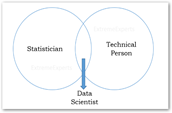
As I read all over the internet, data science  is all about finding “value” and is not real scientific research.   Even the Quants on Wall Street say the same thing when referring to economists and their so called “science” they reference.  Back when quantitative solutions were young, sure it was exciting but even those in the quant areas back then had no clue it would evolve out to what we have out there today, a mess of fictitious math to alter risk to make money.  Sometimes it is lowering risk while other times it’s accelerating risk when services, money, etc. are to be denied. 

The financial markets lose track here as they seem to believe that their formulas and algorithms, even when accentuated with fiction will be “right”…well they might be right to generate money but not accurate as we know it.  Talk to a real scientist and see how much research is tossed, a lot until they find the right combinations with big data sets, like huge genomic data sets.  I don’t think the financial folks realize the amount of research that goes into real science.  In the financial world I see this “science” as a methodology to move money and that’s what it starts and ends with, period. 

With all the geniuses hired on Wall Street to do their research could they even for a minute tolerate the amount of time that “real” science research takes?  Probably not but just write the code and formulas that “look good” and let’s make money.  Companies today are faced with finding value with “big data” and why?  Sometimes it’s like the old story of why did you imageclimb the mountain, because it’s there.  Is that the case with business and some aspects of big data?  Nobody knew what a quant was until they hired a few mathematicians to create non linear formulas, then of course they were the design masters of business plans as a formula could help create the framework.  As time moved forward with models, they of course became a lot more than framework people, they were assigned tasks like “risk assessment” to work on to see if adjusting numbers there would lead to greater profitability and guess what, it worked well for the banks and still does. 

They all found out that formulas and algorithms move money, and in a way that is not visible to the average consumer so the algorithms do their thing quietly on servers 24/7 with arranging parameters to be met and move the money accordingly.  If it is done well with training customer service individuals they are able to somehow explain some of these happenings in a way that makes sense to the consumer.  What we end up with is the fantasy world of numbers coming together with the real world and what works with math does not always work with humans.  So again, when we look at the people that are now called “data scientists” when you can find them, is this really science? 


Hiding, Falsifying, And Accelerating Risk Has Become the Achilles Heel of the US Economy As the “Real” World” Clashes With the Values Created From a World of “Fictional Values” Of Formulas and Math

One scientific study that I have mentioned and blogged about a bit in jest is the full on study on how humans experience real pain when presented with math problems and this may be why those who have overcome the pain have all the money?  We might have a scientific explanation for an occurrence that keeps repeating itself and for that matter a couple bodies of senators and representatives that feel pain sitting in their seats when in session?  Maybe we should be working on the fear of math instead:)

“Algo Duping” – PLOS One Journal Publication Explains Why The Fear of Math Plays a Big Role As One Underlying Reason We All Get Duped And Those Who Don’t Fear Math Take All the Money, Gradually, Using “Mathematical Formulas & Algorithms”

So coming back around again to the “data scientist” topic, is this really science?  Is making money a science or a more like a profession?  Ok so we have let’s say our “data scientists” that have found value in some of the big data that resides on their servers…just the mountain…because it is there.  Are they “scientific” enough to know how to use the queries with both linear and non linear methodologies and “stay in context”? 

If you take things too far out of context, it comes out in the wash eventually and resentment will follow when consumers find out they have been fed a bunch of hog wash, reports and statistics to afford making money only.  The link below has a video which I thought was very good as IT folks from big companies are sitting around discussing this exact topic and the one gal from T-Mobile had guts enough to say “what we are doing now is silly”..meaning she looked at what T-Mobile was doing in house, and she knew the difference between linear and non linear data sets as well as the time it takes to prepare the sets for queries, etc.  She was not a data scientist either but was kind admitting she would like to find one:)



Big Data/Analytics If Used Out of Context and Without True Values Stand To Be A Huge Discriminatory Practice Against Consumers–More Honest Data Scientists Needed to Formulate Accuracy/Value To Keep Algo Duping For Profit Out of the Game

If analytics are used “out of context” yes it will in fact keep driving the nail even deeper with inequality.  Christopher Steiner makes this point very well in this TED video when he talks about how algorithms are taking over the world.  He states “who gets to control them and when does the automated algorithms cross the line between menace and a utility”…good question.  Are these “data scientists” that will make this decision?  Will it be the “data scientists” that direct people to write apps to carry out the “desired” end result?  Will that end result be accurate or desired? 


I am guessing the term “data scientist” is here to stay as it has been so widely assessed by so many in business as a “needed” person as like the mountain that data is there and something has to be done with it…and will the financial and healthcare financial areas be able to accept the amount of errors and false relationships that unexplored non linear data creates?   How many consumers will be ill fated?  In healthcare we see it all the time with algorithms used to deny and some were caught running a “breast cancer” algorithm in the past and we had United Healthcare with their 15 year algorithm that ran for 15 years to short pay. 

So will these so called “data scientists” be able to draw the line between utility and menace, as we already know it has failed on Wall Street as there are far more “rich” menaces” than there used to be and again is this really science?  I still think it’s an oxymoron but you can beg to differ with me if you like.

Last but not least will the people who take on these jobs ever be able to live up to what the general public “thinks” they can do with a horrifically high level of expectation and accuracy…hmmm….I’m chuckling on that one
as the present level of Algo Duping and people’s expectations and what is really there is already causing some big awakenings for many:) 

I find myself so much of the time today explaining this to individualsimage and can imagine how it might grow to stifle itself as the OMG media and drama queen stories pick up with the “good guy” “bad guy” routines with driving emotions. We find this today amass in the media instead of an alternative of some helpful logic.  “Data Scientists” as they exist and continue to grow will be anything but drama with their research and again is this science, really?  BD 

Metropolitan Chicago Healthcare Council Medical Record Exchange Could Collapse, Too Much Money to Develop and Participate For Many

As always it comes back to money.  You can read the article and see where nobody denies the value but how do you get the value when the dollars are not there.  I think more and more areas of Health IT imagewill be asking the same question.  This is not to be confused with “insurance exchanges” in this instance as this is for sharing medical records only.  The group has gone to insurance companies to see if they will kick in some money.  I wouldn’t be one to hold my breath on that one but you never know, but grants seem to be more the way to get funded with medical health data if they can be had. 

Even with meaningful use incentives, some hospitals needs those dollars to stay open  in some hardship cases.  Big hospitals don’t want to pay 6 figure dollar amounts to participate as they have ton already invested in their own IT expenditures and those are growing too.  Even with non profit organizations that will in time benefit patient care, you still need money and can’t be priced out of the market as to what can be afforded it appears.  BD


Money is a sticking point, with some hospitals asked to pay six-figure annual fees to participate in the exchange. Big medical centers already have invested heavily in their own IT systems. They question the wisdom of plunking down more money on an electronic platform of uncertain value to them.
“No one really has a strong incentive to buy in and spend more than they're getting back without some long-term demonstrated value,” says Allan Friedman, research director at the Center for Technology Innovation at the Washington-based Brookings Institution, who has studied exchanges


The Metropolitan Chicago Healthcare Council, a nonprofit group of about 150 hospitals and healthcare providers, began organizing the Chicago-area exchange in 2009.


Despite initial interest, just 18 hospitals and physicians groups have agreed to join, says Dan Yunker, senior vice president of MCHC, which had planned to roll out the exchange a year ago. The start has been pushed back until mid-2013, he says.


http://www.modernhealthcare.com/article/20121223/INFO/312229943#ixzz2GHv72MPB

Government Urges Software Companies to Find and Document Patient Harm Resulting From Electronic Medical Records–Checking Algorithms & Hey, Whatever Happened to the Common User Interface?

When this question is posed, how can medical records cause patient harm?  First of all there is the user interface and every EHR/EMR has one as that’s how the information is viewed and entered, software 101. Now there’s nothing intentional here with vendors as hours, days, weeks and more are spent working with beta users to make it the best interface that can be developed and there maybe a few exceptions but most developers want their creations to be a success by all means, as otherwise nobody buys it. 

However, in the last couple of years the effort of user interfaces has become a little cloudy in the fact that more of the “payer” information have crept up with some priorities in some screens of the program and thus with the focus on money perhaps some of the user interface items may have slipped down a notch but they are still there. Money rules all today and something has to give when there are incentives along with doctors and hospitals not having enough operating funds in so many areas.  One item quoted here was the fact that one system had fonts that were too small, so again was that a problem for one or many individuals?  There’s no perfect system by all means as long as “humans” are using them. 

Speaking of a “good” user interface, there was this project from Microsoft a few years ago that was to incorporate and create a standard user interface that any medical record system could use, as it would make it easier for doctors who work at more than one hospital system to use instead of learning multiple user interfaces.  I had one med student email me a while back and he said he learned 5 systems to get through his residency and I am guessing he included PACS systems in there as well. 

EHRs need Standard Templates – So Let’s Look at the Common User Interface Project, a lot of the work is already in progress and partially completed


Ok so here’s the idea that was ahead of it’s time maybe?  Now we have many vendors looking over their user interfaces for fixes…what if all those vendors looked at one interface or at one that was pretty closely emulated by all?  Sounds like a lot easier job to me than looking at several hundred user interfaces.  Of course there’s a few other areas to look at with ensuring correct calculations and warnings but most of those are not very prominent by comparison. 


So, did we make an mistake in not giving a Common User Interface a little more attention with everyone building the “perfect” mouse trap?  This was all started back in 2008 and granted things became a bit more complex since that time but software grows on itself with additional layers added all the time, so maybe an idea that for whatever reason was sidelined?  I wrote this back in 2009 and being I wrote a simple EMR system years ago I kind of liked this idea as I looked at how much code and time is devoted to medical record system programming.  It’s a lot and look at the Allscripts case if you need more proof on the time it takes to write code today to make things work for the end users.  Granted the Silverlight portion could be updated to HTML5 to work in today’s world. 

Electronic Health Records Not Enough – Aggregation and Better Interfaces Needed


So in essence when it comes to innovation, we still don’t do very well with collaborating in some key areas it seems, right?  A few years ago I asked that question of several doctors if they would like the idea of having the same or very similar interface at every hospital, and nobody said no:) So now this is what we are left with, hundreds of EHR/EMR systems with different user interfaces to look at and track down the small fonts, data display for users, etc. anywhere that the software could make it difficult for humans.  I don’t’ know what this will end up netting in the long run but there’s no system that is 100% proof and again aside from looking at some of the payer priorities that may have entered to cloud some of this or making too much available on one screen with too many clicks..I’m not sure what this process is going to accomplish. 


A year ago GE found it had some errors as their system update created issues with attesting that they had to fix and this is just the world of software and is not patient related but goes to show issues will arise everywhere and to classify what is harm and what is not may be a little intense.  At this point I’m glad I’m not having to do this after the hours and part of a “life” that I put into programming and writing a system to find all of this or I would literally die at the keyboard:)  BD

GE Centricity EHRs Need To Fix Their Algorithms (Math)-Some Customers May Not Be Able to Attest Until The End of November After the Software Update


The Obama administration Friday urged cooperation between software companies and caregivers to prevent patient harm caused by faulty electronic records. But it stopped short of calling for regulation or a federal requirement to report computer mistakes that pose a risk to patients.

“We are saying to the vendors: Step up and prove your ability to create a code of conduct that would be enforceable, that would bind you voluntarily to reporting safety events,” Dr. Farzad Mostashari, the administration’s coordinator for health information technology, said about the report. “And what we’re saying is: If you don’t step up, we can always look at more classic regulatory approaches.”

http://www.govhealthit.com/news/mostashari-tells-ehr-makers-sort-out-safety-event-reporting

Christmas Day Tornado Damages Mobile Alabama Infirmary Hospital

I don’t know if anyone was in the bed or not but this shook things up pretty well at the hospital it looks like.  There were quite a few homes damaged and so far no casualties yet listed.  Many were sitting down to Christmas dinner when the tornado hit.  No patients were harmed and the hospital is on generator power presently.  Many windows were knocked out and the hospital was also given news of yet another tornado watch.  BD 

imageThis is a photo sent to Reportit by FOX10 News viewer Michael Whitehead. He said this is second floor of Mobile Infirmary after a tornado struck Mobile on December 25.

image
This is a photo sent to Reportit by FOX10 News viewer Michael Whitehead. He said this is second floor of Mobile Infirmary after a tornado struck Mobile on December 25.

image


This is a photo sent to Reportit by FOX10 News viewer Michael Whitehead. He said this is second floor of Mobile Infirmary after a tornado struck Mobile on December 25.



http://interactives.fox10tv.com/photomojo/gallery/5565/112505/tornado-touches-down-christmas-day/mobile-infirmary-damaged-by-christmas-day-tornado/

St. Johns Hospital Saga Continues As Options Are Weighed As Ownership and Future Discussions Take Place

Los Angeles billionaire Patrick Soon-Shiong, a hospital imagesupporter who has committed $100 million to St. John's and  has his name on several buildings was shocked when the CEO and board recently were fired by the current Catholic out of state owners as it was in the works to sell the hospital.  Soon-Shiong said he would like to see the hospital back in the hands of local owners and he was also ready to help finance the sale.  St. John's is the only California hospital run by the Sisters of Charity in Denver.  The hospital was opened after World War 2 and has taken care of many celebrities in it’s time and has it’s Hollywood connections with philanthropy as well.  When Santa Monica Bay Physicians joined the UCLA Health System in 2010 St. Johns lost a bit of business. 

St. Johns Hospital Fires CEO And Several Board Members Fired By Email - Chan Soon-Shiong Puts Some of His Projects for the Hospital on Hold

The hospital would do well to affiliate with Cedars and UCLA but the new CEO from Sisters of Charity feels it should remain with a Catholic care system if it does not stay with the Sisters Group.  Nobody can understand why the relationship with the Sisters of Charity group has emerged the way it has as there has been a lot of money donated to the hospital over the years and some felt a bit dissed by the recent activities, which included Patrick Soon-Shiong who has put plans on hold for now with creating the genomic research and sports center at the hospital.  BD


Amid a nationwide wave of healthcare mergers, a deal was brewing this fall to sell St. John's Health Center, a storied Santa Monica hospital founded by Catholic nuns and befriended by Hollywood stars. 

Then, without notice, late last month the hospital's out-of-town owner ousted the top executives, fired most of the directors and thrust into public view a long-simmering debate about the hospital's future.

For months, officials at the hospital weighed various options including selling the hospital to rivals UCLA or Cedars-Sinai Medical Center or perhaps joining another Catholic hospital chain. Eventually, some board members supported the plan involving Soon-Shiong's foundation.

But the hospital's owner, the Sisters of Charity of Leavenworth Health System in Denver, stepped in before anything could be finalized. It removed the hospital's top two executives and escorted them off the premises the morning of Nov. 29. And it fired 15 of the hospital's 17 board members in a terse email.

In 1991, St. John's scored a coup by pulling the John Wayne Cancer Institute away from UCLA with the promise of top-notch facilities and support.

Three years later, in 1994, the Northridge earthquake shut St. John's for about nine months. But drawing on its connections to some of Southern California's wealthiest people, the hospital raised about $230 million to help rebuild. The years-long process was capped by the opening of its Keck Center building in 2010.

http://www.latimes.com/business/la-fi-saint-johns-shakeup-20121226,0,5475283,full.story

Inhaled Drug for Treating Schizophrenia and Bipolar Disorder Gets FDA Approval–Adasuve

The drug is known as a rapid antipsychotic treatment and wasimage turned down back in 2010 as the FDA was concerned about the side effects, bronchial spasms.  This is interesting when you read this article as they were just about out of money if I an reading this correctly and were trying to find a buyer. 

From the website:

“All of our product candidates are based on our proprietary technology, the Staccato® system. The Staccato system vaporizes excipient-free drugs to form a condensation aerosol that, when inhaled, allows for rapid systemic drug delivery. Because of the ideal particle size of the aerosol, the pure drug is quickly absorbed through the deep lung into the bloodstream, imageproviding speed of therapeutic onset that is comparable to intravenous (IV) administration but with greater ease, patient comfort and convenience.

Alexza's lead program is ADASUVE (Staccato loxapine or AZ-004), being developed for the acute treatment of agitation in patients with schizophrenia or bipolar disease, and has regulatory processes ongoing in both the United States and Europe”.

They also have other inhalable drugs in the pipeline to include migraine headache relief, insomnia and pain relief.  You can see at the link below another company has their spray inhalable system already FDA approved.  BD


Nasal Spray Drug Sprix Gets FDA Approval – Inhale and Sniff For Pain Relief


Alexza Pharmaceuticals Inc. (ALXA)
, the company that hired Lazard Ltd. (LAZ) a year ago to explore strategic options including selling itself, won U.S. approval of its rapid antipsychotic medicine.

The Food and Drug Administration cleared the inhaled treatment Adasuve for agitation associated with schizophrenia or bipolar disorder in adults, the company said today in a statement. The drug, recommended by European regulators for approval Dec. 14, will be the Mountain View, California-based company’s first product on the market.

The FDA also required Alexza to conduct a large post- marketing clinical trial of patients to assess “the real-world use” of the drug, the company said.

Alexza in February fired 29 employees, or 38 percent of its workforce, to focus on development of Adasuve and sold 44 million shares, raising about $20.4 million, the company said in a statement. The company had hired Lazard in December 2011 to explore whether it should find a buyer.

http://www.bloomberg.com/news/2012-12-21/alexza-wins-u-s-approval-for-inhaled-antipsychotic-drug.html

FDA Approves Drug for Inherited High Levels of Bad Cholesterol - Juxtapid

We have enough people with high cholesterol and now there’s a treatment for those who have a genetic condition that promotes high bad imagecholesterol and this has a big warning for potential liver damage.  This is interesting as I would think that any drug in the statin area would do the trick; however this seems like it is “personalized” to take care of the inherited disease and react differently than a molecular only drug.  BD 

NEW YORK (AP) — Federal regulators have approved Aegerion Pharmaceuticals' treatment for a rare inherited disease that causes extremely high levels of bad cholesterol, the company said Monday.

The company's shares have been hitting annual highs but declined in early trading after the Food and Drug Administration approval of Juxtapid, Aegerion's first drug, was announced.

http://www.businessweek.com/ap/2012-12-24/fda-approves-aegerion-cholesterol-disorder-drug

FDA Sends Letter to 350 Clinics About Non Approved Botox From Canada

Quality Specialty Products (QSP), A+ Health Supplies, QP Medical, Bridgewater Medical or Clinical Care are the names of the suppliers in Canada and it could be counterfeit.  These are non approved FDA sources and there were quite a few in California listed.  The link below gives the listings of all the clinics who received letters.  BD 


Administration sent letters to 350 medical practices last month alerting them they may have received unapproved medications from a foreign supplier.

The medications, including unapproved versions of Botox, could be counterfeit, contaminated or unsafe to patients, authorities said in a statement released Dec. 19.

“When it comes to Botox, this is a very, very potentially poisonous material…it’s an agent used in chemical warfare and it can paralyze somebody permanently or it can paralyze your diaphragm so you cannot breathe,” he said.

This is the sixth time in 2012 the FDA has issued letters to medical practices that purchased unapproved medications from foreign suppliers.

http://losangeles.cbslocal.com/2012/12/24/fda-sends-letters-to-350-clinics-possibly-using-unapproved-versions-of-botox/

Curēus, New Open-Source Medical Journal Created by Stanford Neurosurgeon John Adler,Scientific Research More Readily Available, Peer To Peer Reviews

All publications are licensed under the Creative Commons Attribution License, which is great as that’s what I use for the Medical Quack. 
Curēus is always free for both publishers and readers and is indexed on Google and Bing.  In addition they also have a blog for additional information outside of official published documents and you can follow them on Twitter.  BD


From the website:

“Based in Palo Alto, California, Curēus is the medicalimage journal for a new generation of both doctors AND patients. Leveraging the power of an online, crowd-sourced community platform, Curēus promotes medical research by offering tools that better serve and highlight the people who create it, resulting in better research, faster publication and easier access for everyone.

We make it easier and faster to publish your work - it's always free and you retain the copyright. What’s more, the Curēus platform is designed to provide a place for physicians to build their digital CV anchored with their posters and papers.

Today, generating an audience for your paper depends almost entirely on a journal's circulation, limiting exposure to only a few thousand physicians in your field. Medicine is increasingly cross-disciplinary and physicians are reading thought-provoking papers from specialties outside their own - while patients have virtually no access to this important content. Curēus is cross-disciplinary and gives access to leading edge content to everyone.”


Stanford neurosurgeon John Adler, MD, has launched Curēus, a new open-source medical journal that leverages crowdsourcing to make scientific research more readily available to the general public.

Curēus
joins the ranks of a growingimage number of open-access journals including PLoS, which was founded a decade ago by UC Berkeley and Stanford scientists. Peter Binfield, formerPLoS One editor and co-founder of PeerJ, discussed how open-access publishing can accelerate scientific research in this past Medicine X blog entry.

Dr. Adler is a Professor of Neurosurgery at Stanford Medical School and has published more than 150 papers throughout his academic career. Dr. Adler is also the inventor of Cyberknife and was the founder/CEO of publicly traded Accuray Inc. He graduated from Harvard College and Harvard Medical School.


http://www.kurzweilai.net/finally-a-free-open-source-medical-journal

Niacin Is Out As Far As Protecting Against Heart Attacks As Merck Drug Fails Large Clinical Trial- No Benefit When Prescribed With Statins

This was quite a large trial with 25k patients followed over 4 years and some encountered serious harm, but Merck has not let us know yet what the “harm” was except that it was not fatal.  All patients were also imagetaking statins to reduce cholesterol.  Tredaptive, the drug from Merck was a combination extended release of Niacin with laropiprant that reduces facial flushing in patients as that is a side effect of Niacin.  Tredaptive is approved in other countries but did not make FDA approval in the US, so it looks like the FDA was on target here.  Now Niaspan, made by Abbott will probably be questioned as well as the NIH found that it offers no benefit over just using statin drugs alone.  BD



The drug maker Merck announced on Thursday that a combination of niacin and another medicine failed to protect against heart attacks and strokes in a large clinical trial, and that the company would no longer pursue approval of the combination drug in the United States.

The trial, which followed more than 25,000 patients over four years, also found a statistically significant increase in the number of patients who suffered serious harm, although the company said those adverse events were not fatal. The patients studied were all taking statins, a class of drugs commonly used to lower bad cholesterol.

The results are likely to further tarnish the reputation of niacin, a drug that is often prescribed to raise the levels of good cholesterol in patients at risk for heart disease but that was found not to prevent heart attacks in a government study last year.

Niacin is a type of B vitamin that is considered a drug when it is taken in higher doses. “The failure strongly suggests that niacin simply does not improve outcomes for patients,” said Dr. Steven Nissen, chairman of cardiovascular medicine at the Cleveland Clinic, who was not involved in the Merck study. He said he would continue prescribing niacin to patients who were already on it and faring well, but would probably not prescribe it to new patients until he could see more details about Merck’s trial.

http://www.nytimes.com/2012/12/21/business/merck-says-niacin-combination-drug-failed-in-trial.html

Merck, Roche and Sanofi Working to Develop Drugs to Target More Than One Type of Cancer

Right now it is important to know the origin of cancer, in other imagewords is it breast cancer or kidney cancer that migrated to the lungs.  The targets to treat are very specific and thus we have read stories of patients being given the wrong medication with treating “lung” cancer that originated in the kidney, so thus it is really kidney cancer and not lung cancer.  There have been attempts in the past to do this but they have not worked. 

Cancer cells have damaged DNA.  The p53 protein is the target and cancer cells disable this protein so the process here is to reanimate p53 in cancer cells so they die on their own, quite a task.  Roche started testing a p53 drug a few years ago and the cancer cells appeared to be dying.  The clinical trials were only testing for safety.  Merck is also working to find a safe dose but the results depend on 2 molecules breaking apart and the disabling of the p53 in cancer cells.  It sounds like all 3 companies have a lot riding here with the targets and hopefully we will see some good results based on long lengthy genetic research.  BD


For the first time ever, three pharmaceutical companies are poised to test whether new drugs can work against a wide range of cancers independently of where they originated — breast, prostate, liver, lung. The drugs go after an aberration involving a cancer gene fundamental to tumor growth. Many scientists see this as the beginning of a new genetic age in cancer research.

Great uncertainties remain, but such drugs could mean new treatments for rare, neglected cancers, as well as common ones. Merck, Roche and Sanofi are racing to develop their own versions of a drug they hope will restore a mechanism that normally makes badly damaged cells self-destruct and could potentially be used against half of all cancers.

The p53 story began in earnest about 20 years ago. Excitement ran so high that, in 1993, Science magazine anointed it Molecule of the Year and put it on the cover. An editorial held out the possibility of “a cure of a terrible killer in the not too distant future.”

Companies began chasing a drug to restore p53 in cells where it was disabled by mutations. But while scientists know how to block genes, they have not figured out how to add or restore them. Researchers tried gene therapy, adding good copies of the p53 gene to cancer cells. That did not work.

http://www.nytimes.com/2012/12/23/health/new-drugs-aim-to-make-cells-destroy-cancer.html?pagewanted=2&adxnnlx=1356450079-KUJLO2QxnltVC4xHKQgTMQ

NYU To Offer Medical Students Shorter Training, One Year Less, Saves Tuition & Gets New Doctors in Practice Sooner

I wrote about this a while back with some schools in Texas offering the same 3 years instead of four and actually from what I have read here in this article and others, it seems to be working and readily accepted.  As a medical student who would not want to incur more education debt?  I can’t think of any and some stated that portions of what it taught is no longer applicable so some of that can be discontinued.  Just in the last 5 years being a doctor has changed so much with technology and when you think back to someone who graduated even 10 years ago, we had nowhere what we have today. 

We do need more family practice doctors for sure and maybe not as many specialties but those are the jobs that get compensated better and thus so not many have wanted to go to family practice.  NYU is going ahead with the program amidst the damage they had from hurricane Sandy, to where a big chunk of their research lab was lost. 

Hospitals In New York Encountered Data Disruptions with Electronic Medical Records Systems While NYU Scientists Scrambled to Save and Transfer Research Materials And Information During the Storm


NYU Hospital Back Up Generator Fails In Manhattan, Patients Being Evacuated


I don’t even think we have begun to really scratch the surface when it comes to all the damage done in the city by the hurricane and healthcare and hospital budgets will be bigger of course in New York to rebuild.  BD


Training to become a doctor takes so long that just the time invested has become, to many, emblematic of the gravity and prestige of the profession.

But now one of the nation’s premier medical schools, New York University, and a few others around the United States are challenging that equation by offering a small percentage of students the chance to finish early, in three years instead of the traditional four.

Not only, they say, will those doctors be able to hang out their shingles to practice earlier, but they will save a quarter of the cost of medical school — $49,560 a year in tuition and fees at N.Y.U., and even more when room, board, books, supplies and other expenses are added in.

The three-year program would also curtail student debt, which now averages $150,000 by graduation, and by doing so, persuade more students to go into shortage areas like pediatrics and internal medicine, rather than more lucrative specialties like dermatology.

Dr. Abramson of N.Y.U. said that postgraduate training, which typically includes three years in a hospital residency, and often fellowships after that, made it unnecessary to try to cram everything into the medical school years. Students in the three-year program will have to take eight weeks of class before entering medical school, and stay in the top half of their class academically. Those who do not meet the standards will revert to the four-year program.

http://www.nytimes.com/2012/12/24/education/nyu-and-others-offer-shorter-courses-through-medical-school.html?pagewanted=2&seid=auto&smid=tw-nytimeshealth

Online Retailers Using “High Frequency Type Algorithms” and IP Locations to Change Prices On Product Offerings, Business Intelligence Based on Consumer Data Mining and Scraping–Attack of the Killer Algorithms Part 52

As data mining and scraping consumer information grows imageby leaps and bounds so does the intelligence on what they determine you are going to be shown as a price for a product.  The store as an example here for most of this article is Staples.  So much for everyone being offered the same price for the same product anymore:)  We all hear that the financial world uses mathematics that are way too complicated, said by the quants themselves.  Well here we go with trying to buy a simple stapler according to the Wall Street Journal and their recordings of the event. 

Some sites as noted here even showed different people different credit card offerings based on their credit score.  Here we go again with using analytics based on probably both linear and non linear data to get down to the exact penny as to what kind of profit can be derived from that stapler bought from each zip code in the US:)  Amazon tried it for a while and then abandoned it.  While you are sitting there on the website the scrapers and miners are going to work on predicting and evaluating your information. 

Actually a while back I read an article that kind of made sense on some of this real time adjusting pricing in the fact that if it picks up tremendously, that sites can in fact experience the same thing as we see in markets today with flash crashes as now you have a ton more algorithms at work to keep that data changing all the time, it is what it is so retailers look like they are taking some lessons from the financial markets, and is all of this data activity really necessary to promote more profitability and how much is it really generating is the question.  The more code you run and change things, the greater your chances are for some rogue algorithms to kick in and potentially mess everything up.  When I say rogue let’s say you were given the lower price but at the time of check out did something go wrong and charge you the higher price?  Expect things like this to occur as it happens all the time with shifting and changing data at rapid speeds and rates.  A few errors like the potential example above might be enough to cut out some complex algorithms that really do not need to be there. 

This is also part of the reason that we don’t have enough manufacturing going on in the US as companies buy and sell data and make billions of dollars in profits doing it.  Why would a company build a new factor and hire employees when they can get into the data game like this? They simply open a factory overseas and hire a few geeks to handle their “low risk” data mining game.  Now when disasters occur everyone wants to scoop up those who are in need and thus I asked this if the data mining programmers went to work to find the audience that was somewhat captive?  Sure it happens but to what extent?  You can almost be sure those who were victims of Sandy and lived on Staten Island have had their data “mined to death” as all know they are in need and want to be in their face as soon as they can.  A little bit of this goes a long ways when you end up with 10-12 companies that do the same thing bugging you at the same time for business when you have just had your entire life disrupted. 

Excise Taxing the Data Sellers–Nobody’s Supporting the US IT Infrastructure, Especially In Times of Disaster-Companies Have Probably Made Money Off Selling Scraped Data of Those Hurt in the Wake of “Sandy”


How much did Staples pay to have the complex algorithms written for all of their online services and is it “really’ paying off?   The one example shown here also stated that in the zip codes of New York, lower prices were given in Brooklyn and Queens and the others paid higher prices. Now for those checking your credit online, do they use a guy like this that makes millions in profits selling credit information about you that you can’t even see or have access to what they have on you?  This guy operates outside federal laws due to the way he classifies his business too, not fair. 

E-Scoring Credit Algorithms Invisible To Consumers Used to Market and Evaluate, Does Not Fall Under Federal Law And Such Are Used by Insurance Companies - How Will This Work With Exchanges –Attack of the Killer Algorithms Chapter 42


This is pretty much what we have ended up with and why consumer trust is just not there anymore…you get duped right and left way too often.  Here’s a series of videos I call Algo Duping 101 and all are worth watching to get educated and up to speed as to what’s happening with mathematics and computer code today as it’s not just occurring in the markets, as you can read from this article everyone wants that last little tiny edge. 

Big Data, Flawed Data, Business Intelligence, Where’s The Future and What Has Been Our Past…A World With ”Algo Duping” of Society and Consumers


Time to excise tax the data sellers who get their data for nothing (off the taxpayer’s backs) and their profits for free. It’s time they pay their share so we have funds for disasters, for the NIH and the FDA.  Shoot even Macy’s is in a deal with a Chinese online retailer with dumping $15 million in to get a share of the online trickle down algorithm business.  BD 


The Journal identified several companies, including Staples, Discover Financial Services, Rosetta Stone Inc. and Home Depot Inc., that were consistently adjusting prices and displaying different product offers based on a range of characteristics that could be discovered about the user. Office Depot, for example, told the Journal that it uses "customers' browsing history and geolocation" to vary the offers and products it displays to a visitor to its site.

In 2010, the Journal reported that Capital One Financial Corp. was using personalization technology to decide which credit cards to show first-time visitors to its website. Recent Journal follow-up testing indicated that Capital One was showing different users different cards first—either those for "excellent credit" or "average credit."

It is difficult for online shoppers to know why, or even if, they are being offered different deals from other people. Many sites switch prices at lightning speed in response to competitors' offerings and other factors, a practice known as "dynamic pricing." Other sites test different prices but do so without regard to the buyer's characteristics.

Often, sites tailored results by geography. In the tests, Discover, for instance, showed a prominent offer for the company's new "it" card to computers connecting from cities including Denver, Kansas City, Mo., and Dallas, Texas. Computers connecting from Scranton, Penn., Kingsport, Tenn., and Los Angeles didn't see the same offer.


New York City, too, appeared to be a special case. Tests of Staples.com using ZIP Codes in the boroughs of the Bronx, Manhattan and Staten Island consistently saw higher prices, while Brooklyn and Queens saw almost only the discounted prices.

This despite the fact that all parts of New York City look to be within 20 miles of a Staples competitor, according to the websites.

As a final test, the Journal ordered two separate Swingline staplers from Staples.com, from two nearby ZIP Codes—one costing $14.29 and the other one $15.79. The staplers arrived the same day. They appear to be indistinguishable from one another and do an equally thorough job of stapling.


Staples.com showed higher prices most often—86% of the time—when the ZIP Code actually had a brick-and-mortar Staples store in it, but was also far from a competitor's store. In calculating these percentages, the Journal excluded New York City and used the more than 29,000 "standard" ZIP Codes in the 50 states and District of Columbia. This meant things like ZIP Codes with only post-office boxes weren't counted.

http://finance.yahoo.com/news/online-retailers-vary-prices-based-034900827.html