“Healthcare Watchdog” - New Consumer Advocacy Site Opens

The company was started of course out of the result of the founder having to fight an insurance company for payment of his own bills, and it was an out of network charge.  We all know what that is all about with the lawsuits beginning to pile up over the data base that was used for 8-9 years to calculate normal and customary imagefees, but consumers and doctors both lost out on this deal and now a non profit will be handling establishment and maintenance of the data base when created later this year. 

“Fair Database” to Replace Unfair Ingenix Data Base – Run by Non Profit

Ingenix Data Base Has Some Long Reaching Legal Tentacles with Aetna, Blue Cross, Blue Shield, Humana

Anymore it seems like a healthcare advocate is almost becoming as common as needing a taxman, but at least the IRS is up front with their algorithmic formulas, unlike private healthcare insurance companies.  BD 

Healthcare Watchdog’s long-anticipated consumer advocacy service has finally hit the market. Dedicated to helping people whose health insurance companies are refusing to reimburse valid claims, reimbursing less than they’re supposed to, or refusing to approve access to the healthcare provider or treatment of the clients’ choice, Healthcare Watchdog is available nationally for a modest monthly fee. Unlike most professional medical advocates—who charge anywhere from $50 to $100 per hour for their services, or take 30% to 50% of any recovery they obtain for their customers—Healthcare Watchdog gives its clients unlimited access to its services for a set monthly fee of just $14.95 for individuals, plus $2.95 for each additional family member to be covered under the subscription.

Cross River, NY (PRWEB) January 31, 2010 -- Healthcare Watchdog’s long-anticipated consumer advocacy service has finally hit the market. Dedicated to helping people whose health insurance companies are refusing to reimburse valid claims, reimbursing less than they’re supposed to, or refusing to approve access to the healthcare provider or treatment of the clients’ choice, Healthcare Watchdog is available nationally for a modest monthly fee. Unlike most professional medical advocates—who charge anywhere from $50 to $100 per hour for their services, or take 30% to 50% of any recovery they obtain for their customers—Healthcare Watchdog gives its clients unlimited access to its services for a set monthly fee of just $14.95 for individuals, plus $2.95 for each additional family member to be covered under the subscription

Healthcare Watchdog Launches, Promises Everyone a Fighting Chance Against Greedy Health Insurance Companies

President Obama‘s “Behavioral State of the Union Address”– Jon Stewart Comments (Videos)

 Well I do have to really give the President an “A” for this approach, as nobody seems to responding to anything else, so hey jump on the bandwagon and let it roll.  We have health insurance companies investing in the same technology today with “behavioral underwriting” with using complex and complicated algorithms to evaluate and predict what our projected behavior is going to cost them so why not see what the projected behavior of the Congress is going to cost, a “Behavioral State of the Union Address” was in order. 

The President wants to know and so do we.  It certainly goes along with where big business is going today so let’s Congress on this bandwagon (grin).  We all bailed out banks so let’s go one step further here too and get the algorithmic run downs to predict their behavior too.  It’s time the US citizens had this insight into “Behavioral Predictions” so we know what’s on the next arriving flight and how much baggage is in the belly. 

Next move, let’s work on those “Behavioral Laws” and see what more we can do here.  Let’s face it, politics is all about predicting the “behavioral habits” of constituents as this gets votes!   Below I have embedded the televised meeting with the GOP if you missed it.   Others later said this should not have been televised, gee is there an issue with transparency here?  Again, by having meetings of such, it helps us as consumers to try and at least in our heads figure out some of the “Behavioral Elements” that make up politicians and what interests they serve.

I bet today as we learn more about John Edwards, some of this behavioral data and information would have certainly saved a ton of money if we could have had more “behavioral information” up front as to what to expect. I hope he’s under a health plan that is using “behavioral underwriting” as they may be able analyze this information and compare with other no named individuals “so we don’t get fooled again” and give us the citizens some real trending areas to be aware of to avoid something like this happening again, you know just like what the insurers feel we are doing except most of our problems are real physical illnesses and not the result of not accepting actions for our responsibilities, we just get sick and want care. 

The Daily Show With Jon Stewart Mon - Thurs 11p / 10c
Speech Therapy
www.thedailyshow.com
Daily Show
Full Episodes
Political Humor Health Care Crisis

When you view the video one thing you do have admit, the President did his homework, he read their bills and was ready to answer questions, unlike some of what we may have seen on television so much of late, with a “guess” being given as an answer that comes back later to haunt them as others who are listening in will use technology and be busy within less than 30 seconds to find the answer or substantiated data, duh some quick research on the internet for those who have not figured this out yet.    This is the world we live in and it’s not going backwards.  MSNBC does a good job of this for a quick example.

Let’s start a new movement today to get “Behavioral Data” information on all our politicians, so we too can have that insight into knowing what’s behind the lips, after all when we vote, we are “underwriting” our beliefs in how they will represent us in office and we want those algorithms to help us out to be able to predict some of this, it will save, time, money and a lot of grief!  

A big move right now for biometric monitoring of candidates running for office and their levels of participating in real time could be fun!  You want to run for office, well here’s your wireless tracking devices so use them wisely.  (In reality we can’t even handle being mobile with information on cell phones safely which applies to almost everyone)(grin). 

We as citizens want to be assured they are getting their proper levels of exercise and we want to know their blood pressure, cholesterol numbers, BMI, etc. so we can make good decisions just like insurance carriers do about us.  We could also plug in some GPS here too so we know where are Congressmen and candidates are and don’t have to wait for the likes of the National Inquirer to catch us up (i.e. John Edwards).  (grin). 

(I’m making a point here with how technology information is sometimes abused and misused for gain if you happen to be taking this too seriously.)

This is what health insurance has on the agenda soon for all of us with biometrics too if you have missed some of the recent press in this area so let’s all take advantage and get some real time information coming our way and fight the battle of being less naive and ignorant. What’s good for the goose is good for the gander, right?  BD 

The President Holds an Open Discussion Across the Aisle | The White House

Why “Geek” is Chic – Learning to Become Less Naive and Less Ignorant

This is certainly an article I could not let pass me up here without comment.  I can’t begin to discuss all the teasing and negative impact that I get for pursuing knowledge, it has gone on forever.  I think of myself as imperfect as the rest of us and always being open to improve and learn.  I’m stubborn at times like all of us asimage that is a human attribute we all carry with us at times, but the quest for knowledge has been a huge help for me in the way I look at the world, other people and kind of gives me some unique understandings of the reactions I get and see.  I try not to get mad very often and others that know me tell me I am lacking in that department, well so it be sometimes I guess.  

It does say a lot about what is out there to read today and where to search out other avenues too.  I like some of the news events that are gossip too, don’t get me wrong there, but I also realize those are mostly there for my entertainment and sometimes there’s even stuff to learn there too.  Way back over 10 years ago I used to have female friends criticize me over pulling my PDA out of my purse (then in black and white format) to reference some information, I was told “don’t do that, people won’t like you” and that was not teasing, it was a perception of an individual who didn’t quite understand a thirst for knowledge, being informed and at the same time being horribly efficient.  Yup, those were the dastardly horrible things I did and still continue to do, and misunderstood by many.  As the title here indicates, this is my endeavor to “become less naive and I might add less ignorant” too.  

I am just pleased as punch to find others who took time to acknowledge this too, so now I don’t feel so all alone and succumb to the so often non solicited advice I seem to get all the time.  I have found today that it is more important to listen.  Someone may have told me the same story 9 times and is beginning to repeat the story for time number 10, but if I don’t listen, I might miss a new twist in version number 10 that was omitted in 1-9, so patience is really a big part of living today and I work on it too as its easy enough to slip back and criticize rather than perhaps being the “good ear” that a friend or associate is looking for.  How can I solve their problems, I can’t but I can listen and perhaps offer a point of view.  

We see a lot of the “Shell Answer men and women” today that hear only a brief summary of what a person has to say and yet with way less than enough information, they jump right out there, judge and offer “quick fix” solutions.  Hint, we all like to feel good about helping others, but this can also be compulsive/obsessive behavior in ourselves too, think heavy on that one, in other words is this from the heart to help out or is it your own need inside to feel “useful” and be a contributor. 

I kind of move around in life and tune those folks out if I recognize this and let them speak, in one ear and out the other so as not to offend at times.  I think this leads on to the difficulty we have today in finding mentors, or identifying who really is one.  In other words are they a mentor with helping and knowledge down deep in the heart or is this another one out there with “quick fix” ideas needing some immediate gratification with conversations they may be having today.  I get confused here too sometimes as I am human too, but an effort I try to put forward for my own sanity in shuffling out what advice I can use and what is done for the sake of others with self gratification, and sometimes it could be a little of both.  Usually one’s speaking and body language is a big help for me.  When I see big time preaching coupled with anger and frustration coming at me with a tone of belittlement or an approach to antagonize to fulfill someone's need to make a point, well those are the areas where I usually try to walk away eventually, but I do listen and maybe sort it out later. 

Anyway, great insight here from this article and some really good thoughts passed along, learning to become less naive and ignorant scores big in my book too.  I might also add here that the appearance of what has been termed a “geek” is also changing. 

Most that don’t know me or have never met me have no clue by appearance that I am a “geek” so we do live among you out there outside what has been the “stereo typed” visual of what most would call a nerd.  The geeks and nerds of today no longer hide behind a huge wall of computer code, we talk and socialize imagetoo. (grin).  BD 

It’s the latest indicator that geeks and chic have collided head on. Four weeks into the decade, and the Teenies are already shaping up to be the era where hefty brain power becomes the new status symbol. If the 1980s were about power and the 1990s about soul, then the Noughties ended up being about shopping — rabid materialism followed by a crash.

So, why the sudden brain fetish? “Well, I think cynicism is on the wane,” says Chris Anderson, the British former journalist who now runs TED from his office in New York. “There was a hole in the existing media diet. On the one hand, you had the dramatic but bleak news of the day, and on the other celebrity tittle-tattle. The brain-nurturing stuff that people love was being squeezed out. Also, the fact that, in some parts of the world, fewer people have been going to a church or place of worship, so they have unintentionally lost out on that sense of community participation in an idea that’s bigger than them. Psychological research shows that a core element to leading a happy life is to spend part of your time thinking about ideas or purposes that are bigger than you are.”

“In my twenties, I was busy just living,” says Michelle Newell, a 32-year-old schools consultant. “I was socializing and working, but a lot of the time I didn’t stop to think. Then I got tired of consuming goods and services, so I’ve started to consume experiences. For many people now, it’s a badge of honor to say, I’ve been to this talk or read this book.” She pauses. “I know I’m looking to fill my life with something, well, a bit more meaningful.”

“Like a lot of people, I feel that in my career I have a narrow and deep understanding of one thing, so part of the reason why I’m seeking to learn more is to become less naive.” She goes momentarily wide-eyed. “My girlfriends tease me for having nerd pursuits.” Tell them it’s super-trendy, I say. Rimel laughs at the idea that brains are the new black. “Well, it’s a different kind of night out,” she says, smiling, “and more than just fashionable.”

Why brainy is suddenly chic - Times Online

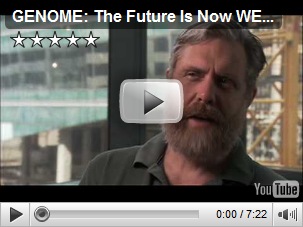
George Church Harvard Scientist Discusses the World of the Personal Genome Project – The Basis for Personalized Medicine from Someone Who Lives with Dyslexia

I have featured this video before here at the Quack and it is well worth another look on how the world of personalized medicine is growing, based on the PGP image(Personal Genome Project) from it’s start to where we are with this knowledge today.   George Church has a great partner in his wife too, who is also the skeptic and questions how this knowledge is and/or will be used.  She offers a great amount of insight in acknowledging that this does/can exist.  As time has evolved, has this been attempted?  I think so, but it’ somewhat a topic that most feel uncomfortable discussing, but Mrs. Church is dialed in.
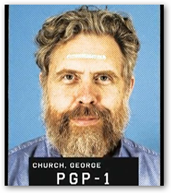
When you watch this video you will also see another source of great wisdom we all look up to in the area of Health IT, Dr. John Halamka, who is quoted and well known all over the web from Harvard Medical School.  You can read his blog here:  Life as a Healthcare CIO.  Usually when Dr. Halamka adds some knowledge and shares at his blog, you can usually count on the fact that “he’s been there, done that”, in other words he gets involved at the first level to share and is not repeating the words of others.  We like that a lot and need more individuals of that caliber.  I have a description I use around the blog for those who repeat and are not participants, “Magpie Healthcare” and gosh the internet is full of that today, as well as many other places in life.  You don’t have to be a “Duck” to recognize it either, just be observant and see who’s talking.  New technology out there, Dr. Halamka is first to get out there and be “chipped” to explore and evaluate, took a lot of guts to give that I try, but the result we have in reading his material is the pros and cons and how it can or cannot be implemented or utilized with healthcare.

Back on topic here with George Church, here we have a person who has had a heart attack, worked with dyslexia and still have knowledge created that is benefiting the entire world with cures/knowledge to fight disease, as well as introducing a greater awareness as to why and how all of this happens with scientific research that went where nobody else would go.  Sometimes when diseases like dyslexia translate down to the layman level, levels of algorithmic formulas for determining insurance coverage, and just how we view an individual in general, all of this gets diluted with “superficial” judgments we tend to create, and instead of resorting to these areas of what we do with knowledge, it makes sense to actually understand why and give the judgment sides of this a break. 

In the project, George Church was volunteer number one.  His wife, with her pro-active role was immediately investigating the social roles of what he called the “most invasive” technology in healthcare today as a genetics professor at Harvard.  She’s in agreement with the project, but intensifies the “proper” use of this knowledge and how hard the social side of this is.  She talks about what people can do with this knowledge that “is good” and realizes what people will do with this knowledge that is “not so good”, in other words reality. In relating to what I talk about so much is the abuse of algorithms, in all areas from genomic information to all types of other abuse where you have knowledge and information from the “haves” taking advantage of the “have nots” in knowledge.  Look at what banks have done with using formulas/algorithms for wealth for a simple example.  It’s all there for those who want to take a look and understand why this has occurred. 

As use of scientific information and algorithmic formulas (they are used in the PGP) becomes more inter twined with the way we live our lives today, we begin to be able to more readily recognize the levels of those that perhaps are not curious and tend to remain with old values that don’t cut it today, look at what is being revealed in the headlines today with politics, you can’t miss it and behaviors of the past with hiding and getting away with things that in the past have been rolled under the carpet today can’t thrive with transparency and the intelligent movement of technology, in genomics and in healthcare from all the way around.  We have algorithmic formulas used to develop artificial body parts, like the pancreas.

Human Like Algorithms Need to be Developed For Artificial Pancreas – Johnson and Johnson To Develop

Everyone somewhat pokes fun here a bit at the use of the word “algorithms” but that is what is used today for scientific research, decision making processes, and of course genomic research.  This discussion was even on the agenda at DAVO this year.   I decided 2 years ago to focus on this one word (algorithms) to hopefully bring an awareness around to all levels with the understanding of this one word, which is everywhere today, to help people understand what is at the core of all the not only scientific decisions made today, but also financial, healthcare, and other parts of our lives, like social networks.  Social networks would not be around today without algorithms and the individuals who created them, why, of course there’s a financial interest in generating income but the first element that enters the picture here is curiosity.  When algorithmic formulas are created with a high level of understanding and intelligence we have companies that make big dollars and the rest on the outside trying to figure out how to perhaps undue some of this to save money, and sometimes it’s the individuals responsible for this action that have no clue on how it all came about, you think? 

Pharmacy Benefit Administrators – Algorithms That Carve Out Profits From What We and the Government Pay for Medications

I did a post not too long ago that explores some of the use of technology and formulas, the algorithms and what’s going on.

The Algorithm Report: HealthCare and Other Related Instances

Of course my mother reads my blog, you can always count on Mom to be supportive.  She is 85 years old and she gets some of this too.  I get a kick out of phone calls from her that tell me “hey I heard that word algorithm” on the news today, Dr. Phil said it too, but what Mom has done is opened up to the fact that she understands the world is changing and knows they are the formulas that denote change and the furthering of intelligence of today’s world.  The world has a huge scientific community that understands how this works, but there’s even a larger community in the world that doesn’t understand how the decision making processes of the world are changing today and what makes this happen, thus my focus here to try to create this awareness. 

The Personal Genome Project is all about algorithmic formulas, so the two go hand in hand and once more hats off to Mrs. Church for her ability to dive deep here and realize the impact that some will use information wisely and some will not.  Sometimes too it’s hard to figure out the difference too when you enter areas of risk management and cost only for decision making processes.  Nobody wants to deny anyone an ability to derive an income to reward intelligent and scientific work, but when those efforts are diluted into only dollars and cents without remembering the human side, well we have all seen a lot of that in the news the last couple years, so hang with me and the algorithms here as it might just open some new horizons along the way with awareness, intelligence and a greater understanding of where the global economy, healthcare research, drug creation and more is headed and hopefully we can socially hold those accountable that misuse the knowledge as well.  You can search this blog and find numerous post from the past too. 

The knowledge here is fascinating and unlocks many of the questions we have had for years, but again the “human” emphasis here and the admitting of the individuals involved in the project that it is is intrusive is an awareness shared, so it is up to all of us to try to see the PGP as constructive contributions and not get overly wrapped up in judgments of our fellow man to where the economic world simply wrangles only for profit with perhaps high focusing on gambling on the dollars to be made setting all precedences.  As George Church shows with his own healthcare issues in being transparent, this is an example for all to strive to contribute and participate within their own levels, and incentive for all to take an interest here as genomic research, algorithmic formulas, etc. are now part of the world we live in.   Abuse only continues to lead to “distrust” and you can see that all over the media today in so many of the articles you read.     

Technology Has Been Abused for Profit –Algorithmic Formulas Used to Further the Stance of Greed on Wall Street and in Healthcare Organizations Traded on the Exchanges

What is also of interest too is that communities, such as the Amish are also participating in genomic studies too, a wake up call maybe for some here to see how rapidly the sharing and knowledge is advancing.  What also really spurred my interest in Genomics goes back to 2008 when I was offered the opportunity to interview Dr. Patrice Milos, from Helicos, one of the companies that creates the machines that do the genomic sequencing.  

Helicos BioSciences and Personalized Medicine - Featured Interview with Dr. Patrice Milos

I learned a lot from that interview and Dr. Milos, who is their Chief Science Officer at Helicos.  

Dr. Milos and I were on complete agreement with one item, “it’s all about the software”, i.e. the “algorithms”.  BD

Church grew up dyslexic, developed narcolepsy in his teens and survived a heart attack. Somehow he found the wherewithal to invent technologies that make it possible to sequence DNA. Being narcoleptic means that he falls asleep five times a day in meetings, even as he runs one of the largest labs at Harvard and serves on advisory boards for numerous companies. "There are a few genetic traits that make people feel sorry for you," he says, "and there are some, like narcolepsy, at which people take personal offense unless you tell them in advance."

Dyslexic Advantage - Famous People with Dyslexia: George Church, Dyslexic Harvard Scientist, Personal Genome Project

Related Reading:

Charlie Rose - Personalized Medicine with Steven Pinker, Anne Wojcicki, George Church and Linda Avey

George Church Talks about DNA Genomic Mapping in Plain Terms

George Church Says Microsoft and Google are Helping with the Growth of Personalized Medicine

Precision Medication – Lack of Education Holding up Progress for Personalized Medicine

Steven Pinker, Harvard Professor of Psychology talks about his genome, what he found out, what he learned, and how the psychological interpretations are somewhat still up for discussion
An Introduction to Genomics – Humans have Bugs just like Windows does and It’s all about the Code
The Burden of Knowing – Genetic Sequencing and what you might find out
Personal Genome Project looking for next wave of volunteers for an entire sequencing

FDA Met with Painkiller Pharma Companies to Deal With Abuse To Develop Risk Management Plans

Wait a minute, don’t these same companies have business models to sell painkillers?  As you can see pharma suggested more education, which is always a good thing and there has been talk along with one company submitting a reformulated version of a drug to the FDA for approval.  Pharma no doubtedly will offer help and add suggestions, but don’t touch that business model that generates profits for us.  If you are not part of a solution then you could very well be part of the problem so pharma is of course a participant here.  Granted pain killers can’t be removed from the market as there are short term use and some long term use that is needed.  If you have ever gone under the knife or had some major dental work done, you know what I am talking about as aspirin and Tylenol for a a few days won’t cut it.  image

I have had pain killers for both dental and surgical procedures to take for a short while afterwards to get through the first couple or 3 days, and after that it seems the need was gone as pain subsided.  Actually I was on the other side of the fence, afraid to take too many and got chewed out by my doctors not to wait until the pain level would build up to where I was in agony.

So doctors have “whack jobs” like me to deal with too on the other side.  My theory of waiting until when I thought the first Vicodin was out of my system before taking another one didn’t hold water in those instances.  It’s been a number of years but I remember the first pill did give me a buzz, but the second one would make me uncomfortable as I felt I started getting lethargic and stupid and felt a bit like a zombie of sorts.  I will say this, the feeling of stress would disappear so I can understand how individuals could get addicted easily, especially if there was something going on in their life where taking a pill could offer some relief.

I don’t know how much more pharma could really do in this area myself as a doctor has to write a prescription based on diagnosis, and there are folks who will pay extra to have a physician cater to their addiction, not that they may want to, but patients also pressure doctors in other ways besides money as well.  We may be a long time on this one, but again education through all channels is the key here, changing some of the ways such pills are prescribed.  I don’t want to see them go away either as if I ever have major surgery again, I may need a few.  I mention this as there was talk to completely remove many from the market and I don’t think we need to go that route.   Science is making strides though with devices that are being able to substitute in some areas instead of pills too but we are not completely there yet as medical devices need to be specifically targeted for the most part, a pill does not and can be prescribed to cover a myriad of pain symptoms and conditions throughout the body.  BD

Representatives of 24 pharmaceutical companies met with representatives of the Food and Drug Administration to try to sort out the current prescription drug abuse problem. This is the first time that the organization has asked drug companies to form a risk-management plan for an entire class of drugs. 5.2 million Americans abuse prescription drugs each year according to a 2007 a survey on the subject. This February 16 companies were asked to come up with risk-management plans for prescription painkillers like morphine, oxycodone, and methadone which through abuse lead to hundreds of lethal overdoses every year.

Executives from Johnson & Johnson and King Pharmaceuticals suggested including patient medication guides, sending letters to doctors and additional physician training, but agency officials said more specific plans are needed to prevent the misuse of prescription painkillers.

FDA Asks Painkiller Makers to Help Prevent Abuse | Testing It Up – Drug & Health Testing News – Test Country Blog

Study – Men Who Stare At Female Breasts Have Lower Blood Pressure, Better Circulation And Will Live Longer

Don’t you just love studies anymore!  There was actual group of 200 men who participated.  There is not a listing of any females though providing the necessary imageview so I guess this was looking at any, you think?  The study didn’t appear to define what method of looking so fully clothed and exposed I guess were all in the study results but it did mention “well endowed”.   This study went on for 5 years, so I guess some participants if caught gazing too long had an excuse, you think?  Yeah, right try and pass that one over on me!  Don’t tell me you are trying to reduce you risk of stroke here because I may not be buying here(grin).  

Participants were required to spend a few minutes every day and the results of this study suggest that a man can improve his life expectancy by 4-5 years with this process.  This is really quite funny too with the recommendations here too, that men over 40 should engage in at least 10 minutes a day.  The source here also states this should be published in the New England Journal of Medicine, so would some of my readers here keep a tab on this trinket?   Women, let’s all unite here and come to terms with the fact that we will probably never have a male look at us in eyes again; however the “well endowed” clause may be enough protection for many of us.

I do have to think there might be a study related to female side of this to follow, maybe?  One thing I got out of  reading this study is that the gerontologists are having a lot of fun here so think about that if you are studying for your PHD.  Also just to note, this study does NOT mean you can safely stop taking your blood pressure medicine, I don’t care what the study says. 

You might want to inquire further and possibly make your physician aware of these results and see what he/she has to say after thinking your have lost your mind.  You can refer them back to this post if you like.  It does make me wonder how 10 minutes of this type of activity replaces a 30 minute aerobics work out, and if in fact that is true, gyms all over the world may need to start to worry about the potential of declining membership.  The apparel business could also be hard hit by this change in activity too as the required “gym rat” clothes we all buy could also stand to decline.  BD 

Frankfurt, Germany, December 6 -- A rather bizarre study carried out by German researchers suggests that staring at women's breasts is good for men's health and increases their life expectancy.

According to Dr. Karen Weatherby, a gerontologist and author of the study, gawking at women’s breasts is a healthy practice, almost at par with an intense exercise regime, that prolongs the lifespan of a man by five years.

She added, "Just 10 minutes of staring at the charms of a well-endowed female, is roughly equivalent to a 30-minute aerobics work-out.

Stare at boobs for longer life: Study | TheMedGuru

U.S. Halts Airlift of Haiti Quake Victims – Dispute Over Cost

Here we go, back to healthcare costs, when helping other countries now too.  Some of the patients airlifted to Florida have insurance, some are eligible and some don’t have insurance.  Florida is struggling with their own hospital costs with taking care of us at present and still taking in patients from Haiti.  HHS said they did imagenot stop the airlifts and that it was the military’s decision. 

Some hospitals have set up their own charities to help out.  Florida seems to be getting the bulk of patients simply due to location, but other hospitals have cared for patients too.  The Governor of Florida has also asked for federal assistance.  People being airlifted are those who need surgery and procedures that can’t be done in Haiti.  Some reports the article states would not accept additional patients until arrangements have been made for compensation.  Also, the National Disaster Medical System needs to be activated to cover costs which would take care of anyone.  Here’s a report on New Orleans for comparison, 4 years later and there’s no replacement or refurbishing Charity Hospital in New Orleans from our own disaster, Hurricane Katrina.  

How Long Does It Take to Get Federal Funds to Rebuild Charity Hospital After the Hurricane – 4 Years

Hopefully this will get resolved, but in the meantime the patients from Haiti are joining the ranks with some of the same battles we have as citizens, will patients from Haiti be taken care of?  Is Miami up to the limit on their budgets and facilities?  Until Congress gets their act together and figures out healthcare we don’t appear to know what we can and can’t afford.  BD   

MIAMI — The United States has suspended its medical evacuations of critically injured Haitian earthquake victims until a dispute over who will pay for their care is settled, military officials said Friday.

The military flights, usually C-130s carrying Haitians with spinal cord injuries, burns and other serious wounds, ended on Wednesday after Gov. Charlie Crist of Florida formally asked the federal government to shoulder some of the cost of the care.

Hospitals in Florida have treated more than 500 earthquake victims so far, the military said, including an infant who was pulled out of the rubble with a fractured skull and ribs. Other states have taken patients, too, and those flights have been suspended as well, the officials said.

Florida officials, meanwhile, said the state’s hospitals had not refused to take more patients. Jeanne Eckes-Roper, the health and medical chairwoman of the domestic security task force for the South Florida region — where the Super Bowl will be played on Feb. 7 — said she had requested only that new patients be taken to other areas of the state, like Tampa.

The Health and Human Services spokeswoman, Gretchen Michael, who works for the assistant secretary for preparedness and response, said the agency was reviewing Mr. Crist’s request for financial assistance. The request would involve activating the National Disaster Medical System, which is usually used in domestic disasters and which pays for victims’ care.

Some of the patients being airlifted from Haiti are American citizens and some are insured or eligible for insurance. But Haitians who are not legal residents of the United States can qualify for Medicaid only if they are given so-called humanitarian parole — in which someone is allowed into the United States temporarily because of an emergency — by United States Citizenship and Immigration Services.

Only 34 people have been given humanitarian parole for medical reasons, said Matthew Chandler, a spokesman for the Department of Homeland Security. The National Disaster Medical System, if activated, would cover the costs of caring for patients regardless of their legal status.

In Cost Dispute, U.S. Halts Airlift of Haiti Quake Victims - NYTimes.com

Meteorite Part Two – Lawyers Are Involved to Determine Ownership and Smithsonian Has It On Hold

This was a pretty neat story until now, the owners of the building where the doctor’s lease space now claims the meteorite belongs to them and is making plans to imagerecoup the rock from the Smithsonian.  In case you missed the original post here’s the link and there’s a couple videos that tell the story. 

Doctor’s Office Gets Hit By A Meteorite – Nobody Hurt in the Exam Room Where It Landed

It was fully verified by scientists and the local news agency in Virginia took it to the Smithsonian.  It came through the roof and the firewall and pushed ceiling tile into the carpet and into the floor; lucky neither doctor nor patient were in the exam room when it came barreling in.  This was the 4th recorded meteorite to fall in Virginia. 

It moved at 223 miles per hours and it weighs just over a half a pound, not big at all, but one heck of a lot power when arrived.  BD


Who is the real owner of the meteorite that crashed into a doctor's office in Lorton, Va.?

The doctor's, not surprisingly, said they are and they handed it over to the Smithsonian.

But the landlords of the building where the doctor's office is said the meteorite belongs to them.

They told the Smithsonian they're coming to take it back.  Right now the Smithsonian says it's holding on to the space junk until ownership is established

Ownership of Meteorite in Question

FDA Directs US Marshalls to Seize 77 Ozone Generators – Ozone Medical Devices

The company in October originally refused the request of the FDA not to search the factory and then they returned later to seize the devices.  In some countries this therapy is legal, but not in the United States and the FDA warns against some of the products use due to infections, etc. that could result.  BD 

SILVER SPRING, Md., Jan. 29 /PRNewswire-USNewswire/ -- At the request of the U.S. Food and Drug Administration, U.S. Marshals today seized 77 ozone generators, models AOS-1M and AOS-1MD, from Applied Ozone Systems of Auburn, Calif. The seized goods, which are medical devices, are valued at $75,900.image

The FDA advises health care professionals and consumers to discontinue use of these devices, which Applied Ozone Systems claims can treat cancer, AIDS, hepatitis, herpes, and a number of other diseases and conditions. The FDA has not determined that the seized products are safe and effective in treating the diseases or conditions, and officials at Applied Ozone Systems never responded to a Dec. 21, 2009 FDA request for a voluntary recall of these ozone generators.

In addition, the agency is concerned that patients who use these AOS ozone devices as directed by the manufacturer may believe that ozone therapy serves as an appropriate treatment and as a result delay or stop conventional or prescribed effective treatment. There is also a risk of infection from potential contamination of the applicator or catheter.

The FDA inspected Applied Ozone Systems in October 2009 after obtaining an inspection warrant when the owner of the company refused to allow agency staff to inspect the facility. The agency's inspection revealed significant deviations from the FDA's current good manufacturing practice (GMP) requirements for medical devices, and confirmed that the company has not obtained FDA marketing approval or clearance for these devices. The unapproved status of these devices and the conditions under which they were manufactured cause them to be adulterated and misbranded.

Today's seizure action was jointly conducted by the FDA and the State of California Department of Public Health, Food and Drug Branch as part of ongoing to efforts to ensure that unapproved medical devices that have not been found to be safe and effective do not enter the marketplace.

United States Seizes Unapproved Ozone Generators -- SILVER SPRING, Md., Jan. 29 /PRNewswire-USNewswire/ --

Edwards LifeSciences/Baxter Recalling the Aquarius Hemodialysis System – Software Modification Required

The devices are used on a 24 hour a day basis for patients with life-threatening kidney disease to keep fluid levels even.  This is not a big recall unless it is you or someone you know depending on this device.  As with many of devices today, the problem lies in software and an update is being issued.  image

We come back around to users overriding an alarm and continue the therapy, which could result in either too much or too little fluid.  The software alert when changed will only allow a patient to override the settings no more than 5 times in 20 minutes.  There could be something like a kink in the line that would cause this and the user may not see or understand that a kink or perhaps a clamp needs attention and focuses on bypassing the settings with an over ride.  In having written software myself and trying to anticipate every move or change a user can make is difficult. The FDA has a page but there is no information as now available but will be posted when available.  BD

Irvine-based Edwards Lifesciences Corp. is working with its former parent on the recall of a medical device that traded hands between the pair last year.

The Food and Drug Administration said Friday that it recalled the Aquarius Hemodialysis system, which is owned and distributed by Baxter International Inc.

Regulators said they issued a Class I recall, its most severe action, after reports of clinically significant fluid imbalance and the potential for patients to repeatedly override an imbalance alarm.

The FDA said that could result in serious injuries or death because of a decrease or increase in circulating blood.

Baxter, based in the Chicago area, said the recall affected fewer than 150 units, and that it would put in a software update to solve the problem at the end of the current quarter.

Edwards sold Aquarius and other devices that help patients with malfunctioning kidneys to Baxter last year for $65 million as part of Edwards' focus on its mainstay heart valves.

Orange County Business Journal Online

Do Algorithms Run Your Life – Bill and Melinda Gates Foundation Commits $10 Billion for Vaccine Research Over the Next 10 Years To Use Them Wisely And Save Lives – Davos 2010

This is a double hit here today from the Davos World Economic Forum.  They are discussing which Algorithms are running our lives, check out the meaning of the imageword here on the blog, it’s smack dab in the center if you don’t know what these are!  Microsoft was built on them and so are so many of the decision we make today inside and outside healthcare.  Mr. Gates wouldn’t be sitting where he is today without those algorithms:)

In short, algorithmic processes are here to stay and we need to learn how to live with this process and educate ourselves on where they can benefit, like the creation of life saving drugs for one, and on the other hand be aware of algorithms for greed only, both kinds are out there, so be alert and read up.  Everyone somewhat has maybe laughed or not quite understood this process, but let’s face it, they are on the agenda of DAVOS with world leaders talking about them, think it’s time to tune in? 

image

Be sure to visit the Bill and Melinda Gates Foundation page to watch a video on how their donation will help research.  Public/Private partnerships are an important part of why the project will be a success.   Research and cures depend on technology and algorithmic formulas to find the answers, so the right algorithms can be your best friend and treat or cure your disease.  The Gates are asking for the commitment of the global community to help in the cause.  Vaccines are the focus and they way to save lives.  Algorithms have been kind to Bill Gates for sure and now the knowledge contained and well as generous donations are being shared for the betterment of human kind.  Under the related section below are a few other past posts on what the foundation is doing and has committed to.  BD 

image

DAVOS, Switzerland -- Bill and Melinda Gates announced today that their foundation will commit $10 billion over the next 10 years to help research, develop and deliver vaccines for the world’s poorest countries.

The Gates said that increased investment in vaccines by governments and the private sector could help developing countries dramatically reduce child mortality by the end of the decade, and they called for others to help fill critical financing gaps in both research funding and childhood immunization programs. 

“We must make this the decade of vaccines,” said Bill Gates. “Vaccines already save and improve millions of lives in developing countries. Innovation will make it possible to save more children than ever before.”

Bill and Melinda Gates made their announcement at the World Economic Forum’s Annual Meeting, where they were joined by Julian Lob-Levyt, CEO of the GAVI Alliance

Many of the recent advances in vaccine development and delivery have been driven by public-private partnerships such as the GAVI Alliance and the Rotavirus Vaccine Program at PATH, which coordinate the resources and expertise of vaccine companies, donors, UNICEF, WHO, the World Bank, and developing countries. Mr. Gates said these partnerships are “transforming the business of vaccines.”

Bill and Melinda Gates Pledge $10 Billion in Call for Decade of Vaccines | Bill & Melinda Gates Foundation

Related Reading:

Bill & Melinda Gates Foundation Fund 76 Research Projects – Healthcare

Bill Gates Speaks With Jon Stewart On the Daily Show – Twitter, Education and Healthcare Focused

Gates Foundation and Viacom Team Up for “Get Schooled”

X PRIZE - Gates Foundation providing grant to explore prize for innovative breakthroughs in TB Diagnostics

Former US NIH Director Joins the Bill and Melinda Gates Foundation

Pee Wee Gets an IPAD (Video)

More IPad humor, great video!  He’s confused a bit on the female version.  BD

 image

Southwest Airlines Medical Transportation Grant Program – 1.2 Million for 29 Hospitals

Additional hospitals were added this year to include hospitals in Philadelphia and Denver.  If I were running a hospital, this might be something I would look into and apply for to help those who need to travel for healthcare procedures and treatments!  The program has been in existence for 3 years now and is growing.  This isimage a nationwide campaign and more can be read here.  The M.D. Cancer Center patients have shared some letters of appreciation in Houston who have used the program.  BD 

DALLAS, Jan. 29 /PRNewswire-FirstCall/ -- Southwest Airlines announced today that nearly 30 hospitals and charities from across the nation will be participants in its Medical Transportation Grant Program this year. Southwest is proud to announce the Company has increased its giving by 23 percent in 2010, the program's third year. In total, the airline will donate $1.2 million in transportation to 29 medical organizations who then provide tickets to patients and family members in need. The grant list includes 11 hospitals and three medical transportation charities that assist patients nationwide. This year, Southwest has added hospitals in Philadelphia and Denver. To see a full list of recipients, please visit: www.southwest.com/cares.

Southwest Airlines Announces Recipients of its 2010 Medical Transportation Grant Program -- DALLAS, Jan. 29 /PRNewswire-FirstCall/ --

Little Progress on Fighting Healthcare Fraud – Look At Who’s Getting the Anti-Fraud Contracts

Health Insurance and preventing fraud need to work together and you almost need some non profit organizations to have this be successful and truly look out for the consumer interest.  What are we doing here, awarding contracts to companies that have created a backlog of legal court cases and potentially misrepresented themselves, to contribute to the fact that imageprogress is moving at a snail’s pace with anti fraud solutions?   How can a company that is traded on the open market have the consumer interest at heart, or perhaps I should say as a top priority, the shareholders are the top priority and there’s no stroke of genius required to figure that out.  This appears to be a part of the problem and adds to the escalating cost of healthcare. 

One prime example that has been in the news for years and has a ton of lawsuits in court is the case of the corrupted Ingenix data base, where the Attorney General of New York brought this to light.  This data base was used for 8-9 years to calculate out of network customary charges, not only for their own claims (United) but all the other major carriers subscribed to it as well and now it is going to be revamped to be run by a non profit, and yet the company secures contract with hospitals and government entities to fight fraud?  Remember, shareholder profits come first, so if there’s some money to be saved here it comes after priority #1 has been satisfied.  I’m only connecting dots here with multitudes of articles that have been posted for a number of years.  Ingenix is the technology arm of United Healthcare and puts more money to the bottom line today than selling policies.  

“Fair Database” to Replace Unfair Ingenix Data Base – Run by Non Profit ...

Ingenix Data Base Has Some Long Reaching Legal Tentacles with Aetna, Blue Cross, Blue Shield, Humana

So how can a “for profit” company who’s #1 loyalty is to shareholders provide a non-bias picture?  Certainly from the technology side they have spent time and money creating the very complicated and substantial algorithmic codes to “score” and look for signs of fraud via claim processing, but remember there are algorithmic codes for profit that fit in here too. The company also makes a ton of revenue selling your medication records for underwriting, so by seeing if you are for example taking Lipitor, the underwriter might interpret your risk factor as being higher as this medication indicates you may have some cholesterol issues, right?  Why else would you be taking the medication, again connecting dots for dollars.  There are other companies that provide such anti fraud services, and a few have been purchased by Ingenix, so kind of the same stuff we are looking at as far as fair competition here with insurance and we know there will be more mergers and acquisitions to come. 

The State of Washington uses their services to prevent fraud.  It was just in June of this year that HealthNet decided to stop using the out of network Ingenix claims data base, so again many of the major insurers were all using this as their guideline.  One more example, we have Sutter Hospital using their services to help with business intelligence decisions, again it’s the algorithms here for profit at work.  These are just a few examples and I’m sure the number of contracts out there goes way beyond what I have cited here. 

How does these algorithms work? A group of dermatology offices within 5 days had every carrier stop honoring their claims, and this was for services already provided by doctors to patients.  They were “scored”.  Algorithmic formulas detected potential “fraud” through automated processing and the word was sent out to every carrier on the list, so in 5 days, the money stopped coming in.  I don’t have the current details on the progress but the physicians offices said the decisions came from the special investigations unit of Ingenix and they believe they were singled out due to a high number of claims, again it’s those algorithms that are in use to detect and score.  This is a pretty ugly situation and pitted doctors against patients and is now of course in court and adds more cost with legal expenses in southern California and affected offices from Beverly Hills down to San Diego with refusals to pay for skin cancer and acne treatments.  Scoring claims can be a contributing factor to claims being denied and we truly want to identify fraud; however, are these scoring algorithms designed for fraud detection or profit and which one comes first?  

Skins game With Dermatology Offices in California – All Insurance Carriers Quit Paying For Treatment Within a 5 Day Period

EHR/EMR software companies go to great lengths and expense to certify that their software works and aggregates data with patient medical records; however, on the other side of the coin, when it comes to payments, I have not heard or seen a case where an insurer can certify their payment algorithms to be correct and pay the appropriate amounts, as a matter of fact how would they do that with stock holders wanting their dollars first?  Is this something we should look at and create an agency to certify that they too as well as the software vendors are following a regulatory procedure? 

“Department of Algorithms – Do We Need One of These to Regulate Upcoming Laws?

One group of doctors took them to court and won in New Jersey over the out of network customary charges, in December of 2009. 

HealthNet Algorithms – When Do they Prevent Fraud and When Do They Cross the Line and Not Pay Out – Court Case Where the MDs Win

In summary the question here is can a for profit company, traded on the stock exchange, be a solution to efficiently help prevent fraud when stockholder profits are the #1 priority?  I’m sure there are a few others out there who might fit into this same category as well, so perhaps taking a look at who gets the contracts and where their interests lie, and again consider some non profits in here too, might make some real inroads to helping prevent fraud without using algorithmic scores to hinder those who “might” have some false positives identified in their claims based on the formulas used.  This stands to certainly add to the cost of healthcare through over taxing the legal system to investigate and find out if whether or not it is fraud or just the algorithms creating false positives, and of course who suffers the most, the doctors and the patients. 

Algorithmic formulas are used for profit and you need to look no further than Wall Street and read up on what Goldman Sachs had done for a very visible example, and this continues to flourish in all areas of business, again just spending a little time today connecting some dots and questioning how we determine who’s contracts are in the overall interest of preventing fraud and providing better healthcare.  I believe non profits might stand a pretty good shot at entering into this arena.  BD


WASHINGTON — Two years after the federal government started its latest push to crack down on Medicare fraud, the number of people charged with ripping off health care insurers has barely changed, Justice Department records show.

That effort comes at a critical time, because the White House and lawmakers are hoping to use savings from anti-fraud measures in the government-run health plan to help pay for health care legislation. Fraud costs Medicare an estimated $60 billion a year, Attorney General Eric Holder said Thursday.

Little progress seen against health insurance fraud - USATODAY.com

Technology in Use at El Camino Hospital – Mountain View, CA (Video)

When it comes to using technology and having a facility that has all the modern conveniences, who wouldn’t want to work here if you are on the clinical side of healthcare.  This is another view of how things operate and what I like seeing is the robot, making deliveries to the nurses station.  In addition, look at the operating room commitment to interventional procedures, 5 surgical rooms.
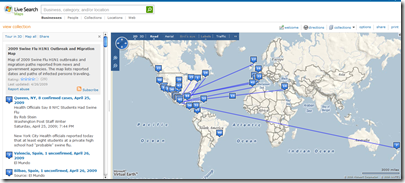
I have posted here about El Camino a few times with their brand new facility up and working, complete with a genomics center and they also used Microsoft Amalga during the H1N1 Swine flu time period to allow us to track and see where cases were being reported.

Also with the use of technology in the ICU, at the end of the beds is a monitor that translates for the doctor and staff, so if the patient does not speak English, doctor talks and patient hears it in their language.  This video has captured some great examples on showing how it works, in other words seeing it in actions versus just reading about it, so you can see the automated biometric check in, the robots moving and staff communicating and more. 

 imageOf course there’s a view of the Da Vinci Robot, and the facilities director explains how much of the technology, like wireless, lives in the ceilings and the walls, thus you don’t see as many devices sitting around.  The hospital is quiet too, that was achieved with special design as well.  The link below has another video with additional birds eye views of additional technology use.  BD   

Patients at El Camino Hospital Check in with Biometric Authentication – Patient Security


MOUNTAIN VIEW, CA (KGO) -- It was promised to be the hospital of the future and now that it is up and running, the new El Camino hospital facility in Mountain View is employing a complex mix of high technology and new innovation. 

Strolling into El Camino Hospital in Mountain View these days is a bit like stepping into the future. It is a place where nurses and staff are linked together with Star Trek-like communicators.

El Camino Hospital filled with new technology seems futuristic - 1/26/10 - San Francisco News - abc7news.com

Related Reading:

El Camino Hospital Opens New Facility in Silicon Valley – Most Wired Hospital

Patients at El Camino Hospital Check in with Biometric Authentication – Patient Security

Genomics Center Opens at El Camino Hospital - California

Steve Shihadeh, VP Microsoft Health Solutions Group – The Amalga Software Solution for Aggregating Hospital Information (Interview)

Amalga at El Camino Hospital Helping to Monitor the Status of Swine Flu – everyone can use Virtual Earth for Global Tracking