Federal Appeals Judge Rules Stem Cell Research Funding Can Proceed

The law pertains to the federal government being able to fund stem cell research imageand does not apply to state laws as in California it was voted in and a state agency was created, the California Institute for Regenerative Medicine an $3 Billion over 10 years was appropriated.  Agencies in California also get funding from the NIH as well so this opens the doors for other projects to continue in California and in all other states.  BD 

Scientists at the University of California at San Francisco today hailed a ruling by a federal appeals court in Washington, D.C., that allows broader federal funding of embryonic stem cell research.

"This ruling allows critical research to move forward," USCF scientist Arnold Kriegstein said.

"It is a victory not only for the scientists but for the patients who are waiting for treatments and cures for terrible diseases," he said. Kriegstein directs the Eli and Edythe Broad Center of Regeneration Medicine and Stem Cell Research at UCSF.  Today's 2-1 ruling by a panel of the U.S. Court of Appeals for the District of Columbia Circuit upholds the Obama administration's interpretation of a federal law restricting stem cell research.

The law bans federal funding of research in which human embryos are destroyed.

The appeals court majority said the National Institutes of Health under President Obama acted reasonably in interpreting the law to allow funding of research on stem cells taken from embryos that were previously destroyed.

UCSF scientists praise decision on broader federal funding for stem cell research - San Jose Mercury News

Community Hospital of Long Beach Officially Becomes Part of The Memorial Care System

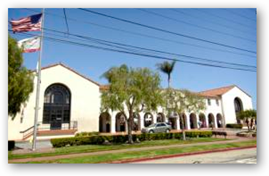
I am guessing now as far as medical records they will become part of the Epic system since the current hospitals are either currently using the system or are or will be in the process.  The original front of the hospital is actually a state landmark and over the years has been through some turbulent times, with being closed for a few years and during that time was imageused for movies and television show sets. When it re-opened employees came back with files, patient files as when it was purchased by the Catholic Healthcare system years ago it was closed down immediately and employees saved the files and took them home for storage and safe keeping as they knew one day they would be needed.  When the hospital re-opened everyone brought the files from home they had stored and most came back to work.   By today’s standards that would not happen of course by we are going back a number of years for a bit of history here. 

It is not too far from Long Beach Memorial which is always busy and have seen patients from time to time when situation over flow would occur.  Last year the merger was announced and it appears now to be final with everything in place.

Community Hospital of Long Beach Becomes a Part of Memorial Care

Last year I did a walk through tour of the brand new children’s hospital at Long Beach which is adjacent to Long Beach Memorial and also part of Memorial Care.

Miller Children’s Hospital Long Beach – Brand New Pavilion Carries Focus on Patients and “Green”

Actually a few years ago I consulted at this hospital with providing some data work here with writing custom data base programs and setting up the software and training for their outreach nutrition program working with students from the nearby university to help seniors with better eating and exercise habits and a few other various Health IT projects.   Recently to in the news their independent physician’s association in Terminal Island was assumed by OptumHealth.

OptumHealth (Subsidiary of United Healthcare) Takes Over Memorial IPA in California-Subsidiary Watch

Here’s a nice video showing some of their community outreach programs with Goodwill and you get to see the original building quite a bit here as well.

Press Release:

Fountain Valley, Calif. (April 29, 2011) – Community Hospital Long Beach today joined MemorialCare Health System as its sixth hospital facility in Los Angeles and Orange Counties and third hospital in Long Beach.

“Our ownership of Community Hospital Long Beach will enhance the ability of these remarkable hospitals to continue providing exceptional care for our communities well into the future,” says Barry Arbuckle, Ph.D., president and CEO of the not-for-profit MemorialCare Health System.

“We are excited to add such a dedicated and talented team of employees, physicians and volunteers to the MemorialCare family. They embody the can-do spirit that has made Community Hospital a provider of choice in East Long Beach,” says Diana Hendel, PharmD, who has led Long Beach Memorial Medical Center and Miller Children’s Hospital Long Beach for more than two years and becomes CEO of the three Long Beach hospitals.

With 1,006-licensed beds, the three Long Beach hospitals include 5,900 employees, 1,400 affiliated physicians and 1,000 volunteers.

“Community Hospital Long Beach will continue to benefit East Long Beach for decades to come,” says Nancy Myers, who served as the Community Hospital of Long Beach board chair. “Being part of MemorialCare brings new opportunities for our dedicated physicians, nurses and other professionals to provide the local community with greater health services while maintaining the level of highly personalized care that Community Hospital offers.”

Terms of the transaction include assuming the lease of Community Hospital campus from the City of Long Beach, which includes the hospital and medical office building.

Community Hospital’s leadership team will continue in their roles, reporting to Hendel.  A search for a hospital administrator responsible for overall operations and business development is underway. Current employees of Community Hospital have been encouraged to remain, with most continuing in their roles. Plans to integrate and expand services offered by the Long Beach-based MemorialCare hospitals are in development.

Opened in 1924, the original Community Hospital building is designated as a Long Beach Historic Landmark for its Spanish Colonial Revival Style, its courtyard patio, fountain centerpiece and arcade facade.

As a new member of the MemorialCare family in Long Beach, Community Hospital joins Long Beach Memorial and Miller Children’s Hospital, which rank in the top two in the West in numbers of hospital beds on one campus. With more than a century of caring for the community, Long Beach Memorial and Miller Children’s Hospital have received significant and ongoing accolades, including listings among U.S. News & World Report’s Best Hospitals and Top Children’s Hospital rankings. Recently, they were honored with MemorialCare Health System as one of just 29 businesses worldwide to receive the prestigious Gallup Great Workplace Award.

MemorialCare Health System with 1,549 licensed hospital beds is nationally recognized for leadership in best-practice medicine and advanced technologies. The Southern California Health System includes Long Beach Memorial Medical Center, Miller Children’s Hospital Long Beach, Community Hospital Long Beach, Orange Coast Memorial Medical Center in Fountain Valley and Saddleback Memorial Medical Center in Laguna Hills and San Clemente, plus numerous outpatient facilities and programs.

Would Doctors Boycott Their DEA License With the Proposed FDA Additional Education Requirements For Prescribing Pain Killers?

I ran across Dr. Doug Farrago’s blog on this topic and it deserves some additional attention in the fact that he is asking all to write to the AAFP and or the AMA even on this this topic.  Doctors already have a number of CME hours each year as part of their continuing education to keep updated and I read the comments where one doctor stated in California his cost was $2000 and of course it’s all done on their own time so nobody gets paid for any of this education time.  There are different ways to accrue CME time and credits and some can be done online but that’s usually only partial credits.  I thought this was kind of dumb myself, even though I am tech person in this business but have spent a lot of time around doctors offices and seen the rest of their work flow and the patient is the one taking the pills.

Why Is the FDA Focusing imageon Doctors With Painkillers–Focus Education on Patients Who Take The Pills - MDs Went Through Medical School To Learn How to Prescribe Drugs

What if doctors boycotted their DEA license?  As a patient if you let’s say had surgery and the doctor didn’t have his DEA license, it could perhaps require a visit from another doctor to write your prescription?  As he says it’s not like they like writing prescriptions for the drugs.  In addition, as I mentioned above are we looking at numbers in general here or is this lumping all the ones that run pill mills and write high numbers of scripts too?  I think those numbers are all in there so it comes back to interpretation of statistics and algorithmic formulas.  I think focusing on those who are writing exceptionally high numbers of scripts is the way to go. 

They already have their HMOs or IPA breathing down their back when they think patients didn’t fill their prescriptions as maybe the patient did but it didn’t come back through on the data as the patient saved money and paid $4.00 cash instead of using their insurance plan, cheaper than their co-pay.  I’ve been around and heard those comments on evaluations for P4P along with being criticized for not following up on annual breast exams on patients that were no longer alive that the HMO or insurance company had not removed from their records. 

Dr. Doug makes a good point here too as to what would be next as required additional time and added cost.  If one is seeing a demographic group that has a big concentration of seniors as an example, would they be targeted for diabetes for the next round of additional CME required education and it could go on from there.  He asked to spread the word so I’m adding my 2 cents worth.  When he talks about a rapidly demoralizing profession take a look at this trailer for the Vanishing Oath and see what being a doctor’ compensation and time is all about as most are not making big bucks as many still think, that was in the past and why many look for salaried jobs if they can find it versus a private practice.     

Vanishing Oath–MD Pay

Here’s the information from Dr. Doug with his links telling you where to go to add your input.  BD

“I recently emailed everyone about how my parent organization (AAFP) rolled over to a new government initiative that will demand physicians re-train in order to prescribe pain medication. Forget the fact that they are the ones who put out tons of mandates and warnings in the past that we were NOT treating pain adequately. Now they want to add another bureaucratic mandate because it is OUR fault patients are abusing these meds. I recently blogged about this and you can check it out here for more info. Instead of fighting back we are caving in. Enough is enough. I asked people to write in to the AAFP (if they were members) and you can see their responses here .

Thank you all. For those in other specialties, please do the same. Sound the alarm. In fact, a new idea has arisen. If we don't do the "retraining" then we can't prescribe narcotics. Well, that is fine with me and a lot of other docs. Let's BOYCOTT the bastards. It's not like I love giving these drugs anyway. We must stand together on this or they will make us retrain on any new bureaucratic initiative they can think of (diabetes, rectal exams, auscultation, rapid strep, etc). Please spread this around and save what autonomy is left in this rapidly demoralizing profession.”

Placebo Journal Blog: Medical Humor With A Purpose: Boycott Your DEA License

President Obama Issues Executive Order To Federal Agencies to Improve Customer Service And Use Technology To Accomplish

This is good news and it certainly can’t hurt.  Agencies have 6 months to submit their plans and the President says the government agencies are not learning from what private industry does.  The President also knows this move will also save money.  It’s too bad the folks on the other side of the hill don’t fall under this Executive Order.  If you have read here often enough you know I am on a big campaign to get Congress members to do the very same thing.   I used the IBM Watson Server configuration and you can read more at the link below.  Those folks just don’t get it, so off to Wall Street IBM goes. 

IBM Watson Capabilities Being Pitched to Financial Industry-Congress Must Not Have Felt They Needed This So Further Behind We Fall With Effective Intelligent Lawmaking

At the rate we are going there, I hope we don’t end up seeing a sequel to “Inside Job” in a couple years and I would love to be wrong on this one.  "Streamlining Service Delivery and Improving Customer Service, is the name of the order.  The government said we can’t use decreasing budgets as an excuse to get less done.

“Inside Job”–A Learning Experience and Documentary About Financial Algorithms-And Some of Same Exists in Healthcare

GSA in May plans to release a $2.5 billion procurement to consolidate 950,000 email inboxes across 100 email systems and utilize cloud services to do so.  This brings me around once more to Congressional digital illiteracy as last year the Senate refused to fund cloud services and myself and everyone else in IT could not believe what we heard and as it has progressed in only a few months, this really makes the case for folks not knowing what they are doing with budgets and laws and showing a true lack of collaboration skills.

Senate Cuts Cloud Services From Budget That Would Allow for Data Center and IT Infrastructure Consolidation–Back to the 8 Track Tapes Next?

Here’s a good video from Yale University that talks about analytics and what to do with the massive amounts of data and using it effectively.  Both federal agencies and Congress should pay attention here to learn how to use deep analytic tools.  You can’t give good customer service without the right tools so the President is on track here. 

Smarter Education Form at Yale University
More Congressional Testimonies About Health IT–Members of Congress Could Entertain Getting an “Algo Man” on Staff As Wall Street and Health Insurers Have Them–Don’t Leave Home Without One

Heck right off the bat the FDA is one big huge target as I get zero from that agency and it takes 2 weeks to get a canned web response on an email that says thank you, where everyone else does it instantly with an algorithm so I assume they still do that manually.  <grin>.  BD

President Obama issued an executive order on Wednesday instructing federal agencies to come up with ways to use technology to improve customer service within six months.

"Government managers must learn from what is working in the private sector and apply these best practices to deliver services better, faster, and at lower cost," Obama said in a statement.

"Such best practices include increasingly popular lower-cost, self-service options accessed by the Internet or mobile phone and improved processes that deliver services faster and more responsively, reducing the overall need for customer inquiries and complaints.

The agencies have 180 days to develop a plan with the Office of Management and Budget that shows how they will streamline the delivery of online services to improve customer satisfaction. Agencies must also create ways to collect feedback from customers on their customer service.

Obama issues executive order telling agencies to improve customer service online - The Hill's Hillicon Valley

CalHIPSO California State REC Announces Partnership With GE And Other Medical Record Vendors

GE has been around in the medical record business for a long time and they are imagepretty much at the Cadillac end when it comes to price so if you like their Centricity Products it might behoove you to visit a REC center to where they are listed as a partner as with licensing contracts, it could offer some savings for you as an MD making a purchase and it wouldn’t hurt to inquire about any licensing provisions they have that might apply.  CalHIPSO is the statewide REC center and omits Los Angeles and Orange Counties as they have their own groups.  image

From the Website:

“CalHIPSO is made up of ten Local Extension Centers (LECs) around the state that bring health information technology (HIT) expertise to local communities.

Our Local Extension Centers (LECs) offer in-depth knowledge of their local areas and provider communities. Our LECs are made up of local clinic consortia, regional medical societies, health plans and other imagegroups that have the ability to assist providers in a community.”

In addition to GE, several other medical record vendors are established with CalHIPSO.  In addition they have an information page that helps with the Attestation that began on April 18th, this is where you confirm you have met the Medicare Incentives and qualify for meaningful use incentives.  If you are in California and located outside of Los Angeles and Orange Counties you can find more information here on how to sign up.  BD

image

In Florida one group put together a video to show what their activities are with helping doctors adopt medical records.

Regional Extension Center (REC) Working in Florida-What the Centers Are Doing to Help Physicians With Electronic Medical Records

BARRINGTON, Ill. – April 29, 2011 – Today, GE Healthcare announced that it will work with the California Health Information Partnership and imageServices Organization (CalHIPSO), to achieve its goals of simplifying the electronic medical record (EMR) adoption process for its members. Though RECs have varying business models, each is envisioned as a key support component for smaller physician practices in making the transition to EMR solutions. There are currently 60 government-funded Regional Extension Centers across the U.S and GE Healthcare aligns with nearly half.
“We are very pleased to enter into a partnership with GE on behalf of CalHIPSO members,” said Speranza Avram, Executive Director, CalHIPSO. “We look forward to working together with GE to bring the benefits of a leading edge EHR product together with robust Regional Extension Center services for the benefit of our members around California.”image

The original federal government grant funded the extension center’s operation at 90% for the first two years so that they could support a minimum of 1,042 providers in the selection, implementation and Meaningful Use of electronic medical records (EMRs). Under the federal government’s ARRA HITECH Act, physicians are eligible to receive anywhere from $44,000 to $65,000 by demonstrating Meaningful Use of a Certified EMR. Recently, this two-year period was extended to four- years, at the same 90% level, to allow more time for RECs to assist providers in their achievement of Meaningful Use.

Another REC that recently selected GE Healthcare is Tri-State Regional Health Information Technology Extension Center, which awarded GE Healthcare its Five Star vendor designation.

CalHIPSO is Latest Regional Extension Center to Align with GE

HHS Launches New Reward Program for Hospitals That Provide Quality of Care–Algorithms To Score For Value Based Purchasing

Ok here’s that word again but this is what it is, mathematical formulas to grade performance based on reporting.  We are all trying to save money and so many hospitals are having trouble finding enough money today, so perhaps there might be enough in this till to help out there with proving quality care is being provided.

Every rule or law today needs an IT system and this is no different, and in 2013 the “Big Algorithm on Re-admissions” comes in.  I’m not kidding on this one though as there are some  big dollar coding carrots being hung out there by Leavitt, Heritage and company offering $3 million dollars for those algos.  So if you are a coder/programmer, here’s the link below that tells more about the “search for the magical algos”. 

Heritage Providers Continues to Promote $3 Million Dollar Prize to Create An Algorithm To Predict and Prevent Hospitalizations

From the CMS website:

“In future years, CMS will be implementing other provisions of the Affordable Care Act that are designed to improve care while reducing costs.  For example, beginning in 2013, hospitals will receive a payment reduction if they have excess 30-day readmissions for patients with heart attacks, heart failure, and pneumonia. By 2015, a portion of Medicare payments to most hospitals will also be linked to whether they meaningfully use information technology to communicate within the hospital to deliver better, safer, more coordinated care. Also beginning in 2015, hospitals with certain hospital acquired conditions will receive additional payment reductions from Medicare.”

I know I am a bit satirical here as I work with data bases, wrote my share of these things with SQL queries and so on and that’s the process so nothing new to me, but heck I wouldn’t even attempt it as there are way too many variables today and by the time you compile and get the bugs out, I would die of exhaustion at the keyboard no matter how many helpers I had.

By the way this is a long entangled process that can’t be accomplished at the day long Code-A-thons either <grin>.  I mention this as I have readers at all different levels here.  July 1, 2011 through March 31, 2012 is the first evaluation period for earning savings from CMS.  You can work on this while you get your information together on how you are going to create an ACO.  Get your calculus talents to work here and here’s a couple more paragraphs on how the payments work below and if you can’t get it there’s a lot of consultants you can hire to help you with all of this and hopefully their fees won’t be more than the hospital can collect.  If you don’t think I’m talking algorithms, keep reading….

“Finally, CMS will calculate a Total Performance Score (TPS) for each hospital by combining the greater of its achievement or improvement points on each measure imageto determine a score for each domain, multiplying each domain score by the proposed domain weight and adding the weighted scores together.   In FY 2013, the clinical process of care domain will be weighted at 70 percent and the patient experience of care domain will be weighted at 30 percent.

Incentive Payment Calculations:  CMS will utilize a linear exchange function to calculate the percentage of value-based incentive payment earned by each hospital.  Those hospitals that receive higher Total Performance Scores will receive higher incentive payments than those that receive lower Total Performance Scores.   CMS will notify each hospital of the estimated amount of its value-based incentive payment for FY 2013 through its QualityNet account at least 60 days prior to Oct. 1, 2012.   CMS will notify each hospital of the exact amount of its value-based incentive payment on Nov. 1, 2012.”

I am really for anyone to be reimbursed for better care and again my only doubts here are inquiring if the carrot is attainable and easily enough understood?  I’m still waiting around for those “experts’ in all of this to share with us how they find value with using a personal health record and still silence as of today on the web.  You know when I used to write I thought I had the most “bitchen” code to really make a program rock, but when I put it out into action, guess what, it was time for the duck to eat some dog food and that happened more than once and it was a good learning experience for me and it’s why I talk the way I do today about software. 

It made me a lot more sensitive to the users after a couple experiences and I quickly learned to get over myself, and there’s a few more that might think about this wandering around out there in Health IT land.  Dog food tastes like crap. <grin> but you don’t know until you taste it. Dog food by the way means having to fess up that you screwed up in short on your perceptions and creations and admit you are willing and able to try another approach and it can make your brain hurt too but when you are working with clinicians as a true partner and both working for the same outcome, that makes a lot easier and keeps the human focus alive instead of all these folks that think algorithms will solve the problems of the world. 

When I get sick I want to see a doctor and get a prescription for a drug if that is what I need to heal, not go to Facebook and waste time with a bunch of algorithms that are going to tell me what to do, how to do it and share my questions with the world, the doctor’s office is a much better place for that.  I hope this helps some hospitals with rewards and again get you calculus folks up and ready to rock with it.  BD

The Department of Health and Human Services (HHS) today launched a new initiative that will reward hospitals for the quality of care they provide to people with Medicare and help reduce healthcare costs.  The measures to determine quality in the Hospital Value-Based Purchasing Program focus on how closely hospitals follow best clinical practices and are underpinned by the use of health information technology.

Authorized by the Affordable Care Act, the Hospital Value-Based Purchasing program marks the beginning of an historic change in how Medicare pays healthcare providers and facilities. For the first time, 3,500 hospitals across the country will be paid for inpatient acute care services based on care quality, not just the quantity of the services they provide.

Some of these measures will assess whether hospitals:

  • Ensure that patients who may have had a heart attack receive care within 90 minutes;
  • Provide care within a 24-hour window to surgery patients to prevent blood clots;
  • Communicate discharge instructions to heart failure patients; and
  • Ensure hospital facilities are clean and well maintained.

Hospital Value-Based Purchasing program in FY 2013 have been endorsed by national bodies of experts, including the National Quality Forum.  Hospitals have been reporting on quality measures through the Hospital Inpatient Quality Reporting Program since 2004, and that information is posted on the Hospital Compare website.

HHS launches value-based purchasing program | Healthcare IT News

Aetna's Reports 1st Quarter 2011 Profits Are Up 4%–Membership Down Almost a Million

You can read below that membership is down about a million but profits are up.  IN addition you can see where they are buying Prodigy Health Group which is a contracted company that runs the benefit departments for employers.  Below are a couple of examples to where they have pulled out of selected markets both here and over seas.  Claims were down as people didn’t go to the doctor as was also stated by Wellpoint in their earnings call. 

Aetna Cutting 300 Jobs Overseas to Include Ireland, Hong Kong and Shanghai-Health IT Investments in US Appear More Lucrative

Aetna pulls Out of Individual Health Insurance Policies in Colorado as of August of 2012-Risk and Profit Algorithms At Work

In addition companies today are changing their business models and algorithms that is is difficult for our lawmakers to keep up and judges today can seem to keep track of potential conflicts of interest as it appears there’s maybe not enough attention directed in that area too as we read it in the news today quite often and we have transparency to thank for that. 

Healthcare Law Is Not Bad; However Algorithmically Changed Business Models Coupled With Mergers and Acquisitions Change the Insurance Governance Frequently

Aetna has also been particularly aggressive in buying up Health IT companies, similar to what United Healthcare has been doing for years, buy up those algorithms that make money.

Aetna to Acquire Medcity-Health IT Connectivity Vendor-Former CEO Takes Position on Board at Boeing

In addition you can see the move here with medical records to create a “cloud” atmosphere to host medical records in Puerto Rico from November of last year.  I think in addition to aggregation and HITEC, medical record vendors stand to be a pretty good target for insurers in the next couple of years so they can own it all.   This is exactly the type of area where judges get in trouble as not keeping on top of acquisitions that are outside the “known” or “familiar” areas of operation.  The company also lost out on a bid for Tri-Care business speaking of conflicts of interest when submitting their proposal for the northeast, which went back to HealthNet for part of it and when the contract was announced for Aetna, HealthNet being a smaller carrier had to sell off some of their northeast business right away to United, but the tables turned around for Healthnet, again the conflict of interest occurrences that happen with today’s rocket speed mergers and acquisitions.  BD

IBM and Aetna Subsidiary, ActiveHealth Management Bring Cloud EHR Health IT Program To Puerto Rico–Subsidiary Watch

INDIANAPOLIS -- Aetna Inc. said Thursday its first-quarter profit rose 4 percent, as it became the fourth big health insurer in the past week to report better-than-expected earnings and raise its 2011 profit forecast.

The Hartford, Conn., company said health care costs fell and it recorded a $174 million gain in the quarter because claims left over from previous quarters came in below expectations due to lower-than-projected care use.

Several health insurers have said slower-than-expected growth in health care use _ caused in part by bad weather _ has helped them in recent quarters. Aetna is the third largest commercial health insurer behind WellPoint and UnitedHealth. Both of those companies and Humana Inc. have already reported first-quarter results that topped Wall Street expectations and raised their 2011 earnings forecasts.

It said medical membership fell to 17.8 million people from 18.7 million in last year's first quarter, as it saw losses mainly in its commercial business, which includes employer-sponsored group coverage and individual plans. That led to a 2 percent drop in health care premiums, the largest portion of Aetna's revenue. image

The insurer also said Thursday it will spend about $600 million to buy Prodigy Health Group, a privately held company that administers self-funded health plans for companies with between 100 and 5,000 employees. In self-funded plans, the employer pays the claims and assumes the risk.

Insurance News - Insurer Aetna's 1Q Profit Rises 4 Percent

GE Healthcare Buys Applied Precision-High Resolution Microscopes and Software Tools

They look like some really neat items here and if you pay no taxes, then I guess acquisitions are easier to come by.  Website description below.  BDimage

“Applied Precision provides researchers with the most advanced high-resolution and super-resolution imaging platforms, which turn the unobservable into the observable. Since its founding in 1986, Applied Precision has become a leader in imaging innovation through our dedication to problem solving, superior imageengineering and performance.

We take pride in delivering flexible, automated and superior imaging systems with the highest level of service and consultation, such that our customers can immediately answer their scientific questions. We are dedicated to helping researchers with their individual needs and providing them with tools to collect the high-quality data needed to advance scientific discoveries."

GE Healthcare, a unit of industrial giant General Electric (NYSE: GE), said today it has agreed to acquire Issaquah, WA-based Applied Precision for an undisclosed amount. Applied Precision makes super high resolution microscopes with software and data visualization tools for biomedical researchers. Applied Precision had $37 million in revenue in 2010, has been growing 20 percent a year, and has 130 employees, according to a statement from GE Healthcare.

GE Healthcare Buys Applied Precision | Xconomy

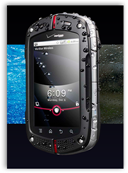
Verizon And Casio Introduce Android Smartphone Ruggedized for Hospital Use

Security is good, EAS works for me so we have an Android system here with some imageMicrosoft technologies added in.  It would also function in other rugged areas too besides hospitals, but working in hospitals is getting getting pretty rugged these days and when you walk around all day with a device a tuff one can’t hurt.

There’s no 4G but the last few days we didn’t have it anyway <grin>.  It does free standing WiFi to connect other devices.  I remember just a few years back when I got a EV-DO router I thought I was really hot and connected and now this is moving to be pretty much a standard feature with wireless capabilities.  The price is around $200 for a 2 year agreement (watch the fine print now that the Supreme Court has ruled that we have to be able to interpret all of it ourselves).  The compass feature was pretty neat in looking at it and there are a few more things it does, like watching the tides, gazing at stars, etc. and it is an enterprise solution smartphone too.  BD 

image

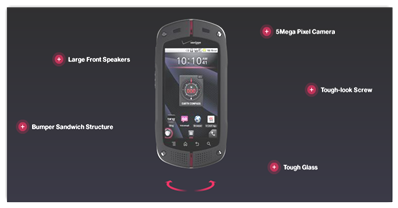
Casio and Verizon Wireless have announced the G'zOne Commando rugged Android 2.2 smartphone primed to withstand working environments such as hospitals, construction sites and factory floors.

Security features provided through Microsoft's EAS (Exchange ActiveSync) allow users to encrypt data in transit, remotely wipe information, enable device inactivity timeout and set password imagecomplexity.

The G'zOne performs enterprise tasks such as downloading blueprints, files and pictures and managing a field force. It also allows workers to access inventories and capture signatures.

The device runs the Android 2.2 Froyo operating system and operates on Verizon's 3G/EV-DO network. In addition, it serves as a WiFi hotspot for other devices. The unit doesn't support 4G connectivity, however.

It operates in eight modes, including Earth Compass and Walking Counter, which tracks steps, distance and energy consumption.

The G'zOne also incorporates a 5-megapixel camera with auto-focus, LED flash and video capture. Plus, it comes with 1GB of flash memory and 512MB of RAM.

Verizon will offer the G'zOne starting April 28 for $199.99 with a two-year customer mobile service agreement. The carrier's unlimited data plans start at $29.99 per month.

New Verizon Casio Android Smartphone Ruggedized for Hospital Use - Health Care IT - News & Reviews - eWeek.com

Social Security Starts Phasing Out Paper Checks for Direct Deposits and/or Prepaid Debit Cards

Starting My 1st anyone who applies can’t get checks anymore and there is a conversion time until March of 2013 to move everyone over to direct deposit.  If you don’t have a checking account, there’s a prepaid debit card you can get instead.  This new rule also requires bank to protect funds from creditors and some were co-mingled with other accounts, so it sounds like the best way to go is to keep one account for social security only if depositing funds from other areas or go get the debit card that is prepaid.  California is doing the same thing with unemployment benefits. 

California Following the Direction of Social Security With Putting Disability Payment Benefits On Debit Cards Starting in March, Unemployment to Follow in June

We don’t have these same options with Medicare as it was the IT infrastructure the the government was never allowed to build and thus it costs more money to run with current outsourced agreements with insurers who do the IT work with claims.

Medicare–The Missing IT Infrastructure the US Government Never Got The Chance to Build And A Few Other Housekeeping Issues…

By doing so we run into situations like this:

Insurers Made $450 Million with Interest Income by Holding Medicare Funds for Around 46 Days Before Releasing Payment

After the paper is gone everything with Social Security will have a data trail so there’s a bank involved somewhere along the line.  Social security states in 10 years this conversion will save a billion in expenses versus mailing checks.   Social security also works with electronic medical records and has some pilot programs in place for exchanging information for disability claims. 

Social Security Awards Contracts for Electronic Medical Records – 15 New Recipients for Disability Claim Info

Who says COBOL doesn’t rock <grin>.  BD 

Starting May 1, everyone who applies for Social Security or other federal government benefits will be required to arrange for direct deposit of their payments. The government plans to phase out paper checks entirely by 2013.

Now, about 85% of Social Security beneficiaries get payments through direct deposit, says Treasury assistant secretary Richard Gregg. But the government issues more than 120 million checks a year, at a cost of about $1 each, vs. 10 cents for an electronic payment, Gregg says. Treasury estimates that eliminating paper checks will save the government about $1 billion over 10 years.

Benefits that are delivered electronically are more difficult to protect from creditors. In general, banks are prohibited from freezing or garnishing accounts that contain Social Security or veterans' benefits. However, in the past, individuals could lose that protection if their benefits were commingled with other funds in their accounts.

Some seniors avoided this problem by receiving paper checks and keeping them out of their bank accounts. Seniors who sign up for benefits after April 30 won't have that option.

Under rules that take effect May 1, though, banks will be required to determine the amount of federal payments deposited in a customer's account and protect that money from creditors.

Social Security begins phase-out of paper checks - USATODAY.com

Johnson and Johnson Prostate Cancer Drug ZYTIGA™ (Abiraterone Acetate) Receives FDA Approval

For a little back history a study announced in October of 2010 the drug prolonged imagelife for an average of 4 months.  You can read the entire press release and additional information at the links in the web pages below.  In order to be prescribed, patients must be in the category of having received prior chemotherapy treatment. 

J&J Prostate Cancer Drug Found to Prolong Life for an Average of 4 Months–Competition for Provenge?

In addition during the opening of the new MIT Cancer Center David Koch also talked about his diagnosis of prostate cancer and his treatment with the drug, and it appears the video of the dedication has been removed when I went back to look.

David Koch Institute For Integrative Cancer Opened at MIT-Better to Invest and Donate to Healthcare Research Than Politicsimage

Back in May of 2009, Johnson and Johnson acquired Cougar Biotech in Los Angeles and now it has been incorporated into the Centocor Ortho Biotech division of Johnson and Johnson.

Johnson and Johnson Acquiring Cougar Biotechnology – Cancer Biotech Company Los Angeles

From the website:

“ZYTIGA (abiraterone acetate) was developed by Ortho Biotech Oncology Research & Development, a Unit of Cougar Biotechnology, Inc., and will be marketed by imageCentocor Ortho Biotech Inc. Marketing applications for ZYTIGA have been filed with other regulatory authorities throughout the world.

ZYTIGA is the first oral, once-daily medication indicated for use in combination with prednisone for the treatment of men with metastatic castration-resistant prostate cancer who have received prior chemotherapy containing docetaxel. For more information about ZYTIGA, visit www.ZYTIGA.com.”

Back when the acquisition was made by J and J there was a lot of discussion of purchasing a company with pipeline only and nothing on the market yet, as being a bit of a gamble, but that changed today with the FDA approval.  The good news for patients is that the treatment is simple with taking one pill every day. 

There’s no mention on the specific cost but it seemed to circle right around $5000 a month, and recently in the news Medicare had approved another “very expensive” prostate cancer drug, Provenge that extends life and it’s a whole different class of drug with a very different treatment plan requiring injections so one does wonder how cost will come into the picture here when the 2 are compared as just common sense tells me with being a pill versus the Provenge treatment that it should be less expensive and it would be obviously more convenient for the patient.  Both drugs are pretty much the same on how long life is extended.   I am guessing here too the next step is for CMS/Medicare approval for the drug which if they approved Provenge this should not be an issue.  BD   

Horsham, Pa., April 28, 2011 /PRNewswire/ — Centocor Ortho Biotech Inc. announced today that the U.S. Food and Drug Administration (FDA) has approved ZYTIGA™ (abiraterone acetate), an oral, once-daily medication for use in combination with prednisone for the treatment of men with metastatic castration-resistant prostate cancer who have received prior chemotherapy containing docetaxel.

Androgens are hormones that promote the development and maintenance of male sex characteristics. However, in prostate cancer, androgens can help fuel the tumor’s growth. Androgen production imageprimarily occurs in the testes and adrenal glands; in men with prostate cancer, the tumor tissue is an additional source of androgens. ZYTIGA is an oral androgen biosynthesis inhibitor that works by inhibiting the CYP17 enzyme complex, which is required for the production of androgens at these three sources.

“This FDA approval represents a welcome new option in the treatment of metastatic prostate cancer,” said Howard Scher, MD, Chief of the Genitourinary Oncology Service, Sidney Kimmel Center for Urologic and Prostate Cancers at Memorial Sloan-Kettering, and one of the co-lead investigators for the Phase 3 clinical study. “As a clinician, I believe the efficacy and safety profile of abiraterone acetate, as well as its oral, once-daily formulation, will help address the important need for additional therapeutic choices for men living with this serious disease.

ZYTIGA™ (abiraterone acetate) RECEIVES FDA APPROVAL FOR TREATMENT OF METASTATIC PROSTATE CANCER AFTER PRIORITY REVIEW

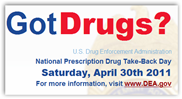
Second Annual DEA Drug Take Back Day–Saturday April 30, 2011 Across the US

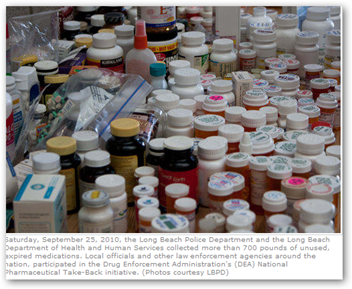
No questions asked, just bring  the drugs and the DEA will take them off your hands.  Below is a picture of what was collected in Long Beach, California last imageyear.  BD

“Collection sites in every local community can be found by going to www.dea.gov and clicking on the “Got Drugs?” banner at the top of the home page, which connects to a database that citizens can search by zip code, city or county.”

First Annual DEA Drug Take Back Day Yielded 700 Pounds of Unused and Expired Prescriptions in Long Beach, CA

(WASHINGTON, D.C.) – The Drug Enforcement Administration’s (DEA’s)
second National Prescription Drug Take-Back Day is this Saturday, April 30th. More than 5,300 sites nationwide have joined the effort that seeks to prevent pill abuse and theft. This is hundreds more sites than were established for the event last fall. The free event will be held from 10 a.m. to 2 p.m. local time.

Government, community, public health and law enforcement partners at these sites will be working together to collect expired, unused, and unwanted prescription drugs that are potentially dangerous if left in the family’s medicine cabinet.

News from DEA, Domestic Field Divisions, Washington DC News Releases, 04/19/11

Medical Quack Adds Mobile Microsoft Tags–Start Scanning With That Smart Phone

It’s been a while and this is a new little project here to allow Smartphone use to scan and read the Quack on a phone browser.  Also, I took one of my sponsors imagehere and gave them a tag, so if you have smartphone handy, check it out.

Notice how small I made my own Tag/bar code here, could fit in perfectly on a bottle of Tylenol or on those Triad wipes that are being recalled by the groves too.  This situation became so bad that the FDA had to move in and seize millions of dollars of products and look, they state how they private label manufacture for Fortune 25 companies, so with the technology out there today, is this as good as it gets?  Where’s the world class customer service and help that goes along with this for consumers and healthcare workers when things go bad?

FDA Moves in on Triad and Seizes $6 Million Dollars of Product-The Medicated Wipe Recalls Issues Continue - Triad is an Outsource for Several Fortune 25 Companies

When is business and the FDA going to collaborate and help consumers?  It’s fine imagethat they make money, but can get value here?  Recalls are not going to stop and as we have found out it’s maybe not that we are getting worse products than we have over the years, we are just better at finding problems and as technology moves forward, it will happen again, and again and again. 

We have Johnson and Johnson with this consent decree with the FDA for violations and today we hear about how much money they are making and their concern for consumers, well talk is cheap and with their history of being the “king of recalls” you would think that more than just a better bottle for children’s medication could come out of all of this, that’s what was in the news today. 

Johnson and Johnson Consumer Health Division United Barred From Resuming Operations in Until Quality Standards are Met-Consent Decree Agreement With FDA

I might have started something here as other sponsors might be wanting mobile tags here at the Quack too <grin>.  Also, Micro-Cap Review Magazine will be using some Microsoft Tags in the next quarterly issue due out soon, so you can look for them as well as an article I contributed on why the FDA, drug and device companies and so forth should get on this bandwagon as people die as a result of inadequate methods of being able to identify, both by taking drugs and getting implanted with defective devices that were missed being pulled from inventory, more than what you would think. 

Again we are happy that J and J and Triad are making money but have you forgotten about the consumer with preparedness and plans for recall disasters when they happen?  It is truly sad that technology is here but nobody chooses to explore it seems and every time those pallets get treated indoors we get drugs that stink too and those are recalledRecently there was discussion on using bar codes at the FDA, but wrong business model with doing a logistics focus only and I do have to say UPS was right there with some good input as being the experts they recognized a bad business model being discussed too.  As many of you may or may not know, I spent 25 years in logistics so there’s where my opinion comes from too. A solution needs to be consumer centric and not logistics centric as UPS alluded to, and shoot they are talking about the year 2016 to boot.  BD 

FDA Finally Talking About Bar Codes - Offers Zero for Consumers–Input from AstraZeneca Pretty Much Useless But UPS Input Is Very Useful

Bar Codes for FDA Recalls-Good Idea?  Search this blog with keywords barcodes or Microsoft Tags-Tons of posts where it could have helped!  There is no bigger poster child than Johnson and Johnson and actually through some folks I know, the idea has been floated up there a while back.  I have added many other posts and will try to update the links here on bar codes and healthcare, Microsoft Tags so past postings are easier to find.

The Medical Quack: Healthcare Bar Code Posts

Future of Mobile Technology Combining DNA, Personal Health Records, Food and Food Supplement Products With Bar Codes on Your Smartphone

If your head is not already hurting with some of the new mobile technology in healthcare, it will now <grin>.  You also hear me too complaining from time to time about lack of collaboration with mobile applications, in other words applications that stand alone and do one thing only, and with this article we have what I have been preaching about, collaboration.  If I have to hear one more time about the mobile application that sends text messages to pregnant women I think I will scream as it’s a limited crowd.  It’s ok but as fast as things are moving today, let’s go to the next level and see some collaboration like what it noted here and some relief from what I refer to as “Junker” mobile health applications.  Don’t just write one because you can, collaborate with others and come out with something that does more than one thing!

Do I have a hard time keeping current with all of this, sure I’m just like everyone else but try to simplify and hit some highlights for awareness so even if you are not using today, at least you might have some knowledge of what’s coming.  The one application featured here, not out for public release yet, shows the use of DNA and genomics information coupled with the use of Personal Health Records, specifically imageGoogle Health and HealthVault with using “bar codes” to determine which foods or food supplements are best for you.  I know sometimes one want to say, the heck with this as I don’t have time to study and learn all of this, I get that way too but again this is a preview of where this is going with the company HolGen Tech which can bring in genomic sequencing information from several different sequencing companies.  You can read further but can see that 2 of the most popular DNA sequencing companies are listed 123 and Me and Navigenics.  If you have some basic sequencing information available, it can help you avoid peanuts as an example if that is an issue for you. 

Clinical Trial information and genomics use with personal health records is not new and Scripps as an example has been using the technology with HealthVault for a couple of years now.  I learned about that when I spoke with Steve Shihadeh, VP of Microsoft Health solutions a couple years ago.

Steve Shihadeh, VP Microsoft Health Solutions Group – The Amalga Software Solution for Aggregating Hospital Information (Interview)

When using mobile technology too, bar codes are the answer to store and help analyze information.  If you read here often enough you know I like 2D bar codes and have had this campaign for the FDA, device companies and pharma to start using them.  I almost think this has to be a separate bar coding solution as there’s only so much that can fit on the standard bar codes we have on products and mixing data bases might be little too much to do it correctly as we are talking masses of information.  One company that uses bar codes is NutriSleuth so now we are moving the next level up to include DNA sequencing information along with nutrition, so see where this is headed? 
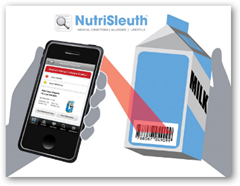
NutriSleuth UPC Barcoding Company Kicks the FDA in Back End When It Comes to Food Safety-Using a Smartphone to Scan for Info

By now you are probably wonder how can I stand all of this new technology and use it, good question as I sometime ask the same and I’m a data base person as well as a consumer too so it applies to me to figure it out too and at some point I’m going to ignore what ever it tells me and eat that chocolate bar, and we will all do that from time to time as nobody is perfect.  The video below gives you an idea as to how this will work with mobile technologies with the Algorithm based approach for genome analysis processes. 

HolGen DNA Personal Health Records

On the topic of clinical trials and personal health records there’s a company that has imagebeen around for a while that allows you to use your stored information in Google Health or HealthVault to find clinical trials that best meet your needs, TrialX.  You can do a search of course on the web, but why not take the data in your PHR and cut to the chase here.  I have their search widget here on the Medical Quack available for a quick search at any time, so give it a try if you are looking for trials and down below there’s a quick summary of trial news. 
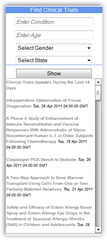
TrialX and CenterWatch Partner to Help Locate Additional Clinical Trial Information - Integrate with Personal Health Records

If you look around the right hand column of the blog you just never know what you might find lurking over there.  Also there’s always links to personal health records if you want to read up and try one out, all of them are free. 

I do talk quite a bit though about needing role models so this looks like a perfectimage place to once more elaborate a little here too on the fact that in the social network world we live in today we have all these folks wrote write wonderful reviews about what “you” should do and yet don’t explore and at least play around with some PHR software, just to see what’s there.  We have folks in the image[14]government that last I looked they are consumers too that won’t share anything and I can almost bet they haven’t explored any of this for their personal use, and I run into Microsoft employees too that have no clue what Healthvault is so it’s all over the place.  Actually this week I went into a bit of a rant imageabout this and I get so tired of all the news and studies that talk about how stupid consumes are as for some reason or so they seem to use negative marketing here to get people involved and to me that’s dead end subject, as it does nothing and we have all the so called experts on consumer products themselves that do nothing but preach how “you” need to do something, but again consumer products and we are all consumers and perhaps when “experts” realize they too are consumers we might see some headway here when folks begin to “get over themselves”.


Cease and Desist Request for Publishing News and Studies That Report on How “Stupid” Consumers and Patients Are

There certainly are a lot of choices out there today and having “smarter experts that acknowledge this fact would be a real plus too!  This post is written for an awareness purpose and I’m not saying you have to run right out and be sequenced, although you can if you want, but I’m rather just adding some information on what’s on the roadmap.  I still maintain my campaign though on the FDA recalls as they have such a mess there and it looks like luddite heaven over there and once again it’s collaboration that will win and not the great white hope concept and I hope in the future someone cuts to the chase here and cans the “Innovation” concept and starts talking about “Collaborate to Innovate” instead. We have no lack of innovative people in the US, just look at the funding going on today, anything short of having a pulse seems to be raising money in healthcare.  In the not too distant future a sequencing machine will sit on the desk just like a printer and the next step is mobility with using the information. 
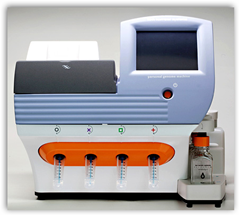
Life Technologies Debuts Ion Torrent Machine-Cheap Genes at $500 for Single Sequence

Iron Torrent

Coming back around here this is also why I harp on our lawmaking processes so if you have viewed the video above and read some of this information, what in the world at they doing for information to create better laws?  I don’t see much and again they need it as what they do affects all of use and if we have one end of the world on technology on fire, what’s waiting at the lawmaking end, a bucket of water? I kind of thought so when I listened to Elizabeth Warren and all her struggles to set up a simple agency to help people understand the “code” (her words) processes so we can function and not get lost in the algorithms.  The link below is very good and she explains what’s happening and her battles to set up her agency (videos)  too with lawmakers and some digital illiteracy sinking there too.  
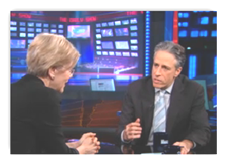
Elizabeth Warren Talks With Jon Stewart -the Consumer Financial Protection Bureau that Congress and the Judicial System are Trying to Kill-One Nail in the Coffin Today From the Supreme Court Ruling

In summary I hope you found some of this useful as a preview of what’s in store with mHealth technologies and again my cry out for digital literate lawmakers as they will kill us all eventually with “non participation”.  BD 

As if diagnosing and treating illnesses as they manifest weren't enough futuristic pocket power, along come apps that guide patients on how to prevent or postpone future ailments.

Consider the Personal Genome Assistant app. First, the patient has a genetic test or genome sequencing to determine genetic predispositions to specific diseases. Then the PGA incorporates genome sequence or partial sequence data interpreted by the new fractal science with personal preference and known health data -- which is stored at online cloud facilities like Microsoft (Nasdaq: MSFT) Health Vault or Google (Nasdaq: GOOG) Health -- to optimize choices as one goes through their day to prevent or postpone the predictable health problems.

If the patient knows, for example, that he has a predisposition to diabetes and is currently lactose intolerant and allergic to peanuts, he can proactively make choices to prevent health problems now and in the future.

The app allows the user to scan bar codes of food and supplement products using a smartphone's camera. The app then immediately analyzes the product's ingredients and informs the user whether consumption of the product is good or harmful for either of the three of his health concerns. In mere minutes, the user knows exactly how the product will affect him now -- and in the years to come.

Andras Pellionisz, the developer, is a cross-disciplinary scientist and technologist with Ph.D.'s in computer engineering, biology and physics. He founded HolGenTech as a genome analytics company to leverage high-performance hybrid computer hardware with a novel, fractal algorithm-based approach for genome analysis and recommendation.

The PGA has not been publicly released yet, but has applications for any and all of the growing number of direct-to-customer personalized medicine models, such as 23andMe, Navigenics, or GenePlanet in Europe, and Theragen Bio in Asia.

Technology News: Mobile Apps: Mobile Health Apps, Part 3: On the Cutting Edge