Cracking enzyme code opens way to new cancer drugs - TERT

This lends itself to an area whereby various area of cancer could be targeted, and with few or little side effect as the study states.  The term "cellular immortality" is the term that describes cells that keep regenerating endlessly, like cancer cells do. 

It's a long way to go though before the research and development can lead to producing drugs that will use the targeted imageenzyme for cancer therapies, but one more step forward and a lot more research will carry forward.  If the enzyme can be targeted to stop the growth of tumors, then this could clearly be one big breakthrough.  BD  

PARIS (AFP) - Researchers have broken the code of an enzyme (TERT) that plays a key role in the growth of most cancers, opening a path that potentially leads to a new class of anti-cancer drugs, according to a study released Sunday.

Other scientists who reviewed the study hailed it as a breakthrough in fundamental cancer biology, but cautioned that much work remained before the exploit could be translated into next-generation therapies.

The enzyme, called telomerase, "is an ideal target for chemotherapy because it is active in almost all human cancer tumors, but inactive in most normal cells," said Emmanuel Skordalakes, a professor at the Wistar Institute in Philadelphia who led the study.

Cracking enzyme code opens way to new cancer drugs - Yahoo! News

Despite Doubts, Cancer Therapy Draws Patients - HIFU Prostate Cancer Procedure

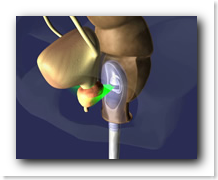
This procedure is not approved for us in the US.  It is not inexpensive either at 25-30K per procedure, but good money for the physicians getting paid from 5-7k for their work.

There are opinions on both sides of the fence and like anything else today, there has not been one cure all that works for everyone.  So what is the big attraction for this procedure, well not having to deal with sexual impotence and urinary incontinence are 2 of them, but there are those who have not had success with eradicating the cancer and some have to wear a catheter as a result of the procedure. image

Again, I would maybe guess to also say the stage of the cancer at the time of the procedure might have a big impact here as well.  One patients comments:  "Mr. Reinwald, a retired lawyer who is the founder of the Cancer Cure Coalition, an organization seeking new cancer treatments, said that HIFU should remain available and that he had not asked the Web company to remove his testimonial.", so there is someone it didn't work for but he still thinks it should be a procedure offered. 

The procedure can take hours and repeated if necessary, and then there is also the opportunity for radiation and other procedures as well.  That appears that it could be somewhat of a gamble though if the cancer is spreading at a rapid pace.  The procedure is also available in Canada.  Clinical trial information can be found here.  BD

PUERTO VALLARTA, Mexico — Some weekends, more than a dozen American men wait at beachfront hotels, anxious for their turns in the treatment room at a small private hospital here.

The treatment is called high-intensity focused ultrasound, or HIFU (pronounced HIGH-foo). And instead of using surgery or radiation, it attacks the cancerous tissue by heating the prostate to temperatures near boiling.

Despite Doubts, Cancer Therapy Draws Patients - New York Times

Got Acne Problems - Go Buy a Condom

According to the article, this company, Number One Plus condoms, seems to have cornered the market here.  This practice appears to be growing in Cambodia.  This sounds like new clinical trial territory and something the FDA might want to take a look at (grin).  Here's a video of the current advertising campaign in use.  BD 

PHNOM PENH (AFP) - A condom lubricant designed for sex workers and gay men has become a popular acne cure among female Cambodians, women in the capital and local media said Thursday.

Number One Plus, a water-based lubricant produced by health organization Population Services International (PSI), is an excellent cure for acne, 29-year-old vendor Tep Kemyoeurn told AFP.

"After I used it for three days, all of my acne dried up and went away," she said. "Many people believe in it," she added.

Condom lubricant popular acne cure for Cambodian women - Yahoo! News

Technorati Tags: ,,,

NASCAR scrubs for Medical and Healthcare professionals - Say What?

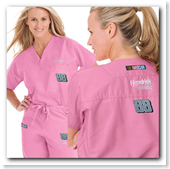
Is there not end to advertising and marketing?  Is this to bring a new meaning to "start your engines" in the ER or perhaps is this an effort to bring more "pit" minded teamwork attitudes together or just make some money.   I would check with your local hospital administrator first on policy before jumping in to your new Dale Earnhardt wardrobe as many already have approved logos that reflect names and departments within the facility.  What company will be the next to "brand" scrubs?  BD

imageimage7/24-7PressRelease/ - Lowell, MA, August 31, 2008 - Bill Wilson, CEO of Pitroadmotorsports.com, announced that its online  store will be selling a new line of NASCAR merchandise - apparel geared towards the medical and healthcare industry - Scrubs, both tops and bottoms, available in all the popular NASCAR drivers logos. The Scrubs from Landau are available in number of colors and design for both male and female professionals.

Press Release - NASCAR scrub apparel for Medical and Healthcare professionals

Cerner CEO calls for a change with insurers

 Cerner president speaks out about the insurance business, "they need to be redefined".  Amgen CEO and President Kevin Sharer called for a better structured FDA.  Overall the summary statement says the same thing I have brought up time and time again, who's going to to pay the bill.  Software companies are apparently not happy with today's status of affairs and Pharma has concerns with their side of the table as well.  BD

Health-Care Allies...for Now Insurers, drug companies, and advocates agree health care needs fixing. But questions linger about who will foot the bill.

In the dais, Trace Devanny, president of electronic-medical-records marketer Cerner (CERN), advocated wringing efficiencies out of health care with information technology, then plowing the money back into preventive care—a common refrain. But afterward, Devanny was more explicit: "At the end of the day, there are $700 billion a year spent on administration," he told BusinessWeek. "Insurance companies as we know them need to be redefined."

Health-Care Allies...for Now

Benefits of Drinking - Only kicks in after 50 Years of Age

I found these studies interesting, so it basically states that drinking has some benefits, raises good cholesterol, lowers risks of heart attacks, thins blood, etc.  Moderate drinking is the key and according to the study, none of this kicks in for better health until after the age of 50, so if you drink before 50, you will not see any of the benefits mentioned above.  Well I am happy I found one benefit of passing the age 50 plateau.  Video at the source for more information.  BD   

Too little doesn't help. Too much can kill you! We find out about the perfect amount of alcohol to make sure you get the benefits and not the harm. Find out if certain kinds of alcohol are better for you.

image

image

 http://www.redorbit.com/news/video/health/4/drinking_alcohol_has_health_benefits__but_how_much/24687/index.html?utm_id=Miniplayer&utm_source=Miniplayer%2Bon%2BRedorbit&utm_medium=Miniplayer%2BSource&utm_campaign=Miniplayer

Two Dead, Several Hospitals Locked Down - "Blue" chemically exposed patients seeking help in the ER

 Blue people walking in to the ER, Hospital Lock Down, and 2 deaths over chemical exposure, scary story here and I can't remember the last time I heard about an entire hospital being on lock down. 

One ER shift that will be remembered for a long time and it's probably not all over yet as more information regarding those exposed may still come in.  BD 

(KTVI - myFOXstl.com) -- Eight to ten people are hospitalized around the St. Louis area after being exposed to some type of hazardous chemical or material. At least two people are very critical condition. St. Anthonys Hospital in South County and DePaul Hospital in West County both shut down their emergency rooms when victims showed up with blue skin.

Some of the victims of the chemical accident were taken to Depaul Health Center and at one point the entire hospital was on lockdown.  As everything unfolded emotions were high. Investigators say three people walked into the emergency room after being exposed to a substance called nitro aniline.  Initially, they and everyone in the emergency room were quarantined and only the E.R was shut down, but officials later decided to shut down the entire hospital as a precaution,

MyFox St. Louis | Two Dead, Several Hospitals Locked Down After Hazmat Exposure

Stand Up To Cancer - Friday September 5, 2008 - 8:00 EST

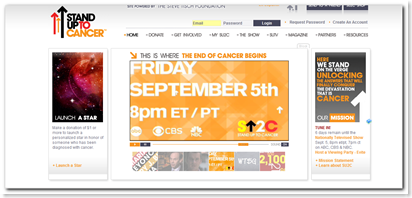
image You can set up a log in and donate today.  Click here for details.  As I had posted in a story a couple days ago, the bar has risen for venture capitalist investments, it is still there, but perhaps a little tougher to get, and with government cuts on grants and availability for research, this hour is devoted to further raising money from the community, company sponsors and many more, thus the name "Stand Up To Cancer".  Unprecedented to see all 3 major networks in participation! 

Much of the new research is also based in genomics research.  You can search the site for additional information, plus the blog has a wealth of information on some of the latest breakthroughs that are taking place. 

Stand Up To Cancer is a charitable services fund of the Entertainment Industry Foundation.  You can even quickly donate $5.00 easily through your cell phone, so every dollar will count.  


Stand Up To Cancer (http://www.StandUp2Cancer.org) is an initiative to raise philanthropic dollars for accelerating ground breaking research through an unprecedented collaboration uniting the major television networks, entertainment industry executives, celebrities and prominent leaders in cancer research and patent advocacy [1]. On Friday, September 5th, at 8:00 pm EST and PST, ABC, CBS and NBC will donate one hour of simultaneous commercial-free prime time for a national fundraising event.

image 


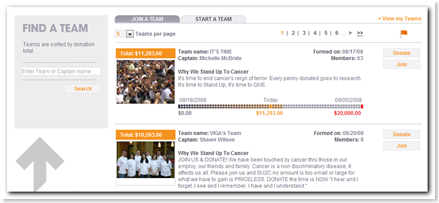
You can create you own team or join one that has already been created.  Lots of choices here to get the job done. 

image

See you on Friday, so mark the calendar. 

Stand Up To Cancer

Hat Tip:  Highlight Health (thanks so much for the reminder and finding the YouTube video)

Man Finds Thousands of Medical Records in Storage Unit he won with a bid $25.00 for the unknown contents

This is one of those strange ones out of the coffer here, man bids $25.00 for the unknown contents of a storage unit and what in the world does he get, stacks of medical records!!  Obviously paperless records were not on the agenda for Southwest Medical Association. 

Gee, is there no shame anymore!  The old saying that one man's garbage is another's treasure, but certainly no treasure here and he himself had been a victim of stolen identity himself, so no treasure here, but instead someone who knew what to do and nice that the records didn't fall in to the wrong hands.  I would really like to hear more on this one as the story develops too, how obscure that a medical association would allow this to happen.  Many medical firms have to store paper records off premise but they also have to take responsibility for them.  image

How disappointing, hoping for a treasure and getting paper medical records!!

If you find yourself in a situation like this, consider a company like Scan Hub on this page that can image all the paper files for you.  Sure it costs, but so does storing boxes of paper, plus the data is much more secure as it is encrypted and down the road can be linked to electronic charts.  It sure is much easier to keep track of an encrypted drive with records than boxes of paper charts!  BD 

It was a shocking discovery in an abandoned storage unit. Thousands of medical charts, all listed to Southwest Medical. Larry Coldmire bought the contents of the storage unit for just $25 dollars in an auction.

He had hoped to find treasures that he could turn into a profit, but what was there instead is identity theft just waiting to happen. "That was a little bit too much information because I don't want anyone getting in touch with my medical records, because I have had my identity stolen before and I am still fighting with it in the credit bureau," he said. Coldmire has alerted police to the records left by Southwest Medical Association. He tried to call the medical group, but a recording said the number was out of service.

Las Vegas Now | Man Finds Thousands of Medical Records in Storage Unit

Desperate Hospitals - Hawaii- What is happening to our Hospital System?

As the old saying goes, things roll downhill and Siemens was the straw that broke the camel's back here.  Recently Siemens has been in the news with their own issues with restructuring and lay offs.  There are other creditors including Clinical Laboratories of Hawaii, Ewa Beach, $3.9 million; SBM Site Services, McClellan, Calif., $723,391; Cerner Corp., Kansas City, Mo., $450,631.

One more hospital joining the ranks of Chapter 11 in order to say alive.  At the brunt of the problem, same issue facing most hospitals with financial issues, not enough compensation from insurance companies, Medicare and Medicaid, and that story isn't changing.  

I want to add a little commentary here, as I feel it somewhat fits here.  Recently I have started this series to bring an awareness to all as to what is occurring in the hospital business in the US.  The story about Century City Hospital's closure has been the most read story on this blog since it started 2 years ago.  You can look on the blog to see the recently read popular stories and check this out.  It has not left one of the top positions since posted.   (Also as posted on Reuters)

It does make one wonder what is wrong with the system when a hospital that sits on the skirts of Beverly Hills, CA doesn't have enough money, and further, that it could not find someone to buy or offer any financial relief.  I think this has something to do with the popularity of the post, as if they can't find any monetary assistance, where does that leave the rest of the hospitals?  After having posted this article I decided to look further and get an idea of what is happening with our system and found many hospitals on the edge of insolvency, either filing for bankruptcy, trying to come out of bankruptcy, or making public their forward looking projections on what is in the till.

Some hospitals have been putting their debt out for auction. 

With a little more research I found a couple more items of interest as relates to venture capitalists and where some of the investments are going and came up with this article.  Over 135 million has been raised in Seattle with this firm to invest and build up to 39 new hospitals in India and Asia.  It can't be any more clearer than this that the interest with investing in US Healthcare is in trouble. 

The bar has also risen on venture capitalist investments in Bio-Tech, the opportunities are still there, but they are getting much more difficult to obtain, as there is a huge risk factor involved with much of the unknown about the business, and of course there's always the possibilities of some of this going offshore too.  The FDA has began their new more conservative approach with approvals and having adequate information, which is not all bad as their job is to protect us as consumers, but with pressure from other countries granting approvals with perhaps a lower safety net, there's the rub. The good news in part is that there is a more global approach coming around with the sharing of information and being able to have enough information for an intelligent decision faster, but when it comes around to securing funds, the time element may not be as complimentary for the investors who are looking to see a return in a smaller time frame.

Tenet hospitals has been in the news of late since they too are a publicly traded company, one story showing losses, the sale of 3 hospitals in southern California to Prime Health Care, another facility in Florida sold, and  not renewing the lease for the hospital in Los Gatos, and you can probably guess this is restructuring to cut losses and get back in the positive to continue to get and keep investors in the hospital system, again, these tactics are the result of reduced contract rates to keep the money generating facilities and cut losses with others. 

When hospitals run out of money it effects everyone, patients, vendors, etc. and at some point in time the levels of being able to consume debt rolls out to all.  Vendors needs hospitals to keep their business chain going, so at some point they draw the line when their own existence is threatened.  

We keep hearing it over and over from hospital administrators about the shortage of money inherent today with hospital care, but yet these stories and financial issues continue, and frankly I wished there were less of this type of news around when it comes to health care as the only thing I gather here is just trying to bring an awareness to all as to what is happening around us so perhaps somewhere along the line folks and the government will pay attention and stop the vicious circle. 

So how do the big guys do it?  The big guys meaning the highly acclaimed medical centers and hospitals we do have?  The Wall Street Journal took a look at that this week and presented some very interesting comments and views on which I commented.  They too have some very vital overseas investments, branding for one.  In addition, many of the facilities can charge 4 to 10 times more what another hospital might charge for the same procedure, again some of this comes back around to branding the credibility of the name. 

On the same line, the large Not For Profit institutions are bankrolling some large funds these days but are they doing it by cutting and chopping on the amount of charity care they are supposed to provide in return for the tax breaks they receive, a good question to ponder with one chain being looked at by the Securities and Exchange commission.  If some of this type of action is taking place, is this somewhat of what one could call a marketing move to force more charity care to those hospitals who are already struggling for their existence to keep up current profit levels? 

It definitely could be a real possibility that somewhat goes on in the background without much notice until the money runs out.  When the money gets short, we all turn to those who have and thus the investigations begin. Perhaps it a combination of both with again, the overseas investments making up for the shortage of insurance and Medicare compensation here. 

The insurance contracts are not getting any better anywhere and many of the companies are working to solidify their marketing efforts in China and other countries, so down the road when the overseas market begins to boom, well, where does that leave us? 

As buyouts and mergers continue, the hospital business is no exception to the rule and perhaps someday we may have but just a handful of hospital chains to take care of us.  When you stop and think about it, that may not be too preposterous in thought with Mayo, Cleveland Clinics, Johns Hopkins, and Kaiser facilities all over the US and overseas too and the smaller facilities we have known end up being only that of a memory some day as the big fish continue swallowing the small.  In the meantime, it is the true desire and hope that through the roller coaster ride we all on today, the the focus of good health care is not lost, and hopefully the transparent folks of the world will continue to keep this in the forefront before the "economic" decisions being made to day become the only ruling factor and more citizens face bankruptcy and vague and scrupulous billing efforts as a result of our failing system.   Search out some of the other "Desperate Hospital" posts here and you can come to your own conclusions and thoughts. 

On a similar note, here's what one patient did so he could have his heart surgery, identify theft out of desperation, "Desperate Patients"? 

We could certainly use some Americans investing in other Americans today.  BD

Hawaii Medical Center LLC filed for bankruptcy yesterday after one of its lenders threatened to freeze operating cash needed to keep its two hospitals open.

"We faced the threat that our lenders would freeze our cash, creating a liquidity crisis that would force the hospitals to shut down," said Danelo Canete, HMC's chief executive officer. "These filings will permit us to continue to serve our patients as usual while we remain on the path to financial stability."

However, the company has been unable to increase higher-paying private insurance referrals from specialists and primary-care physicians as quickly as the group expected. About 70 percent to 75 percent of patients are covered under lower-paying Medicare and Medicaid, HMC said.

Isle medical center in Chapter 11 | starbulletin.com | News | /2008/08/30/

Intel Health PHS 5000 - Home Health Monitor (one more)

Here is one more home health monitoring device.  No word as to when this one might be available in the US.  Intel just released another product September 1st for use in the US, as noted here. 

The devices keep getting smaller and each one adds something new the last model didn't appear to have.  We will be a home full of monitoring devices soon, and the problem will be making a decision on which one to choose.  BD

image

Intel Health PHS5000 is not the first implementation of an in-house health monitor but if I were to judge by the looks of the User Interface I would say this device may have some promise for monitoring ones health at home so long as you stay home most of the time. Currently being trialed in Asia this device will monitor and check for problems related to chronic diseases, diabetes, blood pressure, etc& Assuming that smiley faces are good and you know what the resulting charts mean in terms of your physicians plan for you I think this might prove useful in visualizing a patients health.

Strategic Informatics

Desperate Hospitals - August 29 (Continued)

More added to the list at various stages either with investigations, layoffs, some trying to figure out how to stay open next year.  Some are already deep in debt while some are teetering on the fence post after budget cuts, in short all looking for money to survive and one home health care unit, part of Catholic Healthcare West closing.  BD

In Gridley, CA 

Semi rural area in northern California struggling with finding money.  BD

Groups of concerned citizens met Monday and Tuesday mornings at the hospital's Health Services Center to hear how $250,000 operating reserve can be raised in order to keep our local hospital open.    As the second largest employer in town, BGMH employs 150 full time employees, with an average payroll of over 8 million per year. The loss of that 8 million to this community would be significant . BGMH has the only emergency room on the Highway 99 corridor from Chico to Sacramento.

In Allegheny, PA

Full on Securities and Exchange investigation here with questions on whether or not revenue was inflated to help secure past loans.  BD

The West Penn Allegheny Health System is cooperating with a Securities and Exchange Commission probe of the hospital network’s $73 million revenue write-down, health system President and CEO Dr. Christopher Olivia told investors Wednesday.

Jeff Schaub, senior director at Fitch Ratings, said the SEC inquiry was among a number of topics Olivia addressed during a private, three-hour meeting with bondholders. The meeting was closed to media representatives and the public.

In KAILUA-KONA, Hawaii

The problem exists all over Hawaii actually, one hospital laying off to hopefully keep the doors open, low compensation from insurers is one of the main issues here.  BD 

While hospitals around the island mull their options for coping with rising costs, Kona Community Hospital is making tough decisions, laying off 55 workers last month and slashing nonessential costs in an effort to keep its doors open.  The hospital was projected to be short $3.6 million this year, which means it is juggling bills from pharmaceutical companies, the power company, clinical laboratories, and other vendors.

We have fewer options on the neighbor islands. Oahu politicians are not aware of the situation we face here. we are short of money because reimbursements are so low," he said. "I'm happy to light a stick of dynamite under them if it's going to make hospitals better."

In Leominster, MA

Pro-Active budget analysis work and voluntary retirement plans to be issued.  BD 


LEOMINSTER—
In an effort to react to rising energy and other costs, the UMass Memorial HealthAlliance — Leominster Campus has offered early retirement and enhanced severance packages to 90 eligible employees.
The hospital, part of Worcester-based UMass Memorial Health Care, also plans to eliminate vacant positions and consolidate other jobs.
Patrick L. Muldoon, hospital president and chief executive officer, said yesterday the reductions would equal the cost equivalent of 37 full-time jobs, but no employees would be laid off.

In Onondaga County, NY

Debt and losses building here and funding is decreased, looking for solutions.  BD

Taking the brunt of it, Van Duyn Home and Hospital, losing more than $1 million dollars in state funding. A small number compared to the $3 million Governor Paterson wanted cut. The nursing home has had financial troubles in the past and was estimated to face a $5 million deficit by 2009.

In Cleveland, OH

No more free visits here, layoffs due to cut in budgets.  BD 

MetroHealth Medical Center has started calling 900 nonresident patients before their next doctor's appointments to inform them that they must pay $150 for each visit. If they don't have the money, patients are given lists of free and community health clinics in their home counties.

The decision to enforce the residency requirement became effective last week. About 73 employees also have been laid off because of the budget shortfall.

In Baltimore, MD

Work on hold, budget talks pending for new addition to the university medical center.  BD

Construction crews continued to work on the site for the proposed outpatient center at the University of Maryland Medical Center Wednesday more than a week after hospital officials told the state they would not complete the project.
University of Maryland Medical System officials did not respond to repeated requests for comment Wednesday, but told the Maryland Health Care Commission Aug. 18 that it would no longer pursue the $350 million Ambulatory Care Center.

In Stockton, CA

Home Health Care unit closes, no money from California budget, part of Catholic Healthcare West.  BD 

-St. Joseph's Community Home Care, an in-home supportive services agency that provides nurses and nursing assistants to help people with daily living activities, is closing down next month, a victim of the state's continued cutbacks in Medi-Cal reimbursements.

The agency, a separate business from its namesake St. Joseph's Medical Center, is affiliated with San Francisco-based Catholic Healthcare West. It employs approximately 70 workers - registered nurses, licensed vocational nurses and certified nursing assistants - serving 40 clients who need help with light housekeeping, bathing, dressing and other activities, in some cases 24 hours a day.

Forensic Breakthrough Stirs NIH to Close GWAS Data from Public View

Called data mining...

If you are a researcher and have been accessing the data base from the Broad Institute of MIT and Harvard, that have been hosting such public datasets, they have also removed the aggregate data from public availability.  BD

NEW YORK (GenomeWeb News) – Large amounts of aggregate human DNA data that the National Institutes of Health and other groups made open to researchers around the world is being locked up from public view due to privacy concerns that arose this week when a new forensic DNA method was announced that could conceivably leave people vulnerable to identification.

Until now, there was little concern that information from large public databases of information from genome-wide association studies could be used to identify singular individuals out of the thousands who gave samples.

However complex, NIH admitted that this new analytical tool goes beyond prior expectations, which held that individual profiles would need to be compared one against another to confirm a match, and that it is now possible to detect a single profile even in pooled data.

GenomeWeb News: Forensic Breakthrough Stirs NIH to Close GWAS Data from Public View

The "Unbranding" of pharmaceutical commercials

New marketing technique going on here, gets you to the website, but no mention of the drug nameimage.  This ranks right up there with the Placebo ads from the FDA for a fake blood pressure pill, and what website will it take you to? 

Is there any honestly or dignity left in advertising?  BD

Name a prescription drug in a TV ad, and you also have to list all the side effects. 

But if you talk about a condition rather than a drug, you can dispense with the side-effect talk and send people to a Web site — which in turn promotes your drug.

So-called “unbranded product advertising” has been around for a while. But with direct-to-consumer drug ads facing scrutiny recently, the soft sell is having a revival, the WSJ reports.

Health Blog : For Chantix and Ambien, Ads That Dare Not Speak the Drugs' Names

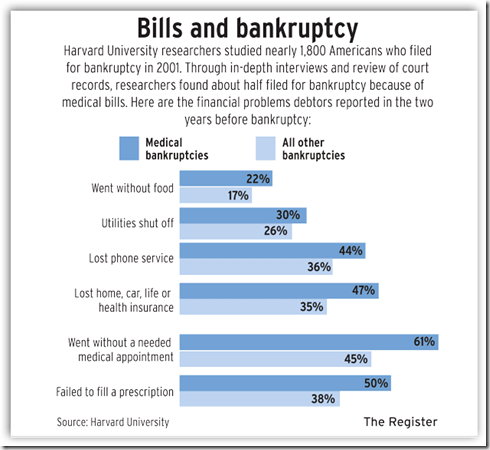
Medical Bills You Shouldn't Pay - The balance billing issue is alive and well

In California we are well aware of this with the recent news with Prime Health Care being challenged on this practice as they have no contracts with the insurers and charge their published rates for out of network care, and the patient is stuck in the middle, but from the other side of the coin, some of the hospitals owned by Prime would not be around today either as Prime kept them from going out of business with the purchase, so we have a nice catch 22 here. 

Patients are in the middle, no doubt, and it stems back to the contracts with the insurance companies on who's going to pay the bill and how much, same old story here and nothing new on this battle ground.  It even gets better with hospitals suing hospitals too, Kaiser recently has been involved in such with other hospitals claiming they are not paying the contracted rates, and so the circle keeps going around.  How does this work out for the smaller hospitals challenging the large not for profit institutions?  Obviously they do not have the cash resources available as do the large institutions, so do some even have the resources to challenge this when they are not being paid a contracted rate?  

Now the labs are also in question with the same, Quest Labs being in the news recently over the same potential issues. 

Where does this all come back to - the insurance business - with all the complicated policies and ways to find loopholes on what to compensate for and what not, who can stay on top of all of this.  You almost need an attorney these days to interpret your policy.  How many pay these balances and don't even question the amount and how many of these bills continue to destroy credit and create additional bankruptcies here in the US?  Many insurance companies though are looking for new horizons in China so in a few years, where does this leave the insurance business here when it is determined the profits are all but gone, something to think about.  Your medication records now are also be scrutinized as reported here.   BD

As health-care costs continue to soar, millions of confused consumers are paying medical bills they don't actually owe. Typically this occurs when an insurance plan covers less than what a doctor, hospital, or lab service wants to be paid. The health-care provider demands the balance from the patient. Uncertain and fearing the calls of a debt collector, the patient pays up.

Most consumers don't realize it, but this common practice, known as balance billing, often is illegal. When doctors or hospitals think an insurer has reimbursed too little, state and federal laws generally bar the medical providers from pressuring patients to pay the difference. Instead, doctors and hospitals should be wrangling directly with insurers. Economists and patient advocates estimate that consumers pay $1 billion or more a year for which they're not responsible.

Medical Bills You Shouldn't Pay

Concerns Over Large Not-for-Profit Hospital System

When you look around, it appears the large Not for Profit folks seems to being doing all the facility expansions, as well as hiring new clinicians, but now some of the practices are being looked at with a bit of scrutiny as the Wall Street Journal discusses.  Some facilities charge up to 10 times more than other facilities in the area.  The questions appear to arise on how much charity work is actually being performed in exchange for tax breaks. 

Large organizations state they need the additional revenue to substantiate taking care of the uninsured and charity cases, but many have some pretty large stock piles of cash, while other facilities are struggling to stay alive, as covered here with some of the Desperate Hospital posts.  image

Other large facilities also have some substantial investments overseas and generate income from branding their names and practices, so where does this leave the smaller community non profits these days?  Venture capitalists are investing in overseas hospitals.  It appears the gap is growing larger every day between the two, and does the quality of health care improve or go the other direction, and there might be an argument here on both sides of this coin.  Just like the small physician's practice is struggling to stay alive today it appears the same is happening to the small hospitals as compensation rates just are not there and the lack of lobbying and political support as well.  In northern California, Kaiser Permanente is increasing in size and facilities and others such as Sutters are concerned about how they can stand to compete. Are smaller community hospitals like small practices in jeopardy of surviving?  BD 

According to the Journal, not-for-profit hospitals, which account for the majority of U.S. hospitals, receive tax exemptions and "are supposed to channel the income they generate back into operations, while providing benefits to their communities." However, not-for-profit hospitals have "come under fire from patient advocates and members of Congress for "stinting on charity care, even as they amass large cash hoards, build new facilities and award big paychecks to their executives," the Journal reports.

Wall Street Journal Examines Concerns Over Large Not-for-Profit Hospital System In Southwestern Virginia

Standards for Clinical Summaries, Labs, E-Prescribing...

Back in June I had posted some information about the use of this technology.  Read the source article for more information on how the hospital is sending information to the Social Security Administration, and there is a simple text example on the page to view as well.  Nice to have an update on the progress! 

This used a secure socket layer transmission, in other words encrypted with digital signatures.  As always, amazing technology and "ahead of the game" technology coming from Beth Israel Deaconess in Boston from Dr. Halamka. 

Also this week they added the Microsoft HealthVault for patients to share medical data with physicians who do not have access to the Patient Site at the hospital.  BD 

"In my role as Chair of the Healthcare Information Technology Standards Panel (HITSP, I've worked with 500 stakeholder organizations to harmonize the standards for clinical summaries, labs, e-prescribing, public health reporting, quality measurement, and personal health records. These standards are now beginning to be implemented widely in the private and public sector since being mandated for Federal procurement in January of 2008. Massachusetts and its hospitals have embraced these new standards and today we're sending thousands of transactions with them. One of our more exciting implementations went live earlier this month - lifetime medical record exchange with the Social Security Administration (SSA) for disability processing.'

Life as a Healthcare CIO: Cool Technology of the Week

David Duchovny Enters Rehab for Sex Addiction

This is a strange story of sorts as the fictional character and actor in real life seem to have the same issue, perhaps something the psychologists or others in this field might reflect on.  BD 

David Duchovny, who plays a sex-obsessed character on Showtime's "Californication," has entered a rehabilitation facility for sex addiction.

ABC News: David Duchovny Enters Rehab for Sex Addiction

Stanbio wins FDA approval on medical device to draw blood

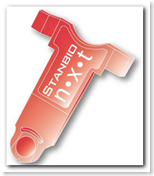
It looks like the process of giving a blood sample is going to get a little easier for the patient imageand perhaps more efficient for the technician, and no air bubbles as well.  Just from looking at the picture it appears this is an entirely new design as well. 

Stanbio products are already widely used by physicians, hospitals, blood banks, etc.  BD 

Stanbio Laboratory LP has received clearance from the Food and Drug Administration for a new blood-testing device. The HemoPoint H2 n"x"t Microcuvette requires only a small amount of blood and fills faster than other cuvettes on the market, Stanbio officials say. A cuvette is a container that technicians can use to collect and seal blood samples. Stanbios new  microcuvette also simplifies sample collection and virtually eliminates the possibility of air bubbles becoming trapped in the optical reading window, according to company officials.

Stanbio wins FDA approval on medical device - San Antonio Business Journal:

Stop & Shop Supermarket Chain Goes Hi-Tech

In the near future, are we going to know how to shop?  This is one store who has a partial solution in place.  As posted previously there are carts that you can log in to and accomplish the same without a hand held device.  Would be nice to see some standards here too, as we discuss in health care all the time.  Recently I posted a video from Microsoft and and Johnson and Johnson that shows the future of health care here. 

In doctors offices today we are seeing very similar innovations taking place.  Some of this is already in place with some imagedoctor's offices, and Kaiser is one example with patients now having had access to their health records for the last 2 years and the upcoming integration with the Microsoft HealthVault right in the works.   Log on and update before the next visit to the doctor.

For now, enjoy the trip to the market. BD

Since 2005, Stop & Shop has been quietly deploying Hi-Tech gadgets in a dozen of their locations. Today Stop & Shop has deployed a variety of digital gadgets in 376 store locations.

These digital devices enable customers to weigh their own produce, order a variety of cold-cuts at the deli counter, by using a video touch screen, and pay without the assistance of a cashier.

Stop & Shop Supermarket Chain Goes Hi-Tech

Blue Cross/Blue Shield to buy HMO - Florida

Is this a new sign of the times with the insurers purchasing HMOs?  One thing it will do is bring more under contract with additional services and offices available from the consumer end and the employees of the HMO appear to have benefited with keeping their jobs.  BD 

The area's largest health maintenance organization, Florida Health Care Plans, will no longer be affiliated with the area's largest health care provider. Halifax Health's board unanimously approved the HMO's sale to BlueCross BlueShield of Florida on Thursday.

The long-rumored, $85 million sale of the nonprofit health care provider is expected to be completed sometime between November and the end of December. The deal will not have any immediate effect on existing contracts and policies, either for its members or contracted doctors, officials said...The system will realize about $45 million in revenue after debt attached to the HMO is resolved. The board of BlueCross BlueShield approved the deal Wednesday.

Front page news - newsjournalonline.com

Surgery By Numbers - Glowing Cancer Cells

This process has not be tested on humans yet, but coming soon.  The infra red will show the outline of the tumor from a dye injected prior to surgery.

The cancer cells literally glow and radiate on a monitor.  BD 

The problem with cancer surgery, or so we hear, is that it's difficult for surgeons to know if they've removed all of a tumor, imageespecially in late-stage cancers when the edges get indistinct. But a new imaging technology developed at Beth Israel Deaconess Medical Center's Center for Imaging Technology and Molecular Diagnostics in Boston is giving cutters visual cues on just where to aim their scalpels.

The portable FLARE (Fluorescence-Assisted Resection and Exploration) system uses near-infrared light to highlight cancer cells, giving surgeons a "paint-by-numbers" guide that shows the full extent of a tumor. Before surgery, patients are injected with special dyes called NIR fluorophores that target certain cell or tumor types and glow when they are exposed to near-infrared light. (Don't worry, your prostate won't glow orange -- this process is invisible to the naked eye). A detector relays the information to a video monitor, where the glowing cancer cells are overlaid on real-time images of the patient's body. A footswitch allows the surgeon to magnify or change viewing angles during the operation. More advanced versions may allow the surgeon to simultaneously view other systems, like nerves and blood vessels.

Surgery By Numbers | Popular Science

Seattle fund bankrolls Asian private hospital chain

More money going overseas to help grow a hospital chain and yesterday I had posted about the big medical institutions here having investments overseas, in other words branding facilities with names that are highly accredited here in the US. 

It appears that more US investors are looking outside of the US healthcare industry for lucrative investments.  BD 

A Malaysia-based hospital operator run by Seattleites and backed by local investors says there's money to be made by treating India's upwardly mobile to American-style health care. And it's betting big bucks on it. Columbia Pacific, a Seattle investment firm, said it has raised $135 million to go after the Indian market. Its Asian venture, Columbia Asia, has 13 facilities in Malaysia, India, Indonesia and Vietnam and expects to have 39 by the end of the decade, more than half in India.

The company's growth is in part driven by the expansion of private health insurance in Asia. About 70 percent of the company's revenues come from insurer payments, Evans said.

Business & Technology | Seattle fund bankrolls Asian private hospital chain | Seattle Times Newspaper

Desperate Hospitals - New York, Texas and California (More)

 In Forest Hills, New York

This hospital just emerged from a 3 year bankruptcy and hopes to have a plan in place before a September 30th deadline closing takes place.  BD

The State Health Department is reviewing the latest proposal for revamping services at embattled Parkway Hospital in Forest Hills and hopes to make a decision on the plan early next month, a department spokeswoman said this week. Meanwhile, a Sept. 30 deadline for closing the 251-bed facility remains in place, said spokeswoman Claire Posposil. In a 2006 report, the Berger Commission - a special panel that evaluated the fiscal condition of health care facilities across the state - recommended that Parkway be closed. The hospital emerged from a three-year bankruptcy in late February. "We still hope to remain an acute care facility but we presented a restructuring plan to the state in conjunction with the closing plan," said hospital spokesman Fred Stewart.

In Lubbock, TX

This hospital is up for auction and hopes for a new owner soon.  BD 

A Lubbock hospital that filed for bankruptcy back in May is now up for auction, but despite the financial trouble, employees at Highland Hospital are still surprisingly optimistic.

Highland Hospital filed for bankruptcy in May, and hopes to have a new owner soon.

"We do anticipate that Highland will have a new owner September 5th, and it's a very positive move for the community and the facility here," said Director of Operations Rodney Meeks. 

In Brooklyn, NY

Closing the maternity ward and selling 2 buildings to hopefully avoid bankruptcy.  BD

Stanley Brezenoff, president of Continuum Health Partners, the parent company of Long Island College Hospital, said Wednesday that the obstetrics service was being closed and the two buildings sold in an effort to pay off tens of millions of dollars in operating and capital debt that might otherwise force it to declare bankruptcy.

Mr. Brezenoff said that delivering babies was the biggest money loser at the hospital, as at many hospitals, because of low reimbursement rates and high premiums for malpractice insurance. “Our decision to take this step is not a happy one,” he said.

In Sebastopol, CA

Received a loan to help the facility emerge from bankruptcy.  BD

Last week, the county Board of Supervisors, on a 4-0 vote, agreed to loan Sebastopol's Palm Drive Hospital $3 million to help it emerge from bankruptcy.

The loan is great news for the hospital which is a critical part of the region's weakening health care system. The area can ill-afford to lose a major medical facility. With the loan in place, Palm Drive hopes to emerge from bankruptcy within 90 days.

In San Luis Obispo, CA

Bankruptcy from 2002 now finally settling some of the debt 6 years later.  BD

Established in 1941 as the San Luis Medical Clinic, Mission Medical at one point had 55,000 patients on its books and 11 offices around the county. In 2000, 28 local doctors purchased Mission Medical from Tenet Healthcare Corp., the owner of Sierra Vista Regional Medical Center in San Luis Obispo and Twin Cities Community Hospital in Templeton.

In Texarkana, AR

Employees received checks that had no money behind them.  BD 

A bankruptcy judge described the distribution of worthless paychecks to former Living Hope Psychiatric Hospital employees as reckless at a hearing Thursday in Little Rock.
U.S. District Judge James Mixon of the Western District of Arkansas also ruled that Kimbro Stephens, the hospital’s head of operations, didn’t have standing to request that the former hospital’s bankruptcy lender, Northern Healthcare Capital of New York, be forced by the court to fund the payroll.

VC Funding for Biotech Companies Withering?

Is Biotech risky business?  I think we can all agree due to the research and development and the unknown areas as far as predicting a winner can be close to a roll of the dice at times.  The bar has risen a bit today to secure VC funds no doubt and then we still hear about the failed trials.  The good news part of this though is that Pharma also has an interest, so there's a potential second alternative, but again, it's back to research and development and the hope of a success. 

One thing for sure, we wouldn't have many of the breakthroughs today in medicine if it was not for the backing of the venture capitalists who have enjoyed success at various levels.  BD 

Significant changes occurring in the global economy, in general, and venture investing, in particular, have finally caught up with venture capital (VC) support for biotech companies. Despite an abundance of funding as well as scientific and technological progress, the environment for investing in the life science industry seems to have changed dramatically.

For example, the first quarter of 2007 enjoyed record highs in venture investments in biotechnology, medical device, and healthcare firms. In fact, average investments in these areas maintained nearly the same levels through the end of the first quarter of 2008.

One factor behind these changes is that biotechnology investments, like most venture capital investments, are inherently risky. In today’s uncertain economic climate, many investors are opting to sit out and wait for more certainty in the market before they invest.

The money is still there but it is going to be harder for biotechnology companies to obtain. This is particularly true given the increased competition for investment with medical device and equipment companies as well as new competition from biofuels and alternative energy companies for investment dollars.

Article : VC Funding for Biotech Companies Withering Genetic Engineering & Biotechnology News - Biotechnology from Bench to Business

Generic Drug Resources - Thanks to the Palm Beach Post and the Chicago Sun Times for helping spread the word...

I have posted this here before, but the $4.00 Generic Resource listings are a good all in one place to find what drugs are imageoffered by the retailers at the discounted price.  I appreciate the papers also spreading the word to others.   Reuters was the first to circulate and the 2 other papers added the listing this week. 

This is a good area for anyone, physicians and patients alike to search as it is all in one place and saves having to navigate each site individually as the links go direct to the listings.  There's also a direct query in the same spot to Epocrates to locate information on any drug, again all in one spot, so save yourself some time in navigating the web!

And there is even a Google search there too!  Anyway, some shortcuts that will save time and cut the search efforts down to a minimum.  If you are coming here to read, take advantage of the other resources listed here too! 

image

image

Science Roll Medical Research - Resource and Time Saver

This is another resource that might be helpful with some quick searching capabilities.  In this sample, I'm going to use diabetes as a search.  A nice word of thanks goes out to Science Roll for putting this together

image

The next section goes to Science Roll's search selection and from here you can see the sources it is mining on the web.  Included are the Mayo Clinic, Cancer.gov, WebMD, Clinical Trials, Medscape, Medgadget, and more.  These are some of the most commonly searched sites on the web for medical information, so now they all come together here on one search.  Science Roll and Medgadget are also blogger listed here under the Blog Roll. 

image

The next page shows 238 results from mining all the sites. 

image

Also notice the "tree section" on the left with the plus signs.  To expand any one of these sections, click on the plus sign to see more.  By clicking on Health we have opened additional resources here.

image

Next I chose cardiovascular and have been provided links to 2 studies as relates to diabetes.

image

Then I returned to the main menu and selected by dates and have a selection of several articles to choose from, including a couple posted on the web today. 

image

When looking for healthcare information this can also be a shortcut to help you mine several resources at once that you might be trying to find separately.  This is just one more resource on the site that might end up saving some valuable time in searching the web. 

Who is the "Medical Quack"

Ok, this has been a long time coming, but recently I have received several requests and emails to give myself a profile, well I have one on there, which is a "LinkedIn" professional account, but now for something completely different, to quote an old saying from Monty Python!

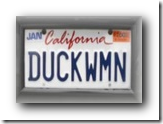
The name "Medical Quack" for this blog took some real thought along the line, so let me explain a bit.  First of all this is a medical blog, so I thought medical had to be in there somewhere along the line, so thus the first name.  Now for the second part, I am not a clinician so I have to be somewhat considered a "quack" of sorts, as my background is from the technology side of things, software, servers, etc. helping the medical community get their data together as I say.  So how else does image "quack" fit in there?  My real last name is Duck, so that pretty well sums it up, the basis for naming this blog.  The mystery has been solved. 

When you go through life with the last name of Duck, it's not always easy at times.  I have heard every duck joke there is at least 100 times, but I love all of them.  You also find other individuals with names from the "critter" variety.  I have a good friend in the pharmaceutical business with a "critter" type last name and let's just say this, folks always ask us if we both support the college teams from Oregon, so enough said there and you can read between the lines to figure that one out.

I have not been a life time healthcare individual, rather I spent over 20 years in outside sales with Fortune 500 companies before making the jump.  Sometimes it's necessary to re-invent oneself, but now that I know how difficult it can be, I might have had second thoughts, but the deal is done now, so healthcare is stuck with the Quack. image
Around 10 years ago I learned how to program and write code and worked with a local family physician to create an electronic medical records system, as we could not find one that would fit the "bill" (duck humor).  That was also back when things in software were much more primitive and simple.  It was not a simple job though as it started out with one module and one back end and grew to 4 front ends and 2 back ends for the entire process, thus it was a good learning experience in not only learning how to write code, but also the overall education in healthcare for me that took place during that time.

The process was interesting, as we had some knock down drag outs over the creation of the program between the doctor and myself, but it all eventually would come together.  He would want things to happen that perhaps I couldn't do, or was not educated enough to provide yet, and on the other hand I would create something that I thought was a "killer" function, and yet when he went to put it in to action, if failed miserably!  Moral of that story was what looks good to the programmer is not always good for the end user and I learned that one pretty quickly, but it also educated myself in the fact that it is really teamwork that has to drive any healthcare software applications.  Sometimes though I did have some good ideas that I presented 2-3 times though and then finally the cave in was on the other side, but again, working together with both creative processes from each side was the trick.

Shifting gears for anyone in technology is something to address or at least it was and still is for me.  You almost have to figure out which hat you are wearing for the day.  In other words, at the beta office I would never install and train on the same day, especially when trying to add some new functionality to the system, as when in deep thought I could easily bite someone's head off with an interruption or someone just wanting a short chat, as an interruption could cause me to knock the whole system down, and nobody wanted that, so we would all know what hat I had on for the day. image

Now this also goes back before everything was so highly integrated as we have today, so everything was on one enclosed system within the office.  As technology has grown today, there is no way one small person can write, develop, sell and maintain multiple systems for MDs, it takes a teamwork effort of developers, thus it was time for me to change directions a bit and focus on consulting, for those companies who have the teams of developers that create the systems we used today, but the growth period and learning process of the past helps me in everything I do today.

I still stay current with Microsoft Technologies in particular since I am what I call a "micro" partner and have been since shortly after they started the program.  There is no way possible that I can digest everything that comes down the line from them, but I do my best to stay current, and that involves attending some Visual Studio conferences, even though I do not still currently write, but I can keep up on the coding and development process that way to better serve clients with information technologies.  Once in a while just to make sure I have a good enough understanding of processes I'll maybe kick out a little sample project, like I did a very simple Silverlight application that will never see the light of day, but just for my own education knowledge. image
Way back, while I was still working in outside sales I heard the calling of technology.  I started out with Windows Mobile way back when they were black and and white (a Casio) and there were not even any thoughts of having a cell phone connected to the unit!  Those were the fun days of big expense accounts, golfing, going to the theater, sporting events, you name it, I went there, entertaining clients, even taking clients for rides on the Goodyear blimp for years.  I had big name accounts like Pfizer, Kawasaki, Linksys, D-Link, Warner Brothers to just name a few so the corporate sales dollars were ringing in pretty big. 

Laker games were one of my favorites as I had a friend who had tickets he sold me when he was not using them and they were right behind the hoop, 2nd row, so one got very spoiled when having seat availability that close.  One short story here though on the Laker games is that I had anywhere from 1-3 clients with me at any game and I was always of course buying the refreshments for the group on the expense account, and one day back at the concession stand, Mr. Nicholson (Jack)was scratching his head after always seeing me back there and asked "where do you find all those cheap s.o.b.s that can't buy their own g** d*** beer!"  That was one of those classic moments, and of course the cheap customers were standing right there and we all had one great laugh over that one and they got autographs. 

image Back on track here, I realized how important organizing your information was, and once I had that PDA tweaked and carried around all my information at my fingertips, I made one huge leap to be at the front of the sales group where ever I was, as there was no wasted time in having to run to the trunk of my car for paper files nor having to waste a customer's time with having to call corporate for information, as it was on the PDA.  Even clients like Sharp Electronics liked it and even though they sold something similar, they were not even using their own technology in house yet.  I see that a lot, even today with companies selling technology, but yet, for some reason they don't appear to be the walking-talking model, which is what sells you and your products.  Walk the walk and talk the talk as the old saying goes. I did that at HIMMS this year, used a tablet pc to work the show, yes, several vendors were selling them, but did they walk around and visit others and use it to take vital notes on conversations they had, I didn't see much of that and felt like the lone ranger. 

I am also very aware though of the fact that when you do things like that, it makes other very uneasy though, as you may not be "cool" but what the heck, it was efficient, and besides that, it made everyone I spoke to feel important as I already had my little One Note Intelligence file ready for notes and had done my homework ahead of time, so the heck with being cool I said. 

When it came time to write a medical records program, all I did was take the same principles that worked for me in sales and brought them to healthcare, in other words have your portable information with you, don't waste time, and that was the correlation between sales and physicians, get that mobile information in your face!  So besides learning how to write the code that makes this happen, I had that underlying conviction and knowledge of a real process that works!  That is part of what gives me my overall incentive to try to inspire all to go paperless and have mobile paperless records, it works!image

I even had some projects that were customized data base operations, such as one I wrote where by it took the information from a software program used by the EBT CT scanner and imported all the calcium scores.  My program drilled down and queried those results, allowing the medical team to stay on top of the high scores, with follow up letters to the patients, the referring doctors, etc. and most of this was all done via a few clicks and was pretty well automated with running a bit of code to import and work the data. 

I am also a gadget person, as those make the world go around today.  I can't imagine not having either my cell phone and/or my tablet pc not with me.  Oh you should see the looks I get when I go in to meetings and I have no yellow paper tablet with me and crank on the tablet, "who's Lucifer over there with that thing", I can almost hear it at times!  But again, as mentioned, new things and technology make folks a bit uneasy so I try to share my enthusiasm, that is if it is there for the taking, but some folks won't go there no matter what you do or say, it's just life.  Well, that's what I used to say, now I tell everyone it's going to cost them money in the long run if they don't listen, and I still get deaf ears and the looks of fear and disgust here and there, but deal with it as best I can, as those folks will always be there in any crowd. 

image Do I like humor around this blog, oh you bet, the more the merrier as healthcare needs some humor to break the ice now and then!  If there's not enough around, I say "why not create some".  I try to be professional as much as possible, but this profile attempt is a a huge break away from tradition if you haven't already that out yet:)

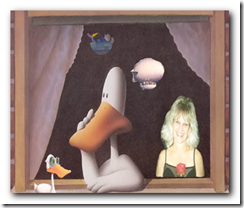
Am I surrounded by ducks, you bet and I felt it was appropriate to include some of my favorites in this post.  For some reason many see fit to give me ducks as gifts, and I love it.  I lost track of how many "duck" articles I have throughout my home, but no doubt when you walk in you know you have entered the "house of Duck".  image
There's a group of physicians over at another site who have put up with me for a few years here and all of us have had a very nice interchange of information, ideas, etc. and if it was not for EMR Update, this blog probably wouldn't exist today.  They got real brave over there and actually turned me in to a moderator, well that is when I feel like being one (grin), as I am also known as the lazy moderator.  There are links on this site to their page and the blog is also syndicated on the site. 

The Medical Quack ends up being more like the "kitchen sink" as I call it for healthcare.  I like to cover just about anything I can that I feel hold interest and try to keep everything at a level for all readers to at least comprehend part of what is being posted.  I get of track once in a while, but shoot, I'm human, and besides it can make for some interesting off topic conversations too at times.  Recently I have enjoyed a few interviews with health care individuals and hope those will continue so I can bring more information to the fold through the eyes of a duck. 
imageOne thing when I started the blog I felt was important was to bring some resources to the page, so in other words, while readers are here on the site, make it easy to find and reference other related material to save time mining and searching the web, so those are on the right hand side of the page.  I have also been very lucky in recent times to have many of my posts on Reuters, the Wall Street Journal and many more.  Bloggers are becoming a real companion for the journalists, who break the stories and we simple filter and add our takes on what we think was really good or important about the article and hopefully spread the word to others, anyway, that's kind of what I think I do around here.  

If anyone has any suggestions I am always open as there is always room for improvement anywhere and again I hope this thing is providing some information and value to the readers.  I sure learn everyday from just reading the the research I do for the articles I post.  If you have any technology questions relative to healthcare, send them on, as if I can't answer it, I will find the source that can.  Oh and please feel free to add humor here with comments too, I like it. 

Anyway, this was a post from the other side and I hope I explained a bit more about why the Medical Quack exists and thank everyone and all for stopping by and linking to the site! 

Barbara