Two probable swine flu cases found in Irvine, CA- Update

The test results should be in soon to confirm.  Neither individual knew the other one and both had recently been to Mexico, so it appears there may be the first 2 cases on the map for Orange County.  image

Also in the news in Boston, Harvard’s Dental School Treatment clinic has been temporarily closed as a precaution as a third year student developed a probable case.  The clinic is tracking down anyone who may have had contact, either fellow employee or students.   BD

From earlier today: 

Swine flu Moving Closer to Orange County, CA – One probable case at Cal State Long Beach

Test results are expected to confirm as soon as Friday that two Irvine men, including an 18-year-old University High student, are the county's first cases of swine flu, health officials said.

The Health Care Agency on Thursday announced the two probable cases: The student and a 26-year-old man. Both young men had recently traveled to Mexico but do not know each other. Neither was hospitalized and the 26-year-old received antiviral medication.

Two probable swine flu cases found in Irvine | health, county, state, officials, swine - Life - OCRegister.com

Related Reading:

Chief Complaint Swine Flu -Video from Mexico
Swine Flu: Dr. Oz Speaks Out and Gives Some Advice and Information
Making Money from the Swine Flu – Shirts and Games Appear on the Web
First Death Victim of Swine Flu in US was visiting from Mexico
Dr. Sanjay Gupta in Mexico – Masks are Everywhere
Global Map to View Swine Flu Alerts – HealthMap for Global Disease
Influenza Tracking Project – Now You Can Talk about it on Facebook

Hospital MRI and Other Medical Devices Infected with Conficker Virus – FDA Required 90 Day Notice before Windows Update Patch Could be Applied

This is an interesting story all the way around.  First of all I hope all the medical devices found were disconnected from the Internet until the FDA gives the stamp of approval.  The manufacturer also said the device was not meant to be connected to the internet, but it was.  Last week in the story about Morgan Hill and the cyber attack, the hospital’s system failed and paper charts were used for a day and they discovered they were more dependent on the outside world and web than originally thought. image

What I find is really strange is the 90 day requirement for patches to be applied from the FDA.  Does the FDA review Windows Patches to make sure the software running the imaging equipment is ok?  That would be the only reason I can think of for this to occur.  There were over 300 similar devices found in hospitals that were infected.  Come to think of it, the last computer in the world one would expect an attack would be from an MRI machine.  Hearings are scheduled to change this law, thank goodness.

The FDA has had their own issues with getting up to date with technology and this somewhat adds one more issue, but this may not be their fault.  With Web 2.0 it could be hard to keep some devices from being connected but again the individual device and use may tell the story better there.   Nice that this was found or we could have experienced the cyber attack of the MRI machine with some potentially ugly images.  BD

A computer worm that has alarmed security experts around the world has crawled into hundreds of medical devices at dozens of hospitals in the United States and other countries, according to technologists monitoring the threat.

The worm, known as "Conficker," has not harmed any patients, they say, but it poses a potential threat to hospital operations.

"A few weeks ago, we discovered medical devices, MRI machines, infected with Conficker," said Marcus Sachs, director of the Internet Storm Center, an early warning system for Internet threats that is operated by the SANS Institute.

Around March 24, researchers monitoring the worm noticed that an imaging machine used to review high-resolution images was reaching out over the Internet to get instructions — presumably from the programmers who created Conficker.

The researchers dug deeper and discovered that more than 300 similar devices at hospitals around the world had been compromised. The manufacturer of the devices told them none of the machines were supposed to be connected to the Internet — and yet they were. And because the machines were running an unpatched version of Microsoft's operating system used in embedded devices they were vulnerable.

"For 90 days these infected machines could easily be used in an attack, including, for example, the leaking of patient information," said Rodney Joffe, a senior vice president at NeuStar, a communications company that belongs to an industry working group created to deal with the worm. "They also could be used in an attack that affects other devices on the same networks."

http://www.mercurynews.com/ci_12257206?nclick_check=1

Hat Tip:  quanta vie

Related Reading:

FDA Testing the Clouds – Disaster Recovery With a Private Cloud

Medicine is a Low Tech Business - Clinical Studies still done on paper too!
FDA Reform Planned
FDA Head: We're Boosting I.T.

Amalga at El Camino Hospital Helping to Monitor the Status of Swine Flu – everyone can use Virtual Earth for Global Tracking

Yesterday I posted about Microsoft Amalga and the New Life Sciences software to be added.  I mention this as the Life Sciences folks are the ones that operate fast and quickly to create custom solutions as needed and with Swine flu, I can imagine they are busy.  Again, I hope to have my recent interview posted soon with Microsoft Life Sciences. 

Microsoft Introduces Groundbreaking Technology – Amalga Life Sciences Software

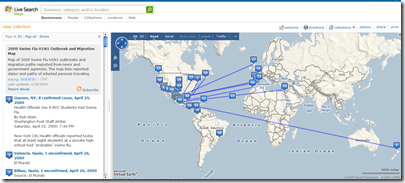
With the outbreak of Swine flu, Virtual Earth also has a mapping program below to track and review the related stories.  You can also subscribe via RSS to follow.  The links are listed below. 

Live Search - Maps Swine Flu

RSS Feed for Live Maps on Swine Flu -Virtual Earth

 image

With Amalga from Microsoft the hospital was able to create a specific reporting feature to stay on top of Swine flu a their facility.  We are basically talking about health care business intelligence capabilities.  With the WHO moving up the global warning on Swine flu, El Camino will be right on top of the statistics they need for reporting and keeping staff informed. 

El Camino Hospital also just recently announced the opening of their Genomics Center which will help in creating and finding cures and treatment plans for patients, personalized medicine. 

Genomics Center Opens at El Camino Hospital – California

In addition to aggregating data, Amalga is also extremely helpful with needed analytical and reporting functions.  BD 

Within a matter of hours, clinicians at El Camino modified a few fields within Amalga to capture information specific to possible flu cases coming through the hospital’s busy emergency room.  The result is a real-time dashboard that is keeping hospital officials appraised of possible swine flu cases at El Camino and will help them respond appropriately should one or more cases be confirmed.  Clinicians are praising Amalga for the solution’s flexibility and the way it can be adapted to meet specific organizational needs as they arise.

Microsoft has announced plans to provide guidance to other Amalga customers so they too can immediately begin using the solution to clip_image004monitor flu activity.  This could prove especially valuable where Amalga has been deployed to gather community-wide clinical data.  One example of that is the Wisconsin Health Information Exchange where more than a dozen emergency rooms in the state are now able to share real-time clinical data thanks to Microsoft Amalga.

HealthBlog : Monitoring the Pulse of a Pandemic

Related Reading:

Electronic Health Records Not Enough – Aggregation and Better Interfaces Needed

Microsoft Research: Research & Programs for Healthcare
Steve Shihadeh, VP Microsoft Health Solutions Group – The Amalga Software Solution for Aggregating Hospital Information (Interview)
Scripps, Navigenics, Affymetrix and Microsoft team on groundbreaking health study – Personalized Medicine
Business Intelligence Provides Support for Difficult Times – Hospitals
Using Business Intelligence to Bring out the Value of EHRs

Microsoft Amalga at Wisconsin Health Information Exchange – Video about their RHIO Solution

Microsoft Amalga Hospital Information System at Bumrungrad International Hospital

Virtua Health Selects Microsoft Amalga – New Jersey

Swine flu Moving Closer to Orange County, CA – One probable case at Cal State Long Beach

This is California, the Long Beach campus gave out masks and flooded with news, but few were wearing them, unlike what we saw in the CNN video in Mexico.  I guess the potential seriousness has not sunk in yet.  Forth Worth, Dallas has shut down the school system for 10 days in Texas.  image

Today, WHO warned of a a global pandemic. 

Also from ABC News:

“Schools in 14 states have shut their doors on more than 160,000 schoolchildren as the nation's swine flu crisis enters its second week.”

And the spread appears far from over. A small cluster of infections appears to be emerging in Washington state. In Washington, D.C., the World Bank issued a statement Thursday morning that a staff member who had traveled to Mexico on business April 14-18 has been "preliminarily diagnosed" with swine flu. The CDC has yet to confirm the diagnosis of the individual, who is a Maryland resident, according to the statement.

You can’t stop living your life, but precautions should be noticed and taken where needed.  BD

LONG BEACH Swine flu moved closer to Orange County on Wednesday as one new case emerged in San Bernardino County and probable cases were reported in Los Angeles and Riverside counties.  The university has set up a hotline to answer students' questions at (562) 985-1460 and is updating its website: www.csulb.edu.

But so far, Orange County has remained swine flu free.

One of the probable cases reported Wednesday involves a student at Cal State Long Beach, who lives in a dorm room and who is recovering from what appears to be a mild illness, school officials confirmed Wednesday.

In an email sent to students and faculty, university president F. King Alexander said the student received a "probable positive" test result from the Long Beach Health Department.  Statewide, the tally of confirmed swine flu cases stayed steady at 14, but the number of probable cases jumped to 29, including two cases in Los Angeles County, four in Riverside County, one in San Bernardino County, and eight in San Diego County, the California Department of Public Health's Gil Chavez reported.

Swine flu closes in on O.C. | county, student, health, cases, swine - Life - OCRegister.com

Related Reading:

Chief Complaint Swine Flu -Video from Mexico

Swine Flu: Dr. Oz Speaks Out and Gives Some Advice and Information
Making Money from the Swine Flu – Shirts and Games Appear on the Web
First Death Victim of Swine Flu in US was visiting from Mexico
Dr. Sanjay Gupta in Mexico – Masks are Everywhere
Global Map to View Swine Flu Alerts – HealthMap for Global Disease
Influenza Tracking Project – Now You Can Talk about it on Facebook

Chief Complaint Swine Flu -Video from Mexico

CNN put out a video showing what it looks like in Mexico, including a hospital and how healthcare professionals are reacting and treating patients.  Hope it doesn’t get to this point here in the US.  As you can see, there’s a lot of confusion too with information and what and what not to do.  BD 

Fear and skepticism on the streets of Mexico have led to panic buying and deep suspicions about the government.

Can officials handle a deadly swine flu epidemic, many people are asking, and are authorities lying about what's really going on?

You can't find a bottle of hand sanitizer or a face mask for sale anywhere in town, said resident Adrian Garrido. He admits to his own panic buying: bottled water, canned goods and powdered milk for his two sons, ages 6 months and 6 years.

Swine flu fears grip Mexico - CNN.com

Related Reading:

Swine Flu: Dr. Oz Speaks Out and Gives Some Advice and Information

Making Money from the Swine Flu – Shirts and Games Appear on the Web

First Death Victim of Swine Flu in US was visiting from Mexico

Dr. Sanjay Gupta in Mexico – Masks are Everywhere

Global Map to View Swine Flu Alerts – HealthMap for Global Disease

Influenza Tracking Project – Now You Can Talk about it on Facebook

Security tightened over data loss – Flash Drives Can be One of HealthCare’s Biggest Nightmares

This even happened in the UK, but it can happen anywhere.  I have seen it here, flash drives lost containing patient information, and sometimes not encrypted either.  Most of the manufacturers today include a menu whereby information can be encrypted, but there are many that do not.image

Why in the world do hospitals and other healthcare agencies still allow unlimited use of these devices?  This is not only a security breach waiting to happen, but also a potential virus or worm infection for the network.  Read the link below on what happened to the Department of Defense, the worm got in via a flash drive!  This is not to say flash drives are not useful by any means, carry your pictures and whatever information you want but encrypt the information if it is valuable, but quit carrying around patient health care information on the drives if you are a health care professional.

Patient information should remain on secured servers and as you read in this story, the drive was found at the car wash, wonderful place for patient records to be laying around.  With a network and Group Policy and the Active Directory, exceptions can be made for those who absolutely need to transfer information in this fashion, but again, that type of data would more or less lend itself to areas outside of patient data, like administration type of files.  There are also flash drives that store access information, so that could be another good use with tokens that need to match as well, but again what I am talking about here are physicians typing up Word documents with vital patient information and carrying them around on a flash drive with no encryption, which should not be done.  An IT department too will have the skills and knowledge as well on how to work with flash drives too and they also set the policies.  One good idea too is to have anti virus software on the drive, again as the DOD learned in a hard lesson in this area.  BD  

Malware attack - Department of Defense

A hospital trust in Cambridgeshire has been ordered to tighten security after a memory stick with medical treatment details of 741 patients went missing.

Cambridge University Hospital NHS Foundation Trust, which runs Addenbrooke's Hospital, was found to be in breach of the Data Protection Act.

The memory stick, which was privately owned, was discovered by a car wash attendant who was able to access the contents to establish ownership and returned it to the Trust.

Three other health trusts have also been found to have breached the Data Protection Act: Central Lancashire Primary Care Trust, North West London Hospitals NHS Trust and Hull and East Yorkshire Hospitals NHS Trust.

BBC NEWS | England | Cambridgeshire | Security tightened over data loss

Related Reading:

It’s Raining Medical Records…They’re Blowing in the Wind
Conficker and Malware covered by CBS 60 Minutes

Microsoft's Tellme Voice Service For Windows Mobile Cell Phones Coming Soon

This is great news for the new operating system for Windows Mobile.  I use a Windows Mobile Cell Phone and already use some of the voice imagecommands available in Live Search on the device.  It certainly makes it easier than inputting all the information via keyboard.  As I understand, the service will be free and have the ability to speak outgoing text messages, nice! 

Additional information can be read at the site.  Just last week I posted about Windows Mobile Units soon being able to provide medical ultra sound imaging.  See the related reading below for the post.  BD 

Microsoft (NSDQ: MSFT)'s Tellme subsidiary is announcing a voice service that will be available to carriers and manufacturers for free for use on Windows Mobile 6.5 this fall. Users will be able to push a button on their phone to activate the service and say things like "Text Steve Jones" and the device would open up the SMS application, create a new message and pre-address it to Steve Jones.

image

The service will allow much more than just that. You can say "Call Mark Smith" and the phone will initiate the call for you. If you have more than one number for him, it will ask you to specify which number (work, mobile, home, etc) to dial. If you said "Pizza in Kansas City" the service would find a pizza place in Kansas City for you through Microsoft's Live search service. image

Microsoft's Tellme Voice Service For Windows Mobile - Mobile Blog – InformationWeek

Related Reading:

Windows Mobile Smart Phones on the Horizon for Imaging Kidneys, Liver, Bladder, Eyes, Prostate and Uterine Screenings

Windows Tags – Bar Coding Information Made Easy from your Cell Phone
XRay Viewing with an iPhone on Microsoft Surface
How To Send Email Text Messages To Any Cell Phone (for Free) from your computer
Kiosks Feature OCR Card Readers, OCR for Cell Phones and Biometrics to read your hand – Medical Records Input methodologies…

Making Money from the Swine Flu – Shirts and Games Appear on the Web

With the way advertising works today and the internet, it didn’t take long for shirts and games to appear.  If you don’t get enough with just the daily news updates, you can now  entertain yourself too.  We just can’t get away from entertaining ourselves it appears, no matter what the topic is.  Perhaps this is a way to relieve stress levels? 

As this article states too, watch out for the spammers on the topic, they are out there too.  BD 

Over the last few days, the TechCrunch tips box has been flooded with pitches from companies looking to capitalize on ‘Swine Flu’, the imagepotentially pandemic disease that is currently freaking out a significant portion of Earth’s inhabitants. Now that everyone is stressing about it, what better time to make a buck, right?

First, there’s Flu Shirts, an online T-Shirt marketplace brought to you by some of the people behind Groopvine. The store has a variety of shirts mocking the current hysteria, emblazoned with taglines like “Maybe the Muslims were right about pigs” and “My dad went to Mexico and all he got me was swine flu”.

Then there’s Swine Fighter a Flash game from the guys who brought you HeyZap. Gameplay consists of clicking on diseased pigs to inject them with something and make them say, “Oink!” The game has done quite well, hitting the Digg front page and seeing over 150,000 game plays in only 24 hours. It also features a handful of guidelines from the CDC, though they’re so far below the fold I suspect very few people actually saw them.

Swine Flu: The New Startup Monetization Plan

California Outpatient Centers Offering 23andMe Genome Service

This shows a clear new effort to help educate patients on what their genetic background could hold in store, and is one more step with bringing personalized medicine knowledge to the public.  This is not a complete sequence, but rather an informative DNA study that can stand to offer information relative to potential areas to keep an eye open for. 

From the website:

  • The latest research on how your genes may affect risk for common diseases and conditions such as heart attack, arthritis and cancers.
  • Explore the genetics of your food preferences, eye color, athletic ability and other traits.
    • When new research findings can be linked to your data, we update your 23andMe account and help you understand what it means for you.
    • When new findings are reported in the media, you can see how they relate to you right away with the help of our blog, The Spittoon.

    You can also participate as a retail customer on your own.  BD 

    NEW YORK (GenomeWeb News) – California's Palomar Pomerado Health will offer 23andMe's genome service at its outpatient centers in San Diego, the companies said today. image

    The direct-to-consumer genomics service company said that the agreement with PPH marks the first time that its Personal Genome Service will be available for sale outside of its website.

    Under the partnership, PPH will offer the service for $399 at two of its retail health centers in Escondido and Rancho Penasquitos, and at the Pomerado Outpatient Pavilion in Poway. Patients at these centers interested in the service will receive a personal session with a PPH nurse practitioner to discuss the PGS service.

    California Outpatient Centers Offering 23andMe Service | GenomeWeb Daily News | GenomeWeb

    Related Reading:

    Are Warren and Jimmy Buffett Related?

    First Death Victim of Swine Flu in US was visiting from Mexico

    The State of Texas is especially on alert with those crossing over the border.  BD

    HOUSTON — A 23-month-old boy from Mexico City became the first person to die of swine flu in the United States after being airlifted two weeks ago to a Houston hospital from the border town of Brownsville, where he had been visiting relatives, officials said.

    The boy had “several underlying health problems,” state health officials said, declining to give details.

    The toddler who died had flown from Mexico City to Matamoros, Mexico, with his mother and siblings on April 3, officials said. The family crossed over to Brownsville that night to visit an aunt, and two days later drove to Houston, where his mother had a doctor’s appointment, said Carlos Cascos, the chief executive of Cameron County, which includes Brownsville.

    Mexican Child Visiting U.S. 1st to Die Here of Swine Flu - NYTimes.com

    Technorati Tags: ,,,

    Dr. Sanjay Gupta in Mexico – Masks are Everywhere

    This is also very interesting what he has to say about the strain, and what makes up the composition.  It is called the Swine flu as that contains 2 parts, but there’s also one part bird and one part human, so it’s a bit complex.  By getting a flu shot, you are being protected against the human side of the virus, but perhaps not the other portions.  His mission is to find out more about why Mexico and more of the origins to perhaps add information that the rest of the world as well as Mexico can use.  BD 

    MEXICO CITY, Mexico (CNN) -- CNN chief medical correspondent Dr. Sanjay Gupta has gone to Mexico, the apparent epicenter of the swine flu outbreak where more than 100 people have died in suspected cases.

    CNN's Dr. Sanjay Gupta, reporting outside a Mexico City hospital, says people can't get swine flu by eating pork.

    image

    With governments scrambling to prevent further outbreak, Gupta appeared Monday on CNN to address people's concerns.

    CNN: We got a question that comes to us over Twitter. This question, "I heard that you can't contract swine flu from eating pork. Is that true? If so, why? Does cooking or curing pork destroy the virus?"

    Gupta: It is true. You cannot catch it from eating the pork. And it is true that cooking it to a certain temperature, around 160 degrees, also inactivates most of the pathogens in the pork as well.

    This particular virus seems to be a combination of several different strains: two strains of swine flu, one strain of bird flu and one strain of human flu. It's the human flu that that flu shot may protect slightly against. So you're protecting against a part of the virus if that makes any sense.

    Gupta: Swine flu affecting people in prime - CNN.com

    Dendreon Day - What Got People More Excited, the Announcement or the Stock?

    A current treatment, docetaxel (Taxotere) has some pretty bad side effects, but Provenge can extend life without the nasty chemo effects.  What imagewas a bit of a big sideline today was watching the stock, it was a real roller coaster, questioned and verified by Nasdaq.  The Wall Street Journal has some of the news here. 

    Motley Fool was upset enough to state that an SEC investigation be pursued.   More from today’s announcement can be read at the website. 

    This is probably one of the most dramatic stories over the last few years on the development of a drug.  There were protests when the FDA denied it’s approval and wanted more information in 2007, death threats and law suits against those who allegedly had conflicts of interest on the FDA panel.  Rallies were staged in Washington, so this is just a very brief recap in a couple sentences.  About this time last year an anonymous backer helped supply some of the funds needed to keep the company going. 

    The company was sued after the FDA denial.  The FDA was sued.  The Care to Live Organization filed the lawsuit against the FDA and other individuals which was eventually dismissed. 

    The company has had nine lives if not more and hopefully it will come to a good conclusion with the FDA when an application for approval is filed. 

    In the meantime, what in the world was up with their stock today?  Some folks I believe lost some big chunks of money.  BD    image

    Suspense has been building for two weeks about just how good Dendreon’s big clinical trial results were going to be, and when the results finally came out today, fans of the company had nothing to be disappointed about.

    Earlier in the day, we reported what readers needed to remember about the context of this trial, and then we reported the most essential facts when the data appeared. A clinical trial of 512 men, called Impact, showed that patients lived a median time of 25.8 months if they got Provenge, Dendreon’s experimental immune-booster, compared to 21.7 months for those on a placebo. This finding represents a 4.1 month advantage in median survival on the drug. The p-value, which tells statisticians whether this might have been due to chance, was 0.032, which is well within the FDA’s threshold to certify the finding as legitimate. Side effects were mostly fever and chills that lasted one or two days after injections.

    The company plans to take its time to scrub through the records from the trial carefully as it prepares to turn in an amended application to the FDA in the fourth quarter of the year, Gold says. The FDA will then have as long as six months to complete its review of the application, he said.

    No Devil in Details: Dendreon Data Stands Up to Scrutiny from Doctors, Investors | Xconomy

    Related Reading:

    One More Reason for Statins – May Lower the Risk of Prostate Cancer and Better Senior Sex Life

    Provenge – the Verdict is Near for Dendreon’s Prostate Cancer Drug
    My Drug is Better than Your Drug – Prostate Cancer
    Prostate Gland grown from stem cell - But Who Would Want One?
    Doctors are backing a wider consideration of prostate drug – Proscar
    Prostate Cancer Drug from OncoGenex, Isis Prolongs Lives - Another Prostate cancer drug Degarelix reduces testosterone levels in as little as 3 days
     

    Global Map to View Swine Flu Alerts – HealthMap for Global Disease

    The site will give a quick visual on where Swine Flu is and has been reported.  This is what it looks like today and lucky folks in Alaska and Hawaii appear to have been spared so far.  Actually from the map you can search the world and check what type of diseases you want to track. 

    For this example, I just chose Swine Flu.  The map is powered by Google.  
    The US leads the way with 65 alerts, Mexico with 26 alerts as of this screenshot.  BD 

    image

    image

    http://www.healthmap.org/swineflu

    What’s a Drug Rep’s Worst Enemy – A Computer, Maybe?

    According to this study, the virtual reps with the e-promotions are turning out to be a bit more popular.  Just like anything else that is on the imagecomputer and internet, it offers the physicians the ability to intertwine at their convenience.  A few years ago at several meetings I attended at Microsoft we talked a lot about this, virtual meetings, and now it is coming to pass, but the computers don’t have samples though, but those could also be delivered by a non drug representative via a parcel service too.  No matter what it is today, it’s getting harder to find time for people to find time for people.  BD  

    Look no further for more evidence that humanity is getting a little too, er, enamored with the internet. According to a study of pharma e-promotions, almost three-fourths of doctors said they'd just as soon talk with a computer than with a drug rep--and some even preferred the computer.

    If this study is to be believed, it's clear why e-promotion is on the move. More than two-thirds of physicians said they had a positive attitude toward this type of interaction with drugmakers. Perhaps that's because they could do so at their leisure. Almost 70 percent said they did their e-promos in the evenings. Or perhaps it's just because they don't have to make conversation.

    News flash: Docs like e-promos – FiercePharma

    Microsoft Introduces Groundbreaking Technology – Amalga Life Sciences Software

    There’s quite a bit going on this week, and one expo in particular is the Annual Bio-IT Conference.  Today, Microsoft announced Amalga Life Sciences Software.  The press release and early adapters follows below.  Additional Information can be read at the Bio-IT website.image
    Yesterday, the site spoke about Trialx and being able to Tweet for Trials.  

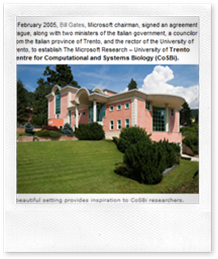
    I have an up and pending interview with Mike Naimoli, a biopharmaceutical scientist and the Director of Life Sciences for the US Region for Microsoft that should also be posted here soon too.  The Microsoft Trento Centre is listed is as an early adapter and you can read more from one of my previous posts here about the center in Italy.  They use Algorithmic systems biology to benefit both worlds with a new breed of scientists.

    Microsoft Research Trento Centre: Biology and Computer Science Coming Together

    What I learned with Life Sciences is that most hospitals or other health organizations are only analyzing 3% of the available data, thus there’s a lot of unused valuable information being left ton the the table.  When you bring this additional information into Clinical Trials, it can not only speed up the process but with drug development potential side effects and other elements are identified at a much faster pace, and I have to say this too, it will end up keeping some of the cost in line, maybe not cheaper, but perhaps a bit more predictable.

    The Fred Hutchinson Cancer Research Center is right on the list and an early participant with Microsoft Life Sciences and more can be read below.  The “Concept Brower” allows the creation of “what if” situations to explore and analyze.  BD 

    Press Release:

    Fred Hutchinson Cancer Research Center among early adopters of Microsoft Amalga Life Sciences.

    BOSTON — April 28, 2009 — At the Bio-IT World Conference & Expo, Microsoft Corp. introduced Amalga Life Sciences, a new software system designed to transform healthcare and life science research data into the critical knowledge needed for the discovery of new personalized treatments. Microsoft Amalga Life Sciences helps organizations across the life sciences spectrum achieve the next level of research capability by connecting data and investigators in new ways through novel storage capabilities, ontology management functions and a semantic query environment powered by a next-generation reasoning engine.

    “Our researchers face an overwhelming challenge to collect, analyze, interpret and share complex data from a wide range of diseases and experiments,” said Lee Hartwell, Ph.D., president and director, Fred Hutchinson Cancer Research Center, and 2001 Nobel Laureate. “We look forward to exploring the potential of Amalga Life Sciences to help us understand this data in a rich and efficient way and ultimately help us meet our vision of enabling personalized medicine.”

    Amalga Life Sciences is designed to manage and analyze heterogeneous experimental and operational research data. The Amalga Life Sciences “hybrid store” manages both simple and complex data, including experimental protocol descriptions and higher-level knowledge representations, giving organizations the opportunity to manage and redesign processes to increase productivity, improve decision-making and reduce errors. In addition, Amalga Life Sciences interfaces with existing and future systems as an open and active software system. This unique system allows life science organizations to provide their investigators with a research environment that assists the scientific investigation and validation of clinical and biological systems.

    “The current nature of multidisciplinary research and operating models has led to a research IT landscape that lacks seamless integration and extensibility of data, expresses clinical knowledge inconsistently, and operates on incomplete biological knowledge described by different research contexts,” said Jim Karkanias, senior director of applied research and technology, Microsoft Health Solutions Group. “At its core, Amalga Life Sciences is designed to overcome these issues and enable research organizations to implement new models of research and development for personalized medicine.”

    The evolution of current research IT systems has generated a data-rich but knowledge-poor environment. Amalga Life Sciences transforms the disconnected data into a network of information so that its novel reasoning engine may assist investigators to identify direct and indirect relationships between biological and clinical concepts and therefore convey knowledge.clip_image004

    Amalga Life Sciences features a “Concept Browser” for the Unified Medical Language System (UMLS) ontology, which enables the user to input and connect multiple concepts via their ontological relationships. The user may choose to connect via all possible connections, to select the depth of connections or to display only the shortest path. The output is displayed to the user as a visual network of concepts and relationships. Once the data is accessible and manageable, subject matter experts can then apply models and theories to data, identify the best solutions to complex problems, and predict new relationships.

    Part of the Microsoft Amalga family of enterprise systems, Amalga Life Sciences incorporates the innovative core technology components of Amalga Unified Intelligence System 2009, announced April 6. These core technology components include the ability to integrate data from many disparate systems throughout the organization. Amalga Life Sciences is on display April 27–29 at Bio-IT World in Boston.

    About Microsoft in Health

    Microsoft is committed to improving health around the world through software innovation. Over the past 12 years, Microsoft has steadily increased its investments in health, with a focus on addressing the challenges of health providers, health and social services organizations, payers, consumers, and life sciences companies worldwide. Microsoft closely collaborates with a broad ecosystem of partners and develops its own powerful health solutions, such as Amalga and HealthVault. Together, Microsoft and its industry partners are working to advance a vision of unifying health information and making it more readily available, ensuring the best quality of life and affordable care for everyone.

    About Microsoft

    Founded in 1975, Microsoft (Nasdaq “MSFT”) is the worldwide leader in software, services and solutions that help people and businesses realize their full potential.

    Note to editors: If you are interested in viewing additional information on Microsoft, please visit the Microsoft Web page at http://www.microsoft.com/presspass on Microsoft’s corporate information pages. Web links, telephone numbers and titles were correct at time of publication, but may since have changed. For additional assistance, journalists and analysts may contact Microsoft’s Rapid Response Team or other appropriate contacts listed at http://www.microsoft.com/presspass/contactpr.mspx.

    Additional information below on the early adapters….


    Microsoft Amalga Life Sciences
    Early Adopters and References

    April 27, 2009

    David H. Murdock Research Institute (DHMRI), Kannapolis, NC

    Overview: The David H. Murdock Research Institute was established as a nonprofit organization to support groundbreaking research at the North Carolina Research Campus. Funded through a private grant by David H. Murdock, the DHMRI, with its state of the art facilities and capabilities, was established to be the catalyst in the development of NCRC as a world class research park. DHMRI and NCRC will host the world’s leading scientists to promote a level of unprecedented scientific collaboration and public-private partnerships never before possible in the areas of agriculture, nutrition, and human health.

    Use Case: For the DHMRI, Microsoft Amalga Life Sciences will enable scientific discovery across the DHMRI’s multidisciplinary life sciences research environment. The DHMRI is unique in the scale and diversity of research that will be conducted in its 11+ Core Laboratories spanning ‘omics sciences, microscopy, clinical discovery and more.  Each laboratory is expected to produce complex data, varying in size (up to several petabytes per lab) and format. Amalga Life Science will help scientists better understand the context of their data, turn it into meaningful information and use it to validate new discoveries. Microsoft Amalga Life Sciences will facilitate information integration of structured, semi-structured, and unstructured data supporting data acquisition, storage, analysis, inference and publication. By bringing complex information into context, the DHMRI’s researchers will use Microsoft’s Amalga Life Sciences technologies to promote collaboration and novel interpretation of health, nutrition and agriculture in the life sciences. 

    Quote: “To carry out the mission of our institution, we have to employ flexible, practical and clever IT solutions. Microsoft will play a vital role in helping us achieve our goal at the DHMRI. We expect Amalga Life Sciences will provide an agile infrastructure that will optimize the user experience for our staff working on the front lines of scientific research.”

    “We can’t afford to introduce unnecessary complexity into our research environment at the DHRMI. That’s why we’re looking to Microsoft and Amalga Life Sciences to contribute with new methods for analyzing data, promoting collaboration in support of turning information into science, and helping us become the fulcrum of nutrition and life sciences research.”

    Dr. Kenneth E. Russell, Chief Information Officer, David H. Murdock Research Institute

    Contact: Randy Allen, Ph.D., Director of Business Development, (704) 250-2602

    Fred Hutchinson Cancer Research Center, Seattle, WA

    Overview: At Fred Hutchinson Cancer Research Center, interdisciplinary teams of world-renowned scientists and humanitarians work together to prevent, diagnose and treat cancer, HIV/AIDS and other diseases. The organization’s researchers, including three Nobel laureates, bring a relentless pursuit and passion for health, knowledge and hope to their work and to the world. For more information, please visit www.fhcrc.org.

    Use Case: Machine-assisted generation of hypothesis-driven associations between clinical and experimental data. The FHCRC and Microsoft collaboration will drive the progress and development of an innovative software platform for life science researchers. The collaboration will bring together the world-class domain expertise of FHCRC scientists and the power of Microsoft technologies to integrate, visualize and generate novel hypotheses from cancer research data.

    Quote: “At FHCRC, our researchers face an overwhelming challenge to collect, analyze, interpret, and share complex data from a wide range of diseases and experiments. We look forward to exploring Amalga Life Sciences  to see if it can help us understand this data in a rich and efficient way and ultimately help us meet our vision of enabling personalized medicine.

    Lee Hartwell, Ph.D., President and director, Fred Hutchinson Cancer Research Center; Professor of genome sciences and adjunct professor of medicine, University of Washington School of Medicine; American Cancer Society Research Professor of Genetics; 2001 Nobel Laureateimage
    LineaGen Inc., Salt Lake City

    Overview: LineaGen, Inc. is a Salt Lake City-based specialty diagnostics company that provides innovative tests and services for the earlier and more informative diagnoses of Autism and Multiple Sclerosis. LineaGen will provide diagnostic testing services through a CLIA-certified laboratory, including proprietary tests discovered and developed as a result of LineaGen’s core genetic research programs as well as current standard-of-care tests. Integrated with LineaGen’s laboratory testing will be value-add services including comprehensive, personalized interpretation of test results, secure electronic communication/web portal for reporting and client queries, clinical and genetic counseling for patients, their families, and their physicians, and consultation/advocacy for third-party payor reimbursement.

    Use Case: LineaGen will collaborate with Microsoft and Navigenics to create an unprecedented resource designed to aid in the understanding of how genetic variation contributes to human health and disease. The collaboration will ultimately collect and evaluate the genetic and health information from millions of individuals, and perform interventional trials to improve the effectiveness of preventive health strategies. Preventive health strategies include efforts to effect behavior change, improve health and wellness, improve drug compliance, and to reduce disease burden based on genetic risk data. LineaGen provides a collection of unique genotypic and phenotypic assets, which will initially enable the collaboration to establish a unique foundational resource that will grow over time.

    Quote: “We are very excited to collaborate with Microsoft and Navigenics to deliver a large-scale, innovative platform for understanding the linkages between genetics and disease, and to delivering this understanding as novel products and services in the personalized health care market. Combining our expertise and technology assets, we will uncover patterns in health and genetic data whose outcomes will make an impact on the ability of individuals to manage their personal health and wellness more effectively.”

    Michael Paul, Ph.D., LineaGen President and CEO

    Contact: Alex S. Lindell
    Director, Business Development
    LineaGen, Inc.
    801.931.6200    |  Main
    801.931.6207    |  Directb
    alindell@lineagen.com

    Microsoft Research - University of Trento Centre for Computational and Systems Biology (CoSBi), Trento Italy

    Overview: CosBi is a non-profit limited liability consortium shared 50 percent by the University of Trento and 50 percent by Microsoft Research Cambridge. CoSBi’s primary goal is to perform research activities and develop specific languages and mechanisms of modeling, analyses and simulations in the fields of medical science, biology, bio-information and complex systems in general. The Centre principally focuses on research in the field of innovative computer science technology in interdisciplinary fields.

    Use Case: The CoSBi and Microsoft collaboration will drive the progress and development of Amalga Life Sciences to assist the interpretation of biological systems using process calculi-based conceptual and computational tools developed by CoSBi. Using the DataNet storage of Amalga Life Sciences to persist models of biological systems, CoSBi will apply algorithmic systems biology by using the BlenX programming language to demonstrate how to move from solvable to executable models of biological systems.

    Quote: “We are excited to collaborate with Health Solutions Group on their latest product offering, Amalga Life Sciences.  The collaboration is an excellent opportunity for CoSBi and Microsoft  to push the boundaries of Systems Biology. By using the Amalga Life Sciences, we will be able to persist our  models of biological systems and apply the BlenX language to specify workflows that predict the behavior of multi-level, multi-scale biological systems in a modular, compositional, scalable and executable manner in a way not possible before.”

    Corrado Priami, President and CEO of the Microsoft Research - University of Trento Centre for Computational and Systems Biology

    Related Reading:

    Microsoft’s Growing Push into Life Sciences
    Microsoft Research: Research & Programs for Healthcare
    Steve Shihadeh, VP Microsoft Health Solutions Group – The Amalga Software Solution for Aggregating Hospital Information (Interview)
    Genomics and Silverlight from Microsoft working together for Great Visual Enhancement– BioMashUps

    Microsoft CRM Integrating with ZoomInfo – Microsoft Dynamics Platform for Healthcare

    Scripps, Navigenics, Affymetrix and Microsoft team on groundbreaking health study – Personalized Medicine

    BusinessWeek – Medical Device Award Winners

    One product mentioned in the winner’s circle is Merlin.  You can do a search of the blog as I have several posts relative to the product from St. Jude.

    St. Jude Medical Announces FDA Approval of New Features with Merlin for Implantable Cardiac Devices

    St.Jude Collaborates With Microsoft HealthVault

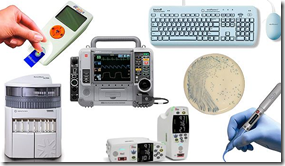
    Check out some of the other devices, click on the image below to see more.  Several of the products have been mentioned on this blog too in the past.  Also note, the mention of how many of the devices now connect with personal health records, that makes it easy for data input, in other words no typing.  BD 

    “Each year, the Medical Design Excellence Awards (MDEA) celebrate new products that improve our health and quality of life. Judges base their decisions on criteria that include the innovative use of materials, the user-related design features of a product, and aspects of a design that improve a company's own bottom line.”image

    Cardiac medicine is moving to the home: An implanted electronic device constantly monitors a patient's well-being. Software makes a potentially life-saving prediction and, through a wireless network, alerts the doctor to the urgent problem. The device adjusts treatment as ordered by the physician on the other end.

    Such wireless networks, known as telehealth or remote patient monitoring, are not only advancing care, they're turning into marketing tools that companies can use to sell surgeons on their pacemakers and other implanted cardiac devices (ICDs). The pitch? Home-monitored patients should have fewer health problems, but only those with compatible implants can sign up for each provider's service.

    The new software can combine hundreds of measurements taken from medical devices with other information stored in electronic health record databases such as Microsoft's Health Vault (MSFT) and Google Health (GOOG) to predict changes in a patient's health. St. Jude, based in St. Paul, Minn., says the system also has better doctor alerts and comes in more languages. The network is a free service to those with enabled devices.

    (On Apr. 7, the Merlin products won a Medical Design Excellence Award; to see other winners click here.)

    Medicine's Next Big Battlefield: Your Home – BusinessWeek

    Related Reading:

    Steve Shihadeh, VP Microsoft Health Solutions Group – The Amalga Software Solution for Aggregating Hospital Information (Interview)
    Patients can view, share health information through new Health Record Banks - Washington
    Microsoft HealthVault and RelayHealth (McKesson) to Connect Doctors and Patients
    3D Multi Touch Application for Heart Surgeries – Microsoft Surface and HealthVault
    One More Good Reason for PHRs and EHRs – Temporary and Mobile Healthcare Workers
    American Heart Association and Microsoft HealthVault Unite
    Google Health Online Services – Connections Beyond Medications – Personal Health Records

    Study Predicts Big Savings from PHRs (Personal Health Records) – Best Kept Secret in Healthcare?

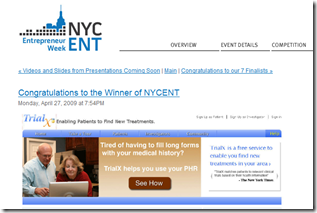
    Tweeting for Trials – TrialX Wins New York Entrepreneur Week Venture Competition Award

    I have been somewhat following this company since they started out, and at that point were questioning if there was in fact a market for this type of product, and I think we have the answer now, of course there is.  I also have their widget on my blog for a quick and easy look up for clinical trials. Here’s a link to a prior post that explains more.

    Use Twitter to Find Clinical Trials – TrialX.Org

    Also, this week the company was the winner of the New York Entrepreneur Week Venture Competition Award.  I have tried the Twitter service and it works quite well and is great for a quick look up.  Obviously, having the match with your PHR records in Google Health or HealthVault is the real charm for a concise match and the ability to connect with an investigator too.  The related reading below has many links that give additional details on how it works.  Personal Health Records are the future and until every health care facility is connected, consider a PHR the best back up you could ever have relative to your health records.  BD 

    image

    April 27, 2009 | Yet another patient recruitment tool has just been released by New York-based Applied Informatics. But this one is a “do-it-yourself” platform that moves the search for clinical trials onto social media sites like Twitter. It also allows would-be subjects with a personal health record (PHR) in Microsoft HealthVault or Google Health to import the information in lieu of filling out an online pre-screening form to be matched for trials.

    image

    “Eighty percent of consumers who are online are searching for health information,” says Sharib Khan, co-founder of the new TrialX platform. As many as two million of them are looking specifically for clinical trials or new disease treatments. They frequently discover sites like ClinicalTrials.gov, the massive registry of the NIH, but can quickly get overwhelmed trying to sort through the listings to find a few potentially suitable trials.

    TrialX is likewise designed to “empower” investigators who lack the budget for newspaper and radio ad campaigns, the time to field a lot of “false positive” calls, and the know-how to develop their own trials website, says Khan. TrialX gives them a single place to create a profile of their site and trials, receive legitimate leads, communicate directly with those prospects, and get performance reports on the resulting activity – all for between $99 and $299 per month per trial. The fee excludes marketing of their trials on Google, triggered by specific keyword searches, which can cost as little as $1 a day.

    http://www.bio-itworld.com/news/2009/04/27/twitter-patient-recruitment.html

    Related Reading:
    Clinical Trials in the US – Begin involving the physicians and patients at the point of care to achieve greater success and participation with Personal Health Records
    Clinical Trials in the US Running Low on Patients – Need to Integrate EHRS and PHRs in the Process
    TrialX.org – Clinical Investigator Sign up Now Available – Integrates with HealthVault and Google Health PHRs to locate available clinical trials based on health records
    Clinical Trials and Personal Health Records – New Resources on the Medical Quack
    Clinical Trials in the US – Begin involving the physicians and patients at the point of care to achieve greater success and participation with Personal Health Records
    HealthVault Personal Health Records gets a Facelift - Match records and find clinical trials

    Belly dancers Rally for Better Health Care in Seattle

    They have to usually find their own private insurance plans, hope the weather was nice that day.  BD 

    Small rallies in favor of a national health care system took place across the country today. image

    Seattle's event was called "Shake it up for Single Payer," and was held outside the federal building Monday April 27th. The rally was organized by local belly dancers who say they often pay out of pocket for medical insurance.

    "Largely, artists don't have health insurance because most people get their health insurance through their employers and artists work for themselves and so quite often it's difficult," said rally organizer and belly dancer Carolyn Stirling

    Seattle belly dancers call for health care shake-up - MyNorthwest.com

    Influenza Tracking Project – Now You Can Talk about it on Facebook

    If you have the flu, Swine or otherwise and want to talk about it to help researchers, here’s the place on Facebook.  Information will be tracked by your IP address.  You can even participate if you don’t have the flu too, just remember who reads all of this and mines the information, everyone.  BD 

    At the National Institute for Health Innovation at Auckland University, we’re running a new research project looking at using Social Media to track flu symptoms. We’ve written an application for Facebook that allows users to input whether or not they have flu symptoms. We’ll then track the users over the weeks to see how long their symptoms last and track their location by IP address.

    image

    If you have time to be part of the study, please sign up at:

    http://www.facebook.com/apps/application.php?id=109377110444

    Facebook Influenza Tracking Project « Health Informatics Blog

    Johns Hopkins Health System Acquires Suburban Hospital – Bethesda, MD

    The Suburban Hospital location is right across the street from the NIH, so this is probably a very good strategic move with the relations the hospital currently has with the NIH.  BD 

    The Johns Hopkins Health System Corporation said yesterday that it will acquire Suburban Hospital in Bethesda, converting the Montgomery County hospital into a Hopkins subsidiary.

    The new relationship will give the $4.5 billion Hopkins system a greater presence in the Washington region and closer proximity to the National Institutes of Health and its millions of dollars in research funding. Suburban is across from NIH, on Old Georgetown Road.

    Suburban's patients and medical personnel will have easier access to Hopkins personnel and facilities. The Baltimore-based organization has one of the nation's leading medical schools, an extensive research faculty and a sprawling hospital system that includes Howard County General Hospital in Columbia.

    Johns Hopkins Health System Acquires Suburban Hospital - washingtonpost.com

    Regulators again criticize conditions at Anaheim General Hospital – Orange County, CA

    A few more blows for this hospital trying to survive.  It has already lost it’ accreditation from the Joint Commission.  Not a good idea perhaps to leave patient charts laying around in the doctor’s lounge, although I have seen this done elsewhere too.  The one item that is disturbing is to have surgeons on call refuse to come in, 2 of them.  Hopefully they can get back on track as it is not a real old facility by any means.  BD  

    Anaheim General Hospital once again faces the threat of losing federal funding after an inspection turned up unsafe conditions, including imageon-call doctors who refused to come in, and an English-speaking patient who was given a consent form in Spanish.

    The Centers for Medicare and Medicaid Services this week released a report from a January inspection of the hospital, which has been under federal pressure to fix safety problems for more than a year. The hospital is owned by Pacific Health Corp. in Tustin.

    Chief Executive James Young did not return phone calls for comment, but the company released a statement Friday saying that the hospital has revamped many policies and procedures as well as replaced managers.  Inspectors found 10 medical files sitting in an empty doctor's lounge. In another case, a file was missing from the storage room. When it was found, it was unknown who had removed it. The hospital has stopped leaving records in unlocked rooms and is reviewing a log book to make sure records are accounted for.

    In the pharmacy, intravenous solutions were stored in an outside shed where temperatures fluctuated outside the range recommended by manufacturers.

    Regulators again criticize conditions at Anaheim General | hospital, patient, medicare, inspection, anaheim - News - OCRegister.com

    Related Reading:

    Anaheim General Hospital loses accreditation – Orange County, CA

    California hospitals Fined

    Where are the Emergency Rooms in California - How Many hospitals have closed in the last 10 Years