Web Services Allow Small Companies to Sync Data Via Web Services Without Writing Code Between Applications, Used As An Internal Tool for Increased Productivity and Secondly Businesses Will Use To Create Additional Data For Sale

There’s a ton of applications listed here and this company allows the updating and sharing of data as the article explains and you can watch the video to see how this works as it’s building data base information.  The next choice is up to the user to focus on their internal applications they use or the other side is to build more data bases for sale.  It doesn’t take a brain surgeon to figure that one out with the epidemic of data selling we have out there today.  It’s the same as using a spreadsheet if you will, and you can do anything you want if you will with a focus.  Spreadsheets are pretty much miniature versions of a data base if you will that have code that does things.  I used to do that all the time, put some visual basic modules in a spreadsheet and then you end up with one that really cooks and does stuff.

The example company here is called Zapier and the video shows an overall picture of how this works. 

The next video shows how to connect Survey Monkey to Google Spreadsheets.  Bingo then you have all the information organized to put out one of those “surveys” on the web, and I grow really tired of those as we have too many out there as everyone wants to be the survey master:)  Surveys annoy me as it’s the old “team building” effect to sell something or move enough people to your way of thinking and the crowd surveyed a lot of the time may not contain the right demographics for the content but if you get enough people reading them over and over, then folks come to the conclusion “well get it must be right”.  Scroll down to my footer and watch the first video, “Context is Everything” to get some insight on that one, warning though you may never participate in another survey once you do:)

Again when used internally the tool can be helpful and there’s the small free account and then you pay when your data hunger increases.  There’s another video here that shows how to take Google glass data and follow the same path. 

image


You go through and set your “triggers” to automate the processes.  Sharing documents has been around for a long time as well as pictures and this automates the process.  Watching the Evernote Synch is interesting.  Again I can see both sides with production internally but there’s that other side and why we really need to license and excise tax the data sellers as you can pretty much be assured the brains on making money with creating data for sale are also tuning in here as well.

image


I’m not a spoil sport but again being a hybrid I look at both sides as to what the data folks will do to increase production and second how a marketing person will want to sell some of what they integrate.  Putting your Evernote content into Gmail, a good thing but the example with the survey up above shows the other side and again why we need to license and tax the data sellers as here’s yet one more tool that can be used.  I can already see the insurance business jumping in on this one with all the survey and data they put out to market for profit as they always do.  BD

Time Has Come to License and Tax the Data Sellers of the Web, Companies, Banks, Social Networks..Any One Making a Profit-Latest Microsoft/Google Privacy War Helping the Cause –Consumers Deserve to Know What Is Being Sold and To Who in a Searchable Format


Kevin Lavelle uses this method at Mizzen+Main, his men's apparel company in Dallas: When a customer makes a purchase at his online store, the information flows from the store's host, Shopify, to PayPal, which collects payments, and Stitch Labs, which monitors inventory. Then it's processed by Xero, which tracks the store's finances.For years, many small firms have been leaning on low-cost online programs to handle jobs like inventory, accounting and payment processing. But those services came with a big caveat: They couldn't share information with each other. So, if your order system rang up a sale, you had to record it manually in your inventory system.

Now small companies are finding simpler ways to swap their data. They're using new programming tricks and low-cost third-party services that let them link up online software with minimal fuss. "For some of these companies, that amount of savings in time and money is substantial," says Ross Beyeler, founder of Growth Spark, a technology-consulting firm in Cambridge, Mass. "It's more than substantial. It's the deciding factor that allows them to start up."

For business owners who don't want to tinker with codes, there are third-party programs—such as Zapier and If This Then That—that automatically link up applications. Zak Tanjeloff uses Zapier at his New York-based workout-supplement company, JackedPack. When he gets an order, Zapier sends the customer's data from an e-commerce program to another service that sorts the customers onto specialized mailing lists to keep them abreast of new products and promotions.

http://online.wsj.com/article/SB10001424127887324136204578642321889029976.html?mod=rss_Technology

Cigna To Partner With SocialWelth Platform Owned By PE Firm and Blue Cross to Market Apps, Data Selling Epidemic Continues

You can say one thing, insurers are sticking together here to help make money for each other with subsidiaries.  I keep telling a lot of the data gatheringimage actions take place with subsidiaries so they can turn it around and sell either the data or the data profiles to make money, selling data.  Not to be left out Cigna has their affiliation with SocialWelth  to create a market place for apps as well.  Here’s the “about” section showing the investors. 

Data Sellers are going to eat the app business. I just read a report about the mobile app business in healthcare and it says participating is minimal and yet we have one platform after another appearing to keep pushing these mobile apps, way too many and again why the big push from all, it’s all about selling data.  Here’s a screenshot, same old stuff over and over you read at all of these sites with the app tools. 

image


Again why so much of this, there’s money in mining and selling data. Premera Blue Cross benefits as an investor here when Cigna members sign up and start using the apps on the platform.  If you look at the other PE investor here, it’s a portfolio for the most part full of apps and software, over inflated algorithms for the most part and some of those look like they sell data. 

These folks don’t even bother to put one of those confusing privacy pages either, guess they don’t need one like everyone else and are just going after that data for sale once it is harvested.  There’s even a game now that exploits the data selling epidemic that is occurring out there with all the competition.

Data Selling Game Now Exploits the Non Regulated Billion Dollar Epidemic–”Data Dealer” The Attack of the Killer Algorithms Gamified

You may find some of this stuff in the “portals” now with 3rd party offerings, well that’s why to mine data and make money.  Like I said with all the clutter with portals it’s making it more difficult to capture the patient interactions to meet Meaningful Use participation with patients and I’m not the only site on the web by all means working to bring this awareness around with data selling.  Use your head, why do we have such a glut of app platforms and devices that keep multiplying as if they can’t get the data with one they will get your data with another one, and broker to each other.   BD

Meaningful Use And Patient Portals–Advertising and Data Selling With 3rd Party Apps Software Impact Consumer Engagement and Furthermore Makes It More Confusing to the Patient-Non Data Selling Portal Services are Winning..


BLOOMFIELD, Conn. & SANTA CLARA, Calif.--(BUSINESS WIRE)--How do you choose a health, wellness and fitness solution that’s right for you out of a universe of more than 40,000 mobile health apps?

Global health service company Cigna (NYSE:CI) and digital health social engagement company SocialWellth™ are co-creating a selective and curated Go You Cigna Marketplace™ that cuts through the clutter of mobile health apps. Cigna customers looking to improve their health and well-being will have easy access to balanced living apps that are certified as being effective and most engaging.

The Cigna/SocialWellth initiative is being announced Tuesday, October 1, at the Seventh Annual Health 2.0 Fall Conference. This announcement coincides with Cigna’s efforts to initiate the first version of the marketplace with a select group of clients and customers.

Go You Cigna Marketplace health apps are certified to helpimage ensure consumers find effective, high quality apps with the appropriate clinical content. SocialWellth’s certification process leverages behavioral psychologists, information architects and other internal and external subject matter experts. Using quick-polls, the marketplace initiates a digital dialog with consumers to gain insights that will ultimately drive a hyper-personalized experience.

http://www.businesswire.com/news/home/20130930005107/en/Cigna-SocialWellth-Unveil-Marketplace-Health-Apps?utm_source=dlvr.it&utm_medium=twitter

Whether It’s An Insurance Exchange or Stock Exchange Nobody Knows for Sure What You May See When The Screeching & Sometimes Spasmodic Algorithms Come Out To Play..

Unless you have been living under a rock there have been many glitches on the stock markets of late as volume of algorithms and trading accessing and trading data keep going up.  You are really not sure of the entire outcomes until the “algos” are done playing.  With the new insurance exchanges, guess what it’s the same thing except we have “new connectivity” here and processes that have not grown over the years as the technology has with stock markets, but it’s still the Algos coming out to play. 

Worst case scenario on Tuesday is that you get faxed an application to fax back to apply for insurance, like it’s gone on for years.  IT experts expect that as is this one of the largest data connected projects in the history of the US, so keep that in the back of your head.  Stock exchanges are having issues all the time now, and don’t expect anything different from the Insurance Exchanges, it is how it is.

Shopping Cart Issues With Federal Exchange Appear–Contingencies in Place For Manual Sign up

It is a bunch of algorithms that are connecting to make the health insurance exchanges possible.  That’s all it is with data information flow and we have different types of systems that need to connect and talk to each other.  Sounds like I’m talking about electronic medical again doesn’t it:)   Well it’s the same processes that everyone is bitching about there as well. 

The world is more complex than its has ever been and there more algorithms out there than ever, and that translates to there’s more computer code out there than ever and more computer code to write for current day systems.  So relax and see what happens on Tuesday and know there are contingencies in place ready to do a manual sign up if needed. 

So if you haven not figured this out yet the insurance exchanges are one big heaping load of algorithms that need to work and play with each other and software is nothing but a bunch of algorithms working together, Bill Gates said that.

This is not a political issue, it’s hardware/software issues…too bad Congress has not figured that out yet and the recent soap operas we have seen just really cement that perception.  I am guessing the first folks all over this on Tuesday will be the press to figure out how to give this some political meaning, silly. 

Certainly we are not going to be facing the same issues as what the stock exchanges do but use that as an example if you will of not being able to attain perfection today with large connected systems and know this is not a battle of politics, it’s a battle of the machines!  Will your machine connect to and talk my machine..only the shadow knows for sure.  Nobody knows all the glitches that will arise when the algorithm come out to play.  With the nonsense we have out there today, any technology issues will be handled like a juvenile witch hunt and one party will be attacked for failure..lol..get over it. 

Anymore I think the IT folks at the stock  exchanges pray for a good algorithm day too as they deal with it daily and they don’t know either when one glitch aka one algorithm is going to shoot down a fully connected system as the data all talks to each other and it rolls uphill and it rolls downhill.  I have tried to cover it as it is here being I used to write code and give a little insight as to what goes on with the workloads from the “working” side and it’s a lot of pressure. 

Obamacare Health Insurance Exchanges “Will It Blend”….Cobol Lives On With the Feds

Even HHS with some of their public statements have not been supportive of this either, like this incident that really hacked off a lot of technology folks and that’s the result of having someone in charge of HHS that has no partial background in technology, they get scare and ramble something off that we read in the news. It was like HHS getting frustrated with the time element was almost suggesting to “water board those developers and make them write that code faster” and that’s kind of how all working in tech took it as it was seen as little respect and value for the folks that make all of this work.  Technology folks if nobody has ever told you work at top speed all the time anyway, so that’s why this comment was such a roar.

Speed Up Rate of Change in Health IT?–“Short Order Code Kitchen Burned Down a Few Years Ago and There Was No Fire Sale”..IT Infrastructure Chance and Revisions Takes a Lot of ”Code”, “Time” and “ Most Importantly Money”

In contrast we have the boneheads on the other side that don’t realize that all laws are tied to an IT infrastructure and you can’t just say we are going repeal a law that has a ton of working IT infrastructure written not to mention expense.  Watching the soap operas and antics this week I would really like to reach out to these folks stumbling with this and educate them as to what goes on with the other side.  It’s the same old thing in a way with lawmakers seeing little value with the complexities the folks have to work with today and then soap opera continues. 

We don’t have a technologist running the SEC today either so over there, even though they are catching up, we still get low tech band aid solutions for high tech problems.  Gee how come when stock exchanges have issues we don’t have political issues there I wonder with witch hunts?  They seem to be looking at the technologists for their answers and same thing we should do with insurance exchanges. 

Obamacare Health Insurance Exchanges “Will It Blend”….Cobol Lives On With the Feds

Just wait until Tuesday and see what happens and the IT and technologists will do what they need to do with all the glitches and clashing algorithms and bashing math models that appear and it’s not the end of the world….be patient as there are 3 months before all of this goes into effect.  In the meantime though don’t worry about insurers as they have been modeling for this constantly to shift and change portions of their business when as new issues or changes evolved, now it’s up to the machines and the humans to make it run.  If there would have ever been a faint chance of Medicare changing to a voucher method let’s say for example, well guess what same IT Infrastructure issues would be right there too with time and expense so there’s no getting away from the reality of what it is today. 

For those waiting for the markets to open on Monday, let’s hope that NYSE and Nasdaq get their acts together on the news feeds and find out where those early issue algorithms are in the system so folks don’t lose money with news algorithms as well.  BD 

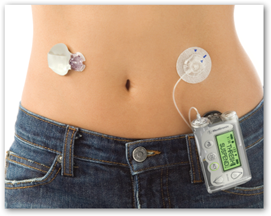
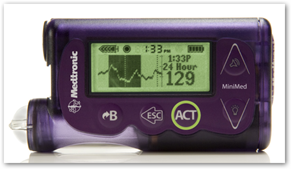
Medtronic Gets FDA Approval of the MiniMed® 530G Insulin Pump With Enlite® Using Artificial Pancreas Technology

The device is  getting closer to a fully automated artificial pancreas.  It uses Threshold Suspend, which automatically stops insulin delivery when sensor glucose levels reach a preset low level.   The Enlite sensor is used when the patient doesimage not respond to the the alert if let’s say one were sleeping or otherwise not reacting with the unit.  The sensor can be worn for 6 days and is smaller than most on the market 

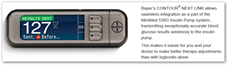
The system can also be used with the Medtronic CareLink system via the Bayer Contour Next Link to transmit glucose results wirelessly to the pump. 

Medtronic CareLink(R) Network Goes Cellular – Devices That Report Data Connecting to EHR Records With HL7

In addition parcel carriers have contracts with companies such as Medtronic and stock and ship replacements if needed to cut down on transit times.  UPS pharmacists fill 4,000 orders a day for insulin pumps and other supplies from customers of Medtronic from their Louisville facility.  Yes you read that correctly UPS has pharmacists as they work with Medtronic Software as a Service connection terminals to fill orders.  BD

UPS Healthcare Fulfillment Centers Continue to Grow And What Effect Could This Have on the Future Further Changing the Pharmacy Benefit Business?

Full Press Release below:


MEDTRONIC GAINS APPROVAL OF FIRST ARTIFICIAL PANCREAS DEVICE SYSTEM WITH THRESHOLD SUSPEND AUTOMATION

MiniMed® 530G with Enlite® Automatically Stops Insulin Delivery If Sensor Glucose Levels Fall Below a Predetermined Threshold

MINNEAPOLIS – September 27, 2013 – Medtronic, Inc. (NYSE:MDT) today announced the U.S. Food and Drug Administration (FDA) approval of the MiniMed® 530G with Enlite®,a breakthrough, first-generation artificial pancreas system with Threshold Suspend automation for people with diabetes.  Medtronic’s system is the first in the United States that can automatically stop insulin delivery when sensorimage glucose values reach a preset level and when the patient doesn’t respond to the Threshold Suspend alarm.

The MiniMed 530G system incorporates the new Enlite sensor, Medtronic’s most accurate and comfortable continuous glucose sensor with a 31 percent improvement in overall accuracy from the previous generation.[i]

“The diabetes community has eagerly awaited approval of this system that stops insulin delivery when sensor glucose values fall below a predetermined threshold,” said Richard M. Bergenstal, M.D., executive director of the International Diabetes Center at Park Nicollet Health Services in Minneapolis and Clinical Professor for the Department of Medicine at the University of Minnesota. “We are hopeful that advances such as this and improvements in the accuracy of continuous glucose sensors will help people with diabetes strive for better control of their diabetes.”

“We’re excited to bring yet another important ‘first’ to the United States. The MiniMed 530G with Enlite can help people gain better control of their diabetes versus multiple daily injections,” said Katie Szyman, president of the Diabetes business at Medtronic. “We are committed to advancing closed loop algorithms, continuous glucose monitoring and insulin delivery technologies to bring new artificial pancreas systems to market.”

The Enlite sensor delivers better comfort and reliable CGM accuracy.  In addition to the 31 percent improvement in overall accuracy, the Enlite imagesensor detects up to 93 percent of hypoglycemia episodes when predictive and threshold alerts are on.[ii] The Enlite sensor is also 69 percent smaller[iii] than the previous Medtronic sensor, to deliver improved comfort in using continuous glucose monitoring.  The new Enlite serter provides a simpler sensor insertion process with a hidden-introducer needle.

The MiniMed 530G system was approved for use by people with diabetes ages 16 and older. Medtronic will conduct a post-approval study including children ages two and older. The Enlite sensor can be worn for six days.
As a condition of approval, in addition to the post-approval study, Medtronic will engage in direct patient follow up and will make certain manufacturing accommodations. 

These commitments are consistent with the product approval by the FDA and an accompanying warning letter issued to Medtronic on Sept. 19, 2013.  Medtronic has already addressed many of the observations noted in the warning letter and is committed to resolving the remaining observations as quickly as possible and in accordance with the product approval requirements. Medtronic is committed to providing safe and effective products for people with diabetes.

Medtronic will begin ramping up production immediately to prepare for a launch of the MiniMed 530G in the next several weeks.  In the meantime, customers can find additional product and important safety information atwww.medtronicdiabetes.com.

Artificial Pancreas System with Threshold Suspend Automation
The MiniMed 530G system is the first system approved under the new product classification, “OZO: Artificial Pancreas Device System, Threshold Suspend,” created by the U.S. Food and Drug Administration.

Threshold Suspend automation automatically stops the delivery of insulin if glucose levels reach a threshold, which can be set by a healthcare provider between 60-90 mg/dL. Once the threshold is met, the MiniMed 530G system will first alert the wearer with an alarm. If the individual is sleeping, unconscious or otherwise unable to react, the system will suspend all insulin delivery for two hours. Insulin delivery can be resumed at any time.

When Medtronic develops a next generation product for diabetes control, it will be designed to fully replicate the function of the pancreas by automatically monitoring glucose levels and delivering appropriate insulin to people with Type 1 diabetes; this future “fully automated artificial pancreas” will truly require minimal to no interaction by the patient user

***

Panasonic Selling Their Healthcare Business to Kohlberg Kravis Roberts Private Equity/Consulting Firm For $1.67 Billion

Panasonic is selling 80% of the business and the 20% remaining interest to help work with the firm.  Two straight years of losses is more than likely what predicated this sale, they need money.  I guess we will see what the privateimage equity firm does as far as managing and hopefully turning a profit again for the company.  A loss of $7 billion a year sounds like some serious money issues.

What was also interesting is the 75 billion being taken from the healthcare sector and reinvesting it in the consumer electronics end of their business, I guess a little pump of of operating money needed there.  It’s interesting when you look at the portfolio companies of KKK as you find Alliance Boots (Big Walgreens investment) , Go Daddy, HCA Holdings- Hospital Corporation of America, as a few of their portfolio partners.

As mentioned below Panasonic has both consumer and biomedical products they manufacture and sell.  BD 


TOKYO — Kohlberg Kravis Roberts agreed on Friday to buy the health care unit of Panasonic for 165 billion yen, or $1.67 billion, as the Japanese company tries to streamline its operations after two years of steep losses.

After the deal, K.K.R. will own 80 percent of Panasonic Healthcare, while Panasonic will retain 20 percent, according to a joint statement. Panasonic said it would cooperate with K.K.R., which is based in New York, in managing the health care business.

Panasonic Healthcare manufactures and sells blood glucose monitoring meters and sensors for diabetics. It also produces information technology equipment for medical clinics, as well as biomedical laboratory equipment like low-temperature freezers.

Panasonic said on Friday it would post an extraordinary gain of 75 billion yen from the sale of the health care unit and reinvest those funds into its mainstay electronics and other areas.

http://dealbook.nytimes.com/2013/09/27/k-k-r-to-buy-panasonic-healthcare-for-1-67-billion/?_r=0

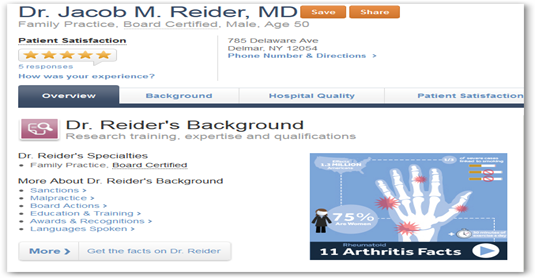
Jacob Reider To Lead the ONC Until New Leader Is Appointed–Visit His Page on Healthgrades Showing He’s Still Open For Business To See Patients, Along With Links to Dead Doctors, Some On Staff At Hospitals They Have Never Set Foot In And More…

Ok I just couldn’t help myself as we have had about 3 years worth of discussion on the web on how bad and old the data is on these sites.  You can read below about the doctor being at the ONC and two years at Allscripts prior to that.  How often does Healthgrades  update their information?  It’s just a site to expose you to advertising and selling data profiles.  Same erroneous stuff over at the other site Vitals that does the same thing…After seeing my tweet an MD said this: 

“About 15% of the doctors Healthgrades lists in our area are deceased, some back to the 1990s. Many others are moved.”

image


The site allows doctors to log in and fix what it out there about them, the same old routine with “free labor” that is now affecting consumers with all the flawed data out there about us…except we are really stuck on some of it because we can’t buy a house, get a car as the “flawed data” is seen my so many as being “accurate”.  It’s not.  If you visit the Algo Duping page you can see one of the videos that talks about this done by 60 minutes and another video that explains “Context is Everything” which is related to all of the data selling with the marketing and duping that goes on with a lot of the reports and studies you see.  Here’s how a lot of the “out of context” information you see on the web affects all of us as big companies, even to include NASA still don’t know where the value is in the data they collect, as demonstrated with a nice call out from this panel with the woman from T-Mobile..”what are we doing”. 

Big Data/Analytics If Used Out of Context and Without True Values Stand To Be A Huge Discriminatory Practice Against Consumers–More Honest Data Scientists Needed to Formulate Accuracy/Value To Keep Algo Duping For Profit Out of the Game

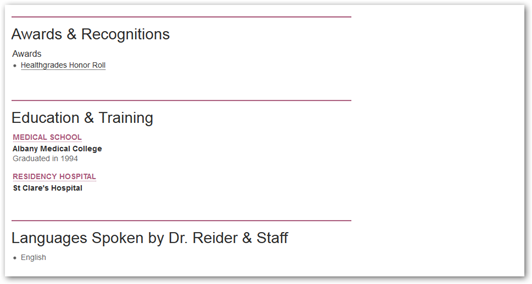
I still see the “save trillions” reports out there and hint to the wise when you see that, nobody can predict numbers that large today with the world of flawed math models we have with complex algorithms that seek out other algorithms and change the presentation of the context we see.  Under looking further, the only awards here are the Healthgrades honor roll, nothing about the doctor’s service at the ONC.  How often do they look?  Amazing all the data sellers out there capture all of our data almost in real time and yet sites like this persist. 

image


Might be some folks out there looking to find a family practice doctor, you think?  The doctor here is not an isolated case as back in February you could still get an appointment with Michael Jackson’s doctor too in Beverly Hills. 

Flawed Data With Physician and Hospital Rating Sites- Want To Go See Michael Jackson’s Former Dermatologist? Vitals and HealthGrades Says He’s Still There - Not…Flawed Data & Algorithms Persist…

This post will tell you exactly where web sites like this focus, marketing to make some money, no concern for accuracy.  See they even say how good their marketing is…

HealthGrades to Merge with CPM Marketing–Will Their Data and Questionable Algorithms Will Be Improved For Consumers?
Physician Rating Sites Are Seeing Fewer Reviews These Days–Flawed Data Catching Up Along With Loss of Value As Consumers and Doctors Lose Interest?

Here’s a story from the AMA from 3 years ago and we talked about the “dead doctors” on these sites too..enjoyed this one…after I had found my former doctor who had been dead for 8 years still listed and seeing new patients. 

Dead doctors stubbornly alive on physician-finder sites

Anyway this post was two fold here to cover the announcement at the ONC and at the same time to draw attention to the data selling effects we are all seeing out there and the impact it has on growing “flawed” data which nobody cares much about as long as the data scraping and mining keeps bringing the dollars in.  Healthgrades didn’t do much to give any background on the good doctor, did they?   BD 


Two members of the senior management team at the Office of the National Coordinator for Health IT will temporarily take on top leadership positions next month as the Department of Health and Human Services continues its efforts to permanently fill the positions.

Jacob Reider, M.D. will serve as acting national coordinator until the post is permanently filled, Mostashari revealed in an e-mail to his staff. Reider had been serving as ONC's chief medical officer and previously was an ONC senior policy adviser. Reider's biography on ONC's site notes that he is "a family physician with 20 years of experience in health information technology and special interest in clinical innovation, user experience and clinical decision support."

Before joining ONC about two years ago, Reider was chief medical informatics officer at Allscripts, an electronic health records vendor.

http://www.govinfosecurity.com/onc-names-interim-leadership-a-6103

CEO, Vice President and Law firm Representing Tuomey Hospital Resign In South Carolina As Feds Point Blame At CEO and Board, DOJ Finds Hospital Guilty Of Fraud With Violating Stark Law & False Claims Act

From reading this the hospital sounds like they are out of part  of the penalty box, or sort of as the full ruling is not in yet.  DOJ seeks more than $237 million from the hospital in their guilty verdict.  From what I am readingimage here with the resignations and the information the actions are all pointed at the CEO and the Board to include their legal counsel. 

The CEO had been there since 1990 and will leave at the end of October.  19 doctors were given exclusive contracts in exchange for referrals to the hospital.  This could also be settled out of court according to the US Attorney General handling the case.  This sound like someone blew a whistle here maybe that was outside the 19 well paying exclusive contracts, maybe?  BD


SUMTER, SC — In a dramatic move viewed as possibly clearing the way for a settlement in the federal lawsuit facing the local hospital, Tuomey Healthcare System’s CEO Jay Cox, Vice President Gregg Martin and Nexsen Pruet — the law firm representing Tuomey — all announced their departures from the hospital Thursday morning.

Both Cox and Martin officially announced they were leaving the hospital during a staff meeting Thursday morning. Shortly after the meeting started, hospital officials released a statement saying Tuomey’s board of directors and its top two officials “have mutually agreed to negotiate a separation agreement.”

U.S. District Judge Margaret Seymour, the judge that oversaw the four-week retrial of the case stemming from complaints in 2005, is still weighing several motions from both Tuomey and federal district attorneys before issuing a ruling. This includes the initial motion after the guilty verdict in which the U.S. Department of Justice seeks more than $237.4 million in damages from Tuomey.

More recently, an opinion from the South Carolina Attorney General’s office says the board members and officers of Tuomey Healthcare System cannot be protected by the hospital from possible fines and penalties should these people be found liable in a future lawsuit.

http://www.thestate.com/2013/09/26/3004361/sumter-hospital-execs-resign-en.html#storylink=cpy

What's Bugging Hospitals–Not Obamacare As An Entirety But Rather the 2% Loss of Reimbursement Due to Sequester and CMS Rules Lacking Better Models Along With CMS Dissolving Annual Payment Increases

You can read all the time about the payment models and the ups and downs of it and the re-admissions penalties are right up there.  I would think by now CMS would have some better modeling in place than what comes down the tubes as when we see all the hospitals caring for the poor getting fined, what’s wrong with that picture?  To me it states that in order to be fair and try and compare apples imageand oranges someone needs to update their segmentation parameters as they don’t play out very well most of the time.  For Obamacare some hospitals have even created their own insurance plans and some will be in the insurance exchanges, so they don’t hate everything.

I went through some of this personally with my mother before she passed on about the “admittance” rules and what we had to do with running her admittance through the ER room as she needed surgery and actually was under observation until after her surgery took place, (I watched the paper flow and was there) and the rest of the time she was under observation, so a normal admittance was not possible to ensure Medicare coverage without some algorithm kicking it out. 

She had  part D plan and I’ll tell you it was interesting to watch the doctors adhere and knew each procedure so there would not be something billed that was supposed to be covered with an unmatched single parameter.  It’s amazing to see how the doctors and all have learned how to manipulate patients through all of this instead of just being admitted through the front door of the hospital like normal admissions go.  I was happy they were up to snuff as it saved me a lot of potential aggravation later with billing.  They end up paying what they are supposed to pay but the extra gyrations patient go through to get there is not really needed to me from what I saw. 

Medicare Admissions Rules Causing Havoc, Need a New Model As It Is Becoming Yet One More Way to Shift Cost to the Patients

Now hospitals are looking at the 2 midnight rule to where patients who stay less than that will be subject to a payment algorithm that says it should have been outpatient treatment.  Well golly gee we have hospitals that have both regular surgery rooms and out patient surgery rooms, right next door or in the same facility.  They look identical but this extra expense of building two sets helps keep the nightmares of the auditors away.  It didn’t take me long to figure that one out:)  We end up with this cat and mouse billing game here.  Like I wrote before not much different than flipping a coin as an auditor can dig into any complex hospital bill and find something if they want. 

Readmission Analytics Not Much Better Than Flipping A Coin, Large and Poorest Hospitals At Risk Of Facing Larger Fines, CMS Needs Some New Math Models and Algorithms

So now hospitals get a 90 delay for the auditors run out and pounce on the less than 2 midnight stays.  These are contracted auditors that go out and count beans and dig and I am guessing their analytics will tell the contractors what cases to look at before they go out. 

One algorithms with said parameters does not fit all but that is what CMS plans to continue? 

Gov can’t or won’t model?

We already know the head of HHS is Algo Duped half  the time with apps and some of the other nonsense numbers that come out of there and they are said imagepublicly in the press (like hospitals and doctors are all liars on their billing for one) so it would stand to reason that this same paradigm runs through the entire agency, except for the FDA, much smarter over there thank goodness and they have other issues but not this one as they have to model and valuate P values an much more with drugs and devices so they are much more in tune.  Scroll down and watch the first video in the footer and see what I mean about context and it will make sense what I said about Algo Duping and sucking in marketing and data that isn’t so. 

“Dead Patients Can’t Be Readmitted” As Relates to HHS and CMS and the Elusive Search for Some Penalty Assessing Algorithm Fairies…

I realize there are standards and guidelines that have to be met but the modeling over at CMS is way too simple, get some lessons from insurers who hire batteries of Quants to model by the minute on every penny or at least get closer as the simple model is making everybody mad as it doesn’t apply equally as what CMS is trying to do.  Hospitals and doctors are waking up to this fact as they have been duped with complex insurance contracts and end up being paid less than Medicare too. 

The reasoning sounded a bit crazy to me that this was to increase hospital payments by allowing more time to become eligible for inpatient rates…why not just let a patient be eligible for inpatient care when it’s needed, don’t doctors determine that?   I don’t know anyone who “want” to be an inpatient today if they don’t have to…so we go around and around..with the parameters of an inpatient and the auditing to make sure those numbers are met..bad enough the re-admission penalties are out there as well as poorly modeled too.  So this is what bugs hospitals right now and there maybe more of course but these the are big ones with money and time and software right now. 

We already have several flavors of re-admission software so what subsidiary of an insurance company is going to introduce admission software that will calculate all the parameters here and increase the complexities of the rule?  (grin).  BD 


Addressing widespread anger among hospitals and doctors about the new “two-midnights” rule for outpatient observation, CMS officials announced Thursday that government recovery auditors will delay scrutiny of short inpatient stays for 90 days while providers get acclimated to the new policy.
This week 100 members of Congress signed a letter asking the CMS to postpone the rule so that federal officials could listen to more feedback and change it. The CMS is not doing that.

“What CMS is looking for here is for the provider community to get their education and training done on the rule as written, but without the burden of worrying about what a RAC contractor might or might not do,” said Emily Evans, partner with Obsidian Research Group. “So they are taking some of the financial pressures off the providers while they learn how to comply with the rule.”

The two-midnights rule says that hospital stays that last two days—defined as a stay that spans at least two midnights—are presumed to be legitimate uses of inpatient care and will not be subject to auditing, for the most part. Likewise, most stays that are shorter than that are presumed to have been appropriate for outpatient observation, a level of care for which Medicare pays less and subjects patients to much higher costs.

http://www.modernhealthcare.com/article/20130926/NEWS/309269945/auditors-will-delay-scrutiny-of-two-mightnight-rule-cms?utm_source=twitterfeed&utm_medium=twitter

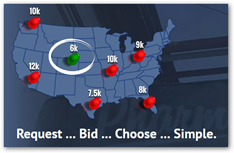
Pharmly–Website Where Verified Vendors of Prescription Drugs Interact With Verified Purchasers Placing Bids, With Vendors Accepting Orders–Finally Something Useful Out of the Start Up Files

This looks good and I have seen this concept before a few years ago where patients put there “surgical” procedures out for bid and that didn’t work but imageit was also an entirely different need to be filled.  With drug shortages this could open doors for hospitals as an example look for for drugs and perhaps even those where shortages exist. 

Who knows they might find one and also this could work from hospital to hospital if they had dual listings and were both verified.  Take the propofol drug shortage we had for example, hospitals where communicating and sharing what they had so this looks to be a potential platform for that type of activity. 

Again for this to work and keep the riff raff out, there certainly has to be security in here as the fake drug companies would try to get in here and I would guess that’s been handled with some form of identification as well.  For a start up imagecompany, nice and one of the few that’s not pouncing on consumers to enter all their information into an app to secure data for sale. 

The site and what they do is pretty much a straight shot and not much to have to learn here and again with drug shortages and having this avenue to communicate it could come in handy.  Also it will be interesting to see how many drug distributors get on board and see what they do with it as well.  It could mean some additional sales there as well outside of the mainstream, like finding someone needing drugs that are not mainstream circulated for rare diseases could be one.  BD

http://www.pharmly.com/

Jon Stewart Discusses “Little Paper Senator Cruz”–Yet More Startling Proof For the Need to Restore the Tool Congress Needs–The Office of Technology Assessment

Ok Senator Cruz took the trophy away from John McCain being the “poster child” for restoring this valuable tool for Congress.  Like Stewart says Congress can’t design anything and I can go back in my archives whereimage I suggested they take a look at IBM Watson to help them model, private industry does this right and left, pays off with those math models at Citibank to get richer.

IBM Watson Going to Work At Citigroup on Wall Street–Congress Didn’t See Big Data As A Tool (Hadoop Framework) When They Had Their Chance…For Consumers The Attack of the Killer Algorithms–Chapter 22

I watched part of the Cruz show…and tweeted good stuff and got a lot of hits from readers who were tired of Green Eggs and Ham.  If we had better educated Congressmen that fully understood the IT infrastructure, the cost of it and the time it would reduce embarrassing shows like this.  Maybe with all the drama shown, the senator go to Hollywood and try a new profession.  His perceptions certainly are not what many others have:)

So here’s the deal to educate Congress on how technology and laws are attached at the hip.

Congress Needs a Bigger Brain–Restore the Office of Technology Assessment And Truly Assess What is Useful And Remove The Algo Duping Permeating In Government–Fantasy Perceptions That Are Not Real Can Be A Dangerous Thing

“Reform the market to deal with the problem of pre-existing imageconditions”…says Cruz..

Stewart has the answer…”the Bor-ax….

Seriously after all of this humor sadly it really shows the inability to perceptualize the reality of technology today and how it impacts the world.  Like I said every law has IT infrastructures attached and these folks who like to preach rather than accept and learn more about the reality of the data mechanics continue to make fools of themselves and just waste the time of the US.  I’m sure the White House had to be holding their sides in during much of this.  One thing for sure it makes you stop and think and realize that there’s more to look for in a Congressman or any politicians than that matter than one who does Soap Opera and OMG routines.  BD 

http://www.thedailyshow.com/watch/wed-september-25-2013/healthcare-bill---ted-s-excellent-adventure---the-bore-ax?xrs=synd_twitter_092613_tds_63

Meaningful Use And Patient Portals–Advertising and Data Selling With 3rd Party Apps Software Impact Consumer Engagement and Furthermore Makes It More Confusing to the Patient-Non Data Selling Portal Services are Winning..

Talk about confusing the patient and at the same time hammering on Doctors and Hospitals to get 5% of the patients to access their medical records on a portal that contains advertisements and/or endorsements of data selling 3rd parties can be an issue, so “what the heck is in that portal”…

We all know advertising along with the current “data selling epidemic” taking place offers high levels of disruption.  I see it all the time with all these new “innovation” apps and very few offer anything new and most are somewhat of a copy cat, providing the same function of something that’s already out there, but new screens, and few little buzzes from where you click and navigate makes this a whole new brand imageof app to fall all over.  Consumers can’t identify this but the developers and Query Masters can and feed on it and we get this glut of apps that few use.  I’m probably pretty vocal that way as I used to code and I used to sell too so I’m a weird hybrid out here in the medical blogging world and that’ why you see these types of post over here and nowhere else:)

You do have to look at the impact of data selling out there as it is alive and well and does disrupt and makes money for corporations, like insurers today.  If you have not ever looked at some of the insurer subsidiaries do it, breathtaking as well as all the businesses they are in.  I try to point all of this out as best I can following not only the money but the data as well.  So as a patient out there and there’s more than just me talking about it when a patient is looking at a portal and they see promotions for mobile apps that are part of the quantified self move on the portal advertises and promoted, and the patient has read a little about the data selling, do you think one might ask “what’s that doing on the portal”..could be.   I thought this video was interesting as it shows some visual ideas without promoting any particular vendor as to where we are headed with some of this.

This adds to the confusion of doctors trying to get patients to participate in the basic requirements of meaningful use in just accessing their medical records. 

You see wellness programs promoted and we all should know by now that insurers own a bunch of them and we get back to mining for data for sale again here as the marketing for predictive behavioral health is duping you in a bit.  Sure there’s value in identifying patterns and the human brain can do that too and the capabilities are being a bit oversold to the point to where “everyone needs to have their behavior fixed” so even the healthy people who enter such programs, no appreciation for where they are, but let’s fix them too with this portal.  We have to get them to enter the data to fix them:)  It came to heads with Penn State wanting to fine all users who did not participate $100 a month..pretty strong language there and people revolted and for a good reason as again everyone has been judged and needs to be “fixed” whether they need it or not.

Wellness Questionnaires Coming Under Scrutiny, Federal Lawmaker Wants Rules–Many Wellness Programs Are Subsidiaries of Health Insurance Companies and Most Mine Data For Sale

I have appreciation for the work at the ONC and I’m sure they are very aware of this as well and it probably gives them fits at times as well when keeping on track with meaningful use parameters to be met.  Again we come back to this data selling disruption and epidemic out there interrupting and intersecting with the functions of getting to the value of the “clinical data”.  It’s tough when you have this data selling side show going on at the same time and the search for real “value” needs to be at the top of the list. 

The other day there was an article about the 10 biggest mobile health investments and most of them appeared to have a “data selling” business model.  You can read it if like but I made a case about one of the start ups and their poor marketing and telling me a blogger “how poor they are” and that I really need to promote them so they can more data to sell.  I’m sure they didn’t expect the rant of the duck but again I have two focuses and look at both sides.  A VC sees an almost immediate revenue stream from selling data = funded?  I know these are all designed to hopefully benefit a consumer but remember number one benefit is to get money to the start up and of course with data selling, it becomes “free” for the consumer or almost “free”. 

10 Biggest Mobile Health Investments This Year Appear to Have Business Plans With Profits Contingent on Selling Data for Profit And VCs Seem To Like Funding Models As Such, Look At The Numbers…

We just had the new HIPAA rules come out too and already there’s a clash with technology with abiding by the rules.  It appears there’s no where a patient can really decide that a certain record can be withheld from an insurer as nobody has written the code in medical records to do that, plus if not paid by cash, the insurer gets the claim and will be out there hunting for the medical record documentation at some point.  Insurers love analytics and data and are hiring Quants in groves to do more with every stick of data they can buy or have in house to add more profits to the bottom line.  How ethics come in here…well that gets real gray and we kind of circle back around to the data selling epidemic.  Here’s what’s already happening when patients want a particular record to be private, “the little drawer of paper charts”..and nice we have doctors that work with us as our partners to do this and it’s not often but when needed there’s a probably a good reason other than I’m just going to say no.  That’s where we get back to the doctor-patient relationship that needs to remain strong.

Digital Doctors” Little Drawer of Paper Charts” Stands to Grow In Size Due to New HIPAA Laws And Insurer Context, Gov Can’t or Won’t Model?

Everyone seems to be jealous and critical of Epic but you know what, they basically are the Apple, Microsoft or what you want to call them in the medical record business and I feel a lot of this goes back to their CEO, Judy Faulkner, who wrote code and the initial software  and keeps the development largelyimage in house, and there’s still a lot of Visual Basic in the software, still pretty solid.  Do you see that with many of the other medical record companies, very few(e-MDs is one)  and most are the big conglomerates like Allscripts who blew it a couple of years ago not telling shareholders the truth about all the code needed to blend two different software program…CEOs not involved in the heart of the software blow it and do things like that.
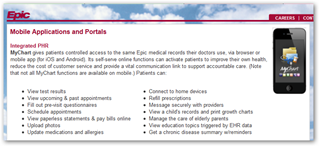
Epic provides “MyChart” as their personal health records which is tethered to the medical records and allows patient interaction and it’s been around for a while and it is any wonder that they have 22% of the ambulatory market out there with creating a portal that works well and doesn’t have stuff up there promoting data sellers on the portal.  Again there’s a lot to be said to having a “controlled environment” with software development.  A little lesser known is the LUCY Freestanding PHR from Epic.  This is for patients who want to take their data form MyChart and other entities and keep their own untethered PHR.  You could say it is similar in nature to HealthVault in a way but you need have a “MyChart” PHR to use it as that’s where the population of the data starts. 

“Lucy is free of the two primary obstacles to patient PHR adoption:

  1. There are no advertisements on Lucy.
  2. Epic will not sell patient data for secondary uses.

You can see on websites like the University of Wisconsin where information is made available to members/patients as an example.  Now there are efforts to extend the timing for meaningful use and this issue with getting 5% of the patients to view and download their medical records is running interference for the data sellers..making it more difficult for doctors so when you see the Epic solutions, and the two reasons they list, it’s like a no brainer to figure out what’s going on:)  They don’t have those 3rd party elements there confusing consumers.  So complain about Epic all you want but they are not selling your data nor endorsing those that do. 

The data selling epidemic is exploding and getting bigger and bigger all the time and certainly there are some areas to where data is provided for legitimate research and when you look at what Kaiser has done with their registries we are getting some good quality information and this is separate and not in the same ball game at all of the “smash boom bang” consumer data mining for profit that is taking place.  I’m sure this has to represent some element of frustration at the ONC as how do you create standards with all of this going on to get to the core of valuable clinical information for doctors and patients? Sure Epic and Kaiser are both non profits out there and we hear about all money they make but again interesting how both are not selling data.

Kaiser Permanente Registry Information Pays Off With Hip and Knee Replacements For Patient Having Double Hip Surgery (Video)

I’d be quitting too if I were at the ONC in view of all of this as it’s frustrating to create standards and have all of the greed and money making diluting what they do on the sidelines.  Secondly, how in the world do you testify to Congress on some of this as they don’t get all of it and I have sounded like a broken record in wanting to re-establish the Office of Technology Assessment and incidents like Cruz yesterday and McCain a while back clearly show the levels of understanding are not there and they won’t do much to learn..what’s up with that?  I did a pretty pointed post on this topic and even tweeted this post directly to John McCain.  I don’t know how often he checks in but it was kind of funny that during the Cruz show he was stated to have been tweeting about a television show he was watching during that time (grin). 

Senator John McCain: Another Demonstration of Why Congress Should Reinstitute the Office of Technology Assessment, When Education Takes Place, Less Distractions With Boredom And More Respect for Consumers…

Based on what I am seeing, it looks like it’s time to cleanimage up the portals and even the advertising on some the websites from some of the advertisers and come clean with consumers on who is selling your data, what kind of data they sell, to what companies or governments and have this flat out transparent on a federal web site.  I’m not too particularly happy knowing that Walgreens make about a billion a year selling data, our data they get for free and then I read all their article about engaging the patient, sure when there’s big money to be made. Looks to me like the real winners here with both EHRs and PHRs are the ones who are not selling your data all over the place…an omen? 

Here’s what the FTC  (link below) should consider with all of this as well as Congress as nothing will change until some regulation comes in here, and in the meantime efforts at the ONC get stymied, people get frustrated and quit and those that profit like insurers, keeping putting more profit dollars down to their bottom line.  Here’s a video with a game made in satire to exploit data selling  as well so it is well documented in more ways than one.  BD 

FTC Tries to Bring Strong Case for Consumer Protections With Use of Data–But Nothing About Creating IT Infrastructure Path to Allow Regulation–Gov Can’t or Won’t Model?


"Customers mentioned leaving MedSeek due to unmet product expectations, high costs, or an enterprise EMR strategy," the KLAS report said. "A quarter of Intuit's customers reported plans to leave -- three times higher than the market average."

It's unclear whether shortcomings in these and other third-party products are to blame for their decline. However, as in other areas of health IT, many providers seem to be following a single-vendor strategy for their EHRs, and that might include portals.

Meaningful Use Stage 2, which begins Jan. 1, requires providers to allow patients to access their health records electronically. At least 5% of patients must "view, download or transmit" their information. In addition, providers must use their EHRs to send reminders for preventive and follow-up care to more than 10% of patients with two or more office visits in the last two years. They also must use EHRs to identify patient-specific education materials for more than 10% of unique patients seen during the EHR reporting period.

http://www.informationweek.com/healthcare/policy/patient-portals-bloom-under-meaningful-u/240161780

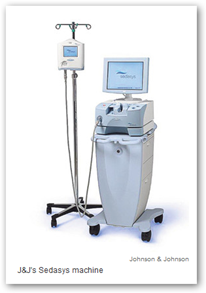
Johnson and Johnson Wants to Replace Anesthesiologists With Robots for Low Risk Procedures Such As Colonoscopies–Getting Closer To Becoming One of the “Evil Companies”

Johnson and Johnson is about become one of the “evil” companies with the new device to replace anesthesiologists and you know what, their imagesavings don’t amount to beans as far as the over all picture of what is spent on healthcare.  Back in 2008 I wrote about the McSleepy machine in Canada but it was attached to a cell phone for an anesthesiologist to monitor. 
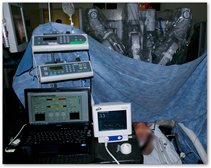
Automated anesthesia system dubbed McSleepy -

Here’s an image showing McSleepy and DaVinci together during surgery.  In the hospital in Canada they are not replacing the doctor but rather giving the anesthesiologist a better tool to use to monitor the sleeping drug, propofol.  What a contrast of what we have here with the big sale to replace the anesthesiologist with a robot.  This shows how cheap and mindless people are getting to save a few dollars. 

Sometimes in real life the anesthesiologists run out and use their cell phones during surgery, heard that battle as surgeons created a huge fit over the anesthesiologist group working at the hospital doing that.  Surgeons complained over and over until the problem was fixed as again that leaves on less set of eyes and the surgeon has to watch the machine as well as operate.  So still even with the robot you’re  missing a set of eyes. 

Sedasys is the name of the product that Johnson and Johnson will be marketing to hospitals and doctors are up in arms about it and for good reason, you need that extra set of eyes during a procedure.  And of course it will get pushed beyond low risk of course as what I read and see out there stuff is like this is going on all the time so why put it out there for a bean counter to justify to save money and why not sell it as a tool for the anesthesiologist.  A billion a year is what theimage numbers said were spent on sedating patients for colonoscopies and the cost for the machine would be $150 versus $200 to $400 for a procedures, no thanks J and J I’m worth the extra money for that dollar amount. 
I still remember the “wonderful marketing” on the knees too that was out there.  The machine was developed with help from Stanford and 1700 patients were sedated.  Ok but there were people monitoring the machine for the test as well.  J and J CEO said this (quote below). 

“Sedasys "is a great way to improve care and reduce costs," J&J CEO Alex Gorsky said in an interview.”

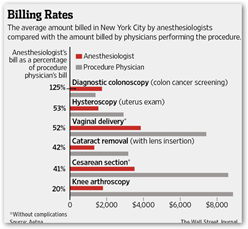
I would think any hospital that has gone through any knee surgery suits might be a little cautious right now too as they don’t want anymore lawsuits.  So why not give the anesthesiologist  a tool, like they do in Canada?  Guess who’s behind some of this in the peanut gallery, Aetna watching as they tried to limit the use of anesthesiologists during routine colon cancer screenings to use only for high risk patients and I remember that pretty well as it created quite a fuss.  Patients who had Aetna and the doctors were fighting mad and fought it tooth and nail.  Nobody could believe they could make such a decision and be so cold.  You can see the chart below the bean counter case that Aetna tried to make. 

Let’s not forget we have lived through knee surgeries and tons of recalls so the wave of trust might be kind of rough out there.  BD   


Anesthesiologists, who are among the highest-paid physicians, have long fought people in health care who target their specialty to curb costs. Now the doctors are confronting a different kind of foe: machines.

A new system called Sedasys, made by Johnson & Johnson, JNJ -1.29% would automate the sedation of many patients undergoing colon-cancer screenings called colonoscopies. That could take anesthesiologists out of the room, eliminating a big source of income for the doctors. More than $1 imagebillion is spent each year sedating patients undergoing otherwise painful colonoscopies, according to a RAND Corp. study that J&J sponsored.

J&J hopes the potential savings from using Sedasys will appeal to hospitals and clinics and drive machine sales, which are set to begin early next year. Sedasys "is a great way to improve care and reduce costs," J&J CEO Alex Gorsky said in an interview.

Anesthesiologists' services usually cost more than the $200 to $400 generally charged by physicians performing the actual colon-cancer screenings, says health-plan CDPHP in New York state. An anesthesiologist's involvement typically adds $600 to $2,000 to the procedure's cost, according to a research letter published online by JAMA Internal Medicine in July.

J&J is also developing a device that could cut anesthesiologists out of another popular procedure: surgery to insert tubes into the ears of children seeking relief from infections. J&J hopes that ear, nose and throat doctors will be able to insert its device with the push of a button, avoiding having to put the kids under anesthesia in a hospital.

J&J says it will train doctors and nurses to use Sedasys, making sure that only appropriate patients are treated with the machine and an anesthesiologist or nurse anesthesist is on site.

To further protect patients, the company says it plans to introduce Sedasys slowly, in select hospitals and clinics starting early next year and in collaboration with anesthesiologists, nurse anesthesists and other doctors.

http://online.wsj.com/article/SB10001424052702303983904579093252573814132.html

Prostate Cancer Foundation Announces Availability of 3 Marker Urine Test For Prostate Cancer, More Specific Than PSA Test Alone

The MiPS test as you can read in the press release combines the best of two worlds for greater accuracy and as stated will save a lot men having to go through the dreaded biopsy procedure if the doctor can determine if the tumorimage is low or a high risk.  Nobody like a biopsy and thus any tests with any areas of cancer like this would be greatly appreciated by consumers as well.   The PSA is not gone, just got better with adding new markers for specificity.  The University of Michigan Health System has begun offering a new urine test and a doctor’s request is needed to get the new patented test. 
Also worth noting the FDA approved a new blood test in 2012 for prostate cancer.  BD

FDA Approves New Blood Test for Prostate Cancer For Men With PSA Levels Just Above Normal Range


SANTA MONICA, Calif.--(EON: Enhanced Online News)--A new urine test for prostate cancer that measures minute fragments of RNA is now commercially available to men nationwide through the University of Michigan MLabs. The new test—Mi-Prostate Score (MiPS)—improves the utility of the PSA blood test, increases physicians’ ability to pick out high-risk prostate tumors from low-risk tumors in patients, and may help tens of thousands of men avoid unnecessary biopsies.

The MiPS test incorporates blood PSA levels and two molecular RNA markers specific for prostate cancer in one final score that provides men and their doctors with a personalized prostate-cancer risk assessment.

Other research has shown that the two-marker urine test is more effective than the PSA test alone, or PSA testing that’s incorporated into a commonly used online tool (the Prostate Cancer Risk Calculator), at predicting the presence of prostate cancer.

The Prostate Cancer Foundation is not endorsing the use of this test or non-use—PCF does not endorse commercial companies or products. The Foundation heartily applauds each research step made toward precision medicine and better biomarkers for prostate cancer that improves the standard of care for patients and leads to less suffering and death from this disease that will affect one in six men in the US. The Safeway Foundation generously provided unrestricted funding to the Prostate Cancer Foundation for biomarker research that funded this work. The Safeway Foundation also provided PCF-Young Investigator funding to Dr. Tomlins. The Prostate Cancer Foundation is the world’s largest philanthropic source of support for accelerating the most promising research for better treatments and cures for prostate cancer. To learn more about PCF go to www.pcf.org.

http://eon.businesswire.com/news/eon/20130925006537/en/Prostate-Cancer-Foundation-Announces-Urine-Test-Prostate?utm_source=dlvr.it&utm_medium=twitter

Stryker Pays $1.65 Billion for Mako Surgical, Knee and Hip Surgical Robot

The technology as I said back I 2009 is like having GPS for your knee surgery to increase the levels of accuracy.  This is what makes robotic surgery popular of course for doctors and patients to cut down on errors and getting precise placement.  It’s also much easier on the patient when it comes to recovery as well. 

Knee Surgery Done with a Robot - MAKOPlasty Tactile Guidance System™

MAKO has also added a software application for hip replacements as well.  By using the MAKO system partial knee resurfacing can be done which is a procedure that would take place before one would need a complete replacement and could help avoid one later down the road.  BD 


The Stryker Corporation, the medical technology company based in Kalamazoo, Mich., said on Wednesday that it would pay $1.65 billion for the MAKO Surgical Corporation.

The agreed price of $30 a share represents a huge 86 percent premium for MAKO, which makes tools for robotic assisted surgery in orthopedics. MAKO shares closed at $16.17 on Tuesday.

“MAKO has established a compelling technology platform in robotic assisted surgery, which we believe has considerable long-term potential in joint reconstruction,” Kevin A. Lobo, chief executive of Stryker, said in a statement.

http://dealbook.nytimes.com/2013/09/25/stryker-to-buy-mako-surgical-for-1-65-billion/?_r=0

Wellness Questionnaires Coming Under Scrutiny, Federal Lawmaker Wants Rules–Many Wellness Programs Are Subsidiaries of Health Insurance Companies and Most Mine Data For Sale

I did a quick trip through my archives and came up with a few examples of insurers owning and buying wellness companies and there’s lot more than I have listed here.  I thought this was good to actually see a few of them.   

UnitedHealth Buys Another Wellness Company – Biometric Monitoring For Data With Employer Contracts
Behavioral Underwriting With Biometric Employee Screenings – Red Brick Secures 3 More Clients
WellPoint enters wellness program partnership With Red Brick – Behavior Based Health Insurance..
Blue Shield in Washington Buys Wellness/Fitness Company – Venture Capital Investors Were Pleased With ROI
Humana To Purchase Concentra Wellness In Texas Offering Coupons and An Entire Portfolio of Health Programs and Clinics
Humana Acquiring Harris, Rothenberg International–Wellness and HR Services for Employers Providing Health Insurance

With subsidiaries anymore you don’t always know who owns who and what subsidiary queries their data with other corporate subsidiaries under the same umbrella and if not what they sell in the way of data.  Red Brick for example that WellPoint contracted with in the link is a client of Ingenix (now Optum Insights a sub of UnitedHealthcare) that provides the analytics for the Red Brick wellness program so see how they all somewhat run together too?

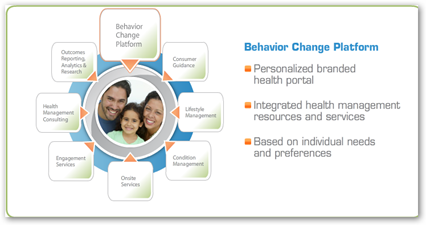
I wrote about the Penn State/WebMD portal as well and there are very few clients under the WebMD Health services area and Penn State needs money and if you get enough participants entering data then they have less data to sell.  This is an epidemic and de-identified data from medical records is being sold as well, like United Healthcare selling data from the Mayo Clinic so your is for sale in more places than you realize.  I went over to the WebMD site to see what information they had out there on the portal services and I about choked at the presentation too.  All over the place you get the message as a client that you need to focus on  “behavior change” for everyone.   You need this platform and data entered to “fix” everyone:)

image


There’s the standard tools with BMI and so forth that you see everywhere and get information along with some costs. They want all members to “model” their healthcare.  Tell me how many people are going to log on all the time and work this portal, it’s like a PHR, you use it when you need it and PHRs have never caught on big either.  They have connections to 3rd party solutions on here as well and they show a scale so I am assuming we have those devices that collect and sells data too. 

image


You have to “drive” your health solutions for success it says.  I found the focus on “fixing behaviors” out there a little too much.  I understand incentives and so forth and normal coaching but this sell on this portal is expecting too much from participants, again the more data entered, the more data and/or data profiles for sale.   Here’s another one I found a bit overdone that’s a partner of United Healthcare.  You know when you don’t understand a multiple page privacy statement and the terms of use, they are selling data and again as I said we have no clue how subsidiaries of health insurance companies may be sharing and querying data at all.

Portal for Personalized Wellness Programs, More Data to Scrape and Mine…And One Heck of a Terms of Use Page, Enough to Scare Any Consumer…

I think the marketing push on wellness programs is a little much as clients get Algo Duped when the old technique of “throw numbers at them” is engaged to make a sale, and I spent 25 years as an outside sales person so I see these things coming at times.    Thus so when something like this is too strongly presented with telling a client that they can reach certain plateaus with “fixing” members and gathering their data to make it work is a little bit of a farce if you will and we don’t want the members being the “evil twin” if they don’t enter enough data.  I look at both sides.  Scroll down to the footer of my blog and watch the first video, “Context is Everything” for more on how reports and numbers can dupe you when used out of context as well. 

So this is good that the lawmaker from New York wants some rules in place as there should be some parameters and standards in place as the big fear we all have is data used out of context and we have seen it but with complexities and more math in everything today the envelope gets pushed.  Here's a post from November of last year on that topic at the link below with a good video and the big companies are talking and  are not even sure what the quants and actuaries are to do with a lot of this data yet and how to find the value.  NASA is one of the participants.  Even Larry Ellison said in an interview referencing the NSA situation to be more concerned over banks and other entities that have data about you as credit cards and others have 30 years worth of data about you guess what insurance companies are buying it from them.  You can look that post up here if you like.

Big Data/Analytics If Used Out of Context and Without True Values Stand To Be A Huge Discriminatory Practice Against Consumers–More Honest Data Scientists Needed to Formulate Accuracy/Value To Keep Algo Duping For Profit Out of the Game

When it comes to medication adherence we have all the seen the FCIO analytics scam to where they query your credit information with other data they have or buy and score you from 0 to 500 on compliance on taking your meds.  That is one big dupe right there for any insurer or pharma company to buy but they will do it if that data can be queried with other data to show “some numbers” that will allow them to cut costs somewhere or deny a payment. 

That’s what the link above talks about, the big discrimination practice against consumers with using numbers in any context they feel like to find a way to segment something to make a decision.  You can check out the videos on the Algo Duping page as well to see more about how math models and subsequent algorithms compute this and again the humans better put the correct context in here and not use data from the scams like FCIO as I talked about above a decision making criteria.  All data and analytics is not correct, doesn’t carry ethics and can be used out of context at any time.  The more data being sold out there also contributes to the ever rising errors we are seeing. 

Attack of the Killer Algorithms – “Algo Duping 101″

So hats off to Representative Louise M. Slaughter for digging in here and again so much of this comes back around to money attached to selling data at times.  When an employer pushes it like Penn State did, read between the lines to see why their implementation  was not "friendly”.  Again too the decision maker at Penn State could have been Algo Duped as well with the marketing of this portal to be a “fix” for all and money in the pocket too.  BD


A federal lawmaker is asking the Equal Employment Opportunity Commission to investigate employer wellness programs that seek intimate health information from employees, and to issue guidelines preventing employers from using such programs to discriminate against workers.

The request, by Representative Louise M. Slaughter, Democrat of New York and a staunch advocate for health privacy rights, came a few days after Pennsylvania State University suspended part of its new employee wellness program that had drawn objections from faculty members.

“What happened at Penn State was appalling to me,” Ms. Slaughter said in an interview on Tuesday, referring to the university’s requiring employees to pay a monthly surcharge of $100 if they did not fill out detailed health risk questionnaires.

Called Take Care of Your Health, the Penn State program initially required employees, including faculty and staff members, to fill out the questionnaires — which asked about workplace stress, marital problems and women’s pregnancy plans — or pay the surcharge. After faculty members complained that the program seemed coercive and invaded their privacy, the university suspended the penalty.

The Equal Employment Opportunity Commission had a special meeting in May on wellness programs in which its legal expert concluded that the agency should issue guidance on the potential intersection of wellness programs and federal antidiscrimination laws. In particular, the expert said, the agency should clarify the meaning of “voluntary” employee participation.

But it has yet to issue that guidance, prompting Ms. Slaughter’s letter. “I’m deeply upset with the E.E.O.C. for delaying this,” she said.

http://www.nytimes.com/2013/09/25/business/rules-sought-for-workplace-wellness-questionnaires.html