Small Practice Physician Talks About Health Insurance, For Him, Family, His Staff And Of Course Patients

I took a few of the highlights from this article but the doctor is talking about the increases first of all with his own insurance being pretty big and then continues on to how he will have to adjust for his staff.  As a small employer has has provided insurance for his staff imagefor many years and now like everywhere else the employees will be carrying more of the cost.  His cost has doubled for what he provides employees.  He too has to appeal his own insurance claims.  For his own coverage for a wife and one child he’s paying $2900 a month now, up from $1480.  That’s a big increase. 

In addition he refers to a procedure that is about 30% of his business as an optometrist and insurers are no longer paying for and thus he has to bill patients.

Highmark Blue Cross has cut what they pay him by about 40%.  He brings up the age issue when hiring a new employee too as thus far it has not been a deciding point but wonders if it will be someday as the cost of insuring older employees goes up quite a bit.  He’s working hard to keep the employee insurance going and to not turn them over to the insurance exchanges, but the cost keeps rising and rising.  BD 


As a physician, a small business owner and a health insurance policy holder, Dr. Douglas Lavenburg feels like he's drowning in no-win situations – one squeezes his medical practice, one squeezes his employees, one squeezes his own medical care.

• Highmark Blue Cross Blue Shield, the largest insurer in Delaware, has cut what they will pay him for what he calls a "bread-and-butter" eye-care category by 40 percent. The change is fair and non-negotiable, he was told.

• The premiums for his health care policy and those he offers his employees have just about doubled for 2015, the first year they must purchase plans compliant with the Affordable Care Act.

• His own physician has ordered a CT scan of his sinuses. But his insurer says it won't cover it. He could appeal and he believes he would win, but why should he have to? Why is coverage so tough to use? What are so many claims denied first and dependent on appeals?

And that doesn't count what's happening to his patients, he says, the ones who can't pay their deductibles (the amount they must pay before their insurance kicks in) and get behind on their payments to him.

Last year, those late accounts, late by more than 150 days, totaled $17,000. This year, they're up to $40,000.

Lavenburg says he doesn't count on seeing any of that money, though it is due to him. And he tries to help patients out when he can, sometimes by front-funding their deductibles or finding other ways to ease the financial burden of their care. He had to hire someone full time just to explain insurance benefits to patients before they come to the office.

So this wave of 2015 policies are coming in with new price tags and the new essential benefits mandated by the law.

Lavenburg said his policy, which covers himself, his wife, and one of his four sons, is going from $1,480 a month to $2,900 a month next year.

His practice administrator, Greg Allen, will see his premium go from $441.91 to $826.24. Allen has a $2,500 deductible, so he thinks it's unlikely that he will see any benefit from that coverage.

"I have people who have been here 15-plus years," he said. "They're valuable to me and I don't want them to leave ever."

He says he won't cut their coverage. But he pays a flat rate toward their premiums, $350 each, which means they'll be paying a lot more for their insurance next year.

As Allen explains it, Highmark used to pay for a comprehensive exam under one code, refraction under another. Last year, they stopped paying for refractions. Doctors had to bill patients.

It's a big deal, Allen said. Lavenburg's office had done 4,038 refractions from Jan. 1 through Aug. 31.

"That's a 200,000-pound gorilla and they represent 30 percent of our patients," he said.

http://www.delawareonline.com/story/news/health/2014/09/29/sticker-shock-health-insurance-renewals/16453269/

Big Business CEOs Call To Action to Fix US Healthcare, Some of the Very Same Companies That Are Creating Obstacles For Consumers in Healthcare, Selling Data, Creating Models for Better Care That Don’t Work And More…

I’m sorry I had to laugh at this article as some of the very same problem companies think they can fix healthcare.  First off, look at Aetna, who now wants to get out of their agreed reimbursement of doctors based on the AMA settlement from a few years back. image They just want to cheat and get out of paying money and there’s more out there of course but that was the first thing that came to mind and since Blue Cross is in here too, here’s a link with a lot of information on that billing fraud and the lawsuits and the former Ingenix buddies are right in there.  Ok so these folks can repair healthcare?
Ingenix (Optum-United Healthcare) Lawsuits Still Bouncing Around Out There–One Recently Settled in New Jersey With Horizon Blue Cross Blue Shield That Was Still Using the Flawed and Corrupt Data Base for Out of Network Payment Calculations

Bank of America…IT is business and they are a big software company anymore don’t need to say a lot more there but just visit the Killer Algorithms page for videos from folks smarter than me on that topic.  McKinsey, the CEO factory company, if you read the book to where sometimes the company pays people millions to be friends with CEOs if they have none or want to put a coach in their circle.  Walgreens and Verizon cashing in big time selling your consumer data, Walgreen about 1-2 Billion with a B every year. 

Johnson and Johnson, tons of recalls and lawsuits, anyone want a metal hip or a mesh right about now.  I’m sorry I had a hard time keeping a straight face here and probably the only one who’s really a good guy and doesn’t even below with the group is NantHealth CEO Patrick Soon-Shiong, MD.  I think he’s really trying to make a difference. 

What a joke with these companies as they have all done their parts to make profits as the expense of good healthcare.  I fear all that’s going to come out of this group are maybe exploring more ways to profit.   They are not saying anything new hear with the exception of tying folks to devices and functioning in a way they would never do themselves.   It was said the other day by Goldman that once a level of wealth is reached, those people become immune to consumer laws and rules and that’s what this whole bunch is, so no help here at all. 

So if this doesn’t work, let’s do another X-Prize farce like WellPoint did…probably about what will come out of this.  BD

X PRIZE FOUNDATION - Build a Better Health Care System 10 Million Dollar Prize


Chief executives of several major U.S. corporations came together under the auspice of the Bipartisan Policy Center to work toward the betterment of health and wellness of individual and communities, as well as the overall U.S. healthcare system itself.

“Improving the health of the nation, and the quality and cost of health care, is imperative if the United States is to compete in the global marketplace,” the CEO Council wrote in BPC’s report from the meeting.
“The history of U.S. business is steeped in innovation, ingenuity, insight, and leadership.”

To that end, the resulting report, "Building Better Health: Innovative Strategies from America’s Business Leaders," outlined ways companies are trying to improve health and well-being as well as the quality, cost, and patient experience of care.

BPC CEO Council members include Aetna head Mark Bertolini, Bank of America CEO Brian Moynihan, Blue Cross and Blue Shield CEO Scott Serota, Coca-Cola chief Muhtar Kent, Johnson & Johnson CEO Alex Gorsky, McKinsey & Company managing director Dominic Barton, NantHealth CEO Patrick Soon-Shiong, MD, Verizon CEO Lowell McAdam and Walgreeen chief Gregory Wasson.

http://www.govhealthit.com/news/big-business-ceos-issue-call-action-fixing-us-healthcare?topic=34&mkt_tok=3RkMMJWWfF9wsRonvqjNZKXonjHpfsX56e4kW6K0lMI%2F0ER3fOvrPUfGjI4AS8dkI%2BSLDwEYGJlv6SgFQ7LHMbpszbgPUhM%3D

United Healthcare Buys Another Company in Texas That Manages Physician Practices With Software-Hiding in Plain Site, Accumulating More Subsidiaries Furthering a “Too Big To Fail” Insurance Company - Big Focus On Money Ball Analytics Versus Quality of Care

You may be living under a rock as most of the press is with watching subsidiary actions of big corporations and this one here is huge.  Of late some are now brought under the Optum umbrella so they may or may no longer show as separate subsidiaries as they imagehave on SEC filings, but again that’s not all of the interests here as there are several subsidiaries of the corporation that own like 51% controlling interest in other doctors and surgeons groups across the US, ahs been going on for years, just flat out hiding in plain site  and all the actions are taking place with subsidiaries as they can  move and participate in areas of business that would seem questionable by a corporation. 
Here in southern California anyway, so many of the big IPAs have sold out to United or Optum, the subsidiary and the names are kind of interchangeable as it’s all the  same company wanting profits for shareholders.  It is any wonder doctors are fleeing from such organizations when they get the chance?  Mostly it is just another management system with an extensive analytics and software process, same thing we see all over and kind of what’s driving the health system to go broke as at some point it has to give a little bit and a decision made as to when do you have enough relevant data?  Here’s another interesting post below and you can see what’s going on here with Dignity, again a new company with Optum at the control to generate some additional revenues for Dignity Hospitals.

United Healthcare Adding Yet One More Subsidiary to the Very Large Number of Subs They Already Own/Operate-Optum and Dignity Healthcare (A System Wide Cerner EHR Client) Form New Venture Called Optum 360–Subsidiary Watch

It’s not really about better care but if they can wrap around analytics and show that there’s some non linear values they can impact, they go for it.  We all know too that United and their subsidiaries make a lot of money selling our consumer data and de-identified data whenever they can.  If Walgreens makes 1-2 billion a year, just imagine what these folks make selling your data.  Would it not be nice to see every company that sells your data?  We already have these folks buying up your credit card data to analyze and a lot more, using algorithms to evaluate your voice at call centers.  If you want to know more click here to see a little campaign I started to get some transparency going so we know who all the data sellers are by licensing and these folks would require a ton of licenses when you bring in all their subsidiaries. 

I had to almost laugh and I did blog about an article in the LA Times with lawyers saying United has to rely on accurate bills from hospitals and doctors regarding the lap band cases which are all over the place when in fact Optum/United sells more anti-fraud processes and software than Carter has pills, but again an illustration front out on how ignorance of company subsidiary actions plays out in the news.  You better look at what’s going on there too and sad but journalists don’t’ seem to get that part of it or ask someone in the industry who knows, me someone else:)  You can read more below on that one and the hilarious defense from their lawyers on that one.  Who’s going to dupe the duper you could say. 

Lap Band Surgeries Go Full Circle With Lawsuits–Now United Who’s Being Sued, Files Case Against Company Who Provided the Advertising and Services

It’s all about money and I don’t know the financials of MedSynergies and if they needed the money or not or were given an offer they couldn’t refuse?  In in the LA and Orange County area it’s like called the “United Manifesto” here with working relationships, one is MemorialCare and they live in the same buildings and own their doctors and management companies too, so MDs are stuck with no way to turn there if they want to be in network and with complex contracts here, get paid at rates less than Medicare, so I don’t know what the MDs at this company might have to look forward too now.  There’s also big questions as well about the ethics of an insurer owning a hospice company and there’s a federal lawsuit coming on that soon due to whistle blowers.

Feds Decide to Intervene, File Their Own Lawsuit Against Optum (United Healthcare) Hospice Services Relative to Whistleblower Fraud Cases Already Submitted- Pay for Performance Issues With Hospice Performance and Medicare Fraud At the Core

It’s also interesting too that old Zeke Emanuel who wrote the article about why he wants to die at 75 is a huge walking, talking United commercial, just search the web and he’s still writing policy, very scary indeed at the Center for American Progress where our Health policies are written while they create more cases to syphon more money from the Feds.  We’re just flat out stuck with all the quantitated madness United sells one way or another and nobody can really check proprietary code for any type of accuracy here but the ones that CMS are using where there’s no doubt where United was their mentor are failing.  I like good analytics that can help me with decisions but I’m also aware of those that just make profits and really don’t help causes too and there’s both out there.  Here’s an example of what Zeke is doing. 

Again I have been getting an earful of late from a former CMS employee, and again nothing really secret here but just telling me about how United got so infiltrated at CMS going back to the Lois Quam days when Hillary brought her in as she was the #2 person at United and the door has been open ever since for more to come in.  Just look at who's working at CMS today.

HHS With New Burwell Appointment Adds A Little Splash of Wal-Mart to the United Healthcare Model Being Used for Just About Everything We See And Read Today…

In addition we keep seeing all the Medicare Advantage doctors being fired across the country and since CMS caught the risk fiddler automated algorithms used for 5 years by insurers, that means there’s around $14 billion less to be paid to insurers this year and it was said to be called “fraud” by the CMS auditors.  So again if you have not paid attention to how companies in plain site like this grow and gain so much control, you might want to start as here’s one more added to the huge list of subsidiaries. 

CMS Discovers That Insurers Offering Medicare Part D “Really Know To Sharp Shoot A Model With Adjusting Risk For Profit”, A Common Everyday Occurrence in Financial Markets…

In short, this is all about money and the care we get just has to adjust to the “Money Ball” theme here, behind the scenes pretty much running HHS and CMS in many areas.  It is what it is and I said a long time ago they need some quants at CMS and at HHS as I made my point in 2009 that insurers would just walk all over Sebelius as she would be no contest to understand how business intelligence algorithms and analytics work.  About a year ago I did a post about how insurers hide under the radar and I have a lot of links there to subsidiaries, government contractors the company owns and more and you use the link below if you like but that’s not all of it by any means. 

Health Insurance Business Under the radar With Tiered Subsidiaries–Where All the Action Takes Place With Mergers, Acquisitions and Profit Centers-Subsidiary Watch

We’re all going to have a long awful lifestyle coming forward doing the dance of the algorithms and if you like go visit the Killer Algorithms page and you can see how all of this came to be and how you too get duped.  Good healthcare has become a secondary focus when the healthcare profit algorithms come out to play in the markets as they do.   BD

Algo Duping and the Subsequent Attacks of the Killer Algorithms…(from folks smarter than me)

UnitedHealth Group Inc said on Tuesday it agreed to buy MedSynergies, which manages physician practices, adding about 9,300 doctors to the hospital and health system services that its Optum technology-based business currently serves.

Financial terms were not disclosed.

UnitedHealth, the nation's largest health insurer, has been expanding beyond its core business of managing care for large employers and the government's Medicare and Medicaid programs through its fast-growing Optum business.

Optum clients include about 4,000 hospitals such as the Kaiser Permanante and Dignity Health systems. With the acquisition it will expand its reach to manage doctors and other healthcare professionals who are part of the 4,000 systems as well as add new systems like the Catholic Health Initiatives and Texas Health Resources.

http://www.foxbusiness.com/industries/2014/09/30/unitedhealth-to-buy-doctor-management-company-medsynergies/

Seniors Facing Some Sharp Medicare Advantage Premium Increases And Many Plans are Being Dropped As CMS Gets Their Next Dose of Said Algorithmic Fraud To Sort Out With the Risk Fiddlers…

Not too long ago CMS said such plans should remain flat as far as price increases and once again they were wrong.  CMS needs some new models and obviously Burwell is just in a guessing game as she’s not any better than Sebelius in essence and I have not seen much that is impressive at all that has come from her direction, and basically we just have a “body” filling that agency head role.  It’s a very important role and yet we seem end up with the worst folks imaginable trying to run HHS. 

In New York, many seniors will pay more for both premiums and prescriptions and the average premiumimage in New York for Medicare Advantage is around $55.00 or so.  The number of Advantage plans with zero deductible is also decreasing.  We have all read about United dropping doctors from their plans and in Florida we have Humana doing some of the same thing but the company is not near as big as United but it’s happening there too.  In view of this many patients are being forced back to traditional Medicare. 

In North Carolina Blue Cross and Blue Shield are cancelling plans and was sent to 11 counties.  Those people have to change plans and some change doctors, so here we go again.  The plans are likely to cost more.  Due to Medicare rules from CMS, the public can’t see what’s being offered until October 1st when open enrollment starts, again a failure that rises to the top of HHS in not being able to model or adequately understand how health insurers work.  The operating plans and business models have changed as insurers change their budgets almost daily it seems at times, yanking lives apart and forcing seniors in their late years to deal with such complexities.  This, the link below is part of that reason.  Quants are no longer just limited to mathematical functions at hedge funds and banks. 

Health Insurer Actuary Jobs Becoming More Difficult In the Era of Killer Algorithms, Can’t Function Like They Used To As Information Changes Take Place Daily And Hourly, More Insurance Companies Are Seeking Quants to Create New Math Models, The Next Level Up From Actuary Calculations

In Hawaii AlohaCare is dropping one of two Medicare Advantage plans they have next year which affects a smaller number of 1300 seniors.  CentraCare will be ending it’s participation with Humana in January in Minnesota.  In Georgia, WellPoint is dropping their Medicare Advantage plans for retired seniors and and the only option left will be United Healthcare which affects around 100k or more.  In New York, MVP will no longer offer managed Medicare plans for over 2000 seniors. 

I could add a lot of this activity stems back to a recent audit at CMS to where insurers (and we don’t know which ones but you can say it’s a big group) were using a risk fiddler algorithm to raise the amounts that were billed to Medicare over a 5 year period to the sound of $71 billion, which in essence means that around $14 billion less will be paid to insurers managing Medicare Advantage plans, so do the simple math and I think there’s your answer as this was considered “fraud” in the articles I have read, more at the link below.  These are the same types of financial models that are used on Wall Street to play with risk for profit and you can listen to quants talk about how the models are pretty much the same with a little tweaking to be used outside of the financial district. 

CMS Discovers That Insurers Offering Medicare Part D “Really Know To Sharp Shoot A Model With Adjusting Risk For Profit”, A Common Everyday Occurrence in Financial Markets…

So part of what you read in the news is hogwash as CMS will report successfully negotiating with insurers for what they will pay, and on the backside you have these automated algorithms increasing the pay to insurers above and beyond what CMS negotiated and it took them 5 years to find the bill fraud as it’s called.  It’s a good money game when you can do some Algo Duping and have great news coverage and use some “white collar code hosing” to increase your profits as now what’s the next move for CMS?  Any changes and drops, which may occur will directly impact the benefits and offerings of Medicare Advantage.

Doctors like traditional Medicare as it works and it may not pay the best, but sometimes it does as in California where United via complex contracts pays doctors “less” than Medicare if you can believe that one.  Medicare Advantage coverage is complex and doctors often get delayed payments.  Due to cost and unrelated contracts, an outside provider often must perform simple tests or labs.  Sometimes HMO plans force patients to receive chemotherapy at home too.

“The Secret Scoring of America’s Physicians” - Algorithmic Math Models For Insurance Network Contractual Exclusions, Relating to MDs Who See Medicare Advantage Patients..

What seniors receive and the kind of care and from whom is all just an algorithmic business model these days and as you can see is subject to the drop of a hat a times.  This is why everyone hates health insurance as there’s few consistencies anymore.  Insurance carriers are in fact driving themselves off a cliff when it comes to collection of a lot of non relevant data as they buy up all your credit card data and other information hoping to zero down on something with a query they can eliminate to save money, that’s the blatant truth of how it works. 

Health Insurance Business Is Driving Itself Off a Cliff & Doesn’t Know When to Stop With Collecting, Analyzing and Processing Non Relevant Data With Little Or No Impact On Giving Good Care..

It’s a cost game and insurers are also putting themselves in a bad spot as well as many of their models are failing and seniors see this in lack of care and having to up and change doctors and plans.  This is the Wall Street style profit models that exist.  I said back in 2009 that insurers would just literally run Sebelius over as there was no way she would ever be prepared for any of this and of course even at that time such math models were in existence. 

Kathleen Sebelius, Kansas Governor for HHS – Please not! Put the “Smart” People in these key positions

Medicare Advantage programs have tried to justify higher government reimbursements by claiming that they keep patients healthier. But if their patients appear to be healthier because they have pushed out less healthy patients, then they are not meeting their “responsibility.”  Interesting too that Medicare is not covering hearing aids and there’s a movement to get some changes there. image Now look at what’s at the link below..the same company that’s knocking off doctors right and left will also give you a deal on a cheap Chinese made hearing aid, one of the many companies United owns and created, hiding in plain site as they take over more and more of what the governments does with Medicare.  
UnitedHealthCare Throws in Free Hearing Aids for Those Who Enroll In AARP Medicare Advantage, HMO & POS Plans in Miami-Dade County From Their New Subsidiary

Hospitals too are not happy with they way they report to Medicare either and again we the same old failed models making things worse for all here too.

Antiquated Ways Hospitals Report Cost to Medicare “Really Distorts” The True Cost of Care–New Model Please..

Long and short of all of this is that CMS got duped, duped and duped again with the models they are using as we have had years of Untied Healthcare being their mentors on what they have developed.  It is what it is and began way back with Hillary Clinton brought in Lois Quam, who at one time was the number two executive at United and all their algorithmic models they touted would be the cat’s meow.  It’s further evidenced when you look at who’s the number two person today at CMS, right out of United Healthcare so again the parade of individuals continues to be built on what an insurer brings to the table with lacking the internal talent to model and create something purely by the government. The models are failing and this is the end result of rationing care to seniors, right and left with constant changes and not knowing when the next shift will arise.  Here’s a couple links that might be of interest as to what’s going on with leadership at HHS/CMS.  I haven’t seen one item of intelligence come out of HHS since Burwell took over and she’ probably taking orders from someone else I could guess she might end up being worse than Sebelius if that’s possible.  She has no clue and yet just one more figurehead appointee.  BD 

Burwell, HHS Secretary Hires A “Legal Banker” From CitiGroup To Do What? Fulfill It’s Mission To Serve the American People?
HHS With New Burwell Appointment Adds A Little Splash of Wal-Mart to the United Healthcare Model Being Used for Just About Everything We See And Read Today…

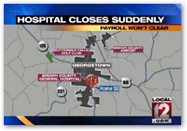
Hospital Abruptly Closes as Creditor Called in Debt in Ohio-300 Jobs Gone Instantly

Here’s yet another abrupt closure and a hospital in Texas just went through the same thing recently.  As you can read Toshiba imagecalled in a note on their MRI and there was no money left.

Nurses, doctors, and other staff stood in the street protesting.  The hospital closed Friday and they were told they could come back Monday and get their belongings and don’t know when they will get paid yet.  BD 


BROWN COUNTY, Ohio (Rich Jaffe) -- With the doors of Southwest Regional Medical Center closed, many of the employees of the Brown County hospital took to the streets. They want people in their community to know how unfairly they're being treated and how the shutdown late Friday could have a bearing on the safety of the entire community.

The employees got a raw deal and some say the whole situation smells pretty funny. Hospital officials said they were surprised when a creditor, really Toshiba, called in a debt that had been on the books since the hospital bought an MRI machine in 2008. Demanding payment, the creditor laid claim in court to a hospital bank account and suddenly there was no money to make payroll on payday and the hospital doors slammed shut. Nurses, doctors, tech's and other staffers lined the street in front of their hospital. The signs said it all, they love their community, but they also want to be paid.
 http://www.local12.com/news/features/top-stories/stories/brown-county-hospital-closes-workers-protest-18340.shtml

Hospitals Suing Highmark Over Reduced Payments–Medicare Advantage 2% Sequester

Here we go it starts and this goes back to the 2% sequester decrease that is being passed along.  As we all knowimage hospitals are struggling to survive as they have a number of fixed costs that can’t be reduced.  The article didn’t say if the 2% sequester cuts were also passed along to doctors or not.  BD 


A group of Western Pennsylvania hospitals has sued health insurer Highmark Inc. and a subsidiary for reducing payments to them, causing what the hospitals say are “significant economic damages.”

The lawsuit, filed on Monday in Allegheny County Common Pleas Court, claims Highmark and Keystone Health Plan West have been improperly shorting the hospitals 2 percent of Medicare Advantage reimbursement payments since Jan. 1, violating the terms of their contract. The hospitals want a judge to order the insurer to pay back the money it withheld. An audit would determine the amount.

Highmark, the state's biggest health insurer, is the largest provider of Medicare Advantage plans in Western Pennsylvania, where it has about 150,000 members.

Under Medicare Advantage, an alternative to traditional Medicare, the federal government contracts with private insurance companies to administer Medicare benefits to seniors.

Central Pennsylvania's Susquehanna Health System filed a similar lawsuit against American Progressive Life and Health Insurance Co. of New York in July.

It is not clear how many insurers have passed on the 2 percent to health care providers.

The hospitals filing suit include inde­pendent hospitals Butler Memorial, Conemaugh Valley Memorial, Indiana Regional Medical Center, Jameson Memorial, Miners Hospital, Meyersdale Community, St. Clair Memorial, Washington Hospital and Windber Medical Center and three Excela Health hospitals: Frick, Latrobe Area and Westmoreland Regional.

http://triblive.com/news/adminpage/6854891-74/hospital-hospitals-highmark#ixzz3ElrruYZy

Practical Steps With Addressing Healthcare Interoperability - HITECH and Meaningful Use focus Must be Beyond EHR Vendors

Today, here’s a guest post from the founder and CEO of Zoeticx Clarity Cloud solution for interoperability.  My comments here are above the line below and this is reproduced with his assessments on the future and is in response to the former director of ONC, Dr. Loonsk.  I have have written about 3 posts on Zoeticx at the Medical Quack here as the money savings is huge with their platform and something to take a look at with platforms today as more and more are emerging, I read it every day and the pot for spending on Health IT is not getting any bigger, as a matter of fact it’s starting to shrink so CIOs are in a spot today to determine what do we “need” and what would be “nice to have” to be blunt. 

You read me all the time talking about questioning ROI on non relevant data that everyone feels they “have to have” and granted it’s not always easy either.  Dr. Halamka, not too long ago on a blog post (Life as a Healthcare CIO) said the same thing as he had budgets that he has to maintain and so he’s doing the same thing, evaluating what is needed to run the hospital business for both clinical and financial systems in an effort to deal with the complexities we have today. 

I just said today that our new DOJ leader needs to be a “hybrid” and when it comes to Health IT, there’s nobody better than Dr. Halamka showing the value of being a “hybrid” with his background being both computer science and an emergency room doctor, so he has more than one point of view and gets in there with hands on use of technologies in the ER.  As a matter of fact I really don’t know where the US Health IT efforts would be without his input as it’s that vital as again he’s “grounded” with good balance, which we could use a little bit more of that today with others.   Here’s the backlinks on Zoeticx if you want to read and watch the videos. 

Zoeticx–EHR Agnostic Clarity Healthcare Platform, An HIE Requiring No Data Warehousing For Interoperability, Answers The Call for Less Disruption With Actionable Medical Information Flow

The second post expresses a 3-6 years compatible time line for the ONC adaptation from Zoeticx.  Zoeticx supports an Open API / Open architecture and I have mentioned many times there’s no need for a centralized data base to maintain with current engineering, and that’s where the savings come from.

Zoeticx Clarity Server - Middleware HIE Will Save Millions Maybe Billions With HIE And Has 3-6 Year ONC Compatible Time Line, Works Using APIs, Web Apps Where Nobody Has to Swap Out Their EHR…

So read through and use the links and form your own opinion, see some new software engineering attempting to contain cost and add a good work flow solutions for doctors.  Zoeticx is EMR agnostic.   As I have stated before, there’s already an Allscripts, Epic and generic java API written.  Demonstration video at the end of the post with short Consultation demo.  BD 


Practical Steps Addressing Healthcare Interoperability

A response to Dr. John Loonsk’s “Where’s the Plan for Interoperability?”

Thanh Tran

CEO / Founder, Zoeticx Inc.

Dr. John Loonsk’s blog, “Where’s the plan for interoperability?” posted on Healthcare IT News September 22, 2014 poses a direct question on EHR Interoperability.

Coming from the former ONC Director of Interoperability and Standards, the blog outlines the challenges towards healthcare interoperability:

1. Infinite extensible architecture

2. Discipline towards execution – Interoperability is not about bright and shiny object solutions, it is about the much less glamorous work

3. Silos EHRs and Silos Standards

4. Not focusing on the core challenges i.e. patient engagement

5. HITECH and Meaningful Use focus must be beyond EHR Vendors

The above 5 key points outline the challenges healthcare face, both in term of deriving a national standard or reaping the benefit of the transition from paper to electronic environment. Dr. Loonsk touched on the patient centric model as a critical missing link to any solutions presented today. In short, where is the patient – in the landscape of healthcare today?

From a patient centric perspective we would like to offer a practical, low cost solution and roadmap in addressing healthcare interoperability:

1. Patient-centric model: Any standard development must start with the patient. Addressing the patient needs would eventually align every other aspect required for interoperability. It is the patient who needs to have all his / her clinical data connected, presented seamlessly to care providers.

2. Focus on clinical data: Care providers ‘speak a universal language’ – it is the patient clinical data. Regardless of how a patient’s heart rate is stored (e.g. different database format and syntax), to a care provider, it is simply heart rate. From a patient centric approach, the model is based on clinical data. To support healthcare, all vendors must be adopted to that universal language for care providers.

3. Open API / Open architecture: With the patient-centric clinical data model we support an open API / architecture thus sealing away the healthcare applications required to operate on the data from the deployed EHRs infrastructure.

4. Adopt a standard model and open API while leaving the task for translation to EHR vendors: Tightening the model and the API would force the issue of translation to a universal model. ONC should focus on tightening the rule with compliance to that model and leave EHR vendors with the task to do the conversion from its proprietary clinical data to the universal model.

5. Patient directory services: Patient engagement would start with the patient outlining which healthcare institutes he / she would have his / her records at. The creation of a standard patient directory service would open accessibility and support of patient care continuum without the required data duplication as suggested in HIE. HIE is static in its approach where going with patient directory service with access via gateway and leave the data at the source would be ideal for healthcare. With this approach, EHR vendors would still have its stickiness in healthcare institutes making them easier to adopt to the new model. At the same time, the patient directory service, coupling with the access approach at near time would give care providers the ability to retrieve the complete view of patient medical information.

The above approach addresses most of current shortcomings:

1. Loose standard definition (CDA)

2. Lack of focus entity (not patient centric)

3. Incorrect emphasis from HITECH (EHR vendors) and impractical approach for implementation due to additional components such as centralized HIE database.

Our proposed solution is available through the Zoeticx approach which starts with focusing on the patient, clinical data and an open architecture to support near time access to the EHRs.


MIB Business Model Changes Over the Years–They Still Collect Tons of Coded Data Files About You, Over 500 Insurers

The MIB has been around for a long time and now according to their website you will only have an MIB file to access if you have applied for any type of insurance coverage in the last 7 years.  Now that doesn’t mean they purged the files necessarily as they go back forever and insurers might have access to file of data about you that you may not.  It could be archived as that’s what folks do with data and don’t toss it away.  imageNow they collect more than just medical information, a lot more, like car insurance, and anything else that can be used for any type of insurance risk assessment for insurers.  See the notation below on the file, it says if you have not applied for insurance to be underwritten in the last year, there’s no “Consumer” file.  Watch the wording today on some of this as again that’s only a “consumer” file so you can bet you still have a file but you can’t get it if you don’t meet the parameters. 

From the Website:

“MIB Group, Inc. is a member-owned corporation that has operated on a not-for-profit basis in the United States and Canada since 1902. MIB's Underwriting Services are used exclusively by MIB's member life and health insurance companies to assess an individual’s risk and eligibility during the underwriting of life, health, disability income, critical illness, and long-term care insurance policies. These services "alert" underwriters to errors, omissions or misrepresentations made on insurance applications. By mitigating the risk of applicant errors, omissions and misrepresentations, MIB may help lower the cost of life and health insurance for consumers.

Individuals who have not applied for individually underwritten life or health insurance in the last seven years will NOT have an MIB Consumer File.

So in addition to credit report damage from ID theft now you have to worry about the data these folks collect too.  Nice, huh and other chase around for the consumers created by data sharing and selling algorithms when problems arise.  People get shut out of life insurance now with errors so if you don’t have an ideal weight /height ratio, you’re shut out if the insurer wants to do so.  Again as the agency reports, there format is coding and and not your medical records, so ok you are there with a code that represents a diagnosis of some sort, or payment of a prescription of a drug for a condition.  We know how all this information get re-matched today easily.  So the MIB pitch on “we don’t have your medical records” is true but they got data and have you coded so they don’t need that information.

Data Brokers Are Now Diagnosing Consumers With Diabetes And Other Chronic Conditions–”Over Rated And Broken Predictive Behavioral Math Models” Providing a Diagnosis That Should Always Be Documented From Your Doctor, Not From The Web

It’s funny too as the site states you have to authorize access of insurers to the MIB files, well if you don’t you don’t get insurance so that’s a bit of a joke if you will with their marketing.  You can get a copy of your report for free once a year and again this is turning out to be just one more area to where consumers on their dime chase the flawed data, just like credit agencies.  Here’s an article from the archives that tells about how they do mortality assessments on you.  If you have flawed data in there, well we know that song and again flawed data is on the rise.

MIB Solutions and Hooper Holmes Working Together to Assess Morality Risk – Analytics and Consumer Files Used for Underwriting And To Estimate How Long You May Live And What Your Body Will Cost Over Time
The MIB – Health Insurance Bureau Business Intelligence Mining May Go Beyond Just Healthcare Information

Consumers have been turned into “little flawed data chasers” the expense that businesses profit.  MIB had to change a bit of their business model since the ACA ruled out pre-existing conditions but that’s been replaced with a new risk factor called narrow networks for cost. 

Pre-existing Conditions With Health Insurance May Be Gone But Narrow Networks Are Providing The Same End Result For Many Ill Patients With Not Being Able To Get Care - Extreme Cases Of New Killer Algorithms Popping Up With Insurance Business Models…

So this database monster still exists today, just in a little different format I guess you could say and now wants your input like the data brokers, credit agencies to fix the stuff they don’t get right and there’s a lot of it anymore.

One basic change is that insurers still all “hook” in to the MIB to find data about you, that has not changed.  imageCompanies and banks are going to kill us with their inabilities to create non flawed data and dump it out or sell it to the world to anyone who has a buck.  They will build this up just as they did credit data so there will be more consumers having to chase this data as well to correct or that old familiar word “Denied” comes back to hit, again the data selling epidemic. 

When you look at the status of affair with insurers today, they are indeed driving themselves off a cliff as there’s that addiction process to have to have every stick of data they can get, query, etc. even if it contributes zero an ROI or better care for patients.  It’s becoming a real big problem as relevant data is what is needed, not volume.

Health Insurance Business Is Driving Itself Off a Cliff & Doesn’t Know When to Stop With Collecting, Analyzing and Processing Non Relevant Data With Little Or No Impact On Giving Good Care..

This all comes back to the “Secret Scoring of America” and this keeps the inequality acceleration moving, all on servers running 24/7 and we wonder why we have a data theft and Id fraud issue in the US?  I do have to say the marketing here on the MIB page is pretty thick but they want to be seen as a good guy and basically they are just another data seller, but a non profit one here.   BD

Data Selling and the Direct correlation To Accelerated Inequality - Epidemic Spreading Like A Virus Moving Money Keeping Corporations Cash Rich and Consumers Cash Poor

Drug Companies are Calling On Hospital Administrators That Decide On What Drugs Are On the Formulary For Doctors To Prescribe- Works On Keeping the Costs Down…

Sure there are still doctors who run private practices that see pharmacy reps but with more doctors working for hospitals directly or with a group that is specific to a hospital, the MDs no longer are in control of making the decisions on what drugs can be prescribed.image  We know what this is all about of course with hospitals, it’s about cost. 
Physicians are given a menu of which drugs they can choose from.  Today 42% of doctors practice on a salary with hospital systems.  Drug reps now are making more calls on hospitals than ever before.  Key account managers from drug companies are growing too as obviously now there’s more than one drug being discussed at a time with bigger pharmaceutical companies.  When new drugs are released, now the pharma reps run to the hospitals first for the big sales and then later to independent doctors.  This might take some of the pressure off of the pharma expense accounts too with not soliciting a doctor directly and they can spend more. 

More doctors are joining healthcare systems as negotiating with insurers has also become difficult.  Interesting point made in this story that I was not aware of which is that Medicare will stop or cut payments for COPD drugs if it doesn’t stop enough people from returning to the hospital.  I do have to ask what kind of formula is that?  I am guessing though this means the name brand expensive drugs.  One thing though is that hospitals do have the power to drive down the cost of drugs with this type of program versus one doctor.  Doctors are pretty much following the protocol and it makes sense they would unless there was one or two unique patient situations to where something would need to be discussed, etc.  BD 


SAN DIEGO—Kendall French used to pitch drugs to doctors who could prescribe them.

But many of those doctors now work for hospitals that don't give them final say over what is on the menu of medicines they can pick. So when the GlaxoSmithKline GSK.LN +0.27% PLC saleswoman began plugging two new lung-disease drugs to a big San Diego hospital system this spring, it was to an administrator who doesn't see patients but helps write the menu, also called a "formulary," of approved medications.

Ms. French urged the administrator in the system, Sharp HealthCare, to consider the two drugs' effectiveness. It was the kind of pitch she once used to persuade doctors to write prescriptions.

The administrator, Electa Stern, said she would run the effectiveness data by doctors who are helping decide what to put on a systemwide formulary. "And then we will be taking a look at cost." There are about 2,600 doctors in the Sharp system.

One such market is San Diego. The Sharp health system, with nearly $3 billion in projected 2014 revenue, runs seven hospitals, three nursing homes, five urgent-care centers, two medical groups and a health plan in the area. The system, which is midstream in its shift toward standardizing patient-care procedures, has in recent years been creating systemwide formularies.

http://online.wsj.com/articles/as-doctors-lose-clout-drug-firms-redirect-the-sales-call-1411612207

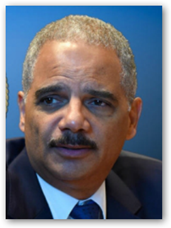
Eric Holder Resigns As Head of the Department of Justice–Next Person Heading that Agency Needs to be a Hybrid, Part Technology and Part Lawyer, Hard To Find, But Talent Is There If You Look..

60 Minutes just did a story about identity theft and it was also covered in the story that Eric Holder was also a victim of identity theft and how someone used his social security number and date of birth to file a fake return.  Maybe this was the final straw?  I don’t really knowimage but it goes to show that nobody is exempt and makes the case that just any old lawyer or judge is not the right person to run an agency like this or half the agencies we have out there today.  They have no “data logic mechanics” and thus so their perceptions will always be off target in the way they see the impact and how things in the data world “really” work. 

One More Reason to License Data Sellers–Income Tax Fraud On the Rise-Who Are You Buying Your Data From And Who’s Buying Your Data? 60 Minutes Report

We are all frustrated over the banks not getting held accountable and this is exactly why it never happened as without the second side of being a “hybrid” as a leader being present.  I watched the documentary, “The Untouchables” and 5 minutes of DOJ Lanny was all I needed to hear as the body language, his speech reeked of no confidence in how to pursue, investigate or make a case with intelligence in technology that was much smarter than him.  It stuck out like a sore thumb.  If you want to back track and watch it after I had said such, here’s the link.  I’m the smartest person in technology by far but if can see it plain as day, so can others. 

“The Untouchables-Too Big to Jail” Frontline Documentary Shows Department of Justice’s Fear of Prosecuting Big Banks–No Confidence In Using Current Day Technologies To Investigate –Video

It’s the code, proprietary, running on servers 24/7 that’s making all the decisions, programmed by humans who know how to make it work for profit, and it’s been going on for years and it’s whittling down to where’s little more they can take.  This is what keeps inequality growing and to have a head of such an important agency that is not comfortable crossing these lines to get to the bottom frustrates everyone.  I’ve told other lawyers, you focus on verbiage while the computer code runs hog ass wild right behind your head and you can’t see it.  You can read every day with Nanex and the code hosing that goes on with markets and what do we have over there, same thing a lawyer that focuses on verbiage, while computer code runs hog ass wild over there.

We have Richard Cordray, another lawyer, same stuff, no algo knowledge and doesn’t know enough about financials and how consumers interact, so same thing, goes after low hanging fruit which is better than nothing but far from being successful, codes runs hog ass wild again.  To put it bluntly, we need in the government in almost all agencies that have “some” data mechanics logic” and this doesn’t mean they have to write code but have “some” technology work in their backgrounds.  You have to fight those banks and companies that have those “corporate algorithm balls”. 

How Hard Did United Have to Lobby To Get Someone In The Deputy Administrator Job at CMS? Sebelius Syndrome Lives On With Burwell, In Good Company With Mary Jo White and Richard Cordray To Name A Couple Others…

I started calling this phenomena “The Sebelius Syndrome” as it played out so big and even the public could see the sad lack of knowledge and confidence here as well with understanding more of how Health IT works.  Right now too at HHS, it’s the continuation of the same thing, a templated operation stuck on stats and can’t dig their way out after being quantitively mentored by United Healthcare on their models for years.  We have ended up with quantitated justifications (for profit in the private world) for things that are just not true and agency heads with no “data mechanics logic” don’t have any other choice to believe what’s tossed in front of them as they don’t know.  In 2009 I predicted the code hosing at HHS that would come around sadly and I wished I was wrong on that one too as I’m the game with everyone else.

Sebelius, Please Not and Put the Smart Folks We Need In Office

If you watch the Quants of Wall Street Video in the footer of this blog and over at the Killer Algorithms page, Paul Wilmott says the same about people that work at banks on how little they really know about the big picture and “they have to believe the quants” as “the quant ARE the business”.   All we have now in healthcare are bunch of algorithms that unlike the market don’t work together and it driving everyone crazy, and again that’s the expertise of insurers as complexities make profits, and bank do that too. 

Quantitated Justification For Believing Things That Are Not True And Using Mathematical Processes To Fool Ourselves-The Journalistic Bot Functionality Debuts As Media Can’t Resist the Formulas…

If you don’t take it from me, here’s Bill Gates again telling you about models and the fact that it’s just not math.  We need this kind of thinking too with the person who runs the Department of Justice, along with being an attorney to mix it up.  Works for me and I’m so far down this ladder though but I do have two heads, former developer (I know code and data mechanics) and sales and marketing, and thus I see and write about so much before it hits.  Just think of what Bill Gates knows and other hybrids like him if I can do that.  CMS and HHS has way too many many models failing all at once right now and it’s scary. 
Bills Gates, It’s Not just a Math Numerical Solutions That Work, As He Discusses “Modeling, Patents, Healthcare And Getting Rich People To Part With Their Money”

Congress too suffers from the Sebelius Syndrome, many members in that club too, so it’s not just one person, just one person got the name for being so obviously a big show in public about it.  They scare me too as there’s an agency called the “Office of Tech Assessment” they won’t fund to help them with technology either, so what’s up with that?  If I served in Congress I would want it rather than to choose to be “dumb” if you will on these matters. 

If we don’t get that badly needed hybrid for a new leader at the Department of Justice, we’ll just continue as citizens as being screwed by banks and corporate America as they will have nothing to fear and the white collar code hosing will continue to reign in riches for them and accelerate the growth of inequality in the US.  Visit the Killer Algorithms page and take in some videos from folks smarter than me and I think you will probably agree too that “Hybrid” is the word to get the right person with the right focus and perception in place that won’t be “code hosed” at the expense of the consumers in the US.  We’re tired of it. 

Attack of the Killer Algorithms Videos and Other References...

I have no ill feeling here with Mr. Holder but I’m just smart enough to see that we have way too many folks living in virtual worlds that confuse virtual with the real world and it’s going to be our huge downfall.  So let’s send old Todd Park (former US CTO now looking to help fill federal jobs with good candidates) out to find the replacement, he would be our best bet for this talent search as you won’t find the right person with old cronies and buddies this time as things have changed.    BD   

Lap Band Surgeries Go Full Circle With Lawsuits–Now United Who’s Being Sued, Files Case Against Company Who Provided the Advertising and Services

Ok so we have other lawsuits already in place so we add one more here.  United is saying they were tricked now into paying high claims costs, but what about their fraud prevention algorithms they sell to help hospitals and providers all across the US?  Don’t these somehow come along and kick in with finding patterns and potential fraud?  The old Ingenix, now Optum, fraud prevention services/software have been around for a long time, even to the point to where lawsuits have been brought about stating they are too stringent and create false positives, so what gives here?  I would think the company would certainly use their own software to find fraud patterns as early as they can, right?  Here’s a few back links on the Lap Bands below to get you up to date on the history here. 

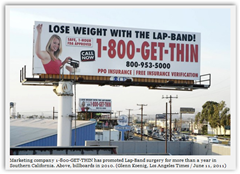
1-800-GET-THIN and Lap-Band Lawsuit Having Trouble in Southern California With Insurer Covering Legal Expenses For False Advertising Case
United Healthcare Gets Sued Over Refusal To Pay For Lap Band Pre-Op Evaluations and Actual Surgical Procedures, “Algorithm Says”?
Lap-Band Surgery Gets the Attention of the FDA–Warnings on Billboard Ads For 1-800-GET-THIN and More
FDA Gives Approval for Lap-Band Use With Less Obese Patients
LAP-BAND(TM) is First Obesity Intervention Device in Europe for Treatment of “Diabesity”

One issue stated here is that United is claiming false medical records were submitted to support claims where the patient’s height was changed to bring the body mass to a level that would meet insurance coverage.  On the other hand too I have read where people on purpose gained weight to quality but that is kind of odd in itself but if that happened, then they met the guidelines.  The lawyers on the other side said now they have to find out why they paid such claims and United said they are overwhelmed with claims and can’t screen them before making payments.  That’s kind of odd as that’s part of their business when patients every day have to get an approval for some procedures and drugs too from them.   So maybe they are admitting they have problems with their business models here and fraud prevention doesn’t work as good as it should even though they sell this software/service like crazy.  Here’s an example of a company that’s using their fraud prevention algorithms below. 

SAS Adds Optum (UnitedHealthcare) Fraud Prevention Algorithms That Includes Social Network Data Mining Analytics To Their Fraud Prevention Framework Software

At this point maybe we might begin to wonder about how good the anti-fraud algorithms really are?  A few yeas ago a number of dermatologists in San Diego fought the Ingenix fraud algorithms and a couple went out of business as the company came back after the fact and took money back and notified all other insurers to not pay several practices, so over night all their reimbursements were stopped, a rude awakening as of course the doctors had already provided the services to patients.  Again this is kind of an interesting defense here being the company sells and prides itself on anti fraud processes and now is saying they don’t do so well after all, at least in this case.  There might be something to that as in New York the company had no problem kicking out $175,000 for a $15,000 hammer toe procedure and that’s pretty glaring as I would have thought the “normal and customary fees” data base would have set off an immediate alarm there with one that out of tolerance?

$175,098.80 To Fix A Hammer Toe Billed by New York Podiatrist And the Insurer Paid It, Well Sort Of As They Sent the Check to the Patient By Accident, A New Investigation For “Out of Network” Charges Has Resulted

Anyway, using such a defense in my opinion anyway might hurt the credibility of the products and software they sell, you think?  We know the pressure is on all insurers as CMS through an audit found a “risk fiddler algorithm” that worked for 5 years and allowed insurers to bill an additional $70 billion, or around $14 billion a year as an average.  That will be gone and CMS can’t really even file a fraud cause here as insurers would probably cut more services to Medicare Advantage Plans.  Why isn’t everyone honest about their numbers you could ask? 
CMS Discovers That Insurers Offering Medicare Part D “Really Know To Sharp Shoot A Model With Adjusting Risk For Profit”, A Common Everyday Occurrence in Financial Markets…

When you see Wall Street style quantitative math models that fiddle with risk become apparent?   We saw the same happen with the Ingenix lawsuit that the AMA filed and settled with paying doctors short for 15 years with United and the other insurers licensed it so they settled as well, or at least most of them anyway as I ran across this of late at the link below and now Aetna who agreed to settle is trying to get out of their portion of how long they too used the Ingenix models on out of network payments.

Ingenix (Optum-United Healthcare) Lawsuits Still Bouncing Around Out There–One Recently Settled in New Jersey With Horizon Blue Cross Blue Shield That Was Still Using the Flawed and Corrupt Data Base for Out of Network Payment Calculations

Anyway, it seems to be kind of an odd defense for a company that has sold and marketed anti-fraud software and systems for years.  Maybe the United models need some work on their anti fraud solutions?  Variables will cause models to be updated and re-written as we all know and in the financial world this happens all the time.  So this will be interesting to follow as again they seem to be putting the credibility of their own products and software on the line with the type of legal defense I’m reading in this article, you think?  This quote below kind of says it all and ask any provider or hospital about how “good faith” works with insurers as they are sometimes nickeled down on other small claims that cost them time and money to research.  There was a story in the LA Times not too long ago to where doctors in Los Angeles had taken a lot of time to document, send images, etc. on a medically needed breast reduction.  United wanted all kinds of documentation, etc. and then came back months later after all the work and effort on the part of the doctors and said “her policy would not cover that”, so whey didn’t they advise in the first place was the question with the doctors instead of taking their time sending groves of information for the claim? 

"By practical necessity, United must reasonably and in good faith rely on the veracity of the descriptions of the services rendered as stated on the claims form and the amount of the bill submitted by the provider for each service."

You can decide for yourself on this one, but again when the company has sold so much anti fraud software and services, this is a strange defense here to say “we can’t handle the claims” and were the victim here?   BD 


The nation's largest health insurance company has accused the brothers behind the 1-800-GET-THIN advertising campaign of defrauding the insurer of more than $40 million by operating a complex weight-loss surgery billing scheme.

UnitedHealth Group Inc. contended in a lawsuit that Michael and Julian Omidi operated a network of companies that tricked the insurer into paying claims for medical procedures that were unnecessary, ineligible for coverage or never even performed.

The companies advertised for several years on Southern California freeway billboards, radio and television with a catchy slogan: "Let your new life begin, call 1-800-GET-THIN."

An attorney who represents the surgery centers denied UnitedHealth's allegations and said he would seek to have the lawsuit dismissed.

"There was certainly no systematic attempt to defraud an insurance company," said Daron Tooch, who represents several surgery centers sued by UnitedHealth. "It's just a series of allegations designed to counteract the lawsuit we filed."

UnitedHealth declined to discuss the lawsuit, issuing a short statement instead: "UnitedHealthcare will continue to vigorously litigate the claims and counterclaims affiliated with the 1-800-GET-THIN litigation."

The lawsuit contends that UnitedHealth paid more than $43 million on "false and misleading" claims submitted by the Omidis' companies. Multiple claims were for pre-surgery procedures that were not performed, including ultrasound, psychological and nutritional consultations, the lawsuit said.

"United receives nearly 2 million healthcare claims per day and must comply with various laws and regulations mandating that such claims be paid within a short period of time," the company said in the lawsuit. "By practical necessity, United must reasonably and in good faith rely on the veracity of the descriptions of the services rendered as stated on the claims form and the amount of the bill submitted by the provider for each service."

UnitedHealth's allegations come two years after several law enforcement agencies opened an investigation of the Omidis for "potential violations of federal law, including conspiracy, healthcare fraud, wire fraud, mail fraud, tax violations, identity theft [and] money laundering," according to a statement by a U.S. Food and Drug Administration criminal agent in a court filing in an unrelated criminal case. No charges have been filed.

http://www.latimes.com/business/la-fi-get-thin-lawsuit-20140925-story.html

ACO Models Are Dying Out In Value, They Make More Press Than Anything, Complexities Are Making Goals Just About Impossible With Constant Variables, But ACOs Sure Sell a Lot of Software…

Those selling software in the Health IT business are the only winners here.  Patients don’t even know if they are in one and much less what one is.  The initial savings for an ACO might show promise but what do you do once you hit the first year or two? 

A new model is needed here or maybe new terminology.  We tried it, some saving but when you figure all the hoops, the extra reporting required, is there really any savings at the bottom line?  I don’t think so from what I have read and I think we just got soakedimage in software overall.  Sure the idea was good when created but within the last couple of years, models are not working anymore. 

Like most of the failing models in healthcare, there’s way too much over quantitation and in some area too much focus on non relevant data that does not end up showing an ROI.  We need actionable software that makes us efficient as well. 

The next one after this to fail will be over quantitated population health.  If population health is done in moderation and finding facts that can be helpful, that’s fine and it should be used like a registry to find out how you are doing with quality and managing.  However, we have some folks going off the deep end here again as what’s been done in many areas of healthcare.  I’m not talking about genomics and scientific research as that is what they do but we don’t need all of that with over stuffed analytics to run the every day business of healthcare and that’s where developers with their proofs of concepts are going, they don’t know where to stop.

Why do you think everyone is complaining about EMRs?  It’s the same reason and we need a balance of actionable workflow software that helps us do a better job, and yet not bog us down.  I like smart technologies and data that helps but we seem to be in this race to get down the last grain of rice with managing care.  Again in science and genomics, they after the last grain of rice but in the business side of taking care of patients, we are over whelmed. 

Every day several headlines “this hospital or insurer formed an ACO” and the next day another one.  All we need to do is look at the pilot program from Medicare to see that the models are not working and thus so you can’t have a one size fits all, why?  Because it’s the people business and there needs to be a balance that we don’t have right now.  I really could go months without seeing another press release on someone starting an ACO:)  At the link below, hospitals in Ohio, are basically saying “models are broken” in reference to Medicare reporting. 

Antiquated Ways Hospitals Report Cost to Medicare “Really Distorts” The True Cost of Care–New Model Please..

Let’s get rid of the analytics and glut we don’t need for taking care of patients and focus on work flow and actionable data.  If you don’t watch it closely, software builds on itself over and over and soon you end up with a mess of this progression and people get irritated as the complexities grow too. 

A $372 million dollar savings for Medicare with the dollars they spend and manage is like peanuts when you reference their pilot programs.  I’ve seen ACOs too where they just come in and slash reimbursements too or have a complex formula there too.  Then there’s the bundled care model, it made my head spin reading it.  We can have models that work but building on to a model that is already failing is not the answer to fix it.  Ask the financial folks on that one and they can tell you. 

The Four Models of Bundled Care - 3 Year CMS Algorithmic Patient Care Improvement Initiative, Yet One More Model To Enrich Health IT Profits With Complexities, Variables Will Kill This Model In Time…

Again we have a complex monster here that will continue in that direction and the results seen are not worth the time.  Sure there’s things folks learned how to do better but they would have probably done that anyway, ACO or not as hospitals are always increasing efficiencies in some way or another.  All the hype on big data makes you think need big data when in fact you really don’t all the time.  We have a data addiction problem that’s not producing real ROIs.  What I said a couple years ago and it seems true today. 

Half of Analytics Investments By Companies and Banks Will Be a Waste–What Do We Analyze with Big Data and Does It Have Value–Some Algo Fairies Would Do Better at Disneyland…

So let’s kill this model and make reporting and quality issues easier so we get back to patient care as the focus.  If you want to save the name ACO, be my guest but let’s begin simplifying things so we can co-exist with realistic goals.  We already have complex items we can’t fix or change in the way of coding with the new ICD 10 that’s coming in so you can’t keep adding more complexities to the model and expect good results when it’s in failing mode as the start.  BD 

HCA Buys Patient Keeper Software

For as long as I can think back and remember PatientKeeper has been around.  Their platform has been in use in HCA hospitals so I guess why not own it.  The platform integrates with many types of software and provides workflow support for the physicians and works onimage mobile computers and phones. 

Patient Keeper has been a long time Meditech partner as well.  All employees as I read here will all remain in Massachusetts.  CPOE (Computer Physician Order Entry) is one of the company’s strong points and they offer other services as well as security, charge capture and so on.   BD 

From the Website:

“It started more than 10 years ago with a simple observation: physicians need an easier way to access and work with patient information. Long before the popularization of electronic health records and the advent of Meaningful Use incentives, PatientKeeper was a pioneer, offering physicians a single view of their patients’ information, integrated from multiple systems across a hospital, and easily accessible on computers and mobile devices.”


NASHVILLE, Tenn.--(BUSINESS WIRE)--HCA (NYSE:HCA), which operates 164 hospitals and 114 surgery centers in 20 states and England, today announced the signing of an agreement to purchase PatientKeeper®, a leading provider of intuitive software and mobile applications that help physicians access and work with patient information.

    “This is an opportunity to align a software vendor with one of the leading healthcare providers in the world. It gives us a platform that will allow for real-time innovation and the opportunity to improve the delivery of healthcare.”

PatientKeeper is a privately held company that provides applications for physicians that run on an innovative architecture that overlay hospital IT systems. These applications provide physicians with a set of electronic tools to automate their day in a way that saves them time and allows them to better focus on patient care.

For the past seven years, physicians at HCA-affiliated hospitals have been using PatientKeeper to access a single view of their patients’ information across a variety of hospital systems, to streamline workflow, and to help improve patient care. This purchase will facilitate the continued development of HCA’s electronic health record and enable HCA to provide physicians a number of capabilities, including computerized physician order entry (CPOE), medication reconciliation, and documentation. Furthermore, the combined companies will continue to enhance and expand PatientKeeper product offerings.

PatientKeeper serves more than 58,000 physician users. PatientKeeper’s intuitive software integrates with existing healthcare information systems to create an effective solution for physicians. Its applications include Charge Capture, Clinical Results Review, CPOE, eSignature, Medication Reconciliation, NoteWriter and Sign Out.

http://www.businesswire.com/news/home/20140923005797/en/HCA-Purchase-PatientKeeper#.VCJJ4aN-X4s

NueMD Launches A Survey Relative to HIPAA Compliance and Readiness

NueMD is conducting a survey of healthcare professionals to gauge their knowledge of HIPAA and help them prepare for an audit.   NueMD is one of the valued sponsors at the Medical Quack so please when you have a moment be sure to take look at the right hand side and see what all have to offer.  Advertisers help keep this blog going.   I also have a link at the bottom of the site with additional information located at the NueMD website.   Nobody ever looks  forward to a HIPAA audit but it’s better to be prepared than to be caught short by all means.  BD 

Click Here To Take the Survey


NueMD is conducting a survey of medical practices, billing companies, and business associates about HIPAA compliance.

In anticipation of the upcoming audits by the Office of Civil Rights, researchers at NueMD have teamed up with The Daniel Brown Law Group and Porter Research to conduct a survey that will help small practices prepare for an audit.

The survey will gauge respondents’ knowledge of HIPAA’s Privacy and Security regulations, understanding of compliance measures, and how electronic devices are used for communication.

Participation is strongly encouraged for care providers, office managers, and office staff of medical practices, as well as those who work for business associates (medical billing companies, software companies, etc) of covered entities.

“Our goal with this survey is to understand how knowledgeable small practices are about HIPAA regulations and what they’re doing to prepare for an audit,” said Caleb Clarke, director of strategic development at NueMD. “The results of the survey will also allow practices to benchmark their progress against their peers and learn what areas may require additional attention.”

All responses are anonymous, and instructions on how to access the results will be provided upon completion of the survey.

http://www.nuemd.com/blog/nuemd-launches-survey-hipaa-compliance-ahead-audits

Emerge.MD to Delivery Video Enhanced Telehealth Using Polycom Real Presence Solution

Polycom is about as top level as you can get with quality video and has been around for a long time.  The companyimage has partnered with Microsoft and may others over the years and now Emerge.MD is using the platform for telehealth.  It can be used to engage the patient, other doctors and so on.   The video below is a statement from a hospital’s success with the program. 

As we all know rural hospitals are really in dire need of telehealth.  Two or more physicians can connect to collaborate.  Also doctors can connect with patients at home, all with a face to face consultation.  BD 

From the website:

“With a web browser and a simple web camera, Emerge.MD can plug patients in to a telehealth care network. Chronic disease monitoring devices are made all the more effective when providers can directly contact a patient when they notice a change in their health status, and follow-up with a face-to-face consultation that adheres to federal privacy laws.”

The video below gives an example of Consult Accelerator and an explanation of how it works.  BD 


PHOENIX, AZ, Sep 22, 2014 (Marketwired via COMTEX) -- Emerge.MD, the only telehealth cloud platform that can connect all the people, processes and technology involved in virtual care with a high degree of security, today announced its products have been demonstrated to interoperate with solutions from Polycom, Inc. PLCM, -2.23% a global leader in video, voice and content collaboration solutions.

Emerge.MD is now integrated with Polycom's RealPresence Platform, which creates a seamless user interface for healthcare organizations to take advantage of video-enhanced workflows when engaging with patients and other healthcare professionals.

http://www.marketwatch.com/story/emergemd-to-deliver-video-enhanced-telehealth-polycom-ready-solution-to-enhance-patient-care-2014-09-22

Antiquated Ways Hospitals Report Cost to Medicare “Really Distorts” The True Cost of Care–New Model Please..

Here we go again with the same discussion of antiquated models with way too much math and quantitation.  This is a discussion with several hospitals in the Ohio area as the are talking about the future of hospitals and yet still have the noose around their necks with the government on quality reporting and cost.  We all know HHS and CMS are dealing with outdated models and it’s making everyone nuts.  In addition you have health insurers flipping back and forth on contracts, what they cover, what they don’t cover, what changes today, what won’t be there tomorrow and so forth. image People are absolutely hating this complexity that has been created just to go get care.  Look at the link below, some hospitals can’t eve get the ER doctor groups and the hospital itself with the same insurers, so people get screwed again on balance bills. 

In Texas Hospitals Having Issues Employing In-Network Doctors With United Healthcare & Humana-Found One Insurer Still Listing An In-Network “Dead Doctor”…

The article mentions that delivery of care has changed in healthcare and that is true but you’re never going to get away from having hospitals who do have a certain amount of fixed costs that can’t go away either.  Hospitals are anticipating a decrease in the demand for care due to both preventive care and other technologies, perhaps like telehealth that will ease a little on expense.  The one big bogus item we have seen for years though is the projected savings brought by technology and in fact it’s just the opposite as all of it costs money, even if there’s fewer patients being seen at a hospital. 

In the group here is also the Cleveland Clinic and basically they are all saying “we don’t know what’s going to happen” down the road and we don’t know how to measure the quality consistently with all the constant changes.  They agree on one thing, risk is ever so present.  In California , the CMA is telling United Healthcare their Premium Ratings for Doctors are flawed, so there you go again, but as we all know United thinks you can quantitate everything and that is exactly why some of their models and the ones they helped CMS with are failing. 

United “Quantitated” California Doctor Premium Designation Ratings For Consumers, A Few Minor Changes-CMA Still of Opinion Ratings Cause Harm to MDs and Patients With Inaccurate Designations and Flaws…

Here’s yet another example of the United quantitation extremes…how can this push-pull work?  Sure there’s obvious workflow predictabilities that are helpful with monitoring disease and care and but again we have read like below about projected savings they state in a proof of concept that never arrive as models expand beyond efficiencies and dive to deep into a non linear type of projection. 

United Healthcare Wants to Expand Predictive Modeling for Medicare and Medicaid–Billions in Savings Predicted in Report Only As Good as the Day It Is Published

We are still seeing rural hospitals running out of money and closing up.  In the rural area of Virginia here they had to rely on the free clinic from Remote Area Medical to help them as their hospital closed and doctors are struggling in the area. 

Remote Area Medical Sets Up At Lee County Airport in Virginia For a Free Clinic–Rural Community Needing Care Where The Hospital Has Closed and Doctors Struggle…

Again, the “scoring” and reporting from hospitals on non relevant data could certainly ease up a bit and CMS take a hard look at what data they “really” need as this push and pull with outdated models is going to drive everyone nuts.  As you can read below the hospitals can’t predict and they too say the government tracking is not a true indication of their services so a new more flexible model just might be in order.  BD 


Health care providers expect to see fewer patients in the future as care, technology and access to treatment improve.
That means less revenue for hospitals — collectively, the country’s largest employers — which find themselves operating in a dramatically changing industry.

“The United States is going through the biggest change in its society, probably since the New Deal, affecting the biggest industry in the United States and affecting 100% of the population,” said Dr. Delos M. “Toby” Cosgrove, president and CEO of the Cleveland Clinic. “And as we do that, we recognize that we have to change the delivery system to go to value, increasing in quality and making care affordable. And that is driving change in a very, very big industry.”

Boutros said the health care industry is undergoing a metamorphosis as hospitals transition from sick care to a more holistic approach based in preventive care, which is creating as many uncertainties as potential opportunities in the delivery of care.

“This whole change from a sick-care model to a well-care model — as you know Akron General has been talking about this for over 20 years — we spent $110 million on that concept. As a doc, I really don’t understand how people are going to judge our individual practitioners in a value-based world,” Stover said. “That sort of calculus of how it’s all going to work out is something I think we’re all struggling with.”

The reasons costs are so high to patients, and vary so greatly between hospitals, range from the difficulty of assigning a value to services, Stover said, to a hospital’s costs for research and staff education. Meanwhile, Zenty pointed out, the antiquated way costs are reported to Medicare “really distorts” the true cost of care.

And as hospitals see fewer patients, Zenty said, the result is a “decrease in demand and an increase in supply.” That spells bad news for hospitals that receive a large portion of their revenue from the federal government in the form of Medicare and Medicaid, which is expected to be cut next year, Zenty said.

http://www.crainscleveland.com/article/20140919/FREE/140919741/hospital-leaders-come-together

One More Reason to License Data Sellers–Income Tax Fraud On the Rise-Who Are You Buying Your Data From And Who’s Buying Your Data? 60 Minutes Report

If you read here often enough then you know about the campaign about data selling and the campaign to license data sellers.  We imagedon’t like this as consumers as the data gets flawed and removes our dignity.  60 Minutes has a good report on Income Tax Fraud and when companies are buying data, where is the data coming from?  This is turning the story around a bit but how much gets recycled?  We don’t know.

They did a good job in covering Miami to where it runs wild.  I just did a post on a hospital that had their third data breach in 2 years and it’s all inside jobs with people selling patient data for money.  It’s scary as the former data seller and IRS tax filer tells how easy it is as “people need the money”. 

Hospital in Florida Reports Third Data Breach In Two Years…

This also shows how far behind the IRS is with their data systems and not matching up W-2 forms and 1099, the fraudsters can just make them up.  In addition UMPC Medical Center was hit with this type of  scam, again people selling the data as they need the money.  In Pittsburgh they also have the mayor filing a lawsuit to get the tax exempt status away from the hospital as they make more profits than any other in the US.  Employees had their bank accounts drained as well as tax returns filed.

It goes on further, even US Attorney General was hit, Eric Holder and someone filed a tax return on his social security.  This can start at the low end but people take data and re-package us over and over and over.  Look at the hassle the innocent people have to go through with all of this.  People have lost businesses and other things in life they need.

UPMC Medical Center Workers Protesting Low Wages While Investigation of Employee Data Breach Continues With Fake Tax Returns and Bank Accounts Drained..Double Whammy

I’m waiting for the next crisis to hit with people that purchased their health insurance through Healthcare.Gov to get hit with this when it comes to verifying income with the IRS, will they lose their subsidies?  You do have to remember that the IRS and many other government agencies still work with COBOL and sufficient middleware is needed to allow data to flow back and forth.  At this point you wonder, why did the government create this model?  It was data novices’ with a “wish list” in control and having novices in charge is getting more dangerous in government every day. 

Again this story is about a low level type of data theft but all the data gets recirculated at some point, and what about the Data brokers selling public records?  How’s this going to continue to cause havoc for consumers? 

Pay attention also to the prepaid credit card connection here as well and how the fraudsters work it. 

Again the data business needs a big clean up as data selling is a runaway train.  Medicare payments come via prepaid credit cards.  The IRS can’t tell the difference at times.  With requiring licensing for data sellers again this would give law enforcement yet another leg to stand on with finding and convicting such fraud. 

Even those who do buy and sell data are at risk of getting “hot and stolen data” so again, data licensing and distributing should be licensed.  Here’s another case of stolen data traded and sold right in the open on the internet.

Medical Records For Sale Found On the Black Market - Evolution Market Where Narcotics And Stolen Financial Data Is Openly Traded and Sold…

http://www.cbsnews.com/news/irs-scam-identity-tax-refund-fraud-60-minutes/