What’s better than $4.00 Generic Antibiotics – Free Antibiotics

In some areas, there are some available for free, Giant Food is running it for 3 months, and each retailer’s plan is different; however, if you need other medications, you may want to do some price checking as they could be a bit higher.  The generics are limited, so if they are not found on the free listings here, use the links to the $4.00 medications on this site, and the link to “Needy Meds”, which are always posted here in the resource area of the blog.  BD 

In this case, they’re free — at least for now. Giant Food is giving away generic antibiotics from Jan. 2 to March 21, including amoxicillin, penicillin and ciprofloxacin. Details are here. The program will also be available at Giant’s sister chain, Stop & Shop.image

Since Wal-Mart started its four-dollar program a couple of years ago, cheap generics have become almost a necessity to bring in customers.

“We have a lot more competition these days,” Robin Michel, EVP and general manager at Giant, told the Baltimore Business Journal. “And there’s no way you can be more competitive than free.”

Other retailers with free antibiotics here:

http://www.schnucks.com/pharmacyprogram.asp

http://www.martins-supermarkets.com/cnt/FreeAntibiotics.html

http://www.meijer.com/content/content_leftnav_manual.jsp?pageName=free_antibiotics

http://www.stopandshop.com/antibiotics

http://www.publix.com/freeantibiotics/

Health Blog : Giant Supermarkets Gives Away Generic Antibiotics

What’s in the “K” – Vitamin K or Potassium?

This is a good observation of perhaps how medications could be confused and not administered properly if mixed up, and instructions not read properly.  The Happy Hospitalist analyzes the two after hearing a patient discharge conversation and it appeared to be a potential mix up on medications that all relate back to the “K”. 

It is strange I agree to have the same initial allowed for two very different treatments, and as indicated in the statement below, the Vitamin K was not going to be the correct treatment and the potassium was the correct choice.  I’m sure there are others of sorts as well that get mixed up, but take a busy emergency room and perhaps a little short on staff with clinicians rushing to try to accommodate all and the stage could be set for a potential error as such.  That really does raise a very good question of why the letter “K” might need a second look for use with medical abbreviations.  Great information for all of us to be aware of, especially if you are one in need of potassium.  BD 

“For those not in the medical field, the abbreviation for potassium is K. The abbreviation for vitamin K is vitamin K. Vitamin K is used as a reversing agent for Coumadin, an anticoagulant that causes a person's INR to go up, making it more difficult for them to clot. This patient got vitamin K, not potassium, which would have done nothing but increased his potassium level.

I wonder if the Marijuana Mafia (MM) has looked into this dangerous association between K and K. How could two drugs have the same name, yet be so different.

I wonder how many deaths have been attributed to the administration of subQ potassium. If given in large doses, intravenous vitamin K can kill you as well. I wonder if we should sue the American Chemist Society for allowing vitamin K to be confused with potassium on the perdioc table of elements. All those needless deaths.”

http://thehappyhospitalist.blogspot.com/2008/12/american-health-care-in-nutshell.html

Sponsor an Executive

Hilarious!  I hope it doesn’t come to this, although it seems pretty close at times.  BD 

“The money you give won't just save a life, it'll save a lifestyle.”

http://www.youtube.com/watch?v=qDC0qcf0kzE

Technorati Tags: ,,

Surgery Room goes Wireless with High-Definition Surgical Displays

The display is capable of transmitting surgical video with no perceptible lag or interference throughout the entire operating room, which means a few less sets of cables or wires in the OR.  imageSoon, HD surgeries may grown to be a common occurrence with displays.  BD

SANTA CLARA, CA - AMIMON Inc. is pleased to announce that Stryker Endoscopy, a division of Stryker Corporation, has launched the  world's first high-definition (HD) wireless video display for the operating room. Stryker Endoscopy's WiSe(TM) HDTV is embedded with AMIMON's wireless HD technology. AMIMON has granted Stryker Endoscopy exclusive access to its technology for the medical endoscopy market.

Stryker Endoscopy Launches the World's First High-Definition Wireless Surgical Display With AMIMON's High-Definition Wireless Technology - MSNBC Wire Services - msnbc.com

OptumHealth Web (United Healthcare) Partners with Microsoft HealthVault

Well if you can’t beat them, join in, seems to be the direction today of personal health records.  On the first of December, United announced their Optum Health website for members to use for personal health records and to find and review medical information. 

As mentioned before, the site will also be used to help sell and market their health insurance plans as well.  As time is marching on, Google and Microsoft HealthVault seem to be the 2 plans to align with, and this makes sense as more medical device companies and other healthcare vendors are jumping on the bandwagon.  Why these 2, because they are not related to an employer provided service and records can be taken with you anywhere.  My own thoughts here, why get 2 or 3 plans unless you need the additional PHRs for the sake of importing information into Google Health or Microsoft HealthVault.  BD 

GOLDEN VALLEY, Minn.--(BUSINESS WIRE)--OptumHealth Inc. today announced it is providing a free personal health record (PHR) that is portable and can be shared with physicians, family member or others. The PHR is available through the Web site  www.myOptumHealth.com and provides the same portability and sharing capability that is also now available to individuals with PHRs set up through more than 1,000 employer private health portals managed by OptumHealth, as well as the myUHC.com portal used by 25 million UnitedHealthcare members.

These attractive expanded features are made possible through collaboration between OptumHealth and Microsoft Corporation. Individuals can now transfer their PHR information from an OptumHealth-managed health portal directly into a Microsoft® HealthVault™ account, which is a security-enhanced, Web-based consumer health platform. Information stored in HealthVault will be “portable” in that it will be available to members even if they change jobs or health plans, providing a truly portable record of their health.


OptumHealth Expands Access to Portable Personal Health Records for Millions of Americans

Related Reading:

UnitedHealth Creates Personal Health Records With Online Health Venture

Algorithms, Formulas and Investigations leads to AARP suspending sales of some health plans
Senator opens investigation into AARP insurance
UCI students victims of health insurer leak – United Healthcare
United has dropped some doctors in retainer practices ...
Insurer UnitedHealth racked up penalties as it grew

Merry Christmas and Happy Holiday Wishes

image

Best wishes to all and thanks once again for tuning in to the Medical Quack this year!

image


Sex Chip is to stir up the libido – the latest technology with implanted medical devices?

First thought here, is Viagra in trouble?  There are more implanted devices appearing on the market and a chip for sex?  What next?  According to the article this is still very much in the research stage and of course no word on clinical trials, but gee, hopefully we won’t someday be dependent on a chip for goodness sakes. 

As mentioned, it is using the same technology presently in clinical trials for treatment of Parkinson’s disease as well.  The one woman who tried it out though didn’t like it, well I guess there’s more work to be done here.  BD 

In an attempt to boost the decelerating sex life of today and tomorrow's stressed out generation, a group of scientists are coming up imagewith an electronic 'sex chip'. Based on the same technology that is used to treat the Parkinson's disease in U.S., this chip can create tiny shocks deep in the brain which in turn triggers the pleasure buttons in the brain. The orbitofrontal cortex, which is associated with feelings of pleasure caused by eating and sex, is targeted. 

Daily mail reports that a few years ago a scientist implanted such a device into the brain of a woman with a low sex drive and turned her into a very sexually active woman. She didn't like the sudden change, so the wiring in her head was removed.

An electronic machine that creates sexual feelings is already being developed in America by Dr Stuart Meloy. He calls his device, which is a modified spinal cord stimulator, the Orgasmatron. The name is taken from the 1973 Woody Allen film Sleeper.

An aphrodisiac bionic chip is on its way to stir up the libido

Related Reading:

Implanted Medical Device to Control Blood Pressure

The Future – A Day of Going to the Doctor

What is Cyberchondria and Who Has it?

FDA Clears Neurostar® TMS Therapy For The Treatment Of Depression

Legendary Banjo Player's Brain Helped with Deep Brain Stimulation - The Brain Defibrillators are here

Microsoft Start Up Zone – Help for Start Up Companies

What happens when you don’t answer your tweets on Twitter, well you end up with your video over here.  Actually this is a good video from Woody Pewitt, Microsoft Dot Net Evangelist in southern California who is now working with start up companies with software and all kinds of other support offered at the imageStartup Zone.  I have included a few lines from the post I did back when the Startup Zone was introduced back in November and you can use the link below to view all the additional content. 

Microsoft BizSpark – Free help, Software, Venture Capitalists and Angel Connections

As you can hear from the video, Woody is ready to help. He can’t live a day without code!  Actually I know Woody and he can answer just about anything you can come up with and a good person to work with if looking to get your start up company running in the software department and he like tablet pcs too.   He also talks a bit about the Silverlight project used at the San Diego Zoo.   I just wish I got to work in all those nice surroundings (grin).  BD

The program is designated for start up companies, and we have plenty of those in healthcare. You do need to qualify, but the website is pretty complete with instructions, information etc.  You need to be in business for 3 years or less and have revenues of under a million, so that leaves open a pretty broad spectrum of potential candidates.  If you were to pay for the software, depending on what your needs would be, the charges would start ringing up in in hurry.  The FAQ page is located here.

Microsoft® BizSpark™ is a global program designed to help accelerate the success of early stage startups by providing key resources when they need it the most:

  • Software. Receive fast and easy access to current full-featured Microsoft development tools, platform technologies, and production licenses of server products for immediate use in developing and bringing to market innovative and interoperable solutions. There is no upfront cost to enroll.
  • Support. Get connected to Network Partners around the world — incubators, investors, advisors, government agencies and hosters — that are equally involved and vested in software-fueled innovation and entrepreneurship who will provide a wide range of support resources.
  • Visibility. Achieve global visibility to an audience of potential investors, clients and partners
    As a Microsoft BizSpark member, you’ll be tapping into a rich, vibrant ecosystem of peers, partners and support resources around the globe, helping you grow and succeed. Microsoft BizSpark is the quickest way to get your Startup fired up.
    • Check to see if you qualify – most privately held software development startups in business for less than 3 years that are generating annual revenue under USD $1 million can join.
    • Connect with a BizSpark Network Partner or a Microsoft BizSpark Champ to get your BizSpark enrollment code.
    • Enrollment is free, just pay a USD $100  program offering fee at program exit.
Here’s what you get:

As a Microsoft® BizSpark™ member, you get access to software, support and a rich, vibrant ecosystem of peers, partners and support resources around the globe. Microsoft BizSpark is the quickest way to get your startup fired up.

Software

http://www.techzulu.com/woody-pewit-talks-startups-and-developer-evangelism.html

Implanted Medical Device to Control Blood Pressure

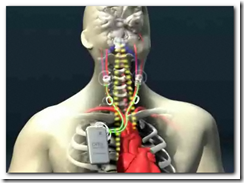
The device is still under clinical trials at present and does require surgery that takes 2-3 hours.  Perhaps soon we may have a choice on how to cover hypertension, device or drugs someday.  There are around 300 patients participating at present.

Additional information on trials can be found at the links below.  It works in conjunction with baroreceptors almost like a thermostat would and sends information to and from the brain.  BD 

So it's understandable that many cardiologists, in an effort to get to the root of the myriad health problems that stem from hypertension, have imagefocused on alleviating the condition with drugs. But patients whose extreme hypertension won’t respond to medication or changes in lifestyle may soon have a new option to lower their blood pressure: surgery.

On Sept. 19, 2008, Pareso had one of the devices implanted by CUMC neurosurgeon E. Sander Connolly, also the study's principal surgical investigator. Dr. Connolly said Pareso was an ideal candidate since his hypertension was particularly stubborn and his symptoms were not alleviated by medication.

image


Baroreceptors work like a thermostat that automatically turns on the air conditioning when the air temperature becomes too hot. By activating the baroreceptors and sending signals to the brain, the Rheos System causes the brain to perceive a rise in blood pressure. The brain then acts to reduce blood pressure by sending signals to the blood vessels, heart and kidneys, the major organ systems involved in the control of blood pressure.


Two weeks later Pareso came in for his check-up, and doctors recorded lower readings. The sutures in his neck here barely visible and Pareso said he was feeling fine: "My hope is to eventually get off the meds and get my energy back. After taking Catapres everyday, I would start dozing off. I'm not sleepy now."

The FDA-approved device used in this study is the Rheos System made by CVRx, a private, Minneapolis-based company that develops proprietary  active implantable technology for the treatment of hypertension. Other centers participating in the trial include Washington University, Boston University Medical Center, University of Rochester and Hackensack University Medical Center. 

image


For more information about the study, or to participate, please visit: http://www.bloodpressuretrial.com/index.html or call 1(888) 8BP-RISK.

http://www.cumc.columbia.edu/news/press_releases/Shimbo_RHEOS_Trial.html

Hat Tip:  Medgadget

Cell Phone Detects HIV, Malaria and other diseases

A cell phone with a camera right off the shelf was able to do this.  Looks pretty simple from the picture and amazing work from UCLA.  BD 

Talk about multi-functionality - just when you thought that cell phones can more or less do everything under the sun, along comes a bunch of scientists at UCLA who discovered a hack that is able to let your humble cell phone detect not only HIV but malaria and other illnesses as well, making it a suitable contraption that can help save lives in remote parts of the world where it is impossible to fly in huge, expensive machines.

image

UCLA researcher Dr. Aydogan Ozcan managed to image thousands of blood cells instantly by placing them on an off-the-shelf camera sensor, followed by lighting them with a filtered-light source. The filtered light will expose special qualities of the cells that will be interpreted by Ozscan's custom software for a more accurate diagnosis within minutes. What a great gift to the world this Christmas.

Cell Phone Detector

FDA's New Warning About 25 Weight-Loss Products that may contain controlled substances

You could possibly be getting more than you bargained for with some of the products according to the FDA.  They recommend to quit taking the products and consult your physician if needed.  BD 

(CBS) The FDA warned consumers Monday to neither consume nor purchase a slate of more than 25 different weight-loss products.

Each may contain "undeclared, active pharmaceutical ingredients that may put consumers' health at risk," the FDA said in a release.
The drugs the FDA warns could be tainted:

  • 2 Day Diet
  • 3x Slimming Power
  • 3 Day Diet
  • 5x Imelda Perfect Slimming
  • 7 Day Herbal Slim
  • 7 Diet Day/Night Formula
  • 8 Factor Diet
  • 999 Fitness Essence
  • Extrim Plus
  • Fatloss Slimming
  • GMP
  • Imelda Perfect Slim
  • Japan Lingzhi 24 Hours Diet
  • Lida DaiDaihua
  • Miaozi Slim Capsules
  • Perfect Slim
  • Perfect Slim 5x
  • Phyto Shape
  • ProSlim Plus
  • Royal Slimming Formula
  • Slim 3 in 1
  • Slim Express 360
  • Slimtech
  • Somotrim
  • Superslim
  • TripleSlim
  • Venom Hyperdrive 3.0
  • Zhen de Shou
    The FDA warning comes after an analysis found that the "undeclared active pharmaceutical ingredients" in some of the products contained a controlled substance, a drug not approved for marketing in the United States and a suspected cancer-causing agent.
  • These weight loss products, some of which are marketed as “dietary supplements,” are promoted and sold on various Web sites and in some retail stores. Some of the products claim to be “natural” or to contain only “herbal” ingredients, but actually contain potentially harmful ingredients not listed on the product labels or in promotional advertisements. These products have not been approved by the FDA, are illegal and may be potentially harmful to unsuspecting consumers.
    The FDA advises consumers who have used any of these products to stop taking them and consult their healthcare professional immediately. The FDA encourages consumers to seek guidance from a healthcare professional before purchasing weight loss products.
    "These tainted weight loss products pose a great risk to public health because they contain undeclared ingredients and, in some cases, contain prescription drugs in amounts that greatly exceed their maximum recommended dosages," said Janet Woodcock, M.D., director, Center for Drug Evaluation and Research, FDA.
    "Consumers have no way of knowing that these products contain powerful drugs that could cause serious health consequences. Therefore FDA is taking this action to protect the health of the American public."

    FYI: Tainted Weight-Loss Pills, Learn More About The FDA's New Warning About 25 Weight-Loss Products - CBS News

    Pay for performance (P4P)--How's my driving? – Observations from a Patient

    I just wanted to take this post and republish here as the writer was kind enough to reference one of my posts from a coupe months back.  The one message I see here is that event patients are beginning to wonder about pay for performance as well.  Nice write up and opinion.  BD 

    The first time I heard about P4P, I thought what a great old idea!  Didn't they call it "piecework" back in the day?  Why shouldn't I be paid more if I could churn out 60 widgets in an hour compared to the guy next to me making only 43?  Well for one, maybe his widgets were better than mine.  Maybe I was working with inferior widget parts.  Maybe someone on the widget part line slowed him down.  There may be reasons why we are no longer paid by the "piece." 

    Surely churning out patients was not what health insurance companies had in mind, so P4P must be tied to patient outcomes or satisfaction or some other measure that the physician is performing at his best.  So what's the fuss?  As a patient, I certainly would like to know that my physician is a top performer.  Why wouldn't they want data about their patient outcomes and satisfaction collected, analyzed and shared with insurance companies and patients?  Maybe their patients are sicker, poorer, and unable to afford to comply or follow up.  Maybe they have no control over the interactions between staff and patients. Maybe they are powerless to fix system problems within a hospital. There may be reasons why physicians are leery of embracing P4P sponsored by insurance companies. 

    Today, buried in an otherwise engaging post on The Medical Quack, I found a reference to a kind of P4P that could affect me more directly in the not so distant future. On it's face,like piecework and physician P4P it seems like a great idea. I drive carefully and I pay less money for car insurance. I have a spotless driving record--no accidents or tickets (except the parking tickets my sons get when they borrow my car).  I should be paying less for car insurance. It seems Progressive Insurance has a device that tracks your driving habits, coupled with a program called My Rate promising lower rates. You can even log on to the website and track your projected renewal rate based on your driving. What if my rates go up? What if I can't get insurance anywhere?  Maybe the device was faulty. Maybe I lent my car to my son (the one who gets the parking tickets).  Maybe I was driving erratically while dodging the other nuts on the road. Maybe there are reasons to suspect the motives of insurance companies.

    I'm not sure money is the best motive for improving your widget making, driving, or patient care. I'm pretty sure insurance companies and other third parties that stand to gain while we lose are NOT the best choice to drive improvement.

    Resilient Ambassadors of Change: Pay for performance (P4P)--How's my driving?

    Medical Home gives doctors time with patients

    One success story of how the Medical Home is working for one primary practice doctor.  This is a pilot study to see how it could work by reducing the number of patients seen and a negotiated rate with insurers instead of the fee per service arrangement.  Somewhat similar to an HMO capitation arrangement in design, but again the emphasis is on the monthly payment and not per service. 

    This doctor is also in a group so how it would perhaps work in a smaller practice might remain to be seen and perhaps piloted as well.  Due to economic conditions though at present, some of the practices have slowed down a bit though as patients are not going to the doctor as they have in the past to save money, but the medical home solution could too perhaps be a partial solution in that area for those who have insurance.   BD

    Swedish's new clinic bypasses that problem by working with insurance providers who have agreed to pay monthly fees, instead of fees per service. Group Health circumvents the issue because it does payments in-house. Advocates say medical home pays for itself by reducing emergency room visits and preventing chronic conditions from worsening.

    It also makes the practice more attractive for doctors. "If we don't burn out our doctors, they'll go into family medicine, they'll stay in the practice, and they won't retire at 50," Cordy said. That's true for Boiko, the Group Health doctor, who still takes work home. But the pace is more sustainable, and on a recent evening, after a long day seeing patients, it allowed her to do a home visit for an elderly couple dying on hospice care.

    Doctors get the time they crave with patients

    Employees Want To Give These CEOs Coal For Christmas – Genentech tops the Nice List, Amgen on the Naughty CEO list - Survey

    This is an interesting view on how employees viewed their CEOs from the poll.  Amgen shown on the “Naughty List” while Genentech faired at the top  on the “Nice CEO” list.  Also of interest was to see Goldman Sachs on the nice list, a surprise of sorts.  BD 

    Employee-reviews site Glassdoor.com just released its first annual list of naughty and nice CEOs -- chief executives with the lowest and highest ratings at companies with at least 50 employee-written reviews.

    image

    The Nice CEO listing here with Genentech at the top. 

    image

    Employees Want To Give These CEOs Coal For Christmas

    Technorati Tags: ,,,,

    UnitedHealth settles misstating executive compensation allegation with the SEC – Use their PHR?

    In a related story today an article discusses their new portal that has plans to be incorporated with QuikenHealth in 2009 and will become a Microsoft HealthVault Partner. 

    If it is connected with HealthVault for the convenience of importing claim and other information, that portion could be good as the patient is in control, but I would not want the site to be my primary storage site, let’s say if I wanted to add additional information, I would feel more secure using the HealthVault at that point as I would be in control over what is shared and viewed. 

    It is interesting how all the various other PHR programs keep coming right back to inter-operate with either Google Health or Microsoft HealthVault in one form or another.   Aetna has already announced working with HealthVault as well.  As noted, some are already objecting to the site’s use of advertising which will be used to promote enrollment in insurance plans as well as a few other items listed. 

    “Optum's Web site will be used as a vehicle to promote United's medical insurance as well as dental and vision products. The company also will sell advertising space on the site. "That could be a problem," Darling says. The company, she suggests, should screen advertisers to ensure that pharmaceutical companies don't use the site to promote their products, for example. Such advertisers should be a concern for a portal operated by a health plan or health plan subsidiary, adds Marsha Dolan, associate professor in the Dept. of Nursing at Missouri Western State University. While searching for information about a chronic illness on a competing Web portal recently, Dolan says, an advertisement for a medication for that condition popped up. "To a consumer, it could seem like [the Web site operator] is promoting that drug," she says.”

    Back to the SEC portion of the post, what took so long, since this violation occurred from 1994 through 2005 for the SEC to resolve the investigation?  What types of records had to be reviewed, paper or did all the reports need to be printed if the SEC could not audit electronically?  Usually insurance companies and investors have the top of the ladder technology so was it the SEC not using an electronic audit process?  Just questions that came to this geek’s mind as I was pondering why this took so long with today’s electronic highway we have and why were portions executive compensation hidden for10 years.  QuickBooks – Securities and Exchange Version next?  Right now with transparency and who at the top was being compensated and how much is top discussion for many consumers and shareholders.  BD   

    UnitedHealth Group agreed to settle charges that it violated the reporting, books and records and internal controls provisions of federal securities laws, without admitting or denying the allegations or paying a monetary penalty, according to the Securities and Exchange Commission, which filed the settlement.

    In a separate settlement with the SEC, David Lubben, former UnitedHealth Group general counsel, consented to an antifraud injunction, a $575,000 penalty and a five-year officer and director bar. Lubben also admitted to no wrongdoing as part of the agreement.

    "UnitedHealth engaged in a long-running scheme to hide over a billion dollars in executive compensation,” said Linda Chatman Thomsen, director of the SEC's enforcement division, in a written statement. “By materially misstating these expenses for over a decade, UnitedHealth breached its duty to shareholders to accurately report its financial results."

    http://www.modernhealthcare.com/apps/pbcs.dll/article?AID=/20081222/REG/312229963

    Related Reading:

    UnitedHealth Will Sell You Insurance to guarantee that in the future you will be able to get insurance?

    UnitedHealth Creates Personal Health Records With Online Health Venture

    Algorithms, Formulas and Investigations leads to AARP suspending sales of some health plans

    Study Predicts Big Savings from PHRs (Personal Health Records) – Best Kept Secret in Healthcare?
    CMS names four PHR vendors for Medicare pilot program and includes Google Health
    The Economy – One more Reason to think about a Free PHR
    Why Use a PHR – Because It is there and it stands to help decrease medical errors
    The Health Cloud – Personal Health Records

    Ultra Violet Smart Ring – It Collects and Reports your exposure times and values

    This doesn’t look bad either, and has a unisex design.  So at the end of the day, one more device to connect via USB to your computer!  This looks imagelike something that should in time connect to a personal health record too.  Once you synch with the computer, you will have a full report of all your exposure time.  If you are someone who needs to be careful of sun exposure and want to track it, this seems to be a simple brainless solution.  BD 

    If you are out in sun for long hours, then UV rays detector is a must have in your finger. Designed by Julien Bergignat and Laurence Charron-Huysecom for MHS Electronics, this device can capture, measure and keep information about the time people spent under the sun to prevent skin and eyes diseases such as Melanoma.

    image image

    http://www.medlaunches.com/gadgets/uv_ray_detector_ring_the_most.php

    Obama Names Lander, Varmus as Science and Technology Advisors

    Genomics experts and other science individuals are finding their way into the new administration, sounds promising!  BD 

    NEW YORK (GenomeWeb News) – President-elect Barack Obama has selected Broad Institute Founding Director Eric Lander and former NIH Director Harold Varmus to serve as co-chairs for the President’s Council of Advisors on Science and Technology.

    The two appointees were named along with two other high-ranking members of Obama’s science and technology team.

    “It’s time we once again put science at the top of our agenda and worked to restore America’s place as the world leader in science and technology,” Obama said in a statement.

    Noting that Lander was “one of the driving forces behind mapping the human genome,” Obama said he will be “a powerful voice in my Administration as we seek to find the causes and cures of our most devastating diseases.”

    http://www.genomeweb.com/issues/news/151438-1.html?CMP=OTC-RSS

    Maryland Hospitals Take Patients to Court

    Maryland Hospitals appear to be pretty aggressive, and below from a prior post, some hospitals put debt up for auction.  BD

    Hospitals Put Patients' Debt Up for Auction

    How much will debt pay?  With an auction, winning bidders may get to keep all of the money they collected as well. 

    Hospital’s hardball tactics for collecting bad debts came in for scrutiny in an article in the Baltimore Sun over the weekend.

    Over the past five years, hospitals in Maryland filed more than 132,000 lawsuits and placed at least 8,000 liens on homes of patients who owed them money, according to the Sun.

    Take the case of Willie Mae White, who ended up with a $36,224 bill after having emergency surgery for a brain aneurysm at Johns Hopkins Bayview Medical Center in 2005. Living off Social Security and food stamps, she was relieved when told she’d get charity care — until she later figured out that only covered one of 10 days of her stay, according to her daughter. Johns Hopkins eventually sued her, but after the Sun asked questions forgave her debt and returned what she’d paid. Hospital spokesman told the newspaper the hospital “recognized a mistake had been made.”

    http://blogs.wsj.com/health/2008/12/22/maryland-hospitals-take-patients-to-court-over-unpaid-bills/

    Interpreting the Genome - understanding all the data

    This is a very good point, getting all the data organized into a fashion where it can be used and analyzed.  Back a few months ago when I interviewed Patrice Milos, Vice President and Chief Scientific Officer, of Helicos BioSciences I asked the same question, and also if each interpretation would be the same.  She answered that is a topic of discussion all through genomics research and there is not a real comprehensive answer to nail it down since genomics and personalized medicine is still such a new and emerging science that is working it’s way slowly into the clinical side of healthcare as advancements are made.  One thing Dr. Milos and I agreed on totally though, it’s all about software to make the processes happen.

    Helicos BioSciences and Personalized Medicine - Featured Interview with Dr. Patrice Milos

    In the related reading below there are a few posts from the recent past that will add some additional information on the entire process and where it is today.  Listed below are a couple other sites that offer some additional information as genomics relates to the clinical side of healthcare. image 


    image

    No, these are not mug shots below, these are the first 10 people to have their entire genomic sequence compiled, under the direction of George Church from Harvard.  One is Dr. John Halamka, CIO of Beth Israel Deaconess/Harvard.  He has also spoken about how his results were analyzed and the information he obtained from the process.  You can find his blog here and under the blog roll on the site.  His picture is the first one on the second row. 

    image

    “The first set of data--released to participants in October--hints at both the promise of sequencing and the current limitations of genetic analysis. John Halamka, CIO of Harvard Medical School and another one of the 10 original volunteers, learned that he carries a mutation for Charcot Marie-Tooth disease, an inherited neurological disorder. This rare variation would not have been found with existing SNP arrays. But since Halamka survived childhood unscathed, and only three other people in the world have been shown to carry that particular mutation, it's hard to know what impact, if any, it has had on his health. Perhaps many people carry the variation with no ill effect, and the link between the disease and the mutation has been overstated. Or perhaps the gene has a broader impact than expected, raising the risk of other neurological diseases. (Or, as George Church notes, the finding may simply be an error.)”

    This has been a long process and how it will continue to evolve, we are not real certain on all levels at present, but the research and development continues and contributes as new developments arise with new property discoveries about the many proteins found in our DNA.  If this is the first time reading about sequencing, read the entire article at the link below and check out the related reading section for additional information, fascinating and sometimes puzzling, but it is here for a purpose.  Sequencing takes a phenomenal amount of algorithms to process.  BD

    When it comes to sequencing DNA, time is money, and Pacific Biosciences' commercial machines, due out in 2010, could prove to be the fastest ever made. It took the Human Genome Project roughly $300 million and 13 years to work out the sequence of the three billion DNA base pairs in a composite human genome, a task completed in 2003. By October 2008, researchers using a variety of new types of machines were saying that they could sequence an individual genome for less than $100,000; one company promises a $5,000 genome by next spring. And Pacific Biosciences predicts that by 2013, its machines will be able to sequence a person's genome in 15 minutes, for less than $1,000. Up to now, scientists have sequenced the genomes of a handful of people, and that's given them a general sense of human varia­bility. But fast, cheap sequencing technology could make it practical to read the genomes of thousands, perhaps millions, of people. By combing through those myriad genomes and linking specific DNA sequences to different characteristics--handedness, height, blood pressure, and susceptibility to anxiety, to name a few--scientists should be able to unravel the complex interplay of genetic variants that makes each individual unique. Most important, that kind of sequencing capacity might finally reveal the inherited basis of common diseases--a riddle that has been taunting geneticists for decades.

    Technology Review: Interpreting the Genome

    Genomics Related Reading:

    Personalized medicine will rely on IT – It’s all about Software

    Complete Genomic Sequence $5000 Next Year – Wholesale

    Helicos BioSciences and Personalized Medicine - Featured Interview with Dr. Patrice Milos

    Genome Database Will Link Genes, Traits in Public View – George Church
    BT and the X PRIZE Foundation Team Up to Inspire World Changing Innovations – Personalized Medicine Sequencing
    Those Incredible Men and their Gene Machines..Personalized Medicine in the making…
    The Polonator - the DNA Machine for $150,000
    Personalized medicine will rely on IT – It’s all about Software
    Single Cell Gene Sequencing from Helicos – How it works
    How Hot is Genomics and the Sequencing Machines?
    Cerner Incorporates Genomics Into Electronic Medical Records
    Scripps, Navigenics, Affymetrix and Microsoft team on groundbreaking health study – Personalized Medicine

    Myriad Genetics Launches Cancer Personalized Medicine Product - Prezeon Test

     Briefly, the test determines if the PTEN gene is functioning properly, as it is a tumor suppressor gene that is linked with cell regulation.  If patients have a low level of the protein, studies have shown a progression of the cancer, while if the levels remain higher, the less chances of the cancer progressing, thus it appears the test can help determine a personalized approach to do battle with cancer, again based on the levels of the PTEN gene in each individual. 

    The press release also comments about the low levels contribute to the body resisting different cancer drugs with various types of cancer, so this appears to be a break through that will further define cancer treatment plans for patients in order to hopefully bring about a more successful outcome.  No word on whether or not this will be covered by insurance plans, but that could come later.  BD 

    Myriad Genetics, Inc. (NASDAQ: MYGN) (www.myriad.com) announced today that it is launching its sixth molecular diagnostic product, Prezeon(TM). imageThe product will be marketed to researchers and physicians to assist them in understanding the status of the PTEN gene, which plays a major role in critical cell-signaling pathways. These pathways have been implicated in cancer progression and provide important information that may guide therapeutic decisions. The price per Prezeon test is $500. 

    Myriad discovered the PTEN gene, as reported in the journal Nature Genetics in 1997, and has been awarded four U.S. patents and has several additional patents pending on the PTEN gene, protein and antibody, as well as their use in molecular diagnostic assays. PTEN has been shown to be involved in many cancers, including cancer of the prostate, breast, colon, lung, brain, skin, uterus, kidney, bladder, blood, ovary and lymphatic system.

    PTEN is a major component of the mTOR and EGFR cell-signaling pathways that are targeted by many cancer drugs and it is believed to play an important role in determining a patient's sensitivity to a range of cancer chemotherapeutics. PTEN loss is associated with resistance to certain drugs and sensitivity to others, suggesting the potential to determine the most effective chemotherapy for patients. In prostate cancer, PTEN loss has been correlated with onset of androgen-independent growth in tumors. In breast cancer treatment, several recent studies have shown an association between PTEN loss of function and resistance to Herceptin® in HER2-positive patients.

    Myriad Genetics Launches Sixth Personalized Medicine Product, Prezeon -- to Reveal PTEN Status

    Health Insurance feeling the pinch, well a little pinch

    Well sure everyone is hurting, but don’t forget the big reserves (money that is not for operating, etc. just sits there for just in case circumstances) these folks all have too, maybe a trillion or better if you added them all up?  Also, it has not stopped Blue Cross from having a bunch of money to be poured into their new Venture Capital firm, so we don’t need to cry too hard here.

    From January:

    Insurers' reserves criticized

    Update:  2 consumer groups disputing and want financial information relative to health care insurers in Washington...as the study finds 2.2 billion in cash surplus...if this is true I don't even want to think about how much California insurers might have.....insurers claim the figures are not correct...BD 

    Two consumer advocacy groups in Washington are criticizing billion-dollar cash reserves held by the state's big three health insurance carriers and seeking big changes to the industry, including government-sponsored plans.image

    Regence BlueShield, Premera Blue Cross, and Group Health Cooperative nearly tripled their cash surplus in four years, from $833 million in 2002 to about $2.3 billion by 2006, according to financial records submitted to state regulators and included in a study on health insurance. 

    "The amount of money these guys are socking away begs that someone start holding them accountable," said Joshua Welter, of the Washington Community Action Network, a sponsor of the study. "We need a public answer to this problem, because the big bottom lines haven't equaled better coverage for folks."


    Most have opened offices in China too and there are new plans to take advantage of tourism too.  If you are a concierge practice, they might look to drop you as contracted physician too.  I think if we all really knew how much money was just sitting around in reserve funds, we would all really be much more unhappier than what already exists today, and  wonder too are those funds tapped when they need to finance an acquisition as a simple example? 

    They are still hard at work writing those algorithms and introducing brand new plans all the time, new plan = new algorithm to do some business intelligence calculations.  Just a side thought here, they might have enough funds to provide some bale outs too, but not sure if reserve funds can be used or not for that purpose, might be some legal technicalities there, but just a thought.  BD 

    The 2 New Hot Words in Healthcare: Algorithms and Whistleblowers

    The key factors we'll consider in 2009 will be pricing strategies, medical management, market segmentation, cash-flow generation, liquidity, and capital management strategies. This weak economy can pose a significant risk to insurers' business plans. They will have far less room for miscalculation in terms of estimating medical-cost trends, new product rollouts, new technology introductions, integration of new acquisitions, and the like. Any misstep is, of course, not good, but when margins are compressing and organic business growth is harder to come by, the potential for earnings and cash-flow damage increases with every mistake.

    A Less Healthy Health Insurance Sector – BusinessWeek

    Related Reading:

    Blue Cross/Blue Shield of Massachusetts reports $57.6 million profit for the 3rd quarter 

    BlueCross BlueShield Create New Venture Capital Organization
    Health insurers reinvent themselves as money managers – Banks

    California regulators to audit health insurers

    Blue Cross Blue Shield starts new bank for customers
    WellPoint to begin pilot Medical Tourism program with India

    Insurer's Reserves Criticized
    Private health insurance study finds disparity between profits, coverage

    Beware of Geeks Bearing Formulas

    The battle of the medical bills where nobody but the insurers win

    Concierge Physician vs. Blue Cross/Blue Shield
    Primary Cause of Personal Bankruptcy in America – Healthcare
    Horizon Blue Cross- Blue Shield drops 2 Philadelphia hospitals
    WellPoint settles Calif. lawsuit and Who’s going to China?

    Madoff Scam Hits Harvard Medical School Grants and affiliate Beth Israel Medical Center

    Diabetes research projects may go on hold.  This is sad that the Foundation is having to close and that renovation projects may be delayed or put on hold as well.  In the year 2007 the foundation showed a$952 million market value. 
    It makes one wonder if there will be more of these individuals exposed as time rolls on and the money runs dry, as at that point there’s not much else one can do but come clean.  Perhaps the securities and exchange commission can maybe look at what the likes of what Quick Books does, allow online auditing of large financial institutions under their jurisdiction, which should have been done long before now. First it was the FDA behind times with technology and now perhaps the SEC too.  Is the SEC having to chase paper for audits at this stage of the game?  Madoff was one of the first leaders with using technology back in the 80s to make stock purchases and sales automated to speed up the process, so one guess on who may have had the better technology resources here?  I don’t believe it was the SEC.  BD 

    Quick Books – Securities and Exchange Version?

    Harvard Medical School researchers Jeffrey S. Flier and Barbara B. Kahn were on their way to New York Monday morning when they received e-mails from Barbara Picower—philanthropist and president of one of the nation's largest educational foundations—saying that their scheduled meeting was off.
    That the e-mail came just days after Wall Street trader Bernard L. Madoff had been accused of running a $50 billion Ponzi scheme—the largest in history by a single individual—made Flier and Kahn immediately suspect that something was amiss. The doctors were on their way to meeting to present the results of their diabetes research thus far to Picower, whose foundation supported the work.

    "It is with great sadness that I write to inform you that the Picower Foundation has ceased all grant-making, effective immediately, and will close its doors in the coming months," Picower wrote. "The foundation's endowment was managed by Bernard L. Madoff, who, as you well know, was arrested on Dec. 11 for securities fraud."

    Flier, who is also the dean of the Medical School, was awarded $1.5 million last October to further his work in diabetes and metabolism over the next three years. Kahn, who heads the division of endocrinology, diabetes, and metabolism at Harvard-affiliate Beth Israel Deaconess Medical Center received $1.35 million.  Carl and Ruth Shapiro, the Boston couple who lost nearly half their foundation's assets through Madoff's fund, pledged in a statement last week to honor "all existing commitments."

    Beth Israel received two grants totaling $12 million in recent years to renovate the Shapiro Clinical Center and to fund the teaching hospital's education programs. The multi-year commitments were to be paid over several years, according to Beth Israel's chief executive, Paul F. Levy.

    http://www.thecrimson.com/article.aspx?ref=526002

    Related Reading:

    Wall Street Greed and Fraud Hits Boston Hospitals and Healthcare - donors bilked out of millions

    The 2 New Hot Words in Healthcare: Algorithms and Whistleblowers
    Will Greed lead to Meltdown of the Health System?
    “Beware of Geeks Bearing Formulas”…Warren Buffett
    How Wall Street Lied to Its Computers – Software and Programming
    ZietGeist – a movie that discusses the future

    Quick Books – Securities and Exchange Version?

    Genentech Embraces Cloud Computing subscription service from Google

    Genentech is a large biotech pharmaceutical company in San Francisco and the the largest company to subscribe to the web based “cloud” imageproducts from Google, however Google is not able to offer a 100% solution and departments will be able to choose between using some of the traditional products from Microsoft.  

    With the cloud, everyone has their own personal preferences and I have chosen Microsoft for my “cloud” operations, using their Office for Small Business which also give me the choice to work with the cloud with my desktop software so I have what I feel the best of both worlds, but my operation is tiny compared to a company the size of Genentech using cloud services.

    So instead of investing in local server hardware, the collaboration efforts will now be handled from the cloud.  Interesting comments from Larry Ellison of Oracle on the concept below as well, who does not appear to think there is a lot of money in cloud computing and he may be right there as far as generating income, but the overall client is the one who can save money versus the staff and hardware maintained locally.

    In other recent Genentech news a dear health care provider was recently released regarding Avastin.  Roche is still up in the air as far as the overall purchase of Genentech as well due to financial considerations.  Genentech is also widely known for their research and drugs in the oncology area.image BD

    Todd Pierce recently put his job on the line. To meet the computing needs of 16,300 employees and contractors at Genentech Inc., Pierce took a chance and decided not to rely entirely on business software from Microsoft, IBM or another long-established supplier that would have let Genentech own the technology. Instead, Pierce decided to rent these indispensable products from Google Inc. The Internet search and advertising leader will run Genentech's e-mail, as well as some word processing, spreadsheet and calendar applications, and it will do it over an online connection - an unconventional approach called "cloud computing." The decision has turned Genentech, a biotechnology pioneer, into a lab rat for Google and other alternative software services trying to convince skeptical corporate decision makers that cloud computing is more than a pie-in-the-sky concept.

    Even Genentech, the biggest U.S. company to buy Google's applications package so far, isn't ready to abandon Microsoft entirely. It's still licensing Microsoft programs like Word for writing documents and Excel for creating spreadsheets.

    Oracle CEO Larry Ellison doubts cloud computing will ever produce big enough profits to finance the hefty investments required to develop products sophisticated enough to satisfy major companies.  It's ludicrous (to think) that cloud computing is taking over the world," Ellison said during Oracle's annual shareholders meeting in October.  The dismissive remarks were striking given that Ellison was an early investor in Salesforce and even sat on the company's board before getting into a rift with Benioff. What's more, Ellison is the majority owner of NetSuite, with a 53 percent stake in the company.

    Cloud computing looms larger on corporate horizon

    Chernobyl Children's Project International – Global Charity and Volunteer Site

    This is a special post and all of us will probably remember the horrible incident from years back at Chernobyl.  We are all facing some economic setbacks and problems here this holiday season as well, but take a look and see what remains from this incident of years ago.

    A friend of mine volunteers for the project, and has for many years.  They also have their own YouTube Channel where more videos can be seen here.  Be prepared, some of the videos may be a little upsetting, but when you look at what has happened here with the radioactive damage that killed people and left the children lost and alone, well it somewhat might make you feel a bit lucky by comparison. 

    Charity Donations and Volunteers are always needed and some of the information is below from the website.  If you don’t have a favorite charity to support, this is one that could certainly be added to anyone’s list. 

    Their work is based on the 2004 Academy Award winning documentary, a "Chernobyl Heart".  BD 

    Volunteer
    Jenand_olga_2

    We seek physicians, nurses, social workers,  occupational therapists, speech language therapists, and physical therapists.  As we develop our programs, we will seek the counsel of other therapeutic professions. We will put volunteers to work in orphanages, community centers, hospitals, and community project sites.

    If you are interested in volunteering , email us your CV and let us know your ideas of how you might be able to help.  Even if we are not able to put you to work right away, it helps us to start the dialog and to have a "talent pool" at the ready. 

    Volunteers generally raise funds to pay for their own plane travel, and usually sleep at their project site (usually a local orphanage).  We can talk about the many questions you  probably have after you send your CV and we set aside a time for a phone call. Read on down the page to learn more about our volunteers and what they do.

    Donate
    Valandmisha If you are moved to make an outright donation to support our work, you can click the "donate now" button on the upper right hand side of this page, or send a check or call us.  If you would like to make a wire transfer or donate stock, email us or call us at 888-CCP-8080.

    Corporate Sponsors:  Every program we have outlined in the "how we help" section us this website is looking for corporate donors.  Email us to start a dialog about how we might work together.

    Raise Funds

    Our supporters have raised funds for us in many ways. 

    Click here to see how other supporters have raised funds and awareness.

    If you have an idea, you can either just do it, or email or call us at 888-CCP-8080 and we can brainstorm.  And thank you so much.

    Chernobyl Children's Project International: our mission