92648

What is “Rat LungWorm Disease”? Man Contracts the Disease in Hawaii–Rare But Almost Kills Him

I have never heard of this either but a parasite picked up from fruits or vegetables that may not have been washed thoroughly enough.  Talk about a trip to Hawaii that become a nightmare and a great doctor that diagnosed the condition too.

He is now having to re-train his body as it appears to have a very deadly effect on the body’s nervous system.  One more problem associated with rats and do they have any good function at all?  I have not been able to find one.  BD

WATERTOWN (WCCO) — People travel to Hawaii to relax and get some sun and surf, but a Minnesota man’s trip to paradise turned into a nightmare after he contracted a paralyzing disease.

Eric Reinert is 22 years old and learning to walk all over again.

He’s taking baby steps and it can be hard to keep his balance, but they are a long way from where he was just a month ago.

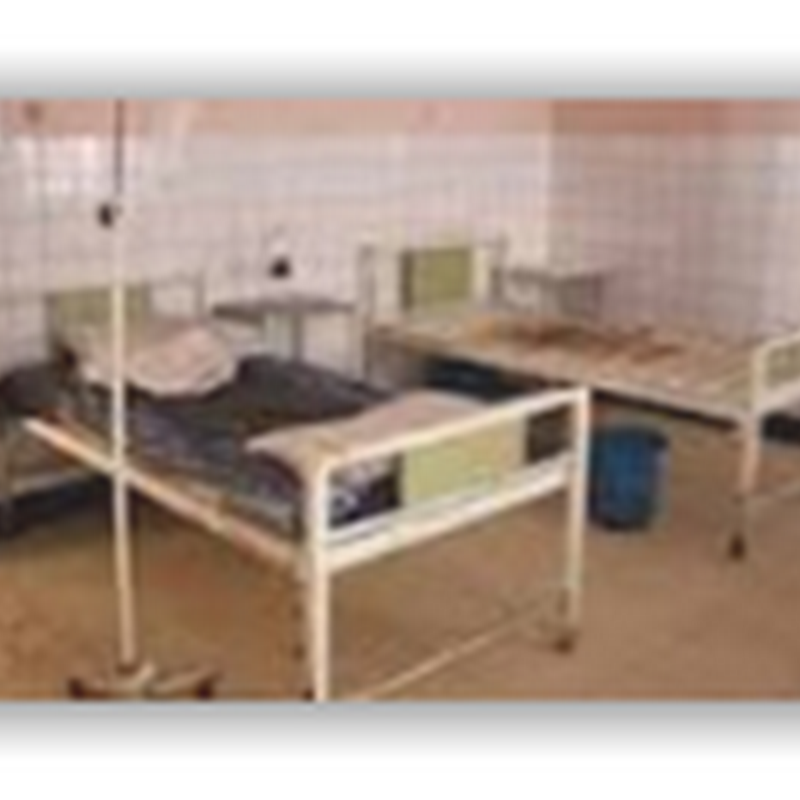
He was stuck in a wheelchair in a Hawaiian hospital all because of a microscopic parasite.

It’s extremely rare and it’s as nasty as it sounds. The lungworm parasite lives in rats and comes out in their droppings. A slug in Hawaii eats the parasite and that same slug lays its eggs on fruits and vegetables. Eating some produce that wasn’t washed is likely how he got the parasite.

http://minnesota.cbslocal.com/2012/01/20/minn-man-contracts-rat-lungworm-disease-in-hawaii-2/

Blue Button Download of Personal Health Data to be Expanded to Federal Employees and Their Families

Below is a little history on the Blue Button to include the HealthVault information that Veterans have been able to use as well.  To me this is the way to go to get your own information as you know who has access…you…and anyone else you designate. 

VA Blue Button Update–If You are a Vet or an MD Seeing a Vet Get the Health Data Available With Patient Ability to Download (Video)

I have posted on this topic a few times but the White House has released a video that gives a quick over view and man Vets have ben able to retrieve their information to keep or choose to share with their doctors. If you are a private practice doctor seeing a Veteran, it’s worth mentioning in case they have not had the chance to download their information

VA Can Now Use the “Blue Button” to Download Their Data from Their PHR (Personal Health Record)

Also, the information can be sent to Microsoft HealthVault for storage as well to share with doctors outside of the VA with a paperless method instead of printing and I am guessing once in place federal employees will enjoy the same options. 

Also worth mentioning is that folks on Medicare can do the same thing and get their data, so if you are not a Vet, check out the link below.  BD

Millions of federal employees, retirees and their families will soon be able to use the Blue Button to download their personal health data from the websites of their health plans.

In a Carrier Letter issued on December 19, 2011, the U.S. Office of Personnel Management (OPM) asked all health insurance carriers in the Federal Employees Health Benefit Program (FEHBP) to add Blue Button functions to personal health record systems (PHRs) on their websites.image

Blue Button allows patients to see, download and keep their personal health data by clicking the "Blue Button" on a secure Internet site. Patients can then choose to share their data with their physicians or family members or make it available if emergency treatment is needed. Blue Button downloads are delivered in text files that can be downloaded, read, stored and printed on any computer without special software. Patients can also authorize use of a Blue Button transfer of their medical data from a treating physician to another medical provider. An important innovation that enables patient's easy access to their personal health information, Blue Button has already been adopted by some 500,000 veterans, servicemembers, Center for Medicaid and Medicare Services (CMS) beneficiaries in just 14 months.

http://insurancenewsnet.com/article.aspx?id=326502

Accretive Health Debt Collector Employee Has Laptop Stolen With Non Encrypted Patient Data from 2 Hospitals And Had Access to All the Data Via Revenue Cycling - Patient Information Was Shared With Wall Street Investors – Algorithms For Profit Again?

Ahem….what do we say about privacy and data selling…bingo it appears as if you read through the entire article why else would this type of data be shared with Wall Street Investors to make a market for selling some new analytic algorithms.  Now get this the investors got to see this “private” information that a patient can’t even get access to see.  This reminds me of ePatientDave, “give me my damn data” and this is a total abuse here as the data is not being used for better care but for “better money”.  image

Now this also says something about access to revenue cycling too, payers and integrators might want to visit this scenario and make sure that it stays on a server for one and what levels of access will be granted.  Now this gets worse as the types of information and patients were related to mental health, HIV, Parkinson's and more.  How many investors glazed over these records?  Accretive gets paid on the revenue boost is provides.  There are a lot of these types of 3rd parties around in healthcare and here’s another one used by Blue Cross who had some bad algorithms.

Med Solutions and Blue Cross Caught On the Stress Test Denial Algorithm (video)

Actually when it comes down to payer disputes you wonder did the hospital bill erroneously on purpose or did they get some bad algorithms and a bunch of promises?  If I were one of these patients, court might be on my mind and I would want to know what investors on Wall Street potentially or did see my data!  On their website they talk about bringing increased discipline to the revenue cycle so is that the revenue cycle on Wall Street? 

Bad Algorithms in Healthcare Payment Systems and Risk Assessments–Did the Hospital Bill Fraudulently or Were They Sold Formulas That Did Not Conform

Well Fargo just dumped one of these types of companies recently and remember the big data breach at Stanford, also the fault of a 3rd party, so with history being built here who wants to trust a 3rd party today if you don’t have to as patient records end up on the web and in the hands of investors on the street.  The 3rd party folks are the algorithm makers though that promise better profits and use of money.  This whole scenario though is kind of sad as they were supposed to be helping a couple non profits boost their revenue but the hospitals probably had no clue on the methodologies like showing patients records was in the plan. 

HealthSmart Holdings Inc. Purchases Third Party Medical Administration Business From Wells Fargo Insurance Services

“The screen shot also includes numeric scores to predict the “complexity” of the patient and the probability of an inpatient hospitalization, and a box to describe the “frailty” of the patient.”

Tine to start licensing and taxing those data sellers and have a federal disclosure site so we all know what’s going on, beginning to make more sense every day!  The link below will describe a bit of this brainstorm.  BD

The Alternative Millionaire’s Tax–License and Tax Big Corporations Who Mine and Sell Taxpayer Data They Get for Free From the Internet-Phase One to Restore Middle Class With Transparency, Disclosure and Money 

ST. PAUL, Minn. - Minnesota Attorney General Lori Swanson has filed a lawsuit against a debt collector accused of failing to protect the confidential information of 23,500 hospital patients after a company laptop was stolen from a rental car parked in the Seven Corners are of Minneapolis.

The lawsuit filed Thursday alleges Accretive Health, Inc., a debt collection agency that is part of a New York private equity fund conglomerate, failed to protect the confidentiality of patient health care records and failing to disclose its involvement in their health care.

Last July, Accretive lost a laptop computer containing unencrypted health data of about 23,500 patients of two Minnesota hospital systems -- Fairview Health Services and North Memorial Health Care.

Under both contracts, Accretive controls and directs the work of hospital employees and “infuses” its own employees into the staffs of the hospitals. Accretive gets base compensation and incentive pay for helping the hospitals boost revenue or cut costs.

“The debt collector found a way to essentially monetize portions of the revenue and health care delivery systems of some nonprofit hospitals for Wall Street investors, without the knowledge or consent of patients who have the right to know how their information is being used and to have it kept confidential,” Swanson said.

The state seeks an order requiring Accretive to fully disclose to patients:

  1. What information it has about Minnesota patients
  2. What information it has lost about Minnesota patients
  3. Where and to whom it has sent information about Minnesota patients
  4. The purposes for which it amasses and uses information about Minnesota patients.
http://www.myfoxtwincities.com/dpp/news/stolen-laptop-debt-collector-lawsuit-jan-19-2012

UnitedHealthGroup Profits Increase 21% for the 4th Quarter of 2011– Business Intelligence Algorithms Continue to Create Large Profits - Subsidiary Watch

One more the mergers and acquisitions speak out again on how health insurance companies have diversified their portfolios and are no longer “just an insurance company” with numerous subsidiaries both in the Health IT area and even others in what you might consider “unrelated” businesses.  Here’s one example below with a diversified interest with a new division created to distribute hearing aids and offer incentives for those in certain areas of the us to sign up for insurance plans.  I sometimes wonder how other insurers view this? 

UnitedHealthCare Throws in Free Hearing Aids for Those Who Enroll In AARP Medicare Advantage, HMO & POS Plans in Miami-Dade County From Their New Subsidiary

Here’s another example of what one might consider a business outside of what we might normally consider a related business with low incoming housing investments in New Mexico.  One thing to keep in mind today is all the aggregated data that flows and the algorithms and SQL statements that bring some of this together.  Data is big business. 

United Healthcare Gets in The Low Income Housing Business With Partnership to Finance Housing Projects in New Mexico

Just a couple weeks ago we read about the investment with mobile health and again we venture down into the data business here again as the Optum division which has many subsidiaries has a huge focus on data, and part of the renamed group was the old “Ingenix” company that has consulted and provided data services for years and last year settled their case with the AMA with short paying providers for out of network services. 

United Healthcare Partners With Mobile Health Tech Firms–Investment for Data? Check Out All Privacy Statements Today Regarding Privacy, What Little is Left for Consumers

This kind of brings me around again to what I call the “Alternative Millionaire’s Tax” with companies that buy and sell data and this seems to be a good place for a mention here as the Optum Division has been making money for years with aggregating and selling prescription and other data. With big profits as such we certainly could entertain a license and tax situation for those making billions on the data selling business.  As a short comparison from another Healthcare company, Walgreens has estimated their data selling business to be valued at just under $800 million, so again something to give some thought to as hospitals, providers, and patients struggle to afford medical care today.

The Alternative Millionaire’s Tax–License and Tax Big Corporations Who Mine and Sell Taxpayer Data They Get for Free From the Internet-Phase One to Restore Middle Class With Transparency, Disclosure and Money

Another good article to read about the over sell and naïve and gullible nature of the US with both government and consumers, read what Nanex has to say as they are the folks that monitor and study rogue algorithms in the stock market and look for indicators of the “next flash crash”.  A couple paragraphs are below and will the SEC be suckered in to this huge expense of programmers who want to make big dollars writing code convince a naïve and gullible SEC?  It’s all over the place with digital illiteracy, steroid marketing and algorithms for huge profits only and they have teeth.  At a certain point in time we might need to REALLY think about the value of some of the data we analyze today and the cost and this is worth a mention as this is the big growth area for United, algorithms and software analytics via consulting services.  It is also worth a note that United last year hired the former Assistant Attorney General for the State of Minnesota for their general counsel. 

Below is one example of the algorithm/software business as the company created a clearinghouse business and collaborated with an medical records company to integrate the services with Epic and of course this means more data revenue for the company and puts a bit of stress on other smaller existing clearinghouse businesses in the US as well. 

OptumInsight (A Wholly Owned Subsidiary of United HealthCare Optum Division) Creates Medical Clearinghouse Integrated With Epic Practice Management Software-Subsidiary Watch

One more thing too is let’s not forget that they also own a bank with over $1 billion on deposit with health savings accounts and I would guess this also leaves them open to lend money on monies held here and somewhat compete with other banks.  As you can read in the quote below the funds are largely generated by employers, in other words large US corporations so they seem to go hand in hand, right? 

UnitedHealth Group Owns a Bank With Deposits Surpassing a Billion – OptumHealth Bank FDIC Insured

“OptumHealth offers three types of HSAs, as well as tax-advantaged health care savings and spending accounts, debit-card services, benefits administration services, and payment products. About three-quarters of the bank’s 1.6 million accounts are employer-generated, while the other quarter are individual accounts.”

There’s also the Chinese investment the company bought early in 2010.

UnitedHealth subsidiary (Ingenix Subsidiary I3) Acquires ChinaGate – Working to Sell Chinese Products Globally

If you were to stop and look you might also notice one more subsidiary that can consult with biotech and device companies to introduce new products to the FDA and you know when you think about it they might just have a subsidiary to handle the entire process from FDA approval all the way down to provider reimbursement too.

United Healthcare (Optum) Owns A Consulting Firm for FDA Drug and Device Approvals, Clinical Trials–CanReg - Subsidiary Watch

One other related item too is the purchase of physicians groups which is growing and the acquisition of Monarch in Orange County is one big example of buying a huge managed care group.

United Healthcare To Buy Huge Chunk of Orange County, California Managed Care Business with the Purchase of Monarch Healthcare–Subsidiary Watch

Again, in summary with such large profits and a lot coming from the data end of the business, this looks like one company where licensing and taxing the data sold for huge profits could fit and there are many more as Hedge Funds, Facebook and tons of other companies are cashing in royally and this all leads to bottom line profits for running algorithms on servers 24/7 that you can’t see, touch or talk to as far as the consumer is concerned, but automated algorithms for data mining and selling are yielding huge profits for corporate USA while as consumers we are becoming “data chasers” to fix a lot of the flawed data that is out there today.  It’s a good idea today to read up and see how the corporate USA scene has changed tremendously due to the huge array of mergers and acquisitions as companies are not the same ones they were 2 to 3 years ago by any means.  BD   

UnitedHealth Group (NYSE:UNH) today reported fourth quarter and full year 2011 results, highlighted by strong enrollment and revenue growth in each of UnitedHealthcare’s benefits businesses and strong revenue growth at all Optum business units. Full year and fourth quarter 2011 net earnings were $4.73 per share and $1.17 per share, respectively. Cash flows from operations were $7 billion in 2011.

The Company continues to estimate 2012 revenues in the range of $107 billion to $108 billion and net earnings in the range of $4.55 to $4.75 per share.

http://www.thestreet.com/story/11379523/1/unitedhealth-group-reports-2011-results-highlighted-by-strong-and-consistent-revenue-growth.html

Security Breach–New York Fed–Employee Accused of Stealing And Admitted to Copying $10 Million Dollars Worth of Algorithms (Software)

Is there money in those algos?  This story might answer that.  Why would this employee who was a contracted programmer take this code?  It’s worth money and if you read often enough you know I discuss those algos and software is nothing more than a group of algorithms, words of Bill Gates.  image

A co-worker said the employee said the accused confused he lost the drive containing the code and get this, it’s the software (aka algorithms) that cost $10 million to develop to track the billions of dollars  that the US government dispenses “daily” to government agencies..these are some pretty commanding algorithms…so the programmer apparently took the code and who knows where it would go next?  A lot of government code is open source but don’t think that is the case here…what’s the next security breach to occur?  BD 

Bo Zhang, 32, of Queens, New York, worked as a contract programmer at the bank. He was accused of illegally copying software to an external hard drive, according to a criminal complaint filed in U.S. district court in Manhattan.

Authorities said the software, owned by the U.S. Treasury Department, cost about $9.5 million to develop.

A New York Fed spokesman said in a statement that the bank immediately investigated the suspected breach when it was uncovered and promptly referred the matter to authorities.

Zhang told investigators he took the code "for private use and in order to ensure that it was available to him in the event that he lost his job," the complaint said.

The code, called the Government-wide Accounting and Reporting Program (GWA), was developed to help track the billions of dollars the United States government transfers daily. The GWA provides federal agencies with a statement of their account balance, the complaint said.

http://www.reuters.com/article/2012/01/19/us-nyfed-theft-idUSTRE80H27L20120119?feedType=RSS&feedName=technologyNews&utm_source=feedburner&utm_medium=twitter&utm_campaign=Feed:+reuters/technologyNews+%28News+/+US+/+Technology%29

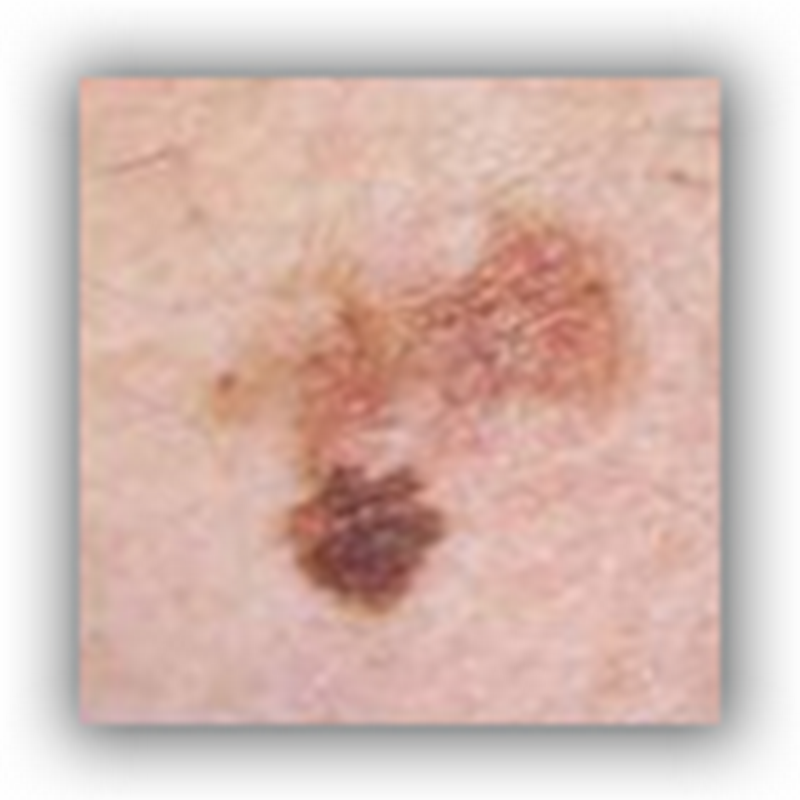
UCLA Uncover Mechanism By Which Newly Approved Melanoma Drug Accelerates Secondary Skin Cancer–Zelboraf

This is kind of an alarming incident but when you read further it does not stop the treatment process and the secondary outbursts are surgically removed.  This affects about half of those treated to be on alert, but not all of those develop the secondary skin cancer, only about a quarter of the 50% risk group. 

This sounds like a big step in recognizing undesired side effect with oncology treatments.  BD 

image

Press Release:

Drug Used to Treat Melanoma with One Mutation Sets off a Cascade that Results in a Different Type of Skin Cancer in Cells with Another Mutation

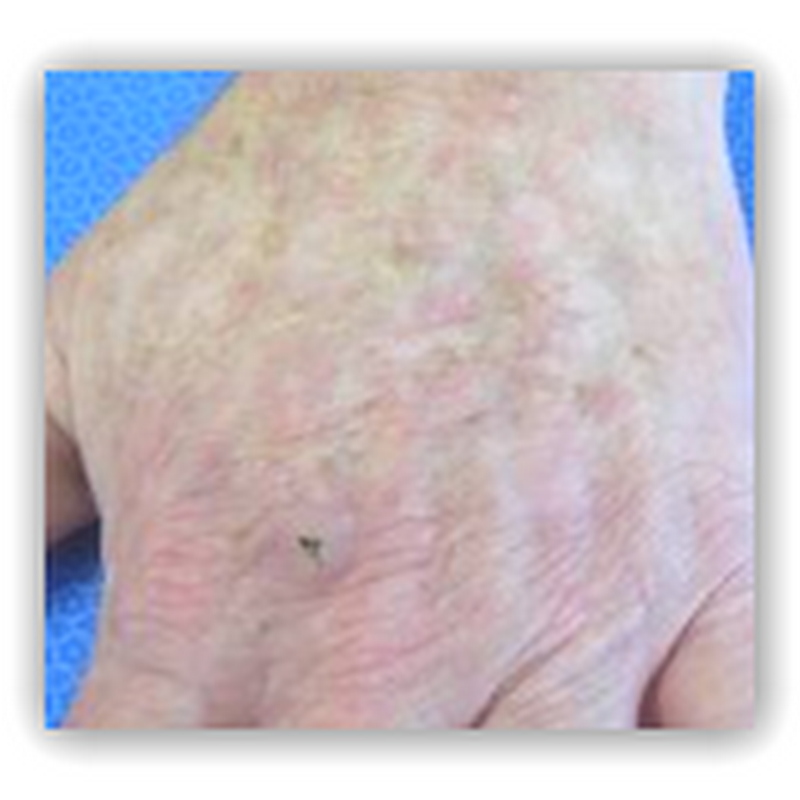
Patients with metastatic melanoma taking the recently approved drug vemurafenib (Zelboraf®) responded well to the twice daily pill, but some of them developed a different, secondary skin cancer.

Now, researchers at UCLA’s Jonsson Comprehensive Cancer Center, working with investigators from the Institute of Cancer Research in London, Roche and Plexxikon, have elucidated the mechanism by which vemurafenib excels at fighting melanoma but also allows for the development of skin squamous cell carcinomas. image

The very action by which the pill works, blocking the mutated BRAF protein in melanoma cells, sets off a cellular cascade in other skin cells if they have another pre-disposing cancer mutation and ultimately accelerates the secondary skin cancers, said Dr. Antoni Ribas, co-senior author of the paper and a professor of hematology/oncology.

About 50 percent of patients who get melanoma have the BRAF mutation and can be treated with vemurafenib, Ribas said. Of those, a fourth of the patients develop skin squamous cell carcinomas. The squamous cell carcinomas were removed surgically, and vemurafenib was not discontinued for this side effect.

“We wondered why it was that we were treating and getting the melanoma to shrink, but another skin cancer was developing,” said Ribas, who studies melanoma at the Jonsson Cancer Center. “We looked at what was likely making them grow and we discovered that the drug was making pre-existing cells with a RAS mutation grow into skin squamous cell cancers.”

The 18-month study appears in the Jan. 19, 2012 edition of the New England Journal of Medicine.

The combined research team performed a molecular analysis to identify the oncogenic mutations in the squamous cell lesions of patients treated with the BRAF inhibitor. Among 21 tumor samples studied, 13 had RAS mutations. In a different set of 14 samples, eight had RAS mutations, Ribas said.

“Our data indicate that RAS mutations are present in about 60 percent of cases in patients who develop skin squamous cell cancers while treated with vemurafenib,” Ribas said. “This RAS mutation is likely caused by prior skin damage from sun exposure, and what vemurafenib does is accelerate the appearance of these skin squamous cell cancers, as opposed to being the cause of the mutation that starts these cancers.”

Ribas’ group found that blocking the non-mutated BRAF in cells with mutated RAS caused them to send signals around BRAF that induced the growth of the squamous cell cancers.

The discovery of the squamous cell cancer mechanism has led to strategies to inhibit both the BRAF mutation with vemurafenib and block the cellular cascade with a different drug, a MEK inhibitor, before it initiates the secondary skin cancers, said co-senior author Professor Richard Marais from the Institute of Cancer Research in London, who developed the animal model for the study.

“By understanding the mechanism by which these squamous cell cancers develop, we have been able to devise a strategy to prevent the second tumors without blocking the beneficial effects of the BRAF drugs,” Marais said. “This may allow many more patients to benefit from these important drugs.”

Ribas said that this is one of the very few times that oncologists understand molecularly why a side effect to cancer treatment is happening.

“The side effect in this case is caused by how the drug works in a different cellular setting,” he said. “In one case it inhibits cancer growth, and in another it makes the malignant cells grow faster.”

Studies currently are under way testing BRAF and MEK inhibitors in combination in patients with metastatic melanoma, Ribas said.

“Our data provide a molecular mechanism for the clinical toxicity of a targeted oncogene inhibitor that apparently contradicts the intended effects,” the study states.

The study was supported by Roche, Plexxikon, the Seaver Institute, the Louise Belley and Richard Schnarr Fund, the Fred L. Hartley Family Foundation, the Wesley Coyle Memorial Fund, the Ruby Family Foundation, the Albert Stroberg and Betsy Patterson Fund, the Jonsson Cancer Center Foundation and the Caltech-UCLA Joint Center for Translational Medicine.

UCLA's Jonsson Comprehensive Cancer Center has more than 240 researchers and clinicians engaged in disease research, prevention, detection, control, treatment and education. One of the nation's largest comprehensive cancer centers, the Jonsson center is dedicated to promoting research and translating basic science into leading-edge clinical studies. In July 2011, the Jonsson Cancer Center was named among the top 10 cancer centers nationwide by U.S. News & World Report, a ranking it has held for 11 of the last 12 years. For more information on the Jonsson Cancer Center, visit our website at http://www.cancer.ucla.edu.

Fear Factor–Jon Stewart on Bringing Jobs Back to the US–How Would Healthcare Deal With This - Methodologies of Algorithms For Profit Only Create Such “Less than Humane” Environments (Scary Video)

Jon goes back to Foxconn-revisited…in his usual style and he says we need to make our factories look more like those in China.  Workers live in dormitories and don’t know each other, cuts down on commuting and friendship.  image

Workers are finding ways of improving their conditions, hotlines with trying to stop suicide and put nets around buildings to catch jumpers…I think we remember this from a year ago and he says in the US we call this “treating the symptoms”.

“It’s me, Siri, in your pants pocket working on giving you testicular cancer”…If it works for those factories, electronics would cost more..modern work fare…a game to the rescue…this is great humor but there are somethings I does make one ponder…there’s just one level and this is it…(the middle class) as algorithms are marketed and designed and sold to consumers.

He shows the work of the algorithms in place for sure in a humorous way.  Why are health insurance companies getting into the low income housing business though?  I hope this is not a Foxconn plan to create communities with jobs that pay little and have medical care on campus?  What is up with this? 

United Healthcare Gets in The Low Income Housing Business With Partnership to Finance Housing Projects in New Mexico

The same company owns a subsidiary that will basically give you a free hearing aid made in China if you sign up for their health insurance…more below…and the subsidiary they built to distribute and coming to Walmart soon as I understand…

UnitedHealthCare Throws in Free Hearing Aids for Those Who Enroll In AARP Medicare Advantage, HMO & POS Plans in Miami-Dade County From Their New Subsidiary

He moves on to the next part, a game that has one level…hmmm…we another insurance company banking on this too…data to sell?  Will this make you healthy?  I prefer real knowledge.

Aetna To Offer Online Game Social Game For Personal Wellness- Joins Humana As They Have An Online Game Called FamScape

I just ask is there where we are headed with mining and selling data today and big corporations taking over our day to day decisions?   The more information they have to judge and discriminate, the ability to control and humiliate the middle class grows. 

Consumers Lose More Privacy With New CoreLogic Credit Reporting–”Score” Marketed For Insurers and Employers To Gain Information-California Prohibits Potential Employers – From Using As Jan 1 - Killer Algorithms Part 8

At any rate with the use of algorithms today that have teeth and the amount of flawed data out there, are we going in this direction?  I put this out for an awareness and perhaps to generate some though processes.  I like technology and the good things it brings but am not oblivious  to how it can also be abused as well and a NYU professor says it even better than me, read and listen up. 

“Numbers Don’t Lie, But People Do”–Radio Interview from Charles Siefe–Journalists Take Note, He Addresses How Marketing And Bogus Statistics Are Sources of Problems That Mislead the Public & Government

I sure hope Richard Cordray understands math and the power of the algorithms when used both in an intuitive and good manner and the reality of those who design for pure profit that hurts consumers.  You can see, smell or touch them, but they are running on server 24/7 every day making like impacting decisions, crafted by some of the smartest programmers and developers that the money on Wall Street can buy.   

President Appoints Richard Cordray as New Consumer Financial Protection Chief - Hope He Knows And Understands Correcting Flawed Math and Formulas To Battle the “Financial Attack of Killer Algorithms” On Consumers With Banks and Corporate USA

Another good article to read about the over sell and naïve and gullible nature of the US with both government and consumers, read what Nanex has to say as they are the folks that monitor and study rogue algorithms in the stock market and look for indicators of the “next flash crash”.  A couple paragraphs are below and will the SEC be suckered in to this huge expense of programmers who want to make big dollars writing code convince a naïve and gullible SEC?  It’s all over the place with digital illiteracy, steroid marketing and algorithms for huge profits only and they have teeth.  BD 

“Wall street hires the best software developers money can buy. They write clever algorithms. These algorithms will only get more clever as time goes on. Which means they will always be changing. Now, writing software to detect what other imagesoftware is doing is 100 times more difficult. Which in the software world means 100 times more expensive. Which means hiring people that do not exist, since Wall Street already snapped up the best, and you need the best times 100 (you can't make it up in quantity and just get 100 times more wizards, because many will have poor social skills, and you need these people to communicate).”

“You see the folly of trying to regulate the markets in real-time? Real-time raises the cost exponentially times a million. To a level that all the kings in the world couldn't afford. It would be one thing to track in real-time, things that had known behavior. Like your checking account being overdrawn. Maybe credit card fraud in the making (which, by-the-way, hasn't been perfected yet, despite lots of money and time thrown at the problem).

http://www.thedailyshow.com/watch/mon-january-16-2012/fear-factory

VeriTeQ Acquisition Corporation Buys VeriChip Implanted Chip and Health Link Personal Health Record Technology from Positive ID–Implantable RFID and Sensors

To go back a little bit in time the chip was also set up to communicate with personal health records like Healthvault.  The latest development on the chip was the ability to communicate real time glucose readings.  The FDA has approved the product and the HealthLink software. 

PositiveID Corporation's Health Link Personal Health Record – First PHR to Communicate Real-Time Blood Sugar Readings for Diabetics and Their Caregivers/Physicians

In addition, Medcomp who makes vascular access catheters  will use the chip in vascular ports for identifying the port in a patient for proper medication dispensing. As it read here though the use with Medcomp still needs to secure FDA approval.  This chip keeps coming back around with many lives.  BD  

DELRAY BEACH, Fla., Jan 17, 2012 (BUSINESS WIRE) -- VeriTeQ Acquisition Corporation ("VeriTeQ" or "Company"), a marketer of implantable, radio frequency identification ("RFID") technologies for patient identification and sensor applications, announced today it has acquired the VeriChip implantable microchip and related technologies, and Health Link personal health record from PositiveID Corporation. VeriTeQ is majority owned and led by Scott R. Silverman, former Chairman and CEO of PositiveID and VeriChip Corporation. PositiveID has retained an ownership interest in VeriTeQ.

VeriTeQ will focus on three main areas: patient identification and personal health record (PHR) access through the VeriChip implantable microchip and Health Link web-based PHR; implantable sensor applications; and identification of medical devices within the body. VeriTeQ will also focus on identification and sensor applications for animals. image

VeriTeQ's acquisition also includes the rights to a Development and Supply Agreement with Medical Components, Inc. ("Medcomp"), a leading manufacturer of vascular access catheters. Under the terms of the agreement, Medcomp will embed the VeriChip microchip in its vascular ports to facilitate identification of the port in a patient and proper medication dispensing.

http://www.marketwatch.com/story/veriteq-acquisition-corporation-acquires-implantable-fda-cleared-verichip-technology-and-health-link-personal-health-record-from-positiveid-corporation-2012-01-17

FDA Fines Red Cross Again for $9.59 Million–Where Does That Money Go?

I am curious about this as a year ago blood levels were at the lowest in 10 years and maybe it’s just me, but instead of big fine, would improving the system and getting more folks on board to get donations help?  image

Red Cross States National Blood Supply at Lowest Levels in 10 Years-Using Twitter and Social Networks To Find Donors

The Red Cross relies on donations and is a non profit right and does fining them fix anything?  BD 

“An average of 91 cents of every dollar the Red Cross spends is invested in humanitarian services and programs. The Red Cross is not a government agency; it relies on donations of time, money, and blood to do its work.”

The American Red Cross, the biggest U.S. supplier of donated blood, failed to correct violations of blood-safety rules, raising the risk that ill-suited blood will be used in transfusions, U.S. regulators said.

The U.S. Food and Drug Administration fined the Red Cross $9.59 million, according to a letter from the agency to the Red Cross made public on Jan. 13. The organization has been cited 14 times since 2003 and fined about $46 million for similar offenses.

The Red Cross didn’t ensure that all staff had adequate blood-safety training and hasn’t created a complete list of prospective donors who were disqualified from giving blood, according to the letter. The Washington-based consumer group Public Citizen this month urged the agency to levy sanctions.

The organization is “fully committed to meeting all FDA standards, has made significant progress in working with the FDA to comply with their regulations,” according to the statement.

http://www.bloomberg.com/news/2012-01-15/red-cross-cited-by-fda-for-u-s-blood-safety-rule-violations-for-14th-time.html

Consumers Lose More Privacy With New CoreLogic Credit Reporting–”Score” Marketed For Insurers and Employers To Gain Information-California Prohibits Potential Employers – From Using As Jan 1 - Killer Algorithms Part 8

Everyone needs to watch this video and you will see both pros and cons and the pro folks are promoting as the algorithms used to mine this data brings in additional revenue and sells algo services.  How much information “do we really need”?  Those selling this business will tell you that you can never have enough.  Those on the other side will tell you it’s an invasion of your privacy and you know what, that side has more going for it by far with reality.image

If you listen to the attorney here she makes good points that there are folks not paying bills for a reason, divorce is one that comes to mind.  You have to realize that all of the information they mine via public information may not be accurate.  I have written about this before and the “flawed data” that is out there.  One state has all but barred CoreLogic due to the fact that their bots were slowing down the servers and they and other mining companies were not paying for quarterly updates, so when you as a consumer do get a record rectified, you can’t get rid of any blemishes. 

Welcome to the world of discrimination by the algorithm….

Watch the video here and learn about how much digging they are going to do.

Aggregated information contains flaws…this is the problem.  Score would not agree to go on camera the video states.  Again I said I do hope our new Consumer Financial Czar knows about math and the Attack of the Killer Algorithms.  What a big part of the problem is that that cookie cutter employees are told to use what is on their computer screen for their decision making processes and if it is flawed…well you get that picture.  Right now due to the overload put on servers and the Wild West effect of unproven algorithms here…it’s time to license and tax those folks like CoreLogic who make huge profits from mining free taxpayer data, give something back.  Why should data mining companies be allowed to make billions, tie up governments servers to where states have to install software to block their bots and then dump a load of flawed data on consumers? 

The Alternative Millionaire’s Tax–License and Tax Big Corporations Who Mine and Sell Taxpayer Data They Get for Free From the Internet-Phase One to Restore Middle Class With Transparency, Disclosure and Money

Those algorithms have teeth and watch the video below as Kevin Slavin tells you how it all works with rogue algorithms that go out of control and lead to things like flash crashes.  I used to write code and I know what folks are capable of with mismatching data for profit and it hurts the consumer.  We need some data sources to check but not to this level as it is going to make everyone mad and crazy as the flawed data will flow and the middle class will become nothing but data chasers fixing everything corporate USA has loaded in the data. 

Kevin Slavin–Algorithms A Must See

AND THERE’S MORE….

Just wait until this kicks in, CoreLogic has formed a partnership with FICO who is already in the process of selling algorithms with mismatched data which connects public information about you and combines it with your credit score to tell if you as a medical patient will take your prescriptions. 

Somebody needs to start calling some of these folks on “mis matched data” the discriminates as now we have “Discrimination by the Algorithm” and it’s showing in more places all the time.  Last time I wrote about the FICO mismatched data it all ended up over at the Daily Kos via another publisher as an awareness.  As far as I am concerned the FIOC Medication Adherence Scoring is nothing but mismatched data analytics created to sell software and is the work of some “underground” think tanks on how to generate more money and profits.  You can find my comments too on the Daily Kos on this as another author included them in her column who was in total agreement.  Do you know how common flaws are?  Look at this link and see about the 31k that are “living” but Social Security says they are dead.

Social Security Master Death Index Data Flawed–Over 31,000 Living Found in the Index

Also give a listen here to NYU Professor Siefe as he tells you how the numbers are spun and marketed and how naïve and gullible we are.  He’s a mathematician and makes sense and get his book, Proofiness, the Dark Side of Mathematical Deception” too.  After watching the video I think the folks promoting this service are pretty gullible and naïve too and have never written a stick of code or SQL query and they just gob on to make money and the consumers get hurt. 

“Numbers Don’t Lie, But People Do”–Radio Interview from Charles Siefe–Journalists Take Note, He Addresses How Marketing And Bogus Statistics Are Sources of Problems That Mislead the Public & Government

This mis use of data and selling it all over is starting to turn normally peaceful folks into those who are not so peaceful.  In healthcare they just put the doctors medical claim information out there for digital illiterates to work with and it is flawed to the hilt!  Why should Hedge Funds, Facebook and tons of others out there be able to make billions with free data and cause extra expense to the States for slowing down their servers and have the state governments put blocking software in place to stop the bots?  Do read Part 7 here as I cover a ton of flawed data situations that are out there to include a nice interview with the AMA on all the dead doctors I found out there:)  That firm HealthGrades merged with a PR company I guess to help them market some of the flawed data and dead doctors?  You figure that one out….

Flawed Data–Mined by Corporations Online Provides Background Checks Riddled With Errors–Attack of the Killer Algorithms Part 7

The link below has parts 1-7 on the Attack of the Killer Algorithms series and again some of my wishes that Richard Cordray understands math and algorithms or we are completely sunk as the middle class if not. 

President Appoints Richard Cordray as New Consumer Financial Protection Chief - Hope He Knows And Understands Correcting Flawed Math and Formulas To Battle the “Financial Attack of Killer Algorithms” On Consumers With Banks and Corporate USA

The thanks we get today is becoming data chasers as consumers to fix all the flawed and corrupted information that has been compiled and used against us.  If everything is ok, then nothing to chase; however, “cookie cutter” employees today are not trained on how to work with flawed data and see everything as a blemish and thus there’s no level of forgiveness and understanding.  If they challenge or ask questions, they might get fired and are told to rely on that computer screen.

This risk assessment scoring is not just limited t consumers…see what a bank is doing to small businesses in Wisconsin and even stating that a “church” is not showing enough profit!  This will make your hair stand on end and again we need learn to work with flawed data and honor consumer privacy and license and tax the data sellers. 

If you have not had enough yet, companies like this are now coming to the rescue of the consumer for shopping for insurance…total lack of respect with the name with providing services for consumers….  InsureMonkey….It may be a new way of selling insurance and pricing with focus on just pricing but do we have to be called “monkeys” now…with current economic conditions the name is not very cute right now. 

“InsureMonkey” Yet One More Way to Shop for Health Insurance–The Orbitz of the Insurance Market For Shopping Rates

Are we all just monkeys now and are insurers going to just eat up the additional flawed data and require consumers to prove their innocence? …There’s a lot more out there than you think and again we will be chasing and fixing flawed data forever as well as reaching a new level of discrimination against the middle class.  BD 

All of this information helps the company look deeper into payment histories, and most of it is available through the public records system.

CoreLogic says the idea is to supplement what the major credit bureaus find. Experian, Equifax and TransUnion only search public records for bankruptcy, tax liens and judgments.

The added information has the potential to hurt consumers with previously undetected blemishes.

Not everyone is comfortable with the extra information being shared. Attorney Chi Chi Wu with the National Consumer Law Center says there is often more to the story than numbers on a screen.

With even more personal information being shared, experts agree, consumers should check for errors that may hurt loan possibilities.

http://www.clickorlando.com/news/New-credit-reporting-system-being-used/-/1637132/8161502/-/kvmiew/-/

Former US CIO Vivek Kundra Lands Executive Position at Salesforce.com as VP of Emerging Markets

Well this is good news on the CIO store front in the fact that when the burn out there’s new life at the end of the road and a new on begins.  From what I read and heard he was kind of stuck when working for the government and I understand that completely.  Dealing with a bunch of “non participants” and digital illiterates that won’t at least try is not fun.  image

Vivek Kundra-US CIO To Resign And Take Fellowship at Harvard-Was He OverTaxed And Burnt Out, If So That is Allowed Today As This A True Reality for CIOs All Over the US

As he said in post CIO interviews, the execution was the difficult part of the job, in other words getting folks to move on project and he saved a few billion for the government with his projects.  Our US CTO is stuck on the word innovation and touts it all the time like tons of other do, but in the CIO area it’s more about collaboration and not the innovation dog and pony show.  Where’s Salesforce.com going to use his talent, developing more business outside the US…a bit of an irony but everyone has a job to do.  If you happened to catch the Oracle event this year, Larry Ellison called Salesforce.com the “roach motel” of the clouds, and there was quite the showdown but they have a good service to sell but the competition in the public is so Larry Ellison and why we all watch him.  Practice Fusion uses Salesforce.com to host their free medical records service as well.  BD

Practice Fusion EMR to Sit on Salesforce.com’s Cloud

Salesforce.com, best know for its sales, customer service and collaboration software for business, is raising its ambitions by aiming at the international businesses and sales to foreign governments that have been the mainstays of companies like I.B.M.

On Monday, the company named Vivek Kundra its executive vice president of emerging markets. Mr. Kundra was the country’s first chief information officer from March 2009 until August 2011. His job was to move the government’s computer infrastructure spending — $80 billion a year — toward cloud computing. Mr. Kundra has extensive experience in technology at several levels of government, and has been a frequent visitor to the technology industry’s conferences.

http://bits.blogs.nytimes.com/2012/01/16/salesforce-hires-vivek-kundra-and-looks-overseas/

QuadMed Employer Third Party Insurance Administrator Deploying Telehealth Solutions With MDLiveCare–Video MD Visits

The plan gives employees the option of using a telehealth visit in the situations to imagewhere the patient's regular doctor may not be available, after hours and so on.  In addition the medical records from MDLiveCare will also integrate with Microsoft PHR HealthVault.  I am guessing this is the ability to import your video or telehealth visits with the doctor.  This is not the first company to provide this service and one thing you can say for sure is that teleheatlh is on the move. 

MDLiveCare work with LabCorp as well if a lab test was needed.  BD 

SUSSEX, Wis., Jan 16, 2012 (BUSINESS WIRE) -- QuadMed, a nationwide leader in employer-sponsored healthcare solutions, will deploy state-of-the-art telehealth technology across its network of worksite healthcare clinics through a new partnership with MDLiveCare.

MDLiveCare offers access to a national network of board-certified physicians and licensed therapists, in conjunction with QuadMed's network, providing quality healthcare services via secure video, telephone, and email communication. image

Under an exclusive agreement, QuadMed will utilize MDLiveCare's proven telehealth technology to create a 'Virtual QuadMed' approach that significantly expands the scope of its clinics, giving employees and their family members another way to access QuadMed providers and services.

The new telehealth capabilities will also allow QuadMed, which operates clinics for nationwide companies like MillerCoors, Northwestern Mutual, Briggs & Stratton Corp. and STIHL, Inc., to provide more convenient care to smaller employers and employers with a distributed workforce.

http://www.marketwatch.com/story/quadmed-forms-partnership-with-mdlivecare-to-extend-reach-of-clinic-healthcare-services-2012-01-16

Hospital in Flagstaff Using Remote Patient Monitoring And This Also Reaches Out To Those Who Live on the Reservations for Care

I grew up in Arizona and there’s a lot of land out there with no civilization present for miles, especially on the Indian reservations.  The project as this states below incorporates many different cultures in northern Arizona. On the Indian reservations consumers may have to travel a short distance to get to a “hot spot” to transmit their data but a short drive to a hot spot could be a lot more convenient than a long drive to the hospital  Rural area really stand to benefit with remote monitoring.  image

What is also nice here is that you know who’s getting the information and the purpose as it gives more information than a voice phone call with actual data being looked at and transmitted.  What is also good here is winning the trust of the Indian community to try the service.  This a trial program and it will be evaluated in a year’s time to see how well it is working and if nothing else, the reservations are getting better wireless service and coverage, which they need anyway.  BD

Gisele Sorenson knew where each person with congestive heart failure lived. With a map in hand, she set out driving in northern Arizona — across tribal land and to the Grand Canyon — to find out whether the former Flagstaff Medical Center patients had wireless access.

The answer was key to determining whether patients could be remotely monitored via Bluetooth technology to help reduce their chance of being readmitted to the hospital. What Sorenson found is that not everyone would be able to use a cellphone to immediately transmit medical data, but many were close enough to a hot spot to send the information within a few days.

"Just having them come into the hospital isn't the answer anymore for a lot of reasons," said Sorenson, the hospital's telemedicine director.

The devices send the readings straight to the phone, which sends them directly to Kelly DeGraff, a hospital nurse. She then can look at the data and determine whether a follow-up call or text is needed. One patient she's been in contact with is Joe Alini, who has been dealing with kidney failure and heart problems.

The project is backed by the National Institutes of Health, Verizon, Qualcomm Incorporated and Zephyr Technology. It isn't specifically aimed at American Indians, but they will benefit. Nearly 30 percent of patients at the Flagstaff Medical Center are American Indian, the majority being Navajo. Seven percent of them have had congestive heart failure, compared with 4 percent of non-Native patients.

http://washingtonexaminer.com/news/2012/01/flagstaff-hospital-using-remote-patient-monitoring/2099041