92648

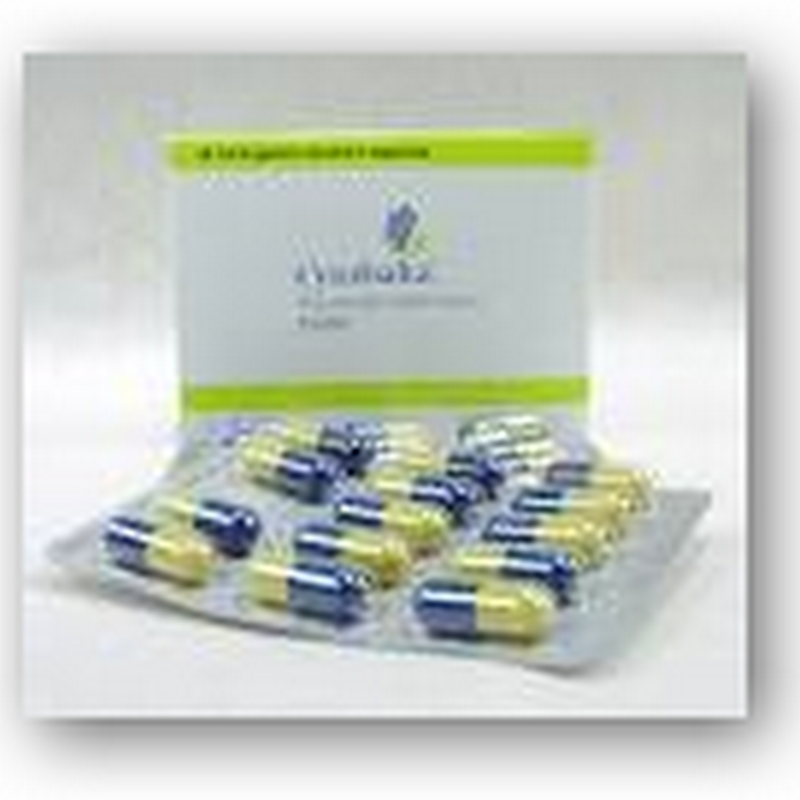
AstraZeneca Moves Drug Production to China Leaving the UK

Not too long ago I posted about Astra Zeneca dismissing all their pharmaceutical representatives in the US.  In as mentioned in the article here Pfizer and is also closing plants in the US.  At some point in time I wonder if we will have a need for manufacturing if they will have any manufacturing left in imagethe United States were the United Kingdom.  BD

Drug Rep News – No Overtime for Novartis Reps and Astra Zeneca Offers Buy Outs for US Reps

AstraZeneca (AZN) will move all its drug production — of “active pharmaceutical ingredients”  — in the U.K. to China. About 300 jobs in Britain will be lost, The Times reports.

The move is part of a trend: Drug companies with massive Western operations are shutting them down and moving them to China. The unanswered question is, How will the FDA monitor production of drugs destined for the U.S. if all the factories are in China?

Pfizer (PFE) is doing the same thing as AZ. After announcing it will close a New London, Conn., R&D site and consolidate operations at nearby Groton, the company will expand operations in Wuhan, China, where 200 jobs will be added, according to The Day.

AstraZeneca Moves Drug Production to China, Begging Safety Questions for FDA | BNET Pharma Blog | BNET

Microsoft Launches Pinpoint Website – Find Experts, Applications and Professional Services

image

This certainly does the job and I did a quick search myself for healthcare business intelligence software.  There are many sites and browser searches you could do but this appears to mine the partners and services quite well.  The site has a dashboard set up where vendors can make sure they are listed as well.  What is nice is the map that shows up to give the geographic location of where they are in the country.  So far the service is available in the US, the UK, India and a launch upcoming in the Netherlands. 

The listings are all companies using Microsoft Technology solutions, of course and there are over 7,000 software applications listed along with 30,000 Microsoft technology experts.  The menus make it pretty easy and simple to drill down and find what you are looking for.  BD 

 image

Pinpoint is the fast, easy way for business customers to find experts, applications, and professional services to meet their specific business needs—and build on the software they already have.

At the same time, Pinpoint helps developers and technology service providers quickly and easily get software applications and professional services to market—and engage customers who need what they offer.

image

Bink.nu | Microsoft launches PinPoint - Bink.nu

Rotating Hospital Bed RotoProne Helped Patient Recover from H1N1 (Swine) Flu

The patient had a very severe case of the Swine Flu and with moving the patient around in this special bed versus laying on her back, she was able to recover, but it was a slow process and she remained in the bed for 8 days.  A patient needs to be between 88 and 350 pounds to use the bed according to the specifications.   By placing here in the bed face down and rocking, it relieved the pressure on her lungs to allow her to recover. 

Those who treated the patient said the bed made the difference, otherwise she may not have survived as her temperature was over 106.  BD 

Megan Dillon thought she'd recover from flu symptoms with a little rest last month, just like everyone else in her Webster household.image

But days in bed only made her worse, and she ended up in the emergency room at Christus St. John Hospital in nearby Nassau Bay.

A rapid H1N1 swine flu test was negative. Uninsured and determined to avoid a hospital stay that Saturday in mid-October, Dillon was released with two prescriptions for suspected pneumonia.

All the while she rocked — face down — on the RotoProne. It's made by KCI, a San Antonio medical products company. The bed costs $1,295 a day for the first 10 days then drops to a $395 daily rate. Mainland Medical Center as well as Memorial Hermann's Texas Medical Center and Memorial City locations are among the area hospitals that use the device.

Contraptions to turn patients in respiratory failure upside down have been around for at least a decade. Doctors have been leaving patients on their bellies to improve lung function for much longer.

Rotating hospital bed aided swine flu fight | Houston & Texas News | Chron.com - Houston Chronicle

LA Council Still Unsettled about Marijuana Dispensaries – Cash Is Ok, Security Guards Needed, Has to be Grown Locally, and Cap on Wages Earned at 100k a Year

When you read all of this, they are spending a lot of time on this subject.  The guards are to be unarmed, and make the cash deposits for the facility.  The amusing and most interesting part though of all of this is putting a cap on wages earned by workers, no more than 100k a year, that’s good income in anyone’s book, but this is not Wall Street either. 

I’m more worried about those salaries on Wall Street than I am about the dispensaries who just in the course of their business are subject to risk with robbers, etc. like a bank would be.  Let’s add some taxes and everyone I think would be happier as even the patients filling their prescriptions have no objections to paying taxes.  BD   image

Dispensaries in Los Angeles could continue to accept cash for medical marijuana under a provision approved by the City Council on Tuesday, after it adopted language carefully crafted to maneuver past the city attorney's adamant position that state law bars the sale of the drug.
Plowing through more than 50 proposed changes to its draft medical marijuana ordinance, the council also signaled that it would probably cap the total number of dispensaries at between 70 and 200. The council asked city officials to return next Wednesday with studies on caps and on restrictions that would keep dispensaries either 500 feet or 1,000 feet from places such as schools and parks. The council also added new restrictions on dispensaries and rejected efforts to loosen requirements.
By the close of the daylong session, the council had made substantial headway on an issue that has bedeviled it for years.

The council readily adopted a series of amendments, most of them offered by Koretz and borrowed from West Hollywood, that added more protections for neighborhoods. Dispensaries would be required to have unarmed security guards who would patrol a two-block area, to provide a contact name to police and residents who live within 500 feet, and to deposit cash once a day.

The council also tangled over an amendment to put a $100,000 cap on salaries at dispensaries. It was offered by Alarcon, who said the dispensary downstairs from his office was making $12,000 a day.
"That's a lot of money," he said. "That's too much money."
The council decided to try to find another way to limit salaries, such as applying standards set by United Way.

L.A. council says pot shops could accept cash -- latimes.com

Something To Be Thankful About, I Think – The Return of the Zeppelins Flying Over Los Angeles

Thanksgiving Day is a good time to post something besides the usual healthcare articles and this one got me going for sure!  In a past life I have imageprobably had more rides in the Goodyear blimp than I can count!  It is a fun experience and at one point a friend of mine who’s a commercial pilot was able to get a type rating in the blimp! 

With a non jet aircraft like these, if you blow the approach you just back up and try it again!  When you look at the picture on take off here you can see a Zeppelin packs a bit more punch than a blimp, which required 13 members on the ground for take offs and landings.  The blimps are noisy inside too, but they get the job done.  The Zeppelin has a bigger cabin too, so next time when you see the blimp over an event, by the time they get the cameras and everything else loaded there’s only room for the pilot and a camera man. 


Watch the video above and see what’s happening in the skies over Los Angeles.  BD 

The last time something like this was seen in Los Angeles was 1929, when the Graf Zeppelin dropped in on Westchester's Mines Field before starting its nonstop Pacific crossing during its record-setting around-the-world flight.

image

The era of the rigid-framed zeppelin came crashing to an end in 1937, when the hydrogen-filled Hindenburg exploded spectacularly as it attempted to land at Lakehurst Naval Air Station in New Jersey. Thirty-six people were killed.

The zeppelin returns to L.A. skies, after 80 years | L.A. NOW | Los Angeles Times

Hospital Fires 16 Employees For Violating Privacy Laws in Houston

The hospital had a victim that had been on the news and according to this article there were individuals looking at the patient’s chart when they should have not normally had access.

I did an interview a few months ago with Dr. Leo from Long Beach Memorial Hospital and he explained the “break the glass” routine to me on how this helps with electronic medical record access and privacy for the patient.  I have included a few paragraphs below that are worth reading.  If an employee who normally would not have access want to view the chart, they have to document first and say why they need access and all these imagerequests are reviewed.  You may get access but will be called on the carpet later if it was deemed you did not need access.

I mention this as one individual in this case stated she was helping a doctor locate friends and family of the patient, and if that was the case and if they have a procedure as do most Epic systems in hospitals, the story would be there, and then there’s also substantiating the story with the doctor too by asking him as well.  The physicians in this instance come from Baylor University.  Everything with electronic records today has an audit trail when it comes to access.  I don’t know if this hospital has an EHR or not, and tracking paper access is no doubt a lot more difficult.  BD

“In the news of late we keep hearing stories of patient files being accessed at hospitals without authorization by clinical staff members who are not directly involved with a particular patient’s chart, records or care, none of this at your facility, but if I were a patient at your hospital, can you tell me what safety measures you may have in place to avoid this situation?

That is a good question and yes we do have measures in place with the Epic system to avoid that situation. No one can access a medical record without signing on to the Epic system, which creates an audit trail that can subsequently be tracked. For patients for whom an extra measure of security is needed (such as employees or physicians on staff), Epic has an additional layer of security called “Break the Glass.” For these patients, anyone attempting to access the patient chart has a procedure that needs to be initiated before the patient records are available to view.

In this process the employee or physician must first explain “why” they are accessing the chart. The screen at this point flashes a security reminder, which should provide a deterrent to anyone desiring to access a medical record inappropriately. In years past there were no safeguards in place with paper charts, and anyone could pick up a paper chart and read whatever they wanted to know. But today that is not the case with our advanced technology. Whenever someone “breaks the glass”, that fact and their reason for doing so (which might be quite valid) are included in an e-mail message to our medical records staff who can monitor these actions and request further review by the medical staff office or others, as appropriate.

A full audit trail is created along with a reporting system that allows us to see all aspects of the chart, so even if an individual began the process of accessing the chart and stopped at the “why” screen, the audit trails will identify the employee who wanted to access the patient chart. The system has full audit trails with a reporting system that allows us to keep patient record security in the forefront and monitor access as authorized for patient care. On the other hand, there will be occasions where an employee will need legitimate access to the records, and that is all tracked and shown with the audit trails. In short, insuring complete maintenance of patient privacy and limiting access strictly to that which is appropriate for the care process is a top priority for us. If there is someone in the chart who we deem should not have access, the reporting systems and queries run are capable of letting us know and allowing us to take pro-active action.

The “Breaking the Glass” feature, as well as the standard procedures required for chart access, really make an individual stop and think about why they need access to a particular patient’s chart. All employees are aware of this process and know their tracks will be traced and audited, so preventing unauthorized access to patient charts and protecting patient privacy has been handled in this manner and is working well. The recent Kaiser experience with the octuplets and their actions in dealing with staff that inappropriately accessed those charts was facilitated by their use of the same Break the Glass functionality and we hope sent a good message to everyone about how important that privacy is.”

The Harris County Hospital District has fired 16 employees, accusing them of violating patient privacy laws, a hospital spokeswoman confirmed Wednesday.

District officials would not offer more details on the employees' actions. Most were fired on Friday.

A county employee who asked not to be identified told the Houston Chronicle that two high-ranking administrators told him the fired employees had looked at the medical records of Dr. Stephanie Wuest, a first-year Baylor College of Medicine resident assigned to Ben Taub General Hospital.

Harris hospital district fires 16 over privacy | Front page | Chron.com - Houston Chronicle

The Innovation Learning Network – Major Healthcare Organizations Working Together with “Design Thinking”

First of all I want to say thanks for the acknowledgement of my interview with Chris McCarthy of Kaiser Permanente.  I was surprised to see the listing on the site.  When you stop and take a look at their membership, there’s a lot of folks interested with innovation and how to carry through successful implementations and create solutions.  The group has their work cut out for them.  I write about new technologies, surgical procedures, medical devices here and the field is on fire to say the least and planning ahead of time for today’s as well as tomorrow’s challenges is needed rather than just a rushed not thought provoked process that could lead to errors and perhaps not the best patient centric care. 

  image

When you view the main page you can see the members to include the California Health Foundation, Kaiser Permanente, Alegent Healthcare, Partners Healthcare, The VHA Foundation, Christi Health Services and more.  If you missed the interview with Chris, you can use the link below to get an idea of what this is all about.  Again, their efforts will lead to better and safer patient care for all of us.  BD 

Innovation and Learning at Kaiser Permanente – Interview With Chris McCarthy

image

The Innovation Learning Network (ILN) brings together the most innovative healthcare organizations in the country to share the joys and pains of innovation. Its purpose is to foster discussion on the methods of Design Thinking and application of innovation / diffusion, ignite the transfer of ideas, and provide opportunities for inter-organizational collaboration.

the Innovation Learning Network

General Mills Responds to FDA Stating Study Shows that Cheerios Does Lower Cholesterol

The conversation goes on and General Mills is pretty confident in their answer with the study they quoted on their website in October, so it looks as though the decision is back at the FDA over whether or not they can advertise on their products and in other areas and hopefully not be called a image“drug”.  Stay tuned.  BD 

Cheerios Classified as a “Drug” by the FDA

Did you get a buzz last time you had any Cheerios?  Actually the classification is due to the labeling which the FDA holds in question.  A clinical study showed the cholesterol-lowering benefit is good, but the labeling does tend to lead folks on to the fact that eating the cereal is actually some sort of treatment plan.  Last time I looked there was no prescription necessary to buy a box (grin). 

MINNEAPOLIS—General Mills said discussions with the U.S. Food and Drug Administration (FDA) regarding the cholesterol-lowering benefits of the soluble oat fiber in Cheerios continue and its looks forward to reaching a resolution.

In a letter to General Mills dated Oct. 9, 2009, FDA stated that the Johnston study (the clinical study supporting Cheerios’ claim) “appears to provide data that soluble fiber from whole oats can lower LDL cholesterol by an average of 4 percent in six weeks.”

General Mills Responds to FDA

Cloud Services from Microsoft – Azure Services Platform Announced

(Hard Hat Area)Here’s a bit more about Azure, the “cloud” from Microsoft.  In the press release it mentions Sessmic and I have been using it for a while to include the new Web and Desktop versions and it works very well.  Not too long ago Microsoft was looking for clients to try hosting their SQL server platforms on the cloud.  The service has a name now, SQL Azure.  There are those mass facilities being built and opened to store the data such as in this recent post about the ocean container building in Chicago that opened.

The Azure Cloud in Chicago – Massive New Data Center from Microsoft (Video)

Also, if you remember the Microsoft H1N1 tool, Azure and the cloud was also part of the technology that went into the web based software which enables you to find out if you might have the flu and help diagnose yours or someone else’s symptoms. 

The Microsoft H1N1 Tool – 3 Technologies Came Together to Make It Work

I wished i would have had the time to attend the conference last week as everyone who attended received a notebook, for real.  So far we are up to SQL on the cloud and the article mentions Windows Server Virtual support is coming.  It’s amazing how everything is shifting from the desktop to the web.  Life Science companies are some of the targeted clients as well as pharmaceutical companies as their data needs are massive.  BD 

Microsoft Cloud Services Vision Becomes Reality With Launch of Windows Azure Platform

LOS ANGELES — Nov. 17, 2009 — Microsoft Corp. today announced the availability of the Windows Azure platform at the Microsoft Professional Developers Conference (PDC). In his opening keynote address, Ray Ozzie, chief software architect at Microsoft, described Windows Azure and SQL Azure as core elements of the company’s cloud services strategy. The company also announced a set of new Windows Azure features, Windows Server capabilities, and marketplace offerings that will make it easier for developers to build profitable businesses from their Microsoft-based solutions.

“Customers want choice and flexibility in how they develop and deploy applications,” Ozzie said. “We’re moving into an era of solutions that are experienced by users across PCs, phones and the Web, and that are delivered from datacenters we refer to as private clouds and public clouds. Built specifically for this era of cloud computing, Windows Azure and SQL Azure will give developers what they need to build great applications and profitable businesses.”

In his keynote address, Ozzie described the company’s “three screens and a cloud” vision, where software experiences are seamlessly delivered across PCs, phones and TVs, all connected by cloud-based services. Underscoring the IT industry’s shift toward a hybrid approach of online services combined with on-premises software, Ozzie described the programming model for a powerful new generation of applications for both businesses and consumers, enabled by new Microsoft development tools and technologies. He also demonstrated customer and partner commitment to Microsoft’s development platform with Seesmic, WordPress and Cheezburger Network.

image

Marketplace and Information Services for Developers, Partners and Users

Ozzie also unveiled the next evolution of Microsoft Pinpoint, an online marketplace for Microsoft partners to market and sell their applications. The company introduced a new information and brokerage service, Microsoft Codename “Dallas,” also available through Pinpoint and built completely on the Windows Azure platform that enables developers and users to access premium commercial and reference datasets and content on any platform. Datasets currently available through “Dallas” include those from the Associated Press, Citysearch, DATA.gov, ESRI, First American Corp., infoUSA.com Inc., NASA, National Geographic TOPO!, NAVTEQ, RiskMetrics Group, the United Nations, WaveMarket Inc. and Weather Central Inc. Starting today, “Dallas” is available as a limited community technology preview (CTP).

Next-Generation Application Model

Bob Muglia, president of the Server and Tools Business at Microsoft, detailed the company’s strategy and road map for extending the Windows developer platform to the cloud, which is the next-generation application model, according to Muglia.

“Microsoft is converging on a common developer platform for both servers and services,” Muglia said. “Through this convergence, Microsoft will enable developers to continue using familiar .NET Framework and Visual Studio tools and technologies, as well as third-party tools such as Eclipse, to create and monetize applications that run on the server and as services in the cloud.”

Muglia described Microsoft’s key investments to enable developers to move applications to the private, hosted and public clouds, enhance them with additional services, and transform them to take full advantage of capabilities unique to cloud computing.

“Kelley Blue Book aims to provide a reliable and flexible environment for consumers, enabling them to research all options before they commit to purchasing a vehicle,” said Justin Yaros, executive vice president of product design and development and chief technology officer of Kelley Blue Book Co. Inc. “With the Windows Azure platform, we can provide the right environment for consumers searching for vehicles, providing them the most up-to-date information needed to make informed purchasing decisions, whether 10 or 10,000 people are on the site at the same time.”

As part of these key investment areas, Microsoft is delivering Windows Server AppFabric Beta 1, a set of integrated, high-level application services that enable developers to more easily deploy and manage applications spanning both server and cloud. The AppFabric technology combines hosting and caching technologies (formerly known as Microsoft code-named “Dublin” and Microsoft code-named “Velocity”) with the Windows Azure platform AppFabric Service Bus and AppFabric Access Control (formerly referred to as .NET Services). Together, these technologies deliver a consistent set of application services to enhance both Windows Server and Windows Azure with a common, scalable foundation for running .NET applications. Windows Server AppFabric Beta 1 is available for download today with final availability in 2010. Additional CTPs of Windows Azure platform AppFabric technologies will be made available in 2010.

Muglia today also announced the company’s plan to offer Windows Server virtual machine support on Windows Azure, enabling customers to more easily support virtualized infrastructure across the continuum of on-premises and cloud computing, and the release to manufacturing of Windows Identity Foundation, helping developers to provide more secure, simplified user access to both cloud and on-premises applications with open, identity-based claims.

In addition, Muglia announced the new release of ASP.NET MVC2 beta, a free, fully supported framework that enables developers to rapidly build standards-based Web applications through rich asynchronous JavaScript and XML (AJAX) integration and enhanced extensibility. ASP.NET MVC2 beta is available today at http://www.asp.net/mvc.

Related Reading:

FDA Testing the Clouds – Disaster Recovery With a Private Cloud
This is a Cloud? What a Portable Data Center Looks like…
Grants.Gov website is getting overloaded with traffic – Move to the “Cloud”?
A Deep Dive into Microsoft Life Sciences Today and in the Future – Interview with Michael Naimoli

BioAbsorbable Stents – Clinical Trial Results from Abbott on Treating Coronary Artery Disease

We all know about biodegradable, well here’s the stent of the future design, it grown on you, literally, or I should be correct here and say it really dissolves, and there might be a bit of truth to both sides here. 

Interventional Cardiologists and Radiologists are the ones you really want to know today if you have any heart problems or blockage in your blood vessels.  I have posted quite a few articles here about interventional treatments.  This is the the first that I can remember being one made with imagematerial that will blend with what we have inside and still be effective.  The studies conduced by Abbott are outside the US so far and the next phase is up an coming with enrolling over 1000 patients for the procedure.  There’s certainly no rushing this evaluation as time is the only item that will show whether or not patients are doing well or have needed follow up treatments relative to the placement and performance of the stent.  BD

Abbott Announces Positive Three-Year Data on Its Fully Bioabsorbable Stent Technology, Initiates Large-Scale International Trial

New ABSORB EXTEND Trial to Study Performance of Revolutionary Bioabsorbable Device in Approximately 1,000 Patients

ORLANDO, Fla., Nov. 16, 2009 – Abbott today announced three-year data from the first 30 patients in the first phase of the A BSORB clinical trial, demonstrating that its fully bioabsorbable drug eluting coronary stent successfully treated coronary artery disease and was absorbed into the walls of treated arteries. Patients in this first phase of the ABSORB trial experienced no stent thrombosis (blood clots) out to three years and no new major adverse cardiac events (MACE[1]) between six months and three years (3.6 percent at three years). These results were presented at the 2009 American Heart Association's Scientific Sessions.

To build upon the promising results of the ABSORB trial, Abbott is initiating a large-scale trial called ABSORB EXTEND, which will enroll approximately 1,000 patients from up to 100 centers in Europe, Asia Pacific, Canada and Latin America. ABSORB EXTEND is a single-arm study designed to further evaluate the performance of Abbott's proprietary fully bioabsorbable stent technology. The study will enroll patients with more complex coronary artery disease and is slated to begin enrolling before the end of the year.

"Abbott's bioabsorbable stent has the potential to be a major breakthrough for coronary artery disease patients. The data show that patients continue to do well three years after treatment with the bioabsorbable coronary stent," said Patrick W. Serruys, M.D., Ph.D., professor of interventional cardiology at the Thoraxcentre, Erasmus University Hospital, Rotterdam, the Netherlands, and principal investigator for the ABSORB trial. "The strong results confirm my belief that bioabsorbable technology is the next revolution in interventional cardiology."image

Abbott also announced that patient enrollment is complete for the second phase of the ABSORB trial. The second phase of the ABSORB clinical trial enrolled 101 additional patients from 12 centers in Europe, Australia and New Zealand, and incorporated device enhancements designed to improve deliverability and vessel support.

Abbott is the only company with three-year clinical data evaluating the safety and performance of a fully bioabsorbable drug eluting coronary stent. Abbott’s bioabsorbable everolimus eluting coronary scaffold is made of polylactide, a proven biocompatible material that is commonly used in medical implants such as absorbable sutures. As with a metallic coronary stent, Abbott’s bioabsorbable technology is designed to restore blood flow by propping open a clogged vessel, and to provide support until the blood vessel heals. Unlike a metallic stent, however, a bioabsorbable scaffold is designed to be slowly metabolized by the body and is completely absorbed over time.

"Abbott continues to make advancements with its promising bioabsorbable technology," said Charles A. Simonton, M.D., FACC, FSCAI, divisional vice president, Medical Affairs, and chief medical officer, Abbott Vascular. "The second phase of the ABSORB trial enrolled very quickly, which is a testament to the excitement among the clinical community around the potential shown with this technology. We look forward to starting the ABSORB EXTEND trial to further evaluate promising attributes of our fully bioabsorbable technology in a broader patient population."

About the ABSORB Clinical Trial

The ABSORB trial is a prospective, non-randomized (open label), two-phase study designed to enroll approximately 130 patients from Australia, Belgium, Denmark, France, the Netherlands, New Zealand, Poland and Switzerland. Key endpoints of the study include assessments of safety – MACE and stent thrombosis rates – at 30 days; six, nine, 12 and 18 months; and two years, with additional annual clinical follow-up for up to five years, as well as an assessment of the acute performance of the bioabsorbable drug eluting stent, including successful deployment of the system. Other key endpoints of the study include imaging assessments by angiography, intravascular ultrasound (IVUS), optical coherence tomography (OCT), and other state-of-the-art invasive and non-invasive imaging modalities at six months, one year and two years.

Abbott’s bioabsorbable drug eluting coronary device delivers everolimus, a drug that inhibits tissue proliferation. Everolimus, developed by Novartis Pharma AG, is a proliferation signal inhibitor, or mTOR inhibitor, licensed to Abbott by Novartis for use on its drug eluting stents. Everolimus has been shown to inhibit in-stent neointimal growth in the coronary vessels following stent implantation, due to its anti-proliferative properties.


[1] MACE is a composite measure of key efficacy and safety endpoints and includes cardiac death, heart attack (myocardial infarction) and ischemia-driven target lesion revascularization.

High Performance Hearing Aides – The Ears Go Digital Too with Acoustic Algorithms

This is for the hard of hearing empowered patients to empower their ears (grin).  It has a total of 10 programmable algorithms to adjust for telephone, general, etc.  You see something similar today on your pc where you can create your own environments, i.e. a bathroom, underwater, concert hall, imageetc. and the hearing aid here is something similar.  It is not a wireless device reporting any data, just helping folks to hear better.

What is interesting are the comments at the end of the press release, only one in five of us are wearing an aid, so the other four and maybe be included now or later, (grin) are not wearing one.  When I begin replacing “you know” with “huh” I guess I’ll know when it is time for me to hear better, and maybe I’ll be lucky and not need one later.  This only thing I can see left out here with all the technology is an MP3 player.  Why not add it in when you are creating environments as you might want time to digitally tune some things out too.  BD 

Press Release:

Ear Technology Corporation Debuts Clik® High Performance Hearing Aid

New Generation Aid Offers Revolution in Fitting and Programming

Johnson City, TN — November 23, 2009 — Ear Technology Corporation (http://www.eartech.com), a company dedicated to “helping people hear better, every day,” announced the debut of its Clik® Hearing Aid, the first digital hearing aid that is programmed without cables or computers. It even provides a way for tech-savvy patients, under the guidance of their provider, to configure sound settings in their own listening environments.

Other digital hearing aids require a computer and software programs to fit hearing aids and frequently involve multiple visits to the provider’s office that are both costly and time-consuming. Clik follows a different path to better hearing: all of the tools needed to customize Clik for each user are pre-loaded onto its advanced, industry-first microprocessor. Clik is actually a sophisticated computer packed into a mini, almost invisible, Behind-the-Ear (BTE) hearing aid. Various acoustic algorithms are sampled by simply clicking on a small button built into the hearing aid itself. image

The hearing healthcare professional can “clik” through various settings for selection while the patient is wearing the hearing aid. Individuals who want to be even more “hands-on” with the hearing aid fitting process can actually make their own selections away from the office, in their own listening environments.

“Clik is the first hearing aid that really empowers patients to sample and select different settings in their own real-life situations,” said Daniel R. Schumaier, Ph.D., Ear Technology’s president and the inventor of Clik. “It’s especially helpful because my idea of a noisy environment may be entirely different from your idea of a noisy environment. With Clik, a patient can decide for himself or herself what sounds best.”

According to Dr. Schumaier, “A commonly cited statistic is that people wait an average of seven years between knowing they have a problem with their hearing and doing something about it. But hearing better does not have to be complicated. Clik has it all: great looks, cutting edge sound processing and an exclusive fitting technology that puts the patient in the driver’s seat. It’s a product whose time has come.”

Clik is available only through licensed hearing healthcare professionals and provides premium technology at a non-premium price. Standard features include directional microphones and a volume control, plus programs for quiet, noise and the telephone. For more information, visit www.clik-hearing.com.

According to the National Institutes of Health (NIH), only one out of five people who could benefit from a hearing aid actually wears one; approximately 15 percent (26 million) of Americans between the ages of 20 and 69 have high frequency hearing loss due to exposure to loud sounds, noise at work or from leisure activities.

Dodge Is Using Microsoft Tags To Give Away Prizes – Why Can’t the FDA Use the Same Technology for Medical Device Information And Save Lives?

If you are a regular reader of this blog you know I have suggested this before and even sent it off to the FDA without a response, well so much for imagethose “contact us” pages I guess.  It’s more important it seems to have a chance to win a prize than maybe save a life?  I am not discounting this at all and think it is neat, but when I see something this simple that can save lives I get a little frustrated you might say as everything seems to revolve around entertainment first.  We need entertainment by all means, certainly, but some technologies can do both!  Just read the story at the link below about the man who died as he was implanted with a device that had been recalled and the hospital still had it on the shelf and nobody knew.  With this, scan the package of the device and get the latest safety or recall information, with a phone no less, no special equipment required.  It could have have saved that man’s life. 

Tracking Medical Device Recalls – Sounds Like A Good Place for a Microsoft Tag Data Base at the FDA

Shoot even General Mills is putting tags on their food products in the stores and device information that I am speaking of would be public information for patients, hospitals and doctors alike. I must be addressing non participants in Health IT once again, frustrating, and I’m only trying to suggest something that would save lives?   Here’s a couple tags to experiment with, software is free and soon the technology will be used to help you populate your PHRs. 

MedicalQuack_20098256118

Hold your phone up to the computer screen and use the Microsoft Tag software on your Windows Mobile, BlackBerry or iPhone and give it a try.  These tags are also working their way into the PHR side too, check out the link below, an upcoming easy way to use your phone and get your personal health record information, EOB, etc. added. 

RazCode/Windows Tags – Bar Coding to Add Information to PHRs, EHRs, and More…

FDA_Should_Use_Tags_2009109163540

The technology can make it to People Magazine and Dodge but can’t penetrate the FDA?  What’s up with this?  BD 

Tag is spreading! In this  weeks issue of People Magazine, we were surprised to see that Dodge had an advertisement that uses a Microsoft Tag! This is a great example of how companies can use tag in ads such as this one. This ad when snapped will take you to a contest page! You are able to enter and win some really cool prizes from Dodge!

Microsoft Tag : Dodge is Using Tag!

Money Driven Medicine The Documentary – Streaming During the Month of November So You Can Watch for Free

I should have been on to this sooner, but thank goodness for Twitter as I received a message about it today and say thanks for letting me know.  imageThere are a few days left in November so you can watch the 85 minute documentary.  I have written about it and watched myself so here’s a few notes below from my prior posts.  Part of the entire theme here is to practice medicine wisely and not just do more to get paid more, and, involve and care for the patient, make healthcare revolve around the patient and care, not paperwork and administration. 

Money Driven Medicine – Taking Back Healthcare from the Bill Moyer Show

I finally had time to watch the Bill Moyer show and see the portions of the film shown on PBS.  Maggie Mahar who wrote the book the movie is based on stated she started making calls and was amazed at how many doctors wanted to talk as she didn’t think she was going to get many and actually had 5 out of 6 respond.

Hospitals and Doctors competing, marketing in a big key to the interference running today.  Patients should be at the center and not the victim of competition, which is what is happening, then, add in the health insurance nightmare on top to get paid. 

image

One physician in the film said:

The official bird of healthcare is a “Crane” look on top of any hospitals and that is what you see, a crane adding on.

Is Distraction Getting in the Way of HealthCare Reform?

During the month of November, Money-Driven Medicine will stream for free as part of the Watch-In! for America's Health.  Money-Driven Medicine provides the essential analysis Americans need if they are to become knowledgeable participants in healthcare reform during these crucial days and in the years to come.

http://www.moneydrivenmedicine.org/watch-in/watch-now

10 More Patients at Los Angeles Hospital Get CT Radiation Overdose

This time it is not Cedars but a hospital in the Glendale, CA area and a lot less patients, but that doesn’t make a lot of difference if you are one of the patients affected.  It looks like a similar software type of issue with reprogramming.  After having written code for a while, one thing you do with code, is look and review, and look and review, and look and review….you get get the picture before you compile it for use.  BD  image

LOS ANGELES —  A second hospital in Los Angeles County says patients received overdoses of radiation from CT scans.

Glendale Adventist Medical Center says 10 patients who were scanned for possible strokes earlier this year received three to four times the normal radiation dose. One suffered hair loss. All have been notified of the error.

Hospital officials said Friday that the overdoses occurred after a machine was reprogrammed for a new scanning protocol that was supposed to help doctors find strokes

Patients Get Overdose of Radiation From CT Scans at Los Angeles Hospital - Incredible Health - FOXNews.com

CSI Miami – David Caruso Tells Suspect Business Owner “Get a Better Health Insurance Plan For Your Employees”

Healthcare reform is all over the place and even seen on television these days.  When did you expect to hear David Caruso to talk about health plans imageon a show like CSI-Miami.  You can watch a clip from the show below.  

Actually they talk about a lot more topics, many I have posted here, like “Dead Peasant Life Insurance Policies”.  I won’t spoil the show here but the company being investigated talks about how they are legal and help the company with money, called “Renovation Warehouse”.  It is an interesting show and the murder plots revolve around those policies and boy am I sure glad this is fiction!  If you don’t know what these are, read up at the links and you might be glad you did. 

Dead Peasant Life Insurance Crack Down – Health Insurers Can Still ...

Just a few weeks ago we had this episode on CSI-New York about a cancer patient out for revenge.

HealthCare on Television – CSY NY “Gravedigger” Out for Revenge

    image

“Get a better healthcare plan for your employees”

'Dead Peasant' Life Insurance Policies - Human Hedge Funds

The clip from episode has commercials of course and it is sponsored partially by Kaiser Permanente, very appropriate.  You see a disgruntled employee upset over the fact that that the CEO buys his assistant some expensive jewelry but can’t afford a better health plan for employees.  The worker had been there 15 years and he was upset that the CEO didn’t even know his name.  Do you think the show makes a good case for real healthcare reform?  BD 

http://www.cbs.com/primetime/csi_miami/video/?pid=4MQVsofnD0c4gtBR9TF_bvvIJ4lhT9C2&vs=Default&play=true

Medical Tourism – Inside and Outside the US Creating Pricing Competition Among Hospitals

Everyone seems to think of medical tourism as jumping on a plane and going to a foreign country, not necessarily so, we have competition within the imageUS with hospital marketing and pricing too.  With the current state of affairs with approximately 55% of the hospitals operating in the red in the US, the pricing wars certainly are not set out to make that picture any brighter.  If you read the news, almost every day there’s news about how they are looking at their budgets and financials, asking for breaks on medical devices for one example.

The one case cited below involved 10 patients with a US employer who was offering a cost cutting alternative to employees by going to Singapore for their surgeries, and when given the opportunity to reduce cost, the patients stayed here and the hospitals offered lower costs.  Sometimes the price differentiation is so big, they fly the doctor too, but again we have the element of time involved here and it’s not every doctor who can take time out and jump on a plane to perform surgery in a country outside the US.  In short, even if the patients, hospitals and doctors negotiate a lower rate, it is not doing much for the financials of hospitals here in the US.

Earlier this year I attended the World Tourism Conference in Los Angeles and did some nosing around to see what I could learn, and learn I did.  I also learned about the importance of having a PHR abroad too as that is another big move to bring records to and from abroad locations.  There were several US companies at the convention working on their tourism offerings too and I spoke with the likes of Cedars Sinai and UCLA who had booths and a hospital chain in Miami who was launching their alternative solutions to give patients another choice.  One thing to keep in mind though is that tourism does work both ways too as many were looking to build ties with known American healthcare centers to provide surgery for those situations when the US is the only country that may have the surgical procedure technology needed.  

World Medical Tourism Conference 2009 – A Learning Awareness

Last week I posted an interview talking about HeatlhVault and the new International connection with Bumrungrad Hospital in Thailand.  Healthcare imagedefinitely has some global growing pains. 

Interview with Curtis Schroeder, CEO Bumrungrad International Hospital and Nate McLemore, Health Solutions at Microsoft – International Personal Health Records with HealthVault

Health insurers were at the conference too, taking a hard look as all the legal areas have to be covered before they put their stamp of approval on promoting overseas care.  We recently have seen some of this with HealthNet in California with medical care in Mexico. 

Employers faced with health insurance costs are probably one of the biggest groups looking at this alternative and with many being self insured, they are looking at options, the power of big corporations I might say here as this is not an option for all employers by any means.  Many smaller employers are cancelling providing health insurance due to cost and even with healthcare reform, many of them may not ever return to providing health care benefits.  

We may call it marketing between states in the US, but it is somewhat our own internal US tourism packages with states competing between themselves.  Add on the pricing pressure from facilities outside the US and hospitals today are confronting a battle with financials and keeping the best doctors available for medical services that a few years ago would have been unheard of, and the challenges do not seem to be letting up by any account. 

Add on healthcare reform to the items hospitals need to be aware of and work with, and gee, they have so many areas to address and all I can say is that being a hospital CEO today has to be one complicated and challenging job, hats off to those CEOs working through all of the challenges.  BD

An increasing number of US employers are embracing the medical tourism concept. However, the pace of change is slow. The case study most mentioned is Hannaford Brothers, a supermarket chain based in Maine, with 27,000 employees in five states. Two years ago, the company offered to send its employees needing knee or hip replacements to Singapore. The medical costs would be so low that the company would pay the employee’s insurance co-payment of about $2,500 and the travel expenses for the employee and a spouse or companion.

The move attracted the attention of hospitals in Maine and Boston, and they offered to match the Singapore price. Hannaford recently said that in the last two years, ten employees have had operations. The twist is that none of the employees went overseas; all 10 had the surgery performed in the United States. A flight from Boston to Singapore takes between 24 and 30 hours… hardly ideal for a person recovering from major surgery.image

The Kansas hospital Galichia Heart Hospital is cutting rates for uninsured patients and those with high deductibles. The moves are an extension of the domestic medical tourism program that it is now promoting online with a video. Stephen Harris of Galichia says the U.S. hospital pricing system makes it economically feasible to discount rates and still make money. For decades, he adds, hospitals typically have collected 35 to 40 percent of their charges from insurers. And they've billed uninsured patients for 100 percent of the charges. Discounted prices for those without insurance will be about half of what has been charged. Galichia hopes to pick up more medical tourism traffic from January through a contract it has with AWAC, a medical management company based in Georgia.AWAC works with 20 third-party administrators of self-insured health plans, acting as their medical directors. As part of its contract, it will promote Galichia's medical tourism program.

Several U.S. medical facilities have started medical tourism programs of their own, hoping to draw foreign patients as well as Americans who are uninsured or who have high-deductible insurance plans or health savings accounts. The Surgery Center of Oklahoma in Oklahoma City, advertises flat-rate discounted fees for outpatient procedures.

USA: Domestic US medical tourism grows

Community Strains of MRSA on the rise in Hospitals With Outpatients – Study

The community strain, picked up outside of hospitals according to the study is one more battle for hospitals to be aware of as the study found a 7 fold increase, so take the time and use those wipes at the grocery store to wipe your cart, wipe off that work bench at the gym, etc.  The study stated this is an issue as both patients and doctors move back and forth between the inpatient and outpatient areas of the hospitals.  One technology solution to help that I posted earlier this year is one that polices hand washing.  It is simple and pretty much appears to work on it’s own.   Last week I had a tour of a new children’s hospital in Long Beach and mentioned this post and saw some open ears on this topic too.  BD 

Real Time Monitoring of When you Washed your Hands – Don’t Touch that Patient Until You Have Washed Your Hands

The new threat is easily picked up in fitness centers, schools, and other public places and has increased the overall burden of MRSA within hospitals, the report found.

The study, which analyzed data from more than 300 microbiology labs serving hospitals all over the United States, found a seven-fold increase in the proportion of "community-associated" strains of methicillin-resistant Staphylococcus aureus, or MRSA, in outpatient hospital units between 1999 and 2006.

According to study authors, this increase threatens patient safety because doctors and patients often move back and forth between inpatient and outpatient units of a hospital.

"This emerging epidemic of community-associated MRSA strains appears to add to the already high MRSA burden in hospitals," said Ramanan Laxminarayan, Principal Investigator for Extending the Cure, a project that examines policy solutions to the growing problem of antibiotic resistance based at the Washington, D.C. think-tank, Resources for the Future. Extending the Cure is supported by the Robert Wood Johnson Foundation's Pioneer Portfolio, which funds innovative ideas that may lead to breakthroughs in the future of health and health care.

MRSA on the rise in hospital outpatients, new study finds; Seven-fold increase in potentially lethal superbug

Health IT Buzz – HHS Launches Healthcare Blog to Communicate with Dr. Blumenthal

David Blumenthal, the National Coordinator for Health IT has created a blog now for comments and discussion and I marched over there yesterday to comment and it is open to anyone who wants to contribute to the conversation.  Below is the opening message from Dr. Blumenthal:image

From the Blog:

There are lots of great ideas about how to use health IT and exchange electronic health information to improve outcomes and reduce costs in our health care system.  The recent, unprecedented commitment of our nation to support the meaningful use of electronic health records (EHRs) has accelerated the pace of conversation.  ONC and others have been listening.

Listening is critical because there is no predicting when the most intriguing thoughts and advice will pop to the surface.  It could be in a hallway conversation, in testimony before an advisory committee, or in an email.  It could also be on a blog.  This is why we are launching the Health IT Buzz blog today.image

With this new venture, we hope to create a forum for engagement.  We plan to report on progress, and create an open dialogue among members of the health IT community.  We intend to address a wide and diverse range of timely topics relevant to the “why’s and how’s” of efforts to support the secure and seamless exchange of electronic health information.  We will discuss our ongoing work to protect patient privacy, secure information, and implement standards.  We’ll also be using the blog to provide additional information regarding our new grant programs. And the conversation wouldn’t be complete without discussing the meaningful use rulemaking and incentive programs, clarifying our vision and addressing key challenges.

We want to hear from citizens, patients, health professionals, managers, policymakers, technology enthusiasts and technology skeptics.  We can’t succeed unless we understand the wishes and concerns of the many constituencies we serve.  So join us.  Let us know what’s on your mind.  Read and learn with us.  We look forward to hearing what you have to say.

David Blumenthal, M.D., M.P.P. – National Coordinator for Health Information Technology”

As everything else in life goes today – it’s complicated.  There are many links on the site to several resources to use so hopefully additional collaboration might bring about some new innovative thoughts when it comes to creating some real answers.  Just like everyone else, they have technology throwing that left curve every day and thus flexibility and change is around every corner, we all kind of realize that today I hope.  BD

WASHINGTON – David Blumenthal, national coordinator for health information technology, is launching a new blog designed to allow readers to learn more about the ONC's work in healthcare IT.

Blumenthal said the blog would also provide a forum for consumers, providers, policymakers and technology experts to share their ideas and concerns regarding healthcare IT.

The Office of the National Coordinator for Health Information Technology will hold a media conference call  Tuesday to discuss the blog and the availability of new grants to strengthen the healthcare IT workforce.

HHS launches 'Health IT Buzz' blog | Healthcare IT News

Innovation and Learning at Kaiser Permanente – Interview With Chris McCarthy

clip_image002This week I had the chance to speak with Chris McCarthy, Innovation Learning Network Director and Innovation Specialist at Kaiser Permanente's Innovation Consultancy. I really enjoyed the conversation and learned quite a bit about what is happening today with bringing the ever changing world of innovation into today’s healthcare. First a little bit about Chris and his position and background below from the website.
He has been with the Kaiser Permanente since 1997, in various roles from implementing population care tools and electronic healtimageh records to redesigning the perinatal and shift change experiences. In his innovation work, Chris has partnered with IDEO to learn and import methods of “design thinking” into Kaiser Permanente. He led the innovation nurse shift change project, called Nurse Knowledge Exchange (NKE) from inception to full-implementation in the pilot sites. NKE was chosen for a KP-wide hospital rollout, and for this phase Chris moved into a content expert and coaching role. Other innovation work includes medication administration, bed management and transitions in care.
Chris McCarthy is the director of the Innovation Learning Network (ILN), which brings together the most innovative health care organizations in the country to share the joys and pains of innovation. The purpose of the ILN is to foster discussion on the methods and application of innovation/diffusion, ignite the transfer of ideas, and provide opportunities for inter-organizational collaboration”
Chris probably has one of the most interesting positions in healthcare that I could imagine, and gratifying with creating solutions for others. Chris stated he worked for Kaiser, left and went to further his education in a join program in New York and Copenhagen and came back.

clip_image001[8]
One of the big focuses with innovation is unifying –space, technologies/tool, and workflow into a wholistic design, in other words use workspaces and patient spaces wisely and have the areas function be patient and clinician oriented.
There were a number of projects to be addressed. The first program enjoying success was the perinatal project. The second innovative project that enjoyed huge success was nurse communications, the Nurse Knowledge Exchange. The innovation spread across Kaiser Permanente. The next big hit was in medication administration; One area where Chris and the IC team focused was on the “sash.” It may not seem as a big issue but in fact it was. Nurses administering medications needed the ability to focus on their work with patients without disruption, thus the sash designating a “do not disturb” focus was created, simple but yet effective and understood by all. The following items were the outcomes of the Medication Administration project, and were dubbed “KP MedRite:”
1. Sash - nurse wears this when working with patient medications
2. New way to deliver medication - user/patient involvement
3. Sacred Space – an area marked off where nobody else can enter
With combining the 3 areas above, it made for an improved working experience for the nurses. Chris also stated that the nurses were all very much involved in the innovative process. They were involved from the beginning, submitting and creating ideas of what they thought it would take to create a safer and productive medication pass.
I asked Chris if there were some projects that had perhaps not experienced as much success. Bed management was the answer and he said it sounded simple in thought, but unlike the nurse communication project where the answers were similar from nurses, the responses on this project were all very different and varied when the call was put out for suggestions. Chris stated that this new innovation team was still in the development stage, and hadn’t realized how large the design challenge was. This failed project taught the team how to scope projects more effectively, and help, management focus the design methods on clearer opportunities.
clip_image001[10]
I asked Chris a little about the process of his group and what expectations they had when starting each project. Chris stated that when they release a project for testing, it is only “half baked”, in other words they anticipate about a 50% change once the individuals involved begin working the processes through simulation and participation.
So where does all the field testing happen I inquired? At this point Chris spoke a bit about the Kaiser Permanente Sidney R. Garfield Health Care Innovation Center. He said it is a warehouse consisting of 37,000 square feet where they do the work and testing. In this warehouse they not only test current projects, but also have some interesting concepts working on how healthcare will be done in the future. The center is a mock up of a hospital, an outpatient clinic and a home. Why the home I inquired? The home he stated is moving toward becoming a major focus in healthcare as time is moving on with technology. In the home setting the mock up can be used to test and create scenarios for home monitoring devices as an example.
clip_image001[12] clip_image002
He said it is job one to stay keenly aware of what are the expectations and needs of Kaiser Permanente members. They also have some options toclip_image001[14] just go wild with concept designs and keep the Garfield Center as a special place for simulation and inspiration for the doctors, nurses and pharmacists. When creating a simulation process they even have housekeepers present, as that is what you see in the real hospital. Field tests are done over and over at the center and in the pilot hospitals until the IC group and the clinical workers feel they have answered the call for solutions.
I thought this would be great to be able to share with other healthcare facilities and Chris said “we do”. KP MedRite has been rolled out to 75% of Kaiser Permanente’s facilities, and Capitol Health Group in Ontario, Canada has rolled the system out in 11 of their hospitals. The Innovation group delivers the package with minimum specifications, and there is room to improve upon the system as well, in other words it may need a few additions/changes and tweaks to meet their specific environment.
Also Chris stated that the NHS in the UK has requested information on the Nursing Communication program where he recently spoke and presented some valuable information. The website has a video that goes into additional detail about “Innovating Physician Spaces.
clip_image001[16]
To further sharing of ideas and creating solutions, Chris and Kaiser Permanente are also members of the ILN, the Innovation Learning Network which consists of Kaiser and other healthcare institutions, all again working in the same directions on the same and similar types of projects. The ILN Group meets every 6 months and the meeting is scheduled at one of the member’s innovation space areas. Chris stated that the more organizations that join and commit to “design thinking”, the better it gets and smart organizations allow for continuous innovation to happen.
If you take a look at the website you can see the membership on the left hand side of the site to include Partners Health, Via Christie Healthcare, the Department of Veterans Affairs and more.
In going further into some of the scenarios that are discussed, Chris mentioned one that was something they were pondering, “How to deliver care when you can’t interact with people”. In the future we may perhaps see some of this, but again looking at the potential issue today will give knowledge down the road. He called it the “Care Anywhere Concept.”
clip_image001[18]
Chris continued to again mention that the human-centered design is a primary focus in much of this; this ensures that the innovations are truly designed for the people in the system, meaning both the patients and the people who work in the system.
The groups talk about receiving care via cell phones as well. Chris said their job is to “put together all the bits and pieces of telemedicine and identify the gaps.”
Overall the conversation with Chris McCarthy was very informative and shared a side of healthcare that we may not otherwise know exists and be aware of. Innovation also requires a dedicated group to provide research and development within these parameters to ensure successful implementation.
With the rapid move of technology today this was great to see Kaiser Permanente, Chris, and the ideas of innovation creating solutions that come to fruition and grow with time and I thank Chris for taking a few minutes today to talk about what is happening, it makes me feel much safer as a patient and happy to know these areas are addressed for providing better healthcare for patients and better space utilization for those who work in hospitals today.