92648

White House Security Breach – Next Time Send Out Invitations Imprinted with Microsoft Tags and Scan with 2D Bar Codes on Arrival

So far I have pretty much just seen “fun” use marketed here but why not send out invitations with a “tag” and password protect them so only the imageSecret Service can access and scan with a simple cell phone when guests arrive?  It makes sense to me and this way the officers of the Secret Service can operate independently too and not have to worry about one person missing something?  It makes sense to me.  

If the tag when scanned from the invitation doesn’t match, you don’t get in and the tag could be rescanned at any time again as well.  Here’s a prior post I made on using the tags with healthcare and I have copied most of the prior post here. Gee you can even store the information on the tags on encrypted servers so guest information is secured.  The set up is pretty cool also in the fact that it helps tally the guest count too!  Perhaps the Secret Service could contact RazCode for some help, great technology in the works and it will soon help us use tags to easily update our personal health records.  Below is an example of a statement with a “tag” and all that is needed is a cellphone with the software to scan and see the information displayed.  Put this on the invitations!  BD 

Prior Post Information:

RazCode/Windows Tags – Bar Coding to Add Information to PHRs, EHRs, and More…

Yesterday I posted about Windows Tags being a solution for medical devices, to inventory them and be able to scan a code or tag with a cell phone, as they connect to the web and any recall notices that go to where the tag is placed connects and shows on the screen.  Also, the FDA could keep a copy of all the tags on reference in a data base, as a double check.  You can read more at the link below.

image

Tracking Medical Device Recalls – Sounds Like A Good Place for a Microsoft Tag Data Base at the FDA

This is the next step forward with using Windows Tags through RazCode to input information with your cell phone.  Sean Nolan was kind enough to point me in their direction today.   They provide a secure gateway so in order to use this service, you need a provider or perhaps an insurance company that is a subscriber to their service.  One this has been established you could get copies of EOBs, images,

etc. that are tagged.  Point the cell phone at the tag, enter your logon and password and get the document and upload to your PHR or EHR.  How many times have you tried to describe to someone how to upload a document on a website, take the phone and shoot. 

You can visit the site and set up a consumer account here.  I was not able to link HealthVault yet but Google Health worked fine.  Again, I have nothing yet to include but wanted to test the waters here.  The real value comes in when you actually have data arriving from a RazCode client.  The services uses CCR format.  BD 

For the general FDA suggestion for just tracking device information and displaying updated notices and/or recalls, the simple Windows Tag solution I think would work the best. 

As a health care consumer, you want access to and control over your health information. Get started today by creating a free basic RAZCode account.

image

Your RAZCode account will allow you to easily and securely upload your health information to your choice of online personal health record  whenever a participating health care provider or payer provides you with a RAZCode image or ID code. Typically RAZCodes are included on receipts, labels, account summaries, explanation of benefit statements, and other health related documents.

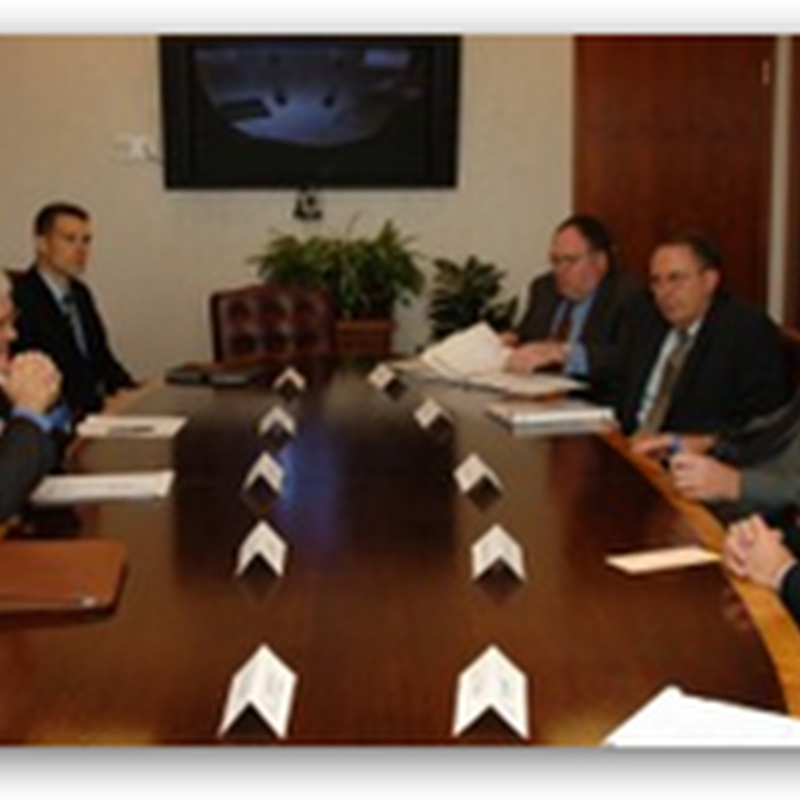
WASHINGTON -- The head of the Secret Service accepted full responsibility Thursday for last week's security breach at President Barack Obama's first state dinner, but he said that the president and Vice President Joe Biden were never in danger from a party-crashing couple who shook hands and posed for pictures with them.

Secret Service Director Mark Sullivan told the House Homeland Security Committee that his agents were at fault for allowing uninvited Washington socialites Tareq and Michaele Salahi into a lavish state dinner for Indian Prime Minister Manmohan Singh.

Sullivan told the committee that three uniformed agents had been put on administrative leave in the wake of the incident.

Secret Service chief takes responsibility for state dinner security breach - Politics AP - MiamiHerald.com

Intel Labs Integrating 48 Cores on a Single Chip – The Cloud Computer Chip on a Network

Maybe Moore’s law lives on.  This is pretty fascinating technology and the speed that it will create.  Granted when this is released this is going to the imageserver market first you can bet on that.  I remember back when memory disambiguation was the hottest item out there with advancing the ability to determine memory versus execution order.  Ok enough technical talk here, in layman’s terms this is really fast and we will probably need some accelerated video cards to keep up.  With 48 cores you are getting a lot of cache (memory on the chip) for sure, so the power of what is held in cache here is like that of a cloud.  Power management is important as well as the resources not being used for current calculations wait in reserve.   With all the multi mass sequencing and genomic research we are doing today, this can really cut down the compiling and processing times. 

A little off topic, but could you imagine a gaming computer with all this power, I’m sure the gamers are drooling all over this one.  BD

Intel Labs has created an experimental Single-chip Cloud Computer, (SCC) a research microprocessor containing the most Intel Architecture cores ever integrated on a silicon CPU chip 48 cores. It incorporates technologies intended to scale multi-core processors to 100 cores and beyond, such as an on-chip network, advanced power management technologies and support for message-passing.

YouTube - Intel Labs' Single-chip Cloud Computer animation

Hawaii Pacific Health launches MyHealthAdvantage – PHR Connecting Patients, Physicians and Hospitals

  image Hospitals and clinics are connecting in Hawaii.  Pacific Health consists of 4 hospitals and several clinics.  Patients will now be able to log on and have their own PHR with lab results, get refills and communicate via email with their physicians.  If you look at the image, the log on shows MyChart from Epic on the screen.  Epic is the same system used by many large hospitals on the mainland to include Cedar Sinai and Kaiser Permanente. 

With the doctors at the clinics being connected patients will have the ability to interact and better participate in their own healthcare.  A short while back I spoke with Dr. Leo from Long Beach Memorial Hospital who also uses Epic and they were able to accomplish the same/similar arrangement with Talbert Medical Offices.  BD

Long Beach Memorial Center’s Conversion to Electronic Medical Records – Interview with Dr. James Leo

Hawai'i Pacific Health today announced the launch of MyHealthAdvantage, a free online, 24/7 health connection that will allow patients at Straub Clinic & Hospital and Kaua'i Medical Clinic to access and manage their medical records and communicate with their doctors online.

image

MyHealthAdvantage offers a completely secure online connection that is fully compliant with federal and state privacy laws and provides an easy-to-use, 24/7 connection that allows patients to:

Schedule medical appointments

View test results

Request prescription refills

View health summaries from the MyHealthAdvantage electronic health record

Access trusted health information resources

Communicate electronically and securely with their primary care physicians

Hawai'i Pacific Health is a nonprofit healthcare system and the state's largest healthcare provider, committed to providing the highest quality medical care and service to the people of Hawai'i and the Pacific Region through its 4 affiliated hospitals, 44 outpatient clinics and 2,263 physicians and clinicians. The network is anchored by its four nonprofit hospitals that share strength and resources: Kapi'olani Medical Center for Women & Children, Kapi'olani Medical Center at Pali Momi, Straub Clinic & Hospital and Wilcox Memorial Hospital. The hospitals of Hawai'i Pacific Health collectively lead the state in the areas of women's health, cancer care, pediatric care, cardiovascular services, and bone and joint services. Hawai'i Pacific Health hospitals are among the top 3.8 percent of hospitals nationwide in electronic medical record adoption. Its EMR implementation allows its hospitals to offer integrated, coordinated care statewide. Learn more at: http://www.hawaiipacifichealth.org.

Hawai'i Pacific Health launches MyHealthAdvantage online | honoluluadvertiser.com | The Honolulu Advertiser

Healthcare Marketing – History from the Past “Incubator Babies” Exhibited at the World Fair in New York and Chicago as Side Shows

We talk a lot today about hospital and healthcare devices and marketing.  PBS ran a series going back in time about the birth of the incubator for imagebabies.  When you look at some of the links here, of course a marketing practice like this would not stand today, but babies were taken from their parents who needed care and were put in incubators, and were on display at the World’s Fair, in other words the babies were getting care, but also were participants in a side show of sorts.

Recently there was a reunion of many of the patients who were in these incubators and they were given a silver cup.  Dr. Couney was the brain child behind the marketing and creation of the program and you can read more here.  People paid admission to come and see the “babies” in the incubators.  After the various shows were over, the babies were returned to their parents when they reached what was considered normal weight ranges.  His first show was set up on Coney Island in New York.    There were some well known babies in some of the exhibits, such as the daughter of James Keeley, the renowned editor of the Chicago Tribune so this was not just a show for orphans or such. 

The Coney Island show attendance dwindled when a New York hospital opened their own premature infant station.  In 1939 babies were shown at the World’s Fair in New York  For more than 30 years Dr. Courney focused on “baby incubator” shows and the final was the World’s Fair in Chicago. 

PBS did an excellent video on the entire history and you can view the video at the link below:image

http://video.pbs.org/video/1173229614/search/life%20support%20music

When you watch the video a reporter tracks back some of the history.  When you listen to the woman describe what happened to her, she was taken by the Chicago Board of Health to be exhibited at the World’s Fair in Chicago as she was under weight.  She was a preemie and put in a shoebox by the oven to keep warm.  The Chicago World’s Fair was almost cancelled as it occurred during the Depression with unemployment at record marks. 

The Baby exhibit was not in the technology area, but in the midway, the side show area of the fair and was run like a side show and had an exotic dancer booth right next to where the babies were.  The dancer was arrested 4 times during the show but the attention continued to bring viewers and once the show was over, well the baby exhibit was right next door.   When you listen to the critics who tried to shut the show down, it appears he had monetary backing as well as physicians to keep the show rolling, any paradigms maybe to how we function today? 

In the video the reporter also talks to a current day doctor and shows the incubators of today and discusses “shaky medical ethics”.  The shows did give local doctors access to see the incubators in the smaller cities.  He said Dr. Couney did not charge parents, it was being part of the show as the cost to the families was to be on display.  Each parent received a silver cup with the name of their baby inscribed.  The babies lives were saved no doubt and are here today to talk about it, again, the marketing and how this all came about was the ethical question.  Four years after the incubator area of Cornell in New York was opened, Dr. Couney closed his exhibitions. 

Again, I found this extremely interesting and again it shows somewhat of the same issues we work with today with ethics in healthcare and how to advertise for pharmaceutical companies, hospitals, doctors, and so on. 

Some things in healthcare appear to still have the same and similar issues, how do we get the technology out there and respect the “human” and “private” side of healthcare and our battle today is still with devices, except ones that are a lot smarter and require a bit more of our time with participation, along with laws and regulations that help protect our privacy.  BD

"For the 1939-1940 New York World's Fair, Couney planned a major exhibit. The quarters were designed by Skidmore and Owings, architects for eight of the largest exhibits at the fair. A U-shaped structure was erected at considerable expense (the cost exceeded the original estimate because of trouble with pilings at the site -- a huge ash heap, known as the 'Corona dump,' in a tidal marsh near Flushing). There was a suite for Madame Recht and for Hildegarde, rooms for others on the staff -- including 15 trained nurses (Fig. 15), 5 wet nurses and their own nursing infants, as well as a cook and a chauffeur -- and a sumptuous apartment for the incubator-doctor himself (e.g., bedroom, living room, bath and a private garden).

The bright-pink colored building was decorated with a huge Della Robbia bambino plaque; long lists of the sites and calendar years of previous exhibits were displayed on the walls adjoining the entrance. One sign proclaimed that the exhibits had been seen by 1,500,000 visitors throughout the world, and in large letters, fairgoers were told, 'Once Seen Never Forgotten.' Physicians who visited the exhibit were treated royally; hospitality often included a lavish lunch or dinner with Couney at Henri Soulé's restaurant in the French Pavilion, the forerunner of the world famous Le Pavillon on East 57th Street in New York City. (Couney was a gourmet; he liked his gigot rare, accompanied by the finest wines.) On June 14, 1940, there was a reunion of the babies cared for during the previous season; 43 graduates were brought back to the exhibit.

Each set of parents was presented with a silver cup inscribed with the name of their baby, and a certificate signed by Couney and by Grover Whelan, the president of the fair; it declared that the baby gained a start on life at the incubator station. The 'vital statistics' of the two-year show were published in the Medical News columns of the Journal of the American Medical Association on Nov. 9, 1940....

The following article appeared in the New York Times on August 8, 1904:

Half A Million At Coney

Excursions Make Crowd A Record Breaker -- The Tiniest Baby

Coney Island entertained within its borders yesterday more strangers, that is, more people from beyond the confines of New imageYork than on any day this year, and it is likely that the crowd has never been greater on any day in the resort's history. A number of excursions were run to the Island yesterday from points in Pennsylvania, New Jersey, Maryland, Washington and other points, and more than half a million people viewed the wonders of the rejuvenated resort.

The beach was thronged during the day, and nearly all the big bath houses were forced to close up early in the day, as all their suits had been hired out and the rooms taken. 

Dr. Couney's incubators at Dreamland have now the smallest baby which has ever been received in any like institution and it is claimed that no record of a child of its size having lived over a few hours, exists. Dr. C. S. Patterson, brought the little fellow from Brooklyn yesterday. He was swathed in cotton and weight just 1 pound and 6 ounces, being 11 1/2 inches tall. It is too small to be put into the incubators and is being fed by hand. Frequent inhalations of oxygen are necessary to keep its little heart beating. Dr. Couney said yesterday that it had a very good fighting chance for its life.

Neonatology on the Web: Martin Couney, New York World's Fair, 1939-1940

Cruise ship for Medical Tourism Surgical Procedures – Fact or Fiction

This is fiction but it makes you wonder where’s the next plateau on healthcare to cut costs?  Actually you can read below about a novel written that imageexplores this.  You may have read about ships though that are portable hospitals and they do exist, as used in New Orleans for temporary relief a few years ago.  The novel as I understand takes this idea to the next platform with parking cruise ships to provide surgical services at a discount with being parked in international waters. 

Could you imagine taking a helicopter to a cruise line luxury ship and get your hip or knee done, or take your chemotherapy treatments or imagine being a clinical working on a ship?  The novel talks about this being a solution to dealing with all the greed, long waits, law suits, etc. that are experienced in healthcare today.  BD 

Later this month, you could be misled into thinking that the Salvare is a real cruise ship offering medical tourism. The advertising with images and even a video looks authentic, but it is only fiction.

“Universal Coverage”, a novel by Daniel Putowski, comes out on December 15th and is based on the premise that the US healthcare system has succumbed to fraud, greed, long waits, and uncertain outcomes. In the book, Bob Smith believes that the only affordable solution to save his dying son is a medical tourism cruise on the Salvare. As it is in international waters, the Salvare falls outside any national or international regulation or licensing of health care providers. It is an unlicensed hospital ship providing treatment to anyone with money. The Salvare cruises off New Jersey. It is a 120,000-ton ocean liner with private staterooms for every patient, chef prepared meals and nightly entertainment. Fully staffed by doctors and nurses, although with dubious medical credentials, it is a fully functioning hospital and recovery centre, even offering open-heart surgery and chemotherapy

Cruise ship medical tourism – fact or fiction?

Why Does An Apple IMAC Needs FDA Approval for Delivery….It’s Not A Real Apple

This is funny, well maybe not to the person wanting his new IMAC, but after working in logistics for many years I have to comment here.  I think he is imageright in the fact that there’s an exception here with needing the FDA to approve delivery on the records.  Is it an Apple or an IMAC, darn data entry stuff anyway.  

OK UPS go back and check your algorithms on this one as some one may have entered some incorrect data for the FDA exception to be called on the shipment.  I used to see that occasionally and yes we would all chuckle as some of the items we would see had nothing to do with the FDA or other government agencies at all, just data input error.  BD 

image

Well, to be more specific, either the FDA or the Department of AG/PPQ has to approve it, according to UPS. Seeing as the FDA having anything to say about my computer makes no sense, I decided to check what the latter department was. Apparently, it's the Department of Agriculture. Again, WTF.

On my UPS tracking shipment screen right now all I see is "Exception" followed by a note that my iMac was held up in in Louisville, Kentucky because, "UPS HAS OBTAINED DOCUMENTATION AND SUBMITTED TO FOOD & DRUG ADMINISTRATION AND/OR DEPARTMENT OF AG/PPQ;AWAITING RESPONSE"

Dear FDA, Gimme My iMac - washingtonpost.com

Technorati Tags: , , , , ,

Did You Know Today is “National Cookie Day” – Here’s an MD Who Bakes Healthy Cookies and Has Practices to Help with Diet and Obesity

The first comment I have to make here is that this is one doctor not having to worry about low reimbursements from payers.  He figured out how to survive in 2007.   He has a few practices in Florida that help individuals with weight control. 

image

Now if your are looking for chocolate chip, well you might be surprised to find some different ingredients.  There are also other health food products on the site as well, so one doctor here taking a stab at obesity.  BD 

From the website:

In early 2007, in response to many requests, Dr. Siegal decided to offer his products directly to the public, online, by phone, and in stores. He and his son, Matthew Siegal, formed a new company to take Dr. Siegal's COOKIE DIET® directly to consumers for the first time. CookieDietOnline.com, our original web site, was launched in May 2007. Shortly thereafter we began opening Dr. Siegal’s COOKIE DIET® retail kiosks in shopping malls across the United States. Our new web site, CookieDiet.com, launched in December 2008. Our first full-size retail store opened in Beverly Hills in January 2009.

image

Let's face it: there’s only one way to burn fat and it doesn’t involve magic or miracles. You must take in fewer calories than you need to maintain your weight. But that’s easier said than done when hunger strikes. Dr. Sanford Siegal, a practicing physician based in Miami, Florida, known to generations as the Cookie Doctor®, created his famous Dr. Siegal’s COOKIE DIET® brand hunger-controlling meal replacement cookies and shake mixes more than 30 years ago. Dr. Siegal’s foods contain his proprietary amino acid mixture that results from the blending of various protein food substances. They satisfy hunger without drugs and help you stick to a reduced-calorie diet.

Dr. Siegal's COOKIE DIET® | 1-877-377-4342 | Weight-Loss Cookies, Diet Shakes & Diet Books | Cookie Doctor® Sanford Siegal | CookieDiet.com

Therapy Versus Enhancement with Healthcare and Mobile Technology – The Horse Has Already Left the Barn

This is a good article from the Orange County Register and it makes some very good points.  Yes the horse has already left the barn here and I agree with the point made that there is confusion between therapy and enhancement and where does the line draw.  The problem here is that the line keeps moving, almost daily, so how do we keep up and make the determination between the two?  We all fight that battle no matter what level of technology knowledge we are at.  image

Obviously if you are diagnosed with a disease or condition, treatment will follow or treatment options I should say will be given by a doctor.  But what about these options?  There’s the million dollar question sometimes.  In the clinical area things are jumping around with needing to know up front about allergies, family history, etc. to allow for better decisions and when you don’t have this, it’s a shoot from the hip scenario.  When you do have the information available, its an algorithmic chore to decipher all of it for a conclusive educated decision.  Sometimes shooting from the hip looks easier by far and is all we have had until the last number of years with extensive data base information has become available.  The world is complicated with a lot of information today and to try and just rely on our little brains 100% is impossible. 

Yup, our social structure is changing and you would almost have to be living under a rock to have not noticed some of this, as it leads to frustration and furry at times and the world continues to be more complex.  I get my fill of it too at times just writing this blog! 

Back on track, what is augmentation, and how is it affecting you?  The devices are here and growing and it’ no longer a Star Wars movie out there.  How are we reacting to some of this?  Do we like some of the technology better than other parts? How will those who have it use it to negotiate and deal with those who do not participate?  We are getting smarter, but do we like it?  That’s a loaded question and even myself I ponder this one a lot and openly joke about wanting to grow up to be a dumb blonde at some point (grin).  It takes “gear shifting” upstairs to survive some of this from my own personal point of view.  image

When Congress is debating the dollars spent on healthcare, is augmentation included?  It almost has to be as again the line keeps moving around all the time.  Quality of life with technology certainly falls under some of this gray area too.  Why should an individual suffer when there is technology that will offer better quality of life?  Why are some individuals being directed to report data and others are not and continue to be non participants? 

With technology we are all opting for some type of augmentation all the time, with faster and more efficient ways of doing things that has become available with mobile technology, but again we need balance to ensure all the proper roads to success are given to do right.  There are also those who will take such information and use it for financial gain, keep the eyes in the back of your head open by all means and be aware. 

The question lies, are we augmenting or treating, or maybe a little of both, and the answers can change every day so read up and try to keep up on some of what is here today and what lies in the future for your own good and also don’t lose track of the “human” side of all of this while you are at it as balance needs to co-exist so we are not human drones being a slave to technology but rather benefiting instead.  BD 

Humanity+, a  group of inventors, futurists and free-thinkers that look for ways to promote happier, smarter and healthier lives, will convene in Irvine this weekend to discuss the evolving state of the human condition. The keynote speakers include futurist-author-inventor Alex Lightman, who agreed to answer a few questions by email.

Human intelligence has been augmented technologically for thousands of years.  Language, writing, printing, telecommunications and the internet have enabled global scale thought across societies.  The consequences have been enormous.  In the near future human intelligence at the individual and social will continue to be increased through methods such as the seamless integration of real-time coordination and knowledge sharing on mobile devices.  On a longer timescale brain-computer interfaces and artificial intelligence will dramatically extend and amplify the human capabilities.

While humans and technology have been evolving together for some time, I believe the increasing rate of change will lead to major changes in social structure.  Citizens will choose a future with increased transparency in government and business, greater connection to issues of climate and environment, and increased peace and community on a global scale.  Increases in the complexity of the world will drive human intelligence amplification, and a better understanding of larger issues will be what society needs to improve itself.image

Most people are seriously uninformed about the extent to which we’ve already crossed the line between therapy and enhancement. Over 10%, or 33 million Americans, are cyborgs, and have mechanical and/or electrical parts as part of their body. This doesn’t count contact lenses or glasses, but surgically implanted or improved parts like artificial hips and artificial hearts. The horse has already left the barn with respect to wide-scale human augmentation, and we are about to experience a commercial explosion to make people stronger, more injury resistant, thinner, and immune.

Homo Sapiens has been using tools for about as long as we’ve been a species, and tool use thus an essential aspect of being human. We use tens of thousands of tools, and if you could specific software applications, it’s possible we use millions of tools. Augmentation is in one sense just a hands free way of using tools.

Augmentation has happened and will continue to happen to greater numbers of people and with greater quality and variety. The bigger question about augmentation is how long nearly 100% of our $2.4 trillion of medical spending will be for therapy, as an increasing number of people will demand enhancement, especially if their tax dollars are going to pay for medical
attention. One of the key purposes of Humanity+ is to speak for the rights of the people now and in the future to augment and enhance themselves free from prejudice and restriction.

Futurist tells O.C. what lies ahead - Sciencedude : The Orange County Register

24 Hour Fitness has an IPhone Application – Biometrics on the Run

The digital empire is now entering the gym, although it has already been there in other formats, but now with your accelerometer equipped IPhone, your work out can involve keeping it close to your heart, literally.  Walk and Play was one of the first free applications created using the IPhone and I wrote about it a short while back.  The application will also allow you to find 24 Hour locations.

Walk n Play iPhone Application – Tracks Every Move You Make and Creates A Report

 image

There has been a lot of interest of late with such programs that report data and the insurance industry has a great interest in this data as well through their wellness programs they are developing.  Below is one post about Wellpoint and their agreement with Red Brick insurance, who is a client of Ingenix (United Healthcare) to use such devices to record biometric information to create behavior based evaluations for health insurance.

WellPoint enters wellness program partnership With Red Brick – Behavior Based Health Insurance

Target Stores have also partnered with Red Brick to have options of using biometric tracking, devices that use wireless technology to report back your activity levels, again through the use of an accelerometer or other types of devices that use wireless to report on your body’s movements and activity levels.   It all comes back around to those algorithms being used to collect data.

Target Corporation Partners with Red Brick Wellness Program

I would also want to say that in the future with biometric monitoring said to be increasing by 25% in the upcoming year, we might see the gyms entering partnerships with wellness coach programs run by health insurance companies too, a guess on my part here.  The link below discusses the use of wireless biometric with some pros and cons. 

What Is the Role of the Employer Today with Wellness and Health Insurance – Biometric Wireless?

At any rate if you are a 24 Hour Fitness member, you might find the application useful and it appears all the data is stored on the device from what I read here, but as with any application read all the fine print so you know where the data is going and who’s in control. Those software application licenses that we all used to click and assume we understood are changing, so one click without reading the full agreement could stand to send data to places unknown if you have not read up.  BD 

24 Hour Fitness, the U.S. based fitness chain, is now ‘mobile’. The company has recently introduced My24 - an iPhone application (app) and Mobile Web site. The new offerings bring fitness management features directly to mobile devices.

My24 has a 'Calorie Burner', which tracks workout duration and intensity to calculate hard-burned calories and data on the users resting metabolic rate.

There is also a daily calorie calculator, which works out approximate calorie needs based on activity levels.

Also this week dreamGEAR has announced an exclusive partnership with 24 Hour Fitness for fitness related video and computer game accessories.

The Fitness Game Goes Mobile |

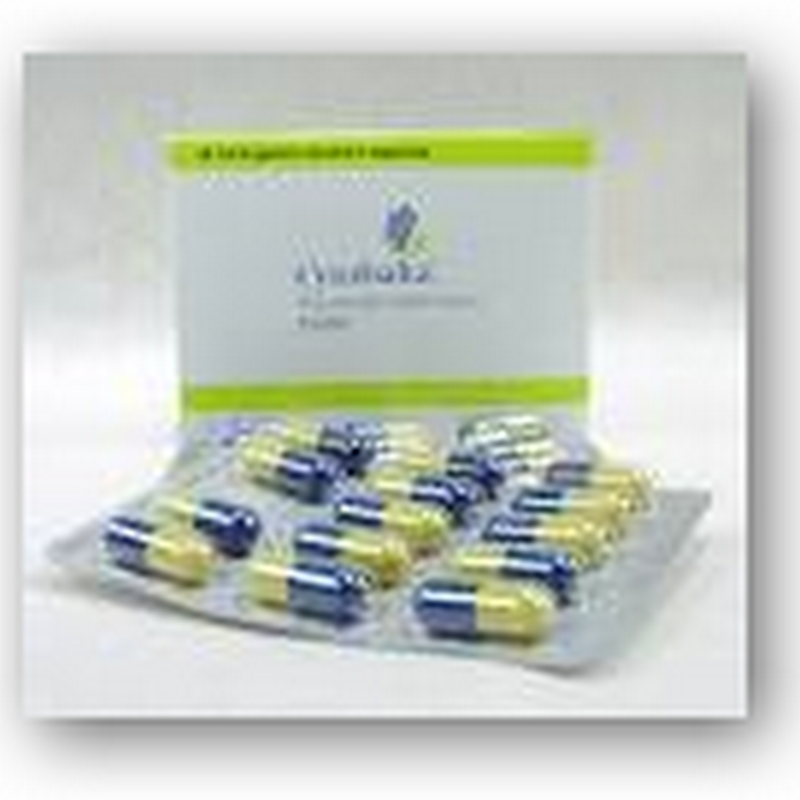
SEROQUEL XR(R) FDA Approved For Add-On Treatment of Major Depressive Disorder

In posting this blog I somewhat seem to notice there’s been a bit of a flurry on antidepressants being approved lately or is it just me, we had Cymbalta approved imagelast week for generalized anxiety treatment.

Cymbalta(R) Gets FDA Approval For Treatment of Generalized Anxiety ...

Seroquel had been approved for the treatment of bi-polar and now it is an add on treatment if you are bipolar and depressed I guess at the same time?  If the current antidepressant used is not working well for the patient, MDs can use Seroquel XR as an add on treatment so one more pill can be added on here.  Again, perhaps just my observation but there’s certainly a lot of press on treating all types of mental illness these days and I question if we are to look forward to new mental diseases on the horizon to be created?  BD 

WILMINGTON, Del., Dec. 4 /PRNewswire-FirstCall/ -- AstraZeneca (NYSE: AZN - News) today announced that the US Food and Drug Administration (FDA) has approved once-daily SEROQUEL XR® (quetiapine fumarate) Extended Release Tablets as adjunctive (add-on) treatment to antidepressants in adults with Major Depressive Disorder (MDD). SEROQUEL XR is the only medication in its class approved by the FDA to treat both major depressive disorder as adjunctive therapy and acute depressive episodes associated with bipolar disorder as monotherapy.(1)(2)

MDD affects approximately 14.2 million American adults in a given year, and today it is often treated with antidepressants(3).( )Selective serotonin reuptake inhibitors, or SSRIs, are among the most commonly prescribed class of antidepressant medications for depression; however, in many cases patients fail to respond adequately to treatment(4). Results from a National Institute of Mental Health study, STAR*D, showed that approximately 63% of patients did not achieve remission with the SSRI citalopram when used as a first-line treatment(4). Additionally, this study reported that overall approximately one-third of patients with MDD failed to achieve study defined remission(4). This approval for SEROQUEL XR provides physicians with a new adjunctive treatment option for patients with MDD who have an inadequate response to their current antidepressant.

In addition to the FDA approval for the adjunctive indication in MDD, AstraZeneca has received a Complete Response Letter (CRL) from the FDA asking for additional information for the sNDAs for SEROQUEL XR as acute monotherapy and maintenance monotherapy for the treatment of MDD in adult patients.

US FDA Approves AstraZeneca PLC's SEROQUEL XR(R) For Add-On Treatment of Major Depressive Disorder - News, Search Jobs, Events

U.S. Health IT Office Reorganizes And Creates a Chief Privacy Officer

The Office of Chief Privacy Officer is going to be a busy one, perhaps somewhat of a understatement if you will, as there’s a lot of area to cover here and with emerging technologies, such as devices that report data showing up every week.  So far, this has not really been addressed and hopefully we will see some interest in this area.image

It appears the Chief Privacy Officer is going to be busy not only with federal government entities, but also at state and other levels too.  I think this all goes to show what a big job digitizing our records and at the same time ensuring policies and laws are enforced is going to be.  It is interesting too when you read the job descriptions and responsibilities here how they all overlap in selected areas.  This group is definitely going to be a meeting of the minds on a consistent level I would guess. 

I hope these offices are staff with individuals who actually have some “hands on” experience in Health IT to add some real value here as well as it has gone to show that participation with role models is the key, otherwise we get stuck with “Magpie Healthcare” that frustrates all of us.  BD 

The U.S. federal government office which handles the nationwide transition to electronic medical records reorganized into several groups, including creating a Chief Privacy Officer.

The National Coordinator for Health Information Technology's new organizational structure is designed to more effectively meet the mission outlined by the U.S. American Recovery and Reinvestment Act of 2009 (ARRA). The changes were published in the Federal Register, effective Dec. 1.

The office is now composed of five smaller offices with direct reporting capability to National Coordinator for Health Information Technology David Blumenthal, who reports to Kathleen Sebelius, secretary of the Department of Health and Human Services, who reports to President Barack Obama.

The new groups are the Office of Economic Modeling and Analysis; the Office of the Chief Scientist; the Office of the Deputy National Coordinator for Programs & Policy; the Office of the Deputy National Coordinator for Operations, and the Office of the Chief Privacy Officer.

The Office of the Chief Privacy Officer, appointed by the Sebelius, will advise on privacy, security, and data stewardship of health information, coordinating with privacy officers in other federal agencies, state and regional agencies, and foreign countries.

The Office of Chief Scientist also shares information on health IT with international audiences, collaborates with other agencies and departments, and develops education programs.

The Office of the Deputy National Coordinator for Programs and Policy implements and oversees grant programs that advance the nation toward universal meaningful use of health IT, develops and implements standards for national health information exchange, and maintains the Federal Health IT Strategic Plan.

U.S. Health IT Office Reorganizes -- Healthcare IT -- InformationWeek

AMA Announced Settlement of Class Action Suit of $350 Million with Ingenix (United Healthcare)

This was one long lawsuit that drug on for over 9 years.  When you think about it the data base was only shut down recently so how about everything else that has taken place in 9 years, or perhaps that is part of the settlement amount?  There are plenty of other Ingenix lawsuits that have been filed imageas well from different states, individuals and providers though that are unfinished business.  Aetna has one going on in New Jersey relating back to the data base with class action requests. 

It was just June of this year that Healthnet stopped using the data base.

HealthNet  agrees to stop using Ingenix database for calculating ...

This is one division but Ingenix can still buy and sell our medication data and make a profit with creating “scores”.  BD

CHICAGO, Dec. 3 /PRNewswire-USNewswire/ -- The American Medical Association (AMA) announced today that the United States District Court for the Southern District of New York has granted preliminary approval of the previously disclosed $350 million settlement that would resolve a class-action lawsuit against UnitedHealth Group.

The action brought by the AMA, Medical Society of the State of New York and Missouri State Medical Association, along with several other plaintiffs, alleged that UnitedHealth Group colluded with others to underpay physicians for out-of-network medical services. Originally filed in March 2000, the suit sought relief for physicians who were seriously harmed by the insurer's long-term use of the flawed database operated by Ingenix, a unit of UnitedHealth Group. A year-long investigation in 2008 by the New York Attorney General confirmed that the Ingenix database is intentionally rigged to allow insurers to shortchange reimbursements.

As required by the court's preliminary approval order, a formal notice of settlement will be publicized and circulated to class members providing detailed terms of the proposed settlement, including important dates and information related to filing claims for reimbursement from the $350 million settlement fund.

A copy of the court order is available on the AMA Web site at:

http://www.ama-assn.org/ama1/pub/upload/mm/395/uhc-preliminary-settlement-order.pdf

Settlement in AMA Lawsuit against UnitedHealth Gets Preliminary Approval

Related Reading:

Health Insurance Business Intelligence “Scoring” Algorithms ...

“Fair Database” to Replace Unfair Ingenix Data Base – Run by Non ...

One woman's battle with Ingenix who has cancer

Chiropractor Files Class Action Breach of Contract Lawsuit Against ...

The Ingenix Inquisition – Hearing Requested by ...

Is this a case for a new law – illegal algorithms? how do you sleep at night

Skins game with dermatology offices in California – Ingenix

A Chip Off the Old Medical Record Getting Closer to Reality for Many Insured in Florida – PositiveID Alliance with Innovations Avocare

Innovations Advocare is the vehicle to push the technology  through as they build portals for connectivity.  Below is a short clip from a prior post.  The chips are now updated to connect to a PHR, like HealthVault. 

Some hospitals are using a hand log on, like what El Camino is doing in the silicon valley, so there might be some duals here between which is the bestimage option. 

As noted below once this rolls a bit there is an option for patients to “opt out” but then the question rises as to how long would this option be tolerated by either providers, insurers or both come to think of it.  There is a special device that is required to connect the chip to read the medical records.  You can read more at the link below.  BD

VeriChip Implant Links To Your PHR Health Records, Credit History, Social Security With PositiveID

Ok, we are back once more to the implanted chip, which for a couple of reasons somewhat died on the vine, but now is making a comeback with new technology offerings.  Again, this is very much a personal choice on to chip or not to chip.  The only individual who has made any of his own  experiences public is Dr. John Halamka, who was an early pioneer in trying the product.  One thing you certainly have to give Dr. Halamka credit for and that is the fact that he is in no way a “Magpie”, he participates and gets out there hands on, or in this case “chips on” to see what new technology does and evaluate it’s value.

When the product first came out, it was a simple repository of your medical records, which requires a device to be able to view the information, this way it is secure.  You can visit their website for additional information.

New technologies have boosted the capability of the chip now, so you can connect to your personal health records through the chip.
“Health Link is the connection between you and your personal health record. Health Link utilizes a tiny, passive microchip (the first and only microchip cleared for patient identification by the FDA) and a secure online database that links you to your personal health record.”

PositiveID (PSID), the microchip implant health record marketer formerly known as VeriChip, has entered into a “strategic alliance” with Innovations Avocare to use the chips in Florida’s various regional healthcare organizations. PositiveID said that integrating its Health Link microchip into the system will serve more than 1 million patients.

Avocare’s main business is building “Physicians Portal” web sites on which doctors and hospitals can access patient health records. These web sites are sold through to various regional healthcare providers, reimbursers and insurers. One example is the Central Florida Regional Health Information Organization, which would connect to the PositiveID/Avocare alliance’s services. Its members include Blue Cross/Blue Shield, Cigna, Humana, and UnitedHealthcare –  all the major players, in other words.

image

Within that network, Avocare envisions a single access point with one login for doctors. According to a diagram in an Avocare white paper, that online system is connected to “State Medicaid,” “Immunization Records,” “Rx Claims” and “Others.”

A key point for privacy advocates is that patients have the ability to opt out, according to page 9 of the presentation. That, however, raises the question of how long medical providers and reimbursers would tolerate patients who chose the opt-out option.

How many people are currently implanted with a Health Link chip? That is not known. However, revenues at PositiveID leaped from $41 million to $161 million through the first nine months of this year.

PositiveID Deal Advances Use of Microchip Implants in Florida Health System | BNET Pharma Blog | BNET

Economy Getting Too Stressful – Samuel Has Relief – 27 Percent Alcohol Beer - Utopias

I have never tasted this type of beer but the article states it is the champagne of beer, must be for the extra kick that comes along and you can bet it’s not cheap.  OH well, just in time for the holidays for those people you just don’t know what to buy.   13 states say it is illegal as the alcohol exceeds the legal limit for beer.  BD  image

The maker of Samuel Adams beer has released an updated version of its biennial beer Utopias - now the highest alcohol content beer on the market. At 27 percent alcohol by volume and $150 a bottle, the limited release of the brandy-colored Utopias comes as more brewers take advantage of improvements in science to boost potency and enhance taste.

"Just part of trying to push the envelope," said Jim Koch, a Cincinnati native and founder-owner of the Boston Beer Co. the maker of Sam Adams. "I'm pushing it beyond what the laws of these 13 states ever contemplated when they passed those laws decades ago."

Thirteen states - including Ohio - prohibit its sale because its alcohol content exceeds the legal limit for beer. The other states are Alabama, Arkansas, Georgia, Idaho, Mississippi, Montana, New Hampshire, North Carolina, South Carolina, Tennessee, Vermont and Washington.

Sam Adams pushes new limits on extreme beer | cincinnati.com | Cincinnati.Com

Cox Communications Expects Revenue to Grow From Healthcare – Wiring Hospitals and Homes for Remote Monitoring

Healthcare today is not a huge part of the Cox revenue structure, but they say it’s going to be, again back to those devices reporting data is where the market will be.  You’re wired, I’m wired, we all will be wired to some degree it appears, and there’s a ton of devices either here today or showing up tomorrow to choose from.  Cox can do the wiring but we still need to ask and know where the data is going, where it is stored, and who has access, and be wary of waivers and disclosures as again we have little or no laws in place for protection here.  BD  image

Cox Communications Inc. expects to generate $2 billion annually from selling high-speed Internet, phone and video service to commercial customers within six years, and the company expects that most of that revenue will eventually come from the health care industry, a top executive said in New York City today.
“Cable can help cure some of the ills of the healthcare industry,” Cox Business vice president Phil Meeks said at a Light Reading conference on the Future of Cable Business Services. “I am convinced that technology not only can but will transform the way we do business in the health care space.”

With about 50 percent of the U.S. population projected to be 50 years or older by 2040, Cox is looking to profit by wiring hospitals, local doctors offices and consumer homes for remote health care services, Meeks said. The home healthcare sector will also be driven by economic stimulus packages from the federal government, which call for the digitization of healthcare records.
“That’s a huge development for companies like Cox. Once these medical records are digitized, it opens up whole new worlds,” he added.

Cox Eyes Revenue from Healthcare :: Communications Technology

Leapfrog 2009 Top Hospital Report is Out

Below is the listing for the urban hospitals and a new category of rural hospitals was added this year where 3 were named.  As you can see California and Massachusetts both have a big showing here.  As a matter of fact I highlighted the ones in southern California and they were all Kaiser Permanente imagefacilities.  As you can see from the criteria listed, having an computerized physician order entry system was part of the game plan here to be listed, so those on paper were not in the running.  BD

“In 2009, Top Hospitals in urban settings fulfill the following criteria:

• Fully meet Leapfrog standards for implementing computer physician order entry (CPOE) systems (that have been shown to reduce medication errors by up to 85%), and for passing Leapfrog’s test of their system;

• Fully meet stringent performance standards for complex, high-risk procedures (such as heart bypass surgery) done in that particular hospital;

• Fully meet standards for staffing the ICU, shown to reduce mortality by 40% or more”

“We know from research that Leapfrog-reporting hospitals are among the best in the country, and they demonstrate through Leapfrog that they set ambitious goals for their performance,” said Binder, pointing to a study by Dr Ashish Jha at Harvard Medical School, published in the peer-reviewed Journal of the Joint Commission in 2008, concluding that Leapfrog hospitals have lower mortality and better quality of care than those that don’t report to Leapfrog. 

“Not all hospitals make the top hospital list, but every hospital that participates in Leapfrog deserves credit. They are fundamentally changing the hospital market into one that is highly responsive to the quality, cost and value needs of consumers and large buyers of health care,” said David Knowlton, Chair of The Leapfrog Group and President & CEO of the New Jersey Health Care Quality Institute.

This year’s top urban hospitals are located in 13 states – Arizona, California, Illinois, Maryland, Massachusetts, Michigan, Minnesota, New Jersey, Ohio, Pennsylvania, South Carolina, Tennessee and Washington: 

  • Mayo Clinic Hospital; Phoenix AZ
  • California Pacific Medical Center - Davies Campus; San Francisco CA
  • California Pacific Medical Center - California Campus; San Francisco CA
  • California Pacific Medical Center - Pacific Campus; San Francisco CA
  • Kaiser Permanente Anaheim Medical Center; Anaheim CA
  • Kaiser Permanente Baldwin Park Medical Center; Baldwin Park CA
  • Kaiser Permanente Bellflower/Downey Medical Center; Bellflower CA
  • Kaiser Permanente Hayward Hospital; Hayward CA
  • Kaiser Permanente Sacramento Hospital; Sacramento CA
  • Kaiser Permanente South Sacramento Hospital; Sacramento CA
  • Stanford Hospital & Clinics; Stanford CA
  • University of California Davis Medical Center; Sacramento CA
  • NorthShore University HealthSystem’s Highland Park Hospital; Highland Park IL
  • Northwestern Memorial Hospital; Chicago IL
  • Rush University Medical Center; Chicago IL
  • University of Maryland Medical Center; Baltimore MD
  • Baystate Medical Center; Springfield MA
  • Beth Israel Deaconess Medical Center; Boston MA
  • Brigham and Women's Hospital; Boston MA
  • North Shore Medical Center - Union Hospital; Lynn MA
  • Norwood Hospital; Norwood MA
  • Detroit Receiving Hospital; Detroit MI
  • Harper-Hutzel Hospital; Detroit MI
  • Mayo Clinic - Methodist Hospital; Rochester MN
  • Mayo Clinic Saint Marys; Rochester MN
  • Regions Hospital; Saint Paul MN
  • The Valley Hospital; Ridgewood NJ
  • University Medical Center at Princeton; Princeton NJ
  • James Cancer Hospital and Solove Research Institute; Columbus OH
  • The Ohio State University Hospital; Columbus OH
  • Lehigh Valley Hospital; Allentown PA
  • Bon Secours St. Francis Health System; Greenville SC
  • Vanderbilt University Hospital; Nashville TN
  • Virginia Mason Medical Center; Seattle WA

Top pediatric hospitals in 2009 achieved a quality score of 95 or better through Leapfrog’s Hospital Recognition Program and are located in California, District of Columbia, Massachusetts, Minnesota, Ohio, Pennsylvania, and Tennessee:

  • Childrens Hospital Los Angeles; Los Angeles CA
  • Children's Hospital of Orange County; Orange CA
  • Children's National Medical Center; Washington DC
  • Children's Hospital Boston; Boston MA
  • Children's Hospitals and Clinics of Minnesota - Minneapolis; Minneapolis MN
  • Cincinnati Children's Hospital Medical Center; Cincinnati OH
  • Childrens Hospital of Pittsburgh of UPMC; Pittsburgh PA
  • The Monroe Carell Jr. Children's Hospital at Vanderbilt; Nashville TN

Announcing 2009 Leapfrog Top Hospitals

Wearable Sensors and Other Healthcare Innovations Set to Flourish

I keep telling everyone who reads here that a lot of this stuff is here or very close to being here today and to be ready and be alert.  When you spend time with companies like Cook Medical and Cambridge Consultants, you get a good idea of where all of this is going, and it’s moving fast!  As always, I imagelike a good implementation as you can’t just throw devices at patients and doctors in a sink or swim situation and that’s why we have “participatory sensing” studies going on to make sure the rest of the process is set in place before hitting the “on” button.

A few examples from the past here, Best Buy has announced they will be supplying “Muve Gruve” devices for their employees to wear, this is one of those devices that records activity and reports data.    Capsule Technologies supplies many of the software drivers that make these things work.  The FDA may someday have to approve your cell phone.image

Wireless Healthcare Medical Devices and the FDA – The Reasons They Are Slow to Come to Terms

The Pill Bottle That Talks To Your Cell Phone, Creates Data Reports and More…

And you might be swallowing your sensor as well as wearing  it:

Proteus’ Raisin technology runs on an electric charge generated by the patient’s stomach acid. The charge is detected through the patient’s body by a sensing patch on the patient’s skin. The patch records the time and date that the pill is digested and also measures some vitals like heart rate, activity and respiratory patterns. The information is then sent to the patient’s mobile phone and then onto the internet for caregivers to review and analyze.

Someday you might be your own network and wear a power supply for all these devices. 

Implantable Devices Getting Wireless External Power Supplies – Bionic Man/Woman

I did a summary not too long ago on many of the devices I have written about here, but if you want to see more, use that 2nd search box above and there’s more where this came from. 

Wireless Monitoring With Medical Devices – There are Many Posts About These at the Medical Quack

If you participate in clinical trials, you might be wearing a Bluetooth and Zigbee wireless shirt.  They are out there and moving forward. 

LifeShirt Has Upgrade Coming Out With Bluetooth and Zigbee Wireless – A Shirt that Transmits Health Data

I have talked about devices, well now let’s enter the wearables.  If you like your LifeShirt enough you can even sleep with it.  Actually the shirt records data while you sleep so there is a purpose other than maybe just liking the fit.   Actually the data collected can render information related to diagnosing and treating sleep apnea.  Pharmaceutical companies are also using the shirt to help collect data during clinical trials.  Does this mean I’ll have a garment to reboot? (grin)

I have reported on some interesting devices, there’s a bra that will check your heart rate too, good for the gals, but maybe not of interest for the men.

Of course there is the exotic Blue Tooth Inhaler that I reference quite a bit here as well.  Why a Bluetooth inhaler you might ask, the answer is compliance as it talks to a phone and records and send data.  Watch the video from Cambridge Consultants and you can see the software and the whole thing set up ready to go, even to report to insurance companies which of course we are not supposed to do here in the US.  Keep in mind the video was made in the UK.  This is also an area where we need clarity too on perhaps in the future claims not being paid due to negligible non compliance with data trails to show a few mistakes, as we know how insurers use their algorithms to calculate and “score” our existence.  Remember United makes more money today from technology than they do from policies via their Ingenix data division. 

If you sign some type of a waiver though for use with biometric monitoring though through an employer or health plan, ask where the data is going and who sees is.  I think all of these devices when used in patient care should go through a PHR Gateway that the patient controls, otherwise you lose control and can’t cut if off if you wanted too.  If you are the gatekeeper of the first stop of transmitting data, then you are in control, so I just think it’s really a good idea to read up on some of this before it one day hits you in the face and you have no clue as to what is going on. 

I do think too that our Congress should be active participants and just try some of these out so they know what participatory sensing is. Could members of Congress stand to be sitting in a lawmaking meeting and get texted while on the floor to start moving around more, that they are not getting enough exercise and be signaled to answer the “wellness coach” as to why they are not being compliant with a time limit set for responses before they are bugged again with more messages and a buzzing device? 

I would like to see that picture with devices buzzing members of Congress while they are trying to concentrate, but again to understand some of this participation and education is needed, otherwise you get bad implementations with exactly that happening, a patient that is needled to death about moving around when a workable participatory plan is not in placeLet’s needle Congress so they understand what is evolving here so they can be aware and hopefully put some laws out there to protect some of the potential illegal activity that will go on with some of this and be ahead of the game. 

I don’t always agree with all technology but I know I can’t stop progress and need to learn to be ahead of the game if I can and that is the reason I post about such items here and it may make some uncomfortable to read about some of this, and I apologize for that fact, but if its worth anything it makes me uneasy too with some of what I see too.  I’m only the piano player and not the creator just trying to bring around an educational awareness and perhaps drag a few out of “technology denial” in the process.  BD 

Technology innovation is a leading driver in making any industry prosper. According to IEEE, the world’s largest technical professional association, this rings true especially in the field of healthcare. With over $27 billon spent each year in healthcare research and development globally, technology is playing an increasingly larger role in changing the way we prevent, diagnose and treat patients.

Technology has been utilized in healthcare on several fronts, from electronic patient medical records and monitors within the operating room, to the newer fields of telemedicine and robotic surgery and now wearable monitoring devices. This year, the Computing Community Consortium (CCC), through a grant from the National Science Foundation, held workshops to create the CCC Robotics Roadmap, which identifies the future impact of robotics technology on the economic, social, and security needs of the nation, outlines the various scientific and technological challenges, and documents required R&D to address these challenges

Telemedicine, e-records, and wearable sensors: Medical tech’s growth spurt | R&D Mag