92648

One Senator Banning Blocks Medicare Cut and COBRA Bill – Unless Approved, MDs Get Cut and Unemployed Lose Benefits

One good thing about this senator, Jim Bunning, is the fact that he is retiring and perhaps not soon enough.  His big battle was not wanting to add to the deficit, but it’s there anyway for all to work on, so let’s dig a deeper grave here for the unemployed who are also someone’s patient and make life a little more difficult right now.  In addition when they get sick, there’ needs to be a physician who will see them and with the Medicare cuts and some of those individuals maybe getting close to qualify for Medicare, we are not accomplishing anything here.  image

We know the Medicare cut has come down to the wire every year with the same issue and does it get addressed during regular session, no.  Now look at the extra cost this has created by stalling.  CMS has to stop the claims and hold them for 10 days. Data systems need to be changed to adhere to the laws and I guess the “non participants” in Congress have not figured out what an expense this is. Sure they have new “algorithms” ready just in case, but we hope they don’t have to use them.  If the cuts are not stopped, by law the IT folks at CMS have to adjust the algorithms for payment and that mean cuts. 

We are once again back to my favorite word here as you can see.  We sleep, algorithms run 24/7 and process health care claims.  Ask Wall Street about that and there’s a new movie in the making about this topic as that is what runs Wall Street to day, “the algorithms” ask any broker and they will tell you so as that’s how they make money through robotic software that runs the algorithms for them. 

"Wall Street: “Money Never Sleeps"- “Greed is Good- Now It’s Legal – Its About the Game – Everybody’s Drinking the Same Kool-Aid” – The Move Trailer

It’s getting tough around Washington being a non participant without some tech knowledge these days and one more Congressman said he’s going to retire, Representative John Linder of Georgia, a Republican.  So far we have had 20 Republicans announce retirement and 14 Democrats.  It’s getting hot in the oven in Washington and it doesn’t work the way it did in the 70s.  When decisions are stalled and indecision is ruling – IT COSTS MONEY.  The easy ride is over and now Congress needs to create laws that work with technology and it’s not easy and again requires some technology background or an effort to learn.  image

I see huge levels here with distraction as well when I read today about John McCain wanting to control dietary supplements and give the FDA the authority to administrate.  Fine and dandy perhaps and worth discussion, but do you have to distract yourself from the urgent matter at hand to bring this up now.  Can it go on the agenda after Healthcare reform is done?   Is he retiring too, maybe he might give that some thought or work on multi tasking with a little less distraction and stop being as disruptive and stay on course.  We all know he has had government insurance coverage all his life so perhaps this seems to be less of an urgent matter for him, but millions of others don’t have the benefit, self included. 

Here let’s take a look at another scary Congressman and shown on the Rachel Maddow show.  Again we are back to “me”, “myself” and “I” being the best friends of some in office today.  This one, Rep. Steven King, voted against help for Katrina, so do you think healthcare reform has a chance with his vote? 

At this point from what I see and hear, and I look at voting records too not just media, we are in a world of hurt here, not only from the knowledge side of things but their gilded perception as well. 

If they were to pass the law, then CMS would not be jumping through hoops right now, Cobra folks would still have benefits and doctors would not have to be immediately rethinking how they are going to continue to do business.   I hope both matters are cleared and passed soon.  Again what the old school does not understand is the fact that it not only inconveniences everyone (those who work in CMS and other areas as well as patients and doctors) – it does exactly what they state they are trying to prevent – spending money.  The lack of participation and perhaps a missing understanding on how decisions and laws impact government and the rest of us with the influence of technology certainly seems to be showing a bit of of ugly face that you just can’t miss. 

We wouldn’t be hearing and viewing some of the “soap opera” type of battles, and gee, some of the untimely or otherwise somewhat inappropriate words we are surrounded with today that do nothing but frustrate and keep others from moving forward could certainly be stuffed in can as well, it is not doing anybody any good.  BD  

Washington (CNN) -- The Senate adjourned Friday without approving extensions of cash and health insurance benefits for the unemployed after a lone senator blocked swift passage due to his insistence that Congress first pay for the $10 billion package.

Retiring Sen. Jim Bunning, R-Kentucky, led a spirited Senate debate with Democrats over the issue -- at one time cursing at another senator on the floor. Bunning said he doesn't oppose extending the programs -- he just doesn't want to add to the deficit.

Starting Monday, the jobless will no longer be able to apply for federal unemployment benefits or the COBRA health insurance subsidy.  In addition to funding unemployment insurance and the COBRA health insurance program for people who have lost their jobs, the bill would have prevented a scheduled 21 percent cut in Medicare payments to doctors.

Lone senator blocks unemployment benefit extensions - CNN.com

The Hospital of the Future in 1950 Included a Sliding “Baby Drawer” – Kaiser Foundation

What happened to that baby drawer, did one get their finger caught? (grin).  When you think of it though, really not a bad idea at all in concept.  The records reach the doctor before the patient does.  A medical dream come true from Henry Kaiser and Dr. Sidney Garfield of imagethe Kaiser Foundation. 

The operating room light is interesting too and even then they were talking about “green” grounds, maybe not the way we think green today but it was mentioned.  It’s kind of interesting to take a look back and see how it compares with today, watching dad sit around puffing away in the waiting room.  Things were a bit different a number of years ago.  BD 

YouTube - 1950s Hospital Of The Future, With Sliding Baby Drawer

Surgeons Can Now Train To Use the Da Vinci System for Surgery Without the Robot – RoSS Surgical Simulator

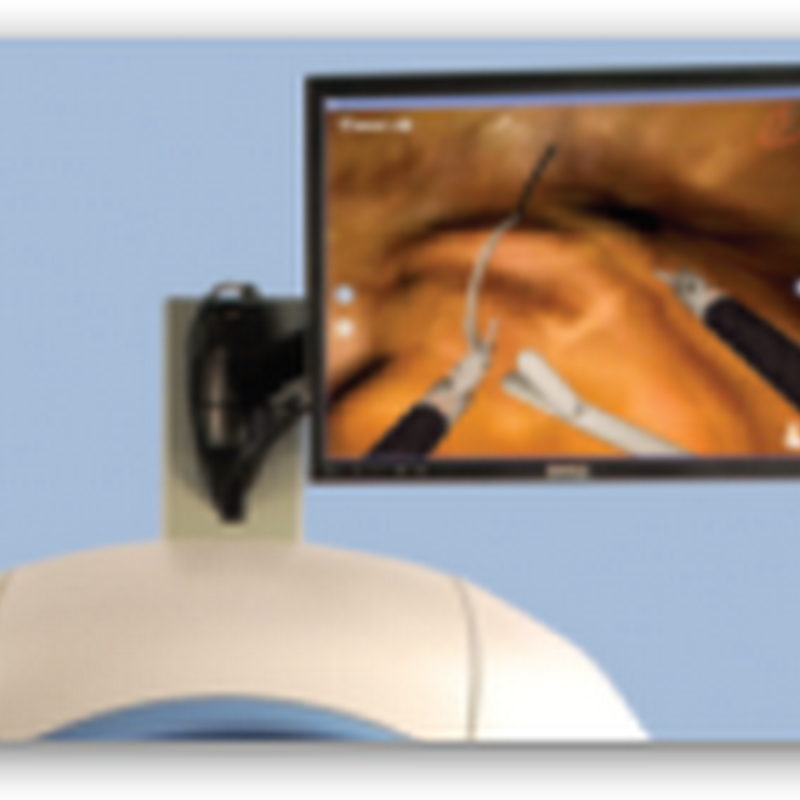
Unlike the robot itself, there’s no operating room required for the simulator and you can see an external monitor for teaching purposes.  At $100,000 per machine, imageit’s a lot cheaper than having to practice on the actual robot.  Through the software there are a number of surgical procedures that can be added for practice.

This certainly seems to cement that robotic surgery is here to stay and will expand in the future to more procedures too and with the simulator this could perhaps be a part of the process that makes it happen.  BD 

From the website:

"The RoSS will have a major impact on improving surgical outcomes," said Donald L. Trump, MD, president and chief executive officer of RPCI. "The product's relevance will grow in direct proportion to the acceptance and application of robot-assisted surgery as a best practice around the world. The training that RoSS provides will eventually translate into better quality of life for thousands of patients."

For more than a decade, UB's Virtual Reality Lab has been one of very few in the nation focused on developing haptic technologies -- technologies that bring a sense of touch to virtual reality. "Our experience using computers to transmit accurately the real-time feel and touch of surgery has enabled us to work with Roswell Park to create a training system that provides a highly realistic simulation of robotic surgery," said Kesavadas.

"This is a true collaboration that started between two individuals with world-class skills in their respective areas," said Robert J. Genco, DDS, PhD, vice provost and director of UB's Office of Science, Technology and Economic Outreach (STOR), which assists in the commercialization of technologies developed by UB researchers. "Hospitals don't invest in these multi-million-dollar robotic surgery systems so that people can train on them," says John Burgess, Simulated Surgical Systems, LLC, chief executive officer. "Their most pressing need has been a good training environment for robotic surgery."

 image

RoSS is a Robotic Surgical Simulator which uses virtual reality to realistically introduce the user to the operation and feel of a robotic surgical console. RoSS has been validated by leading surgeons in order to be realistic in its design, and provide close to life experience of working on the on the master console of da Vinci® Surgical System.

Simulated Surgical Systems News

Hat Tip:  Medgadget

The Healthcare Summit Discussion – Daily Show Summary

As usual, Jon Stewart wraps this one up pretty well.  I love the part with John McCain and count my lucky prayers that the 2 seats are not reversed!  BD 

The Daily Show With Jon Stewart Mon - Thurs 11p / 10c
2/25/10 in :60 Seconds
www.thedailyshow.com

The Daily Show with Jon Stewart Official Website | Current Events & Pop Culture, Comedy & Fake News

Congress Surprised With Radiation Oversights and Treatments – Software and Algorithms Are the Key to Safety Here

Imaging and diagnosis processes save many lives each year and is a part of healthcare imaging today, no matter where you are.  The safety comes as suggested here with better training, but more importantly better and revised software is the key. The reason I say this is you can have the absolutely best trained, certified and qualified technician working and if the software is not doing it’s part, it is not the fault of the technician

You also have to remember that a technician is working with the patient and programmers try but do not always anticipate every safety precaution that is needed, they try but there’s no way they can catch it all.  I know, I had the same experience when writing an EMR, you can’t catch everything and the best method for me was to be the fly on the wall and observe doctors and patients working with the software, only asking a quick question when it was software related and if I needed information for a software improvement or noticed something myself that was either not working correctly or I saw an opportunity to improve it for the end users.

Sometimes end users will not always tell you there is an issue, as they see it as being small and will find a way to work around some situations or do without certain features without “bothering” the developers or software company, very common and used to make me crazy as I wanted to know if something had a glitch or needed a smoother interface.  With radiation treatments a profile is created for the patient so they get the same prescribed treatment each time unless it is modified.  Maintenance is required from time to time as well and what happened in Los Angeles was a reboot and a default setting came back in one are of the data, thus individuals for certain types of scans were over radiated.  It is magnetized data and sometimes strange things happen and we never are able to get to the exact bottom of why.  The situation in LA seemed to be a matter of the information not being saved, and thus defaults came back in place of the specifics for the type of radiation treatment. 

Perhaps the reason the House woke up on this one is the fact that anyone could say “that could be me” and thus now we have an interest in technology, as that is what imaging is, it’s all about the software that runs the machines and devices.  With CT scanners, the technology is getting better with higher bit machines, again a software configuration with the machine. 

320 Bit CT Scanners Offer Less Radiation Exposure Than 64 Bit – New Technology Making the Difference With One Rotation

One thing you should never do is rush the software developer and push a product out there until the team is satisfied that they have covered all bases, and there are some cases where this does happen in order to meet deadlines, nobody will fess up to it, but has been going on for years to get a product on the market as soon as possible.  We had the cases in New York which was horrible and went back to software settings.  The programmer assumes when writing the software that the alerts put in place will be seen, but again, we have a tech working with the patient and thus there is a level of distraction when they did not see the the full levels of radiation being allowed through. 

Radiation Procedures Gone Sour – Software and Other Related Failures Lead to Death and Lifetime Illnesses

Perhaps we will continue to see members of Congress get more interested in how some of this is happening and put some additional safety alerts in place.  It is good that the NIH has also stepped in here too to run an audit trail. 

NIH Getting Involved in Radiation Overdoses – Planned Requirement for a Audit Trail to Track Patient Radiation Doses and Eventually Add to EHRs as well as PHRs, Google Health and HealthVault

One other item addressed here are the different and complex software programs each device uses and that is a valid issue all the way around. We could very much use some standards as we have built a very complicated world of software and at times it is asking too much to have too many levels of attention needed when trying to work with a patient.  If the manufacturers would come up with at least some commonalities with screen used and processes, that would make it a whole lost easier, but we have these things called “patents” here that prohibit some of this activity, which I think is futile as one can keep their patent, but design screens of commonality for all manufacturers to use.  That same fact hold true for electronic medical records too and there is a common user interface that is free for any company to work with and use with their systems.  What is needed are common clinical interface screens and all the rest behind the scenes can remain as “patented” as we really need safety before patents.  Here’s an example of what can be done for EHRs, and is called the “Common User Interface” and is is related as imaging can be brought up within the screens as well for viewing and reviewing.  I made this post back in October 2008 about the EHR process getting to be too confusing and same can apply for imaging as well.

EHR Adoption Remains Off in the Distance – Getting way to complicated

I did a video with myself using the interface demo in 2008, so it has been around that long. 

There’s a lot of code already developed, so why re-invent the wheel at this point and worry about who might have the “better” code, let’s all build off of one format, at least at the front end for the users. 

It’s all about the software and safety and none of this was done on purpose but with our rush to get products to market and keep people on tight efficiency schedules, stuff happens unfortunately.  Perhaps this was a real wake up for Congress to realize they might need to think about adapting to a basic understanding of how software in healthcare works, and start putting stock holder dividend interests second.  As the technology grows, so does the complexity of the software and when that occurs you have more computer code to work with other code, back to the integration of the algorithms. 

One final comment here on software and imaging today with Senator Grassley making a suggestion or questioning the FDA running health IT, well read this example below and you can see why that would not work as the FDA required a 90 day notice to upgrade Windows, thus the conficker appeared on many MRI and CT scanners, no this is not a good idea, but when you compare the fact that Congress was “shocked” and we hear suggestions like this, we have big cases of “tech denial” and folks trying to make laws that suffer in that area.  We don’t have 90 days or more to mess around today and hopefully that act of Congress needed to give the manufacturers of MRI and CT scanners has been taken care of, and if no we will hear the same old story when another virus makes it’s way to MRIs.

Now that is another scary thought there too, an MRI computer infested with a virus and what it could do to the settings, right, think about it.  Mr. Grassley should spend some time with some healthcare folks perhaps to fully understand the complexities we have today. 

The FDA could open the doors to work with Health IT companies but not run it and again the radiation errors all come back to software. 

Hospital MRI and Other Medical Devices Infected with Conficker Virus – FDA Required 90 Day Notice before Windows Update Patch Could be Applied

You can see how up to date the FDA is on technology too, not a good idea as they have their own issues in getting their infrastructure up to date.  Technology is moving fast today and we need to keep up and at least read about what’s going in the world around you, so perhaps this sad testimony today addressing the technology problems woke some folks up I hope.  You need some knowledge in order to create laws to outlines areas of jurisdiction and enforcement.  BD 

Members of the U.S. House of Representatives subcommittee on health got an earful from members of organized medicine, patients, and other experts, and they seemed to acknowledge the complexity of the issue.

"As valuable, informative, thought-provoking, and incredibly useful as your testimony was today, we've ended up with more questions. Before we move on any legislation, we'll need to have more hearings to get answers to our questions." That's what Rep. Frank Pallone Jr. (D-NJ), chairman of the subcommittee, told invited witnesses after several hours of hearings

Rep. Henry Waxman (D-CA), chairman of the subcommittee's parent, the House Committee on Energy and Commerce, as well as Pallone and other House subcommittee members in attendance, expressed their astonishment and concern that no federal agency has authority over medical radiation issues. They were also surprised at the lack of formal regulations with respect to many facets of the use of both diagnostic imaging and therapeutic radiation equipment.

The differences in the ways that CT scanners of different manufacturers report radiation dose makes it difficult for radiologists to standardize their practice, she said. As a result, data collection relating to CT dose is limited and very difficult to obtain.

To make CT scanning as safe as possible, it is necessary to lower the radiation dose of routine CT scans, and order these exams only when necessary, Bindman-Smith said. She added that the inclusion of radiation dose exposure levels into electronic medical records would be a very positive step, and applauded the efforts of manufacturers to make CT exams safer for patients.

Radiation Oncology Digital Community on AuntMinnie.com

More Wellness Company Mergers and Buy Outs – Wellness for Profit?

One more company with the answers for employers how to make “you” healthy.  The wellness business can be very profitable and we hope the real purpose of imagehealthcare is for helping you and not the big pocketbooks.  It can be mystifying sometimes trying to figure some of this out. 

Do we have algorithms here for better healthcare which ends up saving money or do we have algorithm for cost savings that end up with a bit of better care being provided, the chicken or the egg?  In times when we had less on our plate some of the programs might make a bit more sense but with current economic times, the shift has all been to collect the data for many, as that is what generates profits.  I don’t know a lot about the firms here but you can use the links to find out more.  BD

Wellness Programs Come in all Shapes and Sizes and Hold Financial Incentives

“Nurtur provides work-life and health management programs for populations of all types and sizes in a variety of market segments. We take a partnership approach to design solutions that are both scalable and flexible to fit the unique needs of your population. Our clients include small, mid-size and large employer groups, TPAs and commercial health plans, public sector programs and unions.”

Congress Plans Incentives for Healthy Habits ,Wellness Programs, and Devices? How Potentially Intrusive and Disruptive Will It Get to Save Money?

“To support the Nurtur vision to transform lives, we created TransForum™. This is the integrated technology platform behind our health coaching model. It is based on a data model that allows a holistic view of member management to provide the insight and information needed to best manage both entire populations and individual members.”

High-tech gadgets hit doctor-patient relationships and more..
Separately, Nutur, a wellness company based in Farmington, Conn., said it has acquired two health and wellness firms—ActivHealth and Wellness by Choice. ActivHealth, Nashville, offers health-risk assessments, employee incentive and reward tracking and online heath management. It also has an exclusive partnership with the Duke University Center for Living. Wellness by Choice, Syracuse, N.Y., offers work-site wellness and lifestyle coaching. The terms of the deals were not disclosed.

Wellness companies announce acquisitions - Modern Healthcare

FDA Regulate Health IT What “Nutcase” Thought of This – Must Be A “Non Participant” Living in “Tech Denial”

I guess it’s Mr. Grassley again here who may have clout but doesn’t understand the role of Health IT and the FDA itself is in the midst of getting up to date with technology themselves!  This goes back to what I have been saying for 2 years here, non participants don’t get it. 

Wireless Healthcare Medical Devices and the FDA – The Reasons They Are Slow to Come to Terms

This is a whole new open territory for the FDA and as I have mentioned before as late as 2008, all the investigators and analysts didn’t have computers, but all that aside, how is wireless going to be approved by the FDA.  This is a tricky one to say the least, not tricky per se in what it does imagebut they also have to make sure the data is going in the right direction.

FDA Trying to Figure Out Web 2.0 – Public Hearings in November on Tweet Patrol and Other Social Networks along with Advertising Guidelines

To further substantiate the resources of the FDA, they didn’t have enough resources to start their new Sentinel data program and had to give a grant to an insurance company (who most have invested heavily in technology) to help them out. 

FDA Awards a Big Grant to Health Insurance Company For Pilot Program To Monitor Safety of Drugs and Medical Devices

Don’t get me wrong here on the technology side, but you have to have the IT resources or build them quickly to step into a position like this, again non participants without some IT understanding may get confused on such issues. 

Also I have talked about Behavioral Health care and Pilgrim, under written by Vintage Financial Services, is right up there in that area of focus as well and safety and behavioral health are somewhat going hand in hand today, biometric monitoring and other related items. 

There was not enough detail given on how the pilot program will in fact function with the Sentinel data system of the FDA to really go much further here and I do in fact hope that it is the data that is used by the “experts” at the FDA and not a reliance on a health insurance company’s program to run the program entirely and have the authority to here, as we all will suffer if this occurs and shareholders may receive larger dividends.

Promising new startup of 2009 - Executive branch of the US federal Government

The Executive branch of our government is working overtime to bring infrastructure up to date and hats off in that effort by all means, but again we need to look at where the resources lie and WHO IS CAPABLE of providing the data services needed to build a reporting structure.  The FDA is not to blame as they had a leader who was also in “tech denial” too for a number of years, so with leadership who does not participate, that’s what you end up with. 

If some of our fine leaders would participate in their own healthcare and experience what is out there it would really stand to make a huge difference.  A year ago in the Senate Finance committee testimonies, most all sat there with no clue on the value of a personal health record or what it was, as a simple example and I hope knowledge has grown since that time, but I shuddered at watching “their” video on the web that showed complete lack of participation themselves as “patients”.  Anybody in the House or Senate using one of these? 

Last but not least the most compelling reason I could find for not having the FDA regulate Health IT from April of 2009:

Hospital MRI and Other Medical Devices Infected with Conficker Virus – FDA Required 90 Day Notice before Windows Update Patch Could be Applied

Case closed on this idea.  BD

Sen. Charles Grassley (R-Iowa), who is investigating the safety of health information technology, appears to be interested in exploring whether the Food and Drug Administration should regulate such products.

Grassley has sent letters to Health and Human Services Secretary Kathleen Sebelius, and H. Stephen Lieber, CEO at the Healthcare Information Management and Systems Society, asking for the organizations' views on a position paper that discussed whether clinical software should be regulated. The paper was published in the Journal of the American Medical Informatics Association in 1997. That paper spurred lengthy consideration within the FDA, which ultimately declined to regulate clinical systems amid strong industry opposition.

Grassley has considerable legislative clout as the ranking member--the leading Republican--on the Finance Committee. Last October, he sent letters to 10 health I.T. vendors asking how they handle complaints of faulty software and whether clauses in their contracts prohibit providers from discussing flaws with third parties, or shield vendors from liability for harm that results from the use of I.T. Grassley sent a similar letter in January to 31 hospitals or delivery systems.

Should FDA Regulate Health I.T.?

UnitedHealth Buys Another Wellness Company – Biometric Monitoring For Data With Employer Contracts

Wellness programs are not a bad thing, but implementation and privacy of the data is the big question here.  When you have major health insurance companies who are sold on the stock exchange and are under recent fire for premium increases, you soon realize that wellness, when ownership is from companies who have their number one alliance by law to stock holders, is going to provide this in a fashion that generates profits first, and if some healthy outcomes result, then it substantiates the investment.  

This is really a mixed bag here as there certainly are some benefits, but stop and look at who has access, a subsidiary of a major insurance carrier here, think about it.  Wellness should be removed in it’s current format with employers and remodeled.  If you really want to provide care and education, what is happening today is not doing the trick.  Add in the new GINA rules where a healthcare assessment can’t include family history now and what are we accomplishing, not much, but the algorithmic formulas to cut cost simply remove those who need care.  Furthermore if a small company is too costly, they get dropped.

Model for Healthcare Reform is Non Existent – Wellness Incentives Move Cost to Sick Employees With “Scoring” Algorithmic Formulas

This will NEVER work with insurers who are on the market to make dollars and we would be better served with a non profit model that entertains an alternative role of action.  Why do you think we have such a battle going today?  Can we not see the forest for the trees?  Algorithmic formulas that are created for profit don’t ride in the same lane on the highway as healthcare reform, they are telling us, but do lawmakers listen?

Wellness Programs Get Thrown a Left Hook From GINA – No Family Medical History Allowed on a Health Risk Assessment

Also worth mentioning is how does all this come together with the advice given for your health from your doctor, are we setting the stage for some potential collision courses here?  Could be as most physicians are not aware of the technology and devices that are emerging on the scene either, they don’t even know what a PHR is, take that first hand from someone who talks to many of them.  We have a big lack of training and education right on the forefront that nobody is adequately addressing, plus a lack of participation from Congress all the way down the ladder.

Behavioral underwriting is the next big move for health insurers.  Red Brick insurance is a client of Ingenix, another United Healthcare subsidiary and read up on how this works.  What amazes me is the rapid implementation of biometric reporting and screening, and yet we can’t even use a cell phone without disruption, so how’s this all going to work without proper planning and implementation – sad answer is the folks that are creating and putting these services out for use don’t care, it’s all in making a buck and you roll with the flow, tie yourself to a device and deal with it as the stockholders need to be satisfied. 

This is the reality and it’s a shame that with meaningful use, biometric and mobile devices seem to be forgotten. 

Behavioral Underwriting With Biometric Employee Screenings – Red Brick Secures 3 More Clients

The White House seems to get some of this, but we have a Congress that is oblivious and should entertain trying some of this out themselves so perhaps they can see what is happening further behind the scenes and wake up. 

White House Speaks About Wireless Technology – Healthcare And Participatory Sensing

 image

Don’t believe what you are reading yet, watch this video from the CEO of Red Brick, it will tell you all about it.  The entire problem once again is when for profit companies own wellness companies, there’s big privacy concerns and you don’t really know who’s seeing your data, again it’s for profit.  So here within this post we see 2 active subsidiaries of UnitedHealthcare in action, Ingenix who RedBrick uses as a partner (I am guessing their analytic systems for predicting and scoring) and the Optum Wellness program that helps consumers analyze and collect their health information. 

United Healthcare as well as other insurers stated memberships in some areas were dwindling, and yet profits, big profits are still made with fewer members.  With all their recent investments, to include Cisco with telehealth, it appears they are largely on the way to a business model that will require perhaps even fewer insured down the road as they also sell their analytical services of Ingenix to hospitals and governments to run algorithmic scoring software to process claims. 

Guess what, this about the same as the job market right?  Economy doing better but the stimulus can’t create enough jobs fast enough to help replace those falling out the bottom, with the algorithms used on Wall Street, it’s the same type of business with greedy investors and companies working it.  Think kindly of the stimulus as it is there to help.  We had both ABC and Continental Airlines laying people off this week, why, digital technology where humans used to provide the services and the same is happening in healthcare with insurers, automated claims and behavioral algorithms. 

UnitedHealth To Spend Tens of Million of Dollars with Cisco to Build Nationwide Telehealth Networkimage

We are back once more to the algorithmic formulas and data and there’s certainly no shortage with United Healthcare investing in technology either directly or through subsidiaries and now the Wellness efforts with using biometric monitoring appear to be growing.  People would not resent and distrust all of this technology if the fear of it being used against you for paying claims and eligibility were gone, again one more reason the “for profit” health insurance companies are under fire, as they have not been honest so one has to assume and believe this is not going to change from what we are seeing today.  United even makes money from other insurers as well as you can read in the link above, Wellpoint contracting with Red Brick, who is a client of Ingenix, and the circle keeps going and I just try to connect the dots so hopefully individuals can see and understand who is working with who and where one companies investment opens up other areas of potential revenue income, all coming back to the use of the “the algorithms” and with today’s announcement we can combine algorithms for wellness data in a larger data base and offer services based on each company’s solution perhaps, biometrics and data, “stockholders” will prosper as the CEO of United reminds us.  BD   

 UnitedHealth Group Inc.’s OptumHealth Care Solutions business unit has purchased a health screening company in Illinois.

Minnetonka, Minn.-based UnitedHealth Group (NYSE:UNH) didn't disclose financial terms of its deal for Wellness Inc. of Aurora, Ill. Wellness is a 23-year-old company that emphasizes preventative care to manage employee health, offering biometric screenings, flu vaccinations and lifestyle-health assessments in the workplace. The firm has more than 1,000 company clients.

UnitedHealth buys Wellness Inc. - The Business Journal of Milwaukee:

Medical Tourism Will Have An Application Soon – HealthTraveler for Medical Resources

Here’s one more application for the iPhone if you are traveling and want to located medical services outside the US to be available this year.  With rising healthcare costs in the US, many imageother countries are extremely interested in touch economic times in making an inroad to capture some of our healthcare business.  Last November I attended the World Medical Tourism Conference for a day and tried to soak up as much information as possible to help understand how this is all occurring and how the pricing and methods compare to what we do. 

World Medical Tourism Conference 2009 – A Learning Awareness

Mexico is also waiting to see how our healthcare reform comes out, as due to location this a big potential market.  At the World Tourism Conference, I spoke to a couple hospital operators and they are building almost 5 star hospitals with hotels connected for convenience in anticipating of seeing more medical tourism patients both here from the US and other countries. 

Mexico is Also Waiting for the Outcome of US Healthcare Reform – Medical Tourism

This is also one big reason to make sure we get healthcare reform done right and not just a band aid solution that accomplishes little.  BD 

Press Release:

(Vocus/PRWEB ) February 24, 2010 -- Healthy Travel Media, publishers of the Patients Beyond Borders series, announces HealthTraveler™, the first mobile application that allows patients and international travelers alike to quickly find the highest-quality, American-accredited hospitals and clinics in the world’s 50 most-traveled tourist destinations. Developed initially for the Apple iPhone, HealthTraveler provides important information for patients crossing borders for medical procedures, as well as for tourists who require medical attention while abroad.

This readily accessible application will provide users with vital information on international hospital locations, including current data on specialties, accreditation, procedures, and other medical services available, as well as detailed contact information that allows the user to instantly connect with the selected hospital or facility. HealthTraveler will also allow users immediate access to maps and GPS-generated driving directions to their desired locations, along with direct-connect call capabilities to alert hospital emergency personnel of their arrival and condition.

“Every year, millions of leisure and business travelers either become sick or have accidents while traveling abroad; the ability to quickly and reliably obtain potentially life-saving information on the best available medical resources is a must,” says Healthy Travel Media CEO Josef Woodman. “HealthTraveler provides instant access to trusted, vetted medical information tourists and medical travelers require to make informed healthcare choices while abroad.”

HealthTraveler provides information on more than 250 hospitals and clinics—most of them American-accredited—around the world. Patients seeking high-quality, affordable care abroad will also be able to search for the best hospitals and clinics in the world’s leading medical tourism destinations.

HealthTraveler is scheduled for release in fall 2010 on Apple’s iPhone and iTouch mobile devices, with plans underway for subsequent releases on BlackBerry and Android. The manufacturer’s list price is $3.99.

About Healthy Travel Media

Healthy Travel Media, an independent imprint based in Chapel Hill, NC, publishes books, eBooks, and online information on medical, health, and wellness travel. Its flagship international title, Patients Beyond Borders, now in its Second Edition, is the leading consumer reference guide for medical tourism and is filled with authoritative and accessible advice. Specialized editions have been published for Singapore, Korea, Taiwan, Malaysia, Thailand, and Turkey. The Patients Beyond Borders series is available through booksellers everywhere and is distributed to the retail trade by Publishers Group West (www.pgw.com).

HealthTraveler™ is World’s First Mobile App for Medical Tourism

Microsoft Technologies for Connecting Patients, Physicians and Providers at HIMSS 2010

If you are attending the HIMMS convention, here’s some of what you can expect to see at the Microsoft booth(s), which is always busy.  If you want to read up about how Amalga is working in healthcare, here’s a link below to an interview I did last year with Steve Shihadeh.  You can always search this blog as there’s more posts with references.  BD 
Steve Shihadeh, VP Microsoft Health Solutions Group – The Amalga Software Solution for Aggregating Hospital Information (Interview)

Here's a short video from Steve Ballmer, President of Microsoft  talking about how Healthcare is the only vertical where Microsoft will be making some big investments, as he states it is so non-automated and needs help!  BD


At the 2010 Annual Healthcare Information and Management Systems Society (HIMSS) Conference & Exhibition, Microsoft Corp. will showcase in its booth (No. 6733) new solutions for improved information-sharing among doctors, hospitals and patients; a wide range of clinical and research use cases enabled by real-time data aggregation; personal health applications; and tools to help enterprises meet government regulations:
· Connected health experiences. Microsoft and partners will demonstrate ways that critical players in the healthcare ecosystem can interact and share information via multiple interoperable technologies to improve quality of care:
- A new Microsoft health solution for hospitals designed to bridge the islands of care from hospital to home to referring community.
- Remote physician consultation. Microsoft partner InterKnowlogy will showcase its VitruView application, which enables physicians and patients to interact with data, in this case a 3-D image of a patient’s heart, in a unique and intuitive way. InterKnowlogy makes patient data available to caregivers across many screens and devices, including Microsoft Surface, Windows 7 on an HP TouchSmart PC, and a Windows® phone. 
- Cancer patient information and support network. Partner iLink Systems Inc. will show two applications developed as part of a pilot program for The Center for Cancer Prevention and Treatment at St. Joseph Hospital of Orange. These applications use several Microsoft technologies, including Microsoft Surface, Windows 7, Microsoft Amalga UIS and Microsoft HealthVault to simplify access to patient information, enable physician collaboration, and facilitate interactive patient and doctor communication.
Critical care solutions. In the Philips booth we will showcase demonstrations that use Windows 7 and Microsoft SharePoint 2010 technologies with the Philips IntelliVue XDS and the Philips VISICU eICU Program. Together the companies will display potential solutions that are being designed to help satisfy objectives for faster delivery of rich health information, greater healthcare efficiency and productivity, and reduced development and infrastructure costs.
· Clinical, research and financial use cases enabled by real-time data aggregation. Microsoft will demonstrate a wide range of uses of the Microsoft Amalga Unified Intelligence System (UIS), a data aggregation platform that integrates vast amounts of clinical, administrative and financial data from a hospital or health system’s disparate information systems. These use cases include the following:
  • - Clinical quality and patient safety
  • - Connected health information exchange (HIE)
  • - Data analysis
  • - Meaningful use
  • - Population health
  • - Organization performance
  • - Research
  • - Imaging
· New modules and the integration between Eclipsys Corp.’s Sunrise Enterprise solutions and Amalga UIS designed to make it easier for physicians, nurses, and hospital administrators to gain insights from and act upon data aggregated from multiple clinical and financial systems across the hospital.
· Tools for helping people manage their health. Microsoft will demonstrate HealthVault-connected Web applications, including the following:
Mayo Clinic Health Manager is an online application designed to help families manage their health and wellness. It allows them to organize and store health information in a single location and interprets personal health information to deliver real-time, individualized information, reminders and health guidance developed by experts at Mayo Clinic.
Department of Defense MiCare, the Military Health System’s personal health record at Madigan Army Medical Center in Tacoma, Wash. MiCare is designed to help members of the military and their families more easily and effectively manage their health and wellness, regardless of their location and as they seek care inside and beyond the Military Health System.
· Compliance and health reform. Microsoft’s partners and portfolio of solutions lay the foundation for providers to meet meaningful use and HIPAA 5010 criteria, and prepare for future mandates:
- HIPAA 5010 compliance. Microsoft and partners will show how Microsoft BizTalk Server 2009 is being used to meet new transaction requirements for health claim processes set forth by HIPAA 5010.
· Microsoft HUG Awards ceremony. Microsoft and the Microsoft Health Users Group (Microsoft HUG) will unveil the winners of the 13th Annual Microsoft HUG Awards during a ceremony on March 2 at 3 p.m. EST. The awards recognize healthcare organizations, individuals, software vendors and system integrators that exhibit the best use of Microsoft-based products.
When:             March 1–4, 2010
Where:           Georgia World Congress Center
                        Booth 6733
285 Andrew Young International Blvd.
Atlanta, GA 30313

Other News:   A schedule of presentations scheduled at the Microsoft booth can be found at http://www.microsoft.com/industry/healthcare/providers/events/himss.mspx.
More Information: http://www.microsoft.com/presspass/presskits/industries/healthandlifesciences/Default.aspx

PositiveID Corporation's Health Link Personal Health Record – First PHR to Communicate Real-Time Blood Sugar Readings for Diabetics and Their Caregivers/Physicians

In case you need a little refreshing from the past, this company was formerly named VeriChip, the implanted chip people.  You can see from a fairly recent post below that their “implanted imagechip” now talks with Google Health and HealthVault.  The iGlucose system has it owns PHR and will be able to work via alarms and messages as they relate to real time glucose readings.  The 2 press releases from today are below. 
VeriChip Implant Links To Your PHR Health Records, Credit History, Social Security With PositiveID
Now I am guessing this is going to be relayed via cell phone over the web and perhaps even to a PC, but there’s not a lot of information out yet.  I don’t think it would be doing all of this via the chip as it could “really get under your skin” if it got in motion and started messaging you.  What I am guessing here is that the readings would go to their PHR, and then connect to Google Health and HealthVault if it was being used in connection with the implanted chip, as it connects to Google Health and HealthVault.  So from blood, to PHR, to other PHR to chip is what I am guessing is the data patch for the patient so it gets stored, and the route to the caretaker or MD would be over the internet so everyone has the glucose readings. 
A Chip Off the Old Medical Record Getting Closer to Reality for Many Insured in Florida – PositiveID Alliance with Innovations Avocare

What is also interesting is the Secure ID portion of the business, so if you are a victim of identity theft and need help, they seem to have a spot in this market. 
“The ID Security business of PositiveID is dedicated to protecting consumers’ identities and preventing identity theft. According to the U.S. Department of Justice, identity theft is the number one crime in America, and it can affect anyone at any time. Identity theft can occur from computer fraud through “phishing,” which accounts for 12% of cases; stolen or lost wallets or other personal items, which accounts for 29% of thefts; individuals stealing records from businesses, which accounts for 50%; and mail theft, representing the remaining 9% of all identity thefts.  The company's suite of products and services allows consumers to manage and monitor their personal financial data to proactively protect themselves from theft and errors. For more information, please visit www.nationalcreditreport.com.”
The new business partner FIS offers offers consumer healthcare payment solutions for patients, providers, plan administrators and financial institutions so there’s where the insurance and perhaps payer information comes in to populate the PHR.  Everything is about having a money tag attached today. 
Anyway, I guess we will see more as this develops and to me it’s a very interesting combination of a couple technologies.  BD
DELRAY BEACH, Fla., Feb 25, 2010 (BUSINESS WIRE) -- PositiveID Corporation ("PositiveID" or the "Company")  announced today that its new generation Health Link personal health record (PHR) is designed to be the first PHR to provide real-time blood sugar readings for diabetics, and their caregivers/physicians. The Company intends to integrate its Health Link PHR with its iGlucose system, which uses wireless SMS messaging to automatically communicate a diabetic's glucose levels in real-time.

As the Company expands the capabilities and interoperability of Health Link, it intends to integrate the existing iGlucose online database and data center into the Health Link PHR, which will be interoperable with Microsoft HealthVault and Google Health. The iGlucose system, consisting of a compact data logger and wireless transmitter, currently collects, records and transmits a patient's glucose readings from a data-capable glucose meter to the iGlucose online database.
The integration of iGlucose and the Health Link PHR, will give diabetics the ability to manage their disease unlike ever before. Diabetic patients, parents, physicians and other caregivers will be able to configure Health Link to set specific alerts and alarms related to real-time glucose readings. These alarms could alert the diabetic, parent, caregiver or physician to a high or low glucose reading and allow for real-time management and any necessary action to prevent a potential emergency medical situation. 
Scott R. Silverman, Chairman and CEO of PositiveID, said, "As we look to increase the power and features of our first-of-a-kind PHR, Health Link, through the integration of our new iGlucose product, we believe we will be able to help diabetic patients more effectively manage their disease through real-time communication of glucose readings, which can be shared with physicians, caregivers and others. This unique feature will continue to differentiate Health Link from other personal health records in the marketplace as more patients go online to manage their health information."
About PositiveID Corporation
PositiveID Corporation develops and markets healthcare and information management products through its RFID-based diagnostic devices and identification technologies, and its proprietary disease management tools. PositiveID operates in two main divisions: HealthID and ID Security. For more information on PositiveID, please visit www.PositiveIDCorp.com.
_________________

PositiveID Corporation's New Generation Health Link Personal Health Record Designed to be First PHR to Communicate Seamless Real-Time Blood Sugar Readings for Diabetics and Their Caregivers/Physicians - MarketWatch


DELRAY BEACH, Fla., Feb 24, 2010 (BUSINESS WIRE) -- PositiveID Corporation ("PositiveID" or the "Company") announced today that it has entered into a partnership with FIS(TM) , one of the world's largest providers of banking and payments technology, to launch the Company's next generation Health imageLink personal health record ("Health Link"). The new Health Link, which is now live, will be interoperable with Microsoft HealthVault and Google Health, as well as numerous electronic medical records systems in use throughout the country.


To launch the next generation of Health Link, PositiveID partnered with FIS and their HealthManager product to build a robust, interoperable personal health record to offer patients the best of breed for storing and accessing their vital data. Health Link connects patients to a multitude of customized material such as personalized health education and online connectivity to caregivers. Through reminders and alerts that can be tailored to suit an individual's unique circumstances, members are reminded of important actions and receive suggestions to better manage their health. This includes everything from refilling prescriptions on time, appointment reminders, drug interaction warnings, and tips for preventative actions.

Scott R. Silverman, Chairman and CEO of PositiveID, said, "The next generation of our Health Link personal health record will put consumers in charge of their health information, enabling them to manage all of their health data from one centralized, interoperable location. Health Link's partnership with FIS will give patients the ability to connect to their healthcare providers, pharmacies, caretakers, and even their medical devices."

About FIS 

FIS delivers banking and payments technologies to more than 14,000 financial institutions and businesses in over 100 countries worldwide. FIS provides financial institution core processing, and card issuer and transaction processing services, including the NYCE(R) Network. FIS maintains processing and technology relationships with 40 of the top 50 global banks, including nine of the top 10. FIS is a member of Standard and Poor's (S&P) 500(R) Index and consistently holds a leading ranking in the annual FinTech 100 rankings. Headquartered in Jacksonville, Fla., FIS employs more than 30,000 on a global basis. FIS is listed on the New York Stock Exchange under the "FIS" ticker symbol. For more information about FIS see www.fisglobal.com
http://www.marketwatch.com/story/positiveid-corporation-enters-into-partnership-with-fis-to-launch-next-generation-of-its-health-link-personal-health-record-2010-02-24?reflink=MW_news_stmp

Microsoft Announces Dedicated Cloud for Government – Business Productivity Online Suite – BPOS Federal

Many of Microsoft offerings of late have been of the hybrid nature and the BPOS system will allow the same, some information in the cloud and some that can be stored locally.  Of course group policy comes into play here too with administrators in the IT department putting some secure lock downs here as well.  I know from a tiny person’s needs I am very happy with Office Live and I can do the same, up in the cloud or save on my computer.  With Outlook it available with Office Live from the web or Outlook desktop.  Everything is in synch with my email and I can create some folder to keep on my computer as well. 

I think having a hybrid model gives you the best of both worlds too, as there might be some information you want stored locally and be able to use a locally installed software program.  BD

REDMOND, Wash. -- Government cloud computing continues to move away from the theoretical and toward the practical as Microsoft announced Wednesday, Feb. 24, the launch of a dedicated government cloud based on the company's Business Productivity Online Suite (BPOS). The announcement was made at the company's annual U.S. Public Sector CIO Summit.

image

The cloud offering, known as BPOS Federal, was designed to meet stringent security standards, said Gail Thomas-Flynn, Microsoft's vice president for state and local government. BPOS Federal, she said, is expected to attain Federal Information Security Management Act (FISMA) certification. In a speech Wednesday, corporate vice president Ron Markezich said FISMA certification is expected in six months.

Microsoft Unveils Dedicated Cloud for Government

"Wall Street: “Money Never Sleeps"- “Greed is Good- Now It’s Legal – Its About the Game – Everybody’s Drinking the Same Kool-Aid” – The Move Trailer

This is a good time for this reminder, sounds just like health insurance too, well it should as they are all tied to Wall Street.  This is the movie trailer of the movie to come from Oliver Stone.  He asks if everybody out there is nuts!  “You brings geeks to write the algorithms and I’ll get you a 5 star rating.”  That was from the archives of AIG a few years ago. 

The music:  Rolling Stones’ “Sympathy for the Devil.” Pleased to meet you again, Mr. Gekko.  It does make you wonder when you read “real life stories” like this:

'Dead Peasant' Life Insurance Policies - Human Hedge Funds The Next Bond Issues

One of my favorite lines this year was from Miami CSI with David Caruso telling a business owner “get a better health plan for your employees”, one without dead peasant policies.  After what we heard today, this trailer seems to be in a spot for a post today!  BD  

CSI Miami – David Caruso Tells Suspect Business Owner “Get a Better Health Insurance Plan For Your Employees”

This is why we need goo audit trail algorithms, as the insurance carriers don’t hide the fact that they live and die by them, it’s their business models. 

Health Care Insurers Suggest Algorithms and Business Intelligence solutions to provide health insurance solution


Just in time to greet a still-recovering economy, widespread unemployment, and criticism in some quarters of big banking bonuses, a new trailer for the coming Oliver Stone movie “Wall Street: Money Never Sleeps” has hit the Web. The movie stars Michael Douglas as mogul Gordon Gekko (newly released from prison), Carey Mulligan (”An Education”) as his daughter, and Shia LaBeouf as a comer drawn to Gekko’s dangerous charm.

The new trailer gives us more of a sense of the plot, allows a peek at some cameos (including one by CNBC’s Maria Bartiromo) and is set to the music of the Rolling Stones’ “Sympathy for the Devil.” Pleased to meet you again, Mr. Gekko.

"Wall Street: Money Never Sleeps": The New Trailer from Oliver Stone - Speakeasy - WSJ

Reprocessing and Re-Using Devices Is Growing in US Hospitals To Save Money

Compression sleeves and pulse oximeters are at the top of the list, but there are more.  Companies buy the used devices, clean then, and then resell the products back to the hospitals.  It is one way of keeping down the amount of medical devices that go to landfills.  Now many of these items though are ones that have been designed for single use too.  There are durable alternatives but when things get tough, here’s more cut backs. image

Obviously there’s some equipment that is an absolute no for re-using, but the companies doing the cleaning are inspected from time to time by the FDA so it’s a recognized business.  We all see the stories from 3rd world countries where they are in fact using equipment that is not for this purpose.  The University of Maryland has been saving quite a bit of money over the years with this practice.  Even with equipment that is made to be re-used like the devices used for colonoscopies have issues though as we saw last year too. 

The Colonoscopies at the VA – Video Shows What Was not Cleaned Properly

With the constant battle with hospital acquired infections, I think this is an area to keep a close watch on and make sure the devices are getting properly cleaned before re-use.  BD

In a bid to reduce waste and control costs, a growing number of U.S. hospitals are now cleaning and reusing tools such as compression sleeves, laparoscopic ports, and other medical and surgical items labeled for one-time use.
Hospital administrators had been behind the move, called reprocessing, but more recently it's been fueled by environmentally minded workers looking to change the health care industry's status as one of the largest contributors to the nation's landfills. Tons of equipment are tossed every year after being used once, according to some participating hospitals.

But Michael Bennett, president of the Coalition for Patients' Rights in Maryland, said hospitals shouldn't take chances with reprocessing. If they want to reuse equipment, they should find vendors that will sell them durable equipment, rather than items labeled for single use, he said.

The devices became increasingly sophisticated and costly, pushing hospitals back in the other direction, he said. That FDA regulation also led nearly all hospitals to send the equipment to third-party reprocessors, who sell items back to hospitals for about half the cost of new ones.

Hospital recycling on increase - baltimoresun.com