Nuance Paying 35 Million for the Acquisition of Zi – Canada

Zi is in Canada and competes with the mobile area of VOP with express and simplified entry of text information for mobile units.  This is another major acquisition for Nuance who has purchased several related and competitive companies in the last couple years.  BD 

Burlington, MA-based Nuance Communications is wrapping up its long and sometimes contentious crusade to acquire Zi, a Canadian competitor in the market for text messaging software, which has agreed to Nuance’s $35 million buyout offer.

The deal, announced today, provides shareholders of Calgary-based Zi (NASDAQ:ZICA) with 34 cents in cash and 0.4 shares of Nuance (NASDAQ:NUAN) stock for every share of Zi stock. That values the company at 69 cents per share—or a 73-percent premium over the closing price of the stock on its last day of trading before Nuance began its tender offer to acquire Zi shares on November 25. (Hindsight is 20-20, but the Nuance offer that Zi rejected back in August was worth $40 million, or 80 cents per share.) 

image

“Zi text input solutions are embedded on mobile phones, hand-held computers, gaming consoles, PDAs, VoIP phones, telematic systems, television set-top boxes and other consumer electronic devices. These solutions are applicable for 12-button keypads, virtual or hardware keyboards, touch screens, dials, joysticks and virtually any other input method.”

Nuance Ending Pursuit of Zi with $35M Deal | Xconomy

Related Reading:

U.S. Military Embraces Nuance's Dragon NaturallySpeaking Medical to Drive Clinical Documentation with AHLTA
Nuance and IBM to license and integrate speech technologies
Nuance to Buy eScription
Nuance to Acquire eScription...software as a service...
Bringing Providers, Health Care Executives and Administrators into the 21st Century
Nuance RadCube - New Business Intelligence for Radiology Announced..
Bringing Providers, Health Care Executives and Administrators into the 21st Century
Nuance takes over Philips Speech Recognition Systems
More Than 70,000 Healthcare Providers Use Dragon Medical for Voice-Driven Clinical Documentation
Veterans Administration tries voice-friendly EHRs – Dragon Naturally Speaking
Speech Recognition as “Cool Technology of the Week”
Voice-recognition tool aids battlefield doctors - Nuance Dragon Naturally Speaking

Merck Contributes Pharma Data to a new Non Profit Public Domain

The site is up, but not much there yet, but it’s a good start.  With all the additional pressure facing big pharma today and the expense of bringing new drugs and treatments to market, this is a good sign to begin sharing and besides that, if it is open source and available to all, there’s not much to hide.  BD 

John Wilbanks from Science Commons sez, "Merck just pledged a ton of high-resolution, very expensive data to the public domain, along with some software and other resources to make it work. It's going into a new non profit org called Sage. This stuff isn't going to be open on day one - it takes a while to figure out how to give things like this away, and more time to make them *useful* - but it's on the road."

Sage resulted from the realization that the needs and potentials of clinical and molecular data to inform drug development  are greater than the resources or capacity of any one company or institute. Sage is a legacy of successful proof of principle work accomplished at Rosetta Inpharmatics, a subsidiary of Merck & Co., Inc. in Seattle. Core human and intellectual property resources from this effort are seeding Sage’s growth.

The primary output from Sage will be an open access platform available in the public domain. An incubation period of three to five years is anticipated in which new project data are generated, critical tools for building and mining disease models are developed and governing rules for sharing, accessing, and contributing to the platform are established. image

Sage is a distributed research organization with nodes embedded within core academic partner facilities. Collaborating scientists from both the nonprofit and commercial sectors will contribute to projects building and using innovative new databases and tools. More detailed information will be available soon.

Merck releases gigantic hunk of expensive pharma data into public domain - Boing Boing

Related Reading:

New drug and new hope to beat prostate cancer

Merck and Teva Go to Court over Singulair Going Generic

Merck Purchases Insmed – Biosimilar Biotech Drug Company

Merck Outsourcing - Brings in Contract Sales Force
MSD Pharma (Merck subsidiary) to hire 1,500 people in India

Concerned over Wall Street CEO Pay – How About Health Insurance CEOs?

One more time I go back to the 2 hottest words in health care today:  Algorithms and Whistleblowers, where the money seems to be:

The 2 New Hot Words in Healthcare: Algorithms and Whistleblowers

Both Wall Street and the Health Insurance Industry invested heavily with technology early on, and one thing both “had” in common was a lot of money, that is until the bottom fell out on Wall Street, but this has not happened with Health Insurance, at least no so far.  Both industries have/had CEOs making a lot of money too.  It appears that those who invested early with all the latest and newest technology to create and run complicated algorithms with business intelligence had somewhat of a strangle hold of the money.  We all know what has happened to Wall Street, but thus far Health Insurance is still not affected to a large degree.

Insurance Companies have now come out and stated that compensation packages this year will no longer match what has been awarded in the past, which is a positive, but what has been done is done.  This opinion post somewhat lines it up.  Both companies were in a service type of business, unlike the drug companies who are selling a tangible (a pill you take), but they have their issues as well with the changing world of pharmaceuticals.

By law, insurance companies are required to keep “reserve” funds to keep them from going insolvent, however some states are beginning to question how much money is being stashed in the “rainy day” funds.  It does make one stop and wonder where AIG was with their “rainy day” funds, since they were part of the massive bail out, were they not required to do the same? 

The Attorney General of New York recently settled with United Healthcare over a “corrupt” data base, with a subsidiary that made over 1.3 billion dollars last year scrutinizing claims with complicated algorithms, which ended up in denial of coverage and services to many.  Yet, we still have many with insurance that can’t afford health care or insurance.  We have balance billing issues here in California. 

Balance Billing Ban Upheld, but Who’s Going to Enforce the Policy?

In summary, just something to think about when it comes to focusing on CEO compensation packages, should we perhaps add the CEOs from health insurance companies to our list of concerns?  BD

Are you angry about how Wall Street executives have enriched themselves lately?
Well, don't be. Save your anger for health insurance executives, a greedy group that Congress and the president apparently intend to leave in place in our nation's "reformed" health care system.

According to a report published Feb. 22 in The New York Times, the plutocrats of Wall Street paid themselves an amount over 10 years eerily similar to the amount just one health insurance executive, William W. McGuire, was empowered to collect in just one year, 2006.

Yes, that's right. McGuire was set to cash in stock options he held in UnitedHealth Group Inc. in the amount of $1.767 billion in 2006. McGuire's billions are just one small part of the spoils captured by health insurance and pharmaceutical executives from the trillions spent each year for the noble cause of caring for America's sick and disabled.

To realize such money, UnitedHealth Group continues to skimp — underpay claims — and only sometimes gets caught. For example, on Jan. 15 they settled for $350 million a class action by physicians "alleging the insurer used flawed data" in paying for out of network care.

CJOnline Blogs - Roy: Health insurance executives plunder system


A couple more stories in the news today related to Healthcare CEO compensation: 

http://www.bostonherald.com/business/general/view.bg?articleid=1155111&srvc=business&position=3

http://www.boston.com/business/healthcare/articles/2009/02/28/blue_cross_ceos_pay_rose_26/

Related Reading: 

Andrew Cuomo – You Have to Like This Guy – Healthcare Reform
Prescriptions risk score used to deny health insurance
What is the MIB - Medical Insurance Bureau - and how does it affect qualifying for insurance?
Will Greed lead to Meltdown of the Health System?
Health Care Insurers Suggest Algorithms and Business Intelligence solutions to provide health insurance solution
Health insurer accused of overcharging millions – United Health Care/Oxford Insurance 50 Million Fine
Algorithms, Formulas and Investigations leads to AARP suspending sales of some health plans
Health Insurance Reserves – How much is in the till, could it be 1 or 2 trillion nationwide?

Beware of Geeks Bearing Formulas

Scientists gather to chart out a 'total reboot' for medicine – Science and Medicine Coming Together

In the discussions, both Plavix and Erbitux are mentioned as both drugs do not work on 30-40% of patients and the answer eventually will lie in genomics research to find out why.  If this is known up front, it would save that population the risk of taking a drug that is not going to work for them.  Thus far the FDA will not give approval for a drug to be used based on an individual’s genomes.  This group is hoping to change some of this and work to create solutions for personalized medicine.  


Right now the FDA wants additional studies, which can take time and may be too late for treating some patients.  A couple other big issues are educating physicians and then the matter of who, insurance companies and Medicare, will pay for the testing.  The report states that only 10,000 physicians out of 800,000 are familiar with genetic testing and the information flowing from genomics is huge, every day there’s a new protein or activity of a gene found, so it is a log to keep current with and be focused at the same time.  BD

Seemingly every day scientists find new genetic links to disease. Yesterday, it was a gene linked to Lou Gehrig's disease, an ultimately deadly neurodegenerative disorder.

But what do we do with all this information other than use it to help predict disease?  The goal is to postpone the onset of disease, hopefully long enough that more specific therapies can be developed, he said.

Scientists from around the country are meeting in Torrey Pines this weekend to discuss how genetic testing can be used to fuel a sea change in health care.

“Because of genomics, all of medicine is set for a total reboot,” said Dr. Eric Topol, a cardiologist and geneticist at Scripps Health and the Scripps Research Institute, which are sponsoring the gathering.

Scientists gather to chart 'total reboot' for medicine

Related Reading:

Plavix – What’s the next step for doctors and patients – possible genetic testing in the near future?

Genetic warfarin test not cost-effective in guiding initial dosing of common blood thinner

Who's going to pay for the Warfarin Test - Personalized Medicine

Genetic Testing Improves Some Warfarin Dosing

MDVIP Physicians Partners with Navigenics to Provide Personal Genetic Tests for Preventive Medicine
Interpreting the Genome - understanding all the data

Helicos BioSciences and Personalized Medicine - Featured Interview with Dr. Patrice Milos

An Introduction to Genomics – Humans have Bugs just like Windows does and It’s all about the Code

Double Vision – Multi Tasking with Video and TV

This is something I ran across that might be of interest, if not just fun and an easy way to watch videos on your computer.  You can fade the view to imagewhatever level you want if you want to multi task on a word document, spreadsheet, etc. and watch TV or a movie.

There are quite a few television shows here and you can watch movies with Netflix as well.  You Tube and CNN News too as well as CBS, ABC and a bunch more including educational channels.  Shoot you can do your charts this way, just kidding and not recommended of course.  It runs with any window in the background.  I had a little CSI New York going here, and if you watch closely you can also see the Tablet PC I use on the shows, most every actor gets a chance at it somewhere along the line.  Good weekend post!  BD    image 

Completely  FREE software that lets you watch video and surf the web in a transparent browser. "Go Double Vision" and you can click through the browser to your open applications and work seamlessly.

  Running on front of the browser…

 image

Running in front of Outlook…

image

Running on the Desktop…

image 

http://www.godoublevision.com/

Vitamin B and Folate fight Migraines – Device in Clinical Trials

More good news for migraine suffers with clinical trial information, it’s not a cure all but helps in the over all occurrences.  In other news, a medical device is also offering help with occipital nerve stimulation.

“According to the presentation by Joel Saper, M.D., of the Michigan Head Pain and Neurological Institute in Ann Arbor, occipital nerve stimulation may be a promising option for patients with intractable chronic migraine headaches. According to his study, 39% of patients had relief when they received nerve stimulation while 0% of patients had relief when they took standard medications. This device is currently still investigational, so don’t expect to get in line right away if you have chronic intractable migraines. The FDA has to approve it before it becomes publicly available.”image

Devices are used today for urinary incontinence, congestive heart failure, chronic pain, diabetes, epilepsy and Parkinson's disease, which is the technology used for the Migraine device, Synergy EZ from Medtronic.   It would be placed the abdomen or buttocks and send impulses through wires tunneled under the skin to nerves at the base of the head and will run around $25,000.  Before the device is implanted, the patient is given a trial without the device being implanted first to see if they will respond.  

Lots of research going on with migraine headaches and perhaps these 2 could work together?  BD 

Griffith University researchers have recently concluded a clinical trial showing inexpensive supplements help migraine sufferers.

Griffith's Genomics Research Centre (GRC) Director, Professor Lyn Griffiths, said the trial had shown that folate and vitamin B helped to significantly reduce frequency, severity and disability of the disorder.

"The trial provided vitamin B supplements and folic acid to more than 50 long-term migraine sufferers for six months," Professor Griffiths said.

"Results showed a drastic improvement in headache frequency, pain severity and associated disability for those treated."

Vitamin B and folate fight migraine – News

Related Implant Posts:

Choices for Migraines – Medical Device, Drug or both?

Implant to Treat Obstructive Sleep Apnea – Inspire Medical Systems

Deep Brain Stimulation for Dystonia and Parkinson’s Disease and More?
FDA OKs deep brain stimulation for Obsessive Compulsive Disorder - Medtronic
Tapping the Brain for Profit - Medical Devices for the Brain, they do exist

Migraine sufferers look elsewhere as Cierra Closes the doors

US Attorney General Announced Plans to End Raids on Medical Marijuana Dispensaries

This is perhaps good news and the availability to put the use of the DEA enforcement officers into other areas where needed.  BD 


The U.S. Attorney General has announced plans to end raids on medical marijuana dispensaries that are legal under state law.
Newly installed U.S. Attorney General Eric Holder declared he would stop the practice established by the Bush administration of raiding legally licensed medical marijuana dispensaries.

Raids on Medical Marijuana Will End - KNBC-TV- msnbc.com

Obama’s Proposed Budget Includes Billions to Bolster FDA — About Time

I have done my share as have most bloggers about what has happened at the FDA, but long and short of it, is we had a little bit of a lack of keeping up with technology.  Last year they were blasted by Congress for not even asking for more money over the past 2 years, so again it’s a bit of the old mind set here with not wanting or maybe accepting “change” all the way around.  In the post below, I somewhat made some observations in my travels all over healthcare. 

Medicine is a Low Tech Business - Clinical Studies still done on paper too!

When I found out through reading on the web last year that many clinical studies were still being written on paper, I asked this: 

Hello Intel...anybody listening...maybe Craig Barrett...could we get some Classmates over there to help out??  BD

And then I read this…

Some of our members don’t even use computers,” Olcott said. “They have some discomfort talking about technology.” ...so if this happens at the top levels...I do ask myself...where does this leave me?  They have staff that writes the legislation...so who's really in control here...do we need to lobby the staff instead?  What impact does this have on electronic medical records?  What does this do for HIPAA? ...some questions kicking around in my head..who is in charge?

So we had the FDA still writing studies in longhand on paper and members of Congress that felt uncomfortable about talking about technology!  So that pretty much explains how we go to where we are today. 

I still think that bank of servers for the FDA in Washington would be helpful to have manufacturers of drugs and food products report in before packaging and shipping products, would help the FDA better allow their employees time too as if they try to do enforcement and inspections without some business intelligence and who to see and where to go, it will be a mess.  BD

Government Accuses Georgia Plant of Knowingly Shipping Bad Peanut Butter – How about some FDA electronic audit trails on consumables?

Under Obama’s proposed budget, the FDA would receive an additional $1 billion to “increase and improve inspections, domestic surveillance, laboratory capacity and domestic response to prevent and control food-borne illness.” The increased funding is directed to the precise areas of the FDA that have been roundly criticized in the recent outbreaks.

In additional to increasing funding for FDA food inspection efforts, Obama also proposes hiking the funding for FDA reviews of new drugs, treatments, and head-to-head trials of drugs. Under the proposed budget, the FDA would get $1.1 billion to pay for the increased review of proposed drugs. There has been a call by many consumers to increase the use of cheaper, generic drugs, which have been shown to work just as well, if not better, than costlier brand-name and patented drugs.

Obama’s Proposed Budget Includes Billions to Bolster FDA — Attorney At Law

Related Reading:

Medicine is a Low Tech Business - Clinical Studies still done on paper too!
FDA Reform Planned
FDA Head: We're Boosting I.T.

Peer to Peer Forensic Services – Enterprise solutions for Hospitals and other Health Agencies

Last week I had posted about Peer to Peer networks and medical information being shared.  Most of this can be controlled through use of “Group Policy” and Active Directory with Microsoft products.  It is not a bad idea a well to use a forensic service to check and see what is out there as well.  Many major healthcare facilities already do this.

Here are a couple links to such providers. 

Tiversa Forensics

Isis Forensics

Healthcare Workers Sharing Music and they could also be sharing Medical Records and Files

This is a good article about Peer to Peer sharing.  Pretty much, most of us are aware of what P2P sharing is on the web, music and videos being the imagedriving force here, and it was how the original Napster (not in it’s current form) got started.

With Peer to Peer software, you are in fact allowing another computer to access files on your hard drive of your computer, knocking down all firewalls for access.  Most of the software companies do include preferences to allow one to decide which folders and areas can be shared, but unfortunately a misconfiguration by someone who is not computer savvy enough can lead to security leaks.  Be default most have the user select a folder to share, but again configurations can be changed and if a document is placed in that folder, well it too is fair game.  

Most larger institutes subscribe to services that go out and monitor the peer to peer services to check and see if anything of a personal nature or medical files have ended up there, which is not a bad thing to do so you are in the know.  As stated here if one were logged on to a remote server and saved a document to their own PC from the server, it is now outside the realm of what can be protected on the server and if it ends up in that “shared” area of a personal PC, everyone on the network can access it. 

Even if you do feel you have your network locked down, sometimes it is still not a bad idea to use a service as such to make sure and to ensure someone from home who logs in didn’t download a spreadsheet or Word document with information being use on a home computer, while being connected to a Peer to Peer network at home when remotely working.  Have I ever walked in and found Peer to Peer software on hospital computers, you bet, has been a few years back, but it was there, downloaded by employees who were operating with computers that had not been added to Group Policy, but were on the network, this instance had not brought the PCs under group policy and were connected to the Active Directory in Outlook, so they were pretty well exposed to say the least, all for the sake of getting that music.  BD 

My Drug is Better than Your Drug – Prostate Cancer

The FDA is up in arms about the drug stating it is the only one that shrinks the prostate gland, when in fact there are a couple other alternatives.  The FDA has asked Glaxo to stop with commercials of such and stick to relaying the information about the drug without entrenching on competitive borders. 

I just posted this about the Merck and generic drug that competes in this arena, and it helps with baldness too and doctors are beginning to imagerecommend the drug for prostate cancer victims as a way of preventing a recurrence.  Competition must be pretty stiff it seems as Glaxo also offers a voucher on the website for a 30 day free trial.  

Doctors are backing a wider consideration of prostate drug – Proscar

Both drugs are in the shrink and grow business (hair).  BD 

The U.S. Food and Drug Administration said a GlaxoSmithKline PLC (GSK) television advertisement for its Avodart prostate-shrinking drug last year was misleading because it overstated the drug's effectiveness.

In a warning letter to the U.K. drug giant posted on the agency's Website Thursday, the FDA said a 60-second spot titled "Planetarium" presented " misleading comparative claims and overstates the efficacy of Avodart." The drug, which had $738 million in worldwide sales last year, is approved to shrink enlarged prostates in men, and to improve associated symptoms and conditions such as urinary retention.

FDA: GlaxoSmithKline TV Ad For Prostate Drug Was Misleading

Related Reading:

New drug and new hope to beat prostate cancer

Prostate Cancer Drug from OncoGenex, Isis Prolongs Lives - Another Prostate cancer drug Degarelix reduces testosterone levels in as little as 3 days

ProstateCradle.com Launches external Prostate Therapy Device by Enviromax

Medicare Advantage Plans Stand to see some substantial decreases from the Government

Payments to insurers that provide Medicare Advantage plans are determined by a formula or algorithm.  The Two hot words in healthcare today:

The 2 New Hot Words in Healthcare: Algorithms and Whistleblowers

This is related to Medicare Advantage plans, which have been a huge source of profit and this could stand to see a number of carriers perhaps consider dropping out of the game in selected areas.  The proposed changes are to in effect put more of the brunt of payment on the carriers and have a bidding situation for the government business.  Oh those complicated algorithms that get sold, happens everywhere relative to health care insurance and it’s hard to tell what you do or do not have, and what the cost is, even at the government levels until the ledger or business intelligence software brings the figures to light.   BD 

As the Obama administration tries to pull together a $634 billion down payment on achieving universal health coverage, it has made clear that it wants the health-insurance industry to foot a large part of the bill.

President Barack Obama is expected to propose in his budget blueprint Thursday a mix of tax increases and health-care spending cuts to fund an ambitious health-care agenda. By far the biggest portion of proposed cuts, $177 billion over 10 years, would come from changing the way private-sector Medicare plans are paid by the government, according to a senior administration official.

Cuts Await Medicare Insurers - WSJ.com

Melanoma Drug Fails – Small Biotech Company Cancer Drug Research Halted

A higher death rate can certainly end the research.  The drug, elesclomol was targeted to pretty much make cancer cells self destruct.  It did slow down the tumor growth, but the death rate, and reasons there of, are still unknown, thus the study was stopped. 

GlaxoSmithKline had already committed a billion if the drug worked and already had invested 130 million in the company, so that’s 130 million to be absorbed and perhaps added to what we pay for our drugs. Every drug company has to spread the losses as such.  Another melanoma drug from Pfizer, called tremelimumab, also failed last year in a big trial.image

The middle studies were looking good, and other companies have used the middle studies as a turning point as to whether or not to continue trials and have been successful in saving dollars to quit before emerging into the final series of trials and R and D, but this time it didn’t work as mid way through everything was looking fine at that point to continue.  The company holds over 500 patents and has other products in the pipeline, but the failed results certainly did no favors for the stock value.  BD 

Synta Pharmaceuticals' grand dreams fall apart over safety issues with a new melanoma medicine.

Just days ago, Synta Pharmaceuticals was one of the hottest small biotech companies. It was nearing completion of final stage testing of a potent new drug to combat melanoma that already had the imprimatur of GlaxoSmithKline, Synta's partner.

Thursday night, the company's grand dreams all fell apart. The company announced it had stopped all trials of the drug because an analysis of its big melanoma trial had found serious safety issues, including a higher death rate among patients taking the experimental drug.

Another Cancer Drug Bites the Dust? - Forbes.com

Related Reading:

Skin Cancer and Sun Screens – The Dilemma

The Danny Fund – Research and Development To Find the cure for Melanoma

Melanoma Bracelet protects you from harmful UV rays

Melanoma Trial canceled – not effective

Advanced melanoma - new treatment

Implant to Treat Obstructive Sleep Apnea – Inspire Medical Systems

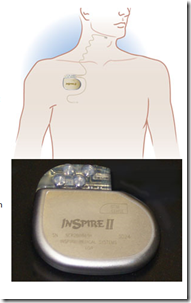
 Invasion of the implants – this one for Sleep Apnea and the patient will have a device to turn the device off and on.  If you have looked around You Tube you can find individuals who have made videos of what they are like with an implanted unit turned off and on and these are pretty much patients with Parkinson’s.  This device is different in the fact that it is not 24/7 and an external device will turn the unit off and on. 

imageNow when you sleep, let the device worry about your breathing.  image The device has been approved by the FDA and should become available sometime next month.  By appearance is seems to resemble the shape and size of ones from Medtronic, and that may be due to the fact that Medtronic was a participant in the development of the device.  Just recently another implant was approved by the FDA for Obsessive Compulsive Disorders.  Implants sure seem to be on the move and one question I ponder, will we some day be seeing individuals with multiple implants?  Time will tell.  BD

Second generation implantable device utilizes electrical stimulation to prevent airway closure during sleep

MINNEAPOLIS, Feb. 26 /PRNewswire/ -- Inspire Medical Systems, Inc., a private medical device company, today announced it has completed the first human implant of its Inspire II system designed to treat Obstructive Sleep Apnea (OSA).

It is estimated that one in fifteen adults has moderate to severe OSA(1). People with OSA experience recurrent blockage of their upper airway during sleep, resulting in frequent arousals from sleep and reduced oxygen levels in the blood. This happens in patients with OSA because the muscles that normally hold the airway open during wakefulness relax during sleep and allow the airway to collapse. When the airway is partially closed and/or the muscles relax too much, trying to inhale will completely close the airway, resulting in an obstructive sleep apnea event. Depending on the degree of severity, OSA is a potentially life-threatening condition. According to a recent report(2) from the National Center on Sleep Disorders Research and the National Institute of Health, someone who has undiagnosed or is non-compliant to treatment of their sleep apnea is significantly more likely to have a heart attack, a stroke, cardiac arrest during sleep, or a harmful accident.

Inspire Medical Systems Completes First Implant of the Inspire II System to Treat Obstructive Sleep Apnea

Hat Tip:  Medgadget

Related Implant Posts:

Deep Brain Stimulation for Dystonia and Parkinson’s Disease and More?

FDA OKs deep brain stimulation for Obsessive Compulsive Disorder - Medtronic
Implanted Heart Monitor Inserted with Minor Outpatient procedure – Medtronic Reveal DX
Medtronic Announces Launch Of X-Stop® Peek IPD® System For U.S. Patients Suffering From Symptoms Of Lumbar Spinal Stenosis
Medtronic Announces First Clinical Data on Occipital Nerve Stimulation for Chronic Migraine to Be Presented at American Headache Society Meeting
Brain Implants For Parkinson's Show Benefits as well as risks
Medtronic acquires medical device company for $387 million
Tapping the Brain for Profit - Medical Devices for the Brain, they do exist

EHR Vendors Testing Open Source HIE Software prior to HIMMS Convention in April

The California HealthCare Foundation donated open source software components for master patient index and records locator applications to Open Health Tools.  This is another go at the project.  I have been posting quite a bit about hospital connectivity, and the vendors listed here are working on another end of the integration process, the records in the doctor’s offices having connectivity.  When you look at the listing below, you will find most of the larger EHR/EMR Vendors participating, we all want to be connected and share data, good for our health.  Once completed, other vendors can also incorporate the code into their software as well and brings us closer to more standardization.  BD 

Multiple software vendors this week are testing a beta version of open source server technology to aid in establishing interoperability among disparate health information systems.

The vendors are participating in the 10th annual Integrating the Healthcare Enterprise Connectathon in Chicago. Sponsored by the Healthcare Information and Management Systems Society and the Radiological Society of North America, Connectathon is a prelude to the Interoperability Showcase at the 2009 HIMSS Conference & Exhibition, April 4-8 in Chicago. Vendors must participate in the Connectathon to demonstrate at the Interoperability Showcase.

The technology is component software called OpenPIXPDQ, based on the Patient Identifier Cross-Reference and Patient Demographic Query function models previously developed by Integrating the Healthcare Enterprise participants.  Misys Open Source Solutions, a division of London-based Misys plc, is leading development of the component software. Others involved include Eclipsys Corp., eClinicalWorks Inc., NextGen Healthcare Information Systems Inc., Siemens Healthcare, GE Healthcare and the National Institute for Standards and Technology.

Vendors Test Open Source HIE Apps

I’m a Name Brand….I’m a Generic…

Like the commercials, I’m a Mac, I’m a PC…from Teva Drugs, the all encompassing generic and biosimiliar drug company.  BD

Source:  Peter Rost for FDA

Lung Cancer Expert from Harvard goes to New Yale Cancer Center – Focus on Personalized Medicine and Cancer

October is the planned date to open the Smilow Cancer Hospital at Yale-New Haven, 500,000 square-foot, 14-story hospital.  Genomic studies and sequencing are right in the plan.  The facility will use molecular profiling to match therapy to the genetic signature of the patient’s tumor.  image

This falls right in line with the research being done at Rosetta Genomics.  Click here to see an interview relative to lung cancer tumors from the blog from a couple months ago.  As research continues, the information is becoming far more specific to find cures for different types of cancers, thus the medications get more specific and perhaps complicated from the development side.  Science and clinical evidence working together for cures.  BD

Dr. Thomas J. Lynch Jr., a lung cancer expert at Harvard, was named director of the Yale Cancer Center and physician-in-chief of the Smilow Cancer Hospital at Yale-New Haven Wednesday.

Lynch, chief of hematology and oncology at the Massachusetts General Hospital Cancer Center, will also oversee development of Yale’s 36-acre “West Campus” and continue to pursue research into the causes and treatments for lung cancer.

Lynch said he plans to recruit top cancer researchers, and emphasize translation of laboratory discoveries into clinical use. Lynch has pioneered the use of molecular testing for specific mutations in lung tissue for use in personalized therapy.

With these new facilities and programs, Yale will be nationally known for its expertise in personalized cancer therapy, using molecular profiling to match therapy to the genetic signature of the patient’s tumor, as well as its commitment to quality, safety and outcomes measurement,” he said.

New Haven Independent: The New Face Of Smilow

Related Reading:

Rosetta Genomics Interview – microRNA for Diagnosing Lung Cancer Tumors

Rosetta Genomics Unveils Colon Cancer Screening Diagnostic using MicroRNA Biomarkers

An Introduction to Genomics – Humans have Bugs just like Windows does and It’s all about the Code

Genomic Links – New Resources on the Medical Quack
Rosetta Genomics Interview – microRNA for Diagnosing Lung Cancer Tumors
Teva to Distribute Three Rosetta Genomics Cancer Diagnosis Tests in Israel and Turkey

Steve Shihadeh, VP Microsoft Health Solutions Group – The Amalga Software Solution for Aggregating Hospital Information (Interview)

This week, I spoke with Steve Shihadeh, vice president, Microsoft Health Solutions Group, about the software solutions offered to clip_image002help hospitals view information and communicate for better patient medical care. This is a good opportunity to take a look at what can be accomplished and what the Amalga software systems from Microsoft have to offer, particularly with the economic stimulus bill recently being signed into law by President Obama.

Aggregating data with Amalga has the ability to integrate database information from dozens of different types of systems and bring the information to the computer screen in a user friendly format. In other words, aggregation presents a common ground where data can be merged and viewed quickly by health care individuals to deliver quality patient care. For example, this enables hospital “A” (with the appropriate security permissions) to access and view information that hospital “B” already has on file and vice versa, even if the two facilities are using two different systems of medical records documentation. A recent KLAS report indicated that Amalga is a major advancement in healthcare in defining, storing, accessing and viewing healthcare data. The press release from KLAS, whose focus is healthcare technology, can be read here.

The Microsoft Health Solutions group consists of over 500 individuals and the group was created in the year 2005.

The Interview:

clip_image004

First, I asked Steve about the real value and advantages of aggregating hospital data; is there any value in creating an entire new data base with comprehensive patient data?

To create an entirely new database that includes all data in one program would not only be almost prohibitive cost wise, but also time wise. Our system in the US is highly fragmented by comparison to the UK, which operates under a completely different business model, and we also have a much larger population here. We already have useful and good patient data that has been gathered over the last number of years from various systems, so the key approach here is to enable this existing data to exchange and communicate rather than to start from scratch by creating an entirely new system. This would be a major upheaval to “rip” out old systems and replace with “new” software across the US.

It is also advantageous to make better use of the software that a healthcare organization already has, as opposed to starting with something new by using communication “standards” such as HL7 and Continuity of Care Data formats. Recent testimonies from the US Senate demonstrate that Microsoft and other healthcare institutions as well as government agencies all concur.

What exactly does Amalga do? Is it a hospital records system or does the product lend itself to hospital aggregation of medical records only? clip_image006

There are two different parts to the Amalga system, and right now in the US the big emphasis is on aggregation services. For a hospital that is already established with an electronic system, the aggregation solution is desired and it uses current systems and data to communicate. The Amalga Hospital Information System is a complete “in house” solution for facilities that may not have a software system and rely on old paper methodologies, and the focus here is on countries outside of the US.

A client listing for Amalga and the services being utilized can be viewed here.

Within the US, St. Joseph Health System in Orange, California is using Amalga throughout their 14 hospitals. El Camino, in northern California, is another hospital that is working with Amalga. This solution makes sense for these organizations when you stop and think about the various numbers of systems in place, and how a physician currently has to sign on to access each one without a common interface that aggregates all the data together.

How does Amalga impact the emergency room? In other words, is this an area where patient care though better software can become a reality? I recently posted about the Wisconsin Health Information Exchange. Could you elaborate a little more on the value Amalga is offering here?

Emergency Rooms are the first point of entry for many patients and the value of the project has been recognized recently by Humana’s partnership with the WHIE. It really shows a great effort in creating better healthcare through information technologies. For instance, some of the hospitals in the network are somewhat competitive with services offered, but they have all realized the importance of having aggregated patient data in the long run to create better patient care. A patient’s tests recently performed at another hospital could be securely accessed by any hospital in the network, thus this saves repetitive tests, reduces medication errors, etc. as all the patient information is available.

Humana, an insurance carrier, is working with the unified intelligence system to advise patients of the most appropriate service that fits their needs. This is a way of directing patients to less costly facilities outside of the ER, such as a clinic or physician’s office, because the condition is not as severe.

What roles can or does Amalga play with research area? In addition to better patient care, does any of the collected data have use in other areas such as clinical trials?

The Moffitt Cancer Center in Tampa, Florida is one example of a hospital that is working with Amalga to collect patient data. Moffitt will deploy Microsoft Amalga to aggregate clinical, bio-specimen, research data and clinical images to allow the R&D staff to create scenarios to better ascertain possible treatment results ahead of time, again based on patient charts and outcomes already on file. The information can be queried and studied with one common information data base with Amalga, versus having to access many levels of data with several software programs. The goals here are to develop personalized cancer care and create clinical trials around evidence based information.

I understand Microsoft HealthVault is also part of the overall process, could you tell me a bit about HealthVault and how consumers can benefit? I keep a link on this site for anyone to visit the HealthVault site and just recently created a section for Personal Health Records on the blog. I recently set my 84 year old mother up with her account and have had quite a few questions of late, especially from seniors who are curious as to how this will help benefit the healthcare they receive.

HealthVault is an integrated solution on the patient or consumer side of Microsoft healthcare. The HealthVault group is working to bringclip_image008 additional vendors and participants into the program, and HealthVault will continue to grow as more hospitals and vendors incorporate this program. HealthVault is working together with Scripps and Navigenics on a project that allows individuals to sign up for the pilot program and have their entire human genome sequenced. The results of the 20 year study will all be contained in HealthVault, and every participant in the program now has a HealthVault account established as part of the process.

“Co-sponsors of the study include Navigenics Inc. of Redwood Shores, Calif.; Affymetrix of Santa Clara, Calif.; and Microsoft Corp. of Redmond, Wash. Study participants age 18 and older can receive a scan of their genome and a detailed analysis of their genetic risk for more than 20 health conditions that may be changed by lifestyle, including diabetes, obesity, heart attack and some forms of cancer.”

I used this as an example of how vendors and programs are some of the key efforts in helping expand the HealthVault program. HealthVault uses health care industry communication standards to store and receive data, and as a part of the entire Amalga solution process, patients will have the ability to have credible medical data stored in their own personal health record and be able to share the information with physicians and other healthcare facilities.

Anyone can open a free HealthVault account at any time. With more medical devices connecting to the system, adding information is simplified because it is using a device that connects to a computer and automates the process, without having to type information. Aggregated patient data from Amalga will be able to populate the personal health records of Microsoft HealthVault.

Thank you Steve for taking a few minutes of your time today to help explain Amalga and how an aggregated data approach is the key to truly getting health records and information to communicate for all of us, as we are all somebody’s patient along the line. I learned a bit more about Amalga as well today!

Related Reading:

There’s No Good Reason to Delay Data Liquidity and Information Sharing in Healthcare..
St. Joseph to Subsidize physicians with EHR - up to 85% of the cost – TouchWorks from Allscripts
Scripps, Navigenics, Affymetrix and Microsoft team on groundbreaking health study – Personalized Medicine
Two More Hospitals Sign for Amalga from Microsoft
Wisconsin Health Information Exchange RHIO connected with Amalga from Microsoft

Competitive Technologies to Begin Selling Pain Therapy Medical Device – Oncology Centers

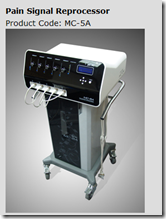
Primarily the focus will be all the major oncology centers in the US, over 3000 patients have been treimageated in Europe. The product can be an alternative to drugs in some cases.

A biophysical approach uses a multi-processor able to simultaneously treat multiple pain areas by applying surface electrodes to the skin and it can be used on more than one area of the body. BD

FAIRFIELD, Conn., Feb. 25, 2009 (GLOBE NEWSWIRE) -- Competitive Technologies, Inc. announced today that the US Federal Drug Administration (FDA) has issued a 501(k) letter of authorization allowing US sales of CTT's pain therapy medical device. The device is a non-invasive method for rapid treatment of high-intensity oncologic and neuropathic pain, including pain resistant to morphine and other drugs. The FDA authorization expands CTT's opportunities for sales in both the US and globally. CTT has exclusive worldwide rights to this patented device. The CTT device also has Medical Device CE certification from the European Union allowing sales throughout Europe and several other countries.

Video for additional information from the website.

Competitive Technologies Receives FDA Authorization for Sales of Pain Therapy Medical Device - MSNBC Wire Services - msnbc.com

Hospital to Implement the New Microsoft Amalga HIS 2009 – Malaysia

The press release below discusses an installation of Amalga HIS solution, which is primarily marketed outside the US in developing countries, where as the Unified Intelligence System is sold in the US to allow hospitals to integrate aggregated information to have patient data available to read and exchange.  In developing areas, the hospital may not have any existing infrastructure and needs an entire solution.  BD 

Press Release:

KUALA LUMPUR — Feb. 24, 2009 — Hospital Sultan Haji Ahmad Shah (HoSHAS), a 498-bed hospital located in Temerloh, Malaysia, will implement Microsoft’s new Amalga Hospital Information System (HIS) and the Microsoft Amalga RIS/PACS to help realize its goal to become a model “e-hospital” in Malaysia.

The agreement, announced by Microsoft today at the HIMSS AsiaPac09 Conference Exhibition, was reached with the Ministry of Health Malaysia in collaboration with GC RRITS Sdn Bhd (GCR), a Malaysian company providing integrated information technology solutions to the healthcare industry.

“We are very pleased to reach this milestone with the Ministry of Health Malaysia to deploy a next-generation hospital information system at HoSHAS,” said GCR Executive Chairman Abdul Razak Osman. “The Microsoft Amalga HIS and Amalga RIS/PACS are state-of-the-art systems that can help HoSHAS become the benchmark modern, automated hospital.”

“We are excited to team with GCR to help HoSHAS offer the optimal experience for patients and families,” said Steve Shihadeh, vice president of the Health Solutions Group at Microsoft. “By providing clinicians with a single, customized view of health information, the Amalga HIS and Amalga RIS/PACS can help the hospital make strides in operational efficiency, care quality and the patient experience.” 

The Amalga HIS provides a single integrated database and interface across all hospital departments. GCR and Microsoft will implement the Amalga HIS to help HoSHAS improve the customer and staff experience by automating data management, improving productivity and reducing operating costs. HoSHAS also will use Amalga RIS/PACS to enable radiologists to perform their jobs more efficiently.

Development Roots in Asia-Pacific

Microsoft Amalga HIS 2009 was built from the ground up to serve the needs of Asian healthcare providers. It is the new and first Microsoft version of the product previously named Hospital 2000, which Microsoft acquired from Bangkok, Thailand-based Global Care Solutions in December 2007. In addition to Bangkok’s Bumrungrad International Hospital, the product also is in use at the Asian Hospital and Medical Center, Philippines; Assunta Hospital, Petaling Jaya, Malaysia; and FV Hospital, Ho Chi Minh City, Vietnam. The Amalga PACS and Image Management System is in use at Changi General Hospital and KK Women and Children’s Hospital Singapore, and the Image Management System is in use at Singapore General Hospital. Microsoft continues to work closely with Bumrungrad International as a joint development partner to further refine the functionality and features of Amalga HIS.

Microsoft has a group in Beijing dedicated to global product development for Amalga and Amalga HIS and on work that may be required for Asia-Pacific customers. This team is based within the Microsoft China Research and Development Group (CRD), an umbrella organization unifying and coordinating all Microsoft research and development efforts in China.

Microsoft Amalga Family

The Amalga Family of Health Enterprise Systems includes the following:

· Microsoft Amalga Hospital Information System 2009 . Amalga HIS is a state-of-the-art, fully integrated hospital information system designed for developing and emerging markets. Amalga HIS provides rich integration among a hospital’s front- and back-office modules, giving clinicians and administrators access to information within and across departments. Amalga HIS is built around an electronic medical record with complete patient and bed management, laboratory, pharmacy, radiology information system and picture archiving and communication system (RIS/PACS), pathology, financial accounting, materials management, and human resource systems.

· Microsoft Amalga RIS/PACS. Amalga RIS/PACS is available as a stand-alone system in developing and emerging markets as well as an integrated component of Amalga HIS. The integrated architecture means that a radiologist can use a single application to manipulate and study images and access the patient medical record. The workstation interface, which includes support for predefined templates, an intuitive report editor and voice recognition capabilities, is optimized for radiologist workflow.

· Microsoft Amalga. Amalga is part of a new software category called Unified Intelligence System that allows hospital enterprises to unlock the power of all their data sitting in isolated clinical, financial and administrative systems. Without replacing current systems, it offers an innovative way to capture, consolidate, store, access and quickly present data in meaningful ways for use by clinicians and executives of leading-edge institutions. Amalga is designed for hospitals and health systems that have invested in a diverse set of IT solutions.

About Microsoft in Health

Microsoft is committed to improving health around the world through software innovation. Over the past 12 years, Microsoft has steadily increased its investments in health, with a focus on addressing the challenges of health providers, health and social services organizations, payers, consumers and life sciences companies worldwide. Microsoft closely collaborates with a broad ecosystem of partners and develops its own powerful health solutions, such as Amalga and HealthVault. Together, Microsoft and its industry partners are working to advance a vision of unifying health information and making it more readily available, ensuring the best quality of life and affordable care for everyone.

About Microsoft

Founded in 1975, Microsoft (Nasdaq “MSFT”) is the worldwide leader in software, services and solutions that help people and businesses realize their full potential.

Tenet Healthcare Posts 33 Million 4th Quarter Loss – Charge on Sale of USC Hospitals

Tenet appears to be shrinking in size, there were 5 other hospitals sold in the Los Angeles area last year as well.  imageBD 

U.S. hospital operator Tenet Healthcare Corp. reported a $33 million fourth-quarter loss, mostly reflecting a charge on the sale of two hospitals.

Dallas-based Tenet said Tuesday that the quarterly loss was equivalent to seven cents a share on $2.2 billion in revenue. That compares with a loss of $75 million, or 16 cents a share, on $2.1 billion in revenue for the same quarter in 2007. 

In January, Tenet said it expected a $5 million profit in the fourth quarter. But a few weeks after making that forecast, the company announced the sale of USC University Hospital and USC Kenneth Norris Jr. Cancer Hospital to the University of Southern California.

Tenet Healthcare Posts Loss - WSJ.com

Related Reading:

How Hospitals Go To War – Tenet and HCA – It’s a Hedge War with Insurers
Tenet subsidiary announces closing of Irvine Regional Hospital – Orange County, CA
Tenet not renewing lease for Community Hospital – Los Gatos
Tenet Sells North Ridge Medical Center for $20M - Florida
Prime Healthcare to acquire three hospitals from Tenet Healthcare - California
Tenet Healthcare reports $31M loss
Tenet Healthcare to sell USC University Hospital

Tenet Takes A Hit – Even After selling several hospitals this year

OctoMom worried the Hospital Won’t Release the babies to go home – Calls Dr. Phil

I knew somehow Dr. Phil was going to get involved here, just had that feeling. Actually her father now is talking on Oprah about here sanity, which is probably something we all are beginning to wonder about at this time. Her mother has not been too complimentary since day one as well, very interesting views from the parents, but they too have a part in the fact that it is their daughter and what about the poor babies, they didn’t create any of this. You know I’d bet there are a ton of individuals out there who would love to adopt one of the babies.

It really does make you wonder how in the world can all this happen and there is no able bodied father to give a hand as well. Strange though, the video states she had a pretty big offer for a pornographic video, who knows what’s next. BD

Nadya Suleman told TV host "Dr. Phil" McGraw on Tuesday that she fears Kaiser Permanente Medical Center may not release her octuplets to her until she proves she can care for them.
In an interview with The Times, McGraw said Suleman called him Tuesday afternoon, distressed after talking to Kaiser officials. Suleman has taped two episodes of McGraw's show, the first of which is scheduled to run today.

When the infants reach 35 weeks of development, they are released once they can maintain their body temperature, eat regularly and without difficulty, and demonstrate continued growth. Often, the children weigh about 5 pounds when they are released, she said. The octuplets are at 34 weeks of development.

"What I have said from the beginning when I first addressed this story is that you can be upset with this mother . . . [but] you can't turn your back on the mother without turning your back on 14 innocent children," McGraw said. "They didn't ask for this."

Suleman says hospital wants proof she can care for octuplets - Los Angeles Times