Interviews Personal Health Records How to Search Bar Code Campaign Ducknet.net

How Similar is Wall Street to the Health Insurance Business

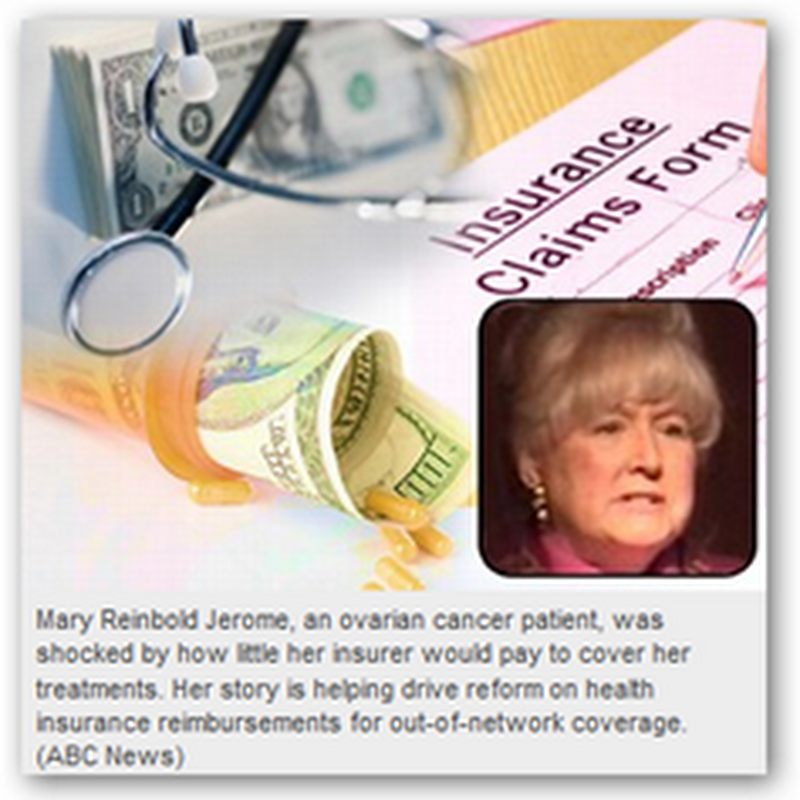
This is a rather long but very informative “diary” written with both opinion and fact as to why our current health insurance plan is not working.  Some of the facts mentioned that I found interesting was the budget of AARP for example which is 1 billion a year and 700 million of that is derived imagefrom selling insurance and further goes to state that AARP is a broker disguised as an advocacy group.

Concerned over Wall Street CEO Pay – How About Health Insurance CEOs?

Wall Street and Healthcare – Was it the Mob or have the rest of us been operating like a PC with no anti-virus protection?

The article also states that insurance carriers divert on the order of $350 billion of insurance premium money from actual medical care, the size of the peacetime Pentagon budget.  Myself I have posted quite a bit about Ingenix, a subsidiary of United Health Care and this article also goes into detail about some of what has occurred therein as well.  

AIG: You Bring the Nerds and the Algorithms and I’ll give you a AAA Rating…a little history from 1987

Most of the Insurance carriers also have Venture Capital investment areas too, and that of course it not money going to pay for medical services, but rather for technology they feel that will help cut costs.  Some of the technology just might in fact do that, but the sad end of the entire story is that it has not been a partnership with providers and hospitals, but rather a feeding frenzy.  One senator, heading an investigation even asked the CEO of United Health Care how he was able to sleep at night. 

Is This a Case for a New Law – Illegal Algorithms? How Do You Sleep at Night Rockefeller asked the CEO of United Health Care
The Ingenix Inquisition – Hearing Requested by Senator Rockefeller

Just a thought, but why didn’t the Health Insurance business bail out Wall Street?  They have some very large reserve cash funds and perhaps totaled all together are 2 or 3 trillion sitting around as rainy day funds.  These funds are required by law, but some states were even challenging the amounts that were being socked away.  image

In northern California Sutter hospitals is using Ingenix to help them with business intelligence so I guess they are the pros at leveraging software to the point of securing the best bang for the buck. 

Will Greed lead to Meltdown of the Health System?

Here’s a link to where things were so heated in the Senate a couple weeks ago, doctors and patients had to be escorted out.  it is all in the algorithms that are run to make money.  BD

Public Medical Plans – Good or Bad there will eventually be some form in place

Most people are unaware how similar the major health insurers are to our failed Wall Street firms.They are corporate cash cows and have virtually no fiduciary responsibility and few activities for protecting or improving health or the health care system.They will devote their vast resources to prevent any meaningful health reform. They have controlled Congress and the mainstream media. The only cure is vigorous popular support for a single payer, Medicare for All reform.

Daily Kos: State of the Nation

Related Reading:

United Health Care Says Cheaper Efficient Doctors and Reducing Hospital Visits by the Elderly Would Help Reduce the Cost of Healthcare
I’m Stuck with United HealthCare – Would Welcome a Change to Try a Public Health Insurance Option
Insurance CEOs Get Rich While Denying Health Coverage to Children – As Noted in the Senate Hearings
Is This a Case for a New Law – Illegal Algorithms? How Do You Sleep at Night Rockefeller asked the CEO of United Health Care
Andrew Cuomo – You Have to Like This Guy – Healthcare Reform
Prescriptions risk score used to deny health insurance

CDC and NIH to Start Genomic Applications – Are We In for a Cloudburst?

This partnership is actually something we have all been waiting for, or let me say many of us.  The information interchange will allow for bringing genomic information to the clinical level, the doctor’s level where we are treated.  This is a big task and meetings are just starting so it won’t be here tomorrow. 

Francis Collins looks to be in first place to run the NIH, who was a pioneer in genomics, remember “Cracking the Code”.  He was talking and writing research long before the rest of us had heard of genomics. 

Francis Collins former head of the National Human Genome Research Institute Said to be the Top Candidate to run the NIH

Will this be in the cloud or what data center will be used I wonder.   We need genomic information at the clinical level of service.  BD 

NEW YORK (GenomeWeb News) – The US Centers for Disease Control and Prevention and the National Institutes of Health is developing a genomics network that will attempt to integrate genomic information into medicine and public health. 

The CDC Office of Public Health Genomics will work with NIH to establish the Genomic Applications in Practice and Prevention Network, which will address the "chasm between gene discoveries and demonstration of their clinical validity and utility," a group of CDC and NIH staff and stakeholders said in a recent report in the journal Genetics in Medicine.

It will have four main goals, including synthesizing and disseminating knowledge for new and existing technologies; creating an evidence-based recommendation development process; translating research to evaluate validity, utility, and real-world impact; and offering programs to enhance practice, education, and surveillance of genomic applications.

CDC, NIH to Start Genomic Applications Network | GenomeWeb Daily News | GenomeWeb

Related Reading:

Francis Collins former head of the National Human Genome Research Institute Said to be the Top Candidate to run the NIH

NIH Overwhelmed with Grant Applications – Receiving More Than Originally Anticipated

Bioinformatics Needs a Lot of Room – For Genomic Research Data and Analytical Processes

Yes, the processes and information needed to sequence and hold your DNA does not fit in an Excel spreadsheet, now the interpretation into imagelayman's’ terms so you understand could be, but not all the data that is needed to compile this.  As we are now able to mine and analyze more than 3% of the available data, up go the storage and power needs, and we are talking even bigger than terabytes.  This Research campus is building on to handle molecular studies. 

Big Pharma Exploring and Moving Data to the Cloud – IT Execs Talk about How It is Being Done

This is one of the reasons too that the Cloud is interesting many in research as you can use an existing power supply on the internet, close out and be done.  There’s a lot of power out there to borrow for some studies.  If you read the link below there are some very interesting facts on how big pharma is harnessing the cloud and the “huge” savings they realize.  The only downside is to make sure perhaps some additional security  considerations are in place, again depending on how and where the cloud use is structured.  The picture at the left shows one of the prettiest data centers and you can click on the picture to visit the site to learn more.  They are not cheap to build and maintain and why many are considering renting a cloud. 

Verizon and Intuit will rent space on the cloud too.  BD

Verizon and Intuit Introducing New Cloud Services

Scientific research under way at the N.C. Research Campus generates so much biological information that no spreadsheet or computer file can contain it.

When scientists study biology at a molecular level, as they do in Kannapolis, they encounter problems so complex that a vast and relatively new scientific field is required to help find answers.image

It's called bioinformatics, and the University of North Carolina at Charlotte specializes in it.

Bioinformatics can help determine the exact point at which a new cancer drug should interact with a cell.

"Bioinformatics really began as a solution to a problem," said Dr. Lawrence Mays, director for the UNC-Charlotte Bioinformatics Research Center. "The problem was a flood of data that was difficult to understand."

Two decades later, the flood waters continue to rise. A genome that once took years to sequence now takes only weeks, thanks to high-throughput equipment like that at the Research Campus.

Instead of studying one gene at a time, scientists now can use gene chips for gene expression analysis.

"A single chip with an active site the size of your fingernail can be the equivalent of a couple million test tubes," Mays said.

These mind-boggling amounts of data led to bioinformatics, or the discovery, development and application of new computational technologies to help solve biological problems.

"It's forced people to think in a different way," Mays said.

SalisburyPost.com - Area - Researchers at NCRC using bioinformatics

Hospitals and Doctors Financials not Improving

The only bright spot in the report were the stocks with the “for profit” companies which were rising.  The number with a negative return almost imagedoubled from last year’s first quarter report for those not in the profit business.  I see the partnership thing here in Orange County all day long and I have also posted about a company that helps locate shared space.  This seems like a good place for another link. 

Share Medical Space – Find or Share Medical Office Space Online…

Here’s one other that might be of help for physicians, the No Insurance club.

The No Insurance Club – Interview with Chad Harris, Director

This is an entire revolving circle, which goes from research and development, bringing a product to market, seeing the doctors, getting the treatment imageand being able to put some kind of a lid on all of it.  Other than outsourcing everything how do we solve the issues?  Do we finally just set one big budget dollar and live with it? 

Once a company has outsourced, there little and no chance of a return, just economic facts, unfortunately.  The related reading below has monthly recaps on the “Desperate Hospitals” series.  BD 

Hospitals are suffering through the recession, many of them cutting staff for the first time, but some for-profit hospitals are doing surprisingly well, speakers said Friday at the annual South Florida Healthcare Summit.

More than 200 people attending the conference in Davie heard what was basically a grim financial outlook for their industry.

Caroline Rossi Steinberg, a trends specialist with the American Hospital Association, said 43 percent of hospitals surveyed reported a negative net return for the first quarter, compared with 26 percent for the same period last year.

Many doctors are also hurting, Steinberg said. Sixty-five percent of hospitals surveyed said they had seen increased numbers of doctors seeking employment, partnerships or help in purchasing equipment.

Hospitals were cutting overtime and expensive contract workers. They were also using the economic crisis to squeeze wage reductions out of their staffs, which agreed to them ``for fear of losing their jobs.''

Hospitals get grim financial news - Breaking News - MiamiHerald.com

Related Reading:

Desperate Hospitals – May 2009

Desperate Hospitals Update – April 2009
Desperate Hospitals – March 2009 Update
Desperate Hospitals – February 2009 Update
Desperate Hospitals – Updated November 21, 2008

Desperate Hospitals – September 2008

Desperate Hospitals: Chicago Hospital Hangs For Sale Sign
Desperate Hospitals - Hawaii- What is happening to our Hospital System?
Desperate Hospitals - August 29 (Continued)
More Desperate Hospitals - Miami, FL and Cape Cod, MA
A hopeful prognosis - Desperate "California" Hospitals
Desperate Hospitals - Century City Doctors Hospital (Los Angeles) begins shutting down, others file Chapter 11 to reorganize
New New Jersey law to pinpoint financially troubled hospitals - "Desperate Hospitals"
Bankruptcy Bug Hits Hospitals – Desperate Hospitals

CEO “Executive Physicals” – Are they Worth the Money and Do They Use a PHR to Better Understand and Guide Them to Better Health

With healthcare being in the headlines today, this focuses on whether or not CEOs really need the expensive and detailed “executive physical”.  Sometimes as mentioned, so of this information ends up being discussed with company Shareholders, look at Steve Jobs for a simple example at the link below, as his health concerns turned into an SEC probe!  image

The SEC Probe and Steve Jobs – Inquiring Investors?

How much of the advice given is actually followed?  Inquiring minds want to know as everyone wants to know how we are using our information so how about a quick turn of the tables here.  I would see this being an excellent opportunity for CEOs to use a PHR, personal health record, you think?  One of the best deals going for the CEO as it does for all of us that you can share what you want, duh?  It makes the process easy too and would still protect his/her information that you may not want out there.  One big problem here is the “do as I say” routine and not “do as I do”, which is everywhere.  Why don’t these CEOs get wind of controlling what you want to share?  Good question? 

Personal Health Records (PHR), I don’t do technology said the CEO, “it’s for those guys over there”

Also of interest are the places named where the CEO executive physicals could take place, funny both mentioned in this article offer the PHR connection and I am just curious, do the CEOs use them?  Dr. Brian Rank quoted below wrote up an article in the New England Journal about the topic, wonder if he uses a PHR?  If these physicals really contain such huge amounts of credible and usable data, I would think any CEO trying to set an example for employees and co-workers would be all over this.  Again, shareholders are paying for some of these physicals (about $7000.00) and information ends up at meetings, so what’s the holdup?  Can a CEO take charge of his own health records? 

Mayo Clinic and Microsoft HealthVault Partner for Personal Health Records Solution

HealthCare Partners – Members can now Utilize Microsoft HealthVault – Minnesota

Back in January I sat and watched the testimonies in front of the Senate and saw a room full of people who were making decisions for spending, but had to ask what a PHR was??  Does the value and education in healthcare need to start at some top levels.  Just think, the CEO would have full control of what he/she wanted released with their PHR, amazing isn't’ it.  Again, I am curious as to why these top level CEOs don’t partake, they go to facilities that offer a PHR as part of their healthcare program? 

Not too long ago I interviewed Steve Shihadeh, vice president, Microsoft Health Solutions Group and he uses HealthVault like I do, so there’s one executive that sees the value, so why don’t the rest of executives take a look and see what value is there, they all certainly want all of us to use one, so when it’s what’s good for the goose (or duck in my case) going to find it’s way up the ladder for those educated and experienced to the very high levels of running big corporations??  My thoughts for the day.  BD

Steve Shihadeh, VP Microsoft Health Solutions Group – The Amalga Software Solution for Aggregating Hospital Information (Interview)

Dr. Brian Rank has created something of a melee in a medicine chest.

The medical director at Bloomington-based HealthPartners is challenging the value of a time-honored special perk for many CEOs: the executive physical.

Year after year, companies offer the CEO and other corporate chieftains a trip to some prestigious medical center — it's often the Mayo Clinic — for the very best physical examination that money can buy.

The visits often involve an intensive one- or two-day set of medical tests complete with a personalized interpretation of the results, and last year just more than half of Minnesota's 50 largest public companies offered them to their chief executives.

But in October, Rank published an article in the New England Journal of Medicine arguing that executive physicals don't necessarily help CEOs and could actually hurt them.

Hormel Foods spent $20,603 on physicals for its five highest-paid executives last year and explained the decision this way in a filing for shareholders:

"The Company provides a designated group of managers, including executive officers, an annual medical physical. Assuring these key managers are in good health minimizes the chance business operations will be interrupted due to an unexpected health condition."

Researcher puts 'executive physicals' under the microscope - TwinCities.com

Related Reading:

Congress Plans Incentives for Healthy Habits ,Wellness Programs, and Devices? How Potentially Intrusive and Disruptive Will It Get to Save Money?
Excessive Incentives and Rules – Where Did the Wisdom Go in HealthCare?

Do You Know What Your Doctor Is Talking About – Read up and help stamp out “Magpie Healthcare”

U.S. Congress has an inadequate understanding Value of Health IT – HIMMS Opening Session

Patients Should Not Lie to Their Doctors – Find One Who Will Keep 2 Sets of Records for you – One Private and One for Sharing

This was the recommendation made in the article below.  The study from WedMD stated too that a big percentage of doctors felt lying for their patients was ok too, as they are helping them get the care they need.  Over half surveyed thought it was ok and the more serious the condition, the more inclined physicians were to take the stance.   It all boils down to insurance once more, the industry we don’t trust.  We saw it all on the big screen with Sicko the movie. 

Sometimes the complicated algorithms for coverage are too much, like forgetting about one small item like an ear infection, a case of acne, a yeast infection that occurred many years ago, but the payers use those omissions to deny claims and coverage.  So, gee, why do are patients inclined to lie?  Sometimes there are more important things in life than “having to be right” all the time.  When we can’t get beyond healthcare as humans and use items as such to deny care what does it say for the industry and business itself.  It seems to appear we are not getting much closer in Congress either on a health plan so I’m guessing we will end up with some kind of a government plan simply by default, as nobody seems to be giving an inch and greed still predominates. 

Sure technology is reshaping healthcare, but new devices and discoveries should be available and covered for treatment plans.  My own personal opinion is that I would rather see a little fraud get through in the process (which I am not a fan of by any means) rather than tightening down the hatches to where those who need care are denied, but fraud is down to being non existent, besides we have some pretty fancy data systems today that are ahead of the game and catch a lot of it before it happens.  Right now we are still digging out of much of what has occurred in the past with fraud and as transparency continues to grow there will be more.  You know if more claims were paid, they might just save some money on legal costs too.  We need an honest business model here somewhere along the line, and again how big are those reserves or rainy day funds? 

So in the meantime, as the one individual suggested here, find the MD who will keep 2 sets of records for you.  If we didn’t have to worry about our healthcare needs being taken care of, the one file system could work. 

One other small note, is if you have a PHR and the insurance companies are actually honest enough to share all that is on file for you, that would also help tremendously so you could see what they have on file and you might perhaps correct some errors too at the same time.  Also, with your PHR, you can decide too on what parts of your health record that you might want to share too and if complete enough maybe your records from the doctor would not be needed, just a thought.  BD   

That patients lie is one of the basics doctors learn in medical school. Of 1,500 responders to a 2004 online survey by WebMD, 45% imageadmitted they hadn't always told it exactly like it was -- with 13% saying they had "lied," and 32% saying they had "stretched the truth."

Not included in those figures would be patients who "lie" without knowing they do so by withholding information because it slips their mind or they have no idea it could be useful. (Maybe Aunt Agnes would gladly tell about the time she snored so loud she woke the neighbors if she knew that a diagnosis of sleep apnea could depend on it.)

Patients also are prone to lying about the fact that they engage in social taboos, things their doctor might not approve of. In the WebMD survey, 22% lied about smoking, 17% about sex, 16% about drinking and 12% about recreational drug use.
"When you're studying psychiatry, you're taught that if a patient says, 'I use cocaine once a month,' you figure it's twice a month," says Dr. Robert Klitzman, professor of clinical psychiatry at Columbia University. "We were taught to double."

But co-workers, parents and spouses aren't the only threats hanging over a patient's head. Health insurance is another. And so -- not surprisingly -- sometimes people lie in order to keep something out of their medical records or out of the hands of their insurance companies.

But in fact, it's only confidential until it isn't.
Whenever patients apply to buy individual insurance policies, and whenever they file claims under policies they own, the insurance company can request their medical records.  And it doesn't take much in a patient's records to nix the sale of a policy. "A case of acne can do it," says Jerry Flanagan, an advocate with the Foundation for Taxpayer and Consumer Rights.

Clarke suggests patients have two sets of medical records, a private one between patient and doctor and another for sharing with others.  "The solution is not to lie to your physician but to establish private records that won't be released to third parties," he says. "If your physician won't do that, it's reason enough to leave the physician."

Body of lies: Patients aren't 100% honest with doctors - Los Angeles Times

Related Reading:

Prescriptions risk score used to deny health insurance
Health insurer accused of overcharging millions – United Health Care/Oxford Insurance 50 Million Fine
UnitedHealth settles misstating executive compensation allegation with the SEC – Use their PHR?
Health Insurance Reserves – How much is in the till, could it be 1 or 2 trillion nationwide?

Insurer's Reserves Criticized

Small Medical Biotech Companies Finding it Difficult To Survive Unless Additional Funding Arrives

Not all biotech companies make it and it is not always just the failure of a product or trial, many are running short of money, unless they happen to be purchased or financed by one of the big drug or other medical companies.  It does make you wonder if we are on the losing end here sometimes with technology that is good for healthcare, but gets lost due to the same problem healthcare is facing everywhere, money. The first company had installations already in hospitals too, but as it states neither Medicare or private insurers were covering the billing. 

In past interviews I have conducted, companies informed me that sometimes it can take years for Medicare or private insurance to approve a procedure and by that time, if the company is still doing well, they are on to the next phase or two of the development, so what does get approved for payment is already outdated.  Some companies don’t have that option though if they are on a slim cash budget, such as these 3 and funding is tougher today than it ever has been.  BD 

BURLINGTON - Until last October, InfraReDx considered itself a symbol of the kind of science-based innovation that creates durable imagehealthcare industry jobs.

Now, InfraReDx represents the perils of the recession for small companies working on promising medical technologies that hospitals and insurers see as experimental. The company, which makes a laser-scanning system that locates signs of heart disease, has been through two rounds of layoffs, reducing its work force to 72 from 92. It would have run out of money this month if its investors had not agreed to a new round of investment.  So far, neither Medicare nor private insurers compensate hospitals for using the scanner.

Plenty of medical companies are sharing Muller's pain. PLC Medical Systems, for instance, a company in Franklin canceled a scheduled clinical trial last fall of a new hydration and urine collection system to protect patients with impaired kidneys from the side effects of X-ray procedures. "We had the hospitals and patients ready to go," said Mark R. Tauscher, the company's president and chief executive.

And OmniSonics Medical Technologies, based in Wilmington ceased operations in January. The end came without warning to doctors who were conducting studies on new applications of its federally approved device to break up blood clots with ultrasound pulses. "They shut it down cold turkey," said Paramjit Chopra, an OmniSonics scientific adviser and interventional radiologist in Chicago who had been a leader in the study. "Nobody returned my calls." (Messages requesting further details left last week on the answering machine of Richard G. Ganz, OmniSonics' president and chief executive, received no response.)

Recession dims chances for small medical firms - The Boston Globe

Walk n Play iPhone Application – Tracks Every Move You Make and Creates A Report

This is a very interesting bit of software that is also free to download to use with an iPhone.  It is slated as a “game’ and allows an individual to imagecomplete with other individuals using the software and creates full 24 hour report of every move you make and how many calories were burned.    This is a free application that can be download from the iTunes store.  The iPhone has a built in accelerometer to sense motion that makes this possible.  The National Center for Human Performance at the Texas Medical Center is conducting tests to see and evaluate the process. 

All you need to do is log in, and carry your phone around with you as one would normally do and the phone goes to work.  In addition, when creating your personalized settings, you can also designate where the phone will be worn or kept. 

You can search for “buddies” too, again allowing for some friendly competition.  This looks very interesting as far as design and how it can perhaps be a nice tool, and we have the “social” end of the solution here, but business and employers are also showing an interest with Wellness and health insurance information. 

From a previous post:

Redbrick’s methods for tracking employees’ commitment to these health plans are surprisingly detailed (though they may smack a bit of Big Brother). For example, it offers an iPhone application that records progress on a person’s walking exercises and beams the data back to Redbrick’s system. Pedometers and watches that do the same are also in the works, VentureWire reports. This might sound a tad invasive, but the company says that employers have the choice whether or not to make employees prove that they are following their custom health maps.

Redbrick’s methods for tracking employees’ commitment to these health plans are surprisingly detailed (though they may smack a bit of Big Brother). For example, it offers an iPhone application that records progress on a person’s walking exercises and beams the imagedata back to Redbrick’s system. Pedometers and watches that do the same are also in the works, VentureWire reports. This might sound a tad invasive, but the company says that employers have the choice whether or not to make employees prove that they are following their custom health maps.

I am guessing this is also the application being used by some insurers in coordination with their Wellness Programs to send information to the system Wellness system.  It could also be another software solution built on the same platform.  Target Stores also announced their new Wellness Program with the same insurer listed and incentives are offered to employees who electronically connect and participate, and somewhere down the line I’m guessing there’s an incentive for Target with employee participation.

Target Corporation Partners with Red Brick Wellness Program

At some point in time the clinical reporting solution here is certainly a possibility to grow, so now where does the patient’s physician come in, let’s say if the patient were on a treatment plan and solution to work on a weight problem?  As a game, a nice incentive, but where’s the next step in the progression?  Will platforms of such be used in coordination with health care, sure they will and where does it go if the patient wants to share their information, just as they would with a Bluetooth scale, a glucose monitor or blood pressure device? 

I believe the PHR, or personal health record might be the solution here too, so when it expands beyond a social game and data imagegenerated is used to evaluate a patient’s performance, two things need to be kept in mind, one would be the patient’s ability to choose who to share the information with and second, the role of the physician and keeping them involved in any Wellness programs in place so avoid conflict of what is best for the patient.  When evaluation begins outside of just social and recreational use we have an entire new ball game arising and now we might see some new definitions and processes that could evolve into the new “meaningful use” discussions taking place. 

Implementation is the key to the entire process and this is more than likely only the beginning of devices that report data and more than likely there will be more to follow soon, so which portions are a game and when does this information become relative to patient care and how will it be used.  BD 

Walk n Play - Walk n Play is an iPhone application. The application is a smart addition in the existing health and fitness category of highly interesting iPhone applications. The application has made its way into the market on 1st March 2009 for the constant efforts of Computational Physiology Lab.

Walk n Play will hope fully add an x- factor to the fitness regimen of the fitness freaks. It will not only help you to burn calories but at the same time it will allow you to enjoy the exercise. It will turn the regular hours of exercise of yours into a fun time.

Walk n Play iPhone App | Improve Your Health and Fitness with Walk n Play iPhone App

Related Reading:

Target Corporation Partners with Red Brick Wellness Program

The Health Coach/Insurance Company – Employer plan to uses devices and phones for employees to prove their physical activity

The Human Audit Trail to automatically track your fitness and sleep and a few other things…

The Wellness Programs: Payouts to Those Who Work Out - Insurers give discounts on premiums
High-tech gadgets hit doctor-patient relationships and more..
Discrimination and Health Insurance: Big Brother in the Workplace and Beyond

Hand Washing Secret Shoppers Patrol the Hospital To Help Prevent Never Never Events

This hospital has individuals watching and checking, as well as installing hand sanitation stations at about every 10 feet in the facility on patient imagefloors, so everyone here is being watched.  The reason for this of course to to help prevent the never-never events and help stop the spread of MRSA. 

In addition, the hospital audits how many gloves, how much hand sanitizer is used, etc. so we have a bit of business intelligence reporting involved in the process too. 

Last week I posed about a technology solution for the matter that is being utilized and evaluated at a hospital in Florida.  This will be interesting to see if the new technology from HyGreen can help aid in the situation.  In just looking at the human auditor involvement here with time, and the expense of installing hand sanitation stations throughout patient areas, every 10 feet, this involves a bit of an investment too, so again perhaps with the technology solution it could turn out to be a favorable return on investment. 

Real Time Monitoring of When you Washed your Hands – Don’t Touch that Patient Until You Have Washed Your Hands

Again, cost versus manually secret shoppers will more than likely be the key here, as well as evaluating the over all success and functionality of the product.  If it proves to be effective, perhaps we might start seeing technology adding into the battle of the never-never events and the fight against MRSA.  BD 

Jeanette Smyth has spies watching to make sure doctors, nurses and therapists at Ogden Regional Medical Center wash their hands.

At the low point, half weren't practicing good hygiene. Today, the shirkers are down to about 10 percent, according to the hospital's infection control and prevention specialist. 

image

And that has translated into fewer cases of the health-care-acquired infection known as MRSA, or methicillin-resistant staphylococcus aureus, too.   Smyth's secret auditors "walk up and down the hall and pretend they're doing other things with the clipboard. If you're watched, your compliance goes up," she said. "If the compliance is down, they hear about it. This is a never event: We never want them not to wash their hands."

Hospitals cleaning up a nagging problem - Salt Lake Tribune

Related Reading:

Real Time Monitoring of When you Washed your Hands – Don’t Touch that Patient Until You Have Washed Your Hands

Germ-Zapping Keyboard – for use in Hospitals to help prevent the spread of MRSA, C Diff, and other bacterial infections
Stuffing Paper Hospital Gowns in Gloves helping reduce the spread of MRSA
Superbug MRSA Living Amongst Us
DiFusion Technologies – Medical Device to fight infections after spinal surgery
Zinc Zipper' Plays Key Role In Hospital-Acquired Infections - MRSA
Placebo Journal Blog: MRSA SHIRT VIDEO

FDA approves Palomar's anti-wrinkle device for Over the Counter Sales

In looking over the site and the multitude of products, this appears to be the first available directly for consumers.  The screenshot below is one imagefrom the site and may not represent the results of the exact product approved.  If you view the website, they have products for just about every type of skin repair, enhancing procedures, hair and tattoo removal you could think of and from what I can tell, the focus has been primarily for the clinical side with marketing to physicians to include plastic surgeons and dermatologists.  As far as the exact product approved from the FDA, I guess we will have to wait to find out more information and when it will be available to the consumer.  BD

image

(Reuters) - Palomar Medical Technologies Inc (PMTI.O) said U.S. health regulators approved over-the-counter (OTC) marketing of its laser device for treatment of wrinkles around the eyes, sending the aesthetic device maker's shares up as much as 22 percent.

The device was developed by Palomar and completed together with Johnson and Johnson Consumer Companies, under a previously announced deal to develop light-based anti-aging devices, the company said in a statement.

image

FDA approves Palomar's anti-wrinkle device; shares up | Markets | Hot Stocks | Reuters

FDA approves HealthPal – Bluetooth Device that Collects from Other Reporting Devices and Sends Information to PHR – HealthVault or Google Health

This sounds like a solution for the individual who may only have a very basic cell phone and wants a simple device to collect all the information before being sent off to the server.  Yes, we have more Bluetooth here.  I guess you could call this the Mother monitor for all the children devices to report to.  For those who find a Blackberry, Windows Mobile or iPhone too much to handle, it appears this device could work, or if you don’t want individual devices reporting to a cell phone, the trade off is carrying 2 devices, but it’s all about choice and what you feel works for you.

image

The PHR connections are here too with HealthVault and Google Health, and actually some of their first devices connected to the PHRs with a cell phone directly.  Nice that we have wireless now so everything talks to each other.  The only thing missing is an MD portal for the doctor’s side to group all his patient data from various sources together to import into an EHR. 

Are Cell Phones Enabling anyone to be a Scientist or Doctor - Participatory Sensing from CENS at UCLA

Good study going on at the link above at UCLA with participatory sensing, to put together an intelligent solution and hopefully contribute to meaningful use, as the data reporting medical devices keep emerging on the scene.  If not organized and done properly with getting the data at the receiving end, we would be defeating our purpose here as the transmission should be funneled to one location where the patient is still in control and not sent directly to wellness or any insurance carriers without explicit permission given.  BD 

The FDA announced today that wireless remote monitoring system HealthPAL, which MedApss developed, has received 510(k) clearance, according to an email from the company.

 “M2M is cellular technology that enables non-cell phone devises to establish communications using GSM, CDMA or other mobile phone transmission standards. MedApps embeds M2M chips into its products that transmit health monitoring data from remote patients to health care providers - eliminating the need for monitoring equipment to be connected to telephone lines or requiring patients to buy expensive, proprietary cell phones for handling data transmissions.”

HealthPAL is the small, portable dedicated device that MedApps uses to collect data from connected glucose meters, blood pressure monitors, pulse oximeters and weight scales. The data is then sent over a secure server to an online portal like Microsoft’s HealthVault or Google Health for caregivers, physicians or the patient themselves to view.  The video below gives a few more details. 

MedApps has conducted pilots at Cleveland Clinic and Baptist Home Health Network to test the system.

image

FDA approves MedApps wireless remote monitoring | mobihealthnews

Related Reading:

Part Nine: Are you still just using your cell phone for phone calls?

Patients Want Access to all Their Medical Records Survey Says – How to Help the Patients on how to do this

Patients Want Access to all Their Medical Records Survey Says – How to Help the Patients on how to do this

Microsoft and Google Driving for the Same Outcome with Personal Health Records – Could DPHRs Be in the Picture

Target Corporation Partners with Red Brick Wellness Program

Insurance covers most Hips, Knees, and Not Too Many Ankles…

Ankles didn't’ come easy even with the FDA, as a matter of fact they sued on manufacturer and the company Endotec won.  If you want one of their ankles I believe you still have to go out of the country as the battle began many years ago and the patent has now expired too.image

“It's not often the little guy takes on the federal government and wins. Endotec, a small South Orange maker of orthopedic devices, did just that this summer after years of fighting with the Food and Drug Administration for permission to legally market its unique ankle joint replacement implant.”

As stated here, Medicare covers ankles but not too many insurance companies will do it.  It must all be in those calculated algorithms they run to see if the benefit of the replacement is cost effective, never mind that the patient might enjoy a better quality of life with one.  BD 

It's been a decade since the U.S. Food and Drug Administration approved the first total ankle-replacement system for patients with severe ankle arthritis.

Since approving the first total ankle-replacement system in 1999, the FDA has approved two other systems and given tentative approval to a third system. In 2003, the American Orthopaedic Foot and Ankle Society issued a statement that said a total ankle replacement "is a viable option for the treatment of ankle arthritis." And Medicare routinely covers ankle replacements.

Nevertheless, several insurance companies still deny coverage. They base their decision on a "meta-analysis" that concluded an ankle replacement was not a preferred treatment option. The meta-analysis compiled data from previous studies. It was sponsored by insurance companies and based on studies published in 2002 or earlier, Pinzur wrote.

The FDA has approved ankle replacements, so why don't all insurance plans cover them?

Related Reading:

Total Ankle Replacement System Approved by the FDA – The Star System

A New era of artificial ankles
FDA Shackled at the Ankles?

FDA on the low end of the Endotec Ruling - Mobile Ankle devices are ok - Medical Devices

Robotic ankle research gets off on the right foot

HealthCare Partners – Members can now Utilize Microsoft HealthVault - Minnesota

There’s been a lot in the news lately with HealthVault and healthcare organizations in Minnesota this week and one more organization has now imageadded the ability for members to connect their personal health records via HealthVault.  Members now will have the ability to share their records with physicians and hospitals.  As this continues to grow with the emphasis on personal health records, I wonder if some day there might end up being some administrative fees somewhere along the line for those who do not provide records?  Just a thought that crossed my mind. 

HealthCare Partners has over 600 physicians in the group and several hospital facilities as members and states they accept most insurance plans.  This connection connects to HealthVault.  Some vendors are using the software platform and store records locally on their servers, so when looking at connections be sure you are aware of the service’s provisions and most are very explicit on their sites as to how the entire connection works.  BD 

Press Release:

BLOOMINGTON, Minn.--(BUSINESS WIRE)--At the Microsoft Connected Health Conference, HealthPartners announced that members can now transfer information from their HealthPartners account directly to Microsoft HealthVault. Members will be able to permanently access their health information and share it free of charge, even if they change jobs, health plans or doctors.

“This is an enhancement to our healthpartners.com strategy to make it easier to access information,” said Andrea Walsh, HealthPartners executive vice president and chief marketing officer. Currently, about 1.2 million members have the ability to transfer information from their account to HealthVault. Initially, members will be able to transfer their HealthPartners explanation of benefits. Later this year, 450,000 members will be able to transfer additional health-related information to their HealthVault account, including: benefits and co-pays, lab results, immunizations, allergy and medication lists, health and wellness information such as results from HealthPartners health assessments, and other information stored in HealthPartners Clinics and Regions Hospital electronic medical records. To transfer information, members can access HealthVault from www.healthpartners.com.

image

“HealthPartners continues to push the online movement enabling consumers to better access and manage their health information,” said David Cerino, general manager of the Consumer Health Solutions Group at Microsoft. “By allowing consumers to connect their health and wellness data digitally and share it securely, they are able to make better choices to improve their health and the health of their families.”

HealthVault is an open platform designed to put people in control of their health information. HealthVault enables the exchange of data among different health solutions – giving people easy access to and more control over their health information. People can use HealthVault to store copies of their health records obtained from their providers, plans, pharmacies, government, or employers; upload information from health and fitness devices; share information with healthcare providers and trainers; and access products and services.

Giving consumers access to, and control of their personal health information is essential to managing costs and improving health," said Carolyn Pare, president and CEO of The Buyers Health Care Action Group. "HealthPartners has been an advocate and leader in industry efforts to introduce a universal health records platform, and we're pleased that they are one of the first organizations to introduce this to their members and patients.

“We’re pleased that HealthPartners is one of the first in the state to join this effort which will simplify information for consumers and improve quality and reduce costs by eliminating duplication and making information quickly available to any doctor or hospital not just in the state but in the world,” said Nathan Moracco, director, Employee Insurance Division, Minnesota Management & Budget.

About HealthPartners

Founded in 1957, the HealthPartners (www.healthpartners.com) family of healthcare companies serves 1.25 million medical and dental health plan members nationwide. For the fourth year in a row, HealthPartners is rated one of the best commercial health plans in the nation by U.S. News & World Report, NCQA’s “America’s Best Health Plans 2008.”

Related Reading:

Walgreens Partners with Microsoft HealthVault to Populate Medication History in PHR
OptumHealth (Subsidiary of UnitedHealthCare) Teams Up With American Well for 24/7 Physician Consults
Cross Country Truck Driver using Microsoft HeatlhVault to send blood pressure readings to his doctor  (video)
American Cancer Society Circle of Sharing Tool Unveiled – Microsoft HealthVault
Washington and Oregon Health Banks – HealthVault and Google Health PHRs Provided

Are Cell Phones Enabling anyone to be a Scientist or Doctor - Participatory Sensing from CENS at UCLA

We have a new buzz word for this now, “participatory sensing” from the halls of UCLA.  I think at this time this might be a good idea to roll this right up into the “meaningful use” discussions going on.  They do go hand in hand. 

image

One of the key areas they address from the text below I feel is huge: “Our ability to design and control these complex Systems”, something that with all the talk with healthcare and documentation that is somehow getting left somewhere down at the end of the line when in fact it should be right at the forefront, as if you can’t manage it intelligently, what good is it, and continued fragmentation continues along with confusion and utilization.  I just get extremely worried and concerned when I see members of Congress that have not even seen a personal health record for a simple example, yet they are the decision and law makers.  This is an area that can’t be ignored.  I think this organization at UCLA has a lot going on here and perhaps more will tune in soon.  Nothing will occur in a designed fashion until the area of education is fully addressed with participation from all and this is a big task.  Here are some of the industry members listed below, hmmm…even Walt Disney and many academia members.  image

Google

Intel

Microsoft Research

Sun Microsystems

Walt Disney Imagineering


With all the new devices and cell phones being connected to healthcare, something to ponder, as it appears today, the meaningful use discussions have a long way to go, first off perhaps educating those at the top on what is really out there and how it is being implemented today could be a good start.  You can’t fix healthcare today without first recognizing what is happening in the world around you and it’s moving fast.  BD 

From the Website:

UCLA’s Center for Embedded Networked Sensing (CENS) is a major research enterprise focused on developing wireless sensing systems and applying this revolutionary technology to critical scientific and societal pursuits. In the same way that the development of the Internet transformed our ability to communicate, the ever decreasing size and cost of computing components is setting the stage for detection, processing, and communication technology to be embedded throughout the physical world and, thereby, fostering both a deeper understanding of the natural and built environment and, ultimately, enhancing our ability to design and control these complex systems.

By investigating fundamental properties of embedded networked sensing systems, developing new technologies, and exploring novel scientific and educational applications, CENS is a world leader in unleashing the tremendous potential these systems hold.

The center is a multidisciplinary collaboration among faculty, staff, and students from a wide spectrum of fields including Coimagemputer Science, Electrical Engineering, Civil and Environmental Engineering, Biology, Statistics, Education and Information Sciences, Urban Planning, and Theater, Film, and Television. CENS was established in 2002 as a National Science Foundation Science and Technology Center and is a partnership of UCLA, UC Riverside, UC Merced, USC, and Caltech.

Cell phones let you chat with friends, send emails and even guide you to the nearest pizza joint. But now these toys are acquiring more serious roles: They're turning into personal and environmental sensors useful for health and science.

Equipped with high-tech GPS, cameras and other sensing devices, cell phones can allow individuals to monitor their environment and their health. They can connect groups and whole communities, letting them exchange information about their surroundings. And they can even turn people into "citizen scientists" who contribute data to scientific research. 

Participatory sensing could also help people monitor their exercise habits and medication adherence — behaviors that are particularly important with chronic diseases such as diabetes and hypertension. Many people loose track of how much they move around or they fall off their medication schedule, and cell phone sensors may help individuals avoid these situations.

In the same way that PEIR monitors your travel habits, a CENS project called "footsteps" measures your walking activity. A program like this helps users be more aware of health behaviors that might otherwise go unnoticed, says Estrin. "When you fall and break your hip, you notice that. When you slowly, over the course of a year, drop off in how mobile you are and how much you move around, that's something that's much more [likely to] sneak up on you."

Cell phones can also be programmed to ask users questions about how often they take their medication, or when they experience particular side effects to their drugs. A CENS project called "And Wellness" is testing a program like this with the UCLA Global Center for Children and Families. 

Cell phones allow everyone to be a scientist - LiveScience- msnbc.com

Related Reading:

Congress Plans Incentives for Healthy Habits ,Wellness Programs, and Devices? How Potentially Intrusive and Disruptive Will It Get to Save Money?
U.S. Congress has an inadequate understanding Value of Health IT – HIMMS Opening Session

Wellness Programs Come in all Shapes and Sizes and Hold Financial Incentives

Excessive Incentives and Rules – Where Did the Wisdom Go in HealthCare?
The Human Audit Trail to automatically track your fitness and sleep and a few other things…
The Wellness Programs: Payouts to Those Who Work Out - Insurers give discounts on premiums
Employers get tough on health**
Discrimination and Health Insurance: Big Brother in the Workplace and Beyond
Intrusive Technology?

CVS and Walgreens Adding Services to Retail Clinics

As competition heats up for healthcare, the retail clinics have also increased their services.  Most are staffed by a nurse practitioner and the clinics post what they offer as far as services and the cost.  Now it appears you can have a mole removed too.  If you visit the sites, the new services are highlighted. 

In Columbus, Ohio additional services for asthma are available.  At the CVS Clinics, all the records can be send to your HealthVault or Google Health account.  Just this week Walgreens announced their affiliation coming soon with HealthVault.  If you look at the related reading section, there are posts with both CEOs from each company talking about the recession and their plans to survive as prescription business has either lowered or the profit levels have decreased.  Perhaps some of the clinics would think about “drive through” services next?  (grin).  I make mention in jest with all the changes we are seeing today, so who really knows what the next move could be.  BD 

image

image

Amid the economic downturn and slow growth for retail and outpatient medical care services, pharmacy giants Walgreen Co. and CVS Caremark Corp. are rolling out new specialized services at their in-store clinics, going beyond treatment of routine maladies.
Launched over the last four years to care for such simple ailments as ear and sinus infections, strep throat or pink eye, retail clinic operators now are training nurses to do specialized injections for such chronic conditions as osteoporosis and asthma.

In addition, they are offering treatments for advanced skin conditions that include removal of warts and skin tags or closing minor wounds. Care for minor "sprains and strains" also is being offered at some retailers, and pilot projects are underway for breathing treatments and special infusions of drugs derived from biotechnology.

 image  

image

MinuteClinic said this spring that it had added treatments for sprains, acne, wound care, motion sickness and testing for tuberculosis. In Columbus, Ohio, CVS' MinuteClinics are piloting a program to provide asthma patients with nebulizer breathing treatments.

Walgreen, CVS add services to in-store clinics - Los Angeles Times

Related Reading:

CVS Closes 90 MinuteClinics For The Season…

CVS Drug Stores – CEO Talks about Recession Plans

CVS/Caremark join the Generic Discount Club – Connect information to Personal Health Record Accounts

CVS to Offer Records Via HealthVault

Walgreens Partners with Microsoft HealthVault to Populate Medication History in PHR

Walgreen Purchasing Rite-Aid and Drug Fair stores
Google Health Vendors you can connect with and import records – Personal Health Records
Walgreen CEO: Bad Economy Hurts Prescriptions