92648

Electronic Health Records Not Enough – Aggregation and Better Interfaces Needed

This article makes a lot of sense and I have said somewhat the same in various posts over the last year, and this is where aggregating data is coming in to play, one place to add, edit and read information. 

One other item that I think has potential is the Common User Interface, so why can’t all the EHR/EMR systems look at least somewhat the same?  Right now a doctor has to learn multiple systems and that can be multiple systems at multiple hospitals, so the information and processes change with each location, I think we need to make the interface the same or very similar and make the records process simpler for the doctors.  Also, the interface need to be dynamic enough to allow for quick screen changes and a minimal amount of clicks.  When I wrote my EMR, that was one of the biggest complaints “too many clicks”. 

Computer technology can cut into personalized patient care with complexity and complicated user interfaces
EHR Adoption Remains Off in the Distance – Getting way to complicated

We are almost at the point of needing standards for “user interfaces” too as the amount of information required and queried is growing so it is more of a task to have to learn multiple systems. 

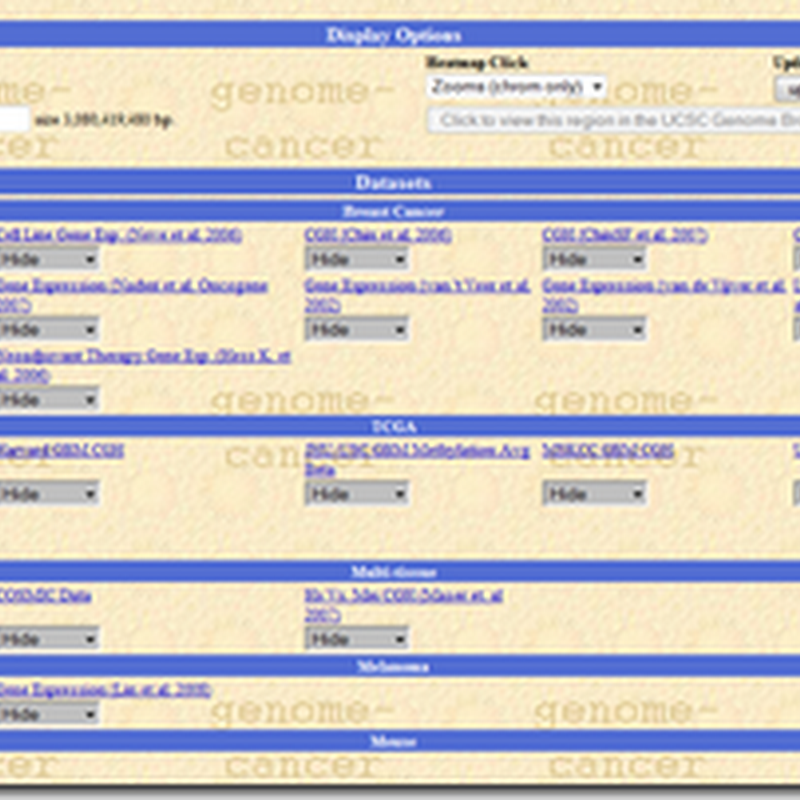
Silverlight has some answers to dynamics and the screen used and it working it’s way into a genomic interface too.

Genomics and Silverlight from Microsoft working together for Great Visual Enhancement– BioMashUps

Something to give some thought to as things grow and become more complicated, so do the interfaces sometimes and now there’s really not a lot of time to duel it out over who has the best interface, as the real data work and systems are behind the scenes and that is with any system.  BD  

So would this not be nice to have the same screens whether or not the hospital used Microsoft Amalga, McKesson, Cerner, Epic, Eclipsys, etc. just to name a few, to have the same or similar interface at all hospitals, something HHS might want to take a look at when considering common templates and user interfaces maybe, why start at this point and try to reinvent the wheel for goodness sake when so much of the code needed is already done and more is on the way with developers.

Not only do doctors and hospitals need to adopt electronic health records (EHRs), but those digital records need to be easy to share with patients and health care providers, said Dr. Doug Henley, executive vice president with the American Academy of Family Physicians.

And the current crop of EHRs still needs work, as doctors have to wade through multiple pages of data and enter the same information on multiple pages, added Dr. Kevin Hughes, a breast cancer surgeon at Massachusetts General Hospital. After the doctor enters the patient's health data once, the EHR should automatically populate itself with that information, he said at a health IT forum in Washington, D.C., hosted by IBM and the eHealth Initiative.

E-health Records Not Enough, Experts Say - PC World

Related Reading:

There’s No Good Reason to Delay Data Liquidity and Information Sharing in Healthcare..
Wisconsin Health Information Exchange RHIO connected with Amalga from Microsoft

Most Hospital Patients Unable to Identify Their Physicians - Survey

Silverlight Blamed for Restructuring at Netflix, It works too good, Could do the same for Medical Records with Common User Interface
EHRs need Standard Templates – So Let’s Look at the Common User Interface Project, a lot of the work is already in progress and partially completed
Common User Interface – EHR Development Work in Progress
Common User Interface – Update and walk through video

Madoff Employee Breaks Silence – The IT Guy Talks about the “Root Kits” of Madoff’s Wall Street

This reporter got to the “smart person” here for her interview who did not want to be identified for obvious reasons.  Madoff was one of the first innovators of off floor stock trading and I’m sure he hired the best.  Interesting though for the Ponzi end of it how they hired the most “non tech” individuals to work that end of the business, like the old saying of being barefoot and pregnant, and from reading this interview it sounds like that is exactly what happened, but they were well paid barefoot employees.  When you have folks that don’t understand much about computers and software your worries are a whole lot less, like maybe somewhat like at the SEC in the recent past?

Wall Street and Healthcare – Was it the Mob or have the rest of us been operating like a PC with no anti-virus protection?

“Now we are stuck with a whole bunch of “Root Kits” and some of us are “Zombies”…so if we can’t find an solution, well in tech world we call it image“reformatting” (starting with a clean drive) so with the spread of all the malware and bad algorithms running around, maybe that’s what it’s going to take, reformat all of us.  Madoff alone is one big “root kit” and how many more will be found? “ 

We have Trojans and Root Kits in healthcare too that have infiltrated their way into the system.  Again, one more time why we need “smart people” with technology backgrounds or at least some experience in top positions.  Geeks give you the straight story for the most part, that is unless they too have been coerced. 

Andrew Cuomo has been great so far in exploring and getting down to the brass tactics used with technology of late, such as the case with Ingenix and I’m sure we will be hearing more from him soon.  BD  

An employee of Bernard Madoff’s legitimate brokerage operations, which were described by the fraudster in his plea agreement as being “successful and profitable,” has told The Daily Beast that they were in fact money-losers that acted as a front for his Ponzi scheme.

He said that these businesses, the proprietary and market-making arms on the 18th and 19th floors of Madoff Securities, were designed to lure investors in, especially highly placed figures in society, and to fool the SEC into thinking that he had a large and impressive galaxy of businesses.

But behind the façade, these businesses were a shambles. They were excessively staffed with grossly overpaid people, and run with marked inefficiency, he said.

The employee, who did not want to be identified because of possible lawsuits or threats by victims, was a member of an elite group that designed sophisticated computer-trading programs. His identity was verified by consulting the Madoff employment roster, where he was listed. He also has an employment confirmation letter and a letter of reference from the Madoff firm.

“The three managers who ran parts of the businesses were getting $500,000 to $750,000 a year and they didn’t even know anything about modern computerized trading,” the employee said.  The employee was part of a trading group, which was able to break a security code that he says led them to a site that was supposed to be seen only by the Madoff family. It showed the profits and losses of the legitimate businesses. Even in years when they grossed $25 to $50 million, they calculated in the outlandish costs and thus concluded that the firm barely broke even and some years lost money.

THE SECRETIVE 17TH FLOOR
The employee says he only saw the 17th floor, where the fraudulent Investment Advisory operation was located, about two times. He noticed the out-of-date computers and the old-fashioned dot-matrix printers that printed out paper with green and white stripes. The computers he saw were about 15 years old, including one system that “is not even around anymore—miles away from modern Windows technology. And the statements I've seen from victims don’t look like my statements from Fidelity. They had primitive typefaces, as though they had been typed on a typewriter. Nobody sends statement like that, so maybe it was done to create the illusion of old-fashioned transparency.”

He learned that those who staffed the 17th floor were less than knowledgeable, often uneducated, often appeared incompetent. “There was this one guy, who had worked there his whole life who generated the statements but he would often not get them out on time.”

What should have been a red flag, the employee said, was that the 17th floor’s statements detailing the financial output of his four-man computer unit often did not match what they calculated for themselves. “They screwed up a lot and were not technically sophisticated. And in that business, you have to be accurate, you have to know what you are doing.”

Madoff Employee Breaks Silence - The Daily Beast

Related Reading:

Madoff's Scheme – One Reason To Put the “Smart People” in the Right Places So We Don’t Get Fooled Again

Beware of Geeks Bearing Formulas

How Wall Street Lied to Its Computers – Software and Programming
Technology “It’s for Those Guys Over There” said the CEO – I Don’t Do Digital Notes
Bringing Providers, Health Care Executives and Administrators into the 21st Century
Michael Moore – New Movie and looking for Wall Street Informers and Whistleblowers

Medical Quack on the Web March 20, 2009

Thanks once more to all my readers and here’s a few posts that are on the web this week, and also available here on the blog.  As you can see the circulation is building up and I am looking for some additional sponsors and advertisers for anyone interested or please feel free to email me as well!   There’s an information resource on the right hand side of the page about half way down where I have included some sample formats and information. 

I will have some additional upcoming interviews coming up in the next few weeks as well. 

Recent interviews have included Microsoft Health Services, Cook Medical and Yale School of Medicine for a few examples below. 

Steve Shihadeh, VP Microsoft Health Solutions Group – The Amalga Software Solution for Aggregating Hospital Information (Interview)

Regenerative Medicine and How it Works – Interview with Cook Biotech (Medical)

Interview with Bart E. Muhs, M.D., Yale School of Medicine – Aneurysm Repair Surgery

__________________________________________________________

Here’s what’s happening this week on the web: 

Desperate Hospitals Monthly Update

 image

HealthVault Connects with eClinicalWorks EHR, NextGen EHR/EMR Systems and more…Shop Wal-Mart (Sam’s Club) in the Spring

image

Woman with 12 Pairs of Legs - How Do We View Disabilities today and what options do we have?

 image

Don Imus Diagnosed with Stage II Prostate Cancer

image

Doctor pleads guilty to hiding $3M from IRS and stole 6M from Charity Funds - Chicago

image 

One More Good Reason for PHRs and EHRs – Temporary and Mobile Healthcare Workers

I have posted several articles relative to traveling or temporary healthcare workers and you can real the partial clips below or go to the entire post.  Surgeons are now working at several locations, so are doctors at facilities such as Kaiser as they tend to be less expensive employees and everyone is cutting budgets and corners every which way they can.  I mention this item relative to having your healthcare records available for them.  Kaiser has done a pretty good job with their records system and they would be available for temporary doctors, but what if you are seen by a temporary doctor at a facility still using paper and the records or the medical records are not integrated anywhere?

Obvious solution, get your PHR going.  This will help you and the doctors, nurses pharmacists, etc who work in more than one location and maybe even for more than one healthcare company.  The PHR is the back up for when EHR/EMRs are not available or accessible.  We all know many nurses that work from a registry and now 25% of the population of general surgeons are moving around quite a bit too.  No wonder we have the first post below with hospital patients unable to identify their physicians, and of course that works in reverse too as we are all human, but whether or not the doctor recognizes me or not, I’m not going to worry too much as long as he/she can read my records and make the right decisions without having to shoot from the hip.  Of course I prefer to stay with the same physician but realize today I may not always have that opportunity, like in case of an emergency, etc. so best to be prepared. 

Also from the other side of the coin we are becoming pretty mobile ourselves as patients too so that door can swing both ways.  BD 

Most Hospital Patients Unable to Identify Their Physicians - Survey

With many surgeons and nurses working from registries today, this might have something to do with the study.  Under the related reading you can read about how general surgeons are moving from one hospital to another to make ends meet as they close up local practices that are not being able to withstand the pressures of the economy today, so the answer is to be mobile and work and work there.  Nurses have been doing this for a long time and depending on the hospital and one’s length of stay, you may not see the same nurse twice. It makes one wonder too, can the physicians on the other hand identify their patients too?  Good question.

Medical migrants - “locum tenens” Healthcare on Temporary Assignment

Doctors get to select where they want to go and how long they will be able to stay at the facility.  This used to be pretty dominant in rural areas, but not any more, in the big metropolitan areas too as shortages are appearing everywhere.  Of all places, I would not have thought of Kaiser having a big need with so many private practice physicians taking on a job with the company, but this just goes to show there are issues everywhere.

Of course the fill-in doctor is not going to probably be as good as the patient’s regular doctor, but when the alternative is “no doctor” well you can figure that one out. This also points out one more reason to have electronic medical records too, not only for the traveling doctor, but also for those nurses and staff who will need the information for follow up with patient care, etc.  We all know that there are a number of traveling nurses too with registries, etc., lots of pharmacists do it, so nobody seems to get left out of the medical traveling business, except maybe the CEOs (grin).  BD 

Surgeon Shortage Pushes Hospitals to Hire Temps – Scalpel Services

Scary that the number of general surgeons per capita has declined 25%.  The physicians that work from a staffing agency though get additional lodgingimage and other accommodations as well.  This costs the hospital more money as well, but with a lack of general surgeons, there’s not a whole lot of choice.  Robotic surgery will later emerge in handling a portion perhaps, but not all surgeries by any means can be done robotically.

“For a complex hemorrhoid removal, a general surgeon got $390 in 2008, compared with $574 in 1997. Private insurers followed suit.”

Nursing Jobs in demand – Shortage of nurses grows

The article brings up a good point about nurses, are they members of the medical team or just another pair of helping hands?  Sometimes as cut backs are beginning to occur the duties of a nurse may slip over in to other areas where it is really outside the realm of the occupation as well.

Leadership roles are important as well.  In the Los Angeles area, there’s a look for nurses over the border in Mexico to help fill in the gaps.  By today’s standards in healthcare, nurses are not just an assistant, they are the ones who see the patients day by day, hour by hour, administer medications, imageetc. and the demands can be high and hours can be long, not to mention stress.  From a prior post, the Gordon and Betty Moore foundation has donated 100 million to build a nursing school in northern California.

Outsourcing education in California- Nursing Schools in Guadalajara, Mexico

If you are bilingual with both Spanish and English and looking to enter nursing school, Mexico could be the next stop in California...hospitals are also kicking in some donations..cost will be about half of the training here in the US...read the entire article for all details...many items still unresolved...BD 

The entire section on PHRs at this site can be found here. 

Google selects MIE’s EHR for on Campus Google Medical Center

I like the name “ Minimally Invasive EHR”, of course it reminds you of minimally invasive surgery procedures.  Of course it will integrate with Google Health too, as that should be a given here.  Maybe now we might start hearing some stories and experiences with actual employees who use Google Health.  In all areas of PHRs, there’s been a real lack of much “in-house” publicity from any of the personal health record programs.

I don’t know about you, but I would like to hear from not only Google employees, but also Microsoft employees who are using PHR software, I think that would be good all the way around for all of us, as both companies usually use their own software in-house long before it is released to the public. 

What would be nice is to hear from other employees outside the healthcare focus areas to hear some success stories, or for that matter some high up the ladder executives comments wouldn’t hurt either as both PHRs are consumer products and that’s for everyone, not just the rank and file.  There’s an entire section on the site with information about personal health records and more about Google Health in the related reading below.  BD

 Personal Health Records (PHR), I don’t do technology said the CEO, “it’s for those guys over there”

Press Release:

MIE Enterprise Health Suite Will Be Used to Support Google Employee Health and Wellness

FORT WAYNE, Ind.--(BUSINESS WIRE)--Medical Informatics Engineering (MIE) has announced that its WebChart Enterprise Health Electronic Health Record (EHR) solution has been selected by Google for its onsite employee health clinics. The EHR will be deployed at two locations in Mountain View, CA and one in Kirkland, WA, and will replace the current EMR system used by Google.

The MIE Enterprise Health EHR will integrate with the Google Health™ product, enabling Google employees or “Googlers” to send their health records to the onsite health center EHR prior to a visit. Medical information documented in the EHR during a clinical encounter can then be sent back to the employee’s Google Health Account for inclusion in their personal health record.

"As part of the Google Health team and as a Google employee, I am pleased that our own clinics can give patients full access to their health information," said Roni Zeiger, MD, Product Manager for Google Health. "Innovative products such as MIE's web-based EHR help put more patients at the center of their care."

“We are very pleased that Google has selected MIE’s WebChart EHR as a key component to help improve the health and wellness of its own people. As one of the most innovative technology companies in the world, we think it speaks volumes that Google continues to invest in secure, patient-centered and interoperable healthcare IT solutions,” said MIE Executive Vice President Peter Norder.

About MIE:

image

The MIE Enterprise Health Solution is used by Fortune 500 organizations operating on-site employee health clinics. This web-based suite of products integrates clinical, occupational health and employee engagement modules, and includes EMR, RIS/PACS, and Document Management functionality tailored for the specific needs of each enterprise. MIE’s Minimally Invasive EHR portfolio is also deployed in specialty and group medical practices that value MIE accessibility, flexibility, affordability and interoperability benefits. More information can be found at www.mieweb.com

Google selects MIE’s Electronic Health Record Solution for on Campus Google Medical Center

Related Reading:

Google's Founders Talk about How Ignorance is Not Bliss when it Comes to Health

Google Health Information Can be Shared - New Vendors and Services have been added

Google PHR and Continua Health Alliance working together with IBM

Personal Health Records (PHR), I don’t do technology said the CEO, “it’s for those guys over there”
Clinical Trials and Personal Health Records – New Resources on the Medical Quack
Google Health Online Services – Connections Beyond Medications – Personal Health Records
Quest Diagnostics and Google Empower Patients and Physicians to Share Diagnostic Test Results Online

Google PHR and Continua Health Alliance working together with IBM

Medicare Pilot Personal Health Care Pilot Program – Education and Awareness Needed

Convictions in Healthcare today – Drug Sales Manager and VP of Los Angeles Medical Center

In the news today, 2 guilty individuals in healthcare.  In the days of transparency all this stuff gets tracked.  In the case of the drug rep and the computer there are many free tools on the internet now that used to be for forensics only, but you can go back and find information that has been deleted from the recycle bin, so that one may have been easy to find.  By the way, the name of one such program is called Recuva and it is free and I have used it to recover data on a couple drives that went bad, so it can be used constructively as well, such as I needed to do recently.

The second story here goes back to the fraud in Los Angeles with using the homeless individuals to roll in some kickbacks and fraudulent medical billing.  BD 

Thomas Farina, 42, of Fairport, NY, was found guilty following a five day trial in Boston.

Prosecutors said evidence presented during the trial proved that in the summer of 2004, Farina caused a sales representative under his direction to alter documents and backdate the alterations on his computer to delete the evidence of the promotion of a drug for uses and dosages for which it was not indicated or approved for promotion by the U.S. Food and Drug Administration.

The evidence demonstrated that Farina instructed his sales representative on how to change the clock and date setting on the computer, and then alter and re-save the documents in order to make the sanitized documents appear to have been last modified at an earlier time.

Sentencing has been scheduled for June 11. Farina faces up to 20 years imprisonment, to be followed by three years of supervised release and a $ 250,000 fine.

North Country Gazette » Pfizer Sales Manager Convicted

The former senior vice president of City of Angels Medical Center pleaded guilty Wednesday to paying illegal kickbacks to recruiters who referred homeless patients from skid row to the hospital, where they received unnecessary health services.
Dante Nicholson, 51, of Palmdale was the third person convicted in a widespread scheme to pay illegal kickbacks and defraud Medicare and Medi-Cal by recruiting homeless persons from skid row in downtown Los Angeles.

Nicholson appeared Wednesday before U.S. District Judge George H. King in Los Angeles and pleaded guilty to two counts of paying illegal kickbacks. In a plea agreement, Nicholson admitted to participating in a scheme to pay recruiters to refer homeless people with government medical benefits to City of Angels for in-patient hospital stays.

Former City of Angels hospital executive pleads guilty to paying kickbacks - Los Angeles Times

Related Reading:

2 hospital executives indicted in alleged fraud scheme in Los Angeles

Genomics and Silverlight from Microsoft working together for Great Visual Enhancement– BioMashUps

Hard Hat Area:  The University is soon to post on CodePlex, the open source community page from Microsoft.  What is amazing to me is the fact that the Popfly platform was used for Silvermap, so now we have bio-mashups too.  The processing of images can now take place at the desktop instead of the server level and this speeds up the process tremendously instead of having to wait.  The amount of information to be read and deciphered is huge and this brings the desired information into a form where it can be digested and utilized quickly. 

BioMashups are defined here: 

Biomashups and Mashup Frameworks

“An alternative approach to bioinformatics analysis is to make use of web mashups. Mashups rapidly combine data and services from multiple imagesources within a single web based application. Mashups therefore offer a means for the integration of various bioinformatics tools, allowing a specific task to be performed efficiently. Although mashups can be ad hoc, limited in scope and eminently disposable, if properly developed, the model can handle more substantial computational experiments and support a culture of sharing and re-use.” 

In the Pop Fly example a student looks for the protein coding nucleotide sequence, and is asked to determine the gene family and to perform a search to obtain more information about the gene.

image

This is wild and dynamic and certainly a help for those in research and development with genomics.  I have written several times about the Common User Interface, a CodePlex open source software available for free for any medical records software vendor and you can view more information here.  The Common User Interface uses the dynamics of Silverlight, like you see on Netflix and on the Presidential Inauguration, for health care charting with the hope that someday interest will prevail here with vendors coming to some sort of unified interface so the screens are the same or similar for the clinical staff at every hospital or doctor’s office.


Common User Interface – Update and walk through video

EHRs need Standard Templates – So Let’s Look at the Common User Interface Project, a lot of the work is already in progress and partially completed

Personalized medicine will rely on IT – It’s all about Software

There’s also this story from Vanderbilt on how they are using Silverlight for early and immediate detection of Sepsis, a good read.  BD

Silverlight tools that help researchers make sense of complex genome data and patterns are being included in the advanced bioinformatics syllabus at the Queensland University of Technology.  Genomic research is coming to the forefront, especially with clinical trials so this seems like somewhat of a natural to combine both technologies in the process, plus again, the dynamics and ability to drill down and see information immediately in this format is great. 

The tools have been developed out of the Microsoft QUT eResearch Centre, a $2.7 million joint venture funded by Microsoft Research and the Queensland State Government.
One of the tools, Silvergene, is a genomic visualizes designed to replace existing genome browsers.

image

image

By using Microsoft Silverlight - a rich browser plug-in - Hogan said QUT had been able to enable the image processing to occur at the desktop level rather than the server.
"We can generate using Silverlight on-the-fly at the desktop," Hogan said.

Hogan said the Centre has also developed an application that brings map navigation to genomics called Silvermap, and a set of bioinformatics analysis ‘blocks' based on Microsoft's Popfly technology.

image

QUT Silverlight fruits seeded in syllabus - Software - iTnews Australia

Related Reading:

Netflix shares Doing Well…Technology just might have something to do with that, technology that helps healthcare as well

Steve Shihadeh, VP Microsoft Health Solutions Group – The Amalga Software Solution for Aggregating Hospital Information (Interview)

Watch the Presidential Inauguration in Silverlight – as selected by the Inaugural Committee

Silverlight Blamed for Restructuring at Netflix, It works too good, Could do the same for Medical Records with Common User Interface

Common User Interface – Update and walk through video

Silverlight Books - all books on Microsoft Silverlight Development

Microsoft linking Silverlight, Ruby on Rails

Silverlight Training Videos

Desperate Hospitals – March 2009 Update

This is a monthly update I started back in October 2008, when Century City Hospital, on the outskirts of Beverly Hills, located in the heart of corporate imageUSA in the Los Angeles area could not get funding or find a buyer and had to close. This sent a message off to me that something was cooking and is terribly wrong with healthcare. Each month I have been updating and this month is a summary of what hospitals are doing to survive, including everything from layoffs, meetings, budget revisions, etc. and there are also some closures and bankruptcies in the links below.

One item of importance is the message from the American Hospital Association below. Hospitals are running out of money and the only industry in general that seems to have cash available is risk management with their “reserves” and hopefully those are in good shape to keep insolvency from spreading to another facet of healthcare. There are some areas that leave questions as well with inquiries rising about expansion and building, but why are existing employees being asked to take pay cuts while the expansion projects move forward.

A report from the American Hospital Association:

A Thomson Reuters analysis released March 2 found about 50% of hospitals were in the red in the third quarter of 2008. All types of hospitals are continuing to feel the financial strain. The study tracked two dozen key financial indicators, including reimbursement rates, inpatient volume, and revenue and profit, at 439 U.S. hospitals.

Also, this week, Kaiser Permanente reported laying off a large number of Health IT employees, around 800, and this article from the Rancho Cordova Post states there will be more forthcoming.

Kaiser Foundation loses $794 million in 2008 – Investments and the Economy slated for the downturn

_______________________________________________________________

Individual Cities and States:

I am sure I didn’t catch everyone, so feel free to add more information in the comments section but hopefully this month’s update will bring about an awareness of what is happening with our hospitals.

In Cleveland, Ohio

CLEVELAND (AP) -- The Cleveland Clinic is warning that it will be forced to cut more than 400 jobs if a new hospital fee stays in the state budget.
Clinic government relations officer Oliver Henkel told lawmakers at a hearing Wednesday that the proposed franchise fee would cost the research hospital more than $40 million over the next two years.
In a letter last month, the Ohio Hospital Association warned Gov. Ted Strickland that the fee would cost all hospitals $410 million and lead to more than 6,800 layoffs statewide.
The Strickland administration is standing by the franchise fee, saying it was included in the governor's two-year budget proposal to help support the state's Medicaid coverage for 1.8 million Ohioans.

In Queens, New York

Two Queens hospitals stopped accepting patients are preparing to shut down for good.

St. John's Queens Hospital in Elmhurst and Mary Immaculate Hospital in Jamaica stopped accepting patients at midnight Sunday and officially close their doors Monday.

Workers held a vigil outside St. John's Saturday night.

The hospitals closed because their operator, Caritas Healthcare, recently filed for bankruptcy.

The move will leave about 2,500 people out of work.

Emergency room doctors at Jamaica Hospital Medical Center used to notice that patient volume followed a pattern each week - starting with a big uptick on Mondays and Tuesdays.

"And then it would sort of correct itself during the course of the week," said Dr. Geoffrey Doughlin, the hospital's chairman of emergency medicine.

But ever since two neighboring hospitals - Mary Immaculate Hospital in Jamaica and St. John's Queens in Elmhurst - filed for bankruptcy in early February, that pattern has been thrown out of whack.

In Boston, MA

Beth Israel Deaconess Medical Center, facing a $20 million loss this year, says it is cutting expenses by freezing salaries for some employees and reducing top executives' pay, and also considering layoffs.

In an e-mail to employees, chief executive Paul F. Levy said the expense cuts are necessary because of state cutbacks on Medicaid payments, a disappointing contract with Blue Cross and Blue Shield of Massachusetts, and an unexpected drop in patient volume.

In addition, many hospitals depend on charitable donations from wealthy philanthropists, as well as income from investments. Between the Bernard Madoff scandal and the plunge in the stock market, much of that income has evaporated for many institutions. Many Boston hospitals also hold annual fund-raising activities in Palm Beach, Fla., where numerous residents have been affected by the Madoff scandal.

Beth Israel Deaconess Medical Center has identified some $16 million in potential cost-cutting measures, allowing the cash-strapped hospital to reduce its number of “necessary layoffs” from over 600 to about 150, the hospital’s chief announced.

Note: hats off to Mr. Levy’s approach with involving everyone in staff meetings to create solutions in these difficult times and the hospital was able to reduce the number of anticipated lay offs to 150 instead of a higher anticipated number. My personal opinion is that this should be status quo at every facility. BD

In New York

The merger of two Amsterdam, N.Y. hospitals will result in job losses, but just how many is not yet known.

St. Mary’s Hospital and Amsterdam Memorial Healthcare have been in talks for about two years, and a formal acquisition agreement is expected to be signed in the coming weeks. St. Mary’s, the larger of the two hospitals, would be the survivor.

Amsterdam Memorial employs 495 people, and a WARN notice filed with the state lists all of them as being part of a plant closure. However, Victor Giulianelli, president and CEO of St. Mary’s, said the hospital expects to retain 80 percent to 85 percent of those people. This means between 75 and 100 people would lose their jobs

In Akron, Ohio

AKRON, Ohio - Akron General Hospital is laying off 145 employees or 2.5 percent of its 5,778 work force. Very few of the affected jobs are in direct patient care, said spokesman Jim Gosky.

The layoffs include administrative, clerical, managerial, and non-managerial staff. Most layoffs are effective immediately, but some workers have until the end of the week or next week because of contract issues.

"We are doing everything we can to improve financial performance," said Gosky.

Registered nurses at Akron General Medical Center have accepted a pay freeze as the hospital continues to look for ways to save money.

Members of the Professional Staff Nurses Association at Akron General voted late last week to approve the deal.

In Atlanta, GA

1. Grady Memorial Hospital on Wednesday announced 150 job cuts, in response to severe economic pressures and an increase in indigent patients, officials said. Among those who left was the head of the hospital’s cancer center.

The job cuts included about 140 layoffs, said hospital spokesman Matt Gove. About 10 of the positions were not filled. Many of the people were laid off Wednesday. They included staff in the departments that focus on purchasing, nurse scheduling, legal services and also include one ultrasound technician.

None of the eliminated positions will affect direct patient care, Gove said. The cuts are spread across several departments of the hospital, he said.

The cuts include the loss of Philip Lamson, the executive director of the Georgia Cancer Center for Excellence at Grady, officials said.

2. The maternity ward in south DeKalb County's only hospital will close in April, leaving doctors and expectant mothers scrambling for a place to deliver babies. Most patients are just learning the news this week.

The formal decision was made in February after DeKalb Medical Center officials realized more women in live in south DeKalb County are opting to have their babies at hospitals other than the Hillandale facility. The Lithonia-based hospital was built less than four years ago to serve south DeKalb County.

In Cincinnati, Ohio

CINCINNATI - An industry long considered safe has become the latest victim in the job market meltdown.

University Hospital and the Drake Center have laid off close to 50 workers combined, and Drake officials said the move wasn't easy.

The rehabilitation center laid off 23 workers, and Thursday was the first day without them.

In Cleveland-Akron, Ohio

Three hospitals in the Cleveland-Akron area on Tuesday announced more than 200 layoffs and unveiled plans to shutter some programs and expand others to try and adjust to lower patient volumes and tough economic times.

Akron General Medical Center said it would lay off 145, largely non-medical, positions. St. Vincent Charity Hospital and St. John West Shore will lay off 60 staff members - both clinical and non-clinical jobs.

There were additional announcements in the state. The Health Alliance of Greater Cincinnati also said Tuesday it would layoff about 50 employees at two of its hospitals, spokesman Tony Condia confirmed.

In Passaic, New Jersey

PASSAIC, N.J. - Passaic's last hospital has filed for bankruptcy protection.

Officials at St. Marys Hospital say they'll stay open for "business as usual" as the hospital reorganizes.

At the end of January, St. Mary's said liabilities exceeded assets by $59 million and it had a day-and-a-half of cash on hand.

St. Mary's provides care to a large number of poor and indigent patients.

In Los Angeles, CA

Pacifica Hospital of the Valley, a 221-bed facility in Sun Valley is reportedly $50 million in debt.

An attorney for the hospital blames skyrocketing expenses and slumping revenue.

He says Pacifica gets sixty percent of its funding from Medi-Cal and twenty percent from Medicare for treatment including emergency care, occupational therapy and social services. Payments hospitals received from Medicare, Medi-Cal and private insurers declined rapidly last yea

In Silsbee, Texas

When the idea of a new hospital for Silsbee was first born, optimism was high and plans were big for the burgeoning project.

After a while, it appeared that the project had stopped moving altogether, though representatives from Renaissance Healthcare Inc. assured residents and their city leaders that progress had just slowed.

As of this week, Silsbee’s new hospital is DOA.

Representatives of Renaissance met with the board of directors for the Silsbee Economic Development Corp. this past Wednesday, Feb. 25. During that meeting, much of it held in executive session, Renaissance assured leaders that the project was still ongoing. They did concede though that the hospital would likely need to be built in phases rather than all at once.

But, then, all at once, a bankruptcy court this past Thursday ordered Renaissance to shut the doors to all of its hospitals.

In Hollywood, CA

The facility is located in the San Fernando Valley and will require moving 100 patients and has been run by the Motion Picture Relief Fund and was a place for the “needy” to retire and be taken care of. The hospital facility is one more victim of today’s economy. Recently in the news there were picket lines and around 300 people will be looking for work.

In Atlantic City, New Jersey

HAMMONTON — Kessler Memorial Hospital closed Thursday — just days after it appeared to have a buyer.

The hospital’s board of directors terminated the agreement signed Friday for cardiovascular surgeon B. Reddy Dandolu to buy the hospital, Interim Chief Restructuring Officer Michael Sandnes said in a statement released by the hospital.

“The buyer could not obtain and transmit the necessary funds, as agreed upon, in order to continue operation of the hospital,” Sandnes said.

Dandolu signed a letter of intent to purchase the hospital for a reported $7.5 million and agreed to pay a nonrefundable $300,000 down payment by the close of business Monday. That money was to be used to help cover a $500,000 payroll shortfall that prevented the hospital’s employees from getting paid last week.

A $200,000 loan from the town to cover the balance was contingent upon the hospital receiving Dandolu’s down payment first.

In Chicago, Illinois

CHICAGO -- More than 190 doctors at the University of Chicago Medical Center signed a letter to trustees protesting plans to reduce the number of beds available to emergency patients as "unnecessarily risky" and a threat to patient safety.

The controversy over the prestigious hospital's unusual plan is being closely watched by emergency physicians across the U.S. as hospitals wrestle with rising costs and sometimes inadequate reimbursements from federal and state programs. The hospital has done pivotal research, such as the Nobel Prize-winning development of hormone therapy for cancers. Last month, two high-ranking doctors resigned from the university's medical leadership over the administration's plan.

In Danville, New York

Many presidents and chief executive officers of area hospitals handle information through their public relation departments and press releases.
However, with proposed cuts from the state of close to $4 million to area hospitals, administrators gathered at Noyes Memorial Hospital in Dansville Monday morning to discuss what cuts they have made and what cuts are coming.
As lobbying groups continue to fight to restore funds and throw numbers to the public concerning economic impact and potential job losses, most hospitals are acting now.
“Over the last five, six years, we’ve cut, cut, cut but we have not cut vital services,” said Eva Benedict, president and chief executive officer at Jones Memorial Hospital in Wellsville. “Jones Memorial sits in the center of (other hospitals) within a 30-mile radius. That is a long way to travel if you are having a heart attack, bleeding or having a baby right away.”

In Mason City, Iowa

A Mason City-based hospital is restructuring its home health care and hospice programs, eliminating nearly 60 jobs. Mercy Medical Center-North Iowa will close facilities in Rockwell and Forest City, but all 59 people affected by the changes will be offered other jobs within the company.

Diane Fischels, the hospital's vice president of operations, says it was a tough decision to trim back services, but it's hoped it will not lead to any layoffs. She says Mercy employees are the most important part of the organization. While some employees may be in different positions than what they are used to, she says the hospital is happy to be able to provide jobs in other sectors of the organization.

In Saginaw, Michigan

SAGINAW, Mich. -- Two local hospitals have announced plans to cut their workforce and reduce employee hours because of financial losses.

At Gratiot Medical Center in Alma, 28 positions are being eliminated with reductions in hours for another 46 positions.

MidMichigan Medical Center in Clare will close its obstetrics service May 1, cut 23 positions and an additional 20 positions will have hours reduced.

The eliminated positions represent 2.6 percent of Gratiot employees and 6.6 percent of the Clare workforce.

In Greenwood, South Carolina

GREENWOOD—Citing the downturn in the economy combined with lower inpatient volumes, Self Regional Healthcare officials today announced plans to proportionately reduce labor expenses in the coming months through attrition and planned staffing decreases.

This staff reduction could ultimately affect from 170 to 200 hospital employees, which represents 8.5 percent of Self Regional’s staff.

“Due to economic factors and lower inpatient volumes, hospitals across the state and nation are facing bigger financial challenges than usual,” noted James A. Pfeiffer, President and CEO of Self Regional Healthcare. “When people lose or are uncertain about their jobs and healthcare benefits, many put off elective procedures and others are unable to pay for needed care.”

In Youngstown, Ohio

NEW YORK, March 16 (Reuters) - Forum Health, an Ohio-based hospital group, filed for Chapter 11 bankruptcy protection on Monday, according to court documents.

It listed assets in the range of $100 million to $500 million, and liabilities in the same range. Forum said a heavy debt load, population decline in its area, the current economic downturn and restrictive labor agreements hurt liquidity.

In Half Moon Bay, California

Medical center shuts doors…

The Coastside Family Medical Center closed its doors Friday, shutting down the only medical facility of its kind for Half Moon Bay and its outlying communities. The medical center at Shoreline Station announced that it had to immediately close due to longstanding problems of declining revenues and a lack of financial support. The recent swell of economic troubles reportedly made it impossible for the medical center to continue.
The medical facility was an important source of health care for the Coastside, particularly for the uninsured, who have represented about 40 percent of its patients. Its closure means that most former patients will have to travel over to the Bayside to get most medical treatments.
The closure reportedly came as a surprise to the center's employees, who were told about the severe funding problem in a meeting today. Physicians working at the facility had reportedly scheduled Friday appointments with patients that had to be quickly cancelled.

In Rochester, Michigan

ABC 6 NEWS) -- It seems like no one is immune from the far-reaching effects of this recession. And now it's claiming its latest victim: the Mayo Clinic.

The Clinic released its financial report today.image

The Mayo Clinic has fallen on hard times before.

"Mayo Clinic has survived the depression, two world wars, many other conflicts and ups and downs in the economy," said Shirley Weis.

"This has been a very challenging period, both in the national and international economic environment and a lot of volatility, and unfortunately, Mayo was not spared," said Jeff Bolton.

While revenue grew in 2008, so did expenses.

With 7.2 billion coming in and 7.2 billion going out, the Clinic broke even, but only because of the 39 million dollar sale of St. Luke's Hospital in Florida.

Mayo is also focusing on their express care clinics to bring in more patients, which could save jobs.

"Layoffs would be our last resort," said Bolton.

Note: Back in November Mayo closed their clinical trials services division.

In Brooklyn, New York

A hospital in central Brooklyn laid off 240 doctors, nurses and other workers on Monday, signaling growing financial weakness in the hospital industry.

Officials at the hospital, Brookdale University Hospital and Medical Center, which serves Brownsville, East New York and Canarsie, blamed the bad economy for the layoffs. “The general economic downturn has not spared the community served by Brookdale hospital,” said Ole W. Pedersen, a hospital spokesman, in a written statement.

In Rhode Island

The Lifespan hospital system, the largest private employer in Rhode Island, is cutting the pay of top executives.

Lifespan, which includes Rhode Island Hospital in Providence, said Wednesday that its chief executive will take a 10 percent put in base pay and forgo a merit increase.

The chief executives and senior vice presidents of each of the hospitals in the system are also taking salary reductions.

Lifespan said the moves are necessary to deal with the economic recession, including delayed or canceled elective procedures and declining Medicare and Medicaid reimbursements.

Lifespan earlier this year suspended or delayed capital projects and renegotiated vendor contracts to cut costs.

In West Virginia

The West Virginia Hospital Association is closely monitoring the economy in the wake of recent layoffs in the health care industry and the jump in the state’s unemployment rate.

Just after the New Year, three hospitals in the state — Weirton Medical Center, St. Joseph’s Hospital in Parkersburg and Cabell Huntington Hospital ­— reported combined layoffs of nearly 100.

Meanwhile, West Virginia University Hospitals said it would be changing and reducing employee benefits and putting off $20 million in capital expenditures.

In January, West Virginia’s unemployment rate jumped from 4.4 to 6.2 percent.

“We’re closely monitoring the impact of the national economic downturn,” said Tony Gregory, vice president of legislative affairs for the West Virginia Hospital Association in Charleston.

The association represents 76 hospitals and health care systems, which employ 36,000 people and have an annual payroll of $1.6 billion.

In Huntsville, Alabama

Earned days off will drop from about 3 a month to 2

Huntsville Hospital is slashing earned time off for about 4,200 employees to help offset declining revenues from patient care.

Chief Executive Officer David Spillers said the benefit reduction, which will save about $850,000 monthly, is intended to get the nonprofit hospital back on track financially and avoid layoffs.

But a nurse at the hospital, who declined to give her name, said she wonders how administrators can justify spending $65 million on a new hospital in Madison while cutting employee benefits.

"Something's wrong there," she said. "We can't afford to be sick now, we can't take vacation, but they're building a new hospital."

In Detroit, Michigan

The recent layoffs at St. Mary’s Innovis in Detroit Lakes eliminated 19 jobs, with most of the cuts involving part-time positions.

St. Mary’s Innovis CEO Tom Thompson said the cuts come from the effects of the recession that is also hitting the health-care industry.

Another issue is the never-ending battle over government reimbursement for Medicare and Medicaid services. That issue is nothing new for St. Mary’s Innovis, Thompson said.

It still poses a problem, though, because Medicare and Medicaid patients provide more than half of St. Mary’s Innovis’ business.

In Maine

Michaud says that since last fall more than 180 jobs have been eliminated across Maine's 39 hospitals and many others are considering layoffs. More than half have stopped hiring, while others have implemented salary and wage freezes, stopped capital purchases and needed renovations.
"We are anxious to get this cash, especially now when our community is hurting in this economic downturn," says Darlene Stromstad, CEO of Goodall Hospital in Sanford. Stromstad says the hospital has tried to cope with its budget problems by delaying payment on at least a couple million dollars in bills it owes to medical suppliers.
It also has eliminated the equivalent of 30 full-time positions and has hired no one new since November. "What we'll do first is pay the vendors who have been awaiting payment, and our priority will be those vendors who are in our community," she says. "Secondly we are hoping to defer any more short-term layoffs. It certainly doesn't solve all our challenges but it does give us a little breathing room."

In Casa Grande, AZ

Some of the employees who were laid off soon after Dernier's resignation doubted any connection between the two events, but did question why someone who had led the hospital so passionately would leave so suddenly.
The board of trustees apparently was surprised by Dernier's resignation and has been working on a plan to seek a permanent replacement. In the meantime, Curphy has taken over day-to-day operations of the hospital. She has been at CGRMC since January 2002.

In Buffalo, NY

Last week 24 research associates from Roswell Park Cancer Institute were laid off, some of them after working at the hospital for decades.

Monday protestors directed a message to administrators, saying "higher-ups" should be able to find a way to save important jobs.

The picketers paraded in front of the hospital for a couple of hours, capitalizing on the name of Roswell's President and CEO, Donald Trump. Large signs read, "Donald Trump--you're fired!" They fear that the mission of the research institute is being lost and that the work of curing cancer will take a hit without the technical help of these skilled professionals.

In Marinette, Wisconsin

MARINETTE, WI -- The declining economy is taking its toll on one U.P. Hospital. Bay Area Medical Center in Marinette, Wisconsin announced that they will be laying off employees and also reducing hours for others.

Right now, the President and CEO, David Olson, say's 16 management and non-union employees will be impacted, whether through reduced hours or layoffs and 50 union workers, with the Michigan Nursing Association and AFSCME, will also be impacted.

In Honolulu, Hawaii

State lawmakers trying to rescue the Hawai'i Health Systems Corp. are concerned about two recent loan requests from Maui and Kaua'i that raise red flags about the system's financial solvency and management.

Perhaps more unsettling, according to a memo prepared by the state budget office, about half of the $11 million Maui Memorial raised from a bond sale last year was "given" to system administrators in Honolulu to gain approval for Maui to become more independent. Maui Memorial has been talking with private investors and would likely be the first public hospital to consider going private if granted authority by the Legislature.

"If we don't successfully restructure the hospital system and cut spending, one or more of our community hospitals may close within the year."

Below the CEO of Scripps discusses how hospitals in San Diego are affected.

CEO of Scripps in San Diego Talks about Hospitals in San Diego

Hospitals nationwide and in San Diego County are feeling aches and pains from the deepening recession, and some predict a worse prognosis in the coming months.

More patients aren't paying their hospital bills, and more are putting off elective procedures to save cash. Construction projects at some medical centers have been put on hold, and administrative jobs are being consolidated or left open when they become vacant.

Hospitals have little space to maneuver because the stock market decline has slashed their investment income and most credit sources have dried up.

Rising unemployment will only tighten the vise on the industry.

“As the economy worsens, we're going to get hit pretty hard,” said Chris Van Gorder, president and CEO of Scripps Health, which operates five medical centers in Encinitas, La Jolla, Hillcrest and Chula Vista.

Related Reading:

Desperate Hospitals – February 2009 Update

Desperate Hospitals – Updated November 21, 2008

Desperate Hospitals – September 2008

Desperate Hospitals: Chicago Hospital Hangs For Sale Sign
Desperate Hospitals - Hawaii- What is happening to our Hospital System?
Desperate Hospitals - August 29 (Continued)
More Desperate Hospitals - Miami, FL and Cape Cod, MA
A hopeful prognosis - Desperate "California" Hospitals
Desperate Hospitals - Century City Doctors Hospital (Los Angeles) begins shutting down, others file Chapter 11 to reorganize
New New Jersey law to pinpoint financially troubled hospitals - "Desperate Hospitals"
Bankruptcy Bug Hits Hospitals – Desperate Hospitals
Desperate Hospitals: Hospitals in Hands of Voters – Arkansas

eClinicalWorks EHR and Wal-Mart – More Details and Information

 Dr. Halamka , Chief Information Officer and Dean for Technology at Harvard Medical School took the time to speak with the CEO of eClinicalWorks, Girish Kumar, Linda Dillman, Executive Vice President of Benefits and Risk Management for Wal-Mart Stores, and Marcus Osborne, who leads Wal-Mart's healthcare business team and has some additional information to offer.  You can read the full post at his blog, but here’s the quick list he made on the package.  Being the software as a service model, I am guessing it will also be available for connectivity to HeatlhVault as well, so there’s one more reason for the EHR.  He already has some expertise in working with connecting eClinicalWorks with hospital systems. 

He also states the pricing is competitive with what has been done with BIDMC with a few additional services added in at the hospital.  The Wal-Mart efforts are certainly putting the focus of electronic records in the eye of the public through the strategic partnerships they have created.  eClinicalWorks certainly appears to understand the importance of interconnectivity and making the availability to delivery all over the US, well where ever there is a Sam’s Club and that’s some pretty substantial coverage.  BD 

“The cost for a full implementation of the eClincalWorks EHR purchased through Sam's Club is $25,000 for the first clinician in an office and $10,000 per additional clinician. It is a Software as a Service model, leveraging the cloud computing infrastructure that eClinicalWorks has deployed throughout the country.

The price includes:
*Office hardware (desktops, laptops, printers)
*Installation of the hardware
*Installation of the eCW software clients which Dell includes as part of the operating system image on the hardware
*Data Center support
*e-Prescribing integration
*Specialty specific templates i.e. cardiology, pediatrics
*12 weeks of project management
*5 days of onsite training by eCW staff
*Free unlimited online webinars (offered 30 times/week)
*The first year of support
After the first year, all support and service is $500/clinician/month.

“Wal-mart hopes this effort to package hardware, software, implementation, training, and support services together will be disruptive. No longer will clinicians be spending over $60,000 per person to get started with EHRs. This is not turning EHRs into a commodity, it's achieving the best value for clinicians by leveraging economies of scale, cloud computing, and the supply chain.”

Life as a Healthcare CIO: Electronic Health Records from Wal-mart

Related Reading:

eClinicalWorks Users Annual Meeting – Integration and the Future of EHRS and PHRs

HealthVault Connects with eClinicalWorks EHR, NextGen EHR/EMR Systems and more…Shop Wal-Mart (Sam’s Club) in the Spring

Business Intelligence in HealthCare – Aggregated Data at Harvard Medical Centers

Clinical Trials in the US Running Low on Patients – Need to Integrate EHRS and PHRs in the Process
Sam’s Club and the eClinicalWorks EMR Bundle – Additional Information from eClinicalWorks

Hopes and Expectations for the Next Year from a Healthcare CIO

LifeVest Wearable Defibrillator – for interim care and those who do not want an implant

There is a choice, and obviously an implant is going to be less cumbersome than wearing one on the outside, but for those circumstances or to use until surgery can be done, this is an alternative solution.image

During the clinical studies, the vest had saved 6 lives.  I like the part that you get notified before the shock goes out, so you can change your mind if you want.  If you are not conscious, you get the shock.  BD 

The LifeVest wearable cardioverter defibrillator is a new treatment option for sudden cardiac arrest that offers patients advanced protection and monitoring as well as improved quality of life.
The LifeVest is the first wearable defibrillator. Unlike an implantable cardioverter defibrillator (ICD), the LifeVest is worn outside the body rather than implanted in the chest. This device continuously monitors the patient's heart with dry, non-adhesive sensing electrodes to detect life-threatening abnormal heart rhythms. If a life-threatening rhythm is detected, the device alerts the patient prior to delivering a shock, and thus allows a conscious patient to disarm the shock. If the patient is unconscious, the device releases a gel over the therapy electrodes and delivers an electrical shock to restore normal rhythm.

image

image

Who Can Benefit from the LifeVest System?

The LifeVest is a new treatment option for patients who are at high risk for sudden cardiac arrest (SCA) or sudden cardiac death (SCD). Potential patient groups who may benefit from the LifeVest technology include:

  • Post-Myocardial Infarction (MI) patients with complications
  • Cardiac surgery patients with complications
  • Heart-transplant waiting list patients
  • Advanced heart-failure patients
  • Patients undergoing drug loading with potentially pro-arrhythmic medications
  • Patients who need an ICD, but have a condition that prevents or delays surgery (such as an infected ICD pocket)
  • Patients who simply do not want to undergo surgery or have an implant

ZOLL Lifecor – LifeVest

Related Reading:

California Hospital Implements AutoPulse – Cardiac Arrest

New equipment 'best for patient' - cardiac arrest response

Vivek Kundra's Crime was Shoplifting at J.C. Penney

This came up along with the raid on his prior place of employment raided by the FBI.  Ok, I have one question to ask, where’ the background checks imageon these folks?  I guess this one was admitted though, but the time element was off?  According to the articles, he was 22 when he committed the shoplifting crime, old enough to know better, in my opinion I think so, not like a young teenager under 16. 

That’s just my opinion, but thus far is has not stopped his progress, but government gives opportunities to work where private industry may not.  That’s the latest chapter on our CIO, so I hope he’s smarter when it comes to “On hands” knowledge, gee even back in 1997 they had camera surveillance in the stores.  We still really need the “SMART” people in key places with first hand experience so I hope this is not just someone to administrate without being the real thing.  BD  

We've been wondering what happened with 'America's CIO' Vivek Kundra's 1997 misdemeanor theft conviction, the one the White House dismissed as "youthful indiscretion."

Now we know: Vivek shoplifted four shirts, worth $134 combined. From J.C. Penney.

At an average of $33.50 a pop, they weren't even nice shirts, even in 1996 dollars. (The crime was 1996, the conviction 1997.)

And then, when Vivek got caught, he ran for it. He didn't get away.

A 1996 Montgomery County, Md., police report obtained by The Associated Press on Wednesday under a public records law shows Vivek Kundra was observed by a security guard putting the men's shirts into a shopping bag and leaving the store without paying. Sgt. Tom Stanton wrote that Kundra was arrested after a brief foot chase and the property was recovered.

Vivek Kundra's Crime: Shoplifted Some Shirts From J.C. Penney