92648

Texas Joining the Ingenix Inquisition with Introducing Bill for New Penal Codes – Fraud Against Practitioners

This is right from the web page of Rep. Allen Vaught in Texas.  He is introducing a bill and is asking for thoughts and information.  If you are a imagephysician in Texas and have any input you want to add, there’s an email listed to contact him.  Recently the AMA, State of California, Georgia have already filed suit on this.  In New York, Attorney General Andrew Cuomo won a settlement and the company, a subsidiary of United Health Care has agreed to disband the use of the data base.  

This is a type of business intelligence software that was used to create balance billings based on what was called customary charges and that is the area of conflict lies.  The Senate recently heard testimony from the CEO of United Health Care on the issue as well which over charged individuals and contributed to balance billings.  By the way, they also sell medical records software in addition to running complex analytical formulas, but you would be the better judge here on where you store might want to store patient medical records and who’s algorithms you purchase.  Something else of interest below where our medication trails are bought and sold and how Ingenix supplies this information to insurance carriers to deny and approve claim requests.  BD 

“Milliman Intelliscript, part of the Milliman Company, collects data from Pharmacy Benefit Managers (PBMs) that are not covered by the Health Insurance Portability and Accountability Act of 1996. Then insurance companies pay a small fee to obtain the data, which they use to deny or approve claim requests.”

Ingenix, a Minnesota-based health information services company that had $1.3 billion in sales last year -- and Wisconsin-based rival Milliman -- say the drug profiles are an accurate, less expensive alternative to seeking physician records, which can take months and hundreds of dollars to obtain.”

Anyway, more information is located at the link below on the legislator’s web site.  BD 

In Texas, approximately 25 health insurance carriers use a database created by Ingenix, Inc. to determine out-of-network reimbursement rates for consumers and payments to practitioners. Investigations in other states have determined that many health insurance companies who use these schedules compiled by Ingenix to determine reimbursement rates for out-of-network care, have understated the market rate by up to 28 percent. Since Texas insurers use this same database, it is likely that a large proportion of Texas consumers and practitioners are losing money.

In response to this fraudulent practice, I filed House Bill 4385, which will create a new section of the Penal Code entitled “Fraud Against Practitioners.” The bill states that an offense occurs if a person (or company) utilizes a database they knew or should have known contains inaccuracies, and if proof of intent to deny or diminish payments can be shown. In this economic climate, such deceptive practices are completely unacceptable since they drive up health care costs for both consumers and practitioners.

I welcome your thoughts and ideas regarding the bills I have filed for the 81st legislative session. Keep in mind that these are the bills as introduced and that details are subject to change as part of the legislative process. Please email my office at District107.Vaught@house.state.tx.us with the subject line 81st Legislative Session Bills.

Bills filed for the 81st legislative session (part three) | pegasusnews.com | Dallas / Fort Worth

Related Reading:

The 2 New Hot Words in Healthcare: Algorithms and Whistleblowers

Doctors fight balance-billing ban on out-of-network costs to survive
Will Greed lead to Meltdown of the Health System?
“Beware of Geeks Bearing Formulas”…Warren Buffett
The AMA and the California Medical Association file legal suit – WellPoint and Ingenix
Health Insurance Underwriting procedures – Data Mining to Cherry Pick and some are listed on the Web
The search for John Doe – Who’s running the queries (Algorithms) and wants to know
The Ingenix Inquisition – Hearing Requested by Senator Rockefeller
Andrew Cuomo – You Have to Like This Guy – Healthcare Reform
Prescriptions risk score used to deny health insurance

Bio-Rad Laboratories – Viral Marketing and Entertainingly Funny Video

This is quite humorous and funny and a video promoting DNA and genomic based testing. 

The home pages of Bio-Rad offers many products and lot of information in Life Sciences in the area of cancer research and development. 

Enzymes…what cha doing today…I can feel DNA…..BD

 image

Hard hard area here.   What is PCR for inquiring minds.  

"I Said, Young Man!" | The Daily Scan | GenomeWeb

Related Reading:

How to Use a Gene Gun

Laptop Theft Affects 14,380 Patients – Security Breach Medical Records with Stolen Computer

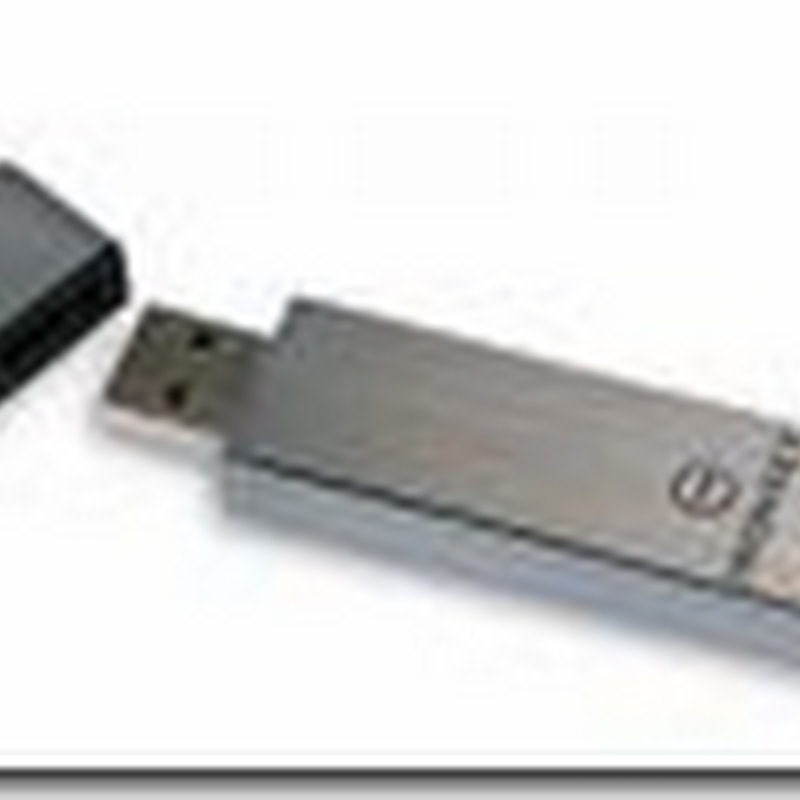
Finally someone taking an approach on what can be downloaded to notebooks.  Virtual Private networks should take the place of patient data on a local computer.  Even the Department of Defense has a virus loaded from a flash drive that got into the entire system.  In the times we live in, there should be no flash drives allowing downloading.  These devices have some use though in allowing a menu for shortcuts for someone to easily access information, but as far as allowing any imagedocument storage, no.

In this case, password protected, but no encryption.  The facility will now face the bill of providing credit information protection for the patients, which is another related cost.  You can read here about the Department of Defense and their experience with flash drives.  BD

Malware attack - Department of Defense

Greensboro, N.C.-based Moses Cone Health System recently notified 14,380 patients that some of their identifiable information was on a laptop stolen in Canton, Ga., on March 9. The delivery system is offering the patients one year of free credit monitoring services and insurance protection from CSIdentity, Austin, Texas.

The laptop was stolen along with other items from the car of an employee of VHA Clinical Specialty Services, previously known as Goodroe Healthcare Solutions, a consulting division of provider alliance VHA Inc., Irving, Texas.

Identifiable information on the laptop included patient names, addresses, date-of-birth and about 6,000 Social Security numbers. Because the laptop was among several items stolen and "the data was in a format the average criminal could not access," Moses Cone officials do not believe any of the data was exposed, Matthews says. "We don't have any indication this data was used and hope patients use the credit monitoring service. We are very sorry that this happened."

Since the theft, VHA Clinical Specialty Services has changed its procedures for capturing information from hospitals, according to the VHA spokesperson. It has identified other laptops with hospital information and removed the data. Now, hospitals transmit data via the virtual private network directly into a server accessible only by authorized VHA users.

Laptop Theft Affects 14,380 Patients

Related Reading:

It’s Raining Medical Records…They’re Blowing in the Wind

Conficker and Malware covered by CBS 60 Minutes

Wall Street and Healthcare – Was it the Mob or have the rest of us been operating like a PC with no anti-virus protection?

The Family Health Guy – Microsoft Health Vault Talks about Data relative to e-Patient Dave and his experience this week with Personal Health Records

Sean offers some good points here and specially how the transfer and incorporation of data is not yet a perfect world.  The good side of this is that we have found data bases all around healthcare that offer information that can be added to a personal health record, so stop and think a second, would you rather be a proof reader or have to sit down and write the novel yourself?   I make that comment from a point of reality, in other words what data are we now able to access.

The medication records we get from Pharmacy Benefit Managers have been the result of tapping in to data bases originally created for marketing and selling drugs for the most part.  When you think of what is available and sometimes even a 10 year trail appearing, that is not bad.  Remember insurance companies tap into those too to qualify individuals for insurance coverage.  image

The touchy part comes down to the coding and as we have seen in the last few days, there’s a bit of work to be done here.  We all remember perhaps an occasion to where a physician coded our visit as a problem as insurance companies at one time did not pay for physical exams, thus we ended up with a code in the record showing we came in for treatment for an illness or condition, again to get the bill paid.  There’s a lot of this out there and the interesting part now is that as a consumer, it is open for you to view and if necessary, get it corrected.  This is part of what Sean refers to as “dirty data”, and again it’s all over the place.  It was not the bad patient or bad doctor at the root, just folks trying to get paid and now that we have the data, we go back to the origins to see where we all really stand here with insurance business models that did not revolve around better healthcare and prevention. 

Insurance companies like PHRs and offer many themselves as they want you to see what is in file, with the age of transparency we live in today, but they are also placing the burden of proof on the patient to correct such items in doing so.  Now that may be one big daunting task to go through and get items corrected and as a patient you will have resistance from the analytical sources at the insurance end to actually have to “prove” what occurred and can mean contacting doctors for letters, hospital, the same thing. 

Again, this goes back to business models of health insurance here, healthcare even way back was not a focus, risk management and data ruled, so there will be a lot of this forthcoming and as a patient, it may not be easy.  The next step here too in the MIB, the Medical Insurance Bureau, who has files on many of us whereby insurance companies have shared records for years.  You may want to get your file and see what has been documented and put in file there too.  Again, we are now speaking of potential “dirty data” once more.  You can read here to see one woman and what she has gone through.

It is great now that these data sources of information are becoming available and in the course we will see many eye openers.  The folks with the PHRs, Google and Microsoft Health Vault are making the effort to add alerts and truly create tools we can use, so in essence they didn’t create the “dirty data”, but can work with us to help get a true personal health record in place.image

As mentioned, the mapping of such data to include can also help, in other words, where’s the actual text and not a code entered to secure payment.  There are a lot of smart people in Health IT that are going to work to correct this, but again, remember it’s been many years in the making, so there is valuable data there for us to use, but getting the dirt out is the issue. 

None of this data has been transparent until now, but has been in the files of many organizations that use it to make “business intelligence” type of decisions, thus me having an inquiring mind, I want to know.  The 2 links below show some legal ramifications being challenged with how some of the data has been used, good reading and something to be aware of.  The second link has information about the MIB, with a video that will explain how this portion of the healthcare data chain works. 

UnitedHealth Executive testified at the Senate – Rockefeller was not very satisfied

Health Insurance Underwriting procedures – Data Mining to Cherry Pick and some are listed on the Web

Just yesterday I made a post about a potential hospital error and the the great length the doctor took to ensure it was not on his insurance records.

It’s also very easy to get confused with marketing as this PHR is ready to offer you insurance for your PHR, and maybe down the road it might have value but for right now, let’s get something accurate in place and worth insuring.  We also need to educate ourselves better on healthcare so we can stamp out “Magpie Healthcare” too.  When you begin developing your PHR, the education process will begin.

On good thing is that we can be assured of from today forward, is that accurate and needed information will be added for the most part if we take an active role here.  Think of your PHR as your “back up” if you will, when perhaps there is nothing else available and it could stand to save your life too.

E-Patient Dave evaluates Google Health – A comprehensive look with pros and cons

Long and short of all of this, I think it’s best to work with the PHR companies so we can find out what’s out there, and what records companies and health institutions have filed, so we can get an accurate accounting and have a true PHR without all the “dirty data” included.  So let’s not blame the PHR folks for their efforts on bringing this information and transparency to us, but rather focus on the value of the information and in cases where it is erroneous, get things fixed and as mentioned the Health IT folks want to see this work as well and are doing their part to make it better.  I too agree that we need patients like e-patient Dave to inquire and test the water, otherwise we can’t locate and repair some of the shortcomings and below you can see some of the solutions HealthVault has in place and working.  BD 

The folks at Google Health have been taking it on the chin this week, after the Boston Globe ran an article about a super-engaged patient named Dave who found a number of pretty nasty surprises when he imported his health information from Beth Israel into Google. From what I have read there were really three key issues at play:

Yes, there is great learning here as to what can be done better --- Dr. Halamka has already posted about steps they're taking at BIDMC to make things better (as an aside, how many other medical institutions out there display this kind of transparency? Kudos are deserved here.). But the reality is, there is a bunch of dirty data out there in the world, and it is being used not just for billing but to make clinical decisions. Providing transparency and letting people see the mess inside --- that is the first real step to getting it fixed.

The user then has another choice - they can "reconcile" the package by looking at the individual items and choosing which ones should be extracted into their record. Only those items that the user chooses to copy out become part of their canonical list of conditions, allergies, medications, and so forth.  There are a few really nice things about this approach:

  • Users have a well-defined place to make decisions about what elements they want to accept and which they believe are wrong. Right now our "reconciliation" process is pretty manual, but as we go forward we expect to do smarter things. One great idea that William Crawford put forth was --- in an interface like this, call out conditions that are associated with billing codes with a special warning icon --- to suggest that the user may want to take a closer look at these.
  • It puts a fence around the "dirty data" problem so that users can benefit from all sources without worrying that their records are going to become polluted with errors.
  • It turns out that retaining both the individual items and the package can be really useful - for some use cases the package itself is what a recipient really wants. For example, a referring doctor that wants to see the results of a surgery at NYP probably wants the digitally-signed CCR from that visit, not the user's all-up history.

Family Health Guy : This just in: sharing health data is hard.

Related Reading:

The Diagnosis – Admit or not to Admit?

E-Patient Dave evaluates Google Health – A comprehensive look with pros and cons

Dr. Oz (as seen on Oprah) Discusses How Electronic Medical Records Improve Care – New York Presbyterian moves forward from pilot program

Do You Know What Your Doctor Is Talking About – Read up and help stamp out “Magpie Healthcare”

Prescriptions risk score used to deny health insurance

The Sick Truth of the Red Tape in Healthcare

Health Insurers Pondering Some New Business Models

The search for John Doe – Who’s running the queries (Algorithms) and wants to know

What is the MIB - Medical Insurance Bureau - and how does it affect qualifying for insurance?
How can insurance companies find out if you have a pre-existing condition - The MIB
Health Insurers Show 14 Percent Increase in Use of MIB Data

Pharma and Health Insurance – Both are Lobbying on Products/Services that are for the most Part Unaffordable to the average citizen

This battle has gone on for many years, and again, nothing is changing much here, except both are becoming more out of reach for the consumer while the political battles continue.  Both industries have benefited tremendously for years with huge fat profits, and are fighting to keep the imagerevenue and dollars coming in, even though other industries have faced tremendous losses and have had to re-think their business models and have lost plenty.  The drugs are getting more expensive and insurance doesn’t want to pay for them in short if deemed too expensive, and this statement revolves around profit for both industries.  In the meantime, being both entities mean life and health support, the consumer is caught in the middle.

As long as the drive to sustain and drive higher profits levels from both, the true meaning of better health care for all in the US will continue to be somewhat of an illusion. If cheaper drugs become available, Pharma loses, and Health Insurance wins. 

If Health Insurance has to pay for higher priced drugs, insurance loses and Phama wins.  There’s a political  game of who’s going to win at the money game here and we are all patients caught in the middle of the high yielding profitable financial war.  BD 

April 17 (Bloomberg) -- U.S. drugmakers led by Merck & Co. and Biogen Idec Inc. are stepping up their fight against President Barack Obama’s move to encourage cheaper medical care.

Already the biggest spender on influencing policy, the drug industry is hiring well-known individuals, some with stories of personal battles against disease. They include Tony Coelho, a former House Democratic leader who has epilepsy; Andrea LaRue, counsel to Tom Daschle when he was Senate Democratic leader; and the firm of Democratic fundraiser Tony Podesta, brother of Obama adviser John Podesta.

“The companies fear that older generic drugs might very well turn out to be better than the newer advertised drugs, which bring in much more of a profit,” said Julian Zelizer, a history and public affairs professor at Princeton University in Princeton, New Jersey. “In difficult economic times, the drug companies don’t want to take any risks, so they are bringing out the biggest lobbyists in the business.”

Indianapolis-based WellPoint Inc., the second-largest health insurer by revenue, and Philadelphia-based Cigna Corp. are backing Obama with a lobbying push of their own through their Washington-based organization, America’s Health Insurance Plans.

Merck, Biogen Boost Lobbying to Defy Obama’s Drug Comparisons - Bloomberg.com

Related Reading:

Lestonnac Free Clinic in Orange, California – Free Healthcare Office Visits on Saturdays

Public Medical Plans – Good or Bad there will eventually be some form in place

The Uninsured have no Political Power states one expert – One Narcissist Opinion

X PRIZE Foundation for HealthCare – Is the Incentive High Enough

The 2 New Hot Words in Healthcare: Algorithms and Whistleblowers

Merck has Chemical Spill in Lab in Boston – Level 3 Hazmat

This particular lab develops and researches cancer medications in Boston's Longwood Medical Center.  Nobody was hurt and the employees ran out and shut the door behind them, over 300 employees evacuated.  BD 

BOSTON -- Boston Fire Department crews were on the scene of a chemical reaction at Merck Research Laboratories Thursday morning.

The building is located at 33 Avenue Louis Pasteur in the Fenway area.

Officials classified the incident as a level 3 hazmat situation, which is the highest possible.
"This is a level 3, which would be a chemical incident with a minor explosion or a major spill," said Deputy Chief Joseph Fleming, of the Boston Fire Dept.

image

Chemical spill evacuates Merck lab in Boston

Technorati Tags: ,,

One More Home Monitoring Device to Come - ExpressMD Wins FDA Approval

I’m not real sure on how many of these we need, but the field continues to grow.  We have on more to add to the list.  Intel recently began imagemarketing their product and last week Intel and GE stated they were going to work together on home monitors, so maybe there won’t be as many after all…well probably not, we are going to end up with a Super Home Monitor before it is all over, one that does dishes too.  Life at home will just be one big monitor, but the question is, can we stand all of this information at once, time will tell. 

Actually many devices make it much easier than having to write down items by hand or type, so in that essence, the tracking is good and makes life simple, but just like everything else today; so my fear is when the devices begin following me around the house and checking on me, reminding me to take my pills, blood pressure, etc. and it will probably get to that point with sending a picture back to someone who wants to know if I took my pill, like an insurance carrier who will cancel me without the daily picture on file.  I like technology a lot, but worry a lot too about intrusive technology and how devices are used and implemented, what are the strings attached for risk management?  Is the machine someday going to win and I lose?  Here’s one example with Aetna and a device with a pill lottery so you know I’m not totally out of the realm here. 

Aetna "Take your Pill" Lottery...

Risk management likes devices and insurance companies tend to be investing in much of this type of technology.  BD  

The U.S. Food and Drug Administration has approved home monitoring devices from ExpressMD Solutions, Berkeley Heights, N.J.

The Electronic House Call monitors enable patients with chronic conditions to access educational materials and reminders, measure their vital signs and transmit the information to a data center. Providers can then access the data via a Web site.

From the website:

Electronic House Call™image
Electronic House Call is an advanced vital signs monitoring system and the main communication device in the patient’s home or care facility. This self-contained home unit is perfectly suited for patients that require frequent assessment and reminders. Simple onscreen instructions make it exceptionally easy for patients to use without care provider assistance, so the practitioner can remotely assess the patient’s condition from the results and make timely adjustments to the care plan. It allows manual entry or automatically takes vital signs from peripherals (both wired and wireless devices are available) and communicates with the practitioner for analysis and intervention.

image

ExpressMD Wins FDA Approval

Related Reading:

Intel and General Electric working together with Medical Devices – Home Monitors

Home Monitors Come in Many Shapes and Sizes and Monitor more than what you could imagine

GE to Market Home Monitoring Appliance
The Human Audit Trail to automatically track your fitness and sleep and a few other things…
The Wellness Programs: Payouts to Those Who Work Out - Insurers give discounts on premiums
High-tech gadgets hit doctor-patient relationships and more..
Allstate testing “brain fitness” software on older drivers
Intel Home Health Monitor PHS 5000 is here

e-MDs and QuadraMed Join Forces to Integrate and provide solutions for ambulatory EHRS and Hospitals

The joining of forces here extends an integrated solution available to help hospitals and ambulatory systems communicate for better patient care.  QuadraMed technologies are installed in over 2000 hospitals.  QuadraMed will now be able to offer an ambulatory solution for physicians affiliated with facilities utilizing their software.  e-MDs offers a full suite of electronic medical records for a practice to include billing, charting and document management.  e-MDs was create by the founder, Dr. David Winn, and is staffed with a number of physicians, so the software is truly geared to create the type of solution practicing physicians are looking for, with an intuitive design made for doctors containing the knowledge, design and insight of actual physicians and not just programmers. 

The Reston-based company (NASDAQ: QDHC) and e-MDs of Austin, Texas, hope their partnership will help doctors at private practices to imagetake advantage of financial reimbursements worth $2 billion that will be available through the American Recovery and Reinvestment Act if they can show meaningful use of the technology.

“With our QCPR product, QuadraMed provides a clinician-oriented electronic health record (EHR) and when combined with our advanced EMPI, we can deliver a longitudinal patient record linking the inpatient and the ambulatory patient history to enhance care coordination, quality and patient safety,” stated Peebles. “Our partnership with e-MDs underscores our commitment to delivering solutions that meet our clients’ needs. e-MDs consistently earns top ratings in objective evaluations sponsored by independent third parties such as the American College of imagePhysicians, the American Academy of Family Physicians and the American Academy of Neurology. Together, we will work to ensure that our clients -- within and beyond the four hospital walls -- realize the vision of integrated, collaborative patient care.” 

One other item of interest is the online ICD-9 search online with E-MDs.  If you need a quick look up for a code, this could be a good spot to bookmark.  BD 

image

QuadraMed partners with e-MDs - Washington Business Journal:

The Diagnosis – Admit or not to Admit?

This is a post made by the Happy Hospitalist talking about an error, not deadly, but one that maybe should not have required admission to the hospital based on an error in the draw.  One nice thing he does is to make sure to follow up and get the record corrected for insurance purposes, which is nice as something like this could give the individual trouble down the road.  We are humans and make errors, but it’s always good to double check as it can hit any of us at any time.  This was a good post in the fact that he asked for input from many to see what their thoughts were. 

Also, what about his time?  Good question and something we all ponder with healthcare.  Right now with all the discussions on how to reduce admissions and re-admissions, this is very timely.  Visit the post to read all the details.  BD 

CC: lightheadedness
A healthy 32 year old male lawyer with no chronic medical conditions presents to an urgent care center with acute onset of lightheadedness associated with transient nausea and vomiting. No other complaints. No nothing. No home meds. No illnesses. No surgeries. Review of systems otherwise negative. Physical exam negative.
Laboratories come back. He is transferred for direct admission.
Na 142
K 2.8
HCO3 20
CL 120
BUN 14
Cr 0.9
Ca 5.1
Alb 2.6
TP 5.1
LFTs otherwise normal
WBC normal, normal diff
Hgb 8.7
MCV 90
Plt 97K
UA negative
cardiac panel and CXR are negative
Impression: 1) What the hell is going on?
Plan: Differential diagnosis anyone?

The correct answer award goes to Nurse K for this iatrogenic nursing diagnosis.
Repeat labs at Happy's hospital the following morning were all normal. After discussing the case with the urgent care center, we came to the conclusion that the nurse had drawn the blood during the nurse draw placement of an IV (assumed to be diluted from placement technique, I think).
My first inclination was that somehow the first set of data was reported on the wrong patient. But a third set confirmed the accuracy of the normal second set.
This was an iatrogenic admission for an outpatient diagnosis of lightheadedness from being overworked which resulted in IV calcium and IV potassium and a night in the hospital. This is a hospital error. This is a never event. Not delerium. Not c difficile. Not hospital acquired VTE.

It's interesting. I found myself wondering about the insurance implications for the patient should he try to insure in the future. I made sure his record was cleaned up. I dictated a later to be sent to his home address indicating the hospital error. I made sure it was well documented in his discharge summary. And I called the billing office to inform them that his insurance should not be billed for his hospital stay.
Now the question is, should I be able to collect for the work I did during a hospital stay that was not medically necessary?

A Happy Hospitalist: Admitting Diagnosis: I Don't Know

Technorati Tags: ,,

STAAR Surgical Releases New Intraocular Lenses – Alternative to Lasik Surgery

This is fascinating as now there’s an alternative to Lasik surgery with implants.  They can be removed and replaced as well.  It is implanted with a imagevery small incision and can have the same effect with not having to wear glasses. 

CMS has given it’s stamp of approval on the lenses, but when it comes to reimbursement, always good to check with Medicare imagefirst, although the release gives a few numbers below relative to reimbursement.  A video at the site gives details about the procedures and device.  BD

MONROVIA, Calif., April 16 /PRNewswire-FirstCall/ -- STAAR Surgical Company (Nasdaq: STAA) a leading developer, manufacturer and marketer of minimally invasive ophthalmic products, today announced the release of its Afinity Collamer Aspheric Single Piece New Technology Intraocular Lens (NTIOL). NTIOLs are Intraocular Lenses (IOLs) designated by the Centers for Medicare and Medicaid (CMS) as providing new clinical benefits. The STAAR lens can be delivered into the eye through a 2.2 mm micro-incision using STAAR's new nanoPOINT Injector System which is the smallest incision of any NTIOL on the market. The Collamer material is a unique lens material composed of collagen, a UV-absorbing chromophore, and a poly-HEMA based copolymer.  

"Release of our new Collamer Afinity Aspheric Single Piece NTIOL continues this momentum in the marketplace for our entire IOL product imageline," said Barry G. Caldwell, President and CEO of STAAR Surgical. "This is the third STAAR IOL in the market with NTIOL approval, which means that Medicare will reimburse an additional $50 per lens when provided to a Medicare patient in an Ambulatory Surgical Center (ASC). The vast majority of cataract procedures performed by STAAR customers and well over half of all procedures in the U.S. are performed in an ASC environment. Our NTIOL focused strategy in the U.S. has resulted in an enhanced gross margin and growth in our two NTIOL products delivered to the market in 2008.

STAAR Surgical Releases Afinity(TM) Collamer(R) Aspheric Single Piece NTIOL

Related Reading:

"Bionic" eye restores vision after for a 73 year old man after 30 Years of no sight

Near Blind Teenager travels to China for treatment with stem cells

The Honda Walking Robots – Help for those having Trouble Walking

These are 2 interesting devices with videos on each one.  The second one is a bit more difficult to put on.  The first device is lighter and basically offers support for moving around, while the second device is more of a support system.  Both are very interesting and shoot the first one looks good to me, only 6 pounds, so not real heavy and the gals in the video seem to like it as well.  Maybe there’s more money in medical devices than cars today?  BD 

It says something about American culture that when we hear the words "bionic exoskeleton" we instantly think of a device that turns an ordinary man into a superpowered fighting machine. That was evident yesterday at a press conference to demonstrate Honda's two new assisted mobility devices, the Stride Management Assist and Bodyweight Support Assist.  American reporters, myself included, asked Honda's Japanese engineers if the devices—which are primarily designed to help the elderly move about more easily—have military applications, or if they could help people jump higher, run faster or deflect bullets (okay, nobody asked that last one, but I was thinking it). The engineers stressed repeatedly and earnestly that these self-contained, battery-powered walking machines were not military in nature and were not meant to imbue physically fit people with superhuman strength.

The Stride Management Assist

Bodyweight Support Assistant


Robotic Device Gives "A Leg Up" On Walking - CBS News

http://www.origin.popularmechanics.com/blogs/technology_news/4313644.html

Related Reading:

Honda Unveils Experimental Walking Assist Device

Honda develops walking assist device to aid elderly/disabled

Oprah Joining Us on Twitter - @Oprah is the Place

Welcome to Twitter, and I’m sure Oprah will end up on everyone’s “follow Friday” list no doubt!  Recently Oprah has had some great medical coverageimage on her show as well with Dr. Oz and Michael J. Fox. 

Michael J. Fox on Parkinson’s Disease and Stem Cells – Oprah and the Daily Show

The link below is outstanding and has links to videos with Dr. Oz talking about what is happening in regenerative medicine.  I have an interview on the blog with Cook Medical on how their technology works with rebuilding cells for various procedures too.  

The Oprah Show – Dr. Oz Explores and Explains Regenerative Medicine

Being that social media is becoming so important today, I ran across another article that questions the need for a Chief Social Media Officer.  It sounds good to me and in reality it might not be that far fetched either.  Most companies work with public relations agencies and I deal with some of them and I do have to say, most of them are very well versed with Twitter and Facebook, and a few others.  Most companies have internal public relations managers too, but the social networks appear to be evolving into their own entity as well, beyond standard modes of advertising and promotion so who knows perhaps soon CSMO position might start appearing on the horizon.  BD 

Oprah Winfrey will start tweeting tomorrow at @oprah, likely bringing tens or hundreds of thousands of people with her. (Like she did to the Kindle.)

Oprah Jumping On Twitter Bandwagon

Related Reading:

The Oprah Show – Dr. Oz Explores and Explains Regenerative Medicine

Dr. Oz (as seen on Oprah) Discusses How Electronic Medical Records Improve Care – New York Presbyterian moves forward from pilot program

Michael J. Fox on Parkinson’s Disease and Stem Cells – Oprah and the Daily Show

Drug Makers and Hospitals Raising – Hospital Pharmacies cut back on budgets and staff

As more generic come to the market, the name brands go up, perhaps not all, but maybe those where there is no generic equivalent.  Sorry guys, it looks like Viagra is in the loop too.  Everyone is searching to find a place to replace income in other areas that is shrinking.  This is only a temporary solution as eventually you run out of places to look.  BD 

Hospitals and pharmaceutical companies have been pushing through hefty price increases aimed at bolstering earnings, even as government and private insurers are struggling to rein in healthcare costs.image

Drug makers increased prices on drugs like Viagra and the leukemia pill Sprycel by more than 20% in the first quarter from a year earlier, according to data from Credit Suisse. Meanwhile, one of the largest hospital owners in the country, HCA Inc., said Tuesday it expects to report higher revenue for the first quarter even though it had fewer hospitals and its admissions decline.

In another related article, hospital pharmacies are reducing budgets as well as cutting staff at some facilities. 

Hospital pharmacy departments are feeling the pinch of the economic crisis, according to a survey by the American Society of Health-System Pharmacists.
Sixty-six percent have reduced their medication budgets, 37% have had staffing budget cuts in the past six months, 22% have frozen vacant positions, and 10% have laid off staff, according to the survey of 541 hospitals nationwide.
On the bright side, 23% of respondents said that they have more leadership opportunities because of voids in other departments.

Drug Makers, Hospitals Raise Prices - WSJ.com

Lestonnac Free Clinic in Orange, California – Free Healthcare Office Visits on Saturdays

What a nice center to offer this service.  It is helping people take care of chronic conditions as well.  Just looking at the desk here, someone needs to donate an electronic medical records system to the office.  As the article states, they are seeing individuals who “used”to have insurance, Real Estate executives, people who worked in restaurants, etc.  The doctors and nurses donate their time on Saturdays. 

If you are in Orange County, California, something to make note if in need.  It is not for emergencies, just normal and routine healthcare issues. BD

ORANGE The parking lot is already full, the waiting room is packed with weary-eyed people, and Lestonnac Free Clinic in Orange still has imagefive minutes before nurses and doctors will start seeing patients for the day.

It's Saturday morning — the one day a week when people who are not enrolled patients at the clinic and who don't have an appointment can see a doctor for one-time treatment: a persistent cough, a painful rash, a swollen limb. If not here, many of these folks would be waiting in an emergency room for care. Or they'd be at home — avoiding thousands of dollars in medical bills, hoping their ailment would improve on its own.

The clinic doesn't have the resources to enroll all of them, so Lestonnac started the walk-in clinic in February staffed mostly with volunteer doctors and nurses. They see people on a first-come, first-served basis, and all their treatment is free.

Jane Phan, the registered nurse in charge of running the walk-in clinic, screens each patient to make sure they don't need emergency care.

Many of the people she sees worked in real estate or in the restaurant business or had jobs as mechanics or technicians before business slowed or they were laid off.

"Most of them had insurance before, and now they have nothing," she says. "I'm very grateful to be helping them."

A lifeline for those who need it | lestonnac, people, medical, says, care - Life - OCRegister.com

Gunman Shoots 2 and takes own life at Long Beach Memorial Medical Center

Very sad to hear this today at Long Beach Memorial.  The article from the LA Times states the motive is still unclear, but that there was word of upcoming layoffs that could have had some influence.  No name has been released yet, but those who knew him, stated he was nice and always went out of his way, so again it appears pressure and economic conditions once again play a role. I always wonder why folks who shoot themselves have to include others, but again something we’ll never know.  He was married and had children.

I’m not very far from this facility and have had a couple procedures there myself a few years ago.   It was just yesterday I published my interview with Dr. James Leo about their successful move to electronic records. 

Long Beach Memorial Center’s Conversion to Electronic Medical Records – Interview with Dr. James Leo

In January, an 80 year old patient walked in and shot his doctor in Nevada, so the pressure and dealing with bringing a balance to life is taking a toll and this is not something predictable with an analysis, just a result of today’s economic and frustrating times, something that can happen anywhere.  BD 

A gunman opened fire at Long Beach Memorial Medical Center today, killing one worker, gravely wounding another and then taking his own life as frightened onlookers watched outside the emergency room.  Police said the gunman and victims were employees of the hospital. The shooting occurred just before noon at the Atlantic Avenue hospital, which was immediately sealed off by police.

image

A source told The Times that the gunman first shot a pharmacy manager several times in the head and then ran through the hospital wielding at least two guns, searching for a second man. He eventually caught up with that man and shot him multiple times, the source said.

Gunman kills 1, wounds 1, takes own life at Long Beach Memorial Medical Center - Los Angeles Times

Lay Offs – Is there this much pressure to meet the dollar to call a nurse out of surgery to notify?

Yes we are all working under a lot of pressure today, but enough to where common courtesy and protocol get dumped out the window?  This remindsimage me of another post with a sub heading, “this is your brain on money”, in other words, making choices and decisions that are not deemed as wise and without the pressure of the dollar, probably would not be present.  We see this with risk management and I wonder is it spreading?  BD  

Insurers Suggest They May not charge patients more who have existing conditions – This is Your Brain on Money

In Texas recently an ER Department was fired for not bringing in enough money, they were told to up admissions, and then later were fired due to patients being admitted that should not have been.  BD  

MADISON, Wis. - A nurse was called out of surgery so a manager could tell her she was being laid off. Dean Health said the surgery was minor and the patient wasn't affected, but the manager who summoned the nurse from surgery violated medical protocol. Dean Health spokesman Paul Pitas said the incident happened at Dean's West Clinic in Madison on Wednesday or Thursday.

Pitas said there was a period of time in which a nurse wasn't present during the procedure. He said while there were other clinical staff present, the absence of a nurse is a violation of patient care procedures.

Nurse gets called out of surgery to get pink slip - Health care- msnbc.com

What is 'Neurobowl' – New Game Show?

Actually it is fashioned after a game show and takes place every year, the brains with the brains at the annual meeting.  This has been taking place for a number of years, and I wonder, is there a “Cardio Bowl” in the making?   I can guess as we are getting  more complex with our knowledge, so go the questions.  BD 

One of the highlights of the annual meeting of the American Academy of Neurology is "Neurobowl," a competition modeled after TV quiz imageshows.

Like a quiz show, Neurobowl awards points for answering questions quickly and accurately, and subtracts points for wrong answers. The tougher the question, the higher the point value. 

Panelists are asked to diagnose perplexing neurological conditions, based on symptoms, video clips, X-rays, etc. Every so often, the host will toss out a pop culture question with a medical angle. For example: On the old TV doctor show, who played the title role of Dr. Ben Casey? (Answer: Vince Edwards.)

And there's the occasional oddball question -- like the one about the dog with the neuromuscular disease myasthenia gravis.

"You have to have a good sense of humor," Biller said. "It's entertainment."

What do neurologists do for entertainment? They will play 'Neurobowl'

Computer Shopper/Medical Quack Blog Posts

The Medical Quack around the web this week..a couple posts featured, one about the MediSlate Tablet PC for healthcare and a few additional opinion posts related to technology.  As everyone knows by now, many healthcare charities were affected by the Madoff Scheme, thus I felt it was appropriate to add information here at the blog. 

If you are a regular reader here, I write and focus quite a bit about software and especially “Business Intelligence” and some of the material below relates to having “smart people” in key positions so we don’t get fooled again.  Whether or not we feel comfortable about technology and software, it’s something we can’t afford to “opt” out of today as it is the driving force not only for the financial business, but very much alive and developing in healthcare too, and at a very rapid pace.  Again, going back to “smart people” we do need individuals that have some “hands on” knowledge and experience in some areas of technology today as simply repeating what others have said or do is not getting the job done.  A few related posts below:

Scientists gather to chart out a 'total reboot' for medicine – Science and Medicine Coming Together
Business Intelligence Provides Support for Difficult Times – Hospitals
US Loses it’s Cutting Edge on Innovation – Time to Wake Up…

Hopefully some of what I write here can help educate and bring an awareness around as technology and education are key to survival as we can no longer be bliss.  What you don’t know, can hurt you.  Thanks to Computer Shopper for featuring some of my posts and again I hope I am providing some useful information along the way and add some insight into what the “smart people”, good, bad, and indifferent have been doing for the last number of years so we can catch up and understand the magnitude of where we are today and where we are headed.  BD  

 image

image 

image

image

image

image

Long Beach Memorial Center’s Conversion to Electronic Medical Records – Interview with Dr. James Leo

Today I had the opportunity to talk with Dr. James Leo, Associate Chief Medical Officer of LBMMC, (Long Beach Memorial Medical Center), to clip_image002discuss the hospital’s recent EMR/EHR adoption. Hopefully the information here may add some insight into how other hospital CMOs and CIOs around the country can work with staff to implement a successful electronic medical records system.

In addition to being a physician leader at LBMMC, Dr. Leo has practiced Critical Care Medicine and Internal Medicine for 22 years and has participated in many speaking engagements at hospitals and at conferences around the US and California. He also has a real feel for technology and understands the value of how technology helps to increase the quality of health care we receive today.

clip_image004MemorialCare Medical Centers consists of five hospitals in Southern California, and each hospital has committed to transition to electronic medical records throughout the entire system. LBMMC and Miller Children’s Hospital, located on the same campus, were the next two hospitals in the group to go live, and the first hospital was Saddleback Memorial. Long Beach Memorial Medical Center and Miller Children’s Hospital are two of only 10 percent of the hospitals in the country that have moved to a fully integrated EMR system.

The Jonathan Jaques Children’s Cancer Center located at Miller Children’s Hospital also converted to the same electronic medical records program. Upon converting to electronic medical records, their medication error rates have reduced to nearly zero. Recently I posted about the continued progress at Long Beach Memorial with integrating their Amelior EDTracker(R) RFID into the Epic System, which allows for the tracking of patients, equipment and staff throughout the facility, so at a glance all equipment, patient locations, etc. are readily available.

On with the interview and some history on how it all started:

How long ago did MemorialCare begin the search for electronic medical records?

The search was actually started in 2003, which somewhat put us ahead of the rest of pack, realizing this was the path we needed to take. It was a lengthy process that involved many areas of the hospital, including clinical, administration, etc.

How did the process evolve, in other words, how were the evaluations and decision made in the journey?clip_image006

We chose Epic Systems, but getting to that point was a pretty involved process. We had several electronic medical record vendors all vying for the business and we spent hours talking with all of them. The selection process was somewhere along the lines of 9 to 12 months. Given the fact that this was an enterprise wide decision- affecting all 6 MemorialCare facilities and not just the two in Long Beach, and it was going to consume millions of dollars and 5-6 years of directed effort- we wanted to make sure that we got it right. We had each of our vendor finalists come on site for a week showing how their products dealt with 15 specific “pain points” we identified in the then-current manual & paper processes. In that timeframe, we had areas set up with the vendors where physicians and employed staff could actually come in and “take them for a test drive” and provided live demos to see how the record entering process and reporting functions would work with each vendor. We felt it was important to get the feedback from the physicians and clinical staff who were eventually going to be the end users of the software. Involving the staff in this manner was probably one of the best decisions we made to help us in the selection process. At the end of the day, and very helpfully to us, all three key constituencies- physicians, nurses and pharmacists- chose the same product- the Epic inpatient system- as their first choice. Once our selection was made, we purchased the Epic system.

Obviously there’s a big learning curve and training process involved with getting ready and having staff prepared for the day when the system goes live. Can you tell me a bit about how the hospital approached training and support to be ready for the conversion day?clip_image008

We knew that having training of the right type and amount was critical to our success. We also knew that we had physicians and staff members at all levels of computer literacy and thus needed an approach to capture all to buy in. We had some on staff that barely knew what the mouse did relative to a computer, and then there were those at the opposite end of the spectrum. Our biggest concern was how to train the first group who were not considered computer literate. Before we could even think about the overall training on how to use the medical records, we first had to bring them up to speed on basic computer use and set up training to offer and educate those who needed the basics before moving further. In addition to this vital readiness assessment strategy, we also engaged in a very aggressive set of events designed to help the physicians understand what was coming and the “change strategy”- acknowledging that change was never easy but the resilient organization changes or it does not thrive.

Training was mandatory for everyone, 16 hours for most clinical staff and 8 to 12 hours for physicians with a 4 hour crash course for the “occasional” doctor who may only be visiting the hospital on a very limited basis, not a physician with patients in house on a regular basis. The 4 hour session offered “survival skills” to at least become familiar with the system.

How did your EMR Vendor,Epic come in to play during the training period, were they on premise, how often, and how did this work?

Epic was also very aware of how important training is for a successful implementation. The company was involved in our approach to training but we took full ownership of its conduct. To support our physicians, we developed an innovative strategy- which was new to Epic and which we understand they are now recommending to other customers. This involved hiring a team of Clinical Training Specialists- each assigned a panel of 40-50 physicians- and whose job is was to ascertain and meet that physician’s needs for training (both in computer basics and Epic application skills), their office set-up for remote access- such a valuable part of the project, as well as clinical content (physician’s preferences for order sets and the like). This program was a tremendous asset for us.

Also, what added to our success was identifying what we called “Super Users,” physicians and employees (400 in total) who took on additional training to achieve an extra level of competency in the Epic System. During those first few critical weeks after go-live, when someone had questions or issues related to the software and procedures, they could immediately find someone on staff who was a “Super User” to get help or ask questions.

Having employee and physician Super Users around to help others at and after Go-Live was a huge success, as the hospital is a pretty large facility and there were only so many Clinical Training Specialists available. Additionally Epic as a vendor only allows certified Epic trainers to train clinicians. So early in the process we pulled clinical staff from all areas into the certification process. It was important to have these home-grown experts training our colleagues in the classroom.

When did you begin the training process, how far ahead of “going live” did the training start?

We did not want to start application training too early, as too much time between training and the go-live date means people usually forget everything they have learned. The training began just weeks before the actual live date, and our nurses commented that the transition and training went better than they initially thought. Obviously, training on change resilience and the ascertainment and remediation of basic computer skills for our doctors and nurses started over a year before go-live.

What type of computer hardware is used in the system?

We use both PC desktops and mobile workstations that we call WOWs (Workstations on Wheels), that can be moved and accessed anywhere in the facility. We have had very good success with both, and are not using any mobile hand units such as tablets as of today.

How convenient is it for the physicians to log on to the system, are there several passwords to remember for each area, records, PACS, etc.?

We are using a “single sign on” so all that is needed is one log on for the entire system. This is really almost a must today, as physicians are busier than ever and having to remember and change a series of passwords would be quite discouraging and easy to forget. In addition, although we require passwords to be “strong” (in terms of character mix and length), we do not mandate routine changes. This helps our clinicians a lot while maintaining a strong authentication process.

When physicians are at home or away from the office, do they have a way to sign on to the system, a virtual private network?

We use a Citrix MetaFrame VPN (virtual private network) and the speed is good, as I can be away or at home and the PACS system images come up for review nearly as fast as they do when I am at the facility. The physicians have the VPN available to log on to the system remotely and completely securely.

In addition, we work closely with Talbert Medical Group. Talbert Medical has their own version of the ambulatory (physician's office) version of Epic Systems installed, so they can also communicate and log on to the system. Care Everywhere is an Epic product that allows separate enterprises each with an Epic clinical system to “merge” a patient’s data into a single chart “on the fly”. This allows Talbert and Long Beach Memorial to share and collaborate on patient medical records. Talbert Medical Group has 11 locations and approximately 130 or more physicians that can connect and share medical record information with patients in their system.

The first patient in the world linked through the Care Everywhere system was managed at Long Beach Memorial by communicating and collaborating with Talbert. Since then, hundreds of patients have benefitted from this tool. Simultaneous access to the outpatient and inpatient records has helped us cut down excess costs, such as lab tests or imaging that have already been provided recently at another location. This works well for everyone as patients don’t end up having the same costly tests repeated. Physicians and clinical staff at both ends can also view the lists of medications and other treatments, so again it comes down to providing the right treatment for the patient, and at the same time reducing medical errors from the pharmaceutical side of the chart, knowing allergies, etc. up front.

Is there a portal whereby patients can access their medical records available?

We do not have that module operating yet, so as of now the online viewing of a patients’ record by the patient is not available.

Outside of the Talbert Group, are patient records aggregated and shared with any other facilities?

As of today, they are not, but with the Obama stimulus plan we are striving to create connectivity between our other physicians’ office-based EMR’s and the Epic system. Creating connectivity and coordination between hospitals and the ambulatory setting is a top priority of the Obama administration, and is an important part of the MemorialCare strategy. We are working aggressively with the Long Beach Network for Health- one of 9 federally funded health information exchanges- to provide for such data available throughout our region. We are obviously enthusiastic about this- as we are about CareEverywhere- but are recognize the importance of dealing pro-actively with the security and privacy issues before this all becomes a reality.

What would you say has been the biggest benefit or advantage seen by using electronic medical records?

The biggest benefit for everyone is patient safety. One specific area, for example, is that of medication errors. An incorrectly entered medication order is considered an error, even if it is caught by a pharmacist long before it has the chance to reach the patient. While our number of such errors has historically been low, with the elimination of written orders, we have seen our already low numbers drop even further. After our Epic Go-Live, there was an overnight reduction in transcription and medication errors.

In the news of late we keep hearing stories of patient files being accessed at hospitals without authorization by clinical staff members who are not directly involved with a particular patient’s chart, records or care, none of this at your facility, but if I were a patient at your hospital, can you tell me what safety measures you may have in place to avoid this situation?

That is a good question and yes we do have measures in place with the Epic system to avoid that situation. No one can access a medical record without signing on to the Epic system, which creates an audit trail that can subsequently be tracked. For patients for whom an extra measure of security is needed (such as employees or physicians on staff), Epic has an additional layer of security called “Break the Glass.” For these patients, anyone attempting to access the patient chart has a procedure that needs to be initiated before the patient records are available to view.

In this process the employee or physician must first explain “why” they are accessing the chart. The screen at this point flashes a security reminder, which should provide a deterrent to anyone desiring to access a medical record inappropriately. In years past there were no safeguards in place with paper charts, and anyone could pick up a paper chart and read whatever they wanted to know. But today that is not the case with our advanced technology. Whenever someone “breaks the glass”, that fact and their reason for doing so (which might be quite valid) are included in an e-mail message to our medical records staff who can monitor these actions and request further review by the medical staff office or others, as appropriate.

A full audit trail is created along with a reporting system that allows us to see all aspects of the chart, so even if an individual began the process of accessing the chart and stopped at the “why” screen, the audit trails will identify the employee who wanted to access the patient chart. The system has full audit trails with a reporting system that allows us to keep patient record security in the forefront and monitor access as authorized for patient care. On the other hand, there will be occasions where an employee will need legitimate access to the records, and that is all tracked and shown with the audit trails. In short, insuring complete maintenance of patient privacy and limiting access strictly to that which is appropriate for the care process is a top priority for us. If there is someone in the chart who we deem should not have access, the reporting systems and queries run are capable of letting us know and allowing us to take pro-active action.

The “Breaking the Glass” feature, as well as the standard procedures required for chart access, really make an individual stop and think about why they need access to a particular patient’s chart. All employees are aware of this process and know their tracks will be traced and audited, so preventing unauthorized access to patient charts and protecting patient privacy has been handled in this manner and is working well. The recent Kaiser experience with the octuplets and their actions in dealing with staff that inappropriately accessed those charts was facilitated by their use of the same Break the Glass functionality and we hope sent a good message to everyone about how important that privacy is.

At the same time as we maintain a high level of vigilance with regard to security, it’s important to realize how much electronic records can improve the coordination and safety of hospital care. With paper charts only one individual can see a chart at a time; with electronic records, physicians and staff are able to collaborate and communicate simultaneously with patient records to ensure that the best possible care and treatment plans are determined in a timely manner, and that all aspects of patient care are available for intelligent decisions to be made.

In the news of late I have been reading about the revised “Stark Laws” which have been relaxed to allow hospitals the ability to subsidize and help medical practices obtain electronic medical records, is this something Long Beach Memorial could be looking at?

This is an exciting opportunity and challenge for us, given that we have approximately 1300 physicians on staff. While some of our physicians (such as the Talbert Medical Group) already have ambulatory EMR’s in place, many do not, and the costs of implementing these systems is very substantial. EpicCare Ambulatory EMR is the medical practice solution that seamlessly communicates with the Epic System at the hospital and we are working with many of our physicians to help them implement it at their office locations. We are excited that President Obama’s economic stimulus package included a substantial amount of money for HIT, including reimbursement for physicians who implement EMR’s in their offices. We anticipate working within the framework that will be established as this plan is rolled out, to facilitate our physicians’ implementation of EMR’s in their outpatient settings.

Thank you for your time today and hopefully some of our discussion will serve as motivation and offer some good advice on how hospitals can invest and embrace the use of modern technology with electronic medical records to provide better healthcare for all.

Related Reading:

Long Beach Memorial Medical Center Integrates RFID Automatic Tracking System With Epic Documentation Software
Health Care Reform to Benefit California's Ailing Hospital System - Governor Visits Long Beach Memorial