92648

Congressman Anthony Weiner Discusses Healthcare Reform with John Stewart – Daily Show (Old Friends)

He speaks out for the public option and how it is needed and was one of the youngest Congressmen elected and represents a district in New York.  He says he has one of the imagejobs that Obama created.  Joe Lieberman is discussed, “is he a dick”, Jon asks, Anthony Weiner says yes, funny!

What is nice here too is seeing a young, not overweight or semi obese Representative in the US Congress discussing healthcare.  He made the decision to fight for healthcare instead of beating the pants off of Bloomberg in an election (grin).  BD 

The Daily Show With Jon Stewart Mon - Thurs 11p / 10c
Anthony Weiner
www.thedailyshow.com
Daily Show
Full Episodes
Political Humor Health Care Crisis

Anthony Weiner chose to fight for health care reform rather than beat Mike Bloomberg like a rented mule in the New York City mayoral race. (06:52)

http://www.thedailyshow.com/

Microsoft Tag and Surface Working Together (Video) – The Frog is the Future of Your EOB Getting to Your PHR

I have posted about Windows Tag and their potential use for identifying recalled medical device and their use with keeping a lid on drugs too, but the FDA won’t imageeven give me an answer. Read the link below for a rather lengthy post I did on the suggestion.  This is free and has the potential of saving lives so I guess it’s easier to let folks die than to maybe open up a level of curiosity here?   If you want to get the full picture on some of this information, read the links for more.  Yes I am on the case here for the use of this technology in healthcare and will keep blasting it at every opportunity I have.  Take time and read the links here if you can and it will create a better understanding of what the potential is here. 

Tags for Use in Healthcare – Medical Stents, Medications - One Scan Away From Safety Information in Real Time

Does it not make sense to scan a device, medication, etc. before use.  I addressed the medical devices as there is no way to really stay on top of this, even hospitals that have registries may miss pulling one off the shelf unintentionally!  If you scan the Tag on the package of the device, like a stent, you know right on the spot, and heck with all the cell phones out there, and the fact that this is free, there is certainly no shortage of phones around to scan!!  It’s just a matter of creating interest for a human application in a world of “tech denial” individuals who have low levels of curiosity, which has been stated in studies, leads to a lower level of intelligence, get it? 

Tracking Medical Device Recalls – Sounds Like A Good Place for a Microsoft Tag Data Base at the FDA

Recently in the news Microsoft employees will have a pilot program to try out getting their EOBs in HealthVault too.

Microsoft Employees Using HealthVault Will Receive EOB (Benefit Statements) From Premera Blue Cross

Ok so you have used your phone to access your EOB but want a larger view, take it over to a Surface Computer and have a look, move it around,etc.-the frog dressed up in EOB clothing (grin). 
When you see the second video, this is what is going on with the frog.  Now keep in mind with healthcare information these tags will be encrypted and will require authentication to view, unlike the frog.  You can read more at the link below to see how HeatlhVault, Google Health and Dossia are working with this technology.

RazCode/Windows Tags – Bar Coding to Add Information to PHRs, EHRs, and More…

Of course everybody does not have a Surface Tablet sitting around to do this, but information from a paper article or something other article can use your cell phone as the vehicle to transport, and then when you open your PHR on your computer, there it is, securely filed away where it should be in your PHR

Watch what happens to the frog here, you really need to watch both videos to grasp the concept I think. 

image image

This video was done in France so there’s part of it you may not understand but the visual says all.  I welcome any and all comments or questions too!  Again, I see this as an opportunity to save lives by embracing some very easy and simple to use, and free technology.  BD 

FDA Using Data Base to Check for Shipments Scored as “High Risk” – Devices, Food, Medical Products

This is definitely a step in the “right” direction.  Ultimately the high risk area are going to need the availability to work with carriers as well to fully incorporate a useful system that stands to catch more of these types of shipments.  I spent many years in logistics and had this to say back in October of 2008. Blind shipments should really not be allowed but it goes on in the transportation business all the time.

Blind shipments are what causes confusion and additional time and red tap when it’s time to locate recalled products for an example.  Once again too I have a suggestion in that area that has been totally ignored by the FDA, tech denial and time at work here I guess. 

More Candy From China – Are “Blind” Bills of Lading adding to the confusion and delay in locating the products for recall?

Companies may not lie about the product on a certificate of origin, but individuals packages may not show the country, city etc. on where the product comes from and in the age of transparency we need to know this as the global economy continues to grow.  I hope the data base does contain a full listing of those certificates for the research to be successful and help promote better safety, a again, a local bill of lading could very well be “blind” to all the data contained.

Actually carriers would be very happy not to have to deal with blind bills of lading, but with contract negotiations to handle a huge account, companies wheel this into the contract, then the carrier has to determine how to connect data and maintain records.  Did you know that when product recalls occur, be thankful to the carriers as sometimes companies who negotiate these contracts rely on their IT system to help locate products!  Who would ever thought a little logistics information way down the road here would have some useful information to add (grin).  US Customs data bases here are also part of this puzzle for focus as they carry on normal inspections in just the nature of their business with imported product that is coded with the harmonizing data base to identify product.  image

Just like healthcare, everything is coded and there are people who work for compliance in this area called “customs house brokers” that do just like billing and research companies do with healthcare.  Who knows one day the food you consume could even be linked back to a diagnosis based on the document number referenced upon import (grin) and you will know that it has been certified scanned by the FDA at the port origin.  Whoa….a few too many algorithms for me on a Saturday!  BD 

Carriers also have pallet exchange agreements with companies too and perhaps some of these may have been helpful in the recent Johnson and Johnson recall of to help locate where some of the affected treated pallets were throughout their system.

Tylenol Arthritis Formula Recall Expanded to All Product Lots with Red EZ-Open Cap – Johnson and Johnson

From October 2008:

“The reason for mentioning this is that a vendor of a food product could have a shipping document that shows a US point of shipping, in other words, the delivery document that is signed at the time of delivery on “blind” shipments would not indicate to the vendor where the product originated, as well as a purchase order, thus the tracking and delay time in getting this information to the end consumers.  

A “blind” shipment is when you have ABC Company in let’s say Chicago, IL that has product made overseas and distributes all over the world. The product may only show Chicago as the address wrapper, label, packing slip, and on a bill of lading, when in fact it could come from many locations. When the bills of lading are created from a warehouse shipping the product, the origin shows Chicago, even though it came from a 3rd party warehouse in Los Angeles for example where it was offloaded from a container from China. Companies do that to hide the outsourced manufacturing agent for branding purposes. That is called a “blind” shipment so by the time you match up an invoice to see where it came from, etc. it can take a few days, just like we are starting to see here.

Transportation companies don’t normally like to do that, but cave in when it means loss of business if others do it. Years ago was not an issue, but not by today’s standards and I can almost bet all of these incidents involved some “blind” bills of lading making it a nightmare to trace. FDA has done their bit on fresh food, but should really clamp down on this as I don’t think we have seen anything near the end of this. Actually there should be no food or drug products shipped without a full label showing complete origins, city, state, country, etc. and no “blind” shipments. Once it has cleared customs and is in a local US warehouse, and the bills of lading show a“ blind” origin instead of let’s say a 3rd party bill when the product ships, we have one big mess.”image

The project follows recalls of tainted toothpaste, pet food, seafood and other products from China, as well as a contaminated blood thinner blamed for dozens of deaths in 2008.

About 20 million of shipments of food, medicine, medical devices and cosmetics are expected to arrive at U.S. ports this year, FDA Commissioner Margaret Hamburg said. That is up from about 6 million a decade ago.

With the growing flood of products, inspectors typically examine less than 1 percent.

Under the new system, border staff can check products in a computer database that gives a score for the risk level. The score is calculated in part based on whether the maker has a history of recalls and how susceptible the product is to contamination.

High-score products can be set aside for further checks.

Border inspectors to check for risky food, drug imports | Reuters

Bravo Health – Venture Capital Backed Medicare Senior Health HMO Carrier Sees Profits of 1 Billion for 2009

One more interesting article here about the huge profits made by companies providing HMO services and according to the article here, the major backbone of revenue lies within Medicare supplement plans.  Organizations of such of course are very much alive and watching the healthcare reform movement before they caimagen even think of an IPO and discuss the liquidity of the company.  

Certainly if an IPO opportunity became available then we bring stock holders into the picture, along with the responsibilities to the Venture Capitalists who are already in heavy here and from the headline posted above it appears they should be enjoying some returns on their investments.  The company also offers prescription drug plans in 43 states so from a profitability stand point only, it would appear to be very profitable to align your business with one or more of the hugely profitable pharmacy benefit managers.  See how Medco faired for the 3rd quarter. 

Medco Health Solutions $14.8 Billion 3rd Quarter Profit – Automation Is Part of Their Solution

The VC investors of course would love to see an IPO to get some cash.  Once on the market we have one more company for profit on the stock exchange and the continuing focus on “profit” versus a true healthcare focus.  One more thought here is that when you look at where the money comes from, again we are back to government subsidies with Medicare again, so those who think there’s not a lot of government money falling into private companies, think again as here’s one company who built their business models around HMO services for seniors.  A couple weeks ago they announced the patient-care website to work with both their Medicare and Medicaid members.  They also use electronic services from Emdeon to check for eligibility.  Emdeon is another 3rd party company that supplies business intelligence software to hospitals, providers, etc. in the area of claim payments and more.  Here’s a part of the package is that is marketed, “Denial Manager”.  You might want to read up and check this out.

image

Healthcare claim denied, there’s an app for that in managing denial processes, quote from the website below, “streamline” denial management.  Makes you wonder as a consumer at times when disputing denied claims how you can stack up your information as you need to just get care, but this is the reality of some of the processes denied claims go through and the business intelligence strategies created for ultimate risk management that consumers have to battle, the algorithms of healthcare for profit.  BD 

“The Emdeon Denial Manager solution allows providers to organize and manage remittance inventory; helps staff arrange, prioritize and monitor denials and underpayments; and allows the accurate reporting and viewing of the denied and adjusted amounts. With the information produced by Emdeon Denial Manager, providers streamline the denial management process by determining root causes, patterns and process breakdowns responsible for denials, and establishing corrective steps to prevent future revenue loss or delay.”

Bravo Health Inc. did something in 2009 that most venture-backed companies can only dream about: It had revenue of more than $1 billion. Yes, that’s right, billion.

To put that into perspective, Google Inc. had revenue of $963 million in 2003, the year before it went public.

Even more impressively, Bravo, which up until 2007 was known as Elder Health, is projecting that revenue in 2010 could be close to $2 billion, said Charles “Chip” Linehan, a general partner at New Enterprise Associates, who co-founded the Baltimore company in 1995 with health care industry veteran David Carliner. The company, according to Linehan, also is generating solid profits.

Initially backed by NEA, Frontenac Company and Coleman Swenson Hoffman Booth, the company for its first five years was “bumping along” while growing its business, said Linehan. Things, however changed some eight years ago when an insurer that Bravo was working with decided to exit from the Medicare business in Maryland.

Since its founding, the company has raised roughly $150 million in venture financing, according to Dow Jones VentureSource of which $118 million has come since the the recap, including a $52 million round in 2004 and a $49 million round in ‘07. The company’s venture investors would obviously love to see an IPO, but are willing to let things play out in Washington.

The $100 Million Revenue Club: Bravo Health - Venture Capital Dispatch - WSJ

Blue Cross Insurance Rates for Californians With Individual Policies Skyrocketing

It sounds like it cherry picking time again – run the algorithms and and cut the most unprofitable portions of the business, like all companies do but this business leaves people without healthcare when the pricing goes beyond what consumers can afford.  There’s a comment from a podiatrist and his wife paying over 27k a yearimage for himself and his wife.  The letter stated increases will come every 12 months and increment increases can occur anytime in between, so when they want more dollars out go the letters.

Individuals with individual policies are at stake too for being scrutinized for pre-existing conditions.  In other words they are the group with the most algorithmic “scores” run to determine the potentially less profitable portion of the business.  Changing to another carrier is risky as there might be something listed in the MIB files (Medical Insurance Bureau) that would be outside the eligibility algorithms created to determine if coverage will be offered.  

It certainly appears that creating healthcare for everyone is not going in the same direction as the carriers.  It appears you can make more money with fewer patients and again the formulas have been created to figure this out.  I certainly hope that all the carriers have their “rainy day” or “reserves” in place to keep insolvency from occurring.  We all remember the AIG story who’s reserves were non existent.  We all know what shows on paper, but where is the money invested and how secure is it?   With current economic conditions there are fewer that will be able to afford the higher prices and some will have to opt for plans that cover less.  BD 

California's largest for-profit health insurer is moving to dramatically raise rates for customers with individual policies, setting off a furor among policyholders and prompting state insurance regulators to investigate.
Anthem Blue Cross is telling many of its approximately 800,000 customers who buy individual coverage -- people not covered by group rates -- that its prices will go up March 1 and may be adjusted "more frequently" than its typical yearly increases.

Many policyholders say the rate hikes are the largest they can remember, and they fear that subsequent premium growth will narrow their options -- leaving them to buy policies with higher deductibles and less coverage or putting health insurance out of reach altogether.

"I've never seen anything like this," said Mark Weiss, 63, a Century City podiatrist whose Anthem policy for himself and his wife will rise 35%. The couple's annual insurance bill will jump to $27,336 from $20,184.

Insurers are free to cherry-pick the healthiest customers in the lightly regulated individual market. They can raise rates at any time as long as they notify the state Department of Insurance and prove that they are spending at least 70% of premiums on medical care.

She and others voiced anger about the increases as Anthem's parent company, WellPoint Inc., sees big profits. Last week the company announced an eightfold increase in profit for the last three months of 2009, a surge attributed largely to the sale of subsidiaries.
Broker and insurance industry analysts said the California rate increases will leave individual policyholders with few good options: Anthem subscribers such as the Fellers can switch to a company plan with a higher deductible. Or they can try to switch insurers, a dicey proposition because carriers in the individual market can reject applicants who have preexisting medical conditions.

Anthem Blue Cross dramatically raising rates for Californians with individual health policies - latimes.com

Business Associates Can Be Held Responsible for Data Breaches – HIPAA Laws

With the new HIPAA laws, business associates will now be scrutinized for fault in security breaches when they occur.  Last week I posted a short announcement on how the HIPAA laws have changed.  In cases of security breaches the investigation process and areas of responsibility is going to get a bit more detailed with penalty stakes rising.  Business consultants may become much aggressive too in the way the work with IT and IS departments in the future as far as compliance with the new laws.  BD

New and Upcoming HIPAA Rules – Read Up You May Now Be a Covered Entity

Business associates can be directly liable for a breach of unsecure protected health information (PHI) and could have to pay OCR directly, a top OCR official told HealthLeaders Media at the 18th Annual National HIPAA Summit Wednesday afternoon.

HealthLeaders Media asked Sue McAndrew, deputy director for Health Information Privacy for OCR, if a business associate could end up paying out of its own pocket for a breach. The answer is yes.

However, she went on to say OCR would consider waiving—or decreasing—some of the penalties after an assessment of the financial state of a violating hospital. She also said that the "settlement door is always open."

Business Associates Can Pay Directly for Breaches

CCHP Investing in Business Intelligence Algorithmic Processes with TriZetto Systems – Managed Care

A few months ago I  wrote about CareMore in southern California investing in business intelligence claim and cost software services and now we have another in northern California.  Companies as such are making a ton of money with providing software that evaluates and presents business models to save cost and hopefully improve health care outcomes. As you read through here, an audit trail of all activity for each patient is created.  image

CareMore Health Plan Invests in Business Intelligence for Acute and Chronic Illness Management

Notice the emphasis below:  Claims Pricing.  Certainly with the complexity of healthcare and who gets paid for what today, companies who provide this transactional related service are making big dollars.  As you can read from the links below Trizetto works with many of the algorithmic formulas created by Ingenix (a wholly owned subsidiary of United Healthcare) for their reporting, “scoring” and algorithmic formulas to verify enrollment, pay claims and so on.  

TriZetto Announces New Feature for Personal Health Records – Auto Populated for the Consumer But Payer Access for Eligibility Questions from Providers

As the article reads on, Trizetto is hosting the software and again these are all companies providing services that are traded on the stock market with share holder responsibility for profits and when I read their prior announcement it appears that payers have some access too, so I am not sure on how this works for privacy.  As mentioned prior, the information can be exported to Microsoft HealthVault with Trizetto. 

In addition Trizetto works with Ingenix (a wholly owned subsidiary of United Healthcare) to use business intelligence software to utilize additional algorithmic scoring to determine claim status.  

TriZetto was purchased by Apax Partners, a London based private equity firm for 1.4 billion so somebody wants a return on their investment somewhere along this line.  They also have a large agreement in the Netherlands for processing claims and other financial interests.

You can read more about what the 2 companies say about their collaboration here.  One thing about all these partnerships it becomes a bit cloudy as to who is there to help create better healthcare and who is there to run formulas or algorithms on transactions to create profits on the stock market.  It seems everywhere I read these days I keep seeing the algorithmic claim formulas of Ingenix involved with business intelligence with not only other insurance carriers but many of the 3rd party business consultants as well.  Many of the 3rd party businesses also buy and sell your prescription medicine for data analysis from pharmacies and pharmacy benefit managers, all in the search for for data to analyze.  The Trizetto page advertises “power to the employer” as shown on the image below.  BD   

The TriZetto Group, Inc. today announced that Chinese Community Health Plan (CCHP) has successfully implemented several TriZetto systems, including the Facets®, NetworX Pricer® and Clinical CareAdvance® applications. The products are enabling the health plan to more efficiently administer its enrollment, membership billing, claims and customer service, as well as its network and health management programs. TriZetto is managing and hosting all of the applications for CCHP.

“For each CCHP member enrolled in a disease management program, TriZetto’s application is tracking the enrollee’s activity and providing an audit trail that helps extend the reach and benefit of CCHP’s diabetes, chronic obstructive pulmonary disease, coronary artery disease, congestive heart failure and hypertension disease management programs”

CCHP provides managed care plans for individuals & families, employer groups and Medicare beneficiaries, including those with Medicaid. CCHP currently serves more than 13,000 community members in San Francisco and Northern San Mateo County.

CCHP uses TriZetto’s Facets system as its core administrative platform to help improve efficiency, increase accuracy and reduce labor costs. TriZetto’s NetworX Pricer application helps ensure accurate and precise claims pricing. TriZetto’s Clinical CareAdvance system provides comprehensive health monitoring and reporting tools; provider and nurse-manager alerting; template-based, secure messaging between members and case managers; near real-time member identification and stratification; customized real-time statistics and reports; and outbound communication methods tailored to CCHP’s members.

CCHP implements TriZetto systems to improve its network and health management programs

Ascension Healthcare Working with American Well to Offer Online Web Visits

American Well began their first pilot program in Hawaii and since then has expanded into additional areas.  United Healthcare has also chosen American Well as a imagepartner and has been soliciting for physicians to join their network for a few months now.  Ascension offers care at over 500 facilities in 19 states in the US. 

It has been a while since I have visited the American Well web site and there are 2 services they offer, one for patients and doctors to collaborate and a second service for physician to physician to consult.  You can watch a video at the website where you have options of using just the computer, and adding a web cam and determining your charges before you even connect.  Once you have consulted with a physician, you can add them to your network and the next step is to share with your primary care physician.

In addition you can also export your information to Microsoft HeatlhVault.  BD 

Press Release:

As part of its efforts to improve the healthcare experience of those it serves and better meet their needs throughout their lives across the entire healthcare continuum, Ascension Health has reached an agreement with American Well™ Inc. to bring Online Care services to communities served by Ascension Health’s local Health Ministries. Ascension Health will be the first health system in the United States to offer American Well’s Online Care.

“Ascension Health’s Strategic Direction guides us to establish lifelong relationships with patients. As a result, we have been working with our local Health Ministries across the country to assess community needs and explore new models of healthcare,” said Hyung T. Kim, MD, MBA, Managing Partner of Ascension Health Transformational Development. “Our goals include finding new ways to connect people with the services they need and enabling our affiliated physicians to provide care that is more efficient for them and more convenient for their patients. This new technological capability will allow us to advance both those goals, improving the lives of those we serve and the physicians with whom we work on a daily basis.”

image

The Online Care service will allow eligible patients to engage in immediate live encounters with primary care physicians and other clinicians affiliated with Health Ministries of Ascension Health. Patients will be able to initiate these encounters from their home or workplace at any time, via the Web or a regular phone. During each live interaction, care providers will be able to review the patient’s clinical information, speak with and usually see the patient, prescribe medications as appropriate, and suggest follow-up care.

In keeping with the mission of Ascension Health, a key focus of the deployment will be the creation of an Online Care offering specifically for poor and vulnerable populations. This service eventually will allow eligible individuals to receive online medical services at no charge. In addition, participating Health Ministries will identify physical sites in underserved areas where individuals will have the option to conveniently access Online Care services.

“As we explore innovations in care delivery for the benefit of all individuals, a major focus always is to find ways to expand those innovations to those who are poor or vulnerable,” Dr. Kim said. “As Online Care evolves, we hope to provide even better access to quality primary care for those who need it most.”

image

The service will begin in spring 2010 at a yet-to-be-named local Health Ministry of Ascension Health, with plans to expand the service following the successful initial deployment.

“We share Ascension Health’s goal to increase access to quality healthcare,” said Ido Schoenberg, MD, CEO of American Well, Inc. “As the first health system to offer Online Care, Ascension Health will pioneer the use of this innovative technology to serve those patients in greatest need.”

image

Ascension to Offer Online Consults

Related Reading:

OptumHealth (Subsidiary of UnitedHealthCare) Teams Up With American Well for 24/7 Physician Consults

American Well – Video Consults for Physicians
American Well Video Physician Conferencing becoming available in Minnesota

How to Fight Algorithmically “Scored” Health Care Claim Denials – Line Up and Deliver Your Own Data

If you read below, the numbers collected and analyzed show that one out of every 14 claims are initially denied, that’s a pretty large number, when you stop and think that one person with health issues can line up 14 claims pretty quickly.  The doctor told the patient that United Healthcare had approved the same procedure imagefor 8 other patients that year.  What made the difference – the algorithms and not fitting the exact criteria.  When you think about the formulas used to deny claims, don’t think they stay the same either, they change.  

For the patient and doctor, look at all the time it takes to go through these processes.  United when they finally agreed to pay, went to work negotiating a reduced rate and out of 21k for the bill, they paid 12k after working out the discounts with the doctor and hospital and the patient co-pay was $500.00. 

In addition, it may be difficult to reach the carrier until the “middle company” the one who audits and looks for data errors and is in the risk management business for the carriers may be where the initial claim denial occurred. These can be the “primary” algorithms that are run on your claim.  Insurance carriers pay for third parties to audit and sometimes scrub claims, some check only for billing and coding accuracy and some dig deeper into the actual “scoring” of your claim.   Here’s an example of of a Health Plan that works with a company named Trizetto, now owned by a European company, that scrutinizes and analyzes claims.

CareMore Health Plan Invests in Business Intelligence for Acute and Chronic Illness Management

In addition Trizetto works with Ingenix (a wholly owned subsidiary of United Healthcare) to use business intelligence software to utilize additional algorithmic scoring to determine claim status.   image

You can read more about what the 2 companies say about their collaboration here. 

  • “Supports Professional and Facility claims editing for both commercial
        and Medicare applications
  • Unique Rules Creation Module allows users to customize the software’s editing
        logic to reflect specific rules and reimbursement policies
  • Integrated edit sourcing provides transparent disclosure to help providers better
        understand edits
  • An adapter enables seamless integration of the Ingenix Claims Editing System into
        the existing Facets workflow
  • You might remember the legal cases and corrupted data base news over the data base used by United and most of the other health insurance carriers for out of network customary charges that has pending class action and other suits in court.  You can read more below, but keep this in mind that the claims auditing and scoring is done by companies traded on the stock market and have shareholder profit responsibility. 

    “Fair Database” to Replace Unfair Ingenix Data Base – Run by Non Profit

    The same types of companies are also hired to fight fraud with the use of extensive algorithmic formulas and sometimes like anything else, you might be looking at some false positives.  Ingenix has the contract for the state of Washington with Medicaid to fight fraud and reduce costs and recently in the news, Walgreens has pulled out of honoring any Medicaid claims for prescriptions in that state.  Again, keep in mind that there are 3rd parties involved that receive transaction fees for these algorithmic processes and the stall of your claim could have also very well began here. 

    Little Progress on Fighting Healthcare Fraud – Look At Who’s Getting the Anti-Fraud Contracts

    At this point one begins to question as to why the same companies who paid millions on under paying patients and physicians on out of network charges are the same companies that help score and analyze claims.  This is part of the red tape when fighting a claim denial that takes place.  Of course the insurance companies as well as the business intelligence partners are on the market and have shareholder profit responsibility and the algorithms that create profit have a huge priority.  We do not get to see or really get full explanations of how the determinations are made.  Electronic medical records software has to be certified and the formulas they run for charting but on the other side, with the exception of Medicare, we do not get to see exactly how we are scored.  I think we almost need one of these to help govern and set some standards on how the qualifying algorithms can be used.  Wall Street has been rebuilt on unregulated algorithms.  BD 

    “Department of Algorithms – Do We Need One of These to Regulate Upcoming Laws?image

    Maria Carr, a 43-year-old school administrator from Tulare, Calif., could not believe it when her insurer, UnitedHealth, denied coverage for arthroscopic surgery she underwent last year to treat a bone spur on her hip.

    Her doctor told Ms. Carr he had successfully performed this procedure for eight other UnitedHealth patients suffering from the same ailment in the same year. To Ms. Carr’s mind, arthroscopy seemed a much less invasive and cheaper way to treat the problem than open hip surgery, the traditional treatment for bone spurs.

    “When the denial came I was shocked,” Ms. Carr said, “but I figured I’d just have to find a way to pay.” The total bill for the hospital and surgeon fee was $21,225.  Of those, according to data collected from health insurance industry sources, 100 million are initially denied. In simpler numbers, that is one of every 14 claims.

    Patient Money - Fighting Denied Claims Requires Perseverance - NYTimes.com

    FDA Asking for $4 Billion to Overhaul Medical Device and Food Safety Monitoring – Give It To Them

    The FDA has been under fire ever since I started writing this blog about 3 years ago, and when under our former administration there was not a lot they could do as the form head of the FDA Andrew von Eschenbach was  not in line with technology and the pace it is moving at today  Actually he was grilled by Congress at one point as to why he “didn’t” ask for more funds.  Now Mr. von Eschenbach has joined Newt Gingrich’s health think tank, the Center for Health Transformation, as an adviser.  It was only 2 years ago I was posting articles like this, from Jacob Olcott of the House Homeland Security Subcommittee on Emerging Threats, Cyber Security, and Science and Technology. (Thursday, April 10, 2008)

    Congress to industry: 'We need your help' 

    which was followed by this:

    FDA Head: We're Boosting I.T.

    Study Calling For Medical Device Information To Better Serve Patients And Doctors from the FDA

    “On a prior post it was noted that the FDA needs some new technology...as the article states that key employees were still writing these things out in longhand...on paper...as technology continues to grow, those in responsible positions could certainly benefit with some technology updates, at least with hardware for a start...”

    “Hello Intel...anybody listening...maybe Craig Barrett...could we get some Classmates over there to help out??  BD”

    So in a couple of years they have had to really pick up the pace quickly and I’m sure all key employees have computers today as that is hardly an option any where you work.   The old familiar dividing lines of which agency will cover what is also changing and collaboration between various government departments is needed too.  Your cell phone someday, depending on what medical information it collects and delivers may need to be approved by the FDA.  I still think they are overlooking some areas in technology where they could advance rapidly too.

    Being software is the king pen today with algorithmic formulas running some part of everything we do, I might guess that when it comes to medical device software there might need to be some beefing up in that department as well, perhaps some programmers who can do more than just test, but dig in and get a better physicist’s opinion as that’s who’s taking care of the MRIs, CT scanners and so on.  As software gets more complex we may need physicist opinions in more than this area too.  Granted too there is travel and you can’t bring every MRI to Washington for approval either, they don’t a lot of moving around for one. 

    Bottom line is that software applications and how they work with devices to include new biometric type drug delivery systems is a new big area of focus that you can’t over look as people die from some of this stuff, called recalls for one example.  They are pressured and lobbied a bit too with VC funded companies with a short string of financing too so that is another area to deal with too.  They also have the overseas offices to administrate too and that has basically just begun.  BD 

    The U.S. Food and Drug Administration sought to increase its operating budget by nearly a quarter, to $4.03 billion, to renovate its medical device, food safety and tobacco use prevention programs, the agency announced this week. 
    As set out in President Obama's 2011 budget proposal, the new plan calls for a 23 percent increase of the agency's current budget of $3.28 billion.
    The request, which covers the 2011 federal fiscal year beginning October 1st, 2010, will help pay the salaries of more than 1,000 new workers, raising the number of employees at the agency to 13,586.

    Currently, the FDA swells its budget with nearly a billion dollars in fees it levies from drug and tobacco companies.
    But under proposed laws, the FDA would also get close to $289 million dollars from fees collected from food companies and firms making specialized generic biotech products.

    DOTmed.com - FDA Wants $4 Billion to Overhaul Medical Device, Food Safety Monitoring

    Identity Theft Haven – Used Copiers for Sale with Data Loaded Hard Drives and Information Galore for the Taking!

    Ok paper folks, so you thought scanning a piece of paper and making a copy was safe, well think again as depending on the type of copier you have each scan mightimage be stored on a drive.  In this article the news agency saw a medical record that showed someone’s HIV file.  Copiers are a major loophole for privacy.  Wiping the drive or getting a sledgehammer would fix the problem, but unlike computers many do not even think about the drive in a copier.    

    You just power up the machine and there’s a list of past print jobs, to reference and re-print if you want.  If you are getting a new copier this might be something to think about if you are trading it in, ask the company if they are going to wipe the drive before trading in for a new one.  You see the memory on copy machines all the time for reference.  The machines being discussed are the all in one machines that fax, scan print and some can email, so if they can do all of that, there’s a drive in there to create memory.

    They called the office called Caroline Kennedy as they found records with her phone number and other information.  The phone number was correct.  Now if you in a medical practice, think twice about trading in that machine by all means!    Have you called a company asking for your information to be sent to you via fax, well like me internet faxing holds the image, all big companies do that.  If you look and see an IP address, the individual talking in the video tells you it has not been cleared.  Remember so many of the new copiers go right on a network and function with an address, just like a computer. 

    All you do is connect a computer to the hard drive in the machine and you have all the documents.  Use the link and watch this video.  There are no laws or regulations on how to clean the hard drives.  In the video they show documents clearly marked “confidential” and some have signatures high ranking individuals at places like Google, etc. so nobody seems to be safe here, as even if it was not you who did the copying, but rather let’s say an insurance company sending imageinformation to a pharmacy benefit manager as an example, or that pharmacy benefit manager doing the same, or a retail pharmacy faxing prescription confirmations, and then later getting rid of the machines for a newer model with a full drive, up to 25,000 documents that could be there.  Those were your records sent, but you were not involved in the transmittal in any shape or form, so who knows what could be found! 

    What causes this, “tech denial” and lack of awareness!  Now some folks have woken up to this fact but there are so many that have no clue, so it’s a haven for identity theft.  Just think of a hospital dumping a copy machine without wiping a drive.  Copier dealers don’t necessarily want to discuss this as it involves more cost for them to educate customers on wiping drives or having to provide that service.  Gee, all about money and making a buck standing in the way again.  

    Ok, this is a privacy issue, but who’s going to police it, HIPAA for the medical side with perhaps some new regulations, but this goes way beyond just medical so like everything else today we have an issue that require more than one agency to work together, something that has been such a chore for so many today it seems.  BD   

    SAN FRANCISCO, Calif. (CBS-5) - Copier warehouses across the country are filled with row upon row of used machines ready for resale. But CBS 5 Investigates found many of them hold private and sensitive information never cleared from internal hard drives.

    What most people think of as copy machines are these days known as "multi-function machines" that also scan, fax and even email. But to do all that, the machines store copies of documents on hard drives in a range of sizes. 

    John Juntenen founded a Sacramento-area company focused on securing copier data. He said the hard drives can hold as many as 25,000 documents.

    image

    http://cbs13.com/local/tony.lopez.Keeping.2.1471827.html

    Speech Recognition – Have a Computer Using Vista? Go Find It in the Control Panel and Try It

    I have been working on a few computers here lately and this conversation came up again as to wanting to use Speech Recognition and I can’t begin to count the number of times I tell people if you have Windows Vista, it’s included in the operating system, just go set it up and try it out.  For some strange reason this seems to be one of the best kept secrets that nobody knows about!  How long has Vista been out?  It’s been there that long.

    image

    I post quite a bit here about Nuance for healthcare too which is also great and is advanced with additional features and integrates with many medical records systems, but gee if you have a computer at home and want to try it out, especially if you don’t type too well, what do you have to lose?   You can also read more here at the Microsoft website.   The training is not that long as the computer needs to get used to your voice.  If you have XP, forget it as the upgrades and performance are significant with Vista.  It loads this nice small interface here where you can turn it off and on, and close it when you are done.  When I am not dictating I turn it off to save resources. 

    image

    One thing to be aware of if you have a desktop, you may need to get a microphone, but if you are using a notebook or tablet, most of those have built in microphones so go for it.  The microphones are not all created equal though so you still may want to get a headset.  There’s even one blue tooth microphone I saw recently that states it will work, so we are getting this capability on a wireless note now.  My tablet has dual array microphones, which means it is high powered and I do not need a headset in a fairly quiet area.   I walk around with the tablet in the room using Skype too.  It just has to be near me.

    Windows Speech recognition has a dictionary too.  Back in September of 2008 I spoke to a Windows Users group, seniors, and they all wanted to know how to use this and if you read the post one other feature that has been in Windows for a long time is the Narrator.  The computer reads back to you through the computer voice. 

    Microsoft Speech Recognition Presentation - Computer Friends at the Oasis - Newport Beach, CA

    If you use the link above you can see me in a noisy HIMMS convention hall back in 2008 playing around with speech recognition just to show how it works.  This of course was not the best area for sound, but as noisy and loud as it was, the software was actually doing ok with a few errors, but with many voices and a lot of disruption going on, it was not bad.  A couple years ago I did an informal demo with the tablet also showing how Windows dictation works.  So gee if you have on your computer enhance your horizons with learning a different way to react with your computer.  There’s no software to load, it’s just there waiting. 

    Again, I just thought this was worth the mention as so very few individuals seem to know that Speech Recognition is part of the operating system, and is free for the using, so try it and at least you know after reading this post, it’s there! 

    image

    Tablet PCs – The Best Thing Since Sliced Bread -This Knowledge Has Been Valued by a Very Small Group – Participants and Users – Lesson Learned, Be A Tablet PC Goober No Matter What Everyone Else Thinks!

    Learn the voice commands too, makes it a lot easier and you can still use your keyboard in conjunction with the Windows Speech Recognition.  It’s perfectly ok to be a “Goober” and find out how some of this works.  I say “Goober” because in my travels I hear so many folks think they will look odd and that it “may not be cool”, but I don’t care and haven’t for years, be a Goober and raise the bar and learn something new to increase your levels of production and just plain ease of use.  You might be surprised at what you have been missing sitting on your computer for the last couple years.  BD  

    CSI Television Shows are Focusing on the Needs for Healthcare Reform

    Even if you are not reading a lot of news today or watching on television, when you go to watch some of the leading CSI shows, the crimes they are solving are revolving around healthcare, all fiction of course, but some pretty good writers here emphasizing the need for change.

    Here’s a couple prior posts I had that were worth another mention as the anger and frustration continues to boil over the lack of timing and overall carrying for your fellow man and woman.  The CSI Miami clip below starts out with the girlfriend of the boss getting a big bonus, jewelry and the man who has worked for him for years in maintenance struggling to get by and he basically snaps.   It is nice to hear David Caruso with the character he portrays telling the business owner to get a better health plan too. 

    CSI New York goes a little more out on the wire with a cancer patient, who is confined, uses technology to go after those he felt responsible for not giving him the care he needed and the show starts out with a wild technology type scene where he blows up the car, and the CEO of the company denying him care.  No matter where you go today and what you see it keeps coming back to hit you in face, so when the weird show we see in Washington drags on today with nobody able to make any decisions and the seemingly lack of urgency takes center stage, I sometimes wonder if this is leading up to a new reality show.  

    We already have a show called “The Biggest Losers” so that name is taken, but you know as much as they are preaching healthcare and getting involved for us, I saw some pretty port Congressmen and women when watching the camera pan during the State of the Union address this year, so maybe some do need to participate in the Biggest Loser show, as it is all about losing weight, the pot calling the kettle “fat”.  Even the Tea Party folks are following several directions and don’t know where to get a full focus here, so perhaps with a little luck, all that money now that can be had from big corporations might be an opportunity for the Tea Party, which appears to be emerging as our next political party, alongside the Democrats and Republicans.  BD 

    CSI Miami – David Caruso Tells Suspect Business Owner “Get a Better Health Insurance Plan For Your Employees”

    Healthcare reform is all over the place and even seen on television these days.  When did you expect to hear David Caruso to talk about health plans on a show like CSI-Miami.  You can watch a clip from the show below.  

    Actually they talk about a lot more topics, many I have posted here, like “Dead Peasant Life Insurance Policies”.  I won’t spoil the show here but the company being investigated talks about how they are legal and help the company with money, called “Renovation Warehouse”.  It is an interesting show and the murder plots revolve around those policies and boy am I sure glad this is fiction!  If you don’t know what these are, read up at the links and you might be glad you did. 

    'Dead Peasant' Life Insurance Policies - Human Hedge Funds

    HealthCare on Television – CSY NY “Gravedigger” Out for Revenge

    I happened to be watching CSI-NY this week and it also was about healthcare, well a scary story about healthcare as we all know the job of the CSI folks are to solve crimes.  This one was about a terminally ill patient , “Gravedigger” who had some advanced cyber skills using technology to do his dirty deeds.

    He goes after the CEO of the healthcare company thaimaget didn’t take care of his needs with his cancer treatment and gets him with cyber terror right at the beginning.   

    He also launches a technology war on the oncologist and the nurse who he felt failed him and said there was nothing more they could do.  Anyway, if you like CSI-NY, here’s one with a failed healthcare scenario.  You can go to the website and watch the episode.

    Genes Help Determine How An Individual Benefits from Exercise

    We all know that exercise is good for us, but how it compares, let’s say you have 2 individuals doing the same amount, types, etc. of exercise.  From an appearance side of things I used to encounter that at the gym and years ago I used to say it was because of the genes.  You could see on individual just buffed and the next person right around the same age, weight, etc. not get the same results.  image

    Perhaps this is the next step to getting the right exercise, a genomically based exercise routine?  We are not going to have much guess work at all soon it appears, but the studies here are not done yet and more information needs to follow.  When we are all sequenced someday, we can look forward to personalized workouts, we have those now, but they too could become scientific and we may have several treadmills to choose from, based on which one meets our DNA criteria for the best results (grin). BD 

    When you put in hours at the gym, you expect to get fitter. It turns out, that assumption doesn't hold true for everyone. A new study suggests specific genes may determine, at least in part, how much we really benefit from exercise.

    While "benefit from exercise" can mean plenty of things, from slimming down to boosting one's ability to complete a marathon, the researchers specifically looked at what is called VO2 max, or aerobic capacity. This is a measure of how much blood your heart pumps and how much oxygen your muscles consume when they constrict to, say, move your legs on a treadmill.

    Bottom line, VO2 max represents your endurance. And this study, detailed today in the Journal of Applied Physiology, suggests a group of 29 genes could potentially categorize individuals into low, medium and high responders to exercise.

    Is exercise worth your time? Genes tell - Fitness- msnbc.com

    Massachusetts General Hospital – Pediatric Intensive Care Using Video Conferencing

    We hear a lot about patients and doctors using video conferencing and here’s an example in the hospital on how Partners Healthcare doctors have the ability to connect from home.  The unit is right at the bedside, next to the patient, so if they need to have a visual look, they can via video.  The attending physician gets to be included too, so everybody is in the same loop. BD 

    BOSTON – Patients being treated in the pediatric intensive care unit at MassGeneral Hospital for Children now have doctors virtually at their bedside 24/7 imagevia a new home-to-hospital program.

    MassGeneral Hospital for Children (MGHfC) and the Partners Center for Connected Health, both part of Partners HealthCare in Boston, teamed up to launched the new program.

    Six pediatric intensive care unit (PICU) physicians from MGHfC now have videoconferencing units in their homes. When they are needed for a consultation they videoconference in from home to a portable telemedicine station positioned at the patient's bedside. The attending physician can then see the patient, talk with clinicians on-site, personally evaluate the child's condition and make treatment decisions. Special cameras and scopes can also be attached to the hospital-based unit to allow for closer evaluation of the patient.

    Video program puts docs at bedside 24/7 at MassGeneral | Healthcare IT News

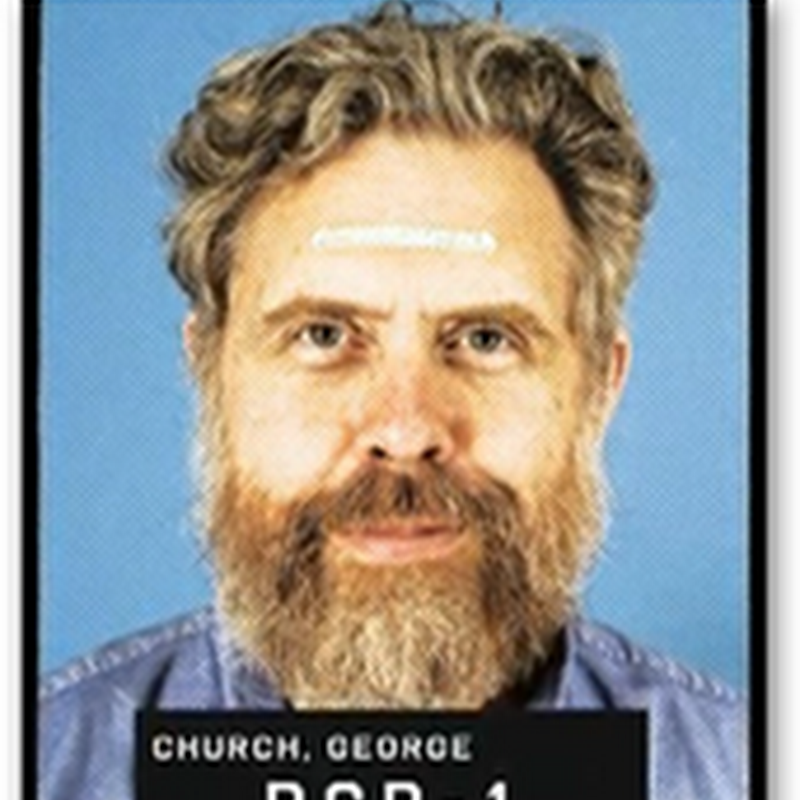
    Low Cost or Close to No Cost Diagnosis Using Cheap Paper - TED

    George Whitesides, the Chemist from Harvard has a profile that can be read here.  He is discussing using paper for more diagnostic tests.  There’s a special printer that works with the paper to create the objects.  He touches on the subject we all love to hate or hate to love, compliance. With using his Lab on a piece of paper the size of a stamp, it can be checked to see if the medication has been taken.  One big problem in all of this is how do you produce a product without there being a big profit to be made he asks?  BD 


    Traditional lab tests for disease diagnosis can be too expensive and cumbersome for the regions most in need. George Whitesides' ingenious answer, at TEDxBoston, is a foolproof tool that can be manufactured at virtually zero cost.

    TED Blog: A lab the size of a postage stamp: George Whitesides on TED.com

    Zeltiq™ System That Sucks, Freezes And Eventually Kills the Fat Cells In Your Body – Non-invasive Procedure

    Oh the many new ways there are to rid ourselves of fat!  This is a new process, approved by the FDA,  but not for fat removal.  In other countries is had approval, but here in the US it is limited to treatment of pain relative to dermatology type procedures.  I guess the key here is to have some pain, get treated imageand lose some fact accidentally?  The process freezes fat cells and the results are not immediate as after they have been frozen, they die a slow death, in other words when the fat cells accumulate and many of them die, you get thinner!  I do have to say this is a very interesting process.

    Plastic surgeons are already using it in several areas and you watch the video and see how the noninvasive procedure works.  Just sit back, attach the machine, read a book and let it suck.  The cost though is not cheap and it is so new there are not really enough results to say yes or no other than a few doctors who have used the machine for a while.  The other well known approach is surgery with other techniques so if the fat sucker works out, there may be fewer opting for surgery.  It appears you have to be somewhat normal in weight, in other words not be extremely obese with for the product to work, either that or have one semi-permanently attached I guess?  Anyway, interesting new product and concept here for getting rid of fat.  BD   

     Zeltiq (pronounced Zel ′teek) Aesthetics, founded in 2005, is a science-based medical device company dedicated to the development of non-invasive procedures for the reduction of unwanted fat tissue. The Zeltiq approach utilizes a patented method called Cryolipolysis™ (the use of precisely controlled cooling to remove fat) that is designed to target only fat cells and not harm the skin or other tissue.

    The Zeltiq Procedure for non-invasive fat layer reduction is available in Canada, the European Union and other international markets. The Zeltiq device is cleared by the FDA in the United States for various applications related to skin cooling during dermatologic treatments, with a pending application for non-invasive fat layer reduction.

    Zeltiq™ Aesthetics Home Page