92648

California Creates Website Showing “Sticker'” Prices for 28 Surgical Procedures at Hospitals

I have to somewhat agree with what is said here in this article, it might just confuse more than help.  Even patients with no insurance can negotiate imageand the numbers reference the amounts billed, not collected, as well all know, the 2 are far from ever being equal.  The one comparison between Hoag and UCI Irvine quoted below got my attention though, as this is huge.  UCI just opened their new facility so perhaps there’s some influence there as Hoag Hospital is in Newport Beach where you would almost expect and anticipate the rates to be higher, but not so in this one comparison.

It could be helpful to see what the range is for a procedure maybe, but not for shopping price entirely.  BD

State officials on Thursday unveiled a new online tool for comparing what hospitals charge for surgeries, part of an ongoing move to educate consumers on the cost of health care.

Prospective patients can compare what hospitals in their county, city or across the state charged on average for 28 common surgeries such as gallbladder removal, hysterectomies or heart valve replacement.

For instance, in Orange County, the highest price for a Caesarean section was $31,000 at UC Irvine Medical Center. The lowest was nearly $11,000 at Hoag Memorial Hospital Presbyterian. For disc removal, Tustin Hospital had the highest charges at nearly $74,000. Placentia-Linda Hospital was the lowest at about $22,000.image

The charges are hospital averages and represent what is billed, but not necessarily collected. State officials said while health plans, Medicare and Medi-Cal pay lower rates, the charges reflect the sticker price.

The data base is available at http://www.oshpd.ca.gov/commonsurgery/

The database includes the number of procedures done and the average length of stay.

Compare what surgeries cost with new tool | hospital, charges, lowest, highest, state - Life - OCRegister.com

Related Reading:

UCI Medical Center Opens the Doors this Week – New State of the Art Facility
UCI Irvine Medical Center Makes “Best Hospitals List” – service workers striking the facility
New UCI hospital – the explanation behind the design to promote better healing and healthcare

Feds Prepare PHR Model to Educate Consumers about Privacy and other Issues

This sounds like a good idea in concept, but first of all we have to get people to “read”.  One other item worth a mention is the fact that by the time the information is published, it’s out of date.  Google and Microsoft protect the enterprise and government so perhaps you think that maybe their security policies, that are much more stringent than those of HIPAA provisions might be worth a mention too. 

When this is finalized, I would like to see the members of Congress, maybe the Senate read it first so they too know what a PHR is, as a few months ago during the hearings on healthcare, none of them seemed to know what a Personal Health Record was, so could they be the pilot consumers on this template and let us know?  Representatives from both Kaiser Permanente and Microsoft fielded the questions very graciously.  It would be nice to have some role models in place and help stop the evolution of “Magpie Healthcare”.  

Devices reporting data need to also be centralized in in PHR before we have data going all over the place too, a big issue with privacy and who has the say in where and who gets to see the information generated.  The PHR can be the focal point to accomplish this without 3rd parties having the data transmitted without the involvement of the patient and physician in this effort.  By the time they get done with a template, there will be 100 more devices on the market with data reporting features, so in my opinion, this issue needs the attention right now, and the template can show up later. 

Has anyone taken notice of the Bluetooth inhaler soon to be on the market?   This is a good example of information that needs to go to a PHR instead of perhaps a wellness coach working for an insurance company.  Employees are enticed to be attached to devices that report even much more than this and the choice needs to be retained by the PATIENT, not the risk management Insurance company, who may be offering employers incentives for lower rates too with employee participation. This is a bigger privacy issue that is a bomb waiting to explode. The information needs to go to a common gathering place, like the PHR and shared by the patient if they choose, not going to some other 3rd party application and viewed by individuals outside the realm of the patients control, and it almost is removing the doctor from the entire scenario in the process and depending on how the program works, conflicts between the doctor and wellness folks could occur if not done with team efforts. 

We don’t trust insurance companies as they tend to have a big lack of transparency and devices that would make one electronically “prove’ when they took their medicine, how many steps they walked in a day, how many hours they sleep each night is what I believe to be intrusive.  Some of the device companies state they are targeting insurance companies to expand their market too.   Those devices are out there, plenty of them mentioned in posts on this blog, so this is no longer Sci-Fi, its here, but you have to read to keep up and the template is not going to be a huge factor here unless the data reporting devices that are out there come under the connectivity of a PHR so we don’t end up sacrificing privacy in in the process.  BD 

The Office of the National Coordinator for Health Information Technology is developing a model, or template, to enable personal health records vendors to better inform consumers about privacy, security and information management policies.

"Given the newness of the electronic PHR concept, the different ways to establish PHRs, and the sensitivity of personal health information, ONC is taking steps to establish that useful facts about PHRs and PHR privacy policy information be made available to consumers so they can make informed decisions about selecting and using PHRs," according to a notice published May 22 in the Federal Register. "The model will be developed to allow presentation of important PHR facts and policies to consumers, allow consumers to understand and consistently compare PHR service provider policies with others, and focus on the key information that may influence decisions and choices of PHR service provider."

Feds Prepare PHR Model

Related Reading:

Senators Holding Closed Door Sessions Discussing 3 health-insurance plans – Why Are the Doors Closed?

U.S. Congress has an inadequate understanding Value of Health IT – HIMMS Opening Session
Think tank details its ideas for use of health IT records – Do they use a PHR?
Clinical Trials in the US – Begin involving the physicians and patients at the point of care to achieve greater success and participation with Personal Health Records
Do You Know What Your Doctor Is Talking About – Read up and help stamp out “Magpie Healthcare”

Elizabeth Taylor Discovers Twitter from the Hospital

One more celebrity has found Twitter, from the hospital, keeping everyone updated.  BD 

Who knows a hospital stay could be such a tweet. At least it is for Dame Elizabeth Taylor.

The 77-year-old actress has been posting to her Twitter page while staying in the hospital for what her publicist described as a "routine visit and is doing fine."

Elizabeth Taylor does Twitter! Posts tweets from her hospital bed

Beth Israel Deaconess Hospital Shrinking Lab and Research Facilities – Not Enough Grant Money to Cover all Bases

Lower than anticipated funding from the NIH is slated as a primary reason, along with lease agreements on office space made in the past where the cost of rent compared to what prices would be today, are at premium cost.  The hospital will see an increase with stimulus funds; however, notimage enough to cover the entire tab.

The hospital though is not the lone star here as other hospitals have experienced some of the same, over the last few years, NIH funds have been pretty flat.  Even the NIH agrees and is attempting to utilize and give out the grants on projects that had been approved but sat still due to lack of money in the budget.   One other small item worth mentioning is the Madoff Scam that also had an effect.

Madoff Scam Hits Harvard Medical School Grants and affiliate Beth Israel Medical Center

You can always get personalized information and his point of view from Paul Levy’s Blog, Running a Hospital, the CEO of the hospital where he covers his offerings with transparency that we don’t seem to get anywhere else, and we all learn.   When layoffs were imminent the entire hospital under his plan of involving all working together for a plan to keep the cuts down to a minimum, and officials and physicians have already taken salary cuts in order to keep some of the lower paid employees on the payroll.  Those that mop floors and clean as well as delivering food are important too. 

The commitment of the research department is still there, it just appears with a little less space and perhaps not as many individuals as in the past.  BD 

Beth Israel Deaconess Medical Center, which laid off about 70 workers last month and made other cuts to regain its financial footing, is now taking other steps to stem a projected $28 million loss this year in its biomedical research operations.

The expected deficit is forcing the Harvard-affiliated Boston teaching hospital to give up lab space in two buildings and consolidate its research - focusing on cancer, molecular imaging, and vascular biology - at a single site.

Executives said in March that Beth Israel Deaconess was on track to lose $20 million for the year in its overall operations, which include clinical care, research, and other functions. At the time, they said reductions in payments from insurers, the government, and other sources would more than outweigh income from clinical care. In an e-mail to employees, Paul Levy, the chief executive, noted that "research funding has also fallen short by several million dollars."

But while executives say they wrestled with the problem internally, they have not publicly discussed the projected research gap.

Hospital researchers were alerted in March that Beth Israel Deaconess would abandon one of the seven floors it occupies in the Center for Life Sciences, connected by a bridge to the main hospital complex, as well as space in the nearby Harvard Institutes of Medicine research building.

Last fall, it relinquished research space in Cambridge and other locations in the Fenway neighborhood. In all, the hospital is reducing its research space by about 11 percent.

Research costs batter Beth Israel's budget - The Boston Globe

Related Reading:

Hospitals that Care Enough to Make A Difference

Why Don’t We Hear About More Hospitals Doing This Thing Called Teamwork?

EHRs go beyond treatment – Social Security Pilot Program with Beth Israel Deaconess Hospital in Boston

Beth Israel Deaconess Medical Center Trimming Expenses - Boston

Business Intelligence in HealthCare – Aggregated Data at Harvard Medical Centers

Bill Gates, Warren Buffett, Oprah, Ted Turner, David Rockefeller, Jr. and more – Billionaire’s Summit Meeting Held in New York

imageThe organizers were none other than Bill Gates and Warren Buffett for the event.  There have been meetings all over the US of late, everyone striving to find a better future and better world.  As the article states, Mr. Gates was the most impressive, (he’s the one with the technology and brains that runs everything else) and Oprah was listening.  All have contributed millions of dollars to philanthropy and of course want to see all those efforts succeed.  Ted Turner was slated as being the most vocal.  This was a pretty big collection of millionaires to say the least, but perhaps a great meeting of the minds. 

The meeting took place on May 5th at Rockefeller University in New York.  Rockefeller declined to speak about the meeting as far as adding any subject material and said he has frequent meetings with friends.  Both Bill Gates and Oprah have been staunch leaders in promoting education, as healthcare and all other issues stem right back down to the one basic item that needs to be addressed. 

One of my favorite videos of Warren Buffet I have posted here is:  Beware of Geeks Bearing Formulas  How does he know this, hanging out with Bill Gates will offer a lot of knowledge perhaps.  Bill Gates has spent numerous occasions addressing our Congress, and they too need education, as some members still don’t even use a computer or use it very little and all the economic and other imagedecisions made today are based on “Business Intelligence” so there’s a lot of room there for growth too, as how can they make intelligent decisions without some basic skills, you can’t rely on your staff to do “everything’ for you. 

Unfortunately the world is full of “old dogs who won’t learn new tricks”. 

Also, one of the Gates Foundation recent efforts to help educate includes the agreement with Viacom.  If we can’t get folks to read, the foundation is “paying” for educational spots and encouraging television shows to include health related educational topics.  Most foundations have to wait until time given for this purpose, but they are paying for it, big difference in putting the effort forward and being pro-active to help reach the couch potatoes of the US.

Oprah has done some wonderful efforts too with healthcare education, as in sponsoring a new show for Dr. Oz who brings us all kinds of knowledge with healthcare, and one of my favorites was the portion done on “regenerative medicine”.  With regenerative Medicine, I have been fortunate enough to post some interviews with companies like Cook Medical, one of the companies creating some of the new healthcare technology and products.  In writing this blog I find out about a lot of treatment plans, science, life sciences, genomic breakthroughs that the average person is not aware of, things we think are Sci-Fi, but they are not, they are here today.  When I speak to friends and others about what is out there and what is possible, I see a lot of “dropped jaws”, and again these are mostly people who are busy and on the whole may not do a lot of reading. That is part of the purpose of this blog too, to bring a conduit together to at least offer an area where to at least keep up on some of what is happening and if you don’t find it here, there’s a ton of links to other bloggers and references on the site.  image

I hope we hear more about what transpired and hopefully some of their efforts will help in the education process for all and on the other hand create some real solutions for getting rid of “Magpie Healthcare”.  BD

The secret is out on a clandestine billionaires' summit held in Manhattan earlier this month, when some of the wealthiest Americans met behind closed doors to plot strategies for weathering the economic downturn and coordinating their global philanthropic efforts. 

Bill Gates and Warren Buffett organized the hush-hush huddle held in a Rockefeller University conference room on the Upper East Side with Mayor Bloomberg, George Soros, Oprah Winfrey, Eli Broad, Ted Turner, David Rockefeller Sr. and David Rockefeller Jr., among others. 

Topic No. 1 during the May 5 conclave was which of the moguls' favorite causes -- such as disease control or government reform -- needed extra help during the downturn. They also sought ways to encourage the common man to keep making small-change donations, an aide to one participant said. IrishCentral.com, which first reported on the powwow, said Gates and Buffett also solicited views on how the group should respond to the global economic climate.

In all, the attendees have donated a collective $70 billion since 1996, according to the Chronicle of Philanthropy.

In their letter of invitation, Gates, Buffett and Rockefeller cited the worldwide recession and the urgent need to plan for the future. They said they wanted to hear the views of a broad range of key leaders in the financial and philanthropic fields.

BILL GATES AND WARREN BUFFET ORGANIZE SECRET BILLIONAIRE MEETING- New York Post

Related Reading:

Oprah Says Farewell to Dr. Oz and Launches the Winfrey Produced Dr. Oz Show – Healthcare Education in the Making

Gates Foundation and Viacom Team Up for “Get Schooled”
The Oprah Show – Dr. Oz Explores and Explains Regenerative Medicine

Bill Gates from the TED Presentation this week – Malaria and Education

Former US NIH Director Joins the Bill and Melinda Gates Foundation
Bill Gates - an optimist and a comedian – Fills the Room with Mosquitoes at TED
Bill Gates Leaving His Fortune to Charity

“Beware of Geeks Bearing Formulas”…Warren Buffett (Classic Post Revisited)

Congress to industry: 'We need your help'
The 2 New Hot Words in Healthcare: Algorithms and Whistleblowers

Offisync– Microsoft Office Add On Toolbar to work with Google Docs…

I have not tried this yet, but I will.  It was not created by either Microsoft or Google, but rather a 3rd party, so this will be interesting to see how it imageworks.  The big thing here is being able to use your desktop Office installation to edit, etc. as it is more feature loaded than working from web documents; however the benefit of working from the web with Google docs offers some nice features too. 

I have already found my solution with the Office Live Workspace and Small Business that takes care of what I do and share on the web, but I’ll have to just try this out. 

If you are doing some serious research the Word Ontology Add in might be handy. 

 One other item of note for students, don’t forget the Big Steal for $59.99 – Office Ultimate which is normally around $600.00 and available for current students with an EDU email address extension and runs through December 2010.

 image

You get a toolbar with Office to connect to Offisync.  Make sure you have a Google Docs account first before installing.  The website pretty much explains all.  BD

First, you need to configure Offisync with your Google account details using the “Accounts” button. Offisync supports multiple accounts, so if you use both Google Docs and Google Apps, you can easily switch between them.

You can then use Google Docs as an online repository for your Office documents. Click on “Save As” in the Offisync toolbar and you get access to a file menu showing your Google Docs account. As well as being able to save files, you can add, rename and delete folders.

image

Offisynch - Office and Google Docs

Related Reading:

Creative Commons Add-in for Microsoft Office 2007, 2003 and Office XP

Microsoft Word Ontology Add in for Word 2007 – Free and Open Source Download for Scientific Research

Microsoft to soon sell full range of Web software – I use and like Office Live for Small Business and Office Live Workspace
Microsoft Offers Free Web-Based Office Extension - Software as a Service
Microsoft Delivers Office Live Workspace Beta
Windows Live Services – Wave 3 – Free Download
Microsoft Store Opens On The Web For U.S. Shoppers – Software and Hardware

Natalie Cole Recovering from Kidney Transplant

One of my favorites by all means.  She had stated in interviews that he was taking a drug named  interferon in May 2008 to fight the hepatitis C virus and that both of her kidneys were failing, recently she had been on dialysis.  The big issue was to cure the Hepatitis C infection so the kidney imagetransplant will be a success.  BD 

May 21, 2009 -- Singer Natalie Cole is "resting comfortably" at Cedars-Sinai Medical Center in Los Angeles after undergoing a kidney transplant operation on May 18, according to Cole's web site.

Cole may be able to leave the hospital as early as next week, her spokeswoman tells WebMD.

Cole went public with her hepatitis C in 2008. "Thankfully, her hepatitis C has been completely cured" by treatment given before the kidney transplant, Cole's spokeswoman tells WebMD via email.

Hepatitis C is a liver disease caused by infection with a virus. It damages the liver, which may lead to a need for liver transplant.

http://www.webmd.com/news/20090521/natalie-cole-recovering-after-kidney-transplant

Johnson and Johnson Acquiring Cougar Biotechnology – Cancer Biotech Company Los Angeles

The company has a couple drugs targeted for prostate cancer, one in phase 3 with clinical trials and is a hormone based drug in pill form that works by targeting a specific enzyme to limit the production of testosterone that is produced to stunt the growth of cancerous cells and tumors as well as providing some life prolonging benefits. 

Almost one billion was the price tag and the process of pharma investing in biotech continues.  BD 

imageThe drug maker Johnson & Johnson said on Thursday that it had agreed to acquire a cancer drug developer, Cougar Biotechnology, for about $970 million to strengthen its oncology business.

Johnson & Johnson said it had agreed to pay $43 a share, which is about a 16 percent premium to Cougar’s close on Thursday of $36.98. The shares traded at $42 after hours.

Cougar is conducting two trials for an experimental treatment for prostate cancer.

The deal is the latest in a string of purchases by big pharmaceutical companies of smaller companies with promising products.

image

Johnson and Johnson to Acquire Cougar Biotechnology - NYTimes.com

Related Reading:

Abbott sues Johnson and Johnson – Rheumatoid Arthritis Legal Battles

Johnson and Johnson states they are not entering the bio-similar market, yet
Swiss Partner Basilea asking Johnson and Johnson – What’s the Hold up with Ceftobiprole
Johnson and Johnson Hit with Off Label Allegations
Johnson and Johnson Buys Medical Device Maker Mentor
Johnson & Johnson Acquire Omrix Biopharmaceuticals
Johnson & Johnson to acquire Ann Arbor firm Health Media
Johnson and Johnson recalls narcotic pain system sold in Europe

Chinese Lawsuit Claims Toxins in American Products from Johnson and Johnson

Blue Cross Venture Capital Investment in Phreesia Tablets Appears to be Paying Off

The company claims to be growing and hiring additional sales and other support personnel.  Patients fill out information on the tablet and it can either be printed or sent to an EMR.  They are wireless and run off Windows CE.  In February they brought in over 11 million with Sandbox and others, who handles the Blue Cross Venture funds.  The devices are supported by running advertising, so if you miss it on the big screen TVs in most doctor’s offices, here’s one place when you are done filling in your forms.  BD 
BlueCross BlueShield Venture Capital Firm invests in Phreesia

The company, called Phreesia Inc., produces a clipboard-sized tablet-computer (dubbed the "Phreesia Pad") with a built-in health card imagereader to automate the check-in process at doctors' offices and hospitals. By doing so, staff members are freed up to attend to patients rather than data entry tasks.

While the company, which is headquartered in New York, has no Canadian sales yet, more than 5,000 physicians in the U.S. are using Phreesia's technology. The company expects that number to hit 10,000 by the end of 2009

Phreesia is a privately held company and does not discuss sales or subscription rates.

image

Firm helps MDs pad their operations

Related Reading:

Health insurers reinvent themselves as money managers – Banks
Blue Cross Blue Shield starts new bank for customers
Senators begin work On Healthcare again this week
BlueCross BlueShield Create New Venture Capital Organization

X PRIZE Foundation for HealthCare – Is the Incentive High Enough

Medtronic Gets FDA approval for 2 New Deep Brain Stimulation Devices for Parkinson's Disease

Two new implantable devices for the control of Parkinson’s Disease.  The new Activa RC unit is slated to last for 9 years and is rechargeable.  The Activa PC is a smaller model by 20%.  One of the new features mentioned are advanced programming features, the software is always getting imageupgraded.  If you have not seen what the implants can do for a person with Parkinson’s Disease, it’s pretty outstanding and in many instances brings the quality of life pretty much back to normal.  There are videos on YouTube where individuals who use one have turned it off just to video and show how they are without it, almost disturbing when you see how they revert right back with the power off.  This link has a couple videos that somewhat describe a couple cases where you can get an idea of how powerful and helpful the devices can be for those who suffer.  BD

(RTTNews) -  Thursday, medical devices maker Medtronic, Inc. (MDT: News ) said the U.S. Food and Drug Administration or FDA approved two deep brain stimulation devices, Activa RC and Activa PC for the treatment of movement disorders in advanced Parkinson's disease and essential tremor. The new devices are expected to be available in June in the U.S.  image


The deep brain stimulation device consists of implantable and external components. A thin, coiled wire with electrodes on the end is placed in a specific target in the brain and is connected to a neurostimulator, which is similar to a pacemaker. The neurostimulator, placed beneath the skin in the chest, produces tiny electrical pulses that are believed to block abnormal brain function that causes disabling movements.

Further, Medtronic noted that Activa PC has become the most widely used device in Europe for bi-lateral deep brain stimulation therapy, since the approval of both Activa RC and Activa PC in Europe in August 2008.

RTTNews - Breaking News, financial breaking News, Positive EPS Surprises, Stock research ....

Related Reading:

Deep Brain Stimulation for Dystonia and Parkinson’s Disease and More?
FDA OKs deep brain stimulation for Obsessive Compulsive Disorder - Medtronic
Brain Implants For Parkinson's Show Benefits as well as risks
Many illnesses may be in for a shock - The Brain Defibrillators
FDA Clears Neurostar® TMS Therapy For The Treatment Of Depression
Medtronic Announces First Clinical Data on Occipital Nerve Stimulation for Chronic Migraine to Be Presented at American Headache Society Meeting
Tapping the Brain for Profit - Medical Devices for the Brain, they do exist
Many illnesses may be in for a shock - The Brain Defibrillators
Legendary Banjo Player's Brain Helped with Deep Brain Stimulation - The Brain Defibrillators are here

Patients Want Access to all Their Medical Records Survey Says – How to Help the Patients on how to do this

This is a good survey, but it’s like stating you would like to have a hot fudge sundae, you have to get up and make on or get in the car and drive somewhere to buy one.  So how do you get access – get a personal health record so you have a method and a place to store the information.

A few years back a company called AOL used to have CDs all over the retail stores on how to get online and it did well and many people discovered the internet this way.  When I go into a doctor’s office, I see all kinds of brochures, medical information posters on the walls, and even a televisionimage that entertain and education you while you wait.

Why don’t we see some CDs for starting a Personal Health Record in physician lobbies?  That could be a very good way to offer information and help get patients educated and started with a personal health record.  This is just my own brainstorm here, and I know there are folks from Microsoft who read this blog and perhaps there’s some from Google Health, so if you happen to run across this posting, any thoughts on the idea? 

Perhaps even the doctors might get curious enough themselves and take one home and give it try.  It’s great to see the results from the survey, but education is the next process that needs to take place.  BD

A qualitative study led by a research team at Beth Israel Deaconess Medical Center (BIDMC) helps answer that question. Reported in the June 2009 issue of the Journal of General Internal Medicine (JGIM), the findings provide key insights into consumer preferences, suggesting that patients want full access to all of their medical records, are willing to make some privacy concessions in the interest of making their medical records completely transparent, and that, going forward, fully expect that computers will play a major role in their medical care, even substituting for face-to-face doctor visits.

"We set out to study patient attitudes toward electronic personal health records and other emerging and future electronic health information technologies," explains the study's lead author Jan Walker, RN, MBA, Instructor in Medicine in the Division of General Medicine and Primary Care at BIDMC and Harvard Medical School. "And we learned that, for the most part, patients are very comfortable with the idea of computers playing a central role in their care." In fact, she adds, patients said they not only want computers to bring them customized medical information, they fully expect that in the future they will be able to rely on electronic technology for many routine medical issues.

"Patients know how busy their doctors are and they want to reserve us for what they really need us for - treating serious illness and conditions," adds senior author Tom Delbanco, MD, the Richard and Florence Koplow-James Tullis Professor of General Medicine and Primary Care at Harvard Medical School and BIDMC. "They may be more than happy to rely on computer protocols and 'faceless doctors' to help them manage garden-variety medical problems."

"The patient's view is critical," adds Delbanco. "We health care professionals think we know what it is, but we're often too arrogant to ask. We want our healthcare system to be as patient-centered as possible, and patients have broad and deep experience with technology in other sectors of their lives."

Patients reveal willingness to trade hands-on medical care for computer consultations

Related Reading:

Microsoft and Google Driving for the Same Outcome with Personal Health Records – Could DPHRs Be in the Picture

The Smart Inhaler with Blue Tooth and Wireless Capabilities

HPV 16 Linked to Head and Neck Cancers in Study – Gardasil Vaccine Recommended

It seems that we are finding out more all the time about the human papillomavirus, HPV.  This certainly makes a case for thinking about the vaccination.  The numbers are a bit scary with 70% of the population will be infected.  Amazing that the research has lead to information that it could imageprevent head and neck cancers.  BD 

(PhysOrg.com) -- Researchers at Roswell Park Cancer Institute (RPCI) in Buffalo, New York, are strongly advocating a national discussion about the need to vaccinate both young men and women against HPV 16 to prevent head & neck cancers. The call comes amid growing evidence that certain cancers of the head and neck are strongly linked to HPV 16, a specific strain of the human papillomavirus (HPV) that is one of the most common sexually transmitted diseases in the United States. It is estimated that approximately 70% of Americans, both men and women, will be infected with HPV at some point in their lives.

There are more than 100 types of HPV—each identified by number—but only 70 have been described so far, explains Popat. Some HPV viruses, including 16 and 18, are transmitted sexually—not just through sexual intercourse, but through any skin-to-skin contact involving the mouth, vagina, vulva (the external female genitalia), penis, anus, or fingers.

In 2006, the FDA approved the use of Gardasil, a vaccine that protects against HPV 6, 11, 16 and 18, for females between the ages of 9 and 26, to help prevent cancers of the cervix, vulva, and vagina, as well as genital warts.

HPV Linked to Certain Head and Neck Cancers (w/Videos)

Related Reading:

Gardasil… Now Playing At A Theater Near You

FDA To Review Merck's Application To Expand HPV Vaccine Gardasil's Approval To Older Women

Hand Held Digital Microscope and Camera from Extech

With a 300,000 pixel sensor the camera on here would stand to really rock.  2GB memory is included and it appears to have some decent battery lifeimage too.  This sure look to be handy for a quick look under the microscope and also may have some use with looking at moles or growths.  You could also check out the currency being used by patients to pay too (grin).  BD 

May 21, 2009 The world unseen, or barely seen, by the naked eye is full of mystery and surprise. For many professions, however, it's also part of the job. People employed to inspect printed circuit boards or the quality of fabrics, verify fingerprints or investigate counterfeit currency and forensics, research plants or appraise gems – the list goes on – all need to look at their worlds in microscopic detail. Extech Instruments' hand-held digital microscope with camera has just the portability and functionality that makes getting close to their job a whole lot easier.

image

Extech Instruments' MC108 mini-microscope has the advantage of a 1.8-inch TFT color LCD screen to view images, without needing to be plugged into a PC.  A 300,000 pixel CMOS photosensor captures images, which are brightened by adjustable LED illumination.

Up close with Extech's digital microscope and camera

7 Southern California hospitals fined and 2 more in San Diego

The latest fines from the CA Department of Health.  Some of these were pretty serious and 2 revolved around sponges being left inside patients after imagesurgery.  There is a solution for sponges that helps.  BD

         Sponge Count – Suture for a Living       Technology cuts risk of surgical sponges

The California Department of Public Health on Wednesday issued $25,000 penalties against 13 hospitals -- including seven in Los Angeles and Orange counties -- for serious violations that, in some cases, led to patient deaths.
Each violation comes with a $25,000 fine, part of an ongoing effort to hold hospitals more accountable for placing patients at risk of death or serious injury.
UC Irvine Medical Center was the only facility to get two penalties -- $50,000 in fines.

An inexperienced nurse at Brotman Medical Center in Culver City administered a pain medication intravenously that should have been injected. The patient suffered a brain injury because of a lack of oxygen, fell into a coma and was placed on a ventilator. State investigators found that seven weeks after the first incident last July, the hospital violated its own policy by failing to mark all syringes filled with the same painkiller, hydromorphone, with a pink high-alert sticker. The hospital regrets the incidents and has revised its protocols, said Greg Schwarz, a Brotman vice president.

 
At Harbor-UCLA Medical Center, medical staff left a sponge in a patient’s abdomen during surgery on Sept. 15, 2007. Nearly a year later, a hospital scan revealed the sponge surrounded by a cyst. Hospital spokeswoman Julie Rees said the hospital has taken corrective action by revising its policy on counting surgical spongesimage

At St. Francis Medical Center in Lynwood, medical staff gave a patient too much potassium to correct low electrolyte levels, triggering a fatal heart attack. After the patient was given the drug, medical staff did not measure the patient's potassium levels for about one day, when they were critically high. State officials conducting a probe of the facility two months later found that the hospital had not enacted a new policy to monitor patients receiving potassium. During that inspection, they found that a patient had received potassium but was discharged without the hospital ever checking to see if the patient's potassium level or heart rate was stable.

2 more in San Diego were also fined. 

The UCSD Medical Center in Hillcrest was penalized $25,000 because its staff left a sponge inside a spinal surgery patient in June, according to an investigation by the California Department of Public Health. That patient had to undergo a second surgery three months later to have the sponge removed.

The second local hospital to be penalized Wednesday was Scripps Mercy Hospital in Hillcrest, which also has received two of the $25,000 fines since 2007.

7 Southern California hospitals fined for violations - Los Angeles Times

Related Reading:

California hospitals Fined

ClearCount Medical Solutions receives FDA clearance - checking for surgical sponges

Technology cuts risk of surgical sponges

Isotope Update: Plant Could be Down for Months – Nuclear Medicine Diagnostics Can Expect Delays

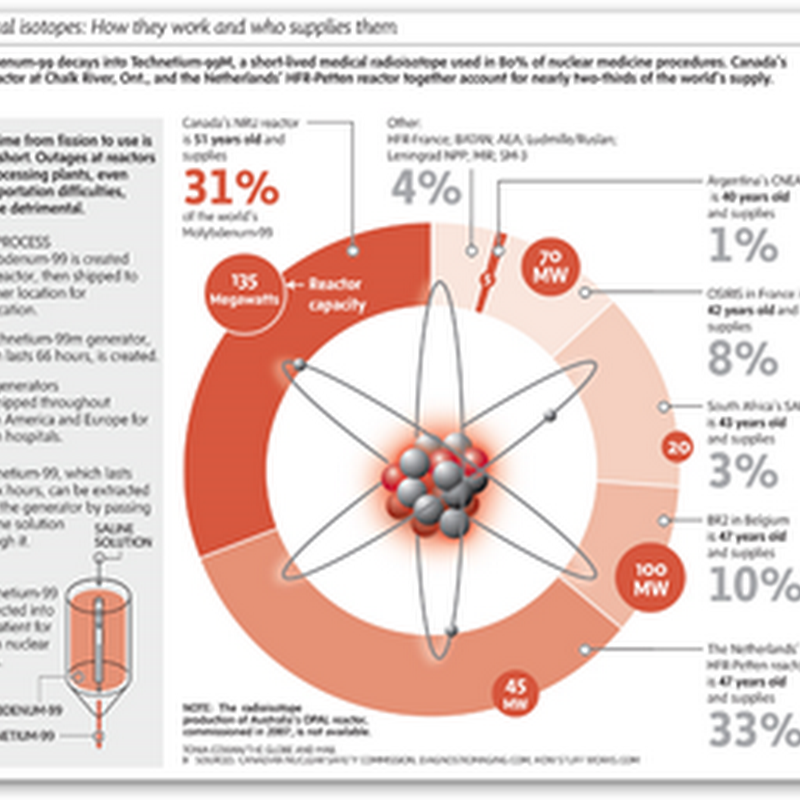
The United States does not produce isotopes so the alternatives are the Netherlands, Belgium, France and South Africa.  there are only 5 plants in the world that produce isotopes.  As Mo-99 generators have a half life of just 66 hours, supply disruptions occur quickly. image Hospitals not getting any generators next week may have to delay radiation treatments, such as those for cancer.  Isotopes are widely used for cancer radiation treatments for breast and prostate cancer.  This plant supplies about half the half the clinics and hospitals in the US and one third of the world’s supplies.  BD 

Also, prices may increase during this time as well as longer order times as the other facilities are not as close as Canada. In September of 2008 the Petten reactor in The Netherlands went down with technical problems too.  The last time the facility went down in Canada was in 2007 and it was closed for a month, see the related reading below for more details.  BD  

CHICAGO, May 21 (Reuters) - Makers of medical isotopes used in scores of diagnostic imaging tests are scrambling to find new suppliers after Canadian health officials temporarily closed a nuclear reactor last week that produces a third of the world's supply. 
Atomic Energy of Canada Ltd shut down its 50-year-old reactor at Chalk River, Ontario, after a small leak of heavy water, used as part of the nuclear reaction.
It expects the reactor to remain out of operation for more than a month but some analysts think it could be months.
Only five nuclear reactors in the world produce molybdenum-99 or Mo-99, which is used in diagnostic tests for cancer, heart disease and a host of other ills.
"It's going to cause a shortage and it's going to cause a price rise. Those are unavoidable negative consequences," Stephen Brozak, president of WBB Securities in New Jersey, said in a telephone interview.

"That reactor supplies about half of the clinics and hospitals in the United States," he said. "About 8 million of our studies are imperiled because that reactor is offline."

"It's going to mean that a large percentage of the procedures that would normally be completed and a large number of the patients that would be served will be left unserved for the duration of this shutdown," he said, adding that some patients "will perish."

Cancer and heart patients in smaller Alberta cities who need isotopes for diagnostic procedures may need to go to Edmonton and Calgary while the Chalk River nuclear plant in Ontario is shut down.

Hospitals brace for shortage of medical isotopes | Reuters

Related  Reading:

Isotope Factory Shut Down again in Canada – Surgeries and Procedures could Face Delays

Medical Isotopes - Will there be enough, treatment delays through October possible at US Hospitals
Rev. Jesse Jackson Touts Medical Isotope Technology
Canada set to order restart of isotope reactor

Medical Quack on the Chicago Sun Times - Oprah Says Goodbye to Dr.Oz

You can also read the full story at the blog at the link below:

Oprah Says Farewell to Dr. Oz and Launches the Winfrey Produced Dr. Oz Show – Healthcare Education in the Making

Dr. Oz likes electronic records too:

Dr. Oz (as seen on Oprah) Discusses How Electronic Medical Records Improve Care – New York Presbyterian moves forward from pilot program

As always, the new show should bring us even more healthcare knowledge and information, a Winfrey production, hats off to Oprah for acknowledging the need for more health care information.  BD 

image

http://www.suntimes.com/entertainment/blogentries/index.html?bbPostId=BAfMYODD5A1mB4i22hiR9pHlCz8ISB0ZqNQFhBEN2tCr1MuK3

Related Reading:

The Oprah Show – Dr. Oz Explores and Explains Regenerative Medicine
Oprah Joining Us on Twitter - @Oprah is the Place
Dr. Oz (as seen on Oprah) Discusses How Electronic Medical Records Improve Care – New York Presbyterian moves forward from pilot program
Swine Flu: Dr. Oz Speaks Out and Gives Some Advice and Information
Michael J. Fox on Parkinson’s Disease and Stem Cells – Oprah and the Daily Show
Dr. Oz (as seen on Oprah) Discusses How Electronic Medical Records Improve Care – New York Presbyterian moves forward from pilot program
Regenerative Medicine – Material and Cell Based Regeneration of the Human Body

AP reporter quarantined in China after Cancun stop and Tells What It’s Like

When you read this, they are really taking the threat seriously.  I think today is the day they were to be released.  BD 

LINGANG, China – There are four of them waiting for us, tottering about the hotel parking lot in yellow biohazard suits.

image

Hotel workers set the food in the hallway and move back so we can pick it up. Apparently, they're scared we'll give them the flu.

My wife and I are in perfect health, but after flying to China for my college friend's wedding we're being quarantined in a remote hotel for seven days. The reason: Our flight from our home in Havana included a layover in Cancun, and China is taking no chances with swine flu.

The hotel is closed except for people in quarantine, and the first day we are the only foreigners. Because government attendants still think we're on our honeymoon, we get the nicest room: a suite with a king-size bed, a couch and a large balcony with a view of the ocean, vast open spaces and farmland in the distance.

Every morning, a man with a tank on his back fumigates the hallway carpets. Workers come into our room to scrub the floor and furniture with disinfectant. They give us disinfectant pills for the toilet: You throw in 10 before using it and 10 afterward. The garbage can has a mustard-yellow bag inside, marked "Warning! Infectious Medical Waste."

AP reporter quarantined in China after Cancun stop

Microsoft and Google Driving for the Same Outcome with Personal Health Records – Could DPHRs Be in the Picture

In my opinion, someday you might even see an interchange between the 2 personal health records as well.  When you stop and think about it both companies share the internet too, part of both Microsoft and Google are what I currently use, so even as competitors software folks learned a long time ago about teamwork in essence.  When someone write a good piece of code, even your biggest competitor is an admirer, and maybe that sounds foreign to many as competition functions in other industries is not the same.  Steve Ballmer has said that vocally in many of his talks about “great code” and that nothing happens until it’s implemented….developers….developers….developers.  You can find plenty of those examples on YouTube.

Again, in my opinion only I see both of these platforms with a ton of room for growth to benefit consumers, we just need better education on that end though for all to take advantage.  Eventually with the electronic medical devices appearing so quickly on the scene, perhaps a new level of aggregation might be needed to help the doctors too.  When you stop and think about it there are new devices showing up every day and how in the world is a doctor going to be able to follow and use all those results reported, a daunting task for the already overloaded MDs. 

Perhaps we could see a new level here with Physician Portals to help make this issue easier for the doctors with one central portal to review for device generated data.  Also, if something along this line is not realized, it’s a big expense too for the device folks to create integrated solutions for the EMR companies too, again a lot more code to be written. 

The PHR can be a solution with a Physician’s Portal to accumulate and all the data into one dashboard, as allowed by the patient to share.  This also stands to strengthen the patient/doctor relationship instead of further fragmentation as we are starting to see now.  Doctors need simple to use and expeditious data flow charts to give them the information they need in real time and an extension of the PHR for the physician side of this could be a solution.  With HL7 capabilities the physician could perhaps import the data into the EMR or EHR and then it becomes part of the chart, again this is done with the permission of the patient allowing the information to be shared, so maybe we could someday see a DPHR, Doctors Personal Health Record. 

I would think the medical record software companies might welcome this idea too, again saves their programmers the time and effort to writing a imagenumber of interfaces for numerous devices. 

If a doctor and patient were in agreement to share this information with outside 3rd parties, it would also be their choice.  At any rate there needs to be a unified area for all of this to come together for the physicians so read and analyze quickly.

Clinical Trials can work with PHRs too and Trialx is one company already integrating in that direction with their information.  When a physician is reviewing the DPHR portal report for example, one click could allow showing the availability of clinical trials for the patient too.  Again, this area is up to the patient pretty much to explore, but at least via the portal a physician would be aware of a trial available. 

As mentioned, Microsoft might be one step up here with integrating with Amalga, but this is something ever one could use, working with various software systems so doctors anywhere could have a unified portal to view device data information as it has been gathered.  Microsoft already has several vendors who are working with HealthVault to collect via blue tooth and USB devices with the patients, the only thing missing is a quick and convenient way to get the information to the doctors, the “DPHR” maybe?  BD 

(CNET) -- Microsoft and Google, the Hatfields and McCoy's of the high-tech industry, have carried their scrap into the race to digitize health care.

The tech rivals launched similar personal health record services in 2007. Both are pitching consumers on an electronic record that they can control and share, as they see fit, with health care providers.

With Google Health and Microsoft's HealthVault, consumers can maintain a digital health record that contains various data from medical offices, hospitals, pharmacies, and even patients themselves.

But as the warring tech giants extend their reach into health care, they are saying nice things about one another -- at least for now.

"I love Google Health," said Sean Nolan, the chief architect of Microsoft's HealthVault service. "What they are trying to do is a good thing... We are in the same boat. We're not really fighting with these guys. We're all trying to make it work.

Microsoft and Google aren't alone in this space. WebMD and Revolution Health also offer tools for building a personal health record. Efforts like those of Dossia and Aetna's ActiveHealth Management unit are working directly with employers to offer health record options to workers. Meanwhile some providers, such as Kaiser Permanente, also offer their own health records.

Microsoft, Google in healthy competition - CNN.com

The Us Military is both heavily armed and medicated

This is an interesting article that explores and talks about our military today and some of the medications used, while in service, some that even the FAA consider to dangerous for commercial pilots to use.  Granted by all means, serving in the military on front lines is probably one of the most imagestressful places to be, but what is the real toll taken with soldiers.  We all remember Viet Nam with drugs, and at that point there were not many prescription options so most were illegal, but today, the military has legal prescription drugs to offer. 

Just like we have here as civilians, they have side effect too and how this combines with battleground duty is what is questioned here in the area of anti-anxiety drugs.  Does it dull the senses and create hallucinations?   What happens when it runs out and there is no drug available?  This one particular soldier was given Seroquel which is used to treat bi-polar disease and it had a not so good affect.  Last year a Wall Street executive filed suit over the side effects he encountered with the drug.

Seroquel maker wants information to remain sealed - Diabetes side effects

War is tough and hard enough, so are anti-psychotic drugs making it better or worse is the overall question.  BD 

Marine Corporal Michael Cataldi woke as he heard the truck rumble past. 
He opened his eyes, but saw nothing. It was the middle of the night, and he was facedown in the sands of western Iraq. His loaded M16 was pinned beneath him.
Cataldi had no idea how he'd gotten to where he now lay, some 200 meters from the dilapidated building where his buddies slept. But he suspected what had caused this nightmare: His Klonopin prescription had run out.

His ordeal was not all that remarkable for a person on that anti-anxiety medication. In the lengthy labeling that accompanies each prescription, Klonopin users are warned against abruptly stopping the medicine, since doing so can cause psychosis, hallucinations, and other symptoms. What makes Cataldi's story extraordinary is that he was a U. S. Marine at war, and that the drug's adverse effects endangered lives — his own, his fellow Marines', and the lives of any civilians unfortunate enough to cross his path.

According to data from a U. S. Army mental-health survey released last year, about 12 percent of soldiers in Iraq and 15 percent of those in Afghanistan reported taking antidepressants, anti-anxiety medications, or sleeping pills. Prescriptions for painkillers have also skyrocketed. Data from the Department of Defense last fall showed that as of September 2007, prescriptions for narcotics for active-duty troops had risen to almost 50,000 a month, compared with about 33,000 a month in October 2003, not long after the Iraq war began.

In other words, thousands of American fighters armed with the latest killing technology are taking prescription drugs that the Federal Aviation Administration considers too dangerous for commercial pilots.

Cataldi says he managed on the medications — until his Klonopin ran out. The medical officer told him there was no Klonopin anywhere in Iraq. So the officer gave him a drug called Seroquel. That's when Cataldi says he started to become "loopy."
"I'd go to pick up a wrench and come back with a hammer," he says. "I wasn't able to do my job. I wasn't able to fight."

U.S. military: Heavily armed and medicated - Health care- msnbc.com

Related Reading:

AstraZeneca, Seroquel Research Director and Sex for Studies

Seroquel maker wants information to remain sealed - Diabetes side effects

Astrazeneca Submits Supplemental New Drug Applications For Seroquel XR For The Treatment Of Bipolar Mania And Bipolar Depression