92648

Patients Should Not Lie to Their Doctors – Find One Who Will Keep 2 Sets of Records for you – One Private and One for Sharing

This was the recommendation made in the article below.  The study from WedMD stated too that a big percentage of doctors felt lying for their patients was ok too, as they are helping them get the care they need.  Over half surveyed thought it was ok and the more serious the condition, the more inclined physicians were to take the stance.   It all boils down to insurance once more, the industry we don’t trust.  We saw it all on the big screen with Sicko the movie. 

Sometimes the complicated algorithms for coverage are too much, like forgetting about one small item like an ear infection, a case of acne, a yeast infection that occurred many years ago, but the payers use those omissions to deny claims and coverage.  So, gee, why do are patients inclined to lie?  Sometimes there are more important things in life than “having to be right” all the time.  When we can’t get beyond healthcare as humans and use items as such to deny care what does it say for the industry and business itself.  It seems to appear we are not getting much closer in Congress either on a health plan so I’m guessing we will end up with some kind of a government plan simply by default, as nobody seems to be giving an inch and greed still predominates. 

Sure technology is reshaping healthcare, but new devices and discoveries should be available and covered for treatment plans.  My own personal opinion is that I would rather see a little fraud get through in the process (which I am not a fan of by any means) rather than tightening down the hatches to where those who need care are denied, but fraud is down to being non existent, besides we have some pretty fancy data systems today that are ahead of the game and catch a lot of it before it happens.  Right now we are still digging out of much of what has occurred in the past with fraud and as transparency continues to grow there will be more.  You know if more claims were paid, they might just save some money on legal costs too.  We need an honest business model here somewhere along the line, and again how big are those reserves or rainy day funds? 

So in the meantime, as the one individual suggested here, find the MD who will keep 2 sets of records for you.  If we didn’t have to worry about our healthcare needs being taken care of, the one file system could work. 

One other small note, is if you have a PHR and the insurance companies are actually honest enough to share all that is on file for you, that would also help tremendously so you could see what they have on file and you might perhaps correct some errors too at the same time.  Also, with your PHR, you can decide too on what parts of your health record that you might want to share too and if complete enough maybe your records from the doctor would not be needed, just a thought.  BD   

That patients lie is one of the basics doctors learn in medical school. Of 1,500 responders to a 2004 online survey by WebMD, 45% imageadmitted they hadn't always told it exactly like it was -- with 13% saying they had "lied," and 32% saying they had "stretched the truth."

Not included in those figures would be patients who "lie" without knowing they do so by withholding information because it slips their mind or they have no idea it could be useful. (Maybe Aunt Agnes would gladly tell about the time she snored so loud she woke the neighbors if she knew that a diagnosis of sleep apnea could depend on it.)

Patients also are prone to lying about the fact that they engage in social taboos, things their doctor might not approve of. In the WebMD survey, 22% lied about smoking, 17% about sex, 16% about drinking and 12% about recreational drug use.
"When you're studying psychiatry, you're taught that if a patient says, 'I use cocaine once a month,' you figure it's twice a month," says Dr. Robert Klitzman, professor of clinical psychiatry at Columbia University. "We were taught to double."

But co-workers, parents and spouses aren't the only threats hanging over a patient's head. Health insurance is another. And so -- not surprisingly -- sometimes people lie in order to keep something out of their medical records or out of the hands of their insurance companies.

But in fact, it's only confidential until it isn't.
Whenever patients apply to buy individual insurance policies, and whenever they file claims under policies they own, the insurance company can request their medical records.  And it doesn't take much in a patient's records to nix the sale of a policy. "A case of acne can do it," says Jerry Flanagan, an advocate with the Foundation for Taxpayer and Consumer Rights.

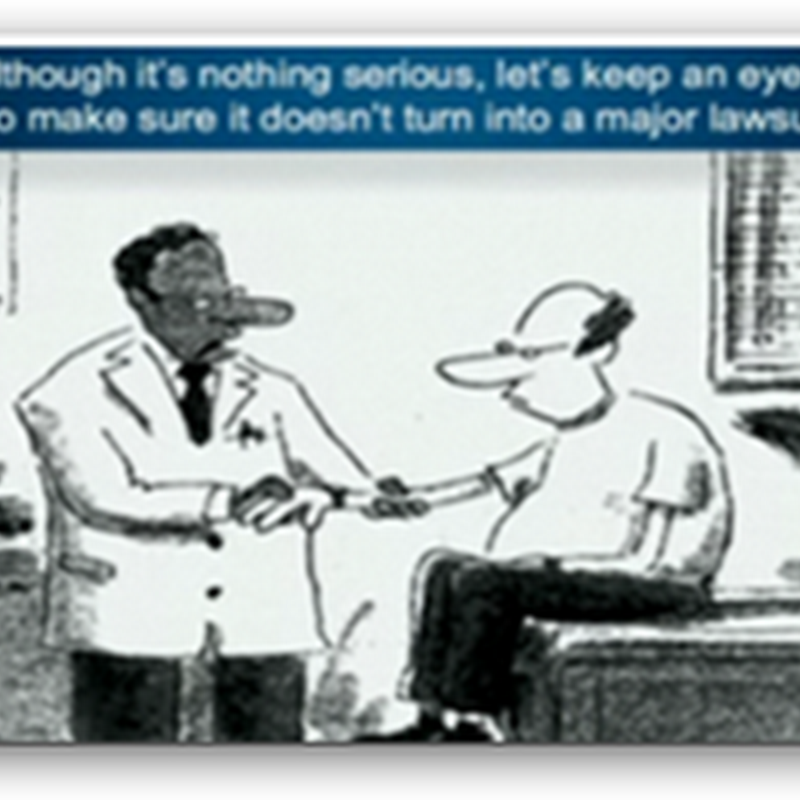
Clarke suggests patients have two sets of medical records, a private one between patient and doctor and another for sharing with others.  "The solution is not to lie to your physician but to establish private records that won't be released to third parties," he says. "If your physician won't do that, it's reason enough to leave the physician."

Body of lies: Patients aren't 100% honest with doctors - Los Angeles Times

Related Reading:

Prescriptions risk score used to deny health insurance
Health insurer accused of overcharging millions – United Health Care/Oxford Insurance 50 Million Fine
UnitedHealth settles misstating executive compensation allegation with the SEC – Use their PHR?
Health Insurance Reserves – How much is in the till, could it be 1 or 2 trillion nationwide?

Insurer's Reserves Criticized

Small Medical Biotech Companies Finding it Difficult To Survive Unless Additional Funding Arrives

Not all biotech companies make it and it is not always just the failure of a product or trial, many are running short of money, unless they happen to be purchased or financed by one of the big drug or other medical companies.  It does make you wonder if we are on the losing end here sometimes with technology that is good for healthcare, but gets lost due to the same problem healthcare is facing everywhere, money. The first company had installations already in hospitals too, but as it states neither Medicare or private insurers were covering the billing. 

In past interviews I have conducted, companies informed me that sometimes it can take years for Medicare or private insurance to approve a procedure and by that time, if the company is still doing well, they are on to the next phase or two of the development, so what does get approved for payment is already outdated.  Some companies don’t have that option though if they are on a slim cash budget, such as these 3 and funding is tougher today than it ever has been.  BD 

BURLINGTON - Until last October, InfraReDx considered itself a symbol of the kind of science-based innovation that creates durable imagehealthcare industry jobs.

Now, InfraReDx represents the perils of the recession for small companies working on promising medical technologies that hospitals and insurers see as experimental. The company, which makes a laser-scanning system that locates signs of heart disease, has been through two rounds of layoffs, reducing its work force to 72 from 92. It would have run out of money this month if its investors had not agreed to a new round of investment.  So far, neither Medicare nor private insurers compensate hospitals for using the scanner.

Plenty of medical companies are sharing Muller's pain. PLC Medical Systems, for instance, a company in Franklin canceled a scheduled clinical trial last fall of a new hydration and urine collection system to protect patients with impaired kidneys from the side effects of X-ray procedures. "We had the hospitals and patients ready to go," said Mark R. Tauscher, the company's president and chief executive.

And OmniSonics Medical Technologies, based in Wilmington ceased operations in January. The end came without warning to doctors who were conducting studies on new applications of its federally approved device to break up blood clots with ultrasound pulses. "They shut it down cold turkey," said Paramjit Chopra, an OmniSonics scientific adviser and interventional radiologist in Chicago who had been a leader in the study. "Nobody returned my calls." (Messages requesting further details left last week on the answering machine of Richard G. Ganz, OmniSonics' president and chief executive, received no response.)

Recession dims chances for small medical firms - The Boston Globe

Walk n Play iPhone Application – Tracks Every Move You Make and Creates A Report

This is a very interesting bit of software that is also free to download to use with an iPhone.  It is slated as a “game’ and allows an individual to imagecomplete with other individuals using the software and creates full 24 hour report of every move you make and how many calories were burned.    This is a free application that can be download from the iTunes store.  The iPhone has a built in accelerometer to sense motion that makes this possible.  The National Center for Human Performance at the Texas Medical Center is conducting tests to see and evaluate the process. 

All you need to do is log in, and carry your phone around with you as one would normally do and the phone goes to work.  In addition, when creating your personalized settings, you can also designate where the phone will be worn or kept. 

You can search for “buddies” too, again allowing for some friendly competition.  This looks very interesting as far as design and how it can perhaps be a nice tool, and we have the “social” end of the solution here, but business and employers are also showing an interest with Wellness and health insurance information. 

From a previous post:

Redbrick’s methods for tracking employees’ commitment to these health plans are surprisingly detailed (though they may smack a bit of Big Brother). For example, it offers an iPhone application that records progress on a person’s walking exercises and beams the data back to Redbrick’s system. Pedometers and watches that do the same are also in the works, VentureWire reports. This might sound a tad invasive, but the company says that employers have the choice whether or not to make employees prove that they are following their custom health maps.

Redbrick’s methods for tracking employees’ commitment to these health plans are surprisingly detailed (though they may smack a bit of Big Brother). For example, it offers an iPhone application that records progress on a person’s walking exercises and beams the imagedata back to Redbrick’s system. Pedometers and watches that do the same are also in the works, VentureWire reports. This might sound a tad invasive, but the company says that employers have the choice whether or not to make employees prove that they are following their custom health maps.

I am guessing this is also the application being used by some insurers in coordination with their Wellness Programs to send information to the system Wellness system.  It could also be another software solution built on the same platform.  Target Stores also announced their new Wellness Program with the same insurer listed and incentives are offered to employees who electronically connect and participate, and somewhere down the line I’m guessing there’s an incentive for Target with employee participation.

Target Corporation Partners with Red Brick Wellness Program

At some point in time the clinical reporting solution here is certainly a possibility to grow, so now where does the patient’s physician come in, let’s say if the patient were on a treatment plan and solution to work on a weight problem?  As a game, a nice incentive, but where’s the next step in the progression?  Will platforms of such be used in coordination with health care, sure they will and where does it go if the patient wants to share their information, just as they would with a Bluetooth scale, a glucose monitor or blood pressure device? 

I believe the PHR, or personal health record might be the solution here too, so when it expands beyond a social game and data imagegenerated is used to evaluate a patient’s performance, two things need to be kept in mind, one would be the patient’s ability to choose who to share the information with and second, the role of the physician and keeping them involved in any Wellness programs in place so avoid conflict of what is best for the patient.  When evaluation begins outside of just social and recreational use we have an entire new ball game arising and now we might see some new definitions and processes that could evolve into the new “meaningful use” discussions taking place. 

Implementation is the key to the entire process and this is more than likely only the beginning of devices that report data and more than likely there will be more to follow soon, so which portions are a game and when does this information become relative to patient care and how will it be used.  BD 

Walk n Play - Walk n Play is an iPhone application. The application is a smart addition in the existing health and fitness category of highly interesting iPhone applications. The application has made its way into the market on 1st March 2009 for the constant efforts of Computational Physiology Lab.

Walk n Play will hope fully add an x- factor to the fitness regimen of the fitness freaks. It will not only help you to burn calories but at the same time it will allow you to enjoy the exercise. It will turn the regular hours of exercise of yours into a fun time.

Walk n Play iPhone App | Improve Your Health and Fitness with Walk n Play iPhone App

Related Reading:

Target Corporation Partners with Red Brick Wellness Program

The Health Coach/Insurance Company – Employer plan to uses devices and phones for employees to prove their physical activity

The Human Audit Trail to automatically track your fitness and sleep and a few other things…

The Wellness Programs: Payouts to Those Who Work Out - Insurers give discounts on premiums
High-tech gadgets hit doctor-patient relationships and more..
Discrimination and Health Insurance: Big Brother in the Workplace and Beyond

Hand Washing Secret Shoppers Patrol the Hospital To Help Prevent Never Never Events

This hospital has individuals watching and checking, as well as installing hand sanitation stations at about every 10 feet in the facility on patient imagefloors, so everyone here is being watched.  The reason for this of course to to help prevent the never-never events and help stop the spread of MRSA. 

In addition, the hospital audits how many gloves, how much hand sanitizer is used, etc. so we have a bit of business intelligence reporting involved in the process too. 

Last week I posed about a technology solution for the matter that is being utilized and evaluated at a hospital in Florida.  This will be interesting to see if the new technology from HyGreen can help aid in the situation.  In just looking at the human auditor involvement here with time, and the expense of installing hand sanitation stations throughout patient areas, every 10 feet, this involves a bit of an investment too, so again perhaps with the technology solution it could turn out to be a favorable return on investment. 

Real Time Monitoring of When you Washed your Hands – Don’t Touch that Patient Until You Have Washed Your Hands

Again, cost versus manually secret shoppers will more than likely be the key here, as well as evaluating the over all success and functionality of the product.  If it proves to be effective, perhaps we might start seeing technology adding into the battle of the never-never events and the fight against MRSA.  BD 

Jeanette Smyth has spies watching to make sure doctors, nurses and therapists at Ogden Regional Medical Center wash their hands.

At the low point, half weren't practicing good hygiene. Today, the shirkers are down to about 10 percent, according to the hospital's infection control and prevention specialist. 

image

And that has translated into fewer cases of the health-care-acquired infection known as MRSA, or methicillin-resistant staphylococcus aureus, too.   Smyth's secret auditors "walk up and down the hall and pretend they're doing other things with the clipboard. If you're watched, your compliance goes up," she said. "If the compliance is down, they hear about it. This is a never event: We never want them not to wash their hands."

Hospitals cleaning up a nagging problem - Salt Lake Tribune

Related Reading:

Real Time Monitoring of When you Washed your Hands – Don’t Touch that Patient Until You Have Washed Your Hands

Germ-Zapping Keyboard – for use in Hospitals to help prevent the spread of MRSA, C Diff, and other bacterial infections
Stuffing Paper Hospital Gowns in Gloves helping reduce the spread of MRSA
Superbug MRSA Living Amongst Us
DiFusion Technologies – Medical Device to fight infections after spinal surgery
Zinc Zipper' Plays Key Role In Hospital-Acquired Infections - MRSA
Placebo Journal Blog: MRSA SHIRT VIDEO

FDA approves Palomar's anti-wrinkle device for Over the Counter Sales

In looking over the site and the multitude of products, this appears to be the first available directly for consumers.  The screenshot below is one imagefrom the site and may not represent the results of the exact product approved.  If you view the website, they have products for just about every type of skin repair, enhancing procedures, hair and tattoo removal you could think of and from what I can tell, the focus has been primarily for the clinical side with marketing to physicians to include plastic surgeons and dermatologists.  As far as the exact product approved from the FDA, I guess we will have to wait to find out more information and when it will be available to the consumer.  BD

image

(Reuters) - Palomar Medical Technologies Inc (PMTI.O) said U.S. health regulators approved over-the-counter (OTC) marketing of its laser device for treatment of wrinkles around the eyes, sending the aesthetic device maker's shares up as much as 22 percent.

The device was developed by Palomar and completed together with Johnson and Johnson Consumer Companies, under a previously announced deal to develop light-based anti-aging devices, the company said in a statement.

image

FDA approves Palomar's anti-wrinkle device; shares up | Markets | Hot Stocks | Reuters

FDA approves HealthPal – Bluetooth Device that Collects from Other Reporting Devices and Sends Information to PHR – HealthVault or Google Health

This sounds like a solution for the individual who may only have a very basic cell phone and wants a simple device to collect all the information before being sent off to the server.  Yes, we have more Bluetooth here.  I guess you could call this the Mother monitor for all the children devices to report to.  For those who find a Blackberry, Windows Mobile or iPhone too much to handle, it appears this device could work, or if you don’t want individual devices reporting to a cell phone, the trade off is carrying 2 devices, but it’s all about choice and what you feel works for you.

image

The PHR connections are here too with HealthVault and Google Health, and actually some of their first devices connected to the PHRs with a cell phone directly.  Nice that we have wireless now so everything talks to each other.  The only thing missing is an MD portal for the doctor’s side to group all his patient data from various sources together to import into an EHR. 

Are Cell Phones Enabling anyone to be a Scientist or Doctor - Participatory Sensing from CENS at UCLA

Good study going on at the link above at UCLA with participatory sensing, to put together an intelligent solution and hopefully contribute to meaningful use, as the data reporting medical devices keep emerging on the scene.  If not organized and done properly with getting the data at the receiving end, we would be defeating our purpose here as the transmission should be funneled to one location where the patient is still in control and not sent directly to wellness or any insurance carriers without explicit permission given.  BD 

The FDA announced today that wireless remote monitoring system HealthPAL, which MedApss developed, has received 510(k) clearance, according to an email from the company.

 “M2M is cellular technology that enables non-cell phone devises to establish communications using GSM, CDMA or other mobile phone transmission standards. MedApps embeds M2M chips into its products that transmit health monitoring data from remote patients to health care providers - eliminating the need for monitoring equipment to be connected to telephone lines or requiring patients to buy expensive, proprietary cell phones for handling data transmissions.”

HealthPAL is the small, portable dedicated device that MedApps uses to collect data from connected glucose meters, blood pressure monitors, pulse oximeters and weight scales. The data is then sent over a secure server to an online portal like Microsoft’s HealthVault or Google Health for caregivers, physicians or the patient themselves to view.  The video below gives a few more details. 

MedApps has conducted pilots at Cleveland Clinic and Baptist Home Health Network to test the system.

image

FDA approves MedApps wireless remote monitoring | mobihealthnews

Related Reading:

Part Nine: Are you still just using your cell phone for phone calls?

Patients Want Access to all Their Medical Records Survey Says – How to Help the Patients on how to do this

Patients Want Access to all Their Medical Records Survey Says – How to Help the Patients on how to do this

Microsoft and Google Driving for the Same Outcome with Personal Health Records – Could DPHRs Be in the Picture

Target Corporation Partners with Red Brick Wellness Program

Insurance covers most Hips, Knees, and Not Too Many Ankles…

Ankles didn't’ come easy even with the FDA, as a matter of fact they sued on manufacturer and the company Endotec won.  If you want one of their ankles I believe you still have to go out of the country as the battle began many years ago and the patent has now expired too.image

“It's not often the little guy takes on the federal government and wins. Endotec, a small South Orange maker of orthopedic devices, did just that this summer after years of fighting with the Food and Drug Administration for permission to legally market its unique ankle joint replacement implant.”

As stated here, Medicare covers ankles but not too many insurance companies will do it.  It must all be in those calculated algorithms they run to see if the benefit of the replacement is cost effective, never mind that the patient might enjoy a better quality of life with one.  BD 

It's been a decade since the U.S. Food and Drug Administration approved the first total ankle-replacement system for patients with severe ankle arthritis.

Since approving the first total ankle-replacement system in 1999, the FDA has approved two other systems and given tentative approval to a third system. In 2003, the American Orthopaedic Foot and Ankle Society issued a statement that said a total ankle replacement "is a viable option for the treatment of ankle arthritis." And Medicare routinely covers ankle replacements.

Nevertheless, several insurance companies still deny coverage. They base their decision on a "meta-analysis" that concluded an ankle replacement was not a preferred treatment option. The meta-analysis compiled data from previous studies. It was sponsored by insurance companies and based on studies published in 2002 or earlier, Pinzur wrote.

The FDA has approved ankle replacements, so why don't all insurance plans cover them?

Related Reading:

Total Ankle Replacement System Approved by the FDA – The Star System

A New era of artificial ankles
FDA Shackled at the Ankles?

FDA on the low end of the Endotec Ruling - Mobile Ankle devices are ok - Medical Devices

Robotic ankle research gets off on the right foot

HealthCare Partners – Members can now Utilize Microsoft HealthVault - Minnesota

There’s been a lot in the news lately with HealthVault and healthcare organizations in Minnesota this week and one more organization has now imageadded the ability for members to connect their personal health records via HealthVault.  Members now will have the ability to share their records with physicians and hospitals.  As this continues to grow with the emphasis on personal health records, I wonder if some day there might end up being some administrative fees somewhere along the line for those who do not provide records?  Just a thought that crossed my mind. 

HealthCare Partners has over 600 physicians in the group and several hospital facilities as members and states they accept most insurance plans.  This connection connects to HealthVault.  Some vendors are using the software platform and store records locally on their servers, so when looking at connections be sure you are aware of the service’s provisions and most are very explicit on their sites as to how the entire connection works.  BD 

Press Release:

BLOOMINGTON, Minn.--(BUSINESS WIRE)--At the Microsoft Connected Health Conference, HealthPartners announced that members can now transfer information from their HealthPartners account directly to Microsoft HealthVault. Members will be able to permanently access their health information and share it free of charge, even if they change jobs, health plans or doctors.

“This is an enhancement to our healthpartners.com strategy to make it easier to access information,” said Andrea Walsh, HealthPartners executive vice president and chief marketing officer. Currently, about 1.2 million members have the ability to transfer information from their account to HealthVault. Initially, members will be able to transfer their HealthPartners explanation of benefits. Later this year, 450,000 members will be able to transfer additional health-related information to their HealthVault account, including: benefits and co-pays, lab results, immunizations, allergy and medication lists, health and wellness information such as results from HealthPartners health assessments, and other information stored in HealthPartners Clinics and Regions Hospital electronic medical records. To transfer information, members can access HealthVault from www.healthpartners.com.

image

“HealthPartners continues to push the online movement enabling consumers to better access and manage their health information,” said David Cerino, general manager of the Consumer Health Solutions Group at Microsoft. “By allowing consumers to connect their health and wellness data digitally and share it securely, they are able to make better choices to improve their health and the health of their families.”

HealthVault is an open platform designed to put people in control of their health information. HealthVault enables the exchange of data among different health solutions – giving people easy access to and more control over their health information. People can use HealthVault to store copies of their health records obtained from their providers, plans, pharmacies, government, or employers; upload information from health and fitness devices; share information with healthcare providers and trainers; and access products and services.

Giving consumers access to, and control of their personal health information is essential to managing costs and improving health," said Carolyn Pare, president and CEO of The Buyers Health Care Action Group. "HealthPartners has been an advocate and leader in industry efforts to introduce a universal health records platform, and we're pleased that they are one of the first organizations to introduce this to their members and patients.

“We’re pleased that HealthPartners is one of the first in the state to join this effort which will simplify information for consumers and improve quality and reduce costs by eliminating duplication and making information quickly available to any doctor or hospital not just in the state but in the world,” said Nathan Moracco, director, Employee Insurance Division, Minnesota Management & Budget.

About HealthPartners

Founded in 1957, the HealthPartners (www.healthpartners.com) family of healthcare companies serves 1.25 million medical and dental health plan members nationwide. For the fourth year in a row, HealthPartners is rated one of the best commercial health plans in the nation by U.S. News & World Report, NCQA’s “America’s Best Health Plans 2008.”

Related Reading:

Walgreens Partners with Microsoft HealthVault to Populate Medication History in PHR
OptumHealth (Subsidiary of UnitedHealthCare) Teams Up With American Well for 24/7 Physician Consults
Cross Country Truck Driver using Microsoft HeatlhVault to send blood pressure readings to his doctor  (video)
American Cancer Society Circle of Sharing Tool Unveiled – Microsoft HealthVault
Washington and Oregon Health Banks – HealthVault and Google Health PHRs Provided

Are Cell Phones Enabling anyone to be a Scientist or Doctor - Participatory Sensing from CENS at UCLA

We have a new buzz word for this now, “participatory sensing” from the halls of UCLA.  I think at this time this might be a good idea to roll this right up into the “meaningful use” discussions going on.  They do go hand in hand. 

image

One of the key areas they address from the text below I feel is huge: “Our ability to design and control these complex Systems”, something that with all the talk with healthcare and documentation that is somehow getting left somewhere down at the end of the line when in fact it should be right at the forefront, as if you can’t manage it intelligently, what good is it, and continued fragmentation continues along with confusion and utilization.  I just get extremely worried and concerned when I see members of Congress that have not even seen a personal health record for a simple example, yet they are the decision and law makers.  This is an area that can’t be ignored.  I think this organization at UCLA has a lot going on here and perhaps more will tune in soon.  Nothing will occur in a designed fashion until the area of education is fully addressed with participation from all and this is a big task.  Here are some of the industry members listed below, hmmm…even Walt Disney and many academia members.  image

Google

Intel

Microsoft Research

Sun Microsystems

Walt Disney Imagineering


With all the new devices and cell phones being connected to healthcare, something to ponder, as it appears today, the meaningful use discussions have a long way to go, first off perhaps educating those at the top on what is really out there and how it is being implemented today could be a good start.  You can’t fix healthcare today without first recognizing what is happening in the world around you and it’s moving fast.  BD 

From the Website:

UCLA’s Center for Embedded Networked Sensing (CENS) is a major research enterprise focused on developing wireless sensing systems and applying this revolutionary technology to critical scientific and societal pursuits. In the same way that the development of the Internet transformed our ability to communicate, the ever decreasing size and cost of computing components is setting the stage for detection, processing, and communication technology to be embedded throughout the physical world and, thereby, fostering both a deeper understanding of the natural and built environment and, ultimately, enhancing our ability to design and control these complex systems.

By investigating fundamental properties of embedded networked sensing systems, developing new technologies, and exploring novel scientific and educational applications, CENS is a world leader in unleashing the tremendous potential these systems hold.

The center is a multidisciplinary collaboration among faculty, staff, and students from a wide spectrum of fields including Coimagemputer Science, Electrical Engineering, Civil and Environmental Engineering, Biology, Statistics, Education and Information Sciences, Urban Planning, and Theater, Film, and Television. CENS was established in 2002 as a National Science Foundation Science and Technology Center and is a partnership of UCLA, UC Riverside, UC Merced, USC, and Caltech.

Cell phones let you chat with friends, send emails and even guide you to the nearest pizza joint. But now these toys are acquiring more serious roles: They're turning into personal and environmental sensors useful for health and science.

Equipped with high-tech GPS, cameras and other sensing devices, cell phones can allow individuals to monitor their environment and their health. They can connect groups and whole communities, letting them exchange information about their surroundings. And they can even turn people into "citizen scientists" who contribute data to scientific research. 

Participatory sensing could also help people monitor their exercise habits and medication adherence — behaviors that are particularly important with chronic diseases such as diabetes and hypertension. Many people loose track of how much they move around or they fall off their medication schedule, and cell phone sensors may help individuals avoid these situations.

In the same way that PEIR monitors your travel habits, a CENS project called "footsteps" measures your walking activity. A program like this helps users be more aware of health behaviors that might otherwise go unnoticed, says Estrin. "When you fall and break your hip, you notice that. When you slowly, over the course of a year, drop off in how mobile you are and how much you move around, that's something that's much more [likely to] sneak up on you."

Cell phones can also be programmed to ask users questions about how often they take their medication, or when they experience particular side effects to their drugs. A CENS project called "And Wellness" is testing a program like this with the UCLA Global Center for Children and Families. 

Cell phones allow everyone to be a scientist - LiveScience- msnbc.com

Related Reading:

Congress Plans Incentives for Healthy Habits ,Wellness Programs, and Devices? How Potentially Intrusive and Disruptive Will It Get to Save Money?
U.S. Congress has an inadequate understanding Value of Health IT – HIMMS Opening Session

Wellness Programs Come in all Shapes and Sizes and Hold Financial Incentives

Excessive Incentives and Rules – Where Did the Wisdom Go in HealthCare?
The Human Audit Trail to automatically track your fitness and sleep and a few other things…
The Wellness Programs: Payouts to Those Who Work Out - Insurers give discounts on premiums
Employers get tough on health**
Discrimination and Health Insurance: Big Brother in the Workplace and Beyond
Intrusive Technology?

CVS and Walgreens Adding Services to Retail Clinics

As competition heats up for healthcare, the retail clinics have also increased their services.  Most are staffed by a nurse practitioner and the clinics post what they offer as far as services and the cost.  Now it appears you can have a mole removed too.  If you visit the sites, the new services are highlighted. 

In Columbus, Ohio additional services for asthma are available.  At the CVS Clinics, all the records can be send to your HealthVault or Google Health account.  Just this week Walgreens announced their affiliation coming soon with HealthVault.  If you look at the related reading section, there are posts with both CEOs from each company talking about the recession and their plans to survive as prescription business has either lowered or the profit levels have decreased.  Perhaps some of the clinics would think about “drive through” services next?  (grin).  I make mention in jest with all the changes we are seeing today, so who really knows what the next move could be.  BD 

image

image

Amid the economic downturn and slow growth for retail and outpatient medical care services, pharmacy giants Walgreen Co. and CVS Caremark Corp. are rolling out new specialized services at their in-store clinics, going beyond treatment of routine maladies.
Launched over the last four years to care for such simple ailments as ear and sinus infections, strep throat or pink eye, retail clinic operators now are training nurses to do specialized injections for such chronic conditions as osteoporosis and asthma.

In addition, they are offering treatments for advanced skin conditions that include removal of warts and skin tags or closing minor wounds. Care for minor "sprains and strains" also is being offered at some retailers, and pilot projects are underway for breathing treatments and special infusions of drugs derived from biotechnology.

 image  

image

MinuteClinic said this spring that it had added treatments for sprains, acne, wound care, motion sickness and testing for tuberculosis. In Columbus, Ohio, CVS' MinuteClinics are piloting a program to provide asthma patients with nebulizer breathing treatments.

Walgreen, CVS add services to in-store clinics - Los Angeles Times

Related Reading:

CVS Closes 90 MinuteClinics For The Season…

CVS Drug Stores – CEO Talks about Recession Plans

CVS/Caremark join the Generic Discount Club – Connect information to Personal Health Record Accounts

CVS to Offer Records Via HealthVault

Walgreens Partners with Microsoft HealthVault to Populate Medication History in PHR

Walgreen Purchasing Rite-Aid and Drug Fair stores
Google Health Vendors you can connect with and import records – Personal Health Records
Walgreen CEO: Bad Economy Hurts Prescriptions

What Are Privacy Rights – Court of Appeals Asks the US Supreme Court – Case involving financial, medical and other records accessed by Employers in return for keeping their jobs

I think this is a question we would all like to have an answer to.  Problem is, does the Supreme Court know or can they figure it out?  It’s not as easy as it used to be with technology today as well.  The private records were related to issuing a badge, which was ordered by Homeland Security.

Come to think of it, does Homeland Security have any answers here too?  I’ve said a few times on here we need “smart people” in key positions with some technology background and not just someone who has to rely on a staff or someone else for all their information and I’m beginning to ponder the same thing about judges, “smart judges”?  If somehow this information was not at risk of being used against you, then I don’t think it would be such an issue, but unfortunately it’s not that way. 

The judge himself had some privacy issues last year himself with his own website which was under scrutiny for obscenity.  BD 

That is a question that Chief Judge Alex Kolinski of the U.S. 9th Circuit Court of Appeals is asking the U.S. Supreme Court, saying that the justices hinted at such a right 32 years ago and "never said another word about it."

Kozinski urged the high court Thursday to clarify what, if any, right a citizen has to shield medical and mental health records from an employer's inspection. The issue arises from the successful challenge by workers at Jet Propulsion Laboratory, Caltech and other federal aerospace contractors to the Bush administration's demand for probing security reviews after the Sept. 11, 2001, terror attacks.
A majority of the appeals court's 27 active judges voted against convening an 11-judge panel to reconsider Nelson vs. NASA, the case brought on behalf of more than 4,000 JPL employees.
Senior research scientist Robert M. Nelson and 27 other JPL specialists sued NASA in 2007 to thwart the government's demands for access to their financial, medical and psychiatric records in exchange for letting them keep their jobs. The personal information was sought as part of a badge-issuing program ordered by the Department of Homeland Security in 2004.

Appellate judge asks Supreme Court to clarify privacy rights - Los Angeles Times

Blue Cross Blue Shield defends bonuses in Michigan

If you live in Michigan, somebody has to insure you and that is Blue Cross, almost like employer insurance if you will as they have to take you as long as you can pay regardless of your health conditions.  I believe this is the only state that has a provision like this with a carrier.  Now they are still paying out bonuses though and still have some cash to dump into the Blue Cross Venture Capitol fund but laying off 1000 by years end.  imageThe CEO made $727,575 in bonuses in 2008BD

Blue Cross Venture Capital Investment in Phreesia Tablets Appears to be Paying Off

Despite pay freezes and executive pay cuts in 2009, Blue Cross Blue Shield awarded bonuses to roughly 4,000 nonunionized employees in May for reaching targeted performance goals last year, The Detroit News has learned. 

The performance awards come as the state's largest insurer seeks to cut about 1,000 jobs by year's end and hike rates on policies covering more than 400,000 people who buy medical insurance directly from Blue Cross.

The nonprofit insurer has said repeatedly it is losing hundreds of millions of dollars each year on its individual plans -- policies for people not covered by employee benefits -- and needs to make cutbacks to strengthen its financial outlook.

The "broken system" refers to the challenges Blue Cross says it's facing as more newly unemployed Michigan residents flock to its individual plans.

As Michigan's insurer of last resort, Blue Cross must take all residents, regardless of their health, which has allowed for-profit insurers to "cherry-pick" Michigan's healthiest consumers, while leaving the state-regulated insurer with the sickest and costliest members -- a model that's financially unsustainable in the long term, Blue Cross has argued.

Blue Cross Blue Shield defends bonuses amid rate hike request | detnews.com | The Detroit News

Related Reading:

Health insurers reinvent themselves as money managers – Banks
Blue Cross Blue Shield starts new bank for customers
BlueCross BlueShield Create New Venture Capital Organization
X PRIZE Foundation for HealthCare – Is the Incentive High Enough

ApoThera Medication Management and Review Services – Using HealthVault Medication Records You Share for Access

This company also works with Microsoft HealthVault and and is an annual subscription to have your medications reviewed by their imagepharmacists/consultants before a provider can add any additional medications to your regime.  So far it is available in 3 states, California, Nevada and Ohio.  Just my own thinking here, but you might want to advise your physician before you enroll.

With using the HealthVault and importing all your medications from the various drug stores and mail order services, this could be a short but simple project.  The site states that you can view your information via the site, but you need to log into the HealthVault to do any modifications or changing, which keeps everything in your control and is stored within HealthVault and not on any servers at ApoThera.  BD

Patients Want Access to all Their Medical Records Survey Says – How to Help the Patients on how to do this

image

From the website:

ApoThera provides the following two types of services:

Medication Therapy Management (MTM) and Drug Regimen Review (DRR)

the combination of prescription with non-prescription drugs (herbals and over-the-counter) for harmful interactions.

Comprehensive evaluation for correct dosage, potential harmful side-effects and contraindications.

Drug Utilization Review (DUR) for potential duplication of therapies and decreasing complications caused by misuse of medications.

Drug Identification for patients.

Offering expert advice about changing drug therapy to the prescriber that will reduce the medication costs by:

a) changing a brand name medication to a generic.

b) changing from a brand name to a similar but less expensive brand name or generic.

c) discontinuing medications or reducing doses when appropriate.

Cost: 

This service is available for HealthVault users in California, Nevada and Ohio

a) Annual subscription fee of 100 dollars for semi-annual drug regimen review.

b) Annual subscription fee of 200 dollars for quarterly drug regimen review.

image

Drug Information Question Requiring Research.

Providing information to nature of prescription, over the counter and natural medicines.

Individualized answer for specific drug questions requiring some extensive research for which your physicians or dispensing pharmacists do not have sufficient time.

Cost:  This service is available for minimum fee of 120 dollars.

ApoThera: Our Services

Related Reading:

Walgreens Partners with Microsoft HealthVault to Populate Medication History in PHR
OptumHealth (Subsidiary of UnitedHealthCare) Teams Up With American Well for 24/7 Physician Consults
Cross Country Truck Driver using Microsoft HeatlhVault to send blood pressure readings to his doctor  (video)
American Cancer Society Circle of Sharing Tool Unveiled – Microsoft HealthVault
Washington and Oregon Health Banks – HealthVault and Google Health PHRs Provided

In Texas the Lawmakers Follow Doctors’ Orders to Improve Patient Care

A little news on what’s happening in Texas and last I looked they have not left the union yet (grin).  I cover quite a bit here too about what is happening in Texas as they have set the pace in many areas of healthcare.  In the related reading below there’s some additional coverage and videos on some recent posts.

On the same line though, they are also watching out for quality of care from physicians and just recently disciplined 71 doctors.  If you are a doctor and are in the situation, your name and reason for the action gets published too.  You can read more here.   The have also joined in the lawsuit brought against Ingenix along with the the AMA and several other states.  BD 

“Thanks to patients’ champions in the House and Senate, the 2009 Texas Legislature passed bills to reform health insurance, increase access to health care, preserve the patient-physician relationship, and improve the health of all Texans. image

“In January, the Texas Medical Association prescribed a solid platform designed to fix Texas’ broken health care system. Physicians asked lawmakers to begin building a health care system that allows all patients to receive the care they need, when they need it. TMA’s Doctor’s Orders called on state leaders to support measures that would:

  • Add accountability and performance standards to health insurance,

  • Expand access to care for all Texans,

  • Enhance patient safety, and

  • Improve quality of care.

“Despite the economic downturn and late-session delay tactics that killed hundreds of bills, TMA’s prescription was followed. Here are just a few of the health care highlights from the 81st legislature that will improve patient care in Texas:

  • Preserved Texas’ landmark 2003 medical liability reforms;

  • Funded community-based obesity prevention program expansions;

  • Implemented a pilot program to help reduce childhood obesity among Medicaid and Children’s Health Insurance Program enrollees;

  • Protected the patient-physician relationship from corporate interference so that health care decisions are made based on what is right for the patient;

  • Required insurers to use accurate data and valid, recognized standards when ranking or tiering physicians in their networks;

  • Directed the state to evaluate the adequacy of insurers’ physician networks in local markets to reduce the chances of out-of-network services and unexpected out-of-pocket costs for patients;

  • Increased funding for graduate medical education in Texas;

  • Expanded the Texas physician loan repayment program;

  • Expanded efforts to improve the use and reliability of health information technology in Medicaid and the health care system;

  • Protected funding to enhance cancer prevention and research programs in Texas;

  • Enhanced funding for local mental health crisis intervention; and

  • Created a lifelong immunization registry in Texas.”

TMA is the largest state medical society in the nation, representing nearly 44,000 physician and medical student members. It is located in Austin and has 120 component county medical societies around the state. TMA’s key objective since 1853 is to improve the health of all Texans.

This is attributed to William H. Fleming III, MD, president of the Texas Medical Association. Dr. Fleming practices neurology at Memorial Neurological Association in Houston, where he also serves as clinical assistant professor of neurology at The University of Texas Medical School at Houston.

Lawmakers Follow Doctors’ Orders, Pass Legislation to Improve Patient Care

Related Reading:

Texas Joining the Ingenix Inquisition with Introducing Bill for New Penal Codes – Fraud Against Practitioners
Texas Medical Association Warns Patients About Getting their Health Insurance Cancelled

Physician Tries to Report Child Sex Scandal at Clinic in Texas – Get’s Fired

Hospital Admissions are Down – ER Doctors are Fired – Texas Medical Association

Innovative Spinal Technologies Files for Bankruptcy and Lists Frozen Human Cadavers as Assets

Other assets listed include 20 human and bovine tissue samples that are all kept frozen, so the lights can’t be turned out as a thaw took place, the rooms could turn into a health hazard very quickly.  Not all medical device companies make it and as you can see from below the investors here were some names we all recognize, like GE for one who contributed.  BDimage

Innovative Spinal Technologies, the Mansfield, MA, maker of minimally invasive spinal repair devices, has filed for Chapter 7 bankruptcy protection after running out of cash and shutting its doors earlier this year. VentureWire published the news this morning. Sources told Xconomy that the bankruptcy was in the works after Wade broke the story about the startup’s shutdown in January.

The seven-year-old startup—which had raised $75 million from New York-based Orbimed Advisors, JPMorgan, MPM Capital in Boston, and corporate partners such as GE—burned through millions of dollars when it scaled up its operations with a relocation from Texas to a larger facility Mansfield in 2006 and a hiring plan that swelled its staff to more than 100 workers at one point, sources have told Xconomy. Yet sales of the company’s products—which included bone screws, plates, and a delivery system used in procedures to stabilize spinal segments in patients with damaged vertebral disks—were insufficient to support the expanded operations. Last year the startup was forced to cut its staff to 10 employees or fewer.

Innovative Spinal Technologies Files for Bankruptcy, Says Human Cadaver Assets (Literally) Frozen | Xconomy

More from the story in January below:

http://www.xconomy.com/boston/2009/01/27/innovative-spinal-technologies-jilted-now-bankrupt-source-says/

Buyers Health Care Action Group in Minnesota Collaborates with HealthVault for a PHR that is “Non-Tethered” to any Employer, Provider or Health Plan

The PHR is available to anyone who resides in the state.  This is nice as there is no outside entity with invested interests as far as gaining additional imagemarket share, etc, which is basically what HealthVault does too, so a good match here.

With all the recent news, it’s not taking too long to figure out who consumers appear to be trusting and valuing with their personal health records.  With non transparency with both Health Insurance and even some employers, this is the big question, who do you believe and who might want to market you for a few dollars.  We all may be a bit hesitant on that area as pharmacy benefit managers have been marketing our medication patterns for years, so it may give thought as to who else might want to cash in. 

If you take a look at the Employers who are members, there’s some pretty large names, such as Best Buy, Glaxo Smith Kline, 3M, Medtronic, Merck, University of Minnesota, Pfizer and Wyeth to name a few.  When you look at the list, there’s many pharmaceutical companies included as well as other medically related companies as well. 

If you want to see how it looks and works, click on the image below to see more.  It has all the goodies of HealthVault, including uploading device data too, which we will being seeing even more of in the future.  BD 

image

Press Release:

Buyers Health Care Action Group Leads Initiative to Give Consumers Online Access to Their Health Information

BLOOMINGTON, Minn. (June 4, 2009) – A groundbreaking initiative by the Buyers Health Care Action Group (BHCAG) will give Minnesotans access to their health information through a universal, secure Web platform. Unlike other personal health records, the BHCAG platform, called myHealthfolio.com, is not connected or tethered to any specific provider, health plan or employer, so consumers can own and manage their information anywhere, anytime. This platform will enable consumers to securely and conveniently store and share their health information, which can help them better manage their health and their health care dollars.

image

BHCAG, a Minnesota-based employer health care coalition, has partnered with Twin Cities based Avenet to develop an electronic application that utilizes the Microsoft HealthVault platform.  This will enable a virtual conduit for health information that may currently be stored by a health plan, a health care provider, or with an employer-sponsored health record.

According to Carolyn Pare, president and CEO of BHCAG, health information “data holders” in Minnesota ¾ including health plans, health care providers, lab and diagnostic services, pharmacies, home health care companies, health clubs and others ¾ are collaborating in support of myHealthfolio and the move toward a universal health information platform because of its potential to improve the consumer health care experience and to help people better manage their health care dollars.

“Protecting the health and well being of its employees and their family members is a responsibility that no company should take lightly,” said Pare. “Political leaders, including our own Governor Pawlenty, realize the value of online health records for everyone. In fact, the State of Minnesota is pushing for completion of this goal for its employees by 2011. Employers and health care companies need to unite in this effort to give employees the tools and information access they need to take charge of their health and maximize their precious health care dollars.”

myHealthfolio can be made available to every Minnesotan, regardless of health status, insurance or employment. Controlled solely by the individual, the platform will allow users to track their individual and family health history, including care received and medications taken. They will also have access to wellness and fitness information, online services to help them manage and improve their health, and information generated by home monitoring devices. 

“BHCAG and its member organizations believe that personal health information is just that ¾ personal,” said Deidre Serum, senior director of benefits, Carlson Companies, and chair of the Employers Advisory Group, which is leading the development of myHealthfolio for BHCAG. “We’ve worked diligently to build a tool that meets the needs of consumers, while having the technical capability to connect disparate organizations and sources of information into one, easy-to-use interface for consumers.”

 According to Pare, several well-known Minnesota employers and health care organizations have already signed on to use myHealthfolio, which is expected to launch in July 2009.

“Forward-thinking companies like Carlson recognize that healthy employees are more productive, have less absenteeism and are the foundation for a healthy economy,” said Pare. “We believe that access to, and control of information in a secure environment is key to helping people manage their health.”

Pare added that myHealthfolio will be free of advertising, will be owned by the individual, and access to the data is ultimately controlled by the individual.

myHealthfolio is integrated with Microsoft HealthVault, an open platform that empowers consumers by giving them easy access and more control over their health information, and by enabling the exchange of data to different health care providers and solutions. People can use HealthVault to store copies of their health records from their providers, plans, pharmacies, labs, or employers; upload information from health and fitness devices; share information with loved ones, healthcare providers and trainers; and access products and services.

What differentiates myHealthfolio from other electronic health records is the fact that it’s completely portable, it’s untethered to any other entity (such as an employer, provider or health plan), and it’s integrated into the broader, consumer-controlled, health record-keeping system. This, according to BHCAG, can encourage better coordination of information across the broad care continuum. myHealthfolio is controlled solely by the individual and allows people to track their care and medications, proactively choose healthier lifestyles to lower health risks, and even manage the entire family’s health care and data, regardless of changes in insurance, providers or employment status.

“The Buyers Health Care Action Group has taken a huge step in providing a universal health information interface for Minnesotans,” said David Cerino, general manager of Microsoft’s Health Solutions Group. “They are the first coalition to leverage the power of influence held by a large group of employers to drive consumer access to healthcare data using the HealthVault platform.  This is significant in enabling improved health management for individuals and for the health of the state as a whole.”

###

About The Buyers Health Care Action Group

Formed in 1988, the Buyers Health Care Action Group (BHCAG) is a Minnesota-based coalition of public and private employers working to recreate the health care system so consumers will get the care they need in the right place, at the right time and at the right price. BHCAG has introduced a number of nationally recognized innovations in health care contracting, delivery, quality and consumerism. Its current innovations include Bridges to Excellence, a pay for performance program designed to improve outcomes for diabetics and people with heart, vascular disease and depression; eValue8, an assessment of health plan support of purchaser initiatives to improve health care quality; the Chartered Value Exchange, a federal initiative to improve health care value in the marketplace through collaboration; and Aligning Forces for Quality, a RWJ funded project to improve public reporting, quality improvement and consumer engagement in health and health care. BHCAG is based in Bloomington, Minn. For more information, visit www.bhcag.com.

Related Reading:

Walgreens Partners with Microsoft HealthVault to Populate Medication History in PHR

OptumHealth (Subsidiary of UnitedHealthCare) Teams Up With American Well for 24/7 Physician Consults

Cross Country Truck Driver using Microsoft HeatlhVault to send blood pressure readings to his doctor  (video)
American Cancer Society Circle of Sharing Tool Unveiled – Microsoft HealthVault

Washington and Oregon Health Banks – HealthVault and Google Health PHRs Provided

Feds Prepare PHR Model to Educate Consumers about Privacy and other Issues

Patients Want Access to all Their Medical Records Survey Says – How to Help the Patients on how to do this

Microsoft and Google Driving for the Same Outcome with Personal Health Records – Could DPHRs Be in the Picture

NEPSI – Free E-Prescribing Solutions with Microsoft HealthVault and Google Health

Quest Diagnostics and Microsoft HealthVault – Connect to get your Lab Results in your PHR