92648

Bristol-Myers Offers $4.5 Billion For Biotech Cancer Drug Maker ImClone – How Long Before the Biotech Bubble will burst

As drug patents begin to expire, pharma is looking for ways to fill the pipelines and biotech drugs appear to be one of the hottest avenues to fill the pipelines, we recently saw Cougar Biotech purchased by J and J.  One thing I think we forget about though is that we don’t have the lock on cancer research here in the US and we are in the age of the internet and transparency.  If it doesn’t get done here, we are finding it gets done somewhere else outside the US.  image

If we price ourselves out of the market, you can almost be assured it will get done somewhere else, whether it’s another company or moving the biotech company offshore, either and/or can happen.  With Roche, layoffs are already starting since the Genentech acquisition, and it’s just a sign of the times and there’s the competition from bio-similar drugs on the horizon which would offer similar drugs at a much lower price.  Competition is fierce today, more so than it has ever been and will continue, so the dollar amounts of value we place on research and development are sure to come under the same levels of monetary adjustment as what has happened in almost every other industry.  I have seen just about every type of intellectual property or parts there of leaked on the web and when dollars are high it makes one wonder as desperation sets in and drugs are priced out of the reach of citizens, how much more of this will happen, again in the biotech business where lives are at stake.  BD 

Bristol-Myers Squibb offered to buy its biotech partner ImClone Systems for $4.5 billion in cash yesterday, seeking to return to its days as a top cancer drug producer and to transform itself into a next-generation biopharmaceutical company.

Bristol, which already owns about 17 percent of ImClone and has teamed with the New York biotech to develop a cancer drug, delivered its proposal to ImClone Chairman Carl C. Icahn. Bristol, which is also based in New York, proposed purchasing the remaining ImClone stock at $60 a share, a 30 percent premium over Wednesday's closing stock price.

Bristol-Myers Offers $4.5 Billion For Cancer Drug Maker ImClone - washingtonpost.com

Hat Tip:  Pharmagossip

UnitedHealth To Spend Tens of Million of Dollars with Cisco to Build Nationwide Telehealth Network

Not too long ago UnitedHealthCare announced the forming of their 24/7 physician web consultations program and is soliciting for physicians who want to earn extra money by doing on line consultations, and it appears now there’s more to invest to ensure this service can go everywhere, millions of dollars with Cisco to make sure everyone can have a web visit.  Don’t get me wrong, I like the technology and what web meetings can do, but what about paying claims?  What kind of imagecompany is this anymore? 

OptumHealth (Subsidiary of UnitedHealthCare) Teams Up With American Well for 24/7 Physician Consults

Every physician I come across has very few kinds words to say about dealing with them as it is a headache.  I would rather see the company pay claims and work more as a team player instead of going 100% towards business intelligence and I think we have lost our balance with technology being used in a fashion that denies people healthcare.  Sure Cisco has the technology to do this, but wouldn’t something like this be better done in another fashion?  I’m sure there’s money to be made to lease the agreements out to other insurers to use the network, such as the Ingenix data base service was so more money can be made in that effort too.  Has the FTC granted approval for this?  I guess we will know more next week after the scheduled news conference.

It does make one stop and think about who is running this country as of late it sure sounds like health insurance companies certainly have a stronghold since they have all the money made over the years and paying claims seems to be a second hand business.  In retrospect it’s almost too bad that these folks with their huge reserves of cash didn’t step in to bail out their compadres also in the insurance business.  I guess if it gets worse President Obama could always pull a Roosevelt like what was done with Schering back at the end of World War II and seize all the assets of the companies, but that’s pretty drastic but at the rate we are going things are not getting any better in a hurry and technology and use of algorithms for risk management decisions is running all over everyone, Congress and White House included.  White House is making great efforts but Congress still seems to be so technology challenged and still living in the 70s. 

If you happened to listen to Wendell Potter discuss with Bill Moyer about what happened to him, as he put it out there pretty blatantly as to what imagehappens when you are on the inside as you are so caught up in the statistics and dollar reports, you forget that all those number represent humans, as what had happened to him over the years until he saw a taste of reality and asked “what country am I in” when watching all the volunteers take care of those who needed healthcare but could not afford it, in tents set up for the day.  Perhaps United has the same goal as Blue Cross to be “carrier of choice for national accounts.” at any cost.  BD

UnitedHealth Group Inc., a health insurance giant that operates in Colorado, is making another major foray into health information technology.

UnitedHealth plans to spend tens of millions of dollars on a partnership with Cisco Systems Inc. to build a nationwide “telehealth” network using Cisco video conferencing technology.

The goal is to provide patients in rural and underserved urban areas with real-time, remote doctor appointments. The technology in some cases will reach patients via 18-wheel trucks carrying videoconfering equipment.

UnitedHealth, Cisco partner on telehealth tech - Denver Business Journal:

Related Reading:

Texas Joining the Ingenix Inquisition with Introducing Bill for New Penal Codes – Fraud Against Practitioners

The 2 New Hot Words in Healthcare: Algorithms and Whistleblowers

The AMA and the California Medical Association file legal suit – WellPoint and Ingenix
The search for John Doe – Who’s running the queries (Algorithms) and wants to know
The Ingenix Inquisition – Hearing Requested by Senator Rockefeller
Prescriptions risk score used to deny health insurance

Injured Pfizer Biotech Talks About Biotech Safety and How She Became Infected and Sick at the Lab - Pfizer Won’t Release Health Records to Her Physician

This is very interesting listening to one molecular researcher speaking about safety in the work place, unlike other workplace areas, Biotech areas are not covered by OSHA.  The molecular researcher caught a virus from someone else doing work at here workstation.  The video is well worth listening too especially when she also talks about the roof of the facility blowing up. 

She was working with stem cell research and with various viruses.  Pfizer will not release her medical records.  It took 2 years to find out what she had been exposed to.   What is shocking is that it was ruled that “trade secrets” were ruled as more important than her being able to get her health records.  Genetically engineered viruses are created in all labs so cures can be created.  They are cells that can make animals sick, so they can make humans sick too.  She brings up some very good points about Biotech safety being needed everywhere. 

What is scary is the changing of the coatings of a virus made for research, supposedly they do not replicate but by doing so, a virus could change properties and become airborne.   Epidemics could be created if accidentally released in the wild.  The government has guidelines, but no real laws and want to keep it that way so as not to interfere with progress and there’s no way they want the news getting out to the public.  She’s calling for scientists to stand up and speak out for public health and safety standards in Biotech.  Watch the last few minutes of the somewhat lengthy video though as she speaks of another injured worker, again from a virus in the lab.  BD 

Check out this video about Becky McClain. Becky was a safety officer at Pfizer’s CT facility where she was exposed to what she calls biological hazards, specifically viruses and EBSCs (embryonic stem cells). She claims to be seriously ill as a result of the contaminants, although doesn’t quite explain what her disease is. She says she was hospitalized and seriously ill.

Still, she talks about how Pfizer was lax about protecting researchers, told her to stop documenting safety hazards after she complained how people ate lunch in the lab (a big NO NO!!!). She was eventually given the axe for complaining too much! She has been fighting since that time to obtain the right to her exposure records which are necessary for healthcare and compensation for her injuries. Pfizer still refuses to release these records.

Becky McClain, worked at the Pfizer laboratory in Connecticut and was working on stem cell research when she incurred biological exposures while on the job. She has been fighting since that time to obtain the right to her exposure records which are necessary for healthcare and compensation for her injuries. The company still refuses to release these records. The federal lack of protection of the introduction of new technology in the workplace is a growing danger not only to those technology workers but the public at large.

Injured Pfizer Researcher Comes Forward

Mayor Doesn’t Qualify for Health Insurance Benefits and Now He Has to Pay the City Back

This is probably one of the dumbest stories I have heard with health insurance, shoot if you can’t get health insurance with the job, why run?  Besides the pay is not that good.  image

He can’t get health insurance as he’s not a full time employee.  He just quietly joined and somewhere along the line was approved though and he only makes 12k a year.  Now they want the 17k spent in medical expenses back and he has paid 3k thus far and the city says they need the money as they are having a hard enough time with enough money to keep the sewers up and running, so it appears in this case the sewers win when money is scarce.  BD

Some Park City aldermen have called for the resignation of Mayor Steve Pannell and are  demanding that he reimburse the tiny town for up to $17,000 in unauthorized medical insurance premiums.
During a time when health insurance costs have soared, the aldermen say, they believe it was no accident that the mayor quietly joined a plan intended for full-time employees.
As a part-time elected official, Pannell is not eligible for municipal medical benefits. An exception would require City Council approval, according to state law. He signed up for the coverage in November 2007, with the help of his daughter, Amy Sutton, a city employee, and his wife, Denise, according to a document obtained by the Tribune.
"It was a stupid, stupid, stupid mistake," said Pannell, who makes earns $12,000 annually as mayor. "I intend to make this right. I will pay it back."

Mayor urged to quit over health insurance -- chicagotribune.com

“In God we trust; all others must bring data” – Blue Cross Blue Shield Invests in more Business Intelligence Software

“In God we trust; all others must bring data.” W. Edwards Deming…it certainly seems to fit today.  The software is there to “help the companies achieve their vision”, but by today’s standards, what are those visions and do they take into consideration humans?  I am guessing from reading the imagearticle here that further collaboration on data between branches/offices and perhaps even patient data will be more accessible and afford the offices to make and project outcomes anticipated changes.  Health Insurance lives by business intelligence, not by humans. 

Here’s the vision of the consortium from the website, no mention of taking care of people though through better healthcare, it’s emphasis is strong market relationships…somewhat sounds like Wall Street to me. 

“Consortium Health Plans will be a key enabler of Blue Cross Blue Shield Plans' continued strong growth in national accounts by providing market intelligence, strong market relationships and leading-edge sales tools.”

If you have never really seen some of the capabilities of what business intelligence software can provide it is astounding and you or me as a patient look like one big pie chart up on the computer screen as well as the traditional statistical data.  All the complicated algorithms are also there to project what our future healthcare cost will be, but over the years information has been dirty to a degree so all of this may not be 100% correct.  In this platform they are using some web 2.0 capabilities that also allows for synchronization at home level.  Even though this is a less expensive way for them to do business, do you think premiums would reflect this, probably not.  

The only defense one has with data is the personal health record as big conglomerates continue to tally up and add up the data they have on us, so if we don’t have our own, we suffer and are at the mercy of what they have on file and present.  When cost goes up, they will be able to more quickly adjust the premiums in an upward fashion and compare regions all over the system in a few seconds.  The mission of the consortium from the website, still sounds like Wall Street to me, the position appears to be the big focus, and one other item to think about, where’s the individual here, it appears this is geared towards major companies. 

“The mission of Consortium Health Plans is to position Blue Cross Blue Shield as the carrier of choice for national accounts.”

Guess individual humans don’t account for much anymore…..BD

- Consortium Health Plans (the Consortium) is a national coalition of 39 regional and independently operated Blue Cross Blue Shield (BCBS) imagePlans located across the United States. The Consortium provides national sales support to its members. This includes market intelligence and sales data that enable these regional health insurers to effectively collaborate and compete for national accounts. 

-- The Consortium's legacy business intelligence (BI) platform was largely hand-coded and run on a data warehouse that had hit a performance ceiling. The system was difficult and expensive to maintain, and it could not adequately scale or adapt to new user requirements. The Consortium needed a BI solution that allowed members to quickly tailor sales efforts to changing market conditions while doing so at a lower cost.

-- Axis Group rapidly delivered a complete enterprise business intelligence solution that met the Consortium's business and budget requirements. Using the Kalido® Information Engine(TM) to automate many aspects of design and development, Axis Group re-architected Consortium's prior data warehouse into a new and more scalable data warehouse -- a core component of any BI solution -- in 30 days. The Consortium's Information Data Store 2.0 (IDS 2.0) went into production in November 2008. It manages data from five discrete external source system applications and is accessed by more than 100 users daily.

http://www.earthtimes.org/articles/show/national-coalition-of-blue-cross,885165.shtml

Why Doesn’t Anyone in Congress or at the AMA Talk about their Healthcare – Do They Use Any New Technology Themselves, like a Glucose Meter or a PHR – Magpie Healthcare?

I try to do my best to keep new technology relating to healthcare posted on this blog and I post about all the agreements that different companies offer and recently about the AMA working on an agreement with HealthVault, which is a good thing, but gosh, do they not have any information to imageshare about their own experiences?  The AMA doesn’t have a forum that I could find and back in January Kaiser and Microsoft had to tell the Senate what a PHR was, even though they have been around for 2 years now, so again why do they tell us this is all “good” for us, are they not part of “us” and in turn fight technology themselves?  

This is the age of the internet and exchanging information, so what’s with it with these folks, can’t the cat come out of the bag here or is there a cat in the bag in the first place?  I think with all the healthcare reform talk that is going around we have a terrible showing from out leaders and those in positions to be role models, are they chicken?  Are we going to have “Magpie Healthcare” reform instead of the “real” thing? 

The lack of participating at the top levels and lack of transparency make for a very untrusting public for the most part and I find it sad that more effort is not being made to relate to the citizens of the US like humans.  I was always under the impression that “us” meant all of “us”, but it appears we have a phenomenal amount of leaders who for whatever reason are afraid to take the dive and roll up their sleeves and participate.  What are those hidden BMIs out there, inquiring minds may want to know.  BD 

Do You Know What Your Doctor Is Talking About – Read up and help stamp out “Magpie Healthcare”

It is not the first time Washington has been disconnected from the general public, but recent discussions over health care reform reveal a D.C. establishment fixated on arguments not central to the general public.

New technologies furthermore give consumers greater control over medical information and treatment. Regardless of what policy decisions Washington makes, America is moving towards “consumer-directed” health care that will transform the practice of medicine. The monopoly over medical treatment held by physicians and hospitals is eroding. In the future, people will use remote sensors to monitor glucose levels and blood pressure; electronic medical records will be utilized for storing information. Information technology will produce the real long-term revolution in health care.

Think tank details its ideas for use of health IT records – Do they use a PHR?

The Health Care Disconnect - Brookings Institution

You Do have to let Kids be Kids – They Outsmarted the Adults and Put the Pedometers on their Dogs

Boy depending on the dog, they had to have some outstanding results!  I like devices as much as the next person but the human side and reasoning seems to always get left out.  A while back I did a post about a similar study with kids being stuck with heart rate monitors to curb their social imagebehavior, what a bunch of junk.  Here’s the entire post below, and maybe they might work better with a dog? 

The pedometers are not as intrusive as with the heart monitors and wanting kids to look at them to help control their behavior, heck I wouldn’t want to wear one of those for that reason either and like I stated below I would be figuring some way to ditch it too as the implementation and use was wrong with living a life.  Where’s the parent role here?  Is a siren going to go off saying “danger, danger” when an upset mood is detected?  It all comes back to education and not having a device in some area to try and force compliance when it comes to good healthy living, devices can and will be trashed if not used correctly.  BD 

Intrusive Technology?

Schoolchildren given heart-rate monitors to curb anti-social behavior

I write quite a bit about new healthcare technology and this article somewhat relates to some of the monitoring devices we are now seeing in healthcare.  Schools in London are now testing the device that is strapped on to a child who is determined to be unruly.  The devices are slated to also help the children recognize their own trigger points and better deal with their anger, something we as humans have done as parents and teachers, so now instead of perhaps a little human intervention, the child is now being left with a device to educate oneself instead of some nice warm direction from a human?  

There are many such devices making their way in to our lives, non regulated as far as how they are used and perhaps not enough education out there to suggest how to perhaps effectively use such devices, such as home monitoring devices for seniors.  Some of the information offered from devices is good, such as notifying of a fall for a caregiver as an example, but how far does it go to where the caregiver relies on the device and the whole idea of human interaction disintegrates?

Devices can be helpful, but hopefully not to the point where we forget how to bond as humans.  If I were perhaps an unruly child myself, I might be entertaining how to “ditch” it, or somehow make sure it finds its way to the trash compactor.  The related reading section has some posts about medical devices and what they can offer, but again the deal is are we using technology constructively, or simply putting a device in a place where normal human intervention might be better.  There is nobody minding the store on much of it and there simply needs to be a balance and not a shift to hooking us up to devices that offer very little warmth and human interaction, and not just working to convey and institute the “big brother” society of information management.  image

The gadgets are normally used by athletes to track the intensity of their heart rate during exercise. But a health trust is now testing the devices to help measure the anger levels of children. They hope it will allow them to pre-empt playground fights and classroom disruption.

Children with behavioral problems aged seven to 15 wear the monitors strapped to their chest during lessons, break and at home with their families. Nurses and psychologists work out each child's "danger level" heart rate and the device bleeps when the level is reached. Teachers or parents alerted by the monitor can then take action to calm or distract the child.

The Health Blog was impressed by the cleverness of some 11- and 12-year-old obese children in east London, who were participating in an exercise research study.

The kids were supposed to be wearing pedometers to measure the number of steps they were taking each day. But some of those in the study got the bright idea to clip the pedometers to the collars of their pet dogs, upping the distance the youngsters appeared to be moving each day, according to the BBC.

So it goes in conducting research studies in the real world. Studies that use so-called self-report measures, in which individuals have to recall and record their own actions or attitudes, have to be looked at with some skepticism because they depend on participants’ ability or willingness to report accurately.

Kids Fool Obesity Researchers, Put Pedometers on Dogs - Health Blog - WSJ

TV Networks Don’t want the Tax Deductions for Pharma Ads to Go Away – Will Cost Jobs, But Would It Mean Cheaper Drugs?

When you stop and think of all the money spend on advertising, it’s a big chunk, but on the other hand it is up to the Drug business to support television?  It’s not going to hurt the drug companies to lose the tax deductions as they probably spend much more than that in legal fees every year.  If it means cheaper and less expensive drugs, I wouldn’t complain or miss the Viagra specials that run every night during Nightline, or any of the imageothers for that matter, but those seem to get the most play for some reason or another.  They all start running together after a while with people with smiling faces and the side effects drill down to squeeze those in just as minimally as possible.  

Some are almost beginning to resemble some type of 60 second fairy tale, but most are boring and I go to the web for what I need to know.  Every other industry has had to dig in deep with losses in the last couple of years, give the tax breaks to the hospitals, they need it worse.  Generic drugs seem to do fine without advertising.  BD

TV networks are lobbying against a measure that would end tax deductions for drug-company advertising, a change they claim would threaten jobs, not to mention ad spending on the networks, notes Dow Jones Newswires.

Charles Rangel, the House Ways and Means Committee chairman, is considering a plan to drop the drug-advertising deduction to raise as much as $37 billion over 10 years toward overhauling the health-care system. Rangel has said his committee needs to come up with $600 billion from new taxes over the decade to help finance planned changes.

TV Networks Go to Bat for Drug Makers (and Themselves) - Health Blog - WSJ

Wendell Potter Speaks on PBS with Bill Moyer on Health Insurance Reform – The Industry Did Not Keep Their Word (Video Previews)

Wendell Potter speaks out, former health insurance executive speaks out.  He stated if the industry had kept their word, he wouldn’t be here now.  While employed there, he said he really didn’t get it and toward the end started beginning to question what was going on.  For a little flash back in the 2nd video he brings a few slides back from Sicko.  Just a couple weeks ago he testified in front of the US Senate.

When he took a trip and saw doctors set up to take care and see patients in “animal stalls” it all began to hit home when visiting in Tennessee.  With the tents he noticed there was no privacy for the patients and very long lines of patients waiting to be treated with many driving miles to be seen.  He said he had been out of touch and totally insulated.  The calls with the analysts and numbers were the entire focus he states distracts from the real situation that behind all of this are human lives. 

This is part 2 – preview for the entire broadcast to be run on PBS at the links below.  He states we should not fear government involvement with healthcare and states Sicko should have had a much broader impact with the reality it brought to the screen.  BD

Health insurance companies vs. Michael Moore. Bill Moyers interviews former health insurance industry executive Wendell Potter, who left the field after almost 20 years to become a health reform advocate. Check out Potters take on the campaign against Michael Moores film Sicko and tune in to Bill Moyers Journal, Friday, July 10, 2009 at 9PM on PBS (check local listings http://www.pbs.org/moyers/journal/abo... for his experiences inside the health insurance industry, their work fighting a public option, and the insurance companies close ties to Washington. The entire interview will be available after broadcast at http://www.pbs.org/moyers .

Related Reading:

Senate Testimony – Insurers Confuse Consumers and Dump Those Who are Sick, a Wall Street Run System

How Similar is Wall Street to the Health Insurance Business
If you Lie – You Die said the Insurance Carrier (You did not report your acne)

Francis Collins named Director - “Cracking the Code” at the NIH

image

Genomics is playing a huge role in the development of drugs and medicines used to treat cancer.  Being able to define and identify one marker, one gene and modify how it reacts is the real basic simple explanation as to how this works.   With Mr. Collins at the helm, genomics will certainly be in the forefront and focused when it comes to furthering efforts with personalized medicine and mesh the for profit and non profit efforts for a unified department.  BD

Francis Collins former head of the National Human Genome Research Institute Said to be the Top Candidate to run the NIH

President Barack Obama on 8 July nominated physician and geneticist Francis Collins as the next director of the National Institutes of Health (NIH).Collins, 59, steered the public effort to sequence the human genome, racing the privately-funded team spearheaded by J. Craig Venter to a history-making tie in 2000, when both teams were lauded at the White House for completion of a 'rough draft' of the genome. For 15 years, until last year, he oversaw the NIH's genomics efforts, directing the National Center for Human Genome Research in Bethesda, Maryland, which in 1997 became the National Human Genome Research Institute (NHGRI).

Francis Collins named as NIH chief : Nature Newsimage

Related Reading:

George Church Says Microsoft and Google are Helping with the Growth of Personalized Medicine
An Introduction to Genomics – Humans have Bugs just like Windows does and It’s all about the Code
Steven Pinker, Harvard Professor of Psychology talks about his genome, what he found out, what he learned, and how the psychological interpretations are somewhat still up for discussion

Precision Medication – Lack of Education Holding up Progress for Personalized Medicine

Study indicated 1 out of 3 Cases of Breast Cancer are Over Treated

This is an interesting report as we are all advised to be screened, but I believe the point of the study is to indicate that advanced stages of breast imagecancer are declining and some did not end up needing treatment at all with perhaps a very slow growing form or tiny spot of cancer.  Screening can help keep an eye on the issue for future treatments.  A study found similar results for prostate cancer as well, that 2 out of 5 cases found via screening were not a threat as the cancer cells or tumors were very slow growing.  In either case, the more screenings that are done, more cases will be found.   BD 

LONDON—One in three breast cancer patients identified in public screening programs may be treated unnecessarily, a new study says. Karsten Jorgensen and Peter Gotzsche of the Nordic Cochrane Centre in Copenhagen analyzed breast cancer trends at least seven years before and after government-run screening programs for breast cancer started in parts of Australia, Britain, Canada, Norway and Sweden.

Overall, Jorgensen and Gotzsche found that one third of the women identified as having breast cancer didn't actually need to be treated.

Some cancers never cause symptoms or death, and can grow too slowly to ever affect patients. As it is impossible to distinguish between those and deadly cancers, any identified cancer is treated. But the treatments can have harmful side-effects and be psychologically scarring.

Experts said overtreatment occurs wherever there is widespread cancer screening, including the U.S.

Britain's national health system recently ditched its pamphlet inviting women to get screened for breast cancer, after critics complained it did not explain the overtreatment problem.

Study: 1 in 3 breast cancer patients overtreated - Boston.com

Wrong-site Surgery – CMS Clarifies the Rules

Payments that can be billed separately such as anesthesiologists and radiologists can also be denied which was something they felt needed to be clarified if an event occurs and those that come in to rescue, the surgeons if needed are not paid as well.  BD 

There was much publicity when the Centers for Medicare and Medicaid (CMS) placed wrong-site surgery on the list of “Never Events” for which imageMedicare would not pay hospitals. In publishing the “Never Events” list, CMS said that the federal government would no longer pay hospitals when the wrong surgical procedure was performed. Few people, including hospitals, argued with the idea that hospitals should not be paid for doing the wrong surgical procedure. By denying payment to hospitals, CMS decided that hospital leadership needed to ensure that proper procedures were followed to prevent these wrong surgeries. 

What the public may be surprised to know is that as recently as the first half of 2008 (prior to implementation of the “Never List”), twenty percent of Joint Commission surveyed hospitals were cited for failing to have a proper “time out’, part of the Universal Protocol, the process designed to prevent wrong-site surgery. To properly implement this patient safeguard, all members of the surgical team (surgeons, nurses, anesthesiologists) must stop what they are doing and participate in the “time out”.

“Medicare will also not cover hospitalization and other services related to these non-covered procedures.“ These include:

All services provided in the operating room when an error occurs are considered related and therefore not covered.

· All providers in the operating room when the error occurs, who could bill individually for their services, are not eligible for payment.

· All related services provided during the same hospitalization in which the error occurred are not covered.

Physicians Beware: CMS Ups the Financial Ante on Wrong-site Surgery : Hospital Accreditation

California Medical Data Breach Reports Growing – Get Rid of Those Unencrypted USB Drives

If you are still carrying around records on a non encrypted USB drive, you might want to think twice about it if you are in California.  As you can read the cases are varied and some reported by patients, I would guess the patients reporting finding out that someone potentially had some of their confidential information.  Again, I am still surprises to see hospitals still allow physicians to connect one to their system, especially after the big virus imageissue suffered by the DOD as an example. 

Store data on a secured server to be safe and make sure it is encrypted and lock down computers from using Peer to Peer music networks too as a lot of data gets exposed that way with users who end up sharing everything on their PC.  One of the biggest errors I have seen is the one below, the devices were encrypted, but passwords were taped on the devices.

If You Take the Time to Encrypt Medical Information – Don’t Tape the Passwords on the Container or Flash Drive – NHS Security Breach

California officials have received more than 800 reports of health data breaches in five months after a new state law went into effect January 1.

The law requires health care organizations in California to report suspected incidents of intentional and unintentional unauthorized breaches of a patient’s personally identifiable health information to the California Department of Public Health.

The agency, however, says it was surprised by the large number of reports it received in such a short period, according to the Journal of the American Health Information Management Association, and expect that number to increase dramatically.

Of the cases reported, which also include complaints from patients, officials have conducted full investigations on 122 cases so far and confirmed 116 as actual breaches. The types of breaches run the gamut from unintentionally faxing a patient’s chart or test reports to the wrong phone number to intentional snooping by workers. Most of the breaches reported so far have been unintentional.

California led the way in data breach laws when it passed the first notification law, which went into effect in July 2003. It requires entities doing business in California to notify consumers when their personally identifiable information is breached, such as a name and Social Security or credit card number. The law helped expose the extent of the data-breach problem and prompted other states to follow suit with their own laws. California’s new medical data breach law is the first in the nation and is being closely watched by other states. Healthcare providers, however, have criticized it for being too rigid.

New Law Floods California With Medical Data Breach Reports | Privacy Digest

Related Reading:

USB Memory Stick Round 2 – More Medical Record Information on a Lost Drive
Security tightened over data loss – Flash Drives Can be One of HealthCare’s Biggest Nightmares
Healthcare Workers Sharing Music and they could also be sharing Medical Records and Files

Eliminating Vicodin and Percocet would Lower Doctor’s Options for Treatment

Is it an option to prescribe oxycodone or hydrocodone without acetaminophen as they would be stronger?  With the focus on acetaminophen with imagethe liver the numbers of overdoses appear small, but you could do the same thing with alcohol and there are deaths every year with an overdoes of liquor too.  As the doctors state, if taken as directed, there’s not an issue, like for a few days after surgery.  Removing the Tylenol doesn’t seem like a very good approach if you are trying to reduce the amount of people addicted, and if they are abusing drugs, somewhere along the line the liver may be affected in some other way too.  If e-prescribing were allowed on additional medications, it would make it easier for the doctors to track too. 

I know I certainly needed a couple pills after some oral surgery a few years ago with my bone being  cut in my jaw, but after 2 days I was done with pain pills, a legitimate reason for Vicodin.  BD

Dr. Scott A. Berger hands out Vicodin nearly every day for pain relief from herniated discs and minor surgical procedures.

Yet, if a powerful Food and Drug Administration panel has its way, the most commonly prescribed drug in the United States soon will be off the market.

Last month, the FDA's federal advisory panel voted 20-17 to ban Vicodin and Percocet, drugs that combine hydrocodone and oxycodone with acetaminophen. An overdose of acetaminophen can cause liver damage or even death. Dr. Graham Whitfield, an orthopedic surgeon in West Palm Beach, doesn't understand the logic behind banning a drug which, when taken as prescribed, won't harm a patient.

The FDA has yet to announce whether it will follow its panel's recommendations. "These drugs have what is a ceiling effect, above which they really do not give more pain relief, but rather side effects," Berger said. "You may prescribe Percocet for five to six days after an operation, but then you no longer need the medication. They can be useful in the chronic setting provided they are limited in quantity and used in an as-needed setting."

Doctors say an FDA ban on Vicodin and Percocet would limit their treatment options

US medical Isotope Shortage Getting Worse – Update

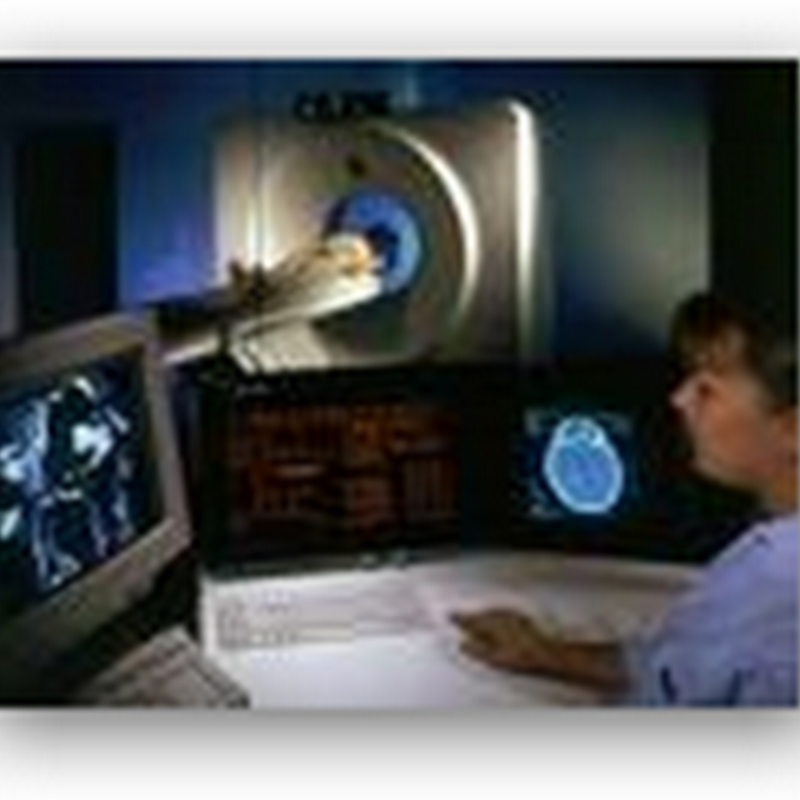
Next week things could get worse too as the reactor in the Netherlands goes offline for it’s annual scheduled maintenance.  The Chalk River reactor and the one in the Netherlands have been producing 70% of the world’s supply of isotopes.  I was at a hospital yesterday listening to the nuclear medicine department having to re-schedule a patient due to lack of isotopes, so the shortage is alive and well here in the US.  We need to at some point in time have our own created in the US, and it appears the Obama administration is now addressing the situation too.  image

In a related story, patients in Canada were re-scheduled for treatment as the plane was delayed for take off.  BD     

Isotope Shortage Beginning to be Felt at USC Medical and other Facilities in US and Canada - Update

US hospitals and patients are now suffering “the most significant shortage that we have seen to date” according to a letter sent yesterday to customers of one of the larger distributors of medical radioisotopes.

The shortage, reported here on June 19, was first created by the May shutdown of Canada’s 52-year-old Chalk River reactor in eastern Ontario which produces half of the US supply of medical isotopes used in scans that help diagnose heart disease and the spread of cancer. Initially thought to be offline for only a month, this second shutdown in less than two years will likely be much longer. Hospitals around the country have begun to ration many important diagnostic tests and even close down clinical cancer trials.

In an open presentation yesterday at the National Academies, the Department of Energy (DOE) revealed that the Obama Administration has allocated $120 million over 4 years to develop the US production of medical isotopes using safer low-enriched uranium (LEU), rather than the nuclear weapons-grade, highly enriched uranium (HEU) that is used by the existing producers.

Critical US medical radioisotope shortage sparks Obama administration response

Related News:

Isotope Update: Plant Could be Down for Months – Nuclear Medicine Diagnostics Can Expect Delays
Isotope Factory Shut Down again in Canada – Surgeries and Procedures could Face Delays

FDA Approves Lung Cancer Drug – Alimta from Lilly

The drug had been approved to treat cancer from asbestos exposure a few years ago.  Since I am on the topic of lung cancer, I did an interview not too long ago about Rosetta Genomics, who has a test to diagnose “cancer of the unknown” in the lungs.  Thousands never find out exactly what type of cancer they have and the test is about 99% accurate, why have the test, your treatment may vary depending upon the type of cancer you have.  If cancer migrated from the liver for example, a different plan of action may be required with different drugs.  BD

Rosetta Genomics Cancer Test now Available in 48 States – Cancer of the Unknown

The Food and Drug Administration (FDA) has approved Alimta (pemetrexed), the first drug available for maintenance therapy of advanced or metastatic lung cancer.image

Patients with cancer often receive maintenance therapy to prevent the disease from progressing after their tumor has shrunk or the disease has stabilized in response to chemotherapy. Alimta disrupts metabolic processes that are dependent on the B-vitamin folate, a necessary ingredient for cell reproduction.

Reported adverse events included damage to blood cells, fatigue, nausea, loss of appetite, tingling or numbness in the hands and feet, and skin rash.

Rosetta Genomics Interview – microRNA for Diagnosing Lung Cancer Tumors

FDA Approves Lung Cancer Drug

Security on Data at Healthcare Facilities Goes Beyond Just Medical Records – The Software run Air Conditioning Systems

Security personnel and the companies used to provide this service too are getting smarter when it comes to data.  This man was arrested by the FBI with an attempt to take over the air conditioning system, which is run by software.  Imagine a building with no air and what it would do to all the medical equipment that relies on constant temperatures to function.  This is just one more example of needing the “smart people” with some IT background in key positions everywhere and the need for further education in this area as software is running about 95% of the decision making processes we used today.  BDimage

This tale may make you put down your coffee and verify how tightly you protect computer servers at your hospital and any leased facilities.

The FBI arrested a man whom authorities said hacked into a Dallas healthcare building's IT system and was prepared to take over the heating, ventilation, and air-conditioning (HVAC) system. The suspect, who worked as an overnight security officer for the site, allegedly had bigger plans of using the compromised computers to instigate a massive attack on other computers elsewhere.

Consider asking your own security director and emergency planner about this type of scenario, or better yet, have them conduct a drill on it. As you'll see, the details truly meet the popular notion of "pushing the envelope" with drill scenarios.

McGraw's immediate actions could have allowed him to shut down the HVAC system at a Dallas building which contains the Carrell Clinic orthopedics facility and North Central Surgical Center. A loss of air-conditioning in the hot Texas weather could have threatened the safety of patients, staff members, and visitors. McGraw "did jeopardize [the HVAC] system," Colvin said. "It's frightening."

McGraw worked at the building as a contracted security officer and was employed by United Protective Services, Inc., in Dallas, according to authorities.

HVAC System Allegedly Compromised by Hacker—Who is Also a Security Officer - www.healthleadersmedia.com

Dr. Arnold Klein Talking about Diprivan Used by Michael Jackson

This is from the Larry King show.  Dr. Klein was his dermatologist and is not one of the 5 doctors being questioned. 

He speaks of the time in London when he went off to get off some of the addictive drugs and takes some opportunities to really poke at the FDA and their approval processes. 

http://www.cnn.com/video/#/video/showbiz/2009/07/08/sot.klein.diprivan.cnn?iref=videosearch

California Managed Care Office Shuts Down Labor Health Insurance Scheme – Kaiser Offered All Alleged Victims New Policies

The same individuals had consumer complaints in six other states and the Managed Care office states they were able to catch the scheme before any policy holders were left holding the bag.  Kaiser stated that “payments were made late” at best.  Who can and will you trust with health insurance today?   What is strange is that the insurance plan owners stated they never had more than 50 members, while Kaiser stated there were more than 500 individuals affected.  BD  image

California regulators said they had shut down a labor union health insurance scheme that put hundreds of consumers at risk of losing coverage.
The Department of Managed Health Care said Tuesday that it had obtained an order from an administrative judge barring Raymond and Jean Palombo of Riverside from selling health maintenance organization and preferred provider organization policies in California.

The department contended that the Palombos conspired with a union to collect premiums from members but then failed to pay the premiums in full to Kaiser Permanente, the contracted health plan. That, the department said, put nearly 500 people in jeopardy of losing their health coverage. Acting on a consumer complaint from 2007, the department said it discovered that the Palombos had been barred from insurance sales in six states, including Texas, Oklahoma and Florida.

Kaiser spokesman Jim Anderson said that "many payments were late at best."

California regulators shut down alleged health insurance scheme - Los Angeles Times

Cancer Patients in California Getting IOUs – Trading has Begun Online with Craig’s List

Most of the larger banks have stated they will not accept them either, such as Bank of America after July 10th.  California’s credit rating is now only imagetwo steps above “junk” status. It also has the lowest rating of any state.

This is sad for patients who need their cancer treatment or services provided by companies who take care of the disabled.  The California treasurer said Monday that his office would not redeem i.o.u.’s held by third parties unless they were accompanied by a notarized bill of sale. Where is this all going to go?  It almost appears to be opening another sub trading market.  BD 

Court-appointed lawyers, cancer patients and alcoholics in treatment programs have become the latest victims of California's financial crisis, as the state grapples with a budget deficit that has ballooned to $26bn.

The state has been forced to issue IOUs after starting its fiscal year with a huge deficit and no budget in place.

Cancer patients, people suffering from genetic diseases and drug and alcohol users in county-funded treatment programs will be affected by the cash shortage.

The state yesterday moved to control online trading in the thousands of IOUs after the notes began appearing on Craigslist, the internet advertising site.  The IOUs are transferable, which means they can be bought and sold. SecondMarket, a New York-based firm that trades illiquid assets such as bankruptcy claims, private company stock and so-called toxic assets, has been gearing up to trade the IOUs if there is demand.

http://www.ft.com/cms/s/0/19f0d3e4-6b56-11de-861d-00144feabdc0.html

FedEx bans cell phones at the workplace – When Is Device Manners Policy Going to be Ready to Use

Here’s one transportation company stepping up to the plate with banning cell phones at the work place.  UPS and other companies have already done the same.  We do hear the issue though of what if it is an emergency, then what, how do you reach someone.  We live in cellular phone worlds today and sometimes someone may not even have a work phone number to call in case of an emergency.  This is a bit of a toss up, but if cell phone use had not been abused, well we would not be at this crossroad.

This brings me around to mentioning one of my “favorite” Microsoft patented technologies and I hope this gets out there soon, the restricted cell phone zone, “device manners policy”.  This should be standard in every movie theater for that matter.  What makes this desirable is the fact that you can programmatically stop calls, cameras, etc and only allow text messages while in the “zone”, leave the zone and back to normal.  It could also serve to restrict everything, but by leaving open text messages it would prove to be an outlet for emergencies.  The wireless carriers would also need to cooperate with the project.  Just think of the possibilities and it sure makes it easier not to have to police and watch for cell phones.  BD

From a post back in June…Device Manners Policy from Microsoft

This is either the best or worst idea ever, depending on your point of view. Microsoft has patented what it calls a "device manners policy" (DMP), a wireless zone-enforced device protocol that allows local operators to turn certain features off (or on) based on local manner and safety policy.
Similar to how wireless service on planes can lock out voice but allow data, Microsoft's DMP concept would allow local czars to enforce, for example, "no talking out loud" or "no photography" rules. Audio recording could be disabled at concerts, video recording killed at theaters, and ringers turned off at funerals. Of course, this all requires manufacturers to comply with the DMP protocol in their devices. In the end, we'd be looking at a pre-movie PSA that says "your phone is now being put on silent" rather than "please turn off your cell phone.

image

Indianapolis - A major Indianapolis employer is telling workers to leave cell phones in their cars. FedEx is joining a number of companies restricting or even banning cell phones on the job.

FedEx is prohibiting personal cell phones in the workplace. A thousand hourly employees at its Indianapolis transportation hub were told not to even bring their phones into the building, the company citing concerns for safety and security.

FedEx bans cell phones at work - WTHR | Indianapolis

Related Reading:

Silent Cell Phones at School or in Selected areas of Medical Facilities?

Microsoft's Device Manners Policy Patent Enforces "No-Talking Zones"

Maggot News – Clinical Trials, Wound Care and Surgical Theatre Closings in the UK

If individuals have wounds that will not heal, the University in Cardiff can perhaps enroll you in the trial.  A children’s hospital in Bristol in the UK is also using maggots and honey. 

“At Bristol Children's Hospital, nurses are using manuka honey – which is made from bees that feed on flowers found only in New Zealand – to treat severe nappy rash, particularly on babies who have undergone chemotherapy and for lesions caused by meningococcal septicaemia.”image

But wait over at Aberdeen, some of these maggots may have gotten lose or got in without being invited as 3 surgical theatres had to be closed due to maggot infestation.  I don’t think these maggots are in the same class as mentioned in the two articles above.  I think we have a case here of the good maggot and the bad maggots.  BD

Cardiff University is teaming up with Bridgend-based ZooBiotic, the UK's only commercial producer of medicinal-quality larvae for the 12-month trial.

Eight hospitals across England and Wales will collaborate on the project.

Researchers will gather evidence over 12 months how effective maggots can be in speeding up healing and cutting the length of hospital stays.

This is a randomized clinical trial which is the gold standard for producing evidence."

Joyce Coopey, who is 75 and from Newport is one of the first recruits to the trial.

She sustained a leg injury when a thief snatched her handbag, throwing her onto a gravel path in the process.

ZooBiotic now produces 600,000 maggots, and 1,500 dressings per month from its pharmaceutical production unit, supplying a client base of more than 4,000.

BBC NEWS | UK | Wales | Patients wanted for maggots trial

Life Sustaining Medical Devices – How Dependable are They Says the FDA

This is something I’m sure that goes through the mind of everyone who has one.  The FDA is taking a closer look and as well as durability of the device, the software also needs to be scrutinized as well, as these devices are doing more than just sustaining life, they now report data. 

FDA Wants Data on Older Medical Devices – Hip joints, dental implants and spinal surgery screws

Medtronic – 1000s of the Sprint Fidelis Defibrillator Cables May Stop working in the next few yearsimage

St. Jude has one that send the information right to an EMR or PHR that is FDA approved.  Biotronik has one that sends text messages, somewhat of an eerie feeling knowing you might be a walking/talking text message machine inside.(grin)

Biotronik Home Monitoring – Cardio Implant that sends email, SMS or faxes 

In the US, Clinical Trials are still being conducted, more information available here.  So now we have a device that has a mind of it’s own, well sort of.  Biotronik is located in Europe and now with the home monitoring features, the devices will alert your physician, and again, earlier notification will hopefully save a few lives.   All in all the FDA has a much bigger job ahead with devices and might need to hire some real time programmers too to make sure the software works as designed too as devices get more complicated with additional features for them to disperse as they all start sending to your PHR in the very near future.  BD 


In a recent follow-up letter, FDA scientists pleaded with president Obama to revisit the approval of medical devices that involved questionable judgment. An FDA-wide email in March promised the new FDA commissioner will revitalize the agency and work hard to support scientific integrity.

Safety concerns over life sustaining medical devices. - WQAD

“Capitalism: A Love Story'” – Michael Moore’s New Movie

First we had “Sicko” and now the sequel…BD

Michael Moore is Back with a Preview of His New Movie – Save our CEOs A Sequel to “Sicko”?image

Michael Moore's opting to spoof romantic conventions in titling his upcoming documentary "Capitalism: A Love Story," which addresses the causes of the global economic meltdown. 

"It will be the perfect date movie," Moore said in an announcement Wednesday. "It's got it all -- lust, passion, romance and 14,000 jobs being eliminated every day. It's a forbidden love, one that dare not speak its name. Heck, let's just say it: It's capitalism."

Moore and Overture Films had announced previously that the film would be released domestically on Oct. 2 -- a year and a day after the U.S. Senate voted to approve a $700 billion bailout of Wall Street. Paramount Vantage will handle international distribution.

The film is described as focusing on "the disastrous impact that corporate dominance and out-of-control profit motives have on the lives of Americans and citizens of the world."

Michael Moore unveils title of new doc - Entertainment News, Exclusives, Media - Variety

Related Reading:

Madoff's Scheme – One Reason To Put the “Smart People” in the Right Places So We Don’t Get Fooled Again
Michael Moore – New Movie and looking for Wall Street Informers and Whistleblowers