92648

FDA Approves New Drug To Treat Clostridium Difficile Infections

In July of 2010 the FDA approved a test for C Diff and the results are given within imagean hour.  Already launched in Europe, illumigene C. difficile uses technology that makes it easier and less expensive to use than some other molecular tests.

FDA Approves Test for C. Difficile Meridian Bioscience – Results in an Hour

In a related FDA approval and injectable gel has been approved that could be used in conjunction with the C Diff infections.

FDA approves injectable gel to treat fecal incontinence

The U.S. Food and Drug Administration today approved a sterile, injectable gel to treat fecal incontinence in patients for whom other therapies such as diet change, fiber therapy or anti-motility medications failed.image
Fecal incontinence is the involuntary loss of bowel control. It can have different causes including nerve damage, weakened anal sphincter associated with aging, or rectum muscle damage. According to the National Institutes of Health, there are more than 5.5 million Americans with fecal incontinence.
The Solesta gel is injected into a layer of tissue beneath the anus lining and may help build tissue in that area. By growing the surrounding tissue, the opening of the anus narrows and the patient may be able to better control those muscles.

Dificid is a macrolide antibacterial, should be taken two times a day for 10 days and is made by Optimer Pharmaceuticals.  If all else fails, there’s the last resort with feces donors.  BD

The C Diff Cure, an effective (but yucky) procedure

FDA approves treatment for Clostridium difficile infection The U.S. Food and Drug Administration today approved Dificid (fidaxomicin) tablets for the treatment of Clostridium difficile-associated diarrhea (CDAD).

Clostridium difficile (C. difficile) is a bacterium that can cause diarrhea and lead to colitis, other serious intestinal conditions, and death in severe cases. C. difficile bacteria are found in the stool of an infected person, and others can become infected if they touch items or surfaces contaminated with the bacteria or spores and then touch their mouths.

The safety and efficacy of Dificid were demonstrated in two trials that included 564 patients with CDAD that compared Dificid with vancomycin, a common antibiotic used to treat CDAD. The clinical response was similar in the Dificid group compared with the vancomycin group in both studies. In some patients with CDAD, symptoms can return. In the Dificid trials, a greater number of patients treated with Dificid had a sustained cure three weeks after treatment ended versus those patients treated with vancomycin.

“In recent years, many in the infectious disease community have seen an increase in the number of cases of people with a C. difficile infection,” said Edward Cox, M.D., M.P.H., director of the Office of Antimicrobial Products in the FDA’s Center for Drug Evaluation and Research. “Dificid is an effective new treatment option for patients who develop Clostridium difficile-associated diarrhea.”

Press Announcements > FDA approves treatment for Clostridium difficile infection

Senator Tom Coburn Discusses Healthcare and Medicare Reform

This is actually an interesting interview that goes in-depth and shows a different imageside than what has been in the news of late with the Senator.  I may not agree with everything he says but there are some very good points here when it comes to wasting money with the government.  Back in October of 2010 he also commented on the same topic.  He steps around the Ryan issue when asked about Medicare and does comment on “markets” and that portion I don’t agree with.

Senator Tom Coburn States Government Has Spent Over a Billion Plus on the Deceased For HealthCare and Related Supplies

He talks about the reports he receives from the GAO and talks about how 1/3 of the cost of healthcare is not services that are helping people get better or getting preventive care.  Technology and research taking it’s toll and he states there’s no lack of innovation with healthcare and that I agree with.  We still keep pushing innovation and create gluts of software and proprietary systems that feed on themselves with lack of collaboration.  Also mentioned is that he has collected many reports over the years and that recently they have all been rolled together. 

What the good doctor needs is some additional high powered technology to weed through all his information that can model (and he knows the word) and simulate solutions.  The GAO is good but it’s what is in the past which we need but we also need to project better for the future.  In short with the gang of six it sounds like he just gave up.  Maybe Dr. Coburn needs one of these to help him with calculating data and getting his information together.  BD   

Cray Introduces 50-Petaflop XK6 Supercomputer–First Client is the Swiss National Supercomputing Centre For Medical Research–An Upgrade in Computing Power

In an interview with WSJ's Jerry Seib, Sen. Tom Coburn of Oklahoma gives his reasons for leaving the 'Gang of Six' bipartisan deficit negotiations and offers his own prescription for fixing the nation's finances.

Video - Sen. Tom Coburn Offers a Prescription for Fixing the Deficit - WSJ.com

Life Technologies Launches New Sequencing Analysis Software For The Cloud

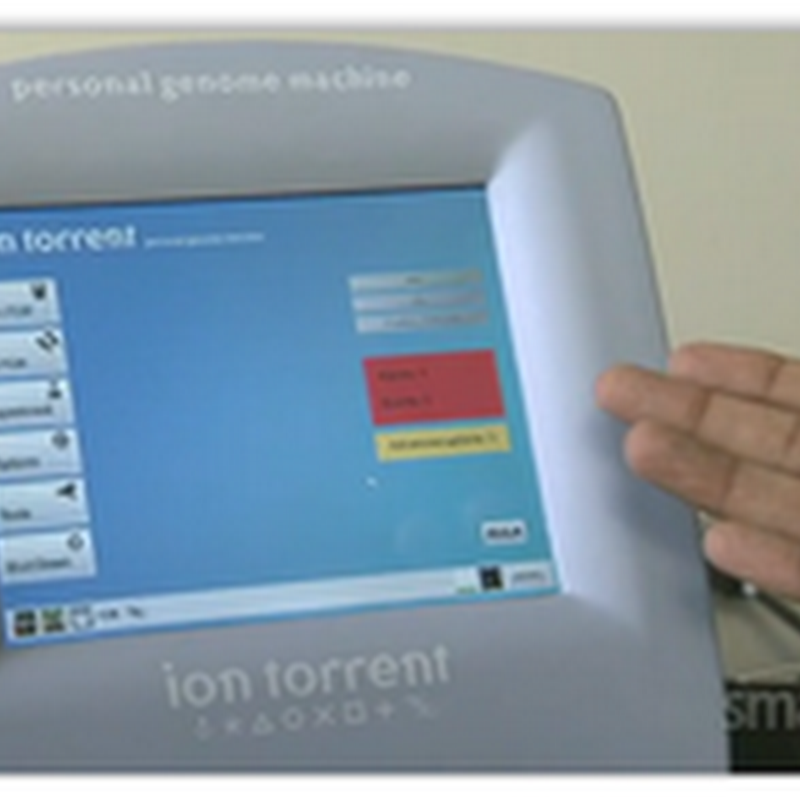
We all talk about the future of the cloud and there’s no group that needs it more than the area of genomics and sequencing with the huge amounts of data that is needed to analyze.  Life Technologies is now offering cloud services to where researchers can pay as they go. In addition, the same company also has their smaller Ion Torrent sequencing machine that debuted not too long ago, kind of sits there on the desk like a printer and does the job but with comparing to a full sequencing machine it may take additional time and have some limitations.  BD 

Life Technologies Debuts Ion Torrent Machine-Cheap Genes at $500 for Single Sequence

Life Technologies this week launched a new sequence-analysis software package for analyzing and managing data from its 5500 Series SOLiD systems, including an online portal that allows researchers to analyze their data in a cloud computing environment.

The software, dubbed LifeScope Genomic Analysis, is available under a “dual-mode use” model that allows biologists to analyze data via a graphical user interface while bioinformaticians can access more advanced features through a command-line interface.

The software is available as imagestandalone software, as a cloud-based tool, or it can be purchased preinstalled on a workstation or cluster. Life Technologies partnered with Penguin Computing to develop LifeScope's hardware options.

The cloud offering is available under several pricing models through the portal LifeScopeCloud.com. Under a subscription model, users can pay $1,500 for 3,000 node hours per month and 3 TB of permanent disk storage. The company also offers different pay-as-you-go models, including one for $199 a month that provides access to one core of a Xeon 2.4GHz processor with 4 GB of RAM, and another that allows users to pay $0.35 per core hour.

image

The infrastructure for the cluster, workstation, and the cloud are all provided by Penguin Computing.

The software is available as standalone software, as a cloud-based tool, or it can be purchased preinstalled on a workstation or cluster. Life Technologies partnered with Penguin Computing to develop LifeScope's hardware options.

Life Tech Launches New Sequence-Analysis Software, Cloud Offering for 5500 SOLiD Series | BioInform | Informatics | GenomeWeb

Florida Governor Rick Scott Signs State Budget That Cuts Medicaid Reimbursements in the Sate by 12% While Florida HMO Profits Were Up 16%

We all know states with Republican Governors are not very popular today and Florida is one state saddled with one who is cutting costs everywhere he can.  In imageaddition more money for low income care will now be going to the for profit hospitals and the government hospitals will get less.  I watched the news on TV and it was odd that he held the signing process as a senior home in Florida to where Democrats who attended and protested were kicked out. 

In 1997 Scott was forced to resign as the CEO of Columbia/HCA, then the country’s largest hospital chain, while it was being investigated for massive Medicare and Medicaid fraud.  HMO profits were up because people paid more and Humana was big winner with additional profits.  HMO membership keep dropping off though as employers are dropping coverage to save money.  70 percent of the profits came from Medicare.  In the video below you can watch the “Senior Democrats” being escorted out of the ceremony and it was in the paper as a “public event”.  There were a quite a few empty seats left once the Senior Democrats were escorted out. With HMO profits up and big business getting more profits and cuts in government, it’s going to be along 4 years, unless of course a recall event surfaces between now and then.  BD 

Florida Budget

Florida Gov. Rick Scott today signed a $69 billion state budget that cuts hospitals' Medicaid reimbursement rates in the state by 12% and redistributes funding for hospitals that serve low-income patients so for-profit hospitals will receive a greater share of the cash.

The budget includes cuts totaling $4 billion compared with the current spending plan, including $510 million in cuts from Medicaid—changes that Moody's Investors Service said will have a marked negative effect on the state's hospitals. That includes $407.5 million in inpatient rate cuts and $102.9 million in outpatient cuts.

The budget maintained the low-income pool funding—money that goes to hospitals with large numbers of impoverished patients—at $1 billion. However, the distribution of those funds was changed through a legislative committee so more of it goes to investor-owned hospitals, the governor's spokesman Lane Wright said.

Scott signs budget packed with healthcare cuts - Healthcare business news, research, information and opinions | Modern Healthcare

Sleep Marketing–Healthcare Companies Looking to Market and Commoditize Our Habits–Snoozing Marketers Unleashed

This is something that all of us humans and others who walk the face of the earth have been doing since the beginning of time, but now healthcare companies have created a market for this.  Gee, we don’t know how to sleep anymore?  Granted there are some real life situations for having sleep patterns checked for detection of sleep apnea for sure, but I can’t help but think that imagesome of this is to get you to buy devices and become more dependent on knowing whether or not you are getting a good night’s sleep and so far my body does a good job of letting me know. 

With so much data collecting and marketing going on out there today, the last thing I need is someone marketing a device to me so I can analyze my sleep patterns and I kind of like to think my body can do that for me.  Now to be a sleep marketer it takes a 4 year degree to step into these shoes too and one must know how to market doctors and be up to date on coding for insurance carriers and Medicare, as we have to get all this covered to sell products, and furthermore the job description states you must have solid working relationships with external stakeholders (shareholders maybe) and executive leadership. This is quite a list of essentials required to market sleep.  The whole idea here is to create a feeling of lack and insecurity to make one feel they could sleep better I think. 

The Greatest Movie Ever Sold” Just Like “The Greatest Healthcare System Ever Sold”- Same Paradigms-Colbert Report (Video)

Again I thought this was an interesting job title here with now we are being convinced that we can’t sleep without analytics to tell us so and again get that coding right so reimbursements flow in and hey let’s sell this data too so we have some statistics on how many in the US are sleep deprived and depend on devices to help them out:)  Of course this too could be used in risk management to determine other factors as well, such as premium payments and gee who would want to insure one who has bad sleeping habits or has analytics that reflect such:)  The link below gives some additional insight into marketing of the data and who knows, we are not physically working there and we really don’t know exactly what they are doing with the data, but all the capabilities are alive and well today. 

How Data Mining Gets and Sells Your Information From the Web–Multi Billion Dollar Business And It Is Subsidizing Healthcare Every Where You Look…

In addition to the marketing there’s even new products being developed, like pajamas with a chip that record your breathing habits and so forth.  This might be a good way to test for Sleep Apnea but I don’t want to sleep in chipped PJs imageevery night! 

So be ready for the “sleep marketer” as the next potential person out there to make you feel a bit less secure about the rest you get today as the job as do all marketing jobs will need to first of all convince you there is a “need” before the sale can take place and this is just old marketing 101 concepts here.  I think we all know when we are not getting quality sleep and would tend to seek help ourselves for the most part as there are real situations where this does occur, but the marketers are coming to make you feel just a bit less secure about your own body’s interpretations soon. 

Perhaps in time though this will take the place of the “evil” over weight people we hear about today and we’ll have a new group to flog, “the evil non sleepers” that are costing us money in healthcare as that’s the way most of this gets played out in the news today.  We tend to have issues with placing data analytics value in the right places today and this is on that sits right on that edge. 

One thing for sure though is I don’t think Joe Biden will be on their list as he seems to have no problem what so ever nodding off when his body says so:)  Next time when I need more sleep I’ll just be pulling off a “Biden” snooze whenever I need it too as it seems to have become totally acceptable, no matter where you are today:) BD

Responsible for leading all marketing efforts for the company's sleep product line including: development of marketing plans, budgeting and strategic planning, product promotion, messaging, and program development.

Works collaboratively with Sales, the VP Marketing, and Sr. Management.

Performs other related duties as directed by supervisor

Manager, Sleep Marketing jobs - AllHealthcareJobs.com

First Public Health Privacy Summit - Protecting Patient Privacy in a Wired World to Be Held on June 13th in Washington DC

This is a one day event to be held in Washington DC and privacy in healthcare and otherwise is a hot topic today by all means.  With the advent of marketing on steroids today we are never exactly quite sure what is being collected at times and where it all goes to be sold.  I try to follow this along and from time to time post updates for an awareness of how it all can and does happen.  Actually I started discussing privacy when the first medical devices came onto the market back in 2008 and have carried through since. 

Those were the early days of collecting data and in only 3 years it has spiraled to areas that we maybe don’t even give any thought to, but it’s out there.  Anyone who has written software with SQL queries can tell you about how easy it can be to match anonymized data as that’s part of a process of writing a program, to write and construct queries.  With data having such a high market value today, and it’s moved beyond limits to where any of us might have thought.  For every dollar one spends on the web, the return that comes back from advertising is worth $43.00 and those numbers were given by a couple of businesses who are in that business.  Below is the press release with all the information and links to read up and register at the bottom of the post.  BD


“Getting IT Right: Protecting Patient Privacy Rights in a Wired World” is the imagenation’s first open and inclusive public forum to discuss the future of health privacy in the digital age. The conference will be held June 13, 2011 at the Georgetown Law Center in Washington, D.C. and is the result of a partnership between the Lyndon B. Johnson School of Public Affairs at The University of Texas at Austin and the Patient Privacy Rights Foundation, the premier health privacy advocacy organization in the United States.”

Press Release:
AUSTIN, Texas, May 11, 2011 – The Lyndon B. Johnson School of Public Affairs and the Patient Privacy Rights Foundation will co-host the nation’s first public summit to discuss the future of health privacy in the digital age. “Getting IT Right: Protecting Patient Privacy in a Wired World” will be held on June 13, 2011 at the Georgetown Law Center in Washington, D.C. The event is the first in a planned series of forums on this theme and coincides with the creation of the U.S. government’s plan for a new health information technology (HIT) infrastructure, which will collect personal health information. For agenda and registration information, visit: http://www.healthprivacysummit.org/.

The summit will be interactive and audience members will be expected to contribute questions to panels and participate in work groups to identify urgent health privacy needs, along with the immediate steps needed to deliver responsible and realistic solutions.

Deborah C. Peel, MD, chair of the board of directors of Patient Privacy Rights, Summit co-host, explained, “The goal of the summit is to create the world’s premier public forum on health privacy issues by uniting a ‘brain trust’ of experts - academics, advocates, government, health care, and those in the technology field - who are willing to work together to ensure health privacy is a center-piece of U.S. health care system reforms. We’re very pleased with the response to the Summit, from panelists and speakers to sponsors, which no doubt speaks to the importance and urgency of these issues today and into the future.”

Whether or not the new HIT infrastructure will afford individuals proper control over the sharing of their personal health information is the key issue that will be addressed. Benedicte Callan, Sid Richardson Fellow of health innovation and policy at the LBJ School, feels that the United States is reaching a crossroads in patient privacy with the creation of the HIT infrastructure.

“Designed well, this digital health information system could be the foundation for a more efficient 21st Century health care system,” said Callan. “It could lower costs, make care more safe and effective while leading to new treatments by benefiting research. But without proper protections built in up front, the HIT system could compromise the fundamental rights of citizens to protect their most sensitive personal health information.”

In summation, “The LBJ School has been preparing leaders for 40 years to help find innovative solutions to the most complex public policy issues and challenges of our modern world,” said Robert Hutchings, Dean of the LBJ School of Public Affairs. “Therefore, we see it as critically important to engage in this issue on every level—local, state, national, international—through research and collaborative partnerships in conferences such as this one. We are especially pleased to join with Patient Privacy Rights and with the other conference participants on working together towards solutions to one of the greatest privacy challenges of our time.”

The Lyndon B. Johnson School of Public Affairs is a graduate component of The University of Texas at Austin. The School's mission is to develop leaders and innovative ideas that will help our state, the nation and the international community address critical public policy challenges in an ever increasingly interconnected and interdependent world.
image
Patient Privacy Rights is the nation’s leading health privacy watchdog and leading consumer voice for building ethical, trustworthy HIT systems. For more information, visit: http://patientprivacyrights.org/.

Major sponsors to date include: Microsoft, Jericho Systems, ID Experts, e-MDs, Inc., and Medical Research and Materiel Command, Telemedicine and Advanced Technology Research Center at the U.S. Department of Defense.


About the speakers:

Alan Westin is Of Counsel and Senior Policy Advisor, Arnold, Golden and Gregory, Atlanta and DC and Emeritus Professor of Public Law and Government with Columbia University's Department of Political Science. His main areas of research address privacy, office automation, and employee fair procedure/EEO issues, and the use of new information technologies to expand the distribution of public information to citizens and the voluntary sector.

For the past three years he served as the academic advisor for national public and leadership surveys on privacy. He has authored or edited 26 books including The Changing Workplace: A Guide to the People, Organizations, and Regulatory Aspects of Office Technology; Individual Rights in the Corporation: A Reader on Employee Rights; and Computers, Health Care, and Citizen Rights: Report of the Project on Medical Records and Citizen Rights.

Westin was instrumental in the authoring of the Privacy Act of 1974, which established the Code of Fair Information Practices that governs the collection, maintenance, use and dissemination of personally identifiable information about individuals that is maintained in systems of records by federal agencies.

Jeff Rosen is a professor of law at The George Washington University and the legal affairs editor of The New Republic. His most recent book is The Supreme Court: The Personalities and Rivalries that Defined America. He also is the author of The Most Democratic Branch, The Naked Crowd, and The Unwanted Gaze. Rosen is a graduate of Harvard College, summa cum laude; Oxford University, where he was a Marshall Scholar; and Yale Law School.

Professor Rosen's essays and commentaries have appeared in the New York Times Magazine, The Atlantic Monthly, on National Public Radio, and in The New Yorker, where he has been a staff writer. The Chicago Tribune named him one of the 10 best magazine journalists in America and the L.A. Times called him, "the nation's most widely read and influential legal commentator."


Reservation Number:  1-800-695-7460
Cutoff Date:  Tuesday, May 31st, 2011 at 4:00pm EST

When making your reservations please reference The University of Texas, LBJ School of Public Affairs Group to receive the special group rate.

Brookdale Hospital Workers in New York Protest Over Loss of Health Insurance Benefits

Part of the reason for the money problems may just go back to the story at the link below to where the CEO and 2 lawmakers were charged with bribery.  The hospital has made a payment last week of $1.4 million when the monthly fees are around $4 million, so it appears the money paid is a bit short as the NY Times article clip says they are $23 Million behind.  One explanation said the employees had coverage but no longer available for spouses and children due to switching to a new plan. 

MediSys Chief Fired by Hospital Board- CEO and 2 State Senators Charged with Bribery

This is actually pretty bad if money was funneled away that at minimum was supposed to be covering employee insurance benefits.  MediSys is the parent company that owns Brookdale.  BD   

About 3,400 workers at Brookdale University Hospital and Medical Center in the Brownsville section of Brooklyn have lost their health care coverage, because the hospital has fallen behind in payments to its benefits fund, the union that represents many of the hospital’s workers said Thursday.

The hospital, which has recently been ensnared in a corruption scandal involving state legislators, said late Thursday night that it had fallen behind on payments because of its financial struggles. But a spokesman, Ole W. Pedersen, denied that workers were left without coverage, saying that the hospital had switched them to a new plan that covered them but not their spouses and children.

In March, federal prosecutors unveiled a criminal case in which they said that David F. Rosen, chief executive of MediSys Health Network, the parent company of Brookdale, had bribed numerous politicians — including State Senator Carl Kruger and Assemblyman William F. Boyland Jr. — in exchange for grants and other political favors. All have pleaded not guilty.

Brookdale Hospital Workers Protest Loss of Health Coverage - NYTimes.com

Digital Illiteracy Still Plagues Law Makers–Severe Focus on Abortion Rights Proves It–Is This Where Our Lawmaking Knowledge Leaves Off or Even Begins? Scary…

This is amazing when you look at all the time and effort spent on this not only at a Federal Level but also state wise.  Is this all they can discuss when we have many other important issues that need attention?  I mean big issues that require some imagebusiness intelligence skills to fully analyze budgets with tons of information to be able to make intelligent decisions and this is all we get?  What’s up with these folks other than digital illiteracy?  It appears this is a real attempt to discuss something that is familiar rather than maybe learning new technology tricks to do one’s job?  Look at this below, a bill to fine and imprison doctors who perform an abortion without whatever parent notification system them come up with?  

In some state Legislatures we have similar issues and it is insane.  I know I’m not the only geek out here thinking this way as we all just scratch our heads. If you watch the video below Rachel Maddow talks about Georgia and Florida wanting to be able to imprison a doctor for life for performing an abortion…this is all about control and again lack of digital literacy as if they had it, we wouldn’t be seeing all of these loose cannons out there. 

image

Digital Illiteracy Continues With Lawmakers at State Levels–Insane Laws Proposed And Being Passed-Financial Puppeteers (Video)

Visit msnbc.com for breaking news, world news, and news about the economy

I do have to say I am glad I’m in California where digital literacy is a focus. 

Digital Literacy California CIO Series -Michael Peevey, President Cal Public Utilities Commission-We Need to Get Up to Par

IBM made a presentation on the Hill a while back and again when you have folks that are so focused on abortions, they could not see the value of having technology that would help them do their job better…so sad and so very scary.  BD 

IBM Watson Capabilities Being Pitched to Financial Industry-Congress Must Not Have Felt They Needed This So Further Behind We Fall With Effective Intelligent Lawmaking

Rachel Maddow: GOP focus on eroding abortion rights

Hospital Tests Device that Separates Stem Cells While the Patient Is in Surgery for PAD Treatment

This is happening in Arizona and also back in August of 2010 I wrote about the same or similar process happening here in Los Angeles and the link below has a video that tells the whole story. 

Stem Cells Used to Treat Peripheral Arterial Disease–Clogged Arteries in the Legs

Also in the PAD area, a company now has a biomarker test to diagnose PAD.  PAD is kind of a hidden disease with bad blood flow in the legs that is a silent chronic and could be life threatening condition.  Stents have been used to open clogged arteries but with stem cells there’s no need after an artery has been cleaned as the cells grown back new blood vessels.  Back in January of 2011 I interviewed Dr. Peter Lawrence, Chief of Vascular Surgery at UCLA and he also informed me of some other methodologies and technologies that are being used to help combat PAD.  BD 

Banner Heart Hospital and Banner Research are taking part in the MarrowStim PAD Study sponsored by Biomet Biologics, a medical device imagecompany based in Warsaw, Ind. The company has created an investigational device that can separate and concentrate stem cells from bone marrow while the patient is in the operating room.

Surgeons can remove healthy heart stem cells, grow them in a hormone bath and place them back in the patient. There, they either repair or regrow blood vessels (researchers aren’t sure which it is, Lambeth said).

image

Banner is looking for people who suffer from PAD (peripheral arterial disease) who have exhausted all other methods of reintroducing circulation in the troubled limb, such as angioplasty or stents, said Dr Henry Tarlian, a vascular surgeon and principal investigator at Banner Heart Hospital.

“This is an option that may work for those patients that have no other options,” Tarlian said. “We’re looking for (patients) with markedly diminished blood flow to the foot that causes pain or they have ulcers on their foot that are not too  big or if things aren’t too far advanced.”

Hospital tests device that uses patients’ stem cells in surgery - Your West Valley News: Topstory

Kill the Duck on Windows Phone! How Could They Do This to the Medical Quack!

The Aflac Duck and I need to have a little conversation here:)  Actually to be imagetruthful I liked the old Duck Hunt game and it was one of maybe a couple games I would play and I never got very good at it, but nice stress reliever.  I guess I’ll still hold out for my new Windows Mobile 7 phone after all.  Here’s what the game looks like.  At least ducks by nature are not Angry Birds. 

Kill the Duck

Even the Cisco CEO, John Chambers is fascinated with Ducks too, participatory quacking, at least around this blog:)  Event the President was interrupted with a Duck Call during a speech last year so next time it might not be the ring tone, but folks shooting those pesky ducks.  BD 

Cisco CEO John Chambers' Fascinated With Ducks – Participatory Quacking

Cisco CEO Does Duck Calls

Kill the Duck is the game which is really fun and addictive… Your task is to shoot all ducks and don’t let them go away ! Round by round, It will be more difficult to catch them… And be careful, you only should kill ducks ! It’s a game similar to the famous Duck Hunter.

Kill the Duck on Windows Phone 7 : wpseven | Windows Phone 7 | WP7

Vermont Governor Signs Single Payer Health Insurance Bill-Coverage Could Begin as Early as 2014

Vermont is s small state but actually by starting in a smaller state it could stand to be imagea good pilot for the rest of the country.  The financing is included in the bill and before 2014 there will be adjustments and amendments for sure as we don’t know exactly how it will play out simply because the world keeps changing all the time. 

Green Mountain Care is the current name given to the program, so it will be interesting to watch and see how this moves along.  In the meantime a federal move towards a public plan would be nice too.  BD 

(Reuters) - Vermont became the first state to lay the groundwork for single-payer health care on Thursday when its governor signed an ambitious bill aimed at establishing universal insurance coverage for all residents.

"This law recognizes an economic and fiscal imperative," Democratic Governor Peter Shumlin said as he signed the bill into law at the State House.

"We must control the growth in health care costs that are putting families at economic risk and making it harder for small employers to do business."

Legislators say the plan, approved by the Democratic controlled House and Senate this spring, aims to extend coverage to all 620,000 residents while containing soaring health care costs.

If the state secures one key federal waiver related to exchanges, Green Mountain Care could begin as early as 2014. Another waiver needed to implement the single-payer component under federal law would not be available until 2017.

Vermont moving toward single-payer health care | Reuters

Niacin Drugs Don’t Reduce Heart Attack Risk-Bad News for Abbott Labs Niaspan

The study showed that elevating a good cholesterol count had no effect on reducing strokes so back the the drawing board and using drugs that lower high cholesterol counts it appears.  The drug from Abbott was approved by the FDA and now it looks like some additional study and research information may be in line here.  In addition some patients experienced side effects from the drug.  image

One doctor at the Cleveland Clinic stated that allowing drugs to stay on the market that affect lipids and other biomarkers is not a good direction to follow and recommended another look at regulatory processes.  The trial lasted 18 months and found that adding Niaspan made no difference.  Zocor and Lipitor worked fine alone with keeping bad cholesterol levels low and the study said there was lacking evidence that changing HDL and triglycerides has any effect.  BD 

WASHINGTON — Lowering bad cholesterol levels reduces heart attack risks, and researchers have long hoped that raising good cholesterol would help, too. Surprising results from a large government study announced on Thursday suggest that this hope may be misplaced.

The study could change the way doctors treat millions of patients with heart disease. Common wisdom has been that such patients should take a statin drug like Lipitor or Zocor to lower bad cholesterol and, in many cases, the vitamin niacin to raise their good cholesterol. But in the trial, niacin provided no benefit over simple statin therapy.

The results are part of a string of studies that suggest that what doctors thought they knew about cholesterol may be wrong. Studies that track patients over time have for decades shown that patients with higher levels of high-density lipoproteins (H.D.L., or good cholesterol) tend to live longer and have fewer heart problems than those with lower levels of this cholesterol.

What is remarkable about the study is that niacin seemed to be working. Patients taking the medicine along with Zocor had higher levels of H.D.L. and lower levels of triglycerides, a fat in the blood. Despite these seeming improvements, the patients fared no better and may have done slightly worse than those taking Zocor alone. That is why the entire theory behind trying to increase H.D.L. levels in patients with heart disease may need rethinking.

Niacin Drugs Don’t Reduce Heart Attack Risk, Study Says - NYTimes.com

FDA Recalls Never End–Bar Codes Solutions for Drug, Device and Over The Counter Products– Medical Quack Featured Article in Micro-Cap Review Magazine

This is an article that I wrote as the request of one of my sponsors for the Micro-Cap Review magazine which comes out once a quarter with articles referencing many types of Micro-Cap companies and modern day technology solutions and imagecompanies featured. Disclaimer, the company is a sponsor of the Medical Quack blog, but who better to collaborate and network with as I mention seeing collaboration efforts falling on the short side in Healthcare all the time.  I have a couple more posts that are a grouping of posts that I have made on this topic and you can find them at the links at the top of the site.  I’m almost thinking here that it might become a pre-requisite to have a Microsoft Tag to sponsor here, as it certainly can’t hurt at all.  

In addition with so many platforms moving to the cloud there’s a mention too of how HealthVault works with Microsoft Tags and is now in the Azure Cloud.  As you may or may not be aware, Microsoft Tags work with the Withings Scale and HealthVault so one technology can stand to answer a lot of calls.  (Use the + zoom at the bottom to brings this article to full page zoom to read).

HealthVault Begins Storing Medical Images (Dicom) Using Windows Azure Cloud Services With Full Encryption

Micro-Cap Review Magazine - FDA Recalls Never End - Featured Article

So why shouldn’t the FDA, Drug Companies and Medical Device Manufacturers have a simple and easy to use system to help consumers find recalls? I have asked that question many times and consumers voted overwhelmingly that they wanted it and more importantly “saw value”.

The “value” here is important as it is the springboard to get consumer/patient participation in other areas of mobile technologies in healthcare, but as of yet, we still have folks doing reports trying to figure this out and so many of the reports could be eliminated by just having some role models finding their own way into participation.

You don’t know how many times I communicate with individuals that don’t even use the consumer health software they create but rather seem to stick to the outdated paradigm of “its for those guys over there’, sad. 

At any rate I hope you enjoy the article and see where one man’s death could have been prevented with such a process and perhaps this will spur come creative thinking with the FDA, Drug Companies and Device Manufacturers, as this is a collaborative effort, something we truly need more of today. 

Consumers need the information at their finger tips and not having to go through and navigate web sites as that is the procedure today.  You can get instant information about computer printers, food items at the story but when it comes to something that could kill you, nobody pays any attention.  BD 

http://www.scribd.com/doc/56311471/Micro-Cap-FDA-Recalls-Never-End

Freescale Semiconductor, Creators and Collaborators of the Hospital Admitting Machine Launches IPO

Believe it or not the hospital admitting machine received many favorable comments, both from ER doctors and patients and it does make sense to have it all in one place imageand not have to walk from department to department in a hospital.  If you have been admitted to a hospital you may have an idea of what I am talking about and the amount of time it takes.  The link below also has a video that explains more about the process and how it create a medical record chart at the same time, sound efficient to me. 

A Hospital Admitting Machine – And You Thought Kiosks Were State of the Art

At least when you look to compare the LinkedIn IPO, at least this has a tangible asset here and is not just a bunch of algorithms and $19 a share is a lot more affordable than $100+.    As the article mentions, the company has a lot of debt and was a spin off from Motorola back in 2004.  You can also find their chips in the Kindle reader from Amazon and Apple was a former big client as well.  Perhaps with diversifying a bit with items like the admitting machine developed in conjunction with Pounce technologies, will allow some growth in new directions with combining both chip and hardware Health IT technologies.  BD

Freescale Semiconductor Holdings posted modest gains in early trading imageon Thursday after cutting the price of its initial public offering.

The semiconductor company's share price opened at $19, an increase of 5.6% from its IPO price of $18. Freescale sold 43.5 million shares, but the price was below its expected $22 to $24 range.

Freescale, which was a spin-off from Motorola in 2004, provides embedded processing semiconductors and systems, including microcontrollers, single- and multi-core microprocessors, applications processors, and digital signal processors. Freescale is the largest supplier of engine system microcontrollers in the world.

Freescale's IPO is being driven in part by $7.5 billion in debt accumulated in a 2006 leveraged buyout of the company. Since then, the company has struggled with its mountainous debt and saw its products being used less by the likes of Motorola, which has seen its cell phone sales sag over the years.

Freescale Semiconductor Launches IPO -- InformationWeek

ONC-Funded CONNECT Program (Aurion) Now Has a $5.7 Contract Awarded to CGI Federal To Continue Development

This is interesting to see the twists and turns of an idea whereby private companies were originally committed to keep up the development of the project, and right now everyone is so very busy with their own Health IT work, I think they all ran out of time to dedicate to the program, but good intentions were at the onset.  You can read more at the link below on the reorganization and new branding efforts.  This is pretty much a sign of the times today with emerging healthcare technologies and now we have the unique HIE program that move in new directions. 

Government CONNECT Project Gets Rebranded–Two Former ONC Staff Members Formed Alembic Foundation To Continue Development Now Named Aurion

Even today the best made plans are subject to change at any time. It sure is getting to be a bear and huge expense item today in Health IT to connect so many proprietary software systems, but that’s what we have today and why the cost is so high and kind of too bad that collaboration didn’t enter the picture sooner.  BD 

The Office of the National Coordinator for Health Information Technology imagehas awarded a contract to CGI Federal Inc. to continue development of the federally funded CONNECT downloadable health information exchange software.

The contract is valued at $5.7 million during the first year and includes four one-year options. Open source firm Red Hat will be a partner to CGI.

ONC-Funded CONNECT HIE Software to Get Fixes

Medical Record Bank Receives “Patent” for Personal Medical Record Platform

Ok here we go, “patents” on PHRs, those items that have a low adoption rate from consumers, why, it’s work and the value is yet to be seen by the consumer.  I write quite a bit about PHRs and provide links to a few free ones for consumers to get information and get started.  Some “closed” system like Kaiser Permanente do a good job in providing the PHR for the patient, but everyone is not a patient of theirs so we need other alternatives for those outside theirs and others systems. 

If you read around the Medical Quack often enough you know I rant frequently about the lack of role models, especially with PHRs, and for good reason, so do we know if the Surgeon General uses the Surgeon General’s PHR?  Nobody is talking and also at the NIH, does Francis Collins see value in a PHR?  I just ask how about it folks, is this just for “those guys over there”?

NIH Announces Plan to Develop Medical Image Sharing for PHRs-Role Models Would Help Stamp Out “Magpie Healthcare”

When you visit the website, there’s not a whole lot of information to be seen, at least as of today and this is pretty much what you see and there’s an email address given for more information.  Being they have a patent though we may not see more than this on the site, but time will tell.  The PHR is being promoted as a connection that will work with an EMR installation.  Again, it states EMR, so whether or not we have EHR connectivity remains to be seen or mentioned and any platform that can load the information for the consumer instead of one having to manually do it themselves is an obvious plus. One of the reasons to be a “hands on person” is due to the fact that “expert dependency” as we know it today is on a downslide, and this is not due to one’s education and personality, it’s largely due to the fact that we have so much to keep up with relative to data today, that they too can’t keep up as last time I looked we are all still just mortals out there.  BD 

image

Medical Record Bank has developed a unique internet-based digital personal medical record system that collects comprehensive data from all of an individual's healthcare providers. For consumers, it is as easy to use as e-mail, and it places no new burdens or disruptions on providers.

Accurate and inexpensive, it enables a patient and the patient's authorized doctors to access original medical records from any internet connection globally. The system enables patient labeling and authentication of medical records, so that the records are presented in a user-friendly environment. In addition to a patient-labeled and authenticated chronological medical history, there is a health care diary to complete the health portrait for the intervals when a patient is not seen by a professional provider, and a critical health information summary that offers a snapshot of the patient status. The system also provides disease specific adjunctive tools.

MRB is bringing the benefits of this system to consumers as rapidly as possible by working independently and in partnership with other firms. The system can be used as a patient portal for EMR installations and in other applications ranging from disease management to insurance fraud detection and prevention. MRB also expects to provide licensing opportunities in related areas.

Massachusetts Firm Awarded U.S. Patent for Personal Medical Record Innovation

Will Your Doctor Be Giving You Their Email Address? If You are Going to Make A Payment They Might–ClearXchange With Payment By Cellphone or Email Available

Currently if you bank with Bank of America, Wells Fargo and JPMorgan Chase you now have a new option to pay your doctor or send money to anyone for that matter by just knowing either the email address or cell phone number.  You might get your doctor’s email address sooner than the cell phone number though, depending on imagehow they answer and take calls. 

This is obviously to compete with PayPal and I like using PayPal though as it gives me that extra layer of security between my bank account and those who have access so it has been my preferred choice online for quite a while, due to that extra layer of encryption between myself and my bank account.  Right now the service is free but who knows how long it may or may not last.  BD 

If you've ever transferred money out of your bank account, you know the hassle: Fill in the routing number and the account number. Wait, which is which? So many numbers, so many chances to screw up.

That's no longer a problem for customers of three very large U.S. banks. Bank of America, Wells Fargo and JPMorgan Chase have partnered on a new system -- clearXchange -- that allows customers to send money via cellphone or email.

"All our customers need to know is the email address or mobile number of a friend or family member and we will take care of the rest utilizing clearXchange," Wells Fargo executive vice president Mike Kennedy said. "We are talking about ... using a mobile device to send your brother the $100 you may owe him, straight to his bank account," he told The Street.

Banks "are essentially trying to regain the ground that they've lost ... and time that they've lost and wasted over the past 10 years by not really competing with PayPal," Gwenn Bezard, a research director with Aite Group LLC, told American Banker.

… Google is reportedly teaming with Citibank, MasterCard and Sprint to provide a mobile payment service of its own. Google has scheduled a press event in New York Thursday, at which time it is widely expected to announce a service that will allow consumers to pay for purchases using their Android smartphones.

Banking by cellphone just got easier- MSN Money

How Data Mining Gets and Sells Your Information From the Web–Multi Billion Dollar Business And It Is Subsidizing Healthcare Every Where You Look…

This is a good video that explains how we are the product and talks about coupons and “list brokers”. The video says for every dollar spent, the value of the data that imagecomes back is worth $43.00…a $42.00 profit in personal data. In addition the video discusses how profiles that get created are not accurate.  Do we see marketing on steroids in healthcare, you bet we do as I guess that’s what someone must have figured out as a way to subsidize some of the cost, you want care, give up your data?  Yes we are headed towards the greatest healthcare system ever sold and exploited.  Do you want to live in a house like this?  As soon as marketers figure out how to buy off the home owners associations watch out, and don’t think that couldn’t happen if there’s big money to be made with getting a copy from a homeowners association list to sell. 

The Greatest Movie Ever Sold” Just Like “The Greatest Healthcare System Ever Sold”- Same Paradigms-Colbert Report (Video)

There’s one great tip given in the video and it is to put the site name down, or something you will remember as your middle name, so this way you know where the unsolicited spam and offers come from.  I forgot myself about Spokeo to where you can get information on anyone via public records and they have both a free and premium service so I guess how bad you want or need the information and how much is the difference here. 

I’m going to have to start “lying my ass off” it appears if I want any kind of privacy out there:) Also, not too long ago, Stanford did a great video on privacy too and worth the watch at the link below. BD

You Are the Product–Privacy Anonymity and Net Neutrality On the Internet - Excellent Stanford University Lecture (Video)

TAMPA - Cyber attacks are a reminder that on-line information is vulnerable. But it doesn't take an attack for your personal information to be threatened. If you spend anytime online, details about you are probably being legally sold right now. It's called data mining, and here is a look at what you can do to protect yourself.

http://www.myfoxtampabay.com/dpp/news/scitech/how-data-mining-gets-and-sells-your-information-05232011