92648

Personalized Medicine: Drugs Tailored to your Genetic Makeup Video from University of California

This is one long, but very good video that explains Personalized Medicine from the ground up.  If you want the basic understanding on how this is and will be working, listen up.  Take time when you have the time to watch.  This was done by UC-TV, University of California Television and done at the level where anyone can understand, not overly technical.  BD 

You can also watch here as well.

The “Geeky” Congresswoman from California

This is a great video conduced by Robert Scoble.  Nice to hear someone speak out being honest and frank and knows what technology is.  Kind of funny are the remarks that Mr.McCain is “aware” of the Internet, which makes a statement of the vast difference between the connected and disconnected today. 

One of the topics discussed is the FCC and where broadband and other areas are going, communication as well as security is everything to healthcare today, so indirectly we are all impacted here.  Nice to hear a congress woman who knows what a “server” is.  She discusses how paper bound many areas of the government and Congress is.  She likes gadgets too. 

Recently with all the non-tech minded people in office, this is nice to hear from a Congress woman who’s making the effort to be informed and understands data security and what has and needs to be done.  Especially interesting were the remarks about Homeland Security on an issue.  Very much worth watching and anohter great job from Robert Scoble.  BD 

You know you’re meeting a geeky politician when the first thing out of Zoe Lofgren’s (D-CA) mouth is how Google’s Android is going to be more exciting than Apple’s iPhone. Of course you’d expect no less from a Congresswoman from Silicon Valley. Here we talk about a range of topics from cell phones to immigration.

Technorati Tags: ,

http://www.fastcompany.tv/video/the-geeky-congresswoman

Antidepressants Can Change The Way Depressed People See The World In Just Four Hours

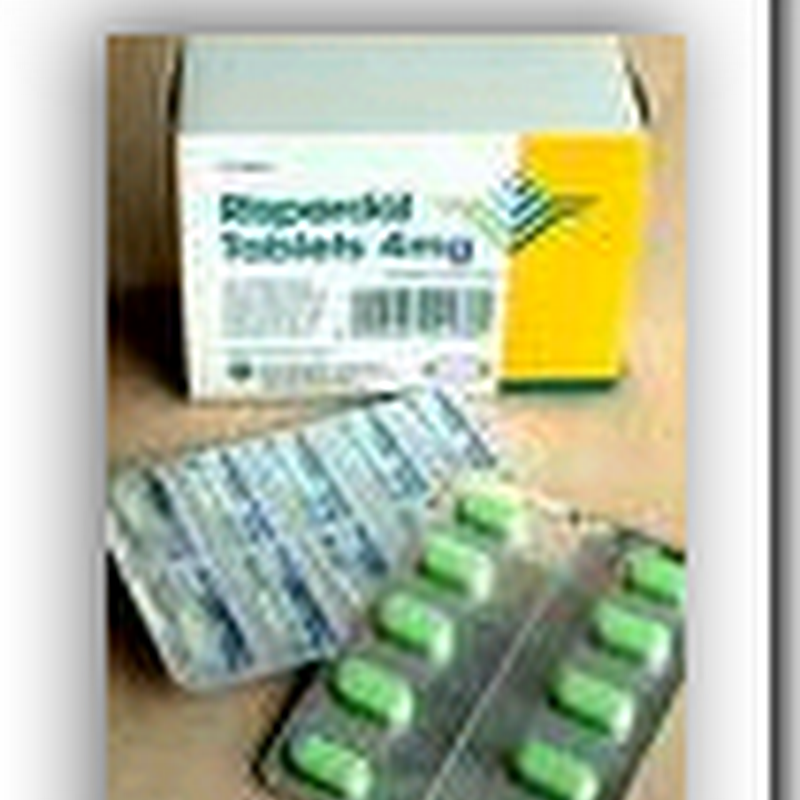
Well it somewhat confirms probably what most of us already suspect and know, quit taking the medication and depression comes back, so I guess the placebo market here is not good, but did give the folks some good “happy” memories during the 4 hours.  I have never taken any antidepressants so I can’t comment one way or another here.  Depression still is a mystery in so many areas.  BD 

Antidepressants elevate mood, which in turn leads to a depressed person becoming more positive and interpreting things that happen to them in a positive way. Prof Cowen said: "Antidepressants change biases. People who take them begin to see the world in a positive light," said Prof Cowen But it does not take weeks for this change to happen. Prof Cowen and his colleagues gave 30 depressed people one single 4mg dose of reboxetine - which inhibits the update of both serotonin and noradrenaline in the brain - and compared them with 30 'controls' who were given a placebo or dummy pill.

Antidepressants Can Change The Way Depressed People See The World In Just Four Hours

Hospitalists and PCPs: A delicate balance

 Why do we have hospitalists?  Good question, but there’s a lot of good answers too.  For one the average MD can’t get away from the office and continue the work flow needed to keep the doors open, and he/she also might have a family to see once in a while too, so being both at the office and hospital can make that almost impossible.  image

Hospitals either employ or subsidize the positions, as it does lead to to cost savings and when you stop and think about it, they are at the hospital all the time, unlike an MD who has a practice to run, but the important part of this is the patient hand off and communication and to not bar the physicians from having hospital privileges as their appearance occasionally might be needed for many reasons, one comes to mind and that is just simple communication between the PCP and hospitalist regarding a patient.  That doesn’t hurt anyone, much less the patient.  In some areas an IPA, independent physician association provide the hospitalist.  It is the fastest growing medical position and there just doesn’t seem to be enough to meet the demand. 

Insurance may not pay for the PCP to make rounds either at the hospital, so there are many reasons why the field continues to grow.  Again, it comes back around to communication being important though, and one more thing, the PCP getting all the information relative to the patient’s condition to the hospitalist and vice versa to make the transitioning effective. BD 

I love hospital work," Pearson explains. "But it got to the point where I just didn't have the time. If I got an admission during the day, I couldn't leave my office; if it was at night, I'd be at the hospital for five hours. I was just getting beaten down.

Hospitalists and PCPs: A delicate balance - With the number of hospitalists rising, office-based physicians are (gratefully or begrudgingly) getting accustomed to using them. - Medical Economics

New Antibiotic Beats Superbugs (MRSA) At Their Own Game

This looks to be very good news.  Everywhere MRSA is taking it’s toll on hospitals and in the wild as well.  The bug in the wild is ever more potent than what is normally contracted at a hospital.  Hopefully this one will prove to be potent enough soon for release on the market.  The testing on this has be unique and make a bit of a new case for antibiotic research.  BD 

image Rockefeller University scientists tested the new drug, called Ceftobiprole, against some of the deadliest strains of multidrug-resistant Staphylococcus aureus (MRSA) bacteria, which are responsible for the great majority of staphylococcal infections worldwide, both in hospitals and in the community.The drug is effective because the chemists who developed Ceftobiprole managed to outwit the bacteria at their own game, Tomasz says. The broad-spectrum antibiotic was discovered by Basilea Pharmaceuticals, based in Basel, Switzerland, and is being developed in the U.S. and worldwide by Johnson & Johnson. The research was supported by Johnson & Johnson along with a grant from the U.S. Public Health Service.
Technorati Tags: ,,

New Antibiotic Beats Superbugs At Their Own Game

The unhealthy ties that bind FDA to drug firms

A new book out discussing the drug business in the US, Money Talks.  Side Effects which was also written by Bass looks at the day to day life of a pharmaceutical sales representative.  Public Health or profit seems to be the theme and what the investigations uncover.  Big Pharma is much more under the magnifying glass today than it ever has been.  One thing for sure there’s a lot more information to scrutinize and in today’s world of transparency, it appears to all eventually come out in the wash as recent pharma stories have reported and the FDA is in the process of getting caught up so they too can have better reporting and research information.  Big Pharma has long been one of the leaders in capitalizing on technology and perhaps when everyone is up to the same speed, the results we see in the future may take on a whole new appearance as well as detailed and factually verified information.   The two entities indeed need to work together to benefit all.  BD 

In her new book Alison Bass obeys the most important rule of investigative journalism: She follows the money wherever it leads. In "Side Effects," her examination of mammoth pharmaceutical companies and their pursuit of profits at any cost, she exposes the dark web of researchers, doctors, and regulators feeding at the Big Pharma trough and undermining public health in the process. The term for what Bass discovers is "systematic funding bias.
Technorati Tags: ,

The unhealthy ties that bind FDA to drug firms - The Boston Globe

Are you getting through? - Many patients may not understand what you give them to read…and they don’t read…what did you say doc?

Medical Economics discusses the issue, and one comment I have to add on my own and one of my own personal pet peeves, is that people do not read.  Anyone that has spent enough time around me will probably say that I am a broken record in this area, but it is so very true, and I’m not just talking about the patients, doctors too, and highly educated individuals.  image

Being a blogger I spend more time reading probably than 10 people all grouped together and nobody should have to research and read to the wicked extent that I do, but come on folks, leave the television or computer game for maybe 10 minutes time every day.  Sometimes too, though, especially if it is not pleasant news, we do tune out, and that is just human nature to a degree. 

Let’s face it, the communication areas between physicians and patients is more strained today than it has ever been, not the fault of the patient, and not necessarily the fault of the doctor, it is what it is.  When you have a family practice physician needing to see 20-40 patients a day to keep the doors open, he/she does not have the individual time to perhaps verbally cover everything with you in that 15 minutes, so as a patient, read up and work with the program. Everything you know today about healthcare and taking care of yourself is not going to come out of that 15 minutes session. 

Recently I posted about the FDA having some valuable resources, guess what, You Tube Videos, and those can be helpful too.  The physician on the other hand had to determine what information may work best for his patients too, and that in itself takes their time, when not seeing patients to evaluate and come up with the best game plan, so their work goes on even after all the patients have left for the day. 

Sometimes there are language barriers too and once more the Internet can help there too as Google can nicely translate a page for you, all you need is the nice Google toolbar, and this is only one example  Sometimes patients pretend like they get it too, and that’s another issue, usually information overload or denial.  Yes is a pain to have all the printed items around and I get lost in all of that myself and I even wish the junk mailers would quit sending all the stuff to my house as I have a garbage can right next to the mailbox so it doesn’t even make it’s way any further.  I wish some would think about saving a tree here and there.  

In my opinion, this is an area where personal health records might just come imagein handy as the relative information can easily be searched and connected to a chart.  Things are working in this direction already.  If is is there for us to access quick  and easy, there’s a better chance of someone reading it.  All of us are like that and gosh knows we all hate that paper clipboard wanting the same information over and over.  BD 

“If you think patient literacy isn't a problem in your practice, think again. A 2004 Institute of Medicine report found that one out of two adults has problems understanding patient education literature, forms they're asked to complete, medication instructions, and information the doctor tells them about their health conditions and treatments.”

Are you getting through? - Many patients may not understand what you give them to read, but they're brilliant at hiding it. Here's help. - Medical Economics

Invention for diabetics reduces needle sticks

This device makes it easier for diabetics to monitor glucose levels and it can be worn for 3 days.  It requires a prescription and appears to be pretty affordable.  The imageinventor, a woman who was diagnosed with diabetes type 1 after pregnancy, put her brain to work and created the I-Port.    By partnering with an endocrinologist in Austin, Texas the device is becoming a real success for many.  Around 8 percent of the population in Texas has been diagnosed with diabetes.    In looking at the picture here, the injection takes place with the skin patch and not the skin each time.  The choices for diabetics keep growing and changing for the better and is helping to create a better quality of life for those diagnosed.  BD 

When Catherine "KK" Patton was diagnosed with diabetes seven years ago, the prospect of injecting herself with insulin at least four times a day for the rest of her life was depressing, she said. "I felt like a pin cushion," the 33-year-old Austinite said. "I thought, 'There's got to be something easier.' " 

She tried an insulin pump — a catheter implanted under the skin and attached to a pump about the size of a cell phone that is outside the body — but it left Patton feeling "tied to imagethe machine." Why not have a temporary port to the body into which an insulin needle can be inserted, thus eliminating the need for the machine and multiple needle sticks, she wondered.

http://www.statesman.com/news/content/news/stories/local/07/05/0705iport.html

What's a penis worth? $795,000, court rules

 One big whoops during surgery here, and a pretty large award I must say, but can be appealed in Romania.  BD 

BUCHAREST, Romania - A court has ordered a Romanian surgeon to pay $795,000 in compensation to a patient whose penis he accidentally severed during an operation. In July 2004, Dr. Naum Ciomu made a surgical error while operating on the man's testicles, severing the penis instead of making an incision to the testicle.

What's a penis worth? $795,000, court rules - Weird news- msnbc.com

Never Too Old? Woman, 72, Has Twins - India

Is this an entry for the Guinness World Book of Records?  They said it was a difficult pregnancy, well gee, I would think so at that age.  Apparently it took her life savings to do imagethis and obviously she's not going to be around more than likely to see the baby much past it’s teens. Amazing, the doctor thought she was only 65 and of course it was done via in vitro processes.  BD  

A 72-year-old woman who has two children and five grandchildren has given birth to twins, making her the world's oldest mother.

ABC News: Never Too Old? Woman, 72, Has Twins

Protect your important documents and medical records with MyMedicalRecords

Not quite sure where this PHR is headed, but they have integrated with Google Health imageand the service is $9.95 a month versus free with Google.  When you look the board though they do have some well known individuals sitting in and some names you might recognize.  Maybe I have missed something along the line but voice mail and faxing seem to be the only other added features that perhaps the free services do not offer, but everyone wants to get away from faxing.  BD 

Los Angeles, United States, July 04th, 2008 --- A Californian company has launched a new Web site (MyMedicalRecords.com) which allows consumers to manage medical records and other vital documents easily and securely. You can easily file and manage your records and then access them whenever you need them from any Internet-connected computer.

Protect your important documents and medical records with MyMedicalRecords.com

Medical Quack Speed Reader Preview Widget – This blog and other Medical Bloggers…

image Ducknet Services - Health Care IT Consulting

This is a bit of a speed reader if you will for headlines, only a short preview with only the latest posts, so if you can’t use RSS Readers at work or just want a quick alternative, this could be a help.  I have included other bloggers who also have the widget, and again clicking on a story will take you direct to their sites as well as any stories listed on the Medical Quack.   Any other bloggers who have a widget and would like to be included, please let me know. image This is a imagebit more detailed than the blog roll and something different I thought I would try.  

The link to the speed reader is in the right hand column resource area.  Any comments are certainly welcome!  Use the get widget link to connect to the site to create a widget.  These are all done in flash and actually look imagevery nice.  The site is hosted by Microsoft Live Office, and if imageyou use Office, it’s worth a look and is fairly simple to use to set up a website.    You get a small SharePoint server to share documents and you can also use the Office Live Workspace to integrate with your Desktop Microsoft Office Software.  Well worth a look.  Basic services are free and you can add on other applications and services for a small monthly fee.  BD 

Ducknet Services - Medical Quack Speed Reader

FDA Approves EVOLENCE®, A New Generation Collagen Based Facial Filler

Results visible immediately too, this looks like something I might want to inquire about!  Nice for wrinkles and no swelling.  This is an injectable product.  The product has been used in Europe since 2004 and this is a first for the US. This is not a do at homeimage product and needs to be administered by a healthcare professional and the treatment lasts for 6 months, so you will need to have injections from time to time to maintain.  The product states this is a natural collagen filler for deep and medium deep wrinkles, and after you reach 40, we all have some of those.  Botox is not the only answer out there for wrinkles any longer.  BD 

The U.S. Food and Drug Administration ("FDA") announced the approval of EVOLENCE® for the correction of moderate to deep facial wrinkles and image folds, such as nasolabial folds. EVOLENCE® is a new advanced collagen-based structural dermal filler, and a first of its kind product. The introduction of EVOLENCE® marks the first dermal filler entry for the Aesthetics Group of OrthoNeutrogena. While new to the United States, EVOLENCE® has been available in other markets such as in Canada, Western and Eastern Europe, Israel, South Korea and Russia since 2004.  Unlike other dermal fillers that use hyaluronic acid (HA), which absorb water to create their effect, EVOLENCE® is a true structural agent due to its three-dimensional collagen matrix.

FDA Approves EVOLENCE®, A New Generation Collagen Based Facial Filler

Technorati Tags: ,,,

OneTouch® Ping" Glucose Management System Cleared By FDA – Glucose Pump

One nice feature is the fact that it waterproof so it can go imageswimming with you.  It uses One Touch Ultra Test Strips which are covered by most health care plans.  The software, ezManager MAX will allow for downloading data from the remote and will work with both a PC and a MAC.  The device even comes in pink!  Now instead of injections, the pump can be with you and monitor glucose levels even while you sleep.  The remote has a color screen, easily viewed.  

Treatment device and plans for those with diabetes are changing, more in the direction of using a pump, makes it easier and less imagepain than injections.  Also,one other nice imagefeature is the ability to customize a 500 item database of food items, so in other words it’s all in one, nice reference.  Pumps are great  for kids too.  It can be worn on a belt.  This is about as close as you can get with a device functioning similar to an actual pancreas.  The company is making it easy for existing patients to upgrade as well.  Pump therapy can also reduce the risk of severe hypoglycemia

I would look for the software, ezManager in time to become a Google Health and HealthVault partner as well as it would make sense. The fact that the product is wireless offers some new freedoms as well with current lifestyles.  BD

   Animas Corporation announced the clearance of its OneTouch® Ping" Glucose Management System by the U.S. Food and Drug Administration (FDA). OneTouch Ping is the first full-feature insulin pump that wirelessly communicates with a blood glucose meter-remote. Using the OneTouch Ping meter-remote, a person can calculate insulin doses and opt to wirelessly instruct the pump to deliver them without touching the pump at all, giving patients more freedom and flexibility in using their insulin pump.

OneTouch® Ping" Glucose Management System Cleared By FDA

InteractMD – New Feed Resources…

New Resources have been added, written and edited by physicians and health care professionals with clinically relevant items.    Permanent Links are located in the right hand reference column…Edited by Volunteer Physicians and Health Professionals and I am happy to also have the Medical Quack feeds syndicated as a reference on their site as well! If you don’t find it here, take a look over there.  BD 

Keys to a successful EHR rollout

Good article with great tips on rolling out an EHR.  The one comment made here that is so true is the fact that it is about people and not the computers.  There has to be one imagecaptain of the ship and that is the one who drives the success or failure, as this person is the one who gets everyone else to buy in.  Many seem to overlook the training portion of the process or view it as not important – how wrong can one be on this one.  I have posted comments on this blog about nurses complaining about the doctors not wanting to train and in essence it makes their job harder.  It is team work and everyone learns from everyone else. 

It is work and required some new skills, but as I would tell everyone, these some skills will help you with other areas of the computer and Internet, so through using an EHR you will also grow in other areas as well.  I have seen failures unfortunately too, mostly due to either lack of commitment or not wanting to change from old habits, and just overall fear.  I have also seen practices buy 2 or 3 before they find the one they want, which is a little crazy, but at least they end up with something they can use in the end, as the commitment is there, but for whatever reason the first one or 2 was not a match.  We have won the war on the fact that electronic medical records are better than paper, so  it’s just a matter of time before everyone gets on the bandwagon in one form or another.  So whatever your situation is, be sure to “buy in”.  BD 

Getting started isn't so simple when it comes to electronic health records, however. Close to 20 percent of healthcare organizations surveyed by the Medical Records Institute in 2007 either had uninstalled an EHR system or were in the process of doing so. The federal government estimates that the EHR failure rate tops 30 percent. 

Keys to a successful EHR rollout - From timetables to training, implementing a new system is more about people than computers. - Medical Economics

Miniature dachshund gnaws off diabetic owner's toe

Now this one breaks my heart.  Could they not find another home for the dog?  I have a weinerdog and they get very close to their owners and do like to do a bit of chewing.  Too bad about her toe though and I’m sure the bandage did attract the dog.  BD 

ALTON, Ill. - An Illinois woman says her beloved miniature dachshund imagegnawed off her right big toe while she was asleep. Linda Floyd told the Alton Telegraph for a story Wednesday that her beloved Roscoe was euthanized because of safety concerns.

The 56-year-old says she has no feeling in her toes because of nerve damage from diabetes. She discovered the toe missing after waking from a nap Monday. She called her daughter, who phoned 911. A veterinarian says the toe had been bandaged because of a healing hangnail. That might have somehow attracted the dog.

Miniature dachshund gnaws off diabetic owner's toe - Yahoo! News

Personalized Medicine Isn’t Paying the Bills, Yet, but more Science is Needed

When will it start paying the bills?  The science and development is somewhat fragmented like the rest of health care, and this is not to say in any way that phenomenal breakthroughs are not occurring by any means as they are.  Part of the problem is having enough data, real time data for one.  As this article makes reference to warfarin being a potential for genetic testing, the action has been limited and one of the big reasons is maybe because insurance companies won’t pay for the test.  Supply and demand like everything else, there has to be a market.  Insurance companies want more evidence. 

imageDiagnostics are used for many different studies today than compared to years past and to put a lot of money into a product that fails is not on anyone’s priority list, thus some kind of preliminary stats are helpful if not necessary before the dollars roll in and the project continues.  

Of course, oncology is the hottest research areas going for obvious reasons as we have wanted a cure for cancer forever and technology as it has evolved today might just  get us there.  Do physicians understand biomarkers?  Ask one and find out, more than likely not all of it as it gets complicated at their level too as the markers can impact a whole range of drugs, so data mining and getting the definitive information relative to the diagnosis at hand is a challenge.  Doctors don’t have time to Google in the 15 minute HMO prescribed office visit. 

So now we have the science, and what’s the next area that clouds the issue, it just might be documentation, in other words including this information in an EMR/EHR.  What!  You bet, you can’t have one without the other.  Have we hit the wall yet?  image

There are not enough physicians in the US who understand personalized medicine yet and there’s a lot of training to do, so they can in turn discuss and educate patients and prescribe a treatment plan the patient understands.  You think patients come in with a bunch of information now from the Internet, wait until they start doing their own DNA research and it will get even more interesting. 

Now keep in mind this office visit is still limited to an average of 15 minutes, and we still have all the other administrative work that goes along with an office visit, the coding, prescriptions, etc. and have added on a genomics session, and at this point if a physician isn’t using some type of electronic medical records system, well we won’t go there for now, but it won’t be pretty

Hedge funds and venture capitalists continue to invest as well as big pharma in selected areas.  Everyone wants a return on their investments, including the patients who’s lives are potentially at stake!  It might take bigger teams and groups to start bringing things together in a more organized fashion too.  We might also start electing some scientists to public office too, gosh knows that couldn’t hurt to have some folks in the know at the top levels too. 

The proof of concept on personalized medicine I think has been re-written almost every imageday and will probably continue on the same path for a while until the science is old enough to begin creating some standards beyond the science side of the business.  It may take a while as look at how long electronic medical records has gone on and using it for a comparison, and we are still not there, partially due to the way the business grew, fragmented from the start and still in development at all times, so give this some thought too down the road as the physicians are not only faced with genomics knowledge coming down the tube, many have electronic records in their future to adapt to as well, some are already there, but as we have read, most are not.  BD 

Though the promise of personalized medicine has been widely touted, firms focusing on targeted therapies and companion diagnostics are not getting much bang for their buck - yet.  So far, the actual impact of personalized medicine, and specifically Pharmacogenomics-based therapies that predict a patient's response to  drugs based on genetic information, has been limited, he said.

That should have been a turning point for firms such as Nanosphere, whose Verigene warfarin genetic test kit was cleared in September 2007, and AutoGenomics, Nanogen, Third Wave Technologies and Luminex, who sell warfarin genetic marker reagents and are developing test kits. Unfortunately, uptake of the tests has been tepid.

http://www.medicaldevicestoday.com/2008/07/personalized-me.html

Doctor and patient Use the F-Word – great stress relief for both in the delivery room…

Great story and entertaining.  Sometimes things go a little differently in the delivery room.  Sometimes the unorthodox works!  In this case the doctor was a true hero and is by far not the only coach to be known to use the word, just watch your next favorite sporting event.   BD 

image “By the end of the second hour of pushing, the primigravida was hot and exhausted and MAD. "I hate this," she announced, revealing an emotional age of 12 beneath her chronological age of 24. "I hate it, I hate it, I hate it." I was pretty hot and tired too. Coaching is a lot of work. "I know you do," I said kindly. "Everyone does, but this is how women give birth. You can do it." "No I CAN'T!" she said, and went back to pushing and crying, pushing and hollering. By the time we'd reached the two-and-a-half hour mark, she was swearing like a sailor. "I f***ing hate this!" she cried. "This f***ing hurts. I can't f***ing do this.”

“The next day, I was the talk of the hospital. "Your patient is telling everyone how awesome you are," the charge nurse told me the next day. "She's telling everyone 'That doctor told me exactly what I needed to hear. She knew exactly what I needed to have my baby.'"

“The moral of this story: Nice doesn't always work. Sometimes the F-word is your best friend.”

Rural Doctoring: Birth Story #416: Rural Doc Uses the F-Word

Hat Tip:  Kevin, MD

Three technologies that could transform patient care

 RNAi, IPSCs and GWAS – this is it and they all revolved around genomics in one form or another – personalized medicine in the works.  If you want to be brought up to date quickly, this is a good overall article to read.  BD 

Three mouthfuls of letters - RNAi, IPSCs and GWAS - encompass the hottest research topics in biomedical science today. The three technologies could revolutionize healthcare in the coming decades, although they are at different stages of development. RNAi or RNA interference offers a way to switch off genes - with immense therapeutic implications. IPSCs (induced pluripotent stem cells) may be even more important, as the gateway to regenerative medicine. GWAS (genome-wide association studies) are beginning to identify the genes responsible, along with environmental factors, for complex common diseases such as cancer, diabetes and heart problems.

FT.com / Home UK / UK - Three technologies that could transform patient care

Test Diabetes Drugs For Heart Safety

Side effects of drugs are being taken much more seriously today.  It’s not as much as a hit and miss game prescribing as it used to be with technology and being able to rapidly compile figures.  It may slow down the approval process, but at least we will all be better informed.  BD 

A diabetes drug may lowimageer blood sugar but still pose risks for the heart. So a panel of FDA advisers voted 14-2 yesterday that the FDA should require drug makers to show that experimental diabetes drugs don’t increase cardiovascular risks.

http://blogs.wsj.com/health/2008/07/03/fda-panel-test-diabetes-drugs-for-heart-safety/?mod=googlenews_wsj

Technorati Tags:

Test can find tiny tumor level in blood – Nanotechnology and Personalized Medicine combined - Breakthrough

One scientist commented that just being able to do a blood test to find tumors is a huge breakthrough and opens up more new avenues instead of having to rely only on biopsies and CAT scans.  “If the number of cancer cells in the bloodstream falls, treatment is probably working. If they increase, it means the tumor is growing, and suggests the need for a new approach.”   image

It is called a CTC-chip and is able to accurately identify bloodstream cancer cells.  The study involved 27 cancer patients in each test it was correct and afterwards all the genetic features anticipated were there and detected.  The test takes 8 hours to run and more groups of patients will be tested.  BD 

Boston researchers have developed a test that can identify minute amounts of tumor cells floating in the blood of cancer patients, a discovery that could lead to better treatments with fewer side effects. The technology, invented at Massachusetts General Hospital, uses a microchip scanner no bigger than a business card to analyze a patient's blood, hunting for stray cells shed by tumors. The device is so powerful that it can detect a single cancer cell among 1 billion healthy blood cells.

Mass. General's approach brings together two of the hottest fields in cancer research: the incredibly tiny devices of nanotechnology, and personalized medicine - tailoring treatments to individual patients.

Test can find tiny tumor level in blood - The Boston Globe

New hospital patient death video surfaces – Los Angeles

 New video that appears in the Los Angeles Times sent to the paper anonymously relating back to last year at the now closed Martin Luther King Medical Center.  In light of what happened this week in New York, it brings back the similar event of last year.  How complacent does it become, to the point of death?  BD 

CCTV:Last year, a California woman literally died in a hospital emergency room waiting to receive treatment. Since then, Los Angeles County has been fighting the release of security camera video that shows the incident as it unfolds.

LiveLeak.com - New hospital patient death video surfaces

What Does Electronic Medical Records and Broadband have in common?

A couple of the same things, folks don’t see the value with new technology and of course there is the cost, and of course an EMR/EHR needs broadband, so what does this tell us?  Folks just are not too happy about accepting change and use the cost as an excuse, as in some areas broadband is only one or two dollars more than dial up…Go figure.  BD 

Broadband access is out there, but people just don't think it's worth the cost. The study, from the Pew Internet and American Life Project, shows that only 14-percent of those without broadband would upgrade if they could. Another 19-percent say they just don't have any interest in upgrading at all, but the most common response, selected by 35-percent of respondents, was that broadband simply costs too much.

Dial-Up Internet Users Still Don't Want Broadband, Study Says - Switched

Celera Biotech moves from Maryland to California – Personalized Medicine

Perhaps a come back for California who slipped in the recent technology ratings, but more importantly the recent news with online DNA companies not being able to perform services in the state of California without a prescription from a physician may in turn contribute to making this a fit, since they are focusing on the diagnostics side of the business plan, which of course would mean involving the physicians and continued growth of personalized medicine.   

image Said Speechly: “Rockville was the origin of Celera where we did all of our genome sequencing efforts. We still have a base in Rockville, but as our business model shifted from sequencing more into diagnostic applications, the diagnostic part of our business at that time was based in California.
“It wasn’t something that was conscious — it’s just that more and more was happening in California around diagnostics,” he said.
Celera now lists its Alameda, Calif., location as its corporate headquarters on its Web site; however, Speechly said about 30 employees will continue to work in Rockville. According to Speechly, the firm’s growth in California can be attributed to the company’s acquisition of two California companies, Berkley Heart Lab and Atria Genetics Inc., within the last year, as well as to the business’s move away from genomics.

http://www.mddailyrecord.com/article.cfm?id=5851&type=UTTM

Better data for better health – The PHR – What will you do?

This article does a good job in outlining the direction of the PHR, personal health record for those who have not caught up with the lingo yet. Do patients want it? As of now most probably don’t know what to do with it, agree. There are some cases though where this does not hold true, as an example, Kaiser Permanente is one where patients depending upon where they are, have had access for over a year or so.

I have spoken with individuals under the Kaiser plan, and over all, like “Mikey”, they like it. Why, because they can go to any facility and have their medical records available for anyone treating them. There’s another reason and that is the ability to access their records, from their computer at home. In most instances, the patient has not done one stick of data input, but voile, it is there for them, if nothing else a convenience.

imageAs Google and Microsoft continue with their strategic alliances with healthcare companies to integrate, guess what, once more there might be little or no data input from the patient once again. How is this possible? Let’s look at one simple example here with using Quest Diagnostics, who almost everyone knows or is aware of, one of the big labs. Lab results can be sent to Google Health, no effort on the patient other than getting their physician to authorize the transaction. Once more, no data input from the patient. Keep that thought.

As time marches on and the records begin to fill with information from other healthcare companies, one just might think about perhaps adding a note or two themselves, again since this is their record and they have control with HealthVault or Google Health.

Next scenario, out of network Kaiser patient arrives for treatment at your door and they have their records stored in the HealthVault and want to share. What’s the next move? Are you doing to ask the patient to print it all on paper, and in case of an emergency you may not have that luxury, and when they return to their primary care provider at Kaiser, are they going to be excited over getting a stack of paper, as more than likely they will want to have it added to the chart? I don’t think so. So what will the medical office and physician do? Good question.

As much publicity as PHRs have received, I have talked to medical assistants in offices that have no clue what it is, physicians, CEOs, same thing. We usually talk in terms of the “haves” and “have nots” but for this post I’m going to say it’s more like the ‘knows” and the “know nots”.

I have just touched the tip of the iceberg here, but be aware these types of situations are on the way, and the last thing an office needs right now with time restrictions with patient care is another administrative nightmare in not knowing what a PHR is and how to handle the information with technology instead of printing on paper. If you are not prepared, the stage is soon being set for another Chinese fire drill on how to handle personal health record information from the “informed patient” when they show up on your doorstep.

PS – there are links to both sites in the resource side of this blog if you need the links to read up. BD

BLUE CROSS Blue Shield of Massachusetts announced an agreement recently to give members access to their records via the new Google Health service. This venture is part of a movement to put consumers in charge of their medical records as the healthcare system edges into the Internet era. It’s unclear, however, whether patients want this control. What’s more important is getting doctors and hospitals connected into a single system. Blue Cross is doing its part by financing an experiment in three Massachusetts communities.

http://www.boston.com/bostonglobe/editorial_opinion/editorials/articles/2008/07/02/better_data_for_better_health/

FDA Grants Conditional Approval To Interventional Spine's PercuDyn" System IDE Application

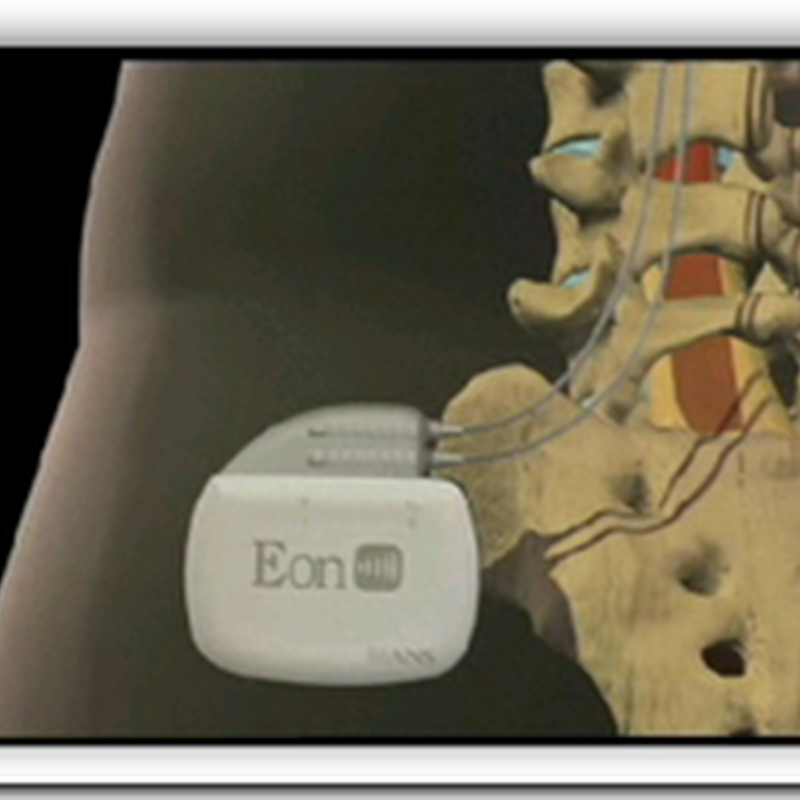
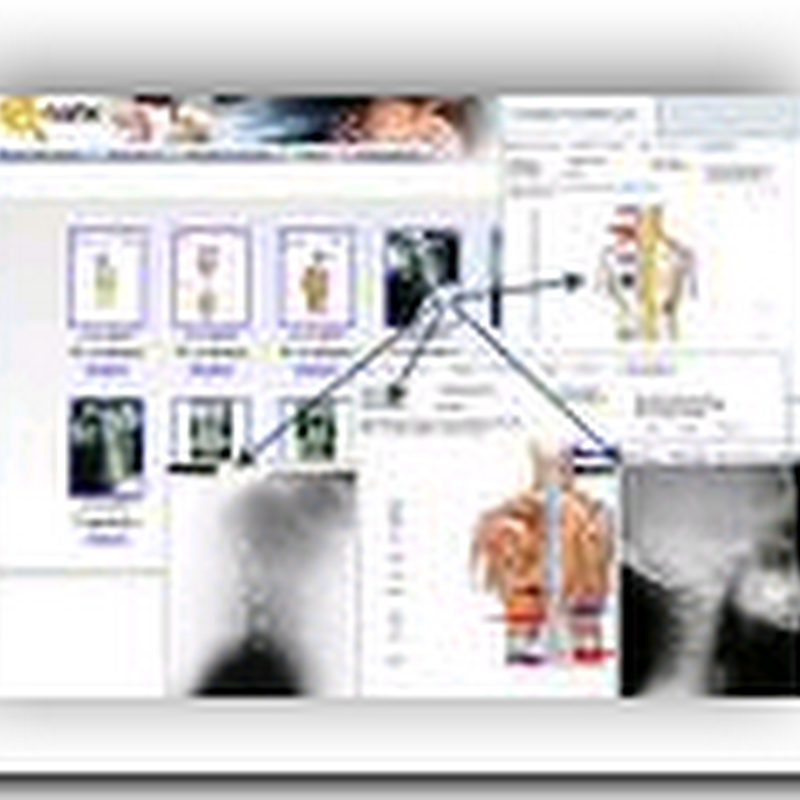
More good potential news for those with chronic back pain related to degenerative discs.    It is not fully FDA approved yet, pending the submittal of additional imageinformation, but thus far it looks promising.  It is an implanted device and a procedure done in an outpatient setting.  It appears numerous units can be placed on the spine, depending on where the problem lies.  The devices makes moving a lot less painful.  Watch imagethe video at the site for more information.   At any rate we all know the risks of surgery on the spine and as of now fusion seems  to be what has been the primary choice, but it looks like now there are some new alternatives on the horizon.  BD  

imageInterventional Spine, Inc. announced that the U.S. Food and Drug  Administration has approved the Company's investigational device exemption (IDE) application for its PercuDyn System for the treatment of degenerative disc disease (DDD). This approval is conditional upon the Company providing some additional information to the FDA. 

FDA Grants Conditional Approval To Interventional Spine's PercuDyn" System IDE Application

Technorati Tags: ,,,

The Turbo Cell Phone

Our Cell Phones do just about everything any more and this is a funny parody on what a phone can really do!  Funny video and very entertaining, and has a couple health care applications!   BD 

UnitedHealth to pay $900M to settle suits – worried about Medicare part D prescription costs…

2 Lawsuits, plenty of money, hopefully to put to good use, but they are projecting a profit on 81 billion dollars.  They are also cutting 4000 jobs to curb costs, maybe this is still the leftovers from the PacifiCare purchase and merge.  We all know by now what happens when mergers and buyouts take place and this is not anything different here. 

Also in a related article it states they are paying out more than expected for Medicare Part D prescription drug expenses.  A couple questions come to mind, is this timing due to the ongoing potential physician pay cuts for Medicare, as the Senate used this as their rationale for not wanting to dip in to the till as they felt it would hurt the carriers. image

When it comes to paying for prescriptions I have asked around and I have found that there are many of my friends, associates, etc. that still pay a co-pay of $10 or $15 for drugs that can be had (generics) at other retailers for $4. Just something to me that doesn’t make sense, why not work on that end of things and bring some of this down to the same levels.  Why does a patient have a co-pay of that amount and the insurance company picking up the rest of the tab, let’s say an additional $30.00 or so just for a simple figure. So now we have a generic drug at a store costing $40.00, whereby at another location it could be had for $4.00.  Does this make sense?  Add up a bunch of those and yes, prescription drug costs will be more.  I have not seen any of the insurers make any efforts in this area to keep costs down. 

But there’s a second side to this too in the fact that if the patient goes and pays $4.00 cash it doesn’t go in to the files, so it comes back and hits physicians in the area of pay for performance as it gives them distorted figures on not meeting their goals, so add this on to the problem and we have unhappy physicians next that have to prove they are prescribing their targeted number of generic drugs

So I ask, is the extra money being spent to be able to have the additional patient data on what medications they are taking and so they can have the numbers for physician pay for performance reports?  Just something to think about when it comes down to hearing the insurers talk about the increasing costs of medications for a point of rationale.  And let’s not forget about the expense of setting up shop in China and India too.  I have wondered too  how much revenue really sits in the coffers in the “reserves”, and I’ll probably never know the answer to that one, but one can speculate it is a lot…from earlier this year from the state of Washington in the year 2006, 3.2 billion, one state and 3 carriers only in the report, so that’s a very small report.  In summary, I can’t buy the rationale of the medications in Part D working a hardship, it just doesn’t make sense.  BD 

UnitedHealth Group Inc. has reached an agreement with the California Public Employees Retirement System (CalPERS) and Alaska Plumbing and Pipefitting Industry Pension Trust, and will pay $895 million to settle a lawsuit. The company also announced a second, $17 million settlement for another suit. The suit was filed in 2006 in Minnesota district court, against the company and some of its current and former officers and directors related to historical stock options practices.

UnitedHealth to pay $900M to settle suits - Sacramento Business Journal:

Technorati Tags: ,

Rising Health-Care Costs Hurt Small Biz

Survey and article about how small businesses look at health insurance.  The findings are probably what would be expected, but the largest drop is the number offering insurance for employees.  Just as house payments come before insurance, so does business expense, payroll, etc. and staying in business come before health insurance.  Is health insurance becoming a commodity that will soon be out of reach for even more individuals?  The rates are are not going down at all, so there’s no price breaks in site.  BD 

The good news is that more respondents—67%—reported having health insurance for themselves, as compared with 54.9% in 2005. However, there was a shocking drop in the percentage that said they're providing coverage for their full-time employees. In 2005, 46.2% said they were offering employee coverage; in 2008 the number went down to 18.6%. That's one of the most massive drops we saw in terms of all the questions we asked across both surveys, and the sole reason is cost, which was cited by 65% as the top barrier to providing coverage.

We asked whether these entrepreneurs would support increased taxes to pay for a universal health-care system. A significant number—40.3%—said yes, they are willing to pay additional taxes for a tax-funded universal health-care system.

http://www.businessweek.com/smallbiz/content/jul2008/sb2008072_747699.htm?chan=smallbiz_smallbiz+index+page_top+small+business+stories

Hansen Medical Announces FDA Clearance for CoHesion(TM) Module

image Robotics has come to the world of catheters.  With using a computer driven process, the navigation through the body and heart becomes more accurate.   The computer side pretty much resembles a computer work station with 3 displays.  It requires no specialized room and is mobile to be moved from one room to another. As shown in the picture the surgeon remains seated.  

The control unit has a slight resemblance to a PC game controller so as the old saying goes doctors that play computer games get a little bit better at the controls.  All imaging is done in 3D and allows physicians to navigate and reach hard to get to places.  Again, the catheter business is defined and accurate with the help of technology.  BD 

 Hansen Medical, Inc. (NASDAQ: HNSN), a developer of robotic technology for accurate 3D control of catheter movement during cardiac procedures, has received U.S. Food and Drug Administration (FDA) 510(k)  clearance to market the CoHesion(TM) 3D Visualization Module for use in complex electrophysiology (EP) mapping procedures. This integrated EP solution offers a software interface between the Hansen Medical Sensei(TM) Robotic Catheter system and the EnSite(TM) System advanced mapping software from St. Jude Medical, Inc. Hansen Medical's platform solution offers physicians the ability to instinctively navigate a catheter during the diagnostic phase of a complex cardiac arrhythmia procedure. 

imageThe Sensei system uses computer-based catheter technology to provide stable and predictable control of catheter movement. This innovative technology is designed to provide fine guide catheter control in 3D to enable physicians the ability to access hard-to-reach anatomy, and to maintain stability during interventional procedures. The physician workstation is adaptable to existing EP procedure rooms and can be placed away from the field of direct radiation. The disposable Artisan(TM) Control imageCatheter is comprised of inner and outer steerable guide catheters that accommodate indicated percutaneous catheters.

Hansen Medical Announces FDA Clearance for CoHesion(TM) Module

Technorati Tags: ,,,

Michigan AG sues Blue Cross over for-profit deal

The lawsuit states they “broke the law” by acting like a for profit organization and shifting funds to buy a California insurance company.  It appears as if Blue Cross operates similar to an assigned risk carrier as they cannot deny coverage as long as the patient pays, unlike out here in California, but no taxes is a big break for any company these days.  “Blue Cross is "losing its way" by increasingly venturing into for-profit activities, Cox said.”

image The legislature is also considering another source for assigned risk patients.  It does make you wonder how much money from the insurance companies goes to finance interests outside of what one could think is the normal realm of operation for a carrier, and as stated before some carriers are opening up new ventures in China, so how much capital is needed for those up and coming locations?   BD 

LANSING, Mich. - Attorney General Mike Cox on Wednesday sued Blue Cross Blue Shield of Michigan and accused the state's largest health insurer of breaking the law when it shifted $125 million to help buy a workers' compensation insurance company. The lawsuit filed in Ingham County alleges that nonprofit Blue Cross, based in Detroit, illegally helped the Accident Fund, its for-profit subsidiary in Lansing, purchase a California insurance company in November. "This is not what a charitable and benevolent institution was set up to do," Cox said during a news conference, referring to Blue Cross' unique role in Michigan's health system. It's exempt from state taxes in exchange for being the insurer of last resort, meaning Blue Cross can't deny any customer health insurance as long as the customer pays for it.

Michigan AG sues Blue Cross over for-profit deal -- chicagotribune.com

Technorati Tags: ,

Federal Judge Rejects Request For Injunction Against Medicare Competitive Bidding Program For Durable Medical Equipment

The lawsuit contended that CMS was not clear enough on the specifications to bid with the inclusion of financial information, thus many vendors were disqualified.  There was no mention of how many potential and existing vendors were affected other than the one vendor who filed the suit, who stated without the opportunity to maintain or secure additional business that it was catastrophic to the point of crippling the company entirely.  BD 

U.S. District Judge for the District of Columbia Ricardo Urbina on Monday rejected a request for a preliminary injunction against a Medicare competitive bidding program for durable medical equipment, CongressDaily reports (Edney, CongressDaily, 6/30).

The program also will apply to additional product categories in future years. The program likely will result in an average 26% decrease in the prices of medical equipment in the 10 MSAs, according to CMS (Kaiser Daily Health Policy Report, 6/12).

Federal Judge Rejects Request For Injunction Against Medicare Competitive Bidding Program For Durable Medical Equipment

PHR vendors bypass patients, pitch to business ...

Be aware employers on the next contract you negotiate with health insurance plans as there might be some incentives in place to convince employees to use and enroll in a PHR, personal health records. Aetna already has some interest in one, along with other members. The big question is who’s software and where will Google and Microsoft play in to maintain neutrality and protect the full privacy of the patient? In other words keep the data where it is only authorized for access by the patient and to where patients do not eventually coerced into having to provide information to insurers some day against their better judgement. BD

After several years of mostly striking out with consumers, personal health record vendors are adopting a business-to-business marketing model, courting employers and insurers in hopes of expanding PHR adoption. A recent study by Cambridge, Mass.-based industry analyst Chilmark Research found that of the more than 200 PHRs on the market, only 20% are Internet-hosted, which is what the study focused on.

Moore believes the entrance of Google and Microsoft into the market could help raise the bar on what consumers will expect.

AMNews: July 7, 2008. PHR vendors bypass patients, pitch to business ... American Medical News

California sues Prime Healthcare over balance-billing practices

Prime Healthcare is growing in size, lagging just a bit behind Kaiser in size.  By not having signed contracts, the hospitals can bill at their rate of service charge, so there are no breaks for the insurance companies.  The hospitals see everyone in the ER rooms and are pretty much a lot of just that, one big ER operation, of course, they are functioning hospitals as well, but when acquired, many of the non profitable operations of the hospitals were removed. 

imageIt puts patients and doctors in the middle with the balance billing situation and they are taken care of at a Prime hospital which is “out of network”.  In the last couple of weeks, Prime has purchased 4 more hospitals and is suing Kaiser now for balance dues they have not paid on the bills sent.  Again, this balance is due to the fact that there are no contracts in place for any HMOs or insurers, so they are billed the published charges. 

Dr. Reddy states Kaiser should pay the bills, not the patient.  "We really don't want the patients to pay us," Reddy said. "Patients are the only messengers to the health plans. They should call and say, 'We paid you dearly, how come you don't pay for my emergency care?'

Kaiser is now suing Prime to block the balance dues….but in a couple of instances, some of the hospitals purchased would not be around otherwise if not purchased by Prime as they were on the verge of insolvency. 

This is just one fine mess, and back to the same old question, will somebody pay the bill?  The insurance companies are busy expanding efforts to China at present, so it makes you wonder if they still place enough value on patient care here or is it off to the next frontier.   BD 

California regulators have moved to stop one of the state's biggest hospital operators from billing privately insured patients for unpaid medical services received at its facilities. The Department of Managed Health Care, in a lawsuit filed Friday in Orange County Superior Court, is seeking to bar Prime Healthcare Services Inc. of Victorville from billing insured patients for unpaid medical bills that the hospital chain contends it is owed from insurers and is seeking from patients as a last resort.

Prime often cancels most private insurance contracts when it acquires a hospital, causing that many of the patients treated in its emergency rooms or who are admitted for longer stays are "out of network," allowing Prime to charge higher fees for their care.

California sues Prime Healthcare over balance-billing practice - Los Angeles Times

Bayer Healthcare Acquires Maxgen’s hemophilia program assets

One more pharma/biotech acquisition.  BD 

BOSTON (Thomson Financial) - Bayer AG's Bayer HealthCare Wednesday said has agreed to acquire Maxygen Inc.'s hemophilia program assets for $90 million with a final, potential milestone payment of $30 million. The agreement includes a next-generation recombinant Factor VIIa protein, known as MAXY-VII, and a license to use Maxygen's molecular breeding technology for exploiting gene targets. Bayer HealthCare said the agreement fits into its growth strategy for its specialty pharmaceutical business.

stocks, shares, news, FTSE, online trading - Interactive Investor

Patients to get European medical treatment on NHS - UK

Perhaps the recent outbreaks of MRSA and C Diff might have had an influence here with many afraid of some of the current conditions and press regarding NHS facilities, but they were quick to say this is not an endorsement of health tourism; a survey by BCWA, the private medical insurance providers, shows that 53 per cent of Britons say they would to travel to other EU countries for medical treatment, most because they would not want to wait for the procedure on the NHS.  There’s a wait though, doesn’t take place until 2011 when finalized.  The proof in the pudding will be when the bill comes to be paid.  BD 

The new rules will allow patients to buy hospital, outpatient or dental treatment in any EU country and send the bill to the National Health Service. Experts predicted that the rules could spark an exodus of patients from the NHS due to concerns about long waiting times and hospital superbugs.

Patients to get European medical treatment on NHS - Telegraph

Technorati Tags: ,,

1.5 million U. medical records recovered; but were they compromised?

Now they find out the transport company’s business license had lapsed too, so on with the normal procedure of some free credit services…BD 

Stolen tapes containing millions of billing records for University of Utah patients have been recovered, the Salt Lake County Sheriff's Office confirmed Tuesday. Details about where and when the tapes were recovered were not immediately available. Salt Lake County sheriff's Lt. Paul Jaroscak deferred questions until a 1 p.m. news conference scheduled for today to discuss the issue.

1.5 million U. medical records recovered; but were they compromised? - Salt Lake Tribune

Kennedy leads renewed effort on universal healthcare with a passion..

  The issue is now back on the tables for talking and discussion.  We have all been living through healthcare hell of late and it is time for a new plan.  The one ingredient here that sets this apart from prior attempts that that Mr. Kennedy was also a victim of cancer and some of the best programs and outcomes have resulted from those who attack the issues with “passion”, and unfortunately sometimes things hit close to home before a wake up call is sent out.  We have not had a imagenew plan in the country since Medicare and the bandages that keep going on the existing plans keep falling off, so hopefully the passionate diligence of Senator Kennedy will lead to some real results, passion makes the world go round.  BD 

Senator Edward M. Kennedy's office has begun convening a series of meetings involving a wide array of healthcare specialists to begin laying the groundwork for a new attempt to provide universal healthcare, according to participants. The discussions signal that Kennedy, who instructed aides to begin holding the meetings while he is in Massachusetts undergoing treatment for brain cancer, intends to work vigorously to build bipartisan support for a major healthcare initiative when he returns to Washington in the fall.

Aides to Kennedy have also assembled a network of Massachusetts advisers, including healthcare lawyers, economists, nonprofit leaders, doctors, and health insurers who may be asked to work on specific aspects of a national plan. At a recent meeting in Boston, the group discussed how different elements of the Massachusetts approach might work on a national level.

Kennedy leads renewed effort on universal healthcare - The Boston Globe

Pfizer Ending Support For CME By Third Parties

With all the heat of late on financial contributions for CME credit, Pfizer is the first one out of the barrel to restructure where and where they will not offer funding.  In other words it appears to be an evaluation process to make sure that the CME funds go where they should, towards education and not to increase sales per se.  With using some 3rd parties, it is difficult to regulate to ensure standards are being kept by for profit organizations.   Last year’s budget was pretty large at $80 million and the Senate finance committee came up with some pretty large numbers inclusive of what pharma spent all together.  BD  image

In what may be a first, the drugmaker will still support continuing medical education courses at academic institutions, teaching hospitals and those supported by medical societies, but no longer directly support CME courses offered by for-profit medical-education and communication companies, Dow Jones reports.

One large grant Pfizer recently made was a $3.4 million contribution to the California Academy of Family Physicians to support a three-year, national medical education campaign aimed at reducing the number of US smokers, the wire service notes. Pfizer, of course, markets Chantix, a smoking-cessation drug, and participants in the campaign include a medical-education company.

Pfizer Ending Support For CME By Third Parties // Pharmalot

Technorati Tags: ,,,