Interviews Personal Health Records How to Search Bar Code Campaign Ducknet.net

FDA to Review Security Data Access After Insider Trading Charges Filed-Time to Update Group Policy on The Servers

Well group policy settings are the first thing that come to mind and if needed additional audit trails can be added to track access and log it.  I’m sure some type of Group Policy was in place at the time but maybe it was not tight enough.  Hospitals such as Long Beach Memorial who use Epic also have an algorithm called “break the glass” and employees are actually asked, just in case they are in there by a mouse click by mistake or whatever, before they get access so they have to allow it themselves and of course all this is tracked and audited.  image

SEC Files Lawsuit Against FDA Chemist for Insider Trading Violations

I’m sure the FDA has security access in place but perhaps adding more groups and restricting some access along with audit tables should do the trick.  Does the IT department like doing Group Policy, heck no as it gets complicated.  It is about as much fun as managing Outlook Exchange except it doesn’t need daily attention for the most part to the same extreme.  BD 

Food and Drug Administration Commissioner Margaret Hamburg, in a memo provided to Reuters, told employees she had taken steps to address "potential vulnerabilities" in the way the agency handles information electronically. The agency houses details about upcoming drug decisions that can make or break a pharmaceutical company's fortunes.

The steps include a new tracking system to "better monitor employee access of data," Hamburg said in a memo sent to FDA staff on Wednesday.

Exclusive: Trading charges spur FDA data protections | Reuters

Stem Cells Grow an Eye Retina

This is only the beginning but a good start for the eyes with stem cell treatments.  The retina was grown in a dish and later down the road who knows what stem cells will do for correcting sight problems.  Mouse embryonic stem cells were used for the study.  BD 

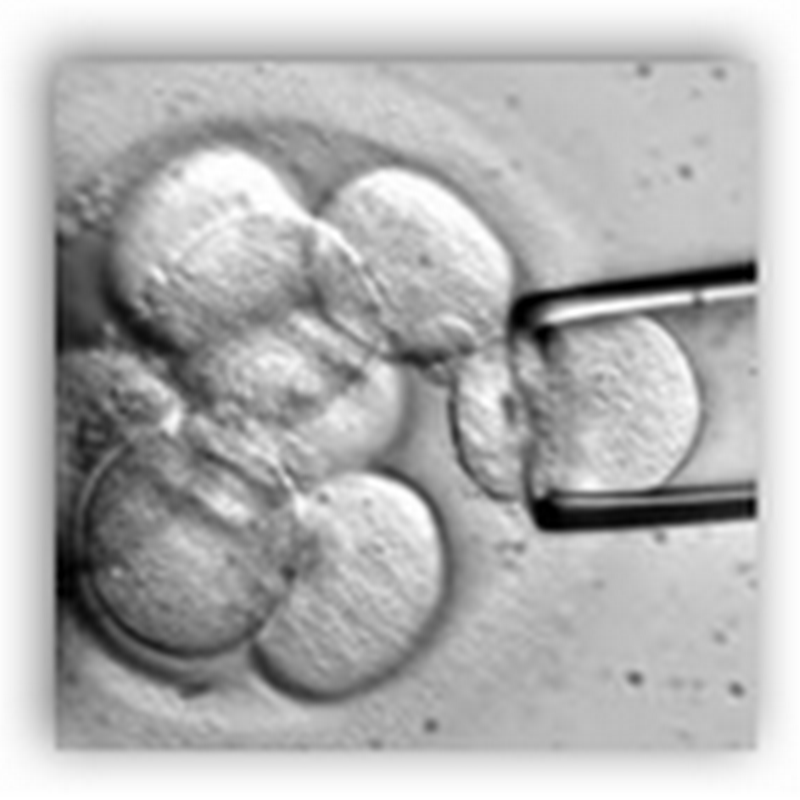
If the technique, published today in Nature, can be adapted to human imagecells and proved safe for transplantation -- which will take years -- it could offer an unlimited well of tissue to replace damaged retinas. More immediately, the synthetic retinal tissue could help scientists in the study of eye disease and in identifying therapies.

The work may also guide the assembly of other organs and tissues, says Bruce Conklin, a stem-cell biologist at the Gladstone Institute of Cardiovascular Disease in San Francisco, who was not involved in the work. "I think it really reveals a larger discovery that's coming upon all of us: that these cells have instructions that allow them to self-organize."

However, the eye structure created by Yoshiki Sasai at the RIKEN Center for Developmental Biology in Kobe and his team is much more complex.

The optic cup is brandy-snifter-shaped organ that has two distinct cell layers. The outer layer -- that nearest to the brain -- is made up of pigmented retinal cells that provide nutrients and support the retina. The inner layer is the retina itself, and contains several types of light-sensitive neuron, ganglion cells that conduct light information to the brain, and supporting glial cells.

To make this organ in a dish, Sasai's team grew mouse embryonic stem cells in a nutrient soup containing proteins that pushed stem cells to transform into retinal cells. The team also added a protein gel to support the cells. "It's a bandage to the tissue. Without that, cells tend to fall apart," Sasai says.

At first, the stem cells formed blobs of early retinal cells. Then, over the next week, the blobs grew and began to form a structure, seen early in eye development, called an optic vesicle. Just as it would in an embryo, the laboratory-made optic vesicle folded in on itself over the next two days to form an optic cup, with its characteristic brandy-snifter shape, double layer and the appropriate cells.

Robert Lanza, chief scientific officer of the biotechnology company Advanced Cell Technology, based in Santa Monica, California, says the paper has implications far beyond treating and modeling eye diseases. The research shows that embryonic stem cells, given the right physical and chemical surroundings, can spontaneously transform into intricate tissues. "Stem cells are smart," Lanza says. "This is just the tip of the iceberg. Hopefully it's the beginning of an important new phase of stem-cell research."

Stem Cells Make 'Retina in a Dish': Scientific American

FDA Moves in on Triad and Seizes $6 Million Dollars of Product-The Medicated Wipe Recalls Issues Continue - Triad is an Outsource for Several Fortune 25 Companies

What a mess this has been and gee if consumers, doctors, hospitals and so on imagewould have been able to use a smart phone to find recalls products lots, how much easier this could have been.  One thing with this recall from Triad we found out they private label for tons of companies, and thus they too also had to put out recall alerts for their products, after they figured out if they were affected.  This is huge snowball effect going here.  You should see the lists…huge!  If you shopped at Walgreens and bought over the counter medicated wipes, well check those huge number of recalled lots!!  Is this not fun or what!  No it is not.  We still have no system.  Here’s part of the original post I made back on January 7, 2011 when it started. 

FDA Announces Recall of Alcohol Prep Pads, Swabs, Swabsticks From Triad–FDA and Manufacturers Should Ashamed-Campaign for Bar Codes Still Stands Stronger Than Ever!

This is by far the biggest neglect of both the FDA and drug/medical device and over the counter healthcare products!!  Have you ever tried to return a product to a retail drug store and be told “no” because it’s not on their authorized list!!  Now some of their products are used by healthcare professionals too and I looked all over the web site and as close as I could come was to find wipes or products that remove adhesive tape so I think this is what the product recall is all about that could be contaminated.  A cell phone to scan the box would soooooo simple.  image

This is another good sized recall and granted the products are not expensive but for goodness sakes we have private label stuff in here now too.  If in fact the products are not sanitary we need to have an easier way to find them on the shelves.  Look what a mess they make for the retail stores too. 

CVS and Walgreens should join my cause here as this is just simply “tech denial” and nobody wanting to do a thing about it.  I have sent this to drug companies, the FDA, the DEA and several other deaf ears. This is costing the retail stores money too!  Again, a good reason for them to join the cause here.

This isn’t just a J and J deal anymore and see what was on twitter about this not too long ago, everyone liked it! 

I keep seeing all these notices that the FDA wants public input, but you can read the post below and see what happens when you try to contribute, its not good.

FDA Looking for Public Input on How They Communicate With the Public-In My Case They Don’t Relative to Using Bar Codes for Device, Drug and OTC Products Recalls

I guess the stuff was still shipping and being distributed, thus US Marshalls as directed by the FDA had to show up and close up shop.  BD

The Food and Drug Administration said Wednesday that antiseptic products made by Triad Group and H&P Industries were seized to prevent the distribution of products that might be contaminated and pose a health risk.

At the FDA's request, U.S. Marshals have seized more than $6 million worth of products from Triad's facility in Hartland, Wis. The products included antiseptic products, cough and cold products, nasal sprays, suppositories, medicated wipes, antifungal creams, hemorrhoidal wipes, raw materials among other items. The Triad products were widely used in medical facilities around the country, and were also available for sale to the public under a variety of product names at Safeway, City Market and Walgreen's chain stores.

Triad Group and H&P Industries are owned and managed by the same parties. Triad confirmed that the seizure began on Monday and that it has halted production.

FDA seizes $6 million in products from Triad - Forbes.com

UCSF Going to Try Their Hand at the Killer Healthcare App with mHealth-Problem So Far Is that Nobody Has Created Desirable Value for Consumers With Any of It

This runs along the same lines as personal health records and let’s get down to basics here as every application says you are not perfect and you need to fix something, who wants that!  Most of the folks that talk and develop I lot of the applications would not use it themselves, but kind of know what is good “for those guys over there”.  This strikes me as funny as nobody gets why the consumers are not just thrilled to use all these applications that are going to tell them something negative about themselves, Duh?  Right now there’s more than enough in the nightly news to feel like we are being blamed for all the budget problems in the US just because we exist for goodness sakes. 

I like technology and what it can do and pretty advocate good stuff and I get tired of the “Junker” software created out there too that nobody uses.  I happen happen to like what I am pitching and that is the FDA bar code recalls.  First of all, guess what it gets that smartphone into the consumer’s hand and they are using it to find recalls, finally someone gives the consumer something that’s not going to tell them how bad they are, and does the just the opposite if we were able to use phones this way.  Fat chance getting folks like the FDA and pharma companies to get off their luddite behinds and get on to this so far. 

Microsoft Tags – Microsoft MSDN Posts Ideas from the Medical Quack About Use in Healthcare!

Heck even the White House could warm up to this idea with the same technology to keep uninvited guests out…we remember that one, right?

White House Security Breach – Next Time Send Out Invitations Imprinted with Microsoft Tags and Scan with 2D Bar Codes on Arrival

Next up we see the press articles that talk about government leaders talking about how health IT illiterate consumers are and they are just as illiterate.  No role models there and I have yet to hear anyone from HHS talk about how the Surgeon General’s PHR has shown value for them and we are living in the social world today.  That tells me they really are not that social and we sill have the paradigm of “its for those guys over there” along with big echoes of “Magpie Healthcare”. 

What’s On the Agenda Tonight–World of Warcraft or Work on My Personal Health Record

All these endeavors are not bad but we all know more will fail or fade than get used.  This article says the University is a good position to create apps, well who isn’t and that is not a statement to discount any of their efforts but more of what’s reality out there today, who isn’t?   Now on the other hand, why do people flock to games on their phones, because it is fun and the game is not going to make them feel bad.  Some try to make healthcare games, but the underlying object of telling you that you are not doing something right is still there.  The VA the other day is talking about Vista their medical record system and about having a custodian for the open source.  There’s also a company who did work with the source and created a commercial installation, so will these 2 talk?  I don’t know but thought it was a good idea since there’s a lot of code written here?

VA Issues Draft for a Vista EHR Open Source Custodial Agent-Have They Spoken to Medsphere to Perhaps Collaborate-Is There Anyone Really Going To Do That?

It’s an interesting world as everybody seems to talk a big show with declaring such expertise and yet it never gets there most of the time.  Perhaps the University here will come up with something as that’s what mobile apps seem to be mostly today, create and see if it sticks on the wall.  You know, come to think of it, Harvard has a mobile platform and I just wonder if UCSF will talk with them….collaboration again knocking at the door maybe or are we still the on the best mouse trap campaign. 

Experts these days in software are getting harder to find and that is partly because such a glut of it out there so anymore, and again I like software and used to write it, I don’t get very excited and with nobody doing anything for the consumer other than telling how bad they are with an application, it’s hard to get behind most of it.  Who do you want to teach you how to drive a car, a person who read a book about it and has never driven or an individual who has driven a car for years and has lots of hands on experience?  I think we all know that answer but yet in software we keep getting the “book” guys out there and they can’t show value for the consumer, no matter what they do or say. 

So all in all its just another app in the wall <grin>.  BD

At the University of California, San Francisco, Jeff Jorgenson and his mHealth development team are building next-generation patient apps. Those apps will be highly personal, getting smarter as they learn more about the user. The phone might, for example, urge you to walk by the bar you are approaching because it knows you are stressed out – from the mood information you have inputted – and having a few drinks might make you relapse into smoking.

As an organization, UCSF is in a good position to create future apps. It has the medical knowledge, physicians who are interested in mHealth, the technical support from information services and patients who would use the apps. But it is not easy to coordinate all this, especially when nobody has the money to make it happen. Until now, funding for mHealth projects has come from the information services unit budget and various grants.

The problem with grants is that applicants need to show what they are going to do, and it takes money to create a demo. This is where wStack, an app engine created by Suarez, helps. It provides one engine to create demos and many kinds of applications. It also works in smartphones like iPhones and Android devices as well as in simpler phones.

The race is on for the killer health app at UCSF | SF Public Press

First Ever Insect Born (Mosquito) STD Discovered When Researcher Passed the Disease On To His Wife

After reading the title of this post does anyone have a problem with the Gates Foundation working to vaccine against malaria, hope not.  This was not malaria that was passed on at a STD but rather a somewhat rare infection called Zika.  The scientists were studying Malaria at the time and were bit several times.  The link below has a video of Bill Gates’s presentation at TED from a couple years ago.

Bill Gates from the TED Presentation this week – Malaria and Education

Actually there’s a clinical trial slated to begin this year with an experimental vaccine.  You can read down further and see how the CDC was also stumped on how this occurred and all sources together determined it was transferred to the scientists wife as an STD.  This is kind of scary to say the least. 

Clinical Trials to Begin for Malaria Vaccine Later This Year

As mentioned in the article with some climates warming and becoming breeding grounds it’s some thing to be aware of and I feel sorry for the wife of the scientist to have contracted this of course but it was also nice that she shared so the story on this being sexually transmitted was made possible.  In 2007 an island was hit with an explosive outbreak of the infection that infected 70% of the population so it has been isolated to a degree, but what would happen if it were to spread?  It’s not as deadly as malaria right now but being STD capable is pretty unnerving.  Come to think of it, do we need mosquitos?  At this point it’s just something that comes to mind if the lack of would destroy our ecosystem?  Of course we can’t get rid of them but wonder about limited numbers?  BD 

Passing on an STD to your wife is not necessarily the kind of thing you want made public. For that matter, have the CDC make public. But when you're the first documented case of an insect-borne disease transmitted through sexual intercourse, you hardly have a choice.

Outside of this guy and his wife seriously taking one for the team, it's fascinating (and scary) how our planet's changing climate forces more and more of these diseases into our lives. For example, rising temperatures are already bringing malaria to new altitudes like Mount Kenya.

It not only stumped the two scientists, but many laboratories including the U.S. Centers for Disease Control and Prevention (CDC), whose lab for insect-borne diseases which is near where Foy lives in Fort Collins. A year later the mystery pathogen was deduced over a few rounds of beers--which usually leads to STDs--on a return trip to Senegalr. Both researchers had become infected with Zika.

Not much is known about Zika. Up until 2007, there were only 14 known cases. That year Yap Island was hit with an explosive outbreak that infected over 70% of the island's inhabitants. In comparison to malaria where a child dies in Africa every 43 seconds from the disease. It has gotten so out of hand that some of the solutions border on ridiculous, like this mosquito-zapping laser from TED.

http://www.treehugger.com/files/2011/04/guy-contracts-first-ever-insect-borne-std-gives-it-to-wife.php

NIH to Ax 20% of Electronic Grant Contractors Due to Budget Cuts

30 of 160 contractors will get the word and this means a longer wait for grants and imagefewer will be processed.  The agency does not have a 2011 budget and is operating at last year’s levels. 

The required cut is $2 million in the $36 Million dollar budget so research and development kind of moves backwards I guess is the best way to put it.  BD 

In a sign of grim budget times, the National Institutes of Health (NIH) is cutting 20% of the contractors who help run its electronic grants system.

In a message today to extramural staff, NIH Deputy Director for Extramural Research Sally Rockey explains that "in the strained budget climate," the agency's Electronic Research Administration (eRA) "has been dealt a major reduction in its budget." To make matters worse, the cut is coming in the middle of the fiscal year (which runs from October to September). About 20% of eRA contract staff members are being "released," which will result in "a significant impact" on eRA's services, Rockey's note says. NIH staff and grantees will wait longer for eRA staff to respond to questions and fix system problems, and many eRA projects will be curtailed.

Like other federal agencies, NIH doesn't yet have a 2011 budget, and the agency is operating at last year's level under a temporary spending measure. Rockey says "competing priorities" required a $2 million cut in eRA's $36 million budget. That will mean shedding about 30 of the 160 eRA contractors, including some on the help desk. "We're going to try to find as many efficiencies as we can," she said.

Budget Freeze Forces NIH to Slash Electronic Grants Staff - ScienceInsider

CA Insurance Commissioner Sues Bristol-Myers-Squibb Accusing of Bribes and Kickbacks Involving Doctors

The suit revolves around benefits for high prescribers for all types of items like concert tickets, liquor and so on.  The article from the AMA says drug reps told low imageprescribers that they would not receive free samples or other invites.  The sales plan was called “Rounding Up the Doctors” that began back in 2001. 

I am guessing this may have covered more than one drug as there is not one named in particular as this is what we usually see in the news.  The case goes back to 2007 and now is unsealed since the CA insurance commissioner has the suit.  BD

California's insurance commissioner is suing pharmaceutical giant Bristol-Myers Squibb Co., accusing the drug company of bribing physicians using an assortment of kickbacks to prescribe the company's drugs.

According to the lawsuit, physicians deemed "high prescribers" by Bristol-Myers received trips to basketball camps, free concert tickets, autographed basketball merchandise, liquor, golf outings and other rewards to boost prescriptions. Low-prescribing doctors were warned by drug reps that they would not receive free samples or event invitations, the suit said.

The suit was filed in 2007 by former Bristol-Myers employees in the Superior Court of the State of California for the County of Los Angeles. The suit was sealed until early March of this year, when California Insurance Commissioner Dave Jones joined the complaint and requested that it be made public.

Bristol-Myers was among 55 drug companies that signed on to an ethical interactions code established by the Pharmaceutical Research and Manufacturers of America, said PhRMA spokeswoman Kate Connors. Under part of the voluntary code, companies are prohibited from providing entertainment or recreational items such as theater tickets and vacations to any health care professional who is not part of the company.

amednews: California lawsuit accuses drug powerhouse of bribing doctors :: April 4, 2011 ... American Medical News

MidState Medical Center in Hartford Security Breach-Employee Downloaded Patient Files and Took Them Home

Hopefully one day stories like this will cease to exist.  A couple months ago a imagehacker faked out employees and they gave him everything he wanted.  So why is it that this employee could download all this information and if work needed to be done at home, have we ever heard of a VPN?  With today’s speed on the internet, there’s almost really no reason to be carrying around patient data in this manner any more or for employees to have access without out prior permission from someone in IT.  I’ve seen it done all the time in the past too with people taking information on portable drives with no password or encryption and today the consequences are just too high to be doing this. 

Hospital Security Breach–Hacker Fakes Out Employees and Asks for Their Email and Log In Information And They Gave It To Him

Sometimes though too the CIOs have a hard time getting funds for additional Health IT services, kind of what like happened a few years ago to retailer TJMaxx who didn’t think security was that important, but they do now. 

MERIDEN - The personal information of about 93,500 patients of MidState Medical Center may be compromised after a Hartford Hospital employee downloaded the information to an external hard drive and took it home.

MidState has not been able to recover the hard drive, which contains patients' names, addresses, marital status, Social Security numbers, medical record numbers and dates of birth. The information was downloaded to the hard drive on Feb. 15 at Hartford Hospital by a worker no longer employed by the hospital. Hospital officials would not name the former employee.

Hartford Hospital and MidState are both part of Hartford Healthcare and share information.

"The financial fraud aspect is huge but the medical fraud is the one that is most insidious to me," said Vincent J. Messina Jr., a Meriden salesman who deals in identity theft protection. "Imagine getting in a car accident and needing a blood transfusion but they can't do it because you have an incorrect medical condition listed on your medical records - or being denied treatment because of some bad information. Your records can get updated incorrectly without you even knowing."

MidState patient information may have been compromised - Local News from Myrecordjournal.com

e-MDs Selected as EHR Vendor by Medical Society of the State of New York (MSSNY)

Medical record vendors are probably under more review and scrutiny today than ever and being selected as well as being a certified ONC vendor is important as with so many choices today, we are comparing notes and experiences.  e-MDs is an advertiser at the Medical Quack and you can always find a link to their site for additional information under the resources column on the right hand side of this site.  MSSNY is a non profit organization that works with physicians to encourage the adaptation of medical records for their members.  BD 

AUSTIN, TX – e-MDs, a leading provider of electronic health records (EHRs), announced they have been selected as an EHR vendor partner imageby the Medical Society of the State of New York (MSSNY).  MSSNY is a non-profit organization committed to representing the medical profession as a whole and advocating health related rights, responsibilities and issues.  MSSNY will work with e-MDs to encourage and facilitate the adoption of EHR technology by the state’s healthcare providers.  As a selected vendor, e-MDs will help providers manage efficient implementation and achievement of Meaningful Use in a cost effective manner. 
e-MDs was one of six finalists to be chosen to participate in MSSNY’s rigorous evaluation process.  The vendors, who all service the one-to-ten provider group, were identified through their high KLAS ratings and asked to complete a 20-page functionality matrix answering detailed questions about their products.  The vendor responses were reviewed by MSSNY’s evaluation committee, consisting of five health information technology (HIT) and EHR proficient physicians, including the MSSNY HIT Chair, Dr. Salvatore Volpe, a leading HIT champion.  The thorough evaluation process was conducted to identify “the best systems for our physician members,” explained Dr. Volpe.  “We needed to flush out important processes, which if omitted by the vendor could result in medical errors and place the patient at risk by introducing adverse medical complications.”

e-MDs Continues Track Record of Employee and Revenue Growth

LabCorp Buys Orchid Cellmark International DNA Testing Services

LabCorp also provides the testing services for Google’s 123andme.  In addition there are have been a couple other purchases by LabCorp. Initially the Westcliff purchase was questioned but as I understand now it has moved forward. 

FTC Challenges Acquisition of Westcliff Labs by LabCorp In Southern California-Why?

When you view the Orchid website they are pretty much marketing in both the UK and Canada.  In the US some of the mail order DNA businesses are still under investigation from the FDA.  It’s pretty wild as the site is not just for medical testing but they offer forensic, paternity and several other types of tests.  In view of this business maturing, beware of the DNA snatchers.<grin>.  BD 

Beware of the DNA Snatchers of the Future

Laboratory Corporation of America® Holdings (LabCorp®) (NYSE: LH) and Orchid Cellmark Inc. (NASDAQ: ORCH), an international provider of DNA testing services primarily for forensic and family relationship imageapplications, today announced that they have entered into a definitive agreement and plan of merger under which LabCorp will acquire all of the outstanding shares of Orchid Cellmark in a cash tender offer for $2.80 per share for a total purchase price to stockholders and optionholders of approximately $85.4 million. Orchid Cellmark strengthens LabCorp's presence and strong brand name in identity testing in the US and establishes its presence in identity testing in the UK.

LabCorp to acquire Orchid Cellmark

Give Me A Break-Would You Live in a Home That Looks Like This? Innovation Doesn’t Lack in the US But Collaboration Does (Video)

This is funny and I have no problem with advertising done in good taste but in doing this blog I am marketed like you cannot believe.  I try and make a good decision between what is good and tasteful and what is ridiculous.  I have written a couple pieces here about “Why is Everyone in Healthcare marketing Their Ass Off” and as you can see it’s not only restricted to healthcare. Heck why not paint up the Cleveland Clinic or Johns Hopkins like this so they can cash in and get some additional money. <grin>. 

Why Is Almost Everyone In Healthcare Marketing Their “Ass” Off

image

Granted they offer paying a mortgage payment while the house is painted and there is the expense of painting and repainting back to the normal colors when the contract is done.  Is this a business model that can make a buck?  Just be careful on what you read today on the web.  Does the home owner get to choose their ads and build a campaign like Google offers.  Obviously there’s no pay for click here, so what gives?  Is this maybe a pay for honk for those driving by in their cars? 

Senior Marketing Trends–Dick Van Dyke for Stem Cells, Andy Griffith for Medicare–Is Betty White Next for Birth Control Maybe?

Couple days ago the VA put out an announcement about working with Vista to create open source medical records and there is a company who has done some work and written some code and I questions, will they collaborate?  They should at least talk. 

VA Issues Draft for a Vista EHR Open Source Custodial Agent-Have They Spoken to Medsphere to Perhaps Collaborate-Is There Anyone Really Going To Do That?

Anyway this crazy ad campaign certainly stands to make my point in a very bold way, we just don’t collaborate in the US very well.  We spend a lot of time talking about it but not much in the way of true collaboration.  We have government and private companies just literally abusing and mis using the word “innovation” all over the place and that does not help with trying to create the illusion that innovation is needed.  Innovation takes care of itself, ask any VC around today, no shortage there, but the ability to combine many efforts in to one is huge and saves money.  As I said below this is what drives up the cost of healthcare. 

Innovation Without Collaboration Is Fouling Up The US Healthcare IT System–We Need Both As We Can’t Stand on Innovation Alone

Companies put software out there for free use and granted not all of it may be applicable but building the better mouse trap at a higher cost and profit still drives what we are doing today, so until such time that some can get away from driving this “innovation” paradigm, we have things like this house appearing and then are left to wonder, what’s a good decision and what’s there just for a buck?  (Real estate agents just have to love this) Perhaps as funds grow smaller we will see more collaboration and now it only seems to take place in the software end of things with a merger or acquisition. 

Morgan Spurlock did a great video presentation on advertising and his humor and satire is right on.  BD

Adzookie's "Paint my house" scheme is an innovative – if unsubtle – approach to advertising that brings new meaning to the notion of having loud neighbors. In return for painting an entire US home with a billboard-sized advert, Adzookie will pay the home-owner's mortgage for the three-month period the house is contracted to remain painted, with the option to extend the contract for up to a year. The entire exterior is painted excepting the roof, and if the contract is canceled by Adzookie or the home-owner during the contract period they will paint the house back to its original colors.

Home advertising ... literally

Mayo Clinic, Geisinger, Kaiser Permanente, Intermountain Healthcare, and Group Health Announce Plan to Securely Share Patient-Specific Data Through Care Connectivity Consortium

What do all of these companies have in common besides their care and technology, they are non profits so we have an alliance here with like entities.  All will be exchanging medical records and of course we know a personal health record is included as well.  Anyone as an example can join Mayo even if you are not seen there as a patient to store your medical records. 

With the new consortium patients will be able to be seen and medical records available at any of their locations.  I like this idea of the non profits working together without the for profit interference for the most part as all are patient focused and not traded on the stock exchange.  Just this week the new Kaiser Permanente Showcase and Learning Center opened in Washington D.C.  BD

The Center For Total Health From Kaiser Permanente In Washington DC-Healthcare Technology Showcase and Learning Center

Press Release:

WASHINGTON, April 6, 2011 /PRNewswire/ -- Five innovative and leading health systems, each of whom are pioneers in the use of electronic medical records for their patients, joined together today to announce a new initiative to securely exchange electronic health data, with the first data exchange planned in the next year.

Electronic medical information is one of the most important care support tools available in world health care today. That tool works much better when the caregivers for a single patient can connect electronically. These leading care systems have created the Care Connectivity Consortium to pioneer the effective connectivity of electronic patient information in an approach that protects patient confidentiality.

Collectively bringing together both the latest technology and a shared mission to deliver patient-centered high-value health care to the citizens of this nation, Geisinger Health System (PA), Kaiser Permanente (CA), Mayo Clinic (MN), Intermountain Healthcare (UT), and Group Health Cooperative (WA) today announced the creation of an interoperability consortium. The consortium will utilize standards-based health information technology to share data about patients electronically.

"Five of the nation's premier health care providers have decided to form this consortium to help lead the health care discussion in this country with this unprecedented health IT collaboration created to deliver high-quality, patient-centered care," said Glenn Steele, Jr., MD, PhD, president and chief executive officer, Geisinger Health System.

The goal of the consortium is to demonstrate better and safer care with better data availability. Patients will benefit. If a patient from one system gets sick far from home and must receive health care in another system — or if any system sends patients to another — doctors and nurses at each of the consortium systems will be able to easily and quickly access invaluable information about the patient's medications, allergies, and health conditions, allowing them to provide the right kind of treatment at the right time and avoid unintended consequences like adverse medication interactions.

"This collaborative effort exists because we all have reached the same important conclusion about linking and sharing patient-specific data," said George Halvorson, chairman and chief executive officer of Kaiser Permanente. "Our five organizations share the common mission of improving health care in the United States and our belief is that when doctors have real-time data about patients, care is better and more effective."

The five health systems believe that achieving electronic health information interoperability and connectivity will be a critical next step in the United States becoming a 21st century, information-enabled health care system. With patient privacy and security as overarching priorities, the Care Connectivity Consortium's goal is to demonstrate that effective and timely health information exchange using the latest national IT standards is possible in a secure environment and among geographically disparate health care providers.

Individually, each of the five member organizations have been health care electronic information pioneers — each site already proving the value of health IT for their own patients. Electronic medical records specific to each care setting are improving the quality of care for patients with chronic conditions such as heart disease, diabetes, and asthma today, as well as providing the best care in emergency situations. Collectively, the goal of the consortium will be to take the practical steps needed to actually link needed data between the separate care systems and medical records.

"Each of our organizations can point to concrete examples in which information technology allowed us to develop new knowledge, facilitate decisions, improve safety, efficiency and coordination of care, and offer the best treatment for the patient," said John Noseworthy, MD, president and chief executive officer, Mayo Clinic. "This collaboration will demonstrate what is possible when a unique union of forces is brought to bear on this multi-faceted challenge: realizing the promise of health information technology for patients across the nation."

Members of the Care Connectivity Consortium have a clear vision that the same benefits of the full medical information that exists in each of our systems should be extended to all patients by connecting all communities and the nation in order to improve health care for all Americans. The collective goal is to implement first generation CCC interoperability tools over the next year, in a manner consistent with national health IT standards. The consortium partners are already clear leaders in health IT implementation — all are committed to sharing experiences with the health care community to improve care delivery and outcomes for all patients in America.

"As part of our continuing efforts to improve the coordination of patient care, whether for our patients or those who choose to see other providers, Group Health is pleased to partner with these exceptional care systems to provide the ability to share clinical information," said Scott Armstrong, chief executive officer, Group Health Cooperative. "Our hope is that this partnership will grow and help accelerate the implementation of a national health information exchange, leading to better care for everyone."

"With more than 40 years of extensive experience in health IT, Intermountain Healthcare has been able to use clinical systems to promote evidence-based best practices that improve patient outcomes. Our consortium partners join with us in having a clear vision for developing IT solutions and standards," said Charles W. Sorenson, MD, president and chief executive officer, Intermountain Healthcare. "Together, we are advancing how health IT can be used to improve care while lowering overall health care costs to the communities we serve."

To access the press briefing online, visit http://www.visualwebcaster.com/CareConnectivityConsortium.

About Mayo Clinicimage

Mayo Clinic is a nonprofit worldwide leader in medical care, research and education for people from all walks of life. For more information, visit www.mayoclinic.org/about/ and www.mayoclinic.org/news.

About Geisinger Health Systemimage

Geisinger is an integrated health services organization widely recognized for its innovative use of the electronic health record, and the development and implementation of innovative care models including ProvenHealth Navigator, an advanced medical home model, and ProvenCare ("warranty") program. The system serves more than 2.6 million residents throughout 42 counties in central and northeastern Pennsylvania. For more information, visit www.geisinger.org.

About Kaiser Permanenteimage

Kaiser Permanente is committed to helping shape the future of health care. We are recognized as one of America's leading health care providers and not-for-profit health plans. Founded in 1945, our mission is to provide high-quality, affordable health care services and to improve the health of our members and the communities we serve. We currently serve 8.7 million members in nine states and the District of Columbia. Care for members and patients is focused on their total health and guided by their personal physicians, specialists and team of caregivers. Our expert and caring medical teams are empowered and supported by industry-leading technology advances and tools for health promotion, disease prevention, state-of-the art care delivery and world-class chronic disease management. Kaiser Permanente is dedicated to care innovations, clinical research, health education and the support. For more information, go to www.kp.org/newscenter.

About Intermountain Healthcareimage

Intermountain Healthcare is a Utah-based system of 23 nonprofit hospitals, more than 150 clinics, a Medical Group with some 900 employed physicians, a health plans division called SelectHealth, and other health services. Intermountain is widely recognized as a leader in clinical quality improvement and in efficient health care delivery.  For more information about Intermountain, please visit our website and online annual report at www.intermountainhealthcare.org.

About Group Health Cooperativeimage

Marking its 64th year, Group Health Cooperative is an innovative, consumer-governed, nonprofit health care system that integrates care and coverage. Along with its subsidiary carriers, Group Health Options, Inc. and KPS Health Plans, Group Health works to improve the health of more than 675,000 plan members in Washington and Idaho. Group Health Cooperative is ranked "Highest in Member Satisfaction among Commercial Health Plans in the Northwest Region" by J.D. Power and Associates.  More than 9,000 staff employed by Group Health and Group Health Physicians, its contracted, multispecialty group practice, provide patient-centered, evidence-based care to members and the broader community through medical centers, a charitable foundation, and a nationally recognized research center.   For more information, please visit the virtual newsroom on our Web site, www.ghc.org under "Newsroom."

Five Leading Health Systems Create New Care Connectivity Consortium -- WASHINGTON, April 6, 2011 /PRNewswire/ --

Will Healthcare ACO Incentives Be Consumed by Software and Vendor Expenses When It’s All Said and Done?

Most have not made it through Meaningful Use yet and enrollments are slated to start with CMS on April 18th for providers to log on and establish an account.  You can read more about registering and reporting your meaningful use here.  I think this was the one Northrop built with their contract for $34 Million last year to build. Defense contractor interest in building software has also picked up due to cuts in defense contracts. 

Northrop Grumman Debuts the National Health Data Data Base Repository From the Contract Awarded Last Year

Healthcare providers can verify that they have met the requirements for meaningful use of electronic health records starting April 18, when the Centers for Medicare and Medicaid Services launches its online attestation service. 

To receive a Medicare incentive payment, providers must confirm that they have fulfilled the certified technology and quality objectives for meaningful use through the CMS Web-based Medicare and Medicaid EHR Incentive Programs Registration and Attestation System.”

As it has been stated all over the web Health IT services will be required for an ACO to function as you will need business intelligence, perhaps more billing modules more auditing, more this and more of that.  The HIE folks are ready to sell you and they are the big money makers in all of this too.  As I reflected in the title depending on what is spent, software could eat up your incentive money.  The health insurance companies are all in here too with some like United and Aetna owning a lot of Heath IT companies and wouldn’t surprise me in time to see their next efforts to go after consuming some of the medical record vendors.  With connectivity they are going to have to work with many and more than likely the medical record vendor will have administrative costs built in there too so they win again with collecting there as well. 

IT’S ALL ABOUT THOSE ALGORITHMS IF YOU WANT TO COLLECT.

So you have done all of this, got the software up and going and business intelligence information is just starting to roll in and boom, well cut backs at the hospital or you find out your hospital is getting purchased or worse case, is ready to file for bankruptcy.  Now what? 

In the meantime a new physician’s group for 3 departments has come in and they have their own cost accounting software that now needs to integrate and oh by the way, the ICD10 converter software needs adjusting as the billing is not mapping to the old ICD9 and you still have a lot of unfinished SNOMED items to work on, as well as sweating your next joint commission visit and you find out the Medicare auditors have found some issues too, so can you do all of this and still capture that incentive?  Well you have already gone out on a line of credit for all of this, admissions are down and you need to have this incentive to pay everyone. 

As the CIO of this hospital everyone wonders what’s taking you so long to do all of this?  Of course there are hundreds of other matters and disruptions that will occur along this line too.  You might have a CEO or other executive you answer to that is maybe like the one in this video?  No ACO is out of the box for sure and all is customized.  I just wonder how the ACO movement will go over when we are still tackling meaningful use and how rich “the consultants” will be?  

ACO

In the meantime you do find out that now your hospital too has been bought out by a private equity firm that wants their investment back in a few short years and private equity investments are getting to be common place today, so much that they had to create their own non profit group to talk about how to profit, if that is not a current day oxymoron, I don’t know what is…good luck and the new rules are forthcoming complete with all the algorithms to qualify.  Over the last few years we have built ourselves one huge jungle of software that needs to talk and exchange records so it’s that lack of collaboration we have had for so many years that I think lead up to all of this.  BD

How Big Are Private Equity Investments in Healthcare – Large Enough to Create a “Non-Profit” Trade Association To Talk About How to “Profit”

With HHS (the Department of Health & Human Services) announcing its Medicare incentive program for ACOs (accountable care organizations), IT vendors will need to modify their health care platforms to take advantage of the potential savings.

ACOs are groups of health care companies that join together to coordinate care for Medicare patients and earn incentives based on positive outcomes, such as longevity of life, or whether a condition such as diabetes or hypertension has been contained.

The Medicare Shared Savings Program proposes new rules on how health care organizations—whether they're a doctor's office, hospital, laboratory, supplier or long-term care facility—can be accountable for quality of care and share data on patients' treatment.

HHS Medicare Incentive Program a Challenge for Tech Companies - Health Care IT - News & Reviews - eWeek.com

Lawson Introduces Lawson Analytics for Healthcare

Here we go more analytics available.  Lawson has been around for a number of imageyears and services many other industries in additional healthcare and yes they are in the HIE and medical records business too, no shortage of those folks today by all means.  One thing for sure if you are in healthcare today there are usually several different brands and vendors to suit your needs as there’s no shortage of those writing algorithms today.  I remember the old days when someone created software that was really innovative and cool, but today it’s just one more on the list with so much out there. 

There have been recent rumors that Oracle could be in place to make an offer for Lawson and there have been a couple other unsolicited offers as well.  BD 

Lawson Software (Nasdaq:LWSN) today introduced Lawson Analytics for Healthcare, a new analytic solution that will offer healthcare organizations a simple way to connect staffing, clinical and financial information for better decision making. Lawson Analytics for Healthcare is designed to help deliver the benefits of a major business intelligence project at a fraction of the cost and time. It is scheduled to be generally available in May 2011 and will provide timely metrics from across the organization to help healthcare organizations measure, improve and monitor their financial performance. Lawson introduced the new offering during the 2011 Lawson Conference and User Exchange (CUE) that opened today in Boston.

image

Built by healthcare experts for healthcare organizations, Lawson Analytics for Healthcare helps simplify access to the right information at the right time across an organization. It extracts data from Lawson applications, including supply chain, staffing and financial data, as well as data from non-Lawson systems. This creates a rapid connection within a healthcare organization’s operations allowing staff to stop searching for data and start analyzing it. It also provides greater confidence in business decisions.

Catholic Health East is one of the first Lawson customers to use the Analytics solution. Catholic Health East (CHE) is a multi-institution Catholic health system serving patients from Florida to Maine and employs approximately 54,000 people. The health system used Lawson Analytics for Healthcare to focus on finance and supply chain activities.

Lawson Introduces Lawson Analytics for Healthcare | Press Releases- TradersHuddle.com

World Medical Device Organization Launches It’s 100th Online Course-Listing of Medical Courses Here

I felt this is well worth a mention to have a central location to search and find online healthcare classes.  This is from the USNews University Directory.  You can filter and search and find both on campus and online session. 

You can go up to the top of the page and find listings in other industries as well but here is the filtered page for healthcare.  We are already seeing that more of our education classes are becoming available online as the cost of college continues to rise too. BD 

image

Over the next several years, demand for professionals who have imagetraining in healthcare specialties will be on the rise. Those who work with medical supplies and devices will be needed to administer new treatments to the aging baby boomer population.
As a result, the World Medical Device Organization (WMDO) announced in a press released that it has launched its 100th online course. The new program will be offered due in part to the recent success of WMDO's informational webinar series launch.

Provider of Online Courses Launches 100th Class for Medical Device Professionals

Bill Gates Speaking in Paris States that World Banks, Mining, Drug and Other Companies Should Invest in Foreign Aid

Bill Gates stated philanthropy is doing it’s share but it do it alone.  “We invest in any technology that avoids starvation” he said.  That’s a very reason approach in my book and why the Gates Foundation is so high on vaccines, its saves lives. 

Bill Gates-Paris

Again, something to think about here is that we have fabulous minds at work who know how to use algorithms for intelligent decisions and Mr. Gates knows how to write them, for good purposes rather than just straight out greed as we have seen our share of that by all means.  What do you with all of that money?  How much does one need to survive?   Keep in mind he was way ahead of the rest when he started his foundation, in other words he saw a lot of what we have today before it happened.  If you missed his TED presentation this year, the link below has a video to fill you in how how he discussed state budgets. We have lot of digital illiterate lawmakers that could use some help.

Bill Gates–TED-Talks About States Budgets (Where Are You Getting Those Algorithms) and Educational Needs (Update)(Video)

The scary thing too is that lawmakers when a technology tool is presented to them, they don’t recognize what it is and the value to help them do their job better…this is sad.  Here’s a quick example on some out of focus lawmakers struggling for some type of identity in Indiana today…they just don’t get it and appear to be reaching out for anything they have a little knowledge of or feel they can control, and we all suffer over such actions too as nothing gets done and a lot of time is wasted so Mr. Gates was right on the money with State budgets and Indiana proves it today.

Indiana Legislature Bill 1210-Digital Illiteracy? Do They Have an IT Infrastructure in Mind to Back This Up? What’s Wrong With These People

In another talk he spoke of how we are spending money “insanely” which when it comes to software and technology that shows value, no better judge and I’m sure he sees all the “Junker” software that being put out there today too. 

Capitalism Problems with Research and Poverty–Bill Gates at mHealth Convention

Let’s put it this way if I had to choose between trusting Wall Street algorithms and those from Mr. Gates, well no question there after all we have been through on who writes better and accurate formulas and I think he knows the difference between algorithms for desire and those for accuracy and the two are not always the same.  Watch the movie inside job to see some bad algos that we all suffered through and are still working with what was created.  Its an algorithmic world we live in today, no question about it as formulas help us find the intelligent information we need for our decision making processes.  BD 

The world's banks, mining, drug and other companies should invest much more in foreign aid, Bill Gates, the world's leading philanthropist told European MEPs on Tuesday.

Gates, who is touring Europe celebrating the success of US and other aid programs, said that private philanthropy only contributed 2% to world aid flows but that this could be increased. "We could grow it. Philanthropy contributes more than its proportional share. It will never offset anything done by big governments but … you would expect people of wealth to do it more. We need more philanthropists – drug companies, banks, mobile phone, mineral companies," he said.

The Bill & Melinda Gates foundation, now with assets of around $22bn, has invested mostly in child health but Gates said one of the next great challenges would be to improve the productivity of poor farmers as world populations grow and climate change affects more people.

Private firms should contribute more to foreign aid, says Bill Gates | John Vidal | Global development | guardian.co.uk

Wright Medical CEO Resigns, CTO Gets Fired-The Knee and Hip Device Business

Well it looks like J and J is not alone with problems in this area and Wright had imageissues with the Department of Justice on marketing practices.  Was the pressure there to “drive” those numbers?  You would be surprises what internal pressure at companies does, have been there after 20 years in sales with Fortune 500 companies. 

Right now with marketing efforts on steroids through out the US, we may see more of this as we know there are more investigations ongoing.  Perhaps we will hear more and when I was in sales, when a company wanted to fire someone and there was no reason they would entice employees to fudge a little on something on their expense account and a $5 error was all it would take for a parking fee that was never paid for one example.  Saw a lot of that.  This case sounds a bit different with the CTO getting fired so this leads me to think that perhaps we had some technology issues along the line and that could be anything from inflated numbers to mistakes to software that didn’t work right.  BD

* Chairman David Stevens named interim CEO

* Wright says changes unrelated to financial performance

* Shares fall nearly 13 percent (Recasts with shares, adds analyst comments, background, byline)

By Susan Kelly

CHICAGO, April 5 (Reuters) - Wright Medical Group Inc (WMGI.O) said Chief Executive Gary Henley resigned before a board meeting to discuss the company's compliance program, and it fired its chief technology officer, sending its shares down almost 13 percent.

The orthopedic device maker named Chairman David Stevens as interim CEO to replace Henley, who resigned on Monday after five years at the helm.

The DOJ complaint, alleging Wright used consulting deals to induce surgeons to buy its hip and knee products, can be dismissed if Wright meets requirements of the deferred prosecution agreement.

Wright also agreed to pay $8 million in a civil suit to settle the government's contention that its fraudulent marketing practices caused false claims to be submitted to the Medicare health insurance program for the elderly and disabled.

Matson said the company's compliance issues have the potential to hurt revenue growth. "Compliance can start to become bureaucratic. It can add to costs. It can slow down the operations of the company and add expense," he said.

UPDATE 3-Wright Medical CEO resigns, CTO fired; shares sink | Reuters

Indiana Legislature Bill 1210-Digital Illiteracy? Do They Have an IT Infrastructure in Mind to Back This Up? What’s Wrong With These People

Every day the bizarre and strange makes the news and when you listen to this report from Rachel Maddow, you might feel the same.  You can also view this entire bill here.  Just about every law that is put into place today needs a system to run and if folks haven’t caught on yet, it’s more than likely not humans doing most of the work but it appears this light bulb has not gone on yet here?

Visit msnbc.com for breaking news, world news, and news about the economy

Too bad that folks perhaps don’t read here at the Quack often enough or they might be aware of new technologies emerging and how is this going to work?  One example I can cite here is an automated admitting machine for ER rooms at the hospitals.  Ok, take their big plan and what they propose and the IT folks are going to scratch their heads big time if this were implemented at the time of admission to a hospital.  <grin>  Do you want to plug this little provision that is so important as a law into the machine?   We want efficient doctors today and from what I am reading here this bill is totally counter active in that respect. 

A Hospital Admitting Machine – And You Thought Kiosks Were State of the Art Machine – And You Thought Kiosks Were State of the Art

Below is a video from an embedded transistor company, Freescale that imagehas a proto type of what this would look like and perhaps not that far out of the picture with the way technology is moving today. 

Freescale is the semi conductor portion of the business, in other words the brain and the sensor controls uses on devices.  This is interesting to see this concept and who knows when this may show up in the ER room.  Now let’s go further and see what they want to do.  You have a provision for a doctor to read out loud to tell you as a woman that a woman has an increased chance of breast cancer with an abortion?  Huh?  It’s not true and documented all over the place. 

image

Digital illiteracy scares me and it’s happening with lawmakers at all levels all over the country and when I see a bill like this, even putting aside the fact that it is not true, I am seeing a real struggle for identify here and those I don’t feel are in touch with the real world today, that scares me. 

So let me be sarcastic one more time, can we program this machine to do it?  Medical devices that record data and move forward Health IT are all over the place today and we have some serious issues with so many out of touch.  Perhaps watching this technology on where healthcare is today could scare some sense back into the picture. 

Hospital Admitting machine

Back on track here every law as I mentioned earlier needs a system to run and regulate it, so what’s their system?  I’m just not seeing anything speculative in that area here.  I also wrote about IBM Watson helping with Congress and predicted it would be sold on Wall Street and I have not heard any mention of anyone in Congress as seeing it be a tool to help make better intelligent decisions for creating laws.  That’s ok though as the hedge guys will use it and take more of our middle class money, so I guess we pay now and we continue to pay later as digital illiteracy takes it toll along with some lack of just common sense.

IBM Watson Capabilities Being Pitched to Financial Industry-Congress Must Not Have Felt They Needed This So Further Behind We Fall With Effective Intelligent Lawmaking

I’m not alone as I read stuff from other geeks all the time on the web and we just want our lawmakers to have the ability to use the same intelligence to create effective laws and once and for all, stop taking knives to gun battles.  It doesn’t do anything for how the public perceives them either and we end up with stories that are in the news that grab ratings, good and bad. Stick a “Fitbit” on these folks so they too can enjoy a little bit of healthcare technology and perhaps release the old paradigm of “its for those guys over there” and in this case it appears to be for those gals over there.  BD 

http://www.msnbc.msn.com/id/26315908/#42424894